
İK'nın karmaşıklıkları arasında yol almak, özellikle yapay zekânın mevzuata uygun ve etik kullanımını sağlamak söz konusu olduğunda bunaltıcı olabilir. Muhtemelen veri gizliliği, önyargı ve yapay zekâ sistemlerinde şeffaflık gibi zorluklarla karşı karşıyasınız. Yapay zekâ yönetişimi araçları, izleme, uyumluluk ve karar alma özellikleri sunarak bu sorunları ele almanıza yardımcı olabilir.
Deneyimlerime göre bu araçlar, sorumlu yapay zekâyı yönetmek isteyen ekipler için paha biçilmezdir. Benzersiz kurumsal yapay zekâ yeteneklerine odaklanarak en iyi yapay zekâ yönetişimi çözümlerini sizin için inceleyeceğim. Bu araçların ekibinizin özel ihtiyaçlarını nasıl destekleyebileceğine dair bilgiler edineceksiniz.
Size net ve tarafsız bilgiler sunabilmek için her seçeneği yakından inceledim; böylece İK hedeflerinize en uygun olanı seçebilirsiniz.
Why Trust Our Software Recommendations
6,700+
Reviews
20
Industry experts
16+
Evaluation factors
14
Years
Our team has been testing and reviewing software since 2012. As HR experts ourselves, we know how difficult—and important—it is to choose the right software.
For this guide, we evaluated tools using hands-on testing and independent research, scoring tools using our selection criteria. We also draw on insights from industry thought leaders and practicing HR experts.
Our reviews reflect our human editorial judgment, not a sales pitch.
Expert reviewers:
- Phil GrayCOO
 Kim BehnkeHR Tech Editor & Analyst
 Josh BarkerPeople Ops Manager

Yapay Zekâ Yönetişimi Araçları Karşılaştırma Tablosu
Bu karşılaştırma tablosu, en iyi yapay zekâ yönetişimi aracı seçimlerimin fiyatlandırma ayrıntılarını özetlemektedir:
Sorted by: Default
| Tool | Starting Price | Website | |
|---|---|---|---|
Best for business intelligence | 4.4 out of 5 | Pricing upon request 30-day free trial | Website |
Best for model monitoring | 4.4 out of 5 | $0.002 per trace Free plan + free demo available | Website |
Best for regulatory compliance | 4.2 out of 5 | Pricing upon request Free demo available | Website |
Best for predictive analytics | Not rated | Pricing upon request Free demo available | Website |
Best for collaboration features | Not rated | $12/user/month Free demo available | Website |
Best for data governance | Not rated | Pricing upon request Free demo available | Website |
Best for AI system discovery and inventory | Not rated | Pricing upon request Free demo available | Website |
Best for small teams | Not rated | Pricing upon request Free demo available | Website |
Best for model deployment | Not rated | Pricing upon request Free demo available | Website |
Best for audit trails | Not rated | Pricing upon request Not available | Website |


En İyi Yapay Zekâ Yönetişimi Araçları İncelemeleri
Aşağıda, kısa listeme giren en iyi yapay zekâ yönetişimi platformlarına ilişkin ayrıntılı özetlerimi bulabilirsiniz. İncelemelerim, size en uygun aracı bulmanıza yardımcı olmak için her aracın temel özelliklerine, artılarına ve eksilerine, entegrasyonlarına ve ideal kullanım alanlarına ayrıntılı bir bakış sunmaktadır.
 1Best for business intelligence
Domo
- 30-day free trial
- Pricing upon request
Visit WebsiteCustomer Rating:4.4/5
Domo delivers real-time business insights with data visualization and collaboration. Domo is a cloud-based platform aimed at enhancing business intelligence by connecting data sources, providing visualization, and facilitating real-time analytics. It caters to businesses that want to leverage data for strategic decision-making and operational efficiency.
Why I picked Domo: This platform shines in business intelligence with its AI-driven analytics that provide actionable insights for your team. You can connect various data sources to create a unified view of your business operations. The real-time data visualization tools make it easy to track performance metrics and trends, ensuring that businesses can make informed decisions quickly.
Standout features & integrations:
Features include customizable dashboards for business data insights, real-time alerts that notify you of changes in key metrics, and collaboration tools that enable team discussions directly within the platform.
Integrations include Salesforce, Google Analytics, AWS, Microsoft Azure, Google Cloud, Snowflake, Oracle, and SAP.
Pros and Cons
Pros:
- Connects multiple data sources
- Real-time data visualization
- AI-driven analytics
Cons:
- May need technical expertise
- Requires time for initial setup
Learn more about Domo: Best for model monitoring
- Free plan + free demo available
- From $0.002 per trace
Visit WebsiteCustomer Rating:4.4/5
Fiddler AI enhances model transparency with monitoring and explainability tools. Fiddler AI is a platform focused on AI model monitoring, designed for businesses that require transparency and accountability in their AI systems. It helps teams ensure their AI models perform as expected and remain unbiased over time.
Why I picked Fiddler AI: This tool is ideal for model monitoring due to its explainability features that break down AI decision-making processes for you. The bias detection tools allow your team to catch potential issues early. Its real-time monitoring capabilities ensure that you can track model performance continuously.
Standout features & integrations:
Features include customizable dashboards that provide insights into model performance, real-time alerts that notify you of anomalies, and detailed reports that help in auditing AI decisions.
Integrations include Amazon SageMaker AI, Datadog, Domino, Google Cloud partner, NVIDIA NIM, Slack, and Snowflake.
Pros and Cons
Pros:
- Effective bias detection
- Real-time monitoring capabilities
- Strong explainability tools
Cons:
- Requires ongoing maintenance
- May have a steep learning curve
Learn more about Fiddler: Best for regulatory compliance
- Free demo available
- Pricing upon request
Visit WebsiteCustomer Rating:4.2/5
Credo AI helps organizations ensure AI compliance and manage regulatory risks. Credo AI is a platform designed for AI governance, serving businesses that prioritize regulatory compliance and vendor risk management. It offers tools for managing AI technologies safely, with features like an AI registry and regulatory automation.
Why I picked Credo AI: This tool excels in regulatory compliance by providing automation features that help you manage AI policies effectively. Its AI registry is useful for tracking and overseeing AI models within your organization. Their risk center further aids your team by offering insights into potential compliance issues and vulnerabilities. These features collectively set Credo AI apart in ensuring adherence to regulations.
Standout features & integrations:
Features include an AI registry that organizes your AI models, a risk center providing compliance insights, and regulatory automation that simplifies policy management for your team.
Integrations include AWS, Azure, Google Cloud, Jira, Salesforce, Hugging Face, Databricks, Microsoft Dynamics, ServiceNow, and Asana.
Pros and Cons
Pros:
- Automation for regulatory compliance
- Detailed risk insights
- Effective AI policy management
Cons:
- Limited customization options
- May require technical expertise
Learn more about Credo AI:

DataRobot automates AI model building, deployment, and performance monitoring. DataRobot is an AI platform that focuses on automating and enhancing predictive analytics, aimed at data scientists and business analysts. It offers tools for building, deploying, and managing machine learning models to deliver actionable insights.
Why I picked DataRobot: The platform excels in predictive analytics with its automated machine learning that simplifies model building for your team. You can leverage its feature engineering capabilities to enhance data inputs. The model deployment is straightforward, allowing for quick integration into your existing workflows. These features ensure you can make data-driven decisions efficiently.
Standout features & integrations:
Features include an intuitive interface that guides you through model creation, automated reporting that shares insights with stakeholders, and customizable alerts for monitoring model performance.
Integrations include AWS, Microsoft Azure, Google Cloud, Snowflake, Databricks, and SAP.
Pros and Cons
Pros:
- Strong feature engineering
- Efficient model deployment
- Automated machine learning
Cons:
- Can be resource-intensive
- May require technical expertise
Learn more about DataRobot: Best for collaboration features
- Free demo available
- From $12/user/month (billed annually)

Atlan unifies data teams with collaborative tools for efficient data management. Atlan is a modern data collaboration platform designed for data teams to work together efficiently. It provides tools for data discovery, cataloging, and governance, making it easier for teams to manage and collaborate on data assets.
Why I picked Atlan: Atlan excels in collaboration features, with its workspace designed for data teams to share insights and workflows. You can use its data catalog to organize and search data assets easily. The platform also offers governance tools to ensure data quality and compliance, crucial for team collaboration. These features make Atlan an excellent choice for teams that need to work together on data projects.
Standout features & integrations:
Features include a user-friendly interface that simplifies data discovery, automated documentation that keeps track of data changes, and customizable dashboards that allow you to visualize data in various formats.
Integrations include AWS, Google Cloud, Microsoft Azure, Snowflake, Databricks, Looker, Tableau, Power BI, Salesforce, and Slack.
Pros and Cons
Pros:
- Governance for data quality
- Efficient data cataloging
- Strong collaboration tools
Cons:
- Limited offline capabilities
- May require training for new users
Learn more about Atlan: Best for data governance
- Free demo available
- Pricing upon request

Collibra strengthens enterprise data governance with quality, lineage, and compliance. Collibra is a data governance platform designed for organizations that need to manage and ensure the quality of their data assets. It offers tools for data cataloging, lineage, and collaboration, providing a centralized hub for data governance activities.
Why I picked Collibra: This platform is ideal for data governance with its comprehensive data cataloging features that help your team organize and access data efficiently. The data lineage tools provide visibility into data flow and transformations, which is crucial for maintaining data integrity. Beyond this, its collaborative features facilitate teamwork across different departments. These capabilities make Collibra a strong choice for organizations focused on managing their data effectively.
Standout features & integrations:
Features include a customizable dashboard that provides an overview of your data landscape, data quality metrics that help you maintain high standards, and policy management tools that ensure compliance with regulations.
Integrations include AWS, Microsoft, Google Cloud, Snowflake, Tableau, and SAP.
Pros and Cons
Pros:
- Strong collaboration features
- Effective data lineage tracking
- Detailed data cataloging
Cons:
- Limited customization for smaller teams
- May require detailed setup
Learn more about Collibra Data Governance: Best for AI system discovery and inventory
- Free demo available
- Pricing upon request
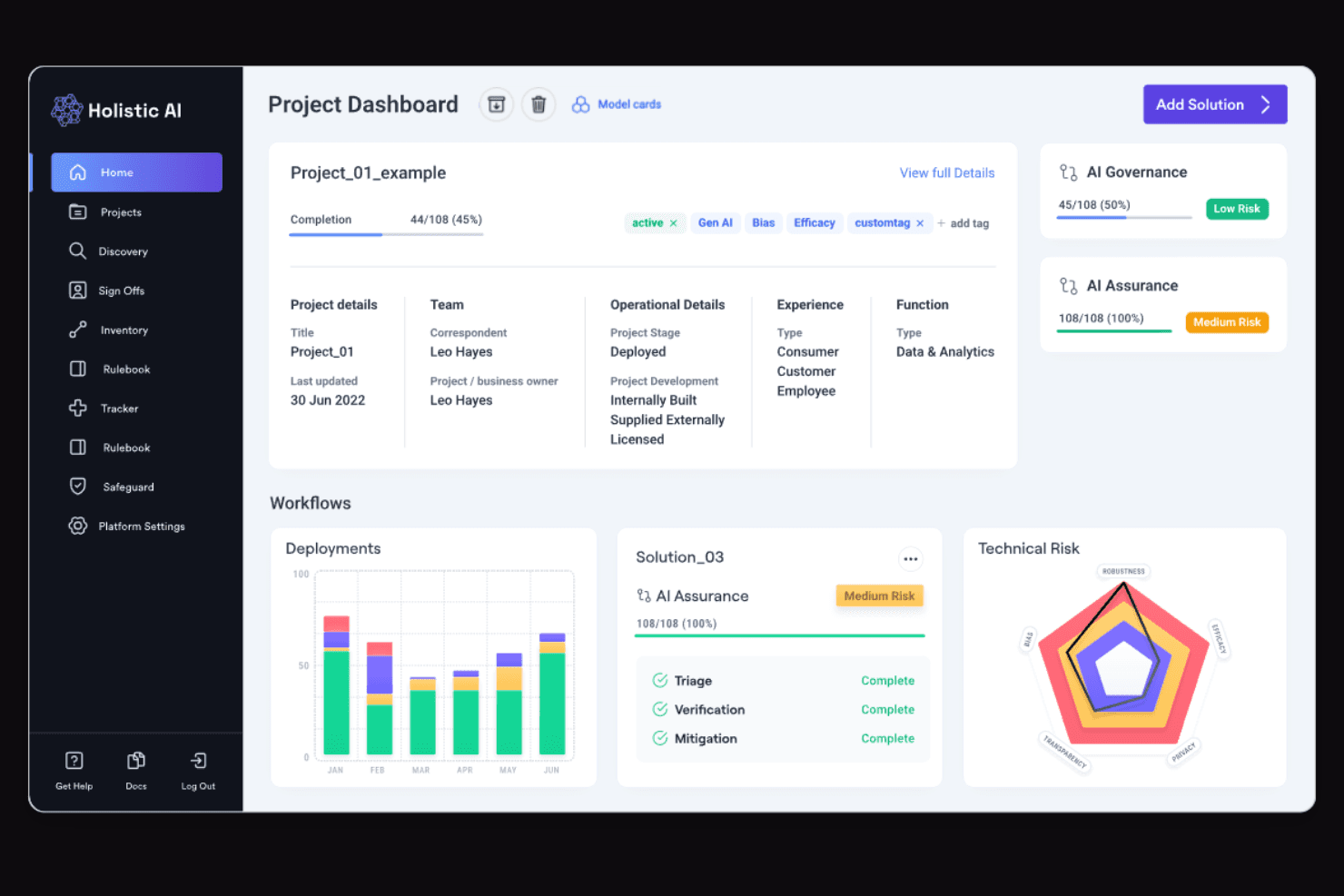
Holistic AI supports governance, compliance, and oversight of AI systems. Holistic AI is an AI governance platform covering the AI lifecycle: discovery and inventory of AI systems, risk assessment, testing and red teaming, governance workflows, and continuous monitoring. It supports compliance with the EU AI Act, NIST and ISO 42001, with audit evidence.
Why I picked Holistic AI: The platform covers risk assessment, testing and red teaming, and governance workflows. You can leverage its audit tools to maintain transparency in AI operations. I like how the platform's mitigation strategies are designed to address potential risks through proactive alignment with the needs of companies prioritizing ethical AI practices.
Standout features & integrations:
Features include a dashboard that visualizes AI risk metrics, customizable reporting tools for sharing insights with stakeholders, and an alert system that notifies you of potential issues.
Integrations include read-only connectors to AWS, Azure, GitHub and Databricks. The open-source library is a separate offering that requires coding or configuration before use.
Pros and Cons
Pros:
- Comprehensive audit tools
- Proactive risk mitigation strategies
- Effective risk assessment framework
Cons:
- Limited support for non-standard models
- May require detailed setup
Learn more about Holistic AI:

Lumenova AI automates AI risk and compliance for regulated small enterprises. Lumenova AI is a platform tailored for enterprises seeking ethical and compliant AI governance. It primarily serves small to medium-sized teams by offering tools for AI risk management and regulatory compliance.
Why I picked Lumenova AI: This platform benefits small teams greatly due to its AI Risk Advisor, which simplifies compliance with AI governance frameworks like the EU AI Act and NIST AI RMF. You can use automated documentation to enhance AI explainability, making it easier to communicate AI decisions. The continuous monitoring feature helps you track model drift and unexpected behaviors. These functionalities support small teams in managing AI risks effectively.
Standout features & integrations:
Features include real-time protection for AI systems, customizable filters to prevent harmful content, and tools that enhance collaboration among compliance, legal, and technical teams.
Integrations are not publicly listed on Lumenova AI’s website as of November 2025.
Pros and Cons
Pros:
- Enhances AI explainability
- Continuous AI monitoring
- Simplifies compliance for small teams
Cons:
- May require technical expertise
- Limited customization options
Learn more about Lumenova AI:

Datatron monitors, deploys, and governs AI models for reliable performance. Datatron is a platform tailored for enterprises seeking efficient model deployment and management in AI operations. It serves data science teams by providing tools to automate and monitor AI model deployments across various environments.
Why I picked Datatron: This tool’s strength lies in model deployment with an automated pipeline that simplifies the transition from development to production. You can use its monitoring features to track model performance in real time. The platform also offers version control, ensuring your team can manage model iterations effectively. These features make Datatron a go-to solution for businesses focusing on efficient model deployment.
Standout features & integrations:
Features include a user-friendly interface that simplifies model management, detailed analytics that provide insights into model performance, and security features that protect your data assets.
Integrations include AWS, Google Cloud, Microsoft Azure, Databricks, Snowflake, Kubernetes, Docker, Jenkins, GitHub, and Apache Kafka.
Pros and Cons
Pros:
- Strong version control
- Real-time performance monitoring
- Efficient model deployment pipeline
Cons:
- May have a steep learning curve
- Requires technical expertise
Learn more about Datatron:

Monitaur automates audits and compliance tracking for regulated industries. Monitaur is a platform focused on providing audit trails for AI solutions, primarily used by organizations that need to ensure responsible AI. It offers tools that help you track and document AI model decisions, making it easier to comply with regulatory standards.
Why I picked Monitaur: This tool surpasses others in creating detailed audit trails, which are important for maintaining transparency in AI systems. It features automated documentation that captures every decision made by AI models. The platform also includes compliance tools that help your team adhere to industry standards, making it an excellent choice for organizations prioritizing accountability.
Standout features & integrations:
Features include customizable reporting that allows you to generate insights tailored to your needs, an alert system that warns you of any compliance breaches, and a dashboard that visualizes AI model performance metrics.
Integrations include Confluence, Jira, Databricks, and GitHub.
Pros and Cons
Pros:
- Compliance support tools
- Automated documentation
- Detailed audit trails
Cons:
- Limited scalability for large enterprises
- May need technical expertise
Learn more about Monitaur:
Diğer Yapay Zekâ Yönetişimi Araçları
Kısa listeme giremeyen ancak yine de göz atmaya değer bazı ek yapay zekâ yönetişimi aracı seçenekleri şunlardır:
- 11Ataccama ONEBest for data quality management
- 12Azure MonitorBest for cloud-based monitoring
- 13Microsoft PurviewBest for data cataloging
- 14VelotixBest for real-time data privacy
- 15Qlik StaigeBest for analytics integration
How I Evaluate AI Governance Tools
To make this list, a tool's AI needs to handle real HR AI governance work, like scoring model risks and flagging compliance gaps. From there, I evaluate three things. Core functionality carries the most weight, like cataloging systems and routing approvals. Then I look at standout features, like model card generation, and beyond-feature factors, like shared workspaces for HR and legal.
Core Functionality (Table Stakes For This List)
When I'm selecting tools for my list, I score each one on a scale from 0 (does not offer the functionality) to 5 (excels in this area) for each core functionality listed below. I then convert the total into a percentage to help assess each tool's overall fit, with extra weight on any functionalities I’ve deemed essential.
- Model Risk Assessment (Essential): I look for structured assessments of bias, explainability, and potential harm in tools used for hiring or workforce planning.
- Compliance Mapping (Essential): I check whether tools map AI systems to relevant regulations and internal policies, then flag gaps as rules or systems change.
- Inventory & Classification: I look for a centralized catalog that records each HR AI system’s purpose, risk tier, and lifecycle status.
- Audit Trail & Documentation: I assess whether records capture model changes, approvals, and decision rationale for later review.
- Policy & Workflows: I look for configurable review steps that route higher-risk HR systems to the right people before deployment.
- Bias & Fairness Monitoring: I check for ongoing tests across relevant groups and alerts when hiring or employee analytics outcomes shift.
Once I have a list of tools that meet the criteria, I consider what sets each platform apart.
Differentiating Factors (What Sets Vendors Apart)
Here's how I compare and contrast different vendors:
Standout Features
I check whether a tool can score risk on third-party or vendor-embedded AI, since most HR teams buy AI rather than build it. Regulatory change alerts also matter—I look for real-time notifications when new rules affect how your hiring or analytics tools are classified. Model card generation saves hours by auto-documenting a model's purpose, data sources, and limitations, which auditors and legal teams consistently ask for.
Beyond Features
I evaluate whether a platform supports cross-functional collaboration—shared workspaces where HR, legal, and compliance teams can comment, sign off, and escalate without jumping between tools. Regulatory breadth matters just as much, especially for organizations operating across regions. I check how many frameworks a tool covers and whether you can configure region-specific policies. I also look at vendor onboarding and advisory support, since mapping AI systems to shifting regulations is hard to do without guided implementation.
Yapay Zekâ Yönetişimi Araçları Nasıl Seçilir?
Uzun özellik listeleri ve karmaşık fiyatlandırma yapılarına kapılmak kolaydır. Kendinize özgü yazılım seçimi sürecinizde ilerlerken odaklanmanızı kolaylaştırmak için göz önünde bulundurmanız gereken faktörleri içeren bir kontrol listesi hazırladım:
| Faktör | Dikkat Edilmesi Gerekenler |
|---|---|
| FaktörÖlçeklenebilirlik | Dikkat Edilmesi GerekenlerAraç kuruluşunuzla birlikte büyüyebilir mi? Performansı düşürmeden artan veri hacmini ve kullanıcı sayısını işleyip işleyemeyeceğini değerlendirin. |
| FaktörEntegrasyonlar | Dikkat Edilmesi GerekenlerAraç mevcut sistemlerinizle çalışıyor mu? Maliyetli geçici çözümlerden kaçınmak için mevcut yazılım yığınınızla uyumluluğunu kontrol edin. |
| FaktörÖzelleştirilebilirlik | Dikkat Edilmesi GerekenlerAracı iş akışlarınıza uyacak şekilde uyarlayabilir misiniz? Ekibinizin özel ihtiyaçlarına uyacak değişikliklere izin veren seçenekleri arayın. |
| FaktörKullanım kolaylığı | Dikkat Edilmesi GerekenlerAraç sezgisel mi? Verimliliği en üst düzeye çıkarmak ve eğitim süresini en aza indirmek için ekibinizin öğrenmesinin ve kullanmasının kolay olduğundan emin olun. |
| FaktörUygulama ve işe alıştırma | Dikkat Edilmesi GerekenlerBaşlamak ne kadar sürecek? Aracı uygulamak ve ekibinizi etkili bir şekilde eğitmek için gereken zaman ve kaynakları değerlendirin. |
| FaktörMaliyet | Dikkat Edilmesi GerekenlerFiyatlandırma bütçenize uygun mu? Mali planlarınızla uyumlu olduğundan emin olmak için gizli ücretler de dâhil olmak üzere toplam sahip olma maliyetini karşılaştırın. |
| FaktörGüvenlik önlemleri | Dikkat Edilmesi GerekenlerVerileriniz ve modelleriniz korunuyor mu? Hassas bilgileri korumak için aracın şifreleme ve erişim denetimleri gibi güçlü güvenlik önlemlerine sahip olduğunu doğrulayın. |
| FaktörUyumluluk gereksinimleri | Dikkat Edilmesi GerekenlerAraç sektör standartlarını karşılıyor mu? Kuruluşunuzun uyması gereken GDPR veya CCPA gibi düzenlemelerle uyumlu olduğundan emin olun. |
Yapay Zekâ Yönetişimi Araçları Nedir?
Yapay zekâ yönetişimi araçları, kuruluşlar içinde yapay zekânın etik kullanımını yönetmek, izlemek ve güvence altına almak için tasarlanmış yazılım çözümleridir. Bu araçlar genellikle veri bilimcileri, uyum görevlileri ve BT uzmanları tarafından yapay zekâ sistemlerinde şeffaflığı ve politika uygulamasını sürdürmek için kullanılır. Önyargı tespiti, uyum takibi ve denetim izleri gibi özellikler; düzenlemelere uyuma, yapay zekânın etik kullanımına ve operasyonel şeffaflığa yardımcı olur. Genel olarak bu araçlar, yapay zekâ teknolojilerinin kurumsal ekosistemlerde sorumlu ve etkili bir şekilde kullanılmasını sağlayarak önemli değer sunar.
Özellikler
Yapay zekâ yönetişimi araçlarını seçerken aşağıdaki temel özelliklere dikkat edin:
- Önyargı tespiti: Adil sonuçlar elde edilmesini sağlamak için yapay zekâ uygulamalarındaki önyargıları belirler ve azaltır.
- Uyum takibi: Yasal uyumu güvence altına almak için GDPR gibi sektörel düzenlemelere uyumu izler.
- Denetim izleri: Şeffaflığı ve hesap verebilirliği desteklemek için yapay zekâ modeli kararlarının ayrıntılı bir kaydını sunar.
- Otomatik anomali tespiti: Proaktif yönetim için yapay zekâ modellerindeki beklenmeyen davranışlar konusunda kullanıcıları uyarır.
- Veri gizliliği yönetimi: Hassas verilerin korunmasını ve gizlilik yasalarına uygun şekilde kullanılmasını sağlar.
- Gerçek zamanlı izleme: Sorunları zamanında ele almak için yapay zekâ modeli performansını sürekli olarak takip eder.
- Açıklanabilirlik araçları: Daha iyi anlayış ve güven sağlamak için yapay zekânın karar verme süreçlerini ayrıntılı olarak açıklar.
- Özelleştirilebilir raporlama: Kullanıcıların belirli kurumsal ihtiyaçları karşılayacak şekilde uyarlanmış raporlar oluşturmasına olanak tanır.
- Risk değerlendirmesi: Yapay zekâ dağıtımlarıyla ilişkili olası riskleri değerlendirerek bunların etkili bir şekilde azaltılmasını sağlar.
- Entegrasyon olanakları: İş akışı verimliliğini artırmak için mevcut sistemlere bağlanır.
Faydalar
Yapay zekâ yönetişimi platformlarının uygulanması ekibiniz ve işletmeniz için çeşitli faydalar sağlar. Yararlanabileceğiniz birkaç fayda şunlardır:
- Geliştirilmiş uyum: Yapay zekâ sistemlerinizin düzenleyici standartları karşılamasını sağlayarak yasal riskleri azaltır.
- Gelişmiş şeffaflık: Yapay zekâ kararlarına duyulan güveni oluşturmak için açık denetim izleri ve açıklanabilirlik araçları sunar.
- Önyargıların azaltılması: Yapay zekâ modellerindeki önyargıları belirler ve düzeltir, adil sonuçları teşvik eder.
- Veri koruması: Gizlilik yönetimi özellikleriyle hassas bilgileri ve üst verileri koruyarak veri bütünlüğünü sürdürür.
- Risk azaltma: Olası riskleri değerlendirir ve çözümler sunarak operasyonel güvenliği artırır.
- Operasyonel verimlilik: Mevcut sistemlerle entegre olarak iş akışını iyileştirir ve manuel denetimi azaltır.
- Gerçek zamanlı içgörüler: Sürekli izleme ve uyarılar sunarak yapay zekâ modeli sorunlarına hızlı yanıt verilmesini sağlar.
Maliyetler & Fiyatlandırma
Yapay zekâ yönetişimi araçlarını seçmek, mevcut çeşitli fiyatlandırma modellerinin ve planların anlaşılmasını gerektirir. Maliyetler özelliklere, ekip büyüklüğüne, eklentilere ve daha fazlasına göre değişir. Aşağıdaki tablo, yapay zekâ yönetişimi aracı çözümlerinde yaygın planları, ortalama fiyatlarını ve genellikle sunulan özellikleri özetlemektedir:
Yapay Zekâ Yönetişimi Araçları İçin Plan Karşılaştırma Tablosu
| Plan Türü | Ortalama Fiyat | Yaygın Özellikler |
|---|---|---|
| Plan TürüÜcretsiz Plan | Ortalama Fiyat$0 | Yaygın ÖzelliklerTemel izleme, sınırlı veri gizliliği özellikleri ve topluluk desteği. |
| Plan TürüTemel Plan | Ortalama Fiyat$49/ay'dan başlayan | Yaygın ÖzelliklerGelişmiş izleme, önyargı tespiti, özelleştirilebilir raporlar ve e-posta desteği. |
| Plan Türüİşletme Planı | Ortalama Fiyat$150/ay'dan başlayan | Yaygın ÖzelliklerGerçek zamanlı analiz, uyum takibi, entegrasyon olanakları ve telefon desteği. |
| Plan TürüKurumsal Plan | Ortalama Fiyat$500/ay'dan başlayan | Yaygın ÖzelliklerGelişmiş risk değerlendirmesi, eksiksiz veri yönetişimi paketi, özel hesap yöneticisi ve 7/24 destek. |
Yapay Zekâ Yönetişimi Araçları SSS
Yapay zekâ yönetişimi araçları hakkında sık sorulan soruların bazı yanıtları:
Yapay zekâ yönetişimi araçları uyumluluğu ve etik kullanımı sağlamaya nasıl yardımcı olur?
Yapay zekâ yönetişimi araçları, düzenleyici gerekliliklerin izlenmesini ve raporlanmasını otomatikleştirerek uyumluluğa yardımcı olur. Uyumluluk panoları ve raporlama araçları gibi özellikler sunarak ekibinizi mevzuattaki değişikliklerden haberdar eder. Örneğin kuruluşunuzun GDPR veya NIST AI RMF ile uyumlu olması gerekiyorsa araç, uyumsuzluk sorunları konusunda sizi uyarabilir ve model yönetişimi çözümleri sunabilir. Uyumluluk izlemeyi iş akışlarınıza entegre ederek riskleri en aza indirebilir ve yapay zekâ girişimlerinizin sektör standartlarına uygun olmasını sağlayabilirsiniz.
Yapay zekâ yönetişimi araçları mevcut sistemlerle entegre olabilir mi?
Evet, çoğu yapay zekâ yönetişimi aracı mevcut sistemlerle uçtan uca entegrasyon özellikleri sunar. Veri akışını kolaylaştırmak için bunları AWS, Google Cloud veya Microsoft Azure gibi veri platformlarına bağlayabilirsiniz. Entegrasyonlar, veri tutarlılığını korumanıza ve iş değerini artırmanıza yardımcı olur. Bir yapay zekâ aracını değerlendirirken teknik zorluklardan veya hatalı çıktılardan kaçınmak için mevcut yazılım yığınınızla uyumluluğunu kontrol edin. Bu, daha sorunsuz bir uygulama sağlar ve aracın kuruluşunuz için optimizasyonunu en üst düzeye çıkarır.
Yapay zekâ yönetişimi araçlarını ölçeklendirirken nelere dikkat etmeliyim?
Yapay zekâ yönetişimini ölçeklendirirken aracın artan veri hacimlerini ve kullanıcı sayılarını işleme kapasitesini göz önünde bulundurun. Kuruluşunuz büyüdükçe aracın yavaşlamadan performansını koruyup koruyamayacağını değerlendirin. Otomatik yük dengeleme ve performans izleme gibi yapay zekâ destekli özellikleri kontrol edin. Ayrıca aracın yeni veri kaynaklarıyla entegre olabilmesini ve değişen uyumluluk gerekliliklerine uyum sağlayabilmesini sağlamak da önemlidir. Ölçeklenebilirlik için önceden plan yapmak, daha sonra maliyetli yükseltmelerden veya değiştirmelerden kaçınmanıza yardımcı olur.