

Uma PEO para startups é uma organização profissional de empregadores que trata dos recursos humanos, salários, conformidade e benefícios, para que a sua equipa se possa concentrar no crescimento da empresa. Se está a tentar reduzir a sobrecarga administrativa, acompanhar as exigências de conformidade ou fazer propostas competitivas a novos colaboradores, encontrar a PEO certa pode ajudar a sua startup a chegar lá mais depressa. Neste guia, verá quais os serviços PEO mais adequados para startups em cada fase, como apoiam efetivamente as necessidades diárias de recursos humanos e aquilo a que deve estar atento antes de assinar um contrato.
Why Trust Our Software Recommendations
6,700+
Reviews
20
Industry experts
16+
Evaluation factors
14
Years
Our team has been testing and reviewing software since 2012. As HR experts ourselves, we know how difficult—and important—it is to choose the right software.
For this guide, we evaluated tools using hands-on testing and independent research, scoring tools using our selection criteria. We also draw on insights from industry thought leaders and practicing HR experts.
Our reviews reflect our human editorial judgment, not a sales pitch.
Expert reviewers:
- Phil GrayCOO
 Kim BehnkeHR Tech Editor & Analyst
 Josh BarkerPeople Ops Manager

Tabela comparativa de PEOs para startups
Compare, lado a lado, os preços e as especificações das PEOs para startups que entraram na minha lista restrita.
| Tool | Best For | Trial Info | Price | ||
|---|---|---|---|---|---|
| 1 | Best for keeping your broker and benefits plans | Free demo available | From $599/employee/month | Website | |
| 2 | Best for dedicated HR teams at SMB scale | Not available | Pricing upon request | Website | |
| 3 | Best for boutique HR support from day one | Free demo available | Pricing upon request | Website | |
| 4 | Best for attorney-led compliance support | Not available | Pricing upon request | Website | |
| 5 | Best for Fortune 500 benefits at SMB scale | Not available | Pricing upon request | Website | |
| 6 | Best for enterprise-level employee benefits | Not available | Pricing upon request | Website | |
| 7 | Best for venture-backed equity management | Not available | Pricing upon request | Website | |
| 8 | Best for dual-accredited PEO with zero-deductible plans | Free consultation available | Pricing upon request | Website | |
| 9 | Best for VC-backed startups with named HR advisors | Not available | Pricing upon request | Website | |
| 10 | Best for FICA savings passed back to employers | Free demo available | From $8/user/month | Website |


Avaliações de PEOs para startups
Apresento abaixo os meus resumos detalhados das melhores PEOs para startups que entraram na minha lista restrita. As minhas avaliações oferecem uma análise detalhada das funcionalidades, dos casos de utilização mais adequados e dos preços de cada plataforma, para o ajudar a encontrar a melhor opção para si.
 Best for keeping your broker and benefits plans
- Free demo available
- From $599/employee/month
Visit WebsiteCustomer Rating:4.9/5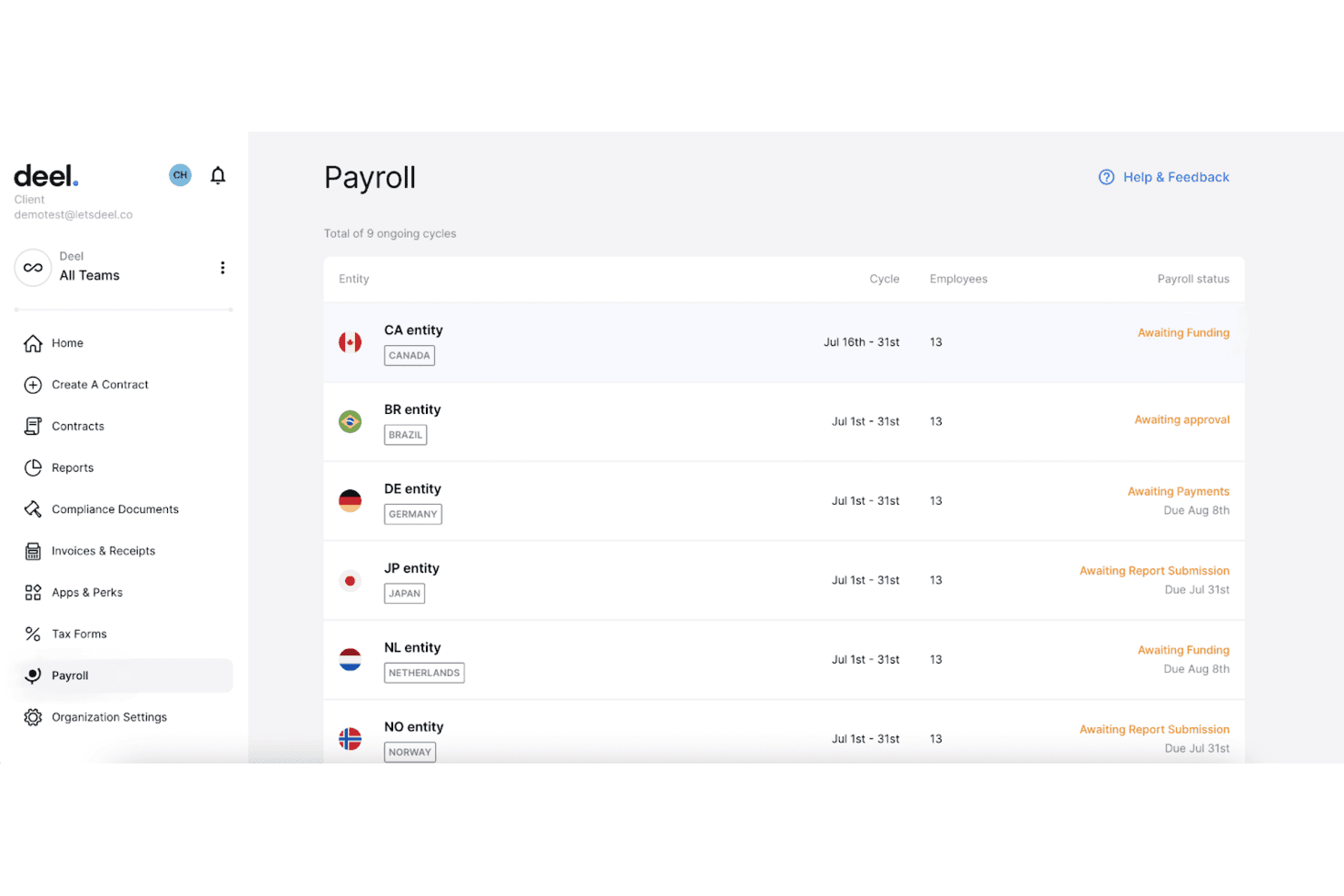
Deel centralizes multi-country payroll cycles and statuses in one dashboard. Deel PEO is a US co-employment platform that handles payroll, tax filings, benefits administration, HR compliance, and workers' compensation for startups and growing teams across all 50 states.
Who Is Deel PEO Best For?
Deel PEO is a strong fit for early-stage US companies—including teams of fewer than five—that want to offload payroll, benefits, and compliance without giving up their existing broker or benefits setup.
Why I Picked Deel Hire
I picked Deel PEO as one of the best because it's one of the few options that lets you keep your existing broker and benefits plans rather than forcing a full switch. If you've already negotiated good coverage, that flexibility is hard to overstate. I also like that it assigns a dedicated HR Business Partner and a named customer success contact, so early-stage teams with under five employees aren't left navigating multi-state compliance alone. Guided open enrollment with side-by-side plan comparison keeps things clear for employees who've never had to choose benefits before.
Deel PEO Key Features
- Multi-state payroll processing: Deel handles payroll, federal and state tax filings, W-2 generation, and state unemployment filings across all 50 US states.
- State-localized employee onboarding: Onboarding documents and minimum-wage information are localized by state, with Deel saying each hire can be onboarded in five minutes.
- Workers' compensation and EPLI: Deel provides access to workers' compensation coverage, claims administration, and employment practices liability insurance for covered employees.
- Compensation benchmarking: Deel gives you access to salary and market data for US roles to support hiring and pay decisions.
Deel Hire Integrations
Deel Hire’s PEO documentation names a HiBob integration that syncs employee data one way. Deel also offers APIs and real-time webhooks for custom integrations.
Pros and Cons
Pros:
- Small-company users report smooth transitions
- Reviewers praise dedicated multi-state HR guidance
- Existing broker and benefits plans stay in place
Cons:
- Five-day payroll turnaround concerns some buyers
- Some users report missed or delayed pay
Learn more about Deel Hire: Best for dedicated HR teams at SMB scale
- Not available
- Pricing upon request
Visit WebsiteCustomer Rating:3.8/5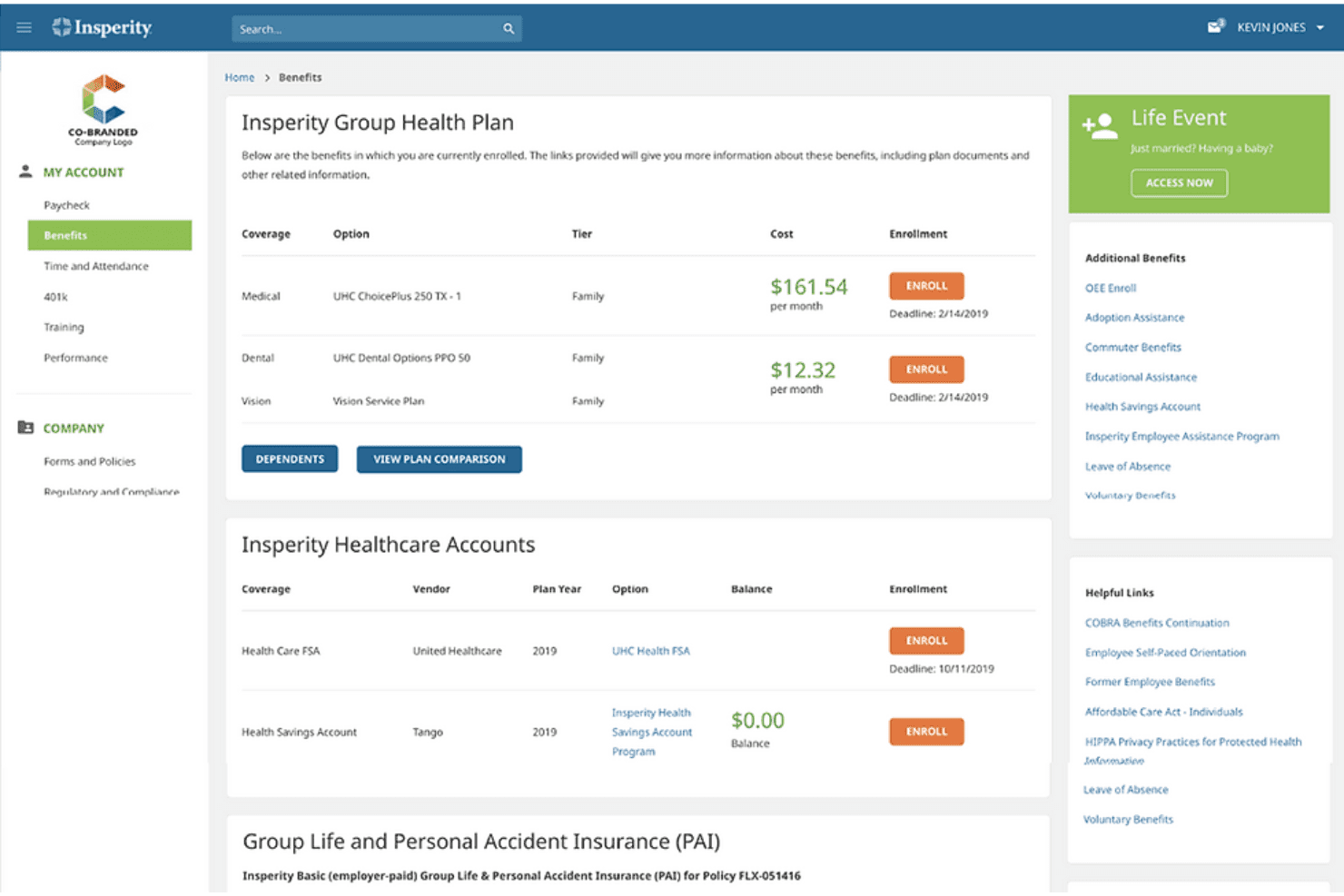
Insperity lets employees view and enroll in health benefits online. Insperity is a full-service PEO that handles co-employment, multi-state payroll, benefits administration, workers' comp, and HR compliance support for small to midsize businesses.
Who Is Insperity Best For?
Insperity is a strong fit for SMBs with 25 or more employees that need dedicated HR support, Fortune 500-tier benefits, and multi-state compliance coverage without building an in-house HR team.
Why I Picked Insperity
Insperity earns its spot on my shortlist because it brings dedicated, regionally assigned HR teams to SMBs that aren't ready to build in-house HR. I particularly like that each client gets a named HR service team with a 2-hour response SLA, not a call center queue. The UnitedHealthcare master plan, pooled since 2002, gives growing teams access to large-group health insurance pricing well before they'd qualify on their own.
Insperity Key Features
- Multi-state payroll tax filing: Insperity handles federal and state tax withholding, FICA, FUTA, and SUTA filings across all applicable states under its PEO EIN.
- Workers' comp master policy: Coverage runs through a master policy with Chubb, including claims management, safety audits, and OSHA compliance guidance.
- Online training library: Employees and managers get access to 4,500+ courses, 10,000+ eBooks, and 2,500+ videos covering HR regulations, leadership, and workplace compliance.
- Contractor management via Wingspan: Insperity's contractor management add-on handles 1099 filing and onboarding workflows for independent contractors.
Insperity Integrations
Insperity lists integrations with QuickBooks, NetSuite, Workday, SAP SuccessFactors, Oracle HCM, ADP, and Wingspan for contractor management. It also offers an API for custom integrations, but cap table, ATS, expense, and identity integrations aren't documented.
Pros and Cons
Pros:
- Multi-state compliance support with local expertise
- Fortune 500-tier healthcare and benefits access
- Dedicated HR team with a 2-hour response
Cons:
- U.S.-only coverage with no global hiring
- No equity or RSU payroll management
 Best for boutique HR support from day one
- Free demo available
- Pricing upon request
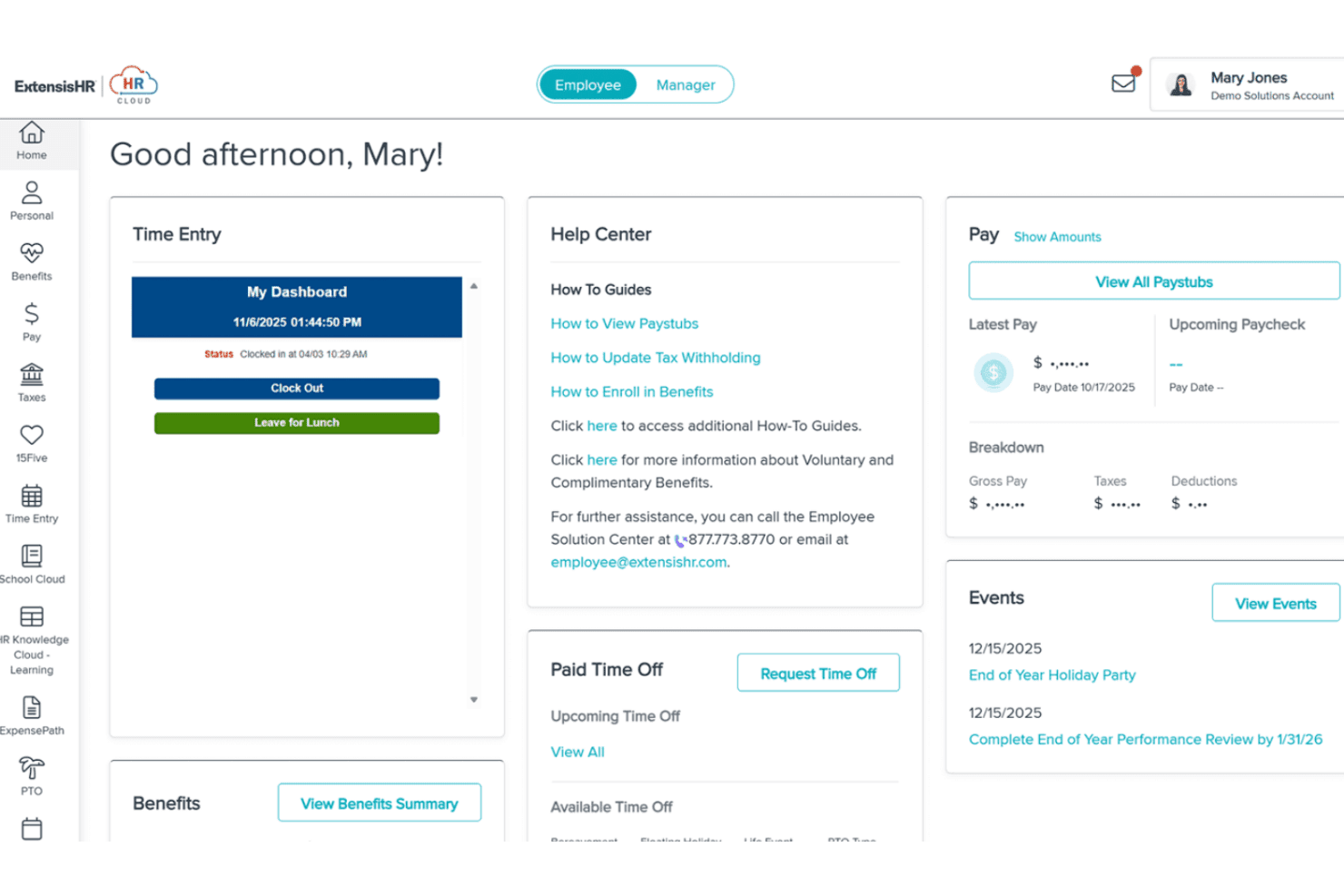
ExtensisHR centralizes pay, time, PTO, and benefits in one dashboard. ExtensisHR is a co-employment PEO that pairs startups with a dedicated HR team, covering payroll, benefits administration, compliance, workers' compensation, and recruiting under one platform.
Who Is ExtensisHR Best For?
ExtensisHR is a strong fit for early-stage startups that want dedicated, human-led HR support without building an in-house team.
Why I Picked ExtensisHR
ExtensisHR earns its spot on my shortlist because every client gets a dedicated Account Manager and SHRM-Certified HR Business Partner from day one, not after some growth milestone. I love that full-cycle recruiting is included at no extra cost, so a five-person startup without an HR hire can still post jobs, track candidates, and extend offers through the platform. Its dual IRS CPEO and ESAC certifications also mean co-employment tax liability protections are built in from the start.
ExtensisHR Key Features
- Fortune 500-level benefits access: ExtensisHR pools clients under large-group pricing to give startups access to medical, dental, vision, 401(k), FSA/HSA, and voluntary plans typically reserved for enterprise employers.
- Pay-as-you-go workers' compensation: Workers' comp premiums are spread across each payroll cycle, so you avoid large upfront deposits that can strain early-stage cash flow.
- Work Anywhere® platform: A cloud-based, mobile-first system consolidating payroll, benefits enrollment, time tracking, performance reviews, and compliance training in one place.
- Multi-state payroll and new state registration: ExtensisHR handles tax filings, withholding, and new state registration as your team hires remotely across multiple states.
ExtensisHR Integrations
ExtensisHR does not clearly document native integrations with startup tools such as QuickBooks Online, Carta, Ramp, or Okta. Its Work Anywhere platform is primarily self-contained, and available PrismHR marketplace connections or API access aren't clearly identified.
Pros and Cons
Pros:
- Complimentary full-cycle recruiting included
- Features mobile-first compliance training
- Dedicated HR team from day one
Cons:
- No native international contractor payments
- Lacks direct performance review modules
Learn more about ExtensisHR:
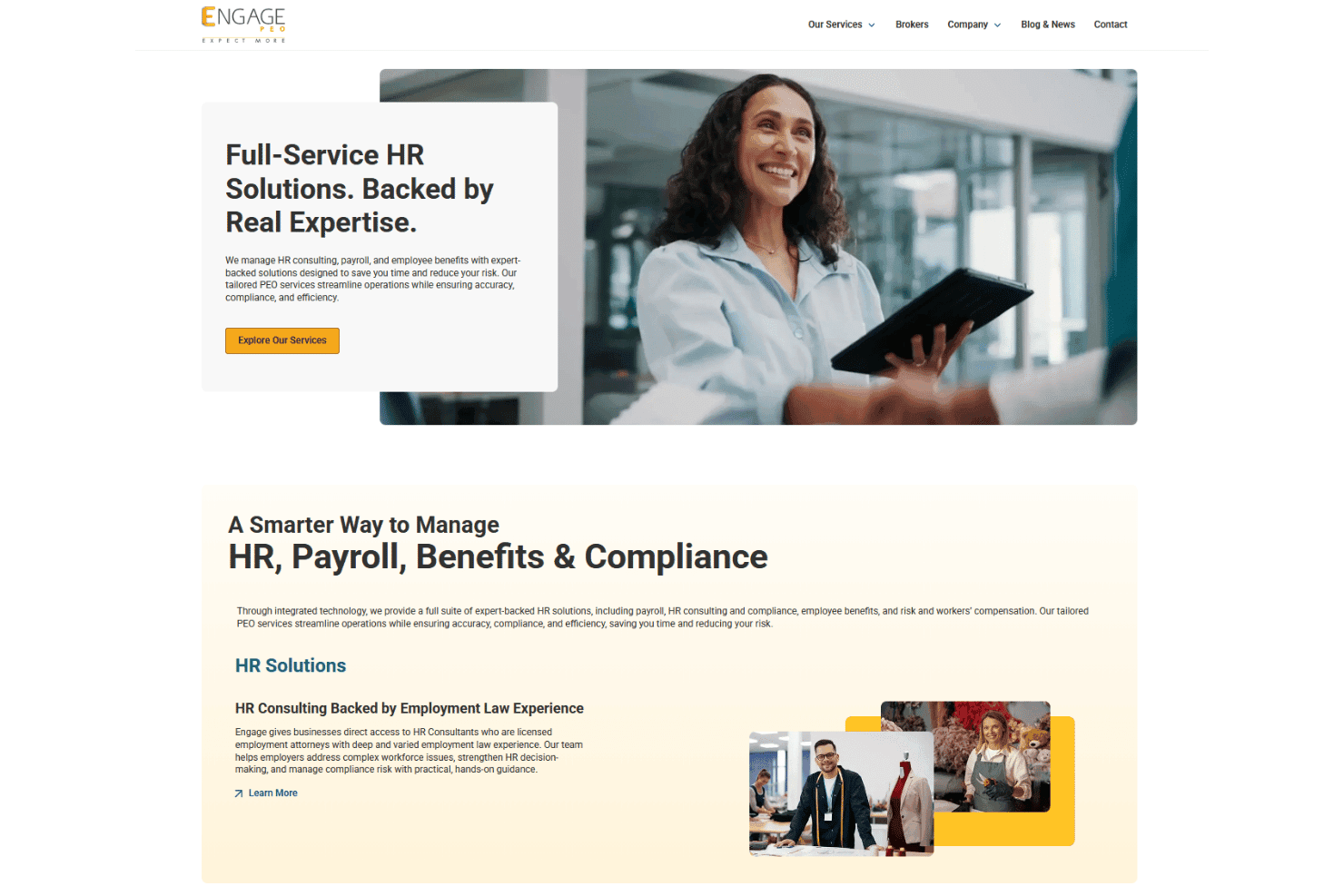
Engage PEO offers full-service HR, payroll, and compliance solutions. Engage PEO is a full-service professional employer organization that handles payroll, tax administration, employee benefits, workers' compensation, and HR compliance—with every HR consultant on staff being a licensed employment attorney.
Who Is Engage PEO Best For?
Engage PEO is a strong fit for startups scaling into multi-state hiring who want every HR question answered by a licensed employment attorney.
Why I Picked Engage PEO
I've included Engage PEO in my top picks because every HR consultant on staff is a licensed employment attorney, which means your compliance questions get legally grounded answers rather than generalist guidance. When you're scaling into new states, that distinction matters: wage and hour rules, employee classification, and handbook requirements vary significantly, and having an attorney-backed dedicated advisor handle those issues is genuinely uncommon in the PEO space. Pair that with IRS CPEO certification and ESAC accreditation held since 2012, and Engage brings a level of verified credibility that few competitors can match.
Engage PEO Key Features
- Fortune 500-level benefits access: Engage gives small teams access to Aetna national master medical plans, regional HMOs, and a private Corporate Exchange for employee plan selection.
- Online learning management system: An included LMS delivers job-specific, leadership, and compliance training courses—including anti-harassment programs—to employees and managers.
- Workers' compensation coverage: Engage sponsors workers' comp through A-rated carriers, with claims management, return-to-work coordination, and OSHA reporting support included.
- Employee self-service portal: Employees can access pay stubs, tax forms, benefits information, and time tracking through a cloud-based portal tied to the PrismHR platform.
Engage PEO Integrations
Engage PEO has documented integrations with Slavic 401(k), ForUsAll, SwipeClock by IRIS, and HiringThing. It also supports custom general ledger output files for accounting connectivity, though specific platforms aren't named.
Pros and Cons
Pros:
- Supports injury return to work
- Provides custom corporate exchange access
- Every HR advisor is an employment attorney
Cons:
- Excludes direct expense reimbursement tools
- No support for equity or international payroll
Learn more about Engage PEO:
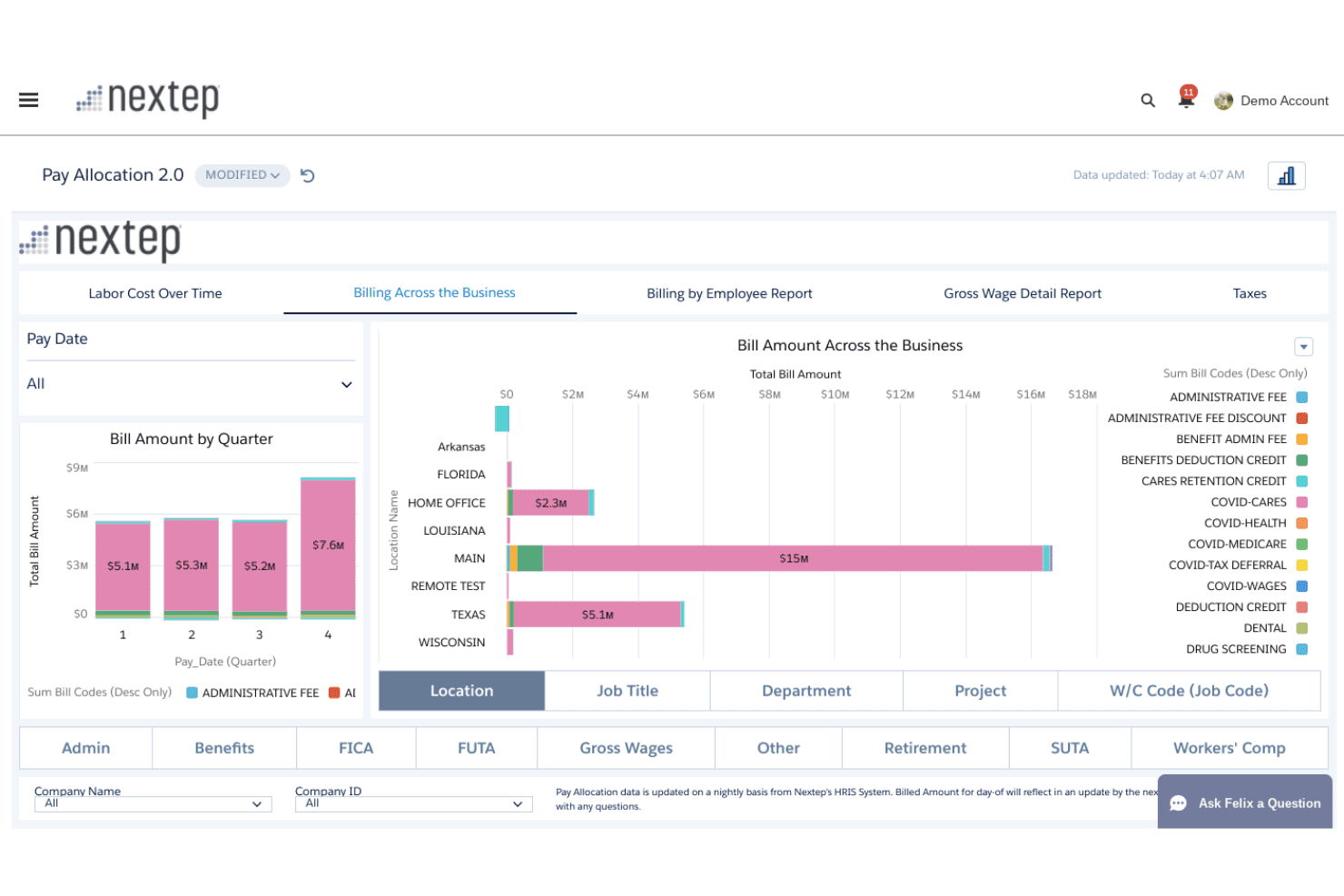
Nextep visualizes billing data across locations, quarters, and cost categories. Nextep is a certified PEO that co-employs your workforce to handle payroll, tax filings, benefits administration, HR compliance, and workers' compensation under one flat-fee structure.
Who Is Nextep Best For?
Nextep is a strong fit for small and mid-sized businesses that want certified co-employment, predictable flat-fee billing, and access to large-group health benefits without building an in-house HR team.
Why I Picked Nextep
Nextep earns its spot on my shortlist because of its large-group master medical plan, which gives small employers access to the same health insurance pricing that Fortune 500 companies negotiate. I love that this isn't a watered-down version either: employees get full medical, dental, vision, 401(k), FSA/HSA, and even pet insurance and legal plans under one co-employment arrangement. Nextep's dual IRS CPEO and ESAC certification also means your payroll taxes are filed under Nextep's EIN with full regulatory backing.
Nextep Key Features
- Named HR business partner: Nextep assigns your account a dedicated HR professional for compliance guidance, handbook development, and employee relations support.
- Elevate by Nextep™ platform: A mobile and desktop HR portal where employees manage pay stubs, benefits enrollment, PTO requests, and direct deposit in one place.
- Workers' compensation master policy: Nextep covers your team under a master workers' comp policy through an A-rated carrier, including claims management and safety site visits.
- Itemized flat-fee billing: Every service is broken out line-by-line on your monthly invoice, so you pay only for what you use with no percentage-of-payroll markup.
Nextep Integrations
Nextep doesn't have any native integrations documented. Its site references general ledger reporting, but no named connections to QuickBooks, NetSuite, ATS, cap table, expense, or identity tools.
Pros and Cons
Pros:
- Issues detailed itemized billing statements
- Support mobile employee benefits enrollment
- Advanced remote workplace safety audits
Cons:
- No published onboarding or offboarding workflows
- No support for equity or global payroll
Learn more about Nextep: Best for enterprise-level employee benefits
- Not available
- Pricing upon request
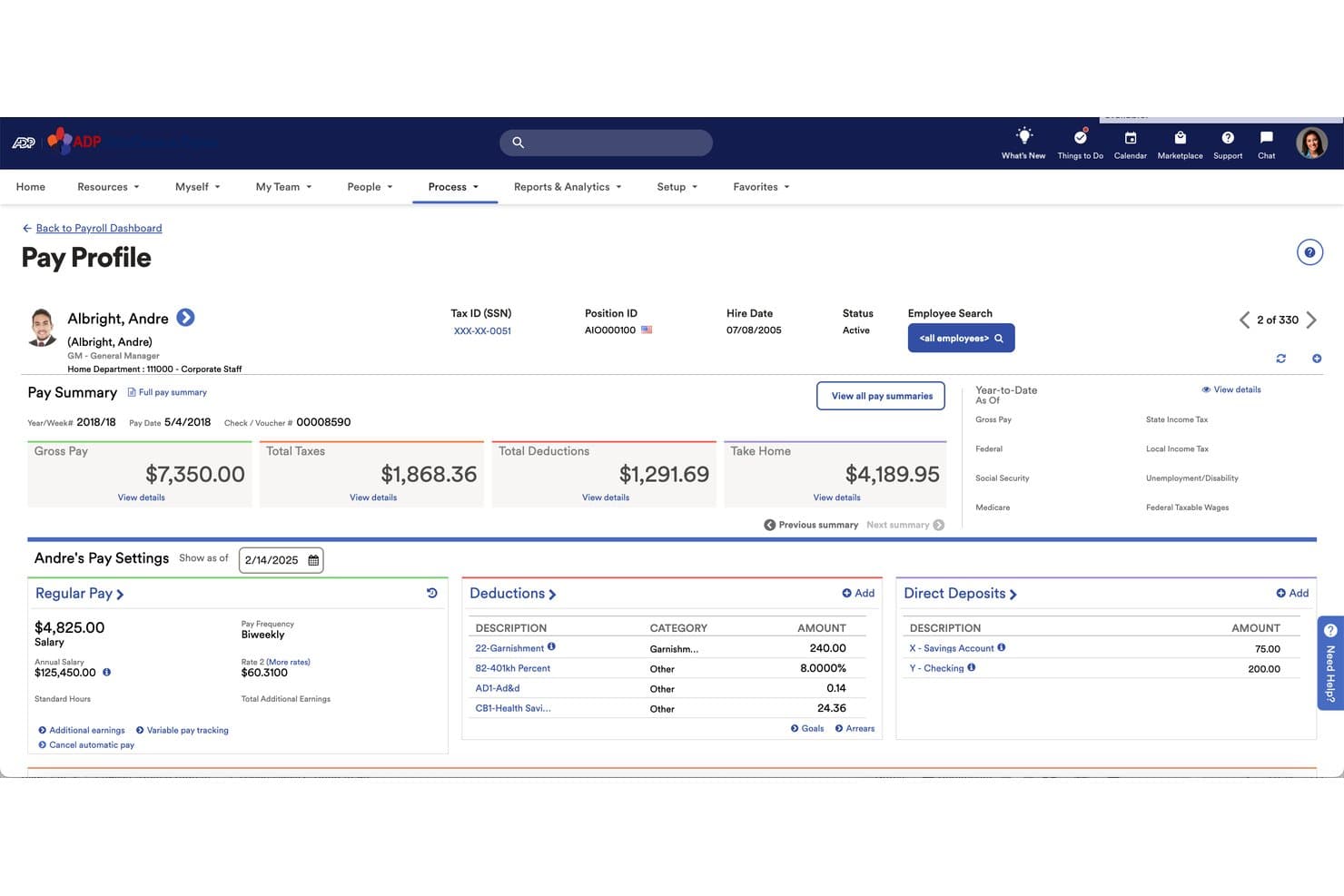
ADP TotalSource centralizes employee payroll, deductions, and direct deposits. ADP TotalSource is a full-service PEO that handles co-employment, multi-state payroll, tax filings, benefits administration, workers' comp, EPLI, and HR compliance support under one service agreement.
Who Is ADP TotalSource Best For?
ADP TotalSource is a strong fit for scaling startups with 50 or more employees that need enterprise-grade benefits to compete with larger employers for talent.
Why I Picked ADP TotalSource
ADP TotalSource earns its spot on my shortlist because of the benefits access it unlocks for growing startups. With 722,000+ worksite employees in its risk pool, TotalSource negotiates directly with carriers like Aetna, UnitedHealthcare, and Kaiser to deliver Fortune 500-calibre health plans that most companies your size simply can't access on their own. I also like that EPLI coverage comes bundled as standard, so you're not scrambling to source that separately as headcount grows.
ADP TotalSource Key Features
- IRS CPEO and ESAC certification: ADP TotalSource holds dual accreditation as an IRS-certified PEO and ESAC-accredited organization, giving your business the highest level of financial and compliance protection available in the PEO space.
- Dedicated HR business partner: Clients with 100 or more employees get an assigned, credentialed HR business partner who handles employee relations, compliance guidance, and handbook support.
- ADP DataCloud analytics: A benchmarking tool that surfaces pay equity, turnover, and workforce planning data so you can make informed people decisions as your headcount grows.
- Multi-state payroll tax filing: ADP TotalSource manages federal, state, and local tax filings under its own EIN across all 50 states, including SUI management and W-2 production.
ADP TotalSource Integrations
ADP TotalSource offers 300+ marketplace integrations, including QuickBooks, Xero, Jobvite, Leapsome, and Vestwell. An API is available for custom integrations, but startup-specific connections to Carta, Greenhouse, and Ramp aren't documented.
Pros and Cons
Pros:
- Dedicated HR advisor for larger teams
- Workers’ comp and EPLI bundled standard
- Advanced workforce analytics dashboards
Cons:
- Slow onboarding for fast-growing startups
- No continuous employee performance tracking
Learn more about ADP TotalSource:
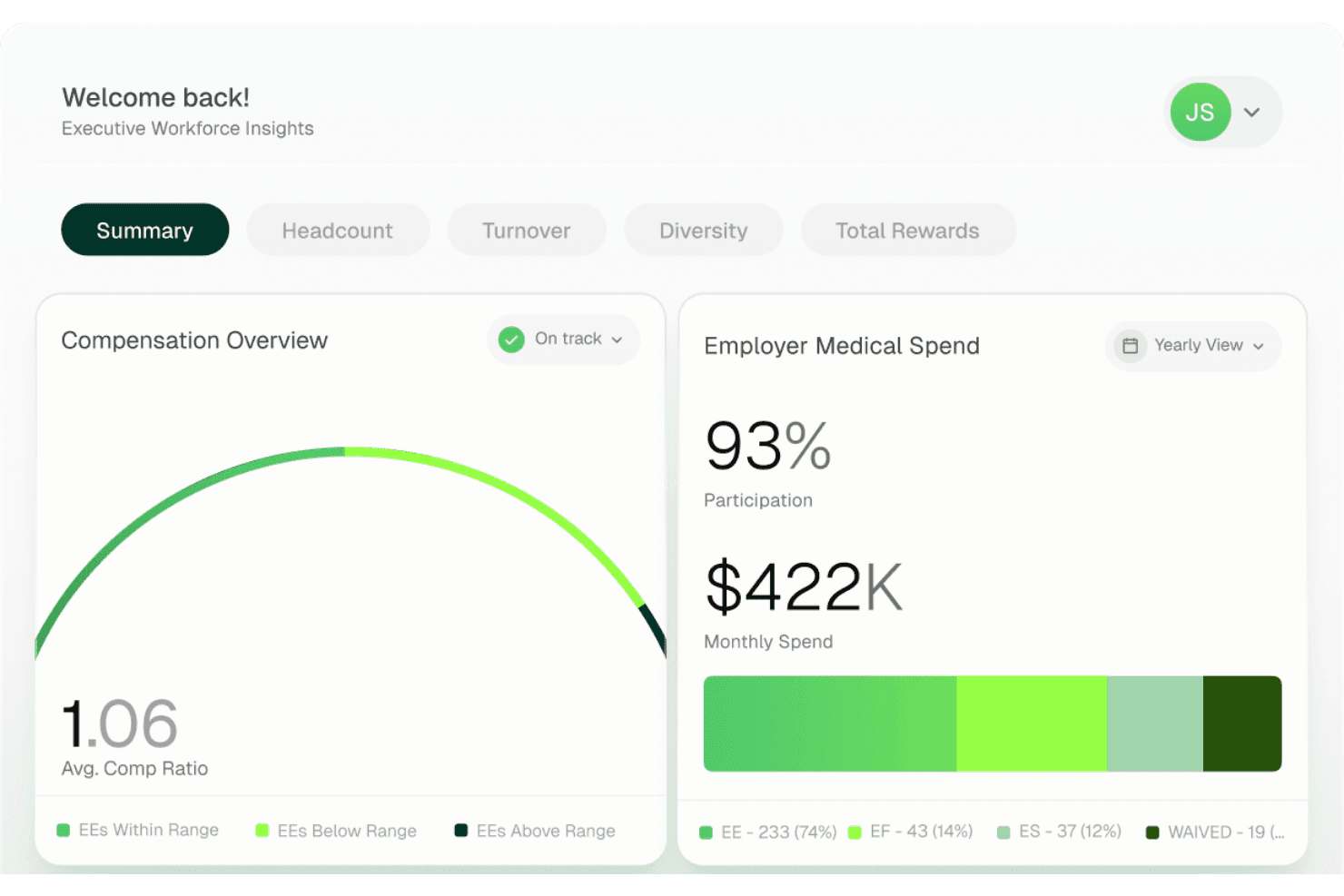
Sequoia One surfaces compensation and medical spend insights for executives. Sequoia One is a PEO built specifically for VC-backed tech startups, offering co-employment, multi-state payroll, benefits administration, HR compliance support, and built-in compensation management with equity grant tools.
Who Is Sequoia One Best For?
Sequoia One is built for VC-backed tech startups that need equity-aware compensation management alongside full-service co-employment.
Why I Picked Sequoia One
Sequoia One earns its spot on my shortlist because no other PEO bundles equity-aware compensation management directly into the co-employment agreement. I love that Sequoia Comp OS comes included at no extra cost, giving VC-backed teams real-time visibility into cash and equity burn relative to funding runway. The Carta integration pulls live equity and total compensation benchmarks directly into that same platform, so you're building grant guidelines from real private-company data rather than guesswork.
Sequoia One Key Features
- IRS CPEO certification and ESAC accreditation: Sequoia One holds both top-tier PEO credentials, with the CPEO status meaning Sequoia One assumes federal payroll tax liability on your behalf.
- Dedicated HR business partner team: Each client gets a named HR business partner plus a dedicated consulting team to handle multi-state compliance guidance, handbook support, and proactive labour law alerts.
- Fortune 500-level benefits pooling: By co-employing your workforce, Sequoia One negotiates medical, dental, vision, 401(k), and ancillary benefits at rates typically reserved for large employers.
- Remote partnership for global hiring: A built-in integration with Remote gives your team access to employer of record services, global contractor management, and multi-country payroll without adding a separate vendor.
Sequoia One Integrations
Sequoia One has documented integrations with Carta, Remote, Workday, Rippling, ADP Workforce Now, and UKG Pro for equity data, global hiring, HR, benefits, and payroll workflows.
Pros and Cons
Pros:
- Benchmarks real total compensation data
- Dedicated HR business partner for each client
- Includes compensation management and equity tracking
Cons:
- Platform requires using two separate systems
- Lacks internal employee communication tools
Learn more about Sequoia One: Best for dual-accredited PEO with zero-deductible plans
- Free consultation available
- Pricing upon request
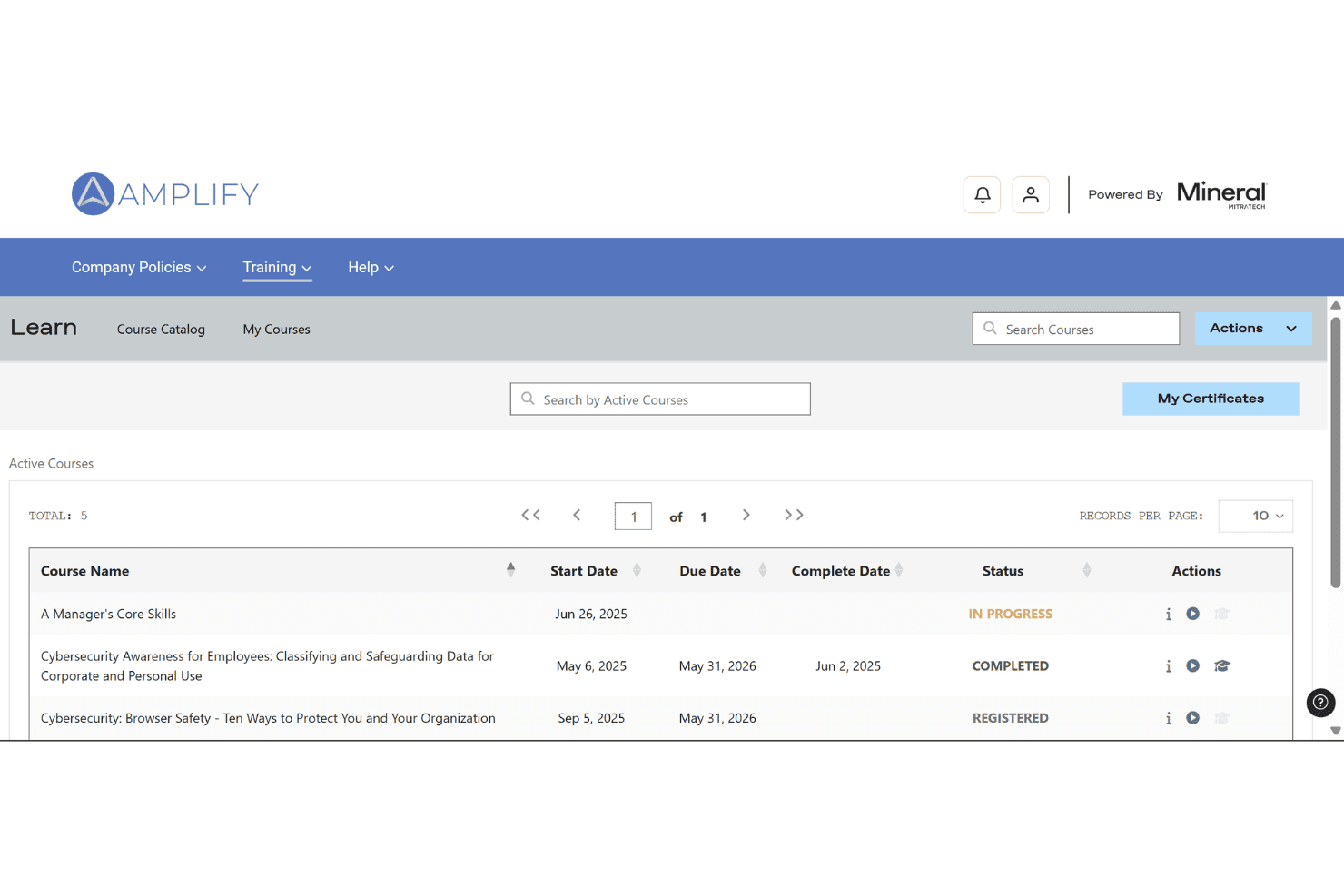
Amplify PEO lets users track and manage assigned training courses in one place. Amplify PEO is a co-employment PEO service that handles payroll, benefits administration, HR advisory support, workers' compensation, and multi-state compliance for startups and growing businesses.
Who Is Amplify PEO Best For?
Amplify PEO is a strong fit for growing startups in the 10–150 employee range that want dedicated HR advisor support and access to zero-deductible health plans without building an in-house HR team.
Why I Picked Amplify PEO
Amplify PEO earns its spot on my shortlist because it's one of the few PEOs that holds both ESAC accreditation and IRS CPEO certification, giving your business federal payroll tax liability protection that most PEOs can't match. What really sets it apart is the FirstAdvantage™ zero-deductible health plans, which give a 20-person startup access to the same benefit tier a 500-person company would get. I also like that you get a named HR advisor with a same-day response SLA, not a rotating support queue.
Amplify PEO Key Features
- Multi-state payroll processing: Amplify handles federal, state, and local tax filings across multiple states, including W-2 preparation and direct deposit.
- Employer Protection Program (EPP): Provides up to $1 million in employment liability coverage, giving startups a financial safety net against employment-related claims.
- Optional applicant tracking system (ATS): Includes career site integration, automated candidate screening, e-signatures, and onboarding integration as a modular add-on.
- Pay-as-you-go workers' compensation: Workers' comp is sponsored under the PEO and billed based on actual payroll, reducing upfront cash requirements for early-stage teams.
Amplify PEO Integrations
Amplify PEO's documented integrations include FIS, Fidelity, and Slavic 401k for retirement-plan reporting. It also supports general ledger uploads, but named accounting integrations and startup tools such as Carta or QuickBooks aren't publicly documented.
Pros and Cons
Pros:
- Flexible pay cycle billing
- Dedicated HR advisors with same-day response
- Delivers employment practices liability coverage
Cons:
- Limited public integrations with startup tools
- No customizable employee training management
Learn more about Amplify PEO: Best for VC-backed startups with named HR advisors
- Not available
- Pricing upon request
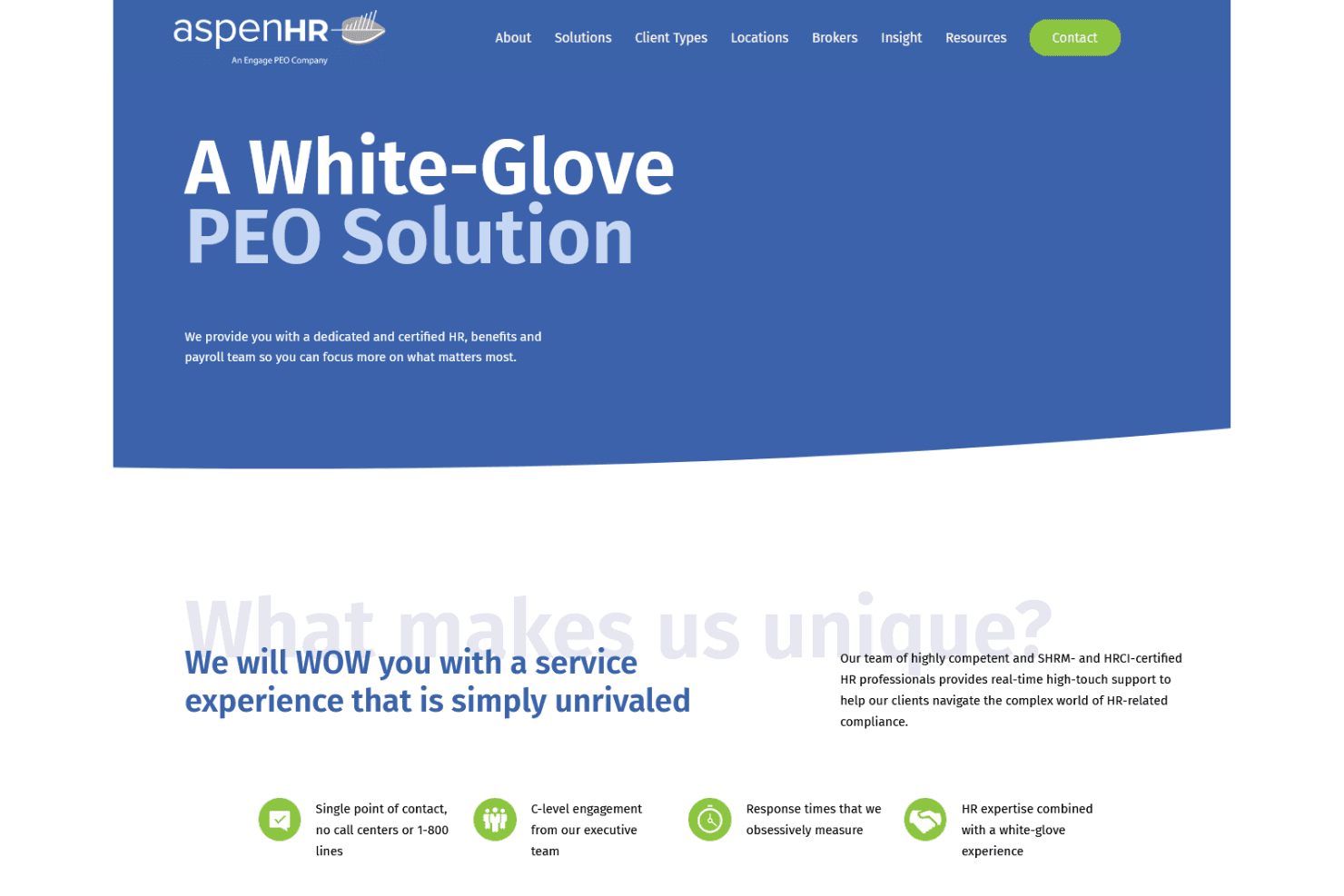
Aspen HR offers white-glove PEO solutions with dedicated HR support. Aspen HR is a co-employment PEO built for VC-backed startups, offering full-service payroll, Fortune 500-tier benefits, multi-state compliance, and named SHRM/HRCI-certified HR advisors.
Who Is Aspen HR Best For?
Aspen HR is a strong fit for VC-backed startups with lean or no in-house HR teams that need a named, certified HR advisor rather than a call center.
Why I Picked Aspen HR
Aspen HR earns its spot on my shortlist because it's the only PEO I've found that pairs true co-employment credentials (both IRS CPEO certification and ESAC accreditation) with a named, SHRM/HRCI-certified HR advisor for every client. I love that VC-backed startups get a single point of contact who handles multi-state compliance and employee handbook creation, with no call center routing. That named-advisor model is what sets Aspen HR apart for lean founding teams.
Aspen HR Key Features
- Fortune 500-tier benefits access: Large-group medical, dental, vision, and 401(k) plans through carriers like Aetna, UnitedHealthcare, Cigna, and Fidelity are available to companies with as few as 2 employees.
- Multi-state payroll processing: Aspen Cloud handles payroll tax remittance and filings across federal, state, and local levels, with employee self-service for pay stubs, direct deposit, and PTO tracking.
- Employment Practices Liability Insurance (EPLI): Workers' compensation, EPLI, and OSHA compliance are bundled into the PEO offering alongside claims management and wage and hour compliance support.
- State-specific new hire document services: Aspen HR provides jurisdiction-specific onboarding documents to keep multi-state hiring compliant from day one.
Aspen HR Integrations
Aspen HR documents one native integration: QuickBooks Online, which supports accounting reconciliation. Its public materials don’t clearly document native connections to ATS, cap table, expense, or identity platforms.
Pros and Cons
Pros:
- 50-state compliance guidance for distributed teams
- Handles complex claims management workflows
- Named SHRM/HRCI advisor for every client
Cons:
- No built-in support for global contractors
- No standalone payroll-only option
Learn more about Aspen HR: Best for FICA savings passed back to employers
- Free demo available
- From $8/user/month
Visit WebsiteCustomer Rating:4.6/5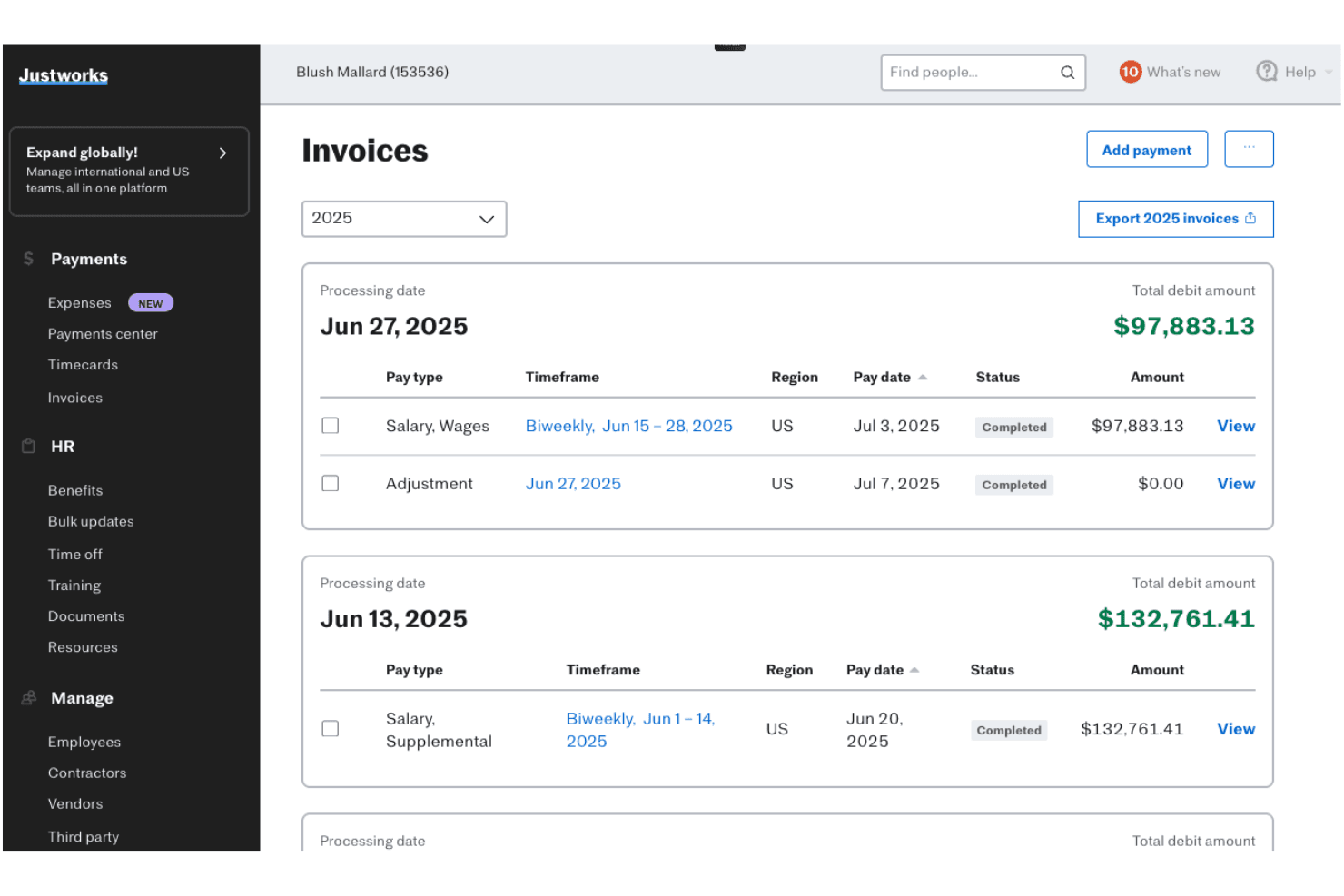
Justworks lets users track payroll invoices and debit totals by pay period. Justworks is a PEO platform for startups and small businesses that handles co-employment, multi-state payroll, tax filings, benefits administration, workers' comp, and HR compliance under one roof.
Who Is Justworks Best For?
Justworks fits startups and small businesses that want to offset PEO costs through FICA savings pass-through and R&D payroll tax credit processing.
Why I Picked Justworks
Justworks earns its spot on my shortlist because it's one of the few PEOs that actually passes FICA payroll tax savings back to you rather than keeping them, which meaningfully offsets your benefits costs. I also like that it handles R&D payroll tax credit processing in-platform, so qualifying startups under $5M in gross receipts can offset up to $500K/year in FICA taxes against eligible R&D spend. Pair that with IRS CPEO certification and ESAC accreditation, and you've got a co-employer built to meet the highest compliance standards in the industry.
Justworks Key Features
- Multi-state payroll filing: Justworks runs payroll across all US states under the PEO's EIN, including federal, state, and local tax filings, W-2s, 1099s, and ACA filings.
- Fortune 500-level benefits access: PEO Plus gives your team medical, dental, vision, 401(k), HSA/FSA, mental health, fertility, and primary care benefits from national carriers.
- International contractor payments: Pay contractors in 60+ countries in local currency or USD directly from the platform, with transparent exchange rates and built-in reporting.
- SUI administration with SIDES brokering: Justworks manages state unemployment insurance filings and brokers UI claims through SIDES for faster, more accurate processing.
Justworks Integrations
Justworks offers native integrations with Carta, Brex, Ramp, QuickBooks, NetSuite, Greenhouse, Lever, Vanta, 15Five, and Culture Amp. These connections cover equity management, accounting, expenses, hiring, compliance, and people operations for startup teams.
Pros and Cons
Pros:
- Includes state unemployment tax administration
- Startup-specific R&D payroll tax credit processing
- FICA payroll tax savings passed to employers
Cons:
- Lacks built-in recruitment tools
- No native ISO or RSU payroll tax handling
Learn more about Justworks:
Outras PEOs para startups
Eis algumas opções adicionais de PEOs para startups que não entraram na minha lista restrita, mas que vale a pena conhecer:
- 11TriNetBest for R&D tax credit-aware payroll
- 12Paychex PEOBest for established compliance and benefit scale
- 13RipplingBest for scaling off PEO without switching platforms
- 14RemoteBest for global-first startups scaling US payroll
- 15G&A PartnersBest for high-touch HR advisory at SMB scale
- 16CoAdvantageBest for multi-carrier benefits with a named HR advisor
- 17PrestigePEOBest for triple-accredited co-employment at SMB scale
- 18QuestcoBest for pay-as-you-go workers' comp at SMB scale
- 19MidwestHRBest for 30-day contracts with no headcount floor
- 20Resourcing EdgeBest for scalable co-employment with CPEO backing
How I Evaluate PEOs for Startups
I look at two things: whether a PEO can genuinely absorb co-employment risk for a 10-person team, and what separates one provider from another when a founder's hair is on fire at payroll time.
Core Service Offerings (Table Stakes for This List)
When I'm selecting providers for my list, I rank each one on a scale from 0 (does not offer the service) to 5 (excels in this area) for each core service listed below. I then calculate the provider's total score into a percentage, using 65% as a benchmark to help assess its overall fit for the list.
- Co-employment model: I check whether a provider holds IRS CPEO certification or ESAC accreditation and can operate across multiple states under a true co-employment arrangement.
- Payroll and tax filing: Multi-state payroll under the PEO's EIN matters here, including automated tax filings, W-2s, and 1099 processing as your team spreads across new jurisdictions.
- Benefits administration: I evaluate whether the provider offers large-group master health plans, 401(k), and ancillary coverage that lets a 15-person startup compete with established employers on total comp.
- HR and compliance support: A named HR advisor who can build your first employee handbook and flag state-specific leave law changes is what I look for, not just a self-serve knowledge base.
- Workers' comp and risk: I look for PEOs that sponsor a master workers' compensation policy and bundle EPLI, safety programs, and claims support rather than referring you to a third party.
- Startup-friendly scalability: Transparent per-employee pricing, low or no minimum headcount requirements, and a clear offboarding path for when you're ready to bring HR in-house all factor into my evaluation.
Once I have a list of providers that meet the criteria, I consider what sets each one apart from the rest.
Differentiating Factors (What Sets Providers Apart)
Here's how I compare and contrast different providers:
Standout Services
I evaluate how each PEO handles equity compensation, since most startups lean heavily on stock options and RSUs. A provider that can process ISO/NSO tax treatment and vesting events inside payroll saves founders from costly manual workarounds. I also look at PEO exit flexibility—specifically, whether a startup can transition to a standalone HRIS without losing payroll history or disrupting benefits coverage. R&D tax credit automation is another differentiator I check, because eligible startups frequently leave significant credits unclaimed.
Beyond Core Offerings
I check how fast a provider can run first payroll—days matter when you've just closed a round and need to onboard hires immediately. Pricing transparency is equally important; I look for per-employee-per-month models with no minimums or termination penalties that punish pivots. I also evaluate integrations with tools like QuickBooks, Carta, and Greenhouse, since a PEO that can't sync with your cap table or ATS creates manual work that defeats the purpose.
O que são as PEOs para startups?
As PEOs para startups são organizações profissionais de empregadores que assumem a gestão dos salários, da conformidade e dos benefícios para empresas em crescimento, ao abrigo de um modelo de coemprego. Tratam das tarefas de recursos humanos que podem sobrecarregar equipas reduzidas e ajudam-no a oferecer benefícios próprios de grandes empresas, a acompanhar novas regulamentações e a reduzir riscos à medida que o número de colaboradores aumenta ou o trabalho passa a ser remoto. Isto permite-lhe, a si e à sua equipa, concentrar-se na expansão da empresa em vez de gerir tarefas administrativas.
Como escolher uma PEO para startups
A melhor PEO para a sua startup depende da importância que atribui aos salários, à conformidade, à expansão e aos benefícios — eis como relacionar as suas principais prioridades com os critérios certos:
| Se a sua prioridade for… | Procure… |
|---|---|
| Se a sua prioridade for…Uma carga administrativa reduzida e integração rápida | Procure…Tempos médios de lançamento da folha salarial inferiores a 14 dias |
| Se a sua prioridade for…Créditos de I&D e capital próprio na folha salarial | Procure…Processamento interno de remunerações em capital próprio e ferramentas de créditos fiscais |
| Se a sua prioridade for…Contratação em vários estados ou a nível global | Procure…Suporte direto para mais de 3 estados e coemprego global |
| Se a sua prioridade for…Planos de saúde para startups a preços de grupo | Procure…Benefícios para grandes grupos para <10 colaboradores |
| Se a sua prioridade for…Saída flexível à medida que cresce | Procure…Migração integrada para um sistema autónomo de gestão de recursos humanos |
Como avaliar a sua lista restrita
- Testar a rapidez da integração: Solicite um calendário de integração de exemplo e peça para falar com uma referência que tenha concluído a integração em <14 dias.
- Verificar a experiência em conformidade: Peça provas da acreditação CPEO ou ESAC e exemplos de relatórios de auditoria de conformidade.
- Avaliar a gestão de participações e I&D: Solicite uma demonstração do processamento salarial com atribuições fictícias de RSU e créditos fiscais de I&D.
- Verificar a cobertura dos benefícios: Compare documentos reais dos planos para uma equipa pequena (5 pessoas) em pelo menos dois estados.
- Decidir entre apoio e autonomia: Pondere o apoio personalizado de RH face às opções autónomas para o processamento salarial e a conformidade à medida que a sua startup amadurece.
Quando utilizar uma PEO para startups
Uma PEO para startups faz mais sentido quando o número de colaboradores está a crescer mais rapidamente do que a sua infraestrutura de RH consegue acompanhar, especialmente se estiver a contratar em vários estados sem uma equipa de conformidade.
Estes são os cenários em que tende a fazer a maior diferença.
- Contratações simultâneas em vários estados: Está a contratar pessoas em três estados no espaço de um trimestre. Gerir registos fiscais distintos e diferenças nas leis relativas a licenças sem uma equipa de conformidade representa um risco significativo. Uma PEO trata de tudo ao abrigo de um único EIN.
- Os candidatos estão a escolher empregadores maiores: Uma startup com 20 pessoas raramente tem acesso às mesmas tarifas de seguro de saúde de grupo que uma empresa com 500 pessoas. A adesão ao plano principal de uma PEO proporciona à sua equipa uma cobertura comparável, o que significa menos recusas de propostas.
- Acabou de concluir uma ronda de financiamento: Assinou folhas de termos e o seu conselho de administração espera 15 novas contratações em 90 dias. Configurar o processamento salarial, os benefícios e a conformidade de raiz nesse período representa um verdadeiro estrangulamento. Uma PEO pode ter o primeiro processamento salarial a funcionar em poucos dias.
Os eventos relacionados com participações estão a comprometer o seu processamento salarial: Os exercícios de ISO e os eventos de aquisição de direitos de RSU afetam o processamento salarial de formas para as quais a maioria das pequenas estruturas de RH não está preparada. Não aplicar o tratamento fiscal correto a um conjunto de opções cria responsabilidades que não é fácil reverter.
Preços de uma PEO para startups
Uma PEO para startups custa normalmente entre $120 e $200 por colaborador por mês, dependendo da dimensão da sua equipa e da complexidade do seu pacote de benefícios. Os fornecedores trabalham geralmente segundo uma das seguintes estruturas de preços:
| Modelo de preços | Preço médio | Serviços incluídos | Mais adequado para |
|---|---|---|---|
| Modelo de preçosPor colaborador, mensal | Preço médio$120–$200 por colaborador | Serviços incluídosProcessamento salarial, RH, benefícios, conformidade | Mais adequado paraEquipas em crescimento com necessidades estáveis |
| Modelo de preçosTaxa mensal fixa | Preço médio$1,500–$3,000 mensais | Serviços incluídosCobertura para até 15 colaboradores | Mais adequado paraEquipas em fase inicial com orçamento fixo |
| Modelo de preçosPercentagem do processamento salarial | Preço médio2%–6% do processamento salarial bruto | Serviços incluídosTodos os serviços essenciais de PEO | Mais adequado paraStartups com processamento salarial variável |
| Modelo de preçosPlano combinado | Preço médio$2,000–$4,500 mensais | Serviços incluídosSaúde, 401(k), RH, integração | Mais adequado paraStartups que dão prioridade a benefícios de topo |
| Modelo de preçosEmpresarial personalizado | Preço médioCom base em orçamento | Serviços incluídosConformidade avançada, apoio global | Mais adequado paraOrganizações grandes ou complexas |
Escolher o plano certo ajuda a alinhar o preço com o nível de apoio necessário e a trajetória de crescimento.
Principais fatores que influenciam os preços
Além do modelo de preços específico, eis alguns fatores adicionais que podem influenciar o custo de uma PEO para startups:
- Número de colaboradores: As equipas maiores qualificam-se frequentemente para descontos por volume, mas aumentam os custos totais à medida que cresce o número de colaboradores.
- Operações em vários estados: A necessidade de garantir a conformidade em várias jurisdições aumenta os requisitos administrativos e legais.
- Tipo de pacote de benefícios: Os planos premium de saúde, dentários e oftalmológicos afetam significativamente as tarifas mensais.
- Gestão da remuneração em participações: Os fornecedores que conseguem gerir eventos de processamento salarial relacionados com ISO, NSO e RSU cobram por esta complexidade adicional.
- Apoio à integração e saída: Vagas de contratações rápidas ou alterações frequentes podem aumentar as taxas de implementação.
Ter clareza sobre estas estruturas de preços e os fatores que as influenciam facilitará a comparação entre fornecedores e a obtenção de orçamentos precisos.
Perguntas frequentes sobre PEOs para startups
Eis algumas respostas a perguntas comuns sobre PEOs para startups:
Como escolho o PEO certo para a minha startup?
Comece por definir as suas prioridades de administração de RH e processamento salarial global, como a contratação em vários estados ou uma integração rápida. Procure empresas de PEO que ofereçam sólidas credenciais de conformidade, seguros de saúde adequados para startups e preços transparentes por trabalhador, em vez de cobrarem uma percentagem do processamento salarial. Teste sempre a plataforma de RH e as soluções escaláveis antes de tomar uma decisão.
As startups podem utilizar um PEO se tiverem menos de cinco trabalhadores?
Sim, muitos PEOs trabalham com startups que têm apenas alguns trabalhadores. Procure fornecedores sem requisitos mínimos de trabalhadores ou com requisitos reduzidos, bem como contratos de curta duração, para não assumir um compromisso excessivo numa fase inicial. Alguns PEOs permitem até a adesão com apenas um trabalhador a tempo inteiro ou com a sua equipa fundadora.
Os PEOs tratam do processamento salarial de opções sobre ações e RSUs para startups?
Alguns PEOs estão preparados para processar remunerações em capital, incluindo opções sobre ações e RSUs, como parte do processamento salarial. Nem todos oferecem este serviço, por isso confirme sempre se suportam o seu plano específico de participação no capital e se conseguem automatizar a retenção e a comunicação de impostos relativos às concessões de capital.
O que acontece se a minha startup ultrapassar a capacidade do seu PEO?
A maioria dos PEOs oferece apoio à saída e à migração, permitindo-lhe mudar para um HRIS ou para o processamento salarial direto sem perder o histórico salarial nem interromper os benefícios. Certifique-se de que o seu PEO tem um processo de saída claro e verifique se existem taxas adicionais ou períodos de aviso prévio.
Os PEOs são responsáveis por toda a conformidade laboral na minha startup?
Não. Embora os PEOs assumam muitas tarefas relacionadas com a conformidade — como a entrega de declarações de impostos sobre salários, a comunicação de remunerações e a administração de benefícios — continua a ter de cumprir outras leis laborais. Espere que o seu PEO lhe preste apoio e aconselhamento, mas mantenha a supervisão das políticas e práticas do seu local de trabalho.