

Gerir a remuneração por incentivos pode ser uma verdadeira dor de cabeça, especialmente quando está a conciliar folhas de cálculo e a tentar manter todos satisfeitos. Procura uma solução que elimine o stress da gestão de bónus e recompensas, permitindo-lhe concentrar-se no que realmente importa: o desempenho da sua equipa.
Com base na minha experiência a analisar software de RH, descobri que a ferramenta certa de gestão de remuneração por incentivos (ICM) pode fazer toda a diferença. Ajuda a gerir planos de remuneração complexos com facilidade, garantindo precisão e equidade.
Neste artigo, partilho as minhas principais escolhas de software de gestão de remuneração por incentivos. Encontrará uma análise imparcial e bem fundamentada para o ajudar a encontrar a opção mais adequada para a sua equipa. Vamos descobrir a solução que responde às suas necessidades.
Porque pode confiar nas nossas recomendações de software
6,700+
Reviews
20
Industry experts
16+
Evaluation factors
14
Years reviewing software
A nossa equipa testa e analisa software desde 2012. Como especialistas em RH, sabemos o quão difícil — e importante — é escolher o software certo.
Para este guia, avaliámos as ferramentas através de testes práticos e pesquisa independente, pontuando-as de acordo com os nossos critérios de seleção. Recorremos também a contributos de líderes de opinião do setor e de especialistas em RH no ativo.
As nossas análises refletem o juízo da nossa equipa editorial, e não um discurso de vendas.
Revisores especialistas:
- Phil GrayCOO
 Kim BehnkeHR Tech Editor & Analyst
 Josh BarkerPeople Ops Manager

Tabela comparativa de software de gestão de remuneração por incentivos
Esta tabela comparativa resume os detalhes dos preços das minhas principais escolhas de software de gestão de remuneração por incentivos:
Score legend (out of 5)
- Excellent4.5–5
- Good4–4.4
- Average3–3.9
- Below average2–2.9
- Poor1–1.9
Sorted by: Default
| Tool | Starting Price | Website | |||||||
|---|---|---|---|---|---|---|---|---|---|
Best for plan simulation and forecasting | 3.7 out of 5 | 4 | 3 | 4 | 4 | 4 | 3 | Pricing upon request Free demo available | Website |
Best for global incentive management | 1.5 out of 5 | 3 | 2 | 1 | 1 | 1 | 1 | $5/user/month Free demo available | Website |
Best for comp plans built on 20+ years of pay data | 3.8 out of 5 | 4 | 4 | 4 | 4 | 4 | 3 | Pricing upon request Free demo available | Website |
Best for sales compensation visibility | 3.8 out of 5 | 4 | 3 | 4 | 4 | 4 | 4 | Pricing upon request Free demo available | Website |
Best for real-time market data | Not rated | 2 | 2 | 1 | Not rated | Not rated | 1 | Pricing upon request Free demo available | Website |
Best for AI-driven insights | 3.8 out of 5 | 3 | 4 | 4 | 4 | 4 | 4 | Pricing upon request Free demo available | Website |
Best for monthly billing by active payees | 4.0 out of 5 | 4 | 4 | 4 | 4 | 4 | 4 | $40/user/month 14-day free trial + demo available | Website |
Best for project and operational incentives | 4.2 out of 5 | 4 | 4 | 4 | 5 | 4 | 4 | Pricing upon request Free demo available | Website |
Best for sales teams | 4.2 out of 5 | 4 | 5 | 4 | 5 | 4 | 3 | Pricing upon request Free demo available | Website |
Best for custom reporting | 4.0 out of 5 | 4 | 3 | 4 | 5 | 4 | 4 | Pricing upon request Free demo available | Website |


Análise dos melhores softwares de gestão de remuneração por incentivos
Abaixo encontrará os meus resumos detalhados dos melhores softwares de gestão de remuneração por incentivos que foram incluídos na minha seleção. As minhas análises apresentam uma visão detalhada das principais funcionalidades, vantagens e desvantagens, integrações e casos de utilização ideais de cada ferramenta, para o ajudar a encontrar a melhor opção para si.
 Best for plan simulation and forecasting
- Free demo available
- Pricing upon request
Visit WebsiteCustomer Rating:4.8/5
Qobra plan simulation tools estimate commissions and forecast payout scenarios. For organizations looking for incentive compensation management software, Qobra offers a platform designed to help teams manage and track sales commissions. The platform supports plan simulation and forecasting, helping teams review how compensation plans may affect payouts and performance. It is built for sales and finance teams that need a clearer way to manage commission structures and track earnings. With its reporting tools and shared workspace, Qobra helps teams organize compensation plans and monitor results.
Why I Picked Qobra
I picked Qobra for plan simulation and forecasting, which helps teams review how compensation plans may affect payouts and sales performance. The platform also includes a no-code plan builder that allows you to create and adjust compensation structures without technical expertise. In addition, real-time automation keeps commission data up to date, enabling teams to track earnings more accurately. These features help sales and finance teams manage commission plans and monitor payouts more clearly.
Qobra Key Features
In addition to plan simulation and forecasting, Qobra offers:
- Custom Calculation Rules: This allows you to define specific rules for commission calculations, ensuring flexibility to accommodate unique business scenarios.
- Version Control: This feature helps track changes to compensation plans, enabling easy revisions and audits.
- Multilingual Support: Qobra caters to international teams by supporting multiple languages, broadening its applicability.
- QobrAI Agents: Use The Architect, The Analyst, and The Sales Coach to instantly build plans, detect calculation anomalies, and push proactive insights to your sales team.
Qobra Integrations
Integrations include Salesforce, HubSpot, Microsoft Dynamics, Zoho CRM, BambooHR, and Workday, with additional connections available through APIs.
Pros and Cons
Pros:
- CRM integrations syncing deal data for accurate commission tracking
- Clear compensation statements improving transparency for sales teams
- Real-time commission dashboards showing earnings, quotas, and incentive progress
Cons:
- Occasional delays in commission data updates reported by users
- Commission calculation rules sometimes difficult to configure for new users
Learn more about Qobra: Best for global incentive management
- Free demo available
- From $5/user/month
Visit WebsiteCustomer Rating:4.8/5
Deel provides a demo for understanding incentive compensation management features. Deel offers a specialized solution for managing incentive compensation across global teams. It’s well suited for HR leaders and organizations that need to handle complex pay structures across multiple countries. By centralizing compensation data, review cycles, and compliance with pay transparency regulations, Deel helps you make consistent, informed pay decisions across diverse markets.
Why I Picked Deel
I picked Deel because it gives you structured control over global incentive compensation without adding administrative complexity. You can build and manage compensation bands to support variable pay models across regions, while automated budget tracking helps you monitor spend in real time. I also like that it provides visibility into compensation trends and equity indicators, which can help you align pay decisions with market benchmarks and transparency requirements.
Deel Key Features
In addition to its compensation management capabilities, I also found other features that can enhance your experience with Deel:
- Global Salary Insights: Access to detailed salary benchmarks across various roles and regions helps you stay competitive.
- Compliance Tracking: Ensure your compensation strategies are compliant with local labor laws and pay transparency regulations.
- Structured Review Cycles: Conduct regular compensation reviews with integrated data to support fair pay decisions.
- Compensation Trends Analysis: Gain insights into industry trends and equity indicators to guide strategic compensation planning.
Deel Integrations
Integrations include Workday, SAP, BambooHR, Personio, Microsoft Teams, Slack, Rydoo, Lever, Workable, and NetSuite.
Pros and Cons
Pros:
- Integrates with major HR systems
- Built-in compliance and contract management
- Global payroll across 150 countries
Cons:
- Limited directory customization options
- Reporting features lack advanced filtering
 Best for comp plans built on 20+ years of pay data
- Free demo available
- Pricing upon request
Visit WebsiteCustomer Rating:4.3/5
Xactly offers a Coverage & Capacity dashboard displaying bookings targets, employee headcount, and segment-level capacity comparisons. Xactly is an incentive compensation management platform that combines sales commission automation, quota planning, and territory management with an AI-driven analytics layer built on a proprietary benchmark pay dataset.
Who Is Xactly Best For?
Xactly is a strong fit for mid-to-large sales organizations that need to benchmark and design compensation plans against real industry pay data.
Why I Picked Xactly
I picked Xactly as one of the best because its proprietary benchmark dataset, built from 20+ years of real pay data across thousands of companies, gives comp teams something most platforms can't: a defensible baseline for plan design. I love that you can use Xactly Benchmarking to compare your OTE, quota, and accelerator structures against actual industry peers, not self-reported surveys. Its AI-driven quota planning also flags where targets are set too high or too low based on historical attainment patterns.
Xactly Key Features
- Incentive compensation automation: Xactly automatically calculates commissions and variable pay based on your defined plan rules, reducing manual errors in payout processing.
- Territory management: The platform lets you design, assign, and adjust sales territories to balance workloads and align coverage with business goals.
- CRM and ERP integrations: Xactly connects with systems like Salesforce and SAP to pull performance and revenue data directly into comp calculations.
- What-if modeling: Comp teams can model plan changes before rollout to forecast cost impact and predict how different structures will affect rep behavior.
Xactly Integrations
Xactly offers native integrations with Salesforce, Microsoft Dynamics 365, SAP, Oracle, NetSuite, Workday, and Snowflake, and connects to other CRM, ERP, and HCM systems through Xactly Connect via ODBC/JDBC drivers and REST APIs for custom integrations.
Pros and Cons
Pros:
- What-if models predict plan cost impact
- AI suggests quota targets based on history
- Real industry pay benchmarks for comp design
Cons:
- Reporting can require advanced setup or training
- Implementation process is long and detail-heavy
Learn more about Xactly: Best for sales compensation visibility
- Free demo available
- Pricing upon request
Visit WebsiteCustomer Rating:4.8/5
Visdum's plan creation view lets teams choose compensation templates Visdum helps sales, finance, and revenue operations teams automate complex commission calculations and reduce the manual work of managing incentive plans. It stands out for its AI-assisted plan modeling, real-time visibility into earnings, and integrations with CRM, ERP, and HR systems that help keep compensation accurate and audit-ready.
Who Is Visdum Best For?
Sales operations and finance teams at mid-sized to large organizations who need to manage complex commission structures across multiple systems.
Why I Picked Visdum
I picked Visdum because it gives your team clear sales compensation visibility through real-time commission tracking, earnings statements, and performance reports. I like that reps and managers can see quotas, payouts, and plan details in one place, which makes it easier to understand how earnings are calculated. Your team can also use its dashboards and forecasting tools to monitor progress and spot payout trends before payroll runs. Visdum also supports complex commission plans, including splits, overrides, and clawbacks, so you can keep compensation tracking accurate as plans evolve.
Visdum Key Features
Some other features in Visdum support accurate, transparent, and scalable incentive compensation management:
- Custom approval workflows: Set up multi-level approval processes for commission adjustments and exceptions.
- Audit-ready reporting: Generate detailed audit trails and compliance reports for compensation transactions.
- Role-based access controls: Manage permissions and data visibility for different users across your organization.
- Real-time earnings visibility: Give reps and managers up-to-date views of commissions, payouts, and performance.
Visdum Integrations
Integrations include Salesforce, HubSpot, Microsoft Dynamics, QuickBooks, Sage Intacct, Workday, HiBob, ADP, DocuSign, and Okta.
Pros and Cons
Pros:
- Connects natively with CRM, ERP, payroll, and e-sign tools
- Provides real-time dashboards for earnings, quota progress, and payouts
- Automates complex commission plans with splits, overrides, and adjustments
Cons:
- New users may face a learning curve initially
- Visualization options could be more flexible for deeper reporting needs
Learn more about Visdum:

SalaryCube offers advanced real-time salary benchmarking charts. For organizations looking to build structured, data-informed incentive programs, SalaryCube offers a compensation management platform grounded in daily market data. It supports HR and compensation teams, especially in sectors like tech and healthcare, where salary movement and pay transparency regulations can shift quickly. By combining benchmarking, compliance tools, and compensation design support, SalaryCube helps ensure your incentive strategy remains competitive while aligned with internal equity and evolving legal requirements.
Why I Picked SalaryCube
I picked SalaryCube because it gives you access to daily market benchmarks, which can make a meaningful difference when designing or adjusting incentive compensation plans. Tools like DataDive Pro allow you to validate pay decisions against current market conditions instead of relying on outdated surveys. I also like that the platform connects compensation design to job architecture and compliance support, so you can structure incentive programs that are competitive, equitable, and aligned with your broader business goals.
SalaryCube Key Features
In addition to its real-time data capabilities, I also found these features useful:
- Job Architecture: Establishes consistent incentive applications across your organization with clear job level definitions.
- Pay Equity Analysis: Offers tools to ensure compliance with pay transparency laws by analyzing compensation across different demographics.
- FLSA Audit Tool: Provides support for ensuring compliance with labor laws regarding pay classifications.
- Manager Enablement: Supplies training resources to help managers effectively communicate incentive plans to employees.
SalaryCube Integrations
Native integrations are not currently listed by SalaryCube.
Pros and Cons
Pros:
- Includes FLSA audit support tools
- Supports pay equity analysis tools
- Provides daily real time benchmarks
Cons:
- Pricing details not publicly available
- No native integrations listed
Learn more about SalaryCube: Best for AI-driven insights
- Free demo available
- Pricing upon request
Visit WebsiteCustomer Rating:4.9/5
Forma.ai helps teams manage complex sales compensation tasks. Forma.ai is an incentive compensation management platform designed for sales teams that need advanced data analysis to optimize their compensation strategies. It offers AI-driven insights that help businesses make data-informed decisions.
Why I picked Forma.ai: Forma.ai leverages AI to provide insightful data analysis, making it ideal for sales teams looking to optimize their compensation strategies. Its adaptive modeling engine adjusts to complex compensation structures, ensuring accuracy and efficiency. With its focus on data-driven decision-making, Forma.ai helps you fine-tune your compensation plans for maximum effectiveness.
Standout features and integrations:
Features include adaptive modeling that caters to complex compensation structures. Real-time analytics provide up-to-date insights, helping you make informed decisions. The platform's data visualization tools make it easy to understand and interpret compensation data.
Integrations include Salesforce, Microsoft Dynamics, Workday, NetSuite, and more.
Pros and Cons
Pros:
- Supports data-driven decisions
- Data visualization tools
- Adapts to complex structures
Cons:
- Primarily sales-focused
- May require initial customization
Learn more about Forma.ai: Best for monthly billing by active payees
- 14-day free trial + demo available
- From $40/user/month
Visit WebsiteCustomer Rating:4.7/5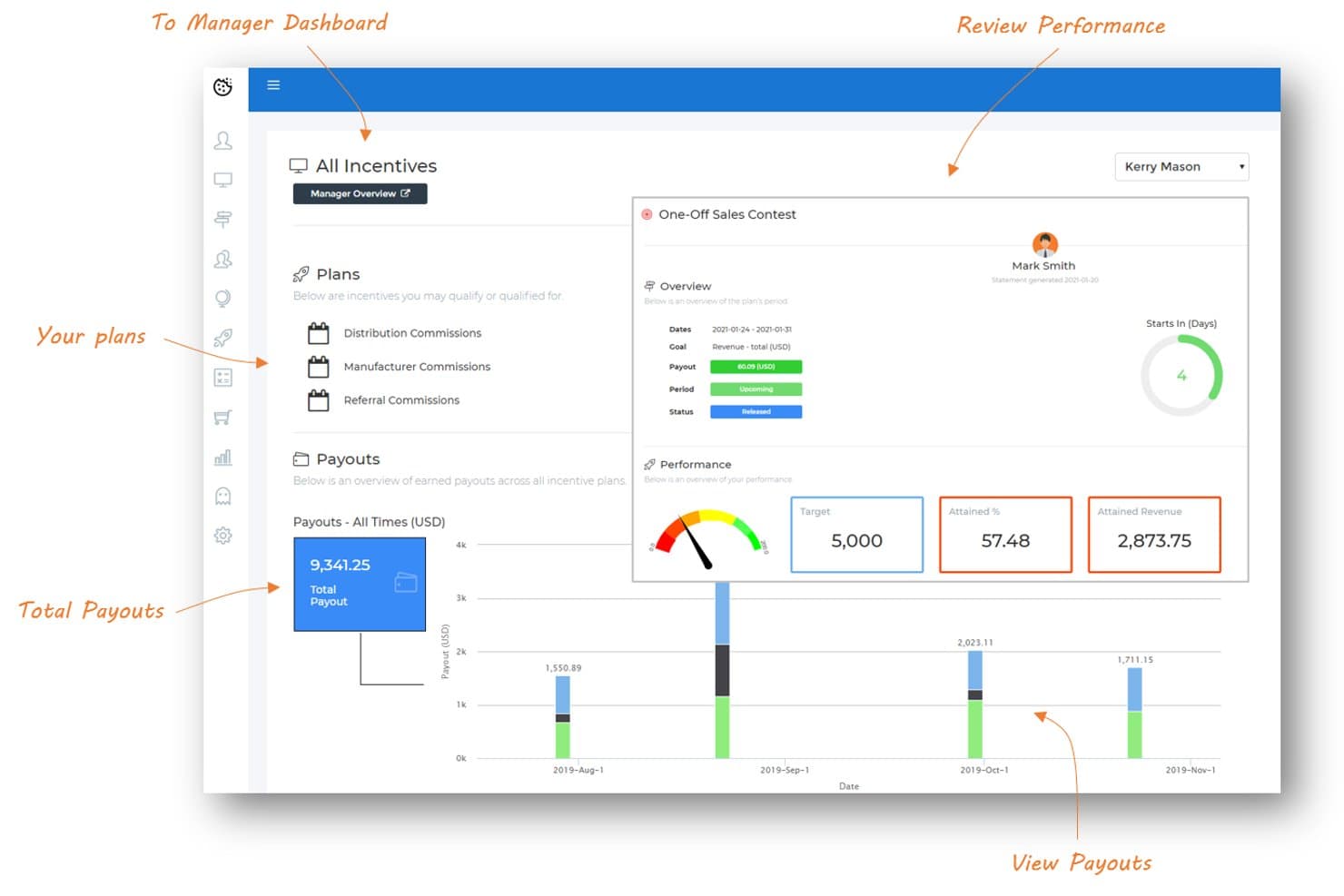
Sales Cookie tracks rep performance, payouts, and incentive plans in one dashboard. Sales Cookie is an incentive compensation management platform that handles commission calculations, plan design, payee dashboards, and audit workflows for sales teams.
Who Is Sales Cookie Best For?
Sales Cookie is a strong fit for sales compensation managers and ops leaders who need to automate complex commission calculations without locking into long-term contracts.
Why I Picked Sales Cookie
I picked Sales Cookie as one of the best because its billing model is built around active payees, meaning your costs scale down automatically when reps leave and up only when new ones join. I love that this pairs with clawback rules and pay-when-paid triggers, so the platform handles the full payout lifecycle without requiring manual cleanup. The built-in plan checker also catches configuration issues before a calculation runs, which saves real time when managing tiered or split-commission structures.
Sales Cookie Key Features
- AI plan creation wizard: An AI-guided wizard walks you through building incentive plans from scratch, including commission logic, exceptions, and configuration rules.
- Multi-currency calculations: Sales Cookie converts transaction values using manual or automated exchange rates and calculates rewards in both your organization's main currency and each participant's local currency.
- Role-based security controls: Administrators can assign security roles that filter data access for full admins, plan admins, limited admins, and participants across isolated workspaces.
- Calculation simulations: You can run simulations that estimate future transactions based on recent pace and sample data before committing to a full calculation run.
Sales Cookie Integrations
Sales Cookie offers native integrations with Salesforce, HubSpot, Dynamics CRM, NetSuite, QuickBooks, Xero, Stripe, and PayPal. It also provides REST, OData, and custom API options, plus Zapier.
Pros and Cons
Pros:
- Reviewers praise responsive setup support
- Rep statements clarify credits and payouts
- Handles complex tiers, splits, and overrides
Cons:
- Intricate plans take testing to configure
- Report filters and exports frustrate reviewers
Learn more about Sales Cookie: Best for project and operational incentives
- Free demo available
- Pricing upon request
Visit WebsiteCustomer Rating:4.5/5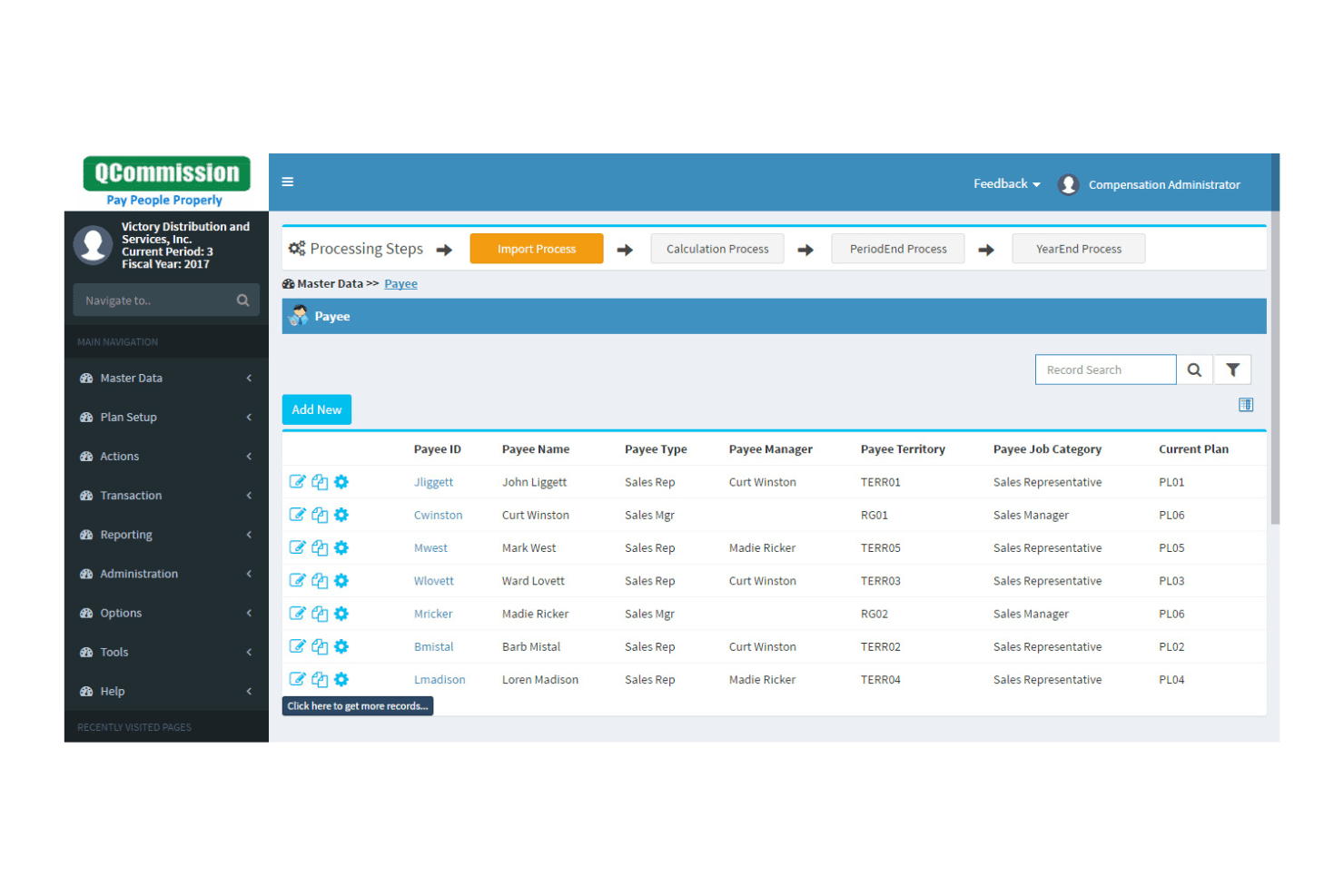
QCommission manages payee records with territory and plan assignments. QCommission is a sales commission and incentive compensation management platform that automates commission calculations, supports complex plan design, and delivers payee dashboards, reporting, and integrations across CRM, ERP, HRIS, and payroll systems.
Who Is QCommission Best For?
QCommission is a strong fit for sales compensation managers and operations teams running complex, multi-plan commission structures across mid-sized to enterprise organizations.
Why I Picked QCommission
I picked QCommission as one of the best because it handles project and operational incentives in ways most commission tools simply don't support natively. I love that crediting rules can be built around jobs, projects, and custom criteria, so a field services or consulting business can commission reps on completed work rather than just closed deals. The modeling module also lets me simulate how plan changes affect payouts before rollout, using real historical data.
QCommission Key Features
- Payee dashboards: Sales reps and managers can view earnings, quota attainment, and payout trends through role-configured dashboards with drill-down widgets.
- Dispute and issue management: Payees can flag discrepancies directly in the system, while admins log, track, and resolve cases through a formal workflow.
- GL accrual reporting: Finance teams can generate reports showing commission liability accruals by GL account or cost center for each processing period.
- Multi-currency support: Transaction amounts can be converted to a base company currency or individual payee currency, with effective-dated exchange rates maintained in the system.
QCommission Integrations
QCommission offers 60+ integrations, including Salesforce, QuickBooks, Xero, HubSpot, NetSuite, ADP, Workday, BambooHR, and Zoho CRM. Enterprise includes an API for custom integrations, and Zapier is supported.
Pros and Cons
Pros:
- Automates complex splits and invoice true-ups
- Models plan changes against historical data
- Handles project and job profitability commissions
Cons:
- Plan changes may require vendor assistance
- Reports can be slow or hard to navigate
Learn more about QCommission:

Performio automates sales commissions and offers insights to boost performance. Performio is a performance management software tailored for sales teams looking to efficiently manage their incentive compensation plans. It helps businesses automate commission calculations and provides insights into quota attainment to drive motivation and results.
Why I picked Performio: Performio offers automated commission calculations that reduce manual errors and save time. Its performance dashboards provide clear visibility into sales metrics, helping your sales reps stay informed and motivated. With real-time reporting, you can track progress and make data-driven decisions. The platform's focus on sales performance makes it a valuable tool for businesses looking to enhance their sales operations.
Standout features and integrations:
Features include real-time reporting that keeps you updated on sales performance. Automated commission calculations reduce overpayments, even with complex plans. Quota management dashboards offer a clear view of sales metrics, helping your salespeople stay motivated.
Integrations include Salesforce, SAP, Microsoft Dynamics CRM, HubSpot, NetSuite, Xero, QuickBooks, Workday, ADP, and more.
Pros and Cons
Pros:
- Reduces manual errors
- Performance dashboards
- Real-time reporting
Cons:
- Primarily for larger sales teams
- Limited to sales-focused features
Learn more about Performio:

CaptivateIQ supports automation with customizable performance insights. CaptivateIQ is an incentive compensation management software that caters to businesses that need flexible and customizable sales plan reporting. It helps teams automate commission calculations and provides detailed insights into comp plans and performance.
Why I picked CaptivateIQ: CaptivateIQ offers exceptional custom reporting capabilities, allowing you to tailor reports to fit your specific needs. Its flexible calculation engine handles complex commission structures, reducing manual errors and saving time. The software's intuitive interface makes it easy for your team to add new plans.
Standout features and integrations:
Features include a flexible calculation engine that adapts to various commission plan designs. Real-time data visibility ensures you have up-to-date insights into compensation performance. The intuitive interface allows for easy navigation.
Integrations include Salesforce, NetSuite, QuickBooks, Xero, Microsoft Dynamics CRM, HubSpot, Snowflake, and more.
Pros and Cons
Pros:
- Real-time data visibility
- Supports complex commission structures
- Customizable reporting features
Cons:
- Requires ongoing training
- Initial setup can be time-consuming
Learn more about CaptivateIQ:
Outros softwares de gestão de remuneração por incentivos
Eis algumas opções adicionais de software de gestão de remuneração por incentivos que não foram incluídas na minha seleção, mas que ainda vale a pena conhecer:
- 11OptymyzeBest for no-code automation
- 12AnaplanBest for complex modeling and scenario analysis
- 13KennectBest for auditable incentive query resolution
- 14QuotaPathBest for small sales teams
- 15VaricentBest for linking incentives to sales plans
- 16EverstageBest for performance tracking
- 17Salesforce SpiffBest for Salesforce users
- 18beqomBest for total compensation management
- 19IconixxBest for mid-sized businesses
- 20Oracle Incentive CompensationBest for linking activity contests to pay
Related Reviews
How I Evaluate Incentive Compensation Management Software
I split my evaluation into three parts, with the most weight on core functionality: calculate commissions from performance data and model plans before rollout. Next, I look for differentiators like AI payout forecasting or a mobile payee app. Finally, I consider onboarding support and total cost as teams scale.
Core Functionality (Table Stakes For This List)
When I'm selecting tools for my list, I score each one on a scale from 0 (does not offer the functionality) to 5 (excels in this area) for each core functionality listed below. I then convert the total into a percentage to help assess each tool's overall fit, with extra weight on any functionalities I’ve deemed essential.
- Commission Calculation (Essential): I check whether configurable rules handle tiers, splits, accelerators, and overrides across roles, using attainment data to calculate variable pay.
- Plan Design And Modeling (Essential): I look for scenario testing that compares payout effects before launch, such as changing quota accelerators without disrupting established plans.
- Payee Dashboards: Payees should be able to trace earnings to transactions, monitor quota progress, and review itemized statements as results change.
- System Integrations: I assess how CRM, HRIS, ERP, and payroll data enter and leave the system, including reliable handling of adjustments and sync timing.
- Disputes And Audit Trails: A rep should be able to flag a disputed credit, while admins track review, edits, approvals, and the calculation history.
- Reporting And Analytics: I look for reports that compare payout trends and plan costs by team, role, territory, or period to inform design decisions.
Once I have a list of tools that meet the criteria, I consider what sets each platform apart.
Differentiating Factors (What Sets Vendors Apart)
Here's how I compare and contrast different vendors:
Standout Features
I look for AI-powered forecasting that projects future payouts and flags anomalies before they hit payroll—especially useful during mid-quarter plan changes. Clawback and draw management matters just as much, since automated handling of retroactive adjustments prevents the manual errors that erode rep trust. I also evaluate whether a tool offers an embedded CRM experience, like Salesforce-native earnings views, so reps track attainment without switching systems.
Beyond Features
I evaluate how each vendor handles multi-entity, multi-currency payee populations, since a tool that works for one country often breaks down when you add regional plan rules. Implementation support matters just as much—vendors that pair you with onboarding specialists who understand sales comp design cut time-to-value dramatically compared to self-serve setups. I also check whether pricing scales predictably as headcount grows, because per-payee models can quietly double costs after a strong hiring quarter.
Como escolher um software de gestão de remuneração por incentivos
É fácil perder-se em listas intermináveis de funcionalidades e estruturas de preços complexas. Para o ajudar a manter-se concentrado enquanto desenvolve o seu processo específico de seleção de software, eis uma lista de fatores a ter em conta:
| Fator | O que deve considerar |
|---|---|
| FatorEscalabilidade | O que deve considerarO software pode acompanhar o crescimento da sua empresa? Considere se consegue lidar com um número crescente de utilizadores e dados sem problemas de desempenho. |
| FatorIntegrações | O que deve considerarEstabelece ligação aos seus sistemas existentes? Verifique a compatibilidade com o seu CRM, ERP e outras ferramentas essenciais utilizadas diariamente pela sua equipa. |
| FatorPersonalização | O que deve considerarPode adaptar o software às suas necessidades? Procure opções que permitam ajustar definições, painéis e fluxos de trabalho de acordo com os seus processos. |
| FatorFacilidade de utilização | O que deve considerarO software é intuitivo para a sua equipa? Teste a interface para garantir que os novos utilizadores conseguem navegar facilmente sem necessitarem de formação extensiva. |
| FatorImplementação e integração inicial | O que deve considerarCom que rapidez pode começar a utilizar o software? Avalie o tempo e os recursos necessários para a configuração e a formação. Considere ferramentas que ofereçam um apoio sólido durante a integração inicial. |
| FatorCusto | O que deve considerarDe que forma os preços se alinham com o seu orçamento? Compare o custo total de propriedade, incluindo licenças, taxas de configuração e suporte contínuo, para garantir que se enquadra no seu plano financeiro. |
| FatorMedidas de segurança | O que deve considerarProtege os seus dados? Verifique se o software cumpre os regulamentos de proteção de dados e oferece encriptação e outras medidas de segurança. |
O que é um software de gestão de remuneração por incentivos?
O software de gestão de incentivos e remunerações é uma ferramenta que automatiza e gere os planos de remuneração dos funcionários, especialmente das equipas de vendas. Os profissionais de recursos humanos, os gestores de vendas e as equipas financeiras utilizam geralmente estas ferramentas para garantir cálculos precisos das comissões e motivar os funcionários. Os cálculos automatizados, o acompanhamento do desempenho e as capacidades de integração ajudam a reduzir erros, poupar tempo e alinhar os incentivos com os objetivos empresariais. De um modo geral, estas ferramentas melhoram a eficiência e a precisão da gestão de remunerações.
Funcionalidades
Eis as principais funcionalidades que qualquer excelente software de gestão de incentivos e remunerações deve ter:
- Cálculos automatizados: Calcule automaticamente comissões e prémios para reduzir erros e poupar tempo à sua equipa.
- Acompanhamento do desempenho: Monitorize o desempenho individual e da equipa para alinhar a remuneração com os objetivos empresariais e promover a motivação.
- Painéis personalizáveis: Adapte os painéis para apresentar as métricas e os relatórios mais importantes para a sua organização.
- Análise em tempo real: Aceda a dados atualizados para tomar decisões informadas de forma rápida e eficaz.
- Capacidades de integração: Ligue-se ao CRM, ERP e a outras ferramentas essenciais existentes para criar um fluxo de trabalho coeso.
- Gestão da conformidade: Garanta que os seus planos de remuneração cumprem os regulamentos e as normas do setor.
- Escalabilidade: Adapte-se às necessidades crescentes da empresa, suportando um maior número de utilizadores e dados sem problemas.
- Acesso móvel: Permita que os membros da equipa acedam às informações sobre remunerações em qualquer lugar através de dispositivos móveis.
- Medidas de segurança: Proteja os dados sensíveis através de encriptação e de outras medidas de segurança.
- Relatórios personalizáveis: Gere relatórios detalhados adaptados às suas necessidades específicas de análise de remunerações.
Vantagens
A implementação de software de gestão de incentivos e remunerações proporciona várias vantagens para a sua equipa e para a sua empresa. Eis algumas das vantagens que pode esperar:
- Maior precisão: Os cálculos automatizados reduzem os erros manuais, garantindo pagamentos de comissões precisos.
- Poupança de tempo: A automatização dos processos de pagamento e a geração de relatórios permitem poupar tempo valioso à sua equipa.
- Maior motivação: O acompanhamento do desempenho alinha os incentivos com os objetivos empresariais, aumentando a motivação dos funcionários.
- Melhor tomada de decisões: A análise em tempo real fornece informações que ajudam a tomar decisões informadas rapidamente.
- Conformidade reforçada: A gestão da conformidade garante que os seus planos de remuneração cumprem as normas do setor.
- Crescimento escalável: As funcionalidades de escalabilidade permitem que o seu sistema acompanhe o crescimento das necessidades da sua empresa.
- Segurança dos dados: As medidas de segurança protegem os dados sensíveis relativos a remunerações contra acessos não autorizados.
Custos e preços
A seleção de software de gestão de incentivos e remunerações exige compreender os vários modelos e planos de preços disponíveis. Os custos variam consoante as funcionalidades, a dimensão da equipa, os complementos e outros fatores. A tabela abaixo resume os planos comuns, os respetivos preços médios e as funcionalidades normalmente incluídas nas soluções de software de gestão de incentivos e remunerações:
Tabela de comparação de planos para software de gestão de incentivos e remunerações
| Tipo de plano | Preço médio | Funcionalidades comuns |
|---|---|---|
| Tipo de planoPlano gratuito | Preço médio$0 | Funcionalidades comunsAcompanhamento básico de comissões, relatórios limitados e opções básicas de integração. |
| Tipo de planoPlano pessoal | Preço médio$10-$30/utilizador/mês | Funcionalidades comunsCálculos automatizados, painéis personalizáveis e apoio por e-mail. |
| Tipo de planoPlano empresarial | Preço médio$30-$60/utilizador/mês | Funcionalidades comunsAcompanhamento do desempenho, análise em tempo real, gestão da conformidade e acesso à API. |
| Tipo de planoPlano empresarial de grande dimensão | Preço médio$60-$100/utilizador/mês | Funcionalidades comunsPersonalização avançada, suporte para várias moedas, gestor de conta dedicado e funcionalidades de segurança reforçadas. |
Perguntas frequentes
Eis algumas respostas a perguntas comuns sobre software de gestão de remuneração variável:
Qual é o tempo de implementação habitual do software de gestão de remuneração variável?
O tempo de implementação habitual varia consoante a complexidade das suas necessidades e do próprio software. Geralmente, pode demorar entre algumas semanas e vários meses. Para acelerar o processo, certifique-se de que tem um plano claro, recursos dedicados e uma comunicação aberta com o fornecedor. Poderá também querer começar com um programa-piloto para testar o sistema com um grupo mais pequeno antes da implementação completa.
O software de gestão de remuneração variável pode lidar com várias moedas?
Sim, muitas soluções de software de gestão de remuneração variável suportam a funcionalidade multimoeda. Isto é especialmente útil para empresas globais. Certifique-se de que o software escolhido consegue efetuar conversões cambiais e apresentar a remuneração na moeda adequada para cada região. Verifique se o software atualiza automaticamente as taxas de câmbio para evitar discrepâncias.
É necessária formação para utilizar o software de gestão de remuneração variável?
Sim, é frequente ser necessária formação, especialmente se o software for novo para a sua equipa. A maioria dos fornecedores disponibiliza sessões de formação, seminários online ou tutoriais para ajudar os utilizadores a familiarizarem-se com a ferramenta. É boa ideia aproveitar estes recursos para garantir que a sua equipa consegue utilizar o software de forma eficaz. Considere realizar formação contínua para acompanhar as atualizações ou novas funcionalidades.
Quão seguro é o software de gestão de remuneração variável?
O software de gestão de remuneração variável é geralmente seguro, mas é crucial verificar as medidas de segurança implementadas. Procure software que ofereça encriptação de dados, auditorias de segurança regulares e conformidade com normas do setor, como o RGPD ou a CCPA. Pergunte sempre ao fornecedor quais são os seus protocolos de segurança e como protege os dados de remuneração sensíveis.
O software de gestão de remuneração variável pode integrar-se com sistemas CRM ou ERP?
Sim, muitas soluções integram-se com plataformas CRM e ERP populares para garantir um fluxo de dados preciso. Isto ajuda a simplificar os cálculos de comissões, obtendo os dados de vendas e de desempenho diretamente dos sistemas existentes. Antes de escolher uma ferramenta, confirme que suporta a integração com as plataformas de que a sua equipa depende.
O software de gestão de remuneração variável suporta planos de remuneração personalizados?
A maioria das soluções modernas permite conceber e gerir estruturas de remuneração personalizadas que correspondem às políticas da sua empresa. Esta flexibilidade ajuda as equipas a criar planos para diferentes funções, territórios ou métricas de desempenho. Certifique-se de que o software permite atualizar facilmente as regras de remuneração à medida que a sua empresa evolui.