

Las 10 mejores herramientas de IA generativa empresarial analizadas en 2026

Lista de las mejores herramientas de IA generativa empresarial


Orientarse en el panorama de los recursos humanos puede ser difícil. Hay que gestionar el talento, el cumplimiento normativo y la participación de los empleados. Las herramientas de IA generativa empresarial pueden ayudar a aliviar esta carga automatizando tareas y proporcionando información útil.
Según mi experiencia, encontrar el software adecuado puede marcar la diferencia. He probado y analizado de forma independiente varias herramientas para ofrecerte una perspectiva imparcial. Mi objetivo es guiarte por las mejores opciones disponibles.
En este artículo descubrirás qué herramientas pueden satisfacer mejor las necesidades específicas de tu equipo. Analizaré sus funciones, ventajas y posibles inconvenientes para que puedas tomar una decisión informada. Tanto si buscas aumentar la productividad como mejorar la toma de decisiones, encontrarás aquí lo que necesitas.
Por qué confiar en nuestras reseñas de software
Nuestro equipo lleva probando y evaluando software desde 2012. Como expertos en RR. HH., sabemos lo difícil —y lo importante— que es elegir el software adecuado.
Para esta guía, evaluamos las herramientas mediante pruebas prácticas e investigación independiente, puntuando las herramientas según nuestros criterios de selección. También nos basamos en la experiencia de líderes de opinión del sector y de profesionales de RR. HH. en activo.
Nuestras reseñas reflejan nuestro criterio editorial humano, no un discurso de ventas.
Revisores expertos:
Tabla comparativa de herramientas de IA generativa empresarial
Esta tabla comparativa resume los detalles de precios de mi selección de las mejores herramientas de IA generativa empresarial:
| Tool | Best For | Trial Info | Price | ||
|---|---|---|---|---|---|
| 1 | Mejor opción para personalización en comercio electrónico | No hay prueba gratuita disponible | Precios bajo solicitud | Website | |
| 2 | Ideal para la automatización de flujos de trabajo | Demo gratuita disponible | Precio bajo consulta | Website | |
| 3 | Ideal para inteligencia contextual basada en datos | Demo gratuita disponible | Desde $18/mes (facturado anualmente) | Website | |
| 4 | Ideal para procesamiento de lenguaje natural | Plan gratuito disponible | Desde $20/mes | Website | |
| 5 | Ideal para soluciones de búsqueda empresarial | Demostración gratuita disponible | Precios a consultar | Website | |
| 6 | Ideal para la automatización del soporte de TI | Demostración gratuita disponible | Precio a consultar | Website | |
| 7 | Ideal para IA conversacional | Prueba gratuita disponible | Precios bajo consulta | Website | |
| 8 | La mejor para integración con AWS | Prueba gratuita de 6 meses + demo gratuita disponible | Precios bajo solicitud | Website | |
| 9 | Mejor para usuarios de Google Cloud | Demostración gratuita disponible | Precios bajo consulta | Website | |
| 10 | Mejor para análisis de datos | Prueba gratuita + demo gratuita disponible | Precio según solicitud | Website |
Análisis de las mejores herramientas de IA generativa empresarial
A continuación encontrarás mis resúmenes detallados de las mejores herramientas de IA generativa empresarial que llegaron a mi lista. Mis análisis ofrecen una visión detallada de las funciones principales, las ventajas y desventajas, las integraciones y los casos de uso ideales de cada herramienta para ayudarte a encontrar la mejor opción para ti.
Coveo
Mejor opción para personalización en comercio electrónico
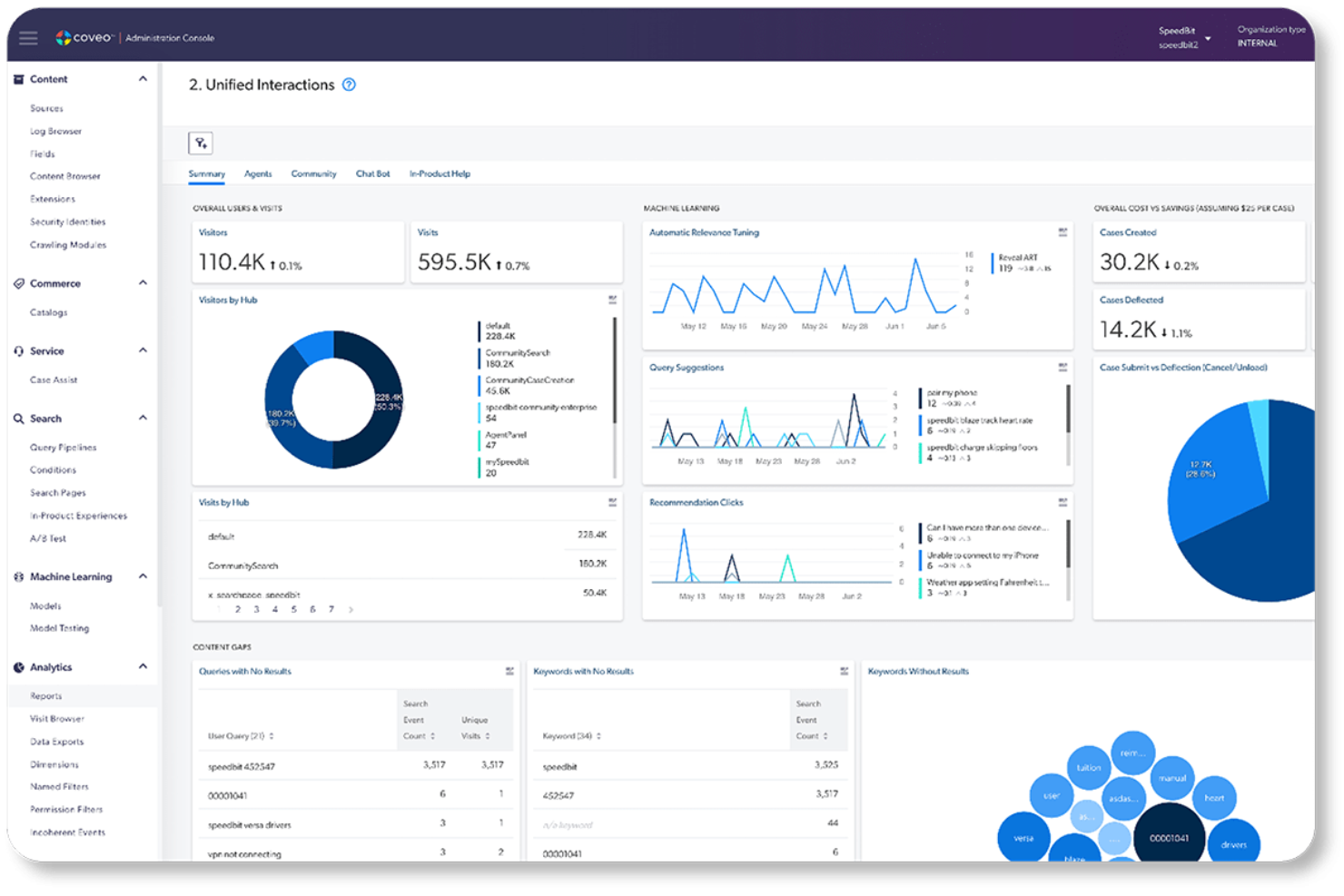
Coveo es una plataforma de búsqueda y recomendaciones para empresas que buscan perfeccionar la personalización en el comercio electrónico. Utiliza sistemas de IA para ofrecer resultados de búsqueda personalizados y relevantes, así como recomendaciones en experiencias digitales. Minoristas en línea y equipos de marketing enfocados en brindar experiencias de compra personalizadas utilizan esta herramienta.
Por qué elegí Coveo: Coveo proporciona las herramientas necesarias para adaptar eficazmente las interacciones con los clientes. Sus capacidades de búsqueda flexibles se adaptan a diferentes necesidades de los usuarios, lo que lo convierte en una herramienta valiosa si tu empresa busca aumentar la interacción y las ventas.
Características destacadas e integraciones:
Las características incluyen análisis avanzados que ofrecen información sobre el comportamiento y las preferencias de los clientes, junto con recomendaciones de contenido dinámico impulsadas por IA para mantener a tu audiencia involucrada. Coveo ofrece un motor de búsqueda eficiente para asegurar resultados rápidos y relevantes.
Integraciones incluyen Salesforce, Adobe Experience Manager, Sitecore y más.
Pros and Cons
Pros:
- Enfoque en relevancia impulsada por IA
- Alta ingeniería para la complejidad
- Integración profunda con CRM y soporte
Cons:
- Gran esfuerzo de implementación y mantenimiento
- Requiere muchos recursos técnicos

Ideal para la automatización de flujos de trabajo
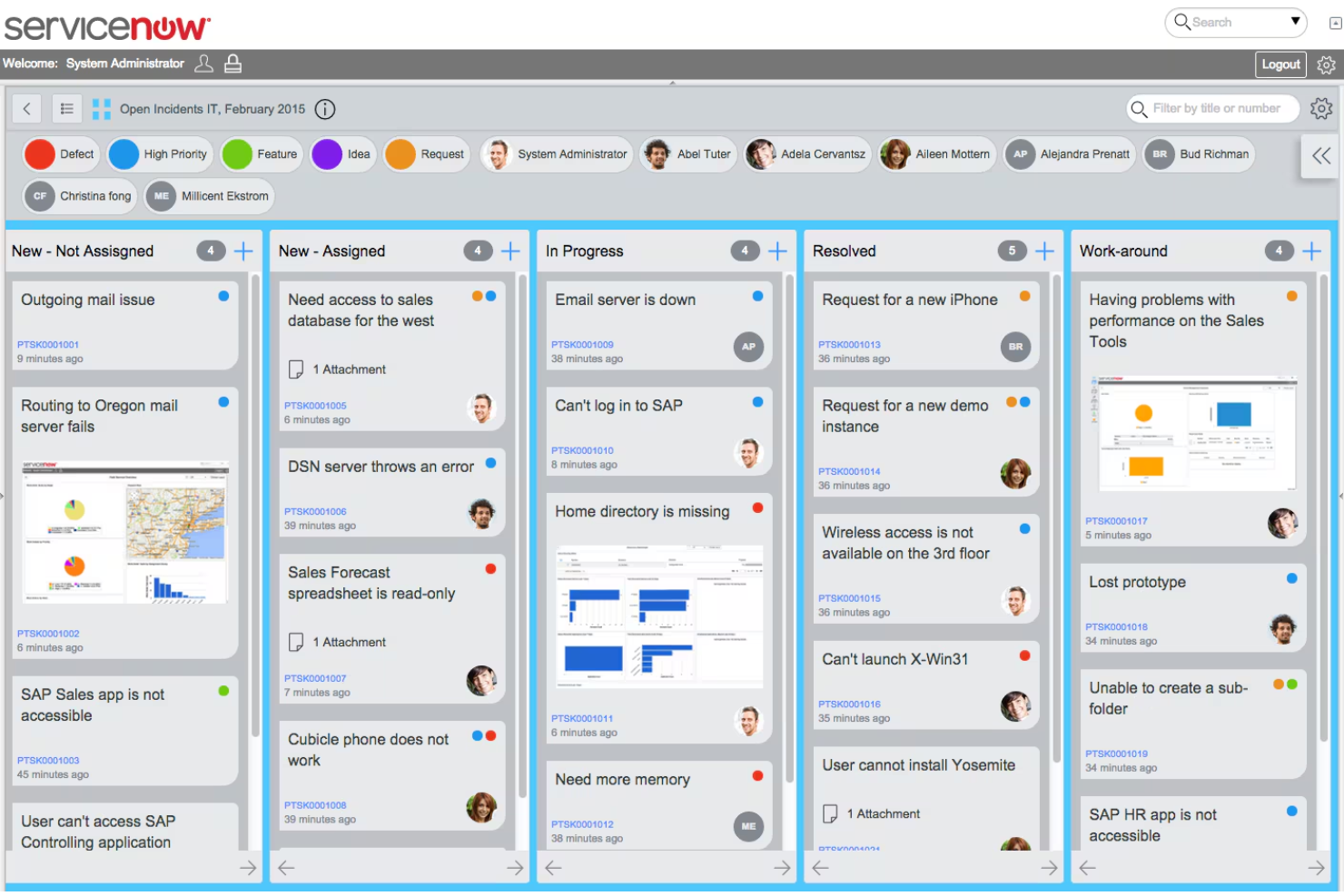
ServiceNow es una plataforma basada en la nube que automatiza flujos de trabajo y mejora los procesos empresariales. Utiliza orquestación de IA para gestionar, coordinar y gobernar múltiples agentes de IA. Sus principales usuarios incluyen departamentos de TI y equipos de operaciones que buscan mejorar la velocidad operativa general.
Por qué elegí ServiceNow: ServiceNow ofrece herramientas para optimizar diversos procesos empresariales. Utiliza IA para optimizar la coordinación de flujos de trabajo y reducir el esfuerzo manual. La flexibilidad de la plataforma te permite personalizarla según las necesidades específicas de tu empresa.
Características destacadas e integraciones:
Características incluyen capacidades avanzadas de automatización de flujos de trabajo para optimizar la gestión de tareas, analíticas predictivas que ayudan a anticipar y abordar posibles problemas, y una interfaz intuitiva y fácil de usar que proporciona una experiencia unificada basada en roles para la gestión del trabajo.
Integraciones incluyen Microsoft Azure, AWS, Google Cloud Platform y más.
Pros and Cons
Pros:
- Plataforma unificada para la transformación digital
- Automatización de extremo a extremo
- Portales intuitivos y agentes virtuales
Cons:
- Licenciamiento complejo
- Desafíos de personalización

Ideal para inteligencia contextual basada en datos

Microsoft 365 Copilot respalda, acelera y transforma una amplia gama de iniciativas empresariales, desde la optimización de la productividad hasta la habilitación del crecimiento estratégico. El asistente impulsado por IA se integra en Microsoft 365, aumentando la productividad y apoyando las operaciones empresariales. Su organización puede utilizar esta herramienta para perfeccionar la gestión de flujos de trabajo y fomentar una mejor sinergia de equipo.
Por qué elegí Microsoft 365 Copilot: Esta plataforma es ideal si su equipo ya está familiarizado con Microsoft 365. Su integración con las herramientas de Microsoft garantiza una experiencia de trabajo cohesionada y unificada.
Características y integraciones destacadas:
Las características incluyen capacidades inteligentes de automatización de tareas que permiten a su equipo centrarse en actividades estratégicas de alto valor. También ofrece perspectivas personalizadas para mejorar la toma de decisiones y funciones de colaboración en tiempo real para fomentar mejores dinámicas de equipo.
Las integraciones incluyen Microsoft y más.
Pros and Cons
Pros:
- Inteligencia contextual
- Integración eficiente de flujos de trabajo en la aplicación
- Automatización avanzada mediante agentes
Cons:
- Datos con permisos excesivos
- Altos costos para grandes organizaciones

Claude
Ideal para procesamiento de lenguaje natural

Claude es una herramienta de procesamiento de lenguaje natural impulsada por IA que ayuda a las empresas a mejorar la comunicación y la extracción de información. Utiliza tecnología de IA altamente avanzada de Anthropic para gestionar tareas complejas, investigaciones profundas y análisis de datos. Es ideal para equipos de atención al cliente y creadores de contenido que requieren una IA conversacional avanzada, análisis de texto y generación de contenido.
Por qué elegí Claude: Claude destaca en el procesamiento de lenguaje natural, lo que lo hace altamente efectivo para equipos que buscan procesar, analizar y obtener información a partir de datos textuales. Su capacidad para generar respuestas de texto matizadas y semejantes a las humanas facilita interacciones fluidas con los clientes. La sofisticada comprensión del lenguaje de la plataforma la convierte en un recurso valioso para equipos enfocados en mejorar la comunicación, proporcionando una experiencia menos robótica.
Funciones destacadas e integraciones:
Funciones incluyen capacidades avanzadas de análisis de sentimiento para ayudar a tu equipo a comprender las emociones, el tono y los comentarios de los clientes. También ofrece funcionalidades de resumen de texto y traducción de idiomas, lo que la convierte en una herramienta potente para condensar información y facilitar la comunicación global.
Integraciones incluyen Slack, Microsoft Teams, Google Workspace, Salesforce, HubSpot, Asana, Jira y más.
Pros and Cons
Pros:
- Enfoque en la seguridad y ética de la IA
- Redacción de alta calidad y estilo humano
- Política de datos que respeta la privacidad
Cons:
- No genera imágenes de forma nativa
- Costes de API elevados

Glean
Ideal para soluciones de búsqueda empresarial
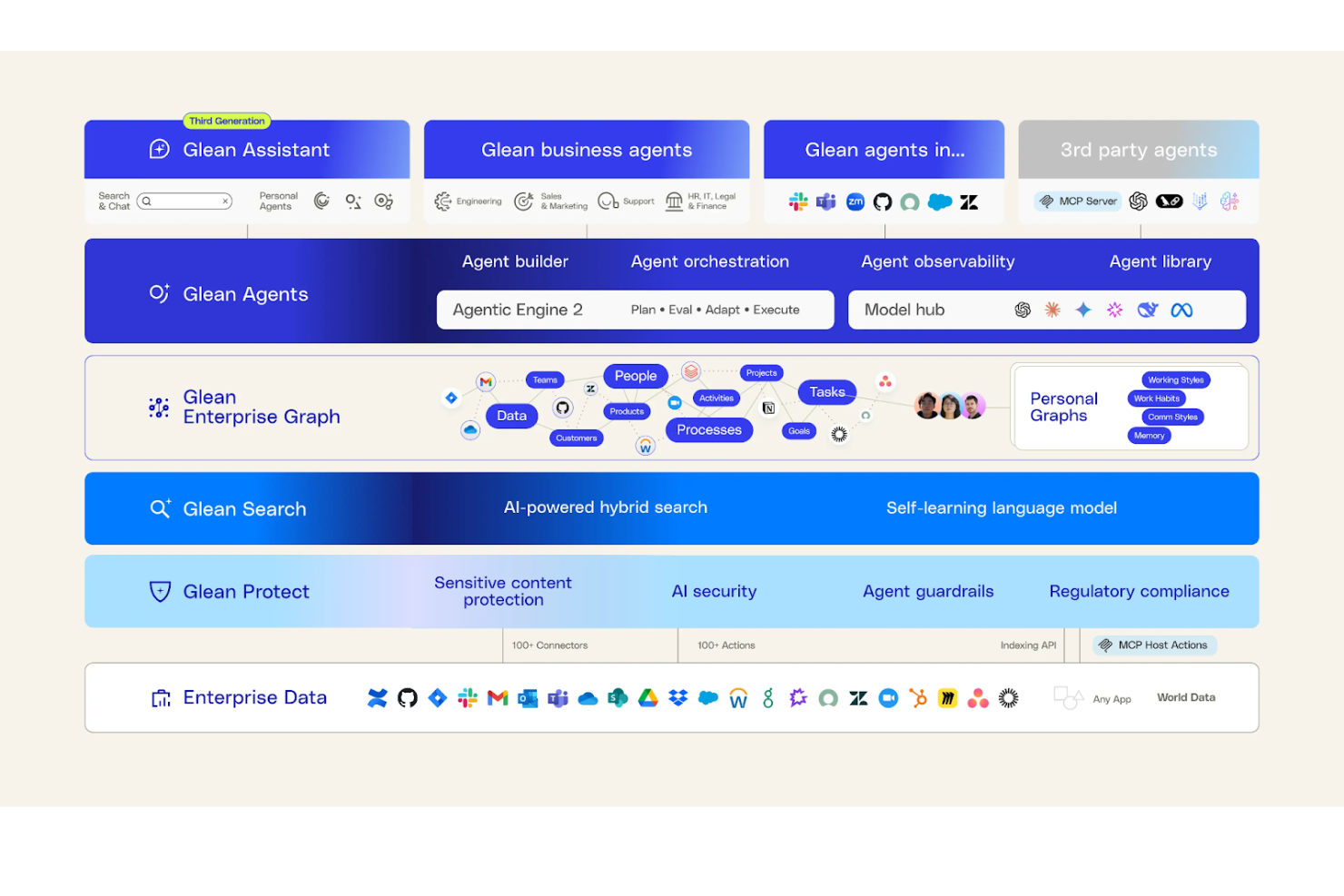
Glean ofrece capacidades de IA de alta calidad, seguras y escalables para empresas. La plataforma de búsqueda empresarial y gestión del conocimiento impulsada por IA ayuda a las organizaciones a localizar, acceder y utilizar información a través de sus sistemas internos. Sus usuarios principales incluyen grandes empresas y departamentos de TI enfocados en mejorar la recuperación de información y la colaboración.
Por qué elegí Glean: Glean proporciona una solución de búsqueda eficaz adaptada a entornos empresariales. Se integra con diversas fuentes de datos, garantizando una experiencia de búsqueda unificada en todas las plataformas. La búsqueda impulsada por IA de Glean mejora la precisión y relevancia.
Características destacadas e integraciones:
Las características incluyen indexación automática para una recuperación eficiente de datos, resultados de búsqueda personalizados para cada usuario y análisis para ayudar a tu equipo a entender patrones y comportamientos de búsqueda.
Las integraciones incluyen Google Workspace, Microsoft 365, Salesforce, Slack, Jira y más.
Pros and Cons
Pros:
- Búsqueda empresarial unificada
- Agentes de IA accionables
- Opciones de implementación en las instalaciones
Cons:
- Cuotas de soporte obligatorias
- No permite la creación de conocimiento


Moveworks es una plataforma impulsada por IA que automatiza el soporte y optimiza las funciones empresariales, centrándose específicamente en las tareas de TI, RRHH y finanzas dentro de grandes empresas. Ayuda a los equipos a resolver problemas de manera eficiente y mejorar la prestación de servicios.
Por qué elegí Moveworks: Moveworks ofrece un enfoque especializado en la automatización del soporte de TI, proporcionando a tu equipo herramientas para gestionar y resolver tickets de soporte de manera eficaz. Utiliza IA para comprender y abordar las consultas de los usuarios, reduciendo los tiempos de respuesta. La capacidad de la plataforma para integrarse con los sistemas existentes garantiza una transición fluida hacia un soporte automatizado.
Funciones y Integraciones Destacadas:
Funciones incluyen procesamiento de lenguaje natural para interpretar de forma precisa las solicitudes de los usuarios y asignación automática de tickets para asegurar que los problemas lleguen a los miembros de equipo adecuados. Moveworks también proporciona análisis en tiempo real para ayudarte a monitorizar el rendimiento del soporte.
Integraciones incluyen ServiceNow, Microsoft Teams, Slack, Jira y más.
Pros and Cons
Pros:
- IA agente para automatización total de tareas
- Plataforma sin código
- Integraciones empresariales profundas
Cons:
- Alta necesidad de recursos internos
- Limitaciones para tareas de automatización muy nicho

ChatGPT Enterprise es una aplicación de IA generativa de primer nivel para empresas. Es una herramienta de IA conversacional que las organizaciones utilizan para automatizar interacciones con clientes y facilitar la comunicación. Su principal base de usuarios incluye equipos de atención al cliente y departamentos de marketing que buscan mejorar el compromiso y la eficiencia. Ofrece a las organizaciones control total y propiedad sobre sus entradas y salidas comerciales.
Por qué elegí ChatGPT Enterprise: ChatGPT Enterprise es el producto insignia de OpenAI para empresas. Destaca en la comprensión y generación de texto con calidad humana mediante procesamiento de lenguaje natural, lo que lo hace ideal para IA conversacional, respuestas automatizadas y gestión de consultas complejas de clientes. La herramienta ofrece mejoras continuas de rendimiento y una gran versatilidad para adaptarse a diferentes necesidades de la industria, diferenciándose de las aplicaciones estándar de IA.
Características destacadas e integraciones:
Las características incluyen traducción de idiomas en tiempo real, resumen de textos y análisis de sentimientos. Estas funciones permiten que tu equipo se comunique de manera efectiva con audiencias globales. ChatGPT Enterprise también proporciona respuestas basadas en el contexto, lo que garantiza interacciones precisas y relevantes.
Las integraciones incluyen Slack, Microsoft Teams, SharePoint, Box, Outlook y más.
Pros and Cons
Pros:
- Ofrece una experiencia de usuario altamente interactiva
- Seguridad y privacidad de nivel empresarial
- Acceso ilimitado y a alta velocidad a los modelos más avanzados
Cons:
- No admite directamente modelos que no sean de OpenAI
- Alto costo y precios poco transparentes
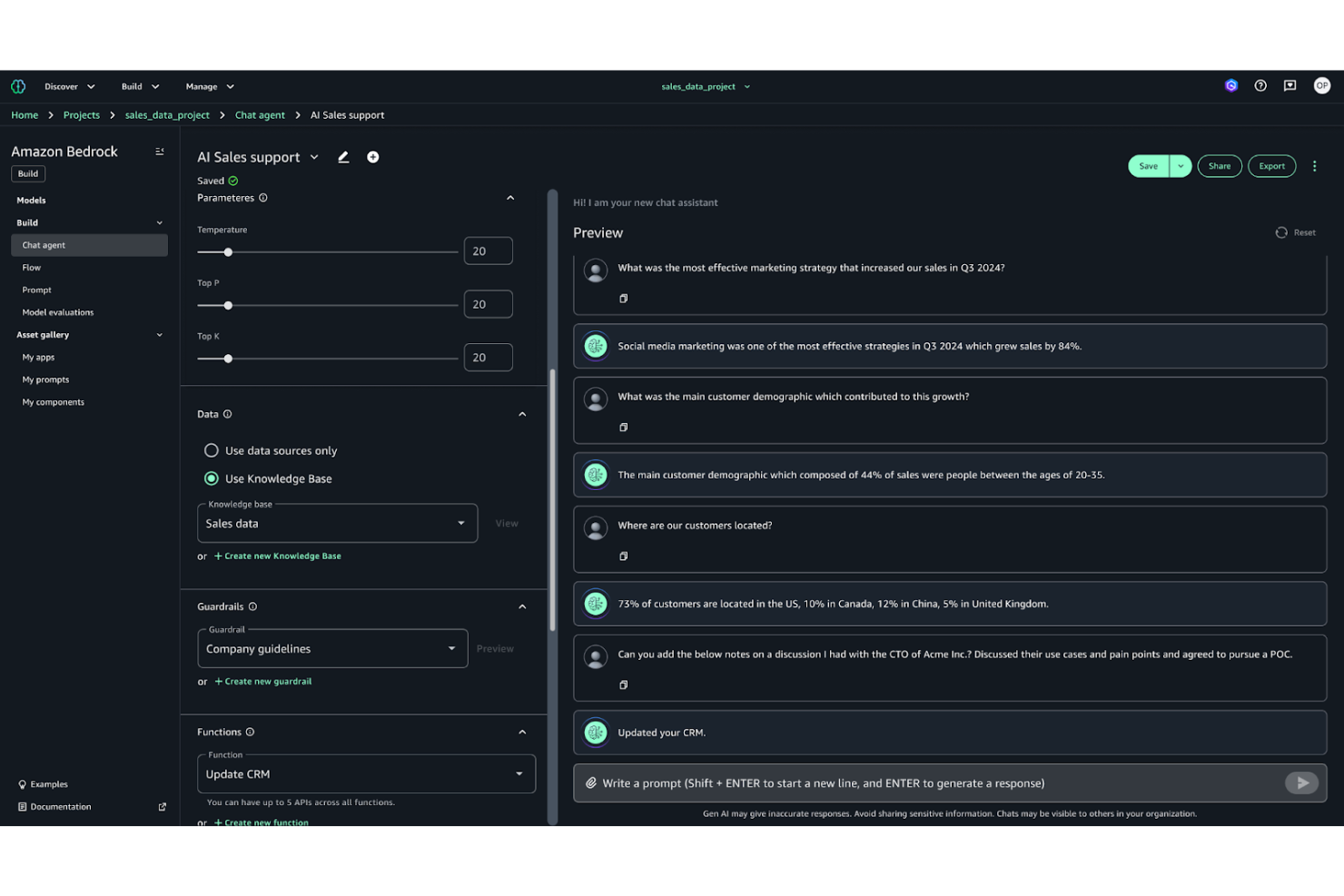
Amazon Bedrock es un servicio basado en la nube de Amazon Web Services que permite a desarrolladores y empresas crear y escalar aplicaciones de IA generativa utilizando modelos fundacionales a través de una única API.
Por qué elegí Amazon Bedrock: Ofrece una integración profunda y nativa con AWS, lo que lo convierte en una opción natural para los equipos que ya utilizan los servicios de la plataforma. Amazon Bedrock admite el despliegue escalable de modelos de IA, lo que te permite manejar cargas de trabajo variables e impredecibles. Su arquitectura flexible y sin servidor garantiza operaciones fluidas, seguras y eficientes dentro de tus entornos de AWS. La herramienta resulta especialmente atractiva si tu empresa busca maximizar su inversión en AWS.
Características destacadas e integraciones:
Las características incluyen herramientas de evaluación de modelos que permiten a tu equipo evaluar automáticamente y seleccionar los mejores modelos para tareas específicas. También proporciona capacidades de preprocesamiento de datos para asegurar entradas limpias y flujos de trabajo personalizables según las necesidades del negocio.
Las integraciones incluyen Amazon S3, AWS Lambda, Amazon SageMaker y más.
Pros and Cons
Pros:
- Experiencia sin servidor
- Admite modelos de lenguaje grande
- Despliegue escalable de modelos de IA
Cons:
- Dependencia arquitectónica de AWS
- No hay nivel gratuito para almacenes vectoriales sin servidor
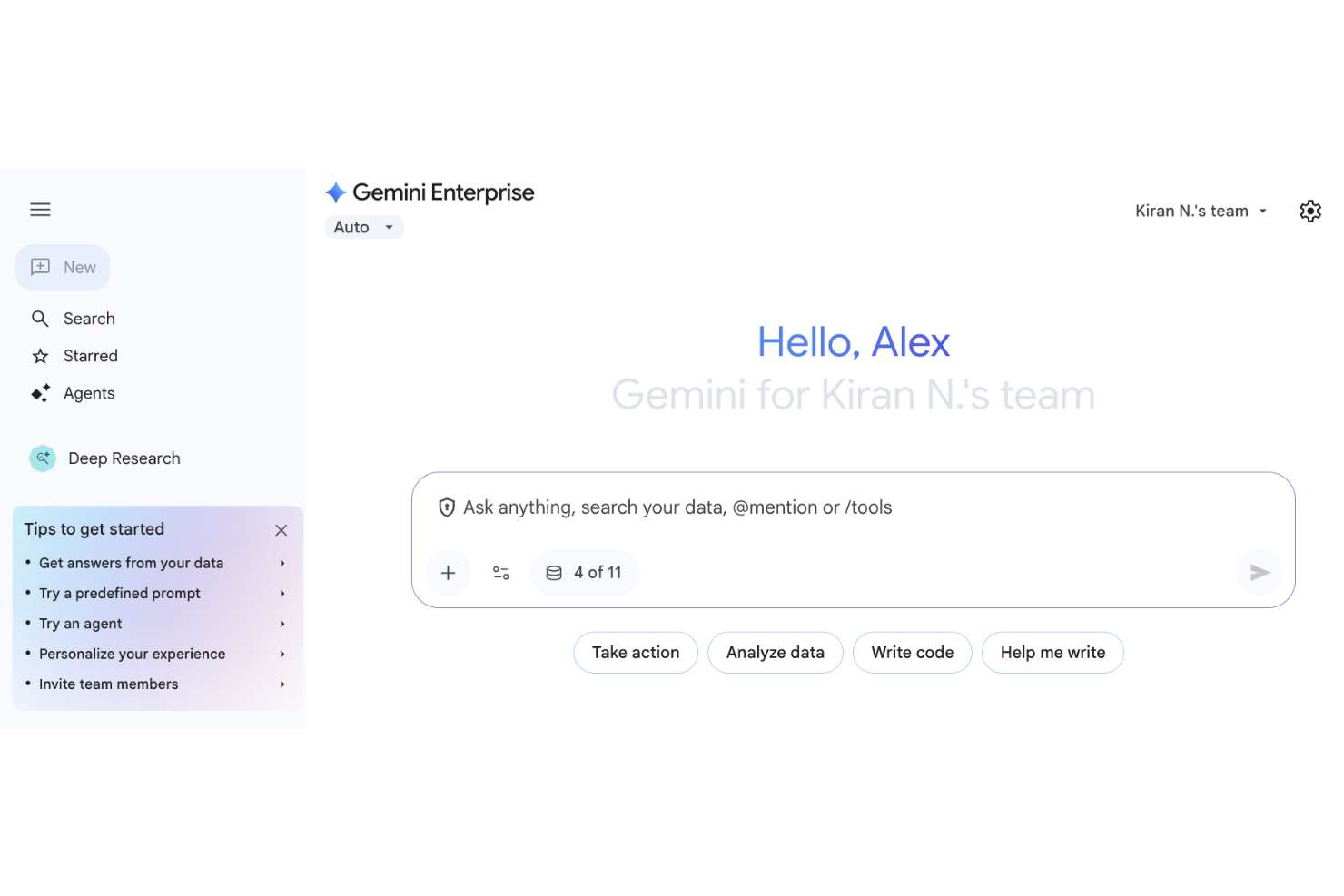
Gemini Enterprise es una plataforma de IA basada en la nube para empresas. Utiliza servicios de Google Cloud para conectarse, analizar y actuar sobre los datos organizacionales de forma segura. Esta plataforma agéntica ayuda a las empresas a integrar soluciones de IA en sus operaciones para optimizar el análisis de datos y la toma de decisiones.
Por qué elegí Gemini Enterprise: Esta plataforma se integra con Google Workspace y Google Cloud para automatizar flujos de trabajo, reducir los silos de datos y mejorar la productividad, lo que garantiza operaciones fluidas dentro del ecosistema de aplicaciones de Google. Gemini Enterprise ofrece capacidades avanzadas de procesamiento de datos, permitiendo a los equipos analizar, visualizar y extraer conclusiones rápidamente. Su arquitectura escalable maneja las crecientes necesidades de datos sin sacrificar velocidad ni confiabilidad. Estas características
Características destacadas e integraciones:
Características incluyen análisis de datos en tiempo real, soporte para modelos de aprendizaje automático e informes automatizados para facilitar la toma de decisiones basada en datos y proporcionar conclusiones claras y accionables sobre las operaciones de su empresa.
Integraciones incluyen Google Workplace, Google Cloud y más.
Pros and Cons
Pros:
- Gestión y gobernanza centralizadas
- Soporta flujos de trabajo agénticos
- Permite IA especializada y específica por dominio
Cons:
- Cuotas estrictas sobre los recursos de datos
- Límites de entrada y salida
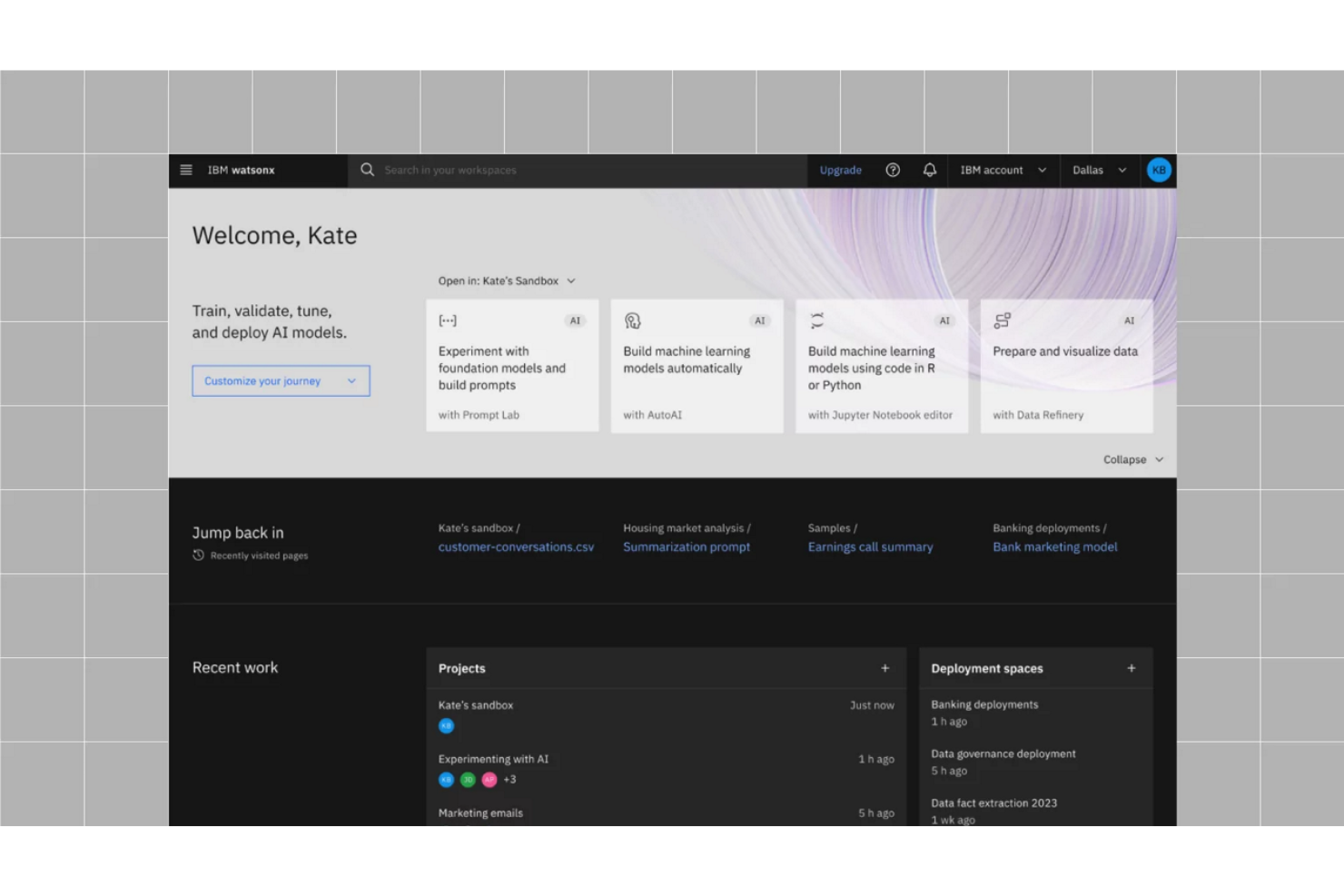
El conjunto de herramientas GenAI de IBM watsonx.ai proporciona métricas de nivel empresarial altamente detalladas para monitorear y evaluar modelos de IA. La plataforma IBM watsonx.ai ayuda a las grandes empresas a aprovechar los datos para la toma de decisiones estratégicas, ofreciendo herramientas tanto para científicos de datos como para analistas de negocios que permiten extraer conocimientos accionables de conjuntos de datos complejos.
Por qué elegí IBM watsonx.ai: La fortaleza de IBM watsonx.ai radica en sus análisis avanzados de datos, conocimientos impulsados por IA y su gobernanza incorporada, posicionándola como una herramienta potente para empresas enfocadas en estrategias guiadas por datos. Las capacidades de aprendizaje automático e IA de la plataforma automatizan tareas repetitivas y que consumen mucho tiempo, permitiendo que tu equipo se concentre en el análisis crítico, la estrategia y el trabajo de mayor valor.
Características e integraciones destacadas:
Las características incluyen capacidades intuitivas de visualización de datos para ayudarte a comprender conjuntos de datos complejos, diversos y voluminosos. Los análisis predictivos permiten prever tendencias y resultados, y la funcionalidad de procesamiento de lenguaje natural mejora la interacción con los datos.
Las integraciones incluyen ABBYY, AWS, Dataloop, Cloudera, Domo, Intel y más.
Pros and Cons
Pros:
- Asistentes de código específicos para la industria
- Admite modelos de código abierto
- Modelos base especializados
Cons:
- Baja flexibilidad multinube
- Requiere una alta especialización
Otras herramientas de IA generativa empresarial
Estas son algunas herramientas adicionales de IA generativa empresarial que no llegaron a mi lista, pero que aun así merece la pena conocer:
- Cohere North
Ideal para la personalización de modelos de lenguaje
- SAP Joule
Mejor para entornos SAP
- Jasper
Ideal para la generación de contenidos
- GitHub Copilot
Mejor para asistencia de codificación


Cómo Evalúo las Herramientas Generativas de IA Empresarial
Cada herramienta en esta lista debe ir más allá de la simple marca de IA y realmente generar contenido de RRHH utilizable—piensa en descripciones de puestos listas para usar, documentos de políticas o comunicaciones internas—sin necesidad de una limpieza manual intensiva. Divido mi evaluación en la funcionalidad básica que toda herramienta debe tener para calificar y los factores diferenciadores que separan una plataforma de otra.
Funcionalidad Básica (Requisitos Fundamentales para esta Lista)
Cuando selecciono herramientas para mi lista, califico cada una en una escala de 0 (no ofrece la funcionalidad) a 5 (destaca en esta área) para cada función principal que se muestra a continuación. Luego, calculo la puntuación total de la herramienta en porcentaje. Cada herramienta debe alcanzar una puntuación total mínima del 65% para ser considerada para su inclusión.
- Creación Generativa de Contenido: Evalúo si una herramienta puede producir resultados de RRHH útiles—como descripciones de puesto, cartas de oferta o guías de incorporación—a partir de indicaciones en lenguaje natural con una edición mínima.
- Seguridad y Gobernanza Empresarial: Cada herramienta debe mostrar SSO, acceso basado en roles, registro de auditoría y certificaciones de cumplimiento como SOC 2 o preparación para GDPR para manejar datos sensibles de empleados.
- Acceso a Modelos Fundacionales: Busco el acceso a LLM líderes—ya sea GPT-4, Claude, Gemini u opciones de código abierto—y si los usuarios pueden cambiar entre modelos para diferentes tareas.
- Integración de Conocimiento Personalizado: La herramienta debe conectarse a los datos de RRHH de tu empresa mediante RAG o ajuste fino para que los resultados reflejen tus políticas, beneficios y tono en lugar de respuestas genéricas.
- Integración con Flujos y Sistemas de Trabajo: Reviso si hay conectores preconstruidos para plataformas HRIS, ATS y LMS, además de APIs que permitan a los equipos incrustar la generación de IA directamente en los flujos de trabajo de RRHH existentes.
- Gestión y Reutilización de Prompts: Los equipos necesitan bibliotecas compartidas de prompts para que un reclutador en una región pueda reutilizar la misma plantilla validada que otro miembro del equipo creó para un puesto similar.
Una vez tengo una lista de herramientas que cumplen estos criterios, considero qué distingue a cada plataforma.
Factores Diferenciadores (Lo que Distingue a los Proveedores)
Así es como comparo y contrasto diferentes proveedores:
Características Destacadas
Los controles de sesgo y equidad son especialmente importantes en RRHH. Busco herramientas con barreras integradas que señalen lenguaje sesgado en ofertas de trabajo generadas o evaluaciones de desempeño antes de su publicación. La generación multilingüe es otro diferencial: los equipos de RRHH que operan en varias regiones necesitan resultados que adapten el tono y terminología para audiencias locales, no solo traducciones directas. También evalúo si la plataforma ofrece un generador de aplicaciones sin código, lo que permite a los equipos de operaciones de RRHH crear flujos personalizados de IA, como un bot interno de preguntas y respuestas sobre políticas, sin depender de ingeniería.
Más Allá de las Características
La privacidad de los datos es lo primero que reviso más allá de la lista de funciones. Quiero ver compromisos explícitos de que los datos de empleados no se usan para entrenar modelos, además de opciones de residencia de datos para equipos que operan en múltiples regiones. La flexibilidad de despliegue también es relevante—algunas empresas necesitan nube privada o alojamiento local para cumplir con políticas internas de seguridad. Finalmente, evalúo el soporte de implementación. Los equipos de RRHH que adoptan IA generativa por primera vez se benefician de bibliotecas de casos de uso ya preparados y de recursos dedicados para la incorporación, que acortan la curva de aprendizaje y fomentan una adopción real.
Cómo elegir una herramienta de IA generativa empresarial
Es fácil perderse entre largas listas de funciones y estructuras de precios complejas. Para ayudarte a mantener la atención mientras avanzas en tu proceso específico de selección de software, aquí tienes una lista de factores que conviene tener en cuenta:
| Factor | Qué debes considerar |
|---|---|
| Escalabilidad | ¿Puede la herramienta crecer con tu empresa? Comprueba si gestiona volúmenes de datos y cantidades de usuarios cada vez mayores sin que disminuya el rendimiento. Busca escalabilidad tanto en la funcionalidad como en el coste. |
| Integraciones | ¿Funciona bien con tus sistemas actuales? Comprueba la compatibilidad con tu conjunto de software actual y evalúa si la herramienta puede integrarse sin problemas con tus flujos de trabajo. |
| Personalización | ¿Cómo puedes adaptar la herramienta a tus necesidades? Evalúa si permite personalizarla para ajustarla a tus procesos empresariales específicos sin requerir un amplio soporte técnico. |
| Facilidad de uso | ¿La herramienta es fácil de usar para tu equipo? Ten en cuenta la curva de aprendizaje y la rapidez con la que tu equipo puede adquirir competencia sin una formación extensa. Busca interfaces intuitivas y una navegación sencilla. |
| Implementación e incorporación | ¿Cuánto tiempo se tardará en ponerla en funcionamiento? Evalúa el tiempo y los recursos necesarios para la configuración y la formación. Comprueba si ofrece materiales de apoyo, como guías, vídeos y sesiones de incorporación. |
| Coste | ¿El precio se ajusta a tu presupuesto? Compara el coste de la herramienta con tu presupuesto y las funciones que ofrece. Ten en cuenta las tarifas o los costes ocultos que puedan surgir a medida que aumente el uso. |
| Medidas de seguridad | ¿Están protegidos tus datos y operaciones? Asegúrate de que la herramienta cumple tus estándares de seguridad, incluido el cifrado de datos, los controles de acceso y el cumplimiento de las normativas del sector. |
| Requisitos de cumplimiento | ¿La herramienta cumple las normas legales necesarias? Comprueba si cumple las normativas pertinentes para tu sector, como el RGPD en materia de protección de datos, para evitar problemas legales. |
¿Qué son las herramientas empresariales de IA generativa?
Las herramientas empresariales de IA generativa son soluciones de software que utilizan la inteligencia artificial para generar contenido y análisis de datos, además de automatizar tareas para las empresas. Profesionales como científicos de datos, equipos de marketing y departamentos de TI suelen utilizar estas herramientas para aumentar la productividad y mejorar la toma de decisiones. Funciones como el análisis de datos, la generación de texto y la traducción de idiomas ayudan a mejorar la eficiencia y proporcionan información valiosa. En general, estas herramientas ofrecen un valor significativo al optimizar los flujos de trabajo y respaldar decisiones empresariales fundamentadas.
Funciones
Al seleccionar herramientas empresariales de IA generativa, considera las siguientes funciones clave:
- Generación de texto: Crea contenido automáticamente, lo que ahorra tiempo y esfuerzo a los equipos dedicados a la redacción y la creación de contenido.
- Análisis de datos: Proporciona información mediante el procesamiento de grandes volúmenes de datos, ayudando a las empresas a tomar decisiones fundamentadas.
- Traducción de idiomas: Permite la comunicación entre distintos idiomas, apoyando las operaciones globales y los equipos diversos.
- Análisis predictivo: Pronostica tendencias y resultados futuros, lo que ayuda en la planificación estratégica y la gestión de riesgos.
- Procesamiento del lenguaje natural: Permite que los ordenadores comprendan y respondan al lenguaje humano, fortaleciendo las interacciones con los usuarios y la atención al cliente.
- Modelos personalizables: Permiten a las empresas adaptar los modelos de IA a necesidades específicas, garantizando su pertinencia y precisión.
- Colaboración en tiempo real: Facilita el trabajo en equipo al permitir que varios usuarios trabajen juntos simultáneamente, mejorando la productividad.
- Capacidades de integración: Permiten que las herramientas se conecten con los sistemas existentes, garantizando un flujo de trabajo fluido y la coherencia de los datos.
- Medidas de seguridad: Protegen la información confidencial mediante cifrado y controles de acceso, manteniendo la integridad de los datos.
- Interfaz fácil de usar: Simplifica la navegación y el uso, reduciendo la curva de aprendizaje y aumentando la adopción entre los equipos.
Ventajas
La implementación de herramientas empresariales de IA generativa ofrece varias ventajas para tu equipo y tu empresa. Estas son algunas de las que puedes esperar:
- Mayor eficiencia: Automatiza las tareas repetitivas, permitiendo que tu equipo se concentre en actividades más estratégicas y mejore la productividad.
- Toma de decisiones fundamentada: Proporciona análisis de datos y análisis predictivo, ofreciendo información para fundamentar las decisiones empresariales.
- Mejor comunicación: Admite la traducción de idiomas y el procesamiento del lenguaje natural para permitir una mejor comunicación entre equipos diversos y mercados globales.
- Ahorro de costes: Reduce la necesidad de mano de obra manual y minimiza los errores, disminuyendo así los costes operativos.
- Mayor personalización y flexibilidad: Proporciona modelos personalizables que permiten a tu empresa adaptar las soluciones a necesidades específicas y maximizar su pertinencia.
- Mejor colaboración: Facilita la colaboración en tiempo real para ayudar a los equipos a trabajar juntos de forma más eficaz, independientemente de su ubicación.
- Seguridad de los datos: Garantiza la protección de la información mediante medidas de seguridad, manteniendo la confianza y el cumplimiento de las normativas.
Costes y precios
La selección de herramientas empresariales de IA generativa requiere comprender los modelos y planes de precios disponibles. Los costes varían según las funciones, el tamaño del equipo, los complementos y otros factores. La tabla siguiente resume los planes habituales, sus precios medios y las funciones que suelen incluir las soluciones de herramientas empresariales de IA generativa:
Tabla comparativa de planes para herramientas empresariales de IA generativa
| Tipo de plan | Precio medio | Funciones habituales |
|---|---|---|
| Plan gratuito | $0 | Generación básica de texto, análisis de datos limitado y asistencia de la comunidad. |
| Plan personal | $9.99-$30+/usuario/mes | Generación de texto, análisis de datos, traducción de idiomas y asistencia por correo electrónico. |
| Plan empresarial | $50-$150/usuario/mes | Análisis avanzado de datos, análisis predictivo, modelos personalizados y asistencia prioritaria. |
| Plan corporativo | $200-$500/usuario/mes | Personalización completa, colaboración en tiempo real, gestión de cuentas dedicada y amplias funciones de seguridad. |
Preguntas frecuentes sobre herramientas de IA generativa empresarial
Estas son algunas respuestas a preguntas frecuentes sobre las herramientas de IA generativa empresarial:
¿Qué industrias se benefician más de las herramientas de IA generativa empresarial?
Sí, sectores como las finanzas, la atención médica, el comercio minorista y el marketing obtienen beneficios significativos de las herramientas de IA generativa empresarial. Estas aplicaciones ayudan a automatizar tareas, analizar grandes conjuntos de datos y mejorar los procesos de toma de decisiones. Por ejemplo, en la atención médica, la IA puede analizar los datos de los pacientes para predecir tendencias de salud, mientras que en el comercio minorista puede personalizar las experiencias de los clientes. Evalúa las necesidades específicas de tu industria para determinar cómo estas herramientas pueden complementar tus operaciones.
¿Pueden las herramientas de IA generativa empresarial integrarse con los sistemas existentes?
Sí, la mayoría de las herramientas de IA generativa empresarial ofrecen capacidades de integración con los sistemas existentes. Busca software compatible con API y que cuente con conectores prediseñados para plataformas populares, como software de CRM, ERP y análisis de datos. Esto garantiza un flujo de datos fluido y amplía la funcionalidad general de tu conjunto tecnológico existente. Verifica siempre la compatibilidad con tus sistemas actuales antes de realizar la compra.
¿Cómo puedo garantizar la privacidad de los datos con las herramientas de IA generativa empresarial?
Para garantizar la privacidad de los datos, elige herramientas que ofrezcan un cifrado sólido, controles de acceso y cumplimiento de las normativas del sector, como el RGPD o HIPAA. Evalúa las políticas de privacidad y las prácticas de gestión de datos del proveedor. Da prioridad a las aplicaciones que proporcionen registros de auditoría y registros de actividad de los usuarios para supervisar el acceso a los datos. Trabajar con proveedores que ofrezcan actualizaciones de seguridad y asistencia periódicas puede proteger aún más tus datos.
¿Hay versiones de prueba disponibles para las herramientas de IA generativa empresarial?
Sí, muchos proveedores ofrecen versiones de prueba o demostraciones para ayudarte a evaluar sus herramientas. Estas pruebas te permiten comprobar las funciones, evaluar la facilidad de uso y determinar si la aplicación de software satisface tus necesidades. Aprovecha los periodos de prueba involucrando a los miembros clave del equipo en las pruebas y recopilando sus comentarios. Esta experiencia práctica puede orientar tu proceso de toma de decisiones y ayudarte a elegir la herramienta adecuada.
Lo siguiente:
Si estás investigando herramientas de IA generativa empresarial, ponte en contacto con un asesor de SoftwareSelect para recibir recomendaciones gratuitas.
Rellenas un formulario y tienes una breve conversación en la que se analizan los detalles específicos de tus necesidades. Después recibirás una lista breve de programas que puedes revisar. Además, te ayudarán durante todo el proceso de compra, incluidas las negociaciones de precios.