



Atlas versus Bullhorn: vergelijking en beoordelingen door experts voor 2026



Recruiting tools can look similar until you put them under real hiring pressure. The better fit comes down to how much admin each one absorbs, how much of your business it can run, and how quickly recruiters take to it.
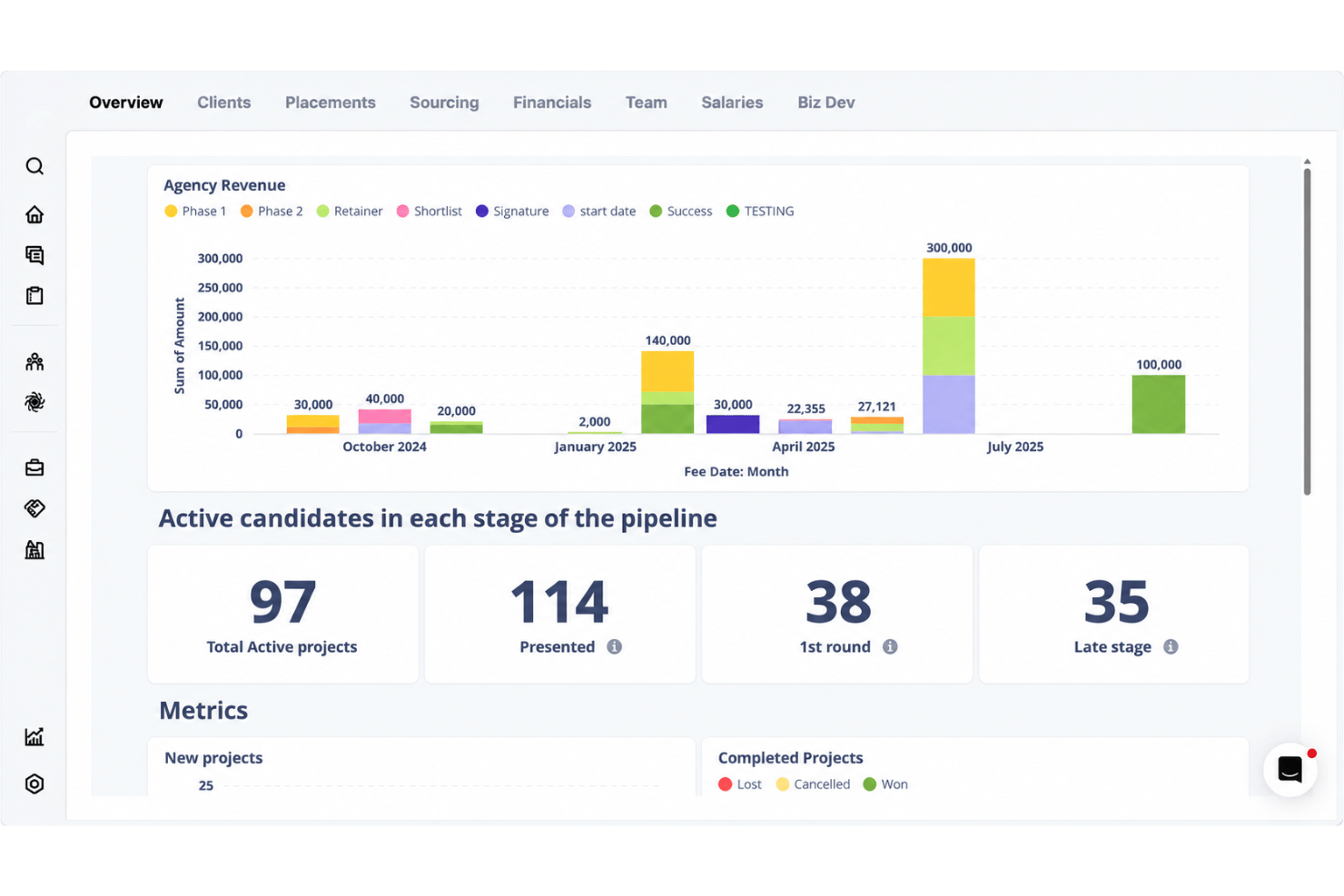
Struggling to pick the right recruiting software for your busy day-to-day? The Atlas vs. Bullhorn matchup is a study in trade-offs: a newcomer that records the work for you against an incumbent that runs everything from prospect to payroll. If you’re feeling stuck between a fresh approach and a proven one, you’re not alone.
In this article, you’ll get my take on how these two options stack up. I’ll break down the pros and cons, the best use cases for each, what you can expect to pay, how they handle your data, and the kind of experience your team will have day to day. If you want a no-nonsense look at recruiting software built for agencies, you’re in the right place.
Atlas vs. Bullhorn: An Overview
Atlas
Bullhorn
Waarom u onze softwarebeoordelingen kunt vertrouwen
Ons team test en beoordeelt software sinds 2012. Als HR-experts weten we zelf hoe moeilijk — en belangrijk — het is om de juiste software te kiezen.
Voor deze gids hebben we tools geëvalueerd met behulp van praktijktests en onafhankelijk onderzoek, waarbij we tools beoordeelden aan de hand van onze selectiecriteria. We putten ook uit inzichten van vooraanstaande experts uit de branche en van praktiserende HR-professionals.
Onze reviews weerspiegelen ons menselijke redactionele oordeel, geen verkooppraatje.
Atlas vs. Bullhorn Pricing Comparison
| Atlas | Bullhorn | |
|---|---|---|
| Free Trial | Free demo available | Free demo available |
| Pricing | Pricing upon request | From $99/user/month |
Atlas versus Bullhorn: prijzen en verborgen kosten
Bullhorn is van de twee de transparantere optie voor kleinere bureaus. De instapabonnementen voor kleinere bureaus worden per gebruiker gepubliceerd, inclusief implementatie, en lopen op van Starter, Core, Pro en Max naarmate de functionaliteit toeneemt, terwijl de frontoffice- en alles-in-één-edities met offertes op maat werken. Wat de rekening verhoogt, is alles wat naast het kernplatform komt: betaling en facturering voor het middle office, onboarding, berichten, analyses en de Amplify AI-producten worden als afzonderlijke posten geprijsd in plaats van inbegrepen te zijn. Atlas publiceert helemaal geen tarieven en maakt voor elk bureau een offerte op maat, al zijn onboarding, migratie en ondersteuning inbegrepen bij het platform in plaats van extra's, en helpen ze je met het resterende deel van het contract dat je achterlaat.
Om de juiste prijsoplossing te kiezen, moet je verder kijken dan het basispakket en je noodzakelijke modules, groeiplannen en dagelijkse workflows in kaart brengen. Ik raad aan om een gespecificeerde offerte te vragen, deze te toetsen aan realistische gebruiksscenario's en duidelijkheid te krijgen over wat inbegrepen is en waarvoor kosten worden gerekend. Bij Bullhorn moet je de kosten berekenen van de aanvullende modules die je uiteindelijk toch nodig zult hebben, in plaats van alleen naar het instapniveau te kijken. Vraag bij Atlas wat het bedrag doet naarmate het aantal medewerkers groeit. Die vergelijking, en niet het opvallende tarief, laat zien wat elk platform werkelijk kost.
Atlas vs. Bullhorn Feature Comparison
| Atlas | Bullhorn | |
|---|---|---|
| API | ||
| Application Tracking | ||
| Behavioral Testing | ||
| Budgeting | ||
| Calendar Management | ||
| Candidate Database | ||
| Cognitive Testing | ||
| Dashboard | ||
| Data Export | ||
| Data Import | ||
| Data Visualization | ||
| Email Integration | ||
| Employee Database | ||
| Employee Onboarding | ||
| External Integrations | ||
| Feedback Management | ||
| Forecasting | ||
| Interview Scheduling | ||
| Multi-User | ||
| Notifications | ||
| Personality Testing | ||
| Psychometric Testing | ||
| Scheduling | ||
| Status Notifications | ||
| Travel Management |
Atlas versus Bullhorn: integraties
| Integratie | Atlas | Bullhorn |
|---|---|---|
| LinkedIn Recruiter System Connect | ❌ | ✅ |
| Broadbean | ✅ | ✅ |
| idibu | ✅ | ✅ |
| Microsoft Outlook | ✅ | ✅ |
| Google Workspace | ✅ | ✅ |
| Ringover | ✅ | ✅ |
| Zapier | ❌ | ✅ |
| Open API | ✅ | ✅ |
| Claude MCP Connector | ✅ | ❌ |
De marktplaats van Bullhorn is hier het grootste voordeel, met honderden vooraf geïntegreerde partners voor vacaturebanken, screening, beoordelingen, betaling en facturatie, en communicatie. Daarnaast is er een verbinding met Zapier en een open API voor alles wat niet wordt gedekt. Atlas werkt met een beperktere set: Broadbean en idibu voor vacaturedistributie, telefoonsystemen zoals Ringover en RingCentral, Outlook en Google Workspace, boekhouding via Xero en tools voor actieve benadering zoals Talin en Expandi. Waar Atlas voorloopt, is AI-connectiviteit: dankzij de MCP-connector kunnen andere AI-tools rechtstreeks met je database werken. Als je technologiestack sterk afhankelijk is van een gespecialiseerde leverancier, controleer dan de marktplaats voordat je een keuze maakt, want daar is het verschil tussen deze twee oplossingen het grootst.
Atlas vs. Bullhorn Veiligheid, naleving en betrouwbaarheid
| Factor | Atlas | Bullhorn |
|---|---|---|
| Gegevensprivacy | Werkt binnen de AVG en omdat elk gesprek, elke e-mail en elk bericht wordt vastgelegd zodra het plaatsvindt, is er achter elke plaatsing een gedateerd dossier. | Publiceert een AVG-toezegging en een opt-out voor de CCPA, met sessie- en toegangscontroles die bepalen wie toegang heeft tot welke gegevens. |
| Naleving van regelgeving | Gecertificeerd volgens ISO 27001, met een SOC 2-accreditatie die momenteel wordt voorbereid en begin 2027 wordt verwacht. | Beveiligings- en privacybeleid dat is opgesteld om aan SOC 2-vereisten te voldoen, naast een onafhankelijk privacykeurmerk. |
| Gegevensversleuteling | De details over versleuteling worden niet gepubliceerd, hoewel de ISO 27001-certificering de manier bestrijkt waarop klantgegevens binnen het platform worden verwerkt. | Modern TLS beschermt het verkeer naar de browser, replicatie tussen locaties verloopt via versleutelde verbindingen en bedrijfsapparaten zijn versleuteld. |
| Betrouwbaarheid van beschikbaarheid | Er is geen openbare beschikbaarheidstoezegging, dus het is verstandig om de voorwaarden voor beschikbaarheid in het contract vast te leggen. | Redundante, fysiek beveiligde datacenters met vrijwel realtime replicatie naar een rampherstelsite die regelmatig wordt getest. |
| Audits door derden | De certificering wordt extern beoordeeld, maar Atlas publiceert geen auditdetails die klanten kunnen bekijken. | Onafhankelijke tests op kwetsbaarheden, penetratests en codebeoordelingen, plus voortdurende externe scans van het netwerk. |
Bullhorn is de veiligere keuze zodra inkoop erbij betrokken raakt: een beveiligingsprogramma dat is opgebouwd rond SOC 2-vereisten, onafhankelijke penetratests en codebeoordelingen, eenmalige aanmelding met tweefactorauthenticatie en replicatie naar een geteste rampherstelsite. Atlas beschikt over ISO 27001 en werkt binnen de AVG, met een SOC 2-accreditatie die momenteel wordt voorbereid en begin 2027 wordt verwacht. Dat voldoet aan de meeste eisen van bureaus, maar biedt een risicoteam van een klant vandaag minder om op voort te bouwen. Naar mijn mening wint Bullhorn wanneer zakelijke klanten hun leveranciers auditen, terwijl Atlas voldoende is voor bedrijven waarvan de verplichtingen beperkt blijven tot de AVG en een erkende certificering.
Atlas vs. Bullhorn Gebruiksgemak
| Factor | Atlas | Bullhorn |
|---|---|---|
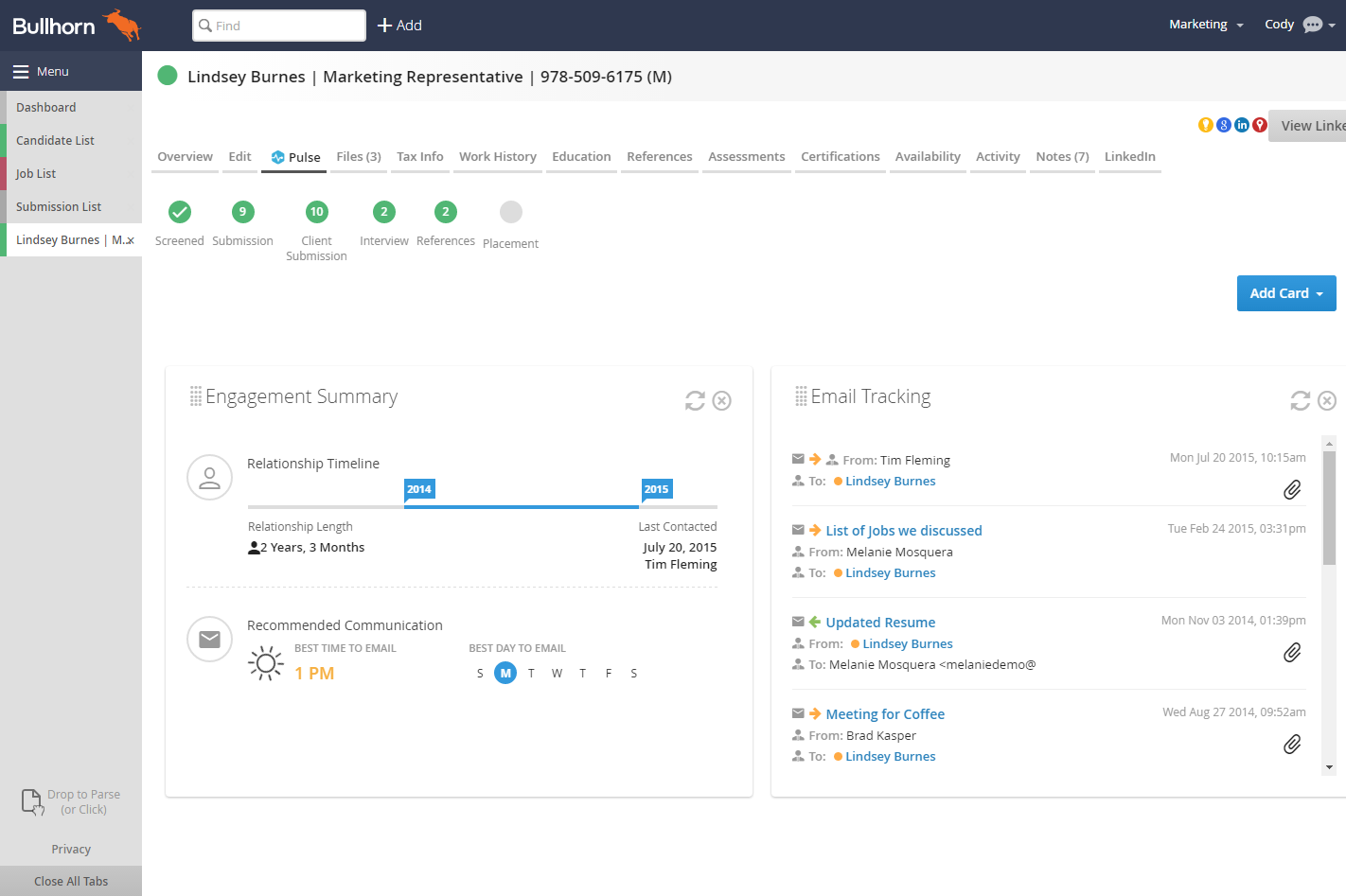
| Gebruikersinterface | Opgebouwd rond de manier waarop een bureau werkt, en omdat het dossier zichzelf aanvult, is er veel minder typwerk nodig; oprichters van bureaus beschrijven het als werken op de manier waarop zij al denken. | Uitgebreid en configureerbaar, met de dichtheid die ontstaat wanneer front-, mid- en backoffice op één plek worden beheerd. |
| Onboardingproces | Een toegewijd team organiseert dagelijks sessies totdat het hele team zelfverzekerd werkt, en de migratie vanaf je oude systeem wordt voor je geregeld. | Kleinere bureaus kunnen binnen een paar weken live zijn, inclusief implementatie, configuratiehulp, trainingsvideo's en liveondersteuning. |
| Workflowconfiguratie | Pijplijnen en fasen die rond jouw proces zijn ingericht, met AI-agenten die de repetitieve tussenstappen afhandelen. | Uiterst aanpasbare workflows voor de volledige plaatsingscyclus. Dat is krachtig, maar vraagt om een doordachte inrichting. |
| Klantenondersteuning | Ondersteuning in de app die meestal binnen enkele minuten antwoord geeft, bemand door mensen uit de werving, waarbij ook het oprichtersteam geregeld inspringt. | Deskundige ondersteuning rond de klok en een uitgebreide kennisbank, plus een partnernetwerk voor complexere configuratiewerkzaamheden. |
Atlas wint voor dagelijks gebruiksgemak, vooral doordat het werk wordt weggenomen in plaats van georganiseerd: minder invoer, minder onderhoud en een kortere weg naar een team waarvan de dossiers daadwerkelijk actueel zijn. Bullhorn is gebouwd voor bedrijven die één systeem nodig hebben om de volledige bedrijfsvoering te beheren, en juist die breedte maakt het systeem zwaarder om te configureren en te leren. Ik vind Atlas geweldig voor teams die werving zonder veel obstakels willen, terwijl Bullhorn zijn waarde bewijst wanneer urenstaten, loon- en facturatiebeheer en klantrapportages allemaal op dezelfde plek moeten staan.
Atlas vs Bullhorn: Pros & Cons
Atlas
- Calls, emails, and messages are logged and made searchable without manual entry
- Plain-language search pulls answers from past conversations, not just CV fields
- Client-ready candidate reports are produced from data already in the platform
- Fewer native integrations than vendors that have been building them for a decade
- Smaller pool of public reviews and reference customers than incumbent platforms
- Workflows are tailored to agencies, not in-house talent acquisition teams
Bullhorn
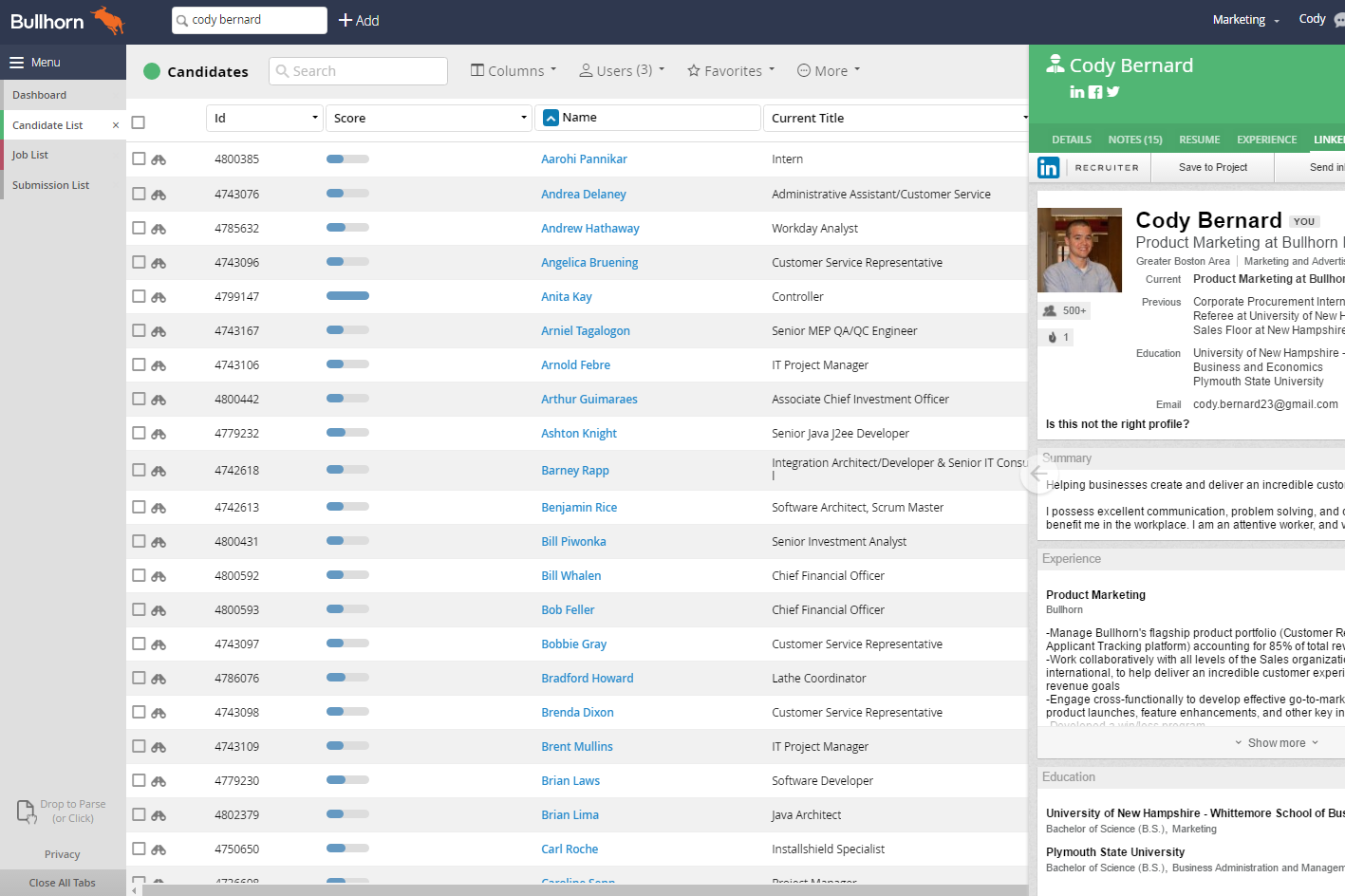
- Combines ATS and CRM for unified candidate management.
- Advanced automation reduces manual recruiting tasks.
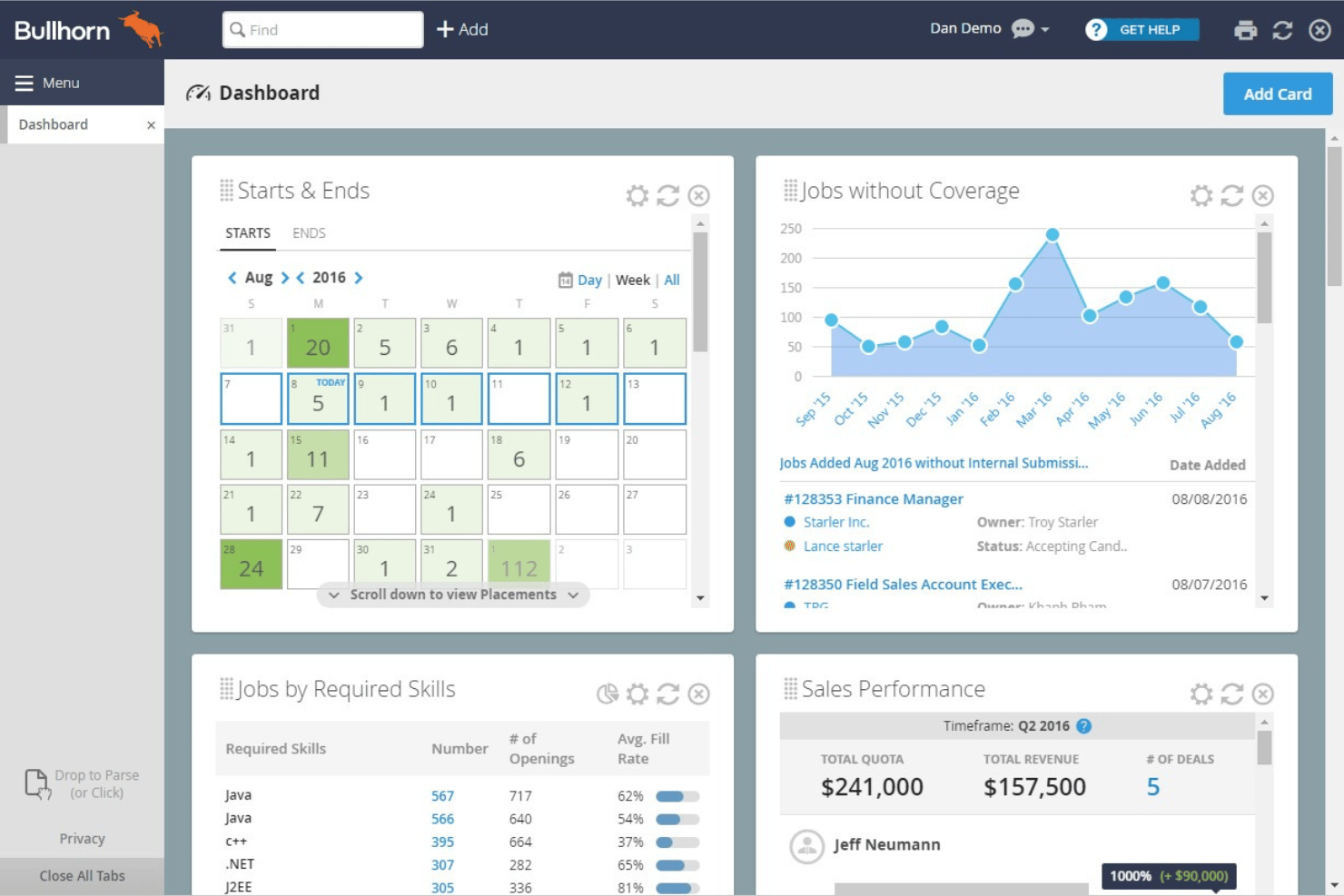
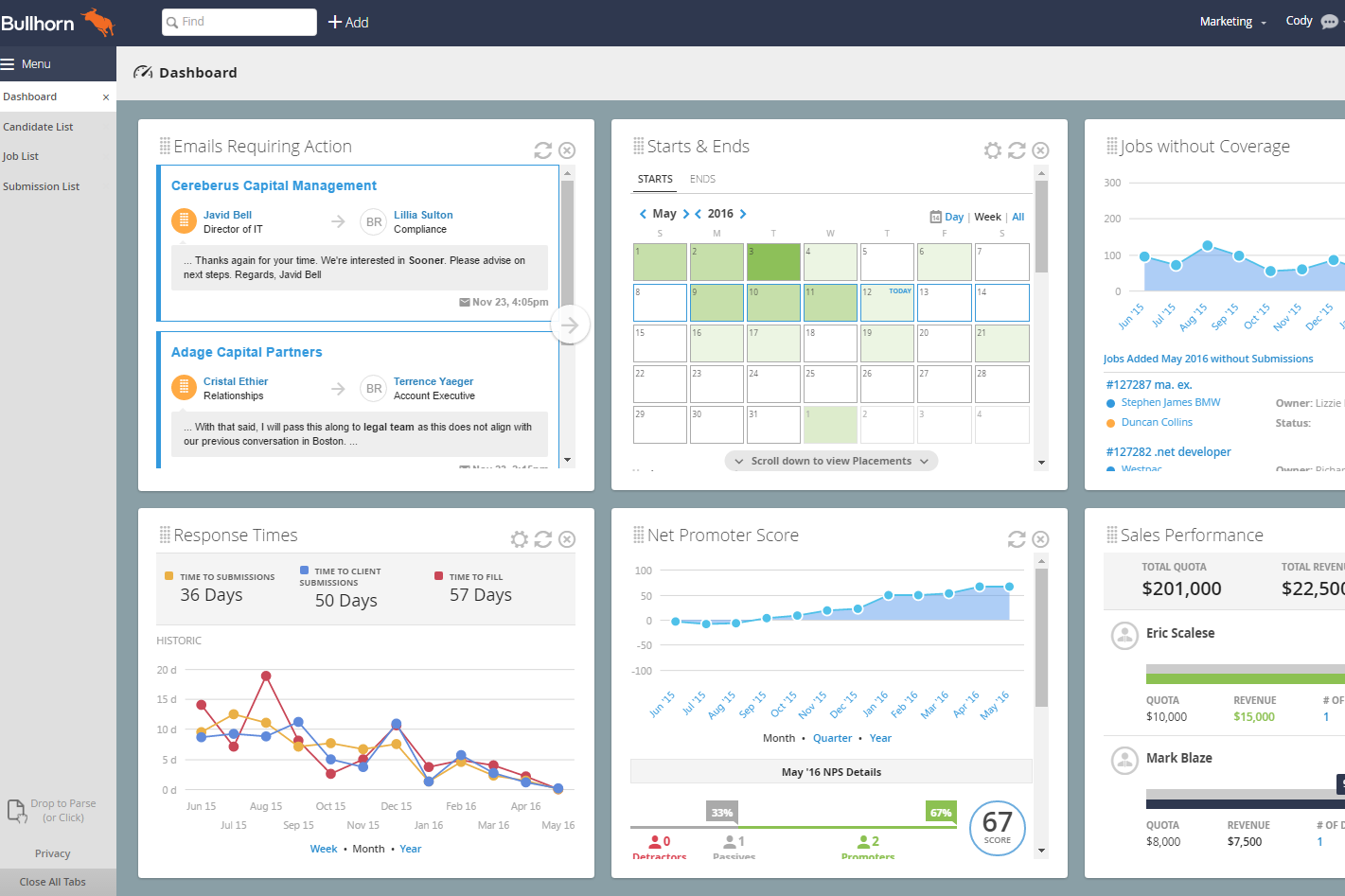
- Strong reporting and analytics for tracking hiring metrics.
- System performance can be slow during peak usage.
- Pricing is higher than many other ATS providers.
- Interface can feel outdated compared to newer platforms.
Best Use Cases for Atlas and Bullhorn
Atlas
- Enterprise HR Teams Large staffing and search organizations get a shared record across desks and offices, plus the reporting leaders need to run the business.
- Regulated Industries Automatic capture leaves a dated trail of every conversation, backed by ISO 27001 certification and GDPR compliance, which helps in sectors with tighter record-keeping expectations.
- Multi-location Companies Centralized dashboards let you manage activity across regions, standardize how work gets recorded, and maintain visibility into distributed desks.
- Staffing Agencies Permanent and contract desks, automatic context capture, opportunity tracking, and contractor management sit in one platform, which is precisely the buyer Atlas is built for.
- Tech Scaleups Agencies placing into fast-moving markets can connect Atlas to the rest of their stack through its open API and Claude MCP connector as their tooling changes.
- Growth-focused Startups Newer and smaller agencies can get productive quickly, since onboarding is guided and the platform builds the candidate record for them from day one.
Bullhorn
- Staffing Agencies Bullhorn’s automation and CRM features streamline high-volume placements and client management.
- Large Enterprises Supports complex workflows and multiple recruiters across departments.
- Recruitment Process Outsourcing Handles bulk candidate sourcing and detailed compliance tracking.
- Healthcare Staffing Manages credentialing, compliance, and rapid placement needs.
- IT Recruiting Firms Tracks specialized talent pools and integrates with job boards.
- Sales Recruitment Teams Combines sales pipeline management with candidate tracking.
Wie zou Atlas moeten gebruiken en wie Bullhorn?
Atlas is een sterke keuze voor bureaus en wervingsbedrijven waar relaties het product zijn en administratie de bottleneck vormt, vooral wanneer vaste en contractfuncties naast elkaar worden uitgevoerd. Het wordt niet verkocht aan interne talentteams, dus sluit het uit als je mensen voor je eigen vacatures werft. Bullhorn past bij grotere personeelsbemiddelingsorganisaties, uitzend- en contractbedrijven met grote volumes en elk bedrijf dat urenstaten, loon- en facturatiebeheer, onboarding en VMS-werk naast het ATS nodig heeft, of dat de inkoopcontroles van zakelijke klanten moet doorstaan. Als je team snelheid en een dossier dat zichzelf bijhoudt belangrijk vindt, past Atlas. Als je één platform nodig hebt om het hele bureau te beheren, is Bullhorn de aangewezen keuze.
Differences Between Atlas and Bullhorn
| Atlas | Bullhorn | |
|---|---|---|
| AI Approach | AI-native platform, with automatic capture of every conversation as the foundation. | AI layered onto an established platform, with matching and agents drawing on decades of placement data. |
| Ecosystem | A focused set of integrations, plus an MCP connector that opens the database to other AI tools. | Hundreds of marketplace partners covering nearly every specialist category an agency might need. |
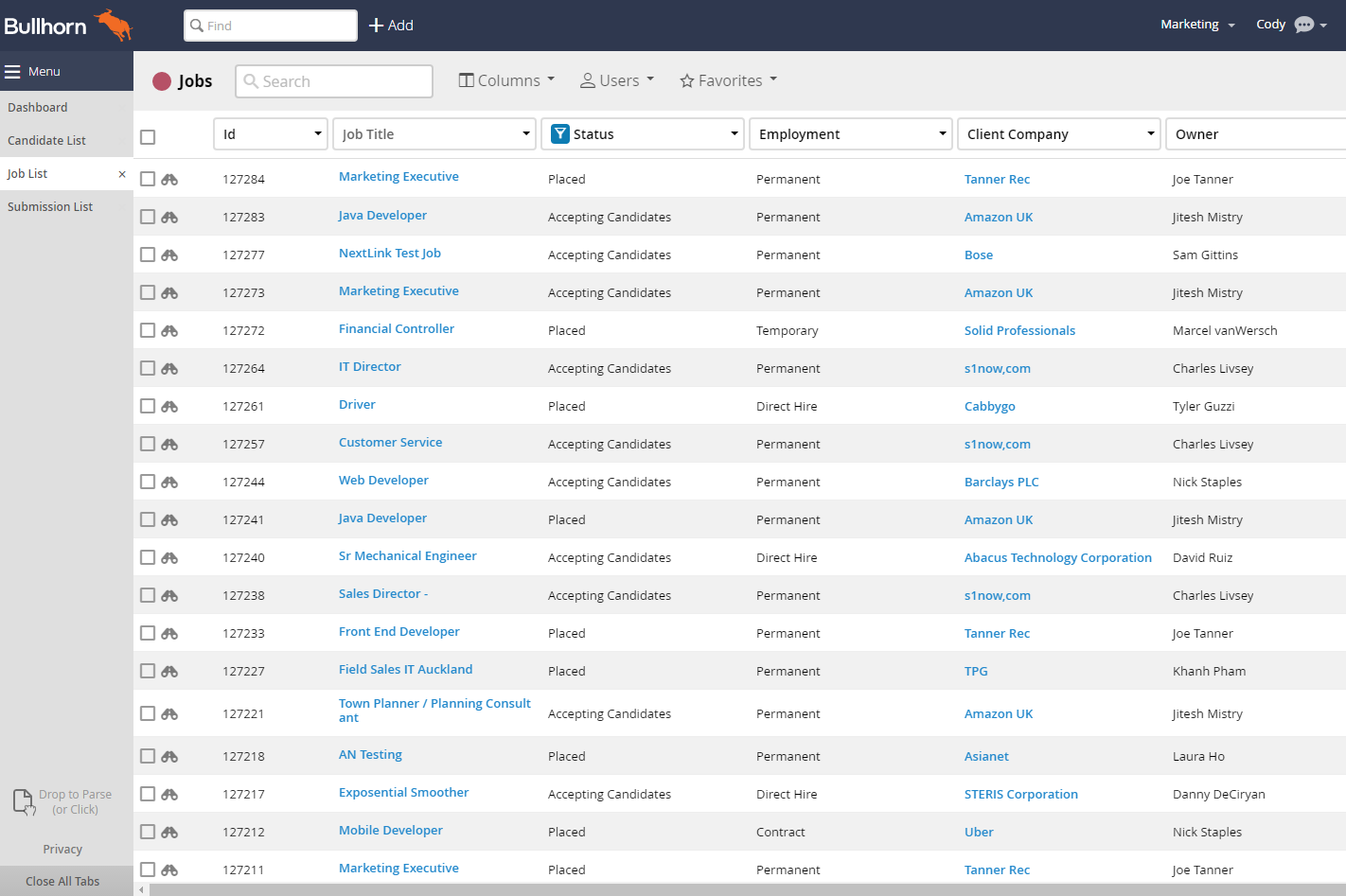
| Platform Scope | Front office work: sourcing, candidate and client relationships, business development, and contractor management. | Front, middle, and back office together, including timesheets, pay and bill, and onboarding. |
| Pricing Model | Quote based, with no published rates and onboarding included in the relationship. | Published per-user plans for smaller agencies, custom quotes above that, and modules priced separately. |
| Track Record | Newer to market, with a smaller base of public reviews and reference customers. | Long established, with much of the largest staffing market already running on it. |
| Visit AtlasOpens new window | Read Bullhorn ReviewOpens new window |
Similarities Between Atlas and Bullhorn
| AI Agents On The Busywork | Both put agents on sourcing, screening, outreach, and note taking, with the same aim: recruiters spending their time on people rather than records. |
|---|---|
| ATS And CRM Together | Each pairs applicant tracking with a recruiting CRM, so business development and placement work happen in one system instead of two. |
| Agency Focus | Neither is sold as a general HR system. Both are built for staffing, recruitment, and search firms, where the client relationship matters as much as the candidate one. |
| Open API And Partners | Both expose an open API and maintain integration partners, so job boards, phone systems, and finance tools can feed the core record. |
| Perm And Contract Desks | Each supports permanent and contract placement, so agencies running mixed desks don’t need a second platform to handle contractors. |
| Visit AtlasOpens new window Read Bullhorn ReviewOpens new window | |