


Atlas vs. Bullhorn: Comparison and Expert Reviews for 2026



Recruiting tools can look similar until you put them under real hiring pressure. The better fit comes down to how much admin each one absorbs, how much of your business it can run, and how quickly recruiters take to it.
Struggling to pick the right recruiting software for your busy day-to-day? The Atlas vs. Bullhorn matchup is a study in trade-offs: a newcomer that records the work for you against an incumbent that runs everything from prospect to payroll. If you’re feeling stuck between a fresh approach and a proven one, you’re not alone.
In this article, you’ll get my take on how these two options stack up. I’ll break down the pros and cons, the best use cases for each, what you can expect to pay, how they handle your data, and the kind of experience your team will have day to day. If you want a no-nonsense look at recruiting software built for agencies, you’re in the right place.
Atlas vs. Bullhorn: An Overview
Atlas
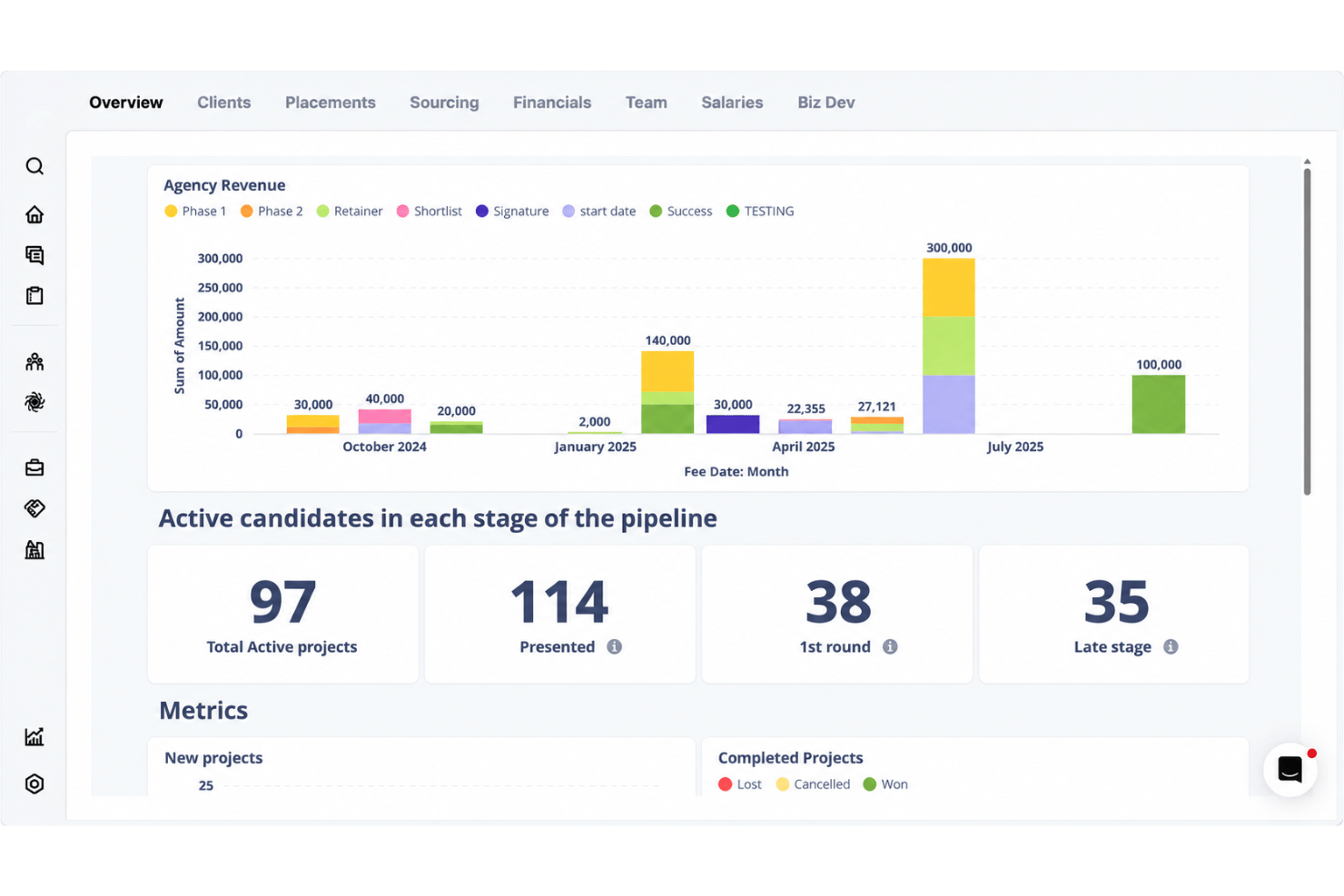
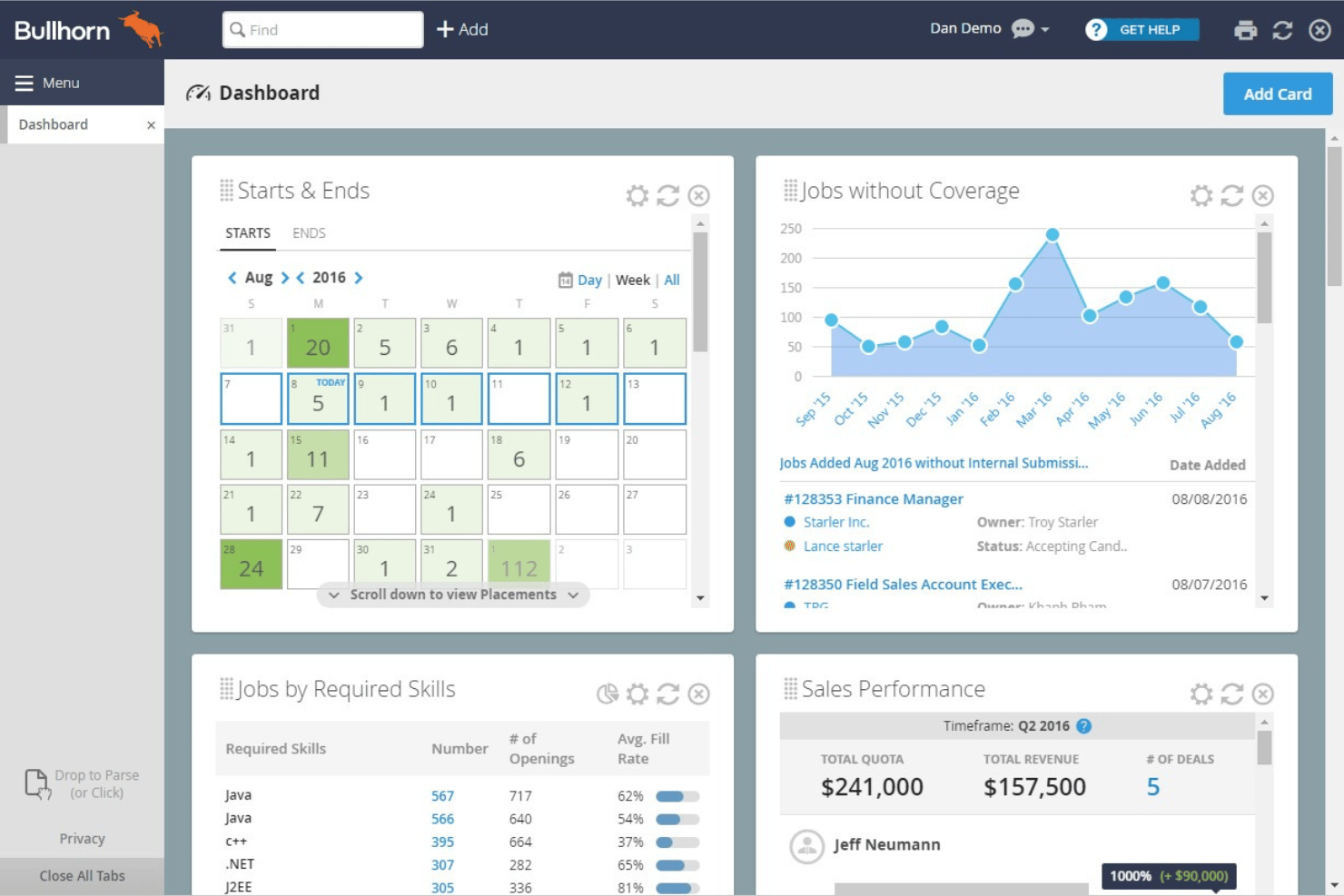
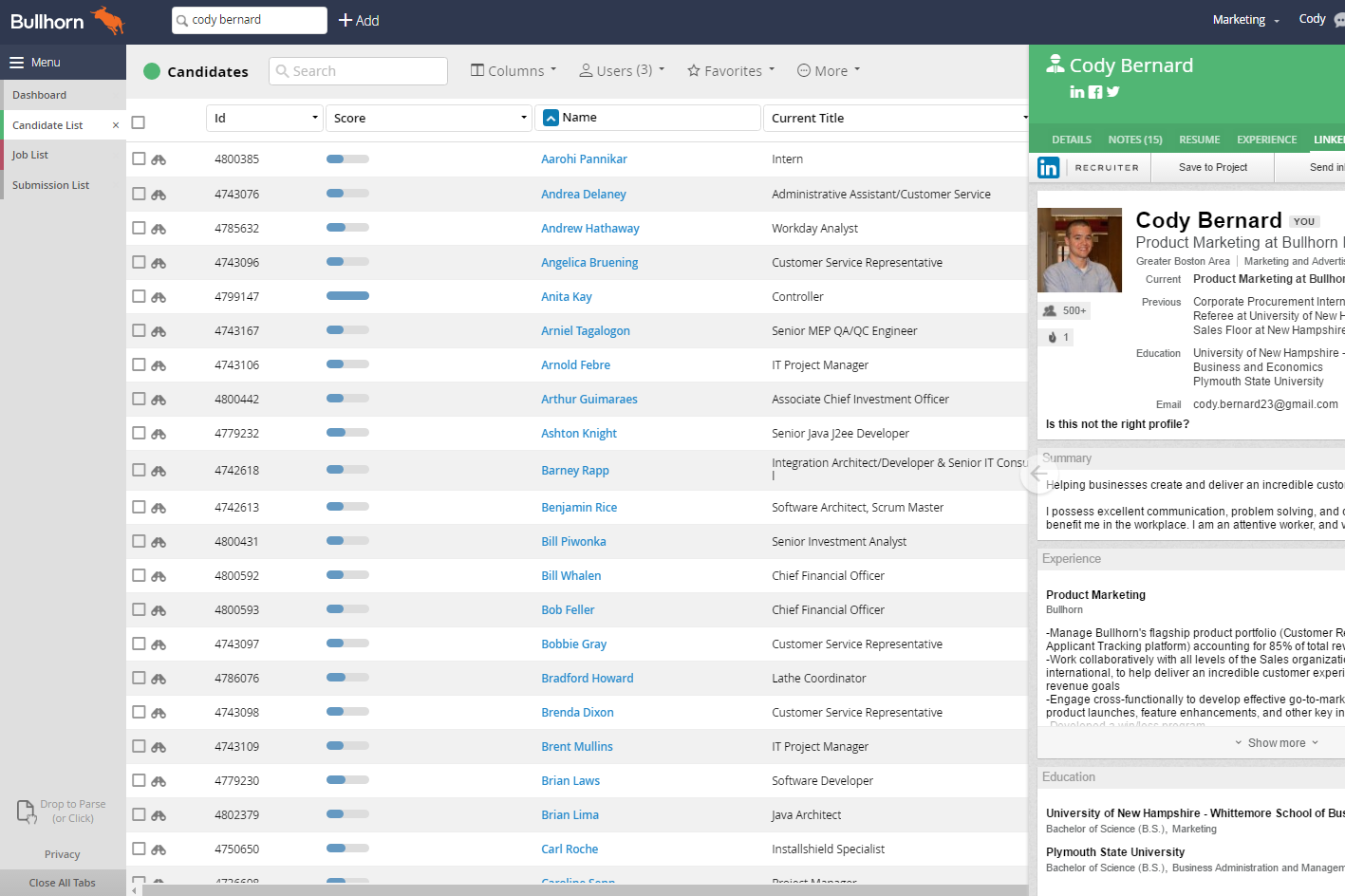
Bullhorn
Why Trust Our Software Reviews
Our team has been testing and reviewing software since 2012. As HR experts ourselves, we know how difficult—and important—it is to choose the right software.
For this guide, we evaluated tools using hands-on testing and independent research, scoring tools using our selection criteria. We also draw on insights from industry thought leaders and and practicing HR experts.
Our reviews reflect our human editorial judgment, not a sales pitch.
Atlas vs. Bullhorn Pricing Comparison
| Atlas | Bullhorn | |
|---|---|---|
| Free Trial | Free demo available | Free demo available |
| Pricing | Pricing upon request | From $99/user/month |
Atlas vs. Bullhorn Pricing & Hidden Costs
Bullhorn is the more transparent of the two at the small end. Entry plans for smaller agencies are published per user with implementation included, stepping up through Starter, Core, Pro, and Max as functionality grows, while front office and all-in-one editions move to custom quotes. What lifts the bill is everything alongside the core platform: middle office pay and bill, onboarding, messaging, analytics, and the Amplify AI products are priced as separate lines rather than bundled in. Atlas doesn’t publish rates at all and quotes each agency on its own terms, though onboarding, migration, and support arrive with the platform rather than as extras, and they’ll help absorb the tail end of the contract you’re leaving.
To pick the right pricing fit, look past the base package and map out your must-have modules, growth plans, and daily workflows. I recommend asking for an itemized quote, testing it against real use cases, and clarifying what’s included versus what carries a fee. With Bullhorn, price the add-on modules you’ll inevitably want rather than the entry tier alone. With Atlas, ask what the number does as headcount grows. That comparison, not the headline rate, is what tells you the true cost of each.
Atlas vs. Bullhorn Feature Comparison
| Atlas | Bullhorn | |
|---|---|---|
| API | ||
| Application Tracking | ||
| Behavioral Testing | ||
| Budgeting | ||
| Calendar Management | ||
| Candidate Database | ||
| Cognitive Testing | ||
| Dashboard | ||
| Data Export | ||
| Data Import | ||
| Data Visualization | ||
| Email Integration | ||
| Employee Database | ||
| Employee Onboarding | ||
| External Integrations | ||
| Feedback Management | ||
| Forecasting | ||
| Interview Scheduling | ||
| Multi-User | ||
| Notifications | ||
| Personality Testing | ||
| Psychometric Testing | ||
| Scheduling | ||
| Status Notifications | ||
| Travel Management |
Atlas vs. Bullhorn Integrations
| Integration | Atlas | Bullhorn |
|---|---|---|
| LinkedIn Recruiter System Connect | ❌ | ✅ |
| Broadbean | ✅ | ✅ |
| idibu | ✅ | ✅ |
| Microsoft Outlook | ✅ | ✅ |
| Google Workspace | ✅ | ✅ |
| Ringover | ✅ | ✅ |
| Zapier | ❌ | ✅ |
| Open API | ✅ | ✅ |
| Claude MCP Connector | ✅ | ❌ |
Bullhorn’s marketplace is its biggest advantage here, with hundreds of pre-integrated partners across job boards, screening, assessment, pay and bill, and communications, plus a Zapier connection and an open API for whatever isn’t covered. Atlas works with a narrower set: Broadbean and idibu for job distribution, phone systems like Ringover and RingCentral, Outlook and Google Workspace, accounting through Xero, and outreach tools such as Talin and Expandi. Where Atlas pulls ahead is AI connectivity, since its MCP connector lets other AI tools work directly against your database. If your stack leans on a specialist vendor, check the marketplace before committing, because that’s where the gap between these two is widest.
Atlas vs. Bullhorn Security, Compliance & Reliability
| Factor | Atlas | Bullhorn |
|---|---|---|
| Data Privacy | Operates within GDPR, and because every call, email, and message is captured as it happens, there’s a dated record behind each placement. | Publishes a GDPR commitment and a CCPA opt-out, with session and access controls governing who reaches what. |
| Regulatory Compliance | Certified to ISO 27001, with SOC 2 accreditation underway and expected in early 2027. | Security and privacy policies built to meet SOC 2 requirements, alongside an independent privacy seal. |
| Data Encryption | Encryption specifics aren’t published, though ISO 27001 certification covers how customer data is handled across the platform. | Modern TLS protects traffic to the browser, replication between sites travels over encrypted links, and company machines are encrypted. |
| Uptime Reliability | No public availability commitment, so uptime terms are worth settling in the contract. | Redundant, physically secured data centers with near real-time replication into a disaster recovery site that is tested regularly. |
| Third-Party Audits | Certification is externally assessed, but Atlas doesn’t publish audit detail for customers to review. | Independent vulnerability testing, penetration testing, and code review, plus continuous external scanning of the network. |
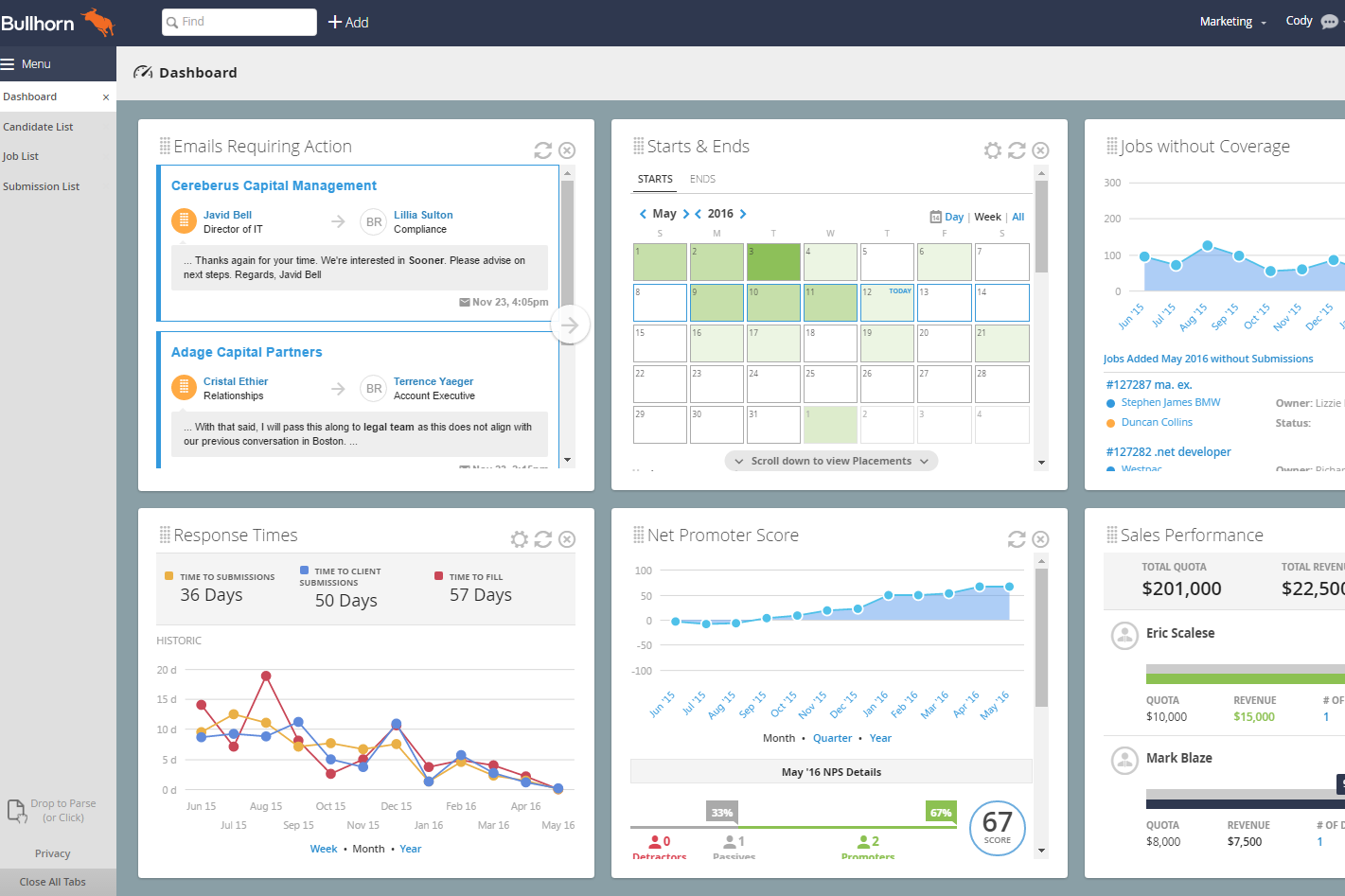
Bullhorn is the safer answer when procurement gets involved: a security program built around SOC 2 requirements, independent penetration testing and code review, single sign-on with two-factor authentication, and replication into a disaster recovery site that gets tested. Atlas holds ISO 27001 and operates within GDPR, with SOC 2 accreditation underway and expected in early 2027, which satisfies most agency requirements but leaves less to hand a client’s risk team today. In my view Bullhorn wins where enterprise clients audit their suppliers, while Atlas is sufficient for firms whose obligations stop at GDPR and a recognized certification.
Atlas vs. Bullhorn Ease of Use
| Factor | Atlas | Bullhorn |
|---|---|---|
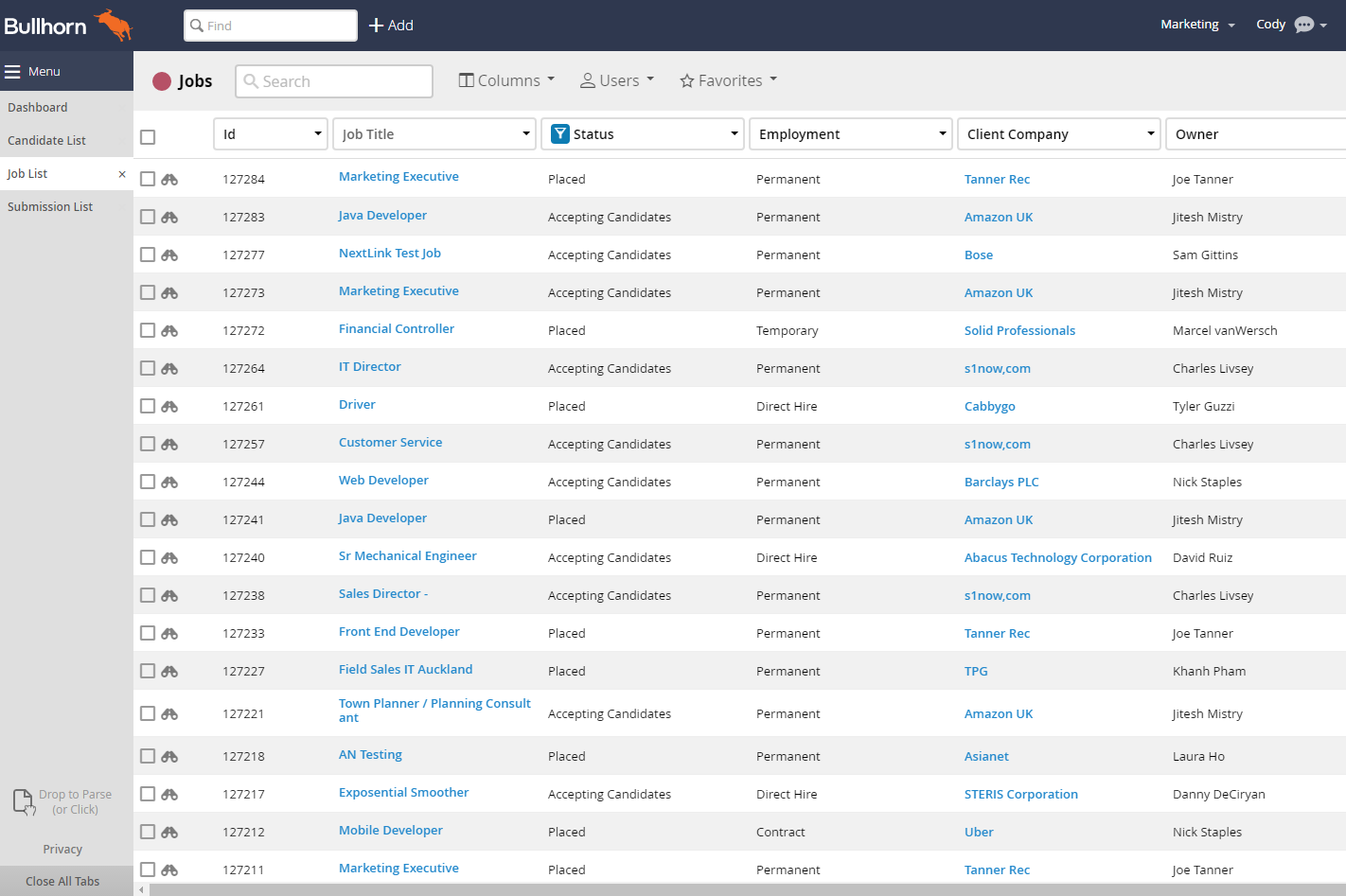
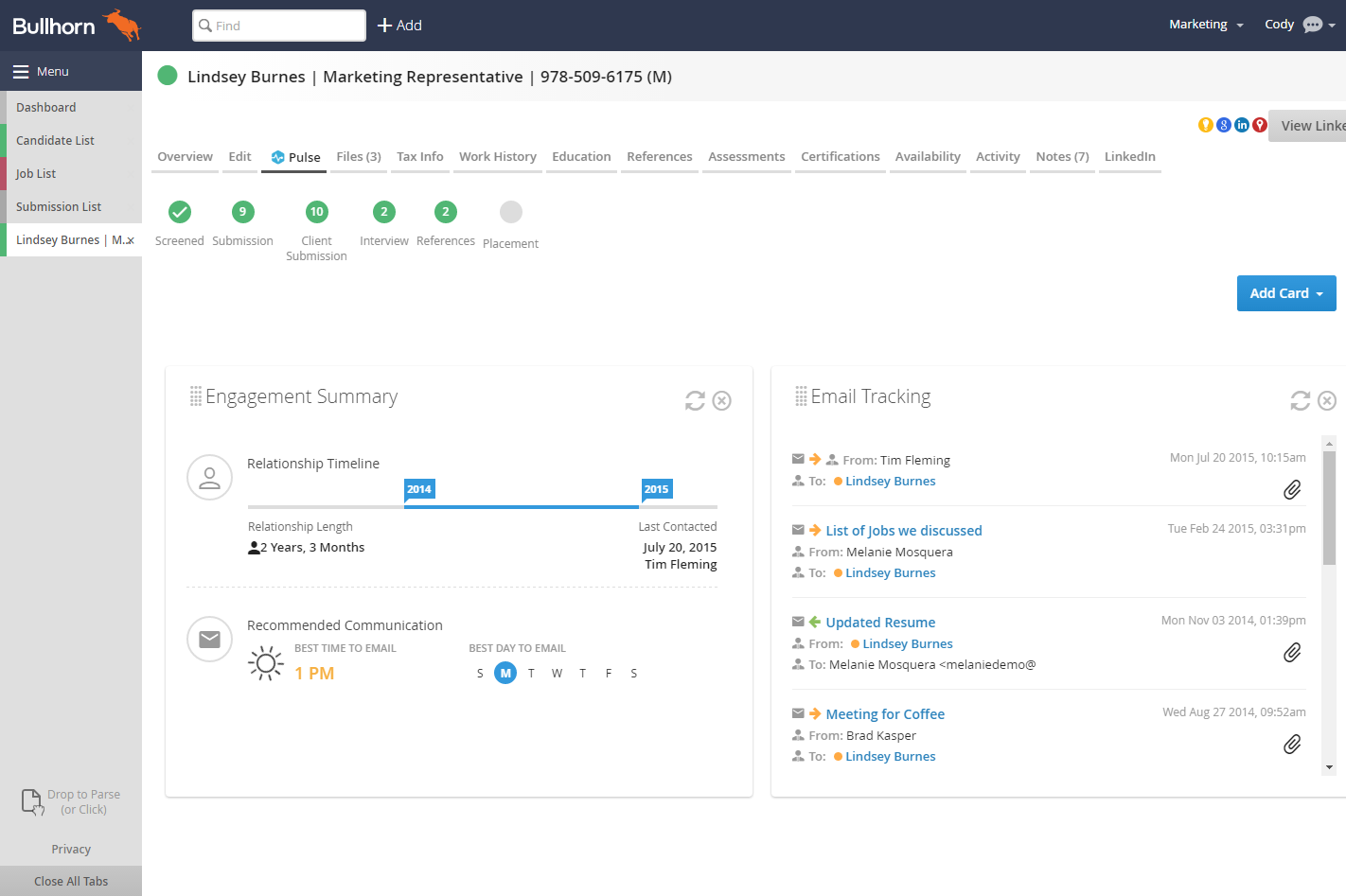
| User Interface | Built around how a desk runs, and because the record fills itself there’s far less typing; agency founders describe it as working the way they already think. | Deep and configurable, with the density that comes from running front, middle, and back office in one place. |
| Onboarding Process | A dedicated team runs daily sessions until the whole desk is confident, and the migration off your old system is handled for you. | Smaller agencies can be live within a couple of weeks with implementation included, backed by configuration help, training videos, and live support. |
| Workflow Setup | Pipelines and stages shaped around your process, with AI agents handling the repetitive steps in between. | Highly customizable workflows spanning the full placement lifecycle, which is powerful but rewards deliberate setup. |
| Customer Support | In-app support that usually answers within minutes, staffed by people from recruitment, with the founding team known to step in. | Round-the-clock expert support and a deep knowledge base, plus a partner network for heavier configuration work. |
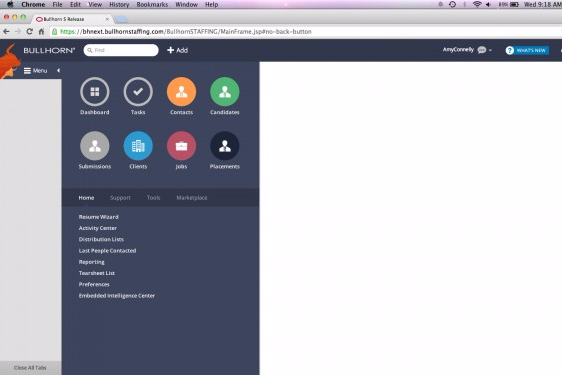
Atlas wins for everyday usability, mostly by removing work rather than organizing it: less to enter, less to maintain, and a shorter path to a team whose records are actually current. Bullhorn is built for firms that need one system to run the entire operation, and that breadth is exactly what makes it heavier to configure and learn. I find Atlas great for teams who want low-friction recruiting, whereas Bullhorn earns its keep when timesheets, pay and bill, and client reporting all have to live in the same place.
Atlas vs Bullhorn: Pros & Cons
Atlas
- Calls, emails, and messages are logged and made searchable without manual entry
- Plain-language search pulls answers from past conversations, not just CV fields
- Client-ready candidate reports are produced from data already in the platform
- Fewer native integrations than vendors that have been building them for a decade
- Smaller pool of public reviews and reference customers than incumbent platforms
- Workflows are tailored to agencies, not in-house talent acquisition teams
Bullhorn
- Combines ATS and CRM for unified candidate management.
- Advanced automation reduces manual recruiting tasks.
- Strong reporting and analytics for tracking hiring metrics.
- System performance can be slow during peak usage.
- Pricing is higher than many other ATS providers.
- Interface can feel outdated compared to newer platforms.
Best Use Cases for Atlas and Bullhorn
Atlas
- Enterprise HR Teams Large staffing and search organizations get a shared record across desks and offices, plus the reporting leaders need to run the business.
- Regulated Industries Automatic capture leaves a dated trail of every conversation, backed by ISO 27001 certification and GDPR compliance, which helps in sectors with tighter record-keeping expectations.
- Multi-location Companies Centralized dashboards let you manage activity across regions, standardize how work gets recorded, and maintain visibility into distributed desks.
- Staffing Agencies Permanent and contract desks, automatic context capture, opportunity tracking, and contractor management sit in one platform, which is precisely the buyer Atlas is built for.
- Tech Scaleups Agencies placing into fast-moving markets can connect Atlas to the rest of their stack through its open API and Claude MCP connector as their tooling changes.
- Growth-focused Startups Newer and smaller agencies can get productive quickly, since onboarding is guided and the platform builds the candidate record for them from day one.
Bullhorn
- Staffing Agencies Bullhorn’s automation and CRM features streamline high-volume placements and client management.
- Large Enterprises Supports complex workflows and multiple recruiters across departments.
- Recruitment Process Outsourcing Handles bulk candidate sourcing and detailed compliance tracking.
- Healthcare Staffing Manages credentialing, compliance, and rapid placement needs.
- IT Recruiting Firms Tracks specialized talent pools and integrates with job boards.
- Sales Recruitment Teams Combines sales pipeline management with candidate tracking.
Who Should Use Atlas, and Who Should Use Bullhorn?
Atlas is a strong pick for agencies and search firms where relationships are the product and admin is the bottleneck, particularly with permanent and contract desks running side by side. It isn’t sold to in-house talent teams, so rule it out if you’re hiring for your own vacancies. Bullhorn suits larger staffing operations, high-volume temp and contract businesses, and any firm that needs timesheets, pay and bill, onboarding, and VMS work sitting alongside the ATS, or that has to clear enterprise clients’ procurement checks. If your team values speed and a record that maintains itself, Atlas fits. If you need one platform to run the whole agency, Bullhorn is the way to go.
Differences Between Atlas and Bullhorn
| Atlas | Bullhorn | |
|---|---|---|
| AI Approach | AI-native platform, with automatic capture of every conversation as the foundation. | AI layered onto an established platform, with matching and agents drawing on decades of placement data. |
| Ecosystem | A focused set of integrations, plus an MCP connector that opens the database to other AI tools. | Hundreds of marketplace partners covering nearly every specialist category an agency might need. |
| Platform Scope | Front office work: sourcing, candidate and client relationships, business development, and contractor management. | Front, middle, and back office together, including timesheets, pay and bill, and onboarding. |
| Pricing Model | Quote based, with no published rates and onboarding included in the relationship. | Published per-user plans for smaller agencies, custom quotes above that, and modules priced separately. |
| Track Record | Newer to market, with a smaller base of public reviews and reference customers. | Long established, with much of the largest staffing market already running on it. |
| Visit AtlasOpens new window | Read Bullhorn ReviewOpens new window |
Similarities Between Atlas and Bullhorn
| AI Agents On The Busywork | Both put agents on sourcing, screening, outreach, and note taking, with the same aim: recruiters spending their time on people rather than records. |
|---|---|
| ATS And CRM Together | Each pairs applicant tracking with a recruiting CRM, so business development and placement work happen in one system instead of two. |
| Agency Focus | Neither is sold as a general HR system. Both are built for staffing, recruitment, and search firms, where the client relationship matters as much as the candidate one. |
| Open API And Partners | Both expose an open API and maintain integration partners, so job boards, phone systems, and finance tools can feed the core record. |
| Perm And Contract Desks | Each supports permanent and contract placement, so agencies running mixed desks don’t need a second platform to handle contractors. |
| Visit AtlasOpens new window Read Bullhorn ReviewOpens new window | |