



Atlas vs. JobAdder: Comparison and Reviews for 2026



When placement volume grows, scattered workflows and manual handoffs start costing your team real time. The right recruiting platform should take work off the desk rather than hand everyone another system to feed.
Choosing between Atlas and JobAdder can feel like a match between heavyweights, since each has loyal fans and each takes a different route to the same problem. If you’re juggling job ads, chasing candidates, or simply tired of stitching manual processes together, picking the recruiting software that fits your desk matters more than ever.
I’ll break down how Atlas and JobAdder truly compare, covering the pros and cons, pricing, integrations, security, and real-world usability. By the end, you’ll know which tool gives your team the edge for your next recruiting win.
Atlas vs. JobAdder: An Overview
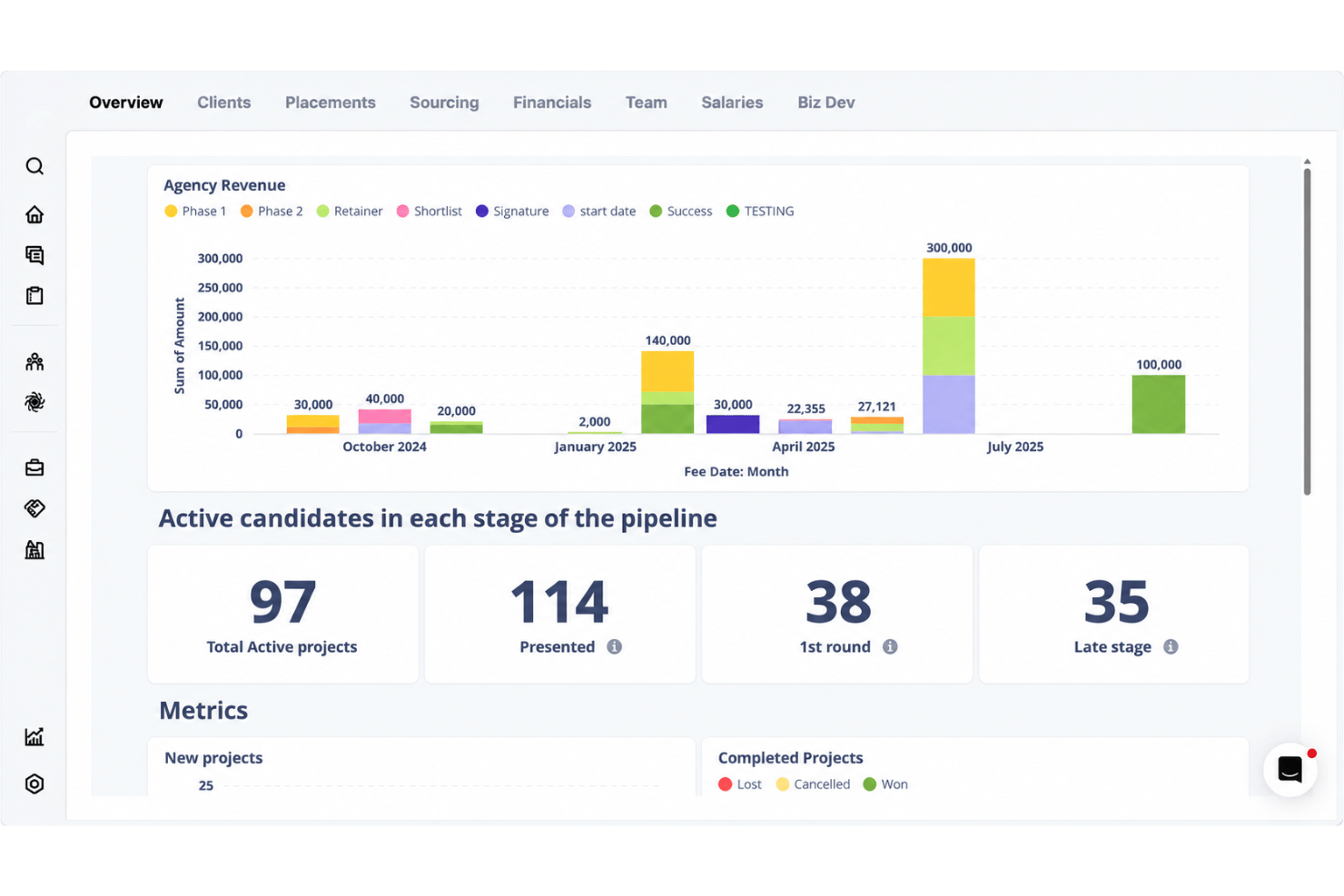
Atlas
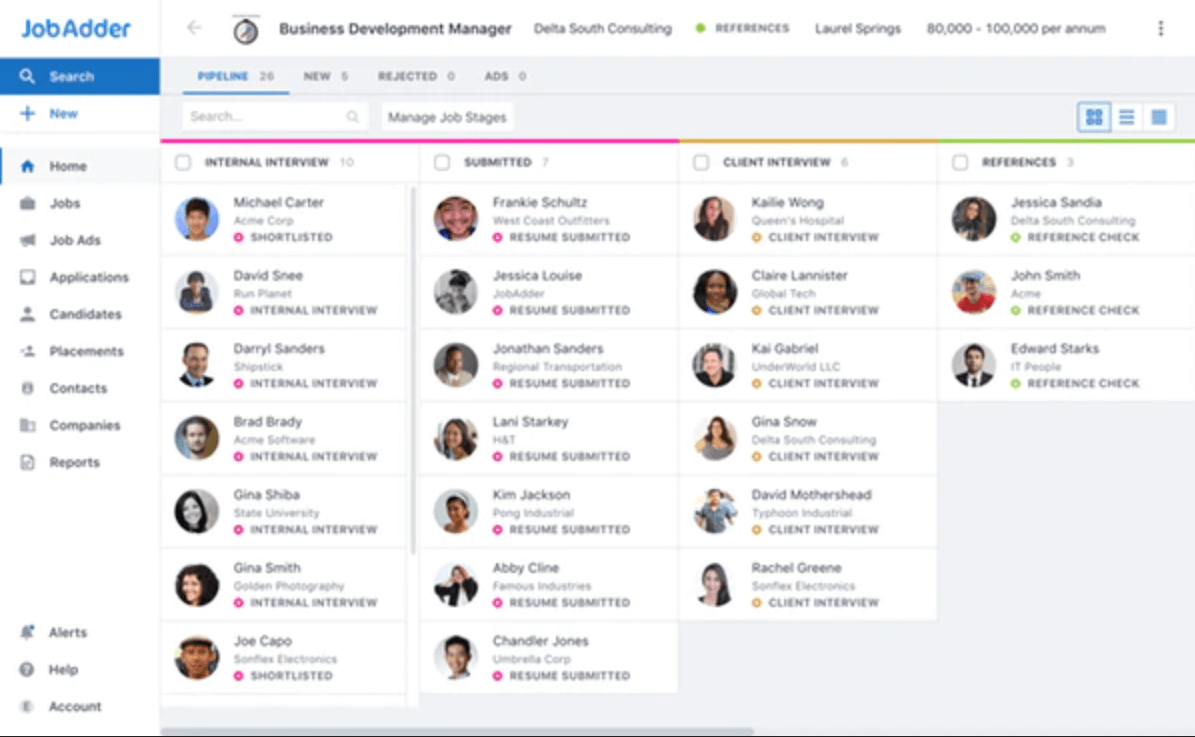
JobAdder
Why Trust Our Software Recommendations
Our team has been testing and reviewing software since 2012. As HR experts ourselves, we know how difficult—and important—it is to choose the right software.
For this guide, we evaluated tools using hands-on testing and independent research, scoring tools using our selection criteria. We also draw on insights from industry thought leaders and practicing HR experts.
Our reviews reflect our human editorial judgment, not a sales pitch.
Expert reviewers:
Atlas vs. JobAdder Pricing Comparison
| Atlas | JobAdder | |
|---|---|---|
| Free Trial | 14-day free trial | Free demo available |
| Pricing | From £105/user/month | Pricing upon request |
Atlas vs. JobAdder Pricing & Hidden Costs
Neither platform publishes rates, so both conversations begin with a quote. Atlas prices each agency individually, with onboarding, migration, and support folded into the deal rather than sold alongside it, and they’ll help absorb the tail end of the contract you’re leaving. JobAdder is quote based too, though the shape of it is public: plans are banded by team size, running from Recruiter Lite for boutique agencies through Essential and Pro, with a separate edition for in-house teams, and you pay per user against a minimum. Watch what sits outside the plan, because single sign-on, API and sandbox access, Broadbean posting, smart forms, and the hiring manager portal are add-ons, and the AI features only arrive once you move above the entry band.
When weighing which vendor offers the best value, I suggest you start by mapping your current and anticipated hiring needs, how many people need a seat, and the integrations you can’t work without. Get each vendor to spell out every line item in their proposal, especially fees for scaling up, connecting other platforms, or hands-on support, so you’re comparing total cost rather than a headline rate. With JobAdder, price the add-ons you’ll realistically switch on. With Atlas, ask what the quote does as your headcount grows.
Atlas vs. JobAdder Feature Comparison
| Atlas | JobAdder | |
|---|---|---|
| 360 Degree Feedback | ||
| API | ||
| Application Tracking | ||
| Batch Permissions & Access | ||
| Compliance Tracking | ||
| Dashboard | ||
| Data Export | ||
| Data Import | ||
| Data Visualization | ||
| Employee Database | ||
| Employee Engagement | ||
| Employee Incentive Management | ||
| Employee Onboarding | ||
| External Integrations | ||
| Feedback Management | ||
| Multi-User | ||
| Notifications | ||
| Scheduling | ||
| Travel Management |
Atlas vs. JobAdder Integrations
| Integration | Atlas | JobAdder |
|---|---|---|
| LinkedIn Recruiter System Connect | ❌ | ✅ |
| Indeed | ❌ | ✅ |
| Broadbean | ✅ | ✅ |
| Microsoft Outlook | ✅ | ✅ |
| Ringover | ✅ | ✅ |
| Aircall | ✅ | ✅ |
| Xero | ✅ | ✅ |
| DocuSign | ❌ | ✅ |
| Zapier | ❌ | ✅ |
| Open API | ✅ | ✅ |
JobAdder wins on breadth here. Its catalog spans payroll, background checks, video interviewing, assessment, and accounting, its job board reach is among the widest in recruitment, and it connects to LinkedIn Recruiter, Indeed, DocuSign, and Zapier without custom work. Atlas overlaps on the everyday tools, including Broadbean, Outlook, Ringover, Aircall, and Xero, but the list is shorter and there’s no Zapier connection, so anything unusual runs through the open API. Atlas does hold one advantage worth weighing: an MCP connector that lets other AI tools work directly against your database. If your hiring process relies on plug-and-play connections, JobAdder wins on sheer variety.
Atlas vs. JobAdder Security, Compliance & Reliability
| Factor | Atlas | JobAdder |
|---|---|---|
| Data Privacy | Operates within GDPR, and because every call, email, and message is captured as it happens, there’s a dated record behind each placement. | GDPR terms with opt-in consent on application forms, a candidate portal for access and deletion requests, and a published subprocessor list. |
| Regulatory Compliance | Certified to ISO 27001, with SOC 2 accreditation underway and expected in early 2027. | Certified to the current ISO 27001 standard, on cloud infrastructure carrying its own SOC and ISO attestations. |
| Encryption | Encryption specifics aren’t published, though ISO 27001 certification covers how customer data is handled across the platform. | Encrypted storage in AWS, with a web application firewall, segmented networks, and nightly and weekly backups behind it. |
| Uptime Guarantee | No public availability commitment, so uptime terms are worth settling in the contract. | A standard service level agreement, a public status page, and disaster recovery across multiple availability zones that gets tested. |
JobAdder is the better documented of the two, with a trust center covering hosting, backups, access control, and where data physically sits, plus single sign-on and multi-factor authentication for teams that need them. Atlas matches it on ISO 27001 and GDPR, with SOC 2 accreditation underway and expected in early 2027, though there’s less published detail to hand a client’s risk team. I’d take JobAdder if you answer security questionnaires regularly or need data held in a particular region, and Atlas where a recognized certification and GDPR are what your clients actually ask for.
Atlas vs. JobAdder Ease of Use
| Factor | Atlas | JobAdder |
|---|---|---|
| User Interface | Built around how a desk runs, and because the record fills itself there’s far less typing; agency founders describe it as working the way they already think. | A long-standing reputation for approachability, with a clean layout most recruiters pick up without much prompting. |
| Onboarding | A dedicated team runs daily sessions until the whole desk is confident, and the migration off your old system is handled for you. | Self-paced training through JobAdder Academy inside the product, with an integration team helping connect the tools you already run. |
| Day-to-Day Workflow | Pipelines and stages shaped around your process, with AI agents handling the repetitive steps in between. | Multiple workflows, automations, and custom forms, though the stronger automation and analytics sit on higher plans. |
| Support Access | In-app support that usually answers within minutes, staffed by people from recruitment, with the founding team known to step in. | A support portal and knowledge base for every customer, with a dedicated success manager reserved for larger teams. |
JobAdder feels familiar quickly, which is much of its appeal: recruiters who have used an ATS before tend to be productive fast, and the training sits inside the product. Atlas gets to the same place differently, by giving people less to do rather than more to learn, though it asks a team to trust that the record is building itself. I think JobAdder shines for hands-on teams who configure as they go, and Atlas delivers for teams whose real complaint is the admin itself.
Atlas vs JobAdder: Pros & Cons
Atlas
- Calls, emails, and messages are logged and made searchable without manual entry
- Plain-language search pulls answers from past conversations, not just CV fields
- Client-ready candidate reports are produced from data already in the platform
- Fewer native integrations than vendors that have been building them for a decade
- Smaller pool of public reviews and reference customers than incumbent platforms
- Workflows are tailored to agencies, not in-house talent acquisition teams
JobAdder
- Responsive customer support with fast ticket resolution
- Automated job posting and candidate communication tools
- High user adoption rates among recruitment agencies
- Reporting and analytics features are basic
- Some users report slow job board integration updates
- Limited workflow flexibility for complex hiring processes
Best Use Cases for Atlas and JobAdder
Atlas
- Enterprise HR Teams Large staffing and search organizations get a shared record across desks and offices, plus the reporting leaders need to run the business.
- Regulated Industries Automatic capture leaves a dated trail of every conversation, backed by ISO 27001 certification and GDPR compliance, which helps in sectors with tighter record-keeping expectations.
- Multi-location Companies Centralized dashboards let you manage activity across regions, standardize how work gets recorded, and maintain visibility into distributed desks.
- Staffing Agencies Permanent and contract desks, automatic context capture, opportunity tracking, and contractor management sit in one platform, which is precisely the buyer Atlas is built for.
- Tech Scaleups Agencies placing into fast-moving markets can connect Atlas to the rest of their stack through its open API and Claude MCP connector as their tooling changes.
- Growth-focused Startups Newer and smaller agencies can get productive quickly, since onboarding is guided and the platform builds the candidate record for them from day one.
JobAdder
- Recruitment Agencies JobAdder’s automation and bulk actions support high-volume candidate management.
- Healthcare Staffing Fast job posting and candidate tracking help fill urgent roles.
- In-House Human Resources Teams Centralized communication and compliance tools simplify internal hiring.
- Temporary Staffing Firms Quick candidate placement and shift scheduling features are built-in.
- Retail Chains Multi-location job posting and applicant tracking support seasonal hiring.
- Tech Startups Easy onboarding and scalable workflows suit fast-growing teams.
Who Should Use Atlas, and Who Should Use JobAdder?
Atlas is the clear pick for staffing, recruitment, and executive search firms where relationships are the product and nobody has time to write anything up, particularly with permanent and contract desks running side by side. It isn’t sold to in-house talent teams, so rule it out if you’re hiring for your own vacancies. JobAdder suits agencies that want a proven ATS and CRM with wide job board reach and a deep partner catalog, in-house teams that need the same system, and firms with data residency or security questionnaire obligations. If your hiring needs shift often and you want adaptability with no surprises, JobAdder fits the bill. If you want the admin to disappear, go with Atlas.
Differences Between Atlas and JobAdder
| Atlas | JobAdder | |
|---|---|---|
| Approach To AI | Designed after generative AI arrived, with automatic capture of every conversation as the foundation. | AI added to an established ATS, aimed at candidate summaries, relevancy ratings, and job ad drafting. |
| Data Capture | Calls, emails, and messages are recorded and structured without anyone typing them up. | Recruiters maintain the records, with AI prompting them when something looks out of date. |
| Ecosystem | A focused integration set, plus an MCP connector that opens the database to other AI tools. | A deep partner catalog and one of the widest job board networks in recruitment, Zapier included. |
| Pricing Structure | A single quote per agency, with onboarding and migration included in the deal. | Quoted per user against plans banded by team size, with several capabilities sold as add-ons. |
| Who It Serves | Staffing, recruitment, and executive search firms only, from small teams up to large enterprises. | Agencies and in-house talent teams alike, with a separate edition for internal hiring. |
| Visit AtlasOpens new window | Read JobAdder ReviewOpens new window |
Similarities Between Atlas and JobAdder
| AI On Candidate Summaries | Both turn a candidate’s history into a client-ready summary in seconds, removing the write-up recruiters used to do by hand before every submission. |
|---|---|
| Core Recruiting Features | Both pair applicant tracking with a recruiting CRM, covering job posting, candidate management, client relationships, and reporting in one system rather than several. |
| Mobile And Integrations | Each offers a mobile app for recruiting away from the desk, an open API, and integrations covering job boards, phone systems, and finance tools. |
| Perm And Contract Desks | Each handles permanent and temporary placement, so agencies running mixed desks don’t need a separate platform to manage contractors. |
| Security Credentials | Both hold ISO 27001 certification and operate within GDPR, so candidate and client data is handled to a recognized standard whichever you choose. |
| Visit AtlasOpens new window Read JobAdder ReviewOpens new window | |