


Kyan Health vs. Spring Health: Comparison & Expert Reviews for 2026



Choosing the right workplace mental health platform goes beyond offering therapy sessions—it’s about improving engagement, reducing burnout, supporting managers, and delivering measurable outcomes across your workforce. Kyan Health and Spring Health are employee assistance programs (EAPs) that both position themselves as modern alternatives to traditional EAPs, but they take noticeably different approaches to care delivery, AI guidance, analytics, global support, and organizational well-being.
In this comparison, I’ll break down how both platforms stack up across features, care models, onboarding, integrations, pricing, security, and best-fit use cases. Whether you’re looking for a globally scalable well-being platform or a clinically guided mental health benefit with fast access to care, this guide will help you determine which solution better fits your organization’s needs.
Kyan Health vs. Spring Health: An Overview
Kyan Health
Spring Health
Why Trust Our Software Reviews
Our team has been testing and reviewing software since 2012. As HR experts ourselves, we know how difficult—and important—it is to choose the right software.
For this guide, we evaluated tools using hands-on testing and independent research, scoring tools using our selection criteria. We also draw on insights from industry thought leaders and practicing HR experts.
Our reviews reflect our human editorial judgment, not a sales pitch.
Expert reviewers:
Kyan Health vs. Spring Health Pricing Comparison
| Kyan Health | Spring Health | |
|---|---|---|
| Free Trial | Free demo available | Free demo available |
| Pricing | Pricing upon request | Pricing upon request |
Kyan Health vs. Spring Health Pricing & Hidden Costs
Kyan Health and Spring Health both use custom pricing based on your organization’s size and needs, with options that scale as you grow. Kyan Health also offers performance-based pricing options tied to engagement, satisfaction, and clinical outcomes, which may appeal to organizations looking for more measurable accountability from their well-being investment.
You’ll find that, for both options, pricing is generally quoted after a tailored demo or consultation. In general, both EAPs are enterprise-focused, so you can expect to invest more upfront to promote long-term workplace well-being.
When evaluating either platform, I recommend looking beyond the base quote. Costs can vary depending on sponsored therapy sessions, family coverage, integrations, rollout complexity, multilingual support, analytics capabilities, and add-on workplace services. Global organizations should also clarify how pricing changes across countries, languages, and care models so there are no surprises as adoption grows over time.
Kyan Health vs. Spring Health Feature Comparison
| Kyan Health | Spring Health | |
|---|---|---|
| API | ||
| Batch Permissions & Access | ||
| Behavioral Tracking | ||
| Budgeting | ||
| Calendar Management | ||
| Compliance Tracking | ||
| Custom Data Forms | ||
| Custom Reports | ||
| Dashboard | ||
| Data Export | ||
| Data Import | ||
| Data Visualization | ||
| Employee Database | ||
| Employee Engagement | ||
| Employee Incentive Management | ||
| Employee Training | ||
| Expense Tracking | ||
| External Integrations | ||
| Feedback Management | ||
| Health Management | ||
| Multi-User | ||
| Notifications | ||
| Online Surveys | ||
| Risk Assessment | ||
| Safety Management | ||
| Social-Media Integration | ||
| Vacation & Absence Calendar | ||
| Workflow Management |
Kyan Health vs. Spring Health Integrations
| Integration | Kyan Health | Spring Health |
|---|---|---|
| Slack | ✅ | ✅ |
| Microsoft Teams | ✅ | ✅ |
| Workday | ❌ | ✅ |
| Single Sign-On (SSO) | ✅ | ✅ |
| HRIS Integrations | ✅ | ✅ |
| Eligibility File Syncing | ✅ | ✅ |
| API Access | ❌ | ⚠️ (limited, internal) |
| Zapier | ❌ | ❌ |
Both platforms support core enterprise integrations such as SSO, HRIS connectivity, eligibility automation, and workplace communication tools like Slack and Microsoft Teams. Spring Health publicly highlights a broader set of named enterprise ecosystem partnerships, particularly around Workday, health plans, and benefits administration platforms.
Neither company prominently markets an open developer platform or self-serve public API documentation. However, Spring Health appears to operate internal and potentially partner-facing APIs as part of its enterprise infrastructure. Organizations with advanced or highly customized integration requirements should expect to discuss implementation capabilities directly during procurement and technical evaluation.
Kyan Health vs. Spring Health Security, Compliance & Reliability
| Factor | Kyan Health | Spring Health |
|---|---|---|
| Data Privacy | GDPR-native with EU-hosted infrastructure and anonymized reporting. | HIPAA-, GDPR-, and CCPA-aligned privacy and confidentiality controls. |
| Encryption | AES-256 encryption with end-to-end encrypted counseling sessions. | Encrypts sensitive data in transit and at rest. |
| Regulatory Compliance | HIPAA-, GDPR-, EU AI Act-, and Swiss FADP-compliant. | HITRUST, SOC 2 Type II, HIPAA, GDPR, and CCPA aligned. |
| Reliability & Monitoring | Regular third-party penetration testing and secure EU backups. | Continuous monitoring, incident management, and resilience planning. |
| Access Controls | RBAC, 2FA, and encryption key rotation for secure access control. | Role-based clinical and operational access controls. |
Both providers demonstrate strong enterprise-grade security and privacy practices, but they emphasize different regulatory priorities. Kyan Health leans heavily into GDPR-native infrastructure, multinational data governance, HIPAA-compliant care delivery, and localized privacy protections designed for global organizations, while Spring Health provides a broader publicly documented U.S.-focused compliance posture that includes HIPAA, HITRUST, SOC 2 Type II, and CCPA alignment. Kyan Health also notes ongoing SOC 2 and ISO 27001 readiness efforts, which can reassure organizations evaluating its long-term enterprise security maturity.
Kyan Health vs. Spring Health Ease of Use
| Factor | Kyan Health | Spring Health |
|---|---|---|
| User Interface | Multilingual platform designed for global workforce accessibility. | Modern, streamlined interface with intuitive care navigation. |
| Onboarding | Guided enterprise rollout with launch resources and Customer Success support. | Fast member onboarding with guided assessments and Care Navigator support. |
| Accessibility | Mobile and web access with localized employee experiences. | Mobile and web access with virtual-first care delivery. |
| Support Experience | Dedicated Customer Success guidance and rollout enablement for HR teams. | High-touch support with Care Navigators and employer support resources. |
| Customization | Tailored launch campaigns and configurable well-being initiatives. | Personalized care pathways and employer reporting customization. |
Kyan Health and Spring Health are relatively easy for employees and HR teams to navigate, with guided care pathways, centralized support access, and intuitive digital experiences. Kyan Health stands out more for its multilingual experience, localized support, and structured rollout guidance for global organizations, while Spring Health places heavier emphasis on rapid provider matching and clinically guided navigation throughout the care journey. In my experience, both platforms deliver strong employee experiences, but Kyan Health feels more optimized for multinational workforce enablement and preventative well-being.
Kyan Health vs Spring Health: Pros & Cons
Kyan Health
- AI-guided care pathways improve personalized employee support and accessibility.
- Global multilingual clinician network supports culturally relevant employee care.
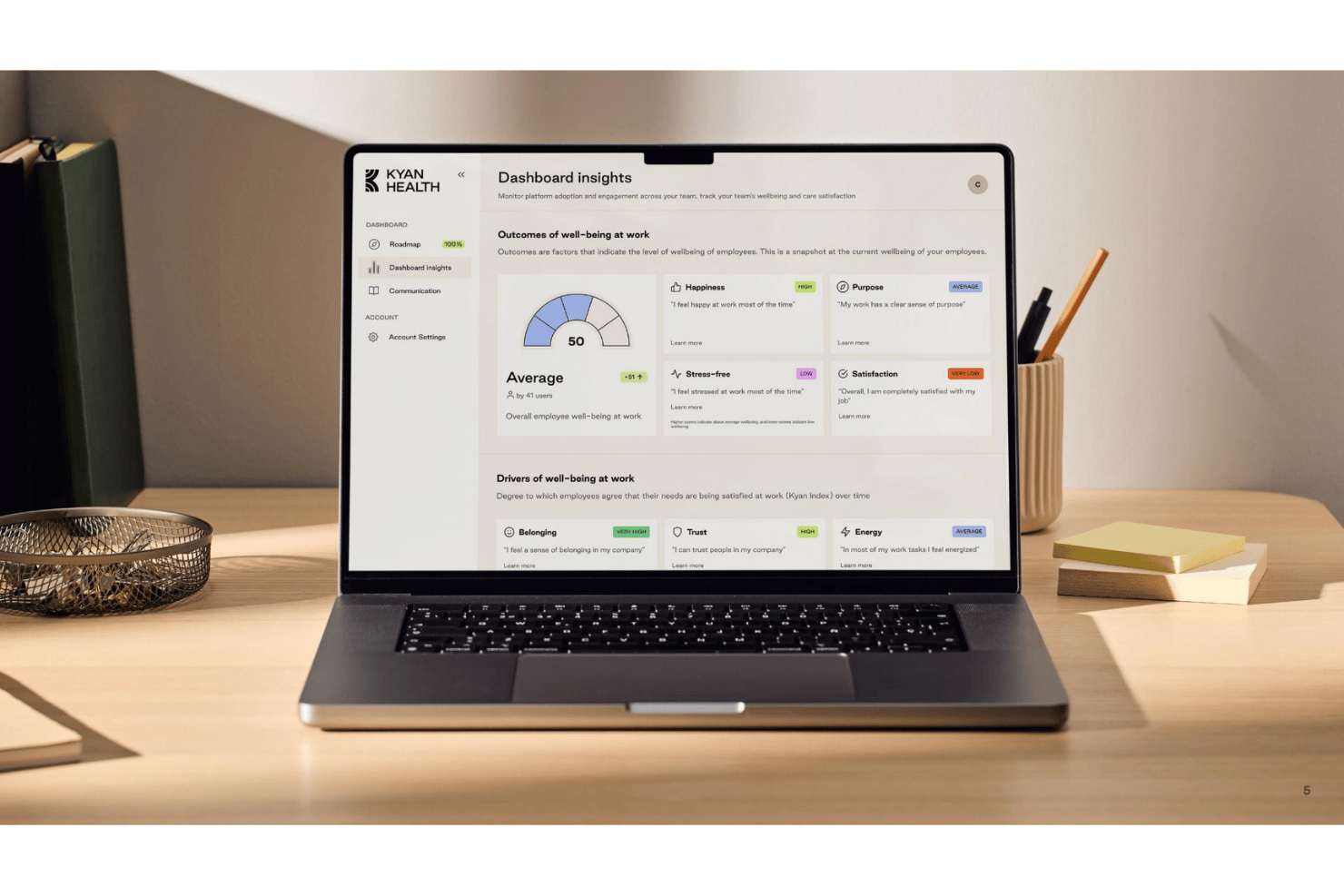
- Integrated well-being analytics help HR teams track workforce well-being trends.
- The breadth of the platform can feel overwhelming at first.
- Strong adoption depends on active HR-led rollout and employee communication.
- Initial platform setup involves more decisions than simpler traditional EAPs.
Spring Health
- Delivers personalized care recommendations through clinically guided assessments.
- Offers fast access to therapy, coaching, and psychiatric support.
- Combines mental healthcare, EAP services, and analytics in one platform.
- Limited in-person care options in some regions.
- Employer pricing is not publicly transparent or standardized.
- Some users report billing, notification, and video-session frustrations.
Best Use Cases for Kyan Health and Spring Health
Kyan Health
- Organizations Replacing Traditional EAPs Companies frustrated with low-utilization EAPs and disconnected well-being vendors seeking continuous engagement and broad work-life support.
- Multinational Enterprises Global organizations operating across multiple regions and cultures needing a multilingual, GDPR- and HIPAA-compliant platform with localized care across 200+ countries and territories.
- High-Stress Industries Industries such as healthcare, manufacturing, logistics, finance, or professional services that benefit from preventative well-being tools and quick counseling access.
- Hybrid and Remote Workforces Distributed teams needing digital-first, virtual counseling, self-guided resources, and AI care navigation across time zones.
- Large HR and People Operations Teams HR leaders requiring insight into workforce well-being trends, aggregated analytics, and manager enablement tools.
- Companies Focused on Burnout Prevention Organizations seeking to proactively address stress, absenteeism, and presenteeism with preventative care and continuous resources.
Spring Health
- Organizations Replacing Traditional EAPs Spring Health works especially well for employers that want more than a basic employee assistance program. Its combination of therapy, coaching, work-life services, and measurable outcomes makes it feel far more comprehensive than many legacy EAP offerings.
- Global and Distributed Workforces The platform’s virtual care model, multilingual resources, and broad geographic coverage make it a strong fit for remote, hybrid, and international teams that need consistent access to mental health support.
- Healthcare Organizations Healthcare employers can use Spring Health to support staff dealing with burnout, compassion fatigue, and high-stress work environments through fast access to care and ongoing clinical support.
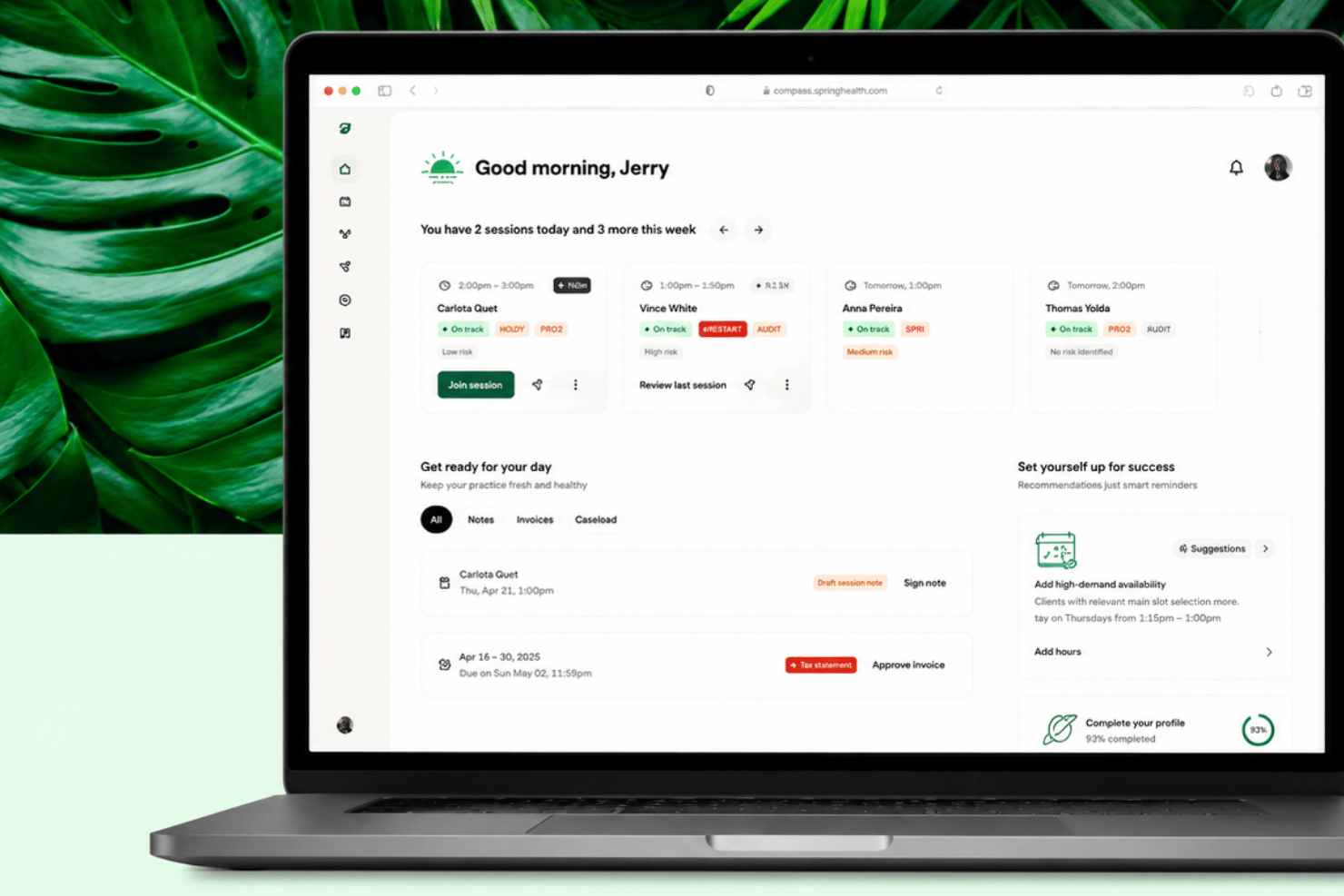
- Large Enterprise Employers Enterprise organizations benefit from Spring Health’s analytics dashboards, implementation support, employer reporting, and ability to coordinate care across large employee populations.
- Manufacturing and Shift-Based Workforces Spring Health is a good fit for employees working nontraditional schedules because users can access digital resources, virtual appointments, and care support outside standard business hours.
- Family-Focused Benefits Programs Organizations that want to support employees beyond individual therapy will benefit from Spring Health’s Family Care features, including support for spouses, dependents, children, and teens.
Who Should Use Kyan Health, and Who Should Use Spring Health?
Kyan Health is a strong fit for organizations that want a preventative, globally scalable well-being platform. It works especially well for US and European enterprises managing distributed teams, multilingual workforces, and broader workplace well-being initiatives. I’d recommend it for companies wanting to offer holistic care options and consolidate counseling, coaching, work-life services, leadership enablement, well-being analytics, and AI-guided support into one platform.
Its GDPR-native infrastructure, HIPAA-compliant care delivery, localized care approach, and operational rollout support make it a strong fit for enterprises balancing global scalability with comprehensive US workforce coverage, including access to 11,000+ providers across all 50 states.
Spring Health is better suited for organizations that want a more clinically intensive mental healthcare benefit with fast access to care and structured clinical navigation. I think it works particularly well for employers prioritizing measurable mental health outcomes, rapid provider matching, medication management, and ongoing care coordination through licensed Care Navigators.
Larger U.S.-based enterprises, healthcare organizations, and employers focused on reducing mental health claims or improving treatment engagement (instead of offering more holistic and preventative well-being) may find Spring Health’s precision-care model especially compelling.
Differences Between Kyan Health and Spring Health
| Kyan Health | Spring Health | |
|---|---|---|
| Care Navigation Style | AI-guided stepped care with clinician-backed support. | Licensed Care Navigators guide ongoing clinical care. |
| Global Localization | Strong emphasis on multilingual, culturally localized support (across 200+ countries and territories). | Global support available, but more U.S.-centric positioning. |
| Organizational Approach | Consolidates well-being, work-life, and leadership support into one platform. | Emphasizes therapy, psychiatry, and coordinated clinical outcomes. |
| Pricing Model | Uses custom enterprise pricing with optional performance-based pricing tied to engagement, satisfaction, and clinical outcomes. | Uses custom enterprise pricing based on organization size, services, and care usage. No performance guarantee pricing available. |
| Visit Kyan HealthOpens new window | Read Spring Health ReviewOpens new window | |
| Primary Focus | Preventative well-being and modern EAP transformation. | Clinically guided precision mental healthcare. |
| Work-Life Services | Includes childcare, eldercare, legal, and financial support services. | More clinically centered mental healthcare ecosystem. |
| Visit Kyan HealthOpens new window | Read Spring Health ReviewOpens new window |
Similarities Between Kyan Health and Spring Health
| AI-Assisted Care Guidance | Both use AI-supported assessments and care recommendations to personalize support pathways. |
|---|---|
| Digital Self-Guided Resources | Kyan Health and Spring Health include on-demand exercises, educational content, and well-being tools employees can use independently. |
| Fast Access to Care | Both platforms help employees quickly access therapists, coaches, and mental health support resources. |
| Manager Enablement | Each provides manager-focused training, guidance, and workplace well-being support tools. |
| Visit Kyan HealthOpens new window Read Spring Health ReviewOpens new window | |
| Privacy and Compliance Focus | Each platform emphasizes enterprise-grade security, confidentiality, and regulatory compliance for sensitive mental health data. |
| Workforce Analytics | Both offer aggregated reporting and well-being analytics for HR and organizational leaders. |
| Visit Kyan HealthOpens new window Read Spring Health ReviewOpens new window | |