Ex-IBM HR Leader Says AI Adoption Fails When Leaders Move Faster Than Trust
Wagner Denuzzo explains why AI adoption succeeds when leaders build trust, psychological safety, and human-centered change instead of pushing technology too quickly.
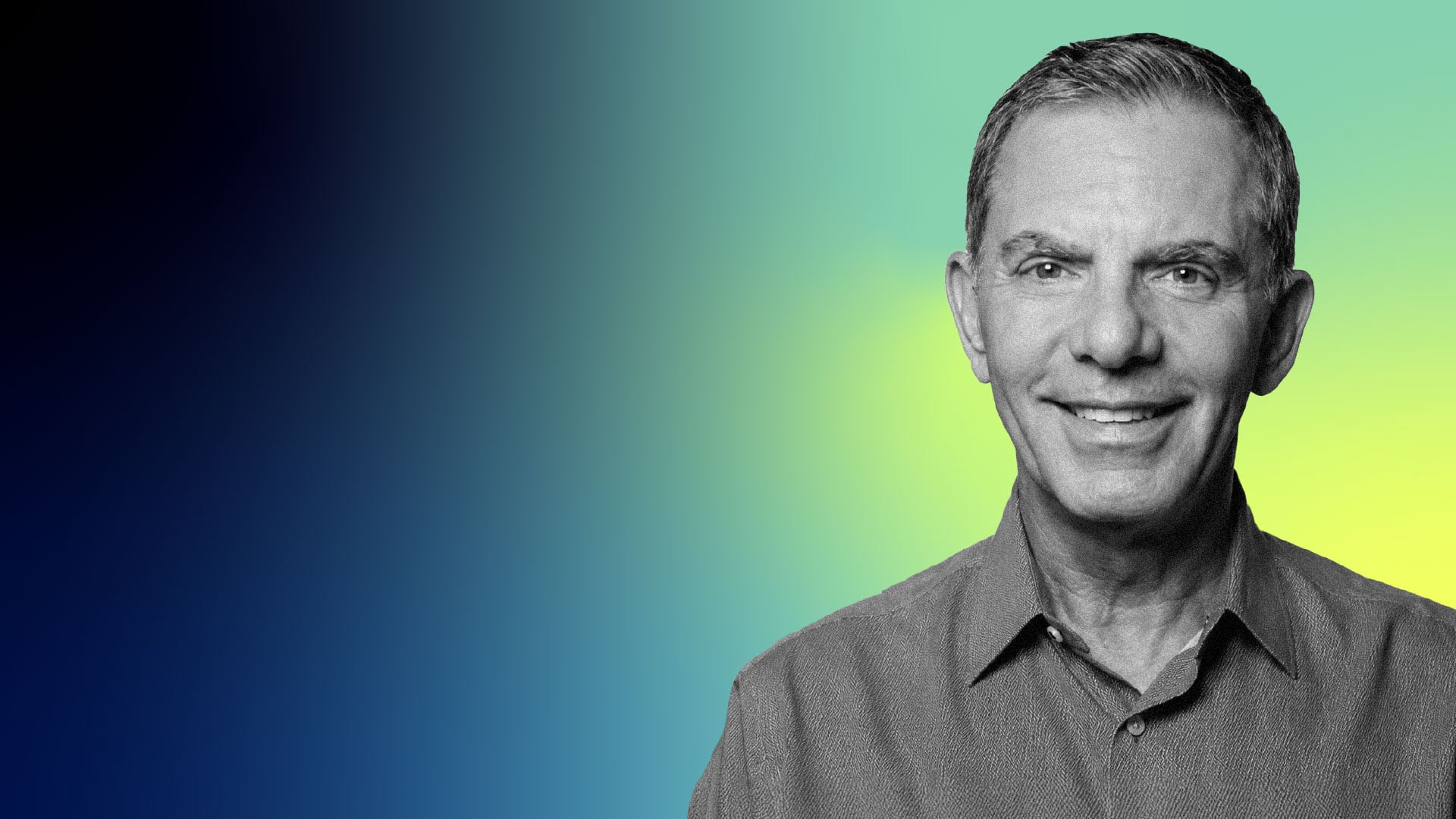
Wagner Denuzzo
Retired People Executive
AI Leadership: AI makes workforce planning continuous, helping leaders redesign organizations around changing skills, capabilities, and stakeholder needs.
Human Balance: Effective AI adoption pairs technological ambition with emotional maturity, humility, and support for how people process change.
Safety First: Non-judgmental learning cultures encourage experimentation, honest feedback, vulnerability, and stronger team performance without fear of mistakes.
Clear Boundaries: Using AI for mental health or personal growth can mislead people and cannot replace individual responsibility for development.
Engaged Change: Sustainable AI strategies require bringing teams along, identifying human value, and adapting business models through dialogue.
Wagner Denuzzo is a recently retired People exec. His career spanned companies including IBM and Prudential Financial, where he held HR roles such as Director of Talent Management and VP of Talent & Leadership Transformation.
We sat down with him to get a sense of how AI changed the workplace at the end of his long career. Here's what he told us.
A leadership journey across borders

I am currently on my second major immigration experience — from the US to Portugal — where I decided to establish my next phase of life. My first major reinvention of myself happened when I made the decision to leave Brazil in search of opportunity and a better life.
That led to almost 40 years in the US, where I learned about mental health and became a licensed psychotherapist before moving into corporate life and focusing on leadership, business, global integration, and the discipline of leading people and teams.
Introductions are always shaped by the moment you are in, and right now, my leadership journey is taking me to the essence of what makes great leaders: connection to the self and others within our collective journey as global citizens.
What I can say about my leadership journey is this. Growth is the outcome of consciousness, curiosity, and courage.
How AI is transforming business leadership and workforce strategy

In the ’90s, I was working for a large global technology company, and I realized we were entering a new era in business leadership.
By 2010, we had begun work on a skills-based economy and started assessing declining skills globally to identify opportunities for upskilling and reskilling. It became clear to me that AI could transform the way we thought of strategic workforce planning — turning it into a dynamic, ongoing role for leaders.
Without the burden of imaginary lines that silo our functions, regions, and business lines, we can think more broadly about organizational design and establish new high-value streams. Organizations would become value-driven operating systems, continuously learning and continuously transforming.
And in this way, leadership would be about seeking, sensing, and sharing in an ongoing process of integrating context, clients, and capabilities.
AI and the future of work
I am personally approaching the new era in leadership with excitement, as most of us are beginning to learn that beyond intelligence, we must return to the nurturing of our emotional well-being to harvest the best that AI can offer.
What I mean is that immersing yourself in AI must be coupled with humility and a real interest in how the human brain processes new information, emotions, and insights. And that's why it is critical to support your teams in a non-judgmental manner.
For example, when a team of founders recently asked me to help them build an AI leadership development experience, I tried to add to their thinking rather than diminish their energy with negative comments.
Founders, AI experts, and HR leaders can easily be seduced by the immense capabilities of generative AI, but we must remember that our adaptive mechanisms must go through stages of maturity.
That means we must pay attention to the impact we are having on others. And at the same time, we must allow for a slower process of emotional integration to happen. That's the only way we can build human development in alignment with technological advancements.
The role of AI in modern organizations
In its basic form, AI is helping organizations let go of processes they are used to controlling, observing, and completing, while finding a more delicate balance between automation and human trust. Humans do not trust what they don’t fully understand, so it is a gradual process of adoption and change.

My clients are using AI in many areas. Some are using AI to reduce complexity and deliver fast and easy solutions to financial management and operations, a few are taking it further and redesigning "work" itself through organizational design and critical capabilities, and a large number of founders are taking AI to the future of the organization by developing AI agents that are designed to "lead" and act independently. And a few are entering the domain of leadership by providing a safe space for leaders to simulate, test ideas, and gain insights on their impact on others and the business.
In its basic form, AI is helping organizations let go of processes they are used to controlling, observing, and completing, while finding a more delicate balance between automation and human trust.
Humans do not trust what they don't fully understand, so it is a gradual process of adoption and change.
The danger of using AI for mental health and personal growth
We’re starting to see people turn to AI not just for productivity, but for personal insight, asking it to help them become better versions of themselves. But that’s a trap.
The combination of social media with these new capabilities is leading us to seek a better understanding of ourselves, but the inevitable search for answers outside of ourselves can be dangerous.
Mental health issues are becoming yet another topic to be explored with AI, and that's another dangerous path since most information can only add to the inevitable realization that human development is intrinsic and can't be delegated to AI or anyone else other than you.
Mental health is becoming another topic people explore with AI, and that can be a dangerous path. Human development is intrinsic, it cannot be delegated to AI or anyone other than yourself.
Why a non‑judgmental learning culture boosts team performance
Experimentation with a non-judgmental approach to learning is the way forward. Sharing mistakes, insights, and ideas in a psychologically safe environment creates the opportunity for teams to learn without fear. That's how literacy works. Learning without fear leads to better outcomes.
Psychological safety is not created through frameworks or speeches. The role of the leader in creating a safe environment is to create the conditions for people to feel energized by the opportunity to fully show up. This is hard to do.
A leader needs to establish norms and boundaries that eliminate shaming, judging, and fear from the team space, show vulnerability by sharing what they don't know, laugh at past failures, and allow people to fully express their ideas without denying others' realities.
How technology adoption reflects global maturity

The way we adopt and apply technology reflects our level of maturity — individually, organizationally, and globally. One of the key insights I have been reflecting on is the fact that founders are smart people who have no patience for bringing others to where they have arrived.
Achieving greatness is a process, and if you want to build a successful and sustainable AI solution in business, you will need to know how to bring others along with a genuine interest in what they have to offer. AI reduces the need for leaders to depend on others for the technology to exist, but they miss the key factor: their team needs to be engaged in what they are building.
Another insight is related to what I call "Quantum leadership," which accounts for the human entanglement that maintains the waves in a dynamic state of growth. What I mean is that the moment you stop to check on your teams, that project update equates to stopping the wave flow in quantum dynamics. You are hindering progress, not leading it.
That next phase will have to include sustainable progress with an eye on the importance of expanding access to new technologies at scale.
Adapting business strategies in a dynamic consulting environment
Things are shifting constantly. The most important thing is to evaluate where humans create the greatest value, with a clear view of the organization’s value proposition and stakeholders.
Business models are evolving, and strategies must follow the dynamic nature of our current global economy. Flexibility and dialogue are still cornerstones of business development.
Why human-centered leadership starts with focus, humility, and acceptance
Acceptance of the self, others, and the exponential pace of development is essential. It’s a recipe for reducing anxiety about not knowing everything that’s happening…Ultimately, leadership will remain the secret of success. It will become the energy that you generate and share within the collective experience of people working towards common goals and shared purpose.
Acceptance of the self, others, and the exponential pace of development is essential.
It’s a recipe for reducing anxiety about not knowing everything that's happening.
Focus on what matters to your people, your business, and your clients, while recognizing that you are probably not the smartest person in the room. This alleviates the burden of knowing the answers to everything.
Ultimately, leadership will remain the secret of success.
It will become the energy that you generate and share within the collective experience of people working towards common goals and shared purpose.
Follow along
You can connect with Wagner Denuzzo on LinkedIn.
More expert interviews to come on People Managing People!