


Workhuman Bewertung: Vorteile, Nachteile, Funktionen & Preise



Die Engagement-Werte Ihres Teams sind schon wieder gesunken, Anerkennung fühlt sich in den Abteilungen uneinheitlich an, und die Geschäftsleitung fordert eine echte Lösung statt einer weiteren Tabelle oder einem einmaligen Prämienprogramm.
Wenn Sie sich mit Mitarbeiteranerkennungssoftware beschäftigen, wird Workhuman wahrscheinlich einer der Namen sein, auf den Sie immer wieder stoßen.
In diesem Testbericht erfahren Sie, was Workhuman bietet, wo die Plattform besonders punktet und an welchen Stellen sie möglicherweise weniger überzeugt – damit Sie selbstbewusst entscheiden können, ob sie zu Ihnen passt.
Workhuman Evaluation Summary
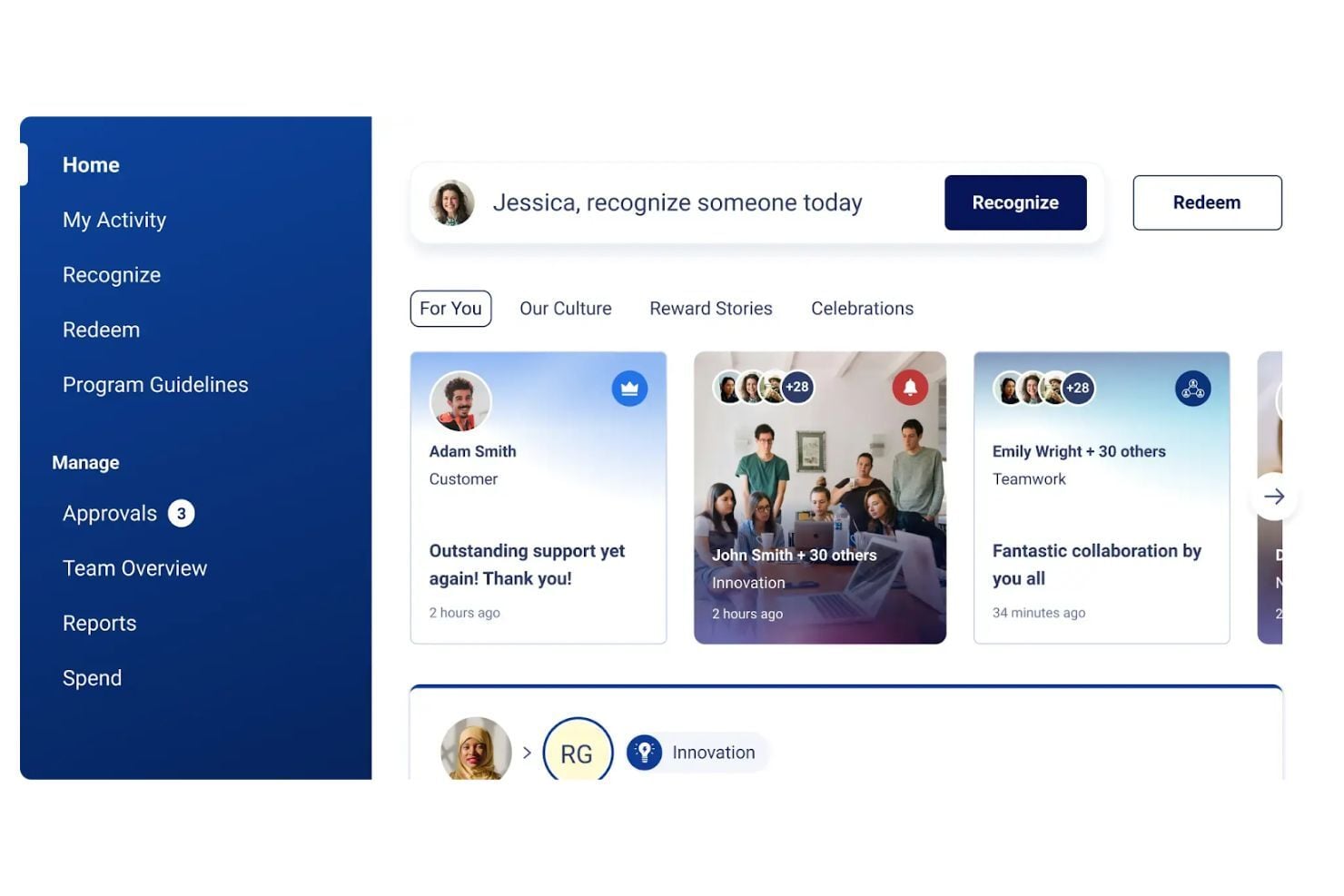
- Pricing upon request
- Free demo available
Warum Sie unseren Software-Bewertungen vertrauen können
Unser Team testet und bewertet Software seit 2012. Als HR-Experten wissen wir selbst, wie schwierig – und wichtig – es ist, die richtige Software auszuwählen.
Für diesen Leitfaden haben wir Tools mithilfe von praktischen Tests und unabhängiger Recherche bewertet und dabei unsere Bewertungskriterien angewendet. Zudem greifen wir auf Erkenntnisse von Branchenvordenkern und praktizierenden HR-Experten zurück.
Unsere Bewertungen spiegeln unser menschliches redaktionelles Urteilsvermögen wider, keine Verkaufsstrategie.
Workhuman Overview
pros
-
Helps build a strong culture of recognition with peer-to-peer recognition, rewards, and milestone celebrations.
-
Offers deep analytics and insights through Workhuman iQ to support HR decisions.
-
Provides guided implementation and consulting support to help organizations successfully launch and scale recognition programs.
cons
-
Recognition posts can feel delayed or overly complex for some users.
-
Reward options may feel limited for redeeming points.
-
Points-to-value conversion can be unclear.
Is Workhuman Right For Your Needs?
Who Would be a Good Fit for Workhuman?
Workhuman is best suited for mid-to-large organizations that want to build a strong recognition culture, improve engagement and retention, and support continuous feedback across distributed teams.
It’s especially valuable for HR and People Ops teams that need data-driven insights, structured recognition programs, and expert guidance to design, launch, and scale initiatives that celebrate milestones and strengthen company culture over time.
-
Tech Companies Scaling Globally
Social Recognition helps large distributed teams build engagement and retention through peer recognition and rewards.
-
HR Teams Building Continuous Feedback Cultures
Workhuman’s Conversations feature enables ongoing feedback and check-ins that replace traditional annual performance reviews.
-
Organizations Prioritizing Employee Retention
The Workhuman platform connects recognition programs to measurable engagement and retention outcomes.
-
Companies Wanting to Celebrate Milestones and Life Events
Life Events, Service Milestones, and Community Celebrations help recognize employee milestones and important moments.
-
Data-Driven Enterprises
Workhuman iQ provides analytics and insights to measure culture, skills, and program ROI.
-
Organizations Needing Expert Guidance
The Consulting Practice helps design, launch, and optimize recognition strategies for long-term success.
Who Would be a Bad Fit for Workhuman?
Workhuman is not ideal for very small teams, budget-conscious organizations, or companies that only need a simple rewards tool.
It’s also a poor fit for teams that want a quick, plug-and-play solution or don’t have a dedicated HR or People Ops function to manage a recognition program. Organizations that aren’t actively investing in culture, engagement, or retention initiatives are unlikely to see enough value to justify the platform.
-
Very Small Businesses or Startups
Workhuman’s enterprise-level features, implementation effort, and budget expectations are typically far beyond what very small teams need.
-
Companies Needing a Simple Rewards Tool
Organizations looking for a lightweight rewards tool without recognition programs, analytics, or consulting will find Workhuman unnecessarily complex.
-
Teams Needing Instant Plug-and-Play
Workhuman requires program design, onboarding, and rollout planning, making it unsuitable for teams that need a tool they can launch immediately.
-
Organizations Without Dedicated HR or People Ops
Workhuman is designed to be managed strategically, so companies without HR ownership usually struggle to run and maintain the program effectively.
-
Budget-Conscious Companies Seeking Low-Cost Software
Workhuman is positioned as a premium enterprise platform, making it unrealistic for organizations prioritizing the lowest-cost option.
-
Companies Not Focused on Culture, Engagement, or Retention Initiatives
Organizations that don’t actively invest in employee experience will struggle to justify the platform’s value and likely won’t see ROI.
Wie wir unsere Tools testen und bewerten
Wir haben jahrelang unser System zur Überprüfung und Bewertung von Software aufgebaut, verfeinert und verbessert. Das Bewertungsschema ist darauf ausgelegt, die Nuancen der Softwareauswahl und die Wirksamkeit eines Tools abzubilden, wobei der Fokus auf wesentlichen Aspekten des Entscheidungsprozesses liegt. Unten sehen Sie genau, wie unsere Tests und Bewertungen anhand von sieben Kriterien funktionieren. Damit können wir eine unvoreingenommene Bewertung der Software hinsichtlich zentraler Funktionen, herausragender Merkmale, Benutzerfreundlichkeit, Onboarding, Kundensupport, Integrationen, Kundenrezensionen und Preis-Leistungs-Verhältnis bieten.
Kernfunktionen (25% der Endnote)
Der Ausgangspunkt unserer Beurteilung ist immer die Kernfunktionalität des Tools. Verfügt es über die grundlegenden Funktionen, die ein Benutzer erwarten würde? Sind einige dieser Funktionen in teureren Tarifen eingeschlossen? Im Kern erwarten wir, dass ein Tool den grundlegenden Fähigkeiten seiner Mitbewerber standhält.
Herausragende Funktionen (25% der Endnote)
Danach bewerten wir außergewöhnliche Funktionen, die über das Übliche hinausgehen, das normalerweise in ähnlicher Software zu finden ist. Eine hohe Punktzahl spiegelt spezialisierte oder einzigartige Funktionen wider, die das Produkt schneller, effizienter oder für den Benutzer wertvoller machen. Wir bewerten auch, wie einfach es ist, sich mit anderen im technischen Ökosystem üblichen Tools zu integrieren, um die Funktionalität und Nützlichkeit der Software zu erweitern. Tools mit vielen nativen Integrationen, Drittanbieter-Anbindungen und API-Zugängen für individuelle Integrationen erhalten die beste Bewertung.
Benutzerfreundlichkeit (10% der Endnote)
Wir betrachten, wie schnell und einfach die Aufgaben im Bereich der Kernfunktionen mit dem Tool erledigt werden können. Hoch bewertete Software ist gut designt, intuitiv zu bedienen, bietet mobile Apps, Vorlagen und macht komplexe Aufgaben einfach.
Onboarding (10% der Endnote)
Uns ist bewusst, wie wichtig eine schnelle Einführung eines neuen Systems im Team ist. Deshalb bewerten wir, wie leicht ein Tool mit minimalem Training erlernt und genutzt werden kann. Wir prüfen, wie schnell ein Teammitglied ohne Vorerfahrung mit dem Tool starten kann. Lösungen mit hoher Bewertung erfordern wenig bis keine Unterstützung.
Kundensupport (10% der Endnote)
Wir überprüfen, wie schnell und einfach Hilfe telefonisch, per Live-Chat oder Wissensdatenbank erhalten werden kann. Tools und Unternehmen, die Echtzeit-Support bieten, schneiden am besten ab – Chatbots am schlechtesten.
Kundenrezensionen (10% der Endnote)
Zusätzlich zu unseren eigenen Tests berücksichtigen wir den Net Promoter Score aktueller und ehemaliger Kunden. Wir prüfen, wie wahrscheinlich sie, falls es zur Wahl käme, das Tool für die Kernfunktionen erneut wählen würden. Eine hohe Bewertung der Software spiegelt einen hohen Net Promoter Score wider.
Preis-Leistungs-Verhältnis (10% der Endnote)
Abschließend berücksichtigen wir unter Einbeziehung aller anderen Kriterien den durchschnittlichen Preis der Einstiegstarife im Vergleich zu den Kernfunktionen und zum Wert der anderen Bewertungskriterien. Software, die mehr für weniger bietet, erhält höhere Bewertungen.
Core Features
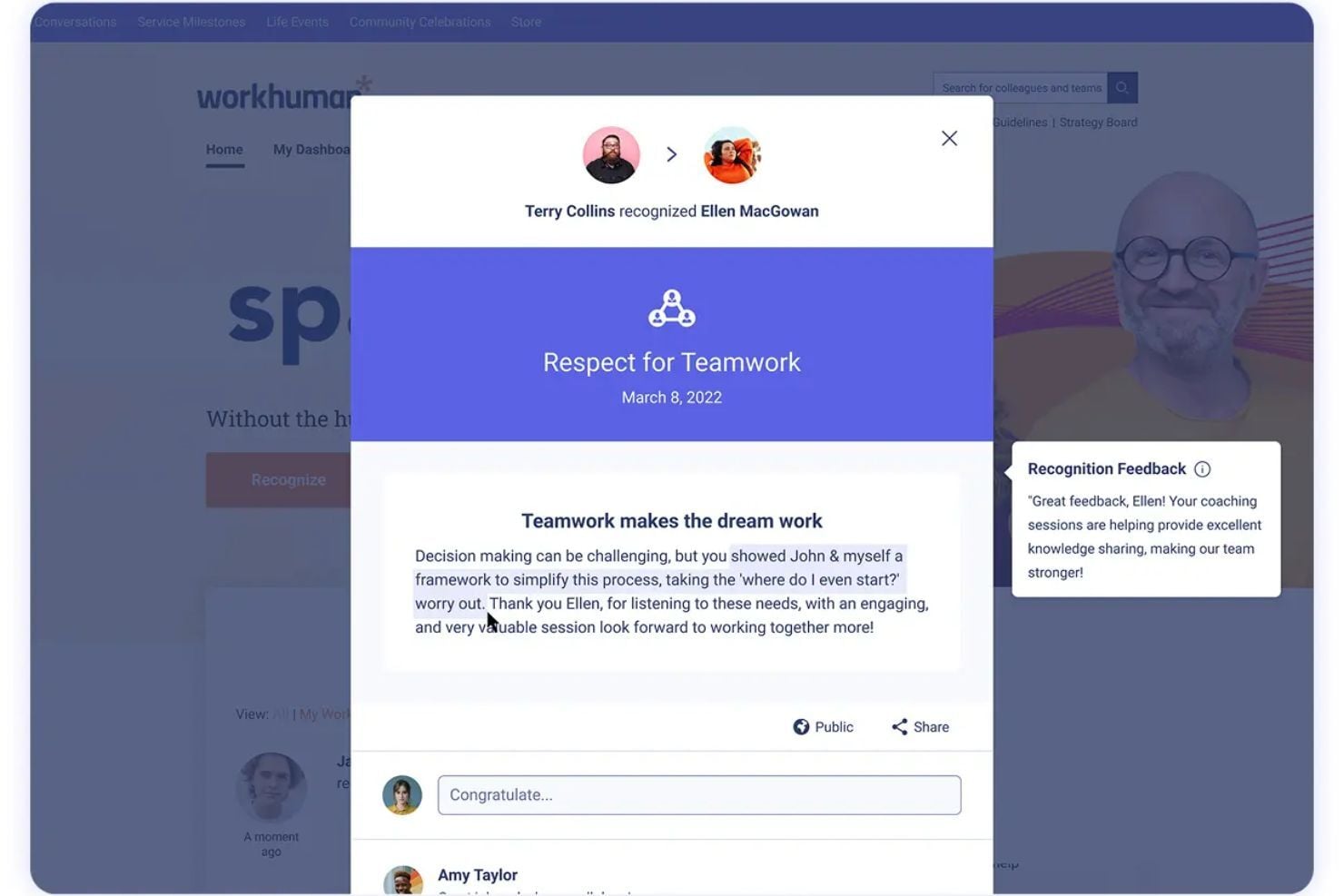
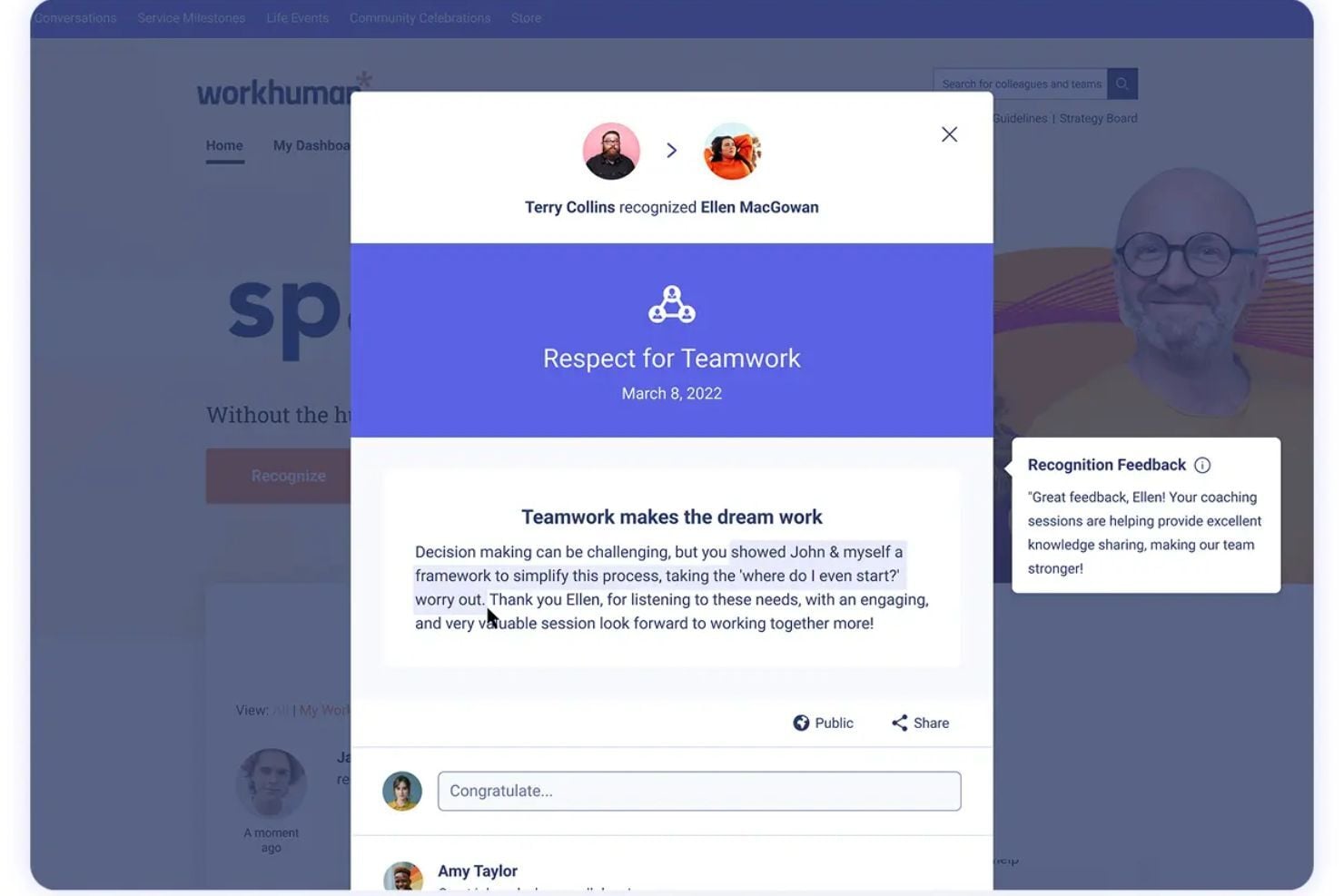
Social Recognition
Enables peer-to-peer recognition and rewards that improve engagement, productivity, and retention.
Conversations
Provides ongoing feedback, manager check-ins, and performance development tied directly to recognition moments.
Life Events
Helps teams celebrate important personal milestones to strengthen connection and belonging at work.
Service Milestones & Community Celebrations
Recognizes anniversaries and team celebrations to strengthen workplace culture and connection.
Global Rewards Marketplace
Allows employees to redeem recognition points for global rewards and personalized experiences.
Admin Hub
Provides tools for managing recognition programs, permissions, tracking, and governance.
Standout Features
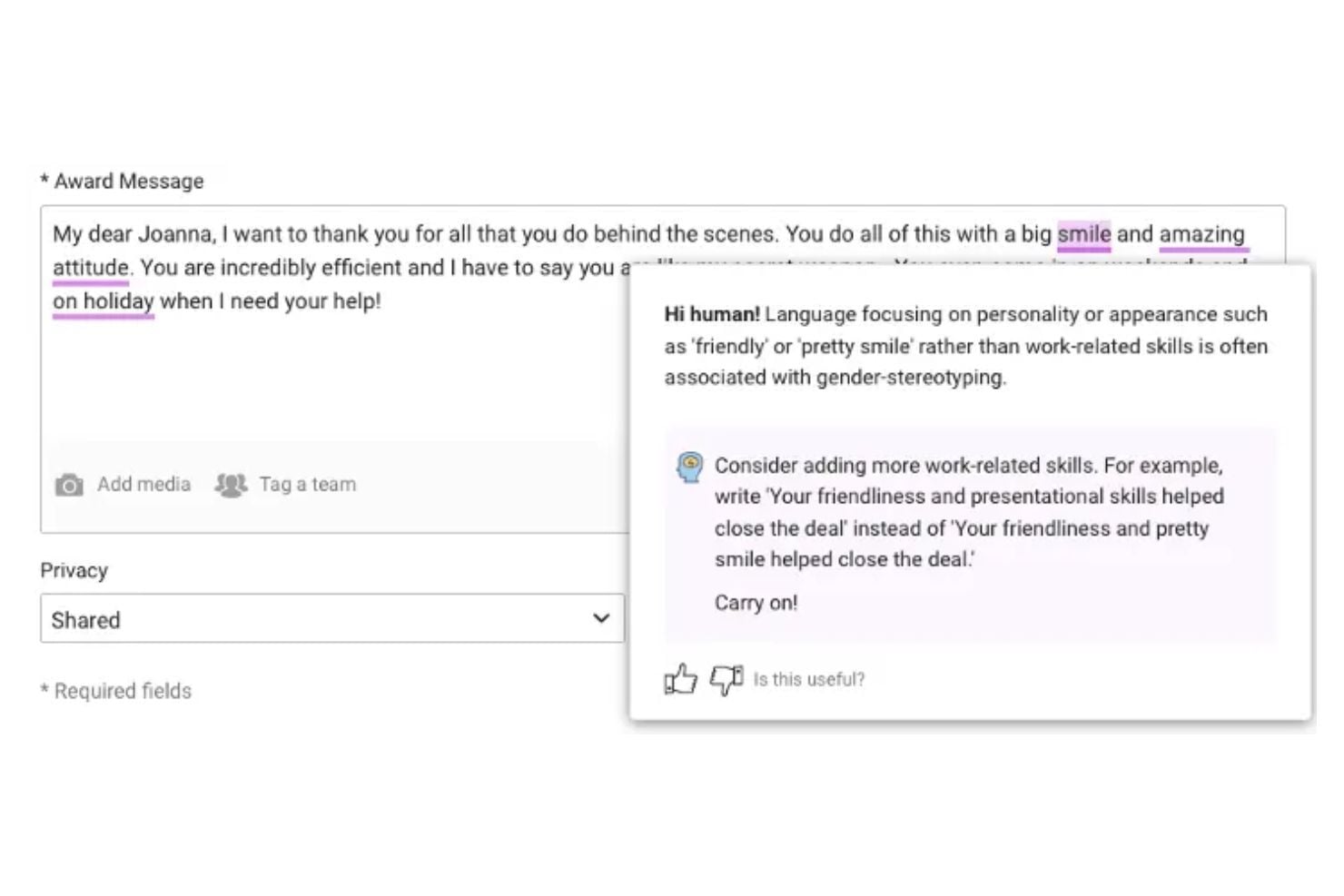
Inclusion Advisor
Combines recognition data and AI to generate insights, coach recognition messages, and connect appreciation to business outcomes.
Workhuman IQ
AI-powered analytics deliver real-time insights into retention, skills, engagement, and cultural health.
Ease of Use
Workhuman is widely praised for its intuitive recognition flow and user-friendly interface, making it easy for employees to recognize peers, redeem awards, and participate regularly without needing support.
The platform’s visible recognition feed and simple award redemption process help drive frequent adoption, though organizations should still expect some setup and rollout effort during initial implementation.
Onboarding
Workhuman uses a guided, consultative onboarding approach that helps organizations plan, design, and launch their recognition programs with expert support.
The rollout focuses on strategy, adoption, and long-term engagement, so implementation typically involves planning and change management rather than a quick self-serve setup.
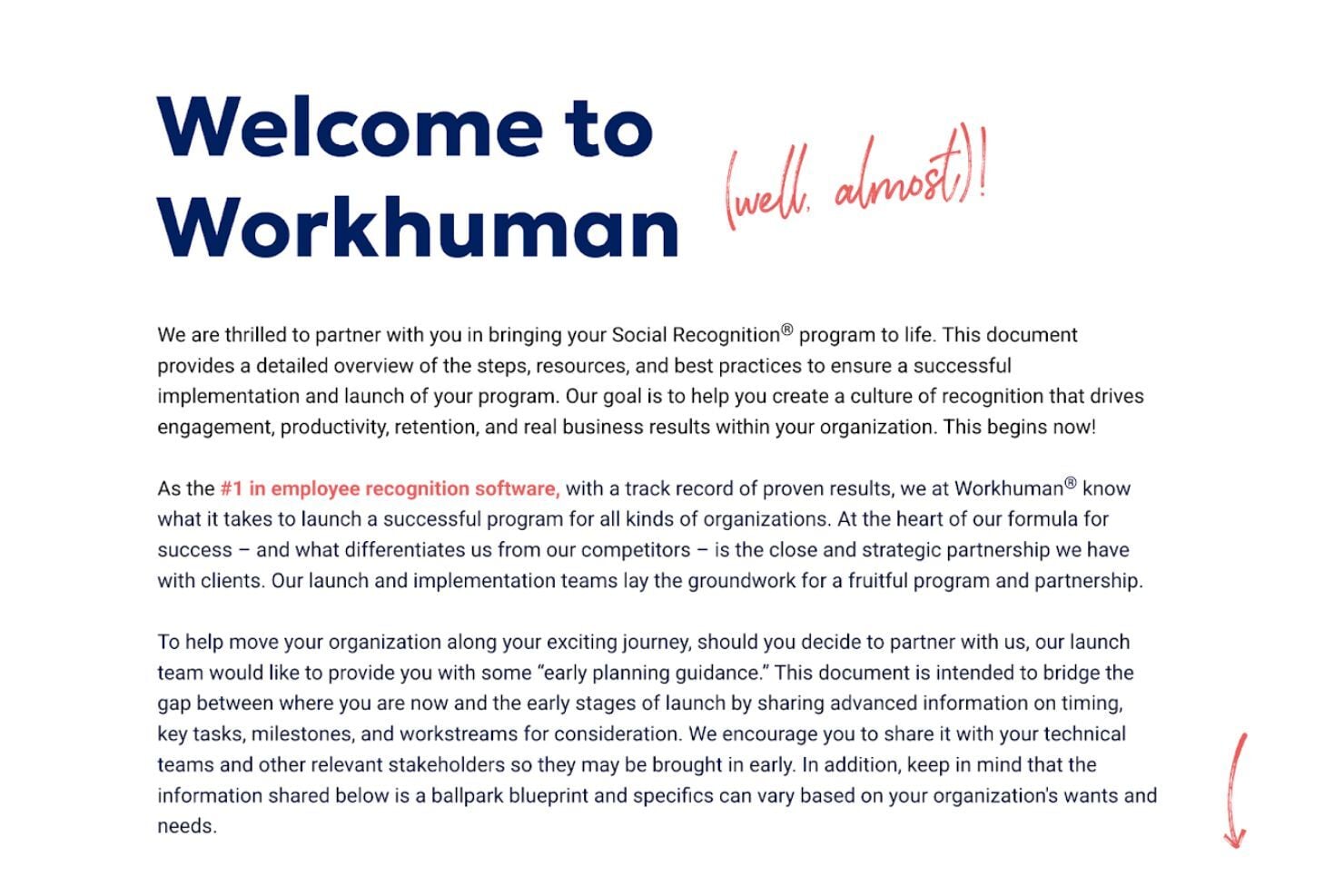
Customer Support
Workhuman offers support through its contact page and backs this up with an extensive library of resources, research, and educational content to help customers learn, troubleshoot, and continuously improve their recognition programs.
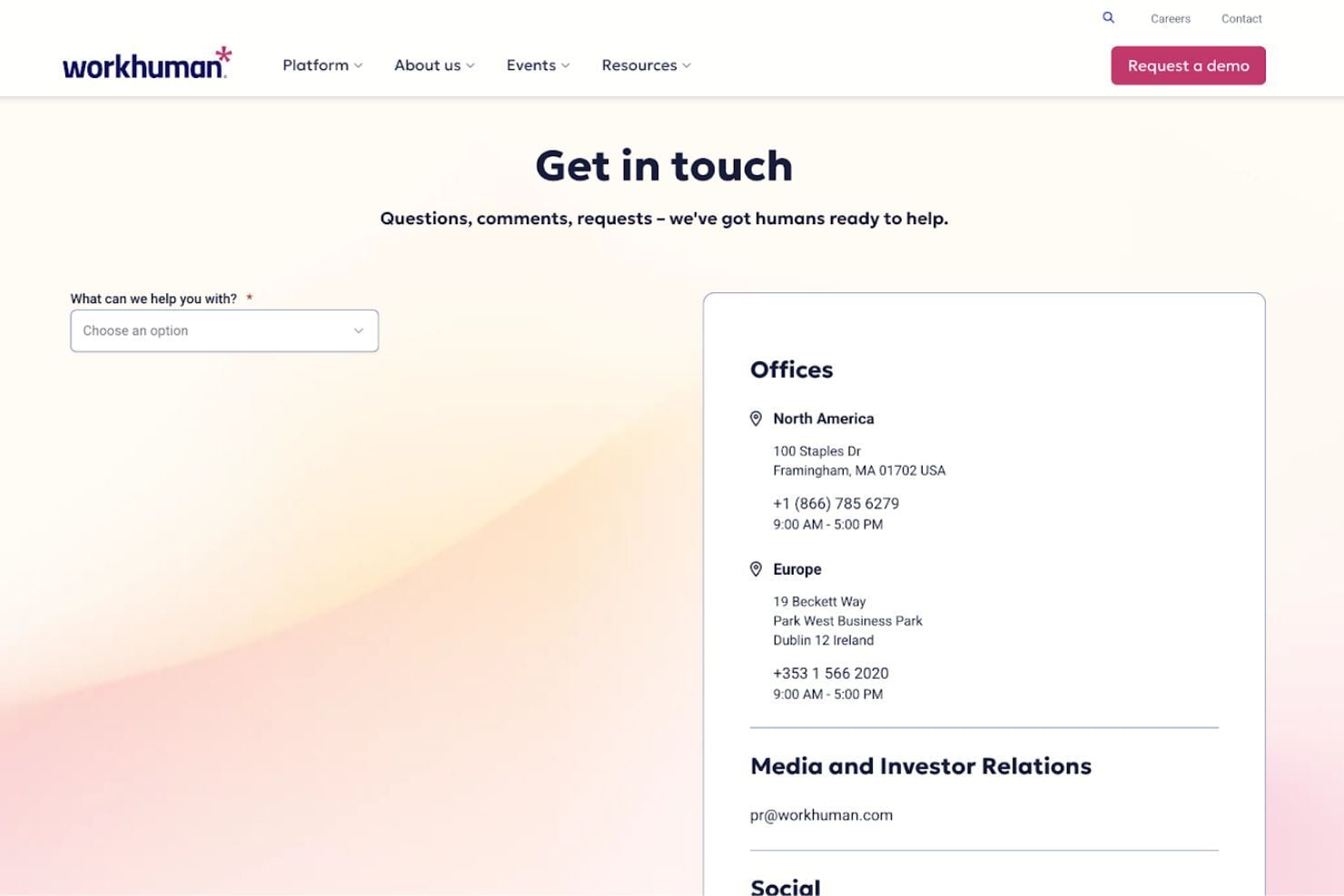
Integrations
Workhuman integrates with Microsoft Teams, Slack, Microsoft Outlook, Yammer, and Workday so recognition and feedback can happen directly inside everyday work tools.
An open API is available to support custom integrations and extend the platform into additional workflows and systems.
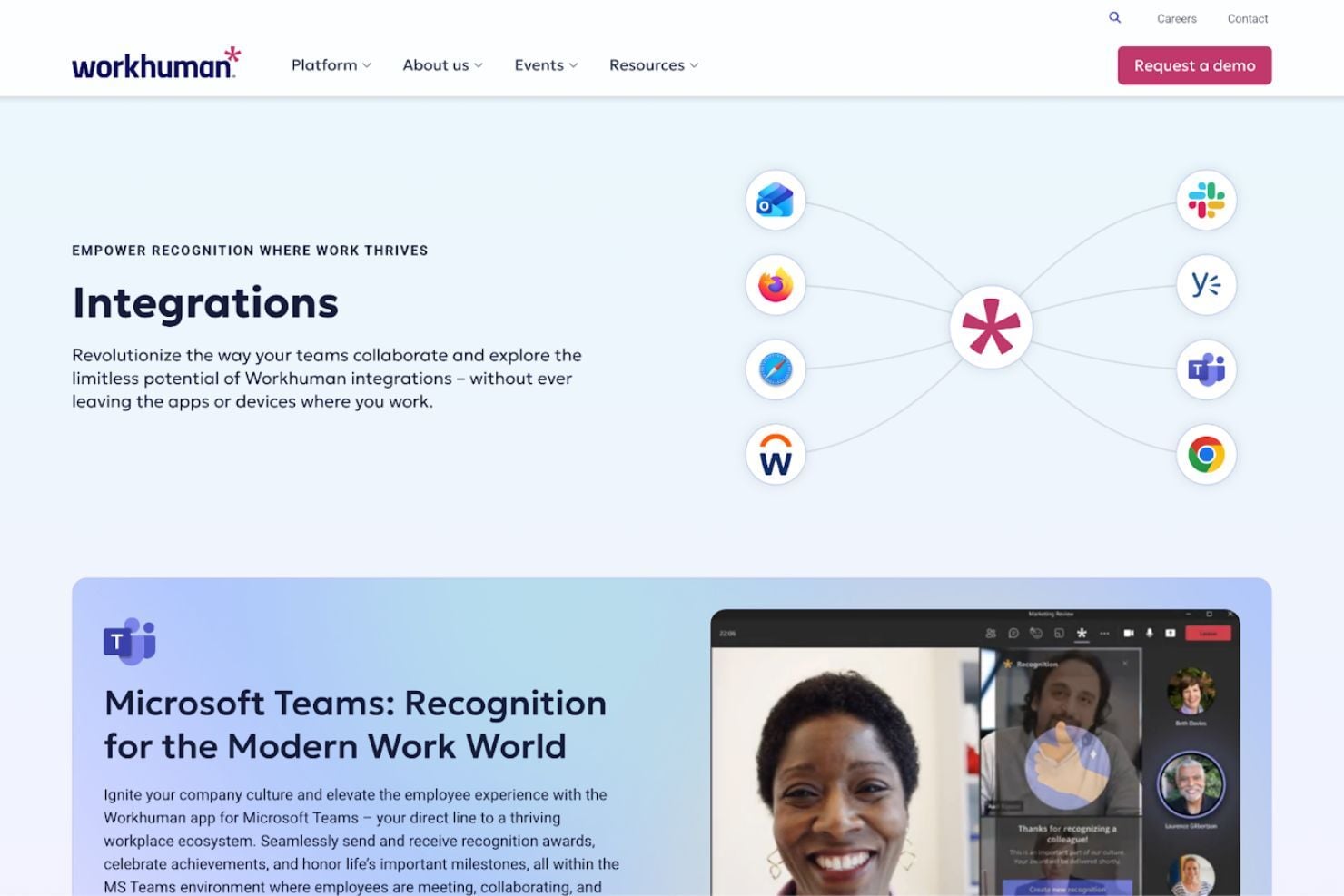
Value for Money
Workhuman uses a custom, demo-based pricing model, meaning you’ll need to speak with their team to receive a tailored quote based on your organization’s size, goals, and program scope.
This approach aligns with the platform’s enterprise positioning and consultative implementation model, where pricing reflects the level of customization, rewards budget, integrations, and support required to launch and scale a recognition program successfully.
Workhuman Specs
- 360 Degree Feedback
- API
- Application Tracking
- Attendance Tracking
- Budgeting
- Calendar Management
- Dashboard
- Data Export
- Data Import
- Data Visualization
- Employee Database
- Employee Engagement
- Employee Incentive Management
- Employee Onboarding
- External Integrations
- Feedback Management
- Forecasting
- Multi-User
- Notifications
- Scheduling
- Timesheets
- Vacation & Absence Calendar
Workhuman FAQs
How does Workhuman support employee engagement?
Can Workhuman be customized to fit our company culture?
How does Workhuman handle data security and compliance?
What types of reports can we generate with Workhuman?
How can Workhuman aid in employee retention?
Is Workhuman suitable for remote teams?
What support resources does Workhuman offer to new users?
Can Workhuman accommodate global companies?
Workhuman Company Overview & History
Workhuman was founded in 1999 by Eric Mosley and Eddie Reynolds and originally operated under the name Globoforce before rebranding to Workhuman in 2019.
Headquartered in Dublin, Ireland and Framingham, Massachusetts, the company has grown into an employee recognition and engagement platform serving large global organizations such as Cisco, LinkedIn, and JetBlue.
Today, Workhuman provides cloud-based solutions focused on recognition, rewards, and people analytics.
Workhuman Major Milestones
- 1999: Company founded by Eric Mosley and Eddie Reynolds.
- 2005: Expanded operations to the United States.
- 2019: Rebranded from Globoforce to Workhuman.
- 2020: Achieved a valuation of over $1 billion.
- 2023: Reported strong revenue growth with significant year-over-year increases.
- 2025: Announced the Human Intelligence 2025 release featuring expanded AI capabilities.
- 2025: Launched Workhuman Connect, a hub for HR professionals.
- 2025: Introduced a generative AI assistant within Workhuman iQ.