

Los 10 mejores programas de toma de decisiones con IA analizados en 2026

10 Mejor selección de software de toma de decisiones con IA


Los profesionales de RR. HH. se enfrentan constantemente al reto de tomar decisiones informadas. Necesitas herramientas para analizar datos, predecir resultados y tomar decisiones que beneficien a tu equipo y a tu organización. El software de toma de decisiones con IA puede ofrecer estas funciones, ayudándote a procesar datos de forma eficiente y a tomar mejores decisiones.
Estas herramientas son imprescindibles para quienes buscan mejorar la precisión de las decisiones y la eficiencia operativa. En este artículo, compartiré mis principales opciones de software de toma de decisiones con IA, centrándome en sus características y capacidades únicas, para ayudarte a elegir la herramienta adecuada para tus necesidades.
Por qué confiar en nuestras reseñas de software
Nuestro equipo lleva probando y evaluando software desde 2012. Como expertos en RR. HH., sabemos lo difícil —y lo importante— que es elegir el software adecuado.
Para esta guía, evaluamos las herramientas mediante pruebas prácticas e investigación independiente, puntuando las herramientas según nuestros criterios de selección. También nos basamos en la experiencia de líderes de opinión del sector y de profesionales de RR. HH. en activo.
Nuestras reseñas reflejan nuestro criterio editorial humano, no un discurso de ventas.
Revisores expertos:
Tabla comparativa de software de toma de decisiones con IA
Esta tabla comparativa resume los detalles de precios de mis principales selecciones de software de toma de decisiones con IA:
| Tool | Best For | Trial Info | Price | ||
|---|---|---|---|---|---|
| 1 | Mejor opción para decisiones globales impulsadas por IA respecto a la fuerza laboral | Demo gratuita disponible | Desde $5/empleado/mes | Website | |
| 2 | Mejor para la identificación temprana de talento ejecutivo | Demo gratuita disponible | Precio a consultar | Website | |
| 3 | Ideal para la visualización de datos | Plan gratuito disponible | Desde $15/usuario/mes (facturado anualmente) | Website | |
| 4 | Mejor para la planificación empresarial | Demostración gratuita disponible | Precio bajo solicitud | Website | |
| 5 | Mejor para la interacción con el cliente | Tour autoguiado disponible | Precio bajo consulta | Website | |
| 6 | Mejor para la implementación de modelos de IA | Plan gratuito disponible | Precios bajo solicitud | Website | |
| 7 | Lo mejor para la investigación en IA | Demo gratuita disponible | Incluido en las suscripciones y herramientas para desarrolladores existentes de Google | Website | |
| 8 | Mejor para análisis en tiempo real | Demostración gratuita disponible bajo solicitud | Precio bajo solicitud | Website | |
| 9 | Mejor para usuarios sin conocimientos técnicos | Prueba gratuita disponible | Desde $20/usuario/mes con un mínimo de 10 usuarios | Website | |
| 10 | Mejor para la gestión de decisiones | Prueba gratuita de 14 días | Precio bajo solicitud | Website |
Análisis del mejor software de toma de decisiones con IA
A continuación encontrarás mis resúmenes detallados del mejor software de toma de decisiones con IA que ha entrado en mi selección. En mis análisis examino las principales características, ventajas y desventajas, integraciones y casos de uso ideales de cada herramienta.

Deel HR
Mejor opción para decisiones globales impulsadas por IA respecto a la fuerza laboral
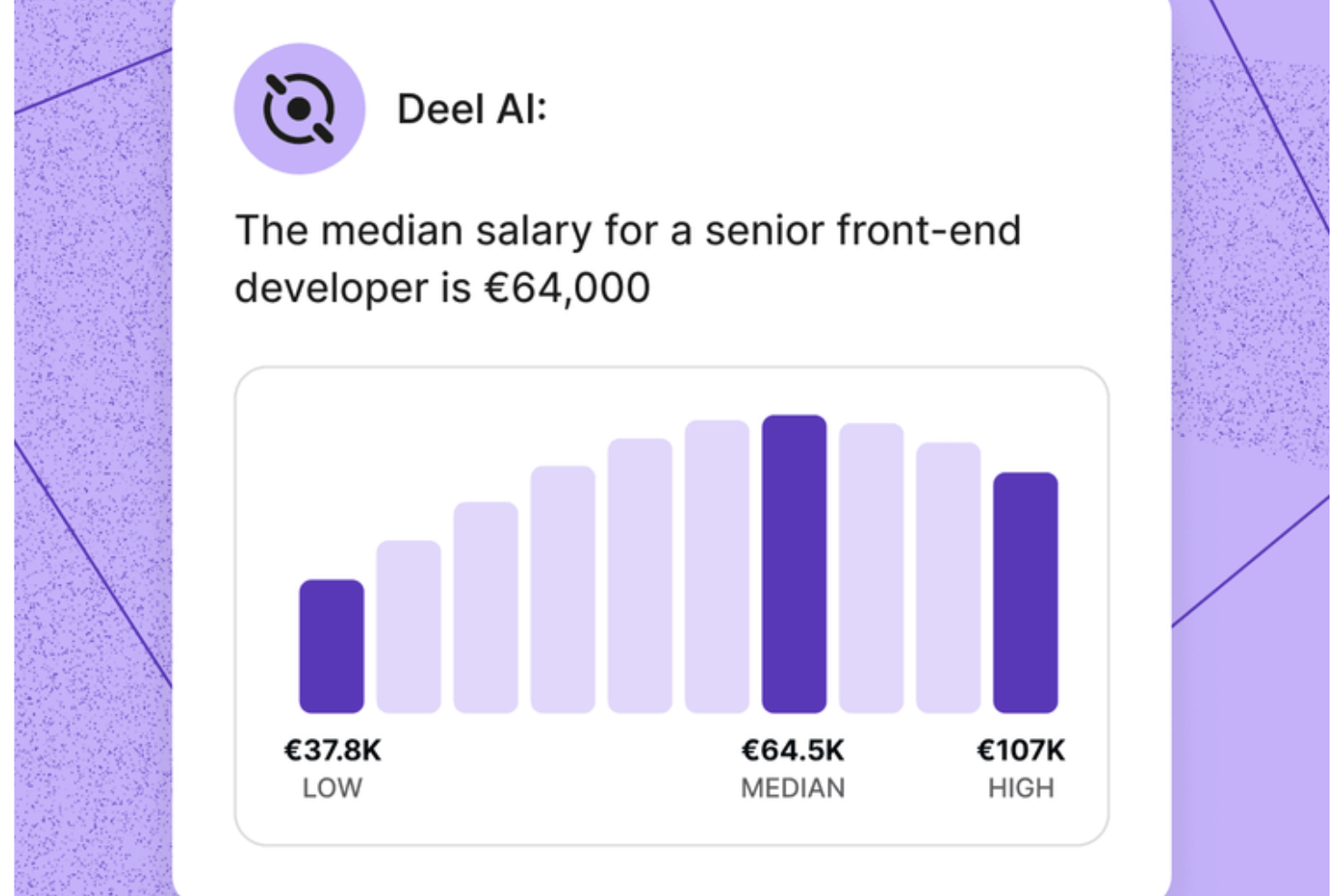
Deel IA te ofrece una manera de gestionar preguntas de RR. HH. y legales con confianza, combinando los datos de tu equipo con conocimientos respaldados por expertos de más de 150 países. Si gestionas una plantilla distribuida o apoyas equipos en diferentes regiones, cuentas con un asistente siempre disponible que te ayuda a entender los requisitos de cumplimiento, detalles de la fuerza laboral y tareas diarias de RR. HH., sin tener que buscar en documentos o esperar soporte.
Por qué elegí Deel
Elegí Deel porque su asistente de IA actúa como un experto integrado en cumplimiento y RR. HH. que interpreta continuamente tus datos y las normativas laborales globales. Obtienes funciones como información contextual y relevante en la página, que presenta resúmenes, detalles clave y consideraciones de cumplimiento justo donde estás trabajando. También me gusta que Deel IA responde a preguntas complejas de RR. HH., desde recibos de salario hasta normativas locales, extrayendo información de un Centro de Conocimientos creado por expertos legales y de RR. HH. en más de 150 países. Esto lo convierte en una opción sólida para quien necesite soporte de decisiones de IA basado en datos reales de la plantilla y cumplimiento.
Características clave de Deel
Además de las capacidades de cumplimiento e información impulsadas por IA que mencioné arriba, encontrarás útiles estas características si buscas un software de apoyo para la toma de decisiones:
- Preguntas y respuestas instantáneas para empleados: Los trabajadores pueden consultar a Deel IA sobre recibos de salario, ausencias y políticas internas, permitiendo que tu equipo pase menos tiempo respondiendo preguntas repetitivas.
- Información de RR. HH. a partir de los datos de tu gente: El sistema combina tus datos existentes con el Centro de Conocimientos de Deel para ofrecer información adaptada a tu plantilla.
- Informes generados por IA y análisis organizativos: Permite crear resúmenes de la organización, ver datos clave y recibir sugerencias de cumplimiento conforme a tu contexto interno.
- Soporte de IA 24/7: Ofrece orientación siempre disponible sobre tareas de RR. HH. y dudas del producto, ayudando a que el trabajo siga avanzando sin importar la zona horaria.
Integraciones de Deel
Las integraciones incluyen BambooHR, Workday, Xero, QuickBooks, Expensify, Netsuite, Greenhouse, Okta, Slack y Microsoft 365. Dispone de una API para integraciones personalizadas.
Pros and Cons
Pros:
- La IA ofrece respuestas instantáneas sobre leyes laborales locales en más de 150 países
- Información contextual resume las páginas de RR. HH. según las visualizas
- Los empleados pueden resolver dudas de RR. HH. sin intervención del responsable
Cons:
- La orientación de la IA puede requerir revisión humana en escenarios legales complejos
- Fuerte dependencia del Centro de Conocimientos propio para la precisión
New Product Updates from Deel HR

Deel Expands Stablecoin Wallet to 80+ Countries
Deel expands its Stablecoin Wallet to 80+ countries with dollar-backed balances and optional rewards. This gives eligible contractors more ways to hold and manage earnings inside Deel. For more information, visit Deel’s official site.
 .
.
Mejor para la identificación temprana de talento ejecutivo
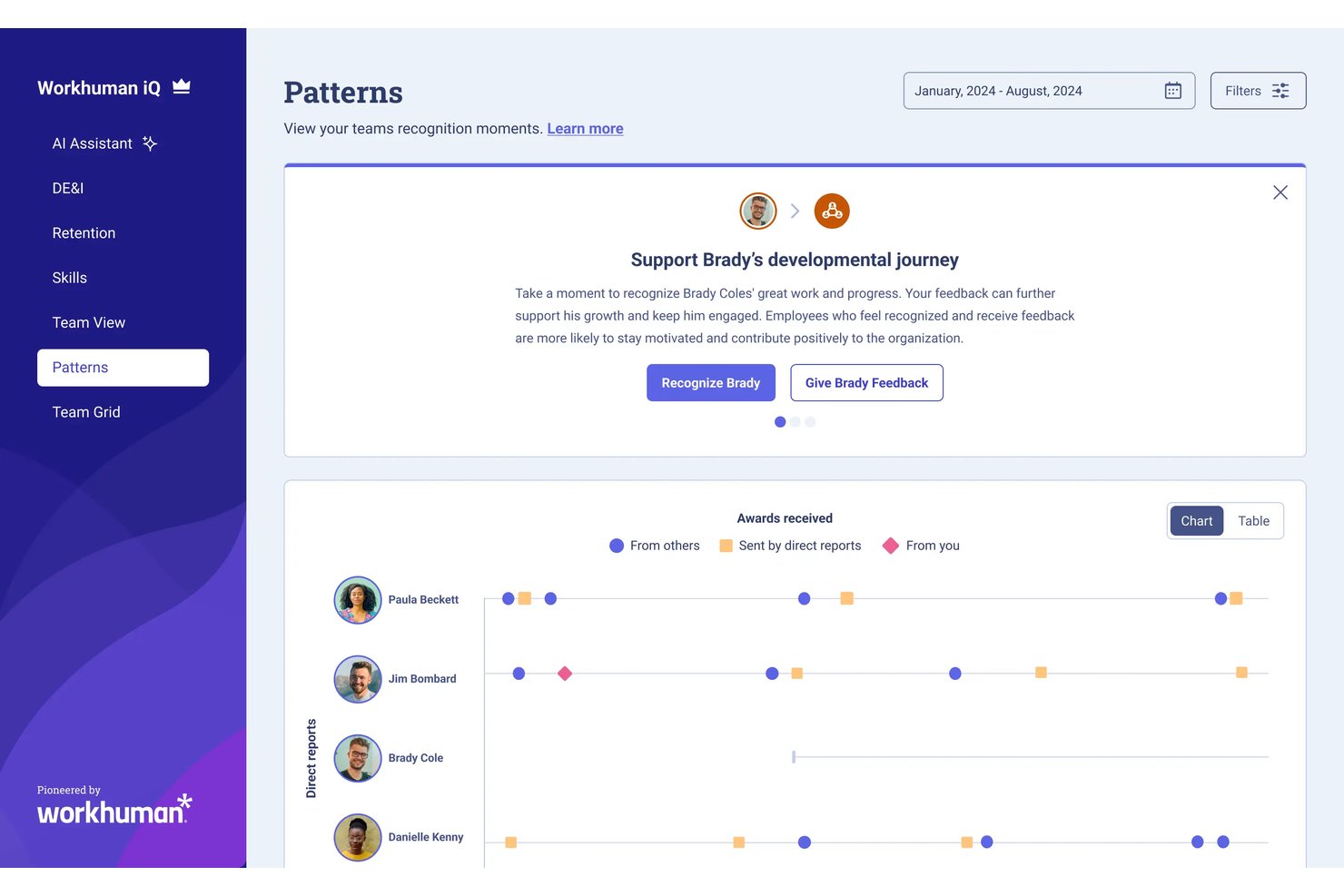
Workhuman Future Leaders es una herramienta de planificación de sucesión impulsada por IA que utiliza datos de reconocimiento y comportamientos para identificar empleados de alto potencial en camino hacia roles de liderazgo senior.
¿Para quién es mejor Workhuman Future Leaders?
Es ideal para grandes empresas con programas de reconocimiento consolidados que necesitan un enfoque basado en datos para la planificación de sucesión y el desarrollo de la cantera de liderazgo.
Por qué elegí Workhuman Future Leaders
Workhuman Future Leaders se gana su lugar en mi lista porque el motor Ascend AI identifica empleados de alto potencial de tres a cinco años antes de que estén listos para roles de liderazgo senior. Me gusta que aprende las señales únicas de liderazgo de cada organización a partir de datos reales de reconocimiento y comportamiento, no solo de nominaciones de gerentes o intuiciones. Sus modelos de autoaprendizaje se recalibran en tiempo real a medida que los líderes avanzan y los roles cambian, por lo que las señales de talento siempre están actualizadas.
Características clave de Workhuman Future Leaders
- Análisis de patrones de comportamiento: Detecta empleados cuyo comportamiento coincide con rasgos de liderazgo usando datos de reconocimiento y RRHH.
- Integración con Workday HCM: Sincroniza actividades de reconocimiento y recompensas de los usuarios con los registros principales de RRHH para un flujo de datos sin interrupciones.
- Aplicaciones para Microsoft Teams y Slack: Permite a los usuarios dar y recibir reconocimiento directamente dentro de herramientas de colaboración populares.
- Feed de Culture Hub: Centraliza el reconocimiento, las celebraciones y la participación interactiva en un espacio de trabajo digital unificado.
Integraciones de Workhuman Future Leaders
Pros and Cons
Pros:
- Reconoce señales de liderazgo basadas en el comportamiento real
- Detecta talento de alto potencial antes de los ciclos de promoción
- Ofrece mapas de calor de cultura organizacional para la sucesión
Cons:
- La configuración requiere datos de un programa de reconocimiento existente
- Visibilidad limitada sobre la lógica de decisión del modelo
Tableau
Ideal para la visualización de datos
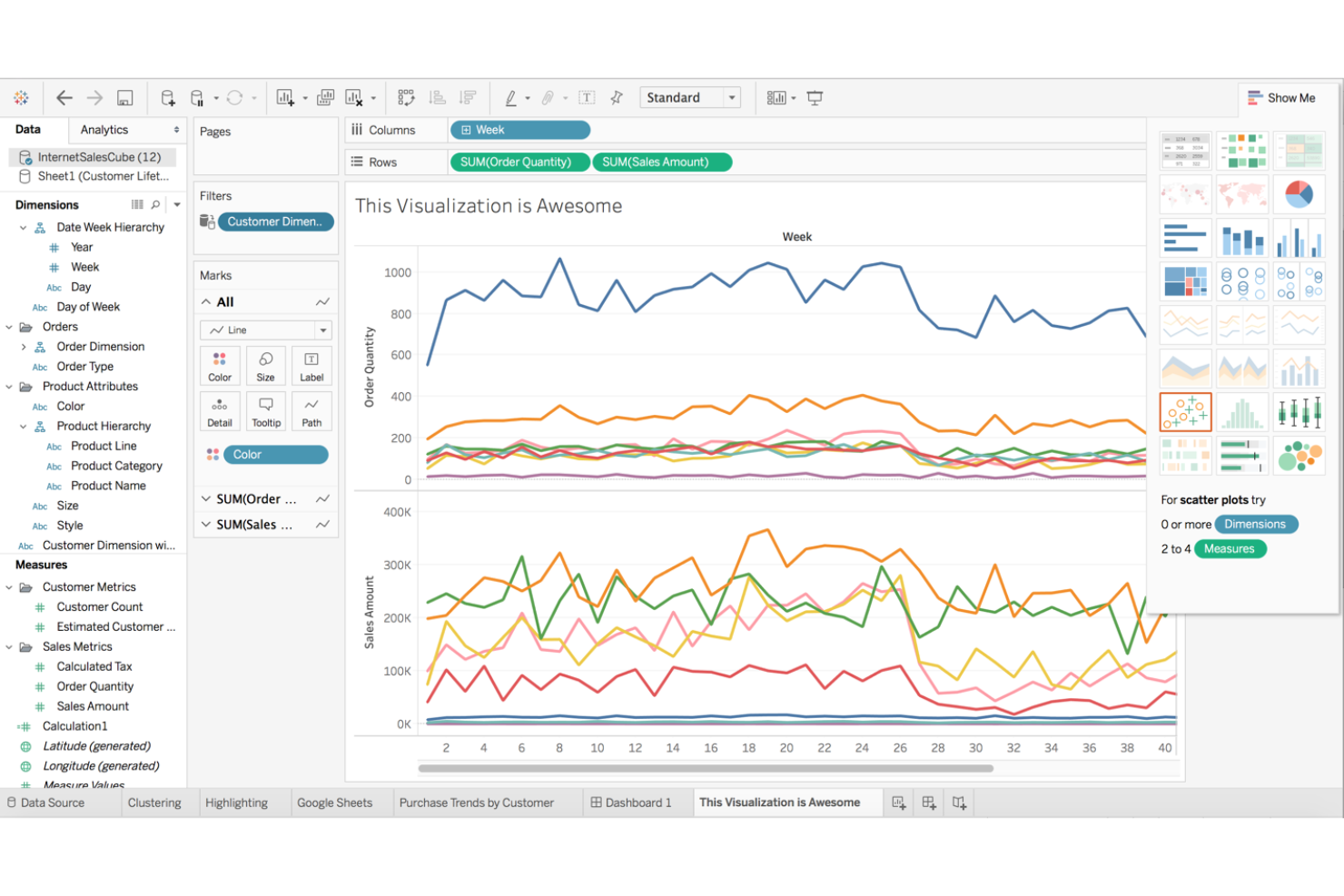
Tableau es una herramienta de visualización de datos para analistas de datos, profesionales de inteligencia empresarial y responsables de la toma de decisiones. Transforma los datos en bruto en métricas interactivas y compartibles, proporcionando información mediante análisis visuales para respaldar una toma de decisiones informada.
Por qué elegí Tableau: Es reconocido por su visualización de datos, ofreciendo análisis impulsados por IA y procesamiento de lenguaje natural. Estas funciones te permiten explorar datos a través de formatos visuales intuitivos. La interfaz de arrastrar y soltar de Tableau simplifica el análisis de datos complejos, haciéndolo accesible para tu equipo. Aunque Tableau no es estrictamente una plataforma de toma de decisiones con IA, sus análisis asistidos por IA y sus capacidades de visualización líderes en la industria lo convierten en una excelente herramienta para descubrir los conocimientos que impulsan decisiones empresariales más inteligentes.
Funciones y compatibilidades destacadas:
Funciones incluyen paneles interactivos que permiten una exploración profunda de los datos. La plataforma también permite actualizaciones de datos en tiempo real, asegurando que tus análisis se mantengan actualizados. Su función de narración facilita la presentación de hallazgos a los interesados.
Compatibilidades incluyen Salesforce, AWS, Google Cloud, Microsoft Excel, SAP, Oracle, IBM, Alteryx, Snowflake y Dropbox.
Pros and Cons
Pros:
- Paneles de datos interactivos
- Permite actualizaciones de datos en tiempo real
- Función de narración para presentaciones
Cons:
- Puede requerir muchos recursos
- Requiere formación para las funciones avanzadas

Anaplan
Mejor para la planificación empresarial
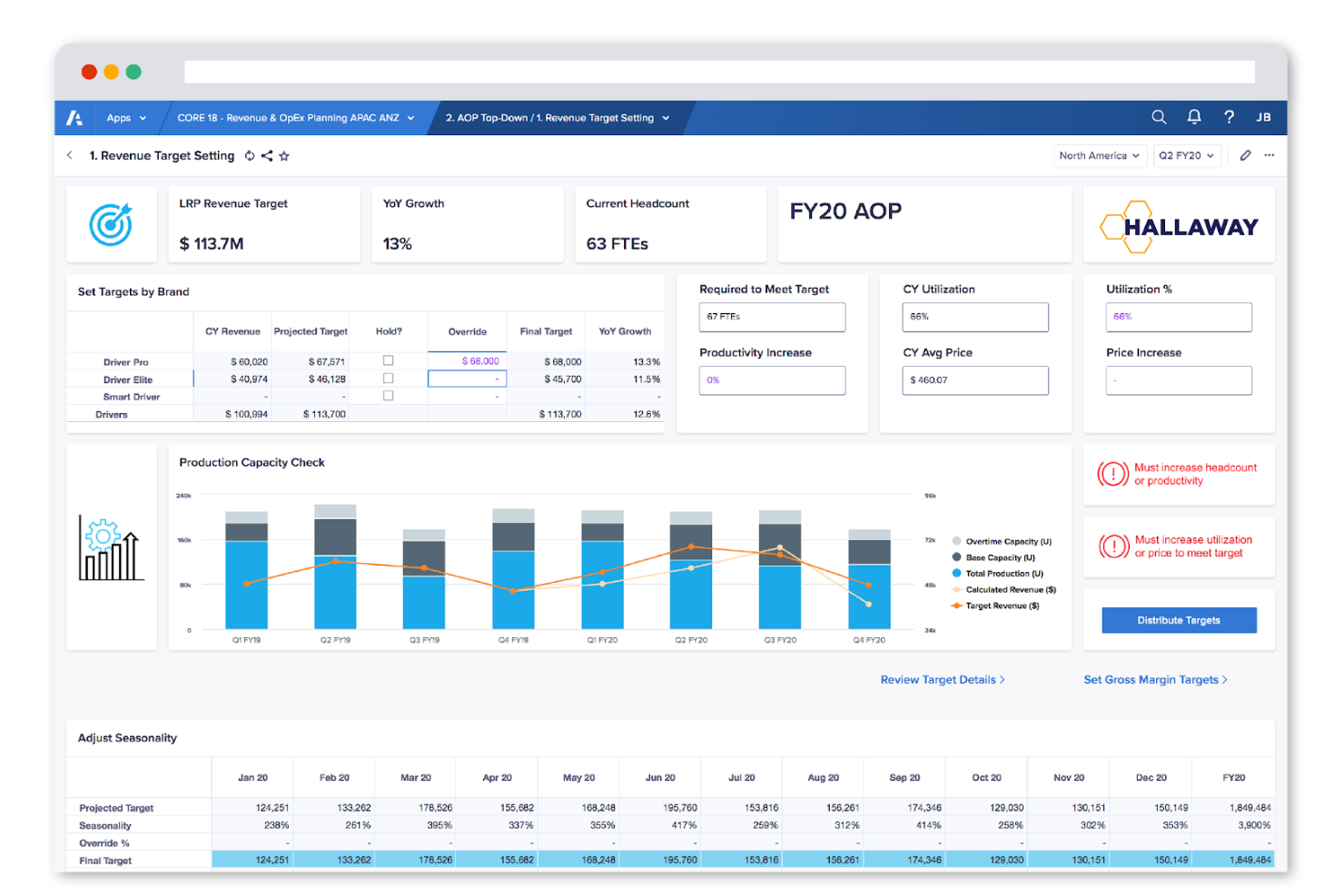
Anaplan es una plataforma en la nube para la planificación empresarial y la gestión del rendimiento. Es utilizada por los equipos de finanzas, ventas y operaciones y ofrece capacidades de modelado y pronóstico impulsadas por IA para mejorar la planificación estratégica y la toma de decisiones.
Por qué elegí Anaplan: Es ideal para la planificación empresarial gracias a sus avanzadas herramientas de modelado y pronóstico. Con las capacidades de IA de Anaplan, puedes simular diversos escenarios de negocio y optimizar los recursos. Sus funciones colaborativas permiten que tu equipo se alinee con los objetivos estratégicos y realice el seguimiento del rendimiento en tiempo real. La flexibilidad para personalizar los modelos asegura que los procesos de planificación se adapten a las necesidades específicas de tu empresa.
Características e integraciones destacadas:
Características incluyen su motor en memoria Hyperblock, que recalcula modelos complejos al instante en todos los departamentos. Connected Planning vincula los modelos de finanzas, ventas, cadena de suministro y fuerza laboral, manteniendo a los equipos alineados con supuestos compartidos. Por último, el modelado multidimensional te permite construir escenarios detallados para productos, regiones, clientes o períodos de tiempo, brindándote una visión más profunda de los factores que impulsan el desempeño comercial.
Integraciones incluyen Salesforce, Microsoft Excel, Workday, Tableau, SAP, Oracle, Google Cloud, AWS y Microsoft Azure.
Pros and Cons
Pros:
- Modelado personalizable para necesidades específicas
- Actualizaciones de datos en tiempo real
- Herramientas colaborativas para la alineación del equipo
Cons:
- Configuración inicial del modelo lenta
- Estructura rígida para uso ad hoc

Mejor para la interacción con el cliente
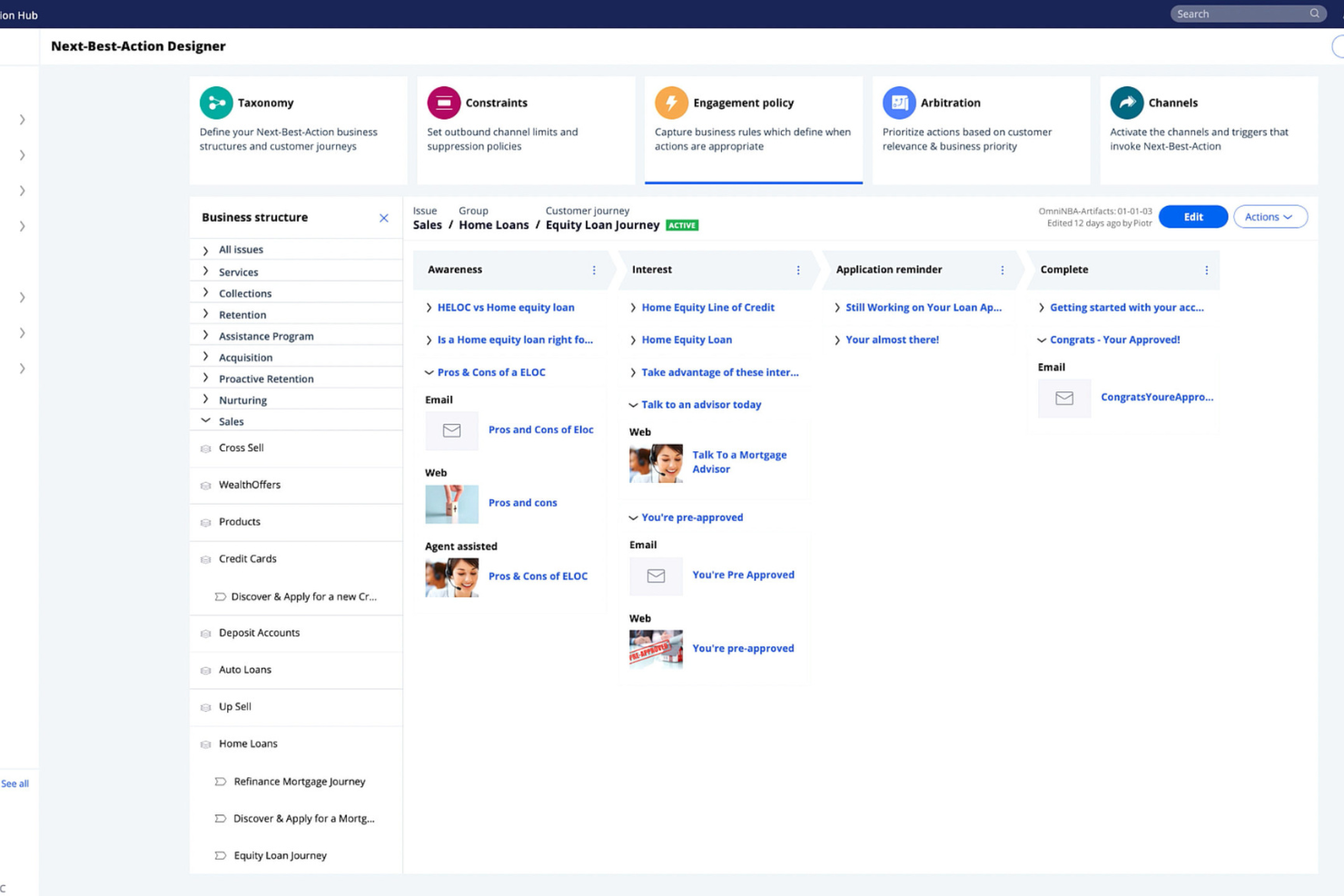
Pega Decision Hub es una plataforma impulsada por IA para equipos de marketing y experiencia del cliente que respalda la interacción con el cliente mediante decisiones en tiempo real y análisis predictivos. Ofrece capacidades para personalizar las interacciones y optimizar las estrategias de marketing.
Por qué elegí Pega Decision Hub: Destaca en la interacción con el cliente al aprovechar la IA para analizar los datos de los clientes en tiempo real. Esto permite a tu equipo personalizar las interacciones según el comportamiento actual del cliente. Los análisis predictivos de Pega ayudan a anticipar las necesidades y guiar la toma de decisiones. Su capacidad de integrarse con sistemas de marketing existentes garantiza una transición sencilla y maximiza la eficiencia del equipo.
Características destacadas e integraciones:
Características incluyen aprendizaje adaptativo que mejora los procesos de toma de decisiones con el tiempo. La plataforma ofrece un panel centralizado para monitorear las interacciones con el cliente. Además, soporta la interacción omnicanal, asegurando una comunicación coherente en todos los canales.
Integraciones incluye Salesforce, Adobe, Microsoft Dynamics, AWS, Google Cloud y Twilio.
Pros and Cons
Pros:
- Procesamiento de datos en tiempo real
- Soporte para interacción omnicanal
- Aprendizaje adaptativo para mejorar las decisiones
Cons:
- Requiere experiencia técnica para la configuración
- La complejidad puede abrumar a equipos pequeños

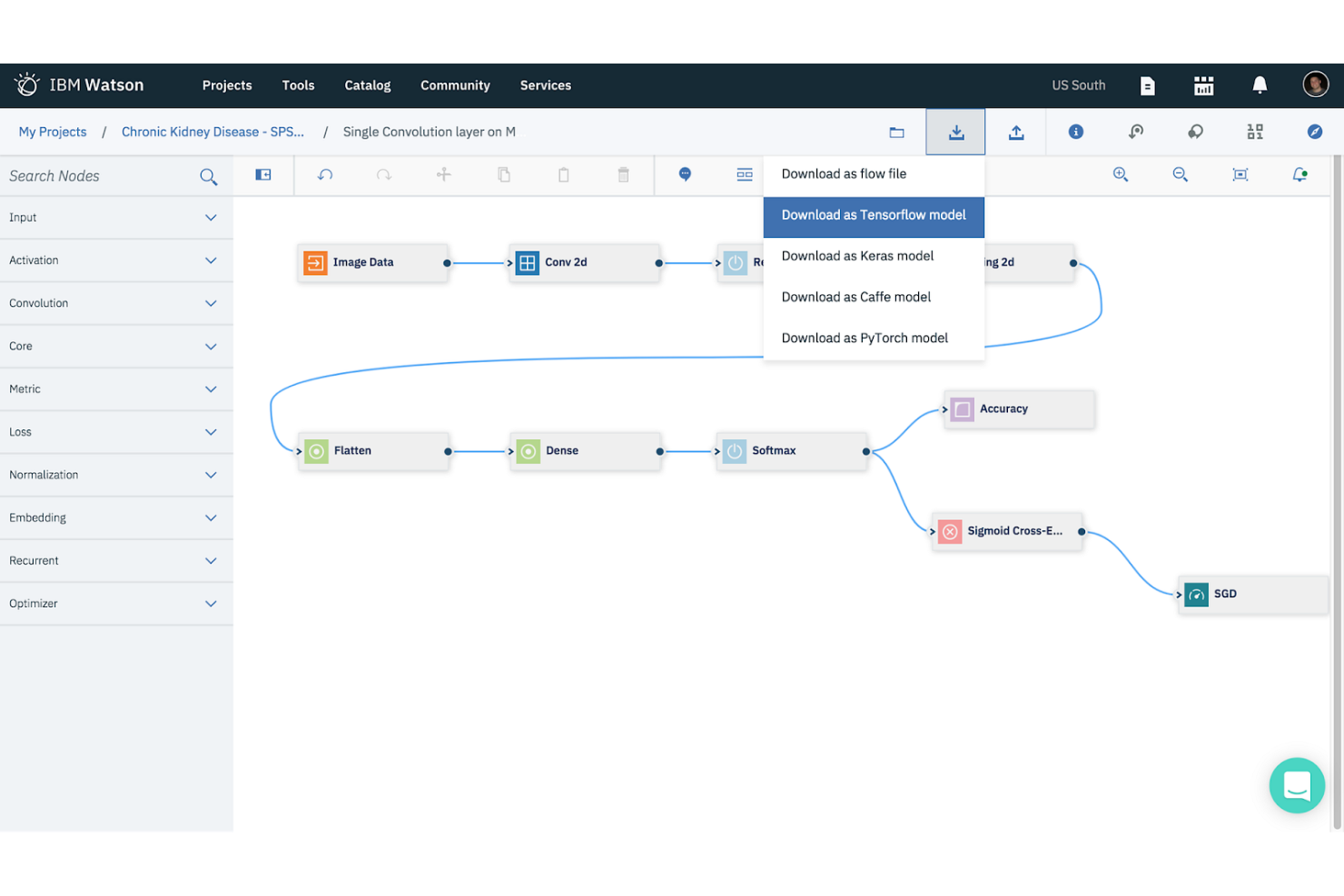
IBM Watson Studio es una plataforma de ciencia de datos e IA para científicos de datos, desarrolladores y analistas. Facilita la creación, el entrenamiento y la implementación de modelos de IA, permitiendo a los usuarios obtener información y tomar decisiones basadas en datos.
Por qué elegí IBM Watson Studio: Está diseñada para la implementación de modelos de IA, con características como creación automática de modelos y flujos de trabajo de implementación. Estas herramientas ayudan a tu equipo a crear e implementar soluciones de IA rápidamente, sin necesidad de una amplia experiencia técnica. Las funciones de colaboración de Watson Studio permiten que varios usuarios trabajen en proyectos simultáneamente. Su compatibilidad con frameworks de código abierto garantiza flexibilidad y adaptabilidad para distintos proyectos de IA.
Funciones y conexiones destacadas:
Funciones incluyen una interfaz fácil de usar que simplifica la preparación de datos y el entrenamiento de modelos. La plataforma admite el aprendizaje automático automatizado, permitiendo construir modelos con una intervención manual mínima. Watson Studio también ofrece herramientas para la visualización y el análisis de datos.
Conexiones (frameworks) incluyen plataformas populares como IBM Cloud, Apache Spark, Hadoop, Python, R, TensorFlow y Keras.
Pros and Cons
Pros:
- Admite frameworks de código abierto
- Facilita la colaboración entre usuarios
- Ofrece aprendizaje automático automatizado
Cons:
- Requiere conocimientos técnicos
- Configuración inicial compleja

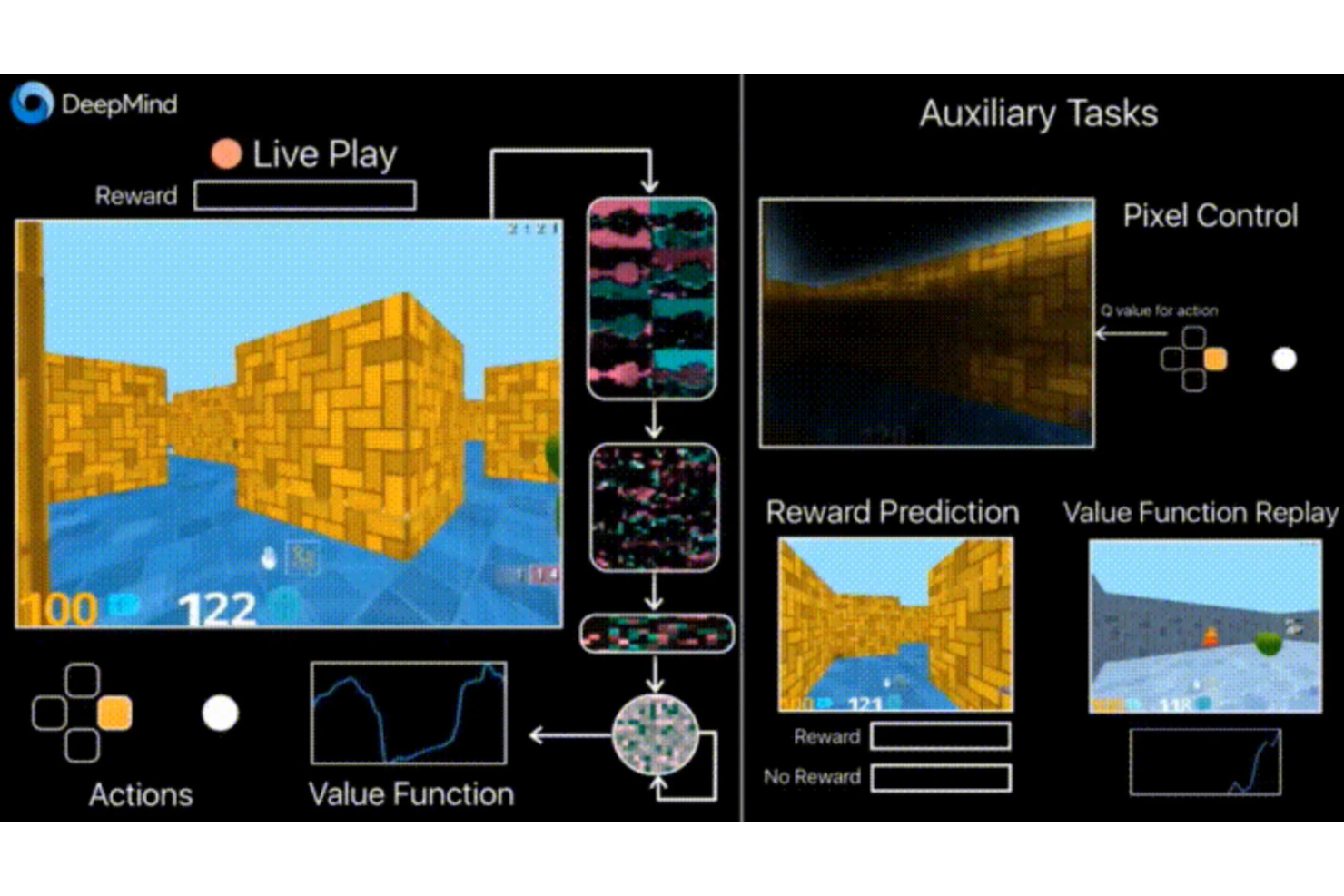
Google DeepMind es un laboratorio de inteligencia artificial enfocado en la investigación que impulsa el avance de la IA tanto a través de la investigación como de aplicaciones prácticas. Está dirigido a investigadores, desarrolladores de IA y organizaciones que buscan superar los límites de la tecnología y aplicaciones de inteligencia artificial.
Por qué elegí Google DeepMind: Es un líder en la investigación de IA, ofreciendo capacidades como aprendizaje por refuerzo y desarrollo de redes neuronales. Estas características te ayudan a comprender y desarrollar soluciones de inteligencia artificial de vanguardia. El enfoque de DeepMind en la ética de la IA garantiza que tus proyectos se alineen con las mejores prácticas en seguridad y responsabilidad de la IA. Sus resultados en investigación avanzan campos como la salud y la eficiencia energética, demostrando su impacto e innovación.
Características e integraciones destacadas:
Características incluyen avances en la investigación en aprendizaje por refuerzo, modelos generativos y arquitecturas de redes neuronales. El trabajo de DeepMind en sistemas como AlphaFold, AlphaZero y agentes de planificación avanzada demuestra lo que la inteligencia artificial de última generación puede lograr en entornos de decisiones complejas.
Integraciones incluyen frameworks que DeepMind utiliza en su investigación, como el ecosistema de Google, TensorFlow, PyTorch, JAX, Scikit-learn, NumPy, OpenAI Gym, Pandas y Matplotlib.
Pros and Cons
Pros:
- Investigación y desarrollo pioneros en IA
- Enfoque en prácticas éticas de IA
- Contribuciones a campos diversos
Cons:
- Enfocado principalmente en la investigación, no para uso comercial
- Requiere experiencia técnica avanzada

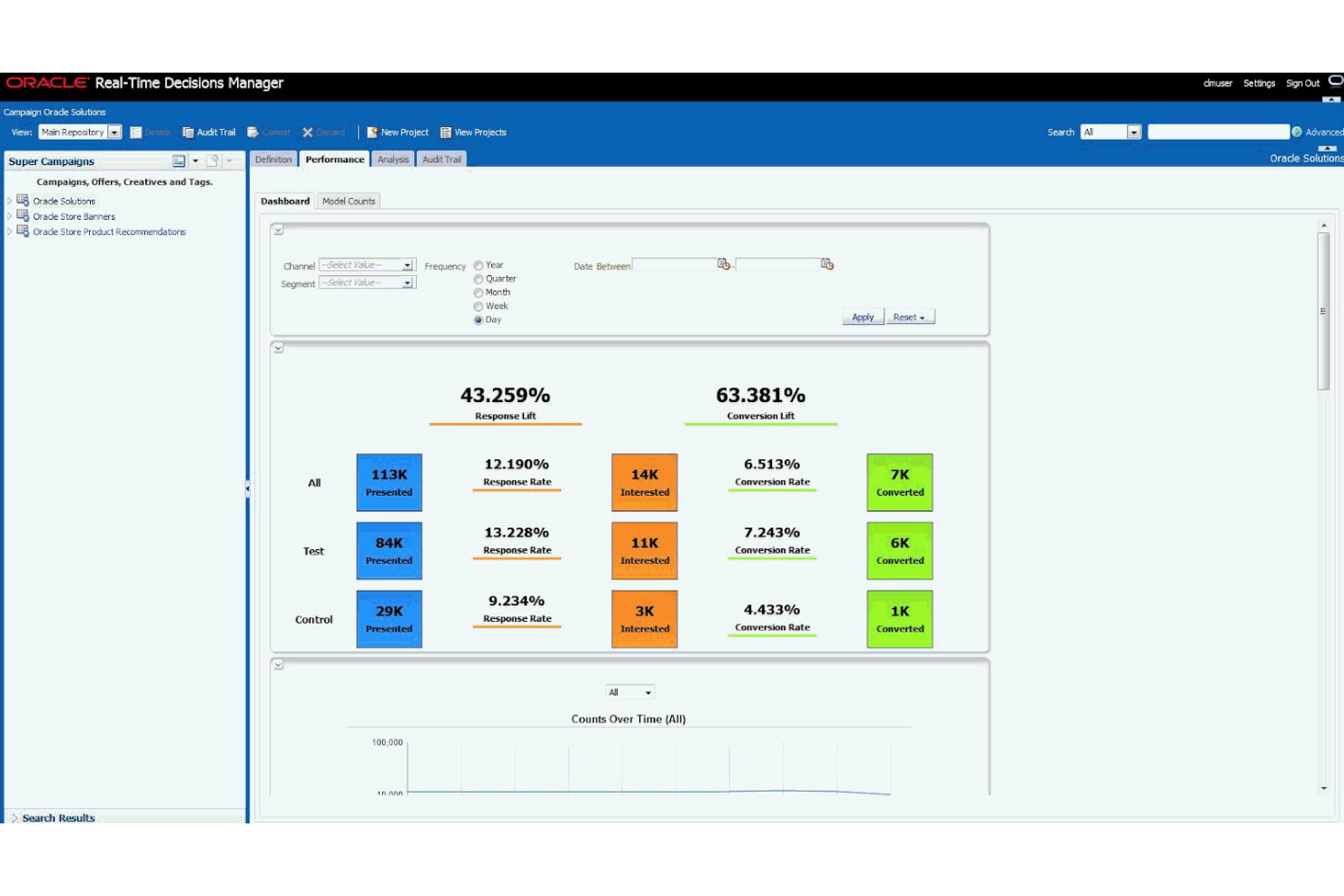
Oracle RTD es una herramienta de gestión de decisiones impulsada por IA para empresas que necesitan análisis de datos y toma de decisiones en tiempo real. Permite a las empresas tomar decisiones inmediatas basadas en datos al analizar interacciones con clientes y otros puntos de datos en tiempo real.
Por qué elegí Oracle RTD: Se centra en los análisis en tiempo real, con funciones como el procesamiento de datos en tiempo real y la analítica predictiva. Estas capacidades permiten que tu equipo responda a los cambios del mercado y al comportamiento de los clientes. Los algoritmos de aprendizaje automático de Oracle RTD predicen resultados y optimizan decisiones. Por último, su capacidad para procesar datos en tiempo real lo diferencia para las empresas que necesitan actuar rápidamente.
Características y ventajas destacadas:
Características incluyen aprendizaje adaptativo, que mejora la precisión de las decisiones con el tiempo, y una interfaz fácil de usar que simplifica el análisis de datos complejo. Además, su modelado basado en escenarios te prepara para una variedad de situaciones empresariales.
Integraciones incluyen APIs y servicios web que permiten a Oracle RTD conectarse con aplicaciones orientadas al cliente, sistemas CRM, sitios web y fuentes de datos de back office.
Pros and Cons
Pros:
- Admite análisis de datos en tiempo real
- El aprendizaje adaptativo mejora con el tiempo
- Modelado basado en escenarios para la planificación
Cons:
- Altos requisitos de integración
- Configuración compleja de reglas y modelos


Qlik Analytics es una plataforma de análisis de datos en la nube para explorar y comprender datos de múltiples fuentes. Está diseñado para empresas que desean convertir datos en bruto en conocimientos sin requerir habilidades técnicas avanzadas.
Por qué elegí Qlik Analytics: Permite a tu equipo hacer preguntas en lenguaje natural y recibir ideas instantáneas impulsadas por IA. Su motor de análisis asociativo permite explorar relaciones entre datos sin escribir consultas ni código, ayudando a descubrir patrones que las herramientas tradicionales no detectan. Insight Advisor genera paneles, hojas de cálculo, visualizaciones y predicciones, haciendo que el análisis avanzado sea accesible incluso para usuarios sin conocimientos técnicos.
Funciones destacadas e integraciones:
Funciones incluyen análisis conversacional para consultas en lenguaje natural, visualizaciones adaptables que muestran relaciones de datos ocultas y herramientas de narración integradas que transforman los conocimientos en presentaciones compartibles.
Integraciones incluyen Microsoft Excel, Google Sheets, Snowflake, Amazon Redshift, Databricks, Salesforce, Google BigQuery, Oracle, SAP y Microsoft Power BI.
Pros and Cons
Pros:
- Permite explorar datos sin programar
- Funciona bien para la colaboración entre departamentos
- Ofrece ideas guiadas y asistidas por IA
Cons:
- Puede resultar limitado para ingenieros de datos
- Requiere configuración para datos complejos

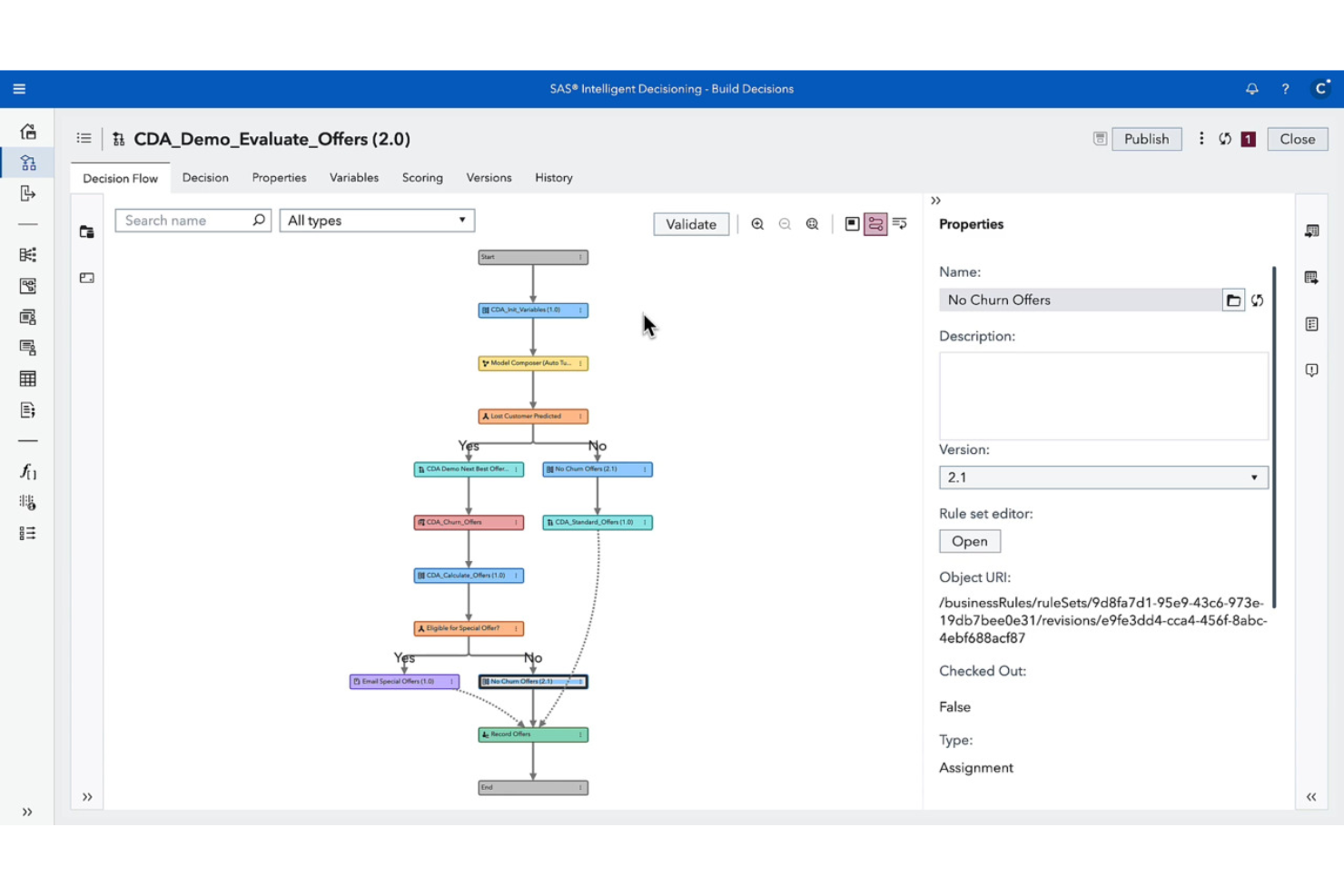
SAS Intelligent Decisioning es una plataforma de gestión de decisiones para analistas de negocio y responsables de la toma de decisiones, que ofrece herramientas para automatizar y optimizar los procesos de decisión. Proporciona capacidades impulsadas por IA para el análisis de datos y la gestión de decisiones que ayudan en las operaciones empresariales.
Por qué elegí SAS Intelligent Decisioning: Destaca en la gestión de decisiones, con funciones como la gestión de modelos y la automatización de reglas de negocio. Estas permiten implementar y gestionar la lógica de decisión en toda su organización. La plataforma admite la toma de decisiones en tiempo real, lo cual es esencial para entornos empresariales dinámicos. Por ejemplo, mercados en rápido movimiento u operaciones de atención al cliente de alto volumen. Además, su capacidad para integrar modelos de aprendizaje automático garantiza el aprovechamiento de analítica avanzada para decisiones informadas.
Características e integraciones destacadas:
Características incluyen paneles de control intuitivos, reglas de negocio automatizadas y análisis de escenarios. Estas funciones ayudan a su equipo a visualizar conocimientos de datos y tomar decisiones informadas.
Integraciones con el ecosistema SAS Viya y las principales plataformas empresariales, incluidos servicios en la nube y sistemas CRM/ERP.
Pros and Cons
Pros:
- Soporta toma de decisiones en tiempo real
- Lógica de decisión personalizable
- Ofrece análisis avanzados
Cons:
- Flexibilidad limitada en tipos de datos
- Requiere capacitación para su uso completo
Otro software de toma de decisiones con IA
Estas son algunas opciones adicionales de software de toma de decisiones con IA que no entraron en mi selección, pero que aún merece la pena consultar:
- GiniMachine
Ideal para la calificación crediticia
- DataRobot
Mejor para aprendizaje automático automatizado
- Movable Ink
Ideal para marketing personalizado
- Aera Technology
Ideal para análisis empresariales


Comment j'évalue les logiciels RH à base d'IA
Chaque outil de cette liste doit aller au-delà de l'apposition d'une étiquette d'IA sur une simple automatisation — je cherche des plateformes où l'IA transforme réellement la façon dont les équipes recrutent, gèrent et fidélisent leurs collaborateurs. Je divise mon évaluation en fonctionnalités de base que chaque outil doit fournir pour être retenu et en facteurs de différenciation qui séparent les bonnes options des meilleurs choix.
Fonctionnalités de base (Prérequis pour figurer dans cette liste)
Lorsque je sélectionne les outils pour ma liste, je les évalue sur une échelle de 0 (ne propose pas la fonctionnalité) à 5 (excellent dans ce domaine) pour chacune des fonctionnalités clés listées ci-dessous. Je calcule ensuite le score total de l'outil en pourcentage. Chaque outil doit atteindre un score total minimum de 75% pour être pris en considération.
- Acquisition de talents propulsée par l'IA : J'évalue comment la plateforme gère le sourcing, le tri et la mise en correspondance — par exemple si l'IA peut classer les candidats selon des critères propres au poste ou identifier des candidats passifs.
- Assistant RH génératif : L'outil doit proposer un assistant GenAI capable de rédiger de véritables contenus RH, tels que des descriptions de poste, des documents de politique interne ou des réponses personnalisées pour les employés.
- Analytique prédictive RH : Je recherche des modèles qui vont au-delà des tableaux de bord pour prédire des résultats comme le risque de départs ou les lacunes dans la planification des effectifs, avec des recommandations exploitables.
- Fonctionnalités essentielles SIRH : Chaque outil doit offrir une gestion solide des dossiers salariés, une cartographie de la structure organisationnelle et un suivi du cycle de vie des employés, de l'embauche au départ.
- Automatisation des processus RH : Je vérifie si les séquences d'intégration, les validations et la circulation des documents utilisent des déclencheurs pilotés par l'IA plutôt que de simples modèles statiques basés sur des règles.
- Conformité & sécurité des données : Les certifications comme SOC 2 et conformité RGPD sont importantes, mais j'évalue aussi la gouvernance spécifique à l'IA, comme la surveillance des biais et la traçabilité des décisions.
Une fois que j'ai une liste d'outils qui répondent aux critères, j'analyse ce qui distingue chaque plateforme.
Facteurs de différenciation (Ce qui distingue les éditeurs)
Voici comment je compare et distingue différents fournisseurs :
Fonctionnalités remarquables
Un moteur d'intelligence des compétences apporte une réelle profondeur — j'évalue la capacité de la plateforme à cartographier les compétences des employés et à recommander des parcours de mobilité interne ou des possibilités de formation en fonction des écarts de compétences. La détection des biais est un autre élément différenciateur, notamment pour les outils qui signalent un langage biaisé dans les annonces d'emploi ou qui identifient des tendances démographiques dans les processus de sélection. L'analyse des sentiments via le traitement automatique du langage se distingue aussi lorsqu'elle permet de détecter les risques de burn-out ou la baisse d'engagement issue des enquêtes flash avant que ces signaux ne deviennent des problèmes de fidélisation.
Au-delà des fonctionnalités
La gouvernance de l'IA compte énormément dans ce domaine — je vérifie si les éditeurs proposent une explicabilité des décisions prises par l'IA et des contrôles humains pour les actions sensibles telles que le tri des CV ou l'évaluation des performances. La profondeur des intégrations est tout aussi révélatrice ; une plateforme qui se connecte nativement avec votre ATS, votre paie et des outils collaboratifs comme Slack ou Teams vous évite des mois de développement personnalisé. J'évalue également la rapidité de mise en œuvre, notamment si des modèles d'IA pré-entraînés réduisent la phase d'apprentissage des données, ce qui accélère la création de valeur pour les équipes RH.
Cómo elegir un software de toma de decisiones con IA
Es fácil perderse entre largas listas de funciones y estructuras de precios complejas. Para ayudarte a mantener la atención mientras avanzas en tu proceso específico de selección de software, aquí tienes una lista de factores que debes tener en cuenta:
| Factor | Qué debes considerar |
|---|---|
| Escalabilidad | ¿Puede el software crecer con tu empresa? Comprueba si puede gestionar un mayor volumen de datos o de usuarios sin problemas de rendimiento. |
| Integraciones | ¿Se conecta con tus herramientas actuales? Comprueba si admite integraciones con sistemas como CRM, ERP o plataformas de análisis de datos. |
| Personalización | ¿Puedes adaptarlo a tus flujos de trabajo? Busca opciones para ajustar la configuración y las funciones de acuerdo con los procesos de tu equipo. |
| Facilidad de uso | ¿Es fácil de usar para tu equipo? Evalúa la interfaz y la formación necesaria para garantizar una adopción fluida por parte de usuarios sin conocimientos técnicos. |
| Implementación e incorporación | ¿Con qué rapidez puedes empezar? Ten en cuenta el tiempo y los recursos necesarios para la configuración, y busca formación o asistencia disponibles durante la transición. |
| Coste | ¿Se ajusta a tu presupuesto? Compara el precio del software con sus funciones y ventajas, y ten en cuenta cualquier coste oculto. |
| Medidas de seguridad | ¿Protege tus datos? Asegúrate de que cuenta con medidas de seguridad de alto nivel, como cifrado y controles de acceso, para mantener tu información a salvo. |
| Disponibilidad de asistencia | ¿Puedes obtener ayuda cuando la necesitas? Comprueba si ofrece asistencia las 24 horas, los 7 días de la semana, y la capacidad de respuesta del servicio de atención al cliente del proveedor. |
¿Qué es el software de toma de decisiones con IA?
El software de toma de decisiones con IA es una herramienta que utiliza inteligencia artificial para analizar datos, predecir resultados y respaldar los procesos de toma de decisiones. Estas herramientas suelen utilizarlas analistas empresariales, científicos de datos y responsables que necesitan tomar decisiones basadas en datos de forma rápida y precisa.
Sus funciones incluyen análisis predictivo, procesamiento de datos en tiempo real e informes automatizados que ayudan a identificar tendencias, optimizar estrategias y mejorar la eficiencia. En general, estas herramientas proporcionan información valiosa que mejora la toma de decisiones e impulsa mejores resultados empresariales.
Características
Al seleccionar un software de toma de decisiones basado en IA, presta atención a las siguientes características clave:
- Análisis predictivo: Utiliza la IA para pronosticar tendencias y resultados futuros, lo que te ayuda a tomar decisiones fundamentadas.
- Procesamiento de datos en tiempo real: Analiza los datos al instante, lo que permite tomar decisiones oportunas y relevantes.
- Informes automatizados: Genera informes automáticamente, ahorrando tiempo y garantizando la precisión en la presentación de datos.
- Integración del aprendizaje automático: Incorpora modelos de aprendizaje automático para respaldar el análisis de datos y las predicciones.
- Visualización de datos: Presenta los datos en formatos visuales fáciles de entender, lo que permite generar conclusiones rápidamente.
- Planificación de escenarios: Simula diferentes escenarios para evaluar posibles estrategias y resultados.
- Aprendizaje adaptativo: Los procesos de toma de decisiones basados en datos mejoran constantemente el sistema en su conjunto.
- Paneles personalizables: Permiten adaptar la interfaz a tus necesidades y flujos de trabajo específicos.
- Interacción omnicanal: Garantiza una comunicación coherente en múltiples plataformas.
- Medidas de seguridad: Protege los datos confidenciales mediante cifrado y controles de acceso, garantizando la integridad de los datos.
Ventajas
La implementación de un software de toma de decisiones basado en IA ofrece varias ventajas para tu equipo y tu empresa. Estas son algunas de las que puedes esperar:
- Decisiones más coherentes: Los algoritmos de IA aplican la misma lógica en cada ocasión, reduciendo las suposiciones y garantizando que las decisiones estén alineadas entre los equipos.
- Mejor alineación entre equipos: Los datos compartidos y los modelos de decisión centralizados hacen que los departamentos trabajen con las mismas suposiciones y prioridades.
- Mayor ROI de los datos: La IA convierte los datos sin procesar, históricos y en tiempo real en recomendaciones prácticas que impulsan resultados empresariales medibles.
- Menos cuellos de botella operativos: Los pasos de decisión automatizados agilizan los flujos de trabajo y eliminan los retrasos causados por aprobaciones o revisiones manuales.
- Respuesta más rápida a los cambios del mercado: Los modelos de IA adaptativa se actualizan rápidamente, lo que ayuda a tu equipo a reaccionar ante los cambios en el comportamiento de los clientes o en las condiciones empresariales.
- Mejores experiencias para los clientes: Las recomendaciones personalizadas y los ciclos de decisión más rápidos conducen a interacciones más relevantes y satisfactorias.
- Gobernanza y cumplimiento normativo más sólidos: Las plataformas de IA registran las rutas de decisión y proporcionan transparencia, lo que facilita las auditorías y los informes normativos.
- Menor riesgo empresarial: La detección temprana de anomalías, problemas de cumplimiento o descensos del rendimiento ayuda a prevenir problemas costosos antes de que se agraven.
Costes y precios
Seleccionar un software de toma de decisiones basado en IA requiere comprender los modelos de precios y planes disponibles. Los costes varían en función de las características, el tamaño del equipo, los complementos y otros factores. La siguiente tabla resume los planes habituales, sus precios medios y las características que suelen incluir las herramientas de IA:
Tabla comparativa de planes de software de toma de decisiones basado en IA
| Tipo de plan | Precio medio | Características habituales |
|---|---|---|
| Plan gratuito | $0 | Análisis básico, procesamiento de datos limitado y asistencia de la comunidad. |
| Plan personal | $10-$30/usuario/mes | Visualización de datos, análisis predictivo y asistencia por correo electrónico. |
| Plan empresarial | $50-$100/usuario/ mes | Procesamiento de datos en tiempo real, paneles personalizables y asistencia prioritaria. |
| Plan corporativo | $150-$300/usuario/ mes | Aprendizaje automático avanzado, capacidades de integración completas y asistencia especializada. |
Preguntas frecuentes sobre el software de toma de decisiones con IA
Estas son algunas respuestas a preguntas frecuentes sobre el software de toma de decisiones con IA:
¿Puede el software de toma de decisiones con IA integrarse con los sistemas existentes?
Sí, la mayoría de las herramientas de toma de decisiones con IA pueden integrarse con los sistemas existentes. Busca herramientas que ofrezcan acceso a API y sean compatibles con plataformas populares como CRM, ERP y herramientas de análisis de datos. Esto garantiza que puedas mantener tus flujos de trabajo actuales mientras aprovechas las capacidades de la IA. Comprueba las opciones de integración antes de realizar la compra para evitar problemas de compatibilidad.
¿Cómo evalúo la escalabilidad del software de toma de decisiones con IA?
Para evaluar la escalabilidad, comprueba si el software puede gestionar un mayor volumen de datos y número de usuarios sin problemas de rendimiento. Busca funciones como una infraestructura basada en la nube y planes de precios flexibles que se adapten al crecimiento. Si tu empresa tiene previsto expandirse, asegúrate de que el software pueda crecer contigo.
¿Qué recursos de formación están disponibles para el software de toma de decisiones con IA?
La mayoría de las plataformas ofrecen diversos recursos de formación, como videotutoriales, seminarios web y documentación. Algunas pueden proporcionar visitas guiadas interactivas del producto o una base de conocimientos para el aprendizaje autónomo. Antes de elegir un software, explora los materiales de formación para asegurarte de que tu equipo pueda ponerse al día y aprovechar al máximo sus capacidades mediante el uso de la IA.
¿Qué importancia tiene la atención al cliente al elegir un software de toma de decisiones con IA?
Una buena asistencia ayuda a resolver los problemas rápidamente y minimiza el tiempo de inactividad al elegir un software de toma de decisiones con IA. Busca proveedores que ofrezcan asistencia las 24 horas, los 7 días de la semana, chat en directo y gestores de cuentas específicos. Evalúa la capacidad de respuesta y los conocimientos del equipo de asistencia leyendo las opiniones de los clientes o contactando con ellos para realizar consultas antes de la compra.
¿Existen problemas de seguridad relacionados con el software de toma de decisiones con IA?
Sí, la seguridad es un aspecto fundamental. Asegúrate de que el software incluya un cifrado sólido, controles de acceso y cumplimiento de las normativas de protección de datos, como el RGPD. Verifica las certificaciones de seguridad del proveedor y pregunta por sus prácticas históricas de recopilación de datos. Proteger la información sensible es esencial para mantener la confianza y el cumplimiento normativo.