

Reseña de Bucketlist Rewards: Ventajas, Desventajas, Características y Precios



Un excelente programa de recompensas y reconocimiento para empleados parece sencillo, hasta que eres tú quien tiene que elegir la plataforma adecuada, lograr que la gente realmente la use y demostrar que vale la inversión.
Ahí es donde entra Bucketlist Rewards.
En esta reseña, desglosaremos en qué destaca, dónde tiene áreas de mejora, cómo funciona el precio y para quién tiene más sentido, para que puedas tomar una decisión con confianza.
Bucketlist Rewards Evaluation Summary

- Pricing upon request
- Free demo available
Por qué confiar en nuestras reseñas de software
Nuestro equipo lleva probando y evaluando software desde 2012. Como expertos en RR. HH., sabemos lo difícil —y lo importante— que es elegir el software adecuado.
Para esta guía, evaluamos las herramientas mediante pruebas prácticas e investigación independiente, puntuando las herramientas según nuestros criterios de selección. También nos basamos en la experiencia de líderes de opinión del sector y de profesionales de RR. HH. en activo.
Nuestras reseñas reflejan nuestro criterio editorial humano, no un discurso de ventas.
Revisores expertos:
Bucketlist Rewards Overview
Bucketlist Rewards is an employee recognition and rewards platform that helps organizations build consistent appreciation programs, boost engagement, and support retention by letting teams give shoutouts, earn redeemable points, and claim rewards like gift cards and experiences.
It includes structured recognition tools, a global rewards marketplace, and features for nominations and custom awards, all designed to make recognition part of everyday workflows.
pros
-
Provides a global rewards marketplace with gift cards, experiences, swag, and charitable options.
-
Includes built-in employee recognition features like peer-to-peer shoutouts and points-based rewards.
-
Supports structured programs such as nominations, incentives, and milestone awards.
cons
-
Some users find the initial setup a bit time-consuming.
-
You might notice a few limitations in reporting capabilities.
-
Not designed as a fully self-serve solution, but it does include hands-on customer support and strategic guidance.
Is Bucketlist Rewards Right For Your Needs?
Who Would be a Good Fit for Bucketlist Rewards?
Bucketlist Rewards is best for any business or team that wants a consistent way to recognize employees, boost engagement, and improve retention with points-based rewards.
-
HR Teams
Great for HR since they can manage recognition, rewards, and participation across the company without needing a complicated setup.
-
Leadership Teams
Ideal for leaders who want a clear way to reinforce company values, boost morale, and reduce turnover over time.
-
Healthcare
Makes sense for healthcare, where employee appreciation often gets overlooked, and recognition helps people feel seen in high-pressure roles.
-
Retail
A good match for retail where turnover is common and frequent recognition can keep frontline staff motivated and engaged.
-
Manufacturing Teams
Fits manufacturing well since it helps highlight good work across shifts and reinforces habits like teamwork and safe behavior.
-
Field and Frontline Operations
Useful for teams that aren’t always at a computer, since recognition can still happen consistently across distributed workers.
Who Would be a Bad Fit for Bucketlist Rewards?
Bucketlist Rewards is a weak fit if your team doesn’t need structured recognition, doesn’t have budget buy-in, or won’t actively use the platform.
-
No HR or Program Champion
If nobody owns the program internally, adoption usually drops fast, and the platform ends up being ignored.
-
Companies Without Culture Initiatives
When leadership isn’t bought in, recognition becomes “optional,” and people stop using it.
-
Short-term or gig-based workforces
When workers rotate frequently, it’s hard to build lasting recognition habits or get long-term value from a rewards program.
-
Organizations with broken fundamentals
If core issues like poor management or unclear expectations aren’t addressed, recognition tools won’t fix the underlying problems.
-
Highly regulated industries with strict ethics rules
In environments with tight compliance controls, reward-based recognition may require heavy oversight and can limit how freely the platform is used.
-
Small Companies with Occasional Use Cases
If you’re just trying to give quick rewards once in a while, a full recognition platform can feel like overkill.
Cómo probamos y puntuamos nuestras herramientas
Hemos pasado años construyendo, refinando y mejorando nuestro sistema de pruebas y puntuación de software. La rúbrica está diseñada para capturar los matices de la selección de software y lo que hace que una herramienta sea efectiva, centrándose en los aspectos críticos del proceso de toma de decisiones. A continuación, puedes ver exactamente cómo funcionan nuestras pruebas y puntuaciones a través de siete criterios. Esto nos permite ofrecer una evaluación imparcial del software basada en la funcionalidad principal, características destacadas, facilidad de uso, incorporación, soporte al cliente, integraciones, reseñas de clientes y relación calidad-precio.
Funcionalidad principal (25% de la puntuación final)
El punto de partida de nuestra evaluación siempre es la funcionalidad principal de la herramienta. ¿Tiene las funciones básicas que se espera encontrar? ¿Alguna de esas funciones básicas está restringida a planes de precio superiores? En esencia, esperamos que una herramienta se compare favorablemente con las capacidades básicas de sus competidores.
Características destacadas (25% de la puntuación final)
Luego, evaluamos características poco comunes que van más allá de la funcionalidad principal que normalmente se encuentra en herramientas de su tipo. Una puntuación alta refleja funciones especializadas o únicas que hacen que el producto sea más rápido, eficiente o que ofrezca un valor adicional al usuario. También evaluamos lo fácil que es integrar con otras herramientas comúnmente usadas en el entorno tecnológico para ampliar la funcionalidad y utilidad del software. Las herramientas que ofrecen muchas integraciones nativas, conexiones de terceros y acceso a API para construir integraciones personalizadas obtienen las mejores puntuaciones.
Facilidad de uso (10% de la puntuación final)
Consideramos qué tan rápido y fácil es ejecutar las tareas definidas en la funcionalidad principal utilizando la herramienta. El software que obtiene una puntuación alta está bien diseñado, es intuitivo, ofrece aplicaciones móviles, proporciona plantillas y hace que tareas relativamente complejas parezcan simples.
Incorporación (10% de la puntuación final)
Sabemos lo importante que es la rápida adopción del equipo para una nueva plataforma, por eso evaluamos qué tan fácil es aprender y usar una herramienta con una capacitación mínima. Evaluamos cuán rápido un miembro del equipo puede configurarse y comenzar a usar la herramienta sin experiencia. Las soluciones con mejores puntuaciones requieren poco o ningún soporte.
Soporte al cliente (10% de la puntuación final)
Revisamos cuán rápido y fácil es obtener ayuda mediante teléfono, chat en vivo o base de conocimientos. Las herramientas y empresas que ofrecen soporte en tiempo real obtienen las mejores puntuaciones, mientras que los chatbots obtienen las peores.
Reseñas de clientes (10% de la puntuación final)
Además de nuestras propias pruebas y evaluaciones, consideramos el puntaje neto de promotores de clientes presentes y pasados. Revisamos su probabilidad, dada la opción, de elegir nuevamente la herramienta por su funcionalidad principal. El software con una puntuación alta refleja un alto puntaje neto de promotores por parte de clientes actuales o anteriores.
Relación calidad-precio (10% de la puntuación final)
Por último, considerando todos los demás criterios, revisamos el precio promedio de los planes de entrada frente a las funciones principales y valoramos el resto de los criterios de evaluación. El software que ofrece más por menos tendrá una mejor puntuación.
Core Features
Peer-to-Peer + Manager Recognition
Lets teammates and managers give shoutouts so appreciation becomes consistent (not random or only during reviews).
Social Recognition Feed
Recognition shows up in a feed where people can engage with posts using things like comments and reactions, which helps it feel more “alive” inside the team.
Company Values Tagging
Recognition can be tied back to company values so shoutouts reinforce the behaviors the company actually wants repeated.
Points-Based Rewards + Redemption Catalog
Employees earn points and redeem them for rewards, which gives recognition a real incentive attached to it.
Global Rewards Marketplace
Bucketlist supports reward options across countries, which helps teams with remote staff or distributed offices.
Employee Incentives + Custom Awards
You can create internal awards (like top performer) and run nomination-style programs to drive performance and participation.

Standout Features
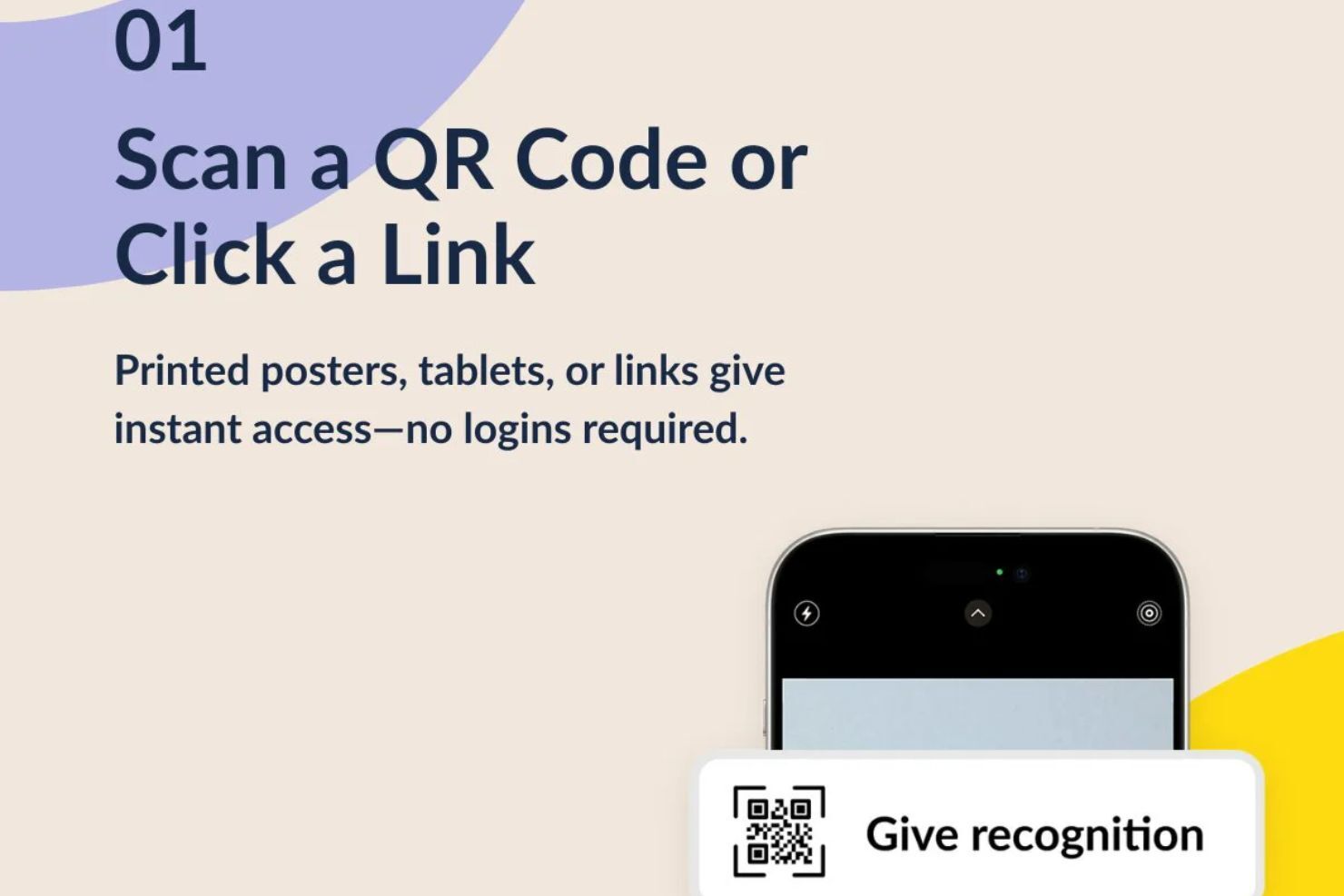
External Recognition via QR Code/Link
Customers, guests, or deskless workers can submit recognition without having a company email or platform login.
Admin Moderation + Controls for External Submissions
Admins can review and manage external shoutouts before they appear, which helps keep recognition clean, relevant, and appropriate.
Ease of Use
Bucketlist Rewards is easy to use from both the recognition and rewards side, which makes it simple for employees to stay active on the platform without needing much training.
Users say it’s easy to find coworkers to reward, even if you don’t know their full name, and recognition feels more fun with photos and GIFs. Redeeming points is simple too, with plenty of gift card options and virtual rewards that can arrive instantly.

Onboarding
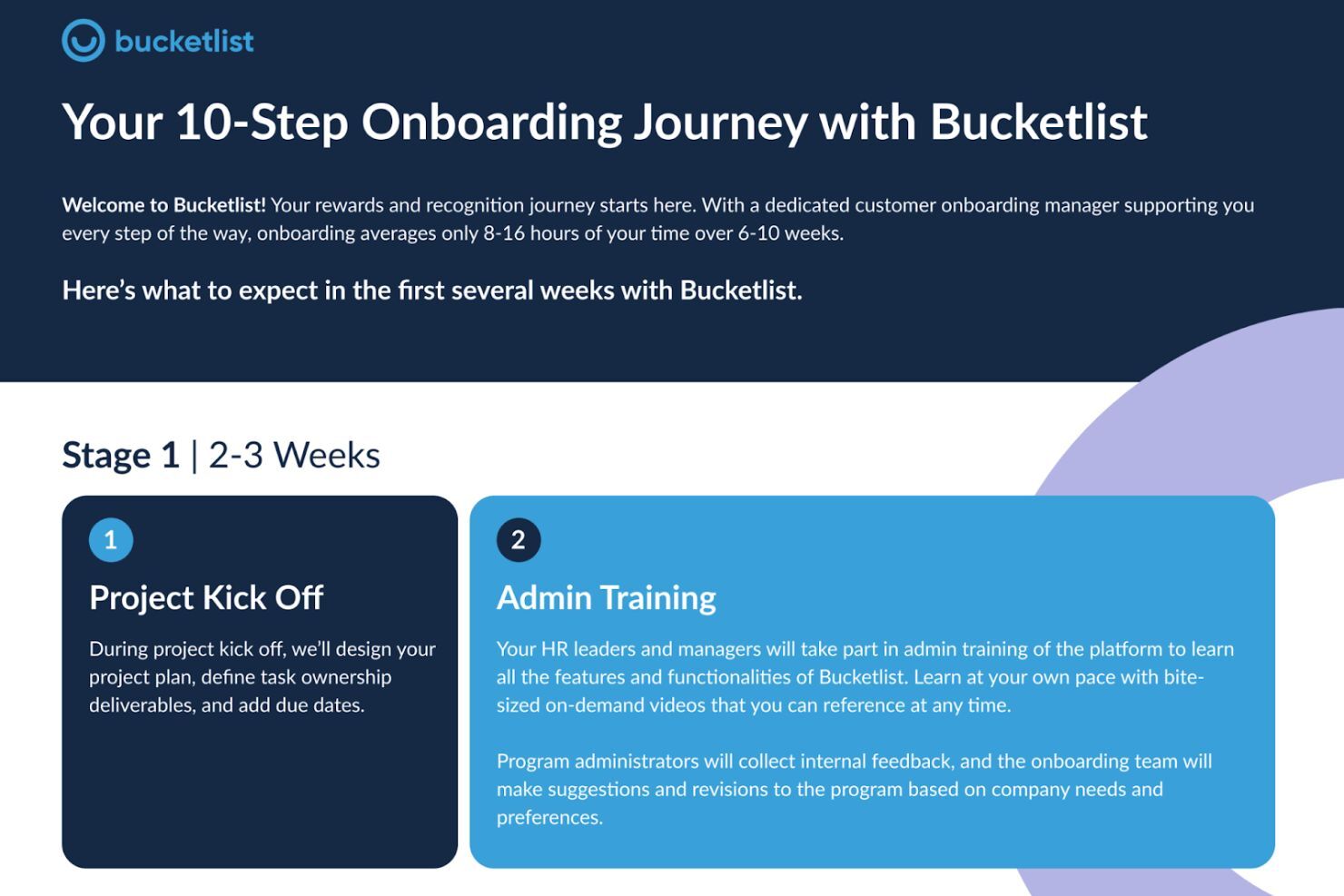
Bucketlist’s onboarding is pretty structured and guided, with a dedicated onboarding manager and a rollout that usually takes around 6–10 weeks, spread across roughly 8–16 total hours of setup time.
You’ll also find guides on small rollout helpers like setting up a first-login “welcome” award to get employees participating right away. And if you’re not ready to connect tools yet, they support manual employee setup through a CSV upload so you can still launch without delays.
Customer Support
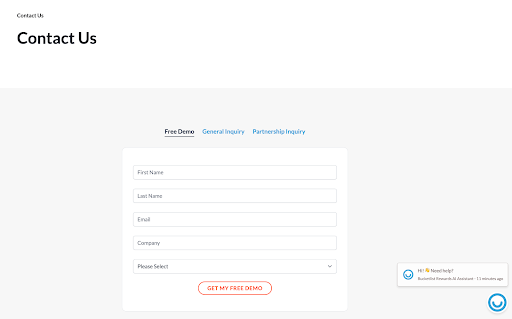
Bucketlist’s customer support is pretty easy to reach, and they make it clear on their Contact Us page that you can either submit a request through their contact form or call their support line directly.
They also have a Help Center knowledge base for self-serve troubleshooting, plus an on-site chat assistant for quick questions when you’re browsing the platform.
Integrations
Bucketlist Rewards makes integrations a big part of the platform, so it’s easier to plug recognition and rewards into the tools your team already uses.
They integrate with common workplace tools like Slack, Microsoft, and ADP, so recognition fits into your daily workflow instead of feeling like another platform to manage. These integrations also make employee syncing easier and reduce manual admin work.

Value for Money
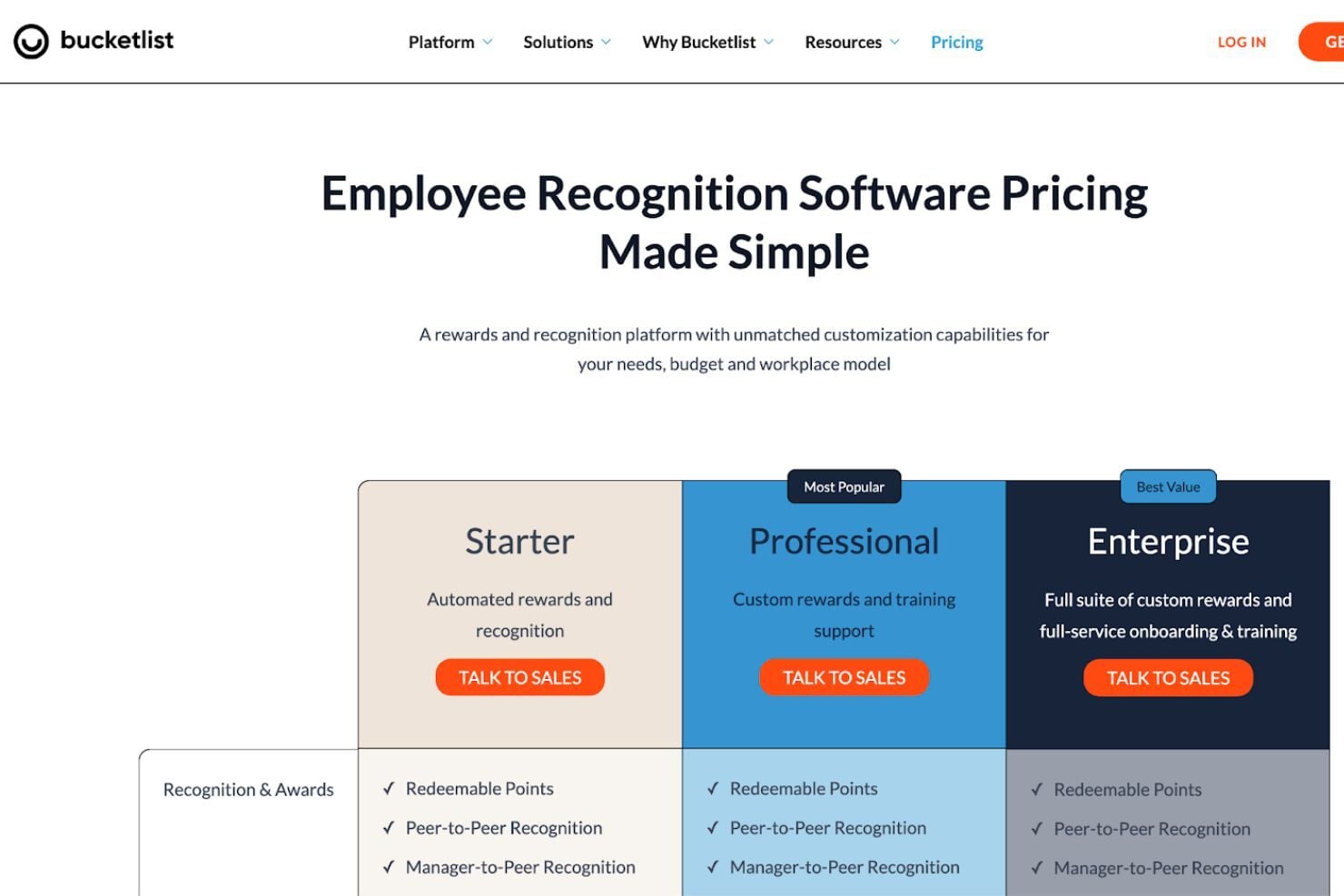
Bucketlist Rewards uses a tiered pricing model where you pick a plan based on the level of features and support your company needs, and you’ll need to talk to sales to get an exact quote.
Pricing Tiers:
- Starter: Redeemable points, peer-to-peer recognition, service milestones, nominations & incentives, and basic rewards like gift cards and donations.
- Professional: Everything in Starter, plus added program support and expanded reward options like experiences and swag.
- Enterprise: Everything in Professional, plus more advanced controls and tools for larger teams that need deeper configuration.
Overall, the value comes from how flexible the platform is, since you can start with the essentials and move up once your recognition program grows or your team needs more control and reward variety.
Bucketlist Rewards Specs
- 2-Factor Authentication
- 360 Degree Feedback
- API
- Application Tracking
- Attendance Tracking
- Batch Permissions & Access
- Compliance Tracking
- Dashboard
- Data Export
- Data Import
- Data Visualization
- Employee Database
- Employee Engagement
- Employee Incentive Management
- Employee Onboarding
- Employee Training
- Expense Tracking
- External Integrations
- Feedback Management
- Multi-User
- Notifications
- Payroll
- Performance Appraisal
- Scheduling
- Time Management
- Timesheets
- Travel Management
- Vacation & Absence Calendar
Bucketlist Rewards FAQs
How easy is it to customize rewards on Bucketlist Rewards?
Can I track the effectiveness of my rewards program?
Does Bucketlist Rewards offer peer-to-peer recognition?
Is there a mobile app available?
How secure is my team's data with Bucketlist Rewards?
Can I integrate Bucketlist Rewards with my HR software?
How quickly can my team start using Bucketlist Rewards?
What kind of support can I expect if I encounter issues?
Bucketlist Rewards Company Overview & History
Bucketlist Rewards is an employee recognition and rewards platform based in Vancouver, British Columbia. Founded in 2015 by Jason Lindstrom and Bart Wisniowski, it focuses on helping companies improve workplace culture through structured recognition, engagement, and rewards programs.
Bucketlist Rewards Major Milestones
- 2015: Founded by Jason Lindstrom and Bart Wisniowski.
- 2021: Became Great Place to Work Certified.
- 2024: Named UVic Co-op Employer of the Year.
- 2025: Announced Great Place to Work–Certified for 2025/2026.