


Reseña de Workhuman: Pros, Contras, Características y Precios



Las puntuaciones de compromiso de tu equipo acaban de bajar otra vez, el reconocimiento se siente inconsistente entre departamentos y la dirección pide una solución real en lugar de otra hoja de cálculo o un programa de recompensas puntual.
Si estás investigando sobre software de reconocimiento de empleados, Workhuman es probablemente uno de los nombres que sigue apareciendo.
Esta reseña desglosa lo que ofrece Workhuman, en qué destaca y en qué podría quedarse corto para que puedas decidir con confianza si es la opción adecuada para ti.
Workhuman Evaluation Summary
- Pricing upon request
- Free demo available
Por qué confiar en nuestras reseñas de software
Nuestro equipo lleva probando y evaluando software desde 2012. Como expertos en RR. HH., sabemos lo difícil —y lo importante— que es elegir el software adecuado.
Para esta guía, evaluamos las herramientas mediante pruebas prácticas e investigación independiente, puntuando las herramientas según nuestros criterios de selección. También nos basamos en la experiencia de líderes de opinión del sector y de profesionales de RR. HH. en activo.
Nuestras reseñas reflejan nuestro criterio editorial humano, no un discurso de ventas.
Revisores expertos:
Workhuman Overview
pros
-
Helps build a strong culture of recognition with peer-to-peer recognition, rewards, and milestone celebrations.
-
Offers deep analytics and insights through Workhuman iQ to support HR decisions.
-
Provides guided implementation and consulting support to help organizations successfully launch and scale recognition programs.
cons
-
Recognition posts can feel delayed or overly complex for some users.
-
Reward options may feel limited for redeeming points.
-
Points-to-value conversion can be unclear.
Is Workhuman Right For Your Needs?
Who Would be a Good Fit for Workhuman?
Workhuman is best suited for mid-to-large organizations that want to build a strong recognition culture, improve engagement and retention, and support continuous feedback across distributed teams.
It’s especially valuable for HR and People Ops teams that need data-driven insights, structured recognition programs, and expert guidance to design, launch, and scale initiatives that celebrate milestones and strengthen company culture over time.
-
Tech Companies Scaling Globally
Social Recognition helps large distributed teams build engagement and retention through peer recognition and rewards.
-
HR Teams Building Continuous Feedback Cultures
Workhuman’s Conversations feature enables ongoing feedback and check-ins that replace traditional annual performance reviews.
-
Organizations Prioritizing Employee Retention
The Workhuman platform connects recognition programs to measurable engagement and retention outcomes.
-
Companies Wanting to Celebrate Milestones and Life Events
Life Events, Service Milestones, and Community Celebrations help recognize employee milestones and important moments.
-
Data-Driven Enterprises
Workhuman iQ provides analytics and insights to measure culture, skills, and program ROI.
-
Organizations Needing Expert Guidance
The Consulting Practice helps design, launch, and optimize recognition strategies for long-term success.
Who Would be a Bad Fit for Workhuman?
Workhuman is not ideal for very small teams, budget-conscious organizations, or companies that only need a simple rewards tool.
It’s also a poor fit for teams that want a quick, plug-and-play solution or don’t have a dedicated HR or People Ops function to manage a recognition program. Organizations that aren’t actively investing in culture, engagement, or retention initiatives are unlikely to see enough value to justify the platform.
-
Very Small Businesses or Startups
Workhuman’s enterprise-level features, implementation effort, and budget expectations are typically far beyond what very small teams need.
-
Companies Needing a Simple Rewards Tool
Organizations looking for a lightweight rewards tool without recognition programs, analytics, or consulting will find Workhuman unnecessarily complex.
-
Teams Needing Instant Plug-and-Play
Workhuman requires program design, onboarding, and rollout planning, making it unsuitable for teams that need a tool they can launch immediately.
-
Organizations Without Dedicated HR or People Ops
Workhuman is designed to be managed strategically, so companies without HR ownership usually struggle to run and maintain the program effectively.
-
Budget-Conscious Companies Seeking Low-Cost Software
Workhuman is positioned as a premium enterprise platform, making it unrealistic for organizations prioritizing the lowest-cost option.
-
Companies Not Focused on Culture, Engagement, or Retention Initiatives
Organizations that don’t actively invest in employee experience will struggle to justify the platform’s value and likely won’t see ROI.
Cómo probamos y puntuamos nuestras herramientas
Hemos pasado años construyendo, refinando y mejorando nuestro sistema de pruebas y puntuación de software. La rúbrica está diseñada para capturar los matices de la selección de software y lo que hace que una herramienta sea efectiva, centrándose en los aspectos críticos del proceso de toma de decisiones. A continuación, puedes ver exactamente cómo funcionan nuestras pruebas y puntuaciones a través de siete criterios. Esto nos permite ofrecer una evaluación imparcial del software basada en la funcionalidad principal, características destacadas, facilidad de uso, incorporación, soporte al cliente, integraciones, reseñas de clientes y relación calidad-precio.
Funcionalidad principal (25% de la puntuación final)
El punto de partida de nuestra evaluación siempre es la funcionalidad principal de la herramienta. ¿Tiene las funciones básicas que se espera encontrar? ¿Alguna de esas funciones básicas está restringida a planes de precio superiores? En esencia, esperamos que una herramienta se compare favorablemente con las capacidades básicas de sus competidores.
Características destacadas (25% de la puntuación final)
Luego, evaluamos características poco comunes que van más allá de la funcionalidad principal que normalmente se encuentra en herramientas de su tipo. Una puntuación alta refleja funciones especializadas o únicas que hacen que el producto sea más rápido, eficiente o que ofrezca un valor adicional al usuario. También evaluamos lo fácil que es integrar con otras herramientas comúnmente usadas en el entorno tecnológico para ampliar la funcionalidad y utilidad del software. Las herramientas que ofrecen muchas integraciones nativas, conexiones de terceros y acceso a API para construir integraciones personalizadas obtienen las mejores puntuaciones.
Facilidad de uso (10% de la puntuación final)
Consideramos qué tan rápido y fácil es ejecutar las tareas definidas en la funcionalidad principal utilizando la herramienta. El software que obtiene una puntuación alta está bien diseñado, es intuitivo, ofrece aplicaciones móviles, proporciona plantillas y hace que tareas relativamente complejas parezcan simples.
Incorporación (10% de la puntuación final)
Sabemos lo importante que es la rápida adopción del equipo para una nueva plataforma, por eso evaluamos qué tan fácil es aprender y usar una herramienta con una capacitación mínima. Evaluamos cuán rápido un miembro del equipo puede configurarse y comenzar a usar la herramienta sin experiencia. Las soluciones con mejores puntuaciones requieren poco o ningún soporte.
Soporte al cliente (10% de la puntuación final)
Revisamos cuán rápido y fácil es obtener ayuda mediante teléfono, chat en vivo o base de conocimientos. Las herramientas y empresas que ofrecen soporte en tiempo real obtienen las mejores puntuaciones, mientras que los chatbots obtienen las peores.
Reseñas de clientes (10% de la puntuación final)
Además de nuestras propias pruebas y evaluaciones, consideramos el puntaje neto de promotores de clientes presentes y pasados. Revisamos su probabilidad, dada la opción, de elegir nuevamente la herramienta por su funcionalidad principal. El software con una puntuación alta refleja un alto puntaje neto de promotores por parte de clientes actuales o anteriores.
Relación calidad-precio (10% de la puntuación final)
Por último, considerando todos los demás criterios, revisamos el precio promedio de los planes de entrada frente a las funciones principales y valoramos el resto de los criterios de evaluación. El software que ofrece más por menos tendrá una mejor puntuación.
Core Features
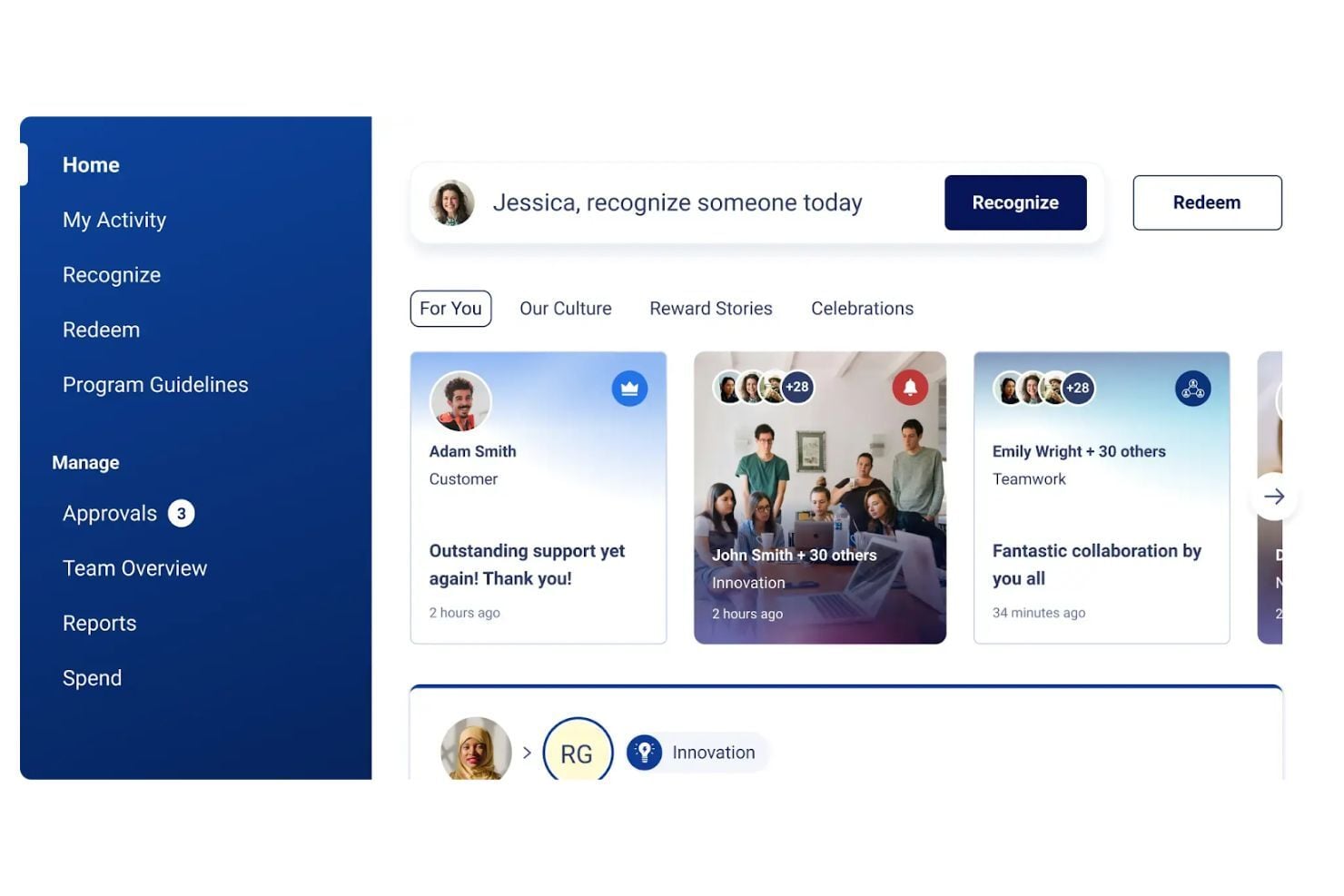
Social Recognition
Enables peer-to-peer recognition and rewards that improve engagement, productivity, and retention.
Conversations
Provides ongoing feedback, manager check-ins, and performance development tied directly to recognition moments.
Life Events
Helps teams celebrate important personal milestones to strengthen connection and belonging at work.
Service Milestones & Community Celebrations
Recognizes anniversaries and team celebrations to strengthen workplace culture and connection.
Global Rewards Marketplace
Allows employees to redeem recognition points for global rewards and personalized experiences.
Admin Hub
Provides tools for managing recognition programs, permissions, tracking, and governance.
Standout Features
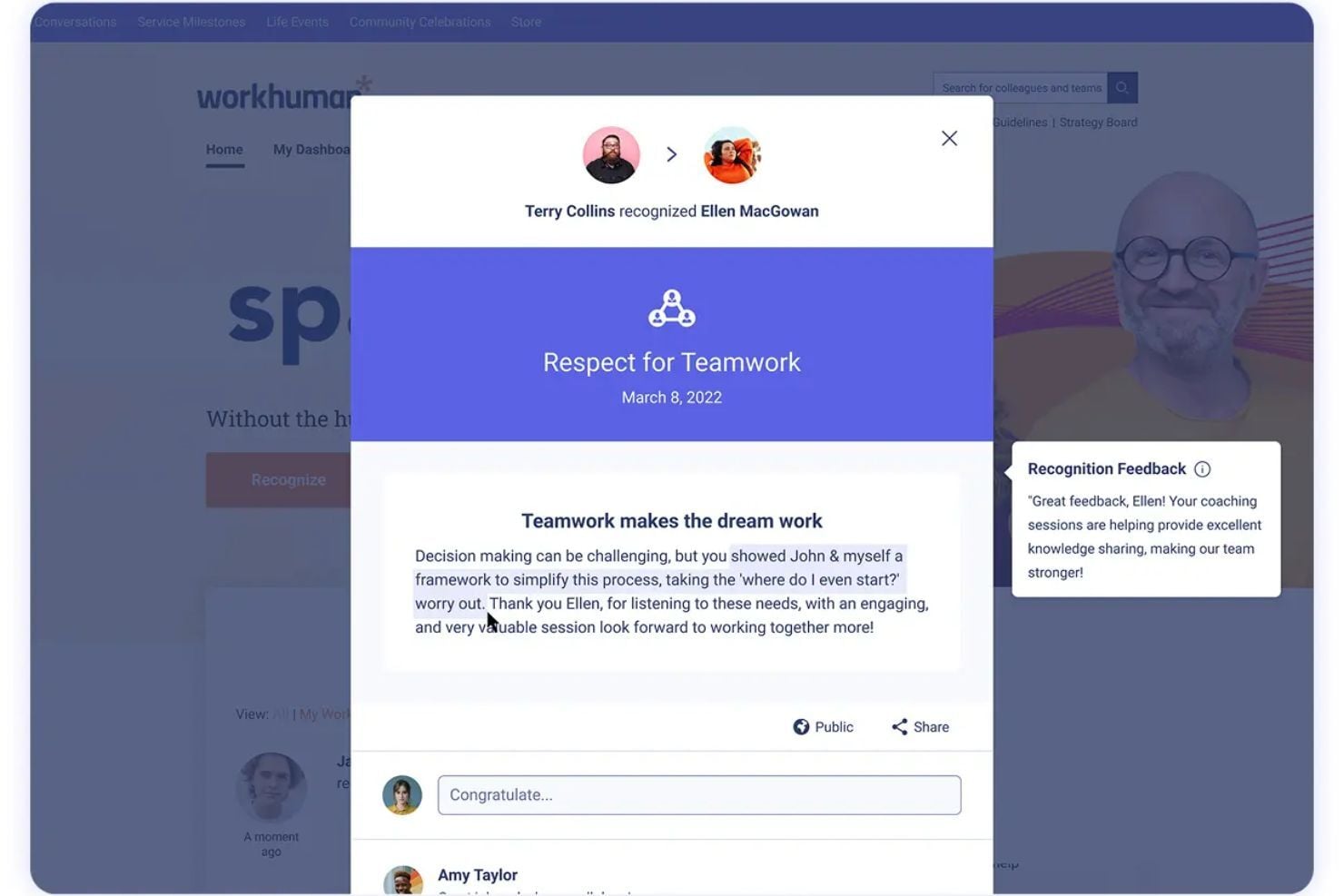
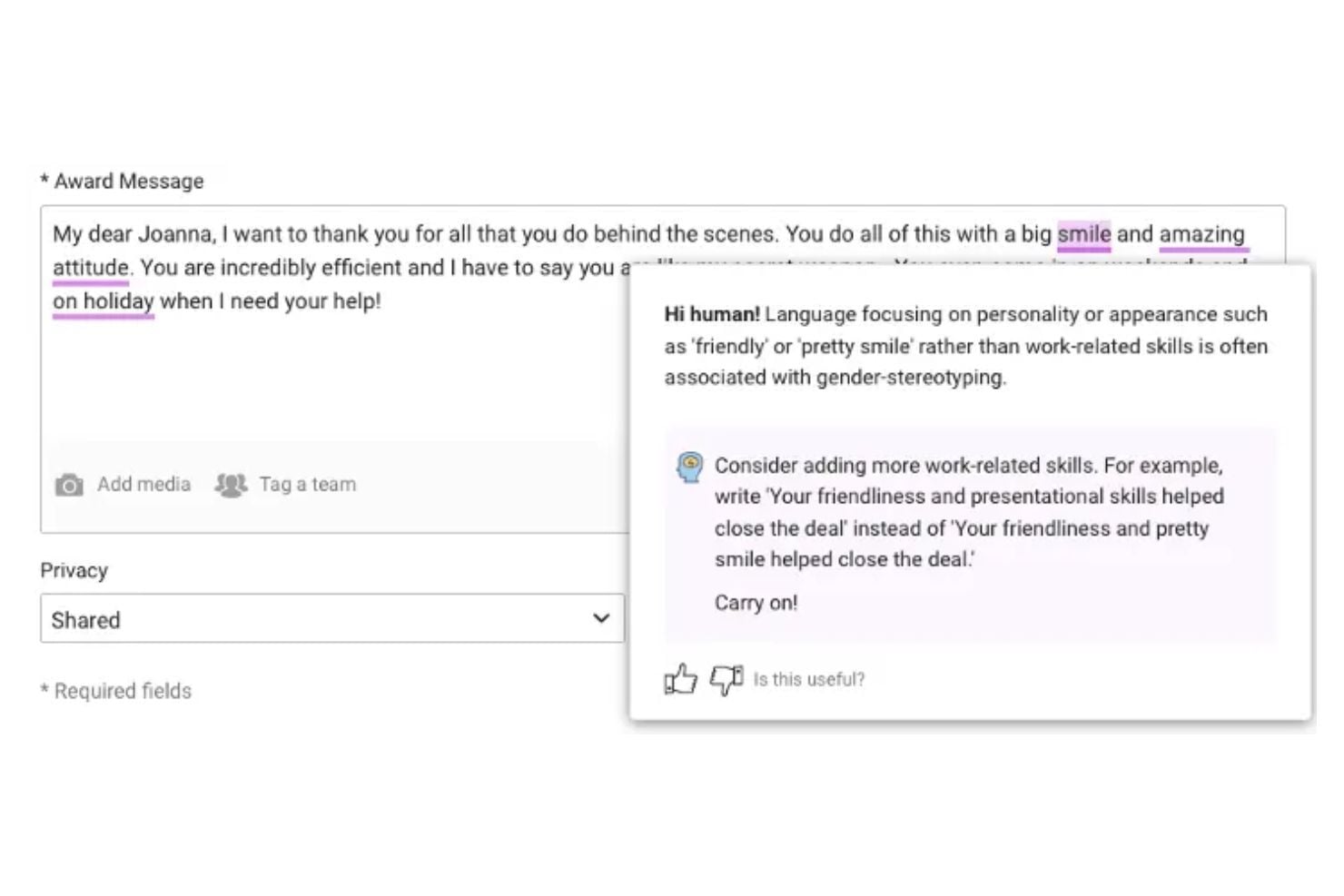
Inclusion Advisor
Combines recognition data and AI to generate insights, coach recognition messages, and connect appreciation to business outcomes.
Workhuman IQ
AI-powered analytics deliver real-time insights into retention, skills, engagement, and cultural health.
Ease of Use
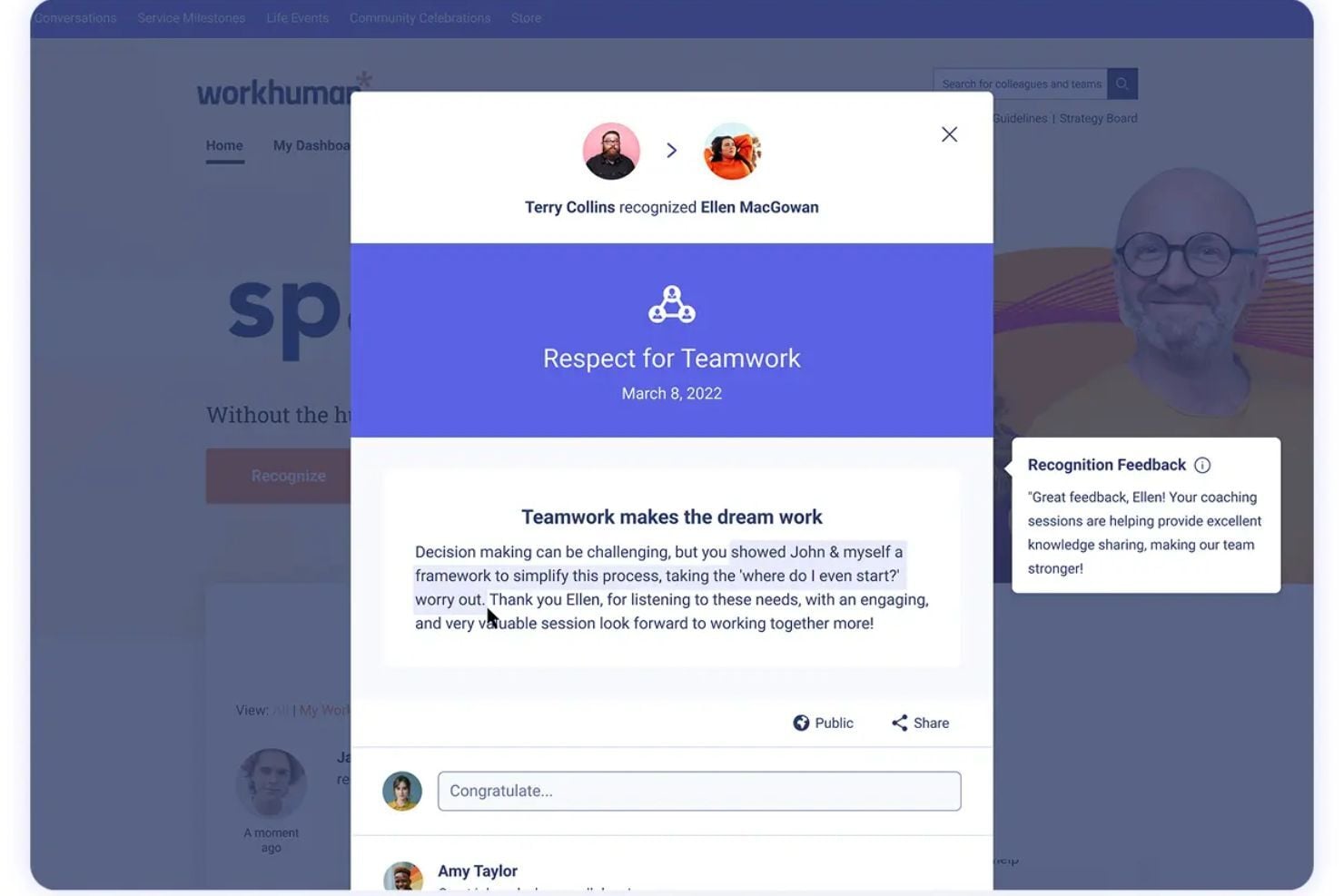
Workhuman is widely praised for its intuitive recognition flow and user-friendly interface, making it easy for employees to recognize peers, redeem awards, and participate regularly without needing support.
The platform’s visible recognition feed and simple award redemption process help drive frequent adoption, though organizations should still expect some setup and rollout effort during initial implementation.
Onboarding
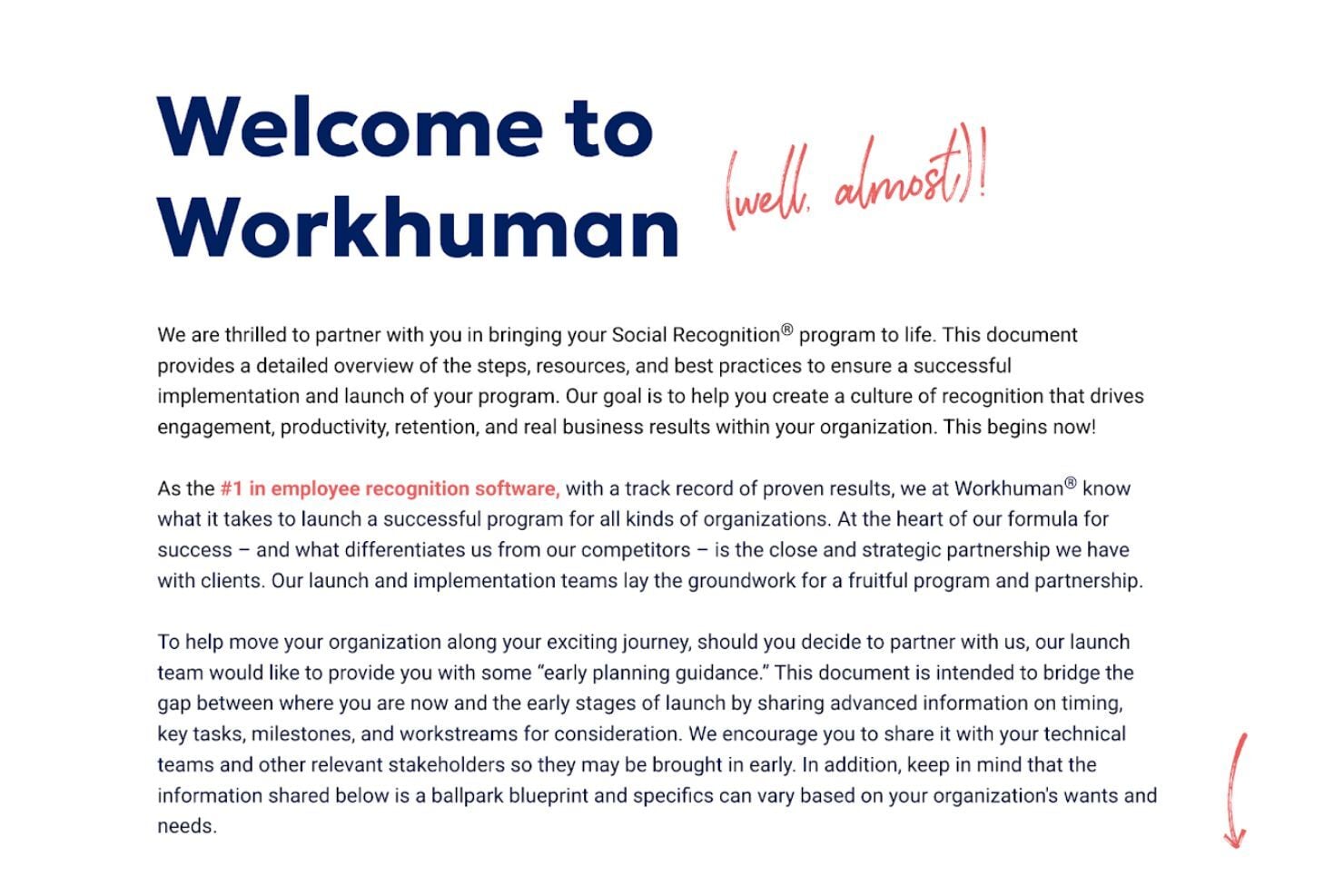
Workhuman uses a guided, consultative onboarding approach that helps organizations plan, design, and launch their recognition programs with expert support.
The rollout focuses on strategy, adoption, and long-term engagement, so implementation typically involves planning and change management rather than a quick self-serve setup.
Customer Support
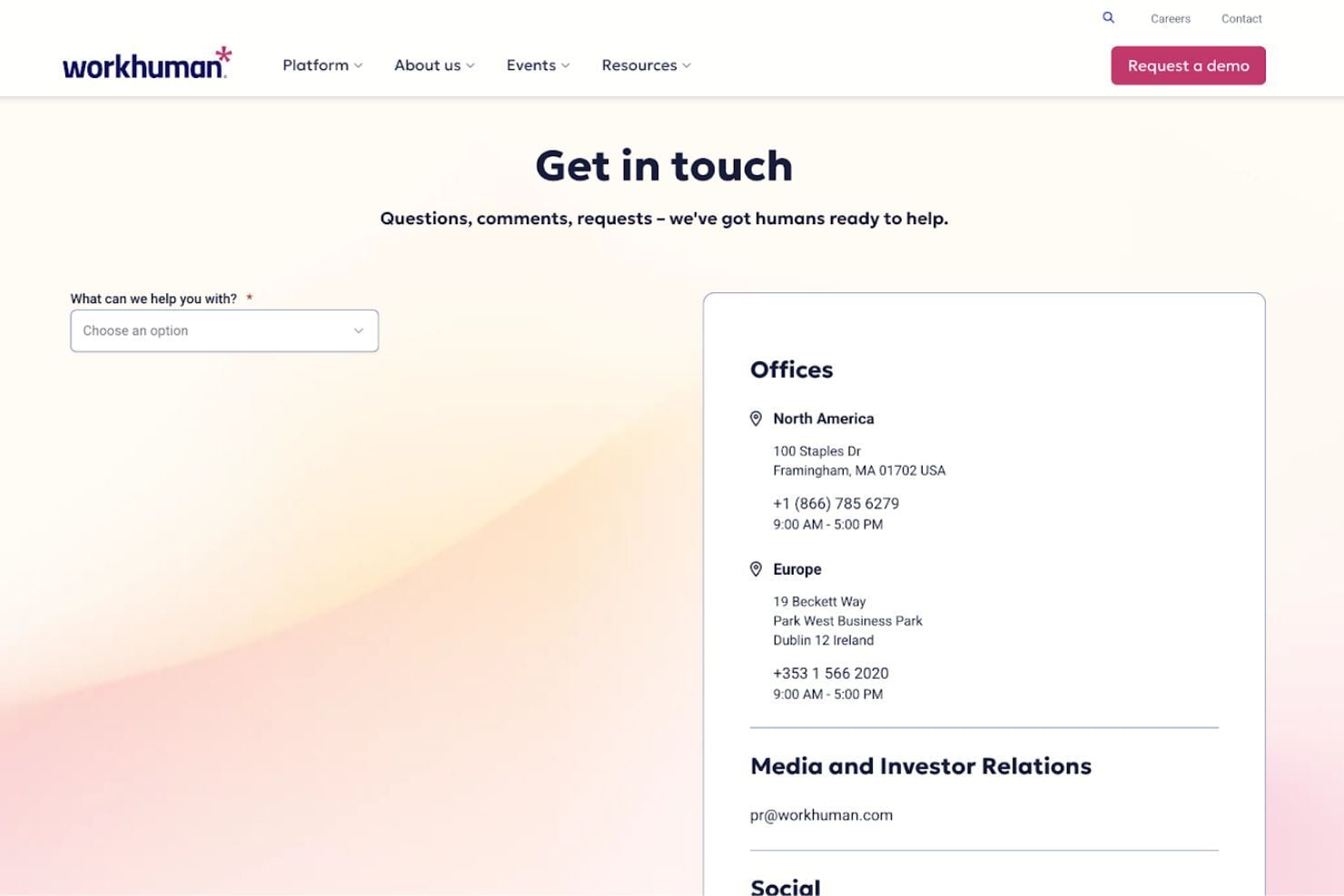
Workhuman offers support through its contact page and backs this up with an extensive library of resources, research, and educational content to help customers learn, troubleshoot, and continuously improve their recognition programs.
Integrations
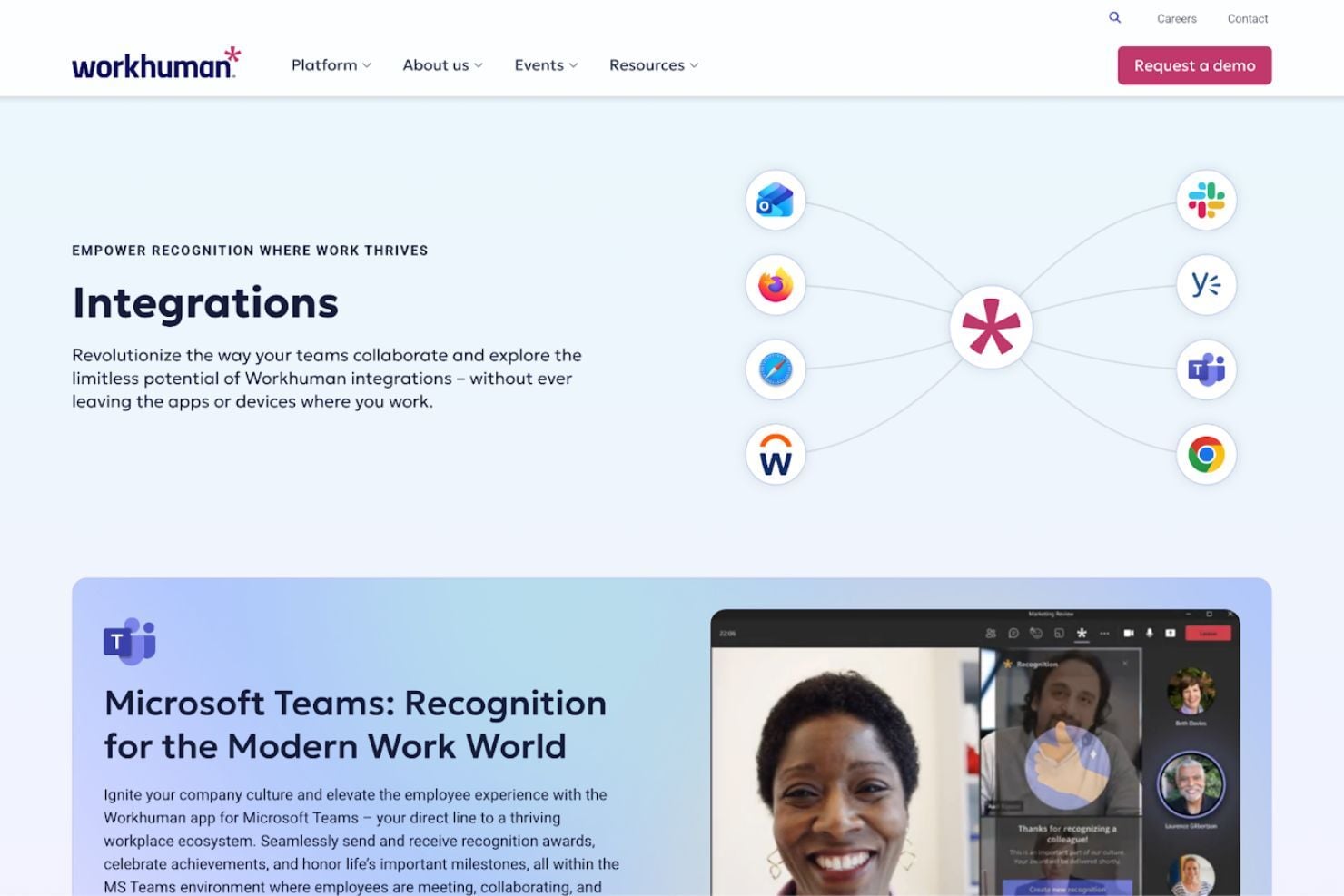
Workhuman integrates with Microsoft Teams, Slack, Microsoft Outlook, Yammer, and Workday so recognition and feedback can happen directly inside everyday work tools.
An open API is available to support custom integrations and extend the platform into additional workflows and systems.
Value for Money
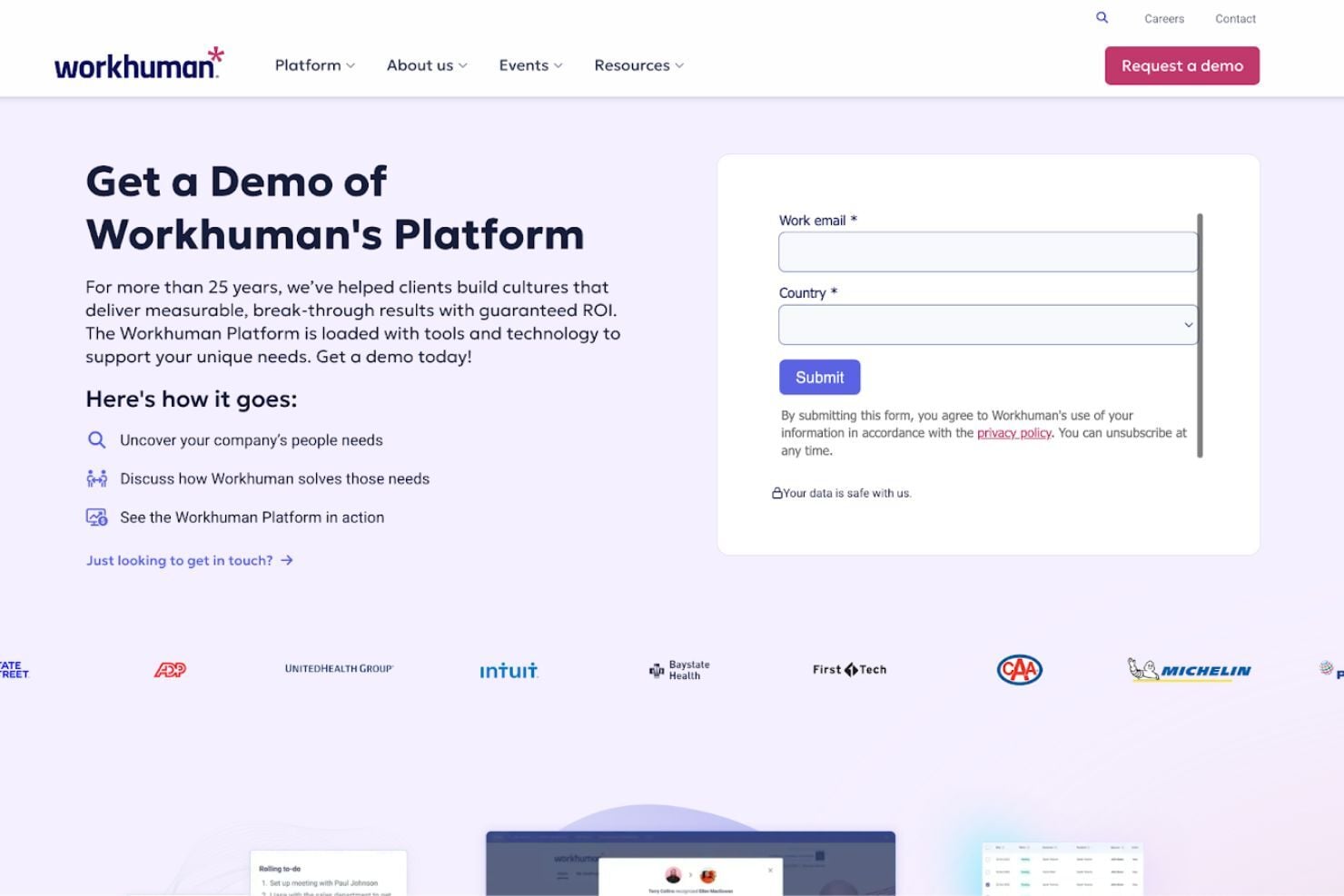
Workhuman uses a custom, demo-based pricing model, meaning you’ll need to speak with their team to receive a tailored quote based on your organization’s size, goals, and program scope.
This approach aligns with the platform’s enterprise positioning and consultative implementation model, where pricing reflects the level of customization, rewards budget, integrations, and support required to launch and scale a recognition program successfully.
Workhuman Specs
- 360 Degree Feedback
- API
- Application Tracking
- Attendance Tracking
- Budgeting
- Calendar Management
- Dashboard
- Data Export
- Data Import
- Data Visualization
- Employee Database
- Employee Engagement
- Employee Incentive Management
- Employee Onboarding
- External Integrations
- Feedback Management
- Forecasting
- Multi-User
- Notifications
- Scheduling
- Timesheets
- Vacation & Absence Calendar
Workhuman FAQs
How does Workhuman support employee engagement?
Can Workhuman be customized to fit our company culture?
How does Workhuman handle data security and compliance?
What types of reports can we generate with Workhuman?
How can Workhuman aid in employee retention?
Is Workhuman suitable for remote teams?
What support resources does Workhuman offer to new users?
Can Workhuman accommodate global companies?
Workhuman Company Overview & History
Workhuman was founded in 1999 by Eric Mosley and Eddie Reynolds and originally operated under the name Globoforce before rebranding to Workhuman in 2019.
Headquartered in Dublin, Ireland and Framingham, Massachusetts, the company has grown into an employee recognition and engagement platform serving large global organizations such as Cisco, LinkedIn, and JetBlue.
Today, Workhuman provides cloud-based solutions focused on recognition, rewards, and people analytics.
Workhuman Major Milestones
- 1999: Company founded by Eric Mosley and Eddie Reynolds.
- 2005: Expanded operations to the United States.
- 2019: Rebranded from Globoforce to Workhuman.
- 2020: Achieved a valuation of over $1 billion.
- 2023: Reported strong revenue growth with significant year-over-year increases.
- 2025: Announced the Human Intelligence 2025 release featuring expanded AI capabilities.
- 2025: Launched Workhuman Connect, a hub for HR professionals.
- 2025: Introduced a generative AI assistant within Workhuman iQ.