

10 concurrents de Workday Adaptive Planning pour la FP&A en 2026

Sélection des meilleurs concurrents de Workday Adaptive Planning


Si votre outil actuel de gestion de la performance d’entreprise vous semble difficile à gérer, vous n’êtes pas seul. Des outils comme Workday Adaptive Planning peuvent ne pas répondre à vos besoins spécifiques, laissant votre équipe faire face à des inefficacités. Vous recherchez peut-être une solution qui fournit des KPI clairs, se connecte aux systèmes ERP, CRM et RH, prend en charge la planification de scénarios, la budgétisation et les prévisions, ou inclut des fonctionnalités conçues pour votre secteur.
D’après mon expérience, trouver le bon outil peut transformer le flux de travail de votre équipe. C’est pourquoi j’ai testé et évalué indépendamment plusieurs concurrents de Workday Adaptive Planning afin d’identifier les meilleures alternatives pour différents besoins métier.
Dans cet article, je vous présenterai les principaux concurrents de Workday Adaptive Planning, en détaillant leurs points forts dans des domaines tels que la planification et l’analyse financières, la convivialité et la flexibilité de la planification. Trouvons la solution adaptée à vos défis métier pour renforcer les performances de votre équipe.
Qu’est-ce que Workday Adaptive Planning ?
Workday Adaptive Planning est un outil de gestion de la performance d’entreprise basé sur le SaaS, conçu pour aider les entreprises dans leur budgétisation, leurs prévisions et leurs rapports. Il est couramment utilisé par les professionnels de la finance, les responsables RH et les analystes métier qui ont besoin d’informations financières précises et disponibles en temps utile. Les données fournies par ces produits peuvent vous aider, vous et votre équipe, à évaluer efficacement les résultats grâce à la modélisation de scénarios et d’hypothèses.
La collaboration en temps réel, la modélisation flexible et les tableaux de bord intuitifs contribuent à simplifier les processus et à améliorer la transparence financière. Ses API et ses connecteurs permettent aux organisations d’intégrer les données de planification à d’autres systèmes, favorisant la cohérence des rapports et du processus de clôture financière. Dans l’ensemble, Workday Adaptive Planning vous fournit les outils nécessaires pour améliorer les performances de l’entreprise et aligner votre équipe sur vos objectifs stratégiques.
Résumé des meilleurs concurrents de Workday Adaptive Planning
Ce tableau comparatif résume les informations tarifaires concernant mes principaux concurrents de Workday Adaptive Planning afin de vous aider à trouver celui qui correspond le mieux à votre budget et à vos besoins métier.
| Tool | Best For | Trial Info | Price | ||
|---|---|---|---|---|---|
| 1 | Idéal pour la planification de scénarios pilotée par l’IA | Démonstration gratuite disponible | Tarification sur demande | Website | |
| 2 | Idéal pour les flux de travail FP&A automatisés | Démonstration gratuite disponible | Tarification sur demande | Website | |
| 3 | Idéal pour la collaboration à l’échelle de l’entreprise | Démo gratuite disponible | Tarification sur demande | Website | |
| 4 | Idéal pour les analyses adaptables fondées sur l’IA | Démo gratuite disponible | Tarification sur demande | Website | |
| 5 | Idéal pour les informations financières optimisées par l’IA | Démo gratuite disponible | Tarification sur demande | Website | |
| 6 | Idéal pour la gestion des liquidités et de la trésorerie | Démonstration gratuite disponible | Tarifs sur demande | Website | |
| 7 | Idéal pour la planification financière sans code | Démo gratuite disponible | Tarification sur demande | Website | |
| 8 | Idéal pour éliminer la dépendance aux feuilles de calcul | Essai gratuit et démonstration gratuite disponibles | Tarification sur demande | Website | |
| 9 | Idéal pour les grossistes et les fabricants | Démo gratuite disponible | Informations tarifaires non disponibles | Website | |
| 10 | Idéal pour la planification intégrée par IA | Démonstration gratuite disponible | Tarifs sur demande | Website |
Pourquoi faire confiance à nos avis sur les logiciels
Notre équipe teste et évalue des logiciels depuis 2012. En tant qu’experts RH nous-mêmes, nous savons à quel point il est difficile — et important — de choisir le bon logiciel.
Pour ce guide, nous avons évalué les outils grâce à des tests pratiques et une recherche indépendante, en notant les outils selon nos critères de sélection. Nous nous appuyons également sur les enseignements de leaders d’opinion du secteur et de professionnels des RH en activité.
Nos avis reflètent notre jugement éditorial humain, et non un argumentaire de vente.
Réviseurs experts:
Avis sur les meilleurs concurrents de Workday Adaptive Planning
Vous trouverez ci-dessous mes résumés détaillés des meilleurs concurrents de Workday Adaptive Planning retenus dans ma sélection. Mes avis proposent une analyse approfondie des fonctionnalités clés, des avantages et des inconvénients, des intégrations et des cas d’utilisation idéaux de chaque outil afin de vous aider à trouver celui qui vous convient le mieux, à vous et à votre équipe.

Anaplan
Idéal pour la planification de scénarios pilotée par l’IA
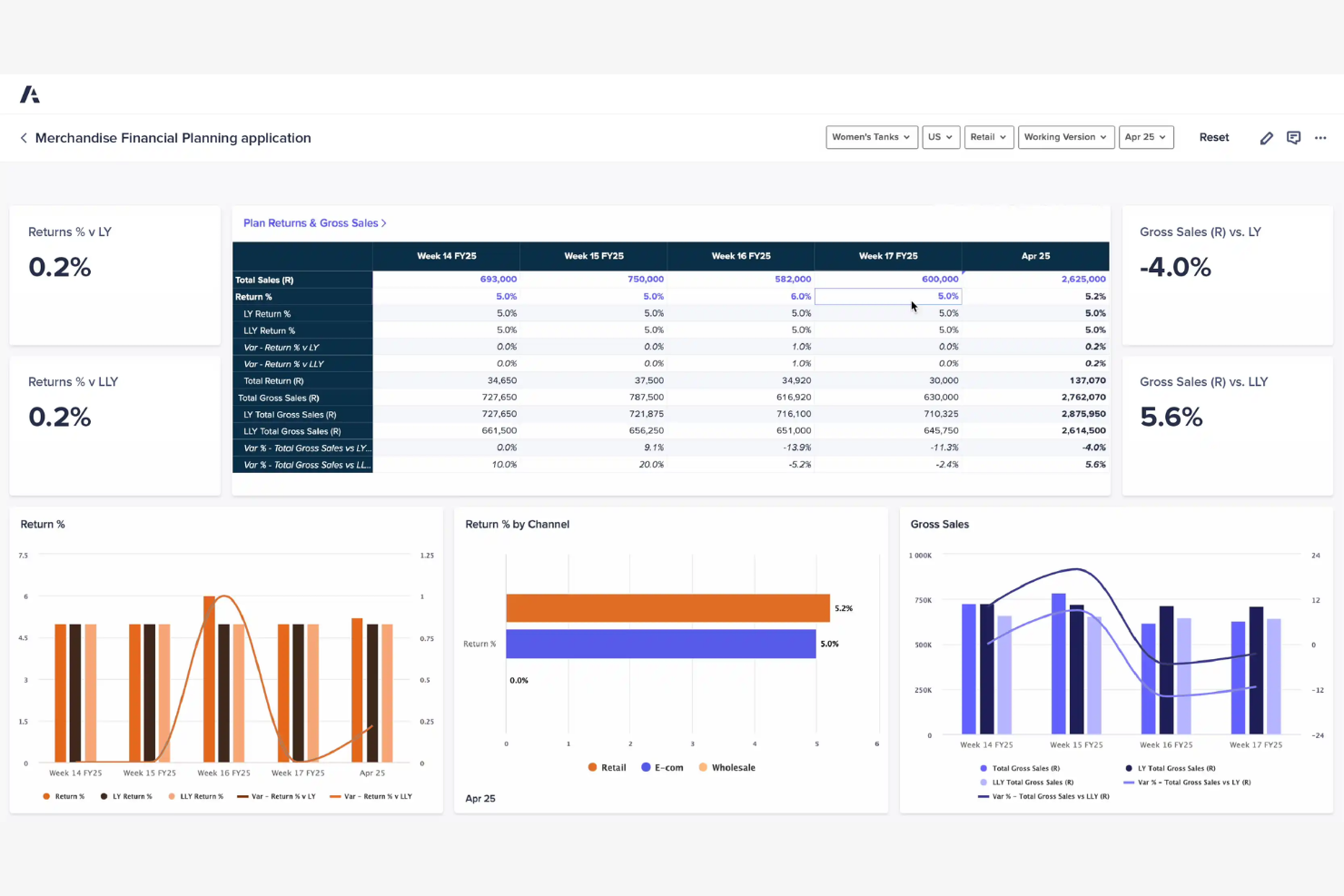
Anaplan est un outil de gestion de la performance d’entreprise basé sur le cloud qui s’adresse aux équipes financières et opérationnelles. Il se concentre sur la planification, la budgétisation et les prévisions afin d’améliorer les décisions stratégiques de l’entreprise.
Pourquoi c’est un bon concurrent de Workday Adaptive Planning : Anaplan propose une planification de scénarios pilotée par l’IA, qui vous permet de simuler différents résultats commerciaux afin d’éclairer votre processus décisionnel. Ses analyses prédictives et ses capacités avancées de modélisation fournissent des informations que Workday Adaptive Planning pourrait ne pas couvrir. En outre, Anaplan peut gérer des ensembles de données complexes et fournir rapidement des informations analytiques pertinentes. Ces fonctionnalités en font un choix solide pour les entreprises ayant besoin de solutions de planification avancées.
Fonctionnalités et intégrations remarquables :
Les fonctionnalités comprennent la planification collaborative, les analyses prédictives et la modélisation avancée. Vous pouvez impliquer plusieurs parties prenantes dans le processus de planification afin de garantir l’alignement de toutes les personnes participant au projet. La plateforme d’Anaplan permet de mettre à jour les données en temps réel, de sorte que vous disposiez toujours des informations les plus récentes à portée de main.
Les intégrations comprennent Salesforce, Workday, Microsoft Excel, Google Sheets, Oracle, Slack, Adobe et bien plus encore.
Pros and Cons
Pros:
- Gère des ensembles de données complexes
- Planification multi-utilisateur avec accès fondé sur les rôles
- Propagation instantanée des modifications de planification entre les modèles
Cons:
- Exigences élevées en matière de modélisation pour une personnalisation avancée
- Interface utilisateur complexe

Idéal pour les flux de travail FP&A automatisés

Drivetrain est une plateforme de planification et d’analyse financières conçue pour permettre aux équipes financières d’automatiser et d’optimiser leurs processus de planification. Elle se concentre sur la budgétisation, les prévisions et l’analyse financière en temps réel.
Pourquoi constitue-t-il un bon concurrent de Workday Adaptive Planning : Drivetrain fournit une intégration autonome de la FP&A, qui automatise de nombreuses tâches manuelles de la planification financière. Ses outils d’analyse et de prévision en temps réel permettent à votre équipe de prendre rapidement des décisions éclairées. La capacité de la plateforme à connecter des données provenant de diverses sources vous aide à conserver une vue approfondie de votre santé financière. L’interface conviviale de Drivetrain permet à votre équipe de s’adapter plus facilement à ses fonctionnalités et d’en tirer parti.
Fonctionnalités et intégrations remarquables :
Les fonctionnalités comprennent les prévisions automatisées, l’analyse en temps réel et la consolidation des données. Vous pouvez automatiser les tâches financières répétitives, gagner du temps et réduire les erreurs. Les analyses en temps réel de Drivetrain vous aident à suivre les tendances financières et à prendre des décisions proactives.
Les intégrations comprennent Salesforce, QuickBooks, Xero, Sage Intacct, Oracle, SAP, Workday, Google Sheets et bien plus encore.
Pros and Cons
Pros:
- Automatisation des tâches de planification financière
- Visibilité en temps réel sur l’ARR, les flux de trésorerie et les modifications des prévisions
- Consolidation facile des données
Cons:
- Une formation est nécessaire pour une utilisation optimale
- Encore en phase de maturation par rapport aux outils FP&A d’entreprise traditionnels

Board
Idéal pour la collaboration à l’échelle de l’entreprise
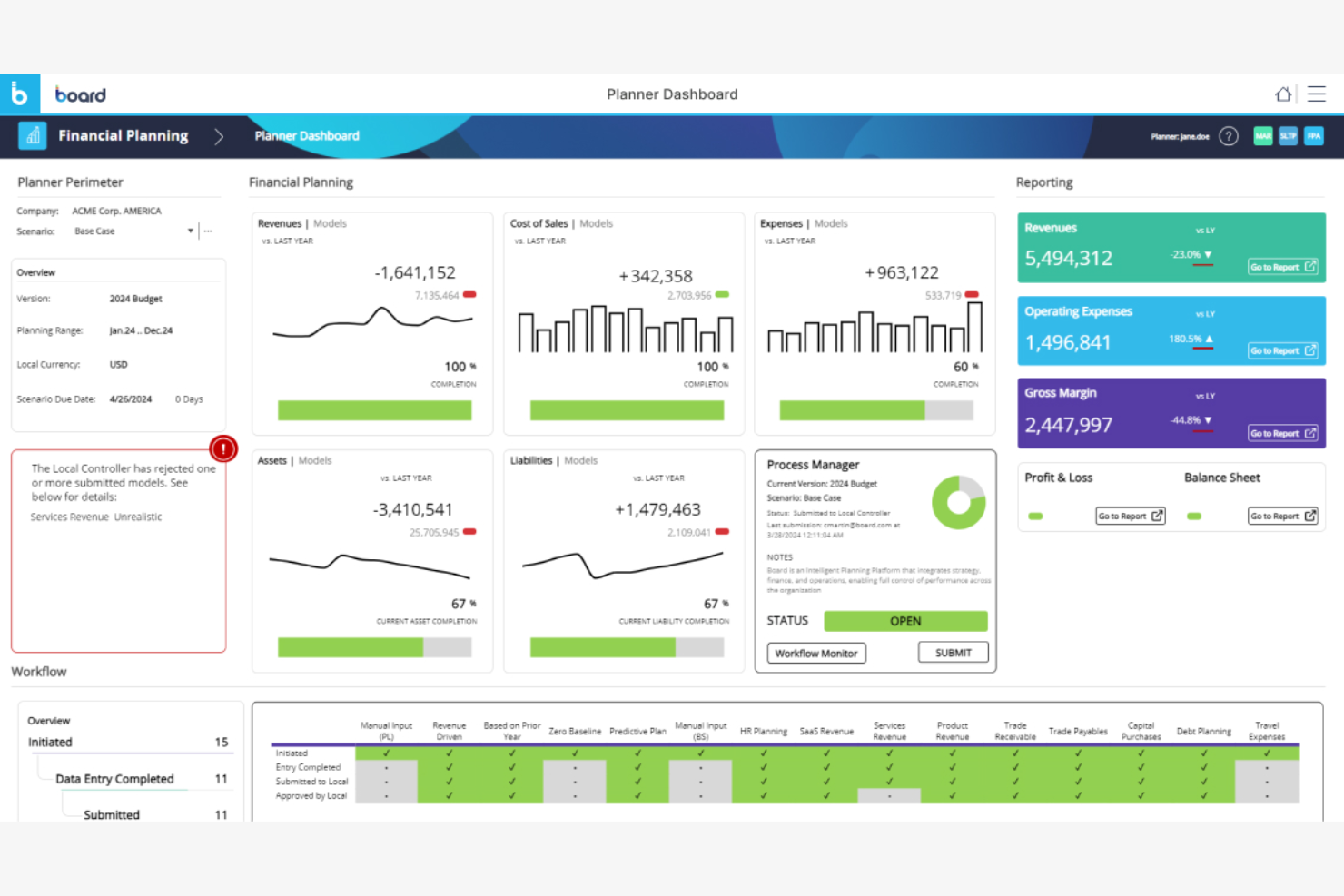
Board est une plateforme de prise de décision tout-en-un qui s’adresse aux équipes financières et opérationnelles. Elle regroupe la planification intégrée de l’entreprise, la gestion de la performance et l’analyse prédictive.
Pourquoi c’est un bon concurrent de Workday Adaptive Planning : Board excelle dans la collaboration à l’échelle de l’entreprise, permettant à plusieurs services de travailler ensemble sur une plateforme partagée. Son interface intuitive et sa fonctionnalité de glisser-déposer facilitent la création et le partage de rapports entre les équipes. De puissants outils de visualisation des données fournissent rapidement des informations utiles pour prendre des décisions éclairées, tandis que des connexions de données flexibles vous offrent une vision plus large de votre entreprise.
Fonctionnalités et intégrations remarquables :
Les fonctionnalités comprennent des tableaux de bord interactifs, la création de rapports par glisser-déposer et des analyses prédictives qui peuvent vous aider à anticiper les tendances et à prendre des décisions proactives. Les tableaux de bord personnalisables de cet outil rendent ce produit adapté à un large éventail d’équipes.
Les intégrations comprennent Microsoft Office, SAP, Google Analytics, Tableau, Power BI, et bien plus encore.
Pros and Cons
Pros:
- Tableaux de bord personnalisables et interface intuitive avec fonctionnalité de glisser-déposer
- Prend en charge la collaboration à l’échelle de l’entreprise
- Puissants outils de visualisation des données
Cons:
- Une assistance informatique peut être nécessaire pour l’intégration
- Formation nécessaire pour exploiter pleinement les capacités de modélisation

Jedox
Idéal pour les analyses adaptables fondées sur l’IA

Jedox est une plateforme de gestion de la performance destinée aux professionnels de la finance, axée sur la budgétisation, la planification et les prévisions. Elle fournit des outils permettant de consolider les processus financiers et d’améliorer la prise de décision.
Pourquoi c'est un bon concurrent de Workday Adaptive Planning : Jedox propose des analyses adaptables fondées sur l’IA, ce qui en fait une solution adaptée aux entreprises à la recherche d’informations avancées sur leurs données. Sa fonctionnalité de prévisions prédictives utilise l’IA pour permettre à votre équipe d’anticiper les tendances et d’ajuster ses stratégies en conséquence. La flexibilité de la plateforme vous permet d’adapter les solutions aux besoins de votre entreprise. Jedox associe une interface conviviale à des tableaux de bord personnalisables afin d’offrir aux équipes une vue claire des données financières et une expérience utilisateur plus fluide.
Fonctionnalités et intégrations remarquables :
Fonctionnalités comprennent des tableaux de bord personnalisables, des flux de travail automatisés et des rapports avancés. Vous pouvez configurer des flux de travail automatisés afin de réduire le travail manuel et d’accroître l’efficacité. Les outils de création de rapports avancés de Jedox pourraient améliorer l’analyse des données de votre équipe.
Intégrations comprennent Microsoft Excel, SAP, Salesforce, Tableau, Power BI, Google Analytics, Oracle et bien plus encore.
Pros and Cons
Pros:
- Analyses adaptables fondées sur l’IA
- Propose des prévisions prédictives
- Flux de modélisation et de prévision flexibles
Cons:
- Quelque peu difficile pour les nouveaux utilisateurs
- Options de visualisation basiques

Planful
Idéal pour les informations financières optimisées par l’IA

Planful est une plateforme de planification et d’analyse financières destinée aux équipes financières. Ses fonctionnalités de budgétisation, de prévision et de reporting éclairent les décisions fondées sur les données.
Pourquoi il s’agit d’un bon concurrent de Workday Adaptive Planning : Planful fournit des informations financières optimisées par l’IA, permettant à votre équipe d’exploiter des analyses fondées sur les données pour améliorer la planification. Son interface intuitive simplifie le processus budgétaire et vous aide à établir des prévisions plus précises. Les outils de reporting de la plateforme offrent des informations précieuses pour orienter votre stratégie. L’accent mis par Planful sur l’automatisation réduit les tâches manuelles, permettant à votre équipe de se concentrer sur les activités à fort impact.
Fonctionnalités et intégrations remarquables :
Les fonctionnalités comprennent le reporting automatisé, des tableaux de bord personnalisables et l’analyse prédictive. Vous pouvez automatiser les tâches répétitives et libérer du temps pour la planification stratégique. L’analyse prédictive de Planful fournit des informations qui vous aident à anticiper les tendances et à prendre des décisions proactives.
Les intégrations comprennent NetSuite, Salesforce, Microsoft Dynamics 365, SAP, Oracle, QuickBooks, Xero, Workday, Google Sheets, Slack, et bien plus encore.
Pros and Cons
Pros:
- Analyse automatisée des écarts
- Outils de budgétisation simplifiés
- Modèles de prévision configurables
Cons:
- L’effort de configuration augmente avec la complexité de la planification
- Mieux adapté aux équipes financières de taille moyenne à grande

Kyriba
Idéal pour la gestion des liquidités et de la trésorerie

Kyriba est une plateforme de gestion de trésorerie et financière basée sur le cloud, conçue pour les équipes financières. Elle se concentre sur la gestion de la trésorerie, la gestion des risques et les solutions de paiement afin d’éclairer les opérations financières.
Pourquoi c’est un bon concurrent de Workday Adaptive Planning : Kyriba excelle dans la gestion des liquidités et de la trésorerie, en proposant des outils qui améliorent la visibilité sur les liquidités et les prévisions. Ses capacités de gestion de trésorerie en temps réel aident votre équipe à prendre rapidement des décisions éclairées. Les fonctionnalités de gestion des risques de Kyriba protègent votre entreprise contre les menaces financières et garantissent la conformité réglementaire. Les solutions de paiement de la plateforme offrent des processus intuitifs et des fonctionnalités de sécurité efficaces, ce qui en fait un choix solide pour les organisations ayant des besoins financiers complexes.
Fonctionnalités et intégrations remarquables :
Les fonctionnalités comprennent les prévisions de trésorerie, la gestion des risques et l’automatisation des paiements. La visibilité claire sur la trésorerie offerte par cet outil le rend particulièrement adapté pour aider votre équipe à prendre des décisions financières. L’automatisation des paiements de Kyriba réduit les erreurs manuelles et accroît l’efficacité des opérations financières.
Les intégrations comprennent Microsoft Dynamics 365, NetSuite, QuickBooks, Salesforce, Sage Intacct, Google Workspace, et bien plus encore.
Pros and Cons
Pros:
- Solides outils de gestion des liquidités
- Gestion de trésorerie en temps réel
- Fonctionnalités étendues de gestion des risques
Cons:
- Les tarifs et la mise en place peuvent dépasser les besoins d’une petite équipe
- Une assistance informatique peut être nécessaire pour la personnalisation

Cube
Idéal pour la planification financière sans code
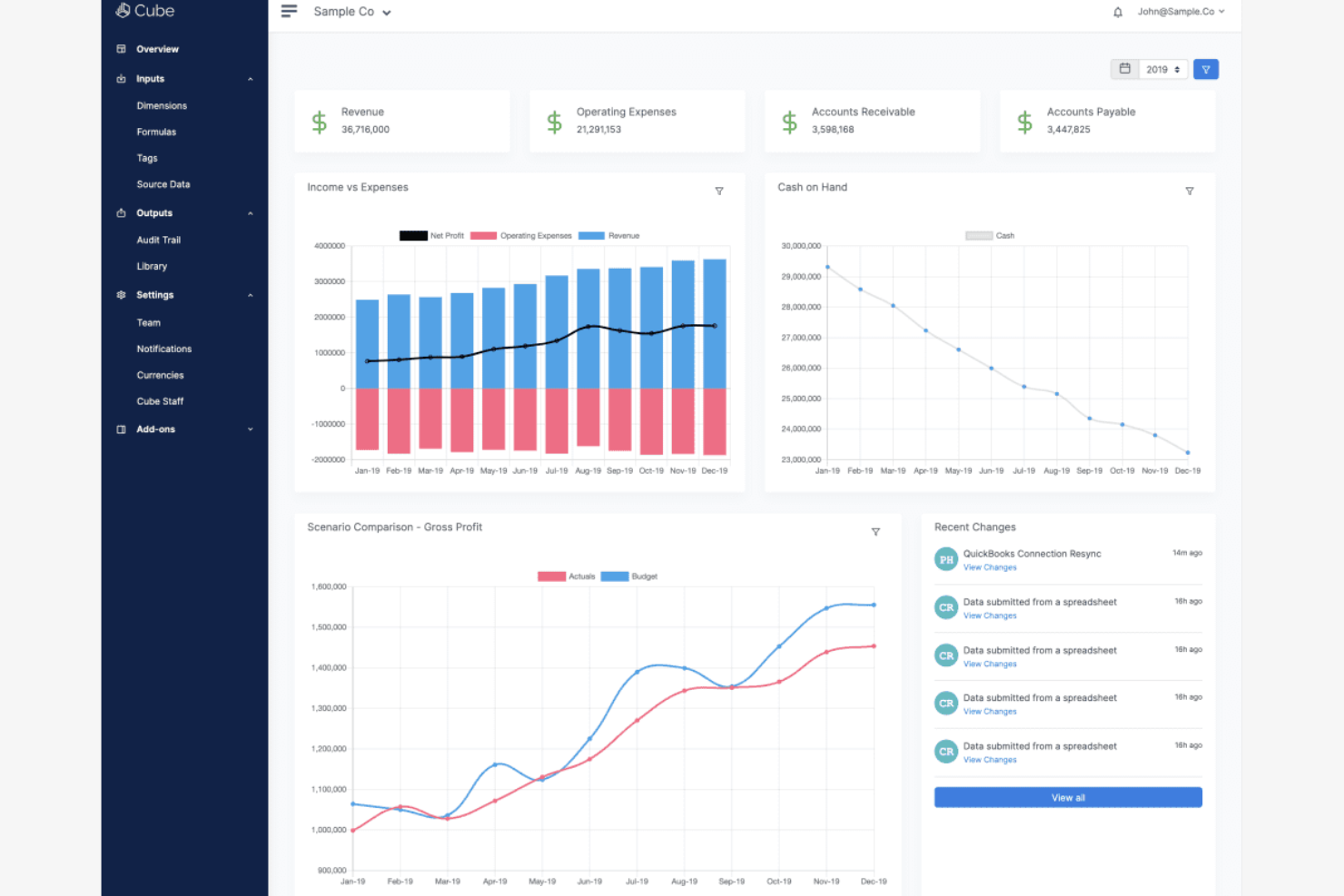
Cube est une plateforme de planification et d’analyse financières conçue pour les équipes financières. Elle facilite la budgétisation, les prévisions et la création de rapports sans nécessiter de connaissances approfondies en programmation.
Pourquoi c’est un bon concurrent de Workday Adaptive Planning : Cube propose une solution de planification financière sans code qui simplifie les tâches financières complexes. Son interface conviviale permet à votre équipe de créer des modèles et des rapports sans expertise technique. Les mises à jour des données en temps réel garantissent que vous disposez toujours des informations financières les plus récentes. La flexibilité de Cube lui permet de répondre aux besoins d’une grande variété d’entreprises, ce qui en fait un excellent choix pour celles qui souhaitent gérer leurs processus financiers plus efficacement.
Fonctionnalités et intégrations remarquables :
Les fonctionnalités comprennent la génération automatisée de rapports, des tableaux de bord personnalisables et des mises à jour des données en temps réel. Cube peut automatiser les tâches répétitives, vous permettant de consacrer davantage de temps à la planification stratégique. Les tableaux de bord personnalisables de cet outil vous permettent d’adapter la plateforme à vos besoins spécifiques.
Les intégrations comprennent QuickBooks, Xero, Sage Intacct, Microsoft Dynamics 365, Salesforce, Google Sheets et bien plus encore.
Pros and Cons
Pros:
- Aucun codage requis
- Synchronisation continue des données entre les outils connectés
- Remplace les flux de travail de planification utilisant plusieurs feuilles de calcul
Cons:
- Analyses avancées limitées
- Ne convient pas aux très grandes entreprises

Idéal pour éliminer la dépendance aux feuilles de calcul

Limelight est une plateforme de planification et d’analyse financière conçue pour les équipes financières. Elle contribue à automatiser la budgétisation, les prévisions et les rapports, réduisant ainsi le recours aux feuilles de calcul.
Pourquoi il constitue une bonne alternative à Workday Adaptive Planning : Limelight élimine la dépendance aux feuilles de calcul en proposant des processus financiers automatisés. Ses mises à jour des données en temps réel permettent à votre équipe de prendre des décisions éclairées sans mises à jour manuelles des feuilles de calcul. L’interface conviviale de la plateforme facilite la collaboration entre les services, afin que tout le monde dispose des mêmes informations. L’accent mis par Limelight sur l’automatisation contribue à simplifier vos opérations financières.
Fonctionnalités et intégrations remarquables :
Les fonctionnalités comprennent l’automatisation des flux de travail et les mises à jour des données en temps réel. Ce produit propose des options permettant d’automatiser les tâches répétitives, ce qui peut vous aider à gagner du temps et à réduire les erreurs. En outre, les rapports dynamiques de Limelight fournissent des informations qui vous aident à prendre des décisions éclairées.
Les intégrations comprennent NetSuite, QuickBooks, Xero, Microsoft Dynamics, SAP, Oracle, Salesforce, Google Sheets, Workday, Sage Intacct, et bien d’autres.
Pros and Cons
Pros:
- Élimine la dépendance aux feuilles de calcul
- Actualisation automatique des modèles à partir des systèmes sources
- Prend en charge la collaboration entre les services
Cons:
- La configuration initiale peut être longue
- Légère courbe d’apprentissage pour les utilisateurs non financiers

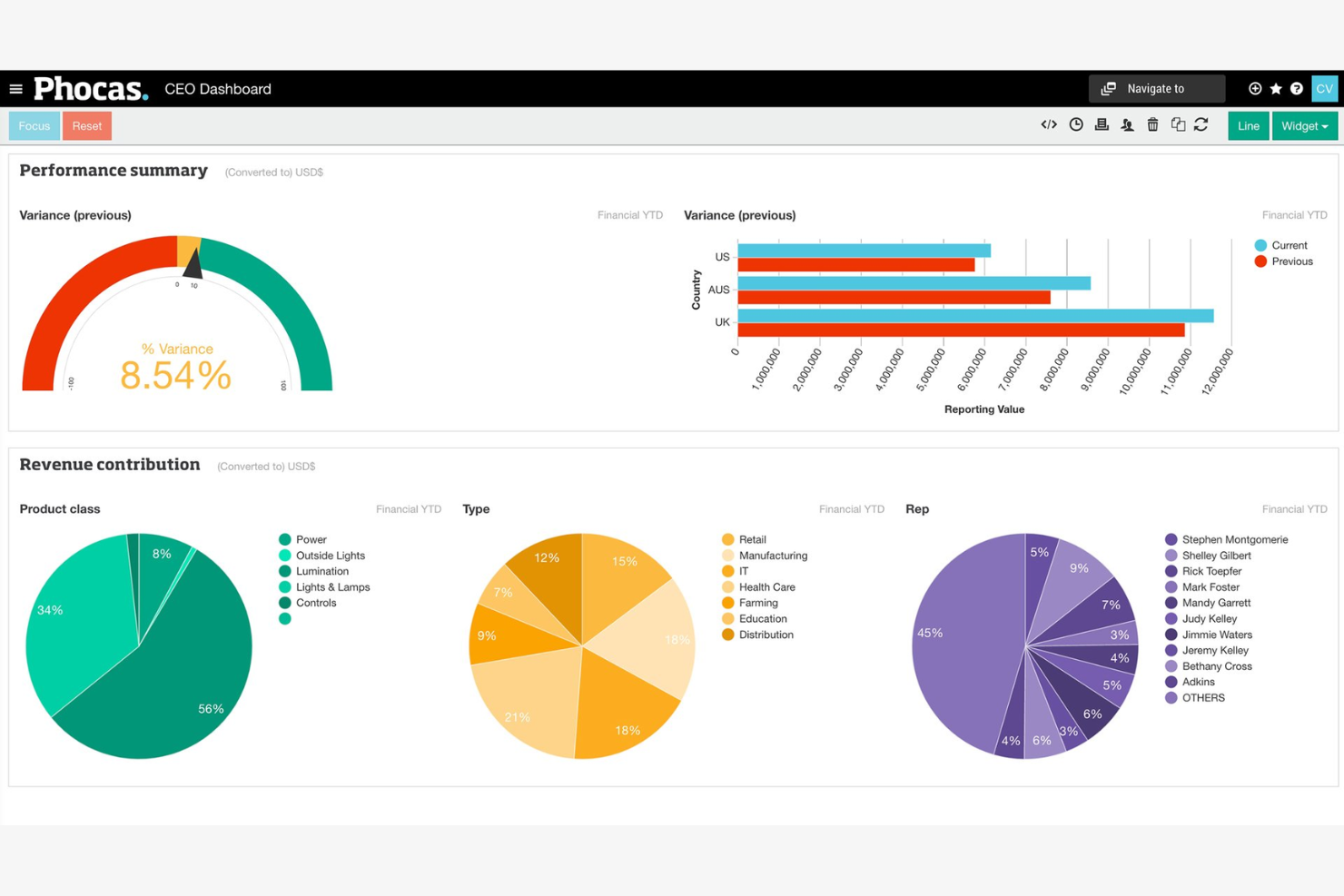
Phocas est une plateforme de veille stratégique et d’analyse de données destinée aux grossistes et aux fabricants. Elle aide ces entreprises à analyser leurs données relatives aux ventes, aux stocks et aux finances afin d’améliorer leur prise de décision.
Pourquoi c’est un bon concurrent de Workday Adaptive Planning : Phocas est conçu pour les secteurs de la vente en gros et de la fabrication, et fournit des informations spécifiques sur la gestion des ventes et des stocks. Ses tableaux de bord intuitifs permettent à votre équipe de visualiser les données et de repérer les tendances. Les outils de reporting de la plateforme vous aident à examiner vos données en profondeur afin de réaliser une analyse approfondie. La capacité de Phocas à gérer de grands ensembles de données en fait un excellent choix pour les entreprises ayant des besoins complexes en matière de données.
Fonctionnalités et intégrations remarquables :
Les fonctionnalités comprennent des tableaux de bord personnalisables, des rapports détaillés et la visualisation des données. Vous pouvez créer des tableaux de bord adaptés aux besoins spécifiques de votre équipe. Les outils de reporting détaillés de Phocas vous permettent d’analyser les données en profondeur lors de l’élaboration de votre stratégie commerciale.
Les intégrations comprennent SAP, Microsoft Dynamics, NetSuite, plusieurs ERP Sage, Infor, Epicor, MYOB, Pronto ERP, SYSPRO ERP, QuickBooks, et bien plus encore.
Pros and Cons
Pros:
- Adapté à des secteurs spécifiques
- Gère de grands ensembles de données
- Outils de reporting détaillés
Cons:
- Les fonctionnalités avancées de reporting nécessitent un accompagnement initial
- Nécessite une formation continue des utilisateurs


Pigment est une plateforme de planification et de prévision financière adaptée aux équipes financières et opérationnelles. Elle fournit des outils de budgétisation, d’analyse de scénarios et de visualisation des données pour faciliter la prise de décisions stratégiques.
Pourquoi c’est un bon concurrent de Workday Adaptive Planning : Pigment propose une planification intégrée par IA, permettant à votre équipe de tirer parti d’analyses avancées pour prendre de meilleures décisions. Ses outils d’analyse de scénarios vous aident à explorer différentes évolutions possibles de l’entreprise et à ajuster vos stratégies en conséquence. L’interface intuitive de Pigment simplifie les processus de planification et offre des options de collaboration. L’accent mis par la plateforme de planification sur la visualisation des données est conçu pour faciliter l’utilisation et présenter clairement les informations clés.
Fonctionnalités et intégrations remarquables :
Les fonctionnalités comprennent la modélisation de scénarios, la collaboration en temps réel et les tableaux de bord interactifs. Vous pouvez impliquer votre équipe dans une planification collaborative et vous adapter rapidement aux changements. Les tableaux de bord interactifs de Pigment facilitent la visualisation des données et le partage des informations clés.
Les intégrations comprennent Salesforce, NetSuite, Google Sheets, Microsoft Excel, QuickBooks, Xero, Workday, Oracle, SAP, Slack, et bien plus encore.
Pros and Cons
Pros:
- Planification intégrée par IA
- Prend en charge l’analyse de scénarios
- Puissants outils de visualisation des données
Cons:
- Courbe d’apprentissage pour les modèles complexes
- Moins d’extensions tierces que les plateformes historiques
Autres concurrents de Workday Adaptive Planning
Voici quelques autres concurrents de Workday Adaptive Planning qui ne figurent pas dans ma sélection, mais qui méritent tout de même votre attention :
- Prophix One
Idéal pour les processus financiers pilotés par l'IA
- IBM Planning Analytics
Idéal pour la planification optimisée par l’IA
- Microsoft Power BI
Idéal pour la visualisation des données en complément des outils de planification


Come valuto i competitor di Workday Adaptive Planning
Valuto questi strumenti su due livelli: le capacità di base che uno strumento deve avere, come la modellazione dell'organico e il budgeting della retribuzione, e gli elementi che differenziano una piattaforma dall'altra.
Funzionalità core (requisiti fondamentali per questa lista)
Quando seleziono gli strumenti per la mia lista, valuto ciascuno su una scala da 0 (non offre la funzionalità) a 5 (eccelle in quest'area) per ogni funzionalità core elencata di seguito. Poi, calcolo il punteggio totale dello strumento come percentuale. Ogni strumento deve ottenere un punteggio totale minimo del 65% per essere preso in considerazione.
- Pianificazione della forza lavoro: Cerco la possibilità di prevedere il numero di dipendenti a livello di posizione con supporto a scenari multidipartimentali, come la modellazione dell'assunzione di un nuovo team di prodotto su quattro trimestri.
- Modellazione finanziaria: Ogni strumento dovrebbe offrire modellazione multi-scenario basata su driver che colleghi i piani delle risorse umane al conto economico e ai flussi di cassa oltre i modelli statici.
- Pianificazione delle retribuzioni e dei premi: Valuto quanto in modo granulare ogni piattaforma gestisce la pianificazione di salari, bonus e cicli di merito—fino al singolo dipendente, non solo ai centri di costo.
- Integrazioni HRIS & Payroll: Qui sono importanti i connettori predefiniti a piattaforme come BambooHR, ADP, SAP SuccessFactors e UKG, insieme alla sincronizzazione con ERP e GL.
- Budgeting & previsioni: Le previsioni continue con analisi delle varianze e workflow collaborativi hanno la priorità rispetto agli strumenti che supportano solo un singolo ciclo di budget annuale.
- Reporting & dashboard: Controllo la presenza di dashboard configurabili e in tempo reale con drill-down sui costi del personale e KPI delle risorse umane, invece di semplici esportazioni di report statici predefiniti.
Una volta che ho una lista di strumenti che soddisfano questi criteri, considero cosa distingue ogni piattaforma.
Fattori differenzianti (cosa distingue i fornitori)
Ecco come confronto e metto a confronto i diversi fornitori:
Funzionalità distintive
Le previsioni basate su intelligenza artificiale sono un grande fattore distintivo: strumenti che utilizzano dati storici di turnover e assunzioni per prevedere il tasso futuro di abbandono fanno risparmiare alle risorse umane settimane di analisi manuale. Cerco anche un sandbox dedicato alla pianificazione degli scenari dove sia possibile simulare una ristrutturazione o un RIF senza modificare i dati reali. I dati di benchmarking integrati sono importanti, poiché benchmark interni su retribuzioni e rapporto tra persone riducono le esportazioni di fogli di calcolo da sondaggi di terzi.
Oltre alle funzionalità
I tempi di implementazione variano molto in questo settore, quindi verifico se il fornitore offre template predefiniti per la pianificazione HR che accelerano il go-live rispetto all'obbligo di costruire modelli personalizzati per mesi. Presto molta attenzione anche al costo totale di proprietà: alcune piattaforme sembrano convenienti all'inizio, ma richiedono consulenti per ogni modifica ai modelli. La sicurezza è cruciale quando si gestiscono dati sensibili sulle retribuzioni, quindi valuto la conformità SOC 2 Tipo II e i controlli di accesso a ruoli che limitano la visibilità sui salari in base al ruolo.
Pourquoi rechercher des concurrents de Workday Adaptive Planning ?
Bien que Workday Adaptive Planning soit un bon choix pour la gestion de la performance d’entreprise, plusieurs raisons peuvent pousser certains utilisateurs à rechercher d’autres plateformes de planification pour leur entreprise. Vous cherchez peut-être une alternative parce que…
- Vous avez besoin de davantage d'options de personnalisation.
- Votre équipe a besoin d'interfaces utilisateur plus simples.
- Vous recherchez de meilleures capacités d'intégration.
- Vous avez besoin de forfaits tarifaires plus abordables.
- Votre entreprise nécessite une plus grande évolutivité.
- Vous avez besoin d'outils de visualisation des données plus performants.
Si l'un de ces éléments vous correspond, vous êtes au bon endroit. Ma liste comprend plusieurs solutions de gestion de la performance d'entreprise mieux adaptées aux équipes qui recherchent un nouveau produit de gestion de la performance pour relever ces défis.
Fonctionnalités clés de Workday Adaptive Planning
Voici quelques-unes des principales fonctionnalités de Workday Adaptive Planning, afin de vous aider à comparer les solutions alternatives et à évaluer ce qu'elles proposent :
- Planification financière : améliore la gestion et les rapports financiers, en aidant votre équipe à gérer efficacement les budgets.
- Planification des effectifs : facilite la gestion des effectifs et l'allocation des ressources afin de favoriser l'efficacité.
- Planification opérationnelle : soutient l'efficacité opérationnelle et la planification stratégique, en vous aidant à aligner les opérations sur les objectifs.
- Planification des scénarios : vous permet d'explorer différents résultats commerciaux, contribuant ainsi à la prise de décisions stratégiques.
- Clôture et consolidation : facilite les processus de clôture financière et la consolidation des données.
- Analyses basées sur l'IA : fournit une analyse des données en temps réel pour soutenir le processus décisionnel de votre équipe.
Et maintenant :
Si vous êtes en train d'étudier la gestion de la performance d'entreprise, contactez gratuitement un conseiller SoftwareSelect pour obtenir des recommandations.
Vous remplissez un formulaire et échangez brièvement avec un conseiller, qui étudie en détail vos besoins. Vous recevrez ensuite une sélection de logiciels à examiner. Les conseillers vous accompagneront même tout au long du processus d'achat, y compris lors des négociations tarifaires.