

10 Key Employer of Record Features To Look For in a Platform

The right employer of record services can be the difference between a global hiring strategy that works and one that quietly unravels. Whether you're hiring across two countries or twenty, your EOR platform has to handle the heavy lifting—global payroll processing, local tax and statutory compliance, employment contracts, and more—without gaps that expose your business to risk.
Not every platform delivers on all of these fronts equally. This article breaks down the 10 key employer of record features to evaluate before you commit, so you can make a confident, informed choice for your team.
Features are only one part of the decision. If you’re actively comparing providers, our guide to how to choose an employer of record covers the broader evaluation process, including country coverage, compliance expertise, support, integrations, and pricing.

10 Essential Employer of Record Features Explained
Here’s a closer look at the 10 features every employer of record platform should offer, how each one works, and why it matters for your team:
1. Global Payroll Processing
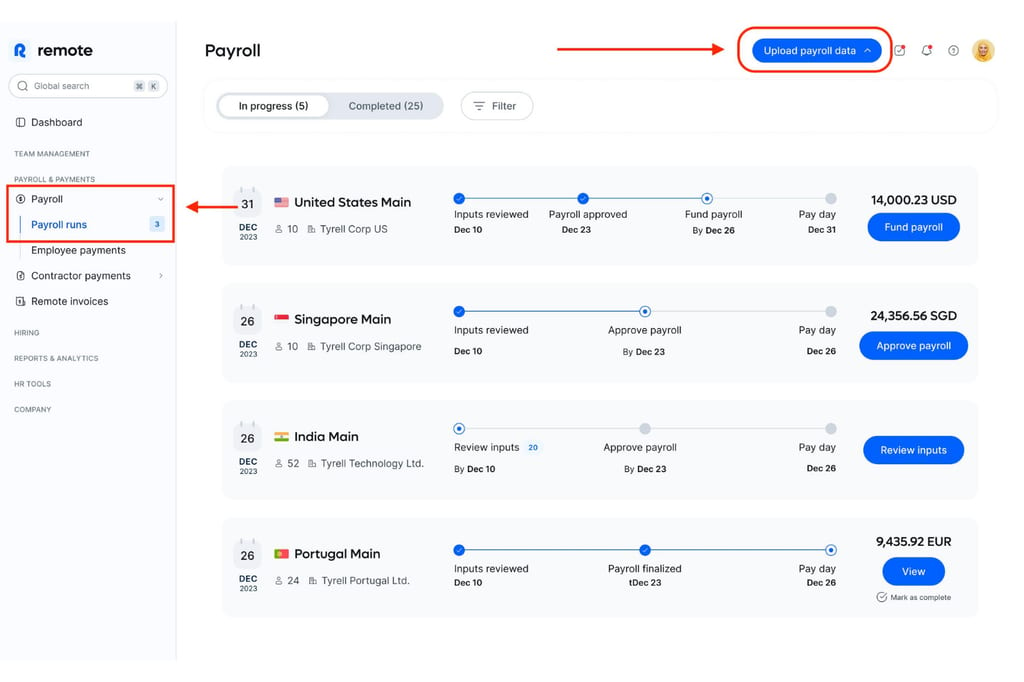
Global payroll processing is the EOR's core engine. The platform calculates salaries, withholds taxes, handles statutory deductions, and delivers payments in local currencies—all without you needing a legal entity in each country.
In my experience, this is where platform quality really shows itself. Every country has its own tax regimes, reporting timelines, and social contribution rules. A strong EOR handles all of that automatically, so your team members get paid accurately and on time, no matter where they are.
Here's what a solid global payroll processing feature set should include:
- Local currency payments: The platform pays employees in their home currency, handling exchange rates automatically—not something you want to manage manually across dozens of countries.
- Tax withholding and remittance: The EOR calculates and submits taxes to the correct local authorities, including income tax and social contributions.
- Payslip generation: Employees receive locally compliant pay slips, formatted to country-specific standards.
- Multi-country payroll calendars: Pay cycles vary by country. A strong EOR handles weekly, biweekly, and monthly schedules without you tracking each one.
- Payroll reporting: You get consolidated visibility across all markets from one dashboard.
Good data management practices are needed for keeping data safe and accurate throughout its lifecycle.

Centralized data matters as much as the individual payroll features. Teresa Smith, Director of the HCM Strategic Advisory Group at UKG, emphasizes the importance of keeping HR, payroll, and related workforce data in one place so teams have a consistent way to collect, review, and report on it.
2. Local Tax and Statutory Compliance
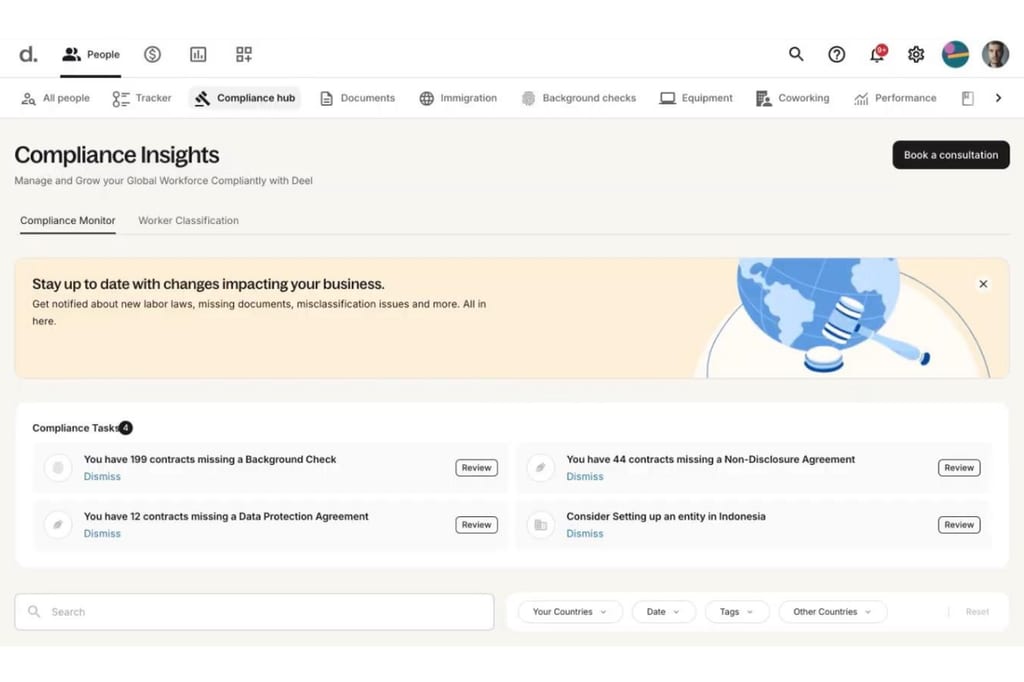
This feature is the legal backbone of any EOR platform. The EOR registers with local tax authorities, withholds income tax, remits social contributions, and files the required statutory returns on your behalf—across every country where you have workers.
What I find most valuable here is the proactive monitoring. Tax rules change, and a good EOR platform tracks those changes automatically, so your filings stay accurate without you having to chase updates. That kind of built-in compliance visibility is what gives you real confidence when hiring across borders.
These capabilities also need to meet the legal and operational requirements for employer of record services in each country where you hire, from tax registration and statutory contributions to compliant contracts and recordkeeping.
Here's what a solid local tax and statutory compliance feature set should cover:
- Tax authority registration: The EOR registers with local tax authorities on your behalf, so you can hire without setting up a legal entity first.
- Income tax withholding and remittance: Taxes are calculated and submitted to the correct local authority each pay cycle—not left to you to sort out.
- Social contribution management: Platforms like Oyster HR and Papaya Global handle country-specific contributions, including pension and healthcare, to meet local standards.
- Statutory benefits enrollment: Mandatory benefits are administered automatically as part of onboarding.
- Audit-ready recordkeeping: Payroll records and statutory filings are centralized, so you're prepared if a labor inspector or tax auditor comes knocking.
3. Employee Benefits Administration
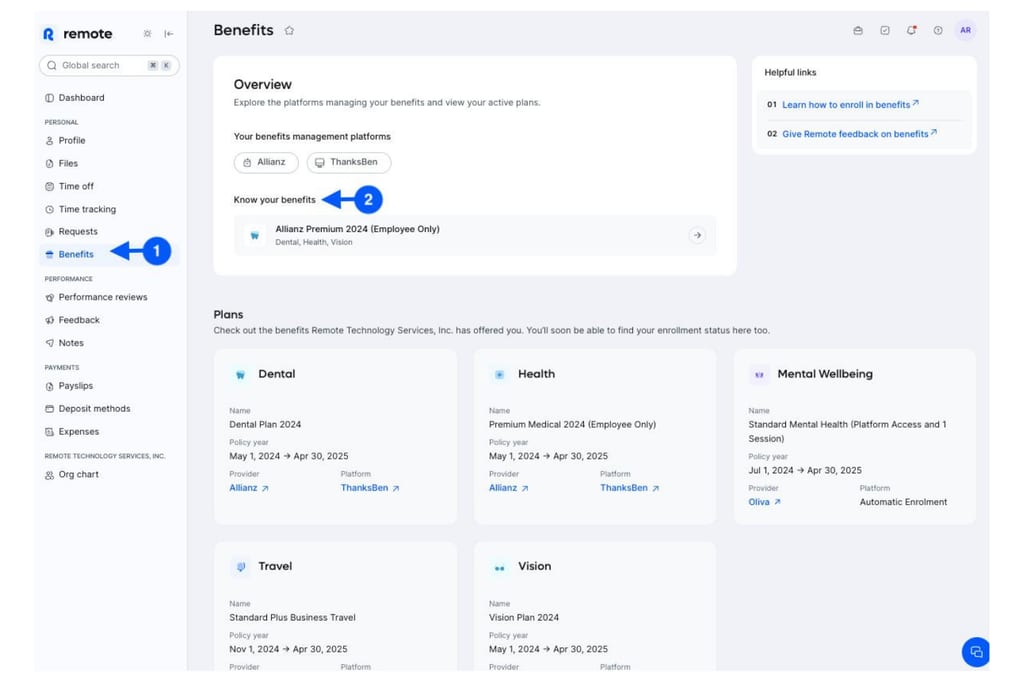
Employee benefits administration is how an EOR manages both statutory and supplemental benefits on your behalf—covering everything from mandatory health insurance and pension contributions to paid leave and supplemental perks.
That reduction in internal administration is also one of the broader benefits of using an employer of record, alongside faster international hiring, local compliance support, and avoiding the need to establish entities in every market.
What I find most useful here is that the EOR essentially acts as a benefits broker and administrator in one. Rather than researching country-specific benefit norms yourself, the platform handles enrollment, adjustments, and compliance for each market. In my experience, this feature alone saves significant coordination overhead, especially as your team grows across multiple countries.
Here's what a solid employee benefits administration feature set should cover:
- Statutory benefits enrollment: Mandatory benefits—pension, healthcare, social contributions—are configured and enrolled automatically during onboarding, so nothing falls through the cracks when a new hire starts.
- Supplemental benefits options: Platforms like Deel and Oyster HR let you layer in optional health insurance and equity plans to build competitive packages by country.
- Benefits benchmarking: Look for tools that surface what's standard versus competitive in a given market, so you're not guessing when you make an offer.
- Life-event updates: When an employee's situation changes—marriage, dependents—the platform should sync those updates across benefits and payroll without manual workarounds.
4. Localized Employment Contract Management

The EOR drafts and manages employment contracts on your behalf, built to meet the specific legal requirements of each country where you hire. That means the right notice periods, mandatory clauses, and locally compliant language—already built in.
What I value most here is that you're not starting from scratch every time you hire somewhere new. As labor laws change, a good EOR monitors updates and revises contracts and policies accordingly. Approvals and signatures are collected in legally recognized formats, with every step timestamped and properly stored. That's a level of audit readiness you'd struggle to replicate manually.
Here's what a solid localized employment contract management feature set should cover:
- Country-specific templates: The platform generates contracts pre-built to local labor law requirements—notice periods, mandatory clauses, and compliant language included. Deel, for example, auto-generates country-localized contracts in minutes.
- E-signature collection: Employees sign directly in the platform, with every action timestamped for audit readiness.
- Statutory document requests: The EOR prompts new hires to upload required local documentation during onboarding, cutting out manual follow-up.
- Law change monitoring: Contract terms update automatically when local regulations shift—you're not left chasing amendments on your own.
5. Visa and Immigration Support

Visa and immigration support is how an EOR acts as the legal sponsor for work permits and visa applications on your behalf—handling government filings, documentation requests, and compliance with local immigration rules so you can hire or relocate international talent without needing a local entity.
In my experience, this feature removes one of the most time-consuming parts of international hiring. The EOR manages the entire process end-to-end, including renewals, and stays current on regulatory changes so your approvals don't stall over outdated procedures.
Here's what a solid visa and immigration support feature set should cover:
- Work permit sponsorship: The EOR acts as the legal employer of record for immigration purposes, filing permit applications directly with local authorities on your behalf.
- Document collection: New hires are prompted to upload required identification and supporting documents through the platform—no email chains needed.
- Renewal tracking: Platforms like Deel flag upcoming permit expirations automatically, so you're not caught off guard by a lapse.
- Regulatory updates: Immigration rules shift frequently. A good EOR monitors changes and adjusts filing procedures accordingly.
6. Labor Law and Regulatory Monitoring

Labor law and regulatory monitoring is how an EOR tracks legislative changes across every country where you employ workers—and automatically updates contracts, payroll rules, and employment practices to stay compliant.
What I find most valuable is that you're not the one chasing regulatory updates. The platform absorbs that work. Minimum wage changes, leave policy revisions, new social contribution rules—it all gets handled before it becomes your problem. For teams hiring across multiple markets, that kind of continuous monitoring is what keeps you out of trouble.
- Minimum wage updates: Pay rules recalculate automatically when statutory minimums change—you're not manually auditing payroll country by country.
- Leave policy revisions: Platforms like Papaya Global update entitlements when parental leave or sick day rules shift locally.
- Contract clause amendments: When labor law changes affect employment terms, updated language gets pushed to affected contracts automatically.
- Social contribution rate changes: Revised employer or employee contribution rates are applied at the payroll level before the next pay cycle.
7. Termination and Offboarding Management
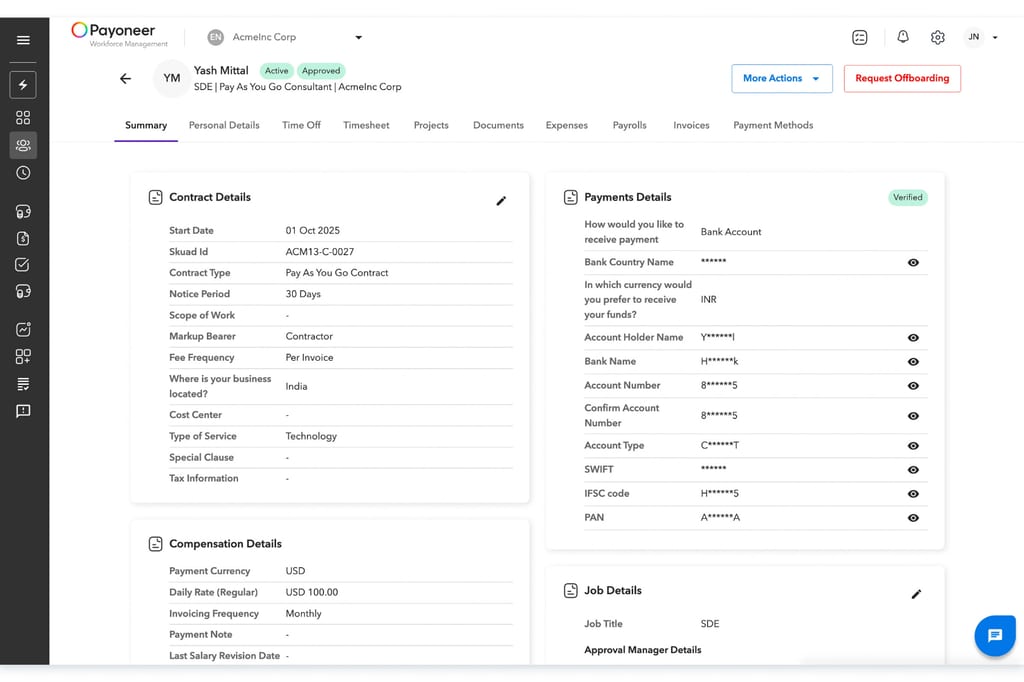
Termination and offboarding management is how an EOR handles the legal and administrative side of ending an employment relationship, covering final pay calculations, notice periods, statutory severance, and required documentation.
It’s one of several points in the employee lifecycle where knowing how to use an employer of record effectively matters, since your team still needs to coordinate decisions, documentation, and communication with the provider.
What I find most valuable here is that the EOR absorbs the compliance risk at the most sensitive stage of employment. Getting terminations wrong is expensive. A good platform guides you through the correct local process, generates the right paperwork, and ensures nothing gets missed before a worker's last day.
Here's what a solid termination and offboarding feature set should cover:
- Final pay calculation: The EOR computes last-day pay, including accrued leave and any applicable bonuses, against local statutory requirements—no manual math on your end.
- Notice period enforcement: Required notice windows are flagged and tracked in the platform, so you're not accidentally shortchanging an employee under local law.
- Statutory severance: Country-specific severance entitlements are calculated and documented automatically. This matters most in markets like France or Brazil, where getting it wrong is expensive.
- Offboarding documentation: Platforms like Oyster HR centralize required paperwork and track progress through the offboarding workflow, so nothing gets missed before a worker's last day.
8. Intellectual Property Protection

Intellectual property protection is how an EOR safeguards your company's ownership of work produced by international employees—through IP assignment clauses, NDAs, and confidentiality agreements built directly into employment contracts.
What I think matters most here is that IP ownership isn't automatic just because you're directing someone's work. Many companies assume that IP created by EOR-hired talent automatically belongs to them, but sometimes that isn't the case. A good EOR closes that gap by including clear provisions in employment contracts specifying that any IP created by the employee belongs to the client company.
Here's what a solid IP protection feature set should cover:
- IP assignment clauses: Employment contracts explicitly transfer ownership of any work, inventions, or designs an employee creates to your company—not the EOR, not the employee.
- NDA and confidentiality agreements: Employees sign these at onboarding, directly through the platform, before they access any proprietary systems or information.
- Moral rights waivers: Where local law permits, platforms like Remote include waivers alongside IP transfers—a detail that's easy to miss when hiring across jurisdictions.
- Country-specific language: IP law varies significantly by market, so contract language must be adapted locally to hold up.
9. Expense Management and Reimbursement
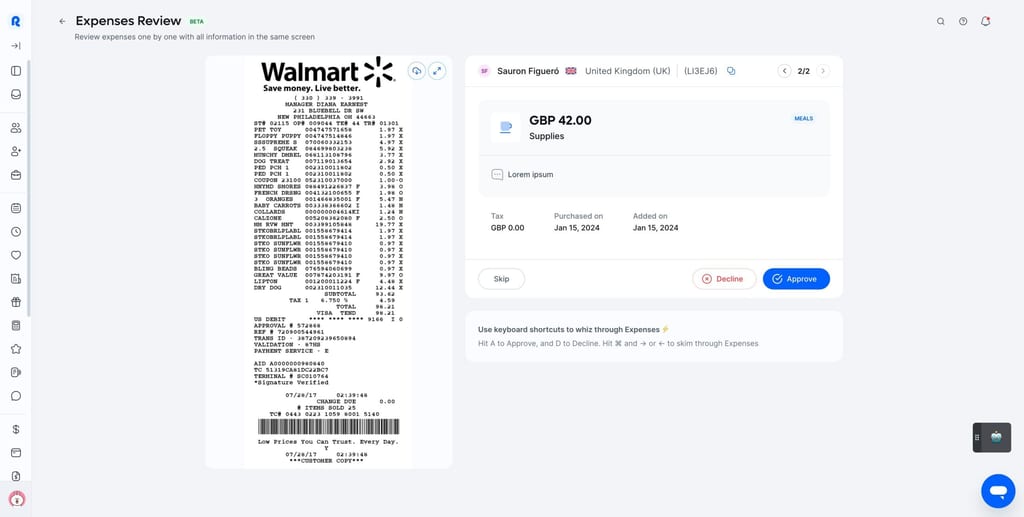
Expense management and reimbursement is how an EOR collects, validates, and processes employee expense claims across international markets—applying local currency conversion, tax treatment, and reimbursement rules so payments are compliant and accurate.
What I find valuable here is that reimbursements don't fall into a manual gray zone. Employees submit expenses directly through the platform, approvals are routed automatically, and payments are folded into the next payroll cycle. For teams managing workers across multiple countries, that removes a surprising amount of back-and-forth.
Here's what a solid expense management and reimbursement feature set should cover:
- Receipt submission: Employees upload receipts and submit claims directly in the platform—no email chains, no spreadsheets. Oyster HR, for example, lets employees attach receipts, add descriptions, and submit for approval without leaving the tool.
- Approval routing: Claims route to the right approver automatically, so there's no manual handoff between your team and the employee.
- Payroll integration: Approved expenses fold into the next payroll cycle, processed in the employee's local currency with the correct tax treatment applied.
- Audit trail: Every submission and approval is timestamped and logged, which matters when local tax authorities want documentation.
10. Employee Self-Service Portal
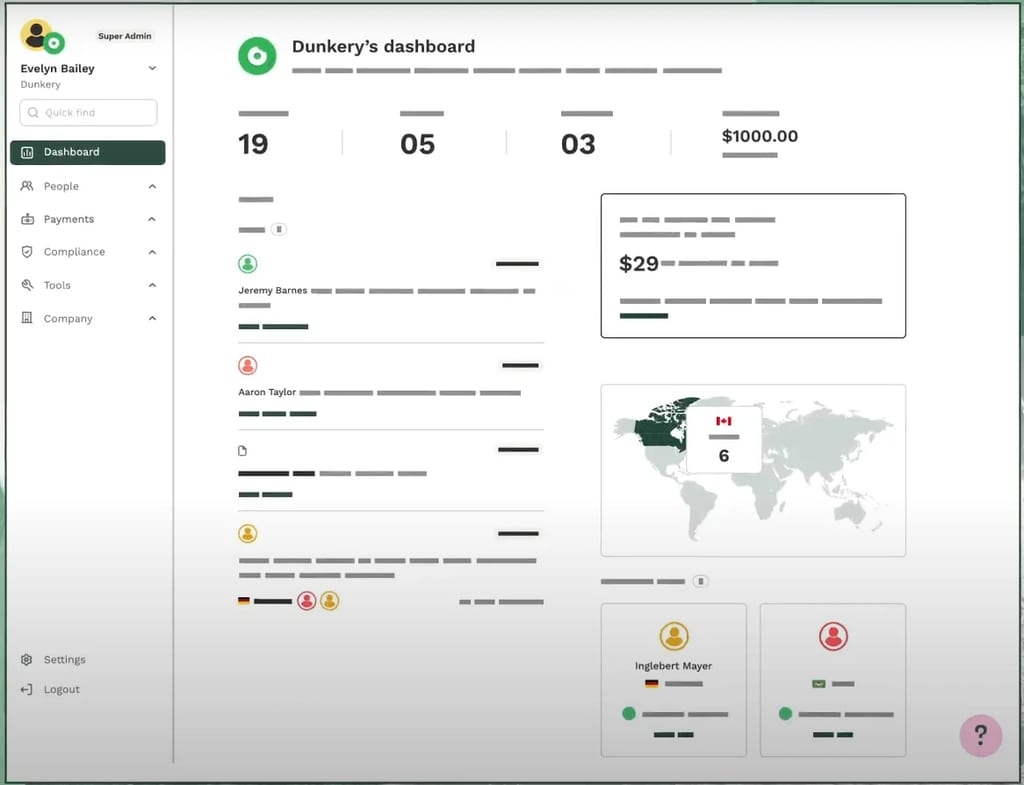
An employee self-service portal is a dedicated interface within an EOR platform where workers access their own employment information directly. Employees can view payslips, download tax documents, update personal details, request leave, and raise HR-related queries—without routing everything through your HR team.
I find this feature underrated. In my experience, distributed teams generate a constant stream of individual requests that quietly consume HR bandwidth. A self-service platform houses all your workers, regardless of location or worker classification, which keeps the employee experience consistent even when your team spans multiple countries.
Here's what a good employee self-service portal covers:
- Payslip and document access: Employees view and download payslips, tax forms, and employment letters directly—without submitting a ticket to HR.
- Leave requests: Workers submit and track time-off requests in the platform, with approvals routed automatically.
- Personal detail updates: Employees update banking information, addresses, and emergency contacts themselves, keeping records accurate without HR involvement.
- HR query submission: Questions get raised and tracked in one place, so nothing falls through the cracks.
Once you’ve selected a platform with the capabilities you need, the next challenge is getting them configured correctly. Our employer of record implementation guide covers payroll setup, benefits, integrations, employee data, communication, testing, and go-live.
Top 10 Employer of Record Services
Here are our top picks of the best employer of record services, to help you in your search:
Clicks on the links below may earn a commission, which supports our independent testing and review of software and services. Learn more about how we stay transparent.


Ready to Explore What EOR Services Actually Cost?
Now that you know what to look for in an EOR platform, the next step is understanding what you'll pay for it—so take a look at our breakdown of employer of record costs to see typical pricing by company size, provider, and the features that move the needle on price.

