

I 10 migliori software per marketplace dei talenti basati sull’IA nel 2026

10 Elenco dei software per marketplace dei talenti basati sull'intelligenza artificiale


Il software per marketplace dei talenti basato sull'intelligenza artificiale utilizza l'intelligenza artificiale per abbinare le persone alle opportunità in base a competenze, esperienza e obiettivi. Queste piattaforme supportano l'acquisizione di talenti aiutando i recruiter e i team delle risorse umane a migliorare i processi di ricerca e assunzione con abbinamenti più accurati e basati sui dati. Spesso includono un agente di intelligenza artificiale per semplificare il processo decisionale e collegare i talenti a ruoli in linea con gli obiettivi aziendali. Oltre all'assunzione, supportano anche la mobilità interna e la crescita professionale, consigliando progetti, ruoli e percorsi di sviluppo ai dipendenti. In questa guida troverai i migliori software per marketplace dei talenti basati sull'intelligenza artificiale, così potrai confrontare le funzionalità e scegliere quello più adatto alle esigenze del tuo team.
Perché fidarsi delle nostre recensioni sui software
Il nostro team testa e recensisce software dal 2012. In quanto esperti HR noi stessi, sappiamo quanto sia difficile — e importante — scegliere il software giusto.
Per questa guida, abbiamo valutato gli strumenti attraverso test pratici e ricerche indipendenti, assegnando un punteggio agli strumenti in base ai nostri criteri di selezione. Ci basiamo inoltre sulle competenze di leader di pensiero del settore e di professionisti HR attivi.
Le nostre recensioni riflettono il nostro giudizio editoriale umano, non un discorso di vendita.
Revisori esperti:
Tabella di confronto dei software per marketplace dei talenti basati sull'intelligenza artificiale
Questa tabella di confronto riassume i dettagli sui prezzi delle mie migliori selezioni di software per marketplace dei talenti basati sull’intelligenza artificiale:
| Tool | Best For | Trial Info | Price | ||
|---|---|---|---|---|---|
| 1 | Ideale per l'abbinamento alle opportunità basato sulle competenze | Demo gratuita disponibile | Prezzi su richiesta | Website | |
| 2 | Ideale per la mobilità dei talenti nelle grandi aziende | Demo gratuita disponibile | Prezzo su richiesta | Website | |
| 3 | Ideale per piattaforme unificate di mobilità dei talenti | Demo gratuita disponibile | Prezzo su richiesta | Website | |
| 4 | Ideale per la mobilità di carriera personalizzata | Demo gratuita disponibile | Prezzo su richiesta | Website | |
| 5 | Ideale per intelligenza artificiale dei talenti | Demo gratuita disponibile | Prezzo su richiesta | Website | |
| 6 | Ideale per l'abbinamento di talenti su base progettuale | Demo gratuita disponibile | Prezzi su richiesta | Website | |
| 7 | Ideale per talent marketplace integrati | Prova gratuita di 30 giorni disponibile | Prezzi su richiesta | Website | |
| 8 | Ideale per marketplace interni di talenti guidati dall'AI | Demo gratuita disponibile | Prezzi su richiesta | Website | |
| 9 | Ideale per marketplace di talenti predittivi | Demo gratuita disponibile | Prezzo su richiesta | Website | |
| 10 | Ideale per la mobilità basata sulle competenze supportata da AI | Demo gratuita disponibile | Prezzo su richiesta | Website |
Recensioni dei software per marketplace dei talenti basati sull'intelligenza artificiale
Di seguito trovi le mie sintesi dettagliate dei software per marketplace dei talenti basati sull’intelligenza artificiale inclusi nel mio elenco. Le mie recensioni offrono un’analisi approfondita delle funzionalità, dei casi d’uso principali e delle integrazioni di ciascuna piattaforma, per aiutarti a trovare quella più adatta a te.

Nestor
Ideale per l'abbinamento alle opportunità basato sulle competenze
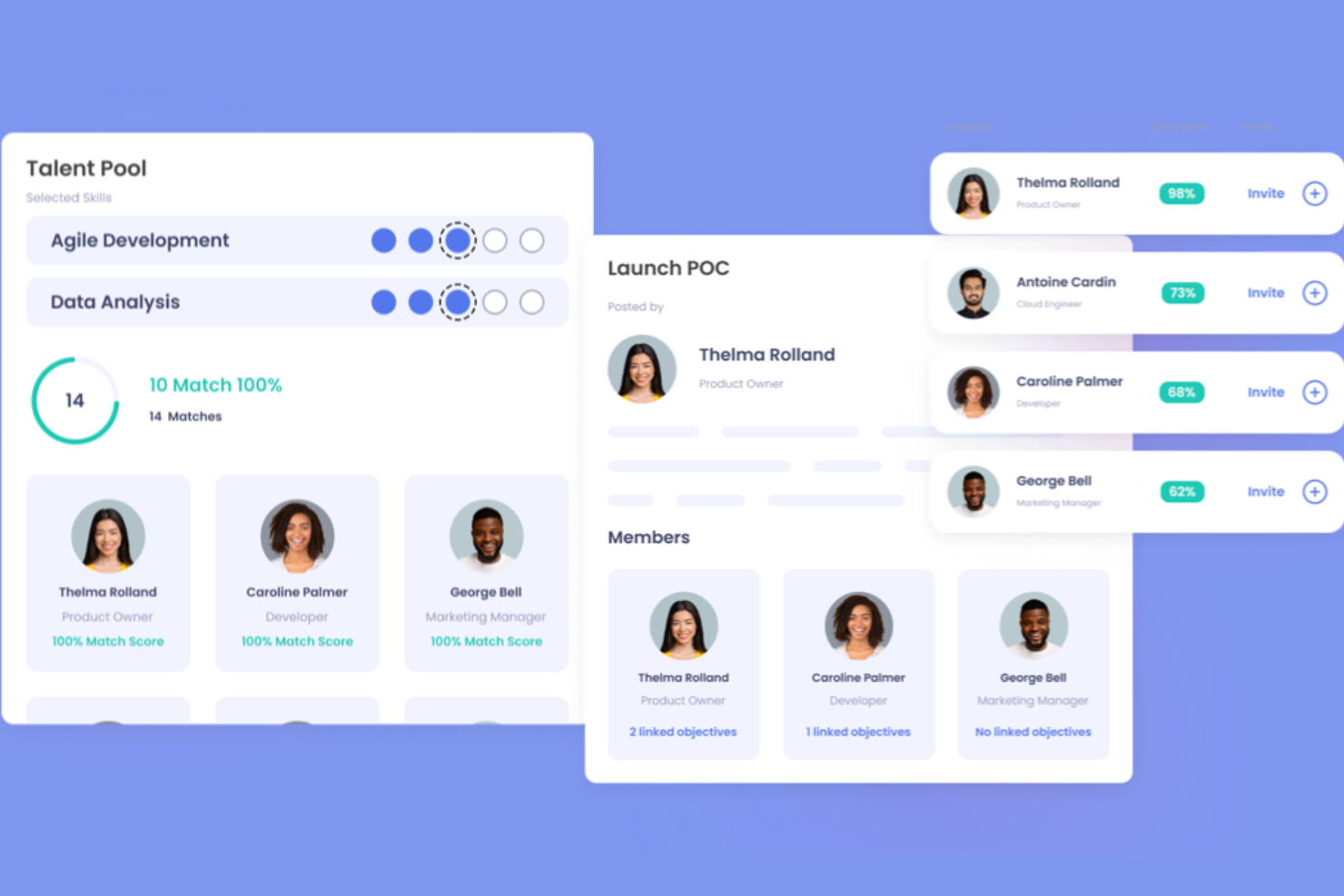
Nestor è una piattaforma di mercato dei talenti basata sull'intelligenza artificiale per i team delle risorse umane, che combina mappatura delle competenze, abbinamento alle opportunità, mobilità interna e analisi della forza lavoro in un unico sistema.
Per chi è più adatto Nestor?
Responsabili delle risorse umane di organizzazioni di medie e grandi dimensioni, focalizzati sulla mobilità interna e sullo sviluppo dei talenti basati sulle competenze.
Perché ho scelto Nestor
Ho scelto Nestor come una delle soluzioni migliori perché il suo mercato dei talenti basato sull'intelligenza artificiale è progettato per la mobilità interna basata sulle competenze. Apprezzo il modo in cui il mio team può mappare le competenze della forza lavoro, abbinare i dipendenti ai progetti e far emergere opportunità di crescita personalizzate. Le analisi della piattaforma ci aiutano a monitorare le tendenze della mobilità e a individuare le lacune nelle competenze all'interno dell'organizzazione.
Funzionalità principali di Nestor
- Creazione di modelli di competenze: Consente di definire e gestire modelli di competenze personalizzati per la propria organizzazione.
- Strumenti per feedback e riconoscimenti: Consentono di fornire feedback tra colleghi e riconoscimenti pubblici all'interno della piattaforma.
- Integrazione dei contenuti formativi: Si collega alle piattaforme di apprendimento per consigliare corsi pertinenti.
- Analisi della rete organizzativa: Visualizza le relazioni e i modelli di collaborazione tra i team.
Integrazioni di Nestor
Nestor offre integrazioni native con ADP, Bob, Deel, Namely, Oyster, Justworks e altri. È disponibile un'API per le integrazioni personalizzate.
Pros and Cons
Pros:
- Combina il mercato dei talenti con la gestione delle prestazioni
- Consigli personalizzati sulle opportunità per i dipendenti
- Dashboard visive per monitorare la mobilità dei talenti
Cons:
- Funzionalità limitate per l'assegnazione basata sui progetti
- Alcuni utenti segnalano tempi di caricamento lenti della dashboard
Workday
Ideale per la mobilità dei talenti nelle grandi aziende

Workday è una piattaforma di talent marketplace guidata dall'intelligenza artificiale che collega i dipendenti a posizioni interne, incarichi temporanei, opportunità di formazione e sviluppo di carriera utilizzando l'intelligenza sulle competenze e il machine learning.
Per chi è ideale Workday?
Grandi aziende e organizzazioni globali che desiderano gestire la mobilità interna dei talenti e lo sviluppo delle competenze su larga scala.
Perché ho scelto Workday
Ho scelto Workday come uno dei migliori perché i suoi strumenti di mobilità dei talenti basati sull’IA permettono al mio team di abbinare i dipendenti alle posizioni interne, incarichi temporanei e progetti in base ai dati aggiornati sulle competenze. Mi piace come il motore di intelligenza sulle competenze di Workday aggiorni automaticamente i profili dei dipendenti e suggerisca opportunità di crescita personalizzate. L’approccio unificato della piattaforma a talenti, formazione e sviluppo di carriera ci aiuta a gestire con sicurezza la mobilità della forza lavoro su larga scala.
Funzionalità principali di Workday
- Mercato delle opportunità: consente ai dipendenti di cercare e candidarsi per incarichi e progetti interni.
- Abbinamento al mentoring: collega i dipendenti a mentori sulla base di competenze e interessi.
- Cruscotto di analisi dei talenti: visualizza dati sulla mobilità e l’engagement della forza lavoro.
- Raccomandazioni di apprendimento personalizzato: suggerisce corsi e contenuti su misura per il profilo di ciascun utente.
Integrazioni Workday
Le integrazioni native non sono attualmente elencate. È disponibile una API per integrazioni personalizzate.
Pros and Cons
Pros:
- Piattaforma HR e mobilità dei talenti unificata
- Abbinamento di competenze e opportunità basato sull’IA
- Approfondimenti e analisi in tempo reale sulla forza lavoro
Cons:
- La configurazione iniziale può essere complessa per l’IT
- Opzioni di personalizzazione ridotte per i percorsi di carriera visivi

Phenom
Ideale per piattaforme unificate di mobilità dei talenti
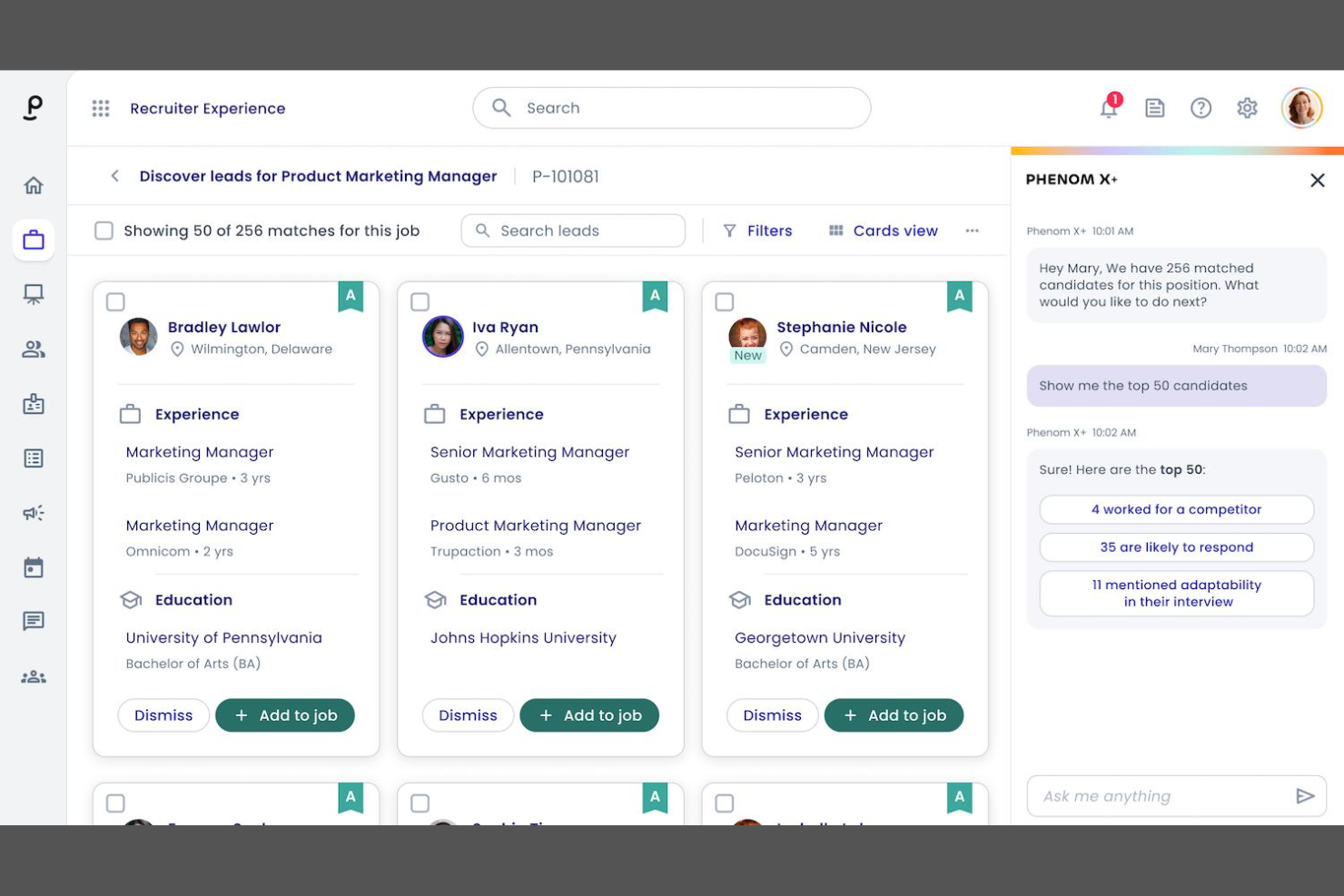
Phenom è una piattaforma di marketplace di talenti basata sull'IA che unisce mobilità interna, progetti temporanei, mentoring, intelligenza delle competenze e percorsi di carriera per i team HR delle grandi imprese.
A Chi È Più Adatto Phenom?
Team HR di grandi aziende che desiderano favorire la mobilità interna e l'agilità della forza lavoro.
Perché Ho Scelto Phenom
Ho scelto Phenom come uno dei migliori perché il suo marketplace di talenti alimentato dall'IA consente al mio team di abbinare i dipendenti a progetti temporanei, incarichi e ruoli interni in base alle competenze e agli interessi. Mi piace il modo in cui la piattaforma supporta l'agilità della forza lavoro tramite percorsi di carriera dinamici e funzionalità di mentoring. Il motore di intelligenza delle competenze ci aiuta a identificare opportunità di upskilling e a collegare le persone a contenuti formativi pertinenti.
Caratteristiche Chiave di Phenom
- Dashboard del marketplace delle opportunità: consente di visualizzare e gestire tutti i progetti temporanei, gli incarichi e i ruoli disponibili in un unico posto.
- Inventario delle competenze alimentato dall'IA: cataloga e aggiorna automaticamente le competenze dei dipendenti in tutta l'organizzazione.
- Profili personalizzati dei dipendenti: memorizza la storia lavorativa, le competenze, gli interessi e le aspirazioni di carriera di ciascun utente.
- Analisi della mobilità interna: traccia i movimenti, il coinvolgimento e la partecipazione alle attività del talent marketplace.
Integrazioni di Phenom
Le integrazioni native al momento non sono riportate. È disponibile un'API per integrazioni personalizzate.
Pros and Cons
Pros:
- Raccomandazioni di opportunità guidate dall'IA per i dipendenti
- Analisi in tempo reale sulle tendenze dei movimenti della forza lavoro
- Supporta progetti temporanei, incarichi e ruoli a tempo pieno
Cons:
- Alcuni utenti segnalano rilascio delle nuove funzionalità lento
- Occasionali incoerenze nella mappatura dei dati delle competenze

Fuel50
Ideale per la mobilità di carriera personalizzata

Fuel50 è una piattaforma di talent marketplace guidata dall'AI che offre mappatura delle competenze, percorsi di carriera, abbinamento ai progetti e analisi della forza lavoro per le organizzazioni che cercano soluzioni avanzate di mobilità interna.
Per chi è ideale Fuel50?
Team HR di grandi aziende focalizzati sullo sviluppo agile della forza lavoro e sulla mobilità interna.
Perché ho scelto Fuel50
Ho scelto Fuel50 come uno dei migliori perché il suo talent marketplace alimentato dall’intelligenza artificiale è progettato per lo sviluppo agile della forza lavoro. Mi piace come Fuel50 utilizzi la mappatura delle competenze e i percorsi di carriera per aiutare i dipendenti a scoprire nuove opportunità. Il mio team può abbinare persone a incarichi e progetti in base ai dati delle competenze in tempo reale, sostenendo così la mobilità interna su larga scala.
Caratteristiche principali di Fuel50
- Dashboard dell’opportunità di mercato: Permette ai dipendenti di sfogliare e candidarsi per incarichi, progetti e ruoli aperti.
- Abbinamento di mentoring: Collega i dipendenti con mentori in base a competenze e interessi.
- Suite di analisi della forza lavoro: Fornisce informazioni in tempo reale sulla mobilità dei talenti e l’engagement.
- Framework di competenze personalizzate: Consentono alle organizzazioni di definire e gestire i propri modelli di competenze.
Integrazioni Fuel50
Al momento non sono elencate integrazioni native. È disponibile un’API per integrazioni personalizzate.
Pros and Cons
Pros:
- Supporta organizzazioni globali con opzioni multilingue
- Dashboard analitica che traccia le tendenze nella mobilità dei talenti
- Marketplace delle opportunità personalizzabile per ruoli interni
Cons:
- Configurazione iniziale può essere impegnativa per l’HR
- Abbinamento limitato a incarichi o progetti

Ideale per intelligenza artificiale dei talenti

Eightfold AI è una piattaforma di talent marketplace basata sull'IA che combina intelligenza delle competenze, matching dei talenti, pianificazione dei percorsi di carriera e gestione della forza lavoro per i team HR delle grandi aziende.
Per chi è più adatto Eightfold AI?
Grandi team HR aziendali focalizzati su agilità e retention della forza lavoro.
Perché ho scelto Eightfold AI
Ho scelto Eightfold AI tra i migliori perché il suo motore d’intelligenza dei talenti basato su deep learning permette al mio team di abbinare dipendenti a progetti, incarichi e ruoli in base alle competenze e al potenziale. Apprezzo come gli strumenti per la pianificazione dei percorsi di carriera e della forza lavoro aiutino a visualizzare la mobilità interna. Le raccomandazioni basate sull’IA per upskilling e reskilling sono particolarmente utili per sostenere agilità e retention della forza lavoro.
Funzionalità chiave di Eightfold AI
- Cruscotto di analytics sulla diversità: Traccia e visualizza le metriche di diversità della forza lavoro.
- Creazione automatica di pipeline di talenti: Costruisce e aggiorna pool di talenti utilizzando l'IA.
- Automazione del workflow configurabile: Permette di progettare e automatizzare i processi di gestione dei talenti.
- Controlli di accesso basati sui ruoli: Restringe l'accesso alla piattaforma in base a ruoli e permessi degli utenti.
Integrazioni Eightfold AI
Le integrazioni native attualmente non sono elencate. Eightfold AI fornisce un’API per integrazioni personalizzate.
Pros and Cons
Pros:
- Deep learning per un abbinamento preciso delle competenze
- Analisi globale dei talenti con analytics sulla diversità
- Supporta grandi imprese con elevata scalabilità
Cons:
- Alcuni utenti segnalano passaggi di configurazione complessi
- Trasparenza limitata nelle decisioni dell'IA

Ideale per l'abbinamento di talenti su base progettuale
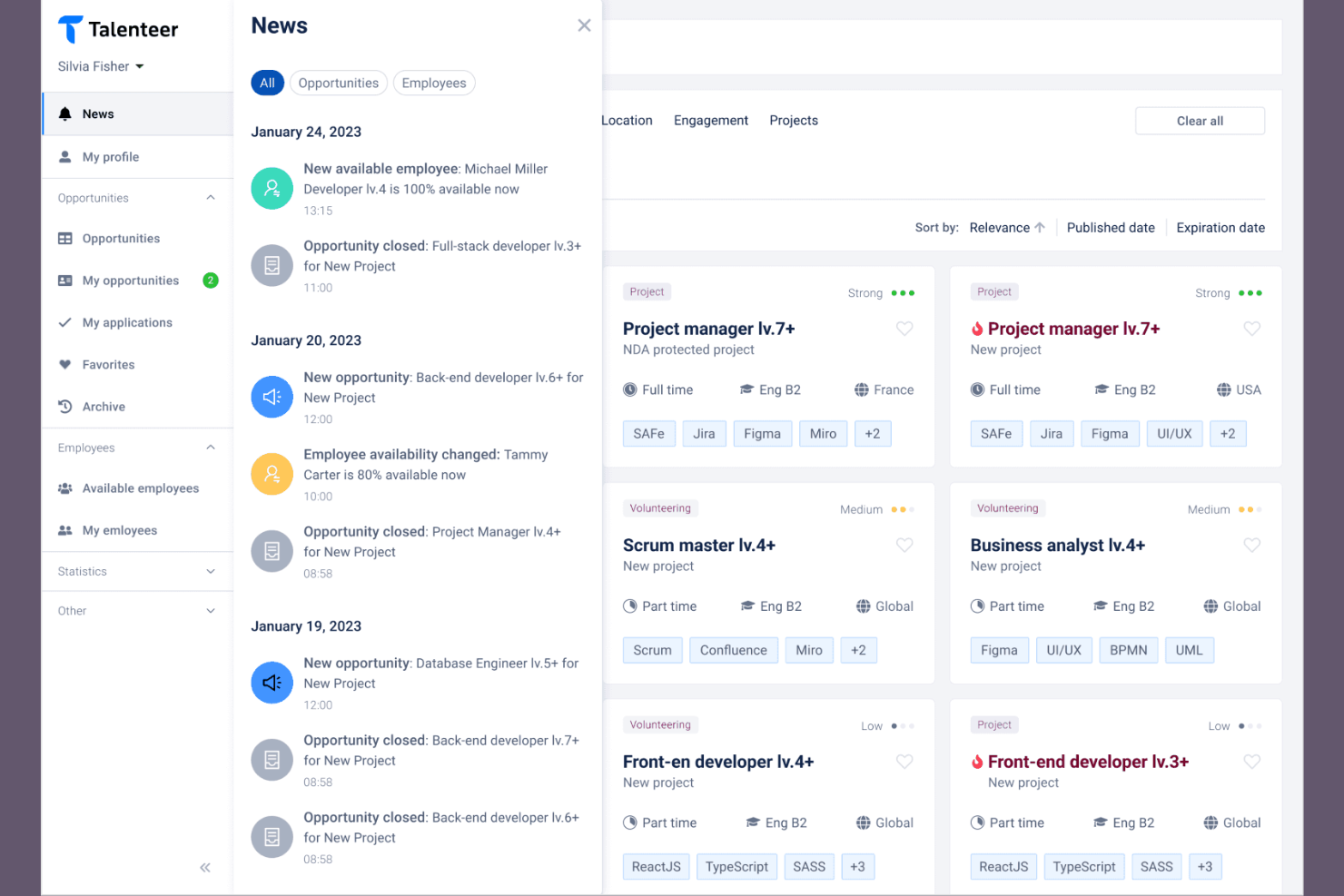
Talenteer è una piattaforma marketplace per talenti, alimentata dall'IA, che aiuta le organizzazioni a gestire la mobilità interna, l'assegnazione di personale ai progetti, la mappatura delle competenze e la pianificazione della forza lavoro in un unico sistema integrato.
Per chi è ideale Talenteer?
Team HR di grandi aziende che gestiscono la mobilità interna a livello globale e l'assegnazione di personale su base progettuale.
Perché ho scelto Talenteer
Ho scelto Talenteer come uno dei migliori perché il suo marketplace di talenti alimentato dall'IA è appositamente progettato per la mobilità interna e l'assegnazione ai progetti. Mi piace il fatto che il mio team possa abbinare i dipendenti ai progetti in base a competenze, disponibilità e interessi. I workflow configurabili della piattaforma ci permettono di gestire in tempo reale le assegnazioni ai progetti e i pool di talenti.
Funzionalità chiave di Talenteer
- Gestione inventario competenze: cataloga e aggiorna le competenze dei dipendenti in tutta l'organizzazione.
- Dashboard di analisi sui talenti: visualizza i dati sulla forza lavoro e le tendenze di mobilità.
- Controlli di accesso basati sui ruoli: limita l'accesso alla piattaforma in base al ruolo utente e ai permessi.
- Strumenti di reportistica automatizzata: genera report su pool di talenti e assegnazioni ai progetti.
Integrazioni con Talenteer
Le integrazioni native al momento non sono elencate. Lo strumento supporta integrazioni tramite API per connessioni personalizzate.
Pros and Cons
Pros:
- Potenti funzionalità di matching delle opportunità basate sui progetti
- Distribuzione agile della forza lavoro per team dinamici
- Supporta team cross-funzionali e globali
Cons:
- Nessun modulo integrato per la formazione o lo sviluppo
- Alcuni utenti segnalano supporto linguistico limitato

Ideale per talent marketplace integrati

SAP SuccessFactors è una piattaforma di talent marketplace guidata dall'IA che combina la gestione delle competenze, la mobilità interna, la pianificazione della successione e l'apprendimento personalizzato in un'unica soluzione cloud.
Per chi è SAP SuccessFactors?
Grandi aziende globali e team HR che gestiscono una forza lavoro numerosa e distribuita in più regioni.
Perché ho scelto SAP SuccessFactors
Ho scelto SAP SuccessFactors perché la sua piattaforma marketplace dei talenti e gli strumenti di gestione delle competenze, alimentati dall'IA, mi permettono di mappare le competenze della forza lavoro, abbinare i dipendenti a opportunità interne e automatizzare la pianificazione della successione. Apprezzo il modo in cui la piattaforma utilizza l'IA per suggerire percorsi di apprendimento e avanzamenti di carriera sulla base di dati sulle competenze aggiornati in tempo reale. Il mio team è in grado di gestire pool di talenti globali e monitorare i gap di competenze nelle varie regioni da un'unica dashboard.
Funzionalità principali di SAP SuccessFactors
- Dashboard di revisione dei talenti: Visualizza i dati sui talenti e la loro prontezza all'interno dei vari team.
- Strumenti di gestione degli obiettivi: Imposta, monitora e allinea gli obiettivi dei dipendenti con quelli dell'azienda.
- Calibrazione delle performance: Standardizza le valutazioni delle performance tra manager e dipartimenti.
- Modulo di pianificazione della retribuzione: Gestisci salari, bonus e programmi di equity in un unico luogo.
Integrazioni di SAP SuccessFactors
SAP SuccessFactors offre integrazioni nativamente con SAP S/4HANA, SAP Fieldglass, SAP Concur, Microsoft 365 e DocuSign, e fornisce un'API per integrazioni personalizzate.
Pros and Cons
Pros:
- La pianificazione della successione si integra con i dati delle performance
- Raccomandazioni di apprendimento personalizzate per i dipendenti
- Funzionalità di compliance integrate per team multinazionali
Cons:
- Le integrazioni native sono limitate al di fuori dell'ecosistema SAP
- L'interfaccia utente può risultare complessa per i nuovi amministratori
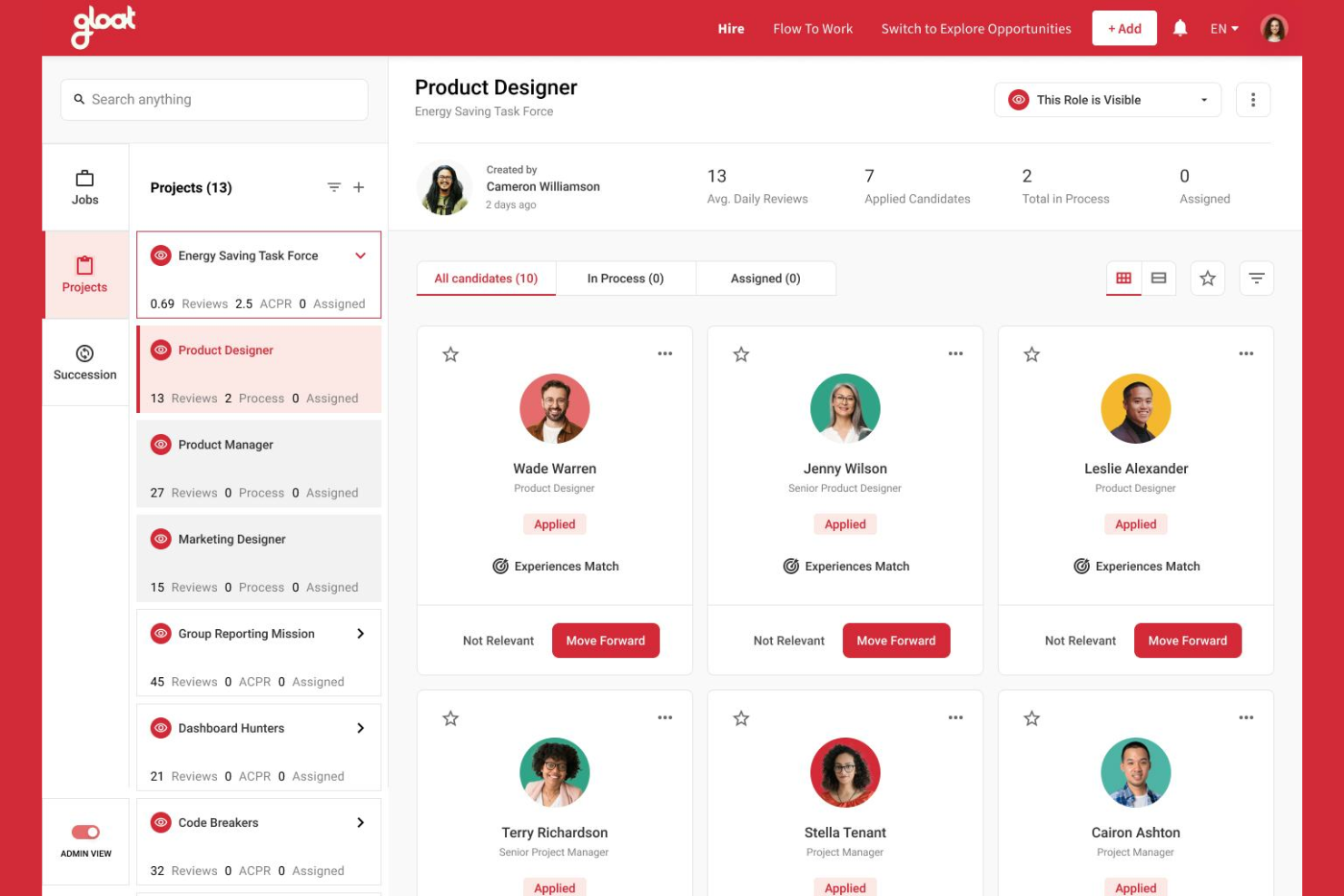
Gloat è una piattaforma di talent marketplace guidata dall'AI, progettata per le organizzazioni che desiderano abbinare dipendenti a progetti, incarichi e ruoli in base alle competenze, all'esperienza e agli interessi.
Per chi è ideale Gloat?
Grandi aziende e team HR che vogliono promuovere l'agilità della forza lavoro attraverso la mobilità interna dei talenti.
Perché ho scelto Gloat
Ho scelto Gloat come uno dei migliori perché il suo marketplace interno di talenti, alimentato dall'AI, è progettato per l'agilità della forza lavoro. Mi piace come Gloat utilizza la mappatura dinamica delle competenze e l'abbinamento delle opportunità in tempo reale per collegare i dipendenti a progetti, incarichi e ruoli. Il mio team può sfruttare le raccomandazioni guidate dall'AI per identificare rapidamente talenti interni per le esigenze aziendali critiche.
Funzionalità principali di Gloat
- Percorsi di carriera alimentati dall'AI: Suggerisce percorsi di carriera personalizzati in base alle competenze e alle aspirazioni dei dipendenti.
- Dashboard del marketplace delle opportunità: Centralizza progetti, incarichi e ruoli aperti per una facile consultazione.
- Abbinamento per mentoring: Collega i dipendenti a mentori tramite analisi di compatibilità alimentata dall'AI.
- Suite di analisi e reportistica: Monitora le tendenze sulla mobilità dei talenti e le metriche di coinvolgimento della forza lavoro.
Integrazioni di Gloat
Gloat offre integrazioni native con Slack, SAP, Oracle, Workday e altro ancora. È disponibile un'API per integrazioni personalizzate.
Pros and Cons
Pros:
- L'AI abbina i dipendenti a progetti e incarichi
- Mappatura delle competenze dinamica e aggiornata in tempo reale
- Supporta mentoring e percorsi di carriera
Cons:
- Potrebbe richiedere un importante cambiamento gestionale
- Informazioni pubbliche limitate sulle capacità dell'API

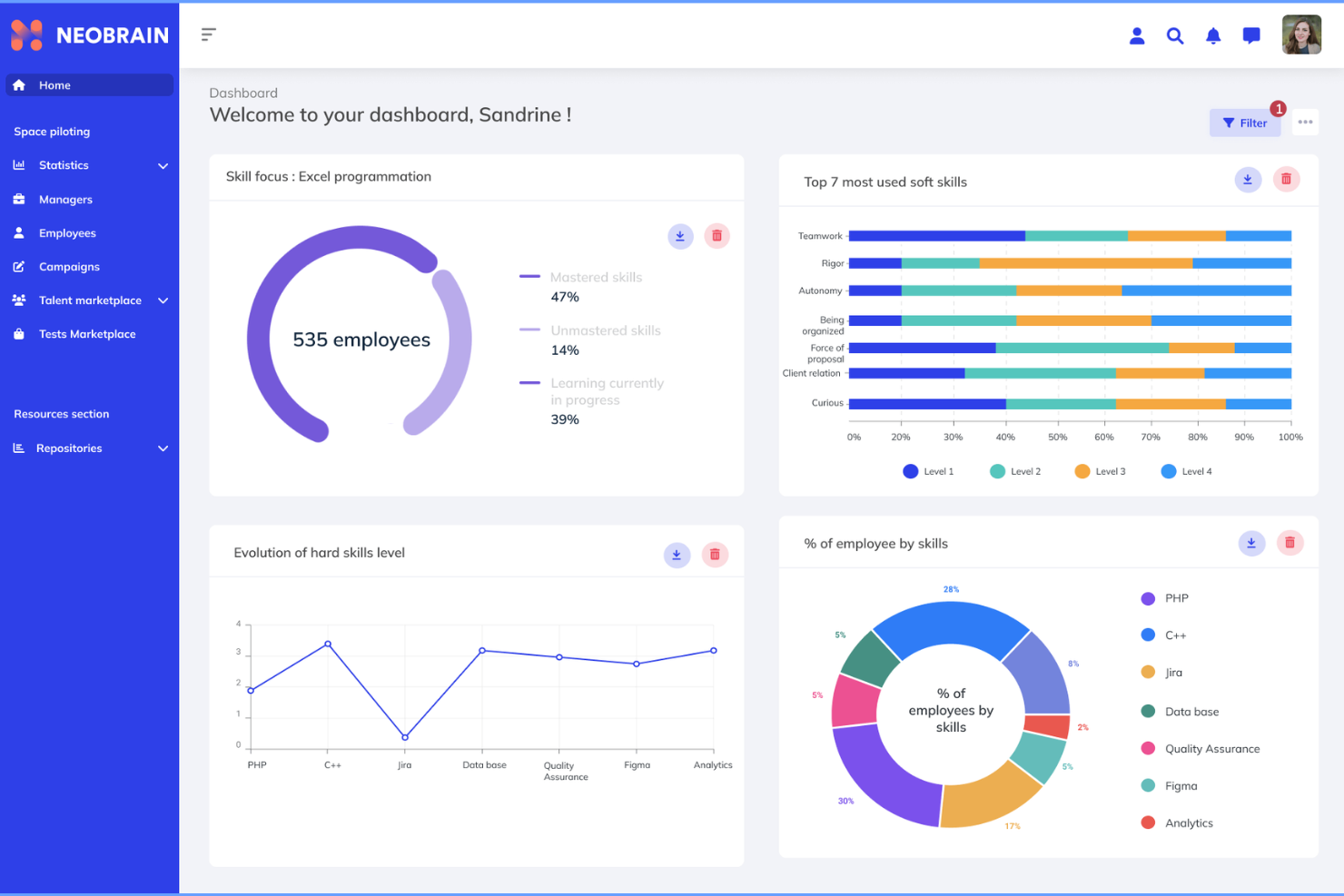
Neobrain è una piattaforma marketplace di talenti guidata dall’IA che aiuta le organizzazioni a gestire le competenze della forza lavoro, a collegare i dipendenti alle opportunità interne e a supportare la mobilità di carriera con analisi avanzate e workflow configurabili.
Per chi è Neobrain?
Responsabili HR di grandi aziende globali che cercano una trasformazione della forza lavoro e mobilità interna potenziata dall’IA.
Perché ho scelto Neobrain
Ho scelto Neobrain tra i migliori perché il suo marketplace di talenti alimentato dall’IA è progettato per la trasformazione completa della forza lavoro. Aiuta i team delle risorse umane a collegare i dipendenti alle opportunità di sviluppo, migliorando l’engagement e supportando iniziative fondamentali di gestione del talento. Mi piace come utilizza avanzati strumenti di mappatura delle competenze e analisi predittive per abbinare i dipendenti ai ruoli e ai progetti interni, permettendo ai team di gestire mobilità, upskilling e piani di successione su un’unica piattaforma.
Funzionalità principali di Neobrain
- Tassonomia di competenze personalizzabile: Ti permette di definire e gestire framework di competenze specifici per l’organizzazione.
- Dashboard di analytics HR: Visualizza i dati della forza lavoro e le tendenze dei talenti in tempo reale.
- Strumenti di reportistica automatizzata: Genera report dettagliati su competenze, mobilità e gap di workforce.
- Supporto multilingua: Offre accesso alla piattaforma in diverse lingue per i team globali.
Integrazioni Neobrain
Neobrain offre integrazioni native con ADP, Workday, Oracle e altri. È disponibile una API per integrazioni personalizzate.
Pros and Cons
Pros:
- Analisi predittive per bisogni di competenze futuri
- Suggerimenti di percorsi di carriera personalizzati tramite IA
- Forte nella mobilità interna e nell’abbinamento ai progetti
Cons:
- Alcuni utenti segnalano lentezza della piattaforma
- Opzioni self-service limitate per i dipendenti

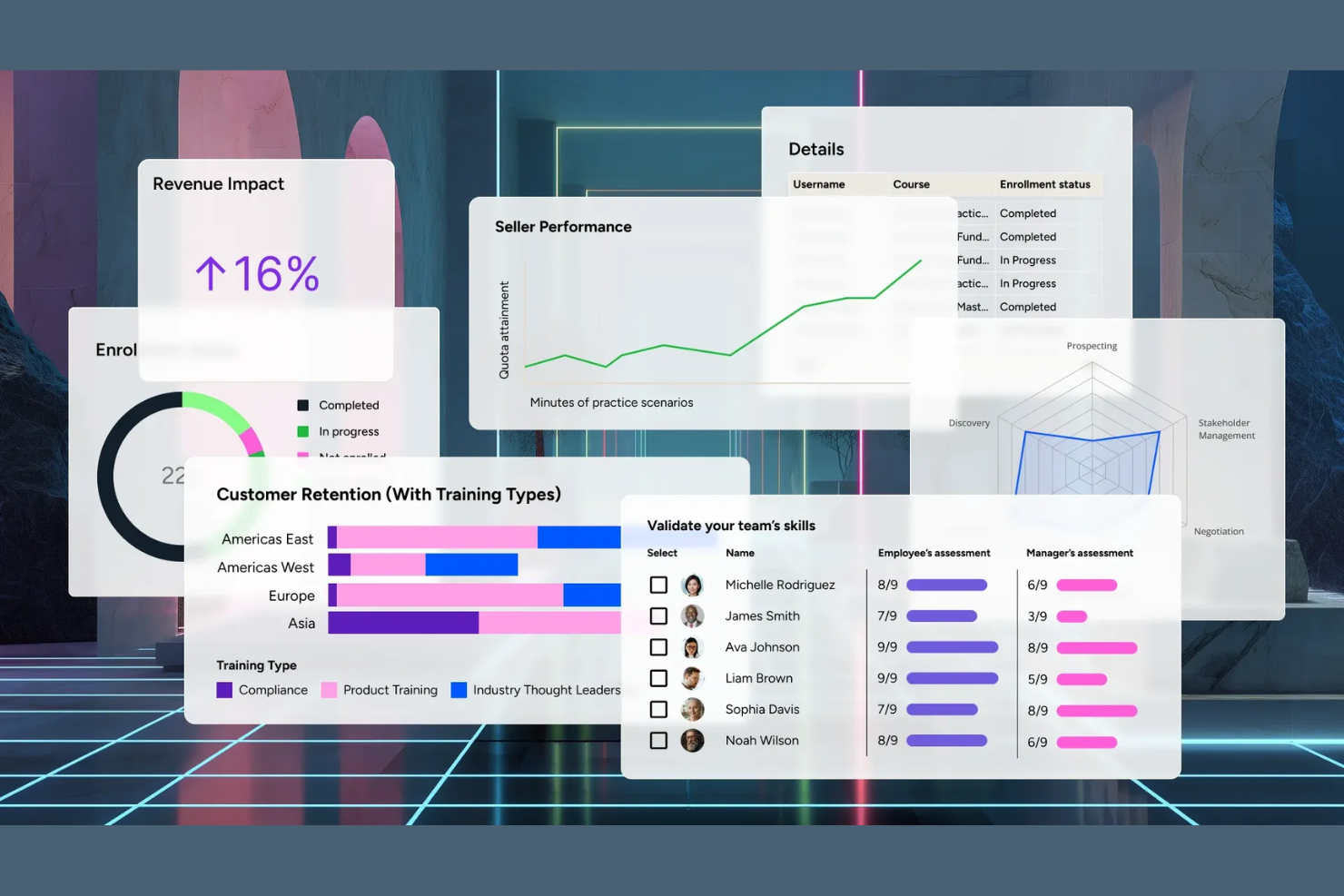
365Talents è una piattaforma di talent marketplace guidata dall'IA che utilizza il rilevamento delle competenze, profili dinamici e abbinamento automatico delle opportunità per aiutare le organizzazioni a gestire l'agilità della forza lavoro e la mobilità interna.
Per chi è ideale 365Talents?
Team HR di grandi aziende che cercano una gestione delle competenze e una mobilità interna supportate dall'intelligenza artificiale.
Perché ho scelto 365Talents
Ho scelto 365Talents tra i migliori perché il suo talent marketplace alimentato dall'IA è progettato per l'agilità della forza lavoro basata sulle competenze. Apprezzo il modo in cui rileva automaticamente le competenze dei dipendenti e aggiorna i profili dinamici, rendendo semplice l'assegnazione delle persone a nuovi progetti o ruoli. Il mio team usa il suo abbinamento automatico delle opportunità per supportare la mobilità interna e il reskilling su larga scala.
Caratteristiche principali di 365Talents
- Tassonomia delle competenze personalizzata: Consente di definire e gestire framework di competenze specifici per l'organizzazione.
- Dashboard di analisi HR: Visualizza in tempo reale dati sulla forza lavoro e tendenze legate ai talenti.
- Strumenti di reportistica automatica: Genera report dettagliati su competenze, mobilità e gap della forza lavoro.
- Supporto multilingua: Offre accesso alla piattaforma in diverse lingue per team globali.
Integrazioni di 365Talents
Attualmente non sono elencate integrazioni native. Lo strumento supporta integrazioni tramite API per connessioni personalizzate.
Pros and Cons
Pros:
- L'IA rileva e aggiorna automaticamente le competenze dei dipendenti
- Forte attenzione alla mobilità di carriera guidata dai dipendenti
- Framework di competenze personalizzabili per diversi settori
Cons:
- Alcuni utenti segnalano che la navigazione nel dashboard è complessa
- Nessuna raccomandazione integrata di contenuti di apprendimento
Altri software per marketplace dei talenti basati sull'intelligenza artificiale
Ecco alcune ulteriori opzioni di software per marketplace dei talenti basati sull’intelligenza artificiale che non sono state incluse nel mio elenco, ma che vale comunque la pena prendere in considerazione:
- TalentGuard
Ideale per la mobilità dei talenti basata sulle competenze
- Cornerstone Elevate
Ideale per la mobilità interna guidata dall'IA
- Prismforce
Ideale per l'intelligenza delle competenze nei team tecnologici


Come Valuto gli Strumenti di Strategia AI
Includo solo strumenti che offrono reale valore AI—come la previsione dei rischi di abbandono o la generazione di strategie operative concrete per la forza lavoro, non semplicemente una riproposizione di report di base. Suddivido la mia valutazione in funzionalità fondamentali che ogni strumento deve possedere per qualificarsi e fattori di differenziazione che distinguono un fornitore dall’altro.
Funzionalità Fondamentali (Requisiti Minimi per Questa Lista)
Quando seleziono gli strumenti per la mia lista, valuto ciascuno su una scala da 0 (non offre la funzionalità) a 5 (eccelle in quest’area) per ognuna delle funzionalità fondamentali elencate di seguito. Calcolo poi il punteggio totale dello strumento in percentuale. Ogni strumento deve raggiungere un punteggio totale minimo del 65% per essere preso in considerazione per l’inclusione.
- Generazione di Strategie AI: Cerco strumenti che vadano oltre i dashboard per produrre vere raccomandazioni strategiche—come piani di retention stilati dall’AI o roadmap di assunzione personalizzate sui dati della tua organizzazione.
- Analisi Predittiva della Forza Lavoro: Ogni strumento dovrebbe utilizzare il ML per prevedere rischi reali per la forza lavoro come picchi di abbandono, carenze di competenze, o variazioni della domanda di assunzione tra i vari reparti.
- Modellazione di Scenari e Simulazioni: Valuto se la piattaforma consente ai leader HR di eseguire analisi what-if, come la simulazione dei costi e dell’impatto sul talento di una ristrutturazione prima di prendere decisioni.
- Integrazione Dati HR: Gli strumenti migliori estraggono dati da HRIS, ATS, payroll e sistemi di performance. Controllo la presenza di connettori nativi con piattaforme come Workday, SAP SuccessFactors e BambooHR.
- Benchmarking Strategico degli KPI: Analizzo quanto bene lo strumento confronta metriche come tempo di assunzione o tassi di engagement rispetto ai concorrenti di settore e agli obiettivi interni tramite analisi AI.
- Allineamento tra Obiettivi e Iniziative: La piattaforma deve collegare gli output della strategia HR agli OKR aziendali—come associare un’iniziativa DEI a risultati misurabili, ad esempio, con un monitoraggio supportato dall’AI.
Dopo aver individuato gli strumenti che rispondono ai criteri, considero cosa distingue ciascuna piattaforma.
Fattori di Differenziazione (Cosa Distingue i Fornitori)
Ecco come confronto i vari fornitori:
Funzionalità Distintive
Un motore di skills intelligence è un grande elemento distintivo—permette ai leader HR di mappare le capacità attuali della forza lavoro e individuare gap prima che diventino emergenze di assunzione. Valuto anche se uno strumento offre risultati AI spiegabili, mostrando la logica e i livelli di fiducia dietro le sue raccomandazioni. Questa trasparenza è fondamentale quando si presenta una strategia della forza lavoro ai vertici aziendali. L’AI per la sentiment analysis e il coinvolgimento aggiunge un ulteriore livello, raccogliendo insight da survey e feedback per segnalare tempestivamente possibili rischi legati alla cultura o alla retention.
Oltre le Funzionalità
La governance AI è una considerazione chiave—verifico se il fornitore offre audit dei bias, documentazione dei modelli e controlli human-in-the-loop per sovrascrivere le raccomandazioni. La sicurezza dei dati è altrettanto importante, in particolare la certificazione SOC 2 Type II e l’accesso basato sui ruoli per dati sensibili su retribuzioni e performance. Valuto anche attentamente il supporto all’implementazione. Questi strumenti richiedono mappatura dei dati e calibrazione dei modelli accurata, quindi i fornitori che affiancano l’onboarding a una consulenza strategica HR tendono a facilitare un’adozione più rapida da parte del management.
Come scegliere un software per marketplace dei talenti basato sull'intelligenza artificiale
È facile perdersi in lunghi elenchi di funzionalità e strutture tariffarie complesse. Per aiutarti a rimanere concentrato mentre affronti il tuo particolare processo di scelta del software, ecco una lista di controllo dei fattori da tenere presenti:
| Fattore | Cosa considerare |
|---|---|
| Scalabilità | La piattaforma supporterà le dimensioni della tua forza lavoro e la crescita futura, inclusa l'espansione globale o le fusioni? |
| Integrazioni | Il software si collega nativamente al tuo sistema informativo delle risorse umane (HRIS), agli strumenti per le paghe, la formazione e la collaborazione? |
| Personalizzazione | Puoi adattare i flussi di lavoro, i campi dati e i report in base ai processi specifici della tua organizzazione? |
| Facilità d'uso | I team delle risorse umane e i dipendenti adotteranno rapidamente lo strumento oppure una navigazione complessa rallenterà il coinvolgimento? |
| Implementazione e onboarding | Quanto tempo richiede la configurazione e quali risorse o forme di assistenza fornisce il fornitore durante l'implementazione? |
| Costo | I livelli tariffari sono trasparenti e sono in linea con il tuo budget e con le funzionalità necessarie? |
| Misure di sicurezza | La piattaforma soddisfa gli standard della tua organizzazione in materia di privacy dei dati, crittografia e controllo degli accessi? |
| Disponibilità dell'assistenza | L'assistenza è disponibile quando ne hai bisogno, anche fuori dall'orario lavorativo o in più lingue per i team globali? |
Che cos'è un software per marketplace dei talenti basato sull'intelligenza artificiale?
Il software per marketplace dei talenti basato sull'intelligenza artificiale è una piattaforma digitale che utilizza l'intelligenza artificiale per abbinare i dipendenti a opportunità di lavoro interne, progetti o percorsi di apprendimento in base alle loro competenze, esperienza e obiettivi professionali. Questi strumenti aiutano i team delle risorse umane a gestire la mobilità della forza lavoro, individuare le lacune nelle competenze e sostenere lo sviluppo dei dipendenti all'interno dell'organizzazione.
Caratteristiche del software per marketplace dei talenti basato sull'IA
Quando scegli un software per marketplace dei talenti basato sull'IA, presta attenzione alle seguenti caratteristiche principali:
- Abbinamento basato sull'IA: utilizza algoritmi per mettere in contatto i dipendenti con posizioni, progetti o incarichi interni adatti alle loro competenze e ai loro interessi.
- Gestione dell'inventario delle competenze: consente di monitorare, aggiornare e analizzare in tempo reale le competenze della forza lavoro in tutta l'organizzazione.
- Strumenti per la mobilità interna: consentono ai dipendenti di scoprire e candidarsi per nuovi ruoli o progetti all'interno dell'azienda.
- Raccomandazioni personalizzate per la formazione: suggeriscono corsi o percorsi di sviluppo pertinenti in base alle lacune individuali nelle competenze e agli obiettivi professionali.
- Moduli per la pianificazione della successione: aiutano i team delle risorse umane a individuare e preparare i futuri leader mappando i percorsi dei talenti e il loro livello di preparazione.
- Analisi e reportistica: forniscono dashboard e informazioni sui movimenti dei talenti, sulle lacune nelle competenze e sulle tendenze della forza lavoro.
- Capacità di integrazione: si collegano a HRIS, sistemi di gestione delle paghe, strumenti per la gestione dell'apprendimento e strumenti di collaborazione per un flusso di dati unificato.
- Profili dei dipendenti: centralizzano l'esperienza, le competenze, le certificazioni e le aspirazioni dei dipendenti in un formato ricercabile.
- Controlli di conformità e privacy dei dati: garantiscono che i dati sensibili dei dipendenti siano gestiti in conformità agli standard normativi e organizzativi.
Vantaggi del software per marketplace dei talenti basato sull'IA
L'implementazione di un software per marketplace dei talenti basato sull'IA offre numerosi vantaggi al tuo team e alla tua azienda. Eccone alcuni:
- Mobilità interna più rapida: i dipendenti possono trovare rapidamente nuovi ruoli o progetti adatti alle loro competenze e ai loro interessi e passare a ricoprirli.
- Maggiore visibilità delle competenze: le risorse umane e i responsabili ottengono una visione chiara e in tempo reale delle capacità e delle lacune della forza lavoro attraverso inventari centralizzati delle competenze.
- Sviluppo personalizzato dei dipendenti: le raccomandazioni basate sull'IA aiutano i dipendenti ad accedere a opportunità di apprendimento e crescita adattate ai loro obiettivi professionali.
- Pianificazione della successione più efficace: i moduli per la successione individuano e preparano i futuri leader mappando il livello di preparazione e il potenziale nei vari team.
- Maggiore fidelizzazione dei talenti: è più probabile che i dipendenti rimangano in azienda quando vedono percorsi chiari di crescita e opportunità interne.
- Decisioni sulla forza lavoro basate sui dati: le funzionalità di analisi e reportistica supportano la pianificazione strategica mettendo in evidenza le tendenze nei movimenti dei talenti e nelle esigenze di competenze.
- Maggiore conformità e privacy: i controlli integrati aiutano a garantire che i dati sensibili dei dipendenti siano gestiti in conformità agli standard normativi e organizzativi.
Costi e prezzi del software per marketplace dei talenti basato sull'IA
La scelta di un software per marketplace dei talenti basato sull'IA richiede la comprensione dei vari modelli e piani tariffari disponibili. I costi variano in base alle funzionalità, alle dimensioni del team, ai componenti aggiuntivi e ad altri fattori. La tabella seguente riassume i piani più comuni, i relativi prezzi medi e le funzionalità tipicamente incluse nelle soluzioni software per marketplace dei talenti basate sull'IA:
Tabella comparativa dei piani per il software per marketplace dei talenti basato sull'IA
| Tipo di piano | Prezzo medio | Funzionalità comuni |
|---|---|---|
| Piano gratuito | $0 | Abbinamento IA di base, profili dei dipendenti limitati e analisi semplici. |
| Piano personale | $5-$15/utente/mese | Abbinamento IA, inventario delle competenze, profili dei dipendenti e reportistica di base. |
| Piano aziendale | $20-$40/utente/mese | Analisi avanzate, strumenti per la mobilità interna, integrazioni e raccomandazioni personalizzate per la formazione. |
| Piano aziendale avanzato | $50-$100/utente/mese | Flussi di lavoro personalizzati, pianificazione della successione, controlli di conformità, assistenza dedicata e opzioni di integrazione avanzate. |
Domande frequenti sul software per marketplace dei talenti basato sull'IA
Ecco alcune risposte alle domande più comuni sul software per marketplace dei talenti basato sull’IA:
In che modo il software per marketplace dei talenti basato sull'IA abbina i dipendenti alle opportunità?
Il software per marketplace dei talenti basato sull’IA utilizza algoritmi per analizzare le competenze, l’esperienza e le preferenze dei dipendenti, quindi li abbina a ruoli, progetti o incarichi disponibili adatti ai loro profili. Questo aiuta i team delle risorse umane a individuare rapidamente e in modo equo i candidati più adatti alle opportunità interne.
Queste piattaforme possono integrarsi con i sistemi HR esistenti?
Sì, la maggior parte dei software per marketplace dei talenti basati sull’IA può integrarsi con sistemi informativi delle risorse umane, strumenti per le buste paga, piattaforme per la gestione dell’apprendimento e strumenti di collaborazione. L’integrazione garantisce che i dati fluiscano senza problemi tra i sistemi, riducendo l’inserimento manuale e mantenendo aggiornati i profili dei dipendenti.
Quali aspetti relativi alla privacy dei dati dovrei tenere presenti?
Dovresti assicurarti che la piattaforma soddisfi gli standard di privacy dei dati della tua organizzazione, inclusi crittografia, controlli degli accessi e conformità a normative come il GDPR. Esamina sempre la documentazione sulla sicurezza del fornitore e chiedi informazioni sul suo approccio alla gestione dei dati sensibili dei dipendenti.
Quanto tempo occorre per implementare un software per marketplace dei talenti basato sull'IA?
I tempi di implementazione variano, ma la maggior parte delle piattaforme può essere configurata in un periodo compreso tra alcune settimane e alcuni mesi. Fattori come la migrazione dei dati, la complessità dell’integrazione e la formazione degli utenti possono influire sulla rapidità con cui il tuo team diventa operativo.
Chi gestisce solitamente la piattaforma dopo il lancio?
Di solito sono i team delle risorse umane a gestire la piattaforma, ma il reparto IT può essere coinvolto per le integrazioni e la sicurezza. Alcune organizzazioni designano anche amministratori della piattaforma o promotori interni per favorirne l’adozione e gestire gli aggiornamenti continui.