

Recensione del software di gestione delle prestazioni Betterworks per il 2026



Betterworks is a continuous performance management software that connects goals, coaching, feedback, and talent insights in one platform.
Betterworks is built primarily for mid-sized and enterprise organizations that need stronger alignment across teams, better visibility into employee performance, and more consistent talent decisions. It’s especially well-suited for companies with complex structures, matrixed teams, or global workforces.
In this review, I’ll break down its key features, strengths, limitations, pricing structure, integrations, onboarding experience, and ideal use cases.
Betterworks Evaluation Summary
- From $8/user/month
- Free demo available
Perché fidarsi delle nostre recensioni sui software
Il nostro team testa e recensisce software dal 2012. In quanto esperti HR noi stessi, sappiamo quanto sia difficile — e importante — scegliere il software giusto.
Per questa guida, abbiamo valutato gli strumenti attraverso test pratici e ricerche indipendenti, assegnando un punteggio agli strumenti in base ai nostri criteri di selezione. Ci basiamo inoltre sulle competenze di leader di pensiero del settore e di professionisti HR attivi.
Le nostre recensioni riflettono il nostro giudizio editoriale umano, non un discorso di vendita.
Revisori esperti:
Betterworks Overview
Betterworks stands out most for how deeply it connects performance management with broader talent intelligence. Rather than functioning as just an OKR tracker or annual review tool, it brings together goals, feedback, 1:1s, calibration, engagement surveys, succession planning, and AI-powered skills insights in one connected system. That makes it especially valuable for organizations that want performance management to actively drive business execution and workforce planning.
I also like how well Betterworks integrates into everyday work tools like Slack, Microsoft Teams, Jira, Salesforce, and Gmail, helping managers and employees stay aligned without adding extra administrative work. Its AI features, including performance summaries and skills intelligence, add meaningful context for coaching and talent decisions instead of simply automating documentation.
That said, Betterworks is best suited for mid-sized and enterprise companies with established HR processes. Smaller teams may find the platform more complex than necessary, especially given its guided onboarding approach and enterprise-focused structure.
pros
-
Connects goals, feedback, and coaching into one continuous performance system.
-
Supports enterprise-scale OKR alignment across complex, matrixed organizational structures.
-
Embeds performance workflows directly into everyday collaboration and productivity tools.
cons
-
Mobile functionality lacks the depth available in the desktop experience.
-
Initial admin setup involves a noticeable learning curve for new users.
-
Some HCM integrations require additional API or iPaaS configuration.
Is Betterworks Right For Your Needs?
Who Would be a Good Fit for Betterworks?
Betterworks is best suited for mid-sized and enterprise organizations that want to connect performance management directly to business execution and talent strategy. If you’re managing complex teams, scaling goal alignment across departments, or trying to improve continuous feedback and coaching, the platform offers a strong mix of structure and visibility. I think you’ll get the most value from Betterworks if you already have an HRIS in place and want a more advanced performance enablement layer on top of it.
-
Enterprise Organizations
If your company has hundreds or thousands of employees, Betterworks is built for that level of scale. Its plans and feature set are designed specifically for mid-market (500+ employees) and enterprise organizations (thousands of employees) managing large workforces.
-
Technology and SaaS companies
If you run a fast-moving technology or SaaS organization, Betterworks helps keep teams aligned around shifting business priorities. Its OKR structure and continuous feedback workflows work especially well in performance-driven environments.
-
Financial & Professional Services
If your organization depends on clear accountability, structured evaluations, and measurable performance outcomes, Betterworks provides strong visibility into goals, coaching, and calibration processes.
-
Manufacturing & Telecommunications
If you operate across multiple business units, locations, or reporting structures, Betterworks helps standardize performance management across complex operational environments.
-
Healthcare Organizations
If you need consistent performance conversations and workforce visibility across large healthcare teams, Betterworks offers centralized performance management with enterprise-level oversight and reporting.
-
Businesses Already Using an HRIS
If you already rely on an HRIS for employee records, Betterworks works well as a dedicated performance enablement layer. You can add continuous goals, feedback, and talent intelligence without replacing your existing HR system.
Who Would be a Bad Fit for Betterworks?
Betterworks is less ideal if you want a lightweight, all-in-one HR platform with minimal setup requirements. Because it’s designed primarily for larger organizations with established HR infrastructure, smaller businesses and companies without mature people operations may find the platform too advanced for their needs. You may also run into limitations if you expect Betterworks to function as a complete HRIS or learning management system.
-
Small Businesses
If you run a smaller business, Betterworks will likely feel oversized and unnecessarily complex. Most smaller organizations simply do not need enterprise-grade calibration, cascading OKRs, or talent intelligence capabilities.
-
Organizations Looking for Self-Serve Onboarding
If you want a quick, self-service rollout, Betterworks may not be the best fit. The platform uses a guided implementation process rather than lightweight setup workflows.
-
Businesses Looking for a Replacement HRIS
If you need a full HR management platform, Betterworks is not designed for that purpose. It works best as a performance and talent layer on top of systems like Workday, ADP, UKG, or SuccessFactors.
-
Teams Wanting a Built-In LMS
If employee learning and course delivery are your primary focus, Betterworks may leave gaps. It integrates with LMS platforms like Udemy and LinkedIn Learning instead of replacing them.
-
Low-Cost, Lightweight Needs
If your priority is affordability and simplicity, Betterworks may offer more functionality than you realistically need.
-
Mobile-First Performance Management Priorities
If your employees rely heavily on mobile devices, Betterworks may feel somewhat limited compared to the desktop experience. Most advanced workflows and administrative tasks are better suited for web usage.
Come Testiamo e Valutiamo i Nostri Strumenti
Abbiamo impiegato anni per costruire, perfezionare e migliorare il nostro sistema di test e valutazione dei software. Il modello è progettato per cogliere le sfumature della scelta del software e per evidenziare cosa rende uno strumento efficace, concentrandosi sugli aspetti più critici del processo decisionale. Di seguito puoi vedere esattamente come funziona la nostra valutazione e attribuzione dei punteggi secondo sette criteri. Questo ci consente di fornire una valutazione imparziale del software basandoci su funzionalità principali, caratteristiche distintive, facilità d’uso, onboarding, assistenza clienti, integrazioni, recensioni dei clienti e rapporto qualità/prezzo.
Funzionalità Principali (25% del punteggio finale)
Il punto di partenza della nostra valutazione sono sempre le funzionalità principali dello strumento. Possiede le funzioni di base che l’utente si aspetta? Alcune di queste funzioni sono disponibili solo in piani a prezzi più alti? In sostanza, ci aspettiamo che uno strumento rispecchi almeno le capacità base dei concorrenti.
Caratteristiche Distintive (25% del punteggio finale)
Successivamente valutiamo le funzionalità particolari che superano le funzionalità di base tipiche degli strumenti della sua categoria. Un punteggio alto riflette caratteristiche specializzate o uniche che rendono il prodotto più veloce, efficiente, o che offrono ulteriore valore all’utente. Valutiamo inoltre quanto sia semplice integrare il software con altri strumenti tradizionalmente presenti nel tech stack per espanderne funzionalità e utilizzo. Gli strumenti che offrono numerose integrazioni native, collegamenti di terze parti e accesso API per creare integrazioni personalizzate ricevono i punteggi migliori.
Facilità d’Uso (10% del punteggio finale)
Consideriamo quanto sia veloce e semplice svolgere i compiti definiti dalle funzionalità principali utilizzando lo strumento. I software con punteggi alti sono ben progettati, intuitivi, dispongono di app mobili, offrono modelli preimpostati e rendono semplici anche i compiti più complessi.
Onboarding (10% del punteggio finale)
Sappiamo quanto sia importante una rapida adozione di una nuova piattaforma all’interno di un team, quindi valutiamo quanto sia facile imparare e utilizzare uno strumento con una formazione minima. Valutiamo quanto rapidamente un membro del team possa iniziare a utilizzare lo strumento senza esperienza. Le soluzioni con punteggio alto richiedono poco o nessun supporto.
Assistenza Clienti (10% del punteggio finale)
Esaminiamo quanto sia facile e veloce ricevere supporto o trovare aiuto tramite telefono, chat dal vivo o knowledge base. Gli strumenti e le aziende che forniscono un’assistenza in tempo reale ottengono i punteggi migliori, mentre i chatbot ottengono i risultati peggiori.
Recensioni dei Clienti (10% del punteggio finale)
Oltre ai nostri test e valutazioni, consideriamo il punteggio net promoter dei clienti attuali e passati. Analizziamo la loro propensione, se potessero scegliere, a selezionare di nuovo lo strumento per le sue funzionalità principali. Un software con un punteggio alto riflette un elevato net promoter score da parte dei clienti attuali o passati.
Rapporto Qualità/Prezzo (10% del punteggio finale)
Infine, considerando tutti gli altri criteri, esaminiamo il prezzo medio dei piani base rispetto alle funzionalità principali e teniamo conto del valore degli altri criteri di valutazione. I software che offrono di più, a meno, ottengono un punteggio più alto.
Core Features
Enterprise Goal & OKR Alignment
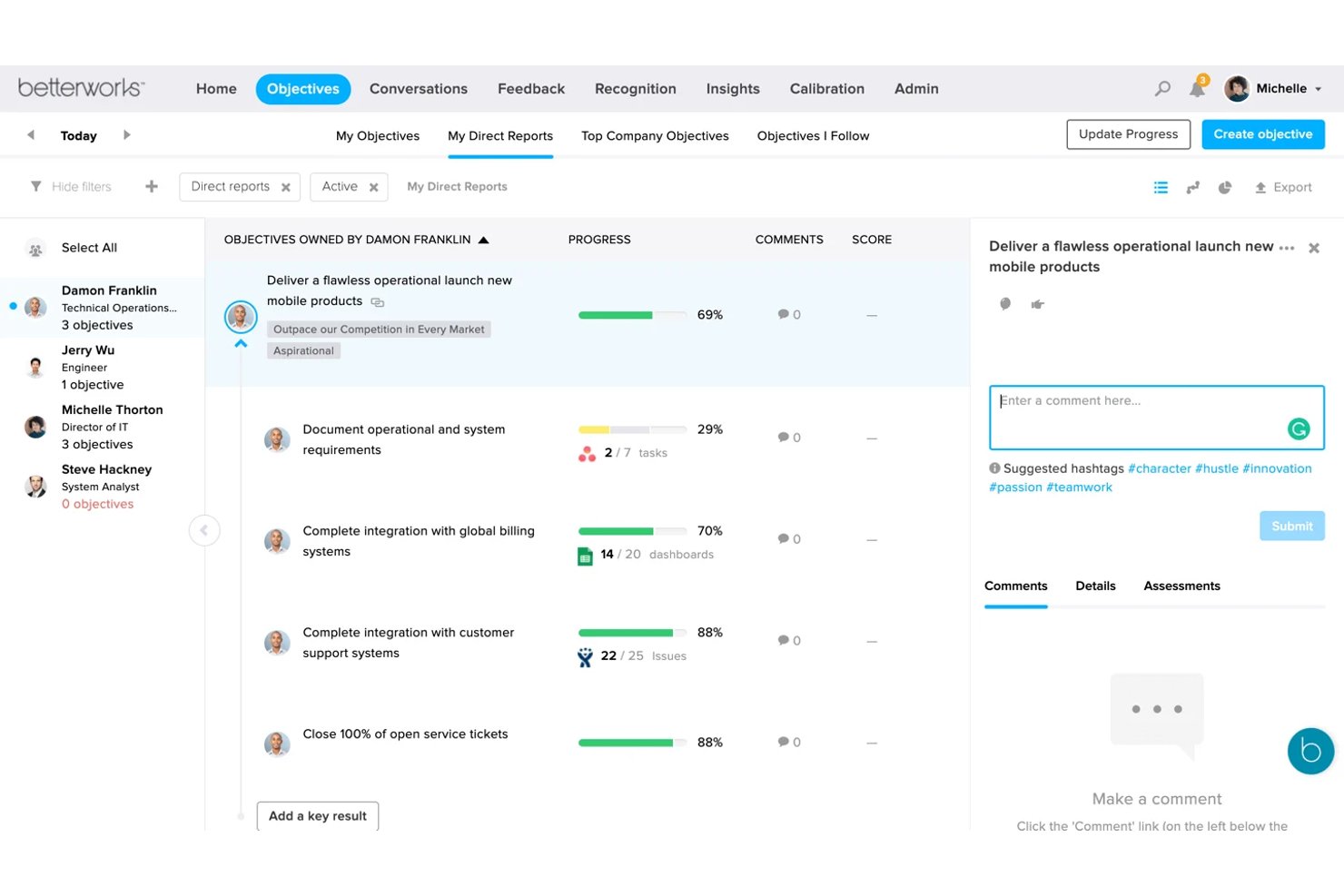
Betterworks stands out for its sophisticated OKR alignment capabilities designed for large organizations. You can cascade goals across departments and teams while maintaining visibility into how individual work supports company objectives.
Performance Tracking
Betterworks combines performance analytics, feedback, and AI-generated insights to help you monitor employee progress over time. You can identify strengths, skill gaps, and coaching opportunities using real-time performance data.
Feedback and Recognition
The platform supports continuous feedback and employee recognition workflows that encourage ongoing communication between managers and employees. This helps keep performance conversations active instead of limited to annual reviews.
1:1 Meetings and Conversations
Betterworks includes structured 1:1 meeting and conversation tools that help managers coach employees more consistently. Shared agendas, historical context, and goal visibility keep discussions focused and actionable.
Reporting and Analytics
The platform offers reporting dashboards and analytics tools that help you measure alignment, engagement, and overall performance trends. These insights make it easier to track progress and support decision-making.
Employee Engagement Surveys
Betterworks includes employee engagement tools with recurring surveys, trend analysis, and action planning features. This helps you identify engagement issues and respond proactively.
Standout Features
Calibration Tools
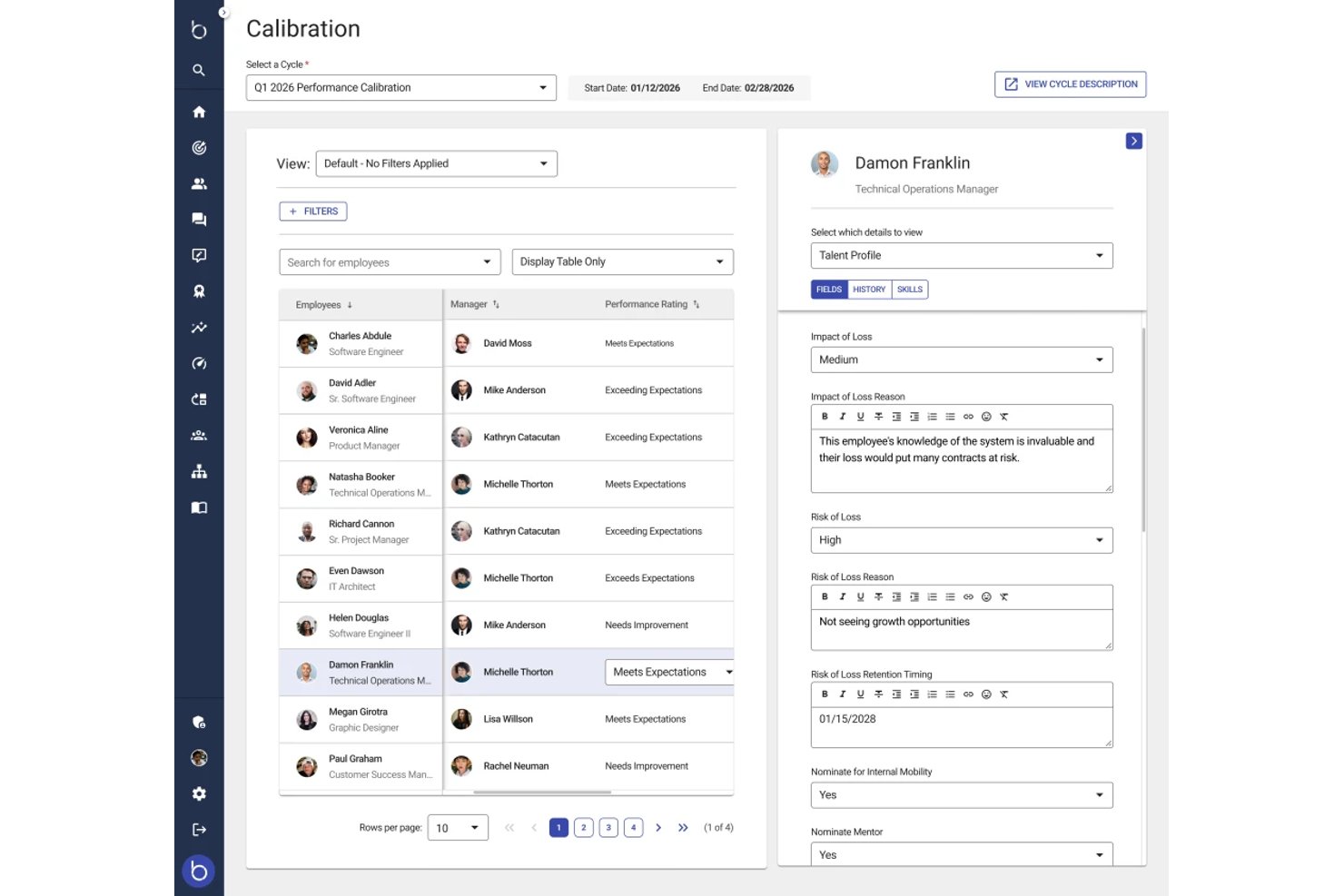
The platform offers enterprise-grade calibration workflows that help HR teams run fairer and more consistent performance evaluations. Features like rating distribution views, 9-box grids, and shared performance context improve decision-making during calibration sessions.
Talent Intelligence and Unified Talent Profiles
Betterworks differentiates itself with AI-powered talent intelligence features that combine performance, skills, feedback, and readiness data into unified employee profiles. This gives leaders a more complete view of workforce capability for succession planning and talent mobility.
AI-Powered Performance Insights
The platform uses AI to generate performance summaries, recommend goals, infer skills, and surface coaching insights from real work data. Unlike simpler AI assistants, Betterworks grounds these insights in ongoing goals, conversations, and feedback.
Ease of Use
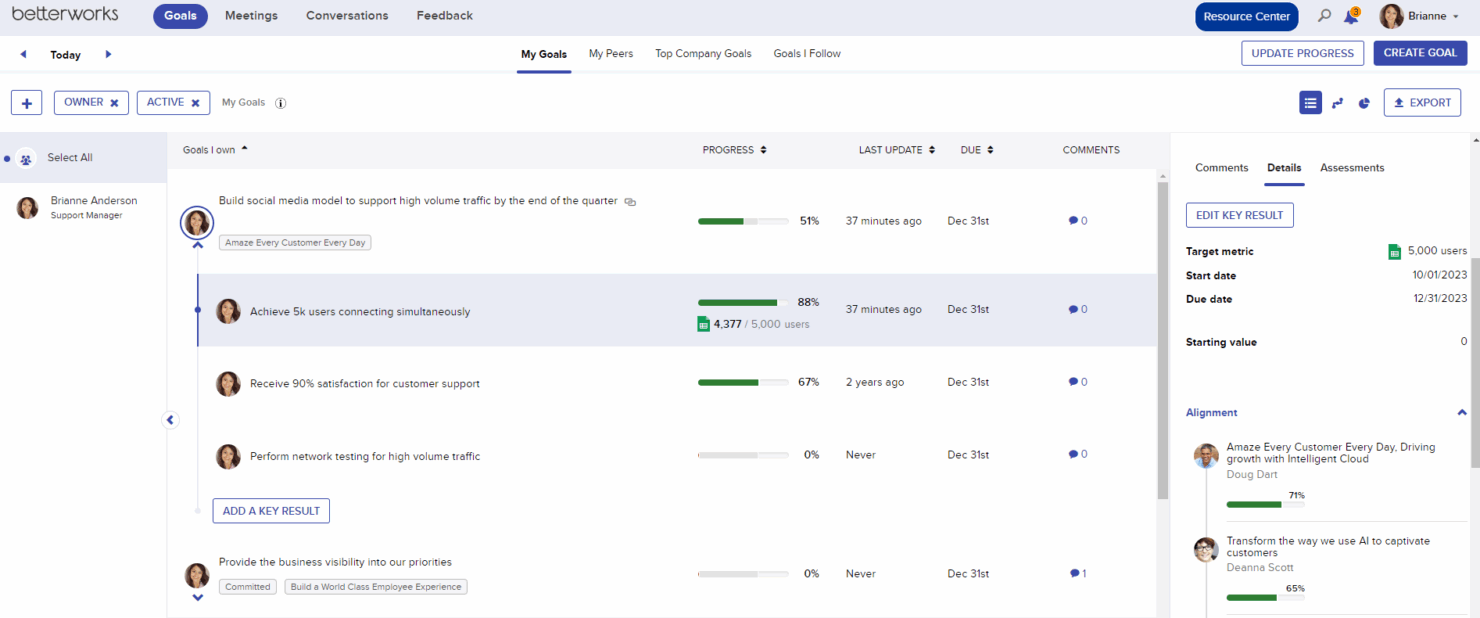
Betterworks offers a relatively modern and approachable interface for an enterprise performance management platform. The layout makes it easier to navigate goals, feedback, reviews, and performance conversations without feeling overly cluttered, especially for everyday users and managers.
I like that many workflows are structured clearly, which helps guide employees through tasks like updating goals, completing reviews, and participating in 1:1 conversations. Integrations with tools like Slack, Microsoft Teams, and Gmail also reduce friction by allowing employees to interact with performance workflows inside the tools they already use daily.
That said, Betterworks is still a feature-rich enterprise platform, so there can be a learning curve during initial setup and onboarding.
Onboarding
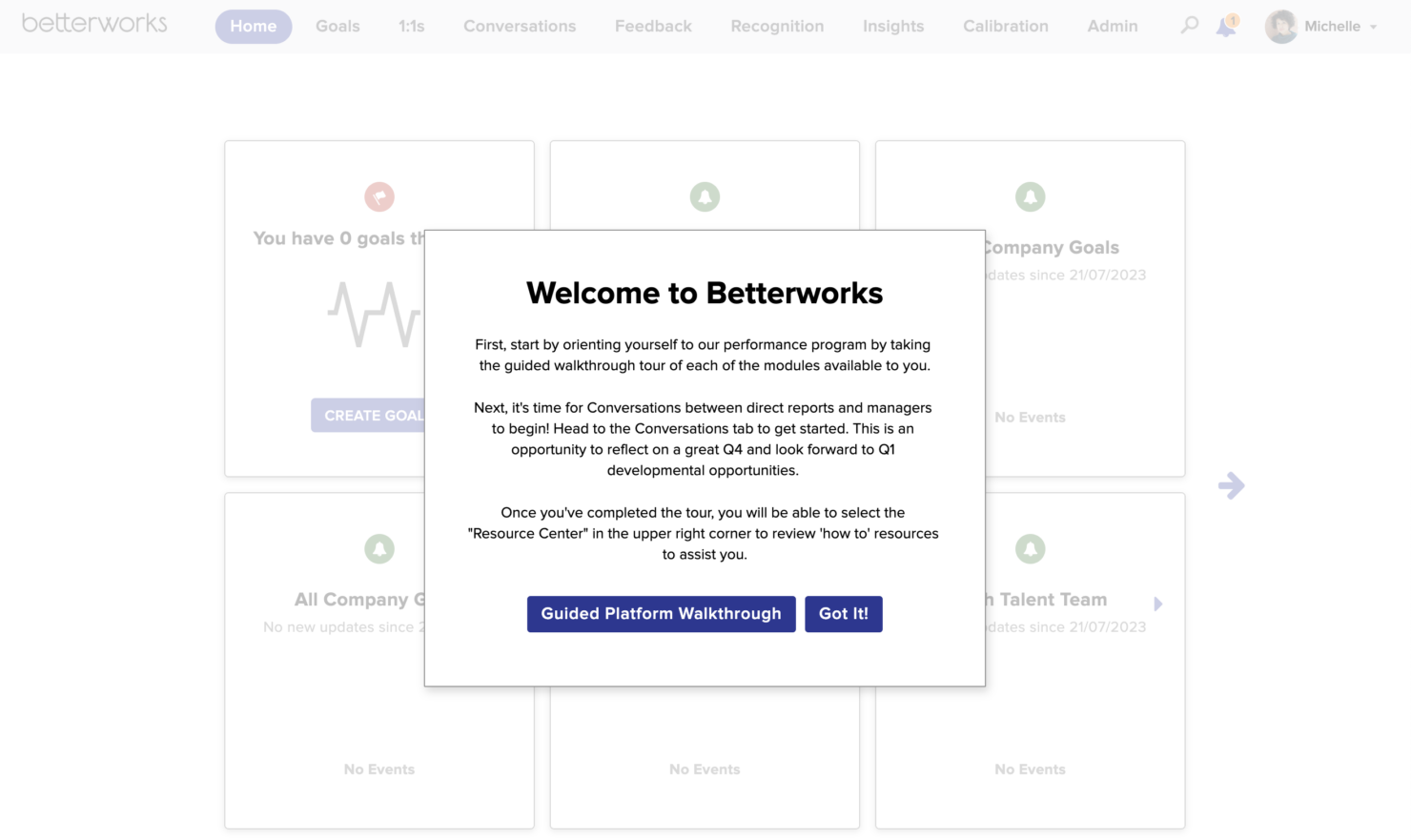
Betterworks uses a guided onboarding process built for mid-sized and enterprise organizations rather than a self-serve setup. You’ll typically work with a dedicated Customer Success Manager and Implementation Manager who help configure performance cycles, templates, integrations, and workflows based on your organization’s goals and performance strategy. The onboarding process also includes HRIS and collaboration tool integrations, data migration, admin enablement, training materials, webinars, tutorials, and access to a customer community.
In my experience, Betterworks places a strong emphasis on change management and long-term adoption rather than fast deployment alone. Simpler implementations can launch in roughly 6–10 weeks, while larger enterprise rollouts often take 10–16 weeks depending on organizational complexity, regional requirements, and integration needs.
Customer Support
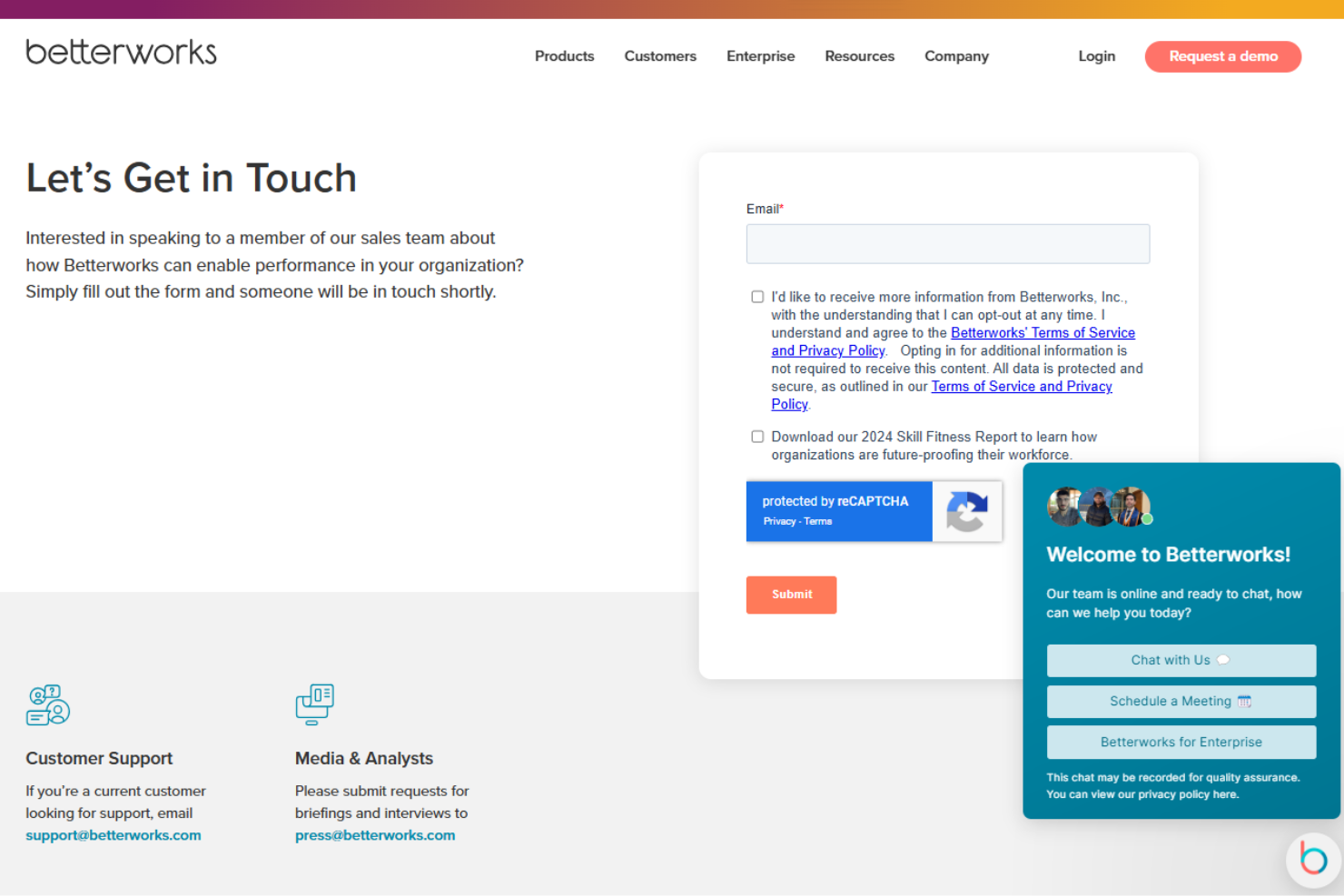
Betterworks offers structured customer support geared toward enterprise customers, including access to a dedicated customer success team, implementation guidance, webinars, tutorials, and detailed support resources. The platform also provides ongoing enablement and optional Signature Support services for organizations needing more hands-on assistance during rollout and long-term adoption.
Integrations
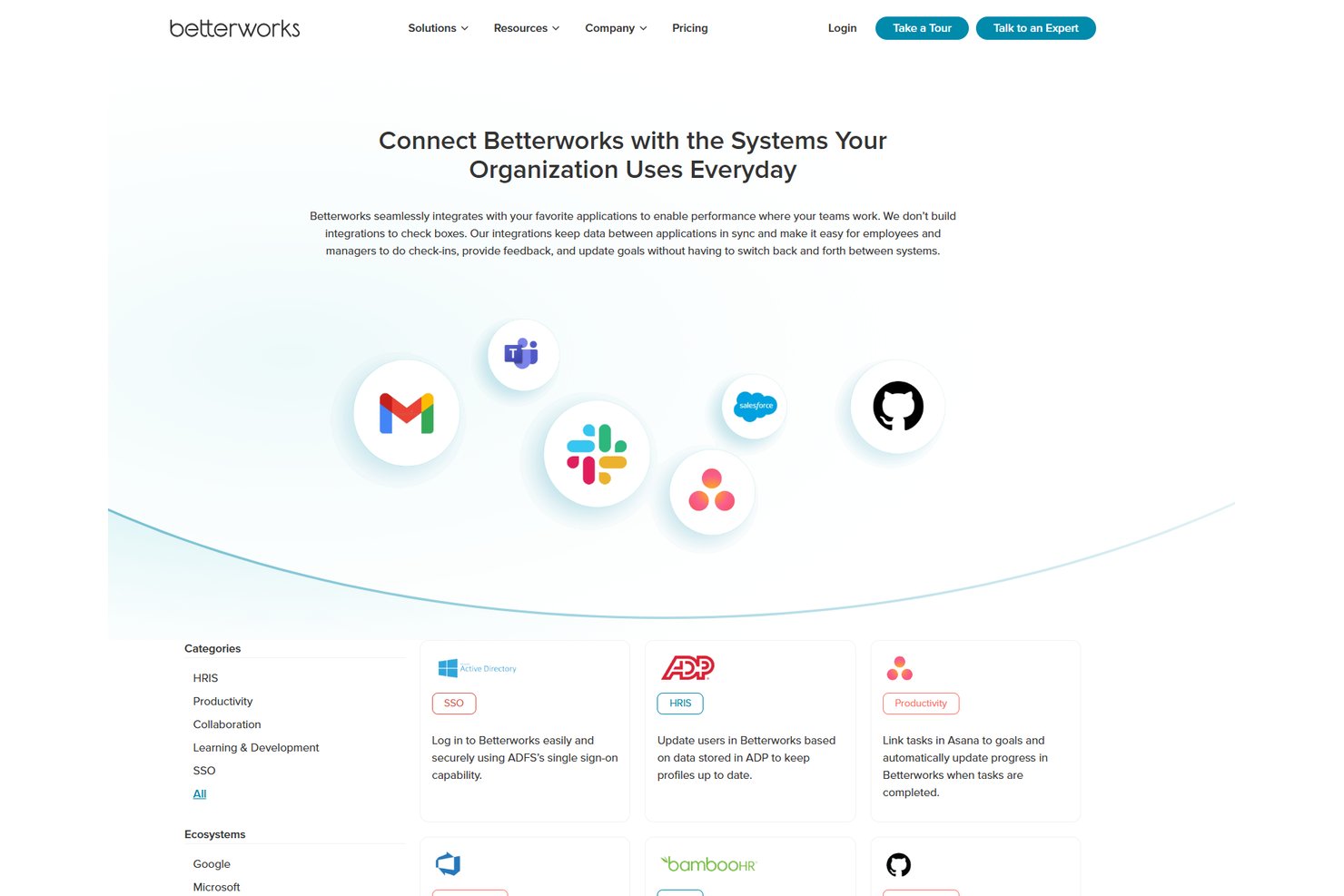
Betterworks integrates with a wide range of HRIS, collaboration, productivity, learning, and SSO platforms to keep performance management connected to your existing workflows. Supported integrations include Workday, SAP SuccessFactors, ADP, BambooHR, UKG Pro, Oracle, Slack, Microsoft Teams, Jira, Salesforce, Gmail, Google Sheets, Asana, GitHub, LinkedIn Learning, Udemy, Okta, and OneLogin.
The platform also has a REST API with token-based authentication, versioned endpoints, pagination, and secure HTTPS access, giving larger organizations more flexibility for custom integrations and enterprise data syncing.
Value for Money
Betterworks is positioned as an enterprise-grade performance management platform, so its pricing is best suited for larger organizations that need advanced goal alignment, calibration, talent intelligence, and ongoing support. While pricing is not publicly disclosed, the platform delivers strong value for companies looking for a connected system that combines performance management, feedback, engagement, and workforce insights in one place.
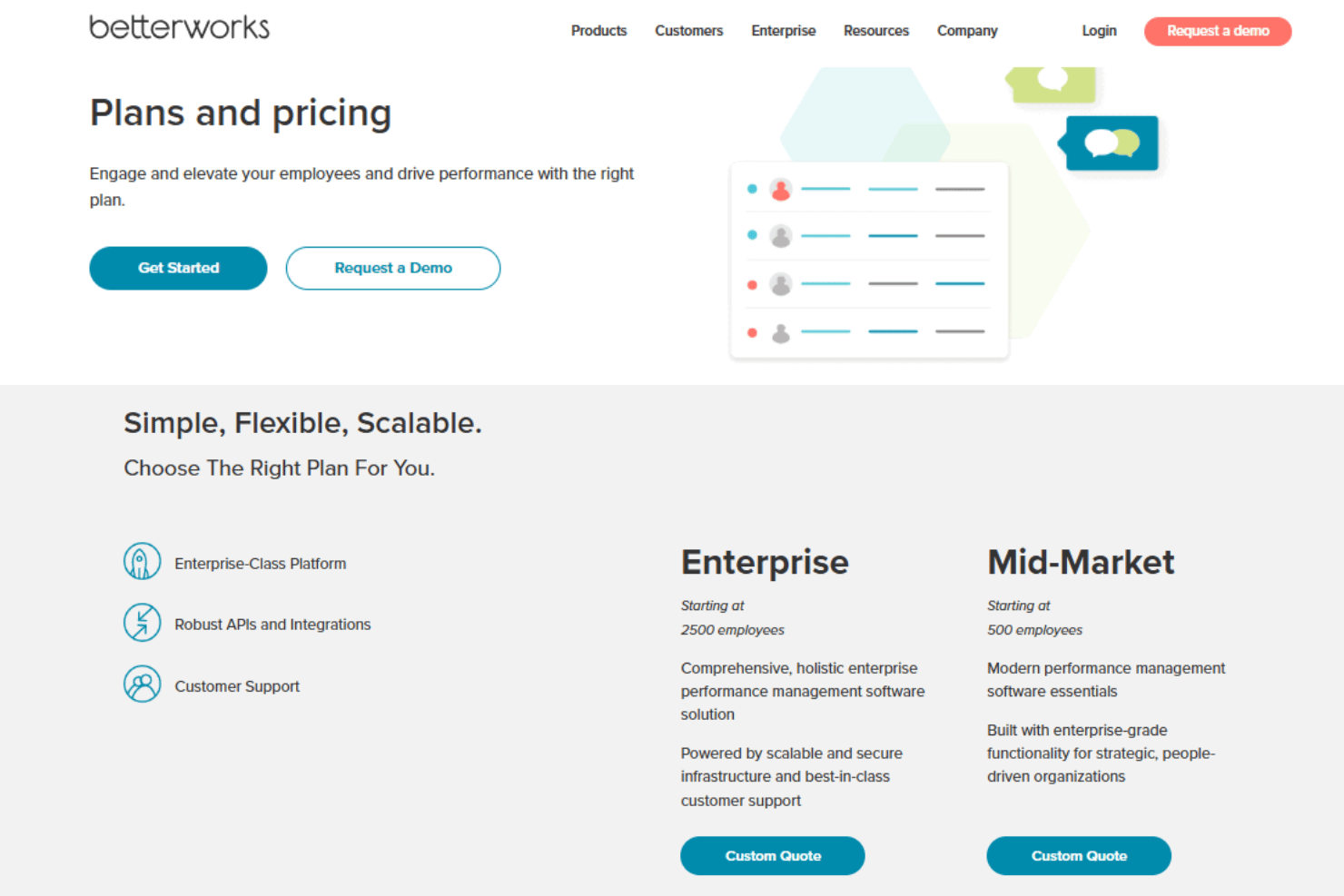
- Mid-Market Plan: Starts at 500 employees and includes Betterworks’ core performance management, talent intelligence, integrations, analytics, and enterprise-grade platform features.
- Enterprise Plan: Starts at 2,500 employees and adds higher-touch services such as Signature Support and change management support for larger, more complex deployments.
Both plans include enterprise-grade security, localization support, integrations, and API access, though you’ll need to contact Betterworks directly for custom pricing details.
Betterworks Specs
- 360 Degree Feedback
- API
- Application Tracking
- Attendance Tracking
- Budgeting
- Calendar Management
- Dashboard
- Data Export
- Data Import
- Data Visualization
- Employee Database
- Employee Engagement
- Employee Incentive Management
- Employee Onboarding
- External Integrations
- Feedback Management
- Forecasting
- Multi-User
- Notifications
- Onboarding
- Scheduling
- Timesheets
- Vacation & Absence Calendar
Betterworks FAQs
How does Betterworks handle data security and compliance?
Can Betterworks handle OKR management at scale?
How customizable is the Betterworks platform?
What kind of training does Betterworks provide for new users?
Does Betterworks offer mobile access?
How does Betterworks facilitate employee engagement?
Is Betterworks a replacement for an HRIS?
Is Betterworks suitable for small businesses?
Betterworks Company Overview & History
Betterworks, founded in 2013, is headquartered in Menlo Park, California, with an additional office in New York City. The company specializes in enterprise performance management and talent intelligence software designed to help organizations align goals, improve coaching, and make more informed talent decisions. Its platform combines goals and OKRs, feedback, performance reviews, calibration, employee engagement, succession planning, and AI-powered workforce insights in one connected system.
Over the years, Betterworks has expanded from an enterprise OKR platform into a broader performance management and talent intelligence solution. The company has raised more than $65 million in funding, including a $15.5 million Series A round led by Kleiner Perkins in 2014, a $20 million Series B round in 2016, and an additional $27 million extension to its Series B funding in 2019.
Betterworks Major Milestones
- 2013: The company was founded in Menlo Park, California.
- 2014: Raised $15.5 million in Series A funding led by Kleiner Perkins.
- 2016: Secured $20 million in Series B funding to expand enterprise solutions.
- 2019: Extended Series B funding by $27 million, bringing total funding to over $65 million.
- 2026: Launched AI-powered Talent Intelligence capabilities and repositioned the platform around performance enablement and workforce intelligence.