

Recensione di Microkeeper: caratteristiche, prezzi, vantaggi e svantaggi per il 2026



Payroll problems often start well before the pay run, with a missed roster change, incorrect timesheet, or employee update that never reaches the right system. For HR and operations teams managing shift-based or complex workforces, keeping those moving parts connected matters just as much as getting payroll right.
Microkeeper is a workforce management software for Australian businesses, with HR, rostering, timesheets, and payroll built into a single system on shared workforce data. Its configurable payroll, competitive pricing, and onshore support make it a strong fit for mid-sized and enterprise teams.
In this detailed review, I’ve evaluated Microkeeper using my expertise in workforce management software to help you decide whether its strengths, tradeoffs, and approach to payroll are the right fit for your team.
Microkeeper Evaluation Summary
- From $6/user/month
- 30-day free trial
Perché fidarsi delle nostre recensioni sui software
Il nostro team testa e recensisce software dal 2012. In quanto esperti HR noi stessi, sappiamo quanto sia difficile — e importante — scegliere il software giusto.
Per questa guida, abbiamo valutato gli strumenti attraverso test pratici e ricerche indipendenti, assegnando un punteggio agli strumenti in base ai nostri criteri di selezione. Ci basiamo inoltre sulle competenze di leader di pensiero del settore e di professionisti HR attivi.
Le nostre recensioni riflettono il nostro giudizio editoriale umano, non un discorso di vendita.
Revisori esperti:
Microkeeper Overview
In my opinion, Microkeeper is strongest when workforce management and payroll complexity go hand in hand. Because its HR, rostering, timesheets, and payroll tools were built as one system, workforce data can move between scheduling, attendance, and pay without relying on separate products or syncs. I also like the flexibility of its payroll engine and direct onshore support. The interface is more functional than polished, and the native integration list is fairly limited, but I think its product depth and pricing make those tradeoffs reasonable for the right Australian business.
pros
-
Configurable payroll rules handle allowances, penalty rates, overtime, and EBAs for businesses with complex pay structures.
-
Rosters and approved timesheets flow directly into payroll, reducing manual data transfer between scheduling, attendance, and pay runs.
-
Competitive pricing covers a broad workforce management feature set, with direct support from an onshore Australian team.
cons
-
The HR and rostering interface can feel less polished than more modern workforce platforms.
-
Native integrations are limited, so businesses with established tech stacks may need custom connections through Microkeeper’s open API.
-
Self-setup takes meaningful time to configure pay rules, connect workflows, and test payroll before going live.
Is Microkeeper Right For Your Needs?
Who Would be a Good Fit for Microkeeper?
Microkeeper is best suited to mid-sized and enterprise Australian businesses where workforce operations are closely tied to payroll. I’d put it high on the shortlist for shift-based, multi-site, or operationally complex teams that need accurate time tracking, configurable pay rules, and stronger links between rostering and pay.
-
Manufacturing Businesses
Manufacturers can manage rotating shifts, employee skills and availability, attendance, allowances, and complex pay conditions across production teams.
-
Mining and FIFO Operations
Mining businesses can use multi-site rostering, workforce location tracking, credential management, and flexible clocking options to manage remote and FIFO teams.
-
Labor Hire Agencies
Labor hire businesses can onboard workers quickly, schedule staff across client sites, track availability and skills, and process varied payroll requirements from the same system.
-
Construction Companies
Construction teams can track hours across multiple worksites, manage project-based workers, apply custom pay conditions and allowances, and monitor labor costs by project.
-
Hospitality Businesses
Hospitality teams can manage changing availability, casual and shift-based staff, roster updates, timesheets, and pay conditions such as penalty rates and allowances.
-
Multi-Site Retailers
Retail businesses can onboard different employee types, manage rosters across stores and locations, track hours by site, and centralize payroll and workforce records.
Who Would be a Bad Fit for Microkeeper?
Microkeeper isn’t the best fit for every Australian employer. I’d look elsewhere if you have very little need for workforce management beyond basic payroll, need one system for employees across several countries, or expect Modern Award rules to arrive fully configured and automatically maintained. Teams that want an almost instant, hands-off setup or depend on a large ecosystem of native integrations should also weigh those limitations carefully.
-
Sole Traders and Microbusinesses
Very small operators with simple payroll and little need for rostering, timesheets, or HR workflows may find Microkeeper more extensive than necessary.
-
Global Retail Chains
Retailers managing employees across multiple countries will need separate systems for non-Australian payroll and compliance, since Microkeeper is built specifically for Australia.
-
Multinational Manufacturers
Manufacturers with Australian and overseas workforces cannot use Microkeeper as a single global payroll and HR system across all regions.
-
Hospitality Businesses Requiring Prebuilt Awards
Hospitality operators that expect Modern Award rules and rates to arrive preconfigured and stay automatically updated may find Microkeeper’s configuration-based approach too hands-on.
-
Retailers Requiring Out-of-the-Box Award Interpretation
Retail businesses that do not have the time or resources to configure and maintain their own award rules may prefer a system with prebuilt award interpretation.
-
Fast-Growing Teams Needing Immediate Deployment
Organizations that need to sign up and go live within a day or two with little setup may find Microkeeper’s current implementation process too involved, particularly for complex payroll or rostering requirements.
Come Testiamo e Valutiamo i Nostri Strumenti
Abbiamo impiegato anni per costruire, perfezionare e migliorare il nostro sistema di test e valutazione dei software. Il modello è progettato per cogliere le sfumature della scelta del software e per evidenziare cosa rende uno strumento efficace, concentrandosi sugli aspetti più critici del processo decisionale. Di seguito puoi vedere esattamente come funziona la nostra valutazione e attribuzione dei punteggi secondo sette criteri. Questo ci consente di fornire una valutazione imparziale del software basandoci su funzionalità principali, caratteristiche distintive, facilità d’uso, onboarding, assistenza clienti, integrazioni, recensioni dei clienti e rapporto qualità/prezzo.
Funzionalità Principali (25% del punteggio finale)
Il punto di partenza della nostra valutazione sono sempre le funzionalità principali dello strumento. Possiede le funzioni di base che l’utente si aspetta? Alcune di queste funzioni sono disponibili solo in piani a prezzi più alti? In sostanza, ci aspettiamo che uno strumento rispecchi almeno le capacità base dei concorrenti.
Caratteristiche Distintive (25% del punteggio finale)
Successivamente valutiamo le funzionalità particolari che superano le funzionalità di base tipiche degli strumenti della sua categoria. Un punteggio alto riflette caratteristiche specializzate o uniche che rendono il prodotto più veloce, efficiente, o che offrono ulteriore valore all’utente. Valutiamo inoltre quanto sia semplice integrare il software con altri strumenti tradizionalmente presenti nel tech stack per espanderne funzionalità e utilizzo. Gli strumenti che offrono numerose integrazioni native, collegamenti di terze parti e accesso API per creare integrazioni personalizzate ricevono i punteggi migliori.
Facilità d’Uso (10% del punteggio finale)
Consideriamo quanto sia veloce e semplice svolgere i compiti definiti dalle funzionalità principali utilizzando lo strumento. I software con punteggi alti sono ben progettati, intuitivi, dispongono di app mobili, offrono modelli preimpostati e rendono semplici anche i compiti più complessi.
Onboarding (10% del punteggio finale)
Sappiamo quanto sia importante una rapida adozione di una nuova piattaforma all’interno di un team, quindi valutiamo quanto sia facile imparare e utilizzare uno strumento con una formazione minima. Valutiamo quanto rapidamente un membro del team possa iniziare a utilizzare lo strumento senza esperienza. Le soluzioni con punteggio alto richiedono poco o nessun supporto.
Assistenza Clienti (10% del punteggio finale)
Esaminiamo quanto sia facile e veloce ricevere supporto o trovare aiuto tramite telefono, chat dal vivo o knowledge base. Gli strumenti e le aziende che forniscono un’assistenza in tempo reale ottengono i punteggi migliori, mentre i chatbot ottengono i risultati peggiori.
Recensioni dei Clienti (10% del punteggio finale)
Oltre ai nostri test e valutazioni, consideriamo il punteggio net promoter dei clienti attuali e passati. Analizziamo la loro propensione, se potessero scegliere, a selezionare di nuovo lo strumento per le sue funzionalità principali. Un software con un punteggio alto riflette un elevato net promoter score da parte dei clienti attuali o passati.
Rapporto Qualità/Prezzo (10% del punteggio finale)
Infine, considerando tutti gli altri criteri, esaminiamo il prezzo medio dei piani base rispetto alle funzionalità principali e teniamo conto del valore degli altri criteri di valutazione. I software che offrono di più, a meno, ottengono un punteggio più alto.
Core Features
Payroll Processing
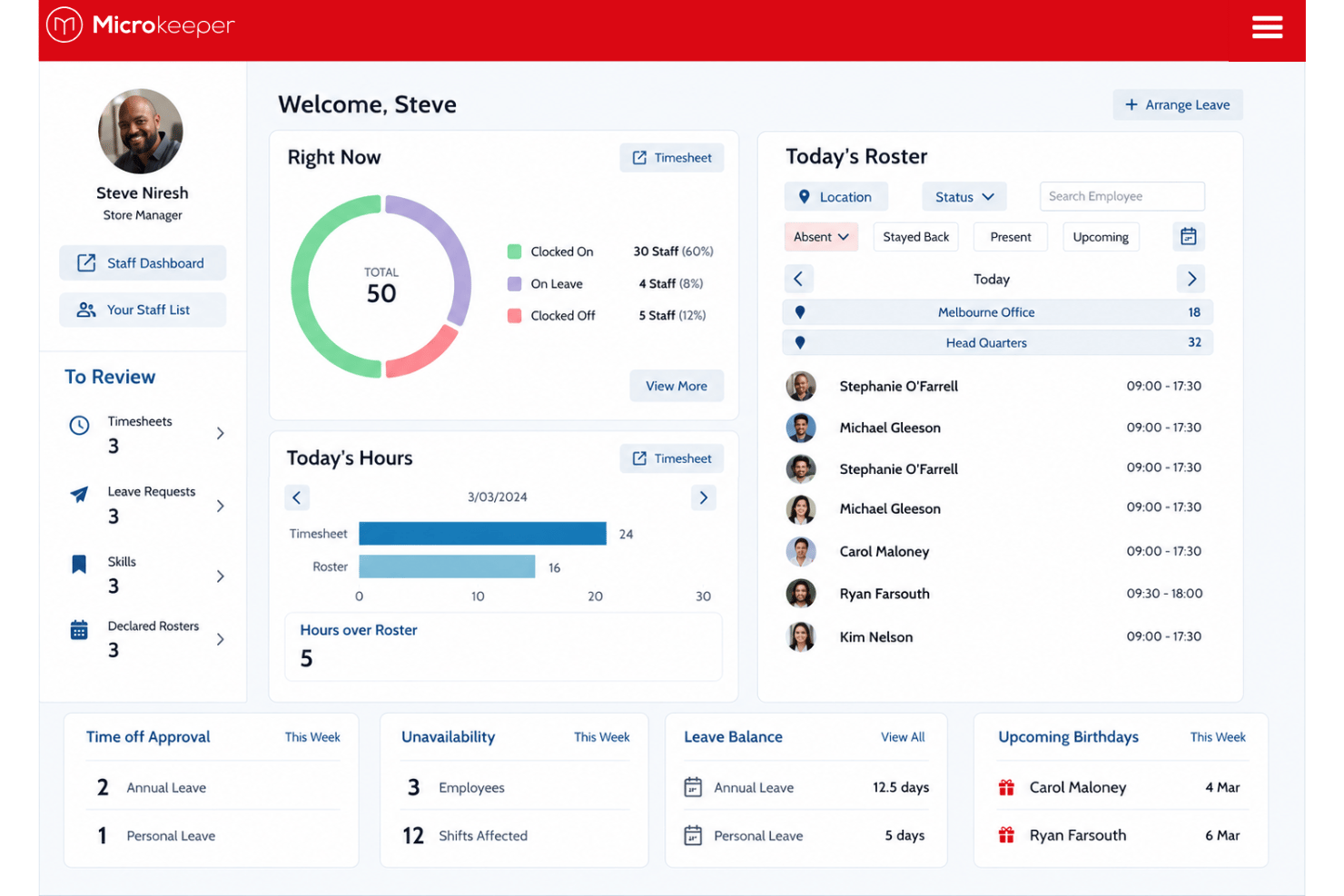
Processes payroll using approved timesheets and configured rules for overtime, penalties, allowances, and other pay conditions. Microkeeper also supports STP reporting, superannuation processing, auto-generated payslips, and detailed payroll reports.
Rostering and Shift Management
Builds and manages rosters across teams and locations using employee availability and staffing requirements. Features include roster templates, multi-site scheduling, break compliance, availability tracking, and shift bidding.
Time and Attendance Tracking
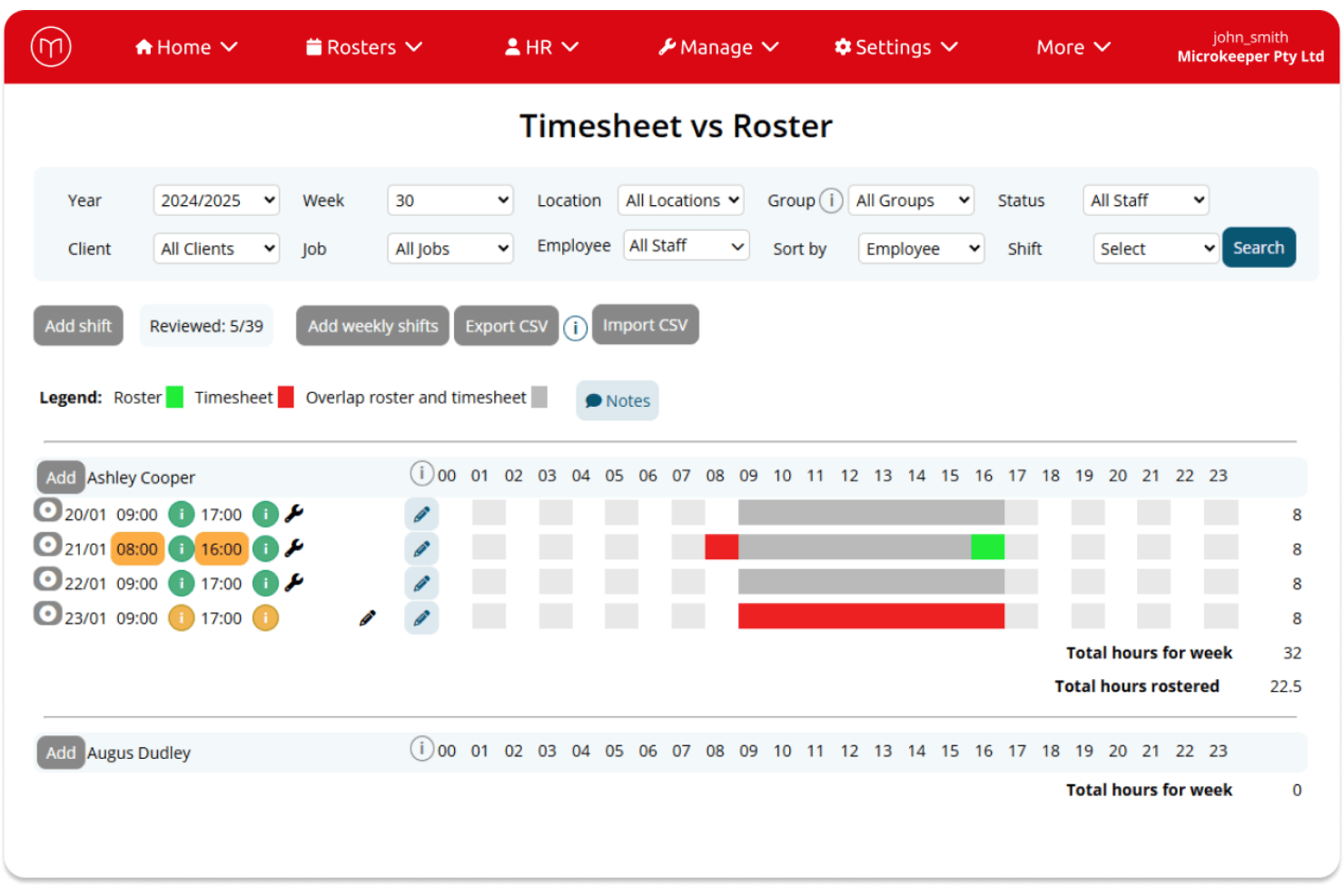
Captures worked hours through mobile, browser, GPS, facial recognition, fingerprint, NFC, and dedicated clocking stations. Managers can review attendance and location data before approved timesheets move into payroll.
Employee Onboarding and Document Management
Lets new hires complete onboarding details and submit required information online before starting work. HR teams can also manage contracts, licenses, certifications, document expiry dates, and VEVO checks from the same system.
Leave Management
Handles leave requests, balances, approvals, and configurable leave types digitally. Once approved, leave data can feed into rostering and payroll rather than requiring HR teams to update each process separately.
Employee Self-Service and HR Tools
Gives employees access to rosters, timesheets, payslips, leave requests, personal details, and workplace messages through self-service tools. HR teams can also use dashboards, team messaging, and document tools for broader employee administration.
Standout Features
Controlled Award Interpretation and Custom Payroll Rules
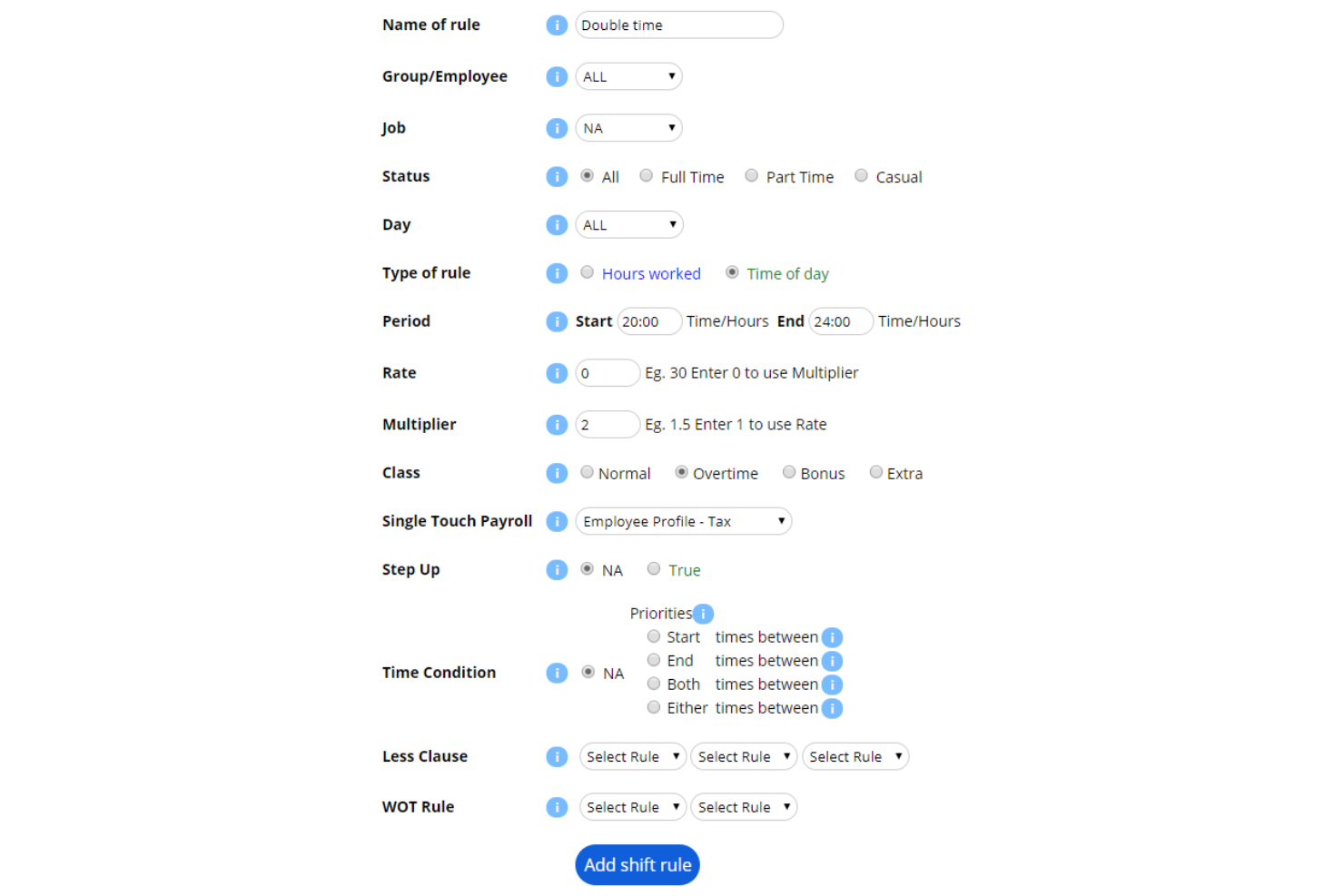
Applies configured Award, EBA, and custom pay rules to timesheets, including overtime, penalty rates, and allowances. I see the configurability as the bigger advantage here: businesses can build payroll logic around how they actually operate rather than being limited to rigid prebuilt rules.
Flexible Clocking and Attendance Verification
Supports multiple attendance methods, including GPS clocking, facial recognition, fingerprint scanners, NFC, browser clocking, and dedicated clocking stations. This gives employers more flexibility to choose clocking methods based on the needs of different sites, roles, or workforce environments.
Ease of Use
Microkeeper takes a practical, function-first approach to usability, and I think that will suit payroll and operations teams that value capability over visual polish. I wouldn’t call the interface its biggest strength, and self-setup takes time to understand, but once the platform is configured, its connected rostering, timesheet, HR, and payroll workflows make routine workforce administration easier to manage.
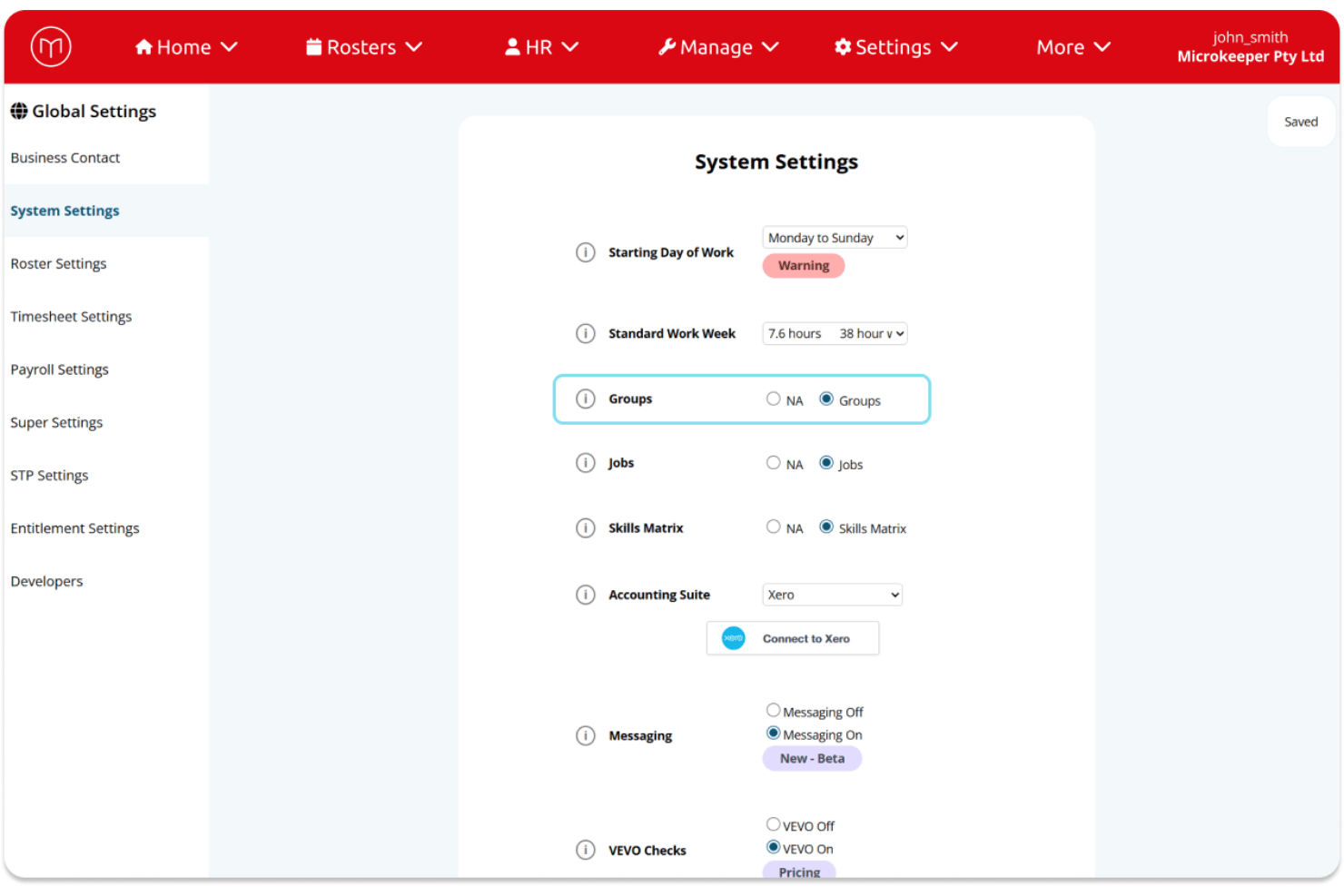
Onboarding
Microkeeper offers both guided implementation and self-setup, depending on a business’s complexity, budget, and internal resources. I’d lean toward guided implementation for organizations with complex Awards, EBAs, or rostering rules, since it covers needs assessment, payroll scoping, configuration and testing, admin training, a parallel pay run, and go-live support, typically around 8 to 10 weeks depending on complexity.. Self-setup is available through detailed guides and general support, but it requires more hands-on configuration, testing, and understanding of how the modules connect.
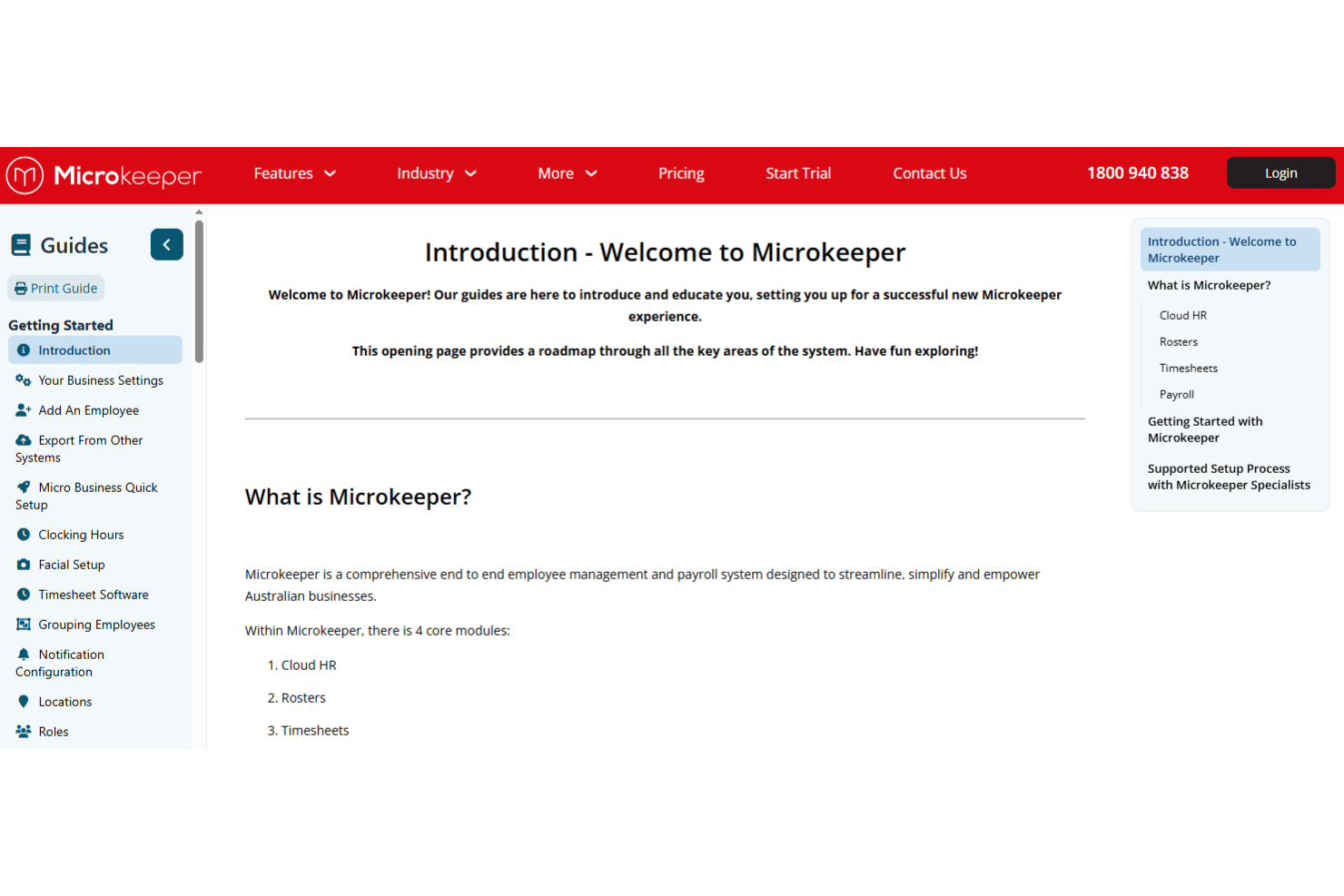
Customer Support
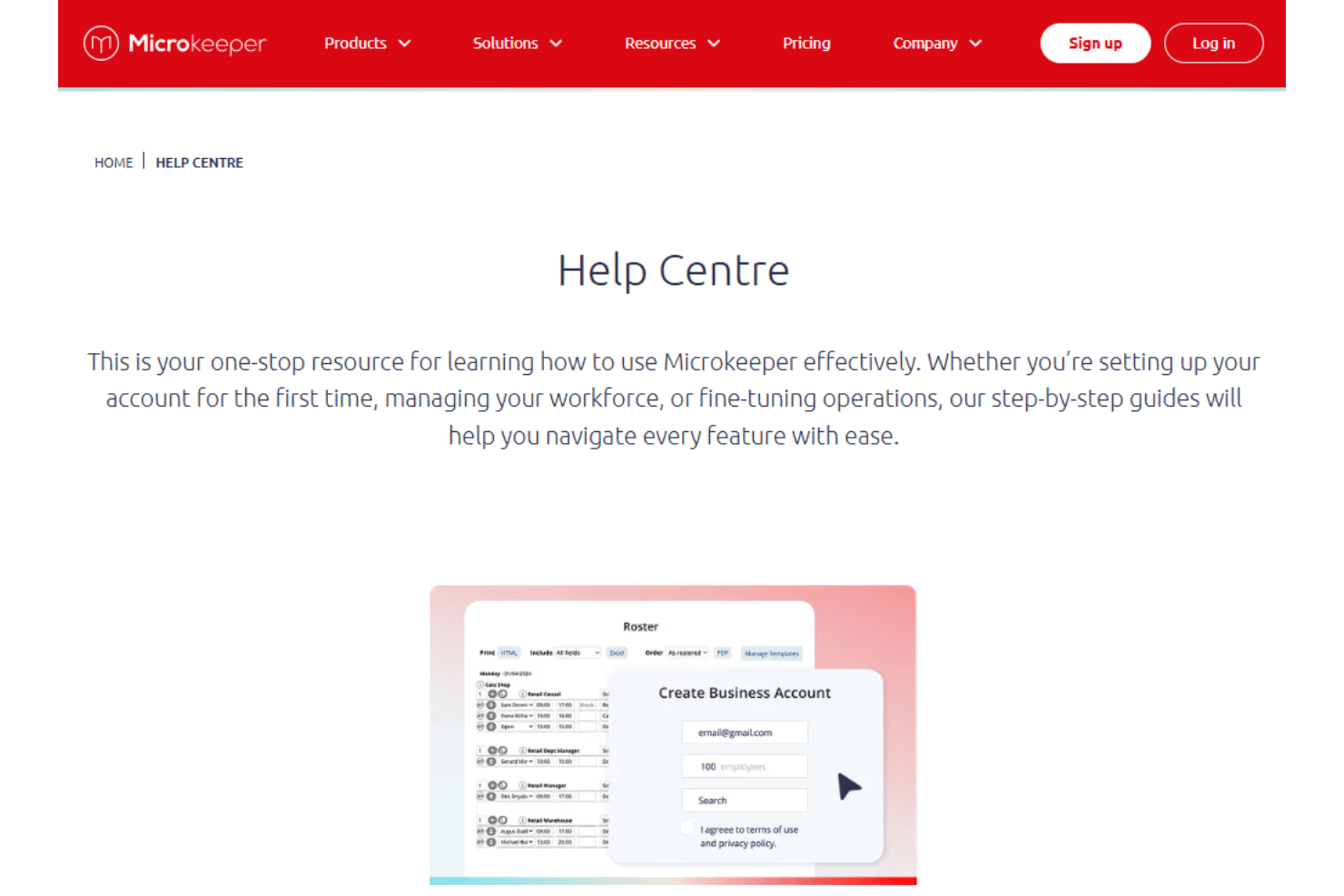
Microkeeper provides direct, onshore Australian support by phone and ticket, with inquiries handled by real people rather than chatbot triage, offshore call centers, or multiple support tiers. I think this is a meaningful advantage for payroll teams, where getting a knowledgeable answer quickly can matter far more than having another self-service support channel. Detailed guides and support resources cover everyday questions, while more involved configuration needs can be directed to the appropriate team.
Integrations
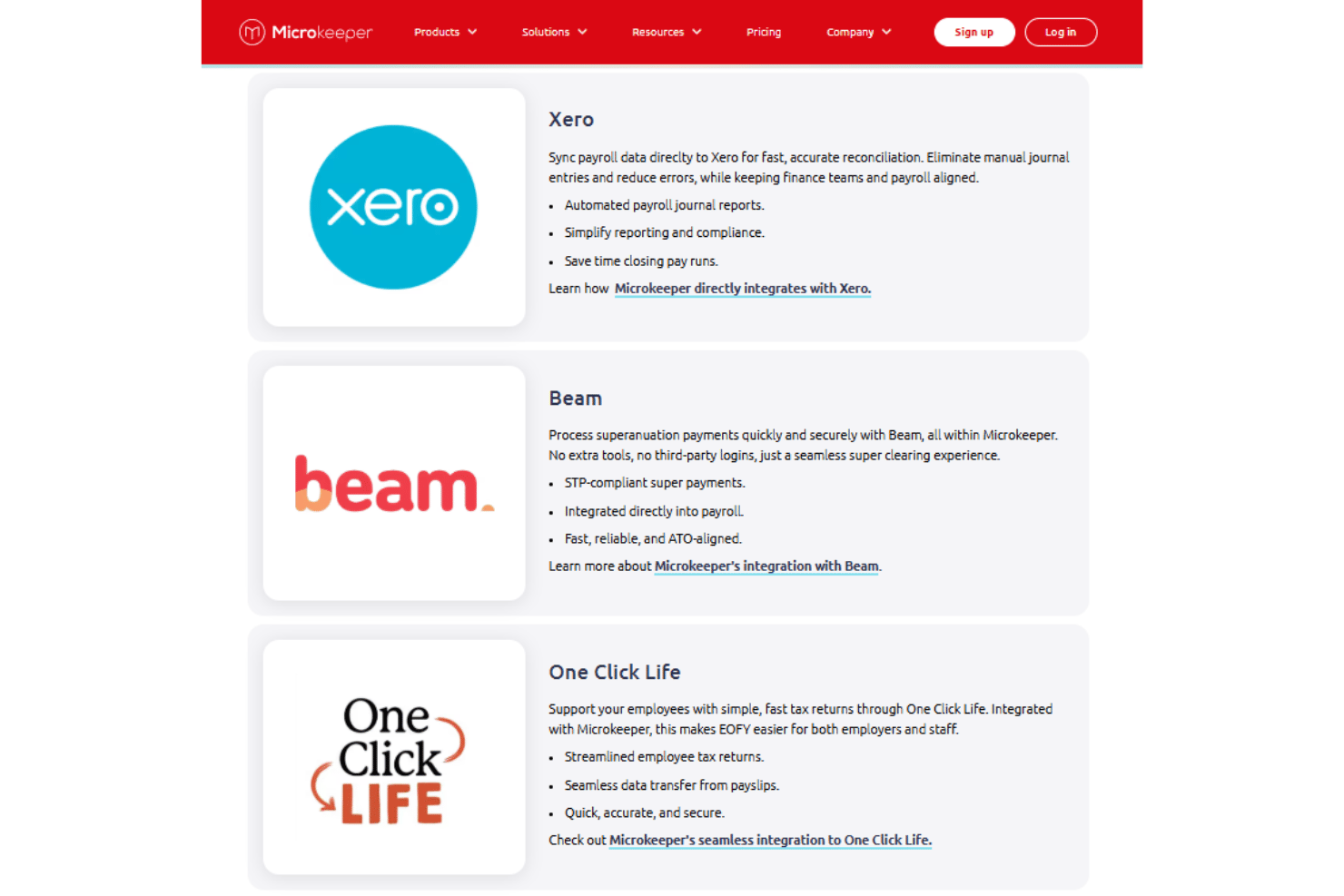
Microkeeper integrates with Xero, MYOB, Beam, One Click Life, Manatal, and Teamtailor, among others, and also provides an open API for custom connections. The native list covers several common accounting, superannuation, and recruitment workflows, but I’d check your existing tech stack carefully before committing, since tools outside that list may require development work.
Value for Money
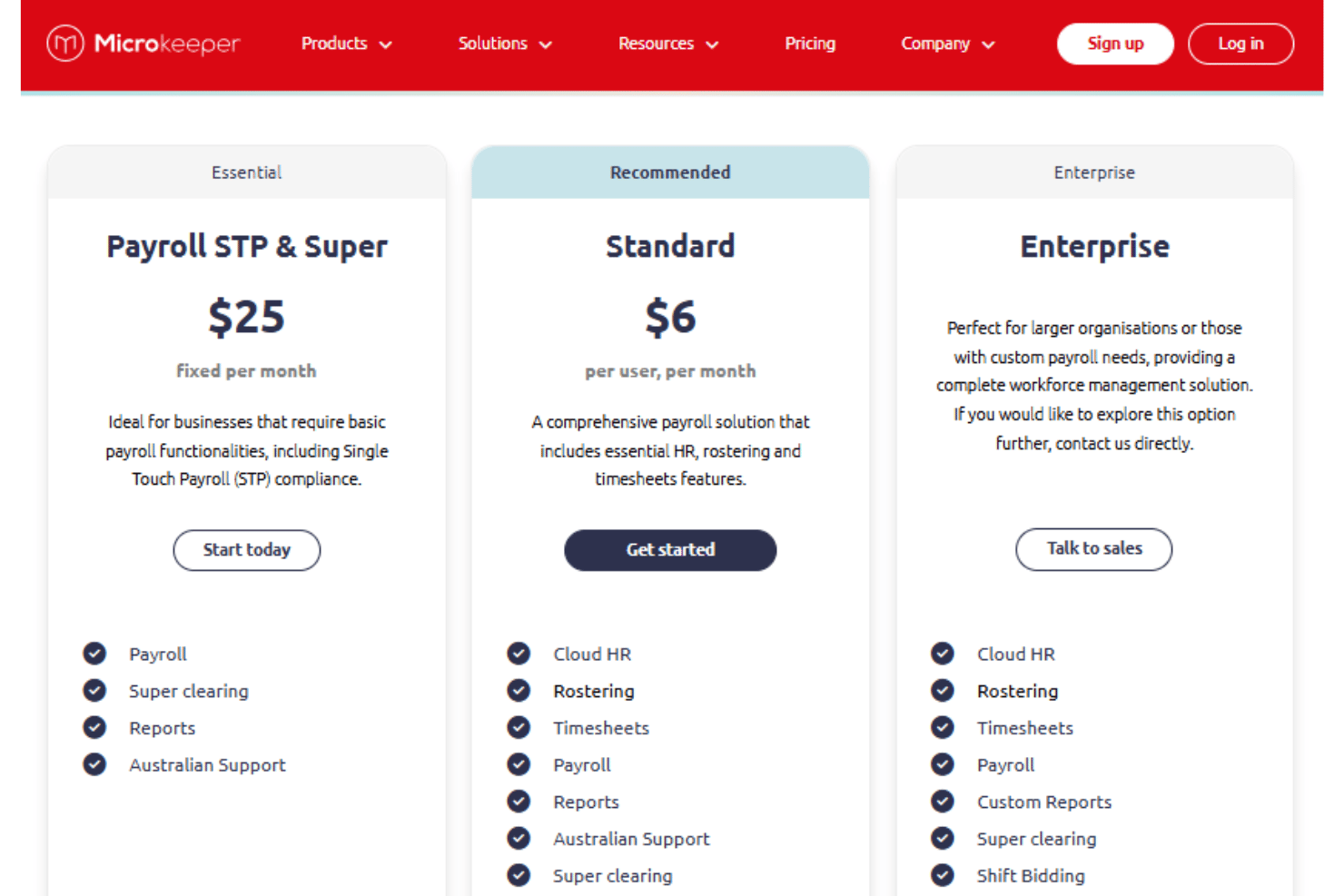
Microkeeper offers strong value for Australian businesses that want payroll and workforce management in one connected system rather than relying on multiple tools. I think Standard is where the value proposition is strongest for businesses that need more than payroll alone, since it brings Cloud HR, rostering, timesheets, payroll, reporting, super clearing, and Australian support together. Businesses with simpler payroll needs can opt for Payroll STP & Super, while Enterprise offers more advanced scheduling, reporting, and dedicated support for larger organizations or those with custom payroll requirements.
- Payroll STP & Super: Includes payroll, super clearing, reports, and Australian support, with the core functionality needed for STP-compliant payroll.
- Standard: Includes Cloud HR, rostering, timesheets, payroll, reports, super clearing, and Australian support for businesses that need broader workforce management capabilities.
- Enterprise: Includes the core workforce management features plus custom reports, shift bidding, auto-scheduling, priority support, an account manager, and health checks for larger or more complex organizations.
Microkeeper Specs
- 2-Factor Authentication
- 360 Degree Feedback
- API
- Application Tracking
- Attendance Tracking
- Batch Permissions & Access
- Budgeting
- Calendar Management
- Dashboard
- Data Export
- Data Import
- Data Visualization
- Employee Database
- Employee Engagement
- Employee Incentive Management
- Employee Onboarding
- Expense Tracking
- External Integrations
- Feedback Management
- Forecasting
- Multi-User
- Notifications
- Onboarding
- Payroll
- Project Management
- Scheduling
- Time Management
- Timesheets
- Travel Management
- Vacation & Absence Calendar
Microkeeper FAQs
How easy is it to set up Microkeeper for my team?
How does Microkeeper handle award interpretation and payroll compliance?
What employee onboarding tools does Microkeeper offer?
Can Microkeeper integrate with my accounting or HR systems?
How secure is my employee data with Microkeeper?
Can employees use Microkeeper from a mobile device?
What reporting features does Microkeeper include?
Can Microkeeper support enterprise and multi-site workforces?
Is Microkeeper a true all-in-one workforce management platform?
Microkeeper Company Overview & History
Microkeeper is an Australian workforce management software company based in Geelong, Victoria. Founded in 2010 by founding directors Jon Arrigo and Joel Davis, the company develops an integrated platform for HR, rostering, timesheets, and payroll for Australian businesses. Microkeeper is Australian-owned and operated and serves organizations across industries including retail, hospitality, manufacturing, healthcare, mining, construction, and labor hire.
Microkeeper Major Milestones
- 2010: Microkeeper was founded in Geelong, Victoria.
- 2015: Expanded payroll automation with new rate, shift, and public-holiday rule capabilities.
- 2023: Completed its Newtown office in the Geelong business community.
- 2025: Won the Innovation, Research, and Development Award at the Geelong Business Excellence Awards.