

Geen geheimen, geen verrassingen: binnen een bedrijf met 15 jaar open boeken
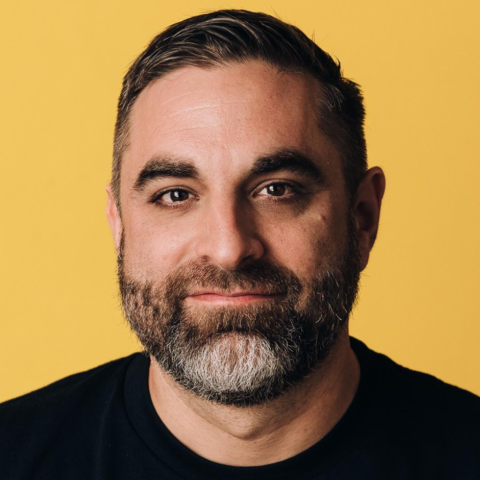
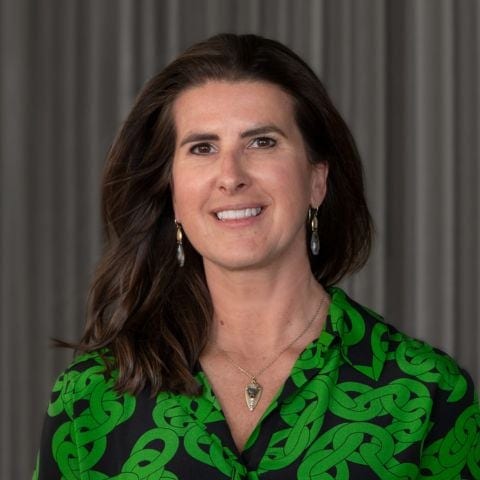
De meeste leiders gaan ervan uit dat transparantie over salarissen en financiën verdeeldheid zal zaaien of jaloezie zal aanwakkeren. Mel Price bewijst dat het tegenovergestelde mogelijk is. Als medeoprichter en CEO van Work Program Architects runt ze al 15 jaar een bedrijf met volledige transparantie over salarissen en financiën—bewust ontworpen, niet toevallig ontstaan. Het resultaat? Een bedrijf waar mensen begrijpen hoe geld stroomt, waarom beslissingen worden genomen en hoe hun eigen werk bijdraagt aan bedrijfsresultaten.
In deze aflevering bespreken we wat er echt nodig is om radicale transparantie in te voeren—van open financiële boeken en salariscommissies tot werving en contractondertekening door medewerkers. Mel deelt wat ze heeft geleerd bij het opbouwen van een model voor gespreid leiderschap, waarin elke medewerker de middelen en gegevens krijgt om te denken (en te handelen) als een eigenaar.
Wat je zult leren
- Waarom radicale transparantie de bedrijfscultuur niet vernietigt—maar juist kan redden.
- Welke veelvoorkomende angsten CEO’s hebben over transparantie over salarissen, en hoe je die achter je kunt laten.
- Hoe open financiële gegevens financiële geletterdheid opbouwen en vertrouwen verdiepen.
- Hoe een volledig transparant beloningssysteem er in de praktijk uitziet.
- Waarom generatie Z en millennials de drijvende kracht zijn achter de roep om openheid op de werkvloer.
Belangrijkste inzichten
- Transparantie is een hulpmiddel om te leren. Het delen van bedrijfsfinanciën vergroot zakelijk inzicht en maakt eigenaarschap begrijpelijker.
- Besluitvorming is bewust verdeeld. Van projectselectie tot werving en salarisbeoordelingen: WPA legt de macht doelbewust bij de medewerkers.
- Vertrouwen wordt verdiend door structuur. Duidelijke, gepubliceerde beloningsprincipes en roulerende commissies beperken vooroordelen en vergroten de duidelijkheid.
- Het vermijden van transparantie verspilt energie. Niet-uitgesproken salarisverschillen creëren onproductieve wrijving; radicale openheid richt die energie opnieuw op het echte werk.
- Naleving van de wet is geen culturele betrokkenheid. Echte verandering ontstaat wanneer transparantie aan waarden wordt gekoppeld—niet alleen aan wetten.
Hoofdstukken
- [00:00] Waarom we vanaf dag één open financiële boeken hadden
- [02:21] De angsten die leiders hebben over transparantie
- [04:30] Transparantie als hulpmiddel voor bedrijfsonderwijs
- [06:30] Hoe WPA financiële geletterdheid op elk niveau aanleert
- [08:51] Salariscommissies en prestatiegerichte beloning
- [09:49] Openhartig reageren op salarisverschillen
- [11:18] Angst wegnemen en collegiale ondersteuning bevorderen
- [12:55] Naleving versus cultuur bij transparantie over salarissen
- [14:44] De toekomst van radicale transparantie
- [17:26] Hybride werken en het doel van kantoortijd
Maak kennis met onze gast
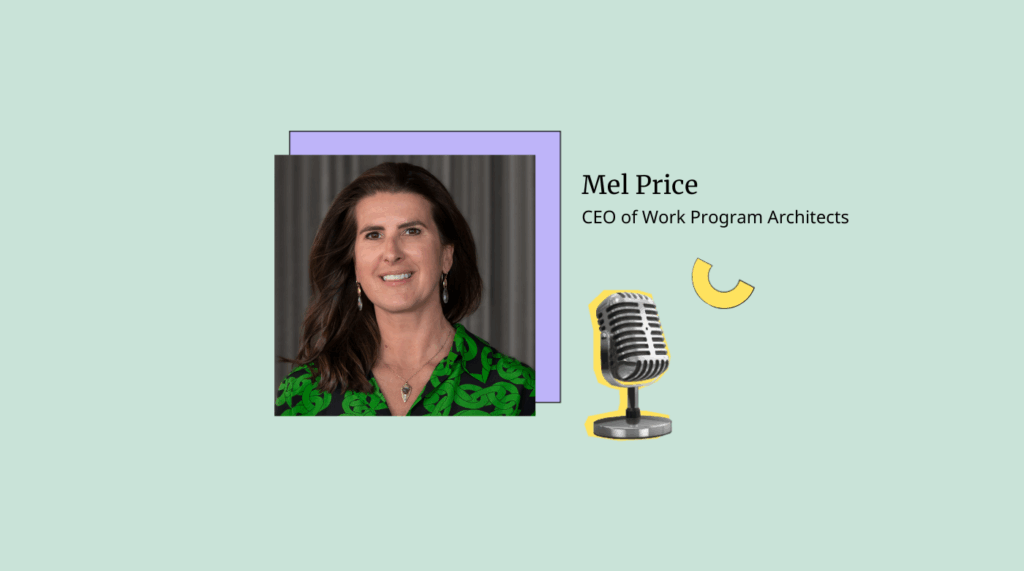
Mel Price is medeoprichter en CEO van Work Program Architects (WPA), een in Norfolk, Virginia gevestigd bureau dat ze in 2010 samen met Thom White oprichtte en dat zich toelegt op burgerlijke, educatieve en gemeenschapsgerichte ontwerpen die gebaseerd zijn op samenwerking en ecologische veerkracht. Mel werd in 2024 benoemd tot Fellow van het American Institute of Architects, een onderscheiding die is voorbehouden aan slechts 3% van de AIA-leden. Ze wordt erkend om haar uitzonderlijke bijdragen aan de architectuur en de maatschappij, evenals om haar mentorschap en maatschappelijk leiderschap. Onder haar leiding is WPA uitgeroepen tot een van de snelst groeiende particuliere bedrijven in het Mid-Atlantische gebied en tot een van Fast Company’s meest innovatieve bedrijven van 2025 in de categorie Sociale meerwaarde. Dit weerspiegelt de inzet van het bureau voor het ontwerpen van veerkrachtige ruimtes die gemeenschappen versterken.
Gerelateerde links:
- Word lid van de People Managing People-community
- Abonneer je op de nieuwsbrief om onze nieuwste artikelen en podcasts te ontvangen
- Maak contact met Mel op LinkedIn
- Bekijk Work Program Architects
Gerelateerde artikelen en podcasts:
- Over de People Managing People-podcast
- Waarom loontransparantie een goede bedrijfspraktijk is en hoe je dit aanpakt
- Vooringenomenheid bij besluitvorming: waar je in een HR-omgeving rekening mee moet houden
- HR-compliance: complete gids
- Hoe leiders vertrouwen kunnen bevorderen in tijden van onzekerheid
- Onboarding-compliance: complete gids
- Schuldgevoel bij werknemers die achterblijven beperken: hoe je na ontslagen het vertrouwen herstelt
- Recruitment-compliance: een complete gids
- Analyse van vacatureadvertenties op LinkedIn: waarom omarmen werkgevers loontransparantie zo langzaam?
- Wereldwijde HR-compliance: complete gids
- Vertrouwen op de werkvloer: waarom het belangrijk is en hoe je het opbouwt
- Casestudy: de waarde van loontransparantie en hoe je deze implementeert
- Speelt vertrouwen een rol in jouw arbeidsrelatie?
- Hoe je loontransparantie verbetert & een vertrouwenscultuur opbouwt
Read The Transcript:
We're trying out transcribing our podcasts using a software program. Please forgive any typos as the bot isn't correct 100% of the time.
Mel Price: It's all out in the open, and so there's a clear understanding of, why does so and so make more than this other person? What can I do to get myself to, that wrong on the salary ladder? What are the goals I need to hit? How are they different from my peers? And how do we respect each other's strengths?
David Rice: Welcome to the People Managing People podcast. We're on a mission to build a better world of work and help you create happy, healthy, and productive workplaces. I'm your host, David Rice. My guest today is Mel Price. She is the CEO of Work Program Architects. We're gonna be talking about radical transparency as it relates to pay.
So Mel, welcome!
Mel Price: Thank you so much for having me on this show, David.
David Rice: Excellent. Work Program Architects, for the sake of the show, I'm just gonna call it WPA, if that's all right.
Mel Price: That's what we call it.
David Rice: Perfect. So you launched WPA with open books and full salary transparency from day one. I'm curious what inspired that decision and how did those early experiences shape sort of your long-term commitment to transparency as both a business and a cultural strategy?
Mel Price: Absolutely. We are all shaped by our experiences, good and bad, and I had the good fortune of having so many previous wonderful architecture jobs. It was one thing that really bothered me and it was that architects work long hard hours and we work intensely and that natural intensity of work spills over when you're working long hours.
And so a couple months in, a couple years in long nights and people start talking about compensation and people find out, you know what your coworker makes and that has social ramifications. Without any context of understanding why someone makes more than someone else, all sorts of thoughts and feelings come in.
And so I saw that start to tear at the social fabric of the firm. And when my partner and I started WPA, we thought, is there a world where we could design a firm where we just do away with all of that? We make salary, all of the compensation and all of the firm finances, completely open books.
And so we committed to do that together and we now have almost 15 years of data of how to run a company with completely open books.
David Rice: It's interesting, 'cause a lot of leaders, they worry that transparency will cause like tension or backlash, especially around leadership pay and the historical pay gaps.
So I'm curious, what are the most common fears you hear from CEOs as you talk to them about this and how do you help them move from hesitation to implementation?
Mel Price: Absolutely. I actually have a running list. I like to collect these lists of fears. So the first thing that I always hear is, what if someone disagrees with their salary or gets upset that their coworker is making more than them?
And what if it unveils pay disparity is tied to gender or race. So that's a common one. With full financial transparency, I hear a lot, what if a bad business decision comes to light? And then the one that we hear the most is, can firm employees really understand why owners should make more money?
So those are the three that float to the top of the list. And I've traveled all over the country speaking about this 'cause I believe so much in this process. And the first couple years I did this, I actually had was booed by crowds talking about financial transparency. But the questions I would ask in return are, what does it do to firm culture?
You've worked so hard to build this business or run this business. What does it do? When people find out about pay disparities and they don't understand how much energy gets wasted on that, on unproductive discussions instead of on doing really great work. And then in our industry, in the design industry, there's not a lot of education around business and finance.
So if talented people who aren't taught business and finance in school don't have conversations about it, how in the heck are they gonna figure out how to connect the dots that must be connected on design time and money? And I can really only speak from my experience, but I think there are so many advantages to this Open Books policy and approach, and has real financial benefits for the firm.
David Rice: Yeah, I hear you. I work in media and yeah, business and finance was not part of the curriculum.
Mel Price: You kinda learn it on your feet as you go.
David Rice: When we were talking before this, you mentioned to me that transparency is a way to teach financial literacy and business thinking. Take me through that, because how does that play out in practice and why is that kind of critical to building trust and that sense of ownership among employees?
Mel Price: Absolutely. I'm often talking to audiences of architects. And so in order to answer this question, I wanna just explain how the business of architecture works and why the financial literacy is so critical. So people generally think of architects as they see them in movies. They're doing beautiful design work, they're visiting the construction site.
But the reality is that we're at the top of the food pyramid of handling the finances of a project. An owner hires us. We hire every engineer on the project on our large projects. We have teams of a hundred plus people working on that. And our job is to manage not only the design and construction budgets, but sometimes it is extends to the owner's budget overall.
And so we are managing our own team in terms of profitability. We're checking sometimes dozens of other engineers, and we're managing the project budget as a whole, you can understand now. It's so much more than drawing and design and 3D modeling. And so at WPA, we designed a system where we think of it as just building a really long runway.
There's so many places where we can practice making big decisions. And all of that kind of ladders up to a holistic understanding of finances. And it starts day one when projects come in the door. So especially in 2025. Employees want control. They wanna have a say in the decision making process. And so when a project walks in the door here, someone makes a pitch for us to take on the project, and we have an all firm vote, A majority vote wins.
If the pitch is good and we believe it aligns with our values, we take on the project. If it doesn't, we say thank you and no. So that's the first step in the practice. The second part really has to do with empowering staff. To be the ones signing the contracts, hiring the consultants, and really controlling the flow of money because that's how you incentivize folks turning in projects on time.
And so our staff choose their engineers. They choose the teams that they're working with, they sign the proposals, they sign the contracts, and that way people are able to work with people. They've developed great communication and relationships with. The next step of practicing making big decisions is hiring.
And so I am, we have a committee that changes for every job and every hire, and it's the people working directly with that new hire who get to be leading the hiring process. And then once all of those steps have been made in practicing, people start to rotate through our raises and bonuses committee.
And this is where it gets interesting because we're having. Absolutely candid conversations about their peers performance during the year where they think they're headed and setting budgets for raises and bonuses. And so that's really starting to make that connection between employee performance and firm performance and how people get elevated.
And then the last part of that is really, you can see with all of these steps, everyone's given the tools to learn the skills to become an owner. And ownership is the last piece of the puzzle. And so once we get into our ownership meeting, it's two thirds votes to implement new practices in the firm. So there's a lot of steps.
David Rice: It's a very interesting approach. It's not just interactive, but I can imagine some of these conversations become a little, heated at times though, right?
Mel Price: Absolutely. But it's all out in the open, and so there's a clear understanding of, why does so and so make more than this other person?
What can I do to get myself to, that wrong on the salary ladder? What are the goals I need to hit? How are they different from my peers? And how do we respect each other's strengths?
David Rice: If you've got anybody questioning, the merit of Shelly's pay. It's it's all right here. We decided it collectively.
Mel Price: Exactly. And everyone rotates. You're on the committee for a year, so you know, this is, it can't be completely objective. It's subjective by nature. Yeah. And so the theory is if we rotate through every year, everyone has an opportunity to serve on that committee and. The fairness evens out over time and we get as objective as possible.
David Rice: Now, sometimes with pay transparency it can reveal pay disparities and it may be tied to, gender, race, tenure, things like that. Different organizations, different practices, especially if they're implementing this after having a much different type of practice for a long time.
That may happen. I'm curious, how do you. Recommend that organizations respond when those inequities surface, and how have you approached correcting them or maintaining trust in the past?
Mel Price: Sure. The tough part is, I can only speak from my own experience, which has been open books since inception.
David Rice: Oh true.
Mel Price: But you know this, it's opened up so many conversations. There's nothing behind closed doors. What I would say is I believe it moves companies to a more merit and performance based system. And I've spoken with companies that have been closed books for 60 plus years and then took a pass at this and certainly pay disparities based on gender and race were unveiled.
And then they took proactive steps to deal with it. But I think there's a good chance that companies could lean one way or another into having some sort of bias in their compensation system, or actually overcompensating for fear of. Being associated or accused of bias. And what this does is it moves everyone to a place where honest discussions can happen about merit and performance-based compensation.
And everyone in the company is aware of exactly where they stand and exactly how they can get to the next place they wanna be.
David Rice: We were talking and you're saying that knowing everyone needs are met. Removes a layer of anxiety from day-to-day work, and I think that's very true and something that everybody would like to achieve, but it doesn't always happen that way.
But I'm curious, how has this clarity improved team collaboration and decision making specifically, particularly in high stakes or creative work environments? You mentioned you all are turning in projects, 3D modeling, all of these kind of things. So I'm curious how that plays out in that environment.
Mel Price: I think pretty quickly everyone learns how each person needs to perform and should be performing in their specific role. And what's really fun about the way we do our compensation system is that we borrow from the American Institute of Architects, a I a publishes BI-annually a compensation report.
They pull it from firms all over the country and they break it down by large firms, medium firms, small firms, different regions of the country. And for a small firm like ours, we get to pull in blended roles. So someone could be a senior architect, but also serving in some sort of specialty role with sustainability.
And so we can pull different salaries in and play with the percentage of how that person needs to perform their role that year. And tailor it in so that it's very clear where someone needs to be and how they can meet their targets. And that's a way that people can move up in the company. So having all of those layers of information, having the, that dialed in just I think, removes this whole layer of anxiety discussion.
The discussions, in the old offices that used to happen around the water cooler. And instead we move from, why is so and so making this to. Cheering that person on when they hit the next goal. And so we see it really results in staff cheering each other on knowing each other's goals and cheering them on when they get there, or counter to that.
Speaking up, when someone's not meeting their goals and giving us a chance to address it head on.
David Rice: When it comes to pay transparency, I think a lot of companies are moving in this direction because we're starting to see legislation around it. There's a little bit of legal pressure.
And on top of that, I would also say that Gen Z and millennials are driving this expectation. Whether it's top down change or bottom up. I'm not exactly sure. I'm curious though, how can HR leaders make sure that this shift is really grounded in company values rather than just compliance with the law?
And what's the difference in outcomes when they do that?
Mel Price: I think it's both. So you asked, the shift. I think it's both top down and bottom up. But I think there's different effects. I think the top down the legislation that drove a lot of companies to publish pay bans. It made things move faster, and I'm thankful for that.
But I think that the bottom up has some more lasting effects of change, and I really have to say thank you to our Gen Z and millennial staff because they are a hundred percent the ones driving it. And I think it has all kinds of good consequences for our firms. So I think the difference is that.
There's always a way to game this system, and I think if we're just complying with the legislation, what happens is, especially a lot of executive compensation gets shifted out of, the pay bands and what's actually transparent, and then there's such a missed opportunity there because that's really the discussion around performance-based compensation.
So younger employees miss out on understanding why executives would be compensated for hitting different goals. So I think to stay ahead of the curve, our philosophy is to put it all out there, go haul hog on transparency, and you'll really reap the benefits.
David Rice: When we look ahead, radical transparency, how do you think it evolves?
Because we are in this era right now where I'm out there all the time telling leaders, you gotta be transparent. You gotta be honest, right? Because the trust is so low. We're in a. Moment where people aren't really looking at leaders with a lot of faith. So I, what do you think about how it evolves, especially as more companies explore distributed leadership or employee ownership?
What is the next generation of workplace trust look like to you?
Mel Price: I hope that we can recover from trust being an all time low, and I see it throughout our industry and I think it's the reason we're working so hard to really earn that trust from our staff. Whether it's companies causing that or it's just the state of the world, young people have so many additional pressures on them.
So my hope is that we can do a couple more things. I think as more companies move to pay transparency or financial transparency overall, we can dial up our performance based compensation with, clearly publish our compensation philosophy. So for us. Smaller firm that can compete with large firms to do large work.
That means we have to be able to hire the top talent in the country, which means our compensation philosophy is we're gonna reference that all firms data. So everyone who comes in here, even for their interview knows those are the pay bands that we're looking for. And when we turn over our spreadsheet to a prospective employee and we show them what every single person in this company makes, they'll see how that fits into our overall compensation philosophy and the work we're pursuing.
The next thing that we're gonna test is compensation scorecards. So starting to dial in some more performance incentives and publish each person's scorecard each year, and that's gonna add an additional layer. I hope that by doing this, we can earn some more trust. We can teach some more business skills.
We're gonna give some people hope that there's a way to, to move up, to have some more upward economic mobility, that people will stay at their jobs longer and that. As we, we work here to earn the trust for people to wanna invest in our firm and become owners. And so the hope is that people who care will stay.
That they'll stay invested, that they keep learning, and that they see there's always opportunity for growth.
David Rice: I love it. And I do think we will recover from this era, but I think it's gonna take some shifts in practices and policies, and it's gonna be things like. Whatcha doing?
Mel Price: We'll see if this great experiment pans out. It's worked for 15 years. Our staff love it and it takes a layer of anxiety out and helps us all move forward and be better together.
David Rice: Excellent. Before we go, we have a couple things we need to do. The first is I wanna give you a chance to tell people about where they can connect with you and find out about more about how the experiment goes and how everything takes shapes.
Mel Price: Absolutely. You can find me on LinkedIn, just Mel Price. If you just wanna follow the visuals, find us on Instagram at wpa_norfolk. And you can always check out our website, wparch.com.
David Rice: All right, and the second thing that we do on every episode, we have a little tradition. You get to ask me a question, so I'm gonna turn it over to you. Ask me anything you want. It can be about the topic. It can not be.
Mel Price: I'll go off topic. Been following your work, and I know you're such a big remote work advocate, and so we have a hybrid work environment here. Give me a tip. What is one thing I should be doing to make hybrid work better for my team?
David Rice: I think the biggest thing, and that's the thing I hear this all the time, is why are we here?
So like what is the reason that we had to come in today? Like I think you've gotta be really intentional down to the daily activity level. Of okay, when they come in on Tuesdays, we're gonna try to design this sort of programming. This is what you're gonna do. You need to have these meetings then.
And it's be very intentional about the, because everybody says you need those in-person collaboration and bonding moments. If they feel hollow or they, some people just don't show up, like the executive isn't there, it's how come he doesn't need to be here? Isn't he the most important person in it?
And so it's when companies start to just kinda forget what the purpose of this was, and it starts to feel like, oh, they're doing this because they wanna make the most of this commercial real estate footprint. People get really skeptical about that, and then they Hey, cheating the system. I've seen some data that says if you're asking for three days in office, you're getting two. If you're asking for two, you're getting one. Like realistically. And I think part of that is the way companies are structuring it. If people are coming in and they don't feel like there's a structure to it, and these are white collar jobs that can be done online, why am I sitting through a commute?
I think that's what most people think. We've definitely gotta be very intentional about how you structure hybrid work and what is the purpose of you being in office at any given time.
Mel Price: Oh, thank you.
David Rice: No problem. All right. Again, thanks for coming on the show today. I really appreciate it.
Mel Price: Thank you, David. I had so much fun and hopefully we'll catch up in the future.
David Rice: Absolutely.
And listeners, if you haven't done so already, run over to peoplemanagingpeople.com/subscribe. Sign up for the newsletter, you'll get this podcast and a whole bunch of other cool content straight to your inbox.
And until next time, publish those compensation philosophies and start getting some cool, candid conversations around pay.

