

10 beste boekhoudsoftware met functies voor salarisadministratie in 2026

Beste boekhoudsoftware met salarisfuncties op een shortlist


Boekhoudsoftware met salarisfuncties combineert essentiële financiële beheertools met geïntegreerde verwerking van werknemerssalarissen. Daardoor kunt u uw boekhouding beheren, de salarisadministratie uitvoeren en salarisuitgaven en -verplichtingen in één systeem registreren. Als u op zoek bent naar manieren om cijfers accuraat te houden, tijd te besparen en aan regelgeving te blijven voldoen, is het essentieel om de juiste oplossing te vinden. In deze gids vergelijk ik boekhoudsoftware met salarisfuncties voor bedrijven variërend van kleine teams tot complexe ondernemingen. U ziet welke opties het beste werken voor geïntegreerde salarisadministratie en boekhouding, automatisering van salarisadministratie naar het grootboek, fiscale ondersteuning en verschillende bedrijfsgroottes.
Waarom u onze softwarebeoordelingen kunt vertrouwen
Ons team test en beoordeelt software sinds 2012. Als HR-experts weten we zelf hoe moeilijk — en belangrijk — het is om de juiste software te kiezen.
Voor deze gids hebben we tools geëvalueerd met behulp van praktijktests en onafhankelijk onderzoek, waarbij we tools beoordeelden aan de hand van onze selectiecriteria. We putten ook uit inzichten van vooraanstaande experts uit de branche en van praktiserende HR-professionals.
Onze reviews weerspiegelen ons menselijke redactionele oordeel, geen verkooppraatje.
Deskundige beoordelaars:
| Tool | Best For | Trial Info | Price | ||
|---|---|---|---|---|---|
| 1 | Best for project-based payroll cost tracking | Free demo available | Pricing upon request | Website | |
| 2 | Best for enterprise finance and global payroll | Free demo available | Pricing upon request | Website | |
| 3 | Best for open-source accounting and payroll | 14-day free trial | From $5/month | Website | |
| 4 | Best for modular accounting and payroll apps | Free plan available | From $8.95/user/month (billed annually) | Website | |
| 5 | Best for payroll postings to enterprise ledgers | Free demo available | Pricing upon request | Website | |
| 6 | Best for automatic payroll journal entries | 30-day free trial | From $40/month | Website | |
| 7 | Best for accounting and payroll under one login | 30-day free trial | From $17/month | Website | |
| 8 | Best for desktop accounting with payroll | 30-day free trial | From $124.42/month | Website | |
| 9 | Best for desktop payroll with tax tables | 30-day free trial | From $40/month with payroll | Website | |
| 10 | Best for payroll in operational workflows | 90-day free trial | From $35/user/month | Website |
Beoordelingen van boekhoudsoftware met salarisfuncties
Hieronder vindt u mijn uitgebreide samenvattingen van de beste boekhoudsoftware met salarisfuncties die op mijn shortlist zijn beland. Mijn beoordelingen bieden een gedetailleerd overzicht van de functies, prijzen en beste gebruikssituaties van elke software, zodat u de beste optie voor u kunt vinden.
Best for project-based payroll cost tracking
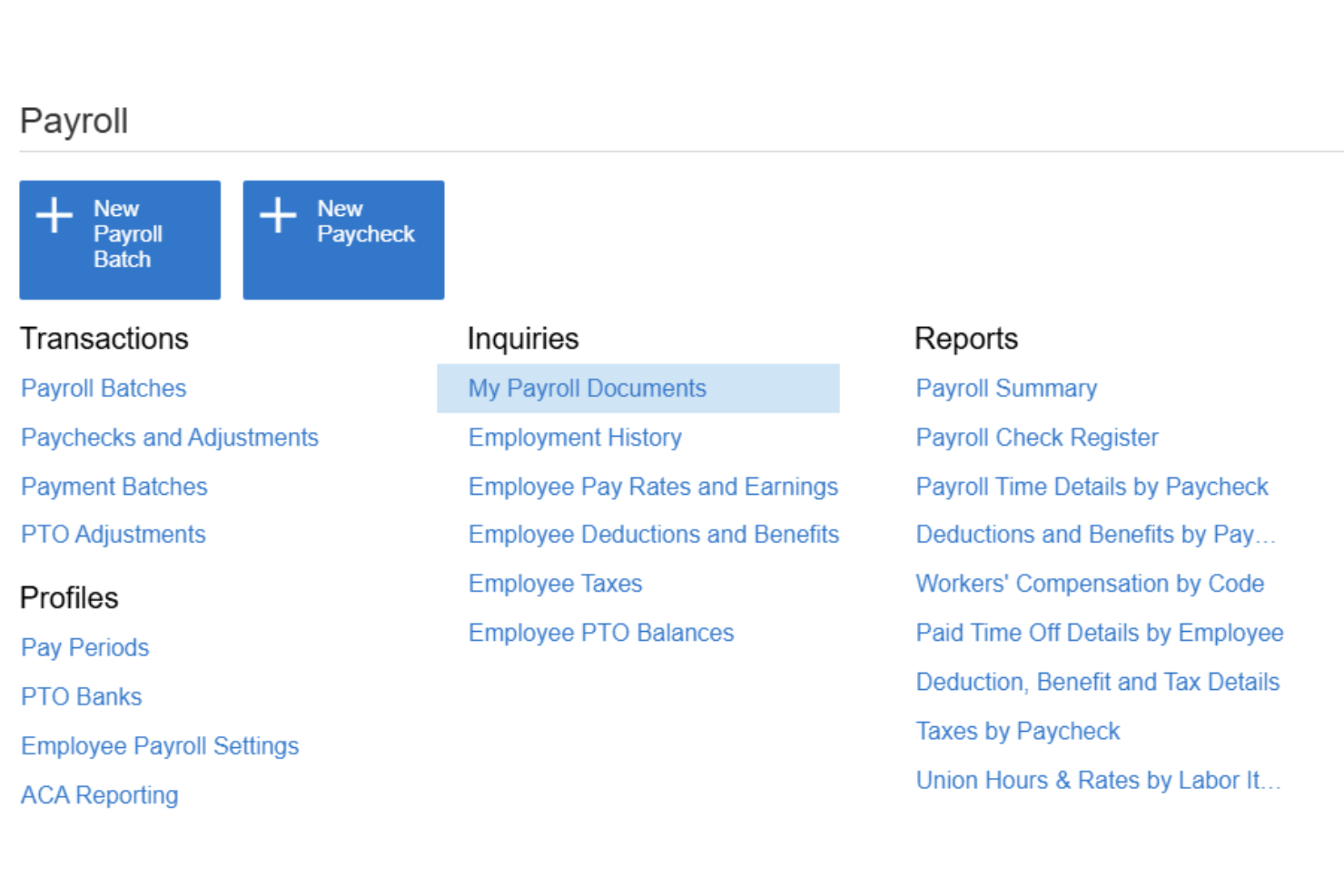
Acumatica is a cloud ERP platform for mid-market businesses that integrates full-cycle payroll processing, general ledger accounting, project cost tracking, and time management in a single system.
Who Is Acumatica Best For?
Acumatica is a strong fit for mid-market construction, manufacturing, and professional services companies that need payroll costs tied directly to projects and job codes.
Why I Picked Acumatica
I picked Acumatica as one of the best because no other accounting platform I've used lets you slice payroll costs by project, task, cost code, union, and shift simultaneously. When my team runs payroll, those costs post automatically to the GL with mapping that mirrors how the project is structured, not just a generic wage account. I also rely on the certified payroll reporting, which is a must-have for construction jobs with prevailing wage requirements.
Acumatica Key Features
- Employee self-service portal: Employees can access pay stubs, tax forms, direct deposit details, and PTO requests online or from a mobile device.
- Payroll tax and compliance: Supports current federal, FICA, state, and local tax information, electronic payroll filings, compliance dashboards, and payroll audit trails.
- Multi-entity accounting: Manage payroll and accounting across multiple companies or locations from one central platform.
- Native time entry integration: Time data imports directly into payroll runs with approval workflows and missing-time reminders.
Acumatica Integrations
Acumatica offers native integrations with Microsoft 365, DocuSign, Avalara, ADP, and Tableau. An API is available for custom integrations.
Pros and Cons
Pros:
- Certified payroll reporting for prevailing wage jobs
- Supports payroll across multiple entities simultaneously
- Project-level payroll cost allocation built in
Cons:
- No self-serve implementation without a partner
- Complex configuration for smaller payroll teams
Workday
Best for enterprise finance and global payroll
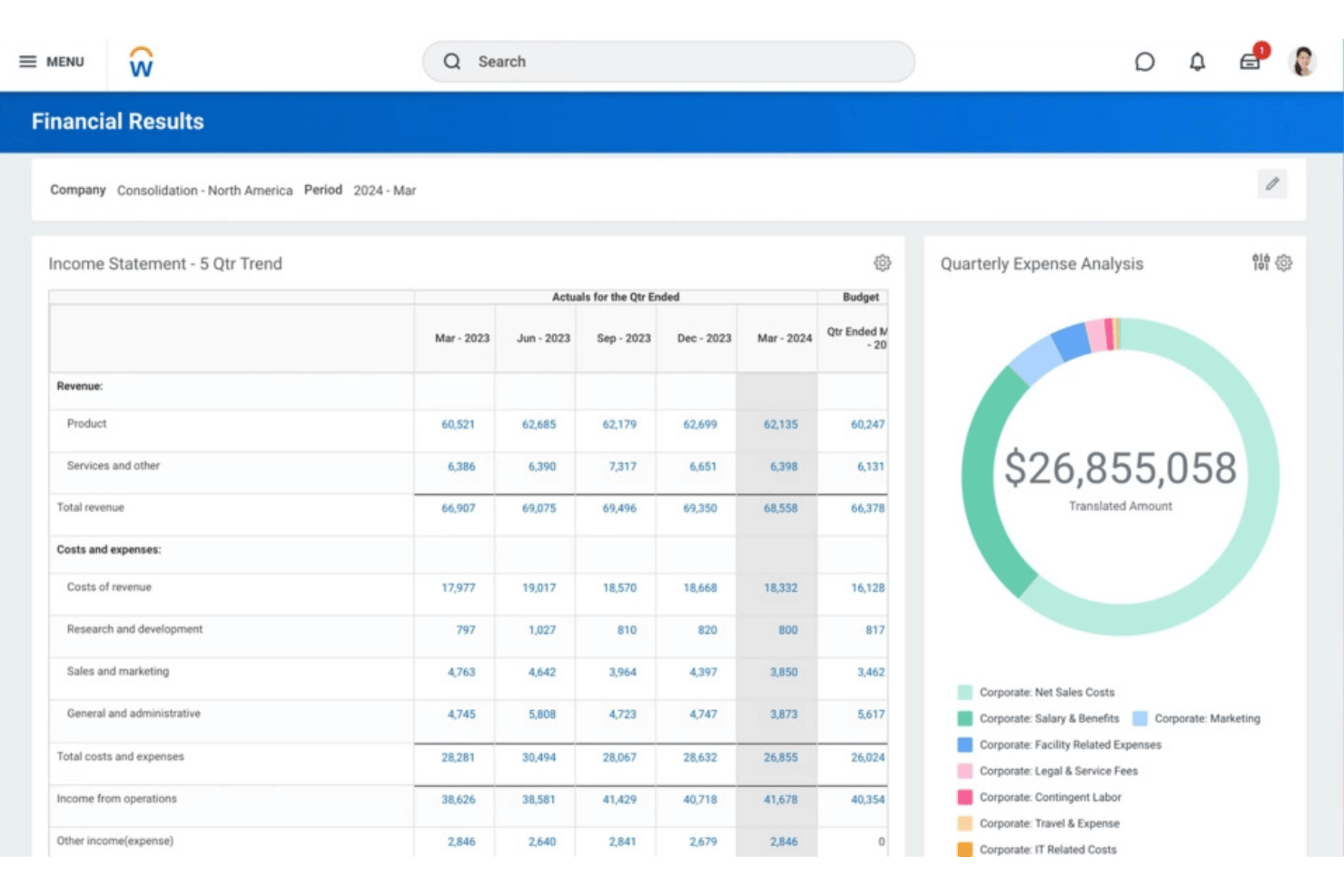
Workday is an enterprise-grade platform that unifies payroll processing, financial management, and HCM in a single system, with a native general ledger, continuous payroll calculation, and global payroll capabilities supported by Workday and its partner ecosystem.
Who Is Workday Best For?
Workday is built for large and enterprise organizations that need to manage complex, multi-entity finance and payroll operations across multiple countries from one platform.
Why I Picked Workday
I picked Workday because it connects enterprise payroll directly with financial management. Payroll results can generate accounting entries and feed labor costs into the general ledger, while Workday Financial Management handles core accounting functions such as the general ledger, accounts payable and receivable, fixed assets, and consolidation.
Workday Key Features
- Payroll accounting: Workday automatically generates accounting entries based on payroll results and supports labor-cost allocation.
- General ledger integration: Payroll results can flow into Workday Financial Management using account posting rules, fiscal schedules, ledger types, and other accounting configurations.
- Continuous payroll: Workday supports continuous payroll processing rather than treating payroll solely as a discrete end-of-period process.
- Global payroll: Native/direct payroll coverage is supplemented by Workday's global partner ecosystem and bidirectional integrations.
- Employee self-service: Employees can access payroll information through Workday's mobile-first experience; Workday documentation specifically supports employee access to payslips on mobile.
- Time-to-payroll: Approved time can feed payroll calculations by associating time calculation tags with earnings or deductions.
Workday Integrations
Workday offers native integrations with ADP, Kronos, Salesforce, Microsoft 365, SAP, ServiceNow, and Oracle, and provides an API for custom integrations.
Pros and Cons
Pros:
- Employee self-service reduces HR admin workload
- Native payroll coverage across 180+ countries
- Payroll and finance live in one system
Cons:
- Requires significant IT involvement during setup
- Overkill for businesses under 500 employees

ERPNext
Best for open-source accounting and payroll
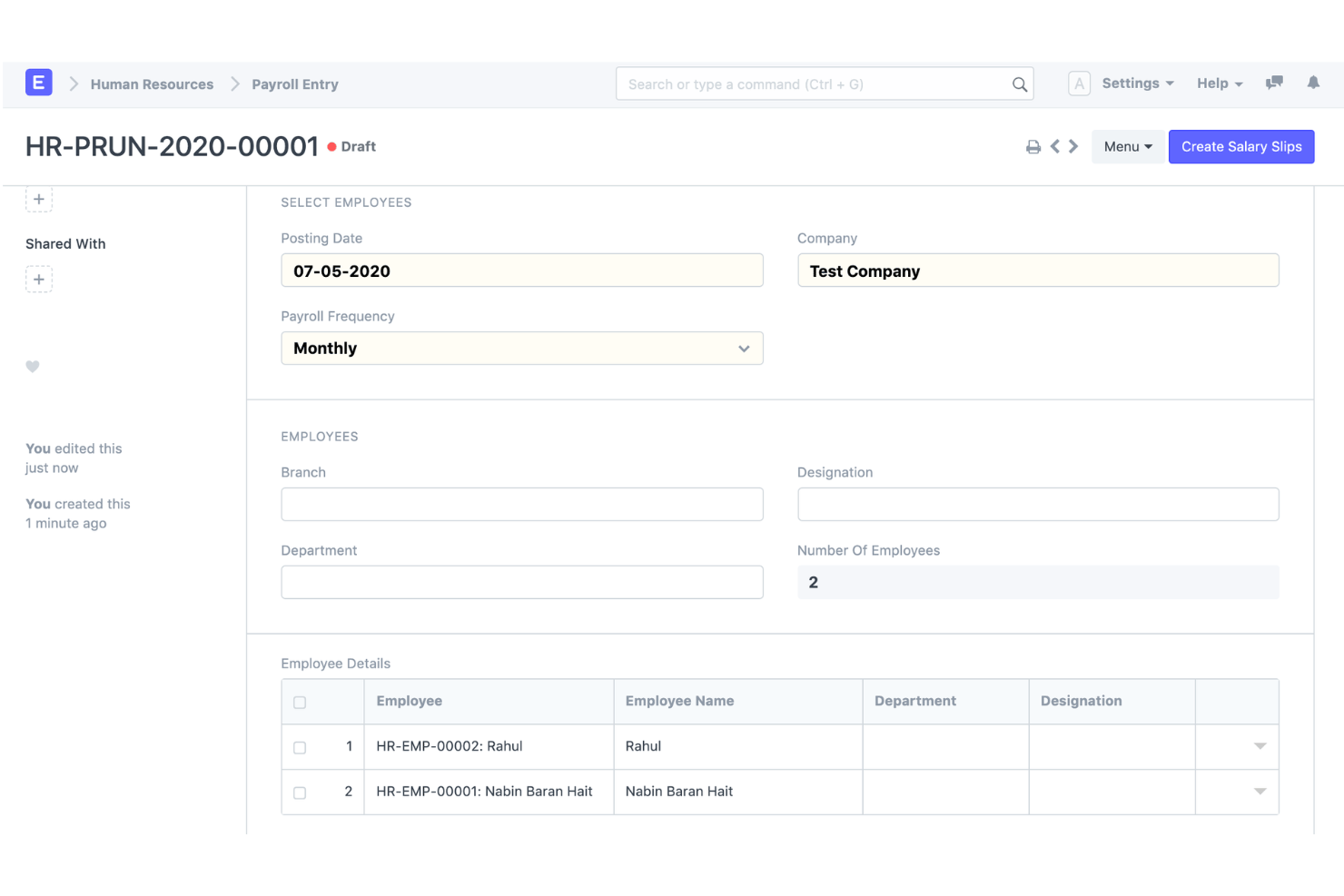
ERPNext is an open-source ERP platform that combines double-entry accounting, native payroll processing, HR management, and inventory tracking in a single self-hosted or cloud-deployed system.
Who Is ERPNext Best For?
ERPNext suits technically resourceful SMBs and growing mid-market companies that need a full-featured ERP without per-user licensing costs.
Why I Picked ERPNext
ERPNext earns its spot on my shortlist because the payroll module posts directly to the general ledger using the same chart of accounts and cost centers you configure for the rest of your books. I like that because you're working from a single codebase, there's no middleware syncing payroll data to a separate accounting system. The open-source license also means I can modify salary components or GL account mappings to match a specific structure, without waiting on a vendor roadmap.
ERPNext Key Features
- Integrated payroll: Salary structures, earnings and deductions, payroll periods, salary slips, and bulk payroll processing.
- Payroll accounting: Payroll expenses/payments can be connected to the accounting system rather than maintained in a completely separate payroll product.
- General ledger: ERPNext provides a full double-entry GL and automatically generates ledger entries from submitted accounting transactions.
- Cost centers and projects: Payroll can be associated with projects, while ERPNext accounting supports cost centers, projects and other accounting dimensions.
- Multi-company/multi-currency accounting: ERPNext supports multiple companies, subsidiaries, branches and currencies with consolidated reporting.
- Customization: ERPNext is open source and built on the Frappe framework, with low-code/no-code customization capabilities.
ERPNext Integrations
ERPNext offers native integrations with PayPal, Razorpay, Amazon S3, Slack, Dropbox, Shopify, and WooCommerce. An API is available for custom integrations.
Pros and Cons
Pros:
- Strong payroll-to-accounting connection
- Open-source accounting and payroll
- Broad ERP functionality beyond finance
Cons:
- Payroll compliance/localization varies by country
- More setup and configuration than turnkey SMB accounting/payroll products

Odoo
Best for modular accounting and payroll apps
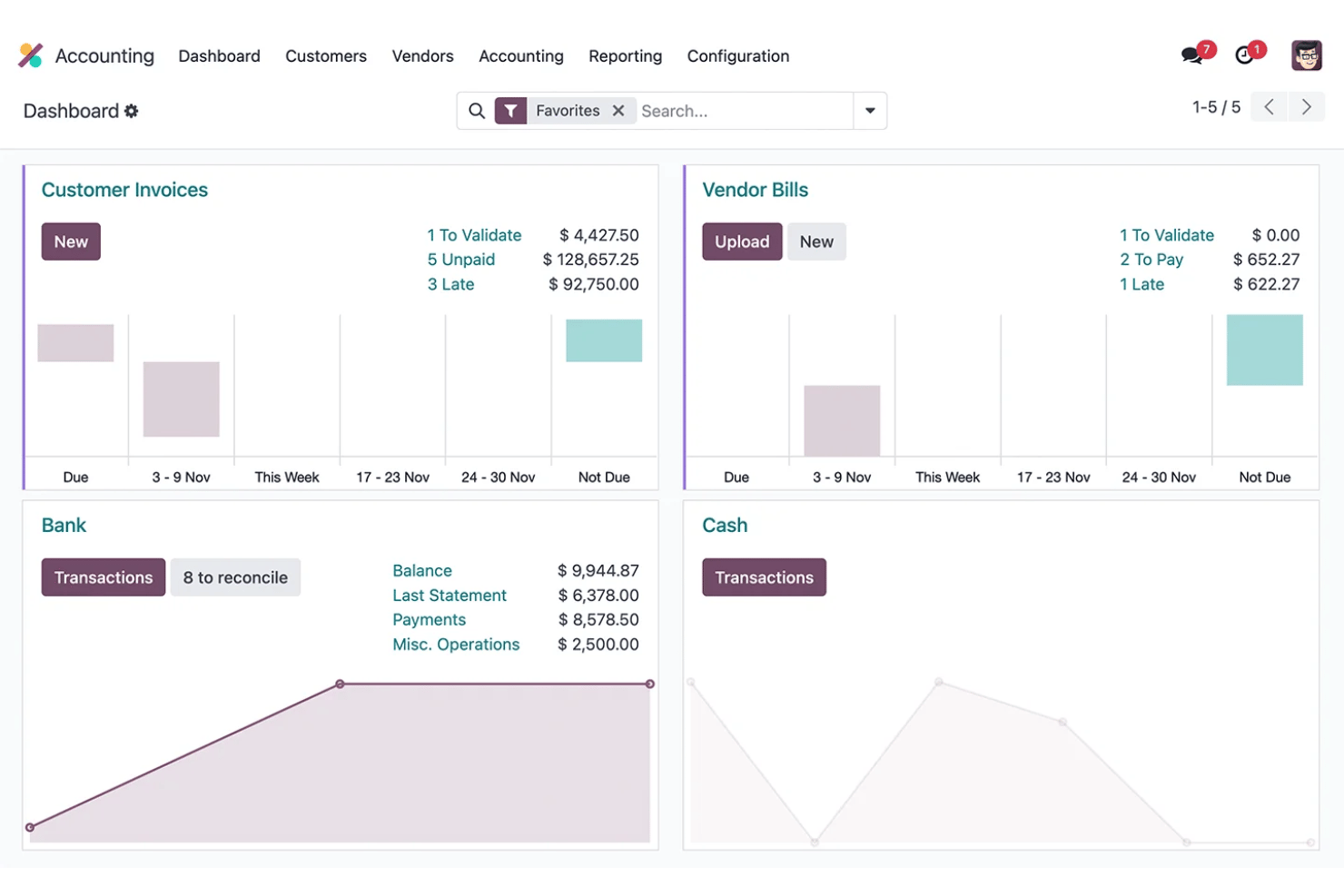
Odoo is an open-source ERP platform that combines modular accounting, payroll, HR, and expense management in a single shared database.
Who Is Odoo Best For?
Odoo is a strong fit for growing SMBs with 6–250 employees that want to consolidate accounting, payroll, and HR into one platform without managing multiple disconnected tools.
Why I Picked Odoo
I picked Odoo because businesses can combine its full accounting application with payroll and other business apps in one modular platform. When Accounting and Payroll are used together, payroll salary rules can be mapped to debit and credit accounts, helping connect employee pay with the general ledger without relying on a completely separate accounting system.
Odoo Key Features
- Accounting: Full double-entry accounting with AP/AR, reconciliation, financial reporting, assets and budgets.
- Payroll accounting: Salary rules can be mapped to debit and credit accounts, connecting payroll calculations with accounting journals.
- Pay runs: Businesses can generate and process multiple payslips together, including grouping payroll by salary structure, department or job position.
- Time-to-payroll: Payroll uses employee work entries to calculate worked time before applying salary structures and rules.
- Payroll localization: Country-specific payroll configurations account for local taxes, fees, allowances and regulatory requirements where supported.
- Multi-company accounting: Odoo supports multiple companies, with different fiscal localizations where appropriate.
Odoo Integrations
Odoo offers native integrations with Stripe, Plaid, PayPal, Authorize.Net, and Shopify, with an API available for custom integrations.
Pros and Cons
Pros:
- Open-source codebase allows deep customization
- Payroll posts automatically to the general ledger
- Modular apps scale with your business needs
Cons:
- Initial setup demands significant technical configuration
- Payroll tax filing requires third-party support
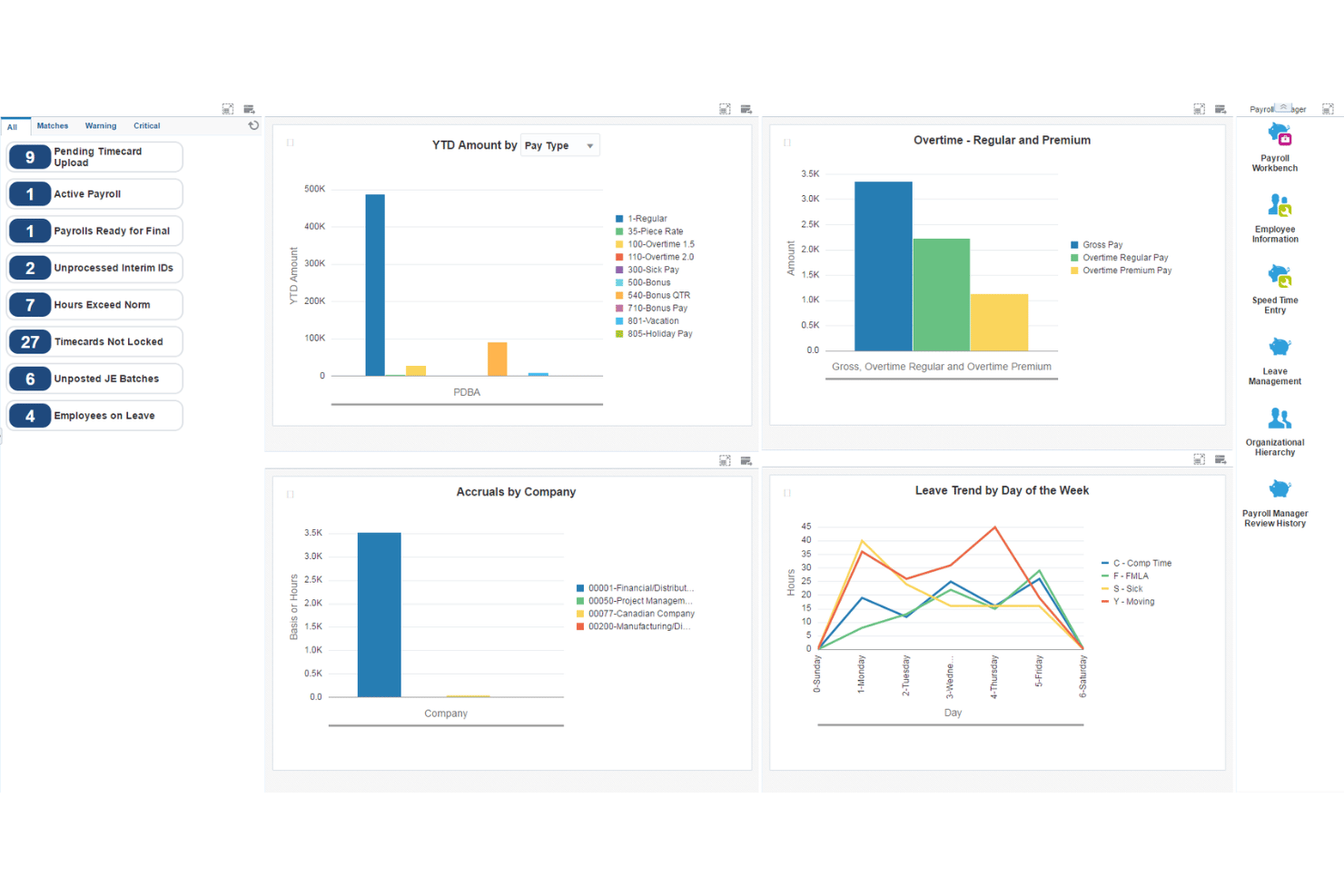
JD Edwards EnterpriseOne is an enterprise ERP suite from Oracle that combines full-cycle payroll, general ledger accounting, AP/AR, fixed assets, and human capital management across on-premises, cloud, and hybrid deployments.
Who Is JD Edwards EnterpriseOne Best For?
JD Edwards EnterpriseOne is built for large enterprises in manufacturing, distribution, and asset-heavy industries that need integrated payroll and financial management at scale.
Why I Picked JD Edwards EnterpriseOne
I picked JD Edwards EnterpriseOne because its payroll system connects deeply with enterprise financial management. Payroll can generate and post journal entries to the general ledger using configurable Automatic Accounting Instructions, while payroll liabilities such as taxes and insurance can flow into Accounts Payable.
JD Edwards EnterpriseOne Key Features
- Payroll-to-GL integration: Payroll can generate journal entries and update the EnterpriseOne general ledger, with automatic or manual posting options.
- Automatic Accounting Instructions: AAIs determine how generated accounting entries are distributed across GL accounts, giving larger organizations considerable control over payroll accounting.
- Payroll liabilities and AP: EnterpriseOne can automatically create vouchers for payroll taxes, insurance premiums, and other third-party payroll liabilities through its Accounts Payable integration.
- Labor costing: Payroll supports labor and labor-burden distributions, including wages, taxes, insurance, hours, and account information. Those transactions can flow into the Account Ledger.
- US payroll: EnterpriseOne supports federal, state, and local withholding/reporting requirements, with Vertex used for tax-withholding calculations.
- Canadian payroll: There's also dedicated Canadian payroll functionality covering earnings, deductions, taxes, gross-to-net/net-to-gross calculations, leave accruals, and government-regulated tax information.
JD Edwards EnterpriseOne Integrations
JD Edwards EnterpriseOne offers native integrations with Oracle Cloud Infrastructure, Oracle Analytics Cloud, Oracle Database, and has an API for custom integrations.
Pros and Cons
Pros:
- Configurable GL account mapping for payroll runs
- Handles multi-entity payroll and accounting natively
- Granular labor cost posting by department
Cons:
- Not suited to small or mid-sized businesses
- Implementation requires significant IT and consulting resources

Wave
Best for automatic payroll journal entries
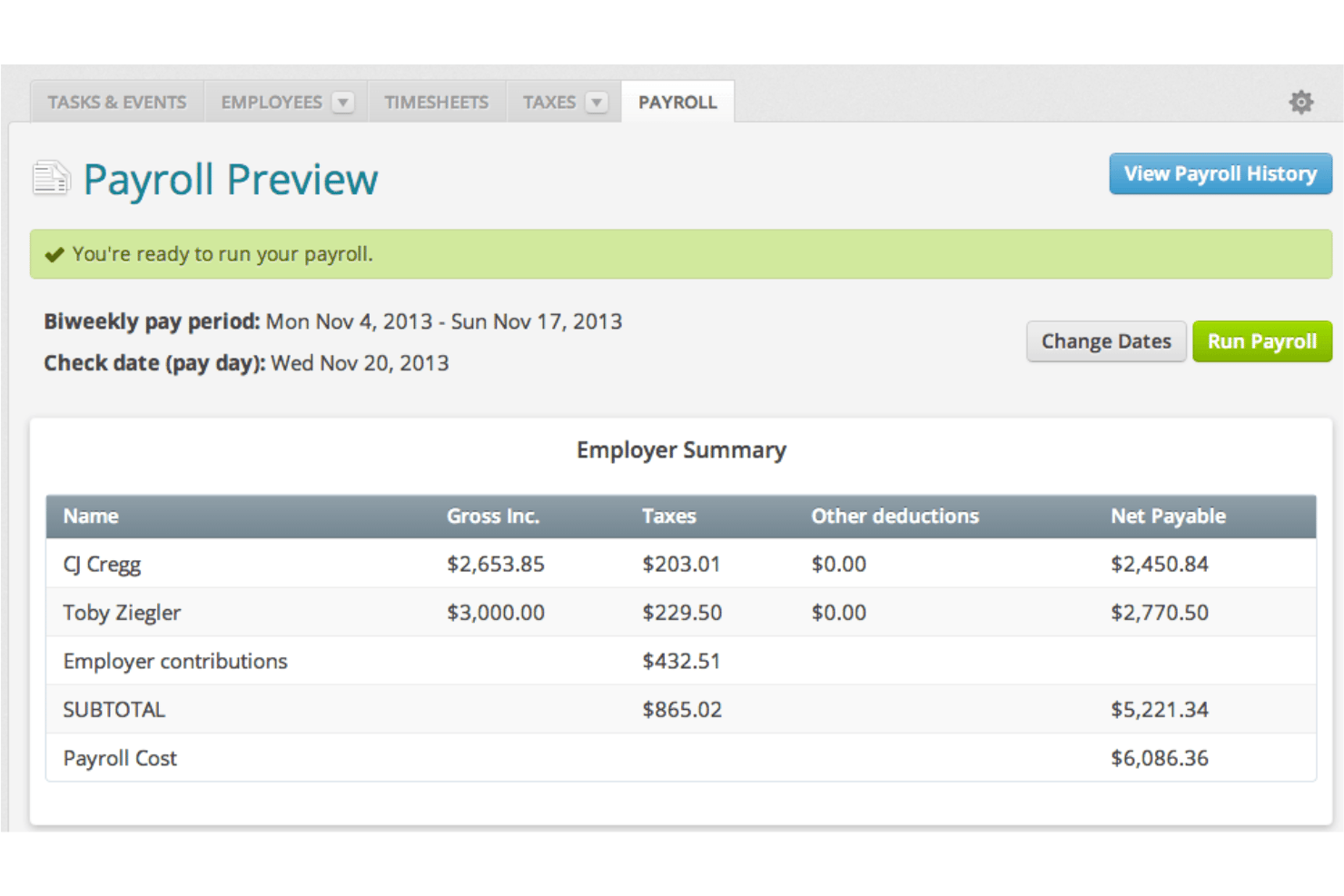
Wave is a small business accounting and payroll platform that combines double-entry bookkeeping, invoicing, and full-cycle payroll processing in a single system.
Who Is Wave Best For?
Wave is built for owner-operators and small businesses that need payroll and accounting in one place without paying for features they won't use.
Why I Picked Wave
I picked Wave as one of the best because each payroll run automatically posts as journal entries into the accounting ledger, with wages, taxes, and deductions mapped to the correct accounts in real time. Because payroll and accounting share one data model, there's no manual export or reconciliation. I also like that W-2s, 1099-NECs, and wage reports are all generated from within that same system.
Wave Key Features
- Direct deposit payments: Send paychecks straight to employee and contractor bank accounts at no additional cost.
- Employee self-service portal: Let team members securely view pay stubs and manage personal information online.
- Automatic payroll tax filing: Calculate, withhold, and file federal and state payroll taxes for US-based businesses.
- Year-end tax form generation: Create and deliver W-2 and 1099-NEC forms for employees and contractors within the system.
Wave Integrations
Native integrations are not clearly documented. An API is available for custom integrations.
Pros and Cons
Pros:
- W-2 and 1099-NEC forms generated in-platform
- Automatic journal entries after every payroll run
- Payroll and accounting share one data model
Cons:
- Limited support for growing teams beyond 10 employees
- Payroll only available in the US and Canada, excluding Quebec

Best for accounting and payroll under one login
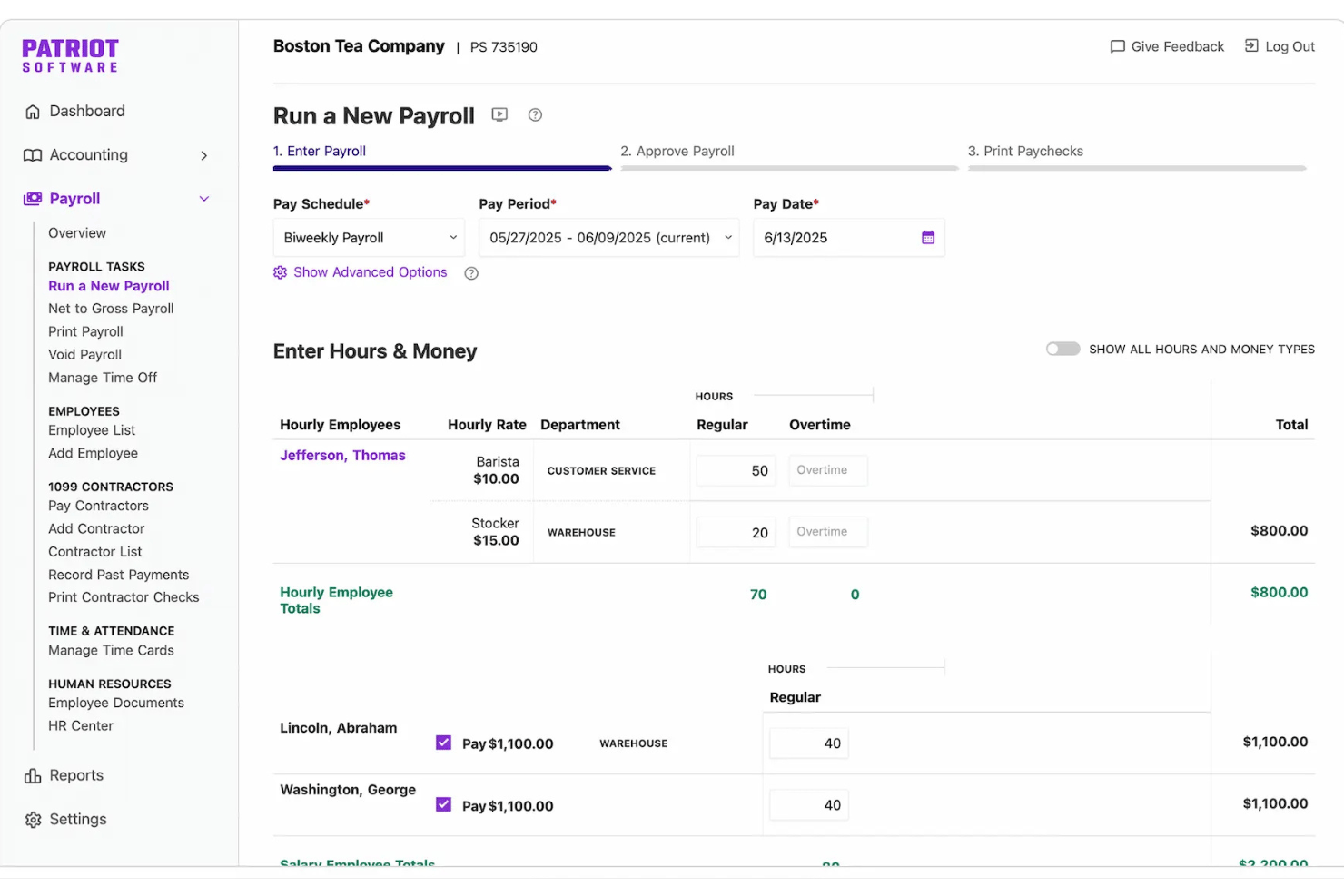
Patriot Software is a small business accounting and payroll platform that combines double-entry bookkeeping, invoicing, direct deposit, and payroll processing in a single login, with payroll tax filing available through its Full Service Payroll plan.
Who Is Patriot Software Best For?
Patriot Software is a strong fit for small business owner-operators and payroll administrators who need to manage books and run payroll without juggling two separate systems.
Why I Picked Patriot Software
I picked Patriot Software as one of the best because both payroll and accounting live under a single login, and the connection between them is automatic. Every time I run payroll, Patriot posts a journal entry directly to the general ledger, mapping wages, tax withholdings, and deductions to the correct accounts without any manual work. I also like the dual-ledger system, which lets me toggle between cash and accrual accounting without switching tools or duplicating records.
Patriot Software Key Features
- Multi-state payroll tax filing: Full Service Payroll calculates, files, and deposits federal, state, and local payroll taxes on your behalf.
- Employee self-service portal: Employees can access pay stubs, tax documents, and update their direct deposit information online.
- Time and attendance add-on: Track employee hours and time-off accruals that sync directly to payroll with a dedicated module.
- Contractor and 1099 processing: Issue payments to contractors and generate 1099 forms within the same platform as employee payroll.
Patriot Software Integrations
Patriot Software offers native integrations with Vestwell for 401(k) plans, SimplyInsured for health insurance, and ERGO NEXT for workers' compensation. An API is available for custom integrations. Native integrations with other accounting or payroll tools are not clearly documented.
Pros and Cons
Pros:
- Full Service Payroll automates payroll tax filing
- Supports both cash and accrual accounting
- Payroll auto-posts to the general ledger
Cons:
- No native HR or benefits administration features
- Reporting tools lack depth for advanced users

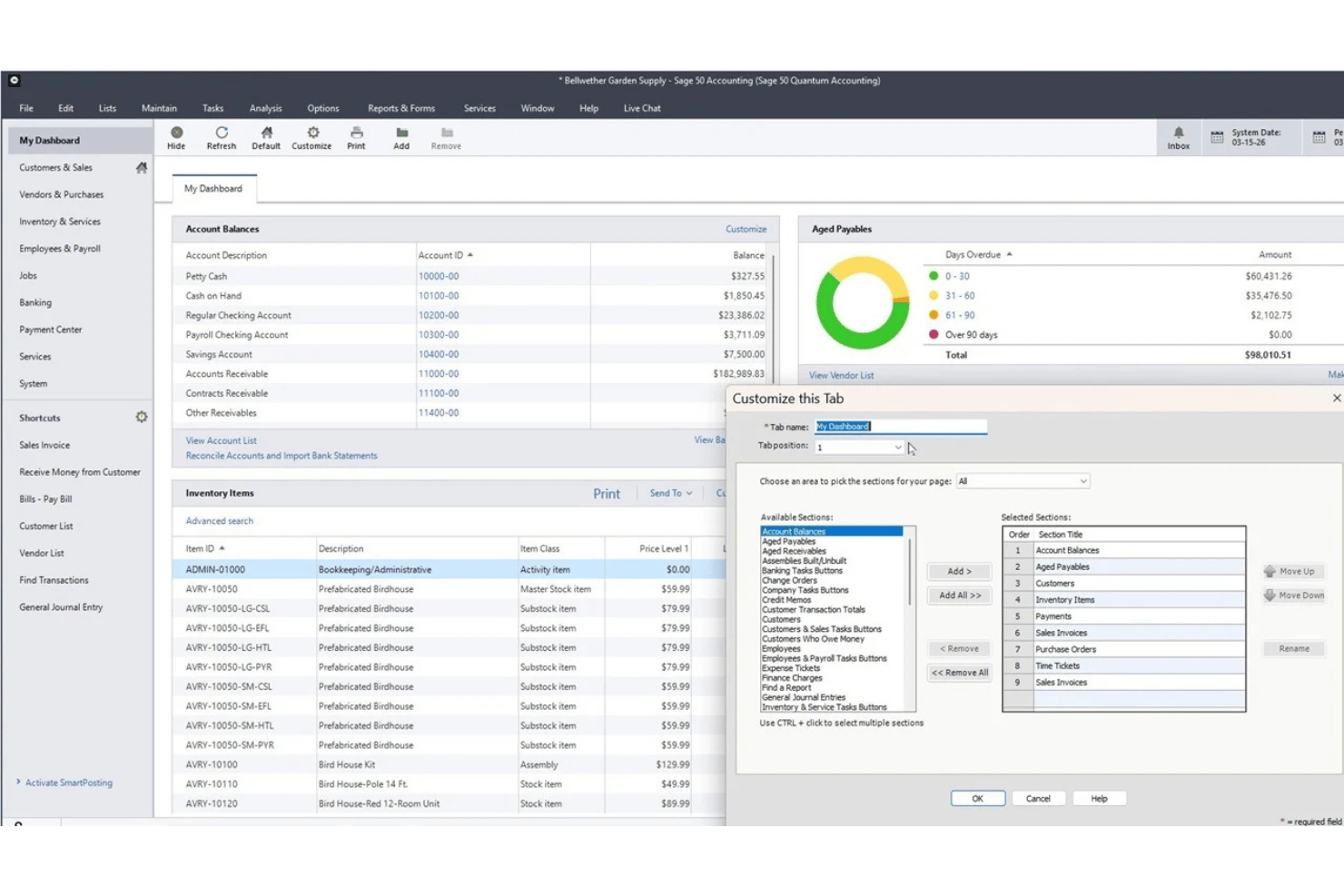
Sage 50 Accounting is a small business accounting platform available in cloud and desktop editions, combining financial management, inventory, job costing, and an integrated payroll module.
Who Is Sage 50 Accounting Best For?
Sage 50 is a strong fit for small businesses and in-house bookkeepers that need detailed accounting, job costing, and payroll functionality in one system.
Why I Picked Sage 50 Accounting
I've included Sage 50 Accounting in my top picks because the payroll module is built directly into the accounting system, not bolted on as a third-party integration. I like that payroll runs automatically post as journal entries to the general ledger, mapping wages, taxes, and deductions without any manual reconciliation. The combination of job costing and payroll in one desktop environment is where Sage 50 really stands apart, letting you see whether a project turned a profit after labor costs are fully accounted for.
Sage 50 Accounting Key Features
- Job costing module: Track labor, materials, and overhead by job or project for full job profitability.
- Multi-company management: Manage transactions and reporting across multiple business entities in a single system.
- Inventory management: Monitor stock levels, serial numbers, vendors, and assemblies directly within the accounting platform.
- Advanced reporting tools: Access over 150 reports covering areas such as payables, receivables, expenses, profits, inventory, payroll, and jobs, with options to customize and drill down into transactions.
Sage 50 Accounting Integrations
Sage 50 Accounting offers native integrations with Microsoft 365, AutoEntry, and Sage Payroll. An API is available for custom integrations.
Pros and Cons
Pros:
- Strong audit trail for payroll transactions
- Deep job costing built into accounting
- Payroll posts directly to the general ledger
Cons:
- Payroll and e-filing require separate subscriptions
- Payroll requires an additional subscription

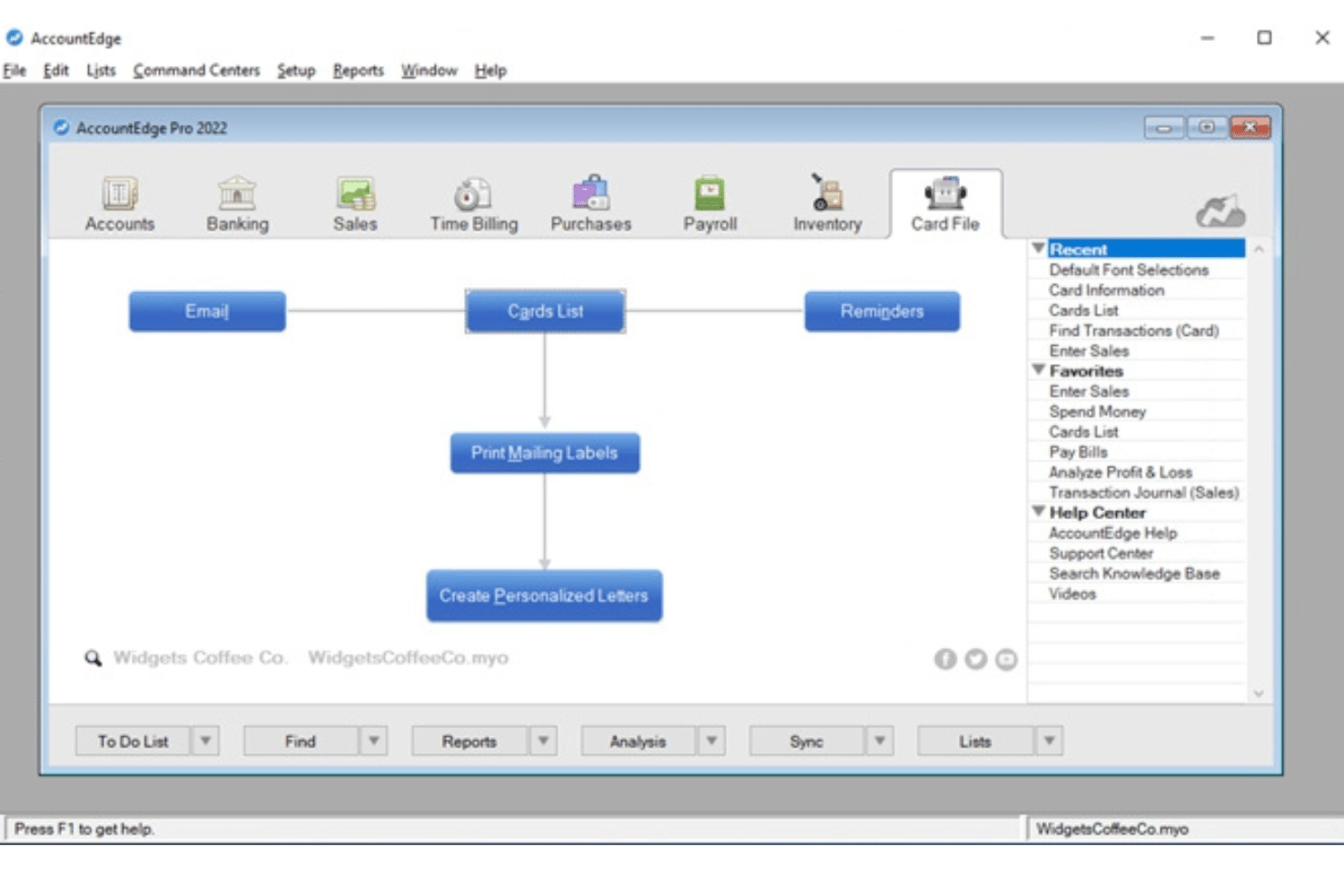
AccountEdge is a desktop-based accounting platform for small businesses that combines double-entry bookkeeping, inventory, and invoicing with an optional payroll add-on for unlimited employees and access to current federal, state/provincial, and local payroll tax rates.
Who Is AccountEdge Best For?
It's a strong fit for owner-operators and small business payroll admins who prefer desktop accounting software and want to process payroll for unlimited employees without per-employee fees.
Why I Picked AccountEdge
AccountEdge earns its spot on my shortlist because of how it handles payroll tax tables. Rather than relying on a cloud service for tax updates, AccountEdge lets you download and apply federal, state, and local tax tables directly in the desktop software. I also like that payroll runs post automatically as journal entries to the GL. Wages, taxes, and deductions map to the correct accounts with no manual re-entry.
AccountEdge Key Features
- Double-entry general ledger: Provides a full accounting suite with chart of accounts, journal entries, AP/AR, and financial reports.
- Inventory and item tracking: Monitors inventoried and non-inventoried items, assemblies, and manages multiple locations and custom variations.
- Customizable reporting: Offers hundreds of standard financial, payroll, and compliance reports, plus advanced analytics via Power BI exports.
- Integrated time billing: Enables entry of timesheets, applies custom billing rates by employee or project, and links hours directly to payroll.
AccountEdge Integrations
AccountEdge offers add-ons for bank feeds, direct deposit, payroll forms and e-filing, AccountEdge Connect, Web Pay, and payment processing. AccountEdge Connect adds browser-based access for sales, purchases, time billing, and employee timesheets that sync back to the desktop software.
Pros and Cons
Pros:
- Handles unlimited employee payroll runs
- Payroll entries post automatically to GL
- Downloadable tax tables update payroll calculations
Cons:
- Tax filing not automated by vendor
- Direct deposit and payroll e-filing cost extra

Striven
Best for payroll in operational workflows
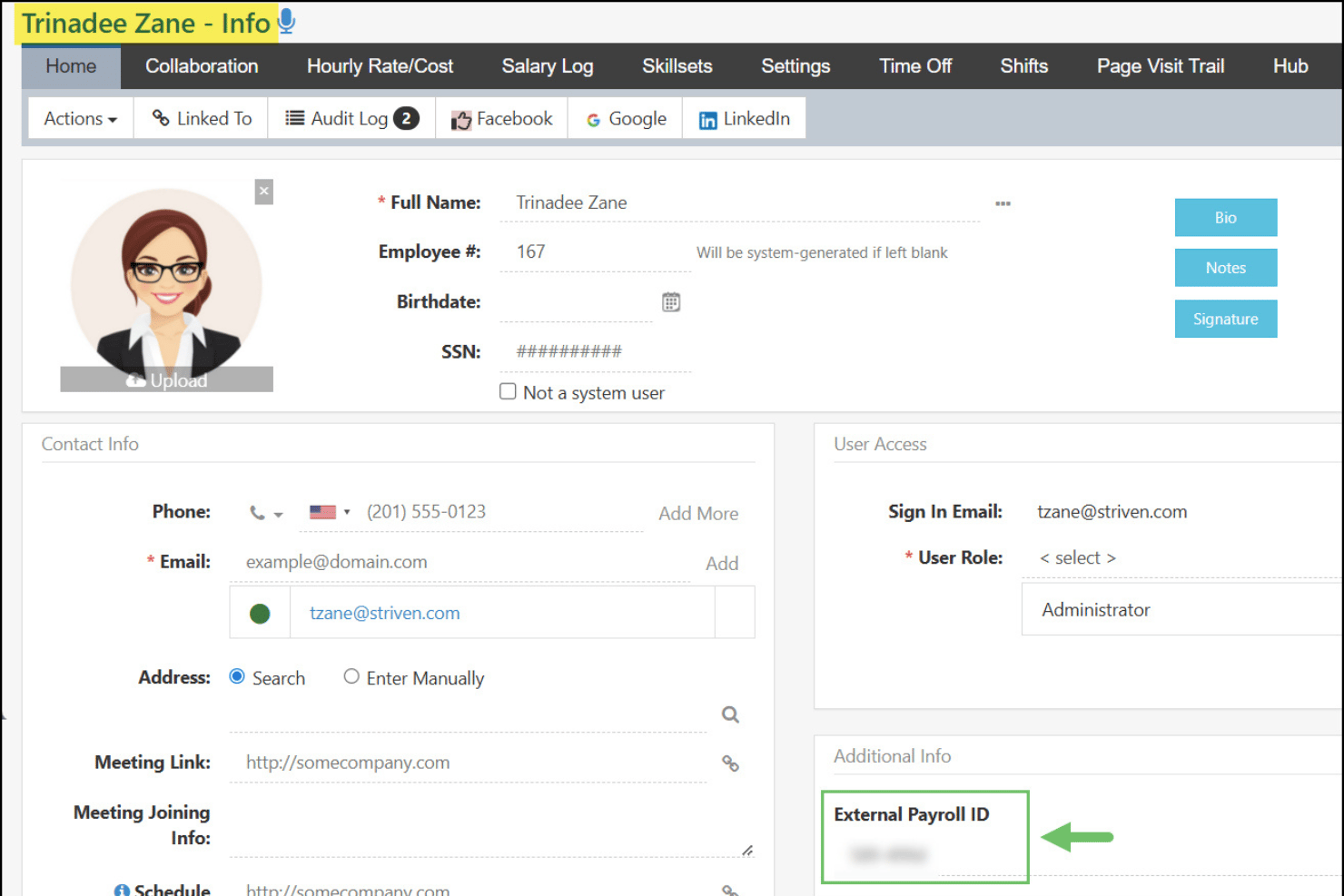
Striven is a cloud-based ERP platform for small and midsize businesses that combines general ledger accounting, payroll expense tracking, project management, CRM, and HR tools in a single system.
Who Is Striven Best For?
Striven is a good fit for owner-operators in field service industries—like HVAC, electrical, or landscaping—who need accounting and operational workflows managed in one place.
Why I Picked Striven
I picked Striven as one of the best because of how it connects payroll data to the rest of a business's operations. When my team logs employee hours against a project, those labor costs automatically map to the corresponding GL accounts, giving an accurate picture of spend by job. The Generate Payroll File tool then exports that payment data in CSV or XML to an external payroll processor, so nothing gets manually re-entered.
Striven Key Features
- Custom chart of accounts: Create and manage a detailed, adaptable chart of accounts for double-entry bookkeeping.
- Role-based access control: Assign granular system user roles and permissions for accounting, HR, and finance functions.
- Bank reconciliation automation: Reconcile transactions from linked bank accounts directly within the accounting module.
- Integrated project accounting: Allocate costs, revenue, and payroll expenses to specific jobs or projects for accurate reporting.
Striven Integrations
Native integrations are not clearly documented. The tool supports integrations via API for custom workflows.
Pros and Cons
Pros:
- Single platform covers HR, accounting, and payroll
- Time tracking integrates natively with payroll runs
- Labor costs auto-post to specific GL accounts
Cons:
- Reporting customization is limited for payroll data
- Payroll tax filing relies on external processors
Andere boekhoudsoftware met salarisfuncties
Hier zijn enkele aanvullende opties voor boekhoudsoftware met salarisfuncties die mijn shortlist niet hebben gehaald, maar die toch de moeite waard zijn om te bekijken:
- QuickBooks Workforce
For connected payroll, HR, and books
- NetSuite
For payroll data in real-time financials
- Microsoft Dynamics GP
For advanced payroll deductions and benefits
- SAP S/4HANA
For global payroll with SAP finance


Hoe ik boekhoudsoftware met functies voor loonadministratie beoordeel
Wanneer een loonverwerking niet automatisch in het grootboek wordt geboekt, weet ik dat de tool niet aan de basisvereisten voldoet. Daarom maak ik onderscheid tussen onmisbare functies en functies waarmee platforms zich echt onderscheiden.
Kernfunctionaliteit (basisvereisten voor deze lijst)
Bij het selecteren van tools voor mijn lijst beoordeel ik elke tool op een schaal van 0 (biedt de functionaliteit niet) tot 5 (blink uit op dit gebied) voor elke hieronder vermelde kernfunctionaliteit. Vervolgens zet ik de totaalscore van de tool om in een percentage, waarbij ik 65% als referentiepunt gebruik om de algehele geschiktheid voor de lijst te beoordelen.
- Geïntegreerde loonverwerking: Ik zoek naar ingebouwde loonverwerking met directe storting en flexibele schema's, zodat tweewekelijkse salarisbetalingen en betalingen aan opdrachtnemers op één plek kunnen plaatsvinden.
- Grootboekadministratie: Ik beoordeel of het grootboek crediteuren, debiteuren, journaalposten en aanpasbare rapporten ondersteunt, zoals het opvragen van een winst-en-verliesrekening uitgesplitst per afdeling.
- Automatisering van loonbelastingen: Belastingtabellen veranderen vaak, dus ik controleer of de tool inhoudingen automatisch berekent, aangiften indient en eindejaarsformulieren zoals W-2's genereert.
- Werknemersgegevens en inhoudingen: Elk profiel moet loontarieven, inhoudingen, arbeidsvoorwaarden en loonbeslagen kunnen opslaan: gegevens die je anders in een apart systeem zou bijhouden.
- Synchronisatie tussen loonadministratie en grootboek: Na elke loonverwerking moeten lonen en belastingverplichtingen automatisch op de juiste grootboekrekeningen worden geboekt, met een auditspoor voor controle aan het einde van het kwartaal.
- Uren- en verlofregistratie: Ingebouwde urenstaten en beleidsregels voor de opbouw van verlof die rechtstreeks naar de loonadministratie doorstromen, voorkomen dat je de uren elke loonperiode opnieuw moet invoeren.
Nadat ik een lijst heb samengesteld met tools die aan de criteria voldoen, bekijk ik wat elk platform onderscheidt.
Onderscheidende factoren (waarmee leveranciers zich onderscheiden)
Zo vergelijk ik verschillende leveranciers met elkaar:
Opvallende functies
Een zelfbedieningsportaal voor werknemers vermindert het aantal HR-verzoeken: medewerkers kunnen zelf hun loonstroken ophalen, gegevens voor directe storting bijwerken en verlofaanvragen indienen zonder heen-en-weercommunicatie. Ik beoordeel ook het beheer van opdrachtnemers en 1099-formulieren, vooral als je team bestaat uit zowel W-2-werknemers als freelancers die aan het einde van het jaar 1099-NEC-formulieren nodig hebben. Belastingaangiften in meerdere staten zijn ook belangrijk, vooral voor verspreid werkende teams waarbij elke nieuwe medewerker extra vereisten voor rechtsgebieden kan opleveren.
Meer dan functies alleen
Transparantie over prijzen is een belangrijk punt. Ik controleer of de kosten voor de loonadministratie zijn inbegrepen bij het boekhoudabonnement of als toeslag per werknemer in rekening worden gebracht, aangezien die kosten snel oplopen naarmate je team groeit. Ondersteuning bij migratie is ook belangrijk, vooral als je halverwege het jaar overstapt en de lonen en belastinginhoudingen tot nu toe nauwkeurig moet importeren. Ik kijk ook naar functies voor samenwerking met accountants, zoals op rollen gebaseerde machtigingen waarmee je boekhouder toegang krijgt tot het grootboek zonder goedkeuringen voor de loonadministratie te kunnen wijzigen.
Boekhoudsoftware met salarisfuncties kiezen
De juiste boekhoudsoftware met salarisfuncties hangt af van de manier waarop elk platform omgaat met uw unieke combinatie van naleving van regelgeving, automatisering en HR-taken. Bepaal voordat u een platform kiest hoe nauw u de salarisadministratie en boekhouding op elkaar moet aansluiten. Een alles-in-éénsysteem kan het afstemmingswerk verminderen, terwijl boekhoudsoftware met een salarisuitbreiding meer flexibiliteit kan bieden. Als u al een salarisdienstverlener hebt, kan een betrouwbare integratie voldoende zijn, zolang salarisuitgaven en -verplichtingen nauwkeurig naar uw grootboek worden doorgevoerd.
| Als uw prioriteit is... | Zoek dan naar... |
|---|---|
| Accurate aangiften van salarisbelastingen | Geautomatiseerde belastingberekeningen, ondersteuning bij aangiften en updates over regelgeving |
| Naadloze synchronisatie van salarisadministratie naar boekhouding | Native, geautomatiseerde toewijzing van journaalposten aan het grootboek |
| Beheer van personeel per uur en personeel in loondienst | Flexibele tijdregistratie en gecombineerde salarisruns |
| Verwerking van salarisadministratie in meerdere rechtsgebieden | Fiscale ondersteuning voor elke staat en gemeente waar u werknemers hebt |
| Eenvoudige overstap vanaf uw oude systeem | Begeleide migratie van salarisgegevens en YTD-imports |
Uw shortlist beoordelen
- Controleer de fiscale ondersteuning aan het einde van het jaar: Controleer welke W-2- en 1099-formulieren de software genereert of indient. Controleer ook welke rechtsgebieden worden ondersteund en of aangiftekosten aan het einde van het jaar extra kosten.
- Voer een proef met een gesimuleerde salariscyclus uit: Stel een testsalarisrun in met uw gebruikelijke salarisschema's, inkomsten, inhoudingen en opdrachtnemers. Controleer vervolgens hoe de resulterende kosten en verplichtingen in het grootboek worden geboekt.
- Dien een supportticket in voor een migratiescenario: Beschrijf dat u YTD-salarisgegevens halverwege het jaar moet importeren en houd bij hoe grondig en snel er wordt gereageerd.
- Verduidelijk de verantwoordelijkheid voor belastingaangiften: Bevestig of de leverancier namens u loonbelastingen berekent, aangeeft en betaalt. Controleer daarnaast voor welke rechtsgebieden de leverancier dekking biedt en wie fouten of te late aangiften afhandelt.
- Weeg controle af tegen gemak: Bepaal of u zeer aanpasbare boekhoudtools met gekoppelde salarisverwerking wilt, of een systeem dat primair op salarisverwerking is gericht en over basisboekhouding beschikt.
Wat is boekhoudsoftware met functies voor salarisverwerking?
Boekhoudsoftware met functies voor salarisverwerking combineert essentiële financiële tools met ingebouwde of geïntegreerde salarisverwerking. Deze tools kunnen bijvoorbeeld boekhouding van het grootboek, crediteuren- en debiteurenadministratie, facturering en financiële rapportage omvatten. Met deze platforms kunt u werknemerssalarissen berekenen, inhoudingen en belastingen beheren en salarisuitgaven en -verplichtingen in uw boekhoudsysteem vastleggen zonder gegevens handmatig tussen afzonderlijke tools over te zetten.
In tegenstelling tot zelfstandige salarissoftware verbinden deze platforms salarisactiviteiten rechtstreeks met uw financiële gegevens. Afhankelijk van de software kunnen voltooide salarisruns automatisch journaalposten genereren, uitgaven- en verplichtingenrekeningen bijwerken, arbeidskosten aan afdelingen of projecten toewijzen en salarisgegevens aan financiële rapporten doorgeven.
Functies
Let bij het selecteren van boekhoudsoftware met functies voor salarisverwerking op de volgende belangrijke functies:
- Geïntegreerde salarisverwerking: Verwerk salarissen, bereken het brutoloon tot nettoloon en koppel werknemerslonen, inhoudingen en salarisverplichtingen aan uw boekhoudgegevens.
- Beheer van loonbelastingen: Bereken en houd toepasselijke loonbelastingen in, met opties voor belastingbetalingen, aangiften en formulieren voor het einde van het jaar, zoals W-2's en 1099's, afhankelijk van het platform en abonnement.
- Synchronisatie met het grootboek: Wijs salaristransacties automatisch toe aan het juiste rekeningschema, zodat loonuitgaven en belastingverplichtingen altijd actueel zijn.
- Beheer van werknemersgegevens: Sla loontarieven, belastinginhoudingen, inhoudingen voor arbeidsvoorwaarden en arbeidsgegevens op in afzonderlijke werknemersprofielen.
- Betalingen aan opdrachtnemers en 1099-betalingen: Betaal opdrachtnemers naast werknemers en stroomlijn de 1099-NEC-aangifte aan het einde van het jaar binnen hetzelfde systeem.
- Registratie van tijd en betaald verlof: Leg gewerkte uren en betaald verlof vast en voer die gegevens rechtstreeks in salarisruns in voor nauwkeurige loonbetalingen.
- Automatische storting en betaalopties: Bied werknemers en opdrachtnemers flexibele betaalopties, zoals automatische stortingen, betaalkaarten of geprinte cheques.
- Portalen voor zelfbediening door werknemers: Laat werknemers loonstroken openen, belastingformulieren bekijken, verlof aanvragen en persoonlijke gegevens beheren zonder tussenkomst van HR.
- Aangepaste rapportage en analyses: Stel salaris- en financiële rapporten op die arbeidskosten, overuren en het gebruik van arbeidsvoorwaarden uitlichten voor betere zakelijke beslissingen.
- Beveiligings- en toestemmingsbeheer: Stel gebruikersniveaus voor toegang in, verplicht goedkeuringen en maak audittrajecten aan om salaris- en financiële gegevens te beveiligen.
Voordelen
Het implementeren van boekhoudsoftware met functies voor salarisverwerking biedt verschillende voordelen voor uw team en uw bedrijf. Hier zijn enkele voordelen waar u naar kunt uitkijken:
- Minder handmatige gegevensinvoer: Automatische synchronisatie tussen salarisverwerking en het grootboek elimineert dubbele invoer en helpt kostbare fouten te voorkomen.
- Betere naleving van loonbelastingregels: Geautomatiseerde berekeningen en hulpmiddelen voor naleving kunnen helpen om loonbelastingen en rapportage aan het einde van het jaar af te stemmen op toepasselijke federale, staats- en lokale vereisten.
- Snellere salariscycli: Geïntegreerde functies voor tijdregistratie en automatische stortingen versnellen elke salarisrun, van loonberekening tot bezorging van de loonbetaling.
- Meer transparantie voor werknemers: Zelfbedieningsportalen stellen werknemers in staat loonstroken, belastingformulieren en verlofsaldi te bekijken zonder dat HR als knelpunt fungeert.
- Nauwkeurigere financiële rapportage: Realtime boekingen van de salarisadministratie naar het grootboek zorgen ervoor dat loon-, belasting- en secundaire arbeidsvoorwaardengegevens altijd in bedrijfsrapportages worden weergegeven.
- Eenvoudigere salarisadministratie voor opdrachtnemers en meerdere staten: Platforms die opdrachtnemers en meerdere belastingjurisdicties ondersteunen, kunnen het handmatige werk verminderen dat komt kijken bij het betalen van verschillende typen werknemers op verschillende locaties. Bedrijven die internationaal uitbreiden, kunnen ook onze gids over internationale salarisadministratie in Mexico raadplegen.
- Verbeterde beveiliging en controle: Op rollen gebaseerde machtigingen en audit trails houden gevoelige salaris- en financiële gegevens beschermd tegen ongeautoriseerde toegang.
Kosten & prijzen
Bij het kiezen van boekhoudsoftware met functies voor salarisadministratie is inzicht in de verschillende beschikbare prijsmodellen en abonnementen vereist. De kosten variëren sterk, afhankelijk van de vraag of de salarisadministratie is inbegrepen, als add-on wordt verkocht of als onderdeel van een groter ERP-pakket wordt aangeschaft. Producten voor kleine bedrijven combineren vaak een maandelijks boekhoudabonnement met een basistarief voor de salarisadministratie en kosten per werknemer, terwijl bedrijfsplatforms doorgaans werken met aangepaste prijzen op basis van modules, gebruikers, bedrijfsgrootte en implementatiebehoeften. De onderstaande tabel vat de meest voorkomende prijsmodellen samen:
Veelvoorkomende prijsmodellen voor boekhoudsoftware met functies voor salarisadministratie
| Type abonnement | Gemiddelde prijs | Veelvoorkomende functies |
|---|---|---|
| Gratis boekhouding | $0 basistarief; salarisadministratie kost meestal extra | Basisboekhouding, facturering, financiële rapporten en optionele betaalde salarisadministratie |
| Boekhouding + add-on voor salarisadministratie | Maandelijkse boekhoudkosten + basistarief voor salarisadministratie en/of kosten per werknemer | Geïntegreerde boekhouding, verwerking van salarisbetalingen, directe stortingen en boekingen van de salarisadministratie naar het grootboek |
| Software per gebruiker of modulair | Maandelijkse of jaarlijkse kosten op basis van gebruikers en geselecteerde modules | Boekhoud- en salarisadministratiemodules met aanvullende HR-, voorraad-, project- of operationele tools |
| ERP voor bedrijven | Aangepaste offerte | Geavanceerd financieel beheer, salarisadministratie, ondersteuning voor meerdere entiteiten, machtigingen, integraties en implementatiediensten |
Veelgestelde vragen over boekhoudsoftware met salarisfuncties
Hier vindt u antwoorden op veelgestelde vragen over boekhoudsoftware met salarisfuncties:
Kan ik zowel werknemers als contractanten betalen met boekhoudsoftware die salarisadministratie bevat?
Veel boekhoudplatforms met salarisfuncties ondersteunen zowel W-2-werknemers als 1099-contractanten, maar de mogelijkheden voor betalingen aan contractanten en belastingformulieren verschillen per product en abonnement. Als u beide typen werknemers gebruikt, controleer dan of de software betalingen aan contractanten ondersteunt en de vereiste W-2- en 1099-NEC-formulieren genereert of indient.
Hoe werkt het indienen van loonbelastingaangiften in deze systemen?
De ondersteuning voor loonbelasting verschilt per platform en abonnement. Sommige systemen berekenen inhoudingen, maar laten het indienen van aangiften en betalingen aan u over, terwijl volledig ondersteunde salarisproducten federale, provinciale en lokale loonbelastingen namens u kunnen berekenen, indienen en betalen. Controleer welke rechtsgebieden en eindejaarsformulieren worden ondersteund voordat u een systeem kiest.
Welke ondersteuning is beschikbaar bij het migreren van salarisgegevens van een vorige aanbieder?
De meeste aanbieders bieden hulp bij de ingebruikname. Sommige bieden gespecialiseerde migratiespecialisten die helpen bij het importeren van salarisinformatie van het lopende jaar en zorgen voor een soepele overgang.
Kunnen werknemers zelf loonstroken en belastingformulieren bekijken?
Ja, selfserviceportalen voor werknemers zijn gebruikelijk. Werknemers kunnen er loonstroken opvragen, belastingdocumenten bekijken en persoonlijke gegevens bijwerken zonder HR in te schakelen.
Is geavanceerde tijdregistratie inbegrepen of heb ik tools van derden nodig?
Sommige oplossingen beschikken over ingebouwde tijdregistratie, terwijl andere naadloze integraties met tijdklokapplicaties bieden. In beide gevallen zorgen ze ervoor dat de uren nauwkeurig worden geregistreerd voor salarisverwerkingen.