

10 Best Global Payroll Services in Mexico in 2026

Best Global Payroll Mexico Shortlist


Global payroll services in Mexico mean software or services that let you manage payroll, compliance, and taxes for employees or contractors based in Mexico from anywhere in the world. If you're searching for the best global payroll services in Mexico, you probably need tools that handle local regulations, automate payments, and cut down on administrative hassles for cross-border teams. In this roundup, you'll find an expert-vetted shortlist of top providers, each offering features and expertise to support hiring, paying, and staying compliant as your business grows in Mexico.
Why Trust Our Software Reviews
Our team has been testing and reviewing software since 2012. As HR experts ourselves, we know how difficult—and important—it is to choose the right software.
For this guide, we evaluated tools using hands-on testing and independent research, scoring tools using our selection criteria. We also draw on insights from industry thought leaders and practicing HR experts.
Our reviews reflect our human editorial judgment, not a sales pitch.
Expert reviewers:
Global Payroll Mexico Comparison Table
This comparison table summarizes pricing details for my top global payroll Mexico selections.
| Tool | Best For | Trial Info | Price | ||
|---|---|---|---|---|---|
| 1 | Best with an AI HR advisor | Free demo available | From $599/employee/month | Website | |
| 2 | Best for unified payroll and EOR management | Free demo available | From $29/employee/month | Website | |
| 3 | Best for managing global contractors | Free demo available | From $459/user/month (billed annually) | Website | |
| 4 | Best for handling Mexico-specific payroll rules | Free demo available | From $599/user/month | Website | |
| 5 | Best for automated payroll reporting | Free demo available | Pricing upon request | Website | |
| 6 | Best for HR and IT automation | Free demo available | Pricing upon request | Website | |
| 7 | Best for owned global employment infrastructure | Free demo available | From $699/user/month | Website | |
| 8 | Best for enterprise payroll ecosystems | Free demo available | Pricing upon request | Website | |
| 9 | Best for distributed team hiring | Free demo available | From $699/employee/month | Website | |
| 10 | Best for flexible workforce models | Free demo available | Pricing upon request | Website |


Best Global Payroll Mexico Reviews
Below are my detailed summaries of the best global payroll Mexico options that made it onto my shortlist. My reviews offer a detailed look at the features, compliance capabilities, and pricing of each platform to help you find the best one for you.

G-P
Best with an AI HR advisor
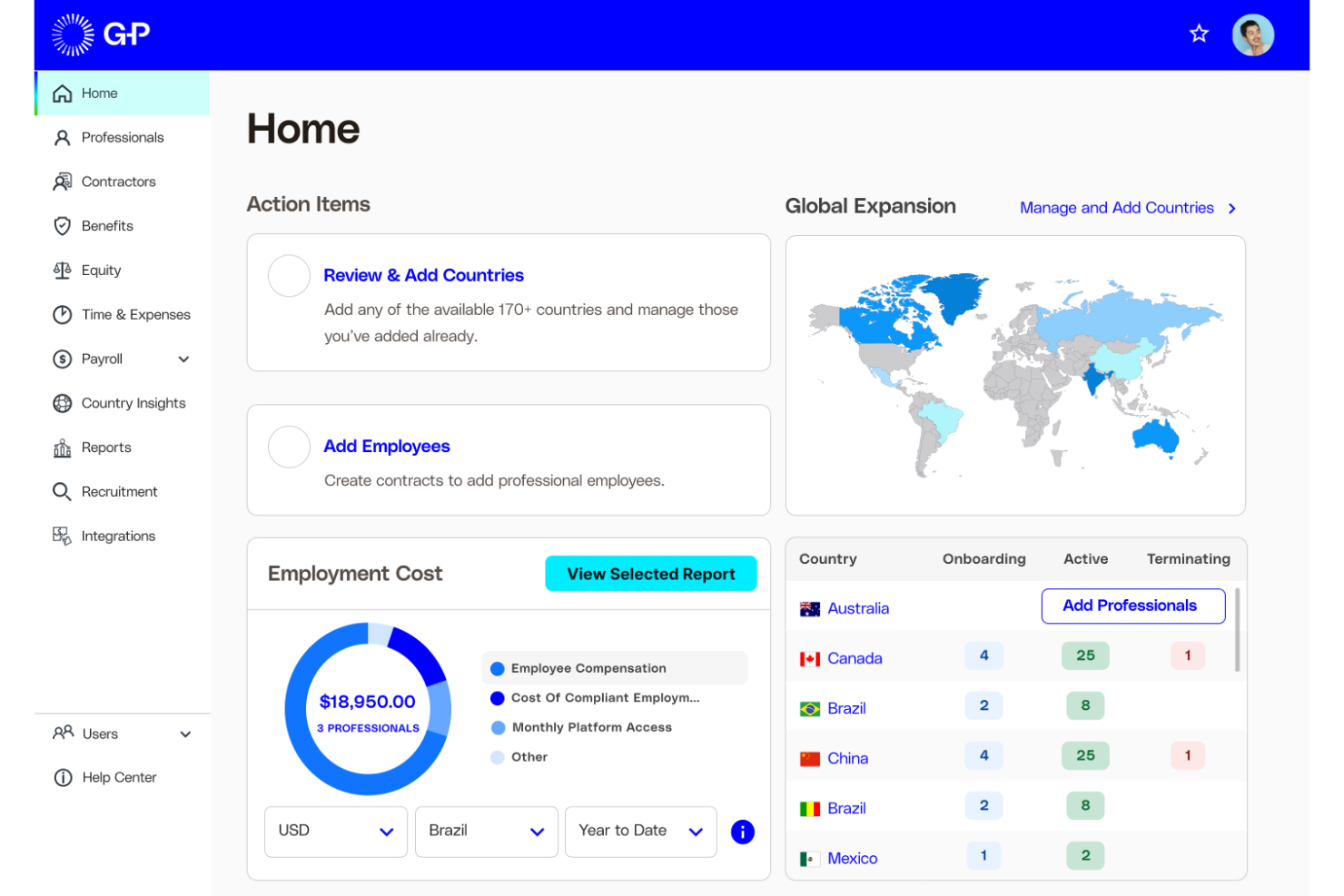
G-P is a global payroll and employer of record platform designed to help companies manage compliant payroll, statutory contributions, and workforce onboarding in Mexico without the need to set up a local entity.
Who Is G-P Best For?
G-P suits HR and payroll leaders at multinational companies looking to hire and pay employees in Mexico without establishing a local subsidiary.
Why I Picked G-P
I picked G-P as one of the best because I can hire and pay employees in Mexico without setting up an entity. My team uses it to handle all Mexican labor law payroll requirements, automate IMSS and ISR withholdings, and generate CFDI 4.0 payroll receipts.
G-P Key Features
- Multi-country payroll dashboard: Manage payroll for Mexico and 180+ other countries in one platform.
- Automated statutory updates: Payroll calculations reflect the latest Mexican labor and tax regulations.
- Unified employment contract generation: Build compliant, localized contracts for Mexican hires.
- HRIS platform integrations: Connect G-P to other HR or finance systems for streamlined data management.
G-P Integrations
G-P offers native integrations with Workday, BambooHR, Greenhouse, and QuickBooks, and provides an API for custom integrations.
Pros and Cons
Pros:
- Issues CFDI 4.0 payroll receipts
- Handles Mexican statutory bonuses and deductions
- Rapid entity-free onboarding in Mexico
Cons:
- Can require manual process for special cases
- Limited support for edge-case payroll scenarios

Best for unified payroll and EOR management
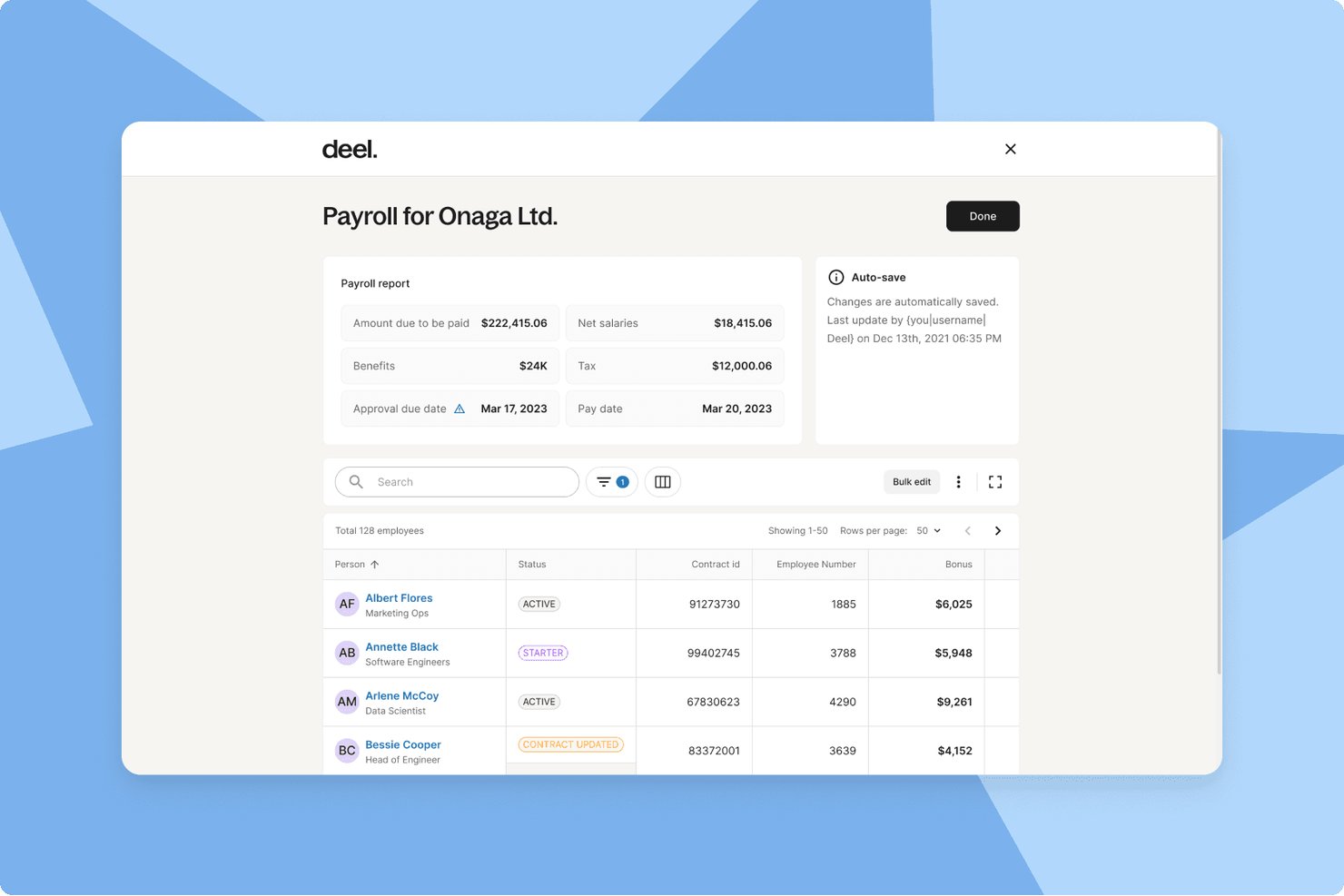
Deel Payroll is a global people platform that combines EOR services, multi-country payroll processing, contractor management, and statutory compliance—including full Mexican payroll support with IMSS, INFONAVIT, CFDI generation, and SAT filing.
Who Is Deel Payroll Best For?
Deel Payroll fits mid-size to enterprise teams managing employees across multiple countries, including Mexico, who want payroll and EOR in one platform.
Why I Picked Deel Payroll
I picked Deel Payroll as one of the best because it's the only platform I've found that handles both EOR and direct-entity payroll for Mexico from a single dashboard. I particularly like that CFDI 4.0 receipts are stamped automatically via an authorized PAC, removing any manual SAT filing steps. Because Deel owns its Mexican entity outright, statutory onboarding like IMSS alta happens on day one rather than days later through a third-party partner.
Deel Payroll Key Features
- IMSS and INFONAVIT automation: Calculates and manages all mandatory statutory contributions for Mexican workers every pay cycle.
- Multi-currency payroll funding: Allows parent companies to fund Mexican payroll in USD or EUR with real-time FX rates.
- EOR to direct payroll transition: Moves employees from EOR status to direct payroll under your RFC entity without needing to re-onboard.
- API and HRIS integrations: Connects seamlessly with leading HR, accounting, and time tracking systems for centralized global payroll management.
Deel Payroll Integrations
Deel offers integrations with QuickBooks, Xero, BambooHR, Expensify, NetSuite, Sage Intacct, Greenhouse, Workday, SAP, and ADP, among others available through its app store. It also connects with Zapier and provides an API for custom integrations.
Pros and Cons
Pros:
- Handles EOR-to-RFC payroll transitions smoothly
- Automates CFDI 4.0 stamping natively
- Owns its Mexican legal entity for EOR
Cons:
- Complex local reports require manual adjustments
- Customer support response times can be slow

Best for managing global contractors
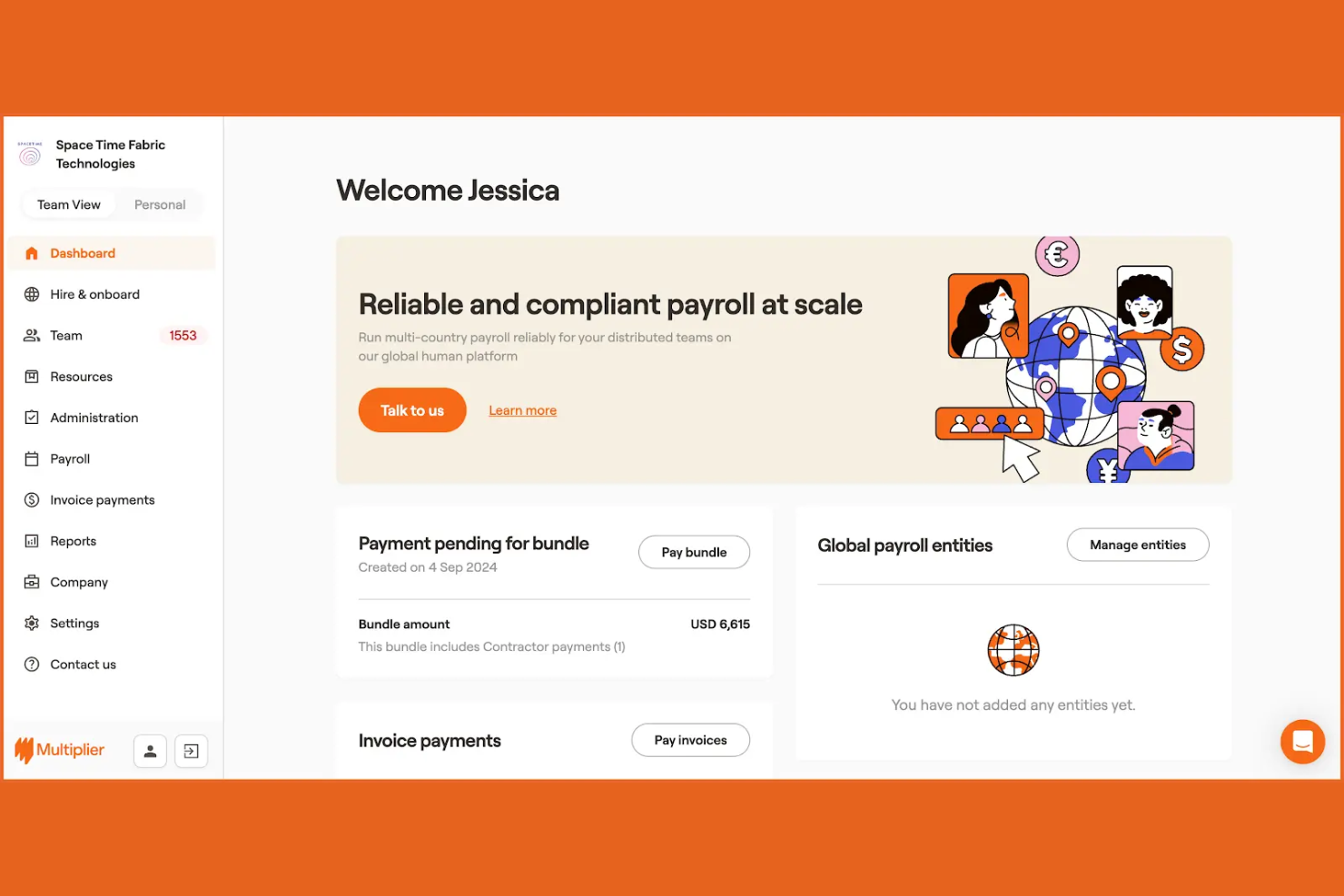
Multiplier is a global payroll platform that lets you hire, onboard, and pay employees or contractors in Mexico compliantly, with automated statutory contributions, local payroll processing, and unified multi-country payroll management.
Who Is Multiplier Best For?
Global HR teams and payroll managers at organizations hiring, paying, or managing contractors and employees in Mexico and other countries.
Why I Picked Multiplier
I picked Multiplier because I can bring on contractors and employees in Mexico with accurate local payroll, automated statutory deductions, and compliant CFDI 4.0 payroll receipts. I like that I can handle everything without a local entity and batch payments in MXN.
Multiplier Key Features
- Unified multi-country payroll dashboard: Manage payroll for Mexico and 150+ countries from one interface.
- Employee document management: Store labor contracts, onboarding forms, and compliance documents for Mexican hires.
- Automated leave tracking: Track and calculate holiday entitlement and vacation premium based on Mexican law.
- Real-time statutory updates: Platform adjusts payroll calculations automatically when Mexican labor laws change.
Multiplier Integrations
Multiplier connects seamlessly with major enterprise HRIS platforms including Workday and Oracle to keep global employee records in sync.For financial tracking and expense processing, it features native integrations with QuickBooks and Expensify, alongside security support for Okta SSO.
Pros and Cons
Pros:
- Supports both EOR and local entity payroll
- Automated CFDI 4.0 payroll receipt generation
- Full compliance with Mexico payroll law
Cons:
- Limited in-depth payroll analytics and reporting
- Onboarding delays if documents not submitted promptly

Best for handling Mexico-specific payroll rules
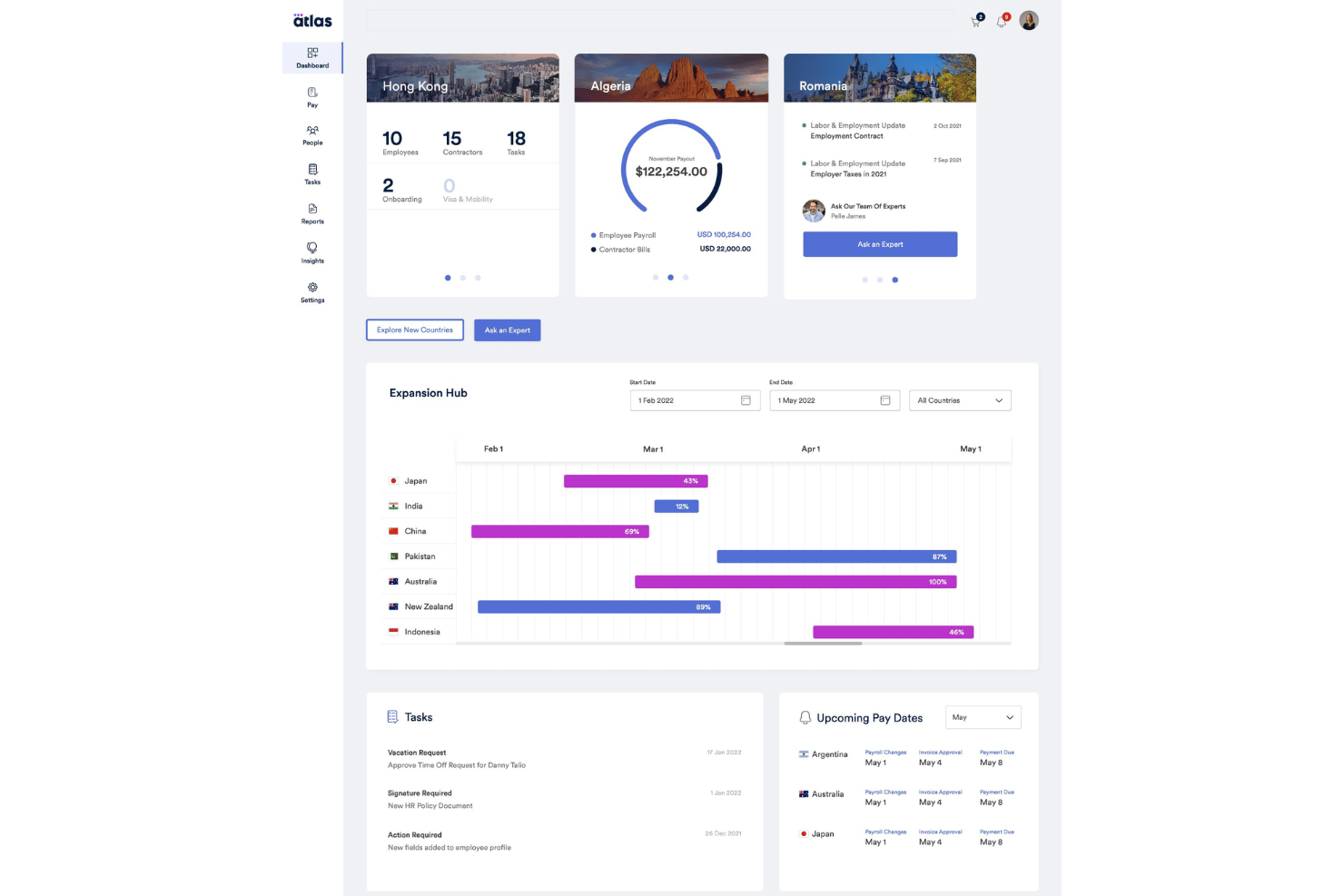
Atlas HXM is a global payroll platform that specializes in processing payroll for Mexican employees, supporting full statutory compliance, automated CFDI and SAT filings, and centralized management for multi-country payroll operations.
Who Is Atlas HXM Best For?
Global HR teams and payroll managers who need to comply with Mexican labor regulations while consolidating payroll across multiple countries.
Why I Picked Atlas HXM
I picked Atlas HXM as one of the best because it handles Mexico-specific payroll rules, like IMSS and INFONAVIT contributions, and automates CFDI 4.0 payroll receipts and SAT electronic filing. I like how everything is built for local labor compliance.
Atlas HXM Key Features
- Multi-country payroll dashboard: Run payroll for Mexico and over 160 countries from a single platform.
- Local currency payments: Disburse salaries in Mexican pesos directly to local bank accounts.
- Severance and seniority premium calculation: Calculate required severance and seniority premiums under Mexican labor law.
- Unified employee record management: Maintain and update detailed employee records in compliance with Mexican regulations.
Atlas HXM Integrations
Atlas HXM features an API-enabled platform architecture designed to easily connect with external enterprise HRIS and ERP platforms for seamless data import and custom workflow integration.
Pros and Cons
Pros:
- Supports both EOR and entity payroll
- Up-to-date Mexican labor law compliance
- Automated CFDI and SAT payroll filings
Cons:
- Initial product setup requires detailed guidance
- Customer support response times can lag
Mercans
Best for automated payroll reporting
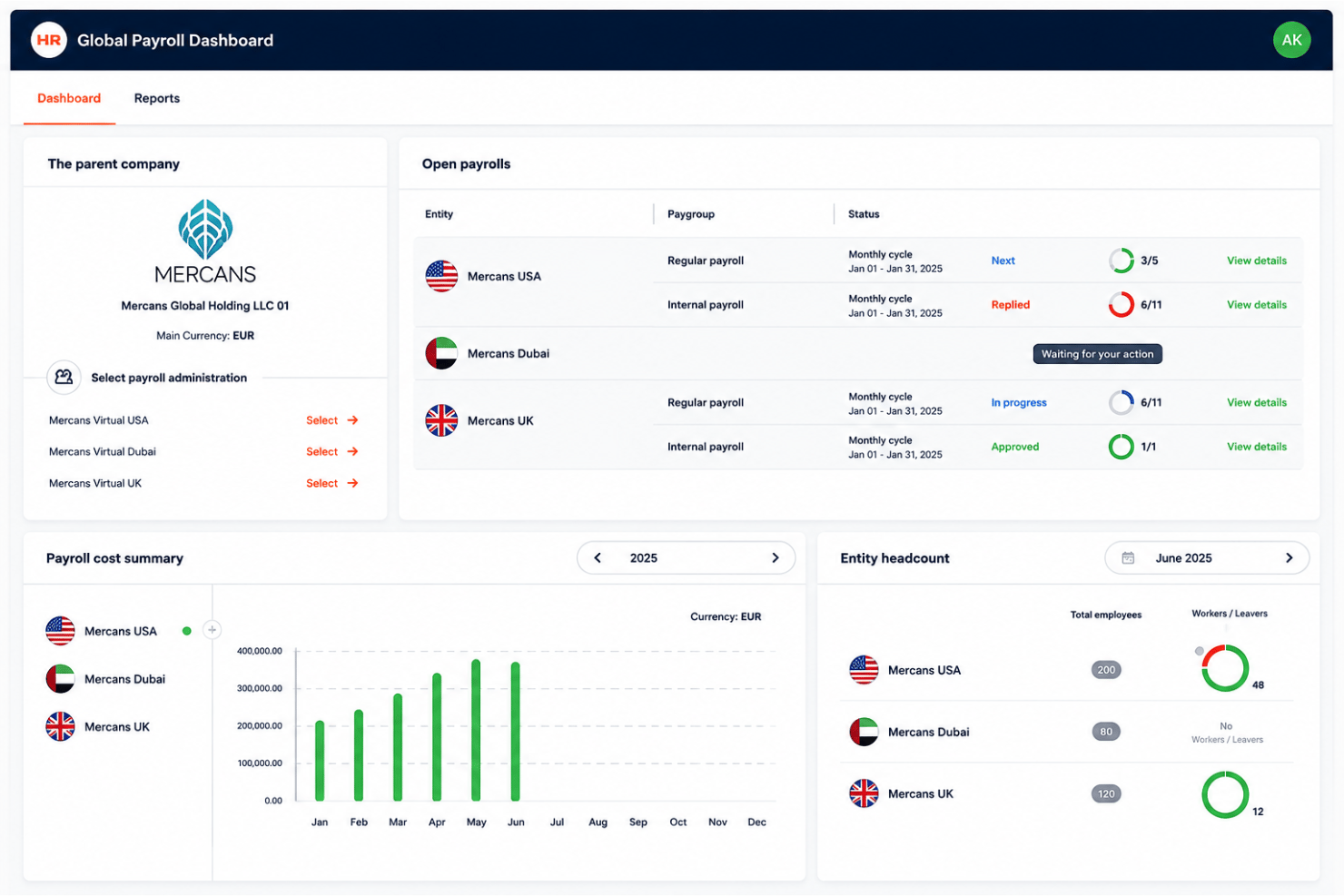
Mercans is an employer of record and payroll compliance platform built for global companies that need to hire, pay, and manage statutory payroll processes in Mexico and multiple countries.
Who Is Mercans Best For?
Global HR teams and payroll managers who need to handle complex payroll and compliance requirements for employees based in Mexico.
Why I Picked Mercans
I picked Mercans as one of the best because I rely on its automated payroll reporting for managing CFDI 4.0 receipts and SAT electronic filings. I use Mercans to support payroll compliance with IMSS, INFONAVIT, SAR, and ISR for our Mexico-based employees.
Mercans Key Features
- Global payroll dashboard: Manage and track payroll processes for Mexico and other countries from a unified interface.
- Local entity support: Run payroll for your own Mexican legal entity using Mercans' platform and workflows.
- Automated employee onboarding: Digitally onboard new hires in Mexico with customized document management.
- Role-based user access: Assign payroll and HR access levels for internal teams and external advisors.
Mercans Integrations
They officially support native out-of-the-box data integrations with Oracle Cloud HCM, Workday, HiBob, BambooHR, UKG Pro, Workable, and Zoho Recruit, alongside an API-first stack offering native Payroll, SSO, and Employee Self-Service (ESS) REST APIs.
Pros and Cons
Pros:
- Handles both employees and contractors
- In-country experts for Mexican compliance support
- Automated CFDI and SAT payroll reporting
Cons:
- Support responsiveness varies by time zone
- Opaque pricing and dated interface

Rippling
Best for HR and IT automation
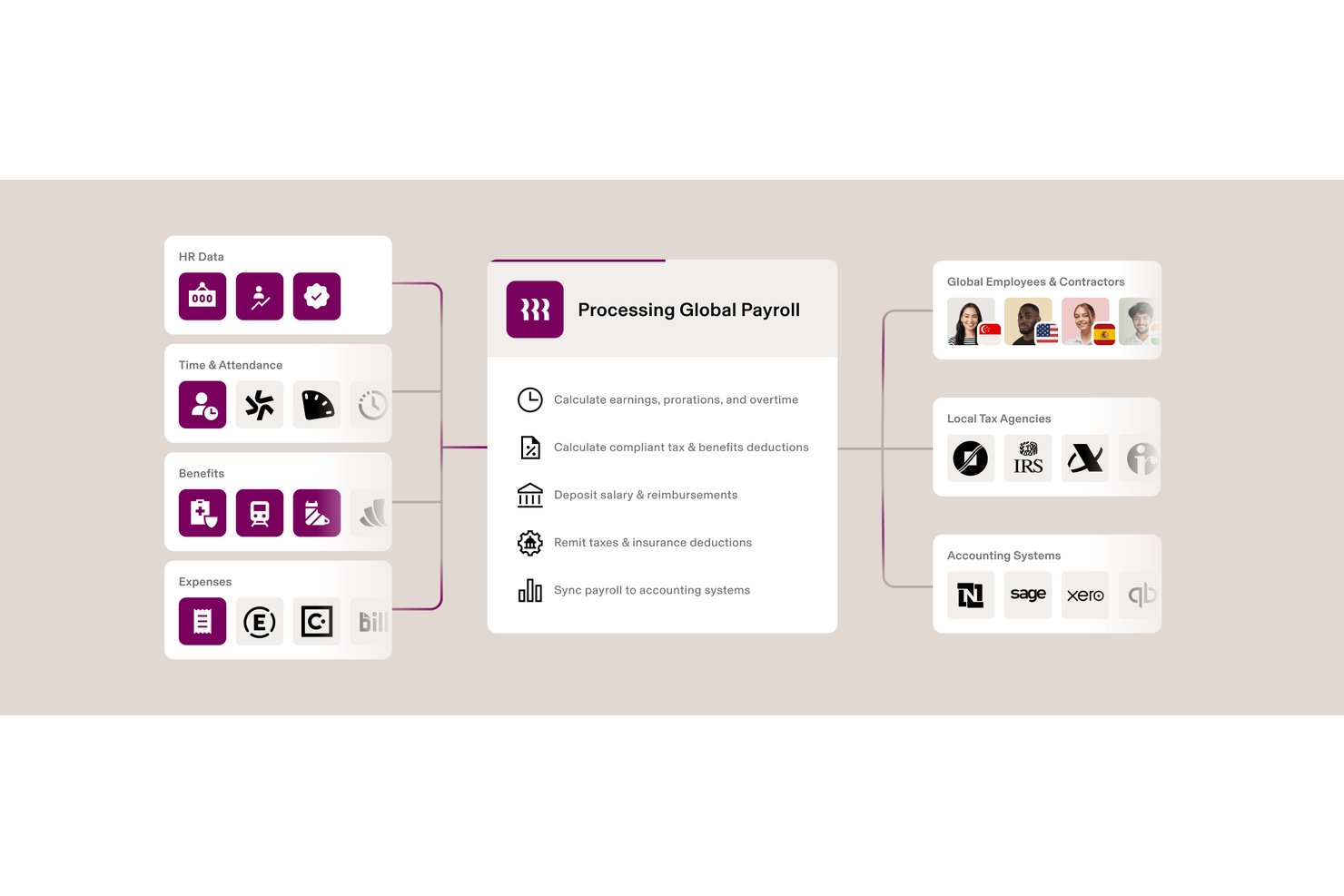
Rippling is a global payroll platform designed for businesses managing Mexico payroll, combining local labor law compliance, unified HR data, statutory contributions, CFDI receipt generation, and integration with IT and finance systems.
Who Is Rippling Best For?
Rippling is a strong choice for HR and payroll teams at multi-country companies that need to run compliant payroll for employees in Mexico and beyond.
Why I Picked Rippling
I picked Rippling as one of the best because I can run payroll, track statutory deductions, and issue CFDI 4.0 payroll receipts within one platform. My team is able to manage both HR and IT for Mexico employees alongside payroll, keeping everything unified.
Rippling Key Features
- Automated local tax calculations: Calculates Mexican statutory withholdings for IMSS, INFONAVIT, SAR, and ISR automatically with every pay run.
- Multi-country payroll dashboard: Lets you view and administer payroll for Mexico alongside other countries from a single interface.
- EOR and direct entity payroll support: Supports both employer of record hiring and local Mexican entity payroll options.
- Local-currency payments: Disburses salaries directly in MXN to Mexican bank accounts using local payment rails.
Rippling Integrations
Rippling offers native integrations with QuickBooks, Xero, NetSuite, Slack, Google Workspace, Microsoft 365, Azure Active Directory, Zoom, DocuSign, and Greenhouse. An API is available for custom integrations.
Pros and Cons
Pros:
- Native support for both EOR and entidade local
- Automates Mexican statutory tax deductions
- Unified dashboard for HR, IT, and payroll
Cons:
- Limited live support for local payroll issues
- Full CFDI compliance may require manual steps
New Product Updates from Rippling

Rippling AI Adds Plugins, Skills, and Automations
Rippling AI now supports plugins, skills, and automations so employees can connect approved third-party tools, package repeatable work into reusable AI instructions, and run recurring workflows under existing Rippling policies and permissions. For more information, visit Rippling's official site.
Remote
Best for owned global employment infrastructure
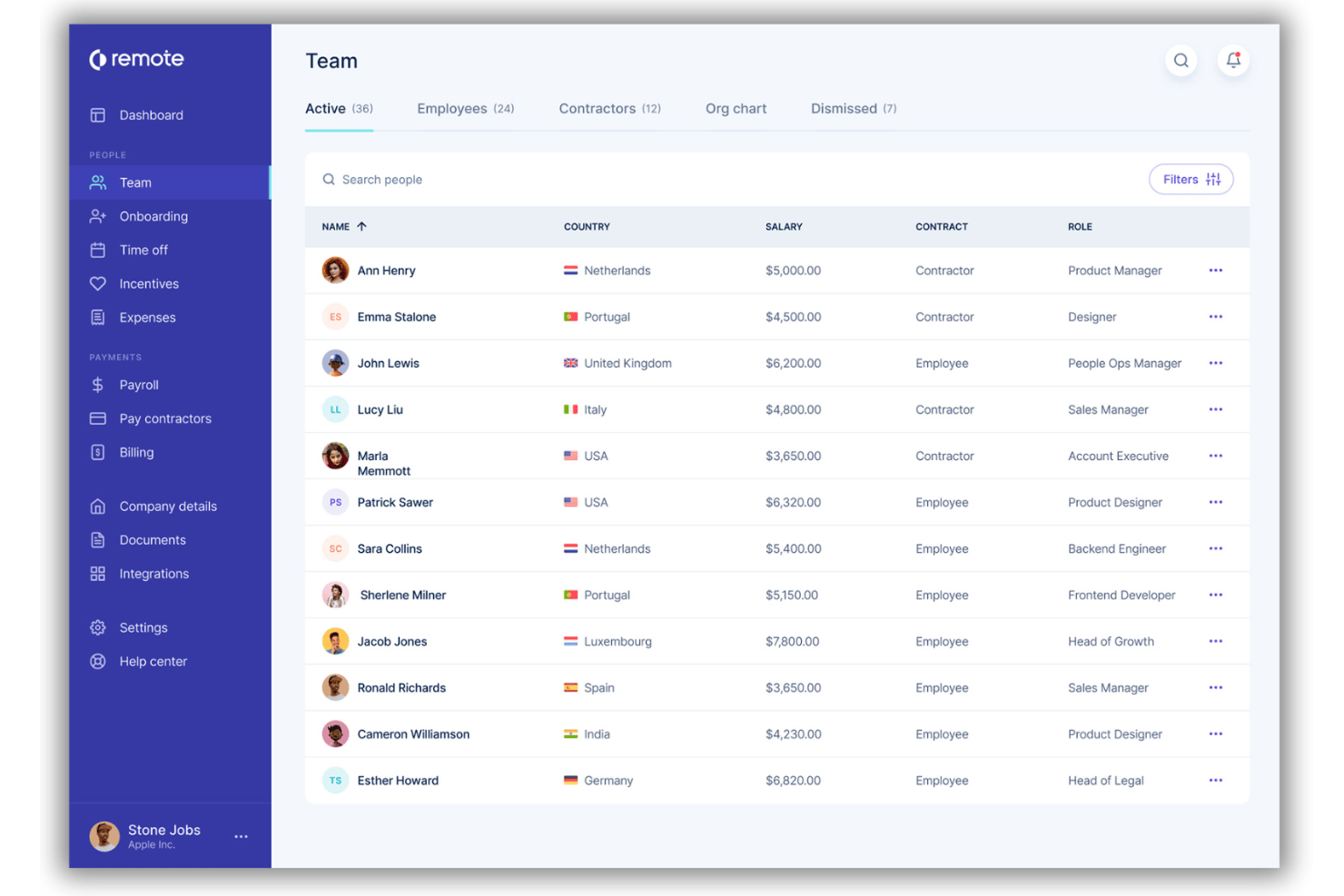
Remote is a global payroll and employment platform that helps companies manage payroll, statutory compliance, tax withholdings, and employment contracts for Mexican employees and contractors through unified workflows.
Who Is Remote Best For?
Remote is a strong choice for HR teams at multinational companies needing payroll and compliance support for employees based in Mexico.
Why I Picked Remote
I picked Remote as one of the best because I use it to handle payroll and compliance for Mexican employees without needing a local entity. My team relies on its statutory management for IMSS, INFONAVIT, and SAR, which truly sets it apart for local employment expertise.
Remote Key Features
- Integrated multi-country payroll dashboard: Run payroll for employees in Mexico and across 90+ countries in one place.
- Employee self-service portal: Employees can access payslips, update details, and track local compliance documents online.
- Automated contract generation: Create compliant employment contracts tailored to Mexican labor regulations.
- Local holiday and leave tracking: Configure and manage holidays and statutory leave policies for Mexico-based teams.
Remote Integrations
Remote offers native integrations with BambooHR, HiBob, Greenhouse, and Workable. An API is available for custom integrations.
Pros and Cons
Pros:
- Manages both employees and contractors
- Handles statutory benefits and payroll taxes
- Expert guidance on Mexican employment law
Cons:
- Some users report slow resolution on support tickets
- CFDI payslip access lacks real-time dashboard

ADP
Best for enterprise payroll ecosystems
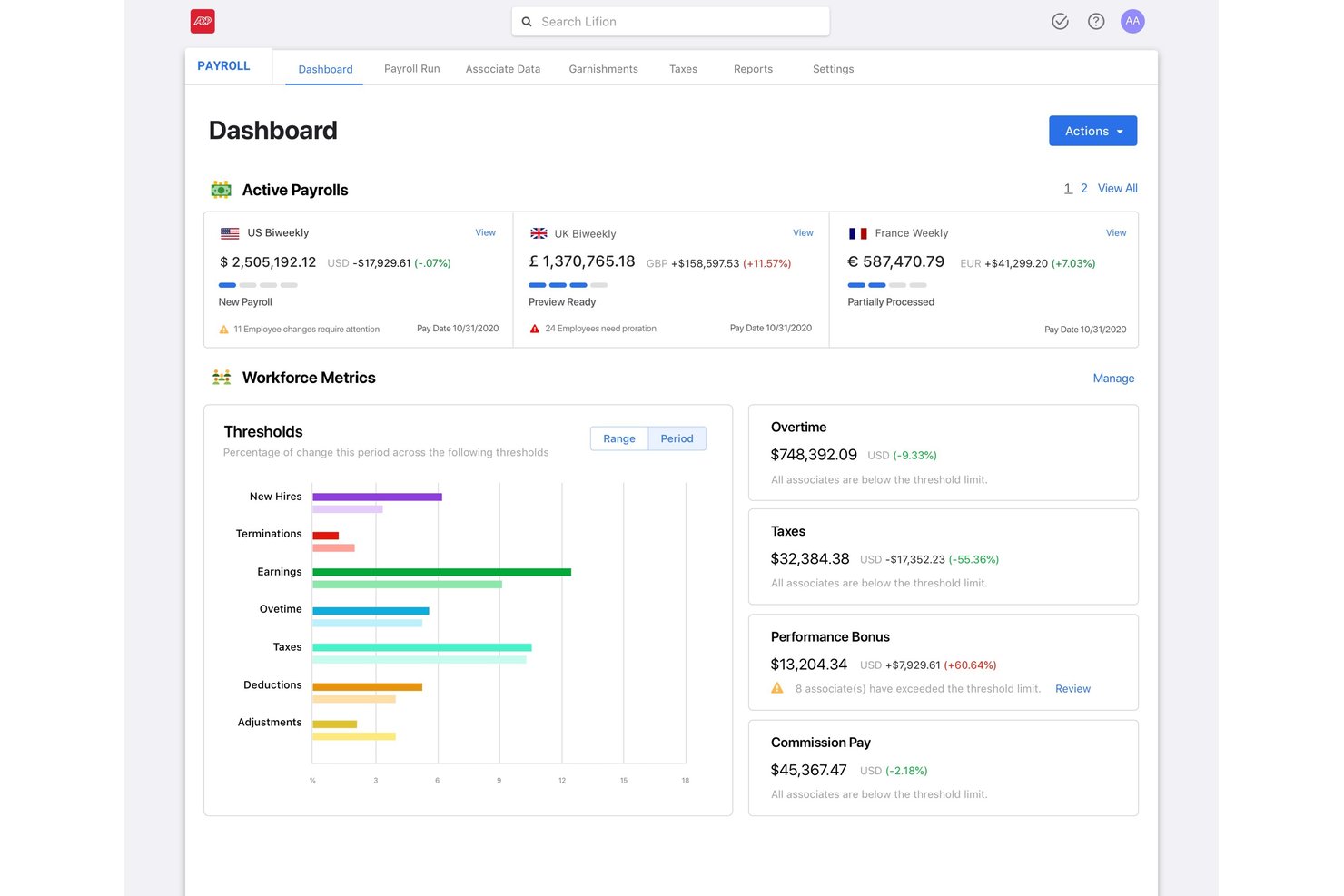
ADP is a global payroll and compliance platform designed for large organizations that need to process payroll in Mexico, manage statutory contributions, handle SAT filings, and consolidate multi-country payroll operations.
Who Is ADP Best For?
ADP suits multinational enterprises with in-house HR teams managing payroll and compliance for employees across Mexico and other countries.
Why I Picked ADP
I picked ADP because I rely on its full compliance with Mexican payroll rules, including IMSS, INFONAVIT, and SAT e-filing. My team is able to consolidate payroll operations across regions while handling Mexico’s statutory contributions centrally. The enterprise compliance focus is unmatched.
ADP Key Features
- Multi-country dashboard: Manage payroll data for Mexico alongside other countries in a unified interface.
- Automated report generation: Schedule and export payroll, tax, and statutory reports specific to Mexican compliance needs.
- Role-based access control: Set user permissions for payroll and HR teams at the country and regional level.
- Employee self-service portal: Let employees in Mexico view payslips, update details, and access tax documents online.
ADP Integrations
ADP offers native integrations with SAP SuccessFactors, Oracle HCM, and Workday, and provides an API for custom integrations.
Pros and Cons
Pros:
- Issues CFDI 4.0 payroll receipts
- Handles Mexican statutory bonuses and deductions
- Rapid entity-free onboarding in Mexico
Cons:
- Can require manual process for special cases
- Limited support for edge-case payroll scenarios

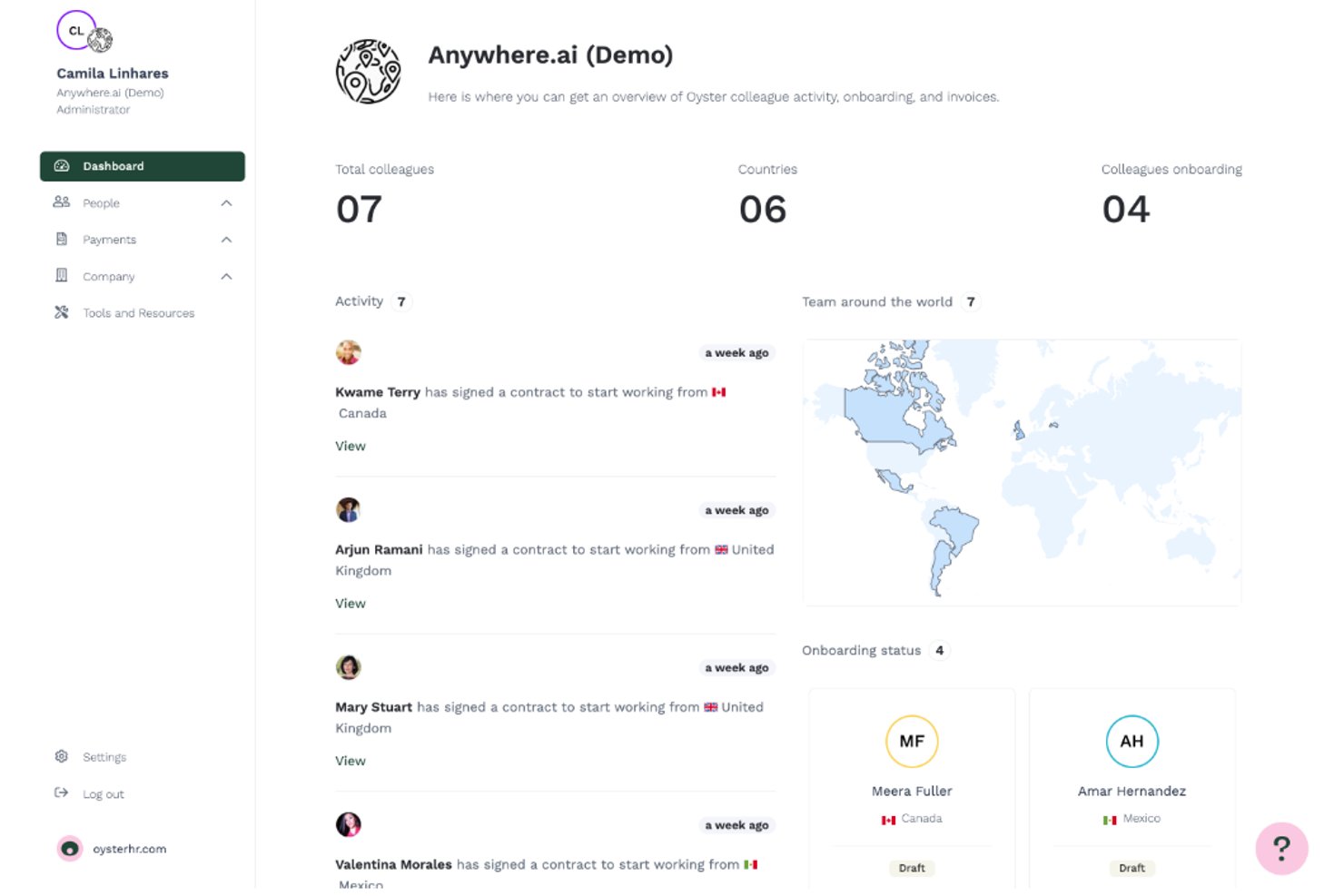
Oyster is a global payroll and employer of record platform designed to help companies hire, pay, and manage employees compliantly in Mexico, supporting statutory contributions, local tax filings, and multi-country payroll from one dashboard.
Who Is Oyster Best For?
Oyster suits HR leaders and payroll teams managing distributed workforces in Mexico and other countries without needing a local Mexican entity.
Why I Picked Oyster
I picked Oyster as one of the best because I get full statutory payroll compliance for Mexico, including IMSS, INFONAVIT, SAR, and CFDI handling without a local entity. I can manage hiring, payments, and electronic filings all from a single dashboard. The compliant global hiring approach matches complex Mexico payroll needs.
Oyster Key Features
- Multi-country payroll dashboard: Manage payroll for Mexico alongside other countries in one platform.
- Automated digital contracts: Generate compliant employee contracts in Spanish and English.
- Employee document management: Store and organize all necessary documents for Mexican employees securely.
- HRIS integration options: Connect Oyster with existing HR tools to sync workforce data.
Oyster Integrations
Oyster offers native integrations with BambooHR, Workday, and Slack. An API is available for custom integrations.
Pros and Cons
Pros:
- Allows onboarding without local Mexican entity
- Supports electronic CFDI receipt generation
- Handles Mexico statutory payroll compliance end-to-end
Cons:
- Advanced bonus structures require manual setup
- Some reports of delayed local payment

Best for flexible workforce models
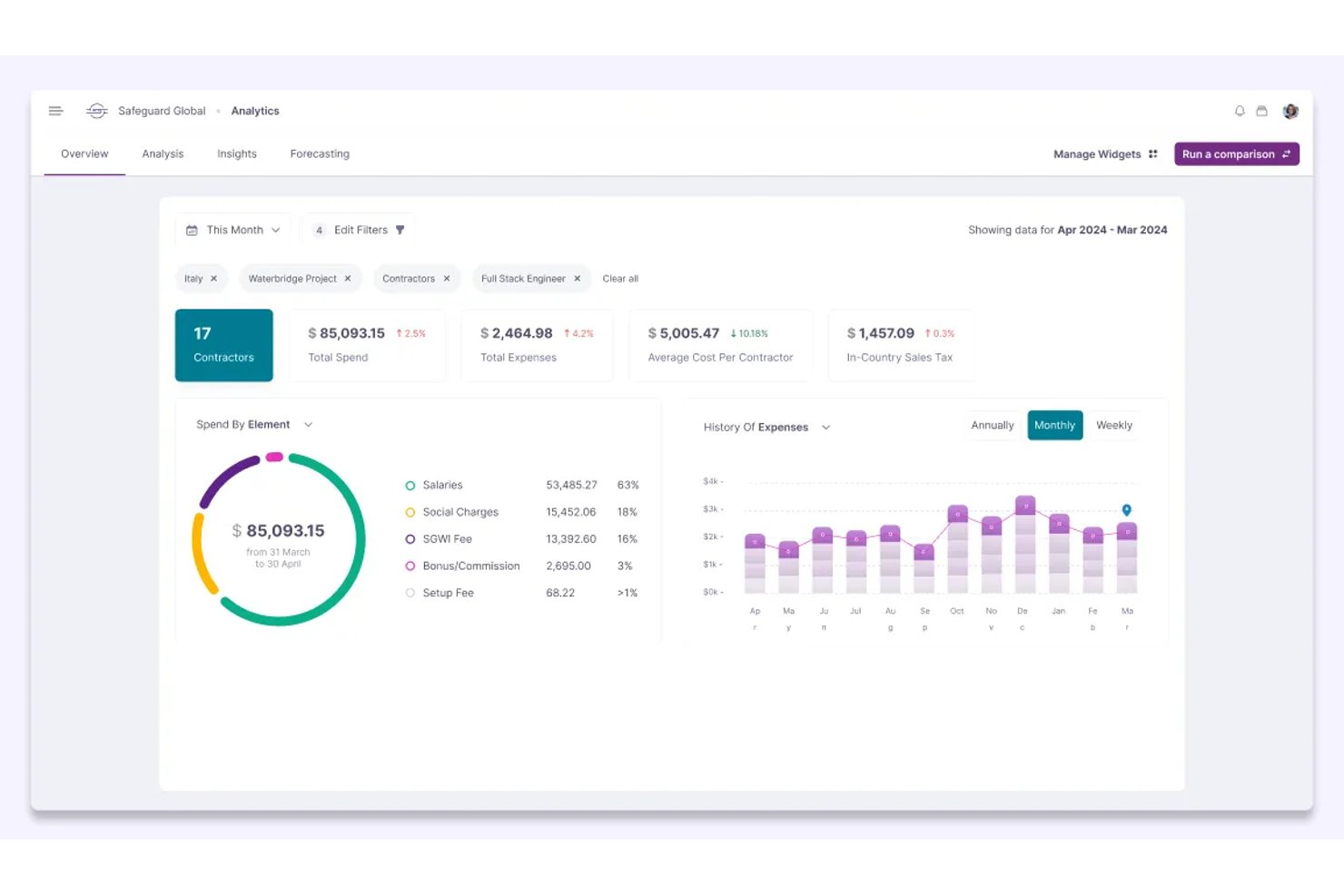
Safeguard Global is an employer of record and global payroll platform designed to help organizations process compliant payroll, manage Mexican statutory requirements, and consolidate multi-country payroll operations.
Who Is Safeguard Global Best For?
Global HR leaders and payroll managers at multinational companies hiring or paying employees in Mexico without a local entity.
Why I Picked Safeguard Global
I picked Safeguard Global as one of the best because my team can easily support flexible workforce models, combining compliant payroll processing for Mexican employees with on-demand EOR services and multi-country payroll in a single platform.
Safeguard Global Key Features
- CFDI 4.0 payroll receipt generation: Produce SAT-compliant digital payroll receipts for every pay cycle in Mexico.
- Automated statutory deductions: Calculate and process IMSS, INFONAVIT, SAR, and ISR deductions correctly with each pay run.
- Local currency salary payments: Disburse salaries directly to Mexican bank accounts in MXN using integrated banking connections.
- Unified global payroll dashboard: View, track, and manage Mexico payroll alongside other countries from a single platform.
Safeguard Global Integrations
Safeguard Global features a certified, native bi-directional integration with Workday (via Workday Global Payroll Connect). For other enterprise ecosystems like SAP SuccessFactors, Oracle HCM, and BambooHR, data syncs are handled via custom developer APIs and their core Global Intelligence Application (GIA) infrastructure.
Pros and Cons
Pros:
- Supports both EOR and local entity payroll
- Deep expertise in Mexican labor regulations
- Fully automated CFDI and SAT compliance
Cons:
- Slower response for complex compliance queries
- Limited flexibility in custom local benefits
Other Global Payroll Services in Mexico
Here are some additional global payroll options in Mexico options that didn’t make it onto my shortlist, but are still worth checking out:
- Neeyamo
For payroll service outsourcing
- Papaya Global
For direct employment infrastructure
- Oyster HR
For EOR-led Mexico market entry
- RemoFirst
For budget-conscious global hiring
- Native Teams
For freelancer employment benefits


How I Evaluate Global Payroll Services in Mexico
I evaluate global payroll Mexico tools on two layers: the baseline requirements every platform must meet—like CFDI 4.0 filing and IMSS handling—and the differentiators that set vendors apart.
Core Functionality (Table Stakes For This List)
When I'm selecting tools for my list, I rank each one on a scale from 0 (does not offer the functionality) to 5 (excels in this area) for each core functionality listed below. Then, I calculate the tool's total score into a percentage. Each tool needs to achieve a minimum total score of 65% to be considered for inclusion.
- Mexico Payroll Processing: I check whether the platform calculates salary, aguinaldo, vacation premium, and PTU profit-sharing in line with Mexican Federal Labor Law.
- Statutory Compliance: Each tool should handle IMSS, INFONAVIT, SAR, and ISR deductions so your team isn't manually tracking contribution rates across agencies.
- CFDI & SAT Filing: I look for platforms that generate CFDI 4.0 payroll receipts and support electronic filing with SAT, since missing this creates real audit risk.
- Multi-Country Payroll: The platform should let you run Mexico payroll alongside other countries from one dashboard rather than toggling between separate systems.
- EOR or Local Entity Support: I evaluate whether the vendor offers Employer of Record services in Mexico, supports payroll under your own RFC, or both.
- Local Currency Payments: Paying employees in MXN to Mexican bank accounts with local payment methods matters, especially when your parent company funds payroll in another currency.
I look for global payroll services that automatically calculate statutory deductions, generate compliant CFDI payroll documents, and keep pace with changes to Mexican labor and tax regulations. Those capabilities make it easier to pay employees accurately while managing payroll in Mexico alongside the rest of your global workforce.
Once I have a list of tools that meet the criteria, I consider what sets each platform apart.
Differentiating Factors (What Sets Vendors Apart)
Here's how I compare and contrast different vendors:
Standout Features
CFDI payroll stamping is a big differentiator. Platforms that natively generate and stamp CFDI 4.0 receipts through an authorized PAC save your team from juggling third-party timbrado tools. I also look for EOR-to-entity toggle capability, which lets you move a worker from Employer of Record status to your own RFC without re-onboarding as your Mexico headcount grows. Multi-currency MXN payments matter too, especially when your HQ funds payroll in USD or EUR but employees expect deposits in pesos with clear FX visibility.
Beyond Features
Local compliance expertise is where I spend the most time evaluating vendors. Mexico's 2021 outsourcing reform changed the rules around subcontracting, and I look for vendors that actively monitor updates to the Federal Labor Law (LFT) and, where applicable, REPSE registration requirements. Benefits administration also matters—vendors that support benefits such as vales de despensa (food vouchers), savings funds, and private medical insurance with tax-efficient administration can help employers offer more competitive compensation packages. I also consider the entity model, since companies testing the market through an Employer of Record (EOR) have different needs than those processing payroll through their own Mexican legal entity.
How to Choose Global Payroll Services in Mexico
It’s easy to get bogged down in long feature lists and complex pricing structures. To help you stay focused as you work through your unique software selection process, here’s a checklist of factors to keep in mind:
| Factor | What to Consider |
|---|---|
| Scalability | Will the platform handle growth in Mexican headcount or support future expansion to other countries? |
| Integrations | Does it connect with your HRIS, accounting, and time tracking tools for a unified data flow? |
| Customizability | Can you adjust processes or reporting to fit your parent company’s workflows and compliance needs? |
| Ease of use | Is the interface intuitive for both HR teams and Mexican employees? Can new users navigate easily? |
| Implementation and onboarding | How long does setup take? What’s required to get your Mexican payroll up and running smoothly? |
| Cost | Are costs transparent? Are there extra fees for onboarding, filings, or compliance updates? |
| Security safeguards | Does the vendor meet data security standards for handling sensitive employee information in Mexico? |
| Compliance requirements | How does the platform keep pace with Mexican labor reforms, tax law changes, or REPSE obligations? |
What Are Global Payroll Services in Mexico?
Global payroll services in Mexico are software or services designed to help companies manage, pay, and comply with employment regulations for employees or contractors based in Mexico. These solutions handle payroll calculations, statutory contributions, electronic payroll receipts (CFDI), and ensure all payments and filings meet Mexican legal requirements. This makes it easier for international HR and payroll teams to pay staff in Mexico accurately and on time.
Why Use Global Payroll Services in Mexico?
Global payroll services in Mexico help you pay employees in Mexico while managing statutory deductions, payroll taxes, and local compliance from a single platform. If you're hiring in Mexico as part of a global workforce, they also make it easier to manage payroll across multiple countries without relying on separate local providers.
Mexico offers access to a large, skilled workforce across industries, including manufacturing, technology, customer support, and professional services. However, payroll involves more than paying salaries. Employers must calculate income tax (ISR), social security contributions (IMSS), housing fund contributions (INFONAVIT), retirement savings (SAR), and issue electronic payroll receipts (CFDI Nómina) that meet SAT requirements.
How Is Payroll Calculated in Mexico?
The payroll process begins by calculating gross earnings, ensuring earnings comply with applicable minimum wage requirements, and including base salary, bonuses, commissions, or other taxable compensation. Employers then calculate employee deductions such as income tax (ISR) and social security contributions while also accounting for employer obligations, including IMSS, INFONAVIT, and retirement savings (SAR) contributions. Payroll must also account for statutory benefits such as vacation pay, the vacation premium, and the annual aguinaldo bonus.
Payroll in Mexico starts with an employee's gross salary, but calculating take-home pay—whether on a monthly or bi-weekly basis—requires applying mandatory deductions, employer contributions, and statutory benefits. The exact amounts depend on salary level, employment terms, and the employee's tax situation.
Net pay is the employee's gross salary minus employee deductions. Employers must also generate CFDI Nómina electronic payroll receipts and report payroll information to the relevant authorities to remain compliant.
Mexico Payroll Taxes and Deductions
Every payroll run includes mandatory deductions and employer contributions. The exact obligations depend on employee earnings and applicable regulations.
| Component | Who Pays? | Typical Rate | Purpose |
|---|---|---|---|
| Income Tax (ISR) | Employee | Progressive rates from 1.92%–35% | Federal income tax withheld from employee wages. |
| IMSS Social Security | Employer & Employee | Varies based on salary, benefits, and insurance category | Funds healthcare, disability, pensions, maternity, and workplace injury benefits. |
| INFONAVIT | Employer | 5% of the employee's integrated salary | Mandatory housing fund contribution. |
| Retirement Savings (SAR) | Employer | 2% of the employee's base salary | Mandatory retirement savings contribution. |
| State Payroll Tax | Employer | Generally 1%–4%, depending on the state | State-level payroll tax that varies by jurisdiction. |
Mexico Leave Entitlements
Leave entitlements also affect payroll calculations. Your payroll software should track leave balances and apply the correct statutory payments in accordance with Mexican labour law.
| Leave Type | Typical Entitlement |
|---|---|
| Annual Vacation | Minimum 12 paid vacation days after one year of service, increasing with years of service. |
| Vacation Premium | Minimum 25% premium paid on vacation wages |
| Sick Leave | Paid through IMSS for eligible employees under qualifying conditions |
| Maternity Leave | 12 weeks of paid leave (generally six weeks before and six weeks after childbirth) through IMSS |
| Paternity Leave | Five paid working days for eligible employees |
Mexico Public Holidays
Public holidays also influence payroll. Global payroll providers should apply the correct holiday calendar and calculate any required premium pay for employees who work on statutory holidays.
| Holiday Type | Payroll Impact |
|---|---|
| National Holidays | Employees generally receive paid leave on statutory public holidays |
| Holiday Work | Employees working on mandatory holidays are generally entitled to premium pay under Mexican labor law |
| Local Holidays | Additional state or municipal observances may apply depending on location |
Termination Terms in Mexico
Final payroll must include all outstanding compensation and statutory payments when employment ends.
| Payroll Item | When It Applies |
|---|---|
| Final Salary | Salary earned through the employee's final working day |
| Accrued Vacation Pay | Payment for unused earned vacation |
| Vacation Premium | Paid on outstanding vacation balances |
| Aguinaldo | Prorated annual bonus owed if applicable |
| Severance Pay | Required for qualifying dismissals without justified cause under Mexican labor law |
How Is Payroll Compliance Regulated in Mexico?
Payroll compliance in Mexico is overseen by several government authorities, each responsible for different aspects of payroll administration. If you're paying employees in Mexico, your payroll software should calculate statutory deductions, generate compliant payroll records, and help you meet local filing requirements.
The key authorities include:
- SAT (Servicio de Administración Tributaria): Oversees income tax (ISR), electronic payroll receipts (CFDI Nómina), and employer tax reporting.
- IMSS (Mexican Social Security Institute): Regulates social security registrations, contributions, and employee benefits.
- INFONAVIT: Oversees mandatory employer housing fund contributions.
- Federal Labor Law (Ley Federal del Trabajo): Establishes employment standards covering wages, leave entitlements, termination, and statutory benefits.
What this means for payroll: Rather than monitoring requirements across multiple agencies yourself, I'd look for a global payroll service that automatically updates tax calculations, generates compliant CFDI payroll receipts, and maintains payroll records in one place. That's especially helpful if you're managing employees in Mexico alongside teams in other countries.
Outsourcing Payroll Services in Mexico
If you're outsourcing payroll services in Mexico, you have two main options: work with a local payroll provider or choose a global payroll service. The right choice depends on whether you only employ workers in Mexico or manage employees across multiple countries.
Local Payroll Services Company
A local payroll provider specializes in Mexican payroll administration. If your workforce is based entirely in Mexico, you'll typically receive support for statutory deductions, payroll tax filings, and local labor law compliance.
Best for:
- Businesses with employees only in Mexico
- Domestic payroll processing
- Companies with no immediate international expansion plans
Global Payroll Services Company
A global payroll service manages payroll across multiple countries from one platform. I think this is the better choice if you're already hiring internationally or expect to expand into new markets, since you can manage payroll, reporting, and compliance across your global workforce without switching between multiple local providers.
Best for:
- Businesses with international employees
- Companies expanding into multiple countries
- Teams that want centralized payroll and reporting
Features of Global Payroll Services in Mexico
When selecting global payroll services in Mexico, keep an eye out for the following key features:
- Mexico payroll processing: Calculates salaries, statutory bonuses (aguinaldo), vacation premiums, and PTU profit-sharing in line with Mexican labor law.
- Statutory compliance management: Automates deductions and employer contributions for IMSS, INFONAVIT, SAR, and ISR to meet Mexican government requirements.
- CFDI payroll receipts: Generates electronic payroll receipts (CFDI) that comply with SAT requirements and support paperless, auditable payroll cycles.
- Multi-country payroll: Lets you pay employees in Mexico and other countries from a single platform, with consolidated reporting and currency options.
- Employer of record (EOR) services: Enables you to hire and pay Mexican workers without setting up a local legal entity.
- Local currency payments: Facilitates timely MXN salary deposits to Mexican bank accounts, often with support for local payment rails.
- Automated SAT filings: Submits payroll tax returns and required documentation to Mexico’s tax authority (SAT) electronically.
- Employee self-service portal: Offers online access for employees to view payslips, tax documents, and update personal information securely.
- Data security controls: Protects sensitive employee data—such as CURP, RFC, and payroll files—in compliance with LFPDPPP and global standards.
- Reporting and analytics: Provides dashboards and downloadable reports for payroll cost analysis, statutory payments, and cross-country comparisons.
Benefits of Global Payroll Services in Mexico
Implementing global payroll services in Mexico provides several benefits for your team and your business. Here are a few you can look forward to:
- Regulatory compliance: Stay current with Mexican tax, labor, and social security laws thanks to automated statutory calculations and filings.
- Centralized payroll management: Manage Mexican and international payroll operations from one unified platform, simplifying oversight and reporting.
- Faster employee onboarding: Hire and pay Mexican staff quickly with EOR services—no need to set up a local entity.
- Accurate and timely payments: Deliver salary payments in MXN through local bank integrations, reducing payment errors and delays.
- Secure document handling: Safeguard sensitive employee data and payroll documentation with controls that meet Mexican and international standards.
- Transparent employee communications: Give employees easy online access to payslips, CFDI receipts, and payroll updates for greater satisfaction and trust.
- Adaptability for growth: Scale your Mexico payroll operations with features that support headcount increases, cross-border operations, and compliance changes.
Costs and Pricing of Global Payroll Services in Mexico
Selecting global payroll services in Mexico requires an understanding of the various pricing models and plans available. Costs vary based on features, team size, add-ons, and more. The table below summarizes common plans, their average prices, and typical features included in global payroll services in Mexico:
Plan Comparison Table for Global Payroll Services in Mexico
| Plan Type | Average Price | Common Features |
|---|---|---|
| Free Plan | $0 | Provides basic payroll calculators, access to limited compliance resources, and email support. |
| Personal Plan | $20-$60/user/month | Includes Mexico payroll processing, employee self-service, standard reporting, and basic compliance. |
| Business Plan | $60-$120/user/month | Offers multi-country payroll, CFDI generation, local tax filings, MXN payments, and integrations. |
| Enterprise Plan | $120+/user/month | Adds EOR services, custom workflows, bilingual support, advanced reporting, and dedicated onboarding. |
Global Payroll Services in Mexico FAQs
Here are some answers to common questions about global payroll Mexico:
Can global payroll services in Mexico handle both employees and contractors?
Yes, most platforms support managing payments, compliance, and documentation for both employees and contractors in Mexico. It’s important to check if the tool provides separate workflows, contract templates, and tax calculations tailored for each worker type.
How do these platforms help with Mexican tax authority (SAT) compliance?
latforms that generate CFDI payroll receipts and automate SAT filings help ensure your payroll is fully compliant with Mexican tax law. This reduces risk of fines, missed deadlines, and audit issues for your company.
Is local entity setup necessary to run payroll in Mexico?
No, if you use an Employer of Record (EOR) service, you can hire and pay employees in Mexico without establishing a Mexican legal entity. If you have your own entity, some platforms also let you process payroll with your RFC.
What support is available for non-Spanish speaking HR teams?
Many global payroll Mexico tools offer bilingual (Spanish/English) admin dashboards, documentation, and support. This is especially useful for multinational teams and US/Canada HR leaders managing Mexican payroll remotely.
How long does onboarding typically take?
Onboarding can range from a few days with EOR services to several weeks for a full local entity payroll setup. Timelines depend on entity status, documentation readiness, and the provider’s level of hands-on support.
This content is provided for general informational purposes only and does not constitute legal, tax, or other professional advice. It may not be complete, accurate, or current, and laws and practices may change without notice and vary by jurisdiction. You should not act on this information without obtaining advice from qualified legal or tax counsel in the relevant jurisdiction regarding your specific circumstances.