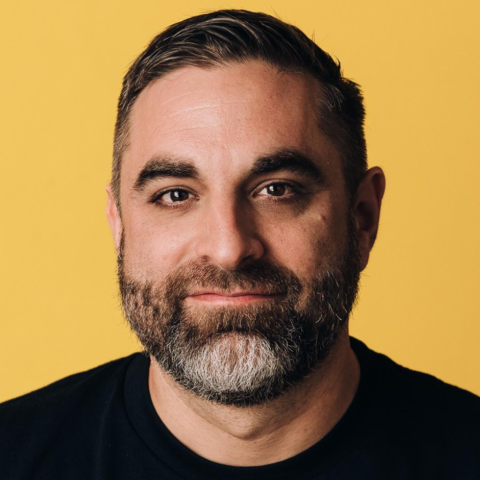
How Do You Automate Recognition Without Making It Feel Automated?



AI in HR has a credibility problem: the technology is getting better at spotting patterns, summarizing data, and automating work, but none of that guarantees a better employee experience. In this conversation, Motivosity Chief Product Officer Jesse Dowdle and VP of Engineering Dano Gillette make the case for “appreciation intelligence”—using AI to remove administrative friction without automating the human moments that actually make recognition meaningful.
The bigger opportunity isn’t an AI-generated thank-you note. It’s giving HR and frontline managers a richer picture of employees, surfacing signals before problems become crises, and turning data into useful action. But there’s an important line running through the conversation: AI can recommend, filter, moderate, and nudge. Humans still need to own the judgment.

What You’ll Learn
- How AI can shift HR from reactive reporting toward proactive employee support.
- Why recognition and employee connection are areas where automation needs clear boundaries.
- How people data can give managers a more complete view of employee strengths, engagement, and potential retention risks.
- Why AI insights become more valuable when they lead to specific actions instead of another dashboard.
- How human accountability helps address bias and unintended consequences in AI-powered HR tools.
- Where AI could reduce the compliance and administrative burden that keeps people teams from focusing on culture.
Key Takeaways
- Automate the administration, not the appreciation. Recognition matters because another person noticed what you did and cared enough to say something. Turn that into an AI-generated form letter and you’ve technically saved time while neatly removing the part that mattered.
- Move from dashboards to interventions. The promise of AI isn’t simply better reporting. Motivosity’s vision is for systems to recognize patterns—such as changes in appreciation or engagement—and help managers act while there’s still something useful they can do.
- Give managers context, not just scores. Sales numbers, certifications, and performance metrics tell part of an employee’s story. Recognition and peer interaction can add another dimension by showing demonstrated strengths and how someone contributes to the people around them.
- Adoption comes before intelligence. AI cannot manufacture meaningful insight from an empty system. Motivosity emphasizes the first 90 days of adoption and regular employee participation, noting that changes in established engagement patterns can begin producing useful signals within the first few months.
- The human stays accountable. Whether AI is moderating content, generating code, or surfacing employee insights, someone still has to decide whether the output is appropriate. “Human in the loop” isn’t decorative governance language here—it’s the line between decision support and outsourcing judgment.
- HR could spend more time on humans by doing less HR administration. Dowdle sees compliance-heavy work such as payroll processing and benefits administration as ripe for AI assistance. The aspiration is straightforward: clear away the necessary administrative machinery so people teams can spend more energy understanding employees, strengthening culture, and helping managers act.
Chapters
- 00:00 — Motivosity & Appreciation Intelligence
- 01:41 — Why AI Matters in HR
- 02:29 — Proactive AI for People Teams
- 04:55 — Balancing Data & Human Judgment
- 08:09 — The Risks of Over-Automation
- 09:46 — Building Human-First AI
- 10:52 — Motivosity’s AI Roadmap
- 12:53 — Taking Admin Off HR’s Plate
- 15:49 — Turning Engagement Into Insights
- 18:01 — Motivosity vs. ChatGPT
- 19:37 — Bias, Accountability & Human Oversight
Meet Our Guests

Jesse Dowdle is the Chief Product Officer at Motivosity, where he’s spent years building tools that help companies treat people like people, not line items. Before stepping into product leadership, Jesse ran engineering at Motivosity and held CTO roles at RizePoint, plus product and engineering leadership positions at Workfront. He’s spent his career at the intersection of good technology and good culture, and he’s been at the center of Motivosity’s push into AI with Appreciation Intelligence™, the platform’s answer to a simple question: how do you use AI to strengthen human connection instead of replacing it?

Dano Gillette is VP of Engineering at Motivosity, where he leads the team building the technology behind Appreciation Intelligence™. He found a passion to build as a self-taught engineer. Dano came to Motivosity after working with Fashionphile through a rapid growth period, both people and technology. Dano cares as much about how a team works together as he does about what they ship, and he brings that same philosophy to how Motivosity builds AI: not to automate people out of the process, but to clear the busywork out of the way so recognition and connection can happen more easily.
Related Links:
- Join the People Managing People Community
- Subscribe to the AI Signal Newsletter
- Connect with Jesse and Dano on LinkedIn
- Visit Motivosity
Related articles and podcasts:
Tim Fisher: Hello, and welcome to the Future of AI in Human Resources, a series where we go beyond the pitch deck and look at how AI is actually changing the way people teams work. Today, we're featuring Motivosity. If you're an HR, people, or total rewards leader trying to use AI without losing the human connection that recognition and culture depend on, then this is the conversation to be in.
Today, we're gonna look at Motivosity's approach to appreciation intelligence, using AI to clear away reporting, admin, and follow-up friction while keeping appreciation human. So joining us today are Jesse Dowdle, Chief Product Officer at Motivosity, and Dano Gillette, VP of Engineering.
Jesse leads Motivosity's product strategy with a focus on building tech that makes work more human. Dano leads the engineering team behind Appreciation Intelligence with a focus on using AI to reduce busy work and make recognition and connection easier.
Jesse, Dano, great to have you both here.
Dano Gillette: Happy to be here.
Jesse Dowdle: Hey, Tim. Great to be here.
Tim Fisher: Jesse, give us the 30 second version of Motivosity. What does it do and who's it built for for people who might be new to your company?
Jesse Dowdle: Yeah. Thank you. Motivosity is a-- It's a reward and recognition platform built around personal connection. We've been in business for 12 years now, and we're founded by a, a serial entrepreneur who had built and scaled companies before and saw firsthand how difficult it can be to maintain a sense of human connection over time, especially when businesses grow.
And so Motivosity was born out of this idea that by focusing on connection in the workplace, you can help make work a better place to be, and it was a natural fit to invest in reward and recognition as the category that we would deliver our message through.
Tim Fisher: So this is gonna sound really silly, especially in the year that we're in right now, but why is AI such a focus for Motivosity at this point in, in the evolution of, of human resources technology?
Jesse Dowdle: I don't think it's a silly question at all. It-- There's no doubt it's transforming every sector of our economy and the way that we interact with each other. It's never been more important to forge real, meaningful human connection, and at the same time, we've got to adapt and adjust to the realities of this new technology.
So I was really, you know, excited for the opportunity to talk to you about the future of AI in HR because what is more human than the function in the business that's responsible for the people? I think AI has a huge role to play, but we need to proceed deliberately and responsibly with it as well.
Tim Fisher: So looking ahead, how do you see AI changing the role of human resources and people leaders, but continuing to keep this human connection genuine?
Jesse Dowdle: I love that question. This is what I get to think about almost every day what is the future, and how do we manifest it in the world of human connection? And there are some things that AI is not quite good enough at to build a product around today, but I think it will. I think it will be You know, we have some early models, some early agent prototypes, where the agents go beyond just surfacing your data for you and helping you interpret your programs and your people, but actually can run your recognition program for you.
So again, help you manage your budget, spot issues with approvals, to proactively support the running of the program. You know, when we talk to our customers about their number one goal, there's always two. We say, "What's the most important thing you want to accomplish?" And there's always two things. The first is they want their people to really use the program.
They want to feel like their people programs engage the employees And that it makes a difference. And the second is they want to save themselves some time, because administering people programs can be such a huge time sink without great tools. So the future of AI in recognition, I think some of that is gonna come from the administration of the programs themselves.
It's taking more and more of that off your plate. And the other area that I think that there's gonna be a, a real push, and certainly we'll be there pushing along, is this move from reactive to proactive communications. The term nudge tech or nudges in software has been around for years and years, but with AI's ability to spot patterns, you might have seen in, in Danu's demo just now when he pulled up the people insights, that employee had a elevated signal for retention risk.
Instead of retentions, retention signals elevated and gave two or three reasons why that employee needs a check-in from their manager. AI's ability to spot that pattern and then go reach the manager where they are on whatever channel they may be in, whether they're in Teams, or it hits their mailbox, or it hits their, an SMS on their phone, and help managers be there for the moments that matter and intervene when the possibility of success is, is highest, that's coming.
That'll be coming from us very soon, but I think it's also a big part of the future of recognition platforms as well.
Tim Fisher: So I have a two-sided question based on that. So on one side, that's an amazing opportunity, so, I would love to know your thoughts around, like, how expectations are gonna change from HR leaders around, you know, yeah, I mean, with all that information sitting right in front of you what organizations will expect differently.
And then on the other side of it too is the risk of maybe relying too much on a data-driven approach to then working with your folks. So I could imagine situations where we've heard of, like, when organizations do layoffs, and it's a spreadsheet layoff, and it's it's based on things like numbers and not people, right?
We run the risk of doing something similar with all this amazing data and, you know, trusting the system to do a little part of that human job, which is filter through this data into a conversation around what this person might need. So to me, it seems like an amazing opportunity, but also kind of a scary one, and I would just love your thoughts on, on all sides of that.
Jesse Dowdle: And how to navigate it. The best people organizations from first principles are considering the humanity of their employees first. And I said it before, like we're a business, not a hobby. You've got shareholders to support, and you've got a probably a board, and you've got executives, and all those things are very important.
But we cannot lose sight of the fact that it's the people who are the ones that are taking care of our customers. And the best organizations have a really clear alignment between what their core values are about and what they celebrate and what their identity is, right? What they celebrate and reward, and how they expect their people to show up and be a part of that.
What we often get asked to do is, and this happens even just in frontline manager type conversations, but to s- be supportive of performance conversations through a lens of a three-dimensional lens of that employee. So instead of sitting down in a meeting and saying, "Okay, well, what did we talk about last time?
I'm not really sure." Or even worse, "I got to write a performance review on this person, and how can I remember everything?" A platform like Motivosity helps give you a three-dimensional picture of that person. You can see in their CRM if they're a sales rep, if they're hitting quota. You can see in the LMS if they got their certification.
But it's in a platform like Motivosity that you can see how the people that they work with every day feel about that person, what their demonstrated strengths are, what they're best at, what maybe they're not as good at. So if you're a person that believes in, as I do, coaching around strengths over, you know, shoring up weaknesses, like what are they best at?
How can we put this person in position to succeed? It's only with a really rich social fabric that you get from a platform like Motivosity that you can really develop a three-dimensional view of an employee, and that foundational work at the frontline ladders up. It's a bottom-up approach So you started your question asking about how does a top-down person make sense of all this data and make good decisions?
And my answer was, you put it in the hands of your frontline managers and let the solution work bottom up to develop your people, plan your interventions that way.
Tim Fisher: Where do you think there is risk of over-automating in the employee experience? You've talked about, you know, and we've seen where you draw the line, but what scares you about automation in the, in the HR world?
Jesse Dowdle: Like ATS. I mean, we've all heard horror stories, right? It's just robots with resumes and robots filtering resumes and trying to find a job, and it's because it's really the human connection's the only way to find a real job these days, it feels like. So there's 100% a risk of over-automating in a, in a sector like that, where you're trying to find a person that's gonna be an exceptional fit for the type of organization that you are.
You're not gonna get that from an AI. But an AI can certainly filter out a bunch of incredible people that you probably should have talked to using heuristics that don't align with your organization's values. So I think that's a risk. We'd already talked about recognition. The most impactful recognitions, the ones that you remember for your whole career, are the ones that were from a person that you either trusted or believed in or looked up to, that they saw you in a very personal and meaningful way, and that they expressed it authentically and with feeling about what you did for them.
You take that with you your whole career A thank you that looks like it came from a form letter that says, you know, "The executive team wishes to recognize you for 13 years of service. Here's a piece of paper." Not to be too dismissive, right? But that can be a de-motivator if it's not handled-
Tim Fisher: It most certainly can be
Jesse Dowdle: with tact. So using AI to support the personal and the meaningful is the key.
Tim Fisher: When you're designing things, when you're building things what does human-first AI look like in practice when you're making decisions inside of your... And we're gonna talk about it in a bit, like, where you're headed in the future and stuff, but, you know, maybe even just think of something that's on your product roadmap right now or that your teams are working on right now.
What does that mean when you're sitting in a room thinking about how to implement these things in your tools?
Dano Gillette: It deals with talking to people first, right? I think there's so many things out there that it's easy to shortcut these days, and I think that's what everybody wants to do, is they wanna shortcut as much as possible, but really getting to good solutions takes talking to people.
And so we do a lot of that. Like I was expressing, we do a lot of working with people who care, and I know that we, you know, surveys is one thing that we're working on a lot right now, is the ability to, to really understand your people and get insightful information. A lot of that comes back to talking to people and understanding where they're at and what they're looking for, and then being able to figure out...
And really understanding AI, too. It's, it's understanding people and understanding AI, and, you know, the more you understand how that works, the better you'll understand how to implement it and where it's, i- it's useful overall.
Tim Fisher: Okay. So you don't have to give away anything confidential, but I would love, love, love, love, and I'm sure everybody listening would, too, to hear what you have slated for us.
What's coming up? What are you excited about in your roadmap?
Jesse Dowdle: The end of 2026 will be the biggest launch in Motivosity's history. Some of these things are already in flight. You know, what we've been doing is we've, we've been landing different aspects of appreciation intelligence over the course of the year and usability improvements, a overhaul to the user experience that is just now landing.
But Speaking to the full life cycle, the full employee journey, you know, we've talked a lot about recognition, and I really do think that's the, that's the beating heart. You know, you build a culture of appreciation, and it becomes a culture of connection. But the employee life cycle is broad. There's a lot of communication that needs to be done, and that's a great opportunity to both take the load off of HR and also apply AI tools for more personalized, impactful comms.
And Dano was just referring to listening on the other side, being able to listen to your employees in ways that allow you to understand what's really going on. And when you really have an understanding, then you can really have impact. So moving from j-- not just gathering the information in a survey, but interpreting it, understanding what will move the needle, and then acting on those things are also important.
So I think you'll see, you know, in the future with Motivosity, a continued emphasis on the very human approach to AI of appreciation intelligence, not artificial intelligence, and a push to make the entire employee journey, from the moment they arrive at your door on the first day with the potted plant for their desk to the day that you send them off in retirement, to be one where they feel like they were part of something meaningful and consider their time with you a highlight of their career.
That would be our highest aspiration as a company, would be to support you in, in achieving that for your people.
Tim Fisher: Absolutely. If there's one thing in your world in employee connection or recognition that you think AI is just gonna completely take away that feels really hard right now based on either the technology or the roadmap or the people's state of minds around these tools or anything like that.
What's the thing that you think is tough that's just, you know it's just gonna go away thanks to AI?
Jesse Dowdle: Open enrollment?
Tim Fisher: That would be amazing.
Jesse Dowdle: Again, I'm kind of a utopian about this. I think that the working world is gonna transform so profoundly, and in the world of HR tech and, and people tech, that a lot of the jobs that are compliance-oriented, you know, payroll processing, dealing with benefits, these kinds of things, these are not people-centric things.
They're necessary evils. Like a trip to the dentist, you gotta do it. It's important. But nobody's happy about it, not even the dentist, at least the ones I know. I think that AI has the potential to make people ops about the culture of the organization more, more concretely, and people ops is gonna be the business partner that understands the three-dimensional quality of the employees better than anybody else, can communicate what interventions are gonna produce the best outcome in terms of helping the organization live by its values and put its best foot forward out into the world, 'cause when we take care of our people, they take care of our customers, and keep the time that we spend at work focused on the uniquely human parts of it.
I don't think a robot army is coming for sales, for example Selling is still about meeting a human being face to face, building a connection, and understanding what the other needs, and providing it for them. So it's gonna be great. It's gonna be great when we get there, but, you know, we're on the cobblestones on our way still.
It's gonna be bumpy for a bit before we do.
Tim Fisher: I tend to agree, and I love your perspective, and I share your utopian vision. It, it really is just it's so hard to see right now I think for some people, but these tools are getting to a place where they can serve their real purpose, which is helping a bunch of things get out of our way so we can do the actual job that we're here to do.
And you guys have built something to do that, so I think that's great. That was a really cool walkthrough. Thank you very much. Super clear perspective on where AI can help. Jesse maybe could do something verbal, and we'll certainly follow up with everybody around where they might be able to go to learn more about Motivosity.
Jesse Dowdle: Yeah, absolutely. You can go to our website, Motivosity.com, www.motivosity.com. There's buttons all over that thing to take a demo, as you can imagine. Just a quick form fill to say who you are and how we can get in touch with you, and we'll absolutely reach out and do that. There's a lot of great content on that site as well.
If you wanna learn more about appreciation intelligence or about all of the different capabilities of a social platform for recognition, Motivosity.com is the place to go.
Tim Fisher: I have been in the audience's shoes many times for software like this, so there are a number of questions that people tend to ask and that I have asked, and so I'm going to ask you guys.
One of the big ones that often comes up with software like this is how much data... This is for someone new to Motivosity. Imagine they sign up next week, and, you know, they're super excited about everything you guys showed everybody today. When do they get to take advantage of that? Is this six months, a year, two years, five years?
How big of a company? Like, how much data do you need in the system, and how much time does that take, and how hard is that if you're coming from something else to get value out of these, these AI tools?
Jesse Dowdle: Well, it's definitely true that you need to establish some form of a baseline, although we have some of that out of the box because of having hundreds and hundreds of thousands of people- All of that is fully anonymous, of course, but we can at least tell you what good looks like for a company your size and what industry you're in.
I can't overstate the importance of a really good launch for something like this, and we have a, a whole customer success team who's just obsessed with making the first 90 days that anyone has adopted Motivosity as effective as possible because that's when those habits form. This is a tool that's intended to be used by employees every day.
And so getting in the habit of seeing who to thank, seeing the announcements that have been posted, what highlights exist, is such an important dimension to everything else that we've talked about. Once you get good engagement, and by good engagement I mean 70, 80, or 90% of your employees are in there very regularly, it doesn't take very long before there's enough information in the system to start to develop real insight.
It's the case that if someone is Being appreciated or is appreciating regularly, and that drops off substantially, that that is one of the strongest retention signals that exists out there. Even over a ninety-day period, if you get those habits going early, you can imagine an employee for several weeks in a row is kinda participating, and then they abruptly drop off, that's a retention risk that will surface for you just in your first few months of using Motivosity.
Yeah, it's not a multi-year thing.
Tim Fisher: How would you talk about the difference in using a tool like yours with the AI features, of course, versus just dumping all of your employee data into ChatGPT and asking questions against it?
Dano Gillette: I think overall, you're gonna find that what we have in Motivosity, along with not only-- I think one thing that you lose with going into just ChatGPT, I think ChatGPT is a great place for just gathering data and, and getting data back, right?
You give it data, you get data back. When you go to Motivosity, one thing that we really wanna be clear about is we wanna help you act on your data. That's one thing that we care deeply about, is that it's not just you going through and just gathering a whole bunch of data, which anybody can do, but that when you come in and you look at how your people are working, how they're interacting, how they're engaging with each other, what insights you might gather from some surveys that you've ran, that you can then know what you can do as an administrator next.
And that's what we try and do, you know, throughout this whole process, is really give you a-actions and insights. One thing that we didn't show today is we have a, what we call smart actions. And what it is, is when you come into the platform, we try and tell you the next best thing you can do today. So not a list of a whole bunch of things, but just what's the one thing that if you were to come in today, you can make an impact on your culture.
And that's something that we're very excited about. We do put a lot into this to make sure that you feel like you're making an impact every day in your company. And this is something that we really care about for managers, as there are so many people spinning so many plates these days, that you can make sure that you're focusing on what's gonna help an individual on your team to feel special or to get the most out of what they're doing.
Tim Fisher: Awesome. How do you think about bias or unintended consequences when AI's working with recognition and employee experience data?
Jesse Dowdle: Human in the loop is so important, isn't it? We've had and are proud of the investments that we've made in content moderation, and that is AI powered. We use some of the top-of-the-line models For content moderation, because it's so important not to-- when you've got a social platform that's designed to be publicly shared, to avoid situations where anything that's gonna cross a line gets published.
But at the same time, I think the most important principle here, and this will be true of AI for a good long time, is somebody's ultimately accountable. You know, when we release a feature at Motivosity, a new, new software capability, 100% of the lines of code were written by AI. But there's an engineer who stands at the front of that and checks it, makes sure that it's on quality, that it's security, which is our, our highest priority, security principles are being obeyed, and they're ultimately accountable.
So you asked a good question, Tim what, what line don't you wanna cross? I think the line here is, as an HR leader, you still are accountable. You still gotta be the one ultimately to say, "This is okay," or, "This is not," and that the tools are there to make it easy for you to do that and help you minimize the amount of time that it takes you.
But ultimately, it's still on you. So be wise, I guess.
Tim Fisher: Yeah, no, good answer. I, I heard something I actually hear it over and over again. We are-- everyone becomes a manager in this world, and for reasons that you articulated, that's one of the big ones. This has been really cool, but it's all the time we have for today.
Jesse, Dano, thank you guys so much for joining us. Have a great day, and we're gonna see all of you at the next Future of AI in HR session.
Dano Gillette: Thank you very much.
Tim Fisher: Awesome. Bye, guys.
Jesse Dowdle: Thanks, everybody.