

HR Has the Skills to Lead the AI Era—But Will It?

There are two ways the AI transformation of work can go. We can hand the keys to the efficiency obsessives and spend the next decade trying to engineer the humanity out of organizations. Or HR can recognize that understanding motivation, organizational design, and how people actually experience work is suddenly a strategic advantage—and start acting like it.
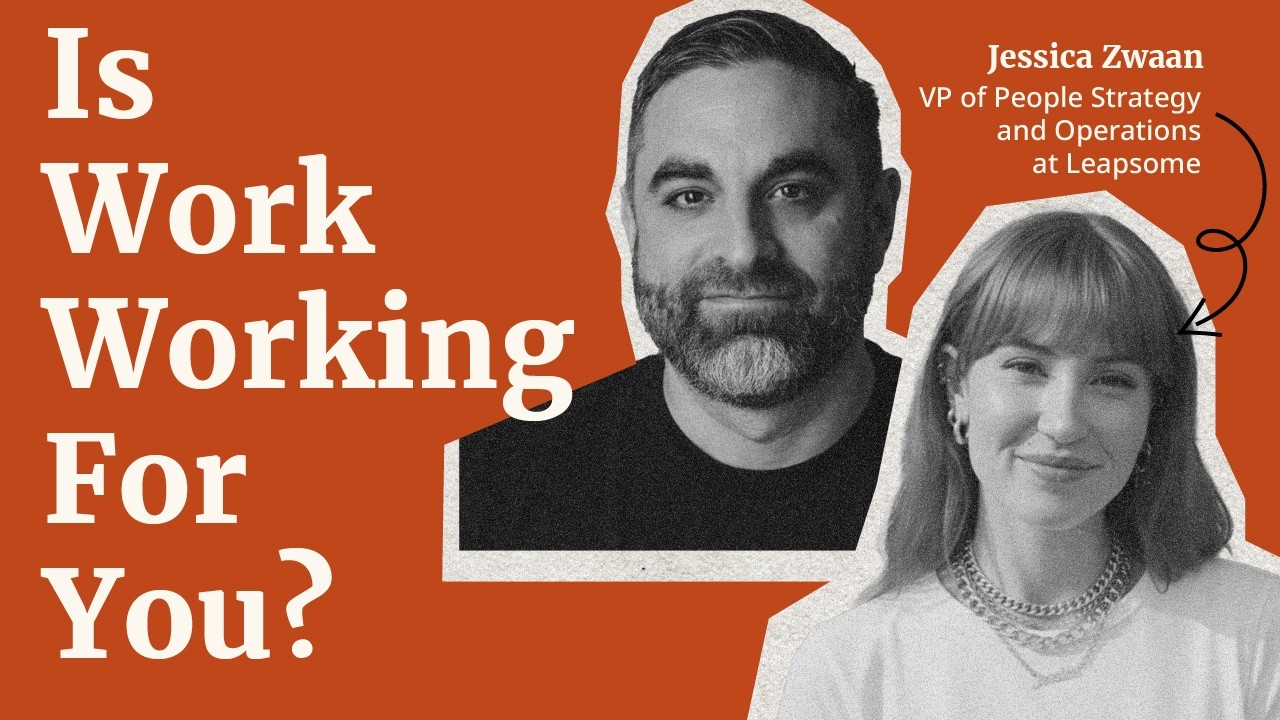
Jessica Zwaan, VP of People Strategy and Operations at Leapsome and author of Built For People and Purpose In Work, joins David Rice to talk about why HR has the raw materials to lead this moment, but also some baggage to lose. They get into purpose washing, why not everyone needs a calling disguised as a job, what AI means for early-career development, and why designing better work requires considerably more than putting a mission statement on the wall and hoping everyone believes it.
What You’ll Learn
- Why AI puts HR at the center of questions about organizational design, skills, and the future of work.
- Why purpose at work is personal—and why forcing everyone into the same company mission creates dissonance rather than motivation.
- How HR can borrow a product mindset by focusing on what employees actually need instead of what organizations assume they value.
- Why AI should augment autonomy, creativity, connection, and development rather than simply eliminate inefficiency.
- What HR needs to change about its operating model, commercial literacy, and capabilities if it wants a meaningful role in AI transformation.
- How organizations can distinguish between offering employees a service, an experience, and genuine transformation.
Key Takeaways
- HR has the raw materials to lead AI transformation—but that doesn’t automatically give it the job. People teams understand motivation, skills, organizational design, and human behavior in ways other functions often don’t. But leading this transition means developing stronger technical and commercial fluency rather than simply asking for a seat at the table.
- Stop assuming everybody wants work to be their calling. Some people work for money. Others want development, interesting problems, mobility, relationships, or a craft they can master. None of those orientations inherently makes someone a worse performer. Designing one employee value proposition around a supposedly universal sense of purpose is personalization theater.
- Purpose washing eventually creates a credibility problem. When organizations repeatedly tell people they’re changing the world while employees experience ordinary commercial realities, the gap becomes impossible to ignore. Operating principles can sometimes be more useful than lofty values because they tell people how the organization will actually behave when priorities collide.
- AI shouldn’t remove the experiences people need to develop. Eliminating junior roles because technology can handle junior-level tasks may look efficient in the spreadsheet. It also risks removing the slow accumulation of experience people need to become capable senior professionals. The work can change; development still has to happen.
- Build AI around better human work, not efficiency for efficiency’s sake. Jessica points to connection, autonomy, creativity, and doing meaningful good as important ingredients in fulfilling work. The useful question isn’t simply, Can AI do this task? It’s whether redesigning the task makes people’s working lives better.
- Be honest about what kind of workplace you’re offering. Not every company is going to transform someone’s life, and pretending otherwise doesn’t make it so. A genuinely good employment experience—learning, flexibility, mobility, strong colleagues, interesting problems—can be plenty valuable without being dressed up as a spiritual awakening.
Chapters
- 00:00 — HR’s AI Moment
- 05:24 — Rethinking Early Careers
- 08:17 — What Is Work Giving You?
- 12:35 — Job, Career, or Calling?
- 17:42 — The Problem With Purpose Washing
- 23:57 — When Passion Becomes Work
- 26:11 — HR With a Product Mindset
- 31:28 — AI and Purpose at Work
- 36:05 — Designing More Human Work
- 41:58 — Learning AI Through Play
- 45:32 — Rethinking HR’s Operating Model
- 51:37 — The Transformation Economy
- 56:06 — Optimism Through Change
Meet Our Guest
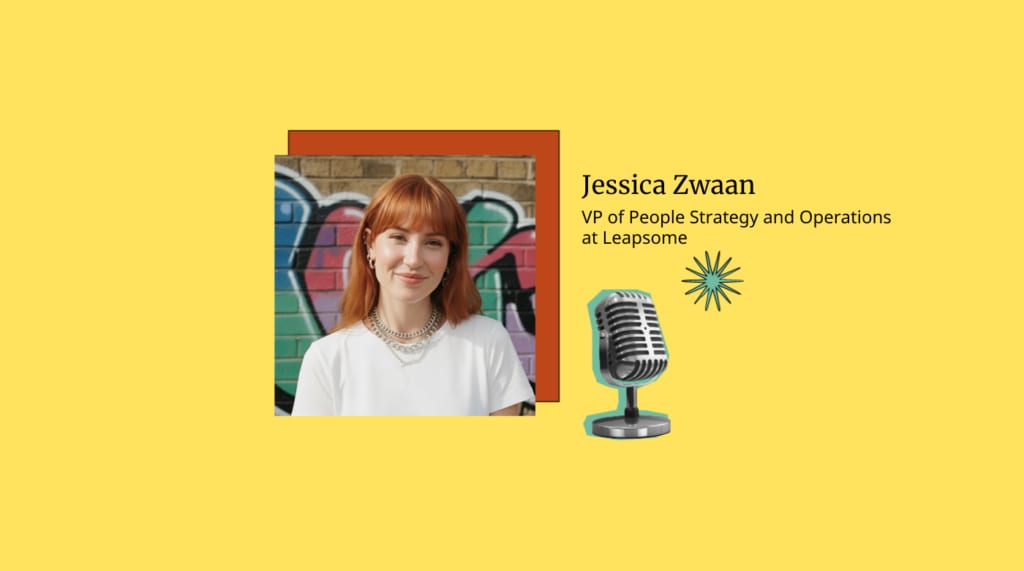
Jessica Zwaan is the Vice President of People Strategy and Operations at Leapsome, where she brings a product-minded approach to building scalable, high-performing organizations. Previously Chief Operating Officer at Talentful and Whereby, she has extensive experience across people, operations, and talent in global technology and creative organizations. Jessica is the author of Built for People and Purpose and Work, which explore how organizations can apply product thinking, evidence-based decision-making, and a deeper understanding of purpose to improve the employee experience and business performance.
Related Links:
- Join the People Managing People Community
- Subscribe to the newsletter to get our latest articles and podcasts
- Connect with Jessica on LinkedIn
- Visit Leapsome
Related articles and podcasts:
David Rice: There are two directions the workplace could go. Techno-optimists take control and treat AI as an opportunity to eradicate every inefficiency, which is largely human, or the people who've spent their careers understanding why work works take the reins and use this technology to genuinely improve human lives.
On today's show, HR is sitting at that fork in the road right now. I'm talking with Jessica Zwaan, VP of People Strategy and Operations at Leapsome and author of two books, "Built For People" and "Purpose In Work", about why this is HR's moment if it's willing to step into it. The function that understands human motivation, org design, and why people actually show up has the raw materials to lead this moment.
Finance does not, and engineering might build it, but they aren't likely to be the architects of it. HR has the philosophical foundation to ask the right questions about what we're building toward. We also get into early career development and what it's going to take to redesign what those early years look like so that we still have the slow accumulation of experience that can't be gained through shortcuts.
So today, we're covering why HR has the raw materials to lead AI transformation and what it's still missing, how org design changes when agents become members of your team, the transformation economy versus the experiential economy, and what early career development looks like when we actually redesign it.
I'm David Rice. This is People Managing People. And if you've been wondering who should be steering this moment, this conversation makes a compelling case that it might just be you. Let's get into it.
Jessie, welcome to the show. It's good to have you.
Jessica Zwaan: Hey, good to be here. How's everything going over there?
David Rice: Yeah. You know, Atlanta's hot this time of year. Very hot.
Jessica Zwaan: I'm in Berlin, and everyone keeps talking about this heat wave, but I think it's kind of unusual here versus Atlanta, yeah?
David Rice: First question I always thought I should ask is, you know, HR could see one of the biggest shifts of any function because of AI, but only if it sort of steps into the role that's available to it.
I'm curious, why do you think this moment is pulling HR back to sort of the center of how work is designed?
Jessica Zwaan: Yeah. We are at a period of history where this isn't just like the internet. Well, we all know what it is. It's the internet, but it can do things a human can do, which is Autonomous. It's a completely different way to think about how we interact with technology.
It's not just us interacting with each other anymore, right? Like, when we interact on the internet, we're interacting with other humans. Now we're interacting with other pieces of technology, and they're responding back to us and doing things and informing us. It's like almost as if we have new members of our org design, which sounds, you know, I think a little grandiose if you think about it, but ultimately it kind of is.
And I think there are kind of two realities that could pan out here, maybe more, but these are the ones that I think about. One is that the... what I kind of describe as like techno-optimist or ultimate efficiency seekers can take control of this and say, "Well, this is an opportunity for us to eradicate all opportunities for inefficiency," which is largely human.
Or there's the other option, which is the people that have been building organizations that make human lives fulfilling and t- really try to genuinely understand why does work work and why do we do this, which I think broadly are, are people operations teams and really strong managers end up being the ones that kind of take the reins here and say, "Well, wait a second.
Let's use this technology to better humankind and human work." And of course, I don't think those two like dichotomies exist like maybe as plainly or black and white as I've just described them. But I would really like to see the world of work redesigned with the help of this new technology that we've built to be focused around what can we do with this to better work and humans and less about what can we do with this to make as much money and efficiency as possible.
David Rice: Yeah. Well, it's a interesting time 'cause it's well, who should lead the conversation? I really don't think it's like a fi-- You don't want finance running this conversation, right? Or like sort of leading the thought process and the philosophy of how we... You mentioned the org development piece there, and I, I hear more and more folks saying that that feels like a bigger and bigger part of their job.
Yeah, I think HR probably should be in the driver's seat to some extent.
Jessica Zwaan: Yeah. I mean, so much of it is really about understanding what skills are necessary as it relates to the work that we're all doing. You know, for a very long time, a lot of functions did not need to understand almost anything about engineering or code deployment or how to interact with technology really outside of a kind of very well-designed user interface.
Now we're-- I think there's a bigger and bigger movement towards everybody should be builders. Everybody should be building internal tooling. Everyone should be building workflows. Everyone should be understanding the interoperability of multiple different systems. These are skills that for a lot of people and a lot of functions has never really been a tested skill, or it's been an extremely nice to have auxiliary skill that now we're trying to identify, upskill.
We're trying to understand more and more about how someone's career could progress as an IC. We're seeing whole companies built with one, two employees able to take multiple roles. Like it's completely recalibrated the way that we think about both the skills people have for me to s- to be successful and the ways people work together in order to kind of compound that success.
And yeah, you're right, I don't think finance has got the historical skills to do that. I think HR teams have the raw materials. There are definitely things lacking, but ultimately I think that that expertise is going to be the one that drives this in the right philosophical direction, in my opinion.
David Rice: Yeah, there's a lot of talk about the, you know, the early career folks right now, and I started...
I was down this rabbit hole the other day and I was thinking about, Well, part of it is I'm reading your book, so.
Jessica Zwaan: Oh, great. You got it.
David Rice: Yeah. You know, as I'm reading it, I'm thinking about the purpose of those early layers and what are those early career times and what is the things that I really took away from it in my own life, and what should we sort of try to design into it now that we can rethink what has to go along with it?
It doesn't necessarily have to be grunt work for five years, right? It can be anything. So what would be the ideal thing and the best way to challenge those people is sort of the question that I'm sitting with right now.
Jessica Zwaan: I mean, I graduated around the time of the 2009 financial crisis.
David Rice: Fun times.
Jessica Zwaan: Fun... re- It's funny, I actually feel at the moment it's slightly more rest in peace good times than it was even back then, you know?
David Rice: Yeah.
Jessica Zwaan: I feel for these people who are, you know, really trying to enter the world. Ignore the workforce for a second. We're talking the world, right? Enter how to develop as an adult, how to have au- autonomy, how to interact with other people, how to have a sense of fulfillment and value in the world.
That's- Work underpins a lot of those things. It underpins the relationships you make. It underpins the communities you thrive in, the skills you develop, and the interests you have. And it's just in a state right now where we're optimizing. I think I've read so much about we're not hiring juniors anymore.
No one's hiring juniors. First of all, I think that's kind of a stupid idea for a company, frankly, and I'm happy to, you know, give my two cents on why. But second of all, it's like, is really the only thing that we're here to do with our jo- I'm, I'm, I work for a company that is an invested company. I work for money.
I come to work because I want to get my bonus. But I'm not a capitalist in the nature of, like, all things come at growth, right? What are we really doing here if we're really making the world so miserable and so unlivable because we refuse to acknowledge that things should also just be good?
David Rice: Yeah, no, I always ask continuous growth, but growth of what and at the expense of what?
Those things matter.
Jessica Zwaan: Yeah, absolutely. Have you read the Bobby Kennedy quote about gross domestic product, the GDP of the US?
David Rice: No.
Jessica Zwaan: It's a really good quote. I'll send it to you. But it's something, it's something along the lines of, yes, the GDP of the US is the highest it's ever been, but that also counts the sale of cigarettes, guns, the cost of running our jails, the cost of putting people in rehabilitation clinics, hospitals for the elderly that don't have family around them.
He names all these horrible things. He's like, "Yes, that is our gross domestic product." I think we're measuring the wrong thing. There is no measured value to a poem that moves a person, an inspirational idea that sparks a business. He lists all these other things that aren't measured by GDP, but ultimately impact the economy in a positive way.
And I do actually think that yeah, this is not a framework. It's just an ideology that I think we could probably learn a lot from in times like this.
David Rice: No, I would agree. We've written several things and talked to people on this show about we're measuring the wrong things all the time. You know, there's a lot of things that define a business and what it can bring to society that, you know, don't fit on the P&L sheet.
So one of the things in your book, talking about young people is... I love this question, though what is your job doing for you? 'Cause I think they're asking it a lot, right? They're asking it a lot more Well, we spend so much time asking what people contribute to work, but then less time asking what it contributes to them.
And I, I'm curious, how does that need to change, and how does that change the way leaders should think about designing jobs themselves?
Jessica Zwaan: Yeah. Wow. I think the reason that leaders should be asking it is because I think, actually, it's not just young people asking this question now. I think it's kind of everyone.
David Rice: Yeah, it is. I'm asking it.
Jessica Zwaan: I was chatting to... I don't know if you know Daniel and Stephen Horwitz, who run the Modern People Leader podcast. We were chatting yesterday. We were saying that every single one of our friends pretty much has, over the last 18 months, spent really serious time wondering "What the fuck am I doing with my life and my job?"
"Is this a future that I see for myself? Am I getting fulfillment out of this? Do I feel happy? Am I doing the things that I want to do with my time?" And I think those thoughts, of course, are going to happen en masse during times of great change, and particularly times of great change that I think that, you know, undermines and questions our humanity.
I am a, an AI optimist. I do actually think AI is, by and large, an extremely positive thing for us. I think it has huge opportunity, which is why I want HR leaders to be a huge part of this conversation running this But it also is a catalyst for people to really ask really serious questions about what they're doing with their lives and whether this is working for them.
I still remember, and I think a lot of us still do if we really put our, our heads back, I still remember twenty twenty and COVID where we suddenly had a very aggressive bull market for six months. Everyone was asking, "Well, wait a second, could I earn more money? Could I work remotely?" And that was just like a scary time for a lot of leaders, and I think we just forgot too quickly what it feels like when everyone in our entire company at once feels a sense of maybe dissatisfaction.
But I think we've underappreciated this is not just a sense of dissatisfaction, this is a sense of full dissonance, people feeling a full and complete sense of like disconnection from the work they're doing and not just looking for more money or a better deal, but fundamentally asking themselves like, "Is work working for me?"
David Rice: I agree. The pandemic was a period of time like that, and I think depending on what sort of industry you're in, like the... We've even seen it in the last year, not just 'cause of AI, maybe it was tariffs, maybe it was some other thing. But there's just been like these driving forces of like everything feels like it's changing so drastically, and then it feels so unstable all the time.
The more those feelings start to get put on you, you do tend to be like, "Well, what am I, what am I doing this for? Like, why am I putting myself through this?"
Jessica Zwaan: It's funny. I mean, this is like such a massive deviation, but I think it's kind of a... We're in a kind of existential place, David. Let's just go where we're at.
David Rice: Yeah. No, no, no. I mean, it's... I say it all the time. Like on this show, I say like we have to be a little bit philosophical about this, and these are like existential questions, you know?
Jessica Zwaan: Yeah. Absolutely. It's funny, I was talking to a friend of mine recently. Her approach to this that she's taken is she's having the same kind of internal monologue.
"What, what am I really doing here? Am I really happy?" And she's like, "You know what? My decision is for the next twelve months, I'm just gonna earn as absolute much as I can and just get the most career growth I absolutely can using AI, learn everything, and then if it's not making me happy, at least I got a lot of money out of it, and I can peace out and buy a farm."
Which I was like, "Great. You've got a goal that you're driving towards." And she mentioned that she's been spending a lot of time watching those YouTube channels of women like plowing a field or planting tomatoes or whatever. We all know them. And it's funny, I was talking to my therapist about like signs of burnout a couple of years ago, and she said the number one sign of burnout in my experience is looking up farms on Zillow-
and spending compulsive amounts of time watching farming YouTube. If you're out there listening and you are compulsively looking at farms on Zillow and you're not in active fire, this is to you.
David Rice: Believe me, I, I've spent hours watching ladies make kimchi and I mean, this is a couple years ago, but you know, during the pandemic, I was like, "You know, I really should start doing this."
Jessica Zwaan: Maybe now is the time to pick up sourdough bread baking.
David Rice: Yeah, like everybody thought that. That's pretty funny, but I think we could all feel that one. You describe people broadly seeing work as a job, you know, a career or a calling, one of those, and one of the things I've noticed is organizations often assume everybody wants purpose in the same way, and I don't think that's true, right?
And like you mentioned in the book, that's not true. So I'm curious, what problems does that create for the leader and the org?
Jessica Zwaan: Yeah, absolutely. So for both of the books I've written, I've spent a huge amount of time invested into really understanding the history of... First of all, I w- Built For People, I focused on the history of HR.
Where did we come from? What is our background? Why did we... What has formed us into the function that we are today? 'Cause I think understanding your history makes you much better at criticizing where we need to go and building a plan. And for Purpose At Work, I did the exact same. I looked back on what has been humankind's relationship with purpose in the workplace and the purpose they get from their job.
And probably not gonna be a surprise to you, for thousands of years, purpose and work were not connected to the company purpose. At one point it was you had to till the fields to get food on the table. It was a direct relationship. I have to do this thing to get the thing to keep me alive. Then we started, for example, the Enclosure Act, and we started distancing people from the means of production, and all of a sudden we had to get money.
We're now slightly more abstract. So now the purpose is, well, I have to do this thing to get this thing that enables me to live. And then we started saying, "Okay, well, let's create companies and give people a sense of identity for this company. Let's create the company man, like Ford. We give them a house.
We give the community." Now all of a sudden it was like, "Well, I have to work for this company in order to have my house, have my community, to have my security." And then we started being, like, more creative and being like, "How does marketing do it?" Well, of course, if we start telling people that the work they're doing is changing the world, and they're going to be able to have these incredible experiences, we're gonna put beanbags and stack walls into every company, and you are a, a family, all of this, all of a sudden we're now telling people that their whole life's purpose is the thing that they come together to work to do.
We're moving this kind of like abstraction into, in order to be fully happy and fulfilled, the work you do has to be fulfilling and meaningful to a company purpose greater than you. And actually, over time, I think that has become clear to us that that's just actually not fulfilling. And there's a researcher called Amy Wrzesniewski, and her research is really incredible.
She's been doing it for decades, where she says that there are humans fall into like broadly three job orientations. One is people that see their job as a job. I do this in exchange for money so that I can have a sense of purpose outside of work. Maybe it's study, maybe it's my family, maybe it's travel.
It's whatever. My job is doing a job for me to give me tokens that I can spend on whatever gives me happiness and fulfillment outside of work. And then there are people that see it as a career. My job is a means to an end. It takes me from point A to point B. It's a vessel. It is opportunities to travel.
It's meeting amazing people. It is a visa. It's learning and development I wouldn't otherwise receive. It's really interesting problems that kind of like make me feel intellectually curious Whatever, right? And then for another portion of people, they see their job as their vocation. It is their calling.
They wake up in the morning because the thing they care most about in the world is creating art, and they want to go work for this very specific artist. Or it's genuinely it might be working in a climate tech startup, and they're an, an engineer that's like, "I really want to change the world. This is my vocation."
Or they themselves want to be transformed by the work that they're doing. "I want to learn everything I can off this incredible leader because I want to be the best version of myself, and my work is what is able to help me do that." What is critical is none of those different people are better or worse performers than the other.
There is no evidence to show that if you're in the top quadrant of vocation, that you're somehow going to do a better job at the bottom line as an accountant. And my kind of next part of the argument is we talk about the history, right? Or where we've got to. We've got this, We've got to this funny place where a lot of companies have discovered that kind of, that kind of start with why framework of "We're gonna give you a sense of purpose.
We're gonna motivate you with our company mission." That really drives them to do something, and everyone's gonna all of a sudden become vocational employees that see their job as their vocation. But it's just not true. What's actually happened is we've created this kind of culture of purpose washing, where we go out and tell everyone that they should be motivated by our company mission.
That's the thing that drives them. Their job is their vocation. And over time, I think people really did buy that Kool-Aid, and I did it. I was one of those people out there sending these messages. And then what's really happened is by a decade of it just not really panning out for people, them trying and then being like, "This hasn't really given me fulfillment."
Huge changes like the pandemic, political turmoil, economic turmoil, has resulted in people being like, "Well, wait a second. You said we were changing the world, but it doesn't really feel like we are, and I don't feel any happier. I was just as happy in my old banking job as I w- am now." And I think what we're seeing now is this really big dissonance, which people just aren't buying the marketing that we thought was working.
We did it with good intentions. I think HR teams really thought that they were doing the right thing, and leaders really thought they were doing the right thing. But it wasn't the right playbook, and that's okay. We made mistakes. Let's do something different. And I think that's what I'm kind of trying to talk about now is let it go.
David Rice: I, I agree. I, I... Your point there about how the messaging was We're gonna help the world and all this for a while. I think in tech in particular, there was a lot of that type of messaging, and then it didn't help the world, and people kind of went like, "Well, I, I don't feel like this is making any difference," you know?
It's interesting. In leadership conversations I feel like I've been in the past, I feel like there's a funny reaction to admitting that not everybody is looking for a deep purpose at work. It's almost like, "Ugh." Or you'll have people that say, "No, not everybody does, and that's okay, but for those that do," and they're really focused on that group.
I'm thinking like, "Well, does that mean that the other person doesn't do their job, that they're not really good at it?" Not necessarily. Everybody's motivation is different, right? Not necessarily purpose, but your motivation could just be stability, or m- "I think this is gonna help me master a craft or make a big impact on something."
And I think it's... The mistake is we talk about the employee value proposition, but then we just do one. There should probably be, like, 40 of them, you know? A bunch of different versions of the employee value proposition because not everybody does want the same thing or see it the same way. This personalization, we talk about it all the time with our customers Same thing here.
Jessica Zwaan: Yeah, absolutely. I think ultimately it all comes down in the end to the strength of an employee's motivation and the ability for them to see the opportunity to achieve it. That's literally all you need to be doing. And you're right. I think... I feel like it's important, like the, the leaders out there that are doing exactly what you described, which I've seen a million times, which is "Everyone must believe in the company purpose.
This is what we should be driving." We have to remember, a lot of them were raised, quote-unquote, in exactly the environment that I just described, where everyone was saying that this was the best and only way to motivate your team. So they are all... I think there's a lot of emperor's new clothing going on, right?
Like, how many times have you had a, you know, gone out for a drink with one of your colleagues and been like, "God, that mission presentation was kind of bullshit, wasn't it?" And they're like, "God, thank... Yeah, thank God you said it. No, it's not that. It's Deborah in marketing. She just does blah." Whatever, right?
And finally, when you get kind of the, the veils pulled off a little bit, you're like, "Well, wait a second. Maybe we're all just here being like, 'Yep, absolutely. We fully love the company purpose. That's what's driving us every day.'" When you really go away and ask people, they're like, "No, it's actually because I want my kid to go to this really great university, and this place is absolutely making me able to do that.
That's my motivation. I see the opportunity to achieve that motivation here. That's what's driving me. I just say all the other stuff to make sure that the leadership get off my back." Yuck.
David Rice: It's funny you say that too, 'cause there's a thing about being out and being like, "Oh, I'm so glad you said it."
'Cause there's been times in my career where I think you know, maybe the people were new to the organization, and I'd been there a while. But it reminds me of this concept of if you heard Kay Fabe where you know it's not real, but you never talk about it. It's like, 'cause that's what's going on with professional wrestling, for example, right?
Got it. We all know, but the fans, they will never say that. And if you approach one of them, and you're like, "You know this isn't real." They're like, "Yeah, I don't want to talk about that." You know what I mean? I've always like thought when I see that with somebody new or somebody that really bought into it, starts to see other people having that reaction, I'm like, "This is the end of their Kay Fabe."
You know, like I think deep down, we all... they knew it wasn't true. We weren't living up to these ideals. They've seen it. They're smart people, but they want to believe in the ideal and that we're pushing towards something or whatever, you know, especially when people assign any sort of, I don't want to say moral purpose, but a higher purpose.
To their work, but it's still tied to ROI and investors and all these things, right? Like I feel like that moment is there somewhere. It's gonna happen.
Jessica Zwaan: Absolutely. You know what's actually so funny? This is actually a thing I don't actually often talk about on, on the podcast 'cause we get... I think the framework around like purpose and motivation alignment and stuff is like really like meaty, but I actually think there's another piece here you're kind of touching on is like it's actually...
We have been told for a very long time that the most virtuous thing you can do is have a strong sense of purpose in your day job. I think about the amount of times where I've been with friends or es- especially now that I've written this book, where someone said to me like, "How's work at the moment?" And I'm like, "You know, it's good.
It's like, it's I'm really enjoying working with the team. I think we're working on really exciting things," but at the moment my actual big, my big motivation really is like I really miss looking forward to travel or my, my dance cla- studio, whatever it is. And they're like, "Oh, maybe you need a new job."
And it's like, "What? I said I was happy. I just said that that wasn't my primary thing." And I-- of course, if you ask them "Is your job your primary motivation?" They're like, "No," but I think we're all so Pavlov's dogged into the most virtuous thing you can have and seek out in your life is that work and purpose so tightly connected.
And you know, I spoke to a, a chap called Ben Gallacher who is the founder of a company called In Rehearsal in, in the UK. He was an ex-professional actor, and he spent his entire life becoming a professional actor, convincing his family this is what, what he was going to do. Came from a background where no one in his family really worked in the arts, so he really had to fight for this being a genuine career.
He went to London. He went to acting school. He was poor. He became a professional actor. He was a paid actor, which is like a hard thing to become. And then he was in a audition one day, which is a really funny story. He was in an audition auditioning for a play where he had to play a runner, and he was running around in this big circle with all these other actors, and he was like, "I hate running.
Why am I doing this?" And then he was like, "Actually, maybe I hate acting." And he realized. He's like, "I don't want to be an actor. What am I doing?" And he was like, he was like, "But wait, I've spent my entire life telling everyone this is my purpose, and this is the one thing I want to do more than anything," and "Is this like...
Am I failing?" Such a sad situation because I don't think it's any more virtuous at all to be a working mom who's doing her job because it's her job, because she loves her kids and wants to put them in through school and spend time with them, and it gives her flexibility. Who am I, who is anyone to say that is less virtuous than someone that is working as an artist because it pays them to do the thing they love the most in the world?
Neither of them deserves more respect than the other, but somehow we've built this system where that is the way that we operate, and I think it's really ugly.
David Rice: It has a cost too, right? 'Cause there's two things that end up happening. One is people take on things as second jobs 'cause it's like the hustle culture mentality, right?
If it doesn't j- earn you money, it really doesn't have value, so you just gotta be grinding all the time, right? Well, that's just wearing yourself down to nothing. And then there's another thing where people try to turn their actual passions, their things that they do love and that do make their light turn on in the morning, like they try to turn that into a way to make money.
And I always tell people, I'm like, "You need something that you really connect to, that you feel good about, that makes you want to get up in the morning that doesn't make you money, that's not attached to your livelihood." Everyone needs that, I feel. I've always been a proponent of have lots of hobbies.
Don't make them all into jobs 'cause not everything needs to be a job. Some things should just be like you just like doing it, and that's to me, like when I think about purpose, I'm like, if you can tie it to work, great. It doesn't have to be that that's what it is, and your purpose of work can be just much different.
I think about my grandparents' generation and how many of them just did this thing so they could pay the bills, but it wasn't their purpose. They were fine with that. It can just be that.
Jessica Zwaan: I definitely think that there's probably a lot less turmoil emotionally that they were feeling around "What am I really doing?"
They knew, "I want to travel or raise children or learn language." I think now we're so flooded with this kind of phantom purpose messaging that's come from honestly, HR teams and leadership teams, and again, with good intentions, that we're now struggling to kind of peel back the layers and figure out what is really the truth here for ourselves, but also as companies, right?
To have very honest conversations that don't harm our employees and harm each other, but also that just make work more fulfilling and make what we're doing make more sense as a group, le-- more honest, more transparent. I think a big part of that is going to come from like HR teams eating our hat a little bit and being like, "Okay, maybe we actually did this wrong, and we need to do it as a different way, as a better way."
Maybe it comes from leadership leading from the front and being really open with saying "Hey, look, guys, I'm like, I'm here when we need us, and I, I love my work, but like this is not my be-all and end-all. My purpose is out there doing something else, and that's okay. Same for you. Let's be honest with that."
David Rice: In thinking about how we rethink that, there's a central premise sort of in your book that people teams should think of, think more like product teams, right? Like product managers, they obsess over user needs. They test assumptions. They iterate constantly. So if we applied that mindset to work itself, let me ask you this.
What's the biggest thing HR would stop doing as a result of that?
Jessica Zwaan: I actually think a big part of it would be to stop... This is going to sound so cynical. I hope everyone like out there listening can hear this for what it is. I think we would stop trying to rally our team around a company purpose. I think actually maybe even whatever we're trying to do for our customers, I think I would for most companies just stop even really talking to that with our employees to some degree, as it relates to their happiness at least.
I would definitely stop interviewing people based on their motivation by the mission. I hate that. Putting on your job interview "Tell us why we love the company mission, why you support the company mission." I'm much more interested in what motivates you as a person, and I would stop the emperor's new clothing.
I think you have to lead from the front. I think you have to be the people going out there and saying, "Everyone's gonna be motivated by different things. We wanna understand what those things are, and we wanna support you on how we can make it more clear how we can give you access to those motivations or not."
That's it. It's kind of more a stop bullshitting ourselves and each other and start really thinking about what actually does get your customers fired up.
David Rice: Yeah. No, it's the, the leaning out of company mission messaging is interesting 'cause it's so ingrained in the way that in particular corporate landscape has engineered itself over the last forty years.
I almost can't imagine it. Spending my whole career, you've heard some kind of, you know, drum beating on that. So...
Jessica Zwaan: There's a couple things in the book that... I mean, you know, I don't think every company needs to do all of these things. I just have personal opinions about what I think would be a world which would actually would just be a bit more honest.
One of the things that I advocate for, for example, is actually a step away from corporate values and a step towards operating principles or something that's much more tangible. I think having... A friend of mine and one of my ex-managers and, and mentors, Hugh, Hugh Slater, says this. He's the CEO of a company called Oli.
He said that in his mission-driven company focused around mental health, he made the decision to remove values and start working with operating principles because he found that people that were very, very highly motivated by the company mission personally in their personal lives struggled deeply with...
and I talk about this in my book also with the kind of the enmeshment between work and personal identity that can happen if you're in that kind of quadrant. He found that people were really struggling to cope with the commercial realities of the business during difficult times. You know, if your value is Always put the customer first.
Okay, well, if your customer says, "We can't afford to pay, but our employees really need mental health support," what do you do? Do you cut the support at the cost of the company and become a company that gives away free mental health support? Or do you say "Look, unfortunately, the only thing we can do is give you a discount"?
So instead, he started saying "Okay, well, we have to just make it very clear about in circumstances like this, we do this and not this." And it's not pinned to any emotional value. It's not pinned to your, your sense of priorities or worth about how people should act in life. It's about how we as a company have to act as a unit in order to be commercially successful.
And I think things like that, it sounds maybe a little bit more bureaucratic or maybe a little bit more, like, cold, but I actually think to some degree it might actually be helpful for us to have a clearer picture about what we really are at work, which is human beings, absolutely, that are there to connect with each other and connect with customers and do work that's meaningful and feed our families and learn.
But also, we are ultimately exchanging our labor for money in a system that needs us to have better ROI than cost. And I think sometimes those realities just get muddied over a little bit with some of that messaging in the last fifteen, twenty years.
David Rice: Yeah, absolutely. Well, and I also like that you said stop, stop bringing it up in interviews 'cause I've always felt and I've, I've heard a lot of other people say that-- I don't know why they even waste the time with that because... I can remember, I, I interviewed with a big tech company, and they asked me this sort of alignment with company mission type question, and I gave What I would say is one of the best answers I've, I've ever given to a question in my life.
When I was done, I was like, "Wow." I was like, "That came out great."
Jessica Zwaan: You're like, "I should be a podcast host, actually. I should-"
David Rice: Right. I didn't get the job 'cause of one mistake on a technical part of the interview. So I'm like, it didn't really matter that much. I was like, best answer of my life wasted.
Jessica Zwaan: Yeah.
Goddamn, I wish I would've recorded that. Can you send me a recording?
David Rice: Yeah, right. I... Can I get that played back to me? But I wanted to ask, you know, as AI's taking over more execution, you know, it also challenges something deeper. I think many of us have tied our identity and value to the tasks we perform, and it's one of the things that I've talked with several people on the show about is we're sort of rethinking our value beyond tasks.
But is it even bigger than redefining value is what I'm starting to wonder is do you think AI is sort of forcing us to redefine what purpose actually means as it relates to work?
Jessica Zwaan: I'm gonna tie this a bit to Leapson, which is my employer for anyone... I'm sure you've, you've, you've heard the introduction.
I don't know why I'm doing this. I'm doing a sub-self-introduction. Here's the halfway point, everybody. When you're writing a book, a very research-heavy book about purpose, maybe unsurprisingly to you, David, you start asking yourself some questions. Am I happy? Am I fulfilled? What am I doing? Is this something I wanna be doing long term?
And for me, I loved my previous job, don't get me wrong, and I think it was very much like I was on that kind of experiential kind of track where I was like, "This is a career choice for me. I really love the opportunities it provides." But the things that I get so much fulfillment out of at work is Speaking to people like yourself that are passionate about the future of work and what we're doing here and building workplaces.
I have a really, really big passion. It comes from when I was a child, my dad was in a workplace accident, and I saw his relationship with work be turned on him, and it became really curious to me about wow, this is actually This can be a kind of devastating thing for a family if someone is in a circumstance where their work underpins or undermines their identity, or they have a really challenging relationship with their...
You know, if they go to court and have to fight their employer, or if they just have a terrible boss. This can be, like, a kind of massive and company encompassing thing. So I was like, it's always been interesting to me as a child. Anyway, all those to say, I'm writing this book about purpose and work, and I'm like, "Am I actually doing the things that make me really feel like I'm at the forefront of the future of work in the way that I am so curious about and so passionate about and want to be talking to more people about?"
And Leapsome, of course, is actually building AI tooling for HR. The reason I bring this up is because I think this, the question about is AI going to change the whole conversation about what is purpose of work as much as the value of the task that we're doing? I actually think, again, that's going to come down to the people that are building this technology.
Is it being built with human fulfillment in mind in helping us help each other? Or is it being built to optimize, to make things more efficient, to cut through, to reduce And I think we're in an interesting place now where we're starting to see leaders in different categories of AI tooling emerge. I'm really enjoying skeptical, cautiously watching.
Are we making choices that are driving us to a greater sense of purpose, which I think, you know, obviously this is what I think is at Leapsome we're building more purposeful workplaces, or are we building-- making choices that are driving us towards that future we spoke about at the beginning of the call, which is a reduction in humanity, but an increase in efficiency, but at what cost?
Are we making work better or are we making ourselves less happy but more efficient?
David Rice: Well, it's definitely the central point of the question 'cause that's how we're setting up... I mean, that's what we're changing the workplace and workforce to do right now, is to become more efficient. I mean, I think we all have to have this little bit of a, it's, it's like a psychological shift about how you think about work.
We often motivate ourselves by "Well, I can make a, a bunch of money if I follow this route." And that's true, and that's always gonna be the case as long as money is a part of society. But I think we do have an opportunity to s-- then say, okay, like for example, like my purpose when I was younger, the thing that I had pride in doing was I was a really good writer.
Well, these days, technically on paper, it doesn't make a lot of sense to keep improving myself as a writer because guess what? There's like a million bots trying to improve themselves at rates I could never compare to, right? To become better writers every day. Does that mean, though, that my getting better as a writer is a useless endeavor?
No. I think we know that, right? And but- Everybody has something like that, and you have to kinda examine that and pick it apart and go, "Well, how can I make myself..." If that is my pur- what I want my purpose to be is to be the, a top version of whatever that is, then it has to be okay that I just do it differently and I do it my way.
I have to find my way. It may involve AI, I don't know. Everybody's different. But you have to find your way to kind of still have, find that purpose. You can't just leave that out of your life and then go chase money, or you... I mean, you can, but you're gonna find that you burn out more, you f- wake up asking yourselves these existential questions because you lost connection, in my view, to the thing that drove you in the first place.
I feel like we're at a, a high-risk period of that happening at scale.
Jessica Zwaan: Yeah, absolutely. I feel like for me, like my motivation at work, my actual life motivation is like not the work that I do most of the time. My life motivation is extremely different obviously. I see my work as a vessel to do interesting things and solve interesting problems and...
But my purpose and my motivation at work is very much how do I make work more fulfilling for people? How do I build something that genuinely has an outsized impact on the way that people's lives are going to be because of the work that they do every day? If I don't need to participate in this, everyone's gonna have a better time.
And I think that the way to do that, and like the research in my book says the same thing, is first of all, give people a better connection to the community and customers, people that they're impacting and the people that are around them doing that work. The second thing is to give them a sense of autonomy, allow them to be fully fledged adults, making decisions, doing things, not being micromanaged.
The third thing is to give them a sense of creativity, that they're actually making new things in the world. Like I'm actually producing something rather than just regurgitating something else. And then the fourth thing is that I'm actually doing the world good. Actually, most people kind of want it, but they don't see that as being the top three.
As long as your company's not doing something evil, the top three things, they massively outperform what the company itself is doing. And I think for me then I'm like, "Okay, great, I know that now. So how can I help people connect better with the community and their customers, feel a deep sense of autonomy, create and be able to create net new things and have a sense of play and development, and then also just make sure the company's not evil and that we're doing something meaningful that pushes us into the world in a slightly better direction?"
And if I can do all of those things with the help of AI that I think is developed through the same kind of fundamental principles, like I don't wanna be sending repetitive emails. I don't want my team to be dragging and dropping documents. I want them to be fulfilled as well. So like great, that sounds like a party.
Let's do all those things together. I think that that actually does feel to me like an optimistic future where this technology makes me feel so excited. I'm like genuinely I'm like, "Great, that's awesome. That's a future I can imagine." So that's just kind of the thing that I wake up every day and I'm like, it doesn't really matter how good AI is at writing if there's someone in my team that actually writes in a way that people connect with way, way better and can use the AI to do their spreadsheets.
Who cares? Great. They figured it out.
David Rice: No, I'm the same way, and it's funny 'cause you know, you mentioned there like trying to do the world a little bit of good, and I've spent the last year talking nonstop about AI, and I was talking to somebody about this, and they were like, "Well, how do you feel about that?
It could ruin the world." And I'm like, I mean, first of all, it could, but probably only if we just leave it to the wrong hands, right? So if we just leave it to the, the worst people to run it and build it, then okay, yeah, it probably will destroy the world. But if enough of us with good intentions who believe in each other, who wanna serve our purpose, as humans- Are involved in it, there will be a lot of good things to come out of it too, and it could be things that we can't even imagine that just change the way we live in the best way.
So like I think that's worth explaining, and some of you know people... I've had a lot of folks talk about, you know, "Well, it's just so bad for the environment," and I'm like, it is today. I don't think that will be the case forever. But I'm also like, I'm not suggesting that you use it wildly. If you actually listen to what I do, I'm actually saying it's really important that you use it intelligently, be very conscious about what you use it for, and think about yes, you can experiment, but like what has enough value?
You gotta set a bar for this is something that I should use AI for, not just like everything. You know, like I know some people are like, "Oh, I plan my dinner with it." I'm like, "I can decide what to eat. I'm fine." I don't need it for that. I don't think that's a valid use . I'm not judging.
Jessica Zwaan: I agree. I agree.
I've got some... I mean, it's funny, I was told recently by someone that the, the number one most used prompt in ChatGPT is what is the time?
David Rice: Find a clock. I mean, like what?
Jessica Zwaan: This was given to me with a kind of sense of like almost object, like disdain of AI, like, how dare we allow this like technology to prevail?
It's so expensive and so environmental costly. I'm like, yeah, sure. Let's just for one second park this. Let's say that what is the time costs OpenAI twenty cents. Do you actually not think that some engineer at OpenAI has not been told "This is the number one prompt. Can you just go and change it so it just spits back a callback every time someone asks that thing?"
Don't even have it run through the LLM.
David Rice: Yeah.
Jessica Zwaan: There's no doubt in my mind a company burning millions and millions and millions of dollars a day has got a whole team of people trying to work out how to make all of the rubbish less impactful on their P&L.
David Rice: Well, and it's funny too, I just saw the video of Sam Altman watching the video of the guy who told it to time him running the mile.
So the guy says to ChatGPT, he's like, "I want you to start a timer for me running the mile." And it says, "Okay, I'm ready when you are." And so he says, "Go, start it." It says, "Okay, I'm starting it." And he goes, "Okay, stop it." It says, "Okay. How long did that take?" And it's like, "You made a good time of twelve minutes."
And it was like five seconds, you know. When they looked at Altman, he goes, "That's a one-year fix." That model doesn't have the ability to turn on a timer. It would take a year to build that. So he's it's just averaging all the miles that people run or walk and spitting out a number. You know what I mean?
Like, when you think about that, I'm like, that's a lot of it though. A lot of it isn't really it doing anything complicated. It's just sort of like, I don't know the answer. Here's something that sounds kind of convincing. Which is why you can't trust it, but at the same time it's also like I don't think the compute power of that is that high.
You don't have to worry, you're not destroying a village in the third world because you, you know, asked it something.
Jessica Zwaan: I think it's really good to go out and experiment and figure out how to use this thing and be excited, play. Like one of the things I mentioned before from the book that motivates people is a sense of creativity and play and feeling they're producing things in the world.
For a lot of people, actually, AI is a conduit to be able to do that, to build things they would not have been able to build before, to understand concepts that were difficult to them. I have made and created things that make me so excited and I'm genuinely like really, really happy to put out in the world.
It made my team's life better. It's made us giggle. It's made us like more productive. But then I've also done things like-- This is almost embarrassing now. This is like a year ago. I took a team picture of my entire company at Talentful, and I was like trying to figure out how many people had attended this event because we were doing a countdown for something.
And I dragged it into ChatGPT. I was like, "Can you just count how many people are in this photo?" And what it did was it made me another photo of three people and went, "There are three." And I was like, "You know what? More fool on me."
David Rice: Ugh.
Jessica Zwaan: "More fool on me."
David Rice: I had something similar like about a year ago. Some colleagues and I were joking around and there was something going on.
I think it was during the conclave, right? And somehow we were experimenting with the new AI image generator that had come out at that time, and I was like, "Well, make me the Pope." And then I was like, "Make all of you my cardinal." All my colleagues, you know. And then it was making them... It would do two or three versions of each of them, so it looked like I had a bunch of colonels, you know?
And it was the most ridiculous looking thing you've ever seen and... But it was-- We were just trying to figure out little tweaks, little intricacies of prompting language, you know. What it understands and what it really responds to. You know, it was like testing for fun. I still have that as my desktop background.
Jessica Zwaan: Oh my God, incredible. This is a, been a longstanding thing in HR and people operations, though, in L&Ds. Allow people room to play and they do learn. That story that you just described there, it's funny and it's silly and it's like you had a good time and it's a nice memory, but also you were learning at that point to figure out okay, well, it understands this, it doesn't understand this.
If I do that, that could be helpful. And later on in the future, if there's a really productive use case, you can be like, "Actually, I think I could solve that with that thing I learned." I think this is actually an incredible opportunity for us to be like, have a bit of fun playing. Back to your point as well about don't abdicate your responsibility to make the world a better place and participate in this.
I am really excited about the opportunity to be the person that is saying "I think we could do things better. I think we could equip our teams better. I think we could be asking better questions. I think we could be demanding better bias receptivity." I wanna be a person that's in that conversation.
I don't think we should be leaving those conversations to people that don't give a shit, frankly, about the humans at the end. So I think, yeah, if you're out there listening to this and you're feeling skeptical about, "Gosh, I'm feeling a lack of purpose during this time. Where do I find it?" I'm not gonna tell you that 100% it's gonna be this.
But maybe consider if you're finding this period of massive change almost disassociative, you're like, "I don't know where I exist in this," think, "Could I see a purpose or a value in being one of the people that help move this in a more interesting direction, in a direction that I can be really proud of?
And could I do something that is just fun? Is this just a new, fun thing that I've never seen before that could help me learn, and build, and create, and do in a new way?" And I think if you try to explore both those two options, from my experience, a lot of people have actually ended up walking away being like, "Actually, that's given me a lot of motivation to go in a leadership team meeting and be like, 'I think we should be using this more responsibly.'"
Or to go into a team meeting and say, "Let's all have a fun hackathon and play."
David Rice: Yeah, there's a time, and a place, and a context for everything. You know, there are times where the best way for everybody to learn is to play. And then there's times where it's like, "Hey, the purpose has drifted and we're doing things that quite frankly, I don't know why we're doing them."
That's another conversation, but it's I think people leaders are in a good position right now to sort of, if they can steer it, drive their effectiveness through the roof. You made a pretty candid observation that HR often says it wants the seat at the table, right? But at the same time, it's held onto operating models that make, make it easier to leave them out.
And that's a tough but very truthful message. So I wanted to ask, you know, what do you think HR has to lean into and let go of if it wants to lead the next chapter of work?
Jessica Zwaan: Yeah. I have this reputation for being someone that is negative about HR or you know, too critical. I hope that people know it comes from a place of actually just deep respect.
I've been doing this job for a very long time. Yes, I was in a COO role, but it was at a recruitment company and also managing all the people team. And now I'm back in a people role because I really do believe that this work's really important. So when I'm critical, it's from a place of genuinely wanting to make us do better work and really caring deeply about us having a sense of dignity and respect within a company For a very long time, we operated by the Ulrich model, and I think the Ulrich model was good for its time.
It was really necessary when we had desktop computers and phones on our desk and printer-scanners we had to walk fifty kilometers to. We're not in that world anymore. We're now in a world where the computers are telling us what to do, and we have to tell our teams to figure out whether the computers are right or wrong.
That's a whole new skill. We have to be mini economists when we're designing compensation frameworks. We have to be predictive analysts when it comes to org design and human capabilities, and those things are just different skill sets entirely than what the Ulrich model was built for. So I think we need to let go of some of the org design fundamentals and the ways that we've built our team that have gotten us from where we were to where we are in our careers or our histories and start kind of fundamentally rethinking about the way that we're structuring our teams, which may involve saying that we were wrong about things recently or we actually...
Yeah, right, that thing I did last quarter wasn't really effec- very effective. I agree, which is a, a humility that I think is hard to do when you already feel maybe disrespected or people don't really trust you. And I think the other thing we need to do is we need to kind of demand more of ourselves and our leaders.
There's a negative symbiosis that I think has emerged where we have, en masse, not everyone, but en masse, I think HR people have kind of convinced themselves we're not good at numbers. We're not numbers people. We're not very commercial. I speak to so many HR leaders who I say "What's the EBITDA of your company?"
And they're generally like, "I don't know. I couldn't tell you." Okay. Well, now is the time to be like, "That's actually not acceptable anymore. I need to be this person. I need to understand these things in order to make good decisions," because it must be interoperable with the commercial realities of the company when what a person, which is an investment, can achieve or do for your company now is so deeply tied to the skills and org design that you're trying to work on.
I think that's gonna take a lot of upskilling. It's gonna take a lot of being maybe a bit more aggressive or a bit more assertive around the skills we need to develop and also the ways that we want to be heard and paid attention to and try new things because otherwise I think what we're gonna end up with, and I...
this is a kind of sore topic at the moment for a couple of my friends, is like you've obviously heard about Ryan Breslow firing his entire HR team. If you watch that whole interview, he replaced his H- HR team with a slightly different type of team, but he basically did this work that I'm kind of advocating for, which is "Look, the old model wasn't really working for me.
It wasn't working for us. We're in a different time now." Do I agree with his method, his way of delivery? No. But ultimately, what he was saying is "I needed this thing to be done differently. It wasn't working anymore for me." And instead of having people be like, "Dang, okay, maybe there's probably some truth in that," I had a lot of people be like, "This is rage bait."
I don't know.
David Rice: That is the new thing, right? Like, when I was at HumanX I saw this ad campaign said, "Stop hiring humans," but it was by a company that does you know, some workflow automation, and I was, like, looking at it at the time kinda "What?" And then I see then a couple days later, they had a plane flying over San Francisco said, "Stop hiring humans," and people were, you know, all the rage about it on the internet, and that's when I realized this is rage bait.
They wanna become known for this because it just means that they're known At the end of the day they don't really care what expense... It's kinda that's what, that's what you just said reminded me of, is, is when he says that he wants to be known as the guy that fired his HR team, but doesn't really care-
Jessica Zwaan: Yeah, and he's probably gonna attract a bunch of people to his team that are really...
I think there's also something about going back to this people versus a product model is you don't have to work for Bob. You don't even have to be paying attention to the EVP or whether they're building their company. I think it's totally fine for him to go out and loudly and proudly say, "This is the kind of company I wanna build.
Who cares if you don't like it?" Yes, people lost their jobs, and I do actually obviously that's a painful situation, but at the same time that's his prerogative as a leader. Hopefully he paid them great severances. Hopefully they were taken care of and respected. He did come out later with an interview that I crossed my fingers that they were, like, d- handled well.
But ultimately, every company should be building a culture. Going back to this purpose statement, mission statement thing. Every company should be building a culture that stands out on this marketplace in order to try and attract people that are gonna be really motivated by the thing that you're trying to do.
People should be able to understand what their motivation is and then identify whether that motivation is available to them at your workplace. That's the whole thing that you're trying to do with an EVP. And if he has gone out and said to everyone, "I'm firing my HR team 'cause we need to move quicker, we've got big goals we want to achieve.
This is my MO for the rest of our company," and someone out there says, "That's not for me," and another person says, "Hell yeah, I want in," that's good. I think that's great. That means a bunch of people that really love the messaging that he's trying to move away from are not gonna go and work there and have a miserable time.
David Rice: No, I, I mean, you gotta get there somehow. That's just, there's different ways to do it, right? You use this idea of the transformation economy, that increasingly people aren't just buying products or experiences, right? They're buying personal transformation, and that's so sort of what this, is some of this brushes up against.
And it, if that's true, I'm curious, though, how do we build that into how g- organizations design work over the next 10 years? 'Cause can only imagine what we're gonna see over the next decade, so...
Jessica Zwaan: Joe Pine is the economist that talks about this transformation economy. So he says there are a spectrum of products.
Basically, the farther away you move from a commodity, the more high margin, the more valuable your product is to your customers. I kind of skip the first two, which is commodity and good, and go straight to service, which is in an employer sense, I give my job to you in exchange for you being able to have stability, you being able to have opportunity to maybe get benefits.
It's very much like a transaction. Almo-- If we go back to that Amy Wrzesniewski job framework. So you start with the service economy, and then you go to the experiential economy, which is our workplace offers an experience. We are offering to you a opportunity to travel, visas, the, all the things again go aligning right to that careers framework.
And the final one is we're offering you transformation, which is what you've just touched on there, which is this opportunity to generally be transformed as an individual, to grow, to change, to make good in the world, to change yourself in a way that is so much more meaningful than just, for example, like having a visa that you can then go out and change yourself through the place that you're living, if that makes sense.
Your work is the thing doing that for you I honestly think there's like too many companies have been, like, leaning on that transformation economy messaging the last couple of years, and I think it would be really helpful to have more companies really comfortable leaning in on that middle piece, which is experiential, which I think is the major-- where majority of companies actually really are trying to optimize with their teams, which is, yes, our company mission is to make accounting easier for mid-sized finance firms.
We understand that's not the thing you c-- you wake up every morning for. That's great. That's what we're all here together doing. That's what we are doing. Our company mission is to do that. The thing that we wanna give you is opportunity to incredible people, opportunities to visa, relocation, remote working, if that's what's interesting to you.
Really be very clear about what is this experience we're providing, and w-- actually less and less companies leaning on that transformation thing, unless they're genuinely doing it, so that us as consumers are able to more easily differentiate in this market we just broke out with for example, Ryan Braslow in, in the Bulls situation, more able to identify in the market like, "Okay, cool.
I'm really seeking vocation in my workplace," or actually, "I'm actually seeking this other thing," and not have the sense of dissonance where they're kind of being sold one thing and, and delivered another. And I think there is space in the workplace economy for all of those types of workplaces. And I think the world of work we'll end up seeing in ten years' time is probably gonna have a better distribution of honest workplaces talking very genuinely about what, what jobs their jobs are doing for their employees.
And hopefully, if we have the right people building them, a lot of much happier people feeling a sense of motivation and fulfillment and more at peace.
David Rice: I wouldn't mind if we had a significantly more number of organizations that were just thought of it more "You don't have to transform with us, but we will facilitate a life for you where you can figure out what kinda transformation you wanna go on."
And I'm totally fine if the reimagining of work is more so "Here's something that you do as a function to society, and the rest is you figure it out." I'm okay with that, you know.
Jessica Zwaan: Have fun. Figure it out. That's what life's about.
David Rice: Or don't, and just struggle through it, but then get onto something great and, you know, 'cause I always say I was trying to tell my son "If you wanna be good at anything, there's gonna be pains that go along.
It's gonna be hard." Being great at something requires doing a lot of work, and some of it sucks. You know? But that's just what being great at something costs. And so, you will never get around it. This technology's not gonna spare you. You will have to do it at some point. And I, I think figuring out where you wanna go through that kind of end grind experience, maybe that's...
Just knowing that is transformational. 'Cause I think a lot of people don't even real- Really know. You have an idea. But it's like that you mentioned the guy that was an actor. I'm sure he really believed that was his purpose and what he wanted to do, but then when he had to do the running for the running play didn't work.
Jessica Zwaan: Life is dynamic, right? Maybe one day you write a book about purpose, and you realize you need to upend everything. Th- this is just what it's all about. You know, maybe one day you're finally perusing the farms on Zillow, and you're like, "Dang, maybe I actually do want to farm this time."
That's what it's for. I think that's it's an entropy that we should be excited about. I'm... Yeah, I'm not a hand-wringing person. I kind of like... You know, it's funny, we started this podcast in a kind of existential place, and I feel like, thank you, we've left, we've we're leaving now in a place where I'm, like, genuinely it ain't all so bad.
It's not so grim.
David Rice: No.
Jessica Zwaan: It's pretty dang good.
David Rice: I find that the more you talk to people, the more you, you'll get there. We all have these existential concerns. We all have these things that are stressing us out about how work is changing, about how our careers are shifting, and everything that we understood about it for a long time is sort of getting dismantled.
But it doesn't necessarily mean that's a bad thing, 'cause that wasn't all, all a joyride either, so.
Jessica Zwaan: Yeah. Yeah, it wasn't so great when I was printing and scanning CVs and uploading them into... Yeah, you're right. What are we doing?
David Rice: Yeah, I remember feeling like, how, what am I gonna eat today? 'Cause I have $18 for the next four days.
You know. The beginning of my career as a journalist it was it was some rough times, so. Thank you for coming on the show today. I really appreciated having you and and your candor and, and having you on the show. This was a good conversation.
Jessica Zwaan: No, I really appreciate it. It was really fun, and thanks for turning it around in the end.
We got, we got there. We got, we got to a place of happiness and optimism. It's worse when it goes the other way, David, when you-
David Rice: Yeah ...
Jessica Zwaan: you come on happy and you end bummed out. So- Yeah ... good job to both of us that we went in the right direction.
David Rice: This is a format I'm perfecting take them into the pit and then lead them out.
I'm just kidding. Well, this has happened on three or four episodes now. Also a couple of guest appearances I've done, so.
Jessica Zwaan: Pretty incredible. I love that. That's your reputation.
David Rice: That's gonna be, that's what I'm, what I'm known for is like, "Yeah, he's gonna make you miserable for a bit, but you'll, you'll be good in the end."
Jessica Zwaan: It's gonna be rough in the middle, but the end's gonna be really good.
David Rice: All right. Well, thank you for joining us today. Listeners, if you haven't done so already, head on over to peoplemanagingpeople.com/subscribe. Get signed up for the newsletter. You'll get this podcast and everything else that we create. We've got a lot of cool virtual events coming up in the next year, so we get all that straight to your inbox.
And until next time, hey, at least we ended on a high note.

