



Microkeeper vs. Humanforce: Comparison and Expert Reviews for 2026



Scheduling gaps, inaccurate time data, and payroll complexity can create extra work for HR and operations teams. The right system needs to keep those workflows connected without adding more admin.
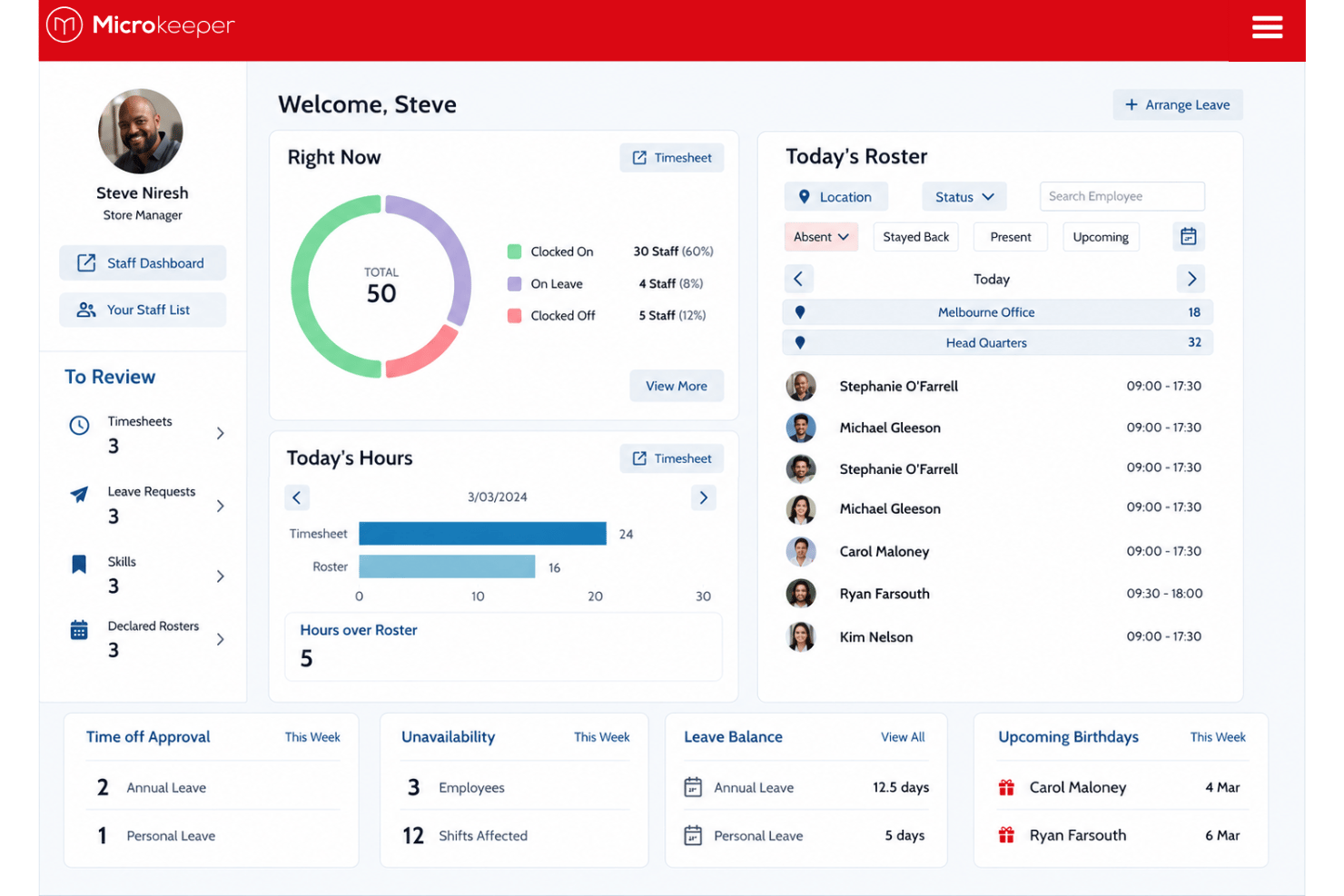
Microkeeper and Humanforce are both workforce management software, but they emphasize different strengths. Microkeeper combines HR, rostering, timesheets, and payroll on shared workforce data, with configurable payroll and direct support, while Humanforce leans more toward scheduling, attendance, and frontline workforce operations.
In this article, I’ll compare their features, pricing, security, ease of use, integrations, and best use cases so you can decide which platform better fits your workforce.
Microkeeper vs. Humanforce: An Overview
Microkeeper
Humanforce
Why Trust Our Software Recommendations
Our team has been testing and reviewing software since 2012. As HR experts ourselves, we know how difficult—and important—it is to choose the right software.
For this guide, we evaluated tools using hands-on testing and independent research, scoring tools using our selection criteria. We also draw on insights from industry thought leaders and practicing HR experts.
Our reviews reflect our human editorial judgment, not a sales pitch.
Expert reviewers:
Microkeeper vs. Humanforce Pricing Comparison
| Microkeeper | Humanforce | |
|---|---|---|
| Free Trial | 30-day free trial | Free demo available |
| Pricing | From $6/user/month | Pricing upon request |
Microkeeper vs. Humanforce Pricing & Hidden Costs
Microkeeper offers three plans: Payroll STP & Super, Standard, and Enterprise, with each tier adding broader workforce management capabilities. By contrast, Humanforce uses custom pricing across Core and Pro tiers for each product in its six-product suite, so costs can vary depending on the modules, implementation complexity, integrations, and enterprise features your team needs.
When comparing the two, I’d look beyond the base software cost and map each package to your actual workflows. Microkeeper may offer more predictable value if you want HR, rostering, timesheets, and payroll bundled together, while Humanforce’s modular approach gives larger or more complex teams more flexibility but makes the total investment less transparent upfront.
Microkeeper vs. Humanforce Feature Comparison
| Microkeeper | Humanforce | |
|---|---|---|
| 2-Factor Authentication | ||
| 360 Degree Feedback | ||
| API | ||
| Application Tracking | ||
| Attendance Tracking | ||
| Batch Permissions & Access | ||
| Dashboard | ||
| Data Export | ||
| Data Import | ||
| Data Visualization | ||
| Employee Database | ||
| Employee Engagement | ||
| Employee Incentive Management | ||
| Employee Onboarding | ||
| Expense Tracking | ||
| External Integrations | ||
| Feedback Management | ||
| Multi-User | ||
| Notifications | ||
| Payroll | ||
| Scheduling |
Microkeeper vs. Humanforce Integrations
| Integration | Microkeeper | Humanforce |
|---|---|---|
| Xero | ✅ | ✅ |
| MYOB | ✅ | ✅ |
| Beam | ✅ | ❌ |
| Manatal | ✅ | ❌ |
| One Click Life | ✅ | ❌ |
| Teamtailor | ✅ | ✅ |
| Workday | ❌ | ✅ |
| Oracle | ❌ | ✅ |
| API | ✅ | ✅ |
Both Microkeeper and Humanforce support integrations across payroll, accounting, recruitment, HR, and broader workforce systems, with API access for custom connections. Microkeeper takes a more focused approach around systems that feed directly into its payroll and workforce workflows, while Humanforce offers a broader enterprise-oriented ecosystem. I’d favor Microkeeper if your stack is centered on payroll and workforce administration, while Humanforce may suit teams with wider enterprise integration needs.
Microkeeper vs. Humanforce Security, Compliance & Reliability
| Factor | Microkeeper | Humanforce |
|---|---|---|
| Data Privacy | ISO 27001:2022 compliant, with Australian hosting, encrypted data transmission, restricted production access, and encrypted backups. | ISO 27001:2022 and SOC 2 certified, with AWS-based hosting, encryption, and enterprise security controls. |
| Payroll Compliance | Supports STP reporting and configurable Modern Award, EBA, overtime, penalty, allowance, and custom pay rules. | Supports award interpretation, labor compliance controls, and workforce records designed for complex frontline operations. |
| Access Controls | Supports MFA, encrypted sessions, account lockouts, audit logging, and restricted production access. | Supports SSO and MFA, with Pro adding custom access levels, permissions, and audit logs. |
| System Reliability | Guarantees 99.9% availability for core services, supported by redundancy, load balancing, and real-time database replication. | Uses enterprise cloud infrastructure with documented service availability and operational resilience measures. |
| Data Backup & Recovery | Uses daily AES-256 encrypted backups with documented disaster recovery and business continuity processes. | Maintains backup and disaster recovery controls with documented recovery processes for service disruptions. |
Overall, Microkeeper emphasizes secure Australian hosting, detailed payroll compliance controls, and documented reliability measures such as encrypted backups, disaster recovery, and a 99.9% uptime commitment. Humanforce leans more toward enterprise security and workforce compliance, with ISO 27001 and SOC 2 certification, SSO and MFA, customizable permissions, and cloud-based resilience. I think Microkeeper’s more explicit infrastructure and uptime documentation is a meaningful advantage, while Humanforce offers a broader set of enterprise-oriented access controls for large frontline workforces.
Microkeeper vs. Humanforce Ease of Use
| Factor | Microkeeper | Humanforce |
|---|---|---|
| User Interface | Practical, function-first workflows keep HR, rostering, timesheets, and payroll connected, though the interface can feel less visually polished. | Frontline-focused interface brings scheduling, attendance, leave, and workforce information into connected web and mobile experiences. |
| Onboarding | Offers guided implementation with configuration, testing, training, parallel payroll, and go-live support, while self-setup requires more hands-on effort. | Provides structured onboarding, training resources, and guided workflows for getting administrators and employees started. |
| Mobile Access | Employees can manage rosters, clocking, timesheets, payslips, leave, availability, and GPS-based attendance through the mobile app. | HF Work supports schedules, clocking, shift swaps, leave, availability, payslips, and team communication from mobile devices. |
| Customer Support | Direct onshore Australian phone and ticket support gives customers access to knowledgeable people without chatbot triage or multiple support tiers. | Offers product-specific help centers, knowledge bases, training resources, and ticket-based support escalated through administrators. |
| Customization | Detailed configuration supports Awards, EBAs, allowances, leave, rostering, and complex payroll rules, though advanced setups require more initial effort. | Configurable scheduling and workforce workflows support complex frontline operations, with additional customization available through higher-tier products. |
From an ease-of-use perspective, I think Microkeeper trades some visual polish for deeper control, and that tradeoff makes sense for teams managing complex payroll and workforce rules. Once configured, its connected rostering, timesheet, and payroll workflows can reduce a lot of manual handoffs, while direct onshore support is a meaningful advantage when admins need help. Humanforce offers a more polished, frontline-focused experience, particularly through its mobile app, so I’d favor it when employee-facing scheduling and self-service are the bigger priorities.
Microkeeper vs Humanforce: Pros & Cons
Microkeeper
- Configurable payroll rules handle allowances, penalty rates, overtime, and EBAs for businesses with complex pay structures.
- Rosters and approved timesheets flow directly into payroll, reducing manual data transfer between scheduling, attendance, and pay runs.
- Competitive pricing covers a broad workforce management feature set, with direct support from an onshore Australian team.
- The HR and rostering interface can feel less polished than more modern workforce platforms.
- Native integrations are limited, so businesses with established tech stacks may need custom connections through Microkeeper’s open API.
- Self-setup takes meaningful time to configure pay rules, connect workflows, and test payroll before going live.
Humanforce
- Strong real-time scheduling with shift swap options
- Mobile app support for employee self-service tasks
- Built-in award interpretation for compliance in Australia
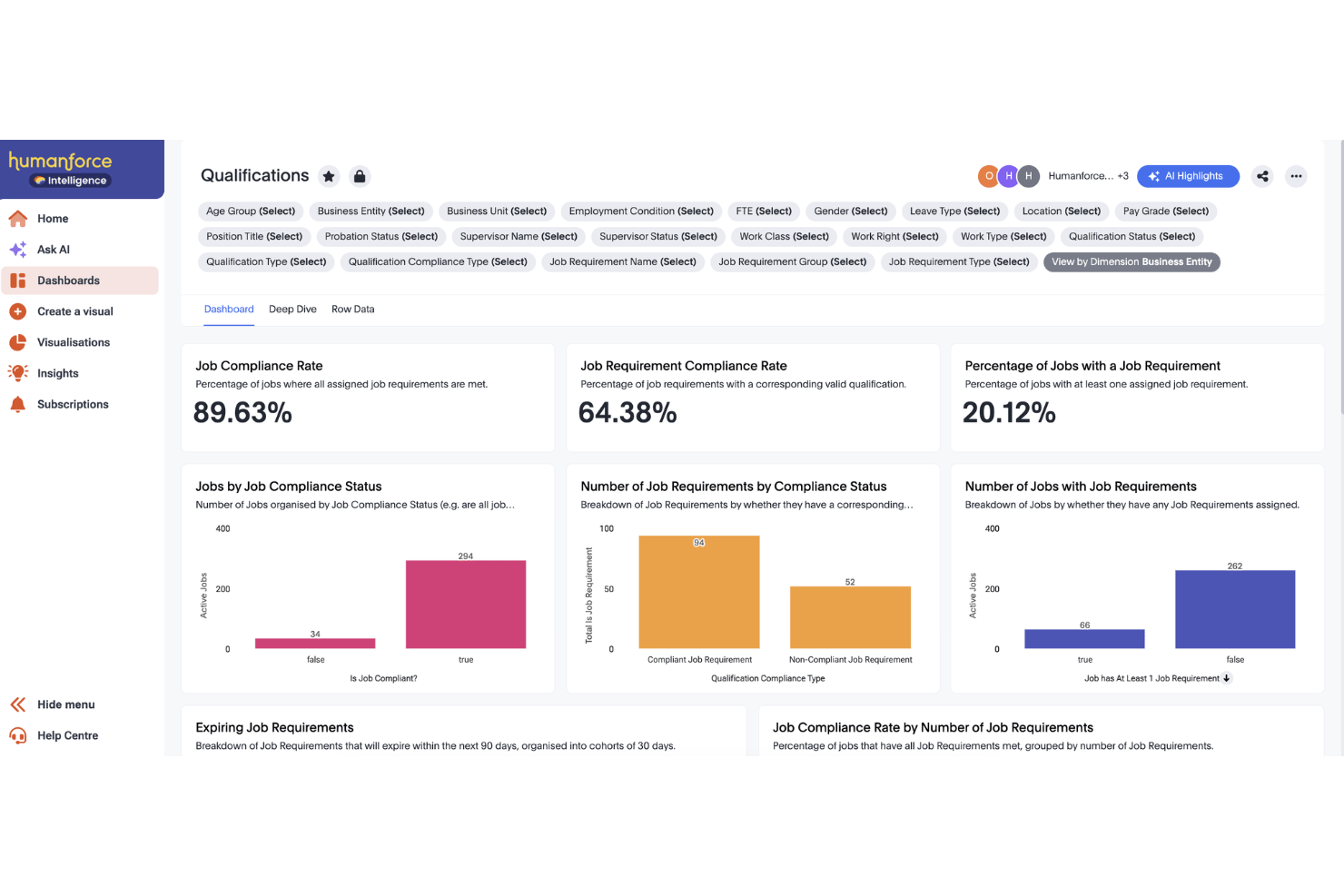
- Reports lack advanced customization and export options
- Slow system performance during peak times reported by users
- Limited analytics for workforce forecasting and trends
Best Use Cases for Microkeeper and Humanforce
Microkeeper
- Manufacturing Businesses Manufacturers can manage rotating shifts, employee skills and availability, attendance, allowances, and complex pay conditions across production teams.
- Mining and FIFO Operations Mining businesses can use multi-site rostering, workforce location tracking, credential management, and flexible clocking options to manage remote and FIFO teams.
- Labor Hire Agencies Labor hire businesses can onboard workers quickly, schedule staff across client sites, track availability and skills, and process varied payroll requirements from the same system.
- Construction Companies Construction teams can track hours across multiple worksites, manage project-based workers, apply custom pay conditions and allowances, and monitor labor costs by project.
- Hospitality Businesses Hospitality teams can manage changing availability, casual and shift-based staff, roster updates, timesheets, and pay conditions such as penalty rates and allowances.
- Multi-Site Retailers Retail businesses can onboard different employee types, manage rosters across stores and locations, track hours by site, and centralize payroll and workforce records.
Humanforce
- Hospitality Chains Humanforce handles complex, multi-site scheduling, award interpretation, and compliance requirements that hotels and hospitality brands typically face.
- Aged Care Providers Features for compliance, rostering, and managing certifications make it a great fit for care providers subject to strict regulatory oversight.
- Security Services Guards and mobile workforces benefit from GPS time and attendance, shift allocation, and a mobile-first design that supports field-based work.
- Retail Operations Stores with hourly staff get value from time clock integrations, dynamic scheduling, and reporting to manage high turnover and shift changes.
- Facilities Management Companies scheduling cleaning, maintenance, or support staff across sites will appreciate granular roster controls and central visibility.
- Mid-to-Large Enterprises Larger businesses with complex pay rules, integration requirements, or multi-site operations benefit from robust automation and customization.
Who Should Use Microkeeper, And Who Should Use Humanforce?
If you need workforce management software with deeply configurable payroll, connected rostering and timesheets, and direct onshore support, Microkeeper is likely the better fit. It’s especially well suited to mid-sized and enterprise Australian businesses managing Awards, EBAs, allowances, penalty rates, or other complex pay conditions, and to teams that want HR, scheduling, time tracking, and payroll working from the same workforce data.
If, instead, your priority is large-scale frontline workforce management, advanced scheduling, and stronger operational visibility across shifts and locations, Humanforce may suit you better. It’s a strong choice for venues, events, security, facilities, and other organizations managing large or distributed hourly workforces where demand-based staffing, compliance, and labor-cost control are major concerns.
Differences Between Microkeeper and Humanforce
| Microkeeper | Humanforce | |
|---|---|---|
| Award Management | Businesses configure and maintain their own Award, EBA, and custom payroll rules for greater control. | Core includes pre-built award interpretation, while Pro adds custom Award and EBA configuration. |
| Payroll Depth | Supports highly configurable allowances, penalties, overtime, EBAs, and business-specific calculation logic for complex payroll requirements. | Payroll includes award interpretation, with more advanced EBA and award configuration available in Pro. |
| Pricing & Value | Publishes payroll-only and per-user plans, with core WFM features bundled into Standard. | Uses custom Core and Pro pricing based on products, complexity, and enterprise requirements. |
| Product Structure | HR, rostering, timesheets, and payroll were built as one system using shared workforce data. | Uses an integrated suite spanning workforce management, HR, talent, payroll, benefits, and analytics. |
| Support Model | Direct onshore Australian support connects customers with real staff without chatbot or offshore triage. | Provides structured support, onboarding, and product resources across its workforce suite. |
| Visit MicrokeeperOpens new window | Read Humanforce ReviewOpens new window |
Similarities Between Microkeeper and Humanforce
| Employee Self-Service | Both give employees mobile access to schedules, leave requests, availability, and other workforce information, reducing routine admin for managers and HR teams. |
|---|---|
| Leave Management | Both centralize leave requests, approvals, and employee availability so managers can account for absences when planning rosters and staffing levels. |
| Rostering & Scheduling | Both support digital rostering across teams and locations, with tools for managing availability, staffing requirements, shift changes, and day-to-day scheduling needs. |
| Time & Attendance | Both provide digital clocking, attendance tracking, and timesheet workflows that help managers capture worked hours accurately before payroll processing. |
| Workforce Reporting | Both provide reporting across staffing, attendance, scheduling, and labor costs to help managers monitor workforce performance and operational trends. |
| Visit MicrokeeperOpens new window Read Humanforce ReviewOpens new window | |