
Rotageek Review 2026: Pros, Cons, Features, and Pricing
I look beyond Rotageek’s feature list to weigh its pros, cons, and pricing against one key question: will it fit the way your team actually works?

We review tools independently, and commissions help fund our testing. See our transparency policy, our methodology, or suggest a tool.
Rotageek is workforce management software for forecasting staffing demand and scheduling employees across locations. If your retail or healthcare team needs schedules that reflect changing footfall or patient check-ins, I’d choose Rotageek over Deputy for its location-level, 15-minute forecasts and scheduling rules for skills, contracts, and working time.
Rotageek Evaluation Summary
4.6/5
- Pricing upon request
- Free demo available
Why Trust Our Software Recommendations
6,700+
Reviews
20
Industry experts
16+
Evaluation factors
14
Years
Our team has been testing and reviewing software since 2012. As HR experts ourselves, we know how difficult—and important—it is to choose the right software.
For this guide, we evaluated tools using hands-on testing and independent research, scoring tools using our selection criteria. We also draw on insights from industry thought leaders and practicing HR experts.
Our reviews reflect our human editorial judgment, not a sales pitch.
Expert reviewers:
- Phil GrayCOO
 Kim BehnkeHR Tech Editor & Analyst
 Josh BarkerPeople Ops Manager

Rotageek Overview
I’d choose Rotageek for multi-site retail or healthcare teams whose staffing needs shift with footfall, bookings, or seasonal demand. Its 15-minute forecasts feed schedules that account for skills, availability, contracts, and working-time rules, while drag-and-drop rotas and an employee app support day-to-day changes. Compared with simpler scheduling tools, it offers deeper forecasting and workforce controls, plus HR and payroll connections through APIs or secure file transfer. Pricing is tailored to sites, employees, and modules, so it’s less transparent upfront; expert-led onboarding typically takes 8–12 weeks. Support is included, but smaller teams may find the setup and feature set more than they need.
Pros
- Location-level forecasts map staffing demand in 15-minute intervals.
- Employees get rota, leave, and shift-change alerts in the app.
- Users value quick shift edits and visibility across locations.
Cons
- Users report app slowdowns, crashes, and unreliable clock-ins.
- Auto-scheduling can distribute weekends and extra hours unevenly.
- Some rota, leave, and break workflows need manual workarounds.


How We Test & Score Our Tools
We’ve spent years building, refining, and improving our software testing and scoring system. The rubric is designed to capture the nuances of software selection and what makes a tool effective, focusing on critical aspects of the decision-making process.
Below, you can see exactly how our testing and scoring works across seven criteria. It allows us to provide an unbiased evaluation of the software based on core functionality, standout features, ease of use, onboarding, customer support, integrations, customer reviews, and value for money.
Core Functionality (25% of final score)
The starting point of our evaluation is always the core functionality of the tool. Does it have the basic features and functions that a user would expect to see? Are any of those core features locked to higher-tiered pricing plans? At its core, we expect a tool to stand up against the baseline capabilities of its competitors.
Standout Features (25% of final score)
Next, we evaluate uncommon standout features that go above and beyond the core functionality typically found in tools of its kind. A high score reflects specialized or unique features that make the product faster, more efficient, or offer additional value to the user.
We also evaluate how easy it is to integrate with other tools typically found in the tech stack to expand the functionality and utility of the software. Tools offering plentiful native integrations, 3rd party connections, and API access to build custom integrations score best.
Ease of Use (10% of final score)
We consider how quick and easy it is to execute the tasks defined in the core functionality using the tool. High scoring software is well designed, intuitive to use, offers mobile apps, provides templates, and makes relatively complex tasks seem simple.
Onboarding (10% of final score)
We know how important rapid team adoption is for a new platform, so we evaluate how easy it is to learn and use a tool with minimal training. We evaluate how quickly a team member can get set up and start using the tool with no experience. High scoring solutions indicate little or no support is required.
Customer Support (10% of final score)
We review how quick and easy it is to get unstuck and find help by phone, live chat, or knowledge base. Tools and companies that provide real-time support score best, while chatbots score worst.
Customer Reviews (10% of final score)
Beyond our own testing and evaluation, we consider the net promoter score from current and past customers. We review their likelihood, given the option, to choose the tool again for the core functionality. A high scoring software reflects a high net promoter score from current or past customers.
Value for Money (10% of final score)
Lastly, in consideration of all the other criteria, we review the average price of entry level plans against the core features and consider the value of the other evaluation criteria. Software that delivers more, for less, will score higher.
Core Features
Demand Forecasting and Labor Planning
Rotageek forecasts sales, transactions, or footfall by location using historical data, then turns demand into staffing hours and labour budgets. Managers can test how a change affects costs before building a rota.
Automated Scheduling and Rota Building
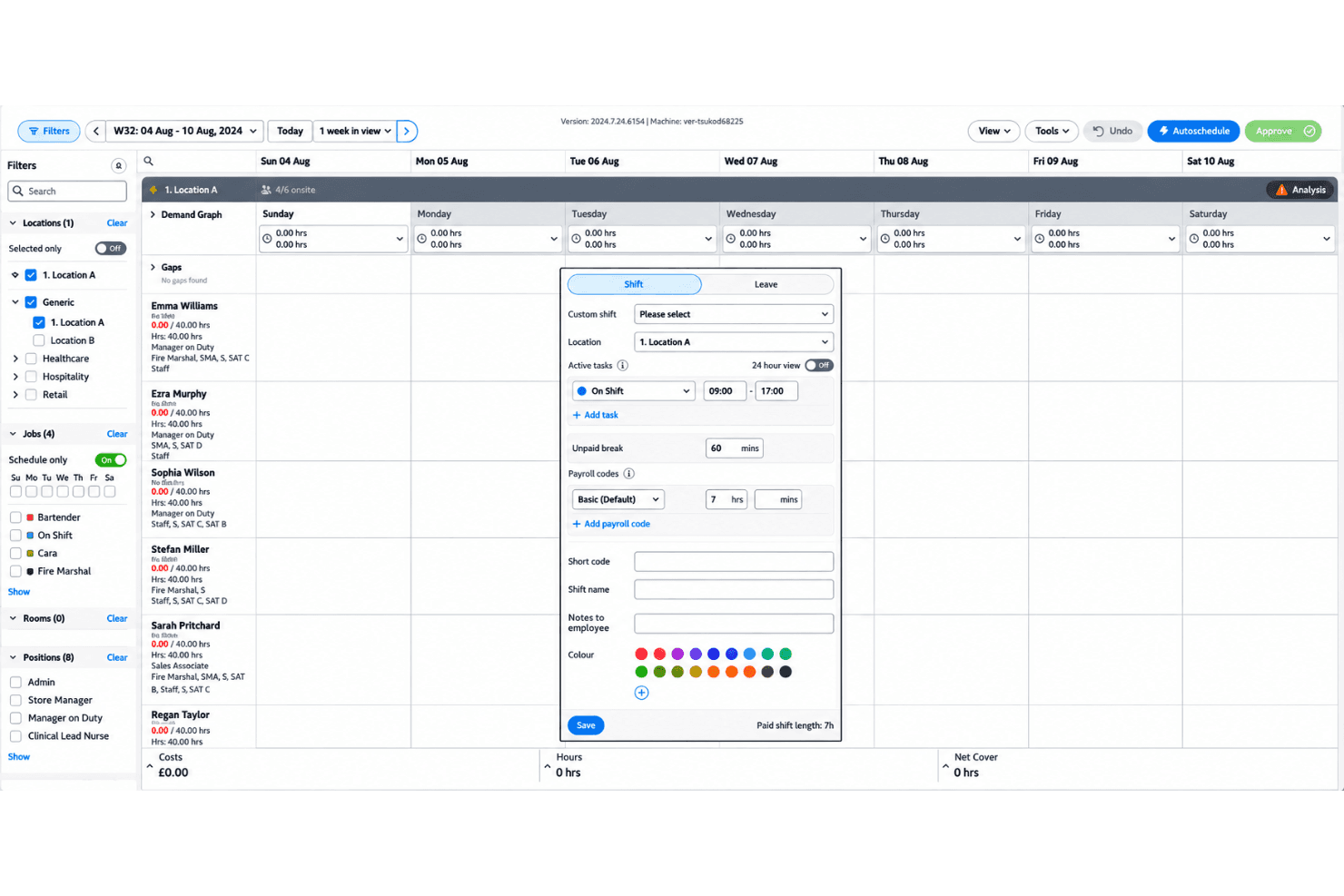
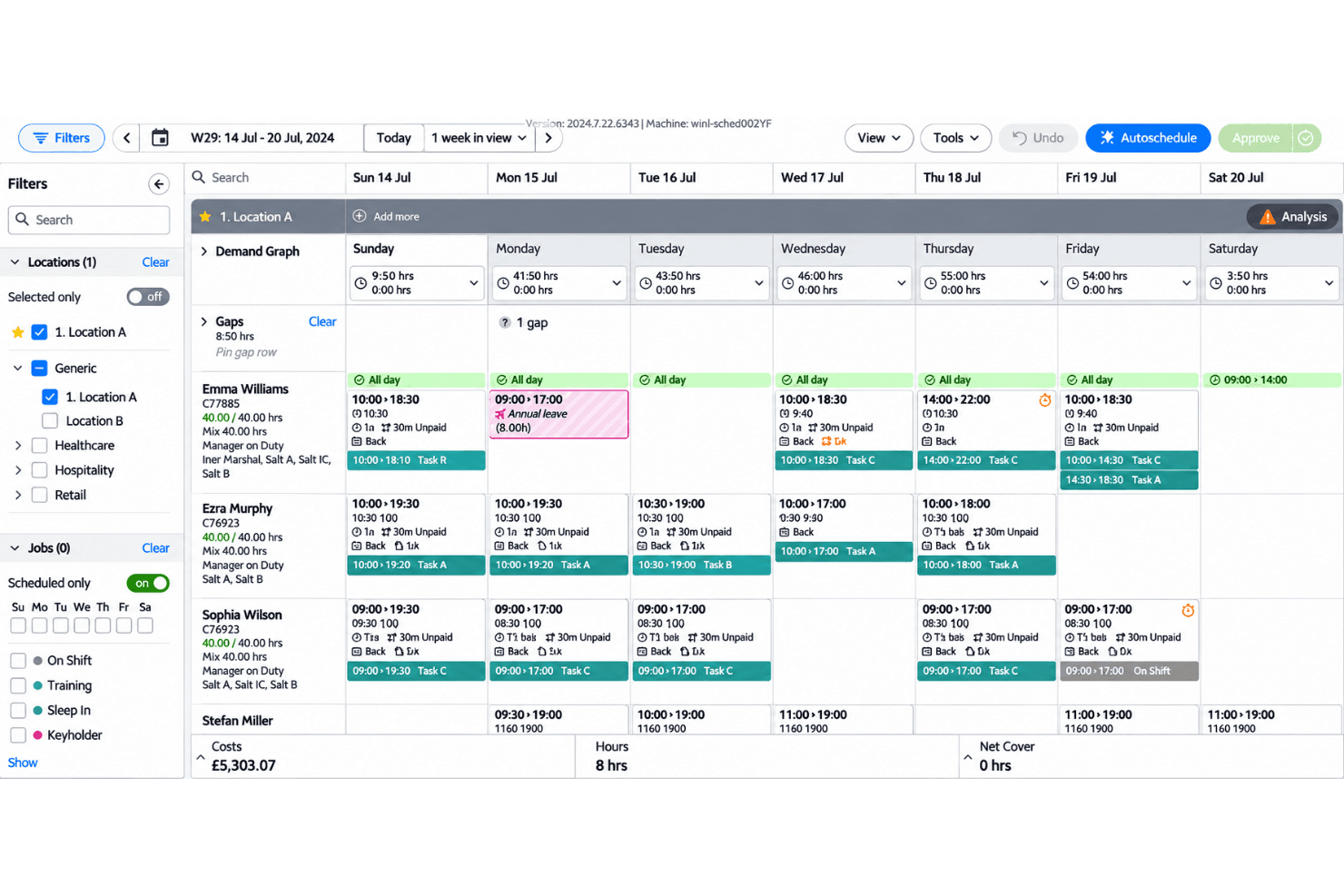
Auto-scheduling creates rotas from forecast demand, budgets, and employee availability, while managers can edit shifts with drag-and-drop tools and templates. This gives a multi-site team a practical starting schedule that managers can adjust for local needs.
Skills and Compliance Rules
Rotageek matches shifts and tasks to employees’ skills and training, while applying contract and working-time rules to rotas. Managers can spot rule breaches before publishing, such as a shift that conflicts with an employee’s availability.
Time and Attendance
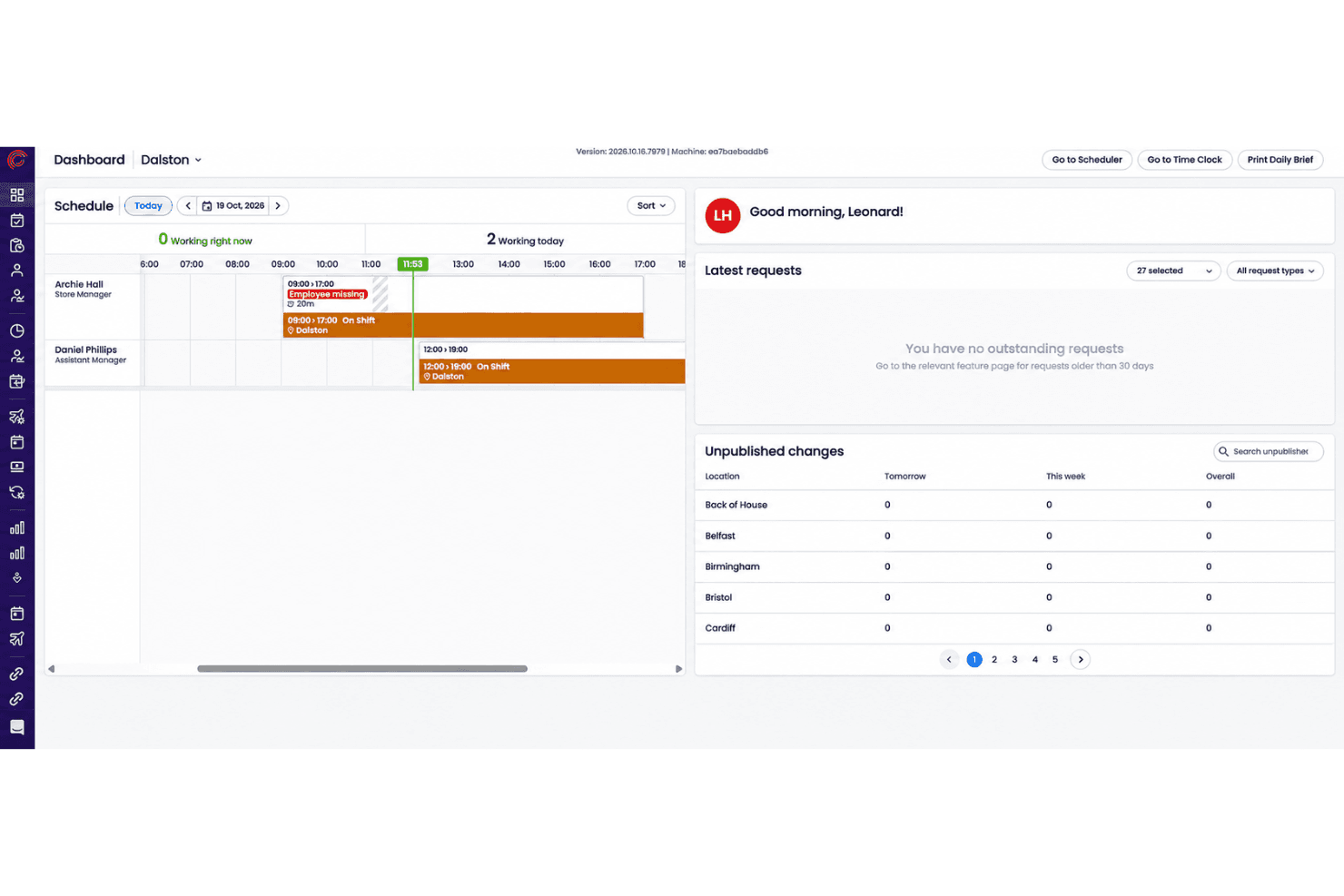
Employees clock in through the app, a shared device, or a connected clock, and Rotageek logs actual hours against planned shifts. Managers can review exceptions such as missed or late clock-ins and approve timesheets.
Leave and Absence Management
Employees request leave in the app, and managers can check rota cover before approving; approved leave appears on the schedule. Managers can also record sickness against the rota and track absence across locations.
Employee App and Shift Changes
Employees use the app to view shifts, set availability, request swaps, and pick up open shifts. Colleagues can respond to swap requests, while managers retain approval controls where needed.
Ease of Use
Rotageek is usable once your team has learned its deeper scheduling tools, but it isn’t the simplest option for day-to-day workforce management. Drag-and-drop rota edits, shift alerts, and cross-location visibility make routine changes easier, and reviewers praise quick edits. However, reports of app crashes, slowdowns, unreliable clock-ins, and manual workarounds for leave or breaks can disrupt staff workflows. Its forecasting and compliance controls add value, but also make setup and use feel heavier for teams with basic scheduling needs.
Integrations
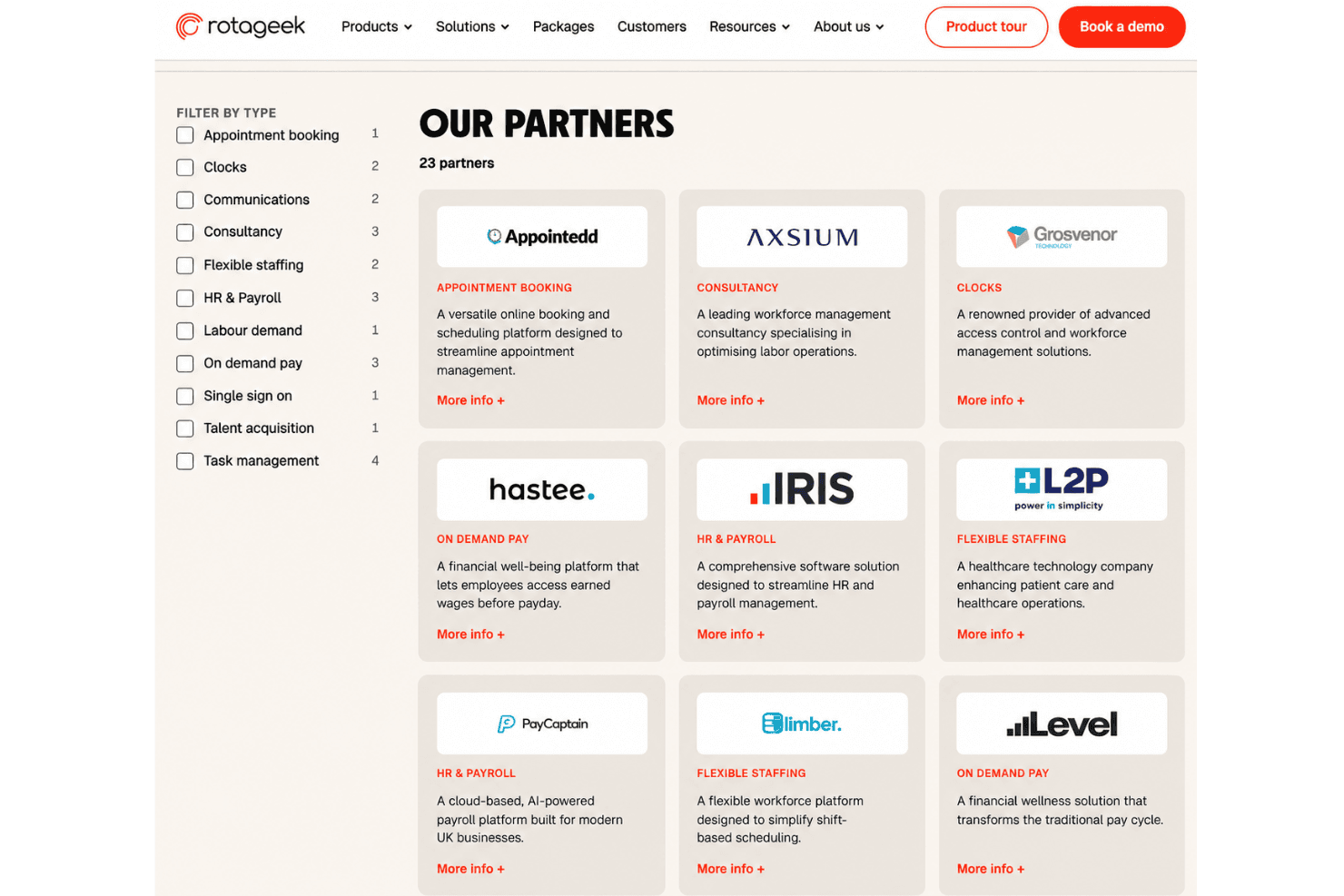
Rotageek supports integrations with IRIS, Zellis, PayCaptain, Grosvenor Technology, TimeMoto, WorkJam, Appointedd, Limber, Hastee, and Stream, among others.
Rotageek also provides a documented REST API, signed webhooks, and secure file transfer for connecting with third-party HR, payroll, and workforce management systems.
Rotageek Specs
- 360 Degree Feedback: No
- API: Yes
- Application Tracking: No
- Attendance Tracking: Yes
- Batch Permissions & Access: No
- Calendar Management: Yes
- Dashboard: Yes
- Data Export: Yes
- Data Import: Yes
- Data Visualization: Yes
- Employee Database: Yes
- Employee Incentive Management: No
- Employee Onboarding: No
- External Integrations: Yes
- Feedback Management: No
- Forecasting: Yes
- Gantt Charts: No
- Multi-User: Yes
- Notifications: Yes
- Onboarding: No
- Project Management: No
- Scheduling: Yes
- Task Scheduling/Tracking: Yes
- Time Management: Yes
- Timesheets: Yes
- Travel Management: No
- Vacation & Absence Calendar: Yes


