



Spott ATS vs. Bullhorn: Comparison and Reviews for 2026



Recruitment agencies rely on applicant tracking systems to manage candidates, clients, outreach, and placements, but choosing the right platform isn't always straightforward. Some teams prioritize AI-powered recruiting and modern workflows, while others need deeper automation, CRM capabilities, or enterprise scalability. The best choice depends on how your agency recruits, collaborates, and grows.
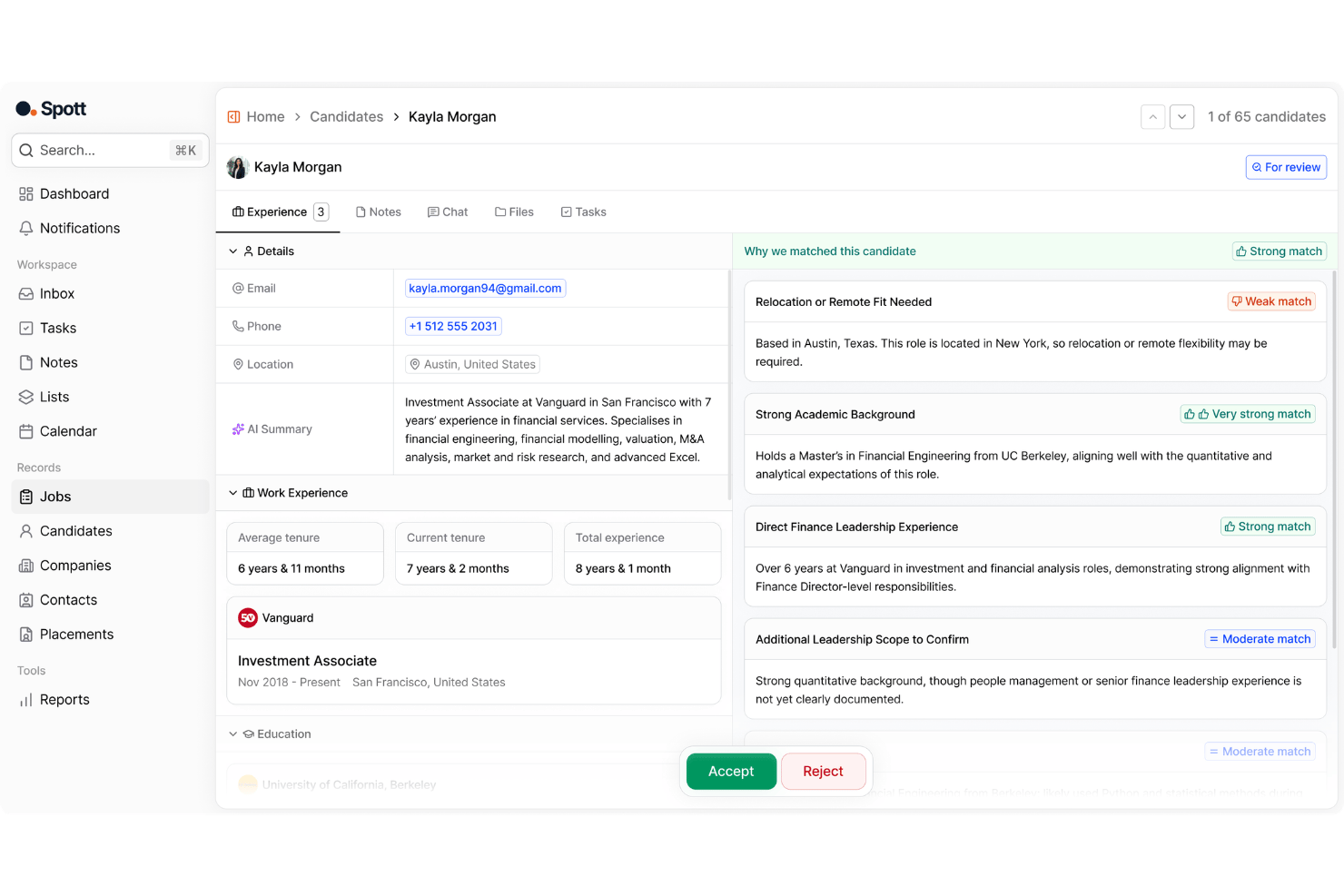
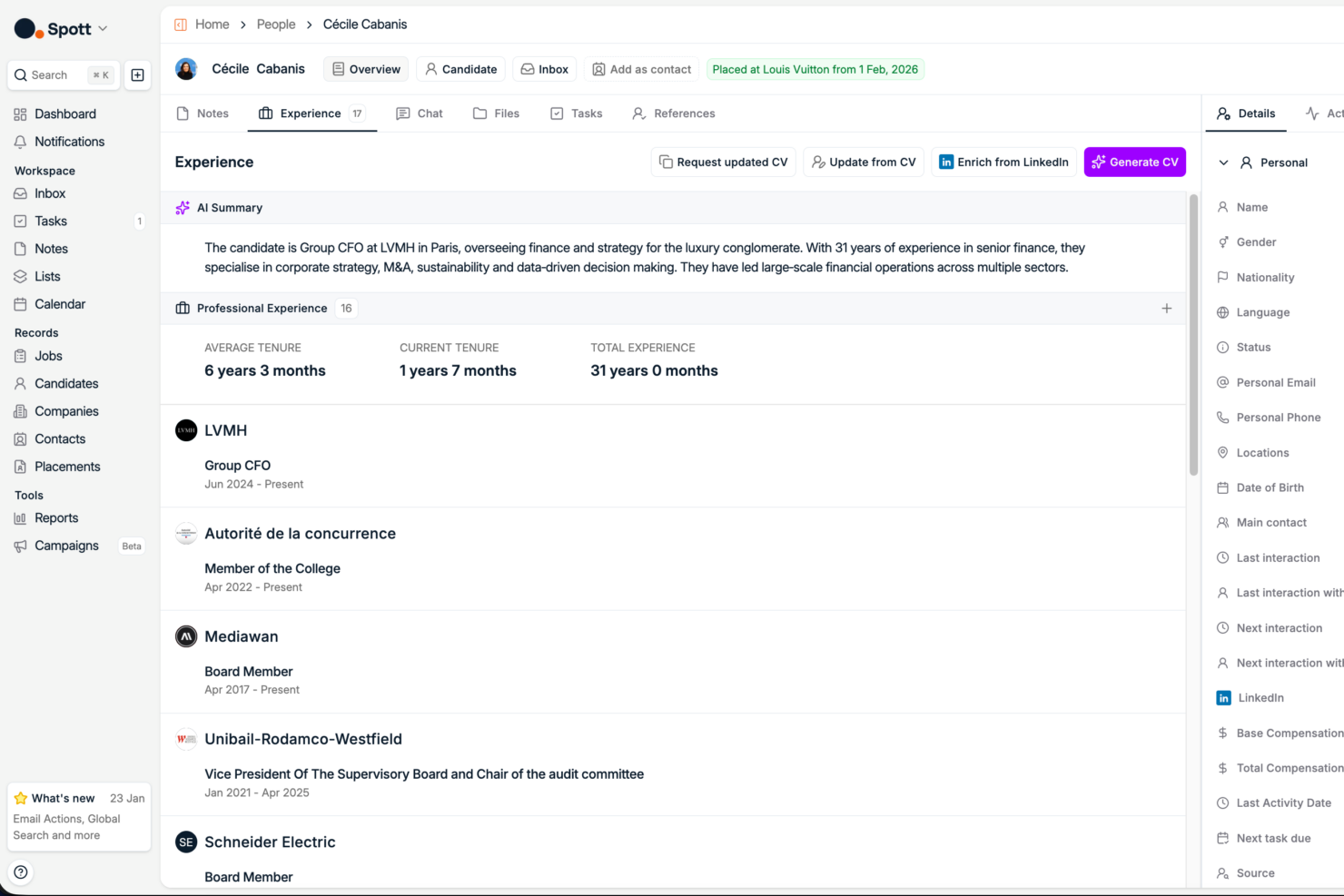
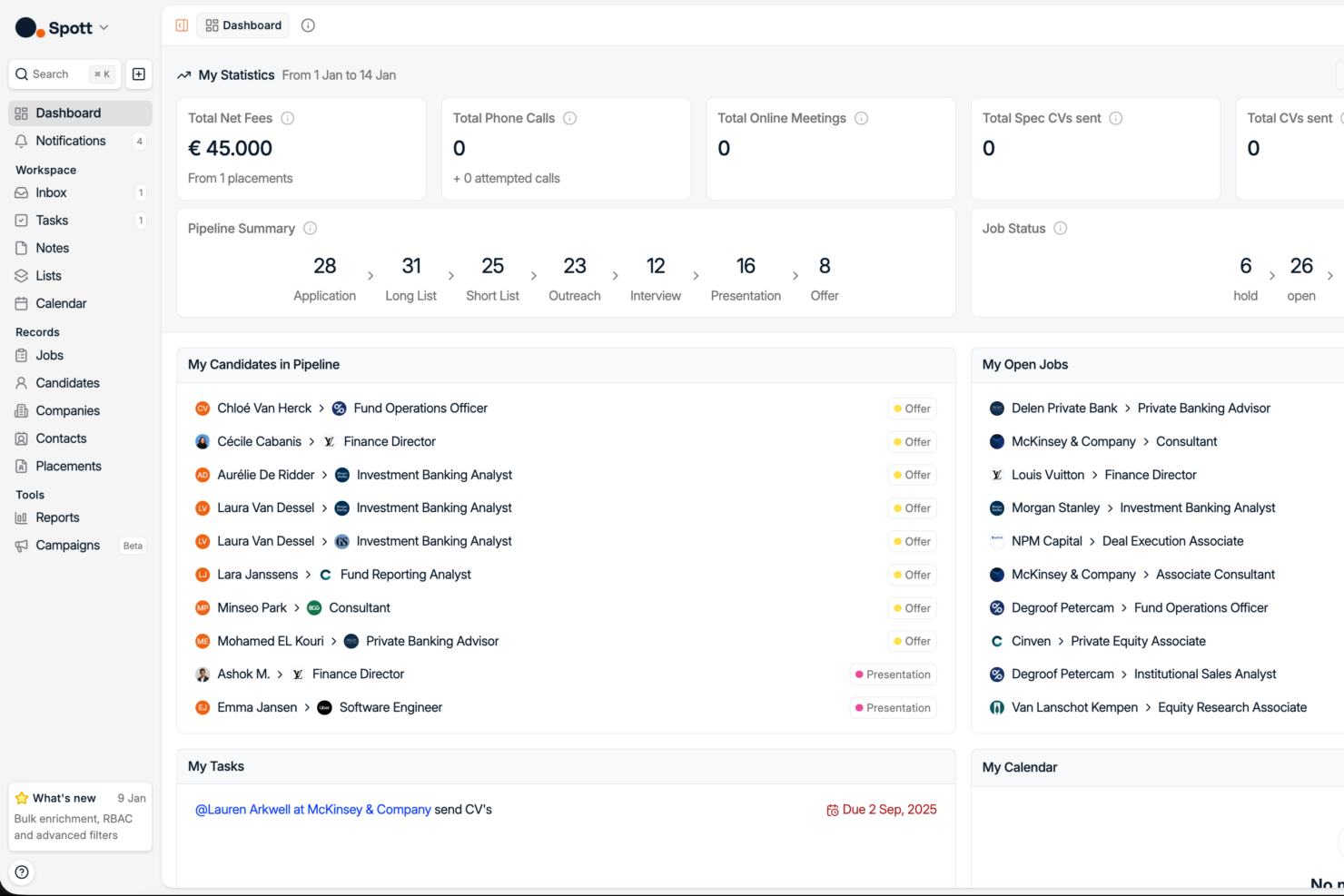
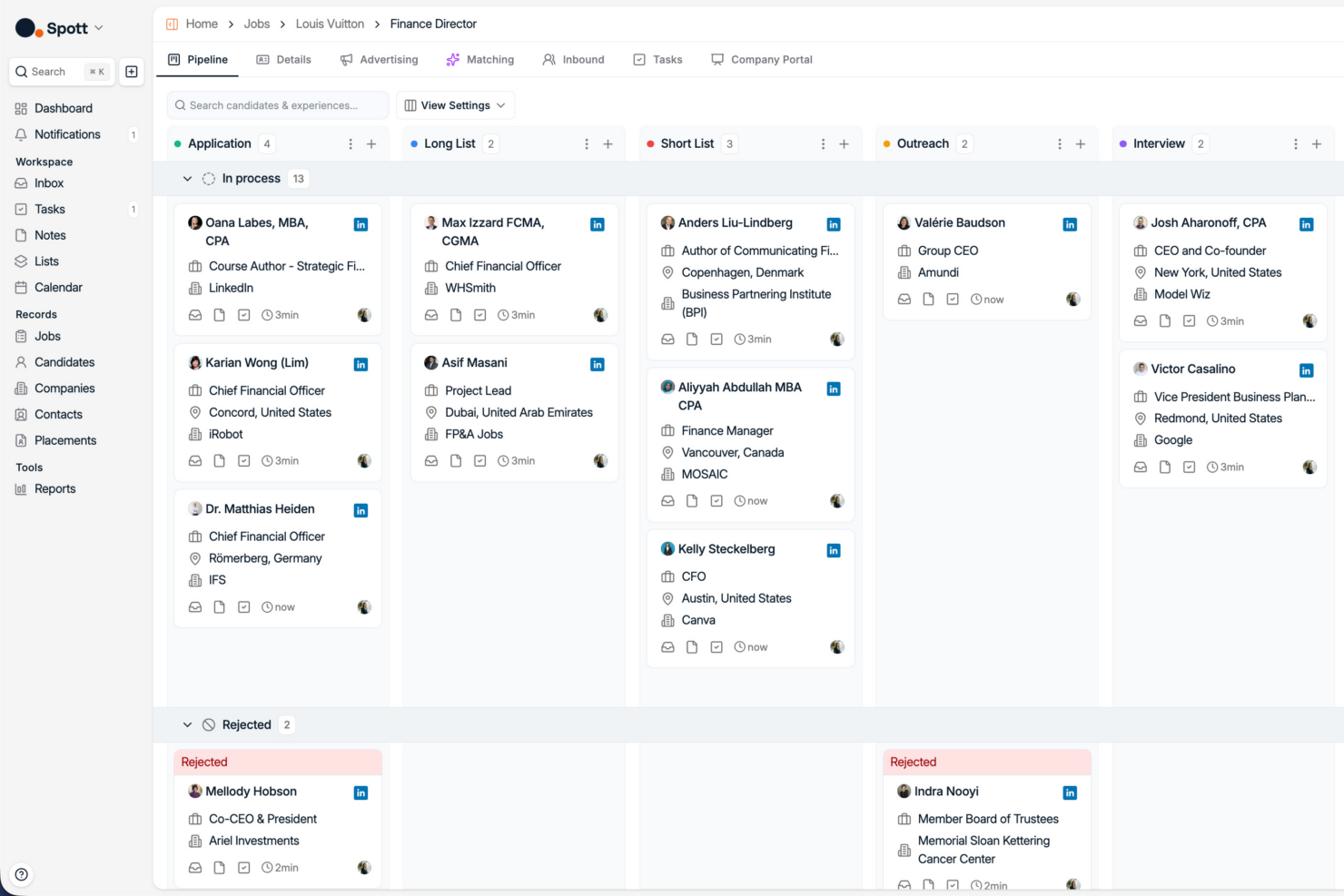
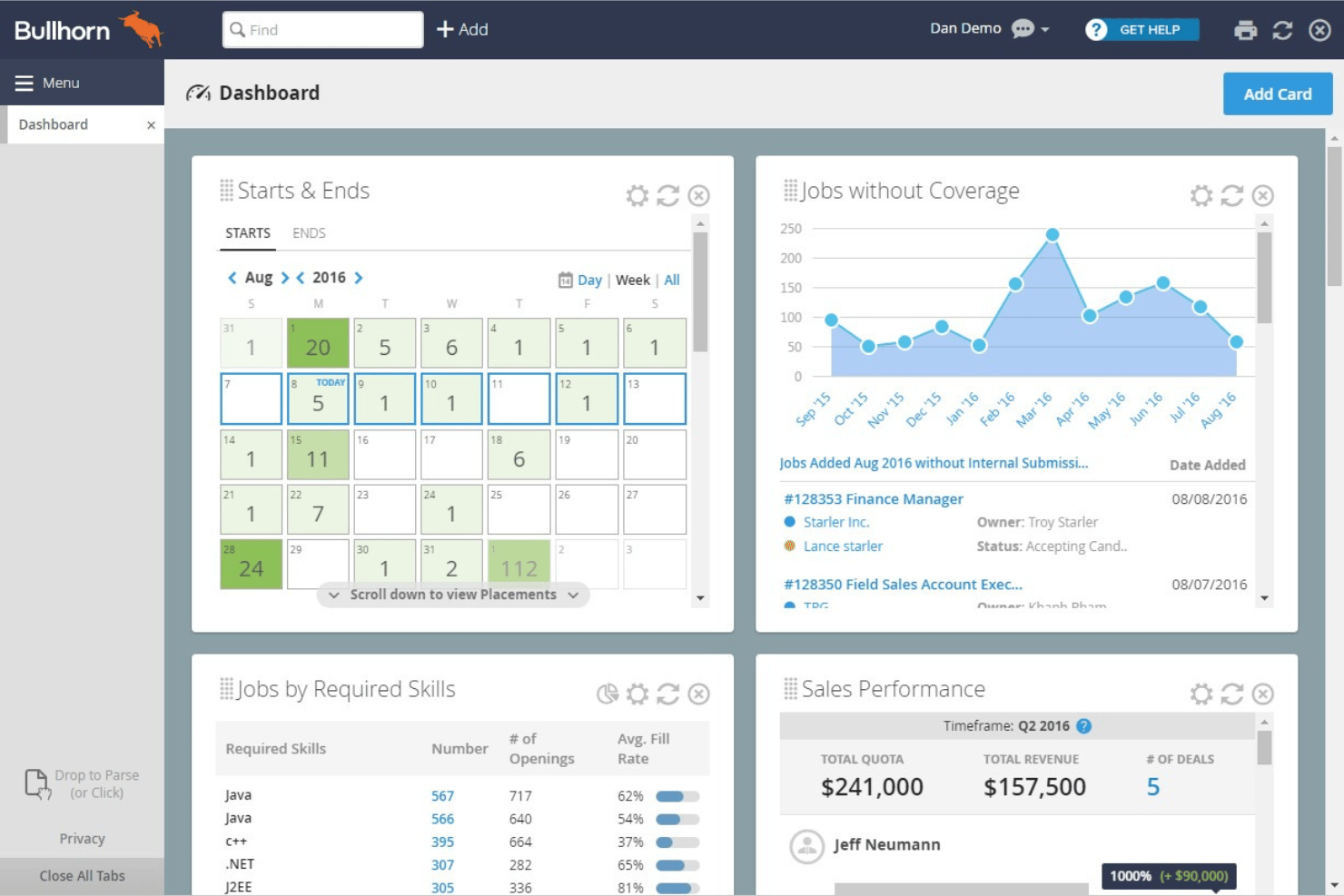
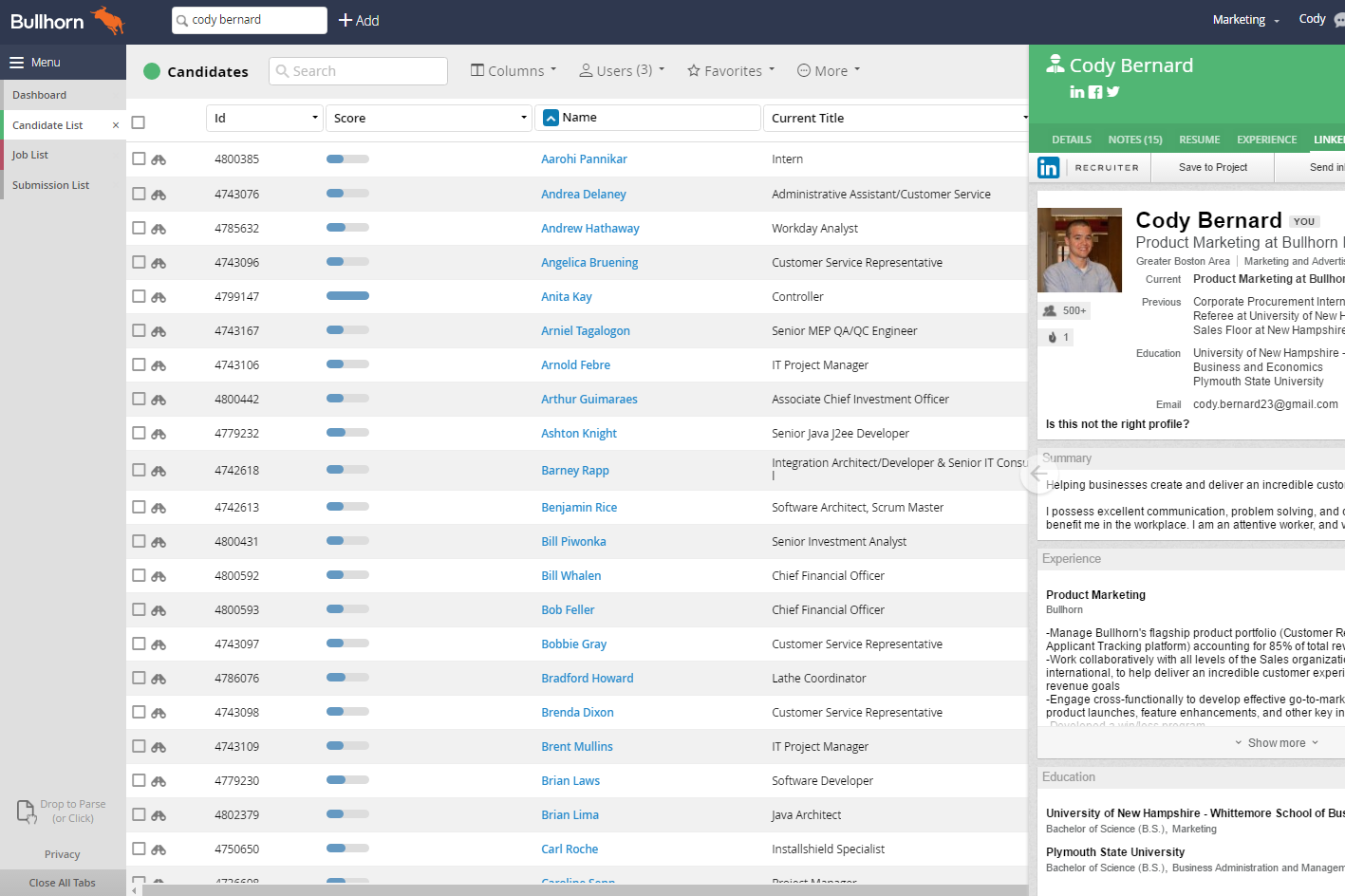
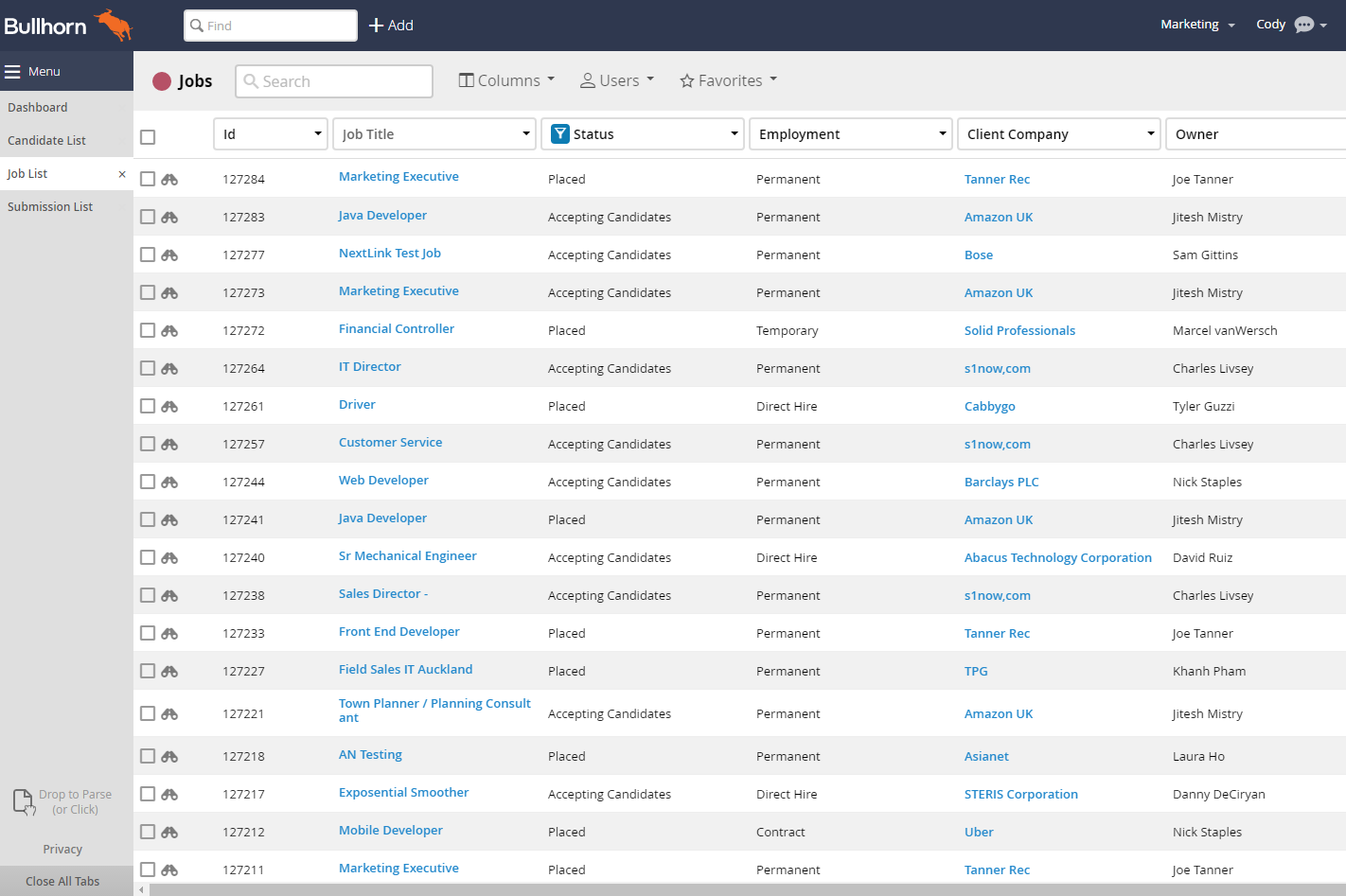
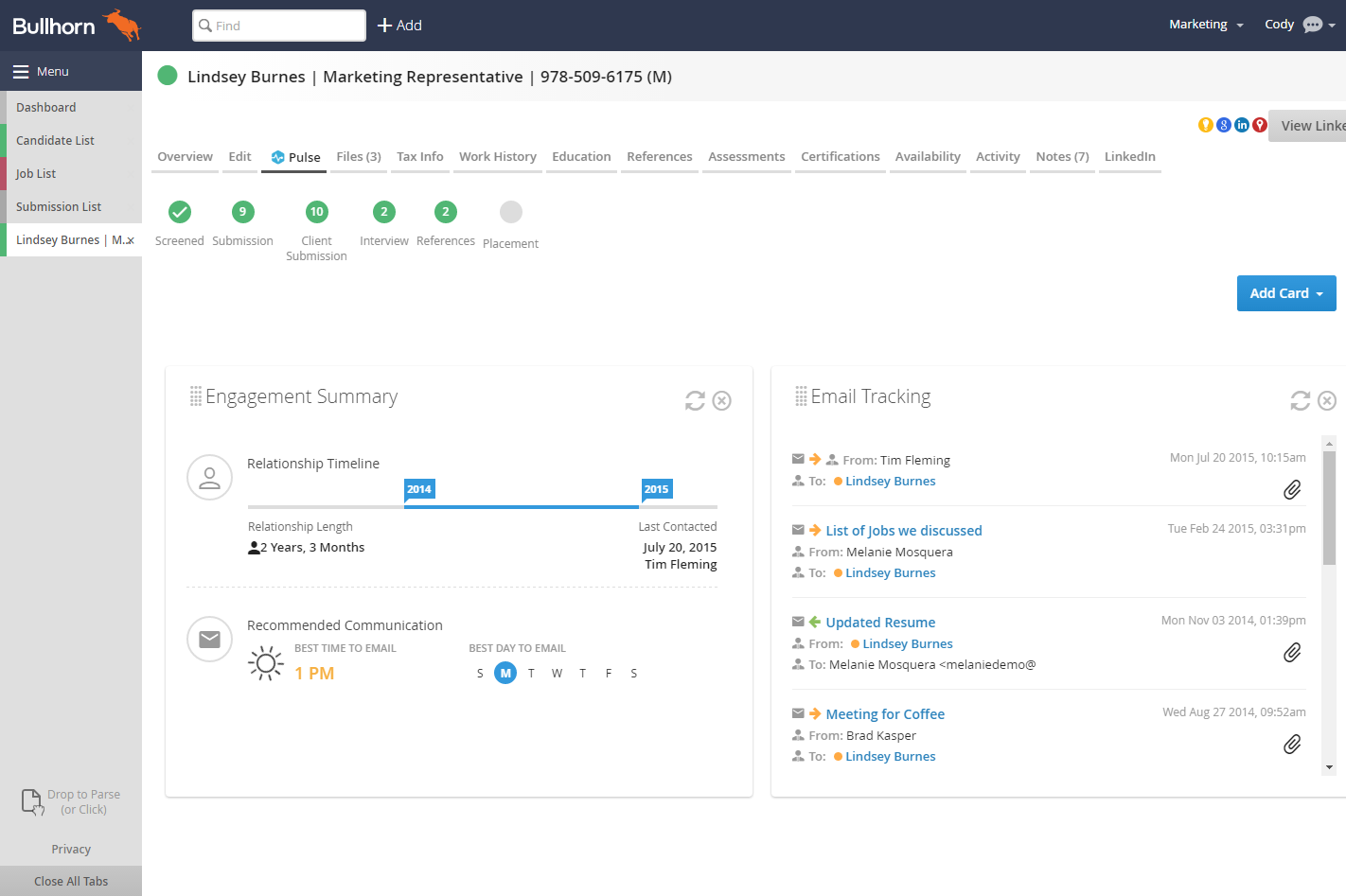
Spott and Bullhorn are both applicant tracking systems built for recruitment agencies, but they take different approaches to agency recruiting. Spott is an AI-native ATS and CRM focused on semantic matching, conversation intelligence, and streamlined workflows, while Bullhorn offers a long-established recruiting platform with extensive CRM, automation, and staffing capabilities.
In this comparison, I'll evaluate Spott and Bullhorn across features, pricing, ease of use, onboarding, customer support, security, integrations, and ideal use cases to help you determine which system is the better fit for your recruitment agency.
Spott ATS vs. Bullhorn: An Overview
Spott ATS


Bullhorn
Why Trust Our Software Recommendations
Our team has been testing and reviewing software since 2012. As HR experts ourselves, we know how difficult—and important—it is to choose the right software.
For this guide, we evaluated tools using hands-on testing and independent research, scoring tools using our selection criteria. We also draw on insights from industry thought leaders and practicing HR experts.
Our reviews reflect our human editorial judgment, not a sales pitch.
Expert reviewers:
Spott ATS vs. Bullhorn Pricing Comparison
| Spott ATS | Bullhorn | |
|---|---|---|
| Free Trial | Free trial available | Free demo available |
| Pricing | From $139/user/month (billed annually) | From $99/user/month |
Spott vs. Bullhorn Pricing & Hidden Costs
Spott uses transparent, tiered pricing with Core, Pro, and Enterprise plans that add more automation, data enrichment, permissions, and support as you scale. Bullhorn, on the other hand, requires a custom quote, with pricing varying based on the products, implementation, and services your agency needs. While Spott makes it easier to estimate costs upfront, Bullhorn buyers should also factor in potential expenses for implementation, data migration, add-on modules, integrations, and customization.
When comparing pricing, look beyond the subscription cost and consider which features your team actually needs today and as your agency grows. I recommend requesting a detailed pricing breakdown from Bullhorn and comparing it with Spott's published plans to understand the total cost of ownership before making a decision.
Spott ATS vs. Bullhorn Feature Comparison
| Spott ATS | Bullhorn | |
|---|---|---|
| API | ||
| Application Tracking | ||
| Behavioral Testing | ||
| Budgeting | ||
| Calendar Management | ||
| Candidate Database | ||
| Cognitive Testing | ||
| Contact Management | ||
| Custom Assessments | ||
| Dashboard | ||
| Dashboards | ||
| Data Export | ||
| Data Import | ||
| Data Visualization | ||
| Email Integration | ||
| Employee Database | ||
| Employee Onboarding | ||
| External Integrations | ||
| Feedback Management | ||
| Forecasting | ||
| Interview Scheduling | ||
| Multi-Source Feedback | ||
| Multi-User | ||
| Notifications | ||
| Personality Testing | ||
| Psychometric Testing | ||
| Scheduling | ||
| Status Notifications | ||
| Travel Management |
Spott vs. Bullhorn Integrations
| Integration | Spott | Bullhorn |
|---|---|---|
| ✅ | ❌ | |
| Aircall | ✅ | ✅ |
| ✅ | ✅ | |
| Microsoft | ✅ | ✅ |
| Docusign | ✅ | ✅ |
| Zoom | ✅ | ✅ |
| RingCentral | ✅ | ✅ |
| Ringover | ✅ | ✅ |
| ChatGPT | ✅ | ❌ |
| API | ✅ | ✅ |
Both Spott and Bullhorn support integrations that help recruitment agencies connect their ATS/CRM with the rest of their recruiting stack. Spott focuses on direct connections across communication, productivity, document, AI, and job posting workflows, making it useful for agencies that want core tools connected without building around a large marketplace. Bullhorn, by contrast, leans on its broader partner ecosystem, giving agencies access to a larger marketplace of vetted technologies for more specialized or complex setups.
Overall, Spott is stronger for teams that want key integrations available more directly, while Bullhorn is better suited to agencies that value marketplace depth and long-term customization.
Spott vs. Bullhorn Security, Compliance & Reliability
| Factor | Spott | Bullhorn |
|---|---|---|
| Compliance | ISO 27001 certified, GDPR compliant, with a public Trust Center containing security policies, compliance documents, and governance resources. | Supports GDPR compliance and enterprise security standards for staffing organizations. |
| Data Protection | Client data is hosted in Microsoft Azure's West Europe region, with encryption at rest and in transit, encrypted daily backups, and documented data retention and deletion policies. | Encrypts customer data and provides secure cloud infrastructure for recruiting operations. |
| Security Controls | Implements multi-factor authentication, role-based access controls, continuous monitoring, penetration testing, vulnerability management, incident response, privacy-by-design, and vendor management controls. | Supports enterprise authentication, permissions, audit capabilities, and security controls across recruiting workflows. |
| Infrastructure & Reliability | Reports 99.99% uptime, multi-availability zone deployment, business continuity planning, disaster recovery, and continuous infrastructure monitoring. | Provides highly available cloud infrastructure and disaster recovery for enterprise staffing organizations. |
| AI & Governance | States that candidate and client data are not used to train foundation models, with documented AI governance, subprocessor transparency, and security documentation available through its Trust Center. | Uses AI capabilities within its recruiting platform under its enterprise security and governance framework. |
Overall, Spott emphasizes security transparency, documented governance, and AI-era privacy controls, supported by its public Trust Center, compliance posture, EU-hosted infrastructure, encrypted backups, and uptime commitments. Bullhorn, by contrast, leans toward enterprise-grade security, governance, and operational resilience for larger staffing organizations. Both provide strong security foundations, but Spott highlights compliance transparency and AI/data privacy, while Bullhorn prioritizes mature enterprise controls and staffing-scale reliability.
Spott vs. Bullhorn Ease of Use
| Factor | Spott | Bullhorn |
|---|---|---|
| User Interface | Offers a modern, intuitive interface with clear navigation, well-placed buttons, drag-and-drop views, and low-click workflows. | Provides a feature-rich interface built for staffing and recruitment operations, though the depth of tools may feel heavier for new users. |
| Onboarding | Provides dedicated onboarding support, in-house white-glove migration, and live human help through in-platform chat. | Offers implementation support, training, and documentation, especially for agencies with more complex setup needs. |
| Customization | Supports custom objects, custom attributes, AI-prompted columns, Kanban views, smart filters, and workflow automations. | Offers deep configuration across ATS, CRM, reporting, automation, and staffing workflows, but advanced setup may require more admin support. |
| Support Resources | Includes 24/7 human chat, a help center, AI-powered documentation answers, structured onboarding, and agency-focused masterclasses. | Provides support resources, training options, documentation, and service packages for staffing teams. |
| Learning Curve | Easier to adopt for agencies that want a cleaner recruiting workspace and faster day-to-day navigation. | Better suited for teams prepared to spend more time learning a larger, more mature system. |
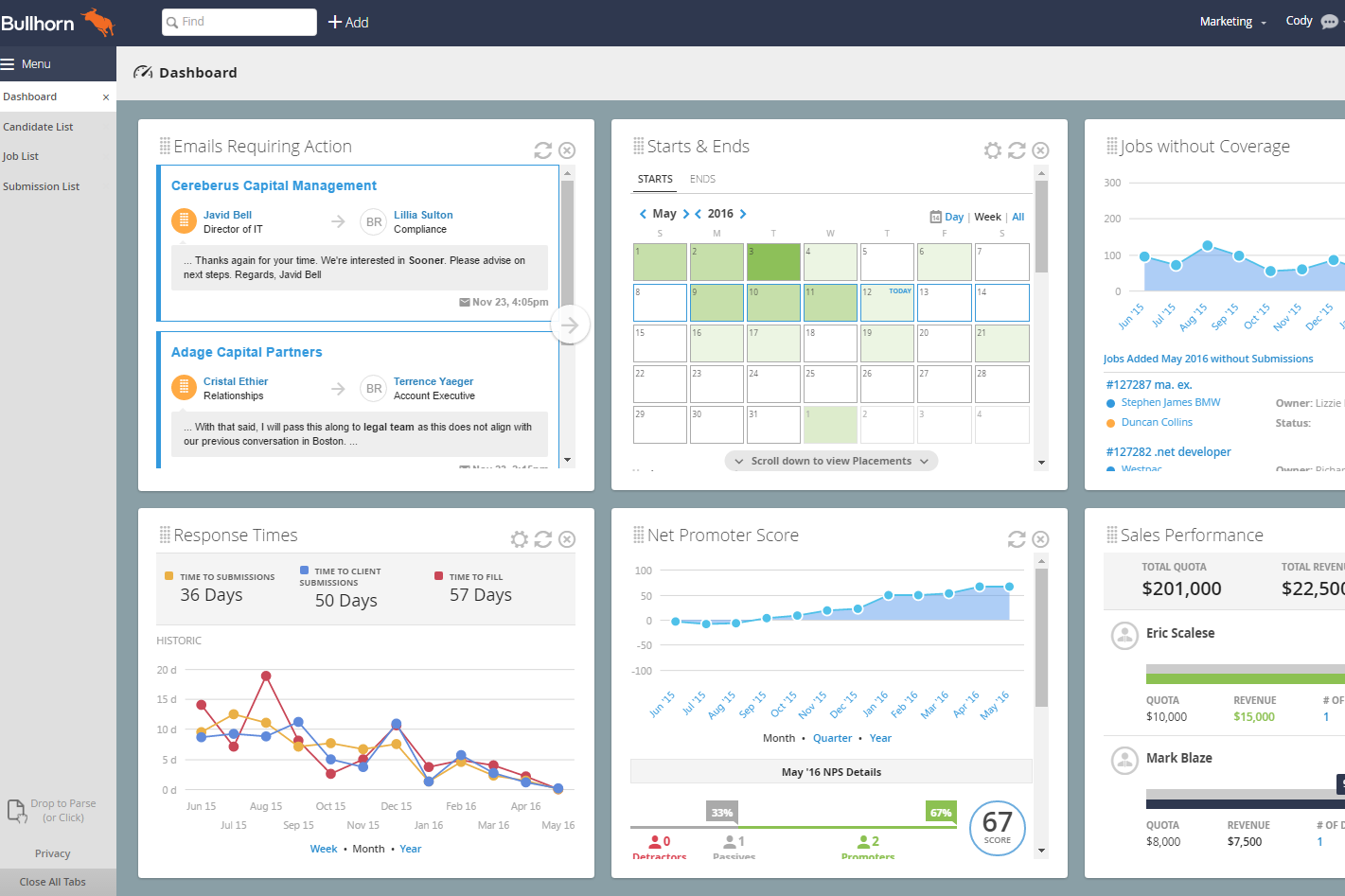
From an ease-of-use perspective, Spott leans into a modern, low-friction experience for recruitment agencies, with clear navigation, low-click workflows, dedicated onboarding, white-glove migration, and 24/7 human chat support. By contrast, Bullhorn offers a deeper, more configurable environment for larger staffing firms that need broader ATS, CRM, reporting, automation, and operations support. However, that depth can mean more setup, training, and admin oversight. As a result, agencies that want faster adoption and a cleaner recruiting workspace may find Spott easier to manage, while larger staffing organizations may prefer Bullhorn’s structure once implementation is complete.
Spott ATS vs Bullhorn: Pros & Cons
Spott ATS
- AI-powered candidate matching based on context, not just keywords
- Unified platform for recruiting, CRM, outreach, and automation
- Flexible workflows with extensive customization options
- Contracting features are still being rolled out
- Mobile app offers limited functionality
- External candidate sourcing relies on third-party integrations
Bullhorn
- Combines ATS and CRM for unified candidate management.
- Advanced automation reduces manual recruiting tasks.
- Strong reporting and analytics for tracking hiring metrics.
- System performance can be slow during peak usage.
- Pricing is higher than many other ATS providers.
- Interface can feel outdated compared to newer platforms.
Best Use Cases for Spott ATS and Bullhorn
Spott ATS
- Recruitment Agencies Spott helps recruitment agencies manage candidates, clients, pipelines, outreach, and placements from one system built for agency operations.
- Staffing Firms Staffing firms can use Spott to support candidate management, client communication, business development, and placement workflows across multiple open roles.
- Executive Search Firms Spott’s AI matching, conversation memory, and candidate presentation tools can help executive search teams manage high-touch relationships with candidates and clients.
- Permanent Placement Firms Permanent placement firms can use Spott to track candidate pipelines, manage client submissions, and keep recruitment activity connected to revenue outcomes.
- RPO and Consulting Teams RPO providers and recruitment consultants can use Spott to manage client-facing workflows, outreach campaigns, reporting, and candidate communication.
- Temp Staffing Teams Temp staffing teams can benefit from Spott’s recruiting workflows, communication tracking, and reporting tools when managing ongoing candidate and client activity.
Bullhorn
- Staffing Agencies Bullhorn’s automation and CRM features streamline high-volume placements and client management.
- Large Enterprises Supports complex workflows and multiple recruiters across departments.
- Recruitment Process Outsourcing Handles bulk candidate sourcing and detailed compliance tracking.
- Healthcare Staffing Manages credentialing, compliance, and rapid placement needs.
- IT Recruiting Firms Tracks specialized talent pools and integrates with job boards.
- Sales Recruitment Teams Combines sales pipeline management with candidate tracking.
Who Should Use Spott, and Who Should Use Bullhorn?
If you’re looking for an AI-native ATS and CRM built specifically for recruitment agencies, Spott is likely the better fit. It works best for recruitment agencies, staffing firms, executive search teams, permanent placement firms, RPO and consulting teams, and temp staffing businesses that want semantic AI matching, conversation tracking, outreach, candidate presentations, and client-facing workflows in a modern recruiting workspace.
By contrast, Bullhorn is better suited for staffing organizations with high-volume recruiting needs, more complex workflows, and larger teams managing both client and candidate relationships at scale. It’s a strong fit for staffing agencies, large enterprises, RPO teams, healthcare staffing firms, IT recruiting firms, and sales recruitment teams that need advanced automation, CRM depth, reporting, compliance tracking, and support for frequent placements across multiple recruiters.
Differences Between Spott ATS and Bullhorn
| Spott ATS | Bullhorn | |
|---|---|---|
| Implementation Model | Offers dedicated onboarding, in-house white-glove migration, and 24/7 human chat support. | Typically involves a more detailed setup process because of its broader configuration options. |
| Integration Strategy | Focuses on direct integrations for key recruiting, communication, document, AI, and productivity workflows. | Offers a larger marketplace with 300+ vetted partner technologies. |
| Platform Depth | Focuses on modern ATS/CRM workflows for recruitment agencies, with a cleaner setup and more focused feature set. | Supports broader staffing operations, including front-office workflows, onboarding, advanced reporting, and high-volume staffing needs. |
| Pricing Structure | Uses transparent tiered pricing with Core, Pro, and Enterprise plans. | Uses custom pricing that can vary based on modules, services, implementation, and add-ons. |
| Security Transparency | Provides a public Trust Center, ISO 27001 certification, GDPR compliance, EU-hosted infrastructure, encrypted backups, and 99.99% uptime. | Offers enterprise security and compliance support for larger staffing organizations. |
| Visit Spott ATSOpens new window | Read Bullhorn ReviewOpens new window |
Similarities Between Spott ATS and Bullhorn
| AI Capabilities | Both platforms offer AI tools that help recruiters match candidates to roles, surface relevant candidate information, and reduce manual work across sourcing, screening, and placement workflows. |
|---|---|
| Automation | Both include automation features that help reduce repetitive recruiting tasks across outreach, follow-ups, status updates, and workflow activity. |
| CRM Functionality | Both include CRM capabilities for managing client relationships, tracking business development activity, and connecting candidate work with client-facing recruitment needs. |
| Candidate Management | Both help recruiters store candidate profiles, manage resumes, track communication history, and move candidates through active recruiting workflows. |
| Pipeline Tracking | Both provide pipeline tools that help agencies track candidates, jobs, stages, submissions, and placement progress across active roles. |
| Visit Spott ATSOpens new window Read Bullhorn ReviewOpens new window | |