



Worksuite Vs. Deel Hire: Comparison & Expert Reviews for 2026



Managing freelancers across borders can get messy fast, especially when payments, compliance, and onboarding all collide. The right platform should take that complexity off your plate, not give you another system to babysit.
Torn between Worksuite and Deel Hire for handling your independent workforce? Deciding on the right freelancer management system can feel overwhelming when every platform promises smoother onboarding, easier global payments, and better compliance. You want something that fits your workflow, budget, and future growth without burying your team in features it will never use.
In this article, I’ll break down the key differences between Worksuite and Deel Hire, giving you a clear-eyed look at their pros, cons, use cases, pricing, security, and how easy they are for teams to use. By the end, you’ll be ready to make the call that best matches your business needs.
Worksuite vs. Deel Hire: An Overview
Worksuite
Deel Hire

Why Trust Our Software Recommendations
Our team has been testing and reviewing software since 2012. As HR experts ourselves, we know how difficult—and important—it is to choose the right software.
For this guide, we evaluated tools using hands-on testing and independent research, scoring tools using our selection criteria. We also draw on insights from industry thought leaders and practicing HR experts.
Our reviews reflect our human editorial judgment, not a sales pitch.
Expert reviewers:
Worksuite vs. Deel Hire Pricing Comparison
| Worksuite | Deel Hire | |
|---|---|---|
| Free Trial | Free demo available | Free demo available |
| Pricing | Pricing upon request | From $599/user/month |
Worksuite vs. Deel Hire Pricing & Hidden Costs
Worksuite prices by quote. You start with a demo, and the plan gets scoped around your program: how many contractors you manage, which parts of the platform you switch on, and how much configuration the setup needs. Deel Hire goes the other way and publishes its rates openly, charging a flat monthly amount per worker with separate line items for contractor management, employer of record hires, US co-employment, and its HR tiers. Its self-managed contractor rate sits well below the option where Deel takes on classification liability. Deel bills month to month with no long commitment, whereas Worksuite folds configuration work and a named implementation contact into the deal.
Choosing the best pricing model comes down to how closely a vendor’s structure fits your actual usage and growth. Deel Hire is easier to forecast, since you can multiply a published rate by headcount, though the total climbs as your roster grows and climbs again when workers move onto liability-covered or employment-based plans. Worksuite takes more effort to price up front, and what you get back is a package shaped around your program rather than a per-seat meter. Either way, map your headcount and hiring pace, then ask each vendor what changes when you add a country, a brand, or a different type of worker.
Worksuite vs. Deel Hire Feature Comparison
| Worksuite | Deel Hire | |
|---|---|---|
| API | ||
| Data Export | ||
| Data Import | ||
| Data Visualization | ||
| Multi-User | ||
| Payroll | ||
| Scheduling |
Worksuite vs. Deel Hire Integrations
| Integration | Worksuite | Deel Hire |
|---|---|---|
| QuickBooks | ✅ | ✅ |
| Xero | ✅ | ✅ |
| NetSuite | ✅ | ✅ |
| Slack | ✅ | ✅ |
| Okta SSO | ✅ | ✅ |
| Zapier | ✅ | ✅ |
| API | ✅ | ✅ |
| BambooHR | ❌ | ✅ |
| Workday | ❌ | ✅ |
The integration story splits along the same lines. Worksuite’s integrations are weighted toward finance, verification, and everyday collaboration, including QuickBooks, Xero, NetSuite, Salesforce, Asana, Airtable, and Slack, plus screening and insurance partners that Deel handles inside its own services. A native Zapier connection and a full REST API cover whatever is missing. Deel Hire runs a much broader app store spanning HRIS, applicant tracking, expense, and single sign-on, so Workday, BambooHR, Greenhouse, and Lever connect natively rather than through a middle layer. If your stack is anchored on a large HRIS or an ATS, Deel Hire needs less plumbing; if it leans on finance systems, screening, and custom automation, Worksuite plus its API will get you there.
Worksuite vs. Deel Hire Security, Compliance & Reliability
| Factor | Worksuite | Deel Hire |
|---|---|---|
| Certifications | SOC 2 and ISO 27001, operating under GDPR and CCPA. | SOC 1, SOC 2, and SOC 3 reporting alongside ISO 27001 and GDPR alignment. |
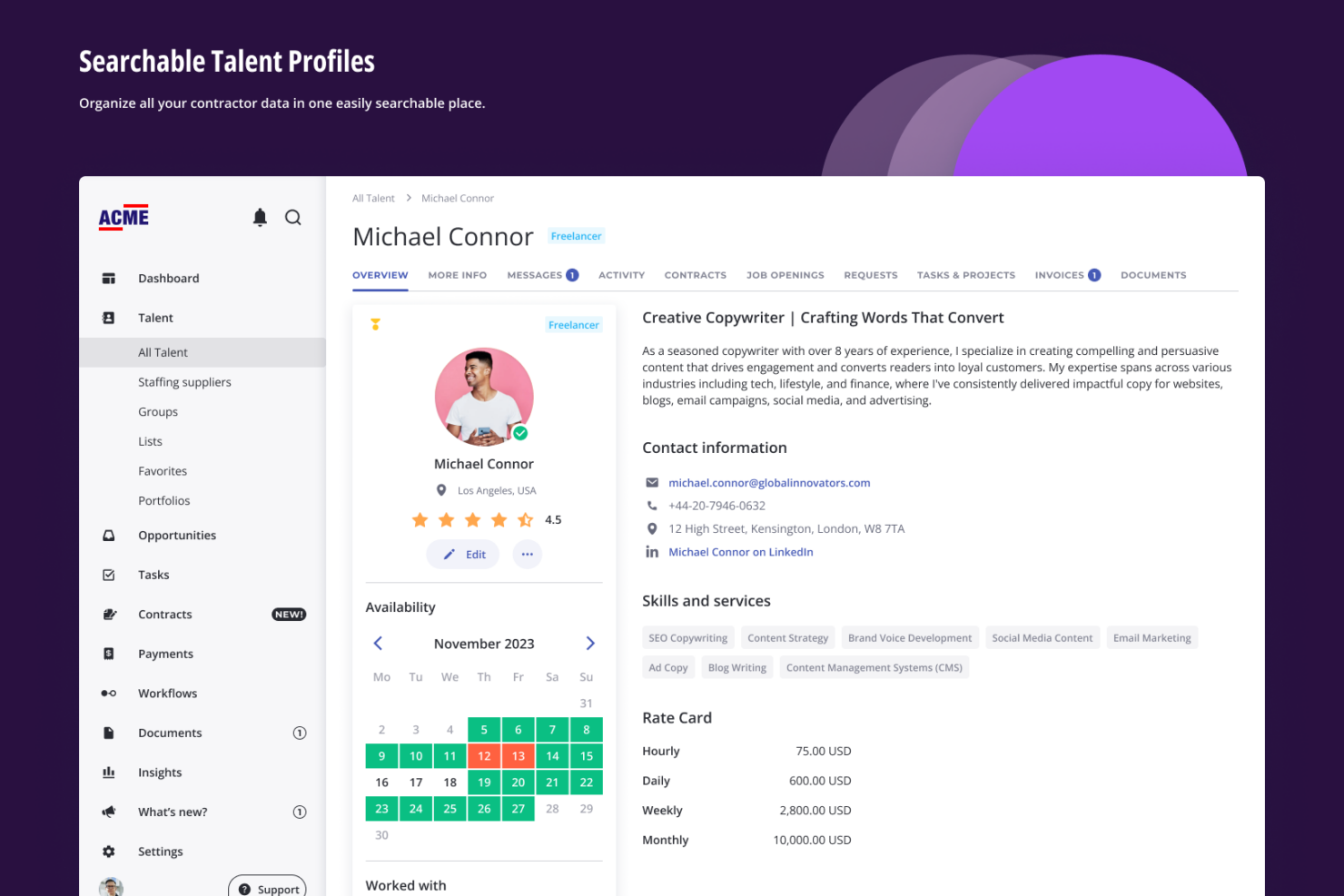
| Classification & Liability | Classification runs against federal and local tests in every US state and across global jurisdictions, with indemnification behind the decision. | Classification checks are built into onboarding with ongoing monitoring; liability moves to Deel only on the contractor of record tier. |
| Encryption & Hosting | Bank-level encryption protects platform data and global payments. | Data at rest is encrypted to a current industry standard, with European cloud hosting and disaster recovery in a second region. |
| Monitoring & Support | A named implementation contact and support team stay with the account after launch. | Security monitoring and customer support both run around the clock, in a long list of languages. |
| Audit Readiness | Contracts, approvals, and payment history file against each contractor and export as a defense pack if you are audited. | Contracts, invoices, and payment records stay together in the platform and remain available for review. |
Both platforms clear the bar most procurement teams set, and the difference is emphasis. Deel Hire carries the wider certification set and pairs it with monitoring and support that run at all hours, which lands well with risk-averse buyers and long security reviews. Worksuite’s strength is in the compliance work itself: classification decisions come with indemnification standing behind them at no extra charge, and everything needed to defend an engagement is filed against the contractor and exportable. If your worry is passing an enterprise security review, Deel Hire is the easier sell. If it is misclassification exposure across a large contractor base, Worksuite puts more on the line for you.
Worksuite vs. Deel Hire Ease of Use
| Factor | Worksuite | Deel Hire |
|---|---|---|
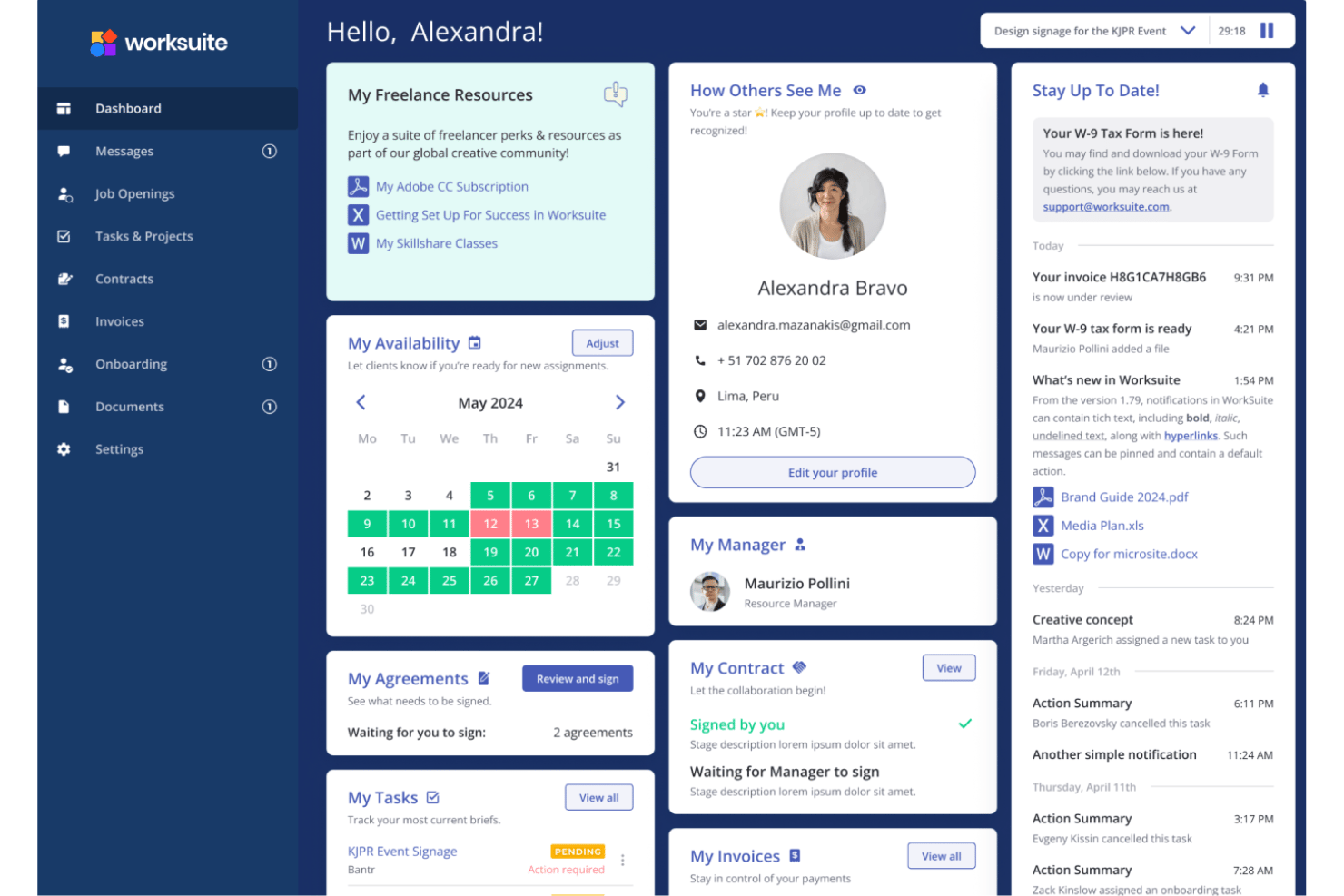
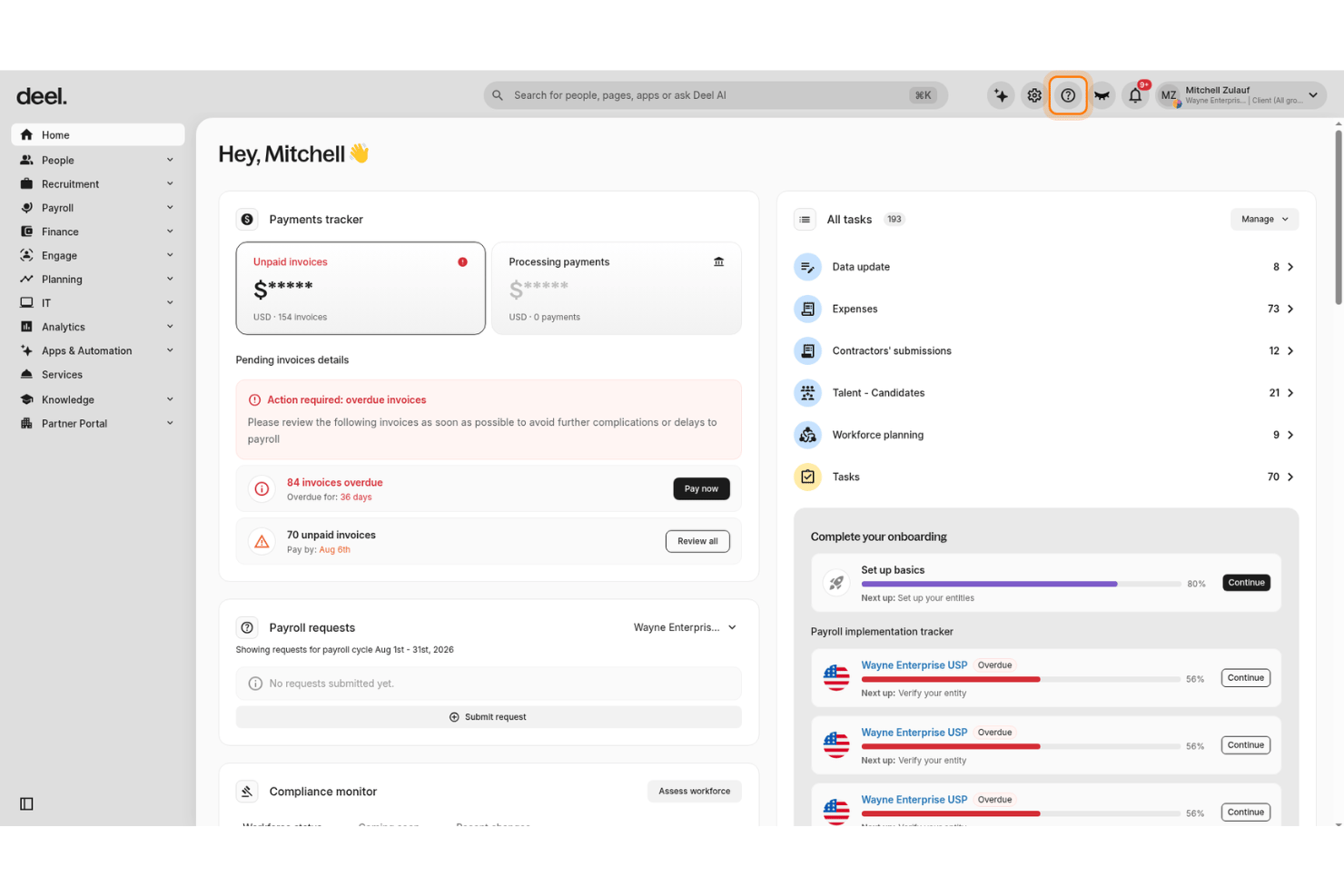
| User Interface | Clean dashboard with saved views and filters for tracking contractors, approvals, and spend. | Minimalist layout that puts hiring, contracts, and payments front and center. |
| Onboarding Flow | Document collection, identity checks, signing, and classification route automatically before any work can start. | Contractors onboard themselves in a couple of days through templates and a self-serve portal. |
| Initial Setup | A solutions architect configures the platform with you over a few weeks, including data migration and a test environment. | Sign up and start hiring the same week using preset workflows built for most countries. |
| In-App Support | A named implementation contact plus a support team that stays close after go-live. | Help at any hour in many languages, with an AI agent fielding first-line questions before a person steps in. |
| Mobile Access | Responsive web app works on phones and tablets, but there is no dedicated mobile app and heavier admin is easier on desktop. | Full iOS and Android app mirrors the web experience, including approvals and payments. |
Deel Hire is the faster platform to pick up. You can sign up, generate a compliant contract, and have someone onboarded within days, and the mobile app means approvals and payments don’t wait for anyone to reach a laptop. Worksuite asks for more at the start, since a solutions architect configures workflows, permissions, and compliance rules with your team before launch, but what you get is a system shaped around how your program actually runs. I’d point HR teams who want speed and simplicity toward Deel Hire, and operations teams running a large, structured contractor program toward Worksuite.
Worksuite vs Deel Hire: Pros & Cons
Worksuite
- Worker classification and compliance cover, with indemnification included as standard
- Contract templates, tax documentation, and agent or employer of record in one system
- Guided implementation with a named solutions architect, not a self-serve setup
- Mobile view is less complete than the desktop experience
- Standard reporting handles the basics, so deeper analysis needs custom reports
- Permission sets and roles take work to configure across a mixed team
Deel Hire
- Handles cross-border compliance for contractor payments and documentation.
- Provides pre-built contract templates with legal compliance safeguards in 150+ countries.
- Offers responsive live chat support, compliance tooling, and thorough resources.
- Pricing is higher than many freelancer management platforms.
- Lacks an integrated talent marketplace or applicant tracking system for sourcing freelancers.
- Custom reporting capabilities are limited for tracking analytics.
Best Use Cases for Worksuite and Deel Hire
Worksuite
- Global Agencies Worksuite centralizes compliance, payment, and contracts for agencies managing freelancers across multiple countries and currencies.
- Large Enterprises Large organizations get custom contract terms, API access, dedicated support, and bespoke integrations, along with approval chains built around holding company and multi-entity structures that generic tools struggle with.
- HR Departments HR teams benefit from custom onboarding workflows, vendor vetting, and integrations with solutions like BambooHR and Workday.
- Creative Studios Studios with frequent project-based hiring can set up fast onboarding, approvals, and pay workflows for rotating creative talent.
- Finance Teams Integration with accounting tools like QuickBooks and Xero streamlines payment management and compliance tracking for freelance spend.
- Media And Publishing Teams Publishers, broadcasters, and streaming teams running big rosters of writers, producers, and crew can track spend across brands and keep paperwork in one portal.
Deel Hire
- Global Tech Startups Deel Hire simplifies compliant onboarding and payments for distributed engineering or product teams spread across several countries.
- Creative Agencies Agencies managing international freelance talent can use Deel Hire’s automated contracts, reminders, and global payment support to handle high contractor churn.
- HR Departments HR teams benefit from guided, step-by-step onboarding, built-in compliance checks, and a self-service portal for handling contractor documentation.
- Finance Teams Integrations with accounting tools and automated invoice management take manual effort out of contractor payments for busy finance departments.
- Professional Services Firms Consulting, marketing, and legal firms using freelancers globally get instant documentation, performance management, and localized compliance support from Deel Hire.
- Remote-First Companies Businesses with no headquarters that rely on a worldwide contractor workforce can centralize workforce planning, payments, and compliance in Deel Hire.
Who Should Use Worksuite, and Who Should Use Deel Hire?
Worksuite is my pick for teams running a large private roster who want tailored workflows, tight budget control, and classification cover built in. It suits multi-brand and multi-entity organizations best, where approvals, spend visibility, and contract standards differ across business units, and where the contractor bench is a competitive asset worth keeping out of any shared marketplace. Deel Hire makes more sense for teams that want to move without a build phase, or that need contractors, employer of record hires, and payroll under one login while they expand into new countries. If your stack revolves around a major HRIS or applicant tracking system, or your managers work mostly from their phones, Deel Hire has the edge. For deep contingent workforce operations with indemnified classification and a private talent pool, Worksuite is the better home.
Differences Between Worksuite and Deel Hire
| Worksuite | Deel Hire | |
|---|---|---|
| Compliance Liability | Indemnification sits behind classification decisions as a standard part of the platform. | Standard plans guide classification, and liability shifts to Deel only on the pricier contractor of record tier. |
| Implementation | Guided build with a solutions architect, including migration and a test tenant before go-live. | Self-serve signup with preset templates, live in days rather than weeks. |
| Mobile Access | Responsive web only, with no dedicated app. | Full mobile app covering approvals, payments, and documents. |
| Pricing Model | Quote-based and scoped to your program, the modules you use, and the setup work involved. | Published per-worker monthly rates by product line, billed month to month. |
| Program Model | Runs on the vetted contractors you already have, held in a private, white-labeled pool. | Pairs contractor management with talent sourcing, employer of record hiring, payroll, and HR in one account. |
| Visit WorksuiteOpens new window | Read Deel Hire ReviewOpens new window |
Similarities Between Worksuite and Deel Hire
| Classification & Compliance | Each platform assesses whether a worker should be engaged as a contractor, keeps the supporting documents together, and watches for status drift over time. |
|---|---|
| Contracts & E-Signature | Locally aware templates, approval routing, and in-platform signing are built into both platforms. |
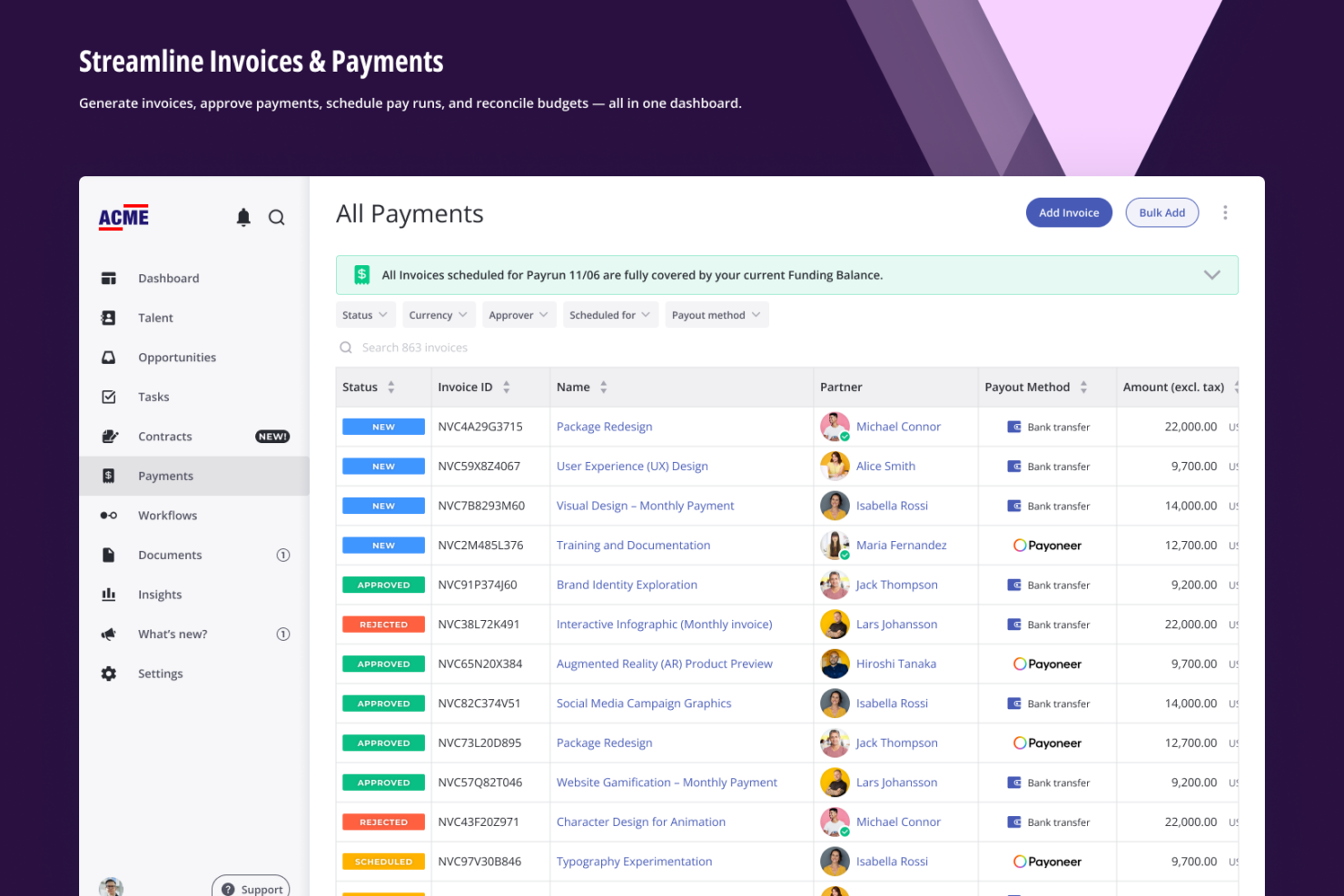
| Global Payments | Both pay contractors across most of the world in a wide range of currencies, generate invoices automatically, and support bulk payment runs. |
| Integrations & API | Both connect to core finance and productivity tools and publish an API, allowing contractor, invoice, and payment data to sync into existing systems. |
| User Access Controls | You get role-based permissions in either platform over who can see rates, approve work, and release payments. |
| Visit WorksuiteOpens new window Read Deel Hire ReviewOpens new window | |