

İK'da risk yönetimi yalnızca hatalardan kaçınmakla ilgili değildir; insanları, verileri ve güveni korumakla ilgilidir. Uyumluluk hatalarından veri ihlallerine ve iş yeri suistimallerine kadar riskler büyüktür ve ortam sürekli değişmektedir. Tüm bunları yönetmenin bunaltıcı hissettirebilmesi şaşırtıcı değildir.
Yapay zekâ destekli risk yönetimi araçları burada gerçekten fark yaratabilir. Bu platformlar büyük miktarlarda veriyi analiz ederek, anormallikleri işaretleyerek ve kuruluşunuzun uyumlu ve güvenli kalmasını sağlayan içgörüleri ortaya çıkararak olası sorunları büyümeden tespit etmenize yardımcı olur. Krizlere tepki vermek yerine onları önleyebilecek donanıma sahip olursunuz.
Ekibiniz için doğru seçeneği bulmanıza yardımcı olmak amacıyla günümüzün önde gelen yapay zekâ risk yönetimi araçlarını bizzat test edip inceledim. Odak noktanız veri gizliliği, mevzuata uyumluluk veya dolandırıcılığın önlenmesi olsun, burada önceliklerinizle örtüşen ve ihtiyaçlarınızla birlikte ölçeklenebilen seçenekler bulacaksınız. Riski daha fazla güven ve netlikle yönetmenize yardımcı olabilecek araçları inceleyelim.
Why Trust Our Software Recommendations
6,700+
Reviews
20
Industry experts
16+
Evaluation factors
14
Years
Our team has been testing and reviewing software since 2012. As HR experts ourselves, we know how difficult—and important—it is to choose the right software.
For this guide, we evaluated tools using hands-on testing and independent research, scoring tools using our selection criteria. We also draw on insights from industry thought leaders and practicing HR experts.
Our reviews reflect our human editorial judgment, not a sales pitch.
Expert reviewers:
- Phil GrayCOO
 Kim BehnkeHR Tech Editor & Analyst
 Josh BarkerPeople Ops Manager

Yapay Zekâ Risk Yönetimi Araçları Karşılaştırma Tablosu
Bu karşılaştırma tablosu, en iyi yapay zekâ risk yönetimi aracı seçimlerimin fiyatlandırma ayrıntılarını özetlemektedir:
Sorted by: Default
| Tool | Starting Price | Website | |
|---|---|---|---|
Best for global HR compliance risks | 4.8 out of 5 | $5/user/month Free demo available | Website |
Best with no-code workflow customization | 4.2 out of 5 | Pricing upon request Free demo available | Website |
Best with AI-powered project risk detection | 4.6 out of 5 | $9/user/month Free plan + 14-day trial available | Book Demo |
Best for unified organizational risk views | 3.5 out of 5 | Pricing upon request Free demo available | Website |
Best for automated AI policy monitoring | 5.0 out of 5 | Pricing upon request Free demo available | Book Demo |
Best for privacy compliance | 4.4 out of 5 | Pricing upon request Free demo available | Website |
Best for data scientists | 4.6 out of 5 | $9/month Free plan available | Website |
Best for incident management | 4.4 out of 5 | Pricing upon request Free demo available | Website |
Best for AI governance | 4.6 out of 5 | Pricing upon request Free trial available | Website |
Best for ethical AI | 4.2 out of 5 | Pricing upon request Free demo available | Website |


En İyi Yapay Zekâ Risk Yönetimi Araçları İncelemeleri
Aşağıda, kısa listeme giren en iyi yapay zekâ risk yönetimi araçlarına ilişkin ayrıntılı özetlerimi bulabilirsiniz. İncelemelerim, size ve ekibinize en uygun aracı bulmanıza yardımcı olmak için her aracın temel özelliklerine, avantajlarına ve dezavantajlarına, entegrasyonlarına ve ideal kullanım alanlarına ayrıntılı bir bakış sunar.
 Best for global HR compliance risks
- Free demo available
- From $5/user/month
Visit WebsiteCustomer Rating:4.8/5
Deel’s compliance dashboard showing document statuses, required submissions, and permission management controls. Deel HR stands out to me when global HR compliance starts becoming a headache, especially when you’re onboarding people in new countries. I’ve worked with teams who struggle to track shifting employment laws, and Deel’s automated compliance monitoring and country-specific contract templates save so much manual review.
What I really liked when I tested this tool is its built-in risk alerts and audit-ready documentation. This makes it easy to know exactly where your biggest compliance gaps are, even when the pace of hiring ramps up.
Deel HR’s Best For
- HR teams managing international compliance across dozens of countries
- Companies needing automated employment risk monitoring and timely alerts
Deel HR’s Not Great For
- Small organizations with no global presence
- Teams needing custom risk models beyond employment compliance
What sets Deel HR apart
Deel HR is designed for companies managing hiring and compliance in multiple countries. Instead of asking you to piece together local advice or pull contract templates from scattered sources like you might with basic HRIS tools, Deel expects you to centralize everything in one system. It’s different from more general platforms like BambooHR, which tend to focus on domestic HR management. In practice, that means you can handle things like localized contracts, compliance, and payroll across countries in one system, rather than stitching together tools or advice.
Tradeoffs with Deel HR
Deel HR optimizes for global compliance and risk, but this focus means you lose flexibility when you want custom workflows or risk data outside of employment and HR use cases.
Pros and Cons
Pros:
- Worker Classifier reduces misclassification exposure using legal data
- Workforce Insights flags wage, benefits, and visa compliance issues
- AI monitors regulatory changes across 150+ countries for emerging risks
Cons:
- Jurisdiction-specific edge cases may require manual verification
- High-stakes legal decisions may still require human specialists
 Best with no-code workflow customization
- Free demo available
- Pricing upon request
Visit WebsiteCustomer Rating:4.2/5
Mitratech Alyne dashboard showing AI-powered risk assessments with criticality scoring, impact analysis, and compliance tracking across cybersecurity controls. Mitratech Alyne makes my list for risk management teams that need to adapt quickly without waiting on IT or developers. I picked it because you get a truly no-code way to build or tweak risk workflows as needs change, which I rarely see at this depth. When I tested the workflow designer, I liked how you can automate issue escalation and control assessments step by step. This works best for growing teams that need to keep up with evolving regulatory requirements and want detailed visibility into risk processes.
Mitratech Alyne’s Best For
- Risk and compliance teams needing workflow customization
- Organizations updating risk frameworks to meet new regulations
Mitratech Alyne’s Not Great For
- Small companies with simple, static risk management needs
- Teams wanting extensive prebuilt industry-specific templates
What sets Mitratech Alyne apart
Mitratech Alyne centers risk management around no-code workflow design, so you’re expected to tailor risk processes to fit your organization from the start. Unlike solutions like LogicGate, which often require technical teams to set up changes, here you can update workflows and automate assessments yourself. This helps when regulatory demands or internal policies shift quickly and you need control over how risks are handled.
Tradeoffs with Mitratech Alyne
Mitratech Alyne optimizes for workflow customization, but that flexibility means you trade away industry-specific templates and prebuilt controls, so initial setup takes more time and expertise.
Pros and Cons
Pros:
- AI-driven risk assessment and reporting
- Automated evidence collection for audits
- No-code workflow customization for risk processes
Cons:
- Pricing details are not publicly disclosed
- Advanced features may require onboarding support
Learn more about Mitratech Alyne: Best with AI-powered project risk detection
- Free plan + 14-day trial available
- From $9/user/month (billed annually)
Visit WebsiteCustomer Rating:4.6/5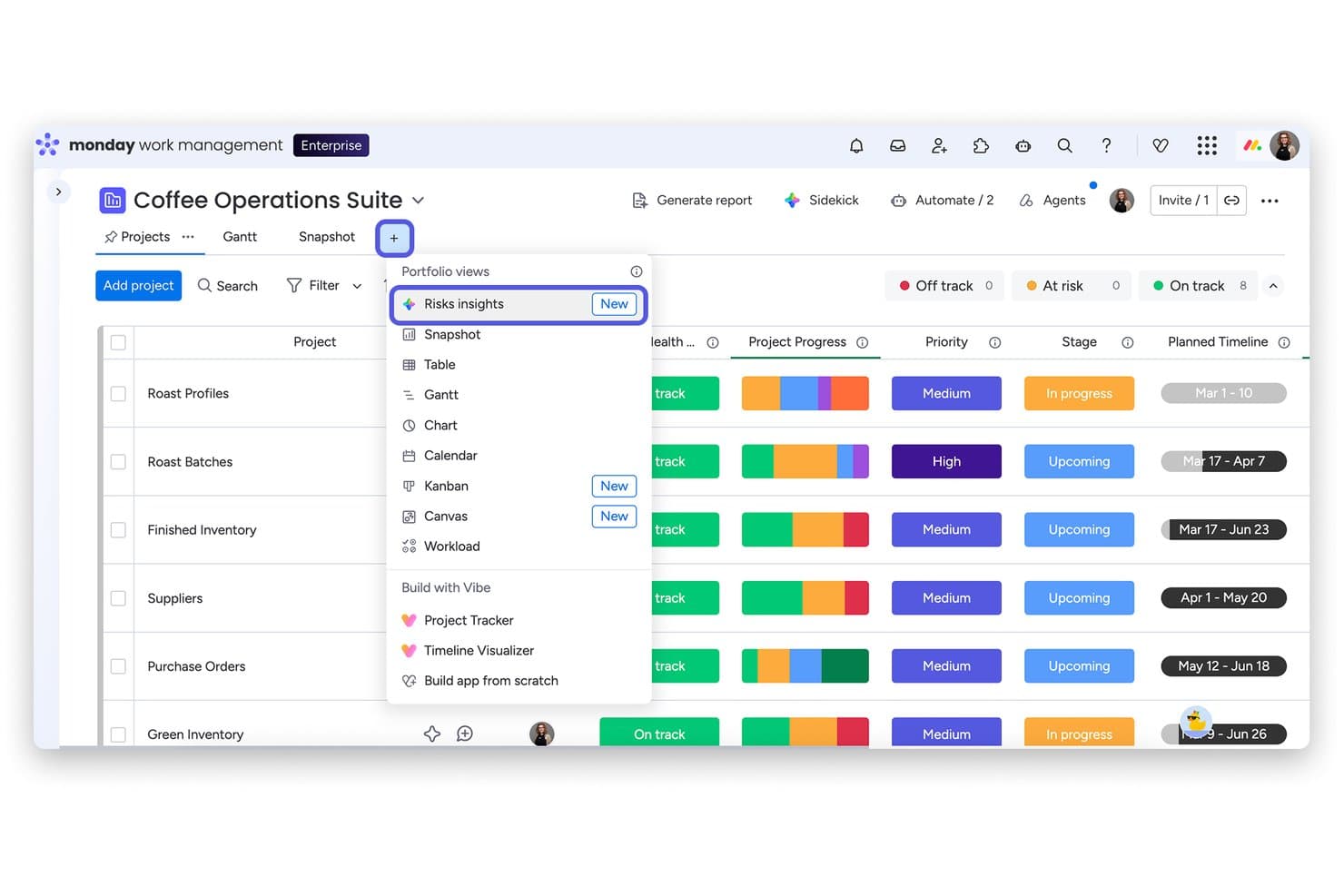
monday AI Workspace offers a 'Risks Insights' portfolio view. monday AI Workspace is an AI-powered work management platform that scans project boards to detect execution risks—including budget overruns, missed deadlines, and resource conflicts—across entire project portfolios using daily automated analysis.
Who Is monday AI Workspace Best For?
Portfolio managers and PMO leaders at mid-to-large organizations who need visibility into execution risks across multiple projects at once.
Why I Picked monday AI Workspace
I've included monday AI Workspace in my top picks because Portfolio Risk Insights scans your entire portfolio daily, not just a single project. The AI reviews board data, update threads, and activity logs to surface risks tied to budget overruns, missed deadlines, and resource conflicts. I like that high-risk projects are flagged directly in the portfolio dashboard, with pre-populated mitigation actions your team can move on right away.
monday AI Workspace Key Features
- AI sidekick: Provides AI-powered assistance for summarizing updates and generating task suggestions within boards.
- Automated workflow builder: Lets users design automation rules to handle repetitive project management and risk workflow tasks.
- Custom integrations: Connects natively to tools like Slack, Jira, Salesforce, and Microsoft Teams for unified project operations.
- Advanced permissions: Supports granular, role-based access controls for protecting sensitive project and resource data.
monday AI Workspace Integrations
monday AI Workspace offers native integrations with Slack, Salesforce, HubSpot, Google Workspace, Microsoft Teams, GitHub, Jira, Dropbox, Canva, Zendesk, and Zoom. It also connects with Zapier and provides an API for custom integrations.
Pros and Cons
Pros:
- Automation features streamline risk-related workflows
- Daily portfolio analysis highlights high-risk projects
- AI flags project-level delivery risks automatically
Cons:
- Lacks compliance tools for employment regulations
- No HR bias or fairness audit features
Learn more about monday AI Workspace: Best for unified organizational risk views
- Free demo available
- Pricing upon request
Visit WebsiteCustomer Rating:3.5/5
Corporater AI's reports and dashboards. Corporater is an ai risk management platform that centralizes risk data, offers configurable dashboards, integrates compliance tracking, and supports organization-wide governance for teams handling complex risk management needs.
Who Is Corporater Best For?
Corporater is well-suited for mid-to-large enterprises that need to manage risk, compliance, and governance across multiple business units from a single platform.
Why I Picked Corporater
I've included Corporater in my top picks because its Digital Twin of an Organization feature is genuinely unlike what I've seen in other risk tools. It lets you model your actual business structure—units, workflows, governance layers—and map risk data across all of it. Combined with a centralized risk register that aggregates data from internal and external sources, my team can see enterprise-wide risk exposure in one place rather than chasing down reports from separate departments.
Corporater Key Features
- AI-powered risk intelligence: Corporater uses AI to analyze real-time data and generate predictive risk insights across your GRC workflows.
- Automated workflows: Set up automated business processes and workflows to assign tasks, track progress, and enforce procedural adherence across risk activities.
- KPI and KRI dashboards: Build role-based dashboards that track key risk indicators alongside KPIs, linked to business units, goals, and projects.
- Alerts and notifications: Configure custom alerts to notify stakeholders when a risk indicator crosses a defined threshold or a new issue is flagged.
Corporater Integrations
Corporater securely integrates aggregated RegTech and cybersecurity data into a centralized governance and compliance framework.
Pros and Cons
Pros:
- Custom workflows for approval and review cycles
- Scenario modeling for advanced risk simulations
- Centralized repository for organization-wide risk data
Cons:
- Reporting customization complexity for new users
- Few prebuilt templates for AI-specific risks
Learn more about Corporater: Best for automated AI policy monitoring
- Free demo available
- Pricing upon request
Visit WebsiteCustomer Rating:5/5
Trustible's executive dashboard provides a centralized view of AI use cases, vendors, risk levels, and business impact, helping organizations monitor AI governance and portfolio performance at a glance. Trustible is a purpose-built AI governance platform that combines AI inventory management, risk identification and classification, policy management, multi-framework regulatory compliance mapping, and audit-ready reporting for enterprises.
Who Is Trustible Best For?
Trustible is a strong fit for enterprise AI and compliance teams that need to govern multiple AI use cases across complex regulatory environments.
Why I Picked Trustible
I picked Trustible as one of the best because of how it handles policy monitoring without requiring manual effort from your team. Its centralized policy management module connects directly to your live AI inventory, meaning policies aren't sitting in a separate document—they're tied to actual use cases and updated as those use cases change. I also like that automated workflows route new AI use cases through a consistent governance path, flagging policy gaps before approvals move forward, not after.
Trustible Key Features
- AI use case inventory: Catalogues every AI use case, model, agent, and vendor in a single registry with risk classifications attached.
- Risk-based triage: Automatically routes low-risk AI use cases for fast-track approval and flags high-risk ones for deeper review.
- Multi-framework compliance mapping: Maps a single set of governance controls across 10+ frameworks, including the EU AI Act, NIST AI RMF, and ISO 42001.
- Audit-ready reporting: Generates board- and regulator-facing reports with real-time status across all active AI use cases.
Trustible Integrations
Native integrations are not clearly documented. Trustible is designed as a standalone AI governance platform for risk, compliance, and legal teams, and its FAQ confirms it doesn't require technical integration with MLOps pipelines. API and Zapier support are not clearly available based on current documentation.
Pros and Cons
Pros:
- AI-assisted vendor documentation risk analysis
- Multi-framework mapping updates as regulations change
- Guided risk workflows for non-technical teams
Cons:
- Limited engineering-system evidence integration options
- No runtime model monitoring capabilities
Learn more about Trustible: Best for privacy compliance
- Free demo available
- Pricing upon request
Visit WebsiteCustomer Rating:4.4/5
OneTrust helps teams manage data privacy and compliance. OneTrust earns its spot here because few tools handle privacy, AI, and regulatory risk together as thoroughly. What I appreciate is how organizations can run dedicated AI risk assessments that account for data flows, vendor risk, and regulatory requirements all in one place.
I've found its automated data mapping especially useful for teams concerned about evolving privacy laws in AI use cases. If you need detailed reporting to show compliance with frameworks like GDPR, OneTrust is often the system I see in practice.
OneTrust’s Best For
- Organizations with formal privacy and AI risk compliance needs
- Enterprises needing automated audit trails and regulator-ready reporting
OneTrust’s Not Great For
- Small teams needing basic or lightweight risk tools
- Anyone who doesn’t track data privacy or regulatory risk
What sets OneTrust apart
OneTrust approaches risk management from a privacy-first perspective, assuming you need detailed oversight on how data flows through AI systems. Unlike tools that focus on security or ML operations, OneTrust expects privacy and regulatory compliance to sit at the center of AI risk strategies. This could be most beneficial for teams balancing legal risk and operational speed rather than just building and deploying AI models.
Tradeoffs with OneTrust
OneTrust optimizes for compliance and auditability, which means lightweight or fast-moving teams can find its process depth and configuration requirements slow them down.
Pros and Cons
Pros:
- Includes consent and preference management
- 50+ global regulations and frameworks covered
- Automated vendor risk assessments, DSRs, and audits
Cons:
- Slow sync times for configuration updates
- Manual processes within automated tools
Learn more about OneTrust:

Anaconda offers tools to simplify datasets and workflows using AI. Anaconda is on this list because it gives data scientists a full environment for developing, testing, and monitoring AI models. I like how it lets you manage Python packages and environments within a secure, reproducible workflow. The built-in tools for dependency tracking and version control make risk management more practical, especially when you're focused on model governance in regulated sectors.
What stands out for me is how data teams use Anaconda when they need transparency and reproducibility across their AI projects—it's easy to capture exactly what was running during a critical review or audit.
Anaconda’s Best For
- Data science teams focused on reproducible AI workflows
- Organizations needing secure Python environment management
Anaconda’s Not Great For
- Non-technical users looking for simple AI risk tools
- Teams needing end-to-end enterprise AI governance platforms
What sets Anaconda apart
Anaconda encourages a modular, environment-based approach that centers on reproducibility and transparency. Unlike cloud workflow tools or platforms like DataRobot, Anaconda gives you control of every dependency and version through local, isolated packages. This makes it easier to audit, share, and recreate AI models, especially when regulatory standards require you to verify exactly what code was running.
In practice, teams use Anaconda when they need consistency in complex pipelines, not a managed end-to-end solution.Tradeoffs with Anaconda
Anaconda optimizes for environmental control and transparency, but you trade off ease of use for less technical users. This slows adoption if your organization values simplicity or needs a centralized AI risk governance platform.
Pros and Cons
Pros:
- Professional support for large-scale AI projects
- All-in-one distribution for ease of setup
- 8,000+ open-source AI and ML packages
Cons:
- Business license required for large companies
- System resource consumption
Learn more about Anaconda: Best for incident management
- Free demo available
- Pricing upon request
Visit WebsiteCustomer Rating:4.4/5
Resolver tracks incidents and uncovers risks with AI insights. Resolver makes my list for incident management because it ties together risk, threat, and incident data with one system that can adapt as your risk profile changes. I like how it automates incident triage and builds out impact analysis with a few clicks, which saves time when crisis hits.
I see teams using Resolver when regulatory requirements force them to show step-by-step response and mitigation, tracing each action back to specific incidents. The built-in AI helps flag patterns early, which I've found is valuable for organizations that need to shift from reactive to proactive risk handling.
Resolver’s Best For
- Security, risk, and compliance teams managing incident response
- Organizations needing audit trails and automated risk analysis
Resolver’s Not Great For
- Small teams needing basic task or risk tracking
- Companies with lightweight or static risk management needs
What sets Resolver apart
Resolver stands out by integrating incident, risk, and audit management into one workflow. Instead of just tracking issues like you do in Jira or ServiceNow, Resolver expects you to treat incident data as key to risk analysis and audit readiness. I see organizations who need to meet strict regulatory or reporting needs get much more value from this all-in-one approach. You work through the full cycle of detection, response, and learning inside one system.
Tradeoffs with Resolver
Resolver optimizes for structured risk and incident oversight, but that tight framework means fewer options to customize workflows. If you want something you can adapt quickly to new or informal processes, you might get frustrated.
Pros and Cons
Pros:
- Centralized data for cross-team visibility and reporting
- Automated triage and dynamic response playbooks
- AI-guided incident intake and classification
Cons:
- May require customization for complex workflows
- Limited offline capabilities due to browser-based setup
Learn more about Resolver:

Collibra supports transparent, automated oversight of AI models. Collibra lands on my shortlist because few tools give you granular, policy-driven controls built for AI governance at scale. I've seen organizations use Collibra to implement data lineage, policy management, and risk monitoring without having to cobble together separate systems.
What I really like is how Collibra automates the mapping of data flows and risk factors, helping teams document, analyze, and control AI risks as regulations evolve.
Collibra’s Best For
- Enterprises managing complex data governance for AI risks
- Organizations needing policy controls and regulatory compliance
Collibra’s Not Great For
- Small teams needing lightweight or quick-start tools
- Users not managing sensitive or high-risk AI data
What sets Collibra apart
Collibra approaches governance by centering everything around transparent data policies and detailed lineage tracking across systems. Instead of just tracking assets like a traditional data catalog, Collibra expects you to treat governance and risk as active, ongoing processes. This works well for organizations that want centralized oversight and clear documentation around AI models and the data they use.
Unlike more open-ended tools such as ClickUp, Collibra prioritizes audit-ready structure and regulatory control over flexibility.
Tradeoffs with Collibra
Collibra optimizes for centralized governance and strict controls. This adds setup time and overhead, so it doesn’t fit teams seeking quick adoption or maximum flexibility.
Pros and Cons
Pros:
- Integrates with major AI/ML platforms
- Automates compliance with global regulations
- Built-in AI model traceability across initiatives
Cons:
- Requires active multi-departmental data governance participation
- Less intuitive user navigation
Learn more about Collibra: 10Best for ethical AI
Credo AI
- Free demo available
- Pricing upon request
Visit WebsiteCustomer Rating:4.2/5
Credo AI supports ethical and regulatory AI oversight. Credo AI earns its spot here for how directly it addresses governance and risk in the AI lifecycle. When I review tools that help organizations operationalize responsible AI, I see Credo AI leading with policy management, automated AI assessments, and documentation. I appreciate how you can tie your models and workflows to custom ethical or legal AI standards, which helps teams align quickly under pressure.
Credo AI's Best For
- Organizations formalizing AI risk and governance programs
- Teams needing policy-driven AI lifecycle management
Credo AI's Not Great For
- Small teams with only basic AI oversight needs
- Those seeking technical model monitoring or tuning features
What sets Credo AI apart
Credo AI is built around making AI governance actionable for compliance and risk teams. Unlike open-source auditing libraries or toolkits bundled into cloud platforms, I see this tool expects organizations to treat AI oversight as a managed process—not an afterthought. In practice, it's most useful for those who want auditing, assessments, and documentation closely mapped to organizational policies.
Tradeoffs with Credo AI
Credo AI optimizes for policy-driven AI governance, so you trade flexibility and lightweight oversight for stricter processes and dedicated controls. If you just want to monitor models without heavy documentation, this can feel too involved.
Pros and Cons
Pros:
- Transparent ecosystems that mitigate risk
- Bias detection and fairness tools
- AI governance advisory services
Cons:
- Possible integration challenges
- Higher cost than some competitors
Learn more about Credo AI:
Diğer Yapay Zekâ Risk Yönetimi Araçları
Kısa listeme giremeyen ancak yine de göz atmaya değer bazı ek yapay zekâ risk yönetimi aracı seçeneklerini burada bulabilirsiniz:
- 11VantaBest for startups
- 12RiskonnectBest for enterprise risk
- 13SardineBest for fraud prevention
- 14Document CrunchBest for construction risk management
- 15Lumenova AIBest for AI risk diagnostics
- 16Prompt SecurityBest for AI threat detection
- 17Risk GeneratorBest for small business compliance
- 18Robust IntelligenceBest for data integrity checks
- 19RiskPalBest for travel risk assessments
Related Reviews
How I Evaluate AI Risk Management Tools
Every tool here needs to prove its AI does real work—like catching disparate impact patterns HR teams would miss manually, or flagging compliance gaps as new AI employment laws take effect. I split my evaluation into core functionality, a tool must have to make the list, and the differentiating factors that set one vendor apart from another.
Core Functionality (Table Stakes For This List)
When I'm selecting tools for my list, I rank each one on a scale from 0 (does not offer the functionality) to 5 (excels in this area) for each core functionality listed below. Then, I calculate the tool's total score into a percentage. Each tool needs to achieve a minimum total score of 55% to be considered for inclusion.
- AI Bias Detection: I look for automated fairness checks across protected classes—like flagging disparate impact in resume screening or promotion scoring models.
- Regulatory Compliance Mapping: Each tool should map HR AI systems to relevant laws like NYC LL 144 or the EU AI Act, with updates as regulations evolve.
- AI Model Inventory & Scoring: I check whether the platform catalogs all HR AI tools in use—ATS, performance systems, chatbots—and assigns each a risk score.
- Automated Audit & Reporting: The platform should generate bias audits and impact assessments that are ready for regulators or board-level review in a few clicks.
- Explainability & Transparency: I evaluate how clearly the tool surfaces plain-language reasoning behind AI decisions, like why a candidate was ranked or flagged.
- Monitoring & Drift Detection: Real-time tracking of deployed models matters here, especially alerts when fairness metrics or data quality start to degrade over time.
Once I have a list of tools that meet this criteria, I consider what sets each platform apart.
Differentiating Factors (What Sets Vendors Apart)
Here's how I compare and contrast different vendors:
Standout Features
Vendor risk assessments are a big differentiator—I look for tools that can score third-party HR tech like ATS platforms and video interview software for AI risk, not just internally built models. Generative AI guardrails matter more each year as recruiter copilots and chatbots become standard, so I check for real-time monitoring of PII leakage and hallucinations. Candidate-facing notice generation is another feature I value, especially for teams hiring across jurisdictions with AI disclosure requirements.
Beyond Features
HR tech stack integration is one of the first things I check—a tool that connects natively to your HRIS, ATS, and GRC platforms like ServiceNow or OneTrust saves months of manual data wrangling. Regulatory update cadence also matters because AI employment laws are evolving fast, and I look for vendors with dedicated legal teams refreshing their compliance libraries regularly. I also evaluate data security posture closely, especially data residency options and PII handling, since these tools process some of the most sensitive employee information in your stack.
Yapay Zekâ Risk Yönetimi Araçları Nasıl Seçilir?
Uzun özellik listeleri ve karmaşık fiyatlandırma yapılarına kapılıp gitmek kolaydır. Kendinize özgü yazılım seçim sürecinizi yürütürken odağınızı korumanıza yardımcı olmak için göz önünde bulundurmanız gereken faktörleri içeren bir kontrol listesi hazırladım:
| Faktör | Dikkat Edilmesi Gerekenler |
|---|---|
| FaktörÖlçeklenebilirlik | Dikkat Edilmesi GerekenlerAraç işletmenizle birlikte büyüyebilir mi? Performanstan ödün vermeden artan veri hacimlerini ve kullanıcı sayılarını destekleyip desteklemediğini değerlendirin. |
| FaktörEntegrasyonlar | Dikkat Edilmesi GerekenlerMevcut sistemlerinize bağlanabiliyor mu? Manuel veri girişinden kaçınmak ve sorunsuz bir iş akışı sağlamak için mevcut yazılımlarınızla yerel entegrasyonlar sunan araçları tercih edin. |
| FaktörÖzelleştirilebilirlik | Dikkat Edilmesi GerekenlerAracı süreçlerinize uyacak şekilde uyarlayabilir misiniz? Özel ihtiyaçlarınızla uyum sağlamak üzere iş akışlarında ve raporlarda değişiklik yapılmasına izin verip vermediğini değerlendirin. |
| FaktörKullanım kolaylığı | Dikkat Edilmesi GerekenlerArayüz sezgisel mi? Ekibinizin sürekli eğitim almadan gezinebildiğinden emin olun. Dik bir öğrenme eğrisi, benimsemeyi geciktirebilir ve üretkenliği azaltabilir. |
| FaktörUygulama ve işe alıştırma | Dikkat Edilmesi GerekenlerBaşlamak ne kadar sürüyor? Kurulum ve eğitim için gereken süreyi ve kaynakları değerlendirin. İşe alıştırma desteği sunan araçları tercih edin. |
| FaktörMaliyet | Dikkat Edilmesi GerekenlerBütçenize uyuyor mu? Fiyatlandırma planlarını karşılaştırın ve gizli ücretlere dikkat edin. Maliyetin elde ettiğiniz değer ve özelliklerle örtüşüp örtüşmediğini kontrol edin. |
| FaktörGüvenlik önlemleri | Dikkat Edilmesi GerekenlerGüçlü güvenlik önlemleri var mı? Aracın şifreleme ve düzenli güvenlik denetimleri gibi veri korumaya yönelik sektör standartlarına uyup uymadığını doğrulayın. |
| FaktörUyumluluk gereksinimleri | Dikkat Edilmesi GerekenlerGerekli düzenlemeleri destekliyor mu? Operasyonlarınızın yasal kalmasını sağlamak için aracın GDPR veya HIPAA gibi sektöre özgü uyumluluk standartlarını karşılayıp karşılamadığını doğrulayın. |
Yapay Zekâ Risk Yönetimi Araçları Nedir?
Yapay zekâ risk yönetimi araçları, bir kuruluş içindeki olası riskleri belirlemek, değerlendirmek ve azaltmak için yapay zekâ kullanan yazılım çözümleridir. Bu araçlar genellikle risk yöneticileri, uyum görevlileri ve veri analistleri tarafından karar alma süreçlerini iyileştirmek ve kuruluş varlıklarını korumak için kullanılır. Otomatik risk değerlendirmeleri, gerçek zamanlı izleme ve öngörücü analizler gibi özellikler; güvenlik açıklarının belirlenmesine, uyumluluğun sağlanmasına ve risk algoritmalarının optimize edilmesine yardımcı olur. Genel olarak bu araçlar, kullanıcılara riskleri proaktif bir şekilde yönetmek ve operasyonel bütünlüğü korumak için gereken içgörüleri sağlar.
Özellikler
Yapay zekâ risk yönetimi araçlarını seçerken aşağıdaki temel özelliklere dikkat edin:
- Otomatik risk değerlendirmeleri: Olası riskleri hızlı bir şekilde değerlendirmek, zamandan tasarruf etmek ve insan hatasını azaltmak için yapay zekâyı kullanır.
- Gerçek zamanlı izleme: Tehditleri ortaya çıktıkları anda tespit etmek ve bunlara yanıt vermek için verileri ve etkinlikleri sürekli olarak izler.
- Öngörücü analiz: Gelecekteki riskleri tahmin etmek için geçmiş verileri analiz eder ve proaktif önlemlerin alınmasını sağlar.
- Uyumluluk otomasyonu: Uyumluluk kontrollerini ve raporlamayı otomatikleştirerek sektör düzenlemelerine uyulmasını sağlar.
- Olay yanıtı otomasyonu: Belirlenen risklere otomatik olarak yanıt vermek için araçlar sunarak hasarı ve kesinti süresini en aza indirir.
- Özelleştirilebilir panolar: Veri görselleştirmesini belirli kurumsal ihtiyaçlara göre uyarlama olanağı sunarak netliği ve odağı artırır.
- Önyargı tespiti: Yapay zekâ modellerindeki önyargıları belirler ve azaltır; adil ve etik karar alma süreçlerini güvence altına alır.
- Performans analizleri: Risk yönetimi stratejilerinin verimliliği ve etkililiği hakkında içgörüler sunarak sürekli iyileştirmeyi destekler.
- Veri koruma: Şifreleme ve erişim denetimleri aracılığıyla hassas bilgileri koruyarak veri bütünlüğünü sürdürür.
- Entegrasyon özellikleri: Mevcut sistemlere sorunsuz bir şekilde bağlanarak platformlar arasında veri akışını ve iş birliğini kolaylaştırır.
Faydalar
Yapay zekâ risk yönetimi araçlarının uygulanması, ekibiniz ve işletmeniz için çeşitli faydalar sağlar. Yararlanabileceğiniz birkaç fayda şunlardır:
- Geliştirilmiş karar alma: Yapay zekâ destekli içgörüler ve analizler, ekibinizin bilinçli risk yönetimi kararlarını hızlı bir şekilde almasına yardımcı olur.
- Artan verimlilik: Otomatikleştirilmiş süreçler manuel görevleri azaltarak ekibinizin stratejik girişimlere odaklanmasını sağlar.
- Proaktif risk azaltma: Öngörücü analizler, riskleri sorun hâline gelmeden önce öngörmenize ve ele almanıza olanak tanır.
- Geliştirilmiş uyumluluk: Otomatikleştirilmiş uyumluluk kontrolleri, kuruluşunuzun sektör düzenlemelerini sürekli olarak karşılamasını sağlar.
- Maliyet tasarrufu: Verimli risk yönetimi uygulamaları ve azalan olay sayısı, operasyonel maliyetleri ve olası finansal kayıpları düşürür.
- Veri güvenliği: Güçlü veri koruma özellikleri, hassas verilerinizi ihlallere ve yetkisiz erişime karşı korur.
- Etik yapay zekâ kullanımı: Önyargı tespit araçları, yapay zekâ modellerinizin adil bir şekilde çalışmasını sağlayarak karar alma süreçlerindeki güveni ve bütünlüğü korur.
Maliyetler & Fiyatlandırma
Yapay zekâ risk yönetimi araçlarını seçmek, mevcut çeşitli fiyatlandırma modellerinin ve planların anlaşılmasını gerektirir. Maliyetler özelliklere, ekip büyüklüğüne, eklentilere ve daha birçok faktöre göre değişir. Aşağıdaki tablo, yapay zekâ risk yönetimi aracı çözümlerindeki yaygın planları, ortalama fiyatlarını ve genellikle sunulan özellikleri özetlemektedir:
Yapay Zekâ Risk Yönetimi Araçları İçin Plan Karşılaştırma Tablosu
| Plan Türü | Ortalama Fiyat | Yaygın Özellikler |
|---|---|---|
| Plan TürüÜcretsiz Plan | Ortalama Fiyat$0 | Yaygın ÖzelliklerTemel risk belirleme, sınırlı veri koruma ve temel raporlama. |
| Plan TürüTemel Plan | Ortalama Fiyat$15-200/kullanıcı/ay | Yaygın ÖzelliklerOtomatik risk değerlendirmeleri, gerçek zamanlı izleme ve temel uyumluluk kontrolleri. Minimum veya maksimum koltuk sayısına ilişkin koşullar. |
| Plan Türüİşletme Planı | Ortalama Fiyat$5,000-$20,000/yıl | Yaygın ÖzelliklerÖngörücü analizler, özelleştirilebilir panolar ve geliştirilmiş olay yanıtı otomasyonu. |
| Plan TürüKurumsal Plan | Ortalama Fiyat+$20,000/yıl | Yaygın ÖzelliklerGelişmiş yapay zekâ destekli içgörüler, tam uyumluluk otomasyonu ve kapsamlı entegrasyon özellikleri. |
Yapay Zekâ Risk Yönetimi Araçları Hakkında SSS
Yapay zekâ risk yönetimi araçları hakkında sık sorulan soruların bazı yanıtları:
Yapay zekâ risk yönetimi araçları mevcut sistemlerle nasıl entegre olur?
Yapay zekâ risk yönetimi araçları genellikle Salesforce, SAP ve Microsoft Dynamics gibi popüler platformlarla entegrasyonlar sunar. Bu araçları API’ler veya yerel entegrasyonlar aracılığıyla bağlayarak sistemler arasında veri akışını sağlayabilirsiniz. Satın almadan önce aracın kuruluşunuzun kullandığı belirli sistemleri destekleyip desteklemediğini kontrol edin. Bazı sağlayıcılar gerektiğinde özel entegrasyon hizmetleri de sunar.
Yapay zekâ risk yönetimi araçları mevzuata uyumluluğa yardımcı olabilir mi?
Evet, yapay zekâ risk yönetimi araçları uyumluluk kontrollerini otomatikleştirerek ve raporlar oluşturarak mevzuata uyumluluğa yardımcı olabilir. Bu araçlar genellikle GDPR veya HIPAA gibi belirli düzenlemelerle eşleşen özellikler içerir ve ekibinizin uyumluluğunu sürdürmesine yardımcı olur. Düzenli güncellemeler, aracın değişen düzenlemelerle uyumlu kalmasını sağlayarak uyumsuzluk riskini azaltır.
Yapay zekâ risk yönetimi araçları veri güvenliğini nasıl ele alır?
Yapay zekâ risk yönetimi araçları veri güvenliğini şifreleme, erişim denetimleri, doğrulama ve düzenli güvenlik denetimleri aracılığıyla sağlar. Aracın veri korumaya ilişkin sektör standartlarına uygun olduğundan emin olmalısınız. Hassas bilgileri korumak için uçtan uca şifreleme ve çok faktörlü kimlik doğrulama gibi özelliklere sahip yapay zekâ teknolojilerini tercih edin. Düzenli güncellemeler ve denetimler, güvenlik bütünlüğünün korunmasına ve yeni risklerin azaltılmasına yardımcı olur.
Yapay zekâ risk yönetimi araçları karar alma süreçlerini nasıl geliştirebilir?
Yapay zekâ risk yönetimi araçları, yapay zekâ tarafından oluşturulan, veriye dayalı öngörüler ve analizler sunarak karar alma süreçlerini geliştirir. Bu araçlar yapay zekâ kullanımı sayesinde büyük miktarda veriyi analiz ederek kalıpları belirler ve olası gerçek dünya risklerini öngörür. Paydaşlar, hata olasılığını azaltarak bilinçli kararlar almak için bu bilgileri kullanabilir. En güncel öngörüler için gerçek zamanlı analizlere sahip yapay zekâ araçlarını tercih edin.