

10 mejores competidores de WorkBoard para la gestión de OKR en 2026

Lista de los mejores competidores de Workboard


Gestionar el rendimiento del equipo no es tarea fácil. Puede que Workboard no satisfaga tus necesidades, ya sea por falta de funcionalidades, escalabilidad o por cualquier otro motivo. El software de gestión del rendimiento puede ayudarte a afrontar estos desafíos al ofrecer herramientas que mejoran la comunicación, el establecimiento de objetivos y los comentarios.
He probado diversas soluciones de software y conozco bien el panorama de la gestión de recursos humanos. Según mi experiencia, encontrar la herramienta adecuada puede marcar la diferencia en la productividad y la motivación de tu equipo.
En este artículo, compartiré mis principales recomendaciones de competidores de Workboard. Conocerás las características únicas de cada herramienta y cómo pueden adaptarse a las necesidades de tu empresa. Trabajemos juntos para encontrar la opción más adecuada para tu equipo.
¿Qué es Workboard?
Workboard es un software de gestión del rendimiento diseñado para ayudar a las organizaciones a realizar un seguimiento y mejorar el rendimiento de los empleados. Lo utilizan habitualmente profesionales de recursos humanos y responsables de equipos que necesitan una forma fiable de gestionar objetivos y comentarios.
Funciones como el establecimiento de objetivos, el seguimiento del rendimiento y las herramientas de comentarios respaldan tus esfuerzos por mejorar la productividad y la comunicación del equipo. En general, Workboard aporta valor al ayudarte a alinear los objetivos del equipo con los objetivos empresariales.
Tabla comparativa de competidores de Workboard
Esta tabla comparativa proporciona información sobre precios y pruebas gratuitas de mis principales competidores de Workboard para ayudarte a elegir la solución adecuada para tu presupuesto y las necesidades de tu empresa.
| Tool | Best For | Trial Info | Price | ||
|---|---|---|---|---|---|
| 1 | La mejor opción para la gestión de OKR impulsada por IA | Demo gratuita disponible | Precios bajo solicitud | Website | |
| 2 | Ideal para la planificación estratégica centralizada | Prueba gratuita de 14 días disponible | Desde $7/usuario/mes (facturado anualmente) | Website | |
| 3 | Ideal para la gestión del rendimiento de RR. HH. | Demostración gratuita disponible | Desde $4/usuario/mes (facturado anualmente) | Website | |
| 4 | Ideal para la integración de la planificación estratégica | Prueba gratuita + demostración gratuita disponibles | Precios bajo solicitud | Website | |
| 5 | Ideal para recibir comentarios de los empleados en tiempo real | Demo gratuita disponible | Desde $4/user/month (facturado anualmente) | Website | |
| 6 | Ideal para la colaboración de equipos grandes | Plan gratuito disponible | Desde $10.99/usuario/mes (facturado anualmente) | Website | |
| 7 | Ideal para informar sobre el progreso semanal | Prueba gratuita de 14 días + plan gratuito disponible | Desde $90/mes (facturado anualmente) | Website | |
| 8 | Ideal para la ejecución estratégica | Demostración gratuita disponible | Precios disponibles previa solicitud | Website | |
| 9 | Ideal para integrar la gestión del talento | Demostración gratuita disponible | Desde $2/usuario/mes (facturado anualmente) | Website | |
| 10 | Ideal para la gestión de OKR | Prueba gratuita de 14 días + demostración disponible | Desde $5/usuario/mes | Website |
Por qué confiar en nuestras reseñas de software
Nuestro equipo lleva probando y evaluando software desde 2012. Como expertos en RR. HH., sabemos lo difícil —y lo importante— que es elegir el software adecuado.
Para esta guía, evaluamos las herramientas mediante pruebas prácticas e investigación independiente, puntuando las herramientas según nuestros criterios de selección. También nos basamos en la experiencia de líderes de opinión del sector y de profesionales de RR. HH. en activo.
Nuestras reseñas reflejan nuestro criterio editorial humano, no un discurso de ventas.
Revisores expertos:
Opiniones sobre los mejores competidores de Workboard
A continuación encontrarás mis resúmenes detallados de los mejores competidores de Workboard que llegaron a mi lista. Mis análisis ofrecen una visión detallada de las características principales, las ventajas y desventajas, las integraciones y los casos de uso ideales de cada herramienta para ayudarte a encontrar la mejor opción para ti.
La mejor opción para la gestión de OKR impulsada por IA
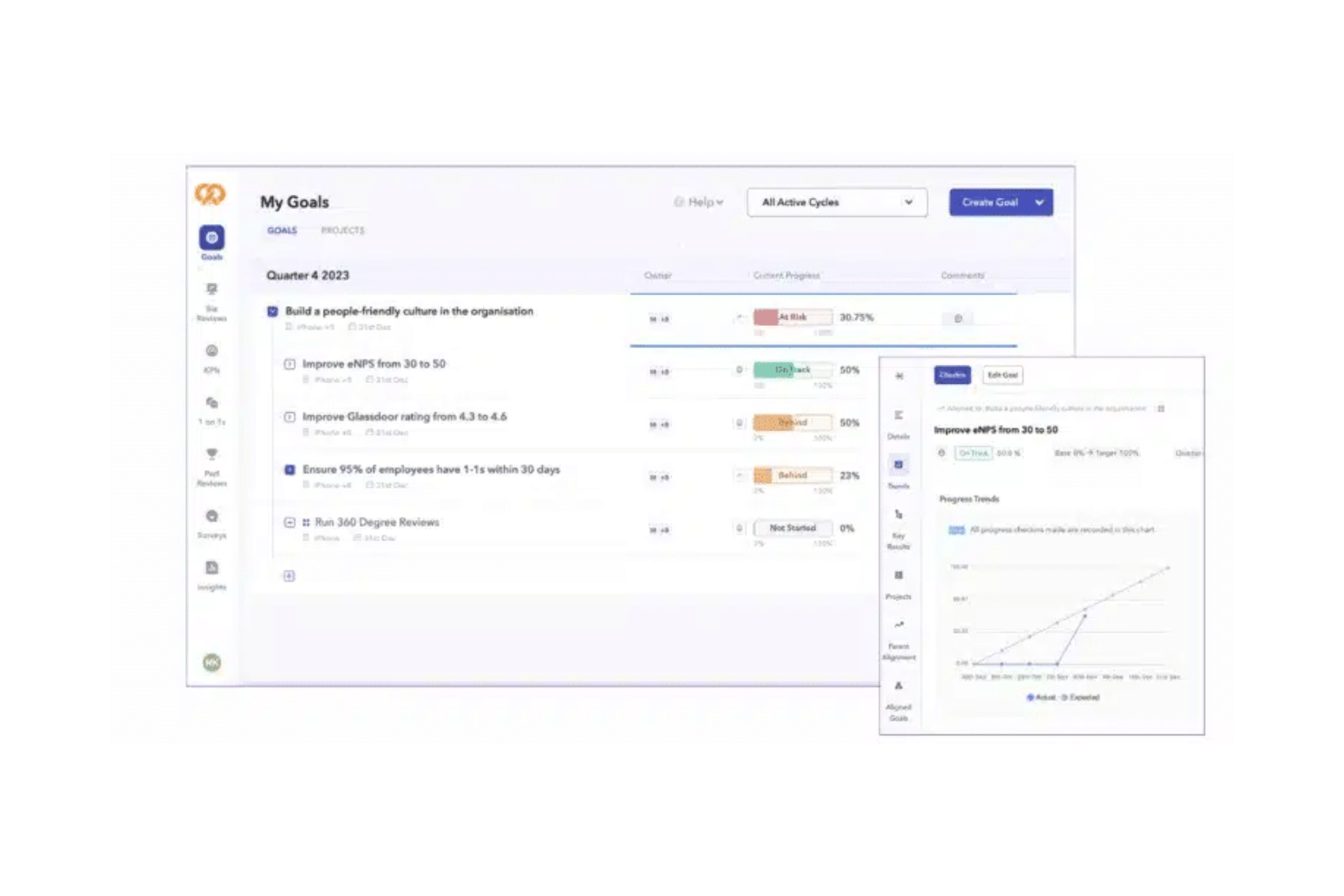
Profit.co es una plataforma de gestión de OKR diseñada para ayudar a las empresas a establecer, realizar un seguimiento y alcanzar sus objetivos. Se utiliza principalmente por ejecutivos y líderes de equipo para garantizar que sus equipos estén alineados con los objetivos de la empresa.
Por qué es una buena alternativa a Workboard: Profit.co ofrece gestión de OKR impulsada por IA con funciones como el establecimiento de objetivos, el seguimiento del progreso y el análisis del rendimiento. Estas herramientas ayudan a tu equipo a mantenerse enfocado en alcanzar sus objetivos mientras aprovecha los conocimientos impulsados por IA para tomar mejores decisiones. La interfaz intuitiva de la plataforma facilita que todos actualicen y supervisen sus objetivos. Su enfoque en los conocimientos basados en datos garantiza que puedas identificar tendencias y realizar ajustes fundamentados en tus estrategias.
Funciones destacadas e integraciones:
Las funciones incluyen paneles personalizables que ofrecen una visión clara del rendimiento de tu equipo. Los recordatorios automatizados ayudan a que tu equipo siga avanzando hacia sus objetivos. Los análisis de la plataforma ofrecen información sobre el progreso y las áreas de mejora.
Las integraciones incluyen Slack, Microsoft Teams, Jira, Salesforce, Google Workspace, Trello, Asana, monday.com, Zapier, HubSpot y más.
Pros and Cons
Pros:
- Gestión sólida de OKR
- Ofrece recordatorios automatizados
- Buen soporte para el establecimiento y seguimiento de objetivos
Cons:
- Las integraciones pueden requerir asistencia técnica para la configuración
- El exceso de personalización dificulta su uso
Mooncamp
Ideal para la planificación estratégica centralizada
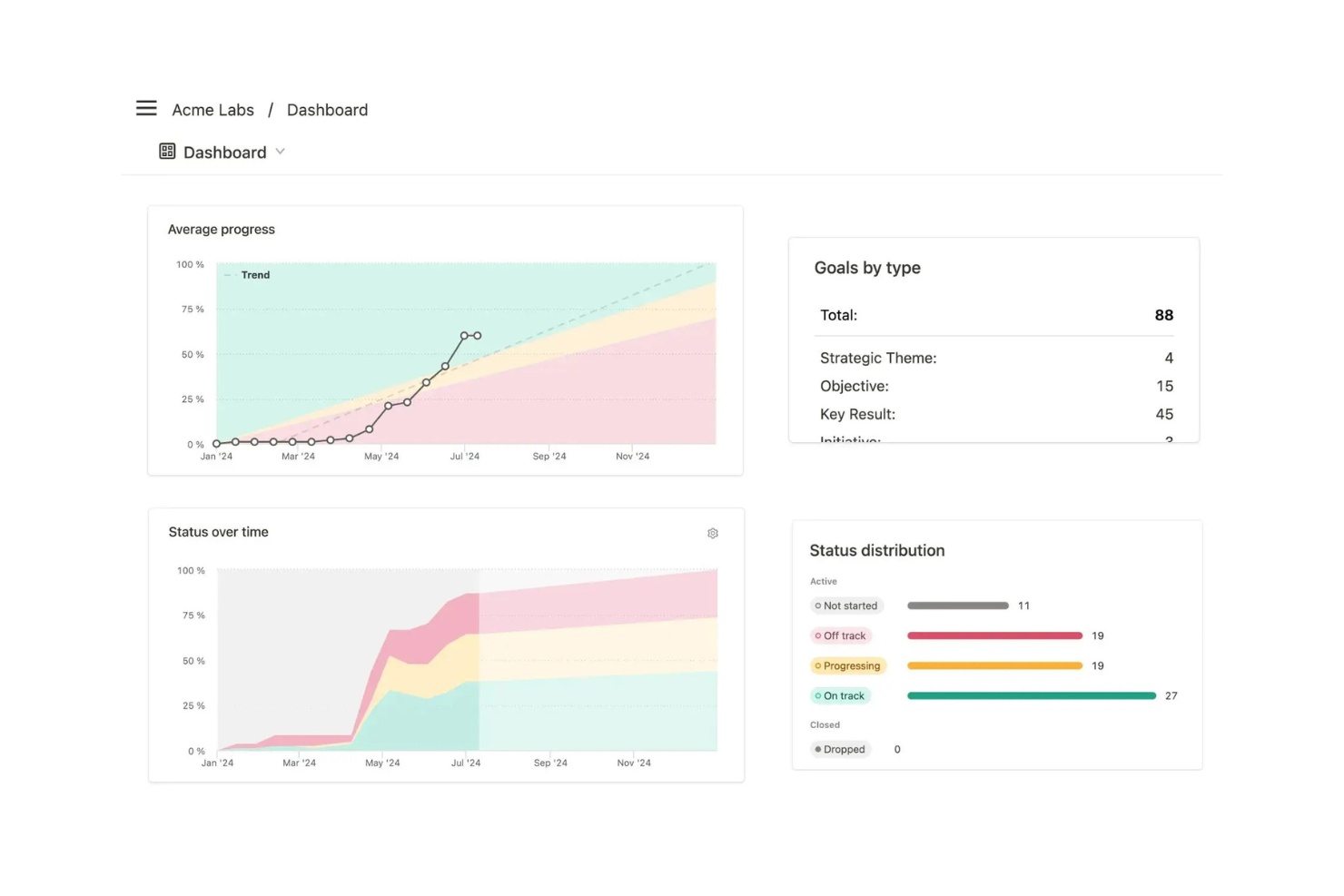
Mooncamp es una plataforma de gestión del rendimiento y OKR diseñada para ayudar a los equipos a alinearse y realizar un seguimiento de sus objetivos estratégicos. Se utiliza principalmente por gerentes y líderes de equipo que necesitan asegurarse de que sus equipos se concentren en alcanzar objetivos clave.
Por qué es un buen competidor de Workboard: Mooncamp ofrece una planificación estratégica centralizada mediante su software de OKR. Esto incluye funciones de seguimiento, paneles de progreso y establecimiento de objetivos personalizable. Estas herramientas ayudan a tu equipo a mantenerse alineado y enfocado en lo que más importa. La interfaz intuitiva de la plataforma permite que todos actualicen y supervisen fácilmente sus objetivos. Su énfasis en la alineación estratégica ayuda a tu equipo a ejecutar eficazmente sus objetivos.
Funciones e integraciones destacadas:
Las funciones incluyen notificaciones automatizadas para recordar a tu equipo que debe mantenerse encaminado hacia sus objetivos. Las visualizaciones del progreso ofrecen una visión clara de su situación, mientras que las plantillas personalizables te ayudan a adaptar la plataforma a tus requisitos.
Las integraciones incluyen Slack, Microsoft Teams, Jira, Asana, monday.com, Salesforce, Zapier y otras.
Pros and Cons
Pros:
- Admite la planificación estratégica centralizada
- Proporciona visualizaciones del progreso de los objetivos
- Ofrece un establecimiento de objetivos personalizable
Cons:
- Puede requerir asistencia técnica y formación
- La usabilidad móvil no está tan pulida como la de escritorio
Lattice
Ideal para la gestión del rendimiento de RR. HH.

Lattice es una plataforma de gestión de personas diseñada para mejorar el compromiso y el rendimiento de los empleados. Normalmente la utilizan profesionales de RR. HH. y gerentes que se centran en alinear los objetivos de los empleados con los objetivos de la empresa.
Por qué es un buen competidor de Workboard: La gestión del rendimiento de Lattice para RR. HH. incluye evaluaciones de rendimiento, seguimiento de objetivos y encuestas de compromiso de los empleados. Estas herramientas te ayudan a alinear los objetivos de tu equipo con las metas empresariales, mientras que sus herramientas de comentarios agilizan la comunicación abierta entre gerentes y empleados. Las funciones analíticas identifican las tendencias de rendimiento, lo que facilita la toma de decisiones basada en datos.
Funciones e integraciones destacadas:
Funciones como plantillas de evaluación personalizables que se adaptan a las necesidades específicas de tu equipo. Los análisis ofrecen información detallada sobre el rendimiento y el compromiso de los empleados. Las herramientas de comentarios continuos te ayudan a mantener una cultura de comunicación abierta.
Integraciones con Slack, Microsoft Teams, Google Workspace, BambooHR, Workday, ADP, Rippling, Okta, Salesforce, Greenhouse y más.
Pros and Cons
Pros:
- Proporciona evaluaciones de rendimiento optimizadas
- Ofrece análisis detallados del rendimiento
- Fomenta los comentarios continuos
Cons:
- Puede ser complejo para equipos pequeños
- Costoso para pequeñas empresas
New Product Updates from Lattice

Lattice Introduces MCP Connector for AI Chat Tools
Lattice introduced Lattice MCP, a new connector that brings talent data into Claude, ChatGPT, and other LLM tools. The connector helps teams access performance context from reviews, 1:1 notes, feedback, goals, and updates within AI chat workflows. For more information, visit Lattice’s official site.
 .
.
Cascade
Ideal para la integración de la planificación estratégica

Cascade es una plataforma de ejecución de estrategias diseñada para ayudar a las empresas a alinear y supervisar sus objetivos estratégicos. Se utiliza principalmente por ejecutivos y equipos de estrategia que necesitan garantizar la alineación de toda la empresa y supervisar el rendimiento.
Por qué es una buena alternativa a Workboard: Cascade destaca en la integración de la planificación estratégica con funciones como la definición de objetivos, los paneles de rendimiento y los análisis en tiempo real. Estas capacidades permiten alinear los esfuerzos de tu equipo con las estrategias generales de la empresa. Los paneles personalizables del software ofrecen una visión clara del progreso y las métricas de rendimiento. Los análisis de datos en tiempo real te ayudan a tomar decisiones fundamentadas para optimizar las iniciativas estratégicas.
Funciones e integraciones destacadas:
Las funciones incluyen el mapeo de estrategias, que te ayuda a visualizar y alinear los objetivos en toda tu organización. Los paneles de rendimiento te ofrecen una instantánea de las métricas y el progreso clave. Las herramientas de planificación de escenarios te ayudan a anticipar cambios y adaptar las estrategias en consecuencia.
Las integraciones incluyen Slack, Microsoft Teams, Jira, Salesforce, Google Workspace, Asana, Trello, monday.com, HubSpot, Azure DevOps y más.
Pros and Cons
Pros:
- Admite la alineación y la visibilidad de los objetivos estratégicos
- Combina la gestión de proyectos, la planificación y el seguimiento del rendimiento en una sola herramienta
- Paneles de rendimiento personalizables
Cons:
- Experiencia de usuario complicada para equipos pequeños
- Requiere un compromiso total para un uso eficaz
15Five
Ideal para recibir comentarios de los empleados en tiempo real

15Five es una plataforma de gestión del rendimiento centrada en mejorar el compromiso de los empleados mediante comentarios y comunicación periódicos. Se utiliza principalmente por equipos de RR. HH. y gerentes para mejorar la alineación y el rendimiento del equipo.
Por qué es un buen competidor de Workboard: 15Five destaca por proporcionar comentarios de los empleados en tiempo real con funciones como revisiones semanales, seguimiento de objetivos y evaluaciones del rendimiento. Estas herramientas ayudan a tu equipo a mantenerse conectado y alineado con las prioridades. La plataforma fomenta una cultura de comunicación abierta, lo que facilita abordar los problemas a medida que surgen. Su enfoque en los comentarios continuos te ayuda a crear una fuerza laboral más comprometida y motivada.
Características destacadas e integraciones:
Características incluyen ciclos de evaluación personalizables que se adaptan a las necesidades de tu equipo, mientras que las herramientas de reconocimiento te permiten celebrar los logros y mejorar la moral. Las encuestas de compromiso proporcionan información sobre las percepciones de tu equipo, ayudándote a tomar decisiones estratégicas.
Integraciones incluyen Slack, Microsoft Teams, Google Workspace, Jira, BambooHR, Namely, ADP, Okta, Workday, Salesforce y más.
Pros and Cons
Pros:
- Fomenta la comunicación abierta
- Ciclos de evaluación personalizables
- Capacidades de comentarios en tiempo real
Cons:
- Opciones de personalización limitadas
- La interfaz puede parecer compleja y requerir capacitación

Asana
Ideal para la colaboración de equipos grandes

Asana es una herramienta de gestión de proyectos diseñada para ayudar a los equipos a organizar, supervisar y gestionar su trabajo. Se utiliza principalmente por gerentes de proyectos, líderes de equipo y organizaciones para coordinar tareas y proyectos de manera eficaz.
Por qué es un buen competidor de Workboard: Asana facilita la colaboración de equipos grandes con funciones como la asignación de tareas, el seguimiento de plazos y las cronologías de proyectos. Sus paneles visuales de proyectos muestran una visión general para ayudarte a gestionar proyectos complejos. La capacidad de Asana para crear flujos de trabajo personalizados permite a tu equipo adaptar la herramienta a requisitos específicos. Su interfaz fácil de usar la hace accesible para equipos de todos los tamaños, lo que aumenta la productividad.
Funciones e integraciones destacadas:
Las funciones incluyen dependencias de tareas, que permiten establecer tareas que dependen de la finalización de otras. Los hitos ayudan a tu equipo a marcar puntos importantes en la cronología del proyecto. La función de carga de trabajo ofrece una visión general visual de la capacidad de tu equipo, lo que garantiza que nadie se vea sobrecargado.
Las integraciones incluyen Slack, Microsoft Teams, Google Drive, Dropbox, Zoom, Zapier, Jira, Salesforce, HubSpot, Adobe Creative Cloud y más.
Pros and Cons
Pros:
- Fácil de configurar y usar
- Flujos de trabajo personalizados para la gestión de carteras
- Se adapta a equipos de distintos tamaños
Cons:
- Puede resultar abrumador para equipos pequeños
- Capacidades limitadas de generación de informes

Weekdone
Ideal para informar sobre el progreso semanal

Weekdone es una herramienta de gestión de equipos centrada en aumentar la productividad mediante informes semanales. Los líderes y gerentes de equipo la utilizan para realizar un seguimiento del progreso y alinear los esfuerzos del equipo con los objetivos de la empresa.
Por qué es una buena alternativa a Workboard: Weekdone ofrece informes sólidos del progreso semanal con funciones como el seguimiento de OKR, resúmenes del progreso y comentarios del equipo. Estas herramientas mantienen a tu equipo alineado con los objetivos de la empresa e identifican áreas de mejora. Los controles semanales de la plataforma garantizan que todos estén en sintonía y trabajen para alcanzar los mismos objetivos. Su enfoque en las actualizaciones periódicas mantiene a tu equipo informado y responsable.
Funciones e integraciones destacadas:
Las funciones incluyen paneles personalizables que ofrecen una visión general del progreso de tu equipo. Los recordatorios automatizados ayudan a garantizar que todos envíen sus informes a tiempo. Los análisis permiten comprender el rendimiento del equipo y tomar decisiones fundamentadas.
Las integraciones incluyen Slack, Microsoft Teams, Jira, Asana, Basecamp, Google Tasks, Zapier, Google Sheets y más.
Pros and Cons
Pros:
- Ofrece resúmenes detallados del progreso
- La transparencia fomenta la alineación del equipo
- Mantiene al equipo responsable mediante recordatorios
Cons:
- Los flujos de trabajo complejos pueden requerir capacitación
- La configuración inicial puede requerir mucho tiempo y resultar complicada

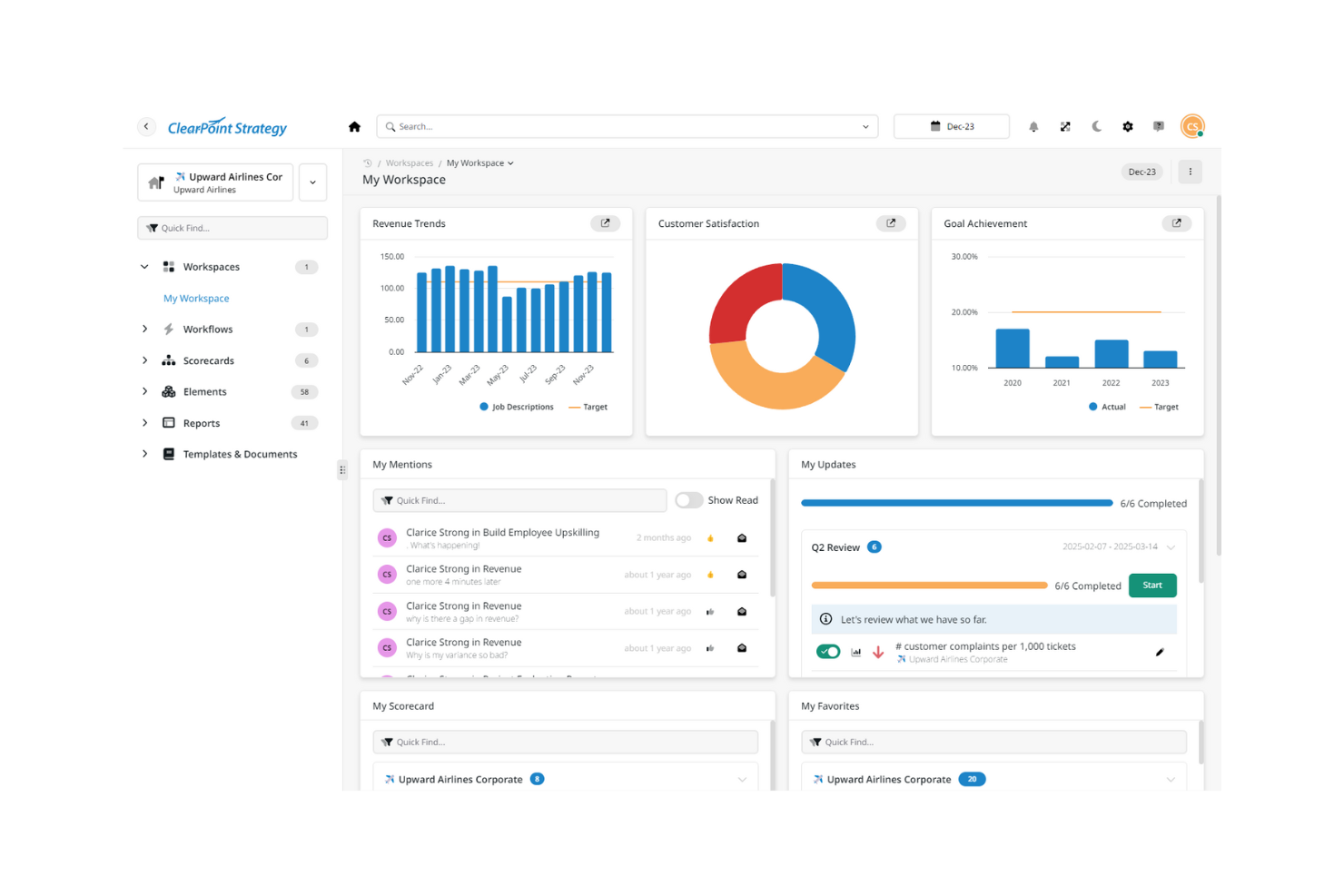
ClearPoint Strategy es un software de gestión de estrategias, similar a Perdoo, que ayuda a las organizaciones a ejecutar y gestionar sus planes estratégicos. Lo utilizan principalmente los equipos de estrategia y los ejecutivos para hacer un seguimiento del rendimiento y alinear las iniciativas con los objetivos estratégicos.
Por qué es un buen competidor de Workboard: ClearPoint Strategy destaca en la ejecución estratégica gracias a funciones como paneles de rendimiento, cuadros de mando y herramientas personalizadas de generación de informes. Esto ayuda a tu equipo a alinear las actividades diarias con los objetivos estratégicos generales. La capacidad del software para crear y personalizar cuadros de mando garantiza que puedas medir lo que más importa, mientras que sus herramientas de generación de informes proporcionan información sobre el progreso y el rendimiento.
Características e integraciones destacadas:
Características incluyen la generación automatizada de informes, lo que ahorra tiempo a tu equipo y reduce los errores manuales. Los cuadros de mando personalizables permiten hacer un seguimiento de los KPI más importantes, y los paneles de rendimiento ofrecen una vista en tiempo real de tus iniciativas estratégicas.
Integraciones incluyen Microsoft Excel, PowerPoint, SharePoint, Tableau, Salesforce, Slack, Google Sheets, Jira, Trello, Asana y más.
Pros and Cons
Pros:
- Admite el seguimiento de objetivos estratégicos
- Impulsa la alineación organizativa
- Ofrece cuadros de mando personalizables
Cons:
- Intrincado y complejo para equipos pequeños
- Curva de aprendizaje pronunciada

Ideal para integrar la gestión del talento
Peoplebox es una plataforma de gestión del rendimiento diseñada para fortalecer el compromiso y el desarrollo de los empleados. Normalmente la utilizan profesionales de RR. HH. y gerentes que desean alinear el rendimiento del equipo con los objetivos empresariales.
Por qué es una buena alternativa a Workboard: Peoplebox integra la gestión del talento mediante herramientas como evaluaciones de rendimiento, seguimiento de objetivos y comentarios de los empleados. Estas funciones ayudan a alinear el rendimiento de tu equipo con los objetivos de la empresa. Las herramientas de comentarios fomentan una cultura de mejora continua y compromiso. Sus capacidades de seguimiento de objetivos garantizan que todos trabajen para alcanzar las mismas metas, lo que fortalece la productividad general del equipo.
Funciones e integraciones destacadas:
Las funciones incluyen ciclos de evaluación personalizables que se adaptan a las necesidades de tu equipo. Los recordatorios automatizados garantizan que las evaluaciones de rendimiento se realicen a tiempo. Los análisis proporcionan información sobre el rendimiento y el compromiso de los empleados, lo que te ayuda a tomar decisiones sensatas.
Las integraciones incluyen Slack, Microsoft Teams, Google Workspace, Jira, Asana, Salesforce, BambooHR, Zoom y más.
Pros and Cons
Pros:
- Gestión sólida de objetivos
- Proporciona análisis detallados del rendimiento
- Mejora el compromiso de los empleados
Cons:
- Funciones limitadas para grandes empresas
- Edición incoherente de resultados clave

Tability
Ideal para la gestión de OKR
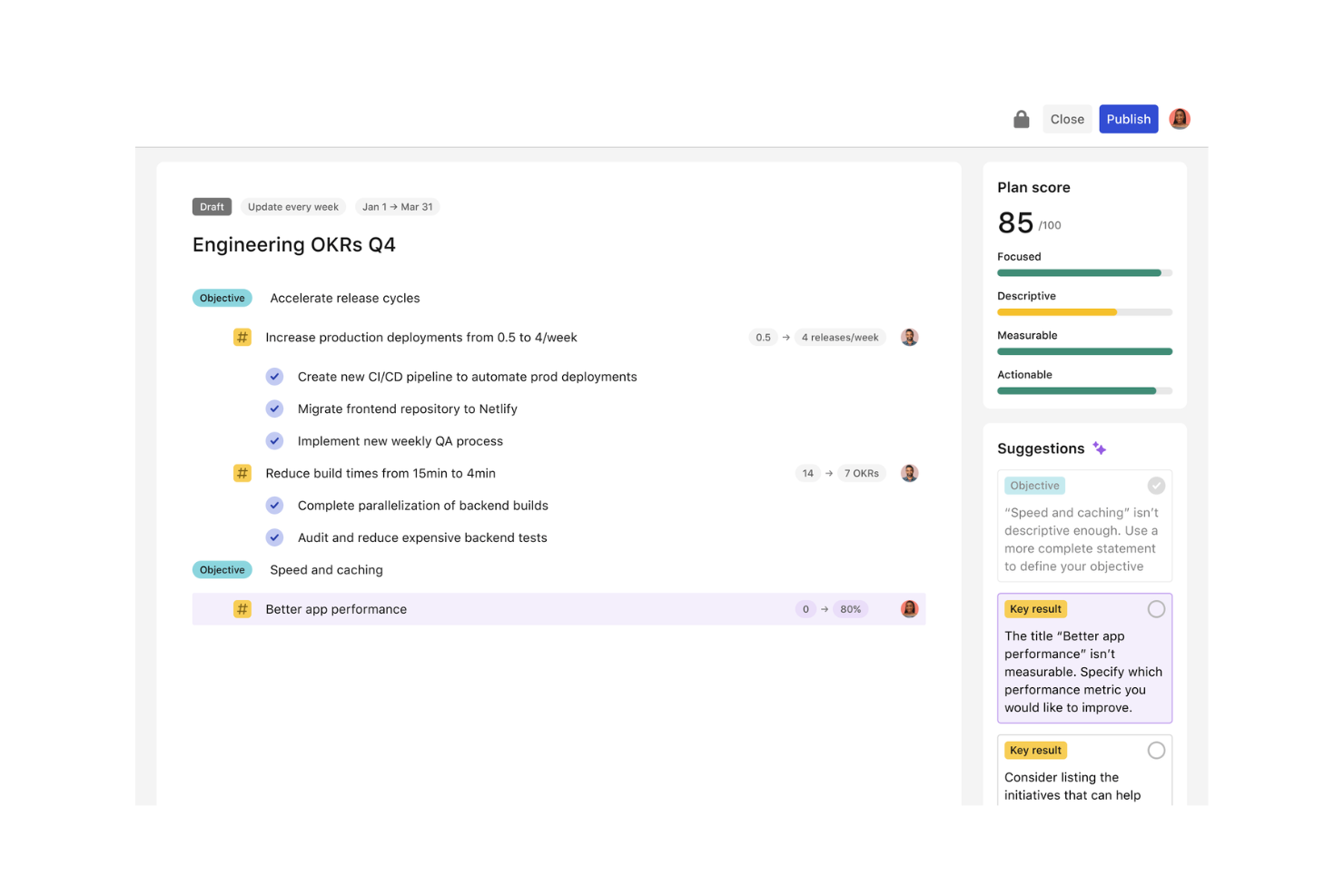
Tability es un software de seguimiento de objetivos que ayuda a los equipos a gestionar sus objetivos y resultados clave (OKR). Lo utilizan principalmente gerentes y líderes de equipo que necesitan garantizar la alineación y el progreso hacia los objetivos.
Por qué es una buena alternativa a Workboard: Tability destaca en la gestión de OKR con funciones como el seguimiento del progreso, las revisiones semanales y los paneles visuales. Estas herramientas ayudan a tu equipo a mantenerse enfocado en sus objetivos y a medir los resultados de manera eficaz. La interfaz sencilla del software facilita que todos actualicen y supervisen sus objetivos. Su enfoque en las revisiones frecuentes garantiza que puedas abordar los problemas rápidamente y mantener el impulso.
Funciones e integraciones destacadas:
Las funciones incluyen capacidades de establecimiento de objetivos que te permiten definir objetivos claros. El seguimiento del progreso te ayuda a supervisar cómo se desempeña tu equipo con respecto a sus objetivos. Los paneles visuales ofrecen una visión general de las métricas clave y los indicadores de rendimiento.
Las integraciones incluyen Slack, Google Workspace, Microsoft Teams, Jira, Trello, Asana, monday.com, HubSpot, Salesforce, Zapier y más.
Pros and Cons
Pros:
- Simplifica la gestión eficaz de OKR
- Experiencia de usuario con una interfaz sencilla para las actualizaciones
- Las funciones ligeras de gestión de proyectos lo hacen adecuado para startups
Cons:
- Puede carecer de funciones avanzadas para equipos grandes
- Opciones de personalización limitadas
Otros competidores de Workboard
Aquí tienes otras alternativas a Workboard que no llegaron a mi lista, pero que merece la pena consultar:
- Betterworks
Ideal para el seguimiento continuo del rendimiento
- ClickUp
Ideal para una API y unas integraciones todo en uno
- Qandle
Ideal para soluciones modulares de RR. HH.


Cómo evalúo a los competidores de Workboard
Divido mi evaluación en los requisitos básicos indispensables de los OKR y la ejecución de estrategias, y luego analizo los factores diferenciadores, como los flujos de trabajo de revisión automatizados y las integraciones con sistemas de RR. HH., que separan a los mejores del resto.
Funcionalidad principal (requisitos indispensables para esta lista)
Al seleccionar herramientas para mi lista, califico cada una en una escala de 0 (no ofrece la funcionalidad) a 5 (sobresale en esta área) para cada una de las funcionalidades principales que se indican a continuación. Después, convierto la puntuación total de la herramienta en un porcentaje. Cada herramienta debe alcanzar una puntuación total mínima del 65% para ser considerada para su inclusión.
- Gestión de OKR/objetivos: Compruebo si la herramienta admite ciclos de vida completos de los OKR: crear objetivos, asignar resultados clave y realizar revisiones periódicas, como hacer descender un objetivo de retención desde un director de RR. HH. hasta un socio comercial de RR. HH.
- Seguimiento de la ejecución de la estrategia: Los paneles en tiempo real que conectan el trabajo diario de RR. HH. con las prioridades estratégicas son importantes en este punto, por lo que evalúo cómo visualiza cada herramienta el progreso y señala las iniciativas en riesgo.
- Revisiones empresariales automatizadas: Busco flujos de trabajo estructurados para reuniones que completen automáticamente las agendas y las actualizaciones de estado, sustituyendo las presentaciones manuales que los equipos de operaciones de RR. HH. suelen preparar laboriosamente para las revisiones semanales con la dirección.
- Análisis del desempeño: Cada herramienta debería ofrecer informes sobre el logro de objetivos y las tendencias de los equipos, como el seguimiento del progreso intertrimestral de los KPI de adquisición de talento en varias unidades de negocio.
- Alineación y despliegue en cascada: La alineación vertical y horizontal de los objetivos es fundamental, por lo que evalúo si la plataforma permite establecer dependencias entre, por ejemplo, un objetivo de planificación de la plantilla y una iniciativa de diversidad, equidad e inclusión (DEI) relacionada.
- Integraciones con sistemas de RR. HH.: Herramientas como Workday, BambooHR y SAP SuccessFactors son habituales en las arquitecturas tecnológicas de RR. HH., por lo que busco conectores nativos o acceso a una API abierta que mantengan sincronizados los datos de los objetivos con los sistemas centrales de gestión de personas.
Una vez que tengo una lista de herramientas que cumplen estos criterios, analizo qué distingue a cada plataforma.
Factores diferenciadores (qué distingue a los proveedores)
Así es como comparo y contrasto los distintos proveedores:
Funciones destacadas
Los análisis basados en IA son un factor diferenciador importante: busco herramientas que puedan señalar objetivos en riesgo y recomendar acciones correctivas sin necesidad de realizar búsquedas manuales. Las tarjetas de puntuación personalizadas de RR. HH. también son importantes. Una plataforma que permita crear paneles en torno a métricas como la tasa de retención o los niveles de compromiso evita que el equipo tenga que exportar datos a hojas de cálculo. La visualización de la estrategia es otra área que evalúo detenidamente, ya que un mapa de alineación claro ayuda a los líderes de RR. HH. a comunicar el progreso de las iniciativas a la alta dirección mucho mejor que un correo electrónico con una actualización de estado.
Más allá de las funciones
La seguridad y el cumplimiento normativo son importantes cuando los equipos de RR. HH. conectan los datos de los objetivos con sistemas confidenciales de gestión de personas. Compruebo la certificación SOC 2 Tipo II, los controles de acceso basados en roles y la compatibilidad con SSO. El apoyo durante la implementación es otro factor que evalúo: los despliegues de OKR suelen estancarse sin asesoramiento o manuales de procedimientos, por lo que los proveedores que ofrecen una incorporación estructurada con responsables de éxito del cliente dedicados tienden a impulsar una mejor adopción. También analizo la transparencia de los precios, ya que los departamentos de RR. HH. a menudo necesitan justificar el presupuesto en función de resultados medibles antes de que la dirección apruebe una nueva plataforma.
¿Por qué buscar una alternativa a Workboard?
Aunque Workboard es una buena opción de software de gestión del rendimiento, hay varias razones por las que algunos usuarios buscan soluciones alternativas. Puede que estés buscando una alternativa a Workboard porque:
- Necesitas funciones de generación de informes más avanzadas.
- Tu equipo necesita mejores opciones de personalización.
- Buscas una mejor accesibilidad desde dispositivos móviles.
- Necesitas una solución con mayores posibilidades de integración.
- Tu equipo, que está creciendo, necesita una plataforma más escalable.
- Quieres un software con un servicio de asistencia al usuario mejorado.
Si alguna de estas situaciones te resulta familiar, has llegado al lugar adecuado. Mi lista incluye varias opciones de software de gestión del rendimiento más adecuadas para equipos que se enfrentan a estos desafíos con Workboard y buscan soluciones alternativas.
Características
Estas son algunas de las características clave de Workboard que puedes comparar con lo que ofrecen las soluciones alternativas:
- Alineación de objetivos: Ayuda a tu equipo a alinear sus objetivos con la estrategia de la empresa para mejorar la concentración.
- Actualizaciones en tiempo real: Proporciona actualizaciones inmediatas sobre el progreso y los plazos para mantener a todos informados.
- Informes de rendimiento: Ofrece información sobre el rendimiento del equipo para ayudarte a tomar decisiones fundamentadas.
- Paneles: Destacan las métricas clave para que tu equipo pueda concentrarse en lo importante.
- Gestión de OKR: Permite crear y realizar un seguimiento de los objetivos y resultados clave para gestionar eficazmente el rendimiento.
- Herramientas de comentarios: Facilitan el diálogo continuo para mejorar la comunicación y el desarrollo del equipo.