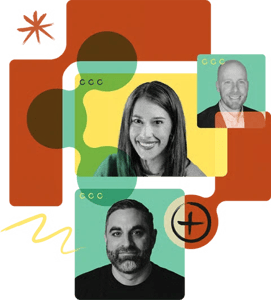
Leader Says Inertia and Incrementalism Kill AI Transformation
Jason Averbook explains why AI transformation requires rethinking workflows, breaking down silos, and redesigning organizations around outcomes instead of departments.
Reimagine Work: AI transformation requires redesigning decisions, workflows, communication, and success measures from first principles.
Break Silos: AI helps leaders replace departmental boundaries with outcome-focused work that connects teams and improves organizational visibility.
Enable Change: Leaders accelerate AI adoption by giving employees autonomy, welcoming ideas, and rewarding meaningful experimentation.
Think Differently: Successful AI use depends less on software selection and more on developing new habits, creativity, and judgment.
Lead Better: AI reviews scattered communications, helping leaders prioritize commitments, follow up consistently, and focus attention where it matters most.
Jason Averbook has led five organizations and had three successful exits. He has a background in HR and is currently the cofounder of Now to Next, where he helps organizations close the gap between AI ambition and organizational reality.
We sat down with Jason to discuss how he is using AI to break silos. Here's what he shared.
Achieving organizational vision
Hi, my name is Jason Averbook. My leadership journey began at 16 years old, leading people in the hospitality industry. And it continues today.
Continue Reading for Free
Create a free account to finish this article, plus get ongoing access to timely insights and practical resources.
I am the cofounder of Now to Next, where I lead people to achieve organizational vision, strategy, and goals. I have started three organizations and had three successful exits. I also served as CEO of a SaaS software company.
In an AI-first world, it's important to apply first-principles thinking. We have to reimagine everything and ask why. Why do we have to do it this way?
We've overhauled all of our processes. Every single one.
How we make decisions
How we work
How we think
How we drive outcomes
How we measure success
How we communicate with each other
Inertia and incrementalism kill AI transformation. And it's really, really important to keep that in mind.
How leadership and org structure should be redesigned
Leadership and org structure have completely changed as a result of AI. Leadership now means empowering people to reimagine and create…It’s time for all organizations to start moving in that direction. Because in five years, we probably won’t have departments — we will have outcomes.
Leadership and org structure have completely changed as a result of AI.
Leadership now means empowering people to reimagine and create. And trusting them to work autonomously.
AI allowed me to focus on the information, dashboards, and signals I needed to lead the organization differently. Because of the data that is now available, it's easier for me to think — and lead — horizontally across the organization instead of focusing on the operational success of silos.
Org structures have traditionally worked in siloed north-south directions. AI works east-west. We must now break through the north-south approach by focusing less on org structure and more on the flow of work.
For example, instead of having a marketing function, a sales function, and a delivery function, my organization has a "success" function. That success function focuses on everything from brand to cash. This change has allowed me to leverage AI to connect the dots like never before.
It's time for all organizations to start moving in that direction. Because in five years, we probably won't have departments — we will have outcomes.
Why AI adoption requires freedom
The problem is that people have a hard time changing.
Leaders must make their people comfortable with change. Beg them to change if you have to. And make sure your leadership and org design provide them the freedom to do so.
The most important thing is to make sure your people know that they have a voice and won't be shut down. That means implementing employee ideas, even if I'm hesitant about them. And it means celebrating the changes they make.
Another issue I see is organizational inertia. Fortunately, AI-first organizations like ours avoid much of that.
Why AI requires a different type of thinking
Personally, I've found that how successful I am with AI is less about the tool and more about me, the fool.
A fool with a tool is still a fool. I have to think differently with AI. I have to tap into creative juices I've never used before, and adopt a mindset I've never used before.
How Slack serves as AI's front door
Jason Shares
We change our stack and processes daily. Every tool must be tied to real value.
We use Slack as our digital front door.
From there, our tools include HubSpot, Canva, Claude, and Ramp. All are AI-enabled, and they connect to each other.
We change our stack and processes daily. Every tool must be tied to real value.
How AI helps leaders prioritize and follow up
One of AI's most important features for me, as a leader, is its ability to review past communications across email, Slack, texts, and other media.
It reminds me what to work on, focuses my efforts, and helps me prioritize. It has had an amazing impact, allowing me to circle back with stakeholders and deliver results in a way I never could before.
Don't let inertia and incrementalism kill you
Reimagine everything. Ask questions. Push your teams…This is how you prevent inertia and incrementalism from killing you.
We're building a curated community for senior leaders to pressure-test decisions, compare notes, and have the conversations they can't have everywhere else.