Infotech’s CHRO on Scaling Past “Individual Heroics”
As Infotech quadrupled in size and made its first acquisition, Shawn Gibson learned to spot when growth outpaces structure, and why the fix isn’t more bureaucracy.
Most companies struggle with the moment their operating model stops working. There’s no alarm. Things just start taking a little longer. Questions wait for another time zone to wake up. Getting something done depends more on knowing the right person than on any process.
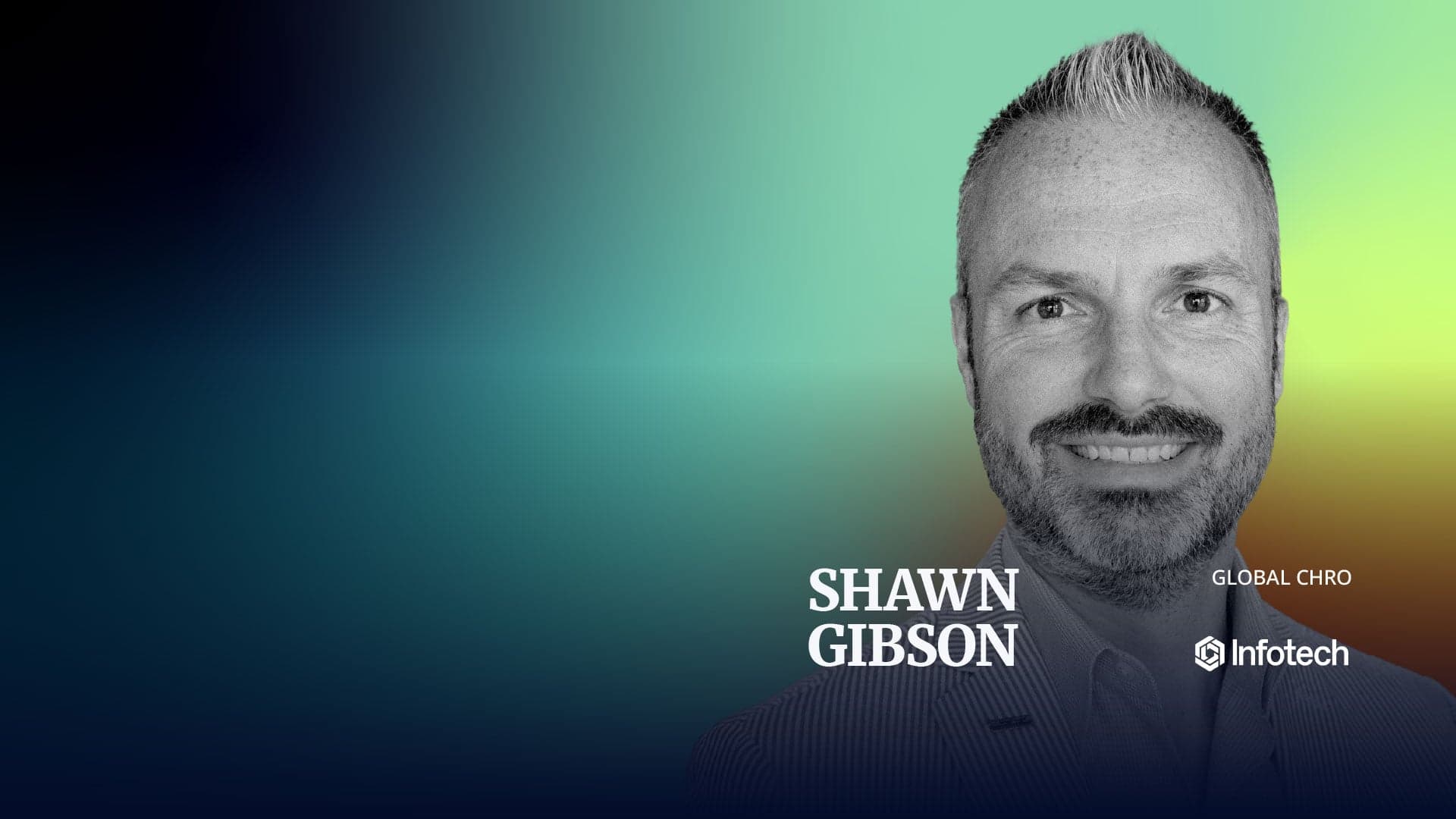
Shawn Gibson, has watched that happen up close. Over seven years, Infotech grew to more than four times its size and now employs over 1,600 people across six countries. This year it also completed the first acquisition in its nearly 30-year history.
Gibson has been with the company for almost a decade. He worked in operations and management before becoming Chief Human Resources Officer, which gives him an unusually close view of how People strategy and business strategy affect each other.
In this Q&A, Gibson is candid about what Infotech got right and what it would do sooner if it started over. He covers earning credibility with executives in a founder-led business, deciding which parts of the employee experience should be global and which should be local, and integrating an acquired company without erasing what made it valuable.
He also offers practical advice for HR leaders at companies with 300 or 500 employees who want to build infrastructure before they need it.
Q&A
Infotech has more than quadrupled in size over seven years. At what point did you start seeing signs that the company's existing structures or management practices weren't keeping pace with its growth? What did those signs look like?
I don’t think there was one specific point when we said, “Our operating model no longer works.” It showed up in smaller ways.
Things that were manageable when everyone knew who to call started taking longer or depending too much on individual knowledge. Once we had employees across six countries, we also had people waiting for another time zone to come online to get basic HR support.
Our HRIS work was a good example. We thought managers would naturally welcome the new workflows, and to be honest, that wasn’t really the case. We had to go back, build stronger executive support, and show managers what would actually change for them.
We also spread system expertise across several members of the HR team instead of assigning a dedicated owner from the beginning, which slowed us down.
For me, the signal is when growth starts creating friction for employees and managers. If people regularly need workarounds or personal relationships to get something done, the structure probably hasn’t kept up with the business.
You've described the importance of HR becoming a trusted partner to the executive team in a founder-led business. What have you learned about challenging established ways of working when those approaches have historically been successful?
In a founder-led company, many of the established ways of working are there because they helped build the company. You have to respect that. Infotech still values moving quickly, trying things out, and not allowing process to get in the way unnecessarily.
What I’ve learned is that HR can’t walk into the room and say “This is best practice, so this is what we should do.” You need to have the trust of the executive team, understand what they’re trying to accomplish, and show them the business problem you’re trying to solve.
Sometimes the conversation isn’t about saying an approach was wrong. It may have worked very well at one size, but it needs to be adapted for the company’s next stage.
We saw that with our HRIS implementation. We didn’t create buy-in by talking about the features of the system. We had to show leaders how the workflows would operate, what managers would be expected to do, and where the organization would save time.
A good HR structure shouldn’t become bureaucracy; it should help the company move faster. But sometimes you do need to spend more time upfront so you don’t create larger problems later.
As Infotech expanded into new countries, how did you decide which parts of the employee experience needed to be consistent globally and where local teams needed greater flexibility? Were there any decisions that were particularly difficult?
For us, consistency means employees should understand what they can expect from Infotech, regardless of where they work. That includes our core values, clear expectations from managers, access to support and development, and the opportunity to feel connected to the broader organization.
How we deliver that experience cannot be identical everywhere. Employment laws, benefits, holidays, labour markets, and cultural expectations differ. Even the way people build relationships can be different.
We’ve increased our investment in local, in-person events in smaller markets because a sense of belonging doesn’t come only from joining a global video call. At the same time, programs such as our Rise Up mentorship program can connect an employee in the UK with a mentor in North America.
One difficult question has been how to provide timely HR support across multiple time zones. We explored using an AI-powered HR assistant to answer common questions. When we considered expanding it to confidential employee information, we paused and took a closer look at privacy, governance, and risk. Speed and consistency are only helpful if employees trust the service.
The balance is to be clear about the experience we want to provide globally, then listen to local teams about the best way to deliver it.
With the company's first acquisition now completed, what new questions does integrating another organization raise for your People strategy? How are you deciding what should be integrated and what should remain distinct?
This is very new for us. It is the first acquisition in Infotech’s nearly 30-year history, so I don’t want to pretend that we already have every answer.
One of the first questions is what made Zluri successful and how we make sure we don’t integrate that out of the organization. Some things need to be aligned, including values, legal obligations, privacy and security, decision-making responsibilities, leadership accountability, and the basic experience employees should be able to expect.
That doesn’t mean every practice or system needs to be standardized immediately. Zluri has product expertise, customer relationships, and ways of working that are part of the value it brings to Infotech.
From a People perspective, employees need clarity. They want to understand who is making decisions, what will change, what will stay the same, and what the acquisition means for their roles and career opportunities. We also need to retain critical talent and knowledge while helping the two organizations learn how to work together.
I don’t think success is measured by how quickly everything looks the same. It is whether people understand the shared direction and can collaborate without losing what made each organization successful.
Looking back at Infotech's growth, where do you think the People function needed to change earlier than it did? What would you encourage a CHRO at a company of 300 or 500 employees to reconsider before they reach your scale?
Candidly, I think we should have put some of our foundational HR infrastructure in place earlier.
Our HRIS experience is a good example. We made a significant investment in the platform, but we didn’t initially have one full-time person responsible for it. Instead, several HR team members became experts in different parts of the system. It worked, but it moved more slowly than it needed to. We eventually hired a dedicated HRIS manager, and that is an investment I would make sooner if we were doing it again.
We also could have prepared managers earlier for how much their role changes as an organization grows. At 300 employees, leaders can rely more heavily on proximity and personal knowledge.
At more than 1,600 employees across several countries, that doesn’t scale. Managers need clearer expectations, better tools, and more support with performance, development, and communication.
My advice to a CHRO at a company of 300 or 500 employees would not be to add layers of bureaucracy. I would look for the work that depends on one person knowing how to fix something. Get your people data in order, clarify how decisions are made, invest in manager development, and build employee support that can grow with the company.
The goal is to preserve what makes a growth company fast while making it less dependent on workarounds and individual heroics.