“Botsitting” is Reabsorbing the Time That AI Should Be Saving Teams
Rebecca Hinds explains how botsitting can erase AI time savings and why leaders should redesign work around context, human judgment, and real business outcomes.

Rebecca Hinds
Head of the Work AI Institute at Glean

Redesign Work: Organizations that treat AI as a chance to redesign work will outperform those pursuing automation for cost reduction.
Leader Priorities: High-performing leaders shift coordination tasks to AI, preserving human time for coaching, mentoring, and developing employee skills.
Better Decisions: AI can improve meetings by giving individuals private space to test ideas, challenge assumptions, and reduce groupthink.
Hidden Costs: Botsitting absorbs roughly 6.4 weekly hours, making context-rich tools and outcome-based measures essential for realizing AI productivity gains.
Human Trust: AI transformation requires confidence matched to understood context, while leaders deliberately shape employee attitudes toward workplace technology.
Rebecca Hinds is the Head of the Work AI Institute at Glean, where she studies how AI is reshaping the way people and organizations work. She's also the author of the bestselling book, Your Best Meeting Ever.
We caught up with Rebecca to get her thoughts on how AI is transforming leadership and organizational structures. Here's what she had to say.
Redesigning Work Now
I’m Rebecca Hinds. I currently lead the Work AI Institute at Glean, where we study how AI reshapes how people and organizations work.

My leadership journey has always been at the intersection of research and practice. My academic background is in organizational behavior: I earned my B.S., M.S., and Ph.D. from Stanford, and I’ve spent much of my career studying how collaborative and emerging technologies change how organizations work.
For the past fifteen years, I’ve worked with organizations around the world to fix broken collaboration, including the soul-sucking meetings that drain so much time and energy. My recent bestselling book, Your Best Meeting Ever, captures much of that work.
Over the past seven years, my work has increasingly centered on AI: helping organizations move past the hype, avoid the trap of treating AI as a purely technical rollout, and recognize that this is as much a human change as it is a technological one.
The organizations that will thrive in this next era won’t be the ones that treat AI only as a cost-cutting tool. They’ll be the ones that use it as a chance to redesign work with more clarity, dignity, and human judgment.
What People Leaders Must Do to Optimize AI Performance
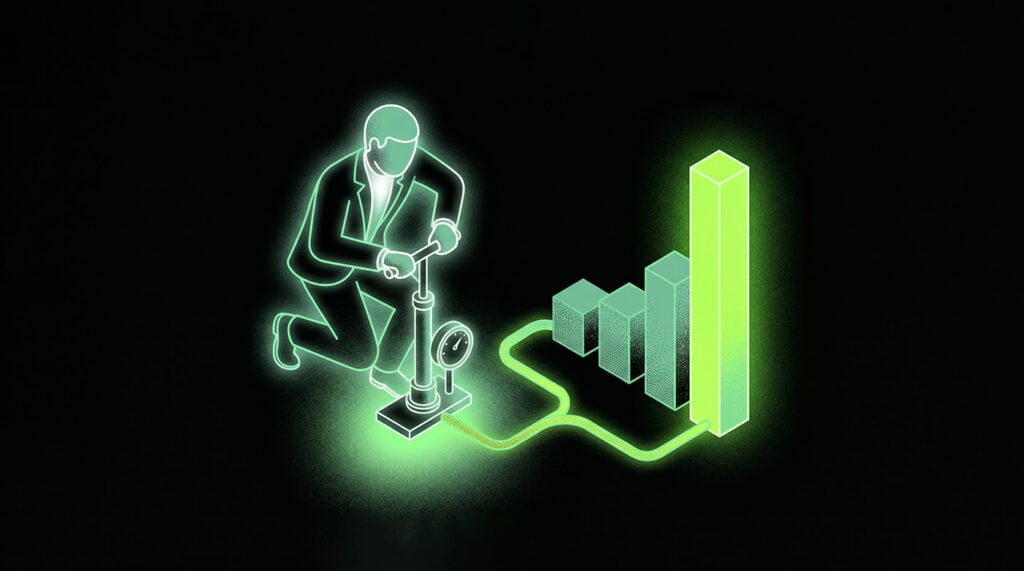
For HR and leadership, we must ask:
- What should AI automate?
- What should AI augment?
- What should remain deeply human?
- And what will we do with the time we gain?
We found that the best managers and leaders offload more of the coordination tax to AI. Managers who are high AI achievers offload 32% more coordination work to AI, freeing up time for uniquely human parts of the job like coaching, mentoring, and helping their people build new AI skills.
AI also pressure-tests the traditional org chart. Research I conducted with colleagues found that AI can conflict with static org charts. Pattern-finding algorithms don't respect the neat categories those charts define. Instead, they often surface connections that those categories were never designed to manage. This often means human roles need rebundling so someone has the mandate to act on the insights AI surfaces across silos.
The highest-performing organizations also strengthen the relationship between HR and IT. AI adoption is more than a tooling decision. It's a deeply human decision, touching culture, trust, and how work gets done daily.
Because adoption happens cross-functionally, organizations must think more carefully about selecting tools that work across functions, not just within them.
Ultimately, the most successful leaders don't simply push the most AI adoption. They ask the harder, more important question: "How do we use AI to make work better?"
How AI Can Improve Human Conversations
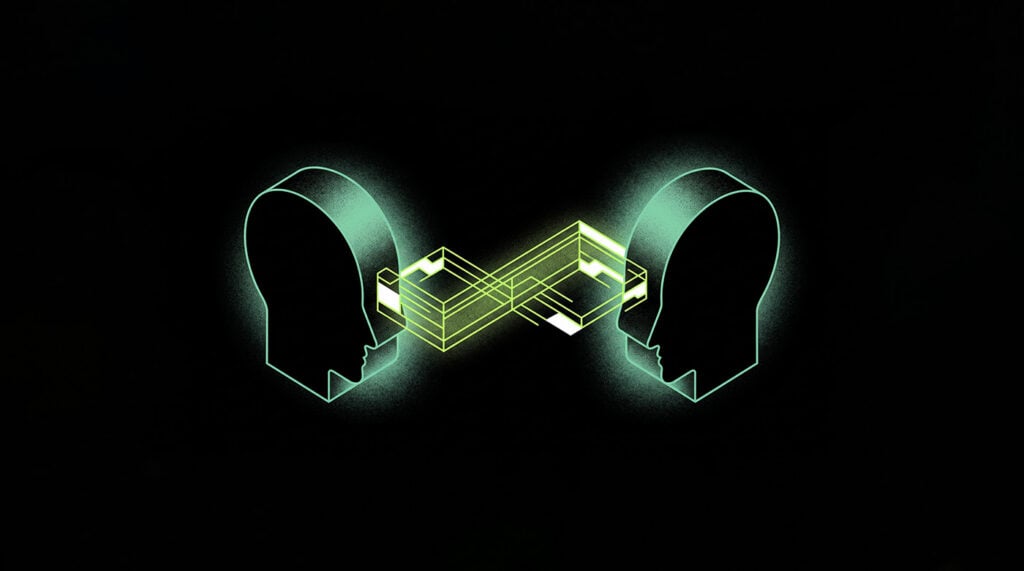
Research has long shown that teams generate better ideas when they think independently first — writing ideas down alone before the group ever convenes, rather than defaulting straight to open discussion, where the loudest or earliest voice in the room can lead to "groupthink."
AI can also help here by giving everyone a private, judgment-free space to think out loud before they have to commit to a position in front of the group.
I'll even use it as a contrarian sparring partner before a meeting: I'll feed it the proposal and ask it to argue against it, surface the weakest assumption, or take the position no one in the room is likely to take. By the time the team gets together, the conversation can start somewhere more productive.
How to Move Teams Beyond Surface-level AI Use
…AI still falls short, such as when it produces work that looks finished or polished but isn’t, or where we cannot yet remove human judgment from the loop.

One of my favorite ways to move a team beyond surface-level AI use is to run an AI Immersion Week: an entire week of going "all in" on AI, encouraging everyone to use it for every task, big or small.
The value is twofold. First, an immersion week encourages people to use AI across their full range of work, not just obvious use cases, often surfacing unexpected ways AI can add value.
Second, and just as important, it reveals where AI still falls short, such as when it produces work that looks finished or polished but isn't, or where we cannot yet remove human judgment from the loop. This can be just as valuable, and it also encourages the mindset organizations desperately need now: treating AI's limits as information to inspire critical thinking, not a reason to disengage or chalk it up to failure.
How "Botsitting" Reabsorbs AI Time Savings
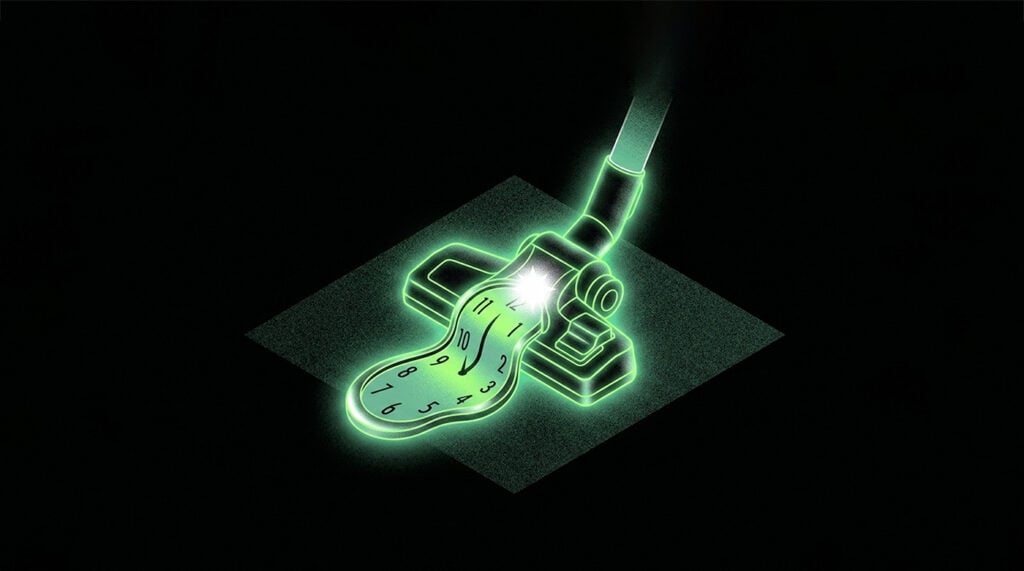
In our research, we found that 87% of digital workers use AI at work, and 75% find it makes them more productive, but only 13% report it has significantly improved their organization's performance.
A big culprit is "botsitting" — feeding AI context, supervising outputs, debugging errors, cleaning up AI-generated work, and switching between tools — which eats up about 6.4 hours per week. The unglamorous labor of making AI output trustworthy reabsorbs much of the AI time savings.
The fix isn't pushing harder on adoption. Too many companies continue to treat AI adoption like a vanity metric. Instead, I recommend focusing on three things:
- Making the invisible labor visible: naming botsitting explicitly so teams stop absorbing it as a personal failure and start treating it as a real design problem.
- Investing in context-rich AI tools: When employees report that their AI tools integrate well with the systems and information they use daily, they are 52% less likely to ship low-quality AI output.
- Measuring the right things: Stop measuring AI by its usage. Measure by whether your organization uses the technology to drive real business outcomes.
Why AI Confidence Should Not Be Higher Than the Context It Understands

I've been surprised by how quickly AI took over the highest-stakes decisions workplaces make: hiring, firing, and performance decisions. One out of six meetings now gets a digital twin instead of a person. And 29% of workers say they are comfortable with AI firing their human colleagues.
AI should earn trust in proportion to the context it understands — how much the system understands about the person, the situation, and the decision’s history. Not just how confident its output sounds.
Right now, for too many organizations, confidence outruns context, and that's backwards.
How Org Charts Will Change in the Next Five Years
I expect org charts to become far more flexible over the next five years — less of a fixed structure people defer to, and more of a real-time map that adjusts to the work itself.
Instead of staffing a project by checking who reports to whom, AI will surface the right mix of people based on skills, bandwidth, and career ambitions — signals the formal chart never captured.
I don't think the org chart, or hierarchy, will go away. They'll just stop being the default starting point for who does the work and become a record of where things formally sit.
Why Leaders Must Recognize AI Transformation is a Human-first Change
My advice to leaders is to recognize that this is as much a human change as it is a technology change…It’s not just about job displacement and replacement — it’s also about fear and how people perceive others using the technology around them.
People will interact with the same AI tool very differently depending on the mental model they use to approach the technology, so leaders need to shape those mental models deliberately.
Follow along
You can follow Rebecca Hinds's work on LinkedIn and her personal website, or check out her best-selling book, Your Best Meeting Ever. And don't miss Glean's Work AI Index.
More expert interviews to come on People Managing People!