


Intuit Enterprise Suite vs. NetSuite: Sammenligning og ekspertomtaler for 2026


As organizations grow, managing finances, payroll, approvals, reporting, and day-to-day operations across multiple teams becomes increasingly complex. Choosing business management software that can support administrative workflows while improving visibility, automation, and control is an important decision.
Intuit Enterprise Suite and NetSuite are two leading business management platforms that help organizations manage financial operations, reporting, workflow automation, and day-to-day administrative processes.
In this comparison, I'll break down their features, pricing, pros and cons, security, and ideal use cases to help you determine which solution is the better fit for your organization.
Intuit Enterprise Suite vs. Oracle NetSuite: An Overview
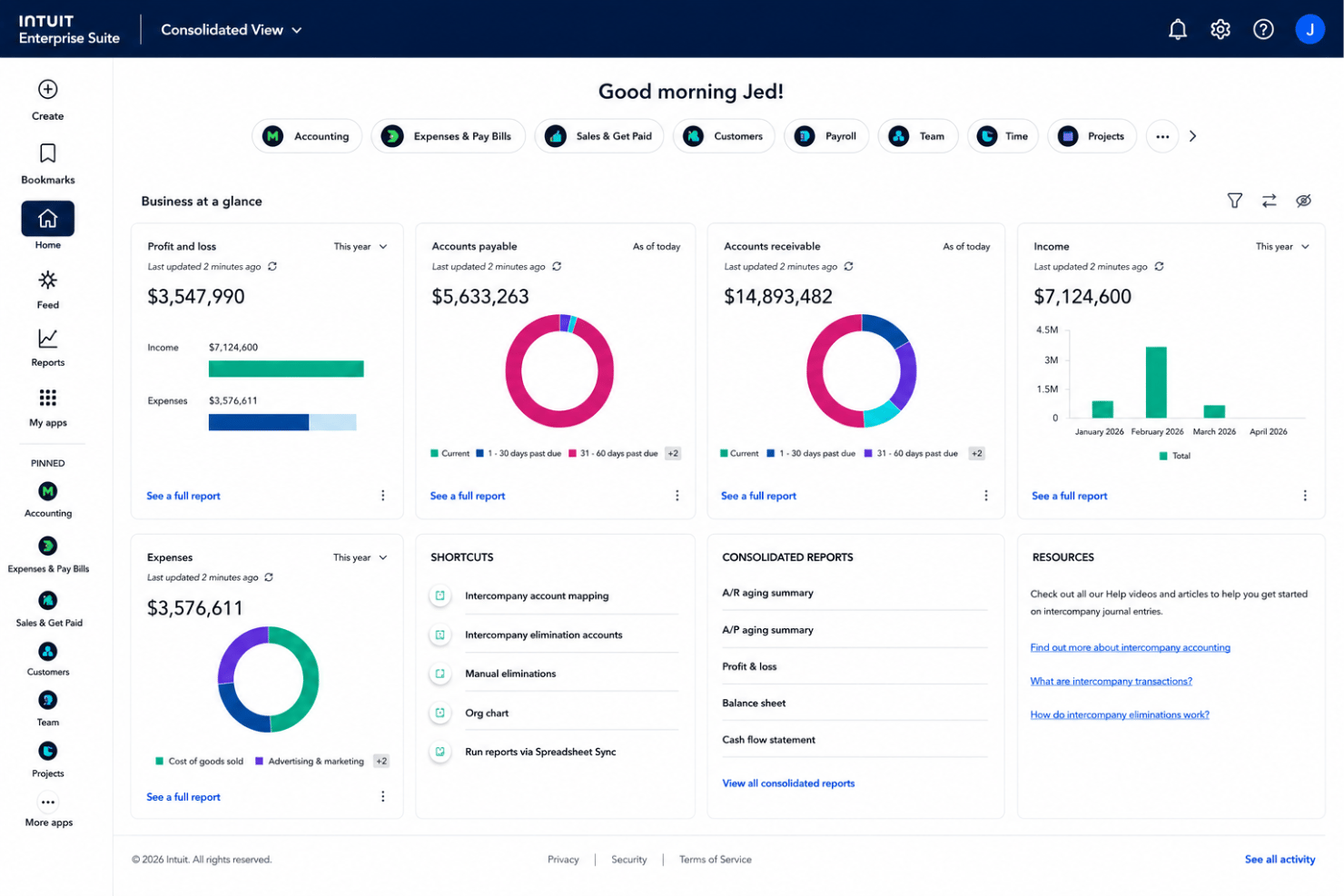
Intuit Enterprise Suite
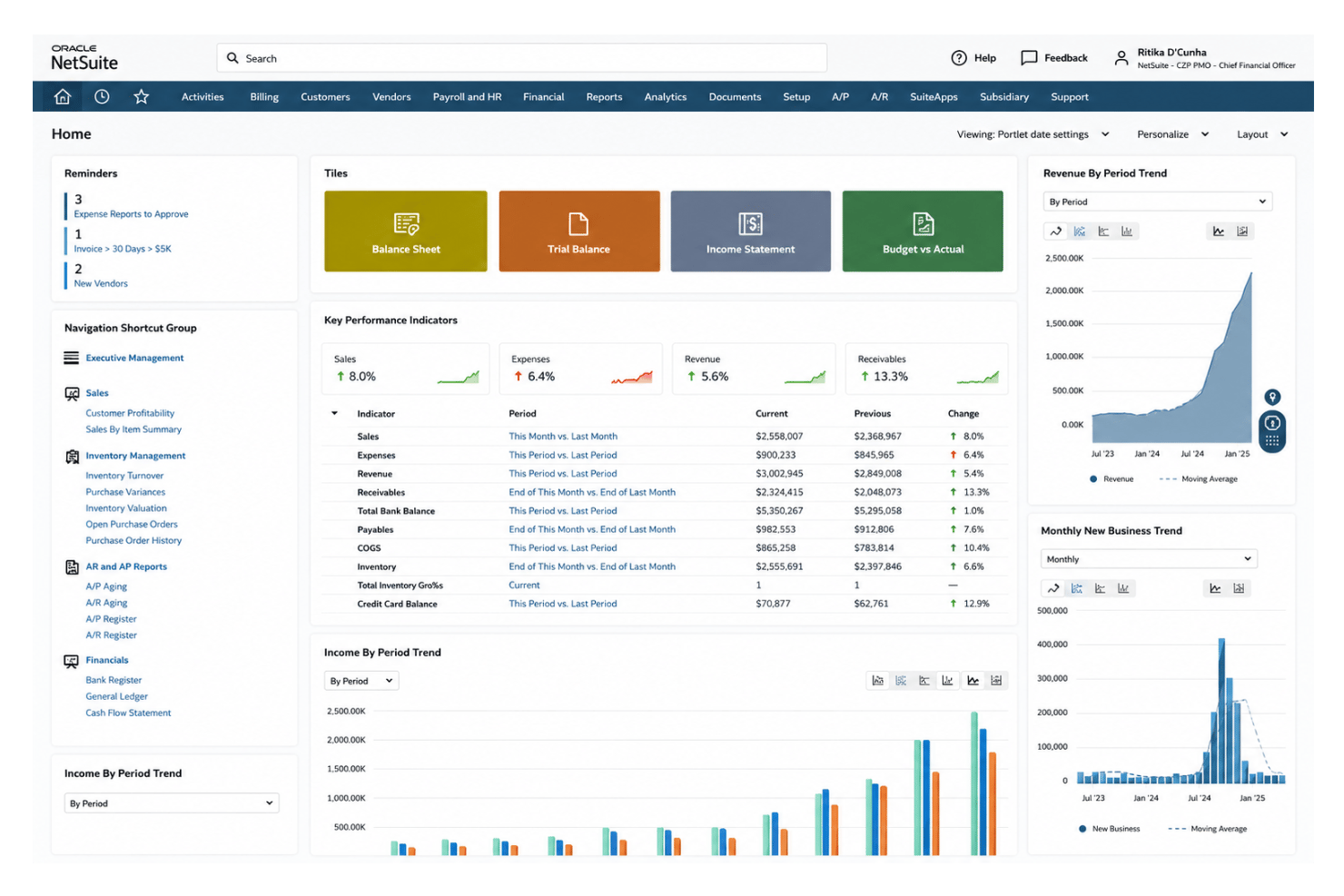
Oracle NetSuite
Why Trust Our Software Recommendations
Our team has been testing and reviewing software since 2012. As HR experts ourselves, we know how difficult—and important—it is to choose the right software.
For this guide, we evaluated tools using hands-on testing and independent research, scoring tools using our selection criteria. We also draw on insights from industry thought leaders and practicing HR experts.
Our reviews reflect our human editorial judgment, not a sales pitch.
Expert reviewers:
Intuit Enterprise Suite vs. Oracle NetSuite Pricing Comparison
| Intuit Enterprise Suite | Oracle NetSuite | |
|---|---|---|
| Free Trial | Free demo available | Free demo available |
| Pricing | Pricing upon request | Pricing upon request |
Intuit Enterprise Suite vs. NetSuite Priser og skjulte kostnader
Intuit Enterprise Suite og NetSuite bruker begge tilpasset prissetting, så du må kontakte salgsteamene deres for å få et pristilbud. Prisen avhenger av faktorer som antall brukere, valgte moduler, implementeringskrav og den overordnede kompleksiteten i virksomheten. Selv om begge plattformene krever et skreddersydd tilbud, kan implementeringstjenester, tillegg, integrasjoner og løpende brukerstøtte øke totalkostnaden utover grunnabonnementet.
For å sammenligne priser effektivt bør du be om et detaljert tilbud som inkluderer implementering, brukerstøtte, integrasjoner, ekstra brukere og valgfrie moduler. Ved å se utover den innledende abonnementskostnaden kan du avgjøre hvilken plattform som gir best langsiktig verdi for organisasjonens behov og vekstplaner.
Intuit Enterprise Suite vs. Oracle NetSuite Feature Comparison
| Intuit Enterprise Suite | Oracle NetSuite | |
|---|---|---|
| API | ||
| Budgeting | ||
| Calendar Management | ||
| Customer Management | ||
| Dashboard | ||
| Data Export | ||
| Data Import | ||
| Data Visualization | ||
| Expense Tracking | ||
| External Integrations | ||
| Forecasting | ||
| Inventory Tracking | ||
| Multi-User | ||
| Notifications | ||
| Project Management | ||
| Scheduling | ||
| Supplier Management | ||
| Third-Party Plugins/Add-Ons |
Intuit Enterprise Suite vs. NetSuite Integrasjoner
| Integrasjon | Intuit Enterprise Suite | NetSuite |
|---|---|---|
| Shopify | ✅ | ✅ |
| Salesforce | ✅ | ✅ |
| PayPal | ✅ | ✅ |
| Stripe | ✅ | ✅ |
| DocuSign | ✅ | ✅ |
| Square | ✅ | ✅ |
| Amazon Marketplace | ✅ | ✅ |
| HubSpot | ✅ | ✅ |
| Knowify | ✅ | ❌ |
| Wix | ✅ | ❌ |
| API | ✅ | ✅ |
| Zapier | ❌ | ✅ |
Både Intuit Enterprise Suite og NetSuite støtter integrasjoner på tvers av økonomi, netthandel, betalinger, CRM og drift. Intuit Enterprise Suite benytter seg av det bredere Intuit-økosystemet for å holde lønn, betalinger, arbeidsstyring, markedsføring og virksomhetsdata sammenkoblet, mens NetSuite tilbyr API-tilgang, støtte for Zapier og større fleksibilitet når det gjelder koblinger. Alt i alt passer Intuit Enterprise Suite for team som ønsker sammenkoblede arbeidsflyter drevet av Intuit, mens NetSuite passer for organisasjoner med mer komplekse teknologistakker og integrasjonsbehov.
Intuit Enterprise Suite mot NetSuite sikkerhet, samsvar & pålitelighet
| Faktor | Intuit Enterprise Suite | NetSuite |
|---|---|---|
| Datakryptering | Krypterer data under overføring og lagring for å bidra til å beskytte sensitiv finansiell og operasjonell informasjon. | Bruker kryptering for forretningsdata og støtter autentiseringskontroller på bedriftsnivå. |
| Regulatorisk samsvar | Støtter SOC-rapporter, ISO 27001-sertifisert informasjonssikkerhetspraksis, PCI DSS-samsvar for aktuelle betalingstjenester og VPAT-dokumentasjon. | Tilbyr omfattende dokumentasjon for samsvar på bedriftsnivå, inkludert SOC-, ISO- og PCI-standarder samt globale revisjonsstandarder. |
| Tilgangskontroller | Inkluderer rollebaserte tilgangskontroller slik at organisasjoner kan begrense tilgangen til sensitive finans-, lønns- og driftsdata. | Tilbyr detaljerte tillatelser, MFA, SSO og tokenbasert autentisering for komplekse bedriftsmiljøer. |
| Pålitelighet | Tilbyr ressurser for sikkerhet og samsvar på bedriftsnivå, men en spesifikk oppetidsavtale for IES er ikke offentlig oppført. | Publiserer mer detaljert informasjon om infrastruktur og tilgjengelighet, inkludert informasjon om oppetid og katastrofegjenoppretting. |
Intuit Enterprise Suite dekker viktige sikkerhetskontroller, inkludert kryptering under overføring og lagring, rollebaserte tilgangskontroller, SOC-rapporter, ISO 27001-sertifisert praksis og PCI DSS-samsvar for aktuelle betalingstjenester. NetSuite gir samtidig mer offentlig informasjon om infrastruktur, oppetid og globalt samsvar. Alt i alt passer Intuit Enterprise Suite for voksende virksomheter med behov for sikre finansielle, administrative og operasjonelle data, mens NetSuite kan passe organisasjoner med mer komplekse krav til samsvar.
Intuit Enterprise Suite mot NetSuite Brukervennlighet
| Faktor | Intuit Enterprise Suite | NetSuite |
|---|---|---|
| Brukergrensesnitt | Bruker et velkjent grensesnitt i Intuit-stil med organisert navigasjon for økonomi, lønn, rapportering og arbeidsflyter. | Bruker et samlet ERP-grensesnitt på tvers av økonomi, CRM, innkjøp, lager, prosjekter og globale operasjoner. |
| Oppstart | Tilbyr veiledet oppstart, kundestøtte, hjelp med datamigrering og opplæringsalternativer. | Bruker SuiteSuccess, implementeringspartnere, opplæringsressurser og rollebasert støtte ved oppsett. |
| Tilpasning | Støtter konfigurerbare arbeidsflyter, rapporter, integrasjoner, enheter, dimensjoner og godkjenninger. | Støtter omfattende ERP-tilpasning gjennom SuiteCloud, SuiteBuilder, SuiteFlow og SuiteScript. |
| Daglige oppgaver | Hjelper team med å administrere økonomiske operasjoner, lønn, betalinger, rapportering og godkjenninger gjennom sammenkoblede Intuit-verktøy. | Støtter daglige arbeidsflyter på tvers av økonomi, CRM, lager, innkjøp, prosjekter og datterselskaper. |
| Støtte og hjelp | Tilbyr produktstøtte, veiledning fra kundesuksessteam, opplæringsplaner og alternativer for premiumstøtte. | Tilbyr støttetjenester, opplæringsprogrammer, implementeringsressurser og støttealternativer fra partnere. |
Intuit Enterprise Suite fokuserer på veiledet innføring, velkjente arbeidsflyter og sammenkoblede verktøy for virksomhetsstyring for voksende organisasjoner. NetSuite støtter samtidig bredere ERP-prosesser, dypere konfigurasjon og større operasjonelle strukturer. Det riktige valget avhenger av om teamet ditt trenger en strømlinjeformet Intuit-styrt opplevelse eller et svært konfigurerbart ERP-miljø.
Intuit Enterprise Suite vs Oracle NetSuite: Pros & Cons
Intuit Enterprise Suite
- Multi-entity management simplifies financial operations across growing organizations.
- AI-powered automation helps reduce manual financial, administrative, and operational tasks.
- Advanced reporting and real-time business insights improve decision-making.
- May offer more functionality than smaller businesses with basic accounting needs.
- Organizations migrating from simpler accounting software may face a learning curve.
- Advanced customization and complex implementations require additional planning and configuration.
Oracle NetSuite
- Real-time dashboards support detailed and customizable reporting.
- Multi-subsidiary management works across currencies and countries.
- Automates manual tasks in HR, finance, and operations.
- Implementation projects often take several months to complete.
- Advanced features usually require additional modules or fees.
- User interface can feel cluttered in complex workflows.
Best Use Cases for Intuit Enterprise Suite and Oracle NetSuite
Intuit Enterprise Suite
- Multi-Entity Organizations Manage multiple legal entities, automate intercompany transactions, and consolidate financial reporting from a single system.
- Professional Services Firms Track projects, manage financial performance, and automate accounting workflows while improving visibility across teams.
- Technology & SaaS Companies Support growing operations with AI-powered reporting, forecasting, and financial controls as the business scales.
- Construction & Project-Based Businesses Manage project accounting, budgeting, and financial reporting with workflows designed for project-driven organizations.
- Manufacturing, Wholesale & Distribution Monitor financial performance across products, locations, and business units while improving operational visibility.
- Growing Mid-Market Businesses Organizations expanding across multiple entities or locations can benefit from enterprise-level financial management without the complexity of a traditional ERP.
Oracle NetSuite
- Mid-Sized Manufacturers NetSuite's inventory, production, and workflow automation features fit manufacturers managing multiple processes and warehouses.
- Global Companies The platform natively supports subsidiaries, currencies, and tax rules, making it ideal for cross-border and multi-entity businesses.
- Nonprofit Organizations Purpose-built nonprofit editions track grants, finances, and compliance requirements in a unified system.
- Finance Departments Finance teams get automated reporting, advanced analytics, and centralized financials for better decision-making and compliance.
- eCommerce Businesses Direct order, shipping, inventory, and CRM management help eCommerce companies keep up with online sales demands.
- Professional Services Firms Project accounting, resource tracking, and expense management streamline operations for consulting, IT, and service-driven companies.
Hvem bør bruke Intuit Enterprise Suite, og hvem bør bruke NetSuite?
Hvis du ser etter programvare for virksomhetsstyring som kombinerer AI-drevet automatisering med sammenkoblede Intuit-verktøy for økonomi, lønn, betalinger, regningsbetaling og rapportering, er Intuit Enterprise Suite sannsynligvis det beste valget. Det er ideelt hvis du trenger styring av flere enheter, avansert rapportering og veiledet implementering uten å påta deg den fulle kompleksiteten ved en tradisjonell ERP-implementering.
Hvis du derimot trenger et bredere ERP-system med AI integrert i globale operasjoner, komplekse datterselskaper, avansert lagerstyring, innkjøp, CRM og svært konfigurerbare arbeidsflyter, kan NetSuite være det beste valget. NetSuite Next tilfører samtalebasert intelligens, agentiske arbeidsflyter og søk med naturlig språk, noe som gjør det egnet for organisasjoner som ønsker AI-støtte på tvers av et bredere ERP-miljø.
Differences Between Intuit Enterprise Suite and Oracle NetSuite
| Intuit Enterprise Suite | Oracle NetSuite | |
|---|---|---|
| AI Experience | Uses Intuit AI Agents to support automation, financial insights, and workflow assistance across business operations. | Uses NetSuite Next and embedded AI for conversational intelligence, agentic workflows, natural-language search, and broader ERP analysis. |
| Customization Model | Supports configurable workflows, reports, integrations, dimensions, entities, and approvals. | Supports deeper ERP customization through SuiteCloud, SuiteBuilder, SuiteFlow, SuiteScript, and partner extensions. |
| Global Operations Depth | Supports growing businesses with multiple entities, locations, projects, and product lines. | Supports complex global operations through OneWorld, including subsidiaries, currencies, tax rules, and international reporting. |
| Implementation Approach | Uses guided onboarding with customer success support, migration help, training, and a shorter implementation timeline than traditional ERPs. | Uses a more formal ERP implementation model through SuiteSuccess, training, configuration, and implementation partners. |
| Native Financial Services | Includes built-in payment processing, bill pay, and access to business lending through the Intuit ecosystem. | Supports payments and bill pay, but some capabilities may rely on external partners, add-ons, or third-party apps. |
| Visit Intuit Enterprise SuiteOpens new window | Read Oracle NetSuite ReviewOpens new window |
Similarities Between Intuit Enterprise Suite and Oracle NetSuite
| Cloud-Based Access | Both platforms are cloud-based, allowing teams to access business data, workflows, and reports online. |
|---|---|
| Core Financial Management | Both support key financial workflows such as AR, AP, general ledger, project accounting, and financial reporting. |
| Multi-Entity Support | Both help organizations manage multiple entities and consolidate financial data across business units. |
| Reporting & Planning | Both offer reporting, dashboards, forecasting, budgeting, and business intelligence tools for decision-making. |
| User Permissions | Both include role-based permissions to help control access to sensitive business, finance, and operational data. |
| Visit Intuit Enterprise SuiteOpens new window Read Oracle NetSuite ReviewOpens new window | |