In today's fast-paced business environment, understanding and leveraging intangible assets have become crucial for sustainable success.
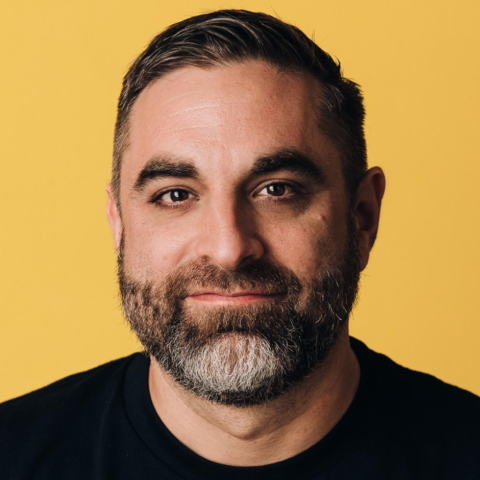
In this episode, host David Rice is joined by Claire Chandler—Author of Growth on Purpose and Executive Leadership Advisor—to bring a wealth of knowledge on intentional growth and authentic leadership, providing actionable insights for businesses looking to thrive in the modern economy.
Interview Highlights
- Meet Claire Chandler [00:45]
- Claire has a long career in corporate America.
- She is a cancer survivor.
- She left corporate in 2011 and started her company, Talent Boost, in 2013.
- Talent Boost specializes in talent management consulting for large organizations.
- Understanding Business Value and Intangible Assets [01:43]
- Tangible assets (buildings, products) used to drive most business value.
- Today, intangible assets (brand, intellectual property, human capital) drive most business value.
- Intangible assets are harder to measure but crucial for business growth.
- Focusing on intangible assets can significantly increase business value.
- Key Metrics for Measuring Culture [03:42]
- HR departments often measure many metrics but need to focus on key areas.
- Four key metrics to focus on: attraction rate, retention rate, engagement rate, and internal hire rate.
- These metrics build on each other: strong attraction and retention lead to higher engagement and internal mobility.
- Gartner, McKinsey, and Deloitte provide benchmarks for measuring human capital value.
You don't have to measure every single thing just because the data is available. You really need to focus on four key metrics: What is your attraction rate? What is your retention rate? What is your engagement rate? And, what is your internal mobility or internal hire rate?
Claire Chandler
- HR Data and Action [05:53]
- Companies have improved in data collection using HRIS and other tools.
- The key challenge is translating data into actionable insights.
- HR needs to interpret data and provide context for business decisions.
- Data without action leads to more noise and inefficiency.
- HR professionals should focus on data that drives meaningful change.
- The Four Ps of Culture [08:37]
- The four Ps of culture are people, process, purpose, and performance.
- Focusing on one P often leads to divergence and silos.
- Purpose is the key to aligning people, process, and performance.
- A clear purpose drives better decision-making and attracts the right talent.
- Poor Managerial Communication [11:25]
- Claire has seen many examples of poor management communication.
- A recent example is a CEO starting a termination conversation by saying "this is going to be a very bad day for you".
- This approach creates a negative atmosphere and hinders open communication.
- A better approach would be to start with a more neutral tone and focus on open dialogue.
- The Four Pillars of Growth on Purpose [13:49]
- The Growth on Purpose model has four pillars: Aspiration, Awareness, Acceleration, and Alignment.
- Aspiration: Defines the company's purpose and mission, attracting the right talent.
- Awareness: Focuses on employee development and creating a sense of belonging.
- Acceleration: Builds trust within teams, emphasizing leadership by example.
- Alignment: Connects individual goals to the company's overall strategy.
- Pillars must be followed sequentially for successful growth strategy implementation.
- Trust and strong team dynamics are essential for effective collaboration.
- Ignoring early pillars leads to difficulties in achieving the growth strategy.
So, you've invited the right talent to join your team. Now, how do you get them to stay? One way is by creating a culture where the right talent feels like they belong.
Claire Chandler
- Building Trust and Authentic Leadership [21:47]
- Leaders often struggle to gain trust due to fear of admitting weaknesses.
- Pretending to know everything erodes trust and hinders collaboration.
- Authenticity is key to building trust and a following.
- Copying leadership styles can be counterproductive if it doesn't align with one's personality.
- Leaders should invite their team's input and acknowledge when they change their mind based on team feedback.
- Projecting self-confidence is important, but it shouldn't cross the line into narcissism.
I believe the most common way people erode trust, let alone lose it, is by losing sight of the need to be authentic first.
Claire Chandler
- Incentivizing Horizontal Collaboration [26:00]
- Silo mentality is common in organizations due to growth and structure.
- Incentivizing horizontally encourages collaboration across teams.
- Mindset shift is crucial before changing processes.
- Leaders should encourage horizontal thinking and planning.
- Incentivizing vertically can hinder overall growth.
Meet Our Guest
Claire Chandler deeply believes that leaders shape cultures, and stronger cultures drive greater success. Leveraging 30 years of experience in people leadership, human resources, and business ownership, Claire specializes in helping businesses expand without losing their best talent through her proven “Growth on Purpose” framework.
Claire holds a certificate in strategic HR leadership from Cornell’s School of Industrial and Labor Relations, a master’s degree from the New Jersey Institute of Technology, and a bachelor’s degree from Fairfield University. She has appeared as a guest on more than 150 podcasts, is the author of several books on leadership and business strategy, and is a contributing writer for Forbes. She received the 2023 Best of America Small Business Award as Best Entrepreneur—Business Consulting.

Just as culture is foundational to any business, trust is foundational to culture. You cannot grow without it. You can't effectively build teams that collaborate and support each other without trust across teams and between employees.
Claire Chandler
Related Links:
- Join the People Managing People Community
- Subscribe to the newsletter to get our latest articles and podcasts
- Connect with Claire on LinkedIn
- Check out Claire’s book: Growth on Purpose
Related Articles And Podcasts:
Read The Transcript:
We’re trying out transcribing our podcasts using a software program. Please forgive any typos as the bot isn’t correct 100% of the time.
Claire Chandler: You’re not alone in thinking that you have to pretend that you have all the answers. And I’m here to tell you that your team already knows that you don’t know everything, because spoiler alert, you’re human.
David Rice: Welcome to the People Managing People podcast. We’re on a mission to build a better world of work and to help you create happy, healthy and productive workplaces. I’m your host, David Rice. My guest today is Claire Chandler. She is the author of “Growth on Purpose” and an executive leadership advisor. We’re going to be talking about the book and how leaders can instill a framework for intentional growth.
Claire, welcome.
Claire Chandler: Thanks, David. It’s great to be here.
David Rice: All right. So first off, tell us a little bit about you, your career over the years. What led you to write Growth on Purpose?
Claire Chandler: That sounds like a simple question, but it’s a loaded one, right? So I’ve been doing this for quite a while now. I am a self professed corporate survivor.
I also happen to be a cancer survivor, but that’s almost tangential, I think, to my story at this point. I spent the first 20 years or so of my career in corporate America, and then after my brief bout with cancer, I’m cancer free now, thankfully. I left corporate in 2011 that same year and used that experience to propel me out to the entrepreneurial unknown.
Two years later, 2013, I founded my company, Talent Boost and I specialize in advising large organizations on how to attract, retain, engage, and grow the right talent so that they will, in turn, grow your business for you.
David Rice: I want to talk about the book. We’ll just jump right into it. In the book, you start out with how to value your business.
And you look at this through an equation of like business value equals profit times multiple. Profit is fairly straightforward, but take us through what you mean when you say multiple and the role that like intangible assets play in business value, particularly in today’s economy.
Claire Chandler: Yeah, it’s always interesting to do the math around this, right? Because every business, even a nonprofit business has to know its numbers. And when you think about tangible assets, you think about, the pipes in the ground, the buildings, the assets, the financial capital, the products that a company is known for. And back in the industrial economy, that drove upwards of 95% of the value of any business was their fixed, tangible, hard assets, right?
Well, fast forward to today, and that is no longer true. It’s the intangible assets that actually drive somewhere around 75% of the value of a business, more in more service-based businesses. So it’s really important to understand that is the magic in the multiple, right? As you said, profit is pretty straightforward, right?
If you want to increase your profit, you either have to cut expenses or somehow increase revenue. And that’s, it’s pretty black and white. When you talk about the multiple side, though, that is where great organizations, sustainably growing organizations really set themselves apart. Because they understand that those intangible assets and we’re talking about things like, your brand, your services, your intellectual property, your institutional knowledge, and your human capital versus your financial capital.
That’s all a bunch of wild cards when you think about it. And a lot of people think, well, you can’t actually measure that, but you actually can. And because it drives the overwhelming majority of the value of the business, it is really important to nurture that in intentional ways.
David Rice: Absolutely.
You talk in the book about measuring culturing, looking at how you measure these things, and there are some important metrics folks should be looking at in there, things like attraction rate, retention rate, engagement, internal hire rate.
I’m curious, can you tell a little bit about how you look at each of these and what tools you’ve seen be most impactful in providing reliable insights based on these metrics?
Claire Chandler: Yeah, absolutely. Most of the time when I work with a client organization, it is through the door of human resources or the people organization.
Not always, but that typically is where the conversation starts. And HR is great, they’re all proud of themselves. They have started to discover analytics, right? They have really glommed onto the reality that they need to know their numbers if they are truly going to advise the business in the right direction.
And so they’ve gone metric crazy. They have started to analyze and measure anything and everything. And what I try to get my clients to understand, and it’s where I focus this portion of the conversation in the book, is you don’t have to measure every single thing just because you have the data available.
You really have to focus on those four key metrics, right? So what’s your attraction rate? What is your retention rate? Most companies translate that into their turnover rate, but let’s flip that. What’s your engagement rate? And then as you said, what is your internal mobility or your internal higher rate?
And those four metrics build on each other, right? You can’t actually improve your internal mobility or your internal fill rate until and unless you do those first 3 activities really well, as measured by are you attracting the right talent? Are you retaining them longer? Are you getting them more deeply engaged so that they will be more productive and help you move the needle?
And so for organizations that really don’t know where to start, maybe they don’t have a lot of that data collected or they have their numbers, but they’ve got no frame of reference. My go-to is typically Gartner. McKinsey, certainly. Deloitte, some of the other biggies. But when you’re talking about measuring those intangible assets that we’re talking about in the human capital that really drives the value of business, Gartner is a great place to start if you are starting from scratch in terms of evaluating what does good look like.
David Rice: And in terms of like tools, I’m just curious to follow up on that. How well do you think companies, that you’ve seen are using the tools? Because it seems like, whether it’s an HRIS or an ATS or whatever. There’s all these tools that can collect a ton of data for you. And like you said, everybody’s going to go on a little metric crazy.
How well would you say a lot of companies have done in translating what they can get from those tools? And, like, how effective have the tools been?
Claire Chandler: Yeah, it’s such a fundamental question, right? Because I do think over recent years, most organizations have gotten better about mining their data and actually pulling out of their systems, whether it is an HRIS system or good old fashioned, old school Excel worksheets, they have been better at actually measuring.
And now the key differentiator is to your point, how do we translate that into action? Right? How do we use the data? I mentioned analytics for that’s the big pivot point that most people, organizations and most businesses are at right now. How do we not just focus on making sure that data is quality data, reliable data, because as we all know, garbage in garbage out.
But now how do we pivot that and actually translate that into insights that we can use to drive decisions? And so that I think is still the key point in the learning curve for most HR business partners is, okay, now that I see the data, and now that I’m starting to understand what that data is telling me, how do I actually translate that into a guide for the business?
And it’s incumbent upon HR to do that, because if they want to be taken seriously as a partner to the business, versus just, the guy or gal with the clipboard that we bring in to fire someone, they have to get knowledgeable. They have to understand what that data is telling them and they have to put it within context, right?
I think HR has a really key obligation to put information related to people, related to talent, related to culture in context that the business is going to understand. So all those things are super important and I think that is one of the main skills that anyone in HR is going to need to possess and draw upon forward.
David Rice: Yeah. I think that’s a great way to say it because, you can get quality in, like you said, we have the tools for that, but the only way quality out happens is insight plus action.
Claire Chandler: If it’s not driving decisions, better decisions, more, data-informed decisions, then it’s just creating more noise.
And as we know, you talk to any HR professional, they’re going to tell you they’re too busy for any of that. And it’s like, because you’ve got to narrow in on what is actually going to move the needle. Right? And you do that through better information.
David Rice: Absolutely.
You talk about in the book, the four Ps of culture, it’s people, process, purpose, and performance. And as someone who’s worked as a journalist in the past, I really like that framework because it reminds me of the who, what, where, why, and how. So that approach to looking at organizational issues, something like culture. But you advise to not build initiatives around people, process, or performance.
Take us through why that is and where leaders should focus their energy instead.
Claire Chandler: So I love how you framed up the question because coming out of college for about 10 minutes as an adult, I thought I was going to be a journalist. I had, run the school newspaper. I had this dream that I was going to be the next, great reporter or writer or whatever.
So it’s so interesting that you framed up the four Ps that way. And so there are these four Ps, right? And if we talk about, I’m going to go back. If you picture a Venn diagram and you put people, process, and performance in each of the three circles, the problem is that if you only focus on one of those three circles, you’re going to more often than not diverge instead of come together.
And what I mean by that is, you put a CFO, a CEO, or a COO, and the chief people officer in the same room. And you have them focus on the same challenge, the same business task, the chief people officer is going to walk in and look through the lens of people first, right? The CFO is going to look in terms of performance.
What’s the bottom line financial outcome of this decision or this, situation that we’re dealing with? And the COO is, yeah, they’re going to focus on performance, maybe they’re going to dip a toe into people, but they really want to know, okay, what’s the process that’s going to get us there. Right?
And the problem is if you’re focused on all those three different lenses, like I said, unless you’re incredibly lucky and by pure coincidence, you’re going to converge, you’re more likely going to diverge and continue to create silos, which we know are the death knell and yet the artifact of every single large growing organization.
And so the antidote to that is to focus on the sweet spot in the middle. And that’s that fourth P of purpose. And before half of your audience tunes out and says, that’s too squishy. It’s great to have some meaning in your life and all of that, but we have to hit our numbers day in and day out.
I’m here to tell you if you don’t focus first on purpose, first of all, you are not going to get the alignment that you need between the chief people officer, the chief financial officer and the chief operations officer. And you’re very likely not going to attract, let alone routine and engage and grow the right talent to actually achieve the numbers through the processes that you’re looking for.
So the key is to put that purpose in the sweet spot in the middle and let that drive your decisions and steer those other three filters.
David Rice: Yeah, that’s a great way to keep the business laser focused on its mission statement and its overall goal. Righ?. So I really like that to give it that proper framework.
So I want to do something a little different. I wanted to in the middle of our interviews, I’ve always thought about what should we put in a little break, just something a little bit different. So I’m going to ask you like a, almost like a lightning round question. So what’s the worst example you’ve ever seen of a manager mishandling communication?
Claire Chandler: It’s a triggering question because there are so many, remember I’m a corporate survivor, right? So while I’m an advisor to corporations now, part of the reason I’m able to do that is because I’ve been where they are and I have walked the halls that they walk and I’ve seen some of the really inspiring charismatic leaders in stark relief to the ones who just don’t get it.
And so there’s a story that I tell in the book, it goes back several years and I’ll come back to that in a second, but I want to tell you about the one that is the most recent. I heard of a CEO just within the last couple of weeks, sitting down to have a termination conversation with a senior leader on their team.
And they started the conversation with something to the effect of, this is going to be a very bad day for you. And I thought, what an incredibly awful way to break the ice.
David Rice: I’m sure that got it off on the right foot.
Claire Chandler: Total. I mean, way to create a culture and an environment and a safe space to have a conversation where you already know the end, where we’re going to parkways and it’s happening now and turn over your company assets and yada yada.
But to start from that standpoint, especially as an executive leader, I find to be so atrocious. And so that to me, just from a re, there’s a recency bias to my answer to your question, but it feels to me like that is just one of the absolute worst ways somebody in that position can start a conversation.
David Rice: That’s a great way to guarantee that the listener’s brain starts to go a hundred miles an hour on all these other things.
Claire Chandler: I mean, talk about triggering fight or flight defense mechanisms, just pre staging how this conversation is going to go by framing it in that way versus, want to talk to you today, let’s have an open conversation or something to that effect.
But to start with, this is going to be a very bad day for you. It’s just self fulfilling prophecy and just a telltale example of culture done wrong.
David Rice: Yeah, absolutely. That’s triggering for me too, because I’ve had something similar experience. That’s awful.
So steering it back to the book, the Growth on Purpose model is broken down into four pillars; aspiration, awareness, acceleration, and alignment. Take us through each of these a little bit and why they fall in that order.
Claire Chandler: Yeah, absolutely. So similar to the metrics and not coincidentally, because they do inform these four pillars, these pillars do build on each other. These are the do not pass go without getting each of these right in this sequence so that they can culminate in you and your organization actually fulfilling your growth strategy.
And so the four pillars are the four A’s. So you already know about the four P’s. I’m very big on alliteration. I was an aspiring writer, back in my, I was about to be a journalist for 10 minutes. And so pillar one is aspiration. You mentioned mission statement. We talk about how purpose is at the sweet spot or the intersection between people process and performance.
This is absolutely your ‘do not pass go’ moment, especially in this day and age where it is a candidates market. And people are telling you how much they believe in you and your mission with their feet, right? They’re telling you by only doing enough not to get fired. They are telling you by the verbatim comments they are providing in your annual engagement survey.
These are all telltale signs that the right talent is disengaging and looking for an exit. And so it’s really important to get the aspiration pillar right, because you have to give the right talent a reason to believe. We are no longer in a command and control environment. We are no longer in an industrial economy where your fixed tangible assets drive the value of a business.
We are now in an economy that is driven by knowledge. It is driven by discretionary effort. It is driven by ideas and innovation and commitment of the individual employee. And so it’s really important to get this first pillar in place. And it goes beyond just making sure that you pay top dollar to an agency to get a really well crafted mission statement.
This is truly about, at your core, what is it that you are in business to achieve? What is it that you were trying to accomplish? And making an aspirational enough so that you do attract the right people who are going to feel this deep connection with where you’re trying to go. You do that through refreshing your mission, vision and values.
If it’s been a while since you’ve looked at them, and your first instinct is to remember what wall you’ve pinned the mission statement to. You’re doing it wrong, right? You absolutely want to check back in with your organization, your executive leadership team, a cross section of your employees, whatever it takes to understand and reconnect with what is it we are truly trying to do here.
Why does our company matter, right? So it’s really important to get that part done right first. So that’s pillar one. Pillar two is awareness and I call this awareness of self, right? So you’ve invited the right talent to join your team. Now how do you get them to stay? And one of the ways that you do that is by creating through your culture, a place where the right talent feels like they belong, right?
You do this through everything from giving them development that they can drive at their own pace. There used to be this mantra and I said it myself when I was a corporate employee and the head of talent and career development. If you set out to develop everyone, you end up developing no one.
Well, we have technology, we have platforms, we have flexibility, we have hybrid workforces. But that mantra is no longer true. And if you are an organization that does not provide at least foundational development experiences for every single person in your organization, you’re going to lose them. You’re going to miss out on, the diamonds in the rough that are maybe, not in your direct line of sight.
Maybe there are several layers down from you in hierarchy and you don’t know who that next great performer is going to be if you don’t give them opportunities to develop and to encourage them to raise their hands. Right? So that awareness pillar is really important because not only does it increase retention.
It puts you on the right path toward deeper engagement because it gives people an opportunity to drive their own development, to find what their fast lanes are, and to really move the needle for themselves in a career that they might actually want to stick around for longer. So that’s pillar two.
Pillar three is acceleration. It’s the subtitle of that is acceleration of trust, right? Just like culture is foundational to any business, trust is foundational to culture. You cannot grow without it. You cannot actually put people together in teams where they are going to collaborate and support each other without trust across teams and trust between employees.
And so, the way that we see where trust is missing is high degrees of disengagement, high degrees of conflict, high degrees of drama incidents of employee relations and progressive discipline trending in the wrong direction, volume and in complexity. And so it’s really important to do things to get team dynamics more strengthened, to bring teams together in authentic ways where the leaders walk the talk, right?
So I’ve done leadership retreats as an example where the executive leader who endorsed getting the teams together, participate side by side with their team. The stark difference in that is a culture where the leader says, well, my endorsement is the fact that I signed off on the invoice, right?
That I agreed to expending this budget. There’s a huge difference between a culture where that is the mentality of development that, Hey, I got to the executive seat without any sort of development. I don’t need it now. And the cultures that say, I need to walk the talk. If I expect this team to follow me and to model the behavior that I want to see, I have to be modeling it myself.
And so those are some of the ways that you cement that acceleration pillar. When you do that, you start to create a culture of cohesion versus disconnect. And then the fourth pillar is alignment. And the subtitle to that one is alignment on what matters. Alignment is, when you start to piece together those first three pillars, you see the cumulative effect.
You can’t just skip to alignment and I’ll give you an example of that. These same clients where I come in and do leadership retreats where we work on strengthening team dynamics first, right? And building upon a platform of trust to actually get people to want to support and collaborate with each other.
More often than not, those clients first call me and say, we’ve got this really ambitious growth strategy. Can you come in and facilitate a strategic planning session? Where we build out the roadmap from current state to, 3 year, 5 year outcome. And my answer is always the same.
I’m happy to do that as day 2. But day 1 has to be around this formation of, strengthening team dynamics, this building of trust, this, connecting people as humans first and understanding and appreciating the different skills and potentially very different perspectives they bring to the table.
And once we do that a little bit, now we can talk about how do you help them make deeper connections between, what they are individually bringing to the table in terms of their role, their skillset, their objectives. And how it connects to the deeper organizational mission. How do we strengthen that alignment between your talent strategy and your growth strategy?
And how do we deepen the connection between what you find that matters at your core, what your motivations are and what your strengths are, with how they are going to make an impact on your organization and potentially on the world? So those four pillars, when you do them in sequence, you start to understand you, you can’t do them out of order.
You can’t skip ahead to alignment just for the sake of efficiency. If you skip over these other, these other three pillars, then it doesn’t matter how brilliant your growth strategy is, you will fail at achieving it.
David Rice: Later in the book, when you going back to that acceleration piece, you were, you’re talking about it a little bit.
And the importance of trust in leadership, this is a difficult area, I think, because trust is difficult for leaders to gain, but it’s very easy to lose, right? So, where do you feel most leaders fall short in acquiring trust from their people? And then what is the most common way that they lose it?
Claire Chandler: So a couple of years ago, I was having dinner with the COO of one of my client organizations, big organization.
And we weren’t talking business per se, like our relationship was a professional one, but it wasn’t like all about strategy and everything. It was really just to deepen that, practice what I preach, right? Deepen that human connection, find areas of common ground. And without prompting as the evening went on, he confided in me and he said, some of the leaders on my team don’t trust me and I don’t get it.
I don’t understand why that is. And as we were probing that, we were seeing that he had this really deep seated fear and reservation about acknowledging what he didn’t know. The reassurance I was able to give him first of all, was you’re not alone in thinking that you have to pretend that you have all the answers.
And I’m here to tell you that your team already knows that you don’t know everything. Because spoiler alert, you’re human, right? And so by definition, you’re flawed. And the reason that you have a team is because you’re not supposed to do everything yourself. You’re not supposed to have all the answers.
And the minute that you think you need to do that is the minute you lose people. And so I think the most common way that people erode trust, let alone lose it, is to lose sight of the fact that they need to be authentic first. One of the other sort of ways that they err on the opposite side of that is they see a charismatic leader, whether in their organization or somebody they admire, and they try to copy that style. And the worst thing you can do is emulate the style of somebody who is just completely different from your own style. And I’ve had really humble servant driven purpose focused leaders say to me, but I’m not charismatic.
How am I supposed to get my team to follow me? And I say to them all the time, if charisma is not your jam, is not your natural style, don’t try to lean into something that isn’t there. Right? The way you’re going to build a following, the way you’re going to build trust, the way you’re going to nurture that is by being authentic and being human first and connecting with people on that level.
So you know, leaders, especially executive leaders, they overcomplicate the crap out of this because they think they have to just, have this overconfidence and they don’t. Now they don’t have to express fear. They don’t have to express, share their neuroses and their anxiety with their team, certainly.
But when they don’t know something, they need to invite their team into the conversation and say, here’s the challenge we’re trying to solve. And I would like us to do that together. Oh my gosh. What a great way to get your team to lean in and help you solve the biggest problems in your business.
David Rice: Yeah. I would argue that authenticity is inherently more charismatic, obviously faking it until you make it right. Well, we all do a little bit of that in some sense, but I think that people respond better to seeing who you are as a human being always than feeling like they got to call BS on a lot of what comes out of your mouth,
Claire Chandler: and there’s a difference between projecting self confidence and faking it until you make it, right? I think no leader is going to build a following if they look like they’re scared at their, of their own shadow. So projecting self confidence is great when it starts to flirt with this narcissistic, I know everything, I always see it to teams and to leaders.
One of the telltale ways that you can check yourself is ask yourself the question, when is the last time you changed your mind based on the input or the idea of someone on your team? And if they can’t remember the last time that happened, they really need to do some deep self reflection.
David Rice: Yeah. That’s a worrying sign.
Claire Chandler: Totally.
David Rice: You mentioned in that same section, the importance of incentivizing horizontally and that this is key to motivating folks to perform outside of their vertical or silos. Can you give us an example of this that you’ve seen work really well and what had to change in terms of mentality or philosophy from leadership?
Claire Chandler: Yeah, I see this all the time. We all see this all the time, right? No organization intends to build silos. And yet as you grow and as you start to put in more structure, bureaucracy shortly follows. And one of the most natural things in the world to do as you form teams is to say, okay, here’s your team’s objectives, the objectives for your division, et cetera.
And we always look for it. And so one of the ways that you can break out of that a little bit from a mindset perspective first, because we have to shift mindset before we can alter process, right? We have to shift why this matters before we can alter the how, because people just get tied to the how, but whatever.
When I do these leadership retreats as an example, and executive leaders, middle managers doesn’t really matter. One of the first things I do is share ground rules, and one of those ground rules is, while you can advocate strongly for your own vertical, for your own team, for your own sphere of influence, think horizontal.
When you get people to understand that, I use the example of space flight. When you look at mission control before they will hit go for the space shuttle or for the latest SpaceX rocket to launch, they do a go, no go for launch, right? And they literally go around the room and whoever is responsible for that vertical, for that portion of the flight, the pre flight check, they have a go or no go.
And you know how many no go’s they have to have before they scrap a launch?
David Rice: No, I don’t.
Claire Chandler: One.
David Rice: That’s what I thought.
Claire Chandler: Just one, right? So why is it different in business? And so when you go through that visual and you get people to understand, especially the leadership level. Yes, you’re still incentivized vertically, and we’ll get to that later because that speaks to process and it takes longer.
You have to shift their mindset first. You have to get them to understand that they have to think and plan and strategize and then incentivize horizontally because it’s so interesting. Every CEO and other, Csuite executive I talk to, they have this common complaint. They say, I can’t get my leadership team to collaborate.
Every single one of them tells me that they don’t communicate well, across the silos and I always say the same thing. I say, well, how are you incentivizing them? And then it’s, crickets, right? Because it’s true. It’s, as we, it is easier to incentivize vertically, but it stunts your growth.
So you have to think horizontally. You have to shift the mindset first and get people to understand the mission criticality of thinking horizontally and planning across those silos before you can start to shift the processes to support that.
David Rice: Absolutely.
So, before we go, I want to give you a chance to tell people more about where they can connect with you and find out more about what you’ve got going on.
Claire Chandler: Love it. So, first of all, thank you for being such a great host. I’ve loved all of your questions. I’m super excited about my book, this my newest book, Growth on Purpose. So for anybody in your audience who’s interested in learning more about the book, maybe grabbing a copy of the book they can go to growthonpurpose.com.
There’s a button that will take them straight to the Amazon page where they can purchase the book, but there’s also a button there for them to take a free scorecard to understand their own readiness for growth on purpose in their own business. And it will generate for them a pretty detailed report of recommendations for how they can shore that up.
So that’s the main website. And then if they want to learn more about me, ClaireChandler.net. It’s my personal brand. TalentBoost.net is my company site. And then of course, find me on LinkedIn because I’m usually lurking out there.
David Rice: Awesome. I love the free scorecard. Everybody in HR loves a scorecard, so.
Claire Chandler: Right. Always.
David Rice: So the second thing is we have a little tradition here on the podcast. You get to ask me a question, so I’m going to turn it over to you. Ask me anything you want. It doesn’t have to be related to this or it could be.
Claire Chandler: If you wouldn’t mind, I would love to stick with the theme and I would love to hear, because I think we all especially as entrepreneurs spend a lot of time in our own heads.
So I had become enamored with this concept of growth on purpose. I felt like business around this methodology. But I would love to hear from you what the phrase growth on purpose brings up for you, like what that means to you and your business?
David Rice: I think I’ve seen this a few times because I’ve worked for a few different startups over the years and I’ve seen where the business grew in a way in which it was very haphazard and things just got out of control or things.
They got ahead of themselves where they wanted to do things that they weren’t ready to do, or it was just not understanding where they could go as a business from an earlier stage. So they got further along, then they realized we could do this. And they wanted to become that now, but they hadn’t built to be that all along.
And so I think what the phrase to me when I, what I thought when I saw the title was, this is going to be, really hyper-focused on helping businesses identify what they’re good at and how to use that, fuel that to get to where they want to go. It’s what I thought of when I heard it, and I think that the framework that you’re providing going to help people zoom in on that and how they get there with their people. Because that’s the biggest thing is like, I think a lot of the businesses that work from, like, you didn’t even hire the wrong people, you’ve got the right people in place.
It’s just about helping them see the ways that they can plug in and use their skills and use what they’re passionate about to help you get to this new goal or help you still achieve the original goal, but in a different way than we originally envisioned. And I think that is something that a lot of leaders will have.
We’re coming into a time where technology is drastically changing the way a lot of people work, and because of that, you’re going to constantly have to be convincing people to try new things, do new things, acquire new skills, maybe work in an area they never worked in before, and how well you are able to help them make that transition is ultimately going to determine your success. And you need frameworks in place and sort of a philosophy of like how you think about that.
So, that’s why I wanted to have you on.
Claire Chandler: I love all of that. It’s so key. I’m glad that you got that, not just out of that phrase, but out of the book. I appreciate you. I appreciate you sharing your stage today.
David Rice: Absolutely. Thank you for coming on. It’s been a great pleasure having you.
All right. And listeners, if you haven’t done so already, head on over to peoplemanagingpeople.com/subscribe, subscribe to the newsletter and please do give us a review on these podcasts, if the platform you’re listening on has those options.
And until next time, plant a seed and water it every day. Enjoy some summer sun.