

How Agentic AI Is Changing Onboarding, Mentorship, and Retention

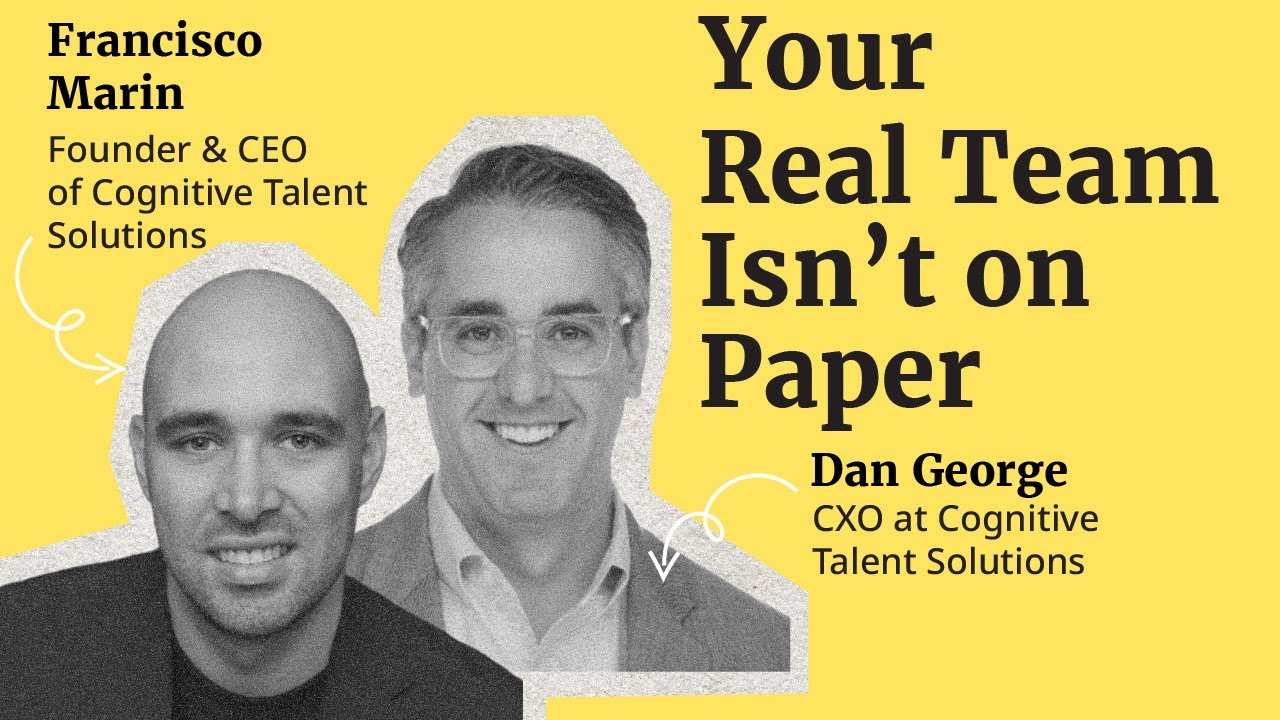
AI isn’t just generating insights anymore—it’s acting on them. In this episode, I talk with Francisco Marin, CEO of Cognitive Talent Solutions, and Dan George, the company’s Chief Experience Officer, about how agentic AI is changing the game for HR. These aren’t your standard dashboards—they’re autonomous systems that detect workforce patterns in real time and proactively intervene, from mentoring and onboarding to retention and burnout prevention.
We get into what makes AI “agentic” in the first place, why consent and trust must sit at the core of any autonomous HR system, and how early pilots are already cutting onboarding time by 40%. If you’ve been wondering what comes after analytics and automation in HR—this is it.
What You’ll Learn
- The difference between generative AI and agentic AI—and why the latter signals a major shift in people analytics
- How real-time, consent-driven AI agents are already transforming onboarding, mentoring, and retention
- Why ethical design, transparency, and opt-in mechanisms are non-negotiable in autonomous HR workflows
- How organizations can adopt agentic systems without overhauling their entire data infrastructure
- The vision behind the Network-First Manifesto—and what a network-powered future of work could look like
Key Takeaways
- Agency over automation: Agentic AI doesn’t wait for a prompt—it detects signals and takes action, turning HR from reactive reporting into real-time decision-making.
- Ethics at the core: Consent is built in at every step. Agents only act when both parties approve, and that consent can be withdrawn at any time.
- Onboarding as social activation: The mentorship-matching agent shortens ramp-up time by up to 40%—a practical reminder that connection is still the best productivity hack.
- Lower barriers than you think: All it takes to start is basic org data (names, emails, manager info). The sophistication grows as you layer in more data.
- From hierarchy to network: Marin’s broader vision is a “network-first” future—where AI augments human connection rather than replacing it, and influence flows through relationships, not reporting lines.
Chapters
- [00:00] What Makes AI Truly “Agentic”?
- [02:30] Why These Eight Agents—and Where HR Impact Starts
- [04:38] Ethics, Consent, and Building Trust in Autonomous Systems
- [07:20] The Power of Proactive Decision-Making
- [08:51] Mentorship Matching: The Pilot That Changed Everything
- [11:55] How an Agentic Workflow Actually Works
- [13:30] Measuring ROI and Productivity Gains
- [17:10] Beyond HR: Why the C-Suite Is Paying Attention
- [18:37] What Data You Really Need to Get Started
- [21:03] Overcoming Skepticism in HR Tech Adoption
- [26:04] What’s Next: A Network-Powered Future of Work
- [29:30] Where to Learn More: CTS and the Network-First Manifesto
Meet Our Guest

Dan George is Chief Experience Officer (CXO) at Cognitive Talent Solutions (CTS), where he leads the design and delivery of client-centric talent analytics and transformation services. With a career spanning roles at firms like Accenture and Bridgestone—including building and leading a People Analytics practice—Dan combines deep operational experience with human-network science (organizational network analysis) to help organizations unlock collaboration, reshape workforce strategies, and drive measurable performance improvements.
Francisco Marin is the Founder and CEO of Cognitive Talent Solutions (CTS), where he leads global efforts to transform how organizations understand and optimize their work through advanced people analytics, organizational network analysis (ONA), and AI-driven solutions. With a background in data science, business analytics, and talent strategy—including previous leadership roles at IBM—Marin holds a Master’s in Business Administration and numerous certifications in Lean Six Sigma, design thinking, and data science. He is a thought leader in the “network-first” future of work, frequently speaking on how social capital, network dynamics, and adaptive workforce models are reshaping productivity and collaboration.
Related Links:
- Join the People Managing People Community
- Subscribe to Our AI Signal Newsletter
- Check out this episode’s sponsor: Oyster HR, Inc.
- Connect with Dan on LinkedIn
- Check out Cognitive Talent Solutions
- Network-First Manifesto
Related articles and podcasts:
David Rice: What makes these agents truly agentic as opposed to like say, a dashboard or a smart assistant?
Francisco Marin: An agentic AI is not really waiting for a human to ask a question. It makes real time decisions proactively, or identifying interventions based on the universal metrics that they AI has access to.
David Rice: How do you ensure trust when AI agents initiate something as sensitive as retention or mentoring?
Dan George: We've gotta make anything agentic, have the right level of consent in ethical use. So click the button in consent and at any point they can rescind their consent.
David Rice: So what does success look like?
Francisco Marin: What a mentorship market intervention, you could be looking at savings between 20k to 30k by shortening the 10th productivity of a new hire by up to 40%.
David Rice: Welcome to the People Managing People Podcast, the show where we dig into the human side of work, the technology influencing it, and the bold ideas that are gonna shape the future of people practices. I'm your host, David Rice.
I have two guests today. Francisco Marin is the founder and CEO of Cognitive Talent Solutions. He's also the author of the Network-First Manifesto, and a pioneer in organizational network analysis. Francisco leads a growing global community focused on how informal networks and AI collaboration can accelerate onboarding, mentoring, and informal leadership across large enterprises.
Dan George is the Chief Experience Officer at CTS and the founder and CEO of Piper Key Analytics. He's an award-winning expert in people analytics, workforce planning, and data-driven HR transformation. He's got experience across Fortune 100 firms and mid-size innovators, and he's helped reimagine HR as a strategic analytics powered function. He's also a member of our editorial advisory board.
In this conversation, we're gonna try to dive deep into how AI agents and network analysis are transforming HR from static reporting to actionable autonomous workflows. Francisco's gonna share some insights from early pilots where AI agents match mentors and mentees. It maps informal leadership and accelerates onboarding across critical networks. Dan's gonna break down how these agents can scale the people analytics function itself, automating insights, and enabling HR professionals to focus on strategic work.
Whether you lead HR and people ops or talent strategy, or you just wanna understand where the next frontier of workforce transformation is heading, this conversation is for you. Let's jump right into it.
Alright! Francisco, Dan — welcome!
Dan George: Great to be here. Thank you.
David Rice: So I want to start by talking about sort of the vision that you all have with Cognitive Talent Solutions. So why these eight agents? What were the sort of key areas that you were looking to address when you look at HR as a whole?
Dan George: So, you know, from our perspective, there are plenty of ways that AI agents could be effective within HR, but these eight were some of the most kind of obvious that we could not only easily collect consent and ensure that all parties involved in the process were willing and able, but additionally, they were some of the ones that we could track an ROI specifically to how they impact the overall operations of HR and even kind of the necessary aspects of being a first generation output.
So we didn't want to go too crazy with, but we wanted to obviously try to make an impact, but also knowing that all of this is gonna evolve eventually. So these eight were by far kinda the ones that made the most sense.
Francisco Marin: I completely agree with what Dan shared. And to complement it a little bit, we observed that there were some agentic AI capabilities deployed for core HR processes like payroll or regulatory compliance.
But we were missing that generation of use cases that affect people analytics, and especially those that were aligned with the network framework that we use at CTS, right? So how they could help us rethink some of those key processes as change management, leadership development, or onboarding in terms of social activation.
So we pick up this group of eight. We get a lot of traction. We can discuss later on that with the onboarding one, with the mentorship match, but we felt that it was a group of use cases that reflected the message that, hey, this is the new way of agent, again, capabilities for the people analytics industry as a whole, beyond the field of organizational network analysis.
David Rice: Dan, you mentioned their consent. How do you ensure consent, trust, transparency when AI agents initiate something as sensitive as like a retention intervention or a peer mentoring connection?
Dan George: Exactly. And so, you know, that was kind of one of our preemptive thoughts on all of this is that we've gotta make, you know, anything that we do agentic, have the right level of consent and ethical use of kind of these automatic processes. So one of the best ways that we look to do it is, you know, throughout our platform we'll take in, you know, obviously the service and emails aspects of both the takers and the other people within the org. And so when the agent sees a specific criteria, it can launch an automated email that can be generated by one of the administrators.
And so they can start it or they can just start the whole process of all the signatures that were identified. But both parties would then receive an email that they click the button and consent to. So with that, we've notified both they've, you know, given their consent to start this process, and at any point they can rescind their consent so that we stay not only compliant with GDPR, but just compliant with overall kind of ethical use.
Francisco Marin: Yeah, and also I, we had ongoing discussions with the team about all the nuances of each use case separately, right? Because in the case of talent retention, for example, we had the discussion of, well, does it make sense to provide these insights at aggregate level? Say, Hey, you have a 13 team based on these signals that we are seeing that has a high risk of attrition, and these are some of the actions that you can implement.
Or does make sense to do it at individual level and notify the immediate supervisor. In some cases, we are testing this at aggregate level with others we're doing at individual level, and we are kinda like seeing what is the reaction that we get from the first companies that are piloting this and from the employees themselves.
The principle here is to really, whatever possible bill, these opting mechanisms. So if you identify as a mentor for a new hire, for example, you have to provide your consent to participate in the mentorship opportunity. Then like the other component there is like what's the role that the immediate supervisor plays?
Should the immediate supervisor be a gatekeeper that has to authorize the intervention or should he or she be informed about this opportunity having been identified, but being the mentor, for example, ultimately the person that has to provide the consent to participate in. It's something that we are evolving, but the idea here is to be fully compliant with GDPR and other regulations and also to build this up mechanisms whenever possible.
David Rice: Let's talk functionality for a second, 'cause I'm curious what makes these agents truly agentic, so to speak, as opposed to like say a dashboard or a smart assistant, or what are the things that sort of gen AI is normally associated with?
Francisco Marin: The idea here is the name implies in agentic AI is that the AI has more agency, right?
So this AI is not really waiting for a human to analyze a dashboard or ask a question in order to. Basically come up with this question proactively or identify these interventions. The human component is still needed to authorize the intervention from the platform, but the AI is constantly monitoring this signal and identifying these interventions in real time.
And then it also can make context aware the decisions. So in some cases, you'll. Number of metrics available. In other cases, there are other metrics available that based on the universal metrics that data has access to, and within the re augmented generation, basically in the framework, the overall agent orchestrator with the different use cases, it makes real time decisions about how to compose this, email notifications, how to make this interventions.
So the level of agency that they has is way higher than, say, for example, in traditional generative AI interface, like the ones that we built previously in the platform.
David Rice: You mentioned there that there's some pilots that you're doing in those pilot studies, you know, what are some of the agents that have shown the most immediate traction or really sparked the interest of the folks using them?
And why do you think that is?
Francisco Marin: It's the mentorship match with onboarding. You wanna take this one, Dan?
Dan George: Yeah, for the most part, yeah. The mentorship match is by far probably one of the lowest bars in terms of risk and or accident. So with this and again, I'm a huge believer in having not just one mentor, but multiple mentors on that.
And I think, you know, again, for any organization, you know, looking for engagement with new hires or new managers, new people, managers, having a mentor and being able to match with someone that is maybe not in direct line or congenitally, you know, associated with you. The mentorship manager really kind of looks to understand a little bit more about that individual, their level where kind of what some of their aspirations are, depending on, you know, how in depth the active ONA survey is.
And so with this one, both the potential mentee and mentor get these consent emails. They can both say yes, and then that introduction kind of begins and at scale. That just makes a lot of these things really easy because again, I've run this process manually in the past. When I was a former CHRO, I've been in charge of, you know, head of people analytics at different organizations.
I've had to come up with lists and send them to LNOD or other talent engagement teams, and so having it as kind of an automated authorized spot where an admin can go and just be like click. It just makes the process that much easier and gets us out of just selecting the typical mentors and mentees that we just always kind of go to right off the bat.
So overall it's just that, It's probably one of the easiest, lowest risks and most impactful things that an organization can do for to get for the price. It's incredible.
Francisco Marin: And people can grasp it conceptually very easily because all of us who have worked at a large multinational, we know that it makes a huge difference if the first person you interact with and that shows you the robes in the organization.
It's a person that is inspiring and supportive and engaged. Or if it's a person that is disengaged and maybe wants to leave the organization, maybe it's easier as a competitor. And this is especially relevant nowadays because many new hire are joining in hybrid setups, right. Without face-to-face interaction with their team.
They're joining organizations that are going through a re organization in real time. Right? And it's a very uncertain environment where you know, it's critical to optimize the onboarding process, to shorten the dental to productivity of the new hire. And then what we're doing here is to rethink onboarding a social activation.
David Rice: Very interesting. And I can imagine on the enterprise level, like if you're a multinational, like you said you know, and a lot of companies are hiring across borders now, this would be excellent for making those connections. You mentioned when we were talking before this, that these agents can start to identify burnout risks.
They can automatically, like you said, connect somebody with a mentor or manager. So in terms of the workflow itself of how it kind of does that, what does that look like in practice?
Francisco Marin: Maybe we can explain the workflow of the mentorship match, because that's the one that is right now operationally implemented across multiple companies.
The one that we start using as a starting point, right. So the way it works basically is a new hire joins the organization. The AI identifies who's the person that is best positioned to be the mentor or body of this person. This identified based on metrics like, you know, informal leadership that has been met previously through organizational network analysis is technical consideration.
The role, the department, the level of performance, the years of experience. The more data you feed the system, the more sophisticated and actionable the recommendations are. But once this matching has been identified, the intervention is showcased to the HR user on the network analyzer platform, and then the HR user has to authorize the beginning of this intervention.
Then the AI reaches out to the mentor to gather his or her consent to participate in this initiative, informing the first liner, which is not the same, them asking for permission to the first liner for this to happen. If the mentor provides the consent, then the AI makes an email introduction between the mentor and the mentee.
Schedules a meeting so they get to know each other, and then documents whether the meeting has taken place or not, and assesses the impact. Of this intervention with specific savings in terms of shortening the time, productivity of the new hire. So that would be an example of a full agent AI workflow for onboarding with the mentorship matcher.
David Rice: Let's talk a little bit about outcomes. So what does success for one of these agents look like? What signals or results are you tracking to determine that?
Dan George: You know, overall on the impact we have, the research that's been out there for a long time and collected what we believe are some pretty average ROIs as it pertains to kind of these different scenarios.
And as the agents complete their tasks, and the people, again, for me, that match are like they have their meetings and initial setup, it begins to kind of select. Those counts and then applies a dollar amount to it. All that is aggregated kind of at the top of the dashboard. So for any HR, admin or other admin of the system, they can see kind of what that is.
I mean, obviously with the counts, you know, they can apply their own ROI or change that ROI if they want to kind of either add dollar amount or subtract dollar amount. But overall, we're looking at the aspect of an automated flow that takes into accounts, understands that all this thing is scheduled, coordinated, and executed upon.
And that in of itself can save tens in, you know, depending on the size of the, you know, the scope of the work group. Like it could be, you know, tens or hundreds of hours if, depending on how long it's being run. And so all of that kind of ROI is kinda stationed there. All those metrics can be put into different presentation styles on the dashboard so that they can then show impact with their team meetings or leadership stuff.
So all of that is aggregated so that everyone kinda understands the volume that's existed and executed upon.
Francisco Marin: I just had maybe just go add a bit more specific to your, for a mentorship, maximum intervention, you could be looking at savings between 20k to 30k by shortening the 10th productivity of a new hire by up to 40%.
Again, this can be implemented at scale across every new hire in the organization. And then, like right now, these AI agents are available in our cell service platform Connect network analyzer, but we are going in the direction of integrating these AI agents natively in platforms like ServiceNow and Google, so that our clients can consume this within their existing IT infrastructure as well.
And that's where these agents can interact with all the universe of, for example, case management information or HRSD in the employee workflows ecosystem within ServiceNow, right? So it's a very interesting and exciting period right now where we're going to be basically discovering these new use cases and getting a lot of feedback.
Getting this ready so that we can deploy ultimately the all the aid agents at scale and go beyond this dismissal pilot stage.
Dan George: Yeah, and we've also got additional interest from other CRMs as well. So the idea behind kind of adding this as a native app in their marketplaces, you know, helps to just streamline the overall process for using this, you know, leveraging this technology within their current ecosystems.
David Rice: Imagine having access to the world's best talent. Whether it's that engineer in São Paulo, that head of sales in Dublin, or that incredible designer in Cape Town — your next great hire could be anywhere in the world. With Oyster, they don't have to be the one that got away.
Oyster helps companies hire talent globally, run accurate and on time payroll, and stay compliant every step of the way. Build your dream team and grow with confidence because the world truly is your oyster.
I imagine obviously there's a lot of interest from HR, but you mentioned there kind of the ability to talk to the rest of the C-suite and present to them, and I'm curious, are you seeing a lot of interest coming out of like operations and CEOs, things like that?
Dan George: More and more conversations we have, you know, every week, every month is actually coming from outside of HR.
Typically we have entered in through either people analytics, professionals, other HR transformation, you know, talent management professionals. But more and more, you know, we started talking with leaders outside of the HR function simply because they have an interest in understanding all the skill sets and networks of their employees.
So that they can speed up innovation, figure out how to collaborate better, understand kind of the cultural dynamics of their teams, and even at the kind of most simple cases, you know, for any change initiative, leaders can then understand who are our top influencers. That we know or maybe don't know and be able to tailor specific communications to those individuals and their networks, whether it's in the middle of the organization, the top or the lower aspects of the organization.
Doesn't matter where there are, there's influencers everywhere within the org. And being able to tap into those people to accelerate change adoption is just a huge use case for us.
David Rice: From a technical perspective, 'cause every organization, right, like the data and sort of infrastructure you're gonna encounter might be a little bit different.
So what kinds of data and infrastructure do companies, where do they need to be essentially before they can realistically adopt these agents?
Francisco Marin: That's a great question because the inter barriers are much lower than people think. The beautiful thing here really is that we combine active ONA with passive ONA. Active ONA relying on online surveys and passive ONA, looking at aggregated metadata of collaborative tools like Microsoft, Google, slack, and others, right?
So in terms of specific metrics you need to have really, like, the most important would be the employee name, the email. The manager's name, the manager email, and then that's really about it. I mean like in terms of being able to launch a pilot. Then from there, any additional data that you add, department, division, performance, engagement, attrition, data history, attrition data.
Right? The more, the better, but that's the beauty of the agentic AI, that it's able to make context aware decisions and work with the basic information that it has. Obviously, if the AI doesn't know who your manager is or what's the email, it's not gonna be able to inform or write or provide these notifications.
But many of these information is already by default in the API of Microsoft or Google. Then the data that you have available to complement it work better.
Dan George: Yeah. So we've had teams upload rather simplistic hierarchy structures, and then we've had other clients that have uploaded, gosh, two or three separate hierarchies depending on Yes.
How they wanna view their different organizations and how they wanna kind of understand and track kind of trends. And so with that, we're able to pretty much ingest any structure that makes sense for them. And I think that's gonna, the beauty of how our specific LLM in the backend, and then again if we're within one of those other kind of vendor systems.
We can also kind of join in with those specific LLMs so that holistically we have a couple different LLMs that are helping our specific ONA engine to analyze these networks.
Francisco Marin: And a good example would be, we recently worked with fortune five of the company. They had like seven different metrics to define their teams with this, you know, supervisory org 5, 6, 7, functional reports, direct reports, indirect reports. Right. And AI was able to make sense of all that universal metrics that we were fitting in. Right. And include this into the recommendations and replace to the prompt also with the generative AI component, which is another feature also that is making a big difference in the way that clients consume this type of insights.
David Rice: I'm curious because like, you know. I've seen some research that suggests, like HR folks in particular, they feel like maybe they're not qualified to use a lot of AI tools. Right? Like, so, you know, maybe they're not the data folks. And I'm wondering, have you faced any skepticism or resistance in bringing agentic AI into some of these, you know, traditionally human centered processes, and how have you dealt with that?
Francisco Marin: I would say so far, at least my experience is like, it is very well understood that AI is gonna play a critical role in the future of work. And now it doesn't matter if you work in HR, it or finance, you need to deal with this and you need to be exposed to this because this is going to impact your job in the short term.
So it's that sense of urgency maybe that is kinda like. Lowering the resistance to adopt and be exposed to these type of technologies, at least compared to previous waves. For example, when we're, well, not probably the third company in the people analytics industry that integrated generative AI into our solutions.
And there I saw some companies that were saying, Hey, we love the technology. We want to use the technology, but we are not ready to add the generative AI component yet. But then those same companies, two months later, launch an agentic AI across the whole organization and think, oh wow, this different. Now they're getting it like they have to be part of alien adopters or they're out of the market.
And I'm seeing like the mentality shifting in that regard. Also, I think it's because AI is just becoming a more important part of our daily lives. I think mostly genetic AI versus agentic AI, but yeah, that has been my experience, much lower resistance than I was expecting.
Dan George: Yeah, so I think there's two aspects to this. One is we've designed our platform for any professional, whether you have an extensive understanding of the background and mathematics behind ONA and graph databases, in theory is great. All the metrics that you would expect to find are there. However, what we display front and center on the platform in our reports, you know, and what we can generate are all.
For individuals that don't have a ton of background on ONA, but understand kind of networks and just the connections and collaboration that needs to happen within any typical enterprise. So what we do is we kind of layer this in two separate ways. One is that our general reports and impact metrics are very easy to understand, but if you wanna dive in a little bit deeper, all the information is there too.
You can download into different spreadsheets so you can. Augment your current database or HR data warehouse with our information as easily as just uploading a new spreadsheet. And again, it doesn't matter if it's, you know, you're doing 300 people or 30,000, all this can be integrated within your system.
So there is the aspect of both focusing on non-technical reports and insights, but also knowing that all the mathematics are there as well. And then kind of to point out, for Francisco's, I would just recently was chatting with the customer, that kind of that same thing. They wanted to start without the generative and agenda ai, just simply because that's more comfortable to them.
But then as soon as they started to kinda get more comfortable with the system, what was available, how their view of the survey and the results went, they were like, you know what? It really would be great to add this because of, you know, two main aspects. One is that it's in an environment that is kind of separate from their other major HR systems.
So they know that since it's not a system wide AI tool, it's only confined to the space within that platform, and that just makes it a lot easier to kind of feel a bit safer about it not accessing stuff that it shouldn't, because that clients only sent us the demographic information that they feel comfortable sharing outside of their system.
Francisco Marin: That message is key. Like we really reinforce the message when speaking with HR and other stakeholders that, hey, the users that have access to the platform are in complete control on how those insights are shared across the organization. You can authorize intervention, not authorize it. You can share an executive summary in PDF format.
You can completely customize by yourself, what metrics, what insights, and what charts are included in the report. You can customize the scope of the report, so you are the gatekeeper and you decide basically how this is shared, and this resonates with my HR teams.
David Rice: I imagine that sort of customizable experience and being able to shape it around like the level of the person using it would be a big factor in buying in.
And that kind of leads me to my next question, which is, 'cause I mean, I imagine that's taken a while to create all that and to develop that level of functionality, but where do you see this going next? Are there agentic capabilities that you're already dreaming about for the next wave or?
Francisco Marin: Yeah.
Dan George: Yeah. So I'll go first and I know Francisco's very passionate.
I mean, he's had a brilliant vision on this for a long time. Like I said, we've probably known each other five or six years now. We've met before the pandemic and have been noodling on this for a long time. But I would say. There's plenty of areas that I see where we can not only advance the second generation of the eight that we have right now, but then also dive into more as people kind of get more comfortable.
But you know, we're also trying to match the pace of, you know, what we're seeing and always trying to understand what trends are kind of the most popular or the most impactful for the moment, kind of, I think from a competitive standpoint, I wanna keep a couple of those closer to my chest. Overall, though, we're really excited about not only kind of this first generation, but the future second generation and any of the kind of following ones that we can come to fruition here.
Francisco Marin: Yeah. I would say really for me, the future organization, it's network that is powered by agents, right? Where AI agents are to deploy these macro interventions at scale, right? And this component of large multinationals acting as incubators of this new way of work, what we call a network, first feature of work.
And there is a component of new organizations being born and scaling, integrating these practices at scale the same way that we are doing it at cs, right? We're a team of 50 people, very decentralized community, including consultants, ambassadors, a core team here in California. That ultimately we want to create a case study with the way that we manage CTS itself of how this new way of work looks like.
And we've even launched, not from CTS, but even a personal level. We launched a month ago this initiative called the Network-First Manifesto, where we're embodying basically anybody that resonates with this concept of the Network-First feature award to draft this manifesto and, you know, create a series of principles we're collaborating with, thought leaders like Mike Lorena Andras seven, and other people in the industry.
We have right now a group of 200 people, 200 funding members with about 80 in nursing organizations. Right. And this was just in a month. And we're gonna add the ratification events on almost 13, and then we're going to announce a series of next steps that are going to be very exciting.
That's really why we're doing this right, is how can we, within our limited capacity and influence, how can we spearhead the transition from a hierarchy first model to a network, first future to work? Because at the end of the day when a new hire joins an organization in the current environment, and you know, there is a, like the restrictive insights or where you have to work, who you have to work with.
Where you have to work, when you have to work, right? It's a model that is growing in collaborative control. It's not the model that is achieving a healthy balance between centralization and decentralization between human capital and social capital. So what we're trying to do kinda like, is to embed in this elements structural level so that the person that joins the larger organization can have similar incentives and similar experience than if you were joining a startup in Silicon Valley.
Right? That's what this is about. About creating a feature to work that we are all excited about and not scared about.
David Rice: That's great. That's amazing. I love Michael's work on networks. It's, he's done some really cool stuff, so. Well, Dan, Francisco, thank you for joining us today. Before we go, I just want to give you a chance to tell people where they can find out more about what you all have going on and learn more about these agents.
Francisco Marin: First, I mean, like you can visit cognitivetalentsolutions.com anytime. We have also the newsletter on LinkedIn, CTS running sites where you can get articles to your email on a weekly basis. And then separately from CTS as well, we launched the Network-First Manifesto initiative, networkfirstmanifesto.com, or networkfirstmanifesto.com/join.
And there you can learn about the initiative as well. And this open to anybody that wants to be part of it.
David Rice: Alright, well thank you both for joining us today. It's been a great talk.
Dan George: Appreciate it, David.
Francisco Marin: Thank you, David.

