The AI “Sandwich”: Why HR Teams Are Caught in the Middle


AI in HR is finally moving out of the pitch deck and into the messy reality of day-to-day operations. In this conversation, Tim Fisher sits down with Josh Rod from HiBob to unpack what’s actually changing—and what’s still just noise. The headline? Most organizations aren’t chasing some agentic, fully automated future. They’re trying to make today’s workflows less painful, faster, and marginally more effective.
But underneath that pragmatic adoption sits a deeper shift: the structure of work itself is being quietly rewritten. When every employee becomes a “manager” of AI, the old hierarchies start to wobble. HR isn’t just implementing tools anymore—it’s being asked to design the operating system for how humans and machines collaborate. And that’s where things get interesting.

What You’ll Learn
- Why most organizations are still in the “AI evolution” phase—not revolution
- How AI is reshaping the definition of management across all levels
- The growing tension between top-down AI mandates and bottom-up experimentation
- Why HR is uniquely positioned to orchestrate AI adoption (and where it struggles)
- What “democratizing AI” actually looks like inside an organization
- How imagination—not technical skill—is becoming a critical capability in the AI era
Key Takeaways
- Most companies aren’t behind—they’re just practical
About 60% of organizations are focused on using AI to improve existing processes. Not sexy, but necessary. Before you automate the company, you need to stop the current system from breaking. - The “AI sandwich” is real—and HR is stuck in the middle
Executives are pushing AI mandates from the top, while teams experiment from the bottom. Without coordination, you don’t get transformation—you get chaos. HR’s job is to turn that pressure into a coherent system. - Everyone is now a manager (whether they like it or not)
If you’re delegating tasks to AI, you’re managing. That means frontline workers are taking on responsibilities that used to belong to leadership—without the training or frameworks to support it. - Speed is changing, but fundamentals aren’t
Work is accelerating—tasks that took a day now take minutes. But human dynamics, trust, and organizational structure aren’t evolving at the same pace. Expect tension between velocity and stability. - AI success depends less on tools and more on systems
HiBob’s approach centers on empowering HR to design frameworks, not just deploy features. Tools don’t scale—systems do. - The real unlock is imagination, not automation
AI can get you 80% of the way from idea to execution. That shifts the bottleneck from technical ability to creative thinking. If you can clearly imagine something, you can start building it—fast. - Incremental improvement has limits
You can only optimize existing processes so much. At some point, organizations will need to abandon legacy thinking entirely—like rethinking performance reviews from scratch, not just speeding them up.
Chapters
- 00:00 – AI in HR: From Hype to Reality
- 01:04 – Fixing Broken HR Workflows
- 01:59 – Why AI Is the Strategic Bet
- 02:59 – The Three Levels of AI Adoption
- 05:16 – Everyone Is Now a Manager
- 06:33 – The “AI Sandwich” Problem
- 08:13 – What’s Changed in Five Years
- 09:26 – Democratizing AI at Work
- 11:23 – The Future of HR Tech
- 13:31 – Faster Work, Same Fundamentals
- 14:55 – When Optimization Breaks
- 16:05 – The Age of Imagination
- 17:37 – Where to Learn More
Meet Our Guest

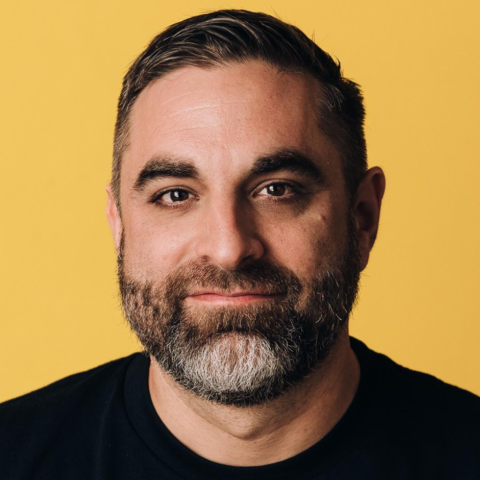
Josh Rod is a Product Marketing Lead at HiBob, where he drives go-to-market strategy and messaging for modern HR solutions that help organizations build better employee experiences. With a background in B2B SaaS marketing and a focus on storytelling, positioning, and customer insight, Josh specializes in translating complex HR and technology concepts into clear, compelling narratives that resonate with global audiences. He is passionate about the future of work, people-first organizations, and helping companies communicate value in a rapidly evolving workplace landscape.
Related Links:
- Join the People Managing People Community
- Subscribe to Our AI Signal Newsletter
- Connect with Josh on LinkedIn
- Visit HiBob
Related articles and podcasts:
Tim Fisher: Welcome to The Future of AI in Human Resources, a series where we go beyond the pitch deck and dig into how AI is actually changing the way organizations hire, support, and develop their people. Today we're featuring HiBob, an AI powered human capital management platform designed for modern, fast-growing organizations.
So if you're an HR leader trying to understand where AI actually delivers value, not just in theory, but inside the systems you rely on every single day, then this is the conversation to be in. We'll hear their perspectives on what's changing in HR and talk about where all this is heading for HR teams and people leaders.
My name is Tim Fisher and I am the VP of AI at People Managing People. So my job is to figure out where AI actually works and where it's still just marketing slides. So I will be asking in the questions that your team would ask. Joining us today is Josh Rod, Product Marketing Lead at HiBob. Josh focuses on product strategy for high growth SaaS companies and drives AI innovation across marketing and product. He works closely with modern orgs to help them scale their HR operations more effectively using AI.
Josh, great to have you here today.
Josh Rod: Yeah, great to be here, Tim, thanks for having me.
Tim Fisher: Of course. So give us the 30 second version of HiBob. Like what does it do? Who's it build for?
Josh Rod: So I think the easiest way to explain it is that HiBob is the modern HCM HR system from hire to Retire.
So you are all in one HR system. From planning, from pre-hire to the a TS, your hiring system flowing into the onboarding core, HR to learning and development, performance management, comp, everything all in one, but with a twist that we try to make it. As accessible, as modern, as user friendly as possible.
So I think that's one of the key areas that we've really invested heavily in is how to make all these processes, which honestly they're quite painful from like an end user perspective, how to make them not so painful.
Tim Fisher: Excellent. Next question is a little bit silly. So why is AI the thing you're leading into the hardest right now? Like what's the strategic bet for you guys with AI right now?
Josh Rod: The real question is, I don't think there's a many SaaS companies out there that aren't leaning into AI, that if we look at the Nasdaq, we look at the stock markets, all the companies took a hit recently when Claude announced a series of big releases.
And I think we understand that the future of the industry as a whole is gonna be AI led. We're not yet certain what that is eventually going to look like. What is the role of SaaS companies going to play there? How can we continue to deliver as much value to our customers? As we want to be able to deliver to them.
And I think that's probably the key to this whole equation is like, how do we deliver value rather than high? And I think that probably would be why we're leaning into AI is we see it as a way to deliver value and a way to make the Bob platform better for everybody who uses it.
Tim Fisher: Excellent. I would love to get your perspective on just what you're seeing across the HR landscape. So you're talking to HR and people leaders every day, all the time at growing companies. What's actually changing in how organizations operate as AI becomes a real part of the HR toolkit?
Josh Rod: You mentioned we're speaking to a lot of companies and I think that like, if I take myself personally outta the picture, I'm speaking to quite a few people, but looking at our entire sales organization, we're actually using gong, one of my favorite tools out there on the market for sales training call analysis.
I'd like to geek out a little bit about that. I dunno about you.
Tim Fisher: Gong is very cool. Yeah.
Josh Rod: So what I actually did was recently we did an analysis of 160,000 calls that we've spoken to both customers and prospects recently looking at kind of trying to analyze where the AI sophistication is landing. So we're trying to think like, okay, how much of this is hype?
What level of readiness does the market have? What are the different levels and we try to break it down into three levels. The most basic level is, can I even use AI? So the basic like, okay, is this safe for me to use at all? Is this safe for me to introduce to my organization? Then mid-level is. I've kind of coined the term in it's evolution and not revolution like a lot of people say it's a revolution, but I think the first step is the evolution.
How can we take existing processes and make them faster, make them better, make them more efficient? That's the second bucket of the mid-level. The top bucket is the super sophisticated where everyone's talking about the thought leadership of make everything agentic, automate everything, replace all your people, like that.
Crazy next level. I'm taking it to a bit of an extreme, but the top level is the how do we automate things? How do we create agentic workforces? I'd love for you to like hazard a guess. Like if you had to break it down into buckets, where would you guess that the majority of people are landing?
Tim Fisher: Based on a conference I went to last year with a very large organization that I won't mention that collected a lot of information from a lot of people getting at this exact question. I would say it's the middle bucket. It's probably where most people land.
Josh Rod: You're spot on. So we're seeing about 60% is landing in the middle bucket.
So again, 10% about in the top bucket, 60% in the middle bucket. Most people, and if you're in that group. I'd say you're in the majority is that most people are trying to understand how to use AI to make the work that they're doing today more efficient. So I think that's kinda where we're seeing the industry is at the moment.
Tim Fisher: Nothing embarrassing about that. That is just where we are right now. From your perspective, working with HR leaders across the number of organizations, just like AI side or AI included, whatever, like what's the toughest part of managing and supporting people right now, do you think?
Josh Rod: I think that, again, one of the biggest things that is fundamentally changing, and I think this is very much a bottom up kind of shift, is that everyone is a manager.
If you're an employee, if you're using AI, you are now a manager. So you used to be a frontline worker. You used to have a direct report, you used to have middle management, and you used to have upper management. Now even the frontline worker is managing their own AI. They're delegating work, they're thinking differently that people are approaching work differently.
What that means is that frontline managers are no, no longer frontline managers and inverted commas. They're now senior managers that they have to manage managers. So we're seeing an entire shift in what we think about like, okay, what we previously knew about companies, what we previously had about frontline workers and managers.
I think that's what we need to rewrite the playbooks. How do we help companies adapt to that shift specifically?
Tim Fisher: Yep. I agree. Where do you think HR teams most often get stuck, like operationally? Like hiring, performance management, retention, just getting like reliable insights into what's happening across their org?
Josh Rod: So I actually think it's not necessarily on the operational decisions. I think that, oftentimes HR and managers are co often caught in like what I'm calling the AI sandwich where we're seeing two kind of like, opposite forces. We're seeing like a top down force, like these AI mandates use AI.
If you're not using AI, you could become redundant, like all these top down forces from the board. Like VCs want their companies to be using AI. Then that trickles down to the CEO. The CEO says, okay, I've gotten from the board. We need to be showing the board how we're using AI. That goes down to the VPs and there's this cascading top down pressure.
Whereas at the same time, we have these bottom up use cases that are looking for funding, that are saying, Hey, we have these great AI initiatives. Help us get these funded, give us budget for these initiatives. And if these individual initiatives are given maybe too much freedom, then it kind of goes in all directions and there's no control.
It's no longer a company, it's just a bunch of freelancers working for the same. Corporate umbrella. So I think that HR has kind of got that role of the challenging part is how do we harness this power and turn it into something powerful for a company? How do we create like a framework that will give these people and everybody in the company that top down, that bottom up?
Like how do we create a system that makes this work? And that's why HR is at like the perfect junction to facilitate this change.
Tim Fisher: I love the phrase AI sandwich. I've definitely experienced that over the last couple of years. I think you answered this in part already, but like why do you think this moment is different for AI and human resources compared to say, like five years ago? Certainly like preach at GBT.
Josh Rod: I always like to flip the question on this one. It's like, how many AI tools are you using today versus how many AI tools were you using five years ago? Like, throw them out. Like, how many did you, how many have you used today alone?
Tim Fisher: Well, you know, because of my role it, it may be a little exaggerated, but I think since I woke up this morning, I've been to Claude and ChatGPT, and for anyone that is really nerd out on this stuff. I've spent some time with OpenClaw all before this meeting, which is very early where I'm at right now. So it's a lot, let's say.
Josh Rod: I'm sure Gemini's feeling a little bit left out, but that's probably separate.
Tim Fisher: I'm sorry.
Josh Rod: Can't forget Gemini, but that's the kind of thing is that like we're now becoming specialists. We have like our own, we're becoming like connoisseurs of AI where we each have our own preference, oh, I'm gonna use Gemini for this.
I'm gonna use ChatGPT for that. I'm gonna use Claude for something else entirely. I think that we're starting to realize that promise that we were seeing five years ago is that like it's starting to these use cases are starting to materialize, is that the revolution of AI will come. But I think we're still in that evolution phase where we're still re-imagining existing work rather than trying to reinvent work.
Tim Fisher: Yeah. There are all sorts of AI claims and certainly in the HR market right now also, what is different about how you guys at HiBob are approaching AI.
Josh Rod: So I think it goes back to the sandwich, like, let's keep talking about that sandwich. I think that a lot of that time the people caught in the middle of that sandwich are the managers and HR that both are getting directors from above, from below that they're getting the com, like they have to deal with both sides of the coin.
And I think that it's kind of like a middle out type of analogy where we're trying to empower HR and trying to empower managers to create this system, which then breeds success. So we're talking about almost democratizing the AI power here. It's no longer sitting just with the admins, or no longer just sitting with the people making the decisions.
It's how can every employee get what they need using AI from the HR processes that are built to serve them. How can every manager become better by using AI that the HR teams are creating these processes, they're creating the frameworks, and then they're the architects, and then the managers are the builders.
So HR creates a system, but HR can't be in the same room as managers at every given moment. So how do we facilitate that success as if HR was in the room with them to give them that daily coaching or facilitating that success on an ongoing basis? I think that's where we're kind of looking at it differently is that, we see the people as the key to the AI success.
Tim Fisher: Very cool. With or without mentioning sandwiches, if you had to describe HiBob's philosophy around AI in one sentence, how would you say that?
Josh Rod: I was gonna say the sandwich again, but. No, but I think it, it goes back to the people is that how do we empower people with the most powerful tool that we've seen in the past, I don't know how many years that.
This is probably one of the most powerful tools. So how can we disperse it? How can we empower people to make these decisions in the AI era so that everyone can unlock their potential so that companies can get more out of every individual in the company? So even if the company is slowing down, hiring, even the company isn't growing, the number of employee.
How can they get more out of every employee that every employee becomes better.
Tim Fisher: Awesome. I wanna look forward a little bit. Obviously HR Tech is evolving and really quickly thanks to AI, and AI is starting to play a huge role in how organizations run and manage your team. So I wanna talk about where you see this heading over the next couple of years.
So let's say we fast forward three to five years. Like how do you think HR is going to look really different because of AI?
Josh Rod: So we have some really interesting use cases starting to creep in. So the idea, and again, we spoke about the governance and making sure that HR is still the one controlling the permissions. But then the question is, do we wanna add maybe agents to our org charts?
Like having agents sitting in the org charting and giving them certain permissions within the system. So sure you have an agent acting as a manager and giving that agent X permissions of a manager so that it can't go rogue. That's one crazy idea that I've seen already. I think one area that's definitely gonna be interesting is the idea of MCPs.
The idea that you can connect your HR system into a tool like Claude or like Cursor or things like that, or these more sophisticated AI tools and be able to run them in the AI tool, but responsibly through the governance of the HR platform itself. I think that's gonna be a really interesting shift. But on the whole, I think I would be very hesitant to make anything longer than a six month prediction.
Just the rates of evolution in this industry has been insane.
Tim Fisher: I have frequently said exactly the same thing. I worry about anyone making forecast beyond six months not knowing anything about what they're talking about, because it's just too difficult. And for anyone listening that doesn't know that the technical MCP stands for model context protocol.
It's a way for AI agents to interact with data in like a really efficient way. If you've ever heard of an API, it's similar in function, but for an AI system. So what do you think, I mean, you know, you just answered a lot of questions. You said a lot of stuff around work differently because of AI, but like how do you think teams will work differently because of it?
Like what's the biggest shift? Like if you just think about organizations, like what do you think. What is the biggest change that AI is gonna bring to just the way teams work and work together?
Josh Rod: I had an answer before this and then I've started to, to think that as much as things changed the, there was a song, I was trying to remember the origins of the song.
It's quite a, an old song I think around like World War II time, that as much as things changed, as much as they stay the same.
Tim Fisher: I know the song you're talking about.
Josh Rod: Yes. Which song is it?
Tim Fisher: I don't know, but I'm off with song names, but I can hear it. Yes.
Josh Rod: I deliberately added it to my Spotify playlist, but it was As Time Goes By from 1942, Casablanca.
The principle is that as much as things change, they're still gonna stay the same in terms of principles. I think that work is gonna accelerate, that. We're gonna be able to do things faster. We're gonna be able to, I'm sure we've already seen it, that like things that used to take us a day, now take us 20 minutes.
So the pace of things will increase. But the fundamental human interactions, the fundamental structures of companies, I think we're quite a way of those changing. I think we're gonna see a lot more small companies succeeding that don't necessarily need to hire 5,000 people. I think that's one of the big behavioral changes that we're gonna see.
Tim Fisher: Yep. I agree. So thinking about it a little bit differently, like, you know, whether it's like changes in the world or market pressures or you know, climate change or like whatever it might be like, what future challenges do you think that your SaaS customers are gonna face, and how are you preparing to help them solve those with AI?
Josh Rod: I think it's the evolution versus revolution paradigm that things can only be evolved up to a certain point. I think that like you can only breed horses so fast. Like there, there was another analogy, which was that if you ask someone before the car was invented, what they wanted, they would say a faster horse.
And you can only get horses up to a certain thing before you have to make that next leap. And you have to start reinventing processes and get to that car from like the candle to the light bulb there. There has to be some moments of inflection. Where companies have to get out of their comfort zone and start thinking, okay, forget about what we know about this process today.
Let's take performance reviews as an example. Like let's think in a year's time, let's forget everything we know about performance reviews. If we had to redesign them today from scratch. What would that process look like? And I think that's gonna be the interesting moment when companies start to reinvent these processes and then the reinvention processes start catching on.
That's gonna be an interesting moment where we're gonna need to understand how to help our customers adapt to these new best practices.
Tim Fisher: Very cool. I'm gonna ask a personal question. What excites you most about where this journey's headed?
Josh Rod: I think, and again, this is my own personal journey as well, is that like I have ADD, ADHD, I'm very limited.
I have a very limited concentration span and I've always started to build up ideas, side projects. Like imagine if I had the time to build out that, imagine if I had the time to build out this and. AI has unlocked is that if you can imagine it, you can get to 80%. You're not gonna get it to a hundred percent, but the power of imagination now is more important than ever before.
Because if you can imagine things, if you can conceptualize ideas, you can build wire frames, you can get people on board, you can see if it's got traction. You can validate ideas much faster than ever before. It's the age of the imagination. I've got a five-year-old daughter and I'm teaching her how to vibe code using a base 44, and she doesn't even need to know how to type.
She doesn't know how to write. She doesn't, she can barely write her own name, but using voice mode in a tool called Base44. Base44.com for those of you who want to check it out. She just uses her ideas, her thoughts. She made a game of a rabbit hopping around in a square and collecting carrots. And this is from someone who's not even literate yet.
The potential is frightening and it's just, it's seeing the potential of the imagination, I think that's really what excites me.
Tim Fisher: Awesome. Very cool. Thank you for all of that. That was an awesome conversation. For anyone watching, listening and thinking, okay I wanna see Bob in our environment with our data.
Like what's the best next step for them to take?
Josh Rod: Best next step is the HiBob website, hibob.com. You can take a look, learn more, or feel free to connect on LinkedIn if you have any questions or curious about any of these or want to have a further discussion. I know Tim and I have connected on LinkedIn and we're gonna chat further about some of these the Gong Research, for example.
Tim Fisher: Yes. Very interested to hear about that.
Awesome. That's all the time we have for today. Josh, thank you so much for joining us and have a great day and we'll see you at the next Future of AI in Human Resources session.
Josh Rod: Thanks, Tim.