

AI Saved Oyster’s HR Team 400+ Hours a Year — Here’s How
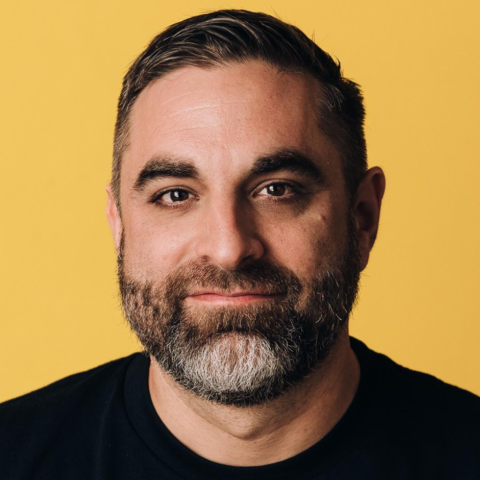

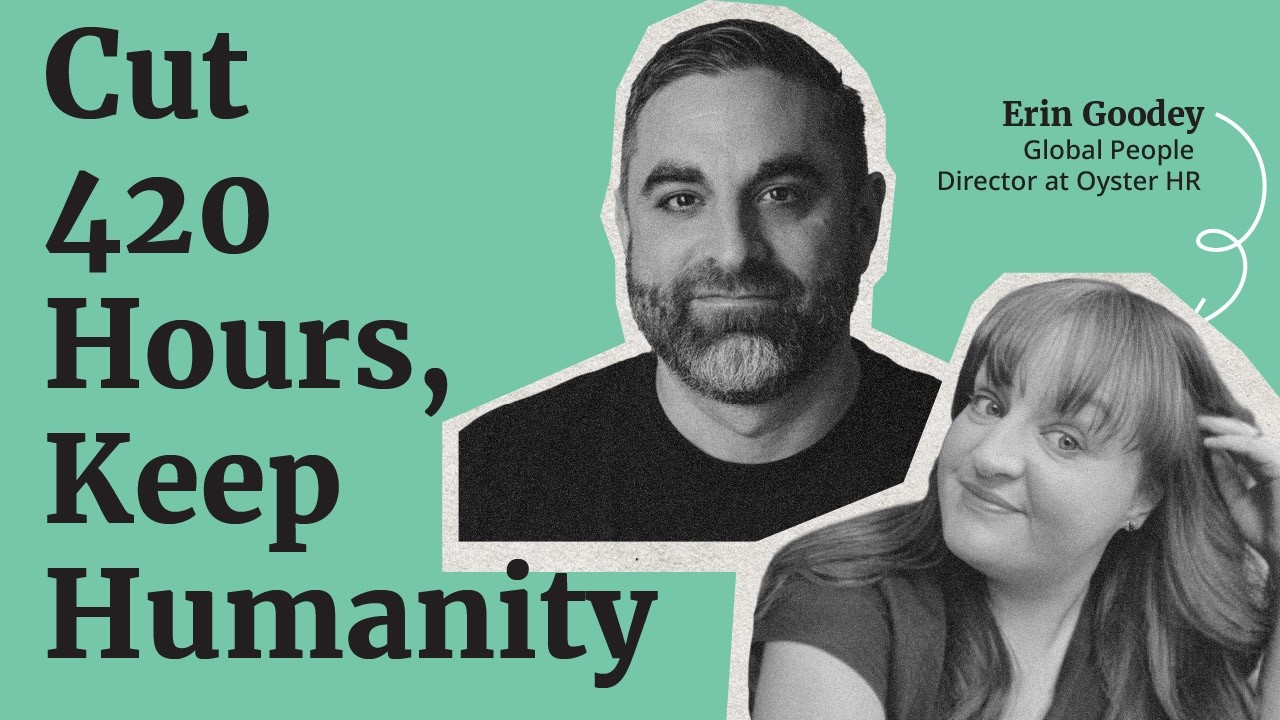
AI promises efficiency, but the real question is what teams do with the time they get back. In this conversation from Transform in Las Vegas, Oyster’s Erin Goodey joins David Rice to unpack how global HR teams are balancing automation with human connection—especially when managing distributed workforces across countries, compliance requirements, and sensitive employee situations.
Erin shares how Oyster is using AI to eliminate repetitive administrative work, freeing HR teams to focus on the moments that actually require empathy, judgment, and strategic thinking. From global expansion challenges to the evolving role of HR business partners, this episode explores what “human-centric” HR really looks like in an AI-enabled workplace.
What You’ll Learn
- Why global expansion still feels overwhelming for many HR leaders
- Where AI creates the biggest efficiency gains inside HR operations
- Why automation should support—not replace—human connection
- How Oyster approaches “human-centric” employer of record (EOR) services
- What HR leaders are discussing most at Transform right now
- Why HR business partners need stronger commercial and operational context
Key Takeaways
- AI is most valuable when it removes repetitive admin work. Erin shares how Oyster reduced PTO handover prep from 420 hours annually down to just eight—giving HR teams more time for high-stakes employee situations that require nuance and care.
- Human support matters most during emotionally complex moments. Employees may be happy using automation for simple requests like PTO balances, but when something serious happens, they want a real person involved.
- Global hiring creates uncertainty for HR teams. Questions around leave policies, compliance, and terminations across countries often become blockers for expansion. EORs help companies navigate those complexities without needing to become experts in every region.
- HR leaders are craving peer conversations right now. Much of the discussion at Transform centered around navigating difficult global realities and learning how other organizations are handling uncertainty, employee concerns, and operational pressure.
- HR business partners create the most impact when they understand the business deeply. Erin emphasizes that strong HRBPs connect people strategy to commercial and operational context—not just HR processes.
Chapters
- 00:00 — AI & Human-Centered HR
- 01:45 — Transform Conversations
- 02:19 — Global Expansion Challenges
- 03:30 — AI for HR Efficiency
- 04:34 — Employee Experience & Automation
- 05:24 — What HR Leaders Are Asking
- 07:10 — Understanding EORs
- 08:12 — The Future of HRBPs
- 09:24 — Closing Thoughts
Meet Our Guest

Erin Goodey is the Global People Director at Oyster HR, where she leads people strategy and workforce initiatives that support distributed teams and globally remote organizations. With deep expertise in talent development, employee experience, and international people operations, Erin focuses on building inclusive, high-performing cultures that empower employees to thrive across borders and time zones. She is passionate about the future of work and helping organizations create flexible, people-first environments that combine strong culture with scalable global growth.
Related Links:
- Join the People Managing People Community
- Subscribe to the newsletter to get our latest articles and podcasts
- Connect with Erin on LinkedIn
- Visit Oyster HR
Related articles and podcasts:
David Rice: HR teams are spending four hundred and twenty hours a year preparing PTO handovers. Erin Goodey's team at Oyster HR cut that to eight. That's the efficiency play everyone talks about with AI. But Erin's more interested in what you do with those four hundred and twelve hours you just got back. Complex investigations, suspensions, terminations, the sticky, risky things that actually need a human being.
I sat down with Erin at Transform in Las Vegas for a quick conversation about global employment and where AI fits, where it doesn't. Oyster calls themselves the most human-centric EOR, which sounds like marketing speak until you understand what they mean. Automation handles transactional stuff so humans can show up for the moments that matter.
A lot of companies want to expand globally, but don't know where to start. Do I need to understand time off in Spain, maternity leave in France, how to terminate someone in Estonia? It feels like blockers you have to figure out alone. The principle that Erin and Oyster use is pretty simple. If you need your PTO balance, you shouldn't have to talk to somebody.
But if something actually complex happens, a human needs to be there. So we also get into what's happening at Transform as we talk. HR folks dealing with the heavy global issues right now. The conference itself is a safe space. What it means for HR VPs to be strategic business partners instead of just operations people. This is a quick conversation, but it's worth your time if you're thinking about global expansion or trying to figure out where AI should handle things versus where you need the human touch.
I'm David Rice. This is People Managing People. Let's just jump in.
Erin from Oyster has joined us here at Transform.
So have you had enough coffee today? 'Cause you guys talk to a lot of people.
Erin Goodey: I have had so much coffee. And it is gonna keep me wired for the day.
David Rice: Well, I admire you- ... because I'm like, if I had to talk to this many people, I don't know, my social battery would crash .
Erin Goodey: I think I've been in Vegas for two weeks now.
Okay. So it has been an intense two weeks of chatting, but we have lots of our customers here. We're meeting with lots of people. Anytime I can talk global employment or chat with folks- ... about, like, people stuff, just give me more coffee. I'm in for it .
David Rice: So, well, that's interesting 'cause you're having all these conversations.
I'm curious, what are some of the big challenges that your clients are trying to solve right now using this technology?
Erin Goodey: So I think there's a couple of things. One is this global expansions piece. I think people are very curious about it, but don't really know where to start. The world is your oyster, so
there is a lot of opportunities and options, but I think people are challenged about, like, how do I take that first leap? Where do I go? What do I look for? And what does that mean from a practical perspective, from an HR perspective, of how do I actually manage that? Yeah. So do I need to know about time off in Spain, maternity leave in France, how to terminate somebody in Estonia?
Like, how does this work? And I think you tend to put up some, maybe, blockers while you're trying to figure out, like, I do wanna do this, but it seems like a lot of work and a lot that I have to sort of learn on my own. So we're, we're hearing a lot of that and I think that's where we can provide that really nice solution so that they...
you don't have to know it all. That's what you pay us for.
David Rice: Yeah. You haven't had anybody say, "Well, I asked ChatGPT, and it said..."
Erin Goodey: Typically not an HR person .
David Rice: Right . Not surprising.
Erin Goodey: Yeah .
David Rice: So, you know, we- we're moving globally, obviously. I think a lot of businesses are, and I think AI in the way that we're currently working with it obviously supports that.
But some of the HR challenges that are related to that, that maybe people don't think of, take me through some of that.
Erin Goodey: Yeah. So I, I'm very much pro AI, I'm pro automation, but I think you can never replace a human for some of the things. So one of the things that we're looking at in our team is how do we actually show up in the moments that matter so when you really need us, we're there.
But how do we find the time and the capacity and the space to be able to do that? So I think it's looking at simple solutions. Right. So a really great example in my team that we've been looking at is as we're going on PTO, for example, our HR VPs will spend eight hours doing prep- Mm ... to hand a case over to somebody.
We've now leveraged AI to reduce that significantly. So instead of wasting 420 hours in a year preparing PTO handovers, we're spending about eight. So all that time can now go into supporting folks when they really need it. Yeah. Like, you know, we've got complex investigations, suspensions, terminations, all the sticky, risky things that happen.
Now we can actually focus on that. So I think for us it's that strategic lever, but I don't want it to ever replace that human connection and that necessity to have a human when you do really need it.
David Rice: What are some of the interesting ways that you all are sort of experimenting with the technology internally to try to change the way, you know, essentially improve the service that you continue to offer?
Erin Goodey: Yeah. So a couple of ways. One is really around that, like, efficiency gain for the teams, that they can do more of those more complex things. We also want to focus on that team member experience and that customer experience as well. Mm. So if you need to know about, you know, what's my PTO balance, you shouldn't have to talk to somebody.
I always sort of equate it to, like, you know, you've got a problem and you need to call your bank. If I need to know my account balance, I'll go, I'll hit the numbers, it'll tell me automatically what it is. But if I see that, you know, thousands of pounds or thousands of dollars have gone out my account, I want to talk to somebody and figure out what's happened.
David Rice: Yeah.
Erin Goodey: And I think that's how we're trying to strike that balance of, like, when I need to talk to somebody, we can, and when I don't, I don't. So we're also creating a lot of content in the background that supports all of our countries so that if you do have a question, you can pop it into the chat bot, say, like, you know, "What is parental leave in Spain?"
It'll give you the answer. And it's those sorts of things that we're really leaning into to sort of create a better employee and a, a customer experience.
David Rice: What are some of the questions that you're getting here at Transform? Like, what are people sort of like I guess the big challenge or the thing that they're- most curious about?
Erin Goodey: So I think it goes back to that global expansion piece. I think people are trying to figure it out a little bit. The other thing is more around, like, what sort of support do you get when you're using an EOR? Yeah. So it goes back to that, like, do I need to know everything? And a little bit around, like, you know, what is an EOR?
How does this practically work? And we've been having a lot of conversations about what we do. So our, our differentiator is that we want to be the most human-centric EOR. We want to make sure that we are there in the moments that matter, that we are supporting those things, and a lot of the conversations have come back to that.
The other thing that I'm seeing a lot of is it's HR folks here. Yeah. Everybody wants to chat about what is going on around us.
David Rice: Yeah.
Erin Goodey: We're dealing with a lot of really heavy things at the moment globally, so you know, what are you doing? How are you navigating that? How are you having conversations internally?
And it's been a really nice safe space to have some of those conversations as well. Mm. So we do see a lot of that over the sort of last 24 hours.
David Rice: Yeah, I agree. I, I've already gotten quite a ... You know, people aren't as interested in me as a media outlet- ... as I would expect. They're more interested in me, like, "What, what do people tell you when you ask them this?"
Erin Goodey: Yeah. "What, what do you have?"
David Rice: Yeah, exactly. And they're like, "Are you experiencing that- "... as a media company?" Like, yeah. You know?
Erin Goodey: Everybody's dealing with so many things right now, and I think the, the nice thing about Transform is we're all here. It is a safe space. I think everyone can actually, like, sort of let their hair down a little bit but still be like, "Hey, I'm dealing with this.
Are you?"
David Rice: Yeah.
Erin Goodey: And I think I'm in a bit of a luxurious position in that I am a director of people. I am dealing, you know, with global people matters. A lot of our customers are here. A lot of the people that we're just chatting to are like, "What are you doing?" Like Yeah. Yeah ... "We've had this. How are you navigating it?"
And I think those are the conversations for me that really matter, 'cause I'm also able to, to share, but learn as well.
David Rice: So as somebody who's you know, talked a bit about EORs as well-
Erin Goodey: Yeah ...
David Rice: i'm curious, do you find, like ... I guess I would expect by now, like, a, it's more of a common thing to understand- Yeah like, what the EOR does.
Erin Goodey: Yeah.
David Rice: Do you find that the, the education piece is just sort of never-ending, and, like, does it get mixed up with, like, PEOs and everything?
Erin Goodey: Yeah. So sometimes they're used interchangeably, and I think what we do see a bit of is not necessarily not understanding what an EOR is, but what an EOR can actually do.
Yeah. So a lot of people say, "Oh, it's really expensive," or, "It's this," and we're like, "Yes, there is a fee for it, but here's the things that you get for that." And I think what we do is we manage that team member's life cycle from onboard through to off board, and all the bits in between. And when you talk about that from a transactional perspective, it can't all be just a platform.
David Rice: Right.
Erin Goodey: So I, I think there is a little bit of education about, like, how we work and what we do, and going back to what our differentiator is, like, how we maintain being the most human-centric EOR, and what that actually means for us practically. I've got a team of global HR VPs. They are partnering every single day with our customers.
They're talking to them about all the things that we're talking about here. And yeah, just having that space to be able to do that, really.
David Rice: I can't remember who it was earlier, but she was talking about sort of the evolution of the HR VP and the centers of excellence. What did you think when you heard that?
Like, how does that kind of jive with what you're, you're seeing and, and how you think it will go?
Erin Goodey: So I've, my whole career in HR I've always been like, "HR needs a seat at the table. You need- Yeah ... a people person at the table." Everything we're fundamentally doing in the business has to tie back into that people strategy.
And I think HRBPs really need to be a strategic lever. I think often the role is described differently in different organizations. It means different things to different people. But when I think about a business partner, I think about a true business partner. It is understanding what is happening in a team or in a department or in a company, and really leveraging that and utilizing that to take something to the next level.
Mm. So one of the things that's sort of in my team, I've got the HRBPs, but I also have a team of operations, and they're operations folks. But I'm, I'm really working with them to get them to also think through that lens of a BP. I want people to be business partners. We get so much more done when you understand commercial context, operational context, and when you have those really solid, strong foundational relationships across a business.
And I think that's where an HRBP is like, that's their superpower. When they can connect all those dots organizationally and get stuff done, I think that's truly really important.
David Rice: Well, Erin, I want to thank you for coming and joining us for a bit- Thank you ... in our, in our little- Thank you ... nook here.
Erin Goodey: I love it.
David Rice: Erin Goodey from Oyster, everybody.
Erin Goodey: Thank you. Perfect. Thanks so much.
David Rice: Excellent. All right. Well, we're gonna wrap there for this episode. Join us on the next one. And as always, if you haven't done so, make sure you're signing up for the newsletter and following us on YouTube and all the social media so that you get all this right into your feed.

