

10 Best Employee Management Systems of 2026

10 Best Employee Management Systems Shortlist


The best employee management systems bring all your HR processes together—so you can centralize data, automate admin tasks, and give your team a smoother, more connected experience.
When employee information lives in multiple spreadsheets and tools, it creates inefficiencies, errors, and frustration for both HR and staff. The right system streamlines everything from onboarding and attendance tracking to performance reviews and payroll, freeing you from repetitive admin work.
After testing dozens of platforms, I’ve identified the top employee management systems that are intuitive, scalable, and built to simplify your HR operations. In this guide, you’ll find solutions that improve organization, enhance communication, and support your team as your business grows.
Why Trust Our Software Recommendations
Our team has been testing and reviewing software since 2012. As HR experts ourselves, we know how difficult—and important—it is to choose the right software.
For this guide, we evaluated tools using hands-on testing and independent research, scoring tools using our selection criteria. We also draw on insights from industry thought leaders and practicing HR experts.
Our reviews reflect our human editorial judgment, not a sales pitch.
Expert reviewers:
Employee Management Systems Comparison Table
This comparison table summarizes pricing details for my top employee management software selections.
| Tool | Best For | Trial Info | Price | ||
|---|---|---|---|---|---|
| 1 | Best with integrated time tracking for payroll | Not available | From $599/employee/month | Website | |
| 2 | Best for leave and absence management | Free demo available | From $8/user/month | Website | |
| 3 | Best for small and mid-sized businesses | Free demo available | From $49/month + $6/month/user | Website | |
| 4 | Best for performance management compliance | Free demo available | Pricing upon request | Website | |
| 5 | Best for mobile workforce coordination | 14-day free trial | From $29/month (billed annually) | Website | |
| 6 | Best with AI-powered project risk detection | Free plan + 14-day free trial available | From $9/user/month (billed annually) | Website | |
| 7 | Best for payroll and benefits integration | Free demo available | Pricing upon request | Website | |
| 8 | Best for global teams | Free plan available | From $199/user/month | Website | |
| 9 | Best for customizable evaluation forms | 30-day free trial + free demo available | From $2.50/user/month (billed annually) | Website | |
| 10 | Best for automated onboarding workflows | Free demo available | Pricing upon request | Website |


Best Employee Management System Reviews
Here are my detailed summaries of the best employee management systems that made it into my top 10 list, including notes on why I picked them. Each review offers a detailed look at the key features, pros & cons, integrations, and ideal use cases of each system to help you find the best tool for you.
Best with integrated time tracking for payroll
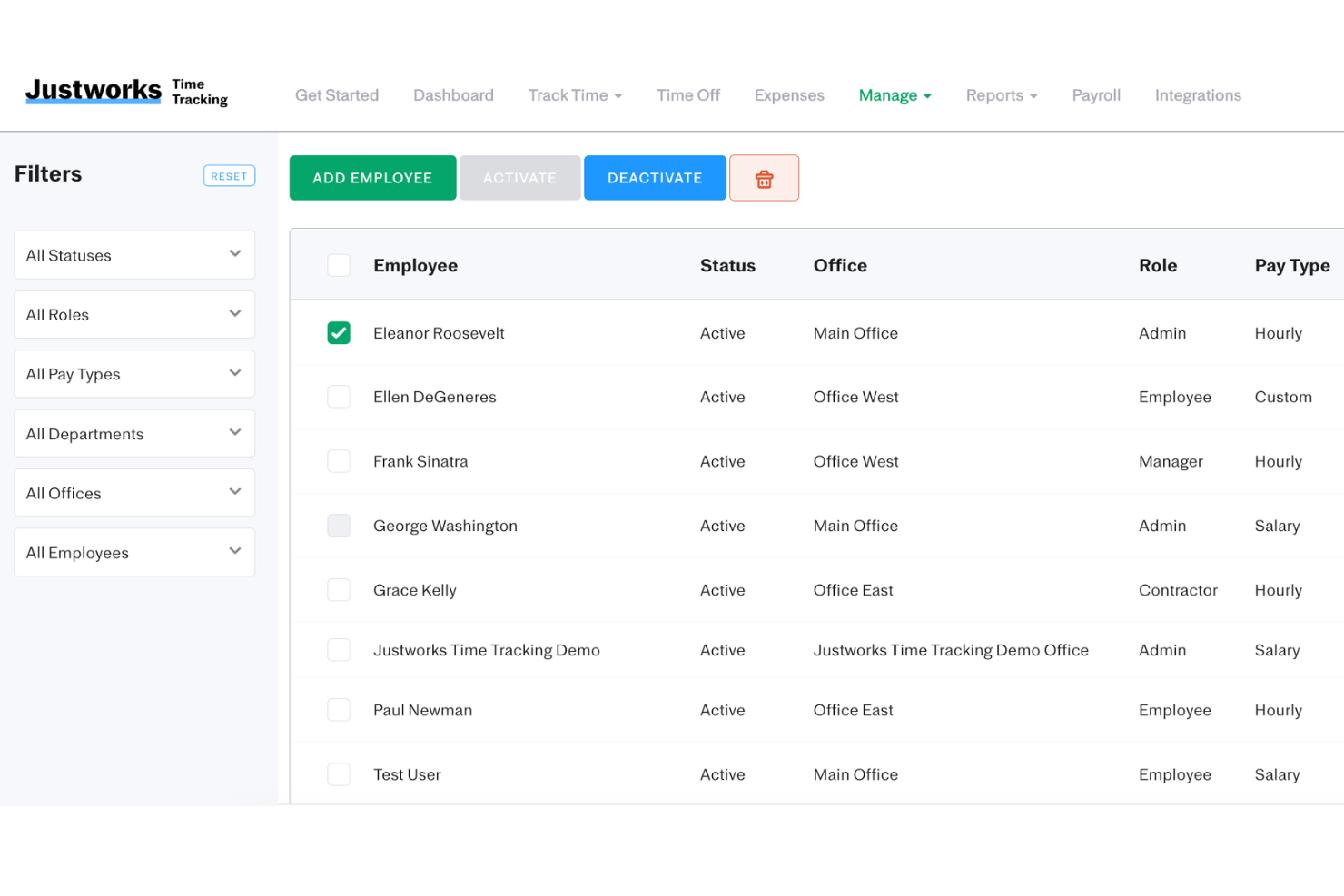
Justworks is a cloud-based employee management system that combines payroll, benefits administration, HR support, compliance tools, and time tracking in one platform. It helps small and growing businesses centralize essential workforce processes while reducing manual administrative work.
Who Is Justworks Best For?
Small and growing businesses looking for an all-in-one HR, payroll, benefits, and compliance platform with integrated time tracking.
Why I Picked Justworks
I picked Justworks because its time tracking tools connect employee hours directly with payroll, reducing manual data entry between systems. Employees can record their hours, while administrators can review timesheets and use approved data when processing payroll. The platform also combines payroll tax administration, benefits management, employee records, and HR support in one place. This makes it easier for small businesses to manage essential workforce processes without maintaining several disconnected systems. Its compliance resources and access to HR guidance are particularly useful for teams without a large internal HR department.
Justworks Key Features
- Benefits administration: Manages employee access to medical, dental, vision, retirement, and wellness benefits within one platform
- HR consulting: Provides access to HR professionals who can advise businesses on policies, employee relations, and compliance matters
- Automated tax filings: Automates payroll tax withholding, reporting, remittance, and annual filings such as W-2s and 1099s
- Custom reporting: Creates customizable reports covering payroll, benefits, employee records, taxes, and workforce data
Justworks Integrations
Integrations include QuickBooks, NetSuite, Xero, Sage Intacct, Greenhouse Recruiting, JazzHR, Lever, 15Five, Culture Amp, and Leapsome.
Pros and Cons
Pros:
- Offers nationwide health benefits management
- Live HR compliance support available anytime
- Seamless time tracking linked to payroll
Cons:
- Health benefit options can be costly
- Limited native integrations with other tools
Best for leave and absence management
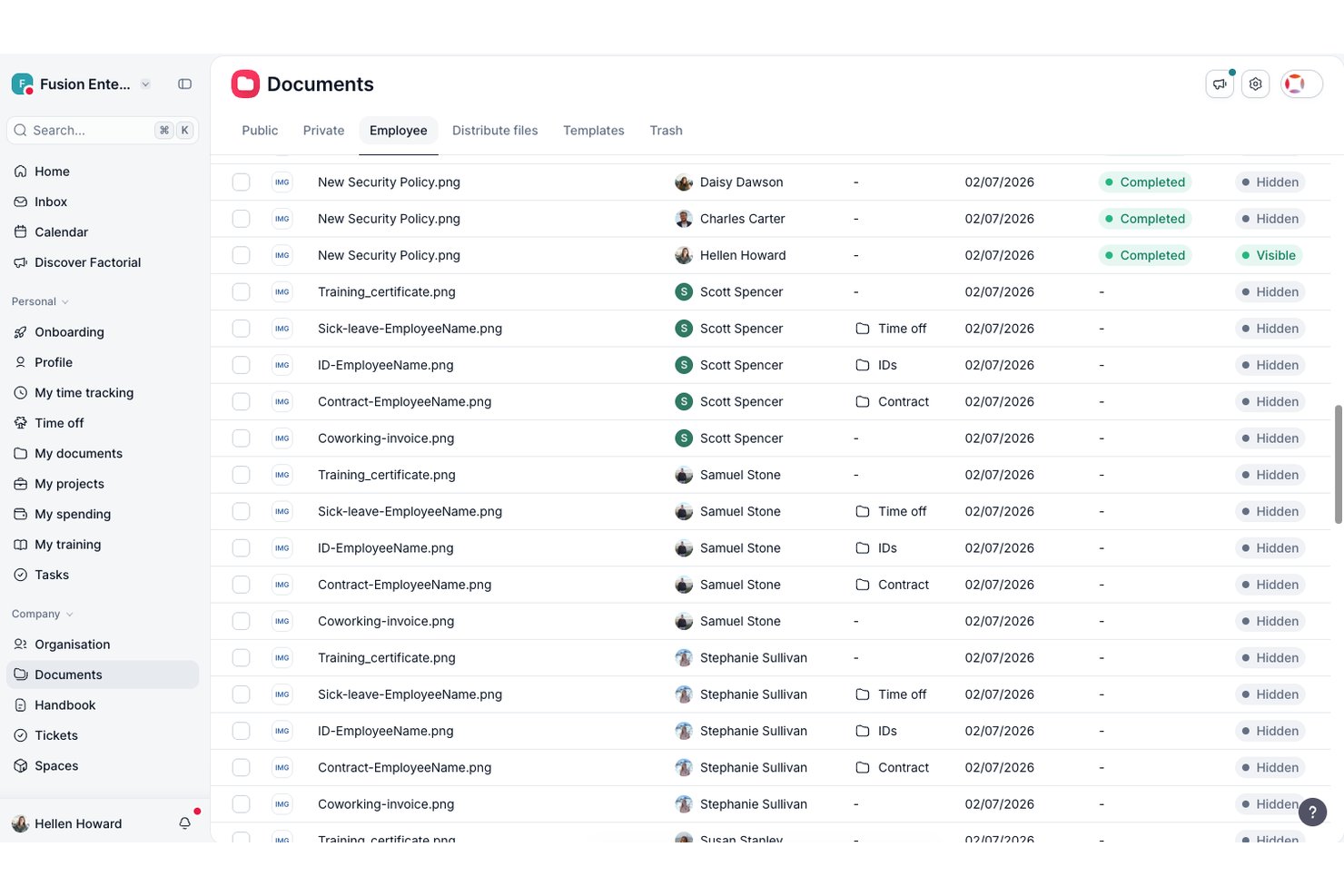
Factorial is designed for HR teams and managers who need a clear, centralized way to handle employee leave and absence requests. The platform offers customizable leave policies, automated approval workflows, and real-time absence tracking, making it especially useful for organizations with complex or distributed teams. If you’re looking to reduce manual tracking and ensure compliance with local leave regulations, Factorial brings these controls together in one place.
Who is Factorial Best For?
Factorial is designed for HR managers in small to mid-sized businesses overseeing leave and absence processes. It supports organizations standardizing time-off tracking and documentation.
Why I Picked Factorial
Managing leave and absence can quickly become complicated, especially for organizations with multiple policies or locations. Factorial stands out for its ability to centralize all leave types, automate approval workflows, and provide a clear calendar view for both managers and employees. I appreciate how the platform lets you customize leave policies to match local laws or company rules, which helps reduce compliance risks. For teams that need to track absences accurately and avoid scheduling conflicts, Factorial brings these controls together in a single system.
Factorial Key Features
Some other features that make Factorial useful for employee management include:
Document management: Store, organize, and share employee documents securely within the platform.
Time tracking: Monitor employee work hours and attendance with built-in time clocks.
Performance review tools: Set up and manage structured performance evaluations for individuals or teams.
HR analytics dashboard: Access visual reports on workforce trends, absences, and other HR metrics.
Factorial Integrations
Integrations include Sage, DATEV LODAS, a3innuva Nómina, Payflow, and Recruitee.
Pros and Cons
Pros:
- Good employee self-service features
- Affordable / modular pricing for SMBs
- Intuitive, easy-to-use UI
Cons:
- International payroll not fully mature
- Missing advanced features for large orgs
Gusto
Best for small and mid-sized businesses
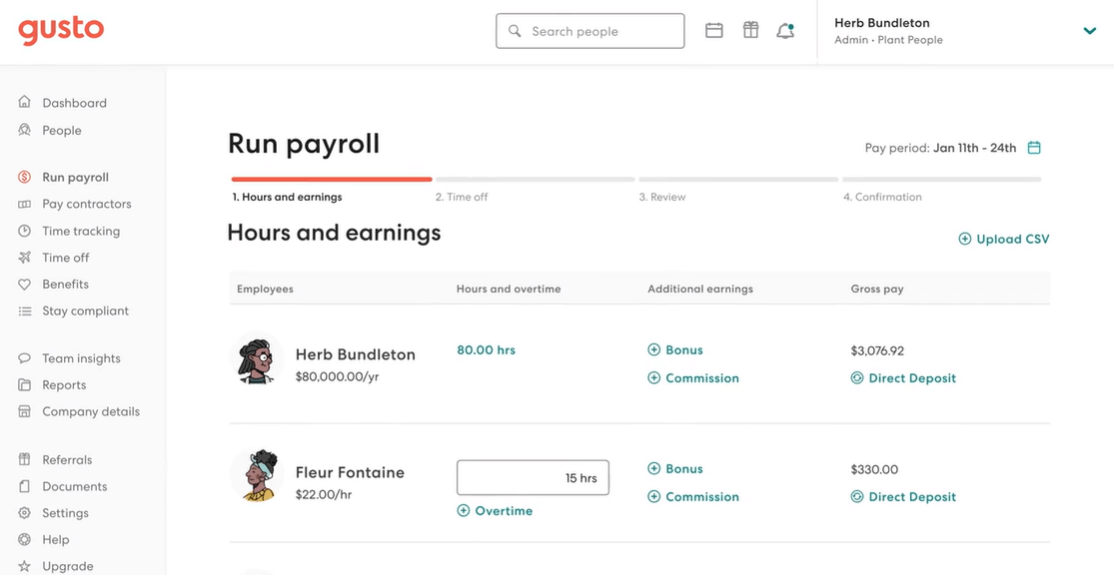
Gusto is an all-in-one employee management platform designed for small and mid-sized businesses that need payroll, benefits, and HR tools to simplify hiring, onboarding, and compliance.
Who Is Gusto Best For?
Gusto is a great fit for small and mid-sized businesses that want a single platform to handle payroll, HR, and benefits without needing a dedicated HR team.
Why I Picked Gusto
Gusto earns its spot on my shortlist because it packages payroll, onboarding, and benefits into one platform that works for small and mid-sized businesses without requiring a full HR department to run it. I like how Gusto's automated payroll handles federal, state, and local tax filings, removing a major compliance burden for lean teams. The onboarding tools let new hires complete paperwork, set up direct deposit, and enroll in benefits before their first day. For growing businesses without dedicated HR staff, this self-service setup saves time.
Gusto Key Features
- Time tracking: Employees can log hours directly in Gusto, with data that syncs automatically to payroll.
- PTO management: Set custom PTO policies, automate accruals, and let employees submit time-off requests from their self-service portal.
- Benefits administration: Manage health, dental, vision, and 401(k) plans from a single dashboard without third-party brokers.
- HR reporting: Generate reports on headcount, compensation, and workforce trends to support people decisions.
Gusto Integrations
Integrations include QuickBooks, Xero, FreshBooks, 7Shifts, Asana, Bench, Box, Aplos, Betterment at Work, and Checkr.
Pros and Cons
Pros:
- Payroll, benefits, and HR in one unified platform.
- Automatic tax filings and direct deposit simplify payroll compliance.
- Employee self-service portal empowers staff to access pay and forms.
Cons:
- Per-person pricing can get expensive as team grows.
- SMBs that need advanced compliance or niche industry-specific HR modules may find Gusto limiting.
New Product Updates from Gusto
Gusto Adds Solo Advisory Tools and Mobile Money Features
Gusto adds Solo S-Corp Advisory Tools and Gusto Money on Mobile for tax guidance, invoicing, and bill payments. These updates help accountants advise solopreneurs and let users manage business finances from their phones. For more information, visit Gusto’s official site.
Best for performance management compliance
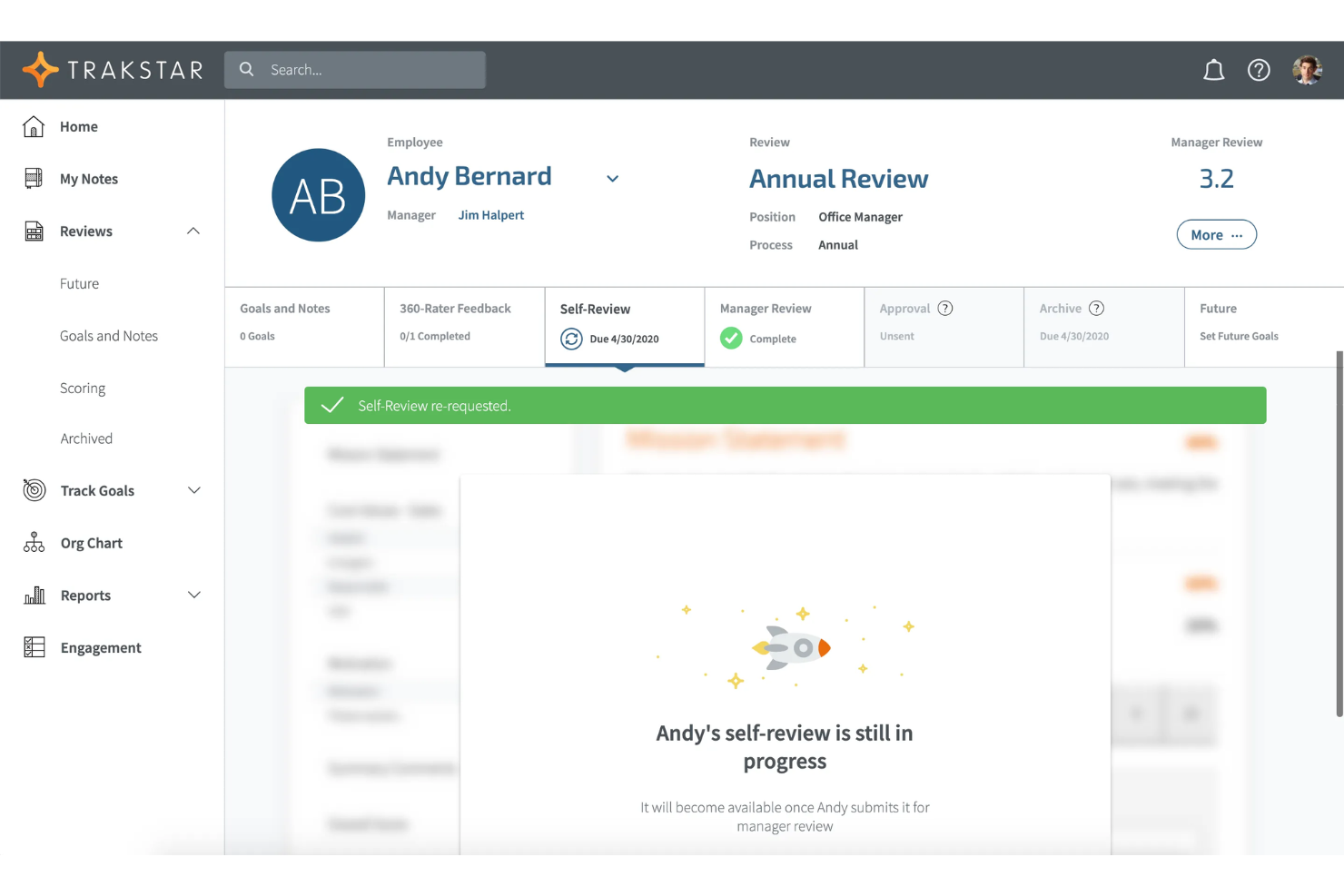
Organizations with strict compliance needs often look to Mitratech Perform for performance management that aligns with regulatory standards. This platform is designed for HR teams and compliance officers in highly regulated industries who need to document, track, and audit employee performance processes. Mitratech Perform helps reduce compliance risk by centralizing performance reviews, approvals, and documentation in one secure system.
Who is Mitratech Perform Best For?
Mitratech Perform is suited for HR and compliance leaders in regulated mid-sized to enterprise organizations. It supports companies aligning performance management with governance requirements.
Why I Picked Mitratech Perform
When compliance is a top priority in performance management, Mitratech Perform stands out for its focus on auditability and regulatory alignment. I picked this tool because it lets HR teams create, track, and store performance reviews with built-in controls for approvals and documentation, which is essential for regulated industries. The platform also supports automated workflows that ensure every step of the review process is logged and traceable. If your organization faces strict compliance requirements, Mitratech Perform helps you manage employee performance while maintaining a clear audit trail.
Mitratech Perform Key Features
In addition to its compliance-focused workflows, I also found these features valuable:
Customizable forms: Build and tailor performance review forms to fit your organization’s needs.
Role-based access controls: Set permissions for users based on their job function or department.
Automated notifications: Trigger reminders for review deadlines and required actions.
Reporting dashboard: Visualize performance data and track review completion rates.
Mitratech Perform Integrations
Native integrations are not currently listed by Mitratech Perform.
Pros and Cons
Pros:
- Robust reporting and analytics
- Customizable appraisal templates
- Comprehensive performance management
Cons:
- May not be cost-effective for small biz
- Learning curve for advanced features
Best for mobile workforce coordination

Connecteam is built for businesses managing deskless or mobile teams who need to coordinate schedules, tasks, and communication on the go. It’s especially useful for industries like retail, hospitality, construction, and field services where employees rarely sit at a desk. With Connecteam, managers can handle time tracking, shift planning, and real-time updates all from a single mobile app.
Who is Connecteam Best For?
Connecteam is designed for operations managers in small to mid-sized organizations with mobile or deskless staff. It supports companies coordinating scheduling and communication across frontline teams.
Why I Picked Connecteam
Coordinating a mobile workforce brings unique challenges that Connecteam is designed to address. I picked this tool because it offers a mobile-first platform where managers can assign shifts, track attendance, and communicate instantly with employees in the field. The built-in GPS time clock helps verify employee locations during clock-in and clock-out, which is especially useful for distributed teams. For organizations with staff who are always on the move, Connecteam brings scheduling, task management, and communication together in one app.
Connecteam Key Features
Some other features that make Connecteam stand out include:
Digital forms and checklists: Create and distribute custom forms for safety checks, inspections, or daily reports.
Employee directory: Give your team instant access to contact details for coworkers and managers.
Training modules: Deliver onboarding and ongoing training directly through the mobile app.
Surveys and polls: Collect feedback from employees with built-in survey and poll tools.
Connecteam Integrations
Integrations include Gusto, QuickBooks, Paychex, Xero, Lightspeed, Wix Bookings, Square, BambooHR, PrismHR, and ADP.
Pros and Cons
Pros:
- Automatic end-of-shift reports help your team save time
- User-friendly mobile app
- Automatic end-of-shift reports save you time
Cons:
- Customization can be time-consuming
- Limited sub-tasks in Basic and Advanced plans
New Product Updates from Connecteam

Connecteam Expands Break and Timesheet Controls
Connecteam adds flexible break thresholds, personalized policies, auto-end options, a centralized exceptions report, and improved timesheet issue visibility to help teams manage breaks and timesheets more effectively. For more information, visit Connecteam’s official site.
 .
.
Best with AI-powered project risk detection
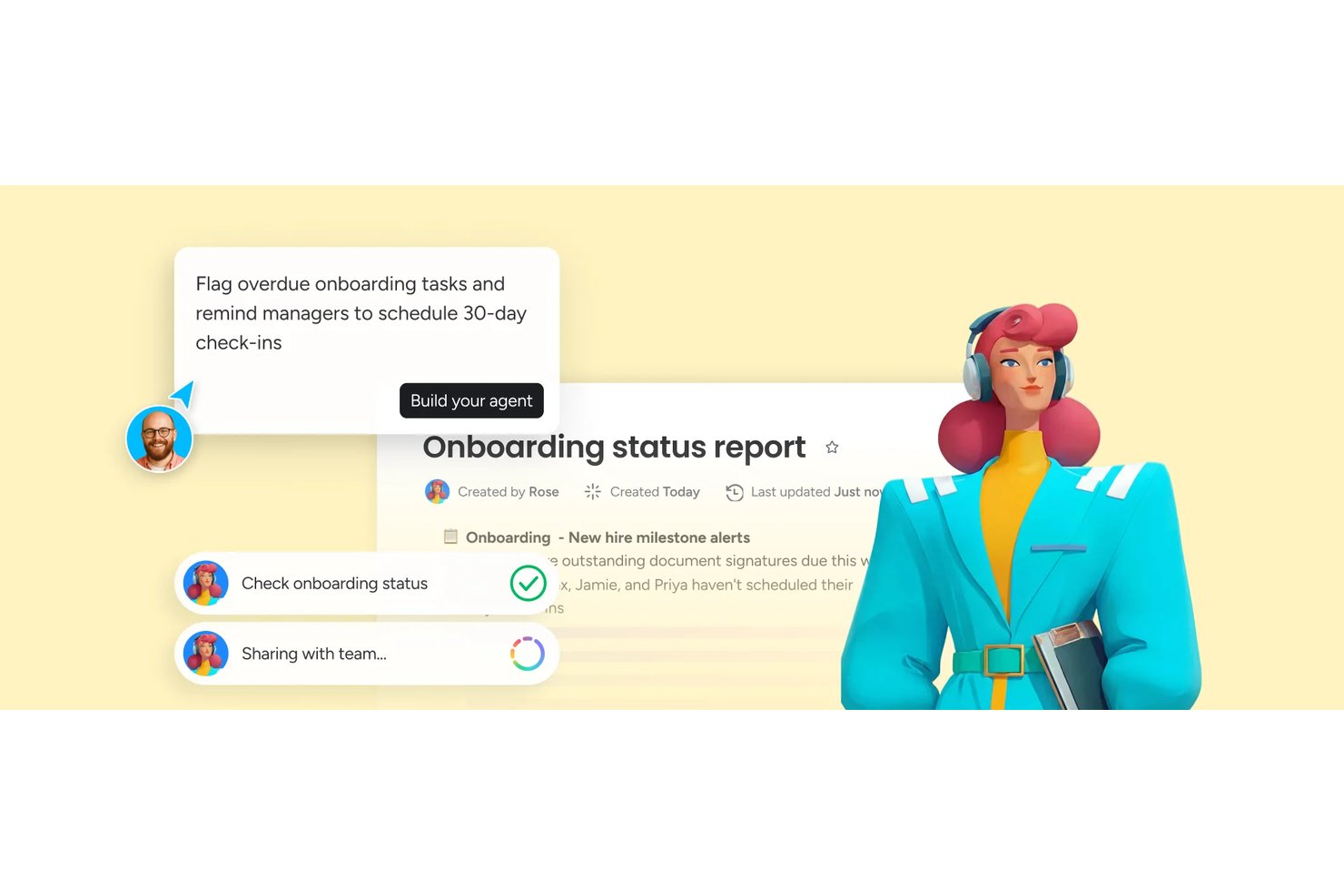
monday AI Workspace is a configurable work management platform that lets teams build employee lifecycle workflows — including onboarding, offboarding, task tracking, and HR request management — on a shared, AI-powered canvas.
Who Is monday AI Workspace Best For?
It's a strong fit for small to mid-sized teams that need flexible, customizable workflows to manage people operations alongside broader cross-functional work.
Why I Picked monday AI Workspace
monday AI Workspace earns its spot on my shortlist because of how its AI risk detection applies directly to people-heavy workflows. When I'm running onboarding projects across multiple new hires at once, the AI flags dependency conflicts and timeline risks before they derail the process. I also like that it pairs this with smart resource allocation, surfacing which team members are overloaded so I can reassign tasks before bottlenecks build up.
monday AI Workspace Key Features
- Customizable HR boards: Build and adjust boards to manage employee requests, documents, and records.
- Role-based access control: Set permissions for users, admins, and managers to secure sensitive HR information.
- Automated reminders: Configure rule-based alerts for document submissions, onboarding tasks, or HR deadlines.
- Native integrations: Connect with payroll, calendar, and communication platforms to sync employee-related workflows.
monday AI Workspace Integrations
monday AI Workspace offers hundreds of native integrations through its built-in integrations and marketplace, including Slack, Salesforce, HubSpot, Google Workspace, Microsoft 365, Zoom, DocuSign, Zendesk, Trello, and Asana. It also supports Zapier and provides an API for custom integrations.
Pros and Cons
Pros:
- Automates employee lifecycle task assignments
- Boards adapt to any HR process
- AI flags HR workflow risks proactively
Cons:
- Not purpose-built for HR teams
- No built-in payroll or benefits management
New Product Updates from monday AI Workspace
monday AI Workspace Adds Human Approval Routing
monday AI Workspace adds a human-in-the-loop approval block to AI Workflows, sending approval requests and routing workflow paths based on responses. For more information, visit monday AI Workspace's official site.
Best for payroll and benefits integration

Paylocity is a cloud-based employee management platform designed for HR teams and business leaders who want to centralize payroll, benefits, time tracking, and employee engagement in one system.
Who Is Paylocity Best For?
Paylocity is a strong fit for mid-sized businesses that need a unified HR platform to manage payroll, benefits, and workforce operations without juggling multiple systems.
Why I Picked Paylocity
Paylocity earns its spot on my shortlist because of how tightly its payroll and benefits features work together in a single system. I love that benefit deductions flow directly into payroll without any manual data entry—eligibility changes update automatically, and carrier integrations handle EDI file generation so my team isn't chasing down errors before a pay run. The Payroll Readiness Dashboard is genuinely useful too: it surfaces flagged issues like unexpected pay spikes before you process, which means fewer corrections after the fact. On the benefits side, the Benefits Decision Support tool gives employees personalized plan recommendations during open enrollment, which cuts down on the "which plan should I pick?" questions that tend to flood HR inboxes every fall.
Paylocity Key Features
- Time and attendance tracking: Log hours, manage schedules, and track overtime directly within the platform using time clocks, mobile punch-in, or web entry.
- Performance management: Set goals, run review cycles, and collect continuous feedback through structured templates built into the employee record.
- Onboarding workflows: Automate new hire paperwork, task assignments, and e-signatures so employees can complete onboarding steps before their first day.
- Employee self-service portal: Let employees view pay stubs, request time off, update personal information, and access HR documents without contacting HR directly.
Paylocity Integrations
Integrations include Microsoft Entra, Google Workspace, and Okta. An API is also available for custom integrations.
Pros and Cons
Pros:
- Includes performance management features
- On demand payment options
- Includes tax compliance services
Cons:
- Lacks support for independent contractor payments
- Setup can be time consuming
New Product Updates from Paylocity

Paylocity Expands Expense and Purchase Request Tools
Paylocity adds connected personal cards, smarter expense categorization, and a streamlined purchase request experience. This reduces manual entry and helps finance teams manage expenses and approvals more efficiently. For more information, visit Paylocity’s official site.
 .
.
Best for global teams

RemoFirst helps companies managing employees and contractors across multiple countries, enabling HR teams to handle international payroll, compliance, and onboarding from a single platform.
Who Is RemoFirst Best For?
RemoFirst is a strong fit for HR teams at small to mid-sized companies that are hiring or scaling across international markets.
Why I Picked RemoFirst
RemoFirst is on my shortlist because it simplifies managing a global team. I like how the platform handles multi-country payroll in a single aggregated payment, so my team isn't juggling dozens of individual transactions across currencies. The localized onboarding and contract management also stand out—RemoFirst generates employment contracts that align with each country's labor laws, allowing me to onboard international hires in days rather than weeks. The compliant offboarding feature covers country-specific notice periods and final payouts, reducing legal guesswork when a global hire exits.
RemoFirst Key Features
- Workforce management: Manage time off, bonuses, and benefits for international employees according to each country's local labor laws.
- Visa and immigration support: Handle work permits and visa applications for employees across 85+ countries directly through the platform.
- Background checks: Run global background screening on international hires to verify identity and maintain hiring compliance.
- Equipment delivery: Arrange laptop and hardware delivery to remote employees in international locations through the platform.
RemoFirst Integrations
Native integrations are not currently listed.
Pros and Cons
Pros:
- Compliance issues are handled by local experts around the world
- Fast and responsive customer service
- EOR services available in 150+ countries
Cons:
- No mobile app
- Lacks extensive integrations


If your organization needs flexible, tailored evaluation forms for employee reviews, Express Evaluations is built for that purpose. This platform is a fit for HR teams and managers who want to design, distribute, and analyze custom performance evaluations without being limited by rigid templates. It helps you capture the exact feedback and data points that matter most to your business or industry.
Who is Express Evaluations Best For?
Express Evaluations serves HR generalists and small business leaders formalizing employee reviews. It supports organizations creating customizable evaluation forms without complex systems.
Why I Picked Express Evaluations
Customizable evaluation forms are often hard to find in employee management systems, which is why Express Evaluations caught my attention. I picked this tool because it lets you build performance review forms from scratch, using your own questions, rating scales, and workflows. You can tailor forms for different roles, departments, or review cycles, so your evaluations always match your organization’s needs. For HR teams that want to move beyond generic templates and gather more meaningful feedback, Express Evaluations offers the flexibility to do just that.
Express Evaluations Key Features
Some other features that make Express Evaluations useful for HR teams include:
Automated reminders: Send scheduled notifications to prompt employees and managers to complete evaluations.
Role-based access controls: Set permissions so only authorized users can view or edit specific forms.
Bulk import/export: Upload or download evaluation data in batches for easier administration.
Analytics dashboard: View summary statistics and trends from completed evaluations in one place.
Express Evaluations Integrations
Integrations include Employee Navigator.
Pros and Cons
Pros:
- Customizable evaluation templates
- Supports performance improvement plans
- Comprehensive reporting features
Cons:
- No mobile application for on-the-go access
- Limited integration options with other HR systems
HiBob
Best for automated onboarding workflows
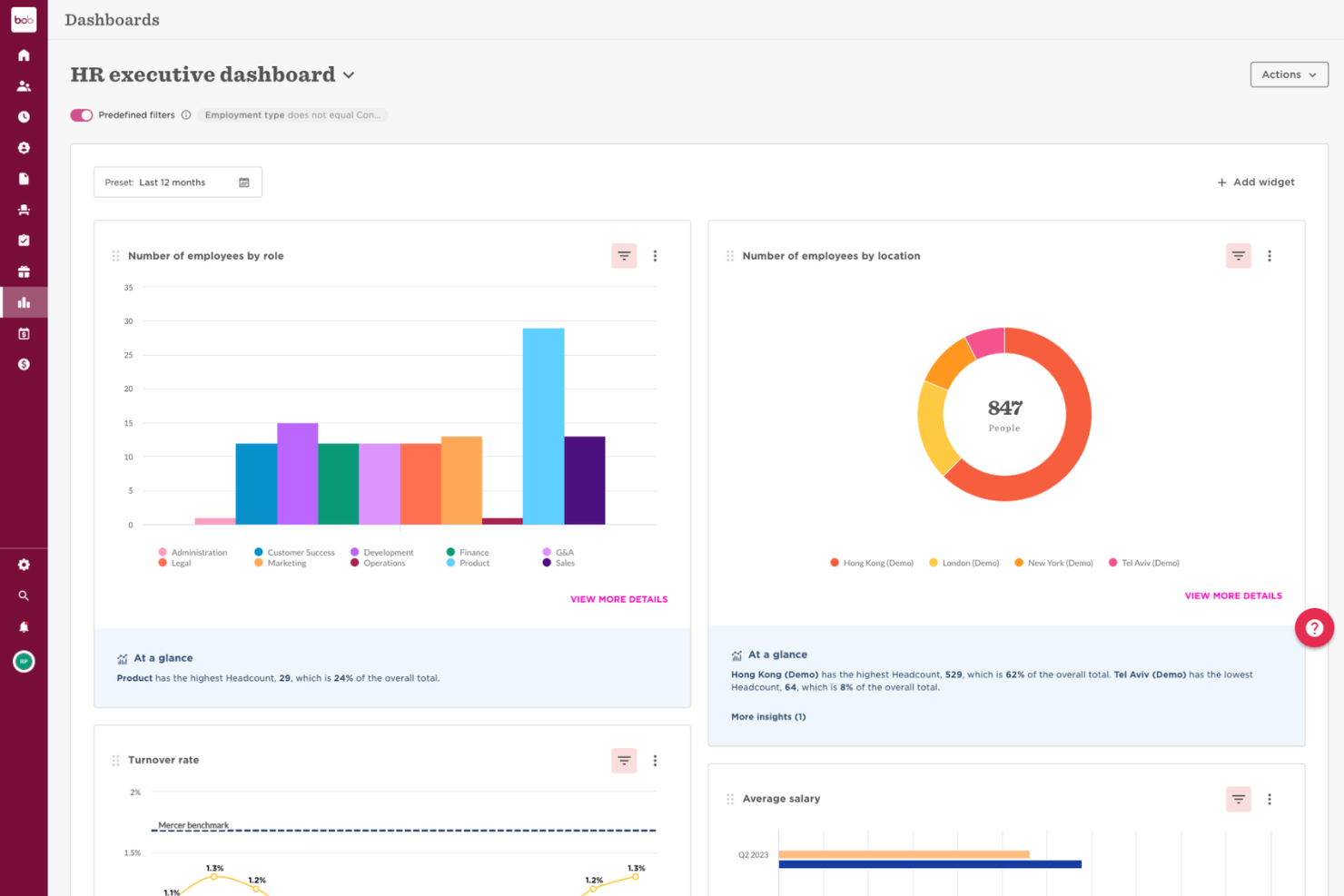
HiBob is a modern HR platform designed for growing businesses that want to centralize employee data, automate HR processes, and improve the employee experience across onboarding, performance, and engagement.
Who Is HiBob Best For?
HiBob is a strong fit for mid-sized companies with fast-growing teams that need a scalable HR system to manage people operations across multiple locations or departments.
Why I Picked HiBob
HiBob earns its spot as one of the best on my shortlist because of how well its onboarding workflows handle the complexity of bringing people into a growing organization. I particularly like the preboarding feature—new hires can complete their profile details and paperwork in Bob before day one, so their first day is spent meeting teammates rather than filling out forms. I also use the role-specific task lists to assign IT setup, manager check-ins, and department-specific training as separate, automated workflows that trigger without any manual follow-up. The unlimited onboarding flows mean I can build distinct experiences for different teams, locations, or roles without compromising personalization.
HiBob Key Features
- People analytics dashboard: Track headcount, retention, absenteeism, and growth KPIs using real-time data, then schedule and share reports directly with leadership.
- 360-degree performance reviews: Run structured review cycles that connect individual goals to team, department, and company-level objectives.
- Time off management: Employees request and managers approve PTO, sick days, and holidays directly within the platform, with visibility into who's in and who's out.
- Employee surveys: Build lifecycle and engagement surveys to collect feedback at key milestones and track satisfaction trends over time.
HiBob Key Features
Integrations include ADP, Breezy HR, Globalization Partners, Paylocity, Trinet, Xero, Sequoia, Greenhouse, Slack, Deel, and NetSuite.
Pros and Cons
Pros:
- Offers a range of integrations
- Includes features for engagement, recognition, and self-service
- An all-in-one platform that covers a wide range of HR functions
Cons:
- Could offer more configuration options
- Limited built-in payroll outside of specific locations
Other Employee Management Systems
Here are a few more options that didn’t make the best employee management software list. If you need additional suggestions for helpful HR systems, check these out:
- Sloneek
For digital document management
- Veriato
For employee activity monitoring
- Lattice
For performance-related feedback
- GoCo
For employee self-service
- Eddy
For local business HR need
- edays
For absence and leave tracking
- Inspire
For goal alignment tracking
- Workleap
For employee engagement insights
- ChartHop
For unified people data
- Kissflow Workflow
For workflow automation flexibility
- eloomi
For learning and development tools
- Mitratech TalentReef
For high-volume hourly hiring
- Bullhorn
For staffing agency operations
- Trinet
For PEO and HR outsourcing
- SAP SuccessFactors
For enterprise HR integration
- Insperity
For HR support services
- SyncHR
For unified HR and payroll data
- Rippling
For unified workforce automation
- Deel HR
For managing employees and contractors
- Buddy Punch
For simple time clock solutions
- Monitask
For software usage tracking
- Leapsome
For continuous feedback cycles
- Remote
For global hiring compliance
- BambooHR®
For onboarding, performance, and payroll
- Peoplebox.ai
For OKR and performance tracking
- TalentHR
With built-in optional AI for HR tasks
- Justworks
For benefits administration for SMBs
- TimeTrex
For integrated time and attendance
- Homebase
For hourly staff scheduling
- Paycor
For scalable payroll solutions


Related HR Software Reviews
If you still haven't found what you're looking for here, check out these other related tools that we've tested and evaluated:
- HR Software
- Payroll Software
- Recruiting Software
- Employer of Record Services
- Applicant Tracking Systems
- Workforce Management Software
How I Evaluate Employee Management Systems
My evaluation has two layers: the core capabilities a platform must cover—think onboarding workflows and PTO tracking—and the differentiators that determine which tool actually fits your team.
Core Functionality (Table Stakes For This List)
When I'm selecting tools for my list, I rank each one on a scale from 0 (does not offer the functionality) to 5 (excels in this area) for each core functionality listed below. Then, I calculate the tool's total score into a percentage. Each tool needs to achieve a minimum total score of 75% to be considered for inclusion.
- Employee Database & Records: I look for a centralized repository where you can store job history, compensation details, documents, and custom fields—so you're not digging through spreadsheets when a manager asks for a headcount breakdown by department.
- Onboarding & Offboarding Workflows: Each tool should support structured task sequences for new hires and departures, including document collection, e-signatures, and role-based assignments that keep IT, payroll, and the hiring manager in sync.
- Time & Attendance Tracking: I evaluate how the platform handles PTO requests, leave accruals, and approval chains—especially whether it supports multiple leave types like parental leave, sick days, and regional holidays without manual workarounds.
- Performance Management Tools: Review cycles, goal tracking, and feedback channels all factor in here. I check whether the tool supports formats like 360 reviews or OKRs, and how configurable the review cadence and templates are.
- Compliance & HR Reporting: Strong platforms offer prebuilt and customizable reports covering metrics like turnover rate, headcount trends, and EEO data, plus audit logs that make it easy to pull records during a compliance review.
- Employee Self-Service Portal: I look for a portal where employees can update personal info, request time off, and access pay stubs or company policies on their own—reducing the volume of routine HR inbox requests.
Once I have a list of tools that meet the criteria, I consider what sets each platform apart.
Differentiating Factors (What Sets Vendors Apart)
Here's how I compare and contrast different vendors:
Standout Features
Payroll integration is a big one—I check whether a platform can sync hours, deductions, and tax data directly to payroll without CSV exports. For teams spread across multiple countries, global support matters too, including localized tax rules, multi-currency pay, and language options. I also evaluate employee engagement tools like pulse surveys and peer recognition, since they turn a system of record into something your people actually interact with beyond submitting PTO requests.
Beyond Features
Integration ecosystem is something I always evaluate—your employee management system needs to connect to your ATS, payroll, and tools like Slack or Microsoft Teams without manual workarounds. I also look at compliance and data security, including certifications like SOC 2 Type II and role-based access controls that protect sensitive employee records. Pricing transparency matters just as much; I check whether vendors clearly disclose per-employee costs and whether implementation, support tiers, or add-on modules carry hidden fees that inflate your total cost of ownership.

How to Choose an Employee Management System
Employee management systems can solve many different challenges and improve numerous workflows. To help you figure out which employee management system best fits your needs, you need to pinpoint your key users and document their specific challenges first.
As you work through your own unique employee management software selection process, keep the following points in mind:
- What employee management problems are you trying to solve? Start by identifying the challenges you're trying to overcome. This will help you clarify the features and functionality the employee management software needs to provide. Common employee management challenges include:
- Difficulty staying on top of employee data management and record keeping,
- Inefficient employee scheduling and time-tracking processes,
- Payroll and benefits administration processes that are siloed in other systems without integration,
- Cumbersome employee performance processes that are inconsistent, or
- Poor employee onboarding experiences, especially for remote new hires.
- What outcomes are important and how will you measure success? Being clear on your desired outcomes upfront is crucial to avoid wasting valuable time. Key outcomes you may want to focus on include:
- Integrated modules for HR functions that reduce or eliminate manual data entry,
- Automated employee scheduling capabilities resulting in less scheduling conflicts or absenteeism,
- Enabling a better employee experience for your staff by allowing them to trade shifts, or access self-service features, or
- Improved productivity for your HR team as a result of new workflow automation features and AI-backed HR processes.
- Who are your main users? Consider who will use the software and how many licenses you'll need. You'll need to evaluate if it'll just be your HR professionals and managers, or your whole organization that will require access. Once that's clear, it's also useful to rank the needs of your different users to identify the key priorities for your power users, managers, and employees, to ensure they're all met.
- What is your budget? To evaluate cost, do a headcount of your existing workforce, plus your projections for the next 5 to 10 years. Since most staff management tools charge a monthly fee per employee, this will help you estimate your monthly costs proactively.
- Do you require specific software integrations? Clarify whether your new employee management system will replace existing tools, or need to integrate with them. Depending on the type of employee software you're looking for, some key integrations to watch for include payroll software, or attendance and time-tracking tools.
- Does the new software satisfy your technical requirements? Consider the software selection alongside your existing workflows and systems. Does the new employee management system offer the security features you want (e.g., two-factor authentication (2FA), etc.)? Does the software offer a complimentary employee management app for connecting via mobile devices?
Remember, every business is different — don’t assume that an employee management system will work for your organization just because it's popular.
Trends in Employee Management Systems for 2026
Employee management systems have continued to evolve to incorporate advances in technology as well as changing workplace dynamics. Here are the most recent trends that are shaping the future of employee management systems today:
- AI-Powered Predictive Analytics: Many systems now offer AI-driven insights to help HR teams forecast staffing needs, flag potential employee churn, and identify areas for improvement. This proactive approach transforms HR from reactive task management to strategic workforce planning.
- Personalized Employee Experiences: Systems are shifting toward hyper-personalization—custom learning paths, benefits recommendations, and wellness resources tailored to each employee’s role, goals, and preferences. This trend supports higher engagement and retention.
- Mobile Accessibility: The importance of mobile access to employee management systems continues to grow. Updates are increasingly focused on enhancing the mobile user experience, ensuring that employees and managers can access the system and perform tasks from anywhere, at any time.
- Automation: Automation is a current trend in employee management software because it streamlines repetitive tasks, boosts efficiency, and reduces human error. Improving HRIS toolset capabilities allows companies to automate tedious tasks like employee scheduling and attendance monitoring.
- Integrated Communication Tools: Newer systems are embedding chat and feedback tools directly into platforms—making it easier for managers and employees to communicate, complete performance check-ins, or request support without leaving the app.
- Data Privacy & Compliance Features: As data protection regulations tighten globally, employee management platforms are doubling down on compliance tools. Features like automated policy updates, role-based permissions, and audit trails are becoming standard to help businesses stay secure and compliant.
These developments in employee management software signal a clear trend toward more integrated, intelligent, and user-friendly solutions designed to optimize daily HR operations, uncover actionable insights, and provide a better employee experience.
What is an Employee Management System?
An employee management system is software that helps companies organize employee data and manage core HR functions in one place.
It typically includes tools for recruiting, onboarding, time tracking, performance management, training, payroll, and benefits. These systems give HR teams and employees a single source of truth for all workforce information.
Employee management systems improve efficiency, reduce manual work, and support company growth by providing scalable tools for scheduling, task management, and workforce segmentation.
Features of Employee Management Systems
When selecting an employee management system, keep an eye out for the following key features:
- Centralized employee database: All your employee information, documents, and records live in one secure spot, making it easy for you to manage, update, and find what you need—no more hunting through endless spreadsheets.
- Time and attendance tracking: This feature lets you monitor when employees clock in and out, manage leave requests, and track absences, so you always know who’s available and when.
- Payroll management: Run payroll quickly and accurately by automating calculations for salaries, deductions, and benefits, making payday straightforward and error-free.
- Performance management: Set goals, track achievements, and conduct performance reviews, giving you the tools you need to recognize top talent and help everyone keep growing.
- Document management: Store, organize, and easily access essential HR documents, contracts, and compliance records, so you’re never left scrambling for paperwork.
- Onboarding and offboarding workflows: Guide new hires and departing employees through clear, step-by-step processes that cover everything from paperwork to training, ensuring no detail slips through the cracks.
- Self-service employee portal: Let employees view their schedules, request time off, and update personal information without having to email HR every time—giving everyone more control and less paperwork.
- Task and reminder management: Assign tasks, set deadlines, and automate reminders, so you and your team always know what needs attention and nothing falls through the cracks.
- Compliance management: Stay ahead of labor laws and industry regulations with built-in tools that help you manage certifications, track policy changes, and reduce the risk of mishaps.
Common Employee Management System AI Features
Beyond the standard employee management system features listed above, many of these solutions are incorporating AI with features like:
- Chatbot HR assistance: AI-powered chatbots answer routine HR questions, guide employees through processes, and offer instant support, cutting down your email backlog and keeping everyone informed.
- Automated resume screening: AI combs through applications and highlights top candidates by matching qualifications and experience to your set criteria, saving you tons of time in the hiring process.
- Predictive turnover analytics: Identify employees who might be looking to leave by analyzing engagement data and historical trends—so you can address issues before they become a surprise resignation.
- Smart scheduling optimization: AI evaluates availability, skills, and staffing demands to help you build work schedules that reduce conflicts and maximize productivity.
- Employee sentiment analysis: Automatically analyzes feedback from surveys, emails, or chat to gauge team morale and catch early signs of dissatisfaction or burnout.
Benefits of Employee Management Systems
Employee management systems are powerful workforce management tools that act as a single source of truth for organizing key HR functions, including recruitment & onboarding, time and attendance tracking, performance management, training & development, payroll, and benefits administration.
By selecting the best employee management software for your needs, you can expect to gain the following benefits:
- Increased Efficiency: By automating routine tasks such as time tracking, payroll, and employee data management, employee management systems significantly reduce the time and effort required to manage these processes. This frees up HR professionals to focus on more strategic tasks, thereby increasing the overall efficiency of the HR department.
- Improved Employee Experience: By empowering employees through self-service portals and enhancing their user experience through personalization and mobile-friendly features, employee management systems improve the overall employee experience, leading to greater job satisfaction.
- Enhanced Data Accuracy and Security: Employee management platforms improve data accuracy by minimizing the errors associated with manual data entry. Additionally, they offer advanced security features to as encryption and two-factor authentication to protect sensitive employee information, ensure compliance with data protection regulations, and prevent data breaches.
- Streamlined Communication and Collaboration: By centralizing employee information and providing tools for feedback collection and two-way communication, employee management systems facilitate better communication between managers and employees and foster a more collaborative work environment.
- Data-Driven Decision Making: With comprehensive analytics and reporting tools, employee management systems offer insights into important HR metrics like turnover rates, employee engagement, and productivity levels. These insights enable HR professionals and business leaders to make informed decisions that can positively impact the organization's growth and performance.
As you can see, employee management systems offer operational benefits to organizations of all sizes, including improved efficiency, a better employee experience, and data-backed insights to drive operational success.
Costs & Pricing for Employee Management Systems
Often, the decision to invest in a new software system comes down to the final price, and there's no shame in that. It's important to find an employee management system that works within your budget, but also meets your business needs.
Employee management systems offer different plans and pricing options that cater to different organizational needs and sizes. Many also offer free trials or free plans with limited features (i.e., freemium plans), allowing you to get your hands on the software before you commit to a contract.
Plan Comparison Table for Employee Management Systems
| Plan Type | Average Price | Common Features Included |
|---|---|---|
| Free | $0 | Basic employee tracking, limited reporting, and access for a small number of users |
| Basic | $2 - $8 per user/month | Employee self-service, time and attendance, basic HR reporting, and email support |
| Professional | $8 - $15 per user/month | Full HR suite (including recruitment and onboarding), advanced analytics, integrations with other software, and phone support |
| Enterprise | Custom Pricing | Customizable features, dedicated support, advanced security options, API access, and scalability options |
Choosing the right plan involves balancing your organization's specific needs with your budget considerations. Always consider the scalability of the system and the quality of customer support when making your decision.
While it's understandable that you may want to start with a free or basic plan initially, there are several reasons why you may want to opt for a more advanced plan, including:
- Growth in Employee Numbers: Many basic plans limit the number of admin users and employee accounts you can have. However, more advanced plans can accommodate larger volumes of users and offer better tools for managing an increased amount of employee data and administrative tasks.
- Advanced Reporting Needs: If you need more detailed insights and analytics to make informed decisions, you'll need to scale up your plan to unlock these advanced HR reporting software features. However, it's worth paying a little extra to gain tools to help you track performance, identify trends, and improve the overall efficiency of your workforce.
- Integration with Other Systems: Integration abilities are usually quite limited or nonexistent in free or basic plans. However, integrating your employee management data with other business systems, including your payroll, CRM, or ERP, is worth investing in, since doing so will improve your data synchronization across systems, reducing manual data entry and the possibility of errors.
- Customization and Flexibility: If your unique business needs require more customization options, you'll likely need to increase your plan to access those features. By upgrading to a higher-priced plan, you'll gain the ability to tailor your workflows to align with your company's processes.
- Advanced Support and Training: If you find you need more than just basic troubleshooting, an advanced plan may be a better fit. Advanced plans typically offer superior customer support and training resources, helping you maximize the software's potential and get up-to-speed in the system quickly.
Ultimately, it's important to secure a plan that offers the features you require to satisfy your current needs and solve your challenges without exceeding your budget.
Employee Management Systems: FAQs
Have some questions about employee management systems and what they have to offer? These frequently asked questions are a great place to start:
How can software support HR teams with typical employee management challenges?
Employee management systems directly address the operational bottlenecks that prevent HR from delivering strategic value. HR professionals spend 40% to 60% of their time on compliance and administrative tasks, and HR departments see a 60% reduction in time spent on administrative tasks after implementing AI. This time savings allows CHROs to redirect resources toward talent strategy and organizational development.
The most impactful areas where software delivers immediate results include automated onboarding workflows, integrated performance management that provides real-time visibility into team effectiveness, and centralized employee data that eliminates manual spreadsheet maintenance. HR professionals may free up 14 hours per week by delegating time-consuming tasks to AI algorithms, while automated onboarding reduces errors in employee data collection by 73%. Automating the onboarding process can produce up to a 65% increase in new hire productivity and a 77% decrease in turnover within the first three months.
When selecting an employee management system, focus on solutions that integrate with your existing HR tech stack, particularly your HRIS and payroll systems. Look for platforms that offer role-based dashboards so managers can access employee information without HR involvement, and ensure the system provides analytics capabilities to demonstrate ROI to executive leadership. The right platform should measurably reduce HR’s administrative burden while improving employee experience metrics like engagement scores and retention rates.
What are the most common challenges of managing remote, hybrid, or other diverse team structures?
Managing diverse, hybrid or remote teams brings specific challenges. Remote work can make communication harder, tracking performance more difficult, and leave employees feeling disconnected. Without the right tools, remote workers may feel isolated, affecting their productivity and morale. Managing different time zones and ensuring fair workload distribution can also add complexity.
Diverse teams offer benefits but require careful management. Different cultures, communication styles, and work habits can lead to miscommunication if not handled well. Employee management tools that improve communication and collaboration help ensure diverse teams can work together effectively, no matter where they are based. These tools also promote fairness and inclusivity, giving everyone the support they need
How do these systems handle data privacy and security?
Employee management systems prioritize data privacy and security by employing various strategies, including:
- Data encryption
- Secure access controls
- Regular security audits
- Compliance with global data protection regulations (e.g., GDPR).
It’s important to select a system that transparently outlines its security measures and has a proven track record of safeguarding user data, giving you peace of mind when it comes to compliance.
Are there any hidden costs associated with these systems?
While employee management systems advertise their core features, potential hidden costs can include fees for additional users, advanced features, customizations, integrations, and sometimes even for data export or technical support. Always inquire about the total cost of ownership before committing to a system.
If cost is your biggest concern, this article delves deeper into different HR software pricing models you may encounter.
How have employee management systems adapted to accommodate hybrid working environments?
Today’s employee management systems have fundamentally transformed to meet the demands of hybrid work, with 28.2% of full-time employees now working a hybrid model. The most critical adaptation has been the integration of sophisticated workspace management capabilities that coordinate both physical and virtual work environments.
Modern platforms now feature intelligent desk booking systems that allow employees to reserve workstations through interactive floor maps, with only 40% of companies maintaining a 1:1 employee-to-desk ratio, down from 56% last year. These systems include capacity enforcement tools that automatically block bookings when safety limits are reached and provide real-time visibility into which team members will be in-office on specific days, enabling better coordination and collaboration planning.
The technology stack has expanded beyond basic scheduling to include robust analytics dashboards that give CHROs data-driven insights into space utilization patterns and employee preferences. 93% of employers and 90% of employees say collaboration tools are essential for making hybrid work successful, which has driven integration with communication platforms like Microsoft Teams and Slack directly within the employee management interface. Advanced features now include automated room releases for unoccupied spaces, parking spot reservations, and health screening questionnaires—all accessible through mobile apps that support employees whether they’re working on-site, remotely, or switching between locations throughout the week.
What mobile capabilities do employee management systems offer for on-the-go access?
Today’s employee management systems provide comprehensive mobile capabilities that extend far beyond basic self-service functions. 91% of corporate employees are using at least one communication app, and modern HR platforms have adapted by offering feature-rich mobile apps that mirror desktop functionality.
Core Mobile Features
The most popular mobile capabilities include GPS-enabled time tracking that allows employees to clock in/out with location verification, interactive scheduling tools where staff can view shifts, request time off, and swap schedules with manager approval, and real-time communication through integrated messaging, video calls, and team directories. Employees can clock in and out easily, even via mobile apps Best Employee Management Apps for 2024, with many systems now supporting biometric attendance, facial recognition, and QR code check-ins for enhanced security and accuracy.
Advanced Mobile Functionality
Leading platforms now offer mobile-first features specifically designed for hybrid and remote teams. These include desk booking systems with interactive floor maps, meeting room reservations, document management for accessing employee handbooks and compliance materials, and push notifications for policy updates or deadline reminders. Self-service tools empower employees to manage administrative tasks, such as expense reporting, time-off requests, and travel booking, with ease.
Strategic Value for HR Leaders
The mobile-first approach delivers measurable business impact by reducing administrative overhead and improving employee satisfaction. Advanced analytics dashboards accessible through mobile apps give CHROs real-time insights into workforce metrics, attendance patterns, and engagement levels. For organizations managing deskless workers, these mobile capabilities are particularly critical—enabling training modules, performance reviews, and compliance tracking to be completed entirely through smartphone interfaces, ensuring consistent HR processes regardless of employee location.
How do I choose the right employee management system for my company's size and needs?
The selection process should start with a comprehensive audit of your current HR pain points and strategic objectives. Begin by identifying your primary use cases: are you primarily addressing compliance gaps, streamlining administrative tasks, or improving employee engagement metrics? In 2024, only 40% of companies report having an employee-to-desk ratio of 1.0:1 or less—down from 56% last year Desk booking software for hybrid workplaces, indicating that hybrid work management has become a critical consideration for most organizations.
For smaller organizations (under 100 employees), prioritize user-friendly, small business employee management software with transparent pricing and essential features like time tracking, basic reporting, and payroll integration. Mid-market companies (100-1,000 employees) should focus on scalable solutions with advanced analytics, custom workflows, and robust integration capabilities. Smaller companies with less than 500 employees are more likely to be fully flexible (73%), while larger companies with over 25,000 employees are more likely to adopt a structured hybrid model (67%) 20 Best Employee Management Software For Your Business In 2024, which affects the features you’ll need most.
Assess vendors using a structured approach: request demos focused on your specific workflows, evaluate mobile capabilities if you have deskless workers, and ensure the platform can grow with your organization. Consider the total cost of ownership beyond subscription fees—including implementation, training, and potential productivity loss during transition. Most importantly, involve your actual users in the selection process, as 59% of respondents think that their organization has been too slow at delivering apps for the workforce, indicating that user adoption is critical to success.
Can employee management software integrate with my existing HR and payroll systems?
Modern employee management systems are designed with integration as a core requirement, recognizing that HR leaders need unified data flows rather than siloed solutions. Most leading platforms offer pre-built connectors for popular HRIS systems like Workday, BambooHR, and ADP, as well as payroll providers including Gusto, QuickBooks, and Paychex.
The most critical integrations include bidirectional data sync with your HRIS for employee records and organizational changes, automated payroll feeds that eliminate manual data entry and reduce errors, and SSO (Single Sign-On) capabilities that streamline user access management. Integrations are available with major HR and accounting platforms, including Ashby, BambooHR, Expensify, Greenhouse, Hibob, NetSuite, Okta, OneLogin, QuickBooks, Xero, Workday, and Workable Connecteam: The World’s #1 Employee Management App.
For organizations with legacy systems or unique requirements, evaluate vendors’ API capabilities and professional services offerings. Many platforms provide open APIs that enable custom integrations, while others offer dedicated implementation teams to handle complex data migrations. The key is ensuring real-time data synchronization—particularly for time and attendance data that feeds directly into payroll processing. Request detailed integration documentation during your vendor evaluation and test data flows in a sandbox environment before full deployment to avoid disruptions to critical HR processes.
What implementation timeline should I expect when adopting an employee management system?
Implementation timelines vary significantly based on organizational complexity, but most deployments follow a predictable pattern. Simple implementations for smaller organizations (under 100 employees) with basic requirements typically take 2-4 weeks, while complex enterprise deployments can extend 3-6 months or longer.
Most successful implementations follow a structured methodology: initial setup and configuration (1-2 weeks), data migration and system integration (2-4 weeks), user training and pilot testing (1-2 weeks), and full rollout with ongoing support (1-2 weeks). Companies have realized savings of 5 days through automation of new hire onboarding tasks and processes Onboarding Statistics 2024: Key Trends and Insights, but achieving these efficiencies requires proper implementation planning.
Factors that affect timeline include the complexity of your existing tech stack, number of integrations required, and the extent of customization needed. Organizations with multiple payroll systems, complex approval workflows, or compliance requirements should expect longer implementations. HR professionals may free up 14 hours per week by delegating time-consuming tasks to AI algorithms Employee Onboarding Statistics In 2024: Top Trends And Insights – eLearning Industry, but realizing these benefits depends on thorough change management and user adoption strategies.
Are there any best practices that can help speed up deployment?
Assign dedicated project resources from both IT and HR, establish clear success criteria upfront, and plan for parallel testing rather than sequential phases where possible. Many vendors offer accelerated implementation packages that include pre-configured templates and dedicated support teams. The key is balancing speed with thoroughness—rushing implementation often leads to user adoption challenges and the need for costly corrections later.
What are some tips and best practices to improve employee management?
Effective employee management is key to fostering a productive, engaged, and loyal workforce. Here are some best practices to help you refine your approach:
- Communicate Clearly: Keep communication open and straightforward. Regular check-ins help ensure alignment and engagement.
- Set Expectations and Goals: Define clear expectations and set measurable goals that align with team and company objectives.
- Give Regular Feedback: Don’t wait for annual reviews. Provide real-time feedback to help employees improve and stay motivated.
- Support Development: Offer training and growth opportunities to keep employees engaged and committed to their roles.
- Empower Decision-Making: Encourage employees to take ownership of their work by giving them the flexibility to make decisions within set boundaries.
- Create a Positive Environment: Promote collaboration, celebrate wins, and respect work-life balance to keep morale high.
- Use Technology for Efficiency: Use employee management tools to handle admin tasks, track performance, and manage schedules efficiently.
- Focus on Well-being: Support employees’ physical and mental well-being to build a resilient and engaged team.
These practices help build a focused, motivated, and productive team. Clear goals, real-time feedback, and a supportive environment are keys to better employee management.
What is a leave management system?
A leave management system is a type of employee management app that allows automated leave requests to be processed. This activity tends to be a time-consuming task for the HR department to ensure a sufficient amount of staff within the organization at all times. This system makes the process painless for both managers and employees.
If you're primarily looking for a tool to help you track and manage your paid time-off (PTO) requests, take a look at my list of the best leave management software too.
Other Employee Management Tools
While I've got your attention, here are some links to other types of employee management tools you may also want to consider:
- Benefits Administration Software
- Employee Experience Software for Engagement & Performance
- Employee Training Software for Online Learning & Development
- Employee Scheduling Software For Small Businesses
- Employee Shift Scheduling Software
- Free Employee Scheduling Software
- Attendance Tracking Software
- HRMS for Human Resource Management
- Talent Management Systems for HR
- Learning Management Systems