

10 Best Leave Management Software of 2026 for Tracking PTO

10 Best Leave Management Software Shortlist


The best leave management software takes the headache out of tracking vacation, sick leave, and time-off requests by automating the entire process from start to finish. Many HR professionals still rely on manual processes or outdated tools, which leads to errors, compliance risks, and wasted hours managing spreadsheets. If that sounds familiar, you’re not alone.
These tools are designed to help you approve requests faster, maintain accurate leave balances, forecast staffing gaps, and give employees a clear view of their time-off allowances.
As someone who has spent years researching HR technology and evaluating software solutions, I’ve rounded up the top leave management systems to help you save time, reduce manual admin, and build a fairer, more transparent leave process.
Why Trust Our Software Reviews
Our team has been testing and reviewing software since 2012. As HR experts ourselves, we know how difficult—and important—it is to choose the right software.
For this guide, we evaluated tools using hands-on testing and independent research, scoring tools using our selection criteria. We also draw on insights from industry thought leaders and practicing HR experts.
Our reviews reflect our human editorial judgment, not a sales pitch.
Expert reviewers:
Best Leave Management Software: Comparison Chart
This comparison chart summarizes pricing, trial, and demo details for my top leave management software selections to help you find the best software for your budget and business needs.
| Tool | Best For | Trial Info | Price | ||
|---|---|---|---|---|---|
| 1 | Best with 24/7 customer support for HR tasks | Not available | From $79/employee/month | Website | |
| 2 | Best for managing leave across multiple countries | Free demo available | From $5/employee/month | Website | |
| 3 | Best for its robust mobile app | Free demo available | From $8/user/month | Website | |
| 4 | Best for integration with MS Teams and Slack | Free plan available | From $2/user/month (billed annually) | Website | |
| 5 | Best with AI-assisted leave request workflows | Free plan + free demo available | From $2/user/month (billed annually) | Website | |
| 6 | Best from a mobile device | 14-day free trial | From $29/month (billed annually) | Website | |
| 7 | Best team communication app for small businesses | Free plan available | From $30/location/month | Website | |
| 8 | Best leave management within a complete HRMS | Free trial available | From $10/employee/month | Website | |
| 9 | Best PTO time tracking and leave management for SMBs | 14-day free trial + free demo available | From $4.99/user/month + $19/month base fee (billed annually) | Website | |
| 10 | Best for tailoring to unique business needs | Free trial + free plan available | From $1/employee/month | Website |


Best Leave Management Software Reviews
Below you’ll find brief descriptions of each leave management software that highlight each system’s best use case, standout features, and pros & cons, plus additional bonus picks at the bottom of the list.
Best with 24/7 customer support for HR tasks
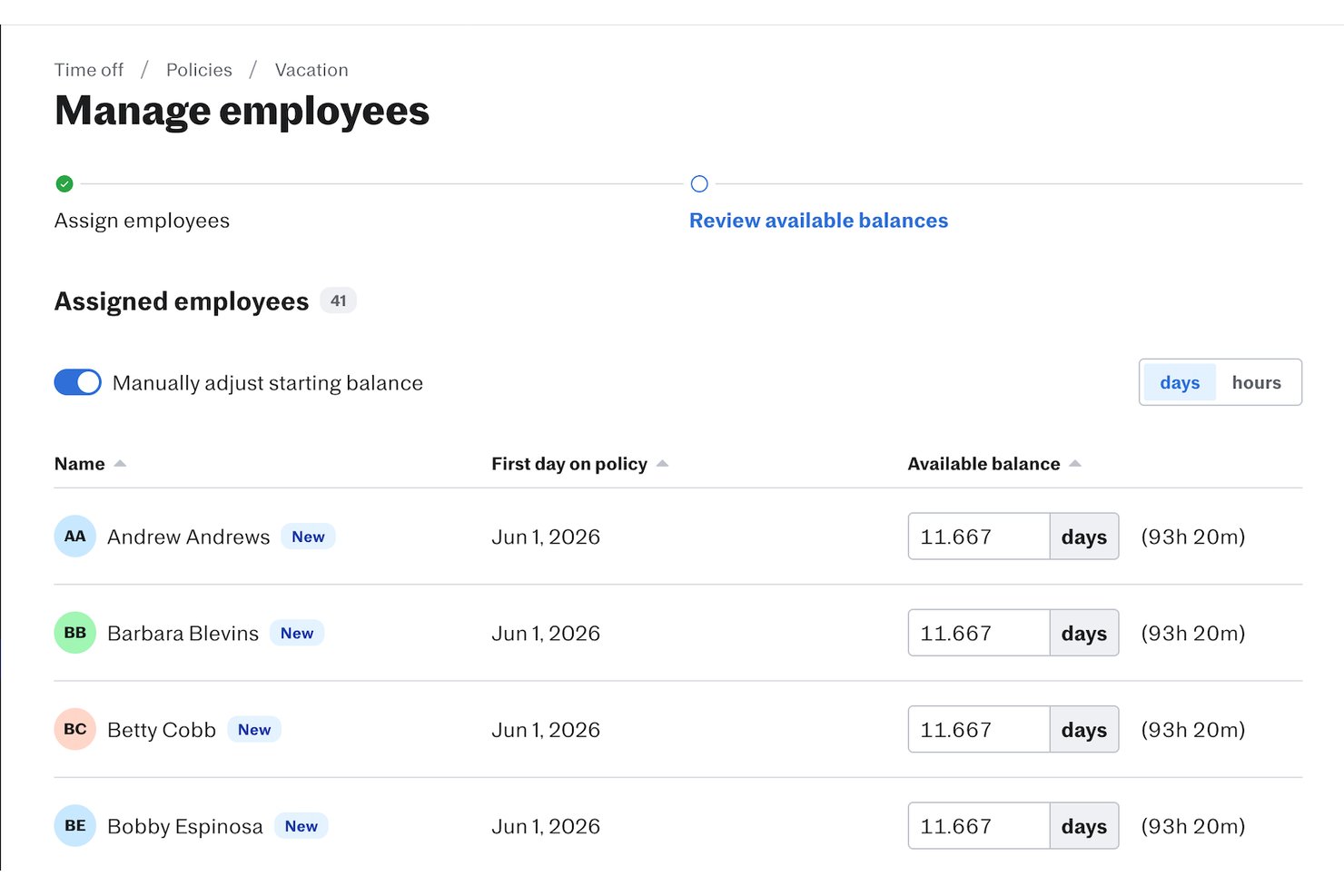
Justworks is an HR and payroll platform that offers PTO tracking, leave management, benefits administration, and time tracking designed for teams looking for an all-in-one solution.
Who Is Justworks Best For?
Small to midsize companies that want a centralized HR platform with PTO and leave management plus bundled payroll and benefits.
Why I Picked Justworks
I picked Justworks as one of the best because I can get answers on leave or PTO issues any time with 24/7 support, set custom leave policies, and approve requests straight from the platform. That level of hands-on help is rare for tracking PTO.
Justworks Key Features
- Time tracking add-on: Monitor employee work hours and attendance in one system.
- Integrated payroll processing: Sync approved PTO directly with payroll runs.
- Mobile app access: Employees can request and view PTO from any device.
- Customizable leave policies: Configure accruals, carryover, and multiple leave types for different teams.
Justworks Integrations
Justworks offers native integrations with QuickBooks Online and Xero for payroll and accounting. An API is available for custom integrations.
Pros and Cons
Pros:
- PTO balances visible to employees any time
- Simple PTO request and approval workflow
- 24/7 live chat and phone support
Cons:
- Reporting lacks advanced filtering options
- Limited custom PTO accrual rules

Deel HR
Best for managing leave across multiple countries

Deel HR lets HR teams and business leaders manage PTO and leave tracking in one place, with automated workflows and integrations that help distributed and global teams stay organized and compliant.
Who Is Deel HR Best For?
Deel HR is a strong fit for HR teams at mid-size to large companies managing distributed or global workforces who need centralized leave tracking across multiple regions.
Why I Picked Deel HR
Deel HR earns its spot on my shortlist because of how well its Slack integration fits into the day-to-day rhythm of leave management. Employees can submit time off requests directly from Slack without opening a separate HR portal, and managers receive instant notifications to approve or decline in the same channel. I also use Deel HR's automated leave balance tracking, which updates in real time so my team knows how much PTO is available without contacting HR.
Deel HR Key Features
- Customizable leave policies: Set up and manage different leave types, accrual rules, and regional policies to match your organization's needs.
- Employee self-service portal: Employees can view leave balances, submit requests, and track approval status without involving HR directly.
- Leave reporting and analytics: Generate reports on PTO usage, absence trends, and team availability across your workforce.
- Automated approval workflows: Route leave requests to the right managers automatically based on team structure or location.
Deel HR Integrations
Integrations include FaceUp, Snowflake, DefensX, Microsoft Finance, Kintsugi, ReFresh OS, Revo.ai, Keeper, Human Interest, and Everyminute.
Pros and Cons
Pros:
- Burnout indicator helps managers track well-being trends
- Automatic team notifications improve visibility
- Slack-based PTO requests reduce app switching for teams
Cons:
- Limited customization for PTO policies in some countries
- May not be suitable for those not using Slack
New Product Updates from Deel HR

Deel Expands Stablecoin Wallet to 80+ Countries
Deel expands its Stablecoin Wallet to 80+ countries with dollar-backed balances and optional rewards. This gives eligible contractors more ways to hold and manage earnings inside Deel. For more information, visit Deel’s official site.
 .
.
Best for its robust mobile app
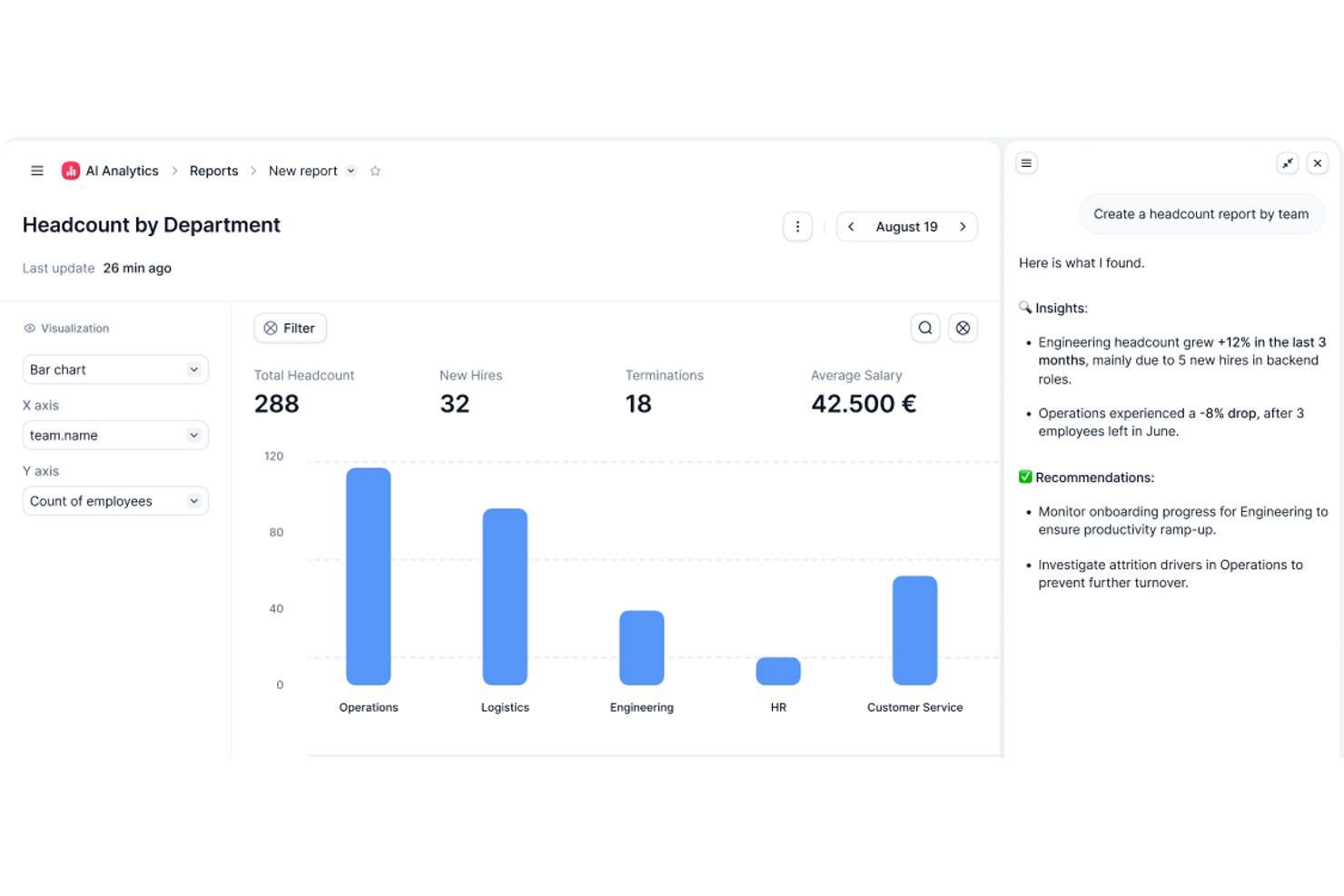
Factorial is an HR platform designed for small to midsize businesses that need an easy way to manage PTO requests, automate leave approvals, and keep time-off records organized in one place.
Who Is Factorial Best For?
Factorial is a strong fit for HR teams at growing small to midsize businesses that want a centralized platform to manage people operations without a dedicated HR department.
Why I Picked Factorial
Factorial earns its spot on my shortlist because of how well its mobile app handles the day-to-day reality of leave management. I like that employees can submit time-off requests directly from their phones—choosing dates, adding a reason, and attaching supporting files—without opening a desktop browser. Managers get push notifications for incoming requests and can approve or reject them on the spot. Factorial ONE on mobile lets employees ask natural-language questions like "How many vacation days do I have left?" and get instant answers, reducing back-and-forth with HR.
Factorial Key Features
- Leave calendar: View all team time-off in a shared calendar to spot scheduling conflicts before approving requests.
- Custom leave policies: Configure different PTO types, accrual rules, and allowances for different employee groups or locations.
- Automated approval workflows: Route leave requests to the right manager automatically based on org structure.
- PTO balance tracking: Monitor each employee's remaining leave balances in real time from a centralized dashboard.
Factorial Integrations
Integrations include Sage 200, Sage Despachos, and Microsoft Dynamics 365.
Pros and Cons
Pros:
- Easy to use
- Mobile app
- Plenty of integrations
Cons:
- Can be difficult to customize templates
- Reporting features are limited

Best for integration with MS Teams and Slack
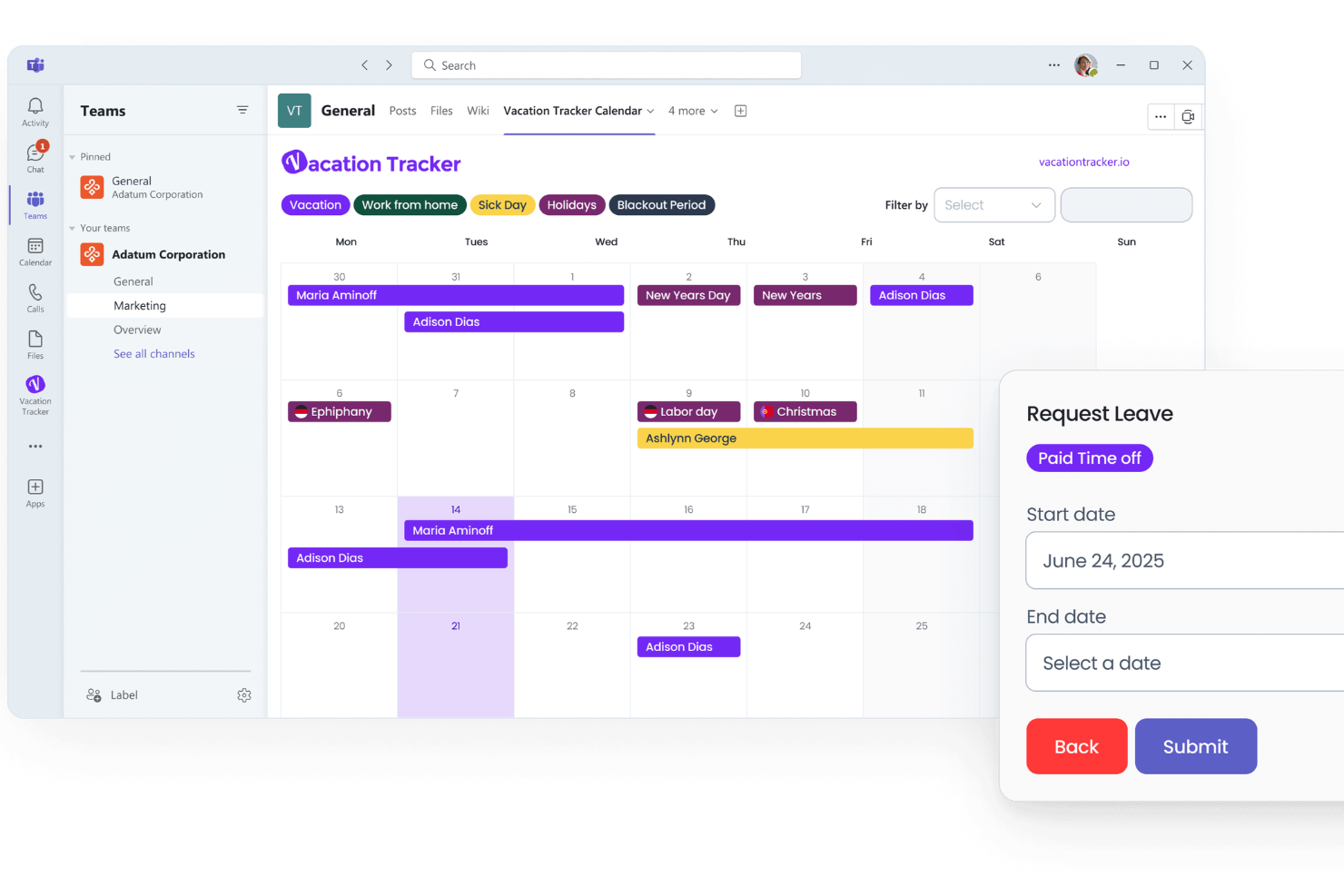
Vacation Tracker is a leave management platform for teams that manage PTO, sick days, and other absences directly within their existing collaboration tools, so HR professionals and managers can track time off and automate approval workflows.
Who Is Vacation Tracker Best For?
Vacation Tracker is a strong fit for small to mid-sized teams that run their day-to-day work in Microsoft Teams or Slack and want leave tracking built into those same tools.
Why I Picked Vacation Tracker
Vacation Tracker earns its spot on my shortlist because it brings leave management directly into Microsoft Teams and Slack, so my team never has to leave the tools we're already working in. I like that employees can submit PTO requests and managers can approve or deny them right inside a Teams channel or Slack workspace, without logging into a separate platform. The built-in leave calendar also gives me a real-time view of who's out and when, which makes scheduling and coverage planning much easier. I've also found the automated notifications genuinely useful—my team gets reminders about upcoming time off without me having to chase anyone down.
Vacation Tracker Key Features
- Custom leave types: Create and configure your own leave categories beyond standard PTO, such as parental leave, volunteer days, or sabbaticals.
- Leave accruals: Set up automatic accrual rules so employee PTO balances update based on tenure, hours worked, or custom schedules.
- Department-level reporting: Generate leave reports filtered by team or department to track absence patterns across your organization.
- Multi-location support: Assign different public holiday schedules and leave policies to employees across multiple offices or regions.
Vacation Tracker Integrations
Integrations include Slack, Microsoft Teams, and Google Workspace.
Pros and Cons
Pros:
- Calendar sync shows team availability
- Custom leave types and quotas
- Free plan covers full PTO requests, approvals, and basic notifications
Cons:
- Multi-level approval workflows not as configurable as competitors
- Limited native HRIS integrations

TalentHR
Best with AI-assisted leave request workflows
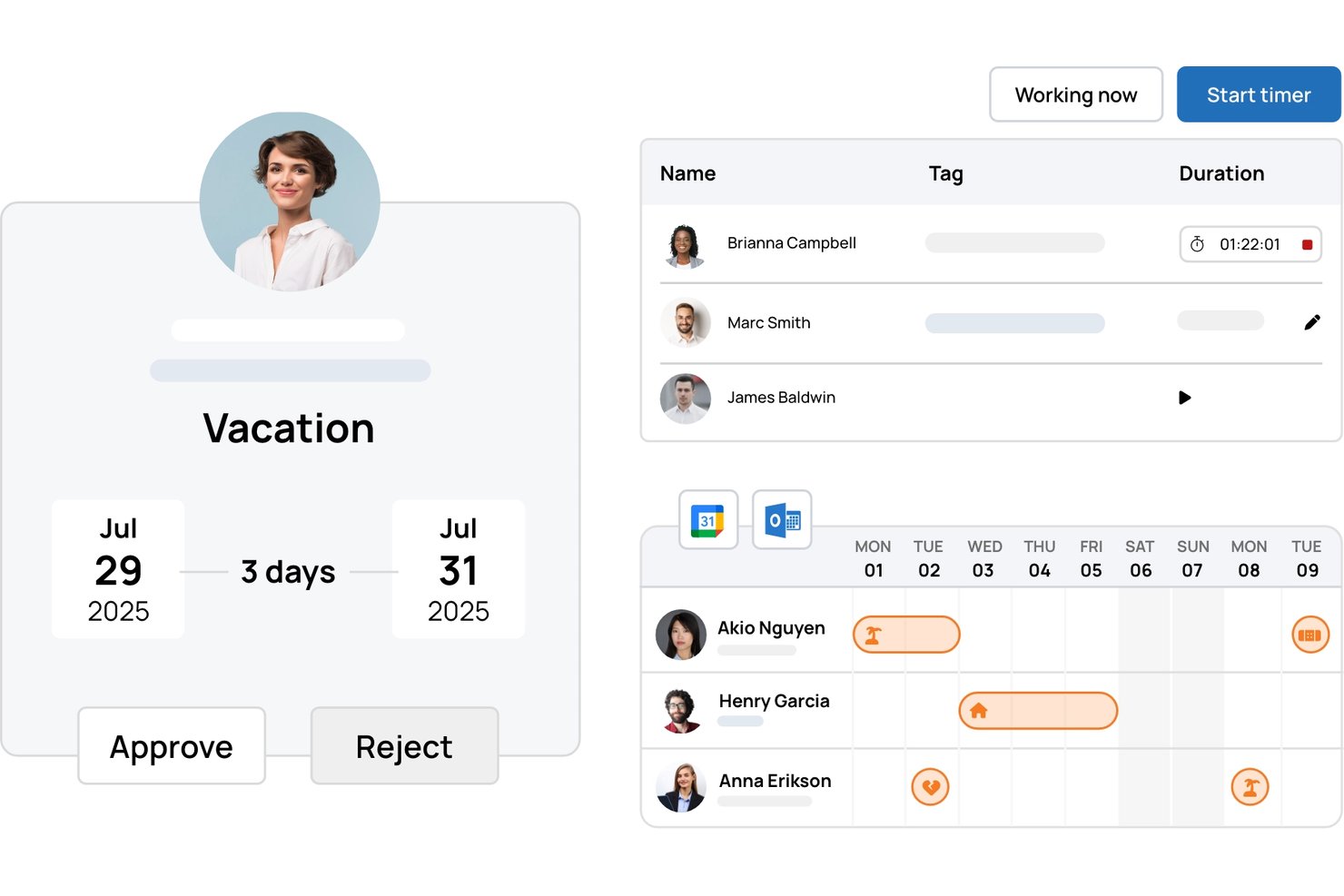
TalentHR is a modern leave management software designed for tracking PTO and automating time-off workflows using built-in AI support.
Who Is TalentHR Best For?
TalentHR suits small to midsize businesses and HR teams seeking intuitive, AI-powered PTO and leave management without complex setup.
Why I Picked TalentHR
I picked TalentHR as one of the best because I like how its AI-assisted leave request workflows handle approvals and automate notifications for my team. I use the custom leave policies and real-time PTO tracking to keep all types of absences organized.
TalentHR Key Features
- Self-service portal: Employees can request PTO, check balances, and view leave history on their own.
- Custom leave types: Create and manage multiple categories of leave, such as sick days, vacations, or remote days.
- Automated holiday calendars: Public holidays and company events automatically populate, keeping schedules up to date.
- People analytics dashboard: Access HR reports, export leave data, and monitor PTO trends across your organization.
TalentHR Integrations
TalentHR provides native integrations with Slack, Google Calendar, Outlook, WordPress, Microsoft Teams, Google Workspace, Zapier, and more. An API is also available for custom integrations.
Pros and Cons
Pros:
- Clear audit trail for PTO requests
- AI workflow speeds up leave approvals
- Customizable leave types for any policy
Cons:
- No advanced workforce planning
- No built-in payroll module
Best from a mobile device

Connecteam is a workforce management platform for businesses with deskless or mobile teams that need an easy way to track PTO, manage leave requests, and keep everyone connected on the go.
Who Is Connecteam Best For?
Connecteam is a strong fit for small to mid-sized businesses in industries like retail, hospitality, and construction, where most employees work without a desk or computer.
Why I Picked Connecteam
Connecteam earns its spot on my shortlist because of how well it handles PTO tracking from a mobile device. I like that employees can submit leave requests directly from the app, and managers get an instant notification to approve or deny them—no desktop required. My team is able to see a real-time view of who's off and when through the shared time off calendar, which is especially useful when coordinating shifts for field-based or hourly workers. The mobile-first design means nothing gets lost in email chains or sticky notes.
Connecteam Key Features
- Customizable leave approvals: Create and configure different leave categories—such as sick leave, vacation, or unpaid time off—to match your company's specific PTO policy.
- Accrual tracking: Set up automatic PTO accrual rules so employee balances update based on hours worked or tenure.
- Time clock with GPS: Employees can clock in and out from their mobile device, with location tracking to verify where they were when they logged hours.
- Shift scheduling: Build and publish employee schedules that automatically reflect approved time off to avoid conflicts.
Connecteam Integrations
Integrations include QuickBooks, Gusto, Xero, ADP, Zapier, Wix, Lightspeed, PrismHR, Square, BambooHR, Accu-Time Systems, Synel, and Clover.
Pros and Cons
Pros:
- PTO requests sync with scheduling so you avoid double-booking staff
- Mobile app lets non-desk employees request leave
- Supports accrual- and hourly-based PTO policies for different user types
Cons:
- Customization depth may lag more specialized tools
- Some advanced features (bulk actions, policy setup) may require training
New Product Updates from Connecteam

Connecteam Expands Break and Timesheet Controls
Connecteam adds flexible break thresholds, personalized policies, auto-end options, a centralized exceptions report, and improved timesheet issue visibility to help teams manage breaks and timesheets more effectively. For more information, visit Connecteam’s official site.
 .
.
Homebase
Best team communication app for small businesses

Homebase is a leave management software designed to help businesses manage their employees' schedules, time tracking, and PTO requests. It's a great tool for small to medium-sized businesses that need a simple and efficient way to handle employee time off and vacation/sick time tracking.
Why I picked Homebase: I chose Homebase because it's perfect businesses that don't have a dedicated HR department and need a simple solution to manage employee leaves. Plus, it's affordable and offers a free plan for smaller teams, which is a huge bonus for startups and small businesses.
Homebase also offers a mobile app, which is super convenient for both managers and employees. You can access all the features from your phone, making it easy to manage leaves and PTO even when you're on the go.
Homebase Standout Features & Integrations
Features include the ability to quickly set up PTO policies, and employees can request time off directly through the platform. Managers can approve or deny requests with just a few clicks, and the system automatically updates the employee's PTO balance.
Another great feature is the built-in communication tools. You can send messages to your team members directly through Homebase, making it easy to discuss time off requests or any other work-related topics.
Integrations include ADP, Clover, Google, Lightspeed, Payanywhere, Paychex, Quickbooks, Shopify, Square, Toast, Upserve, Vend, and Wells Fargo.

Best leave management within a complete HRMS

BambooHR gives HR teams and growing businesses a centralized platform to manage PTO requests, track leave balances, and automate approvals, to manage time-off policies and ensure accurate records across the organization.
Who Is BambooHR Best For?
BambooHR is a great fit for small to mid-sized businesses that want to manage leave tracking as part of a broader HR system, rather than as a standalone tool.
Why I Picked BambooHR
BambooHR earns its spot on my shortlist because it handles leave management as a native part of a full HRMS, not a bolted-on feature. I like that PTO tracking connects directly to employee records, so when someone's leave balance changes, everything else updates in sync. My team can set up custom leave types, configure accrual rules, and allow employees to submit time-off requests through a self-service portal—all without switching tools. The built-in approval workflows also mean managers get notified automatically, and I can see team availability at a glance on a shared calendar.
BambooHR Key Features
- Who's Out calendar: A shared calendar that shows which employees are away on any given day, giving managers and HR instant visibility into team availability.
- Payroll sync for time off: PTO, sick leave, and holiday pay sync with BambooHR Payroll, removing the need for manual data entry.
- Automated compliance tracking: BambooHR automatically tracks overtime and PTO to help maintain compliance with labor regulations across all 50 US states.
- Mobile app access: Employees and managers can submit, review, and approve time-off requests from the BambooHR mobile app, without being at a desk.
BambooHR Integrations
Integrations include Slack, Checkr, Remote, Evolia, and custom integrations are available via the BambooHR API.
Pros and Cons
Pros:
- Lots of integrations available
- Built-in communications hub
- Helpful employee self-service portals
Cons:
- Pricing is not transparent
- Some features come as paid add-ons
New Product Updates from BambooHR®

BambooHR Adds Employee Navigator Integration
BambooHR adds an Employee Navigator integration that syncs employee demographic data and sends benefit deductions into BambooHR Payroll runs to cut duplicate entry and keep records aligned. For more information, visit BambooHR's official site.
 .
.
Best PTO time tracking and leave management for SMBs

Buddy Punch is a cloud-based leave management platform built for small and midsize businesses that need simple PTO tracking, automated accruals, and easy time-off request workflows for both employees and managers.
Who Is Buddy Punch Best For?
Buddy Punch is a strong fit for small and midsize businesses that need an approachable, no-fuss way to manage employee time off without a dedicated HR team.
Why I Picked Buddy Punch
I picked Buddy Punch because it handles the full PTO cycle without a dedicated HR team. Accrual rules can run automatically, so PTO balances update without manual adjustments each pay period. When an employee's time-off request is approved, Buddy Punch adds those hours to the timesheet and reflects the absence on the upcoming schedule. End-to-end automation helps SMBs where one person often juggles payroll, scheduling, and leave tracking.
Buddy Punch Key Features
- Leave type customization: Create and configure multiple leave categories—such as sick, vacation, and personal—with individual rules and limits.
- Manager approval workflows: Managers receive notifications for pending time-off requests and can approve or deny them directly from the dashboard.
- Employee self-service portal: Employees can submit time-off requests, view their PTO balances, and check request statuses without contacting HR.
- Payroll reporting: Generate reports that summarize time-off usage and balances to support payroll processing.
Buddy Punch Integrations
Integrations include QuickBooks Online, QuickBooks Desktop, ADP Workforce Now, Gusto, Paychex, Paylocity, Paycor, Justworks, Rippling, and Workday.
Pros and Cons
Pros:
- Wide range of integrations
- User-friendly interface
- Facial recognition technology
Cons:
- Payroll module only available for the U.S.
- Expensive

Leave Dates
Best for tailoring to unique business needs

Leave Dates gives HR teams and managers a clear way to track PTO, manage leave requests, and visualize team availability, making it easier for businesses of all sizes to handle complex time-off policies and reduce scheduling conflicts.
Who Is Leave Dates Best For?
Leave Dates is a good fit for small to mid-sized businesses that need a straightforward, flexible leave tracking tool without the complexity of a full HR suite.
Why I Picked Leave Dates
Leave Dates earns its spot on my shortlist because of how much flexibility it gives you when setting up leave policies. I like that you can create custom leave types beyond the standard vacation and sick day categories—things like volunteer days, study leave, or sabbaticals—and configure unique accrual rules for each one. My team is also able to set different policies per department or location, which is genuinely useful when managing staff across multiple regions with different entitlement rules. That level of configurability is hard to find in tools at this price point.
Leave Dates Key Features
- Shared wall chart: A live, visual calendar showing your whole team's availability and approved leave at a glance.
- Leave balance tracking: Employees and managers can check remaining entitlements and leave history at any time.
- Time off in lieu (TOIL) tracking: Team members can log overtime hours via the mobile app or desktop to build and redeem TOIL balances.
- Public holiday support: Automatically accounts for public holidays across 150+ countries for globally distributed teams.
Leave Dates Integrations
Integrations include Google Calendar, Outlook, and Slack. An API is also available for custom integrations.
Pros and Cons
Pros:
- Calendar integration
- Free tier
- Intuitive interface
Cons:
- Inability to add back leave
- Limited features
Other Leave Management Software
Here are a few more options that didn’t make the best leave management software list. I didn’t have room for a full review for each of these but they are still worthy of consideration:
- Calamari
For multilevel approval processes
- edays
For global leave tracking
- Day Off
For real-time notifications
- Absence.io
For simplifying absence management internationally for businesses of all sizes
- Deltek Replicon Time
For managing global time off policies
- FoxHire
For PTO and sick leave
- actiPLANS
For businesses looking for simple, stress-free leave management
- LeaveBoard
For growing teams
- ADP Total Absence Management
For managing employee leave for large businesses
- PurelyHR Time Off
Leave management for automated processes and custom policies
- Pause
For handling leave requests and capacity planning for startups
- EasyTimeOff
Efficient leave management with customizable policies
- Planleave
For streamlined PTO tracking and automation
- Insightful
Leave management in a productivity platform
- Kissflow Workflow
Customizable leave management for HR workflows


Related HR Software Reviews
If you still haven't found what you're looking for here, check out these other related tools that we've tested and evaluated:
- HR Software
- Payroll Software
- Recruiting Software
- Employer of Record Services
- Applicant Tracking Systems
- Workforce Management Software
How I Evaluate Leave Management Software
I split my evaluation into two layers: the baseline functionality a tool must have—like multi-level approval workflows and accrual tracking—and differentiating factors that separate the stronger tools from the rest.
Core Functionality (Table Stakes For This List)
When I'm selecting tools for my list, I rank each one on a scale from 0 (does not offer the functionality) to 5 (excels in this area) for each core functionality listed below. Then, I calculate the tool's total score into a percentage. Each tool needs to achieve a minimum total score of 65% to be considered for inclusion.
- Leave Request & Approval Workflows: I evaluate whether a tool supports multi-level approval chains, manager delegation, and mobile approvals so requests don't stall when someone's out of office.
- Accrual & Balance Tracking: Each tool should handle accrual formulas across leave types like PTO, sick, and parental leave, including tenure-based rules and carryover caps.
- Leave Policy Configuration: I check whether HR teams can define distinct policies by department, location, or role rather than forcing a single ruleset across the organization.
- Team Calendar & Visibility: Shared absence calendars that let managers spot overlap and coverage gaps before approving requests are a key area I look for.
- Compliance & Reporting: Reporting should go beyond basic exports, so I look for tools that offer compliance-ready templates and audit trails tied to statutory leave regulations.
- Payroll & HRIS Integration: I evaluate how well each platform syncs approved leave data with payroll and HRIS tools to prevent manual re-entry errors during pay cycles.
Once I have a list of tools that meet the criteria, I consider what sets each platform apart.
Differentiating Factors (What Sets Vendors Apart)
Here's how I compare and contrast different vendors:
Standout Features
Multi-country support matters when your team spans multiple regions, so I look for tools that auto-apply local statutory leave types based on employee location. Slack or Teams integration is another factor I weigh, since managers can approve requests without switching apps. I also evaluate absence analytics dashboards that surface patterns like recurring spikes in a specific department, giving HR teams data to act on rather than just track.
Beyond Features
Pricing transparency is something I evaluate closely, since some vendors charge extra for integrations or premium support that smaller HR teams assume are included. I also consider how quickly a platform can be implemented. A 20-person company needs self-serve setup, while a multi-entity org may need guided migration and dedicated onboarding. Compliance certifications like SOC 2 and GDPR readiness also factor in, especially when leave records contain sensitive employee health data.
What is Leave Management Software?
Leave management software is a system that automates employee leave requests, approvals, and tracking to replace error-prone spreadsheets and emails. HR professionals and managers use it to handle vacation, sick leave, and other absences while ensuring compliance with policies and labor laws.
By centralizing leave data, it reduces admin work, prevents scheduling conflicts, and provides real-time visibility into staff availability, making workforce planning easier and more accurate.
Features of Leave Management Software
Managing employee leave requests and approvals is a critical part of keeping teams organized and ensuring workplace efficiency. Leave management software helps streamline this process, reducing errors and confusion while ensuring compliance with company policies.
Here are the most important features to look for when selecting leave management software to handle requests and approvals effectively:
- Centralized Dashboard: A unified dashboard provides a clear view of leave requests, balances, and approvals, helping managers make informed decisions quickly.
- Self-Service Portal: A self-service portal lets employees submit leave requests, check balances, and view approvals, reducing the administrative workload for HR teams.
- Automated Approval Workflows: Automated workflows ensure requests are routed to the right approvers, saving time and eliminating bottlenecks in the approval process.
- Leave Policy Customization: Customizable policies allow companies to align the software with their specific leave rules, ensuring consistency and compliance.
- Real-Time Notifications: Instant notifications keep both employees and managers informed about the status of leave requests, ensuring nothing falls through the cracks.
- Mobile Accessibility: Mobile-friendly software allows employees and managers to handle leave requests on the go, increasing responsiveness and flexibility.
- Calendar Integration: Integration with shared calendars helps teams track absences, ensuring adequate coverage and reducing scheduling conflicts.
- Reporting and Analytics: Detailed reporting provides insights into leave trends, helping companies identify patterns and make better workforce planning decisions.
- Multi-Language and Multi-Currency Support: Support for multiple languages and currencies is essential for global teams, ensuring accessibility and accuracy across regions.
- Compliance Management: Built-in compliance features help companies adhere to labor laws and regulations, minimizing the risk of legal issues.
Selecting leave management software with these features ensures a smoother, more efficient process for managing employee absences. It makes life easier for employees, managers, and HR teams while keeping everything aligned with company policies and goals.
Costs & Pricing for Leave Management Software
Leave management software offers different pricing tiers to suit a range of organizational needs and budgets. Plans typically range from free versions with basic features to premium options offering advanced tools for larger or more complex teams. Understanding what each plan includes and its associated costs can help you select the right option for your organization.
Plan Comparison Table for Leave Management Software
| Plan | Average Price | Best For | Features |
|---|---|---|---|
| Free | $0 per user/month | Small teams or startups | Basic leave request and approval workflows, simple PTO tracking, limited reporting, single admin access. |
| Basic | $2-5 per user/month | Small to medium businesses | Leave type customization, mobile access, calendar integrations, automated leave accruals. |
| Standard | $6-10 per user/month | Growing teams with complex needs | Advanced reporting, compliance tools, multi-location leave policies, integration with payroll and HR software. |
| Premium | $11-20 per user/month | Large teams or multi-country organizations | AI-powered analytics, regional compliance alerts, API access, role-based permissions, custom workflows. |
| Enterprise | Custom pricing | Large-scale organizations | Dedicated account manager, unlimited integrations, SLA guarantees, personalized onboarding, custom leave policies. |
When choosing a plan, consider your team's size, the complexity of your leave policies, and any specific compliance or integration needs you might have to ensure you invest in a solution that aligns with your goals.
Frequently Asked Questions
Here are some answers to commonly asked questions about leave management software and how it works:
How do I choose the right leave management software for my team?
Start by listing your must-have features, such as automated approvals, mobile access, or policy customization. Read user reviews and request demos from top vendors to see if their workflows fit your processes. Prioritize tools that offer easy onboarding, strong customer support, and solid reporting to save time for both you and your team.
Can leave management software integrate with my payroll and HR systems?
Yes, most leave management solutions offer integrations with popular payroll platforms and HRIS systems. Check each vendor’s integration list to confirm they support your existing tools, like ADP, BambooHR, or Gusto. This makes syncing leave data seamless and automates key payroll calculations, reducing manual work and errors.
How does leave management software help maintain compliance with labor laws?
Leave management software uses built-in compliance rules to align with labor laws and company policies automatically. It updates leave accruals, calculates balances, and alerts you to potential policy violations. This helps you avoid costly errors and ensures employees receive statutory entitlements without manual checks.
How easy is it to set up and start using leave management software?
Most leave management tools are cloud-based and offer onboarding guides or customer support to help you get started quickly. You can typically import employee data, set up policies, and invite your team in a few hours. Look for platforms praised for their intuitive dashboards and responsive support if you want a smooth launch.
What reporting and analytics capabilities do leave management tools offer?
Leave management tools provide dashboards and downloadable reports on leave balances, absenteeism trends, and approval times. These reports let you spot patterns like peak usage periods or frequent absences. You can use this data to make better staffing plans or spot emerging issues before they affect productivity.
What are the most common types of leaves employees take?
The most common types of leaves employees take include vacation or annual leave, sick leave, maternity/paternity leave, public holidays, personal leave, bereavement leave, and unpaid leave, such as a sabbatical or a leave of absence for personal or professional reasons.
Other legitimate, but less common, types of employee leaves include leaves for religious observance, jury duty, military leave, or time off to vote on an election day.
What's Next?
If you're in the process of researching leave management software, connect with a SoftwareSelect advisor for free recommendations.
You fill out a form and have a quick chat where they get into the specifics of your needs. Then you'll get a shortlist of software to review. They'll even support you through the entire buying process, including price negotiations.