

How Great Leaders Prioritize in a World Where Everything Feels Urgent


Everything is urgent—until it isn’t. When every ticket is a fire, teams don’t move faster; they burn out. In this episode, Barbara Nicholas (CEO at Polly) borrows a lesson from search and rescue: urgency only matters when it actually changes outcomes. Most white-collar work isn’t life or death, but we’ve built cultures that pretend it is—and people are paying for it in cognitive overload and constant distraction.
Barbara walks through how she operationalizes a triage system across her company—embedding shared language into tools like Slack, Notion, and Jira, and empowering teams to challenge urgency instead of blindly accepting it. From AI experimentation to customer demands and internal comms, this is a conversation about cutting through noise, making better calls under pressure, and remembering what actually matters.

What You’ll Learn
- Why “everything is urgent” is a structural failure—not a workload problem
- How to implement a shared urgency framework across teams and tools
- What search-and-rescue triage can teach leaders about prioritization
- How to identify high-impact AI use cases without overwhelming teams
- Why internal comms are getting noisier—and less effective
- Where AI strengthens SaaS (and where it doesn’t)
- How to balance speed, quality, and trust in a high-pressure product environment
Key Takeaways
- Urgency needs a definition, not a vibe.
If “high priority” means something different to everyone, it means nothing at all. Barbara’s system works because it’s explicit—and enforced socially, not just structurally. - Not all fires deserve a response today.
That demanding customer request? It might be real—but if the renewal is months away, it’s an ember, not a blaze. Treating it otherwise just creates new problems downstream. - Let people challenge urgency—or expect dysfunction.
Teams that can question priority levels openly build trust and make better decisions. Teams that can’t just accumulate stress. - AI without triage is just faster chaos.
The constraint isn’t capability—it’s focus. High-performing teams pick a few “red” use cases that actually move the business, instead of experimenting everywhere at once. - Fix handoffs before you chase efficiency.
Polly found its biggest AI opportunity not in individual productivity, but in the messy gaps between teams—especially product and design. - More communication ≠ better communication.
AI makes it easy to generate volume. It does not make it easier to say something meaningful. If anything, it raises the bar. - Nobody trusts “anonymous” if you built it yourself.
Some systems—like employee sentiment tools—depend on perceived neutrality. Build them in-house, and you risk destroying the very trust they rely on. - AI won’t replace human judgment—it will expose the lack of it.
Tools can generate answers. They can’t decide what matters. That part is still on you.
Chapters
- 00:00 – Everything Feels Urgent
- 01:55 – No False Fires
- 05:40 – The Downvote Dilemma
- 08:42 – Triage for AI
- 13:28 – Guardrails, Not Chaos
- 16:17 – Finding AI Impact
- 19:14 – Comms Overload
- 22:28 – AI Voice Problem
- 26:55 – Speed vs. Quality
- 30:42 – Where AI Works
- 33:00 – Competing on Trust
- 39:08 – Build vs. Buy
- 42:45 – Don’t Build This
- 46:20 – Start with Triage
Meet Our Guest
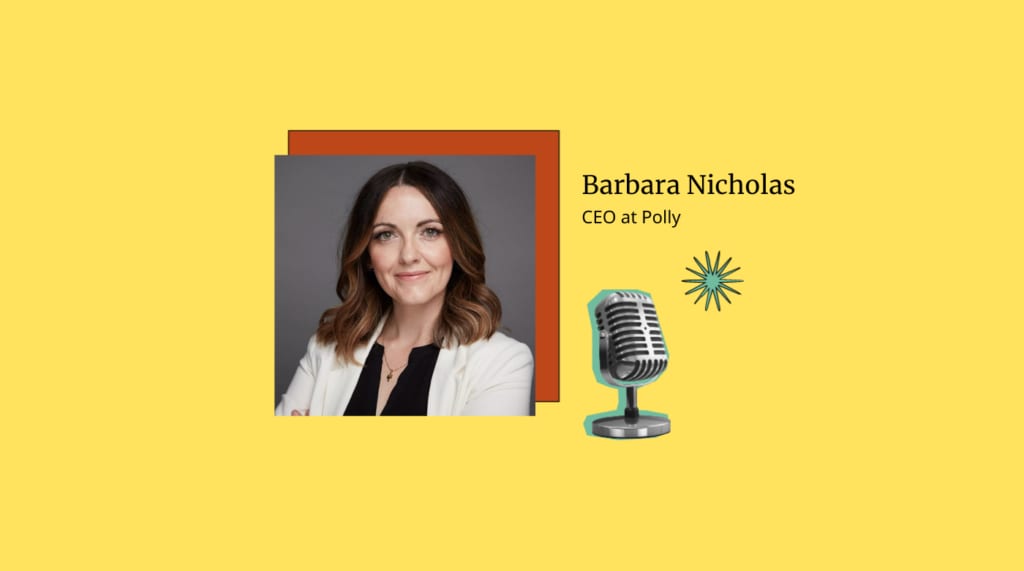
Barbara Nicholas is the CEO at Polly, where she leads the company’s mission to help organizations build stronger, more engaged teams through real-time feedback and communication tools embedded in the flow of work. With a background in operations and employee engagement, she has played a key role in scaling Polly’s platform—used by millions of users and a significant share of Fortune 100 companies—to drive better decision-making and workplace collaboration. Known for her practical, people-first approach, Barbara brings deep expertise in using data-driven insights to improve employee experience, streamline internal communications, and foster high-performing, connected teams.
Related Links:
- Join the People Managing People Community
- Subscribe to the newsletter to get our latest articles and podcasts
- Connect with Barbara on LinkedIn
- Visit Polly
Related articles and podcasts:
David Rice: You've got 35 fires to put out today. Urgent tickets, high priority customers, critical issues. Everything feels like a fire. So the place is gonna burn down because how can you possibly put out 35 fires in one day? Because the truth is, if everything is urgent, nothing is urgent.
Today's guest is Barbara Nicholas. She's the CEO at Polly, and she spends her summers doing search and rescue training in the back country. Six days with 40 people practicing for real life and death scenarios, including mass casualty incidents where you have fewer resources than victims who need help. And here's what she's learned that changed how she runs her company.
Most problems at work aren't life and death. We're not saving lives in white collar work. A lot of this stuff can wait, but we've built in everything is urgent culture that's burning people out and destroying their cognitive capacity. So Barbara built a triage system. Urgent but not important. Important but not urgent. And the toughest one of all, not important but urgent. Like the high value customer demanding a down voting button because they're a dedicated Reddit user.
Now, is that a fire today or is it an ember smoldering somewhere that you handle in eight weeks when the renewal actually comes up? So today we're covering how to tag urgency with shared language across Notion, Slack and Jira. Why empowering everyone to challenge urgency levels builds trust. The search and rescue lens for AI experimentation, guardrails versus getting out of the way. What happens when you try to build compliance tools in-house? Spoiler, nobody trusts anonymous surveys. And how to participate in agentic architecture without losing your core values.
I'm David Rice. This is People Managing People. And if your team is drowning in false fires, this conversation shows you exactly how to build a triage system that actually works. So let's dig into it.
Alright, well, Barbara, welcome to the show.
Barbara Nicholas: Yeah, thanks so much for having me.
David Rice: Where I wanted to start was when we spoke before this, you were talking about sort of the no false fires and keeping perspective that most work problems aren't really.
Life and death. Right. Like I think for a lot of us in white collar work, we have to remind ourselves like, we're not saving lives here. Okay. Like a lot of this stuff can wait, but I'm curious, like, how does that concretely shape the way you set urgency, priorities, and boundaries with your team?
Barbara Nicholas: The reason that comes up the background is I have a good fortune of spending time with a lot of first responders in the area of search and rescue, but a lot of my other volunteers that I get to hang out with all the time are firefighters.
People in the medical field, you know, they're out there every day experiencing real life and death. Death realities of when urgency really matters and really makes a difference. And that's how I think about urgency at Polly, you know, from the top down is the urgency that we're placing on something going to actually make a difference or an impact in the business, in the team and the project, and the program?
Like, is this helping us win? You know, it really helps on the front end defining what winning means, right? You know, we all know that as leaders and practitioners of people need to understand the shared goal, but then how do we think about the urgency associated to reaching that goal and the no false fires that really comes down in practical application of how we all hang out together on a day-to-day basis at work of really calling it out and being, I think, in a transparent.
Enough culture in place as a team to say, Hey, I question your urgency on this. Right? It also starts with an initial system though, of tagging things with urgency with a shared language, and so, you know, we have it down to mapping within our notion, project workspaces or a task of like, what's the lane you're putting this in when it first comes up, right?
It's urgent and important, urgent, not so important, but it's just a thing we have to do quickly. Not important. Not urgent, meaning you can probably just ignore that. And then this weird space too of like it's, you know, not important, but it is urgent. Like that's the tough one where I see with the team of like, I know that this is not important in our ranking to get to our goals, but it is urgent.
And then putting in that clear, understanding the team of like why you're saying this ticket is urgent, right? This ticket is urgent because it impacts. This user experience for this really high value customer. And yes, it's an edge case, and yes, it's an individual customer. This is something that's super important to that one person or that one client who's a design partner or you know, these types of things.
So setting the tone and the baseline and then living that through from end to end, whether that's inside notion, using the shared language in Slack when we're talking about it, using it in our ticketing system in Jira, and empowering everyone to kind of call out and reorganize that to you. So if someone places a ticket in and says, Hey, this is high urgency.
Someone else comes by and says, Hey, I'm really wondering why you set this as high. Our standard says this should be medium, so our team should have five days to work on this ticket. Those are conversations we actively have in our Slack channels for how we provide, you know, both project outcomes and ticketing support, you know, for our customers.
David Rice: Yeah I like sort of how you're reframing this here. I think for any HR obsolete or listening like this feels like a very practical way to sort of reset expectations. Around sort of the, everything is urgent culture, right. It sounds like you're trying to protect people's cognitive load as much as their time.
Right. I'm wondering, like, can you kind of walk me through a, maybe a situation where the team felt a fire and you use this framework to like dial it back or reframe it because we could all use this.
Barbara Nicholas: Yeah, absolutely. And I think you're right, like that cognitive 'cause if everything's urgent, then nothing's urgent.
Right? And if everything's a fire, then you're overwhelmed and the place is gonna burn down because how can the people we have on hand possibly put out, you know, 35 fires in one day. So in terms of practical application, an example I can use, and I think it's that night, that scenario I was hinting out of, you know, you've got a major customer, big book, a business, right?
We show up for them and we really care about the pain points that they might experience. And they have some sort of like unique edge case to how they're using our software product, right? They're like, Hey, we use it, you in our town hall for your q and a solution. And we really think that it sucks that you don't have a down voting button and a competitor has a down voting button.
You guys have upvoting, but you don't have down voting. And I'm really irritated by that. And I don't know if I'm gonna continue to use you in my town halls. That's a big deal, right? Because that's a core use case of that contract. And so you've got your CSM being like, Hey man, this is a fire for me because I'm not gonna meet my goals as a CSM of keeping this really important customer happy.
It's, you know, is that a fire in the business as a whole? And so you have to do, you know, different levels of modeling, right? So when I worked with that cm, and that's a CS m and that's a real scenario of someone being like, if you don't have down voting, like I'm, I don't wanna use your tool. And working with that C SM and saying, okay, well when's the renewal?
How much time do we have? Right? Is it really that urgent today? Like, yes, we wanna help the customer win. Feel good. Of that. But if you're gonna come over to the product team and drop that in urgent product feedback that says we need to potentially pick this up on our roadmap and deprioritize something else, you know, we really need to understand the short-term impact.
Because if it's not short-term impact, it's not a fire. Right. Maybe it's a ember smoldering somewhere. Right? Like, and we wanna pay attention to it. So now it's in the, maybe the renewal's not for six months. Maybe their next town hall that they're not planning on hosting is not for another month.
So now you're putting that in that you know it's important, but it's not urgent. And so I'm not gonna go disrupt my other team's workflow today and distract them from the things that they're focused on because I'm dropping this potential fire in their lap. I'm organizing the work, I'm sending it over with appropriate urgency that says, yes, this is important, but we've got about eight weeks to handle this situation.
So let's not freak out.
David Rice: The Downvoting. I'm like, man, they must be a really dedicated Reddit user. That's might be their favorite platform.
Barbara Nicholas: I mean, you don't, funny enough, like Downvoting is now coming soon, so.
David Rice: Well, you gotta like it, you, I love it when you get a good customer feedback and actually listen.
So your search and rescue triage lens that you were given there kind of at the beginning I find that fascinating. I'm curious. How do you translate concepts like tagging and triaging into sort of day-to-day decisions about AI experiments and like the risks involved and when leaders should step in versus maybe get outta the way?
Barbara Nicholas: Yeah, so you know the background on that, right? And kind of the lens, or when I talk about triaging, and I'll openly use that word, right. It's. It's, you have to have shared language. And so I get the opportunity every summer to go out and do extensive training for about six days in the back country with a group of, you know, 40 individuals in search and rescue.
And we are roughing it and practicing for real life scenarios. And one of those real life scenarios is an MCIA Mass casualty incident. So what do you do as a search and rescue team if you say. You're called out to support something. Like one of the scenarios we run is like a plane crash in the mountains.
What do you do? And ultimately what a MCI is, you have less resources than victims that need your help. Right. And how I think about that right now in this like AI. World and how I think about that triaging lens and just, and I, and even before AI, right? Like we're all doing a lot with less. I think there's been a trend in that in business for quite some time.
David Rice: It's a lot of a leader's favorite word phrase.
Barbara Nicholas: Right? And you know, so if you think about that in terms of like this actual real world scenario where it's also time bound, right? Because in work we're also time bound to reach our annual quarterly goals, whatever that is, whatever the cadence of your company is.
You only have the resources you have, and a lot of us can feel really limited by that and really frustrated by that. So like how do you approach walking into work at the beginning of the quarter, beginning of the month and saying, here's what I am supposed to accomplish, accomplish. And here are the resources I have.
So at an MCI, you're walking in and you're saying, I've got green. I'm gonna go through on the scene and I'm gonna start assessing victims. Everyone has handed a batch of tickets that are physical tickets that are green, yellow, red, and black. You're gonna go tag people and you're gonna say, this person has a green sticker on them, that they're fine.
If another emergency medical responder comes by, they can walk right past them. They don't need to look at the person with the green sticker. And then you've got yellow where like, Hey, they're serious, but they've got some time. Right? They're not critical. And you've got red, immediate lifesaving. They are the most critical patients, and you've got your black, where it's like, Hey, there's nothing more we can do here.
This is not on the plate for us to handle today with the resources that we have. And in a real life scenario, you're. That's exactly what's happening, right? So you have to have someone that's a leader within each team that's deploying whatever project. And we're talking AI a lot right now that's gonna go in and assess, you know, when something comes up.
Right now at Polly, it's what do we tackle first and when it comes to operationalizing AI within the way that we work and run this business. And you know, my job, along with a couple of other really smart people that I get to hang out with every day is saying what actually makes an impact? What is actually going to help us win, produce better product, have better work lives for our team members and actually make our work more efficient Versus it just being more right, because I think there's a lot of that happening of like, it's just more because we don't have the systems built yet.
So in terms of tagging, you know, that's, that lens I'm looking through is like, what actually can be impacted, make that really clear for the people that you're then sending into this project. So they know where to focus their time and not focus their time. Right. So if I tag something as red, like for me what's really red at Polly is I want to have a design prototyping playground because humans can better express their requests and translate it to other humans with visual representations of that, right.
So if I have a really smart product manager that has a vision for a product feature that they're responsible for, and they're communicating that with our designers, we now just cut out two to three days of the specking to design process because our product manager's now been empowered with a design prototyping tool using Quad and Figma make that allows them to set up what they have in their head about how this is supposed to look, feel, and work for our customer.
'cause they know our customer voice. When they sit down with our designer, they're no longer sitting in a notion document that says, I want this button to do this. They're like, Hey, this is what I'm thinking, and here's my brain dump in a visual representation. Right? Like that has huge impact. So we tag that as high priority.
There's other things that just don't, right? Like some of this more, I think document heavy stuff, like we're already doing that really well, right? Do we need to go and spend a bunch of time rethinking how we're gonna use Claude to make our specs better? No. We spent. We spent some time on that already.
Maybe we work back later on, but we're trying to hit those really critical things that make a difference and triaging that on the front end as a strategic team and the leaders of each of these department was required.
David Rice: That's the beautiful thing. If you did spend a lot of time on documentation and sort of like the remote work eras, you're kind of pretty well set up for this next step.
It's interesting though, like listening to that sort of like the tagging analogy. 'cause I keep thinking to myself sometimes I need something like that. You know, like something to just help me make sense of like, is this actually something I should use this technology for? Is this something that like should be a big priority And it's like what I like about it is there's all this talk about autonomy, right?
But that doesn't mean chaos. That doesn't mean you've gotta have clear guardrails so people can actually experiment safely and experiment intelligently. And I think a lot of teams are in that try stuff and just don't break the company phase, like with AI. So the tiers of risk, I, it feels like a mental model that a lot of people could borrow.
Barbara Nicholas: Yeah. I mean, and if you think of any kind of enterprise level tool that you bring into a company. It's only as good as how you build it and maintain it. Right? Like, not to simplify the reality of the challenges of what we have going on with AI and doing it well and setting up really great operating models with it.
But I mean, it's as simple as like, okay, you know, how many people have a really messy G drive that they just keep building on top of? And we're like we'll deal with, you know, you know what I mean? Like, we'll deal with those archived folders later. Right? AI puts more pressure. On operators genuinely of saying, how do we keep our arms around this and how do we actually implement this in a way that helps the business?
And we don't just have a bunch of folks doing really cool, smart things in silos that don't really move us forward.
David Rice: If like, if a leader wants to start tomorrow, right, with something like this level of prioritization, I guess what's one simple rule or boundary that they might set that would immediately help their team?
Barbara Nicholas: I think the most critical one is getting buy-in on what you call red, right? Because I think that's where the deepest disagreement can come and I think that many leaders can just set the tone. You can say, Hey, I believe that red, you know, means that in terms of, you know, building something new, that it directly impacts our overall revenue goal for the year, or it directly impacts X, Y, and Z budget.
And you need to make it real concrete and understood as to why that is red. So people are bought in and they understand. That's like step one. From there, it cascades down and I think everyone's smart up to say, well, what's yellow? Right? What's yellow is probably medium impact on revenue, but it will make people's work lives better.
And then there's also this black of like, it just makes no difference. Please don't spend time on it.
David Rice: You're applying AI differently across engineering versus non-technical roles you're more of a startup environment, right? Mm-hmm. So I'm curious, what have you learned about integrating AI into product, into design, go to market work without overwhelming people?
Barbara Nicholas: Yeah, so one of the things we did is we did a survey to start, very Polly of us right to do a survey. And it was, you know, about 12 questions. And that's a long survey and I'm an advocate for a short survey. But really understanding people's baseline and understanding how they're already using it and understanding what they've already imagined it might solve for them in their jobs, right?
Because no one knows better the pain points of your team's daily work than the people that are in it. And so that is actually where we spent a lot of our time and discovery on our initial like kind of intro survey before we went into kind of project ideation and kickoff of what we would address first.
And we said, okay, what are the pain points that you think AI can solve for you? What are the things you've already dreamed up or imagined? What have you actually already implemented? Are you using AI at all and getting this baseline? So it was called our AI baseline survey. And then we went through and we said, Hey, wow, these are some really great.
Nuggets of information or awareness on pain points that I, you know, some of them, I was very aware of them, some I wasn't aware of. What we saw at Polly is that there was also then a common theme that we saw the most pain points across different departments and areas that they also thought that they would be empowered by AI to improve was in handoffs between departments.
And so we found our red, right? Like we said, okay, what's the most. Impactful thing that we could do. And so, you know, as I mentioned, kind of that prototyping playground, 'cause we had a challenge of the handoff between product and design and the time it was taking to get our design iterations to really be aligned with the spec MVP and that kind of be in this kind of constant feedback loop that was bleeding into even after kind of saying designs were final and ready for engineering handoff.
Right. And so we were still iterating after engineering handoff. We are now solving that. By, you know, kind of swarming that and having the supports given to those teams to build out the prototyping playground, leverage Claude and Figma, set up our product managers with, you know, cloud code access and being able to ask the code based things and decide for themselves more efficiently and effectively in their daily flow of work about what they're trying to say, you know, and communicate back and forth with our designers.
'cause I think. Every company I've been at has friction points and handoffs between departments, and I think that AI can really help us with that.
David Rice: Yeah, absolutely. I mean, there's a lot of pressure for volume and there's a lot of like competing priorities right now, and I don't know, internal communications feels somehow more difficult at times.
I mean, I was at a conference recently and everybody's talking about how, you know, the email environment right now, and I'm just, and I think part of that is just that we are, like you said before, doing more all the time. Everybody just feels like this sense of being overwhelmed, but I'm curious, like if you had your way, you know, what would sort of this good executive communication look like?
In sort of like the AI heavy, always on environment.
Barbara Nicholas: Yeah, so I think you hit the nail on the head. There's a lot more volume that's being expected of folks. Right. And I think that there's this natural reaction that's happening, and I've heard it from some of our customers. So one of our customer profiles is internal comms teams, right?
Because they use our tooling. To facilitate their employee listening programs, you know, all of these types of things in an organization. And the expectation is that you know, you're doing more. And in that world that means like a higher volume of communications and that becomes noise and very noisy in the daily flow of work.
And when something becomes noisy without value. People tune out, right? So now they're tuning out to a program that maybe was higher impact previously. Maybe they didn't use to tune out because they weren't getting pinged five times in a month, because now we can whip up a lot more copy, right? It's easier for us to just whip up a bunch of, you know, generic copy to say, Hey, you know, maybe we send out this communication, maybe we send out this survey.
You also have to really hold the line, I think, on what actually brings value and is value driven. And so in terms of like in an ideal setup, and what I do here at Polly is this balance of synchronous and asynchronous communications and open listening, right? So with all of the stuff that we're pushing out is AI is helping us push a ton of stuff faster.
We can't forget that there is this like. Area that we need to continue to pull people in when it comes from an employee experience and listening perspective. And so that's also me in my opinion, very much like meeting people where they are and making it easy and effective for them when they're coming up for air.
To provide their opinions, to ask their questions, to make that friction free. And so in the Slack world, the remote, the hybrid teams, my ideal solution of what a month of company generated employee content looks like is. I have an always on a MA box that just lives in Slack, that the team can drop questions into me at any time, and I answer them asynchronously and publicly with transparency in that Slack channel that people can go back to.
Any time I'm hypervigilant about. Noise in our general company channels, right? Like people look at that as an announcement. If I go to my general company channel, that's company updates and there's something that pops, like people look at that like, I should go look at that. Treat that like it's sacred.
Don't flood it with noise and nonsense because you're just experimenting with AI. There's ways to set up more social channels, or if you're like, Hey, we think people wanna have more fun and games, go experiment somewhere else, right? First. Is a strong opinion there before you're bringing it into your company's flow of work as someone who's running your internal comms.
David Rice: The internal comm space is interesting, right? Because there's a lot of companies I'd say that are getting some things wrong around AI in particular. But you know, you mentioned, I think it was when we were talking before this, you said it is never been noisier without saying anything real. And I felt that one.
'cause I've seen that a lot of different places I've been down the last 10 years. I'm curious though, what are some concrete examples of leadership's feeder that you see and how can HR and comms teams push leaders towards getting more meaningful messages to their employees?
Barbara Nicholas: Well, one, I think the signal is really strong out there in the market.
I think a lot of us have seen the articles with the posts, the memes or whatever, that all these AI companies are investing millions of dollars in communication leaders, humans to write content for their organizations. Right. So, you know, what I see is that a lot of people are really excited to have a tool to kind of be their co-pilot, to write their messaging and fine tune it.
And it now sounds completely unhuman in terms of the content that you're putting out to your team members. We can sniff it out like we all can. The email that comes over the message that's dropped in the Slack channel, I'm like, I wonder how long this person spent talking to ChatGPT until they got to their final round.
Right? Like, and so, you know, I really encourage internal comms leaders and anyone in that communication space to. Ask themselves like, how many iterations were you doing before and how often were you using another person as a sounding board to say, does this word sound right? Do I need to change the flow of this cadence?
You know, people want to feel like they're actually hearing from you. Have that trans like take a beat, like yes, validate content, do research. Have these tools help you, you know, be more efficient, but then formulate your opinion and communicate as a person. Like that is the job of internal communications is to translate all of this really big stuff to help humans, you know, feel a certain way about it, right?
Whether that's your company, how a reorg, now the job is sounding really human, but clear and concise about what's happening, and AI is gonna glaze over and tell you like, Hey, you're super smart. That sounds wonderful, and it sounds. It doesn't sound like a person.
David Rice: Yeah, no, it's, I know some of it's just so cold and like I love that you called it out, you know?
'cause like it's comforting for people to hear a CEO say, we don't always need more talking. Right. But like, prompt a human moment. Like, I'm curious, have you ever caught yourself slipping into leadership theater and had to stop and course correct. 'cause I think I've probably done it at some point.
Like somebody asked me a difficult question and it was like somebody that. I kind of manage, and I started to answer it and I'm like, what are you talking about? You know, like in my subconscious is like, just don't say this.
Barbara Nicholas: Yeah. I would say absolutely. I think anyone who tells you that they haven't slipped into it, especially like in your earlier days of your leadership journey, you know, there was a version of myself where, you know, I thought I was supposed to sound a certain way that I would've come to this podcast and I wouldn't have sounded like Barbara, how I sound at the dinner table with my husband, right?
And. I learned a lot about how much easier it was to bring my teams along with me, specifically in areas of doing something hard or dealing with a hard transition. Earlier in my career when, you know, I was like kind of at that director level, we had a pretty major reorg happening within the organization that I was participating in and I was coming with, you know, the corporate speak of, you know, and it's gonna be okay.
And because we've cut this budget and we've done that, like, like, you know, and really what the team wanted to hear from me is like. Is my job safe? Right? And it comes across way more authentically if you can just simply say, Hey, we've made this decision. This is what you think is right for the company. If you are here today, your job is now safe.
Or if it's not, be real and be authentic. And again, essentially like cut the bullshit. People wanna hear from someone that they can relate to, good or bad news. Yeah, I was definitely guilty of it. I would say that first ever like reorg that I was participatory in, I, I can remember walking into a room talking with folks about their, back when you used to do all of this in person with the folder and like talking them through their terms of their severance.
And I shudder at how I sounded.
David Rice: Yeah, I've, well we've all got a few of those. I can remember the first, I can remember the first podcast episode I did. I'm like, my Lord, I sound so nervous. I'm just sort of like unsure of what I was asking. You know, we were talking before this, you kinda, I think, correct me if I'm wrong, but I, maybe this is from my supplemental research, but I think, you know, Polly's moving from Slack tethered engagement to more like events and new product areas.
And I'm curious, as you do that, how are you balancing the pressure to, you know, ship quickly? With your desire for thoughtful risk taking and that authentic communication that we've been talking about?
Barbara Nicholas: Yeah. Yeah. I mean, we are, so we've been Slack native and Teams native forever. It's a huge differentiator.
We're not going anywhere though. Like anything we do we, anything we'll do, we have the slack counterpart to it, but we see that the world is becoming untethered from single tool, you know, point solutions and we really wanna be a part of our values of our product is be where people are working, right?
Like, don't interrupt the flow of their work. Be a partner to that, not a disruptor to that, and help people build really great programs with high participation rates. And so. The balance of that of an aggressive roadmap. But depending on when this airs and when anyone's listening to this, I mean, we're in the middle of it right now.
Like I'm coming up from air today because we had two major features hit ga. We've been doing a ton of testing. We're doing product release announcements next week for our live quizzing live surveys, new web app architecture, like we're going full steam, we're going hard, and two months from now we're gonna have our events.
Feature GA eight and an MCP server out there in the ecosystem. 'cause like now is the moment, if anyone in software is moving slow, you're gonna get left behind. That is the tone. I don't think B2B sauce is going anywhere, but you need to capitalize on this moment. The balance of that is, again, being really human and understanding that there is not just the pressure inside of Polly about what we're trying to accomplish.
Everyone is reading the room. You know anyone that's on LinkedIn, anyone that's, you know. Opens their phone on any given day, right? Like all of your employees are consuming the same content. That's telling everyone in tech right now to be worried and being really intentional and caring about that and being really open with my opinions to the team.
We host a weekly kind of town hall. We do a monthly all hands, and I host those every single week and I'm super, super transparent with where we are and where I think we need to be and what we're building to try and relieve some of that. Just, I think, emotional pressure of. Are we gonna win in this market in terms of like assessing risk and like how we're working.
We are moving really fast, but we are not compromising on quality. And so when we had our annual kickoff and we did our in-person offsite, and I set kind of three top goals for the business because we know this is coming as like, okay, here's our revenue goal of growth. Here's all the products we gotta build to get there.
One of our top three goals is holding the line on our quality bar and ensuring that we are instilling enough time in every one of our roadmap items for quality, qa, testing, feedback, experimentation from our CX team to find those edge cases and not sacrificing on the imperative like human components of a successful product release.
While we are absolutely pushing hard, our engineers have been using Cursor Last year, we just switched to CLA code. They are amazing. The team is pumping out amazing stuff. But we had to really say, okay then where are we creating our own problems? Where is the risk that we're creating for ourselves? And it was if we were willing to move that quality bar for what quality at release meant.
David Rice: Well, I think that what you're talking about, what I think is interesting is it requires a certain level of honesty. Because you said, you know, you're really being transparent. But like part of that is recognizing resource constraints and we don't get to throw a body at all the bodies we want at these problems anymore.
Right? So you have to be very intentional and it's, this is where that. Prioritization piece that we've talked about and learning like, all right, if we're gonna do all this and we're not gonna sacrifice on quality, then where does the technology actually come in? Because it may not just be the kind of task that everybody's using it for right now, which are very productivity focused, very, you know, task-oriented.
And like you mentioned, working with PMs, designers, other non-engineering folks. I'm curious, like what's working for them, what's fallen flat and like, what's really been the big differentiators for them?
Barbara Nicholas: Yeah, so far, 'cause I would say we're, I would say about 50% along the path and I'm being a little generous of what I envision.
At the end of, 'cause we have it built as an internal project of standing up the AI operating Molly of how we do work at Polly. That is a project that I have a project manager on that is supporting the facilitation of how we use AI extensively across the teams. And so with that saying, you know, we're about 50% of the way there.
The biggest impacts we've seen right now are in product and design, because that's where we focused a majority of our time outside of engineering in terms of standing up. What is a prototyping playground that any one of our product managers, myself, our CX team, can go in and play with features before they're even.
Sitting with the engineers of like the look, feel, the user journeys. We're getting better, higher quality feedback from our CX team members that participate in giving customer feedback associated to how we design, you know, features before they go to engineering on the CX side of the house. It's really helped with support.
So you know, we're a HubSpot organization. We invested time in standing up. Chatbots and really reducing the volume of our kind of tier one low level tickets. And it really, it helped us kind of audit our help center. You know, it said, Hey, I'm consistently getting questions that I don't have a great answer for X, Y, and Z.
And it was like, great. Like let's go and, you know, make our help center more robust so a human can stop touching these really low level tickets because wow, we identified a gap that our customer could have been way more self-sufficient because our customers don't wanna. Go back and forth with a support ticket, you know, multiple times over two days.
They wanna talk to a chat bot and get the answer, you know, today. And so as of today, you know, as we're recording, product design and customer support and success has been heavily impacted by layering in different AI tooling.
David Rice: That's an interesting time for SaaS, right? Like you're seeing a shift from competing mostly around tooling and ux, and now it's like you're competing on relationships.
Trust and reputation. Right. So what does that practically mean for how you, as a leader invest in support, invest in customer success and brand in this AI world?
Barbara Nicholas: It's interesting, right? 'cause I just said we've deeply impacted the practice of customer support and we're trying to touch less tickets.
We're trying to touch less low level tickets so we can continue to give the humans on our team the opportunity to meet with our customers, talk with our customers. I meet with our customers. I take demo calls. I think that in the world of, you know, B2B SaaS, if you lose track of how your product actually makes people feel, and you lose track and sight of that customer voice and feedback, you're gonna be designing to nothing that actually moves the needle in terms of winning in your market.
So, we have never had the intention at Polly that AI is gonna take over. Meeting and discussing how our customers can get the best ROI from the product that we provide. That is not something that we are currently trying to engineer ourselves out of. Especially when we talk about like enterprise customers, right?
We have a whole book of business that are self-serve. You know, PLG, they wanna go buy a license, they really don't wanna talk to us, right? They're like, I know exactly what I wanna do, right? Like, I know exactly what I wanna do. I wanna swipe my credit card and I wanna run trivia. My next all hands and I wanna run a Q&A.
I've got this and I know what I'm doing. And your help center and your chat bot should be Chef's Kiss, right? I should be able to be independently able to use your tool. And so that's where we're investing our time. But when we have folks that really have a deeper need, a deeper use case to have Polly be a part of important programs in your organization that is human to human driven, right?
Like one of the recent calls that I got on was with an organization that's, you know, trying to tackle the HR on the HR side, right? Like open enrollment. Period, right? Where you're just trying to make sure everybody has the information that they need, you know, they're responding, they're checking their stuff off, like all this stuff, and you have this HRBP that's their job every day.
And they're being told consistently year over year that people are dissatisfied with that process or so and so didn't have whatever information, you know, whatever the feedback is that they're giving a chat. Bot's not gonna understand. The pain and urgency that HRBP is feeling. 'cause open enrollment starts in 30 days and they're tasked with making it better.
Right? Yeah. And so taking out that human connection of working with someone to like really build a program, in my opinion, would be a shame. And you know, that's where I encourage my CSMs and my head of customer Success, success and myself to continue to spend time with our customers to help them build things that make them.
Feel away, but also is creating the cultural moments within their organization that they intended to create. Right? Because when we talk about engagement and culture, the outcome that we're also looking for is how are you making the people within your organization feel at the end of this? Right? And that's why we send out those NPS surveys.
That's why we have the pulse checks. Right? You know, how are we ever going to really, in my opinion, right? And you know, the chat can tell me I'm wrong, but like. I can't see that, you know, ChatGPT or Claude is going to anytime soon. Really understand and empathize with the pain point of someone trying to build something that's really hard and has always been hard.
Like open enrollment is hard. Employee comms is hard, reorg communications is hard.
David Rice: It's like anything else with it, right? Like it can tell you a lot of useful information, but like what do you do with it? That still comes down to you? That still comes down to. People's ability to apply that information to whatever context it's needed in.
It's like there's a lot of anxiety that goes around, you know, like kind of the, are we even gonna be needed? Narrative that gets thrown. And I hear that a lot from software teams right now, you know, like, people who dumps their, you know, late teens and early twenties into becoming this. And I can understand the anxiety.
I really, you know, I really do.
Barbara Nicholas: Yeah. You have a generation of people that were sold, I think especially the millennial generation, right. That were sold on. Totally. Like go into tech, go to college, go into tech, like you're gonna be all right. Right? Like and.
David Rice: Coding, math.
Barbara Nicholas: Yeah, and.
David Rice: STEM.
Barbara Nicholas: Yeah. And it's hard, right?
Because we can't deny that the rug is being pulled out a little bit in terms of if your perspective is, I didn't expect this to change. I expected to be able to kind of just do this the way I've always done it. So my partner is actually an engineer, and I'm watching him kind of navigate that as well.
And it really is the folks that are gonna get left behind, in my opinion, are the folks that aren't finding a way to embrace it. And I think that organizations can also then say, okay, we know that people are feeling this way. People are absolutely expressing that they're worried about job loss. They're gonna get left behind.
They also have a full-time job that they need to do for you, and you're telling them to do more. So how are we slicing out time for people to learn about these tools, become power users of these tools and integrate it into their daily work? And that's not just engineers, that's at across the board, right?
So if you want your HR team be using AI to be more effective, are you giving them the time? To experiment and learn how to do this well and not do it in a way that then, you know, diminishes the actual output of the work that they do in your business. And you could say that on the engineering side too, right?
Of like the fear of do we have a bunch of. Sloppy code or are we gonna have security issues, right? Like, if you want your organization to truly benefit from this gift that we've been given, that's gonna, you know, make us all be, you know, 10 XA hundred x, you know, than we were two years ago. The humans are still behind it right now, and you need to slice out that time and invest in them to become, you know, the expert practitioners.
David Rice: It's interesting because it's not just a lot of fear about our jobs disappearing, but in SaaS you've also got another fear that's compounding. It's like, this idea that everybody's gonna build their own tools, right? Ever since the vibe coding software came out, everybody's like, oh my God, everyone will just build anything.
I'm curious, how are you talking with your team specifically and your customers about where AI actually does threaten SaaS products versus where it really more so strengthens them than anything?
Barbara Nicholas: Yeah. Yeah. I mean, so I'm an operator and project manager by background, right? I also, as I've mentioned, like to spend my time out in the real world doing real world things and remembering that I don't just live in this bubble of B2B sauce and tech, and so I'm a realist in how I talk about it.
Will some people go and vibe code up a cool solution to send a simple poll in Slack? A hundred percent right. What I say to my team is that, you know, we love that. So right now, sometimes people might swipe their credit card to buy a single license of Polly to go send a basic poll in Slack. Is that the person that was gonna be a diehard Polly fan and consistently renew with us and expand their licenses and expand their use cases with us?
Probably not because we do so much more and when we talk about the things that might be getting consumed right now and that build versus. Versus buy, you know, it is more of those simplistic use cases that don't really have like company level impact or programmatic uses within teams. And so Polly is, you know, the roadmap that we just talked about is we're going all in on how do we better support end-to-end programs for our customers.
And you know, we're taking it on. We said, okay, are we gonna layer in a bunch of. AI features within our product as step one in this moment in time, and I don't feel confident that's the right call. I think that a lot of the conversation now is what tools are going to be easy to bolt on to the AI tooling that these organizations have chose, right?
And so we're going down a path of the MCP servers. Getting better at, you know, how our workflow builders are positioned in the tool and we're saying, okay, cool, you can keep Polly in your workflow and we easily bolt on to whether, you know, you're a Claude, you know, your house of Claude, your house of, you know, ChatGPT whatever you've decided, and now you're able to make sure that we're a part of that conversation within an organization of like, 'cause what I envision right?
When I go through the procurement process with these organizations is there's a checklist of like any software, right? Like, does it do these things we need it to do? And one of those big check marks is gonna be, can it connect to our AI tooling of choice? And anyone that's not thinking about that, I think is a little remiss to not allow themselves to be able to, you know, check that off on the procurement checklist.
David Rice: You know, it's like AI, you may lower the barrier to building the tools, but. One thing I think we've got to remember here is like, there's still an experience, a human experience around buying a tool. Having it like you, if somebody's vibe coded something, that's awesome, but if I want it to expand or if I think like, well, I'd like to use it in this way and I'm not really sure I understand how, who do I call about that?
Like, who am I gonna talk to that's gonna help me develop that? If it is maybe something custom and where. We've gotta sort of lean in and take comfort from the fact that the human skills that can't be automated, it's still an important part of customer success. So there's still gonna be a demand for it, which means we should all feel a little bit better about that, I think.
Barbara Nicholas: I mean also the practical reality of. Is your company in the business of running, managing and supporting software products that if you're, you know what I mean? Like, so, so you know, when I think about different logos, right? Like maybe I have a customer and the services they provide or like insurance services or something, right?
Like is there internal team planning to stand up a product team that supports and manages and evolves these features? And if they are cool, they can build it. But that's a big investment. Right.
David Rice: Yeah. It's probably not what they were ever designed to do.
Barbara Nicholas: So, yeah. Yeah, exactly. And it's a huge investment of cost.
It's head count, it's planning, it's management. So I don't think that from that perspective, we should all be, you know, shaking or scared that suddenly B2B SaaS is gonna go away. But I will say, if you're not. Finding ways to make sure that you can participate in a new ecosystem of how people are plugging their tools together and AI kind of being a central layer, especially with all these age agentic workflows that you're seeing really smart people build out.
You know, your tool needs to be thinking about like, how are you participating in age architecture? So it makes it super easy that if I'm a HR comms leader and says, Hey Claude, complete these tasks for me overnight and you know, send these. Surveys out to these Slack channels and all of that, you know, Polly will be there to do that and be your participation infrastructure layer in between.
What is you're seeing in people that are like high AI adopters? You know, they're opening up Claude first to start their day. Right. And if their Polly app is right there with them, that's not a really big change in how they've typically worked. And so we're not creating more friction for them where we're showing up where they're working.
David Rice: I think there's another piece that I've been hearing at like conferences that I go to lately and it's, people wanna know how did it make that decision? They wanna know, like whatever it did, how, what were the triggers? Like very technical information on like how did it decide to do that? And we're kind of, regardless of what the technology is, and I think that if you're vibe coating something, do you actually know.
Like, I mean, I vibe coded a ton of stuff. I can't tell you how it did it, just know that it looks cool when I'm done.
Barbara Nicholas: Yeah.
David Rice: And
Barbara Nicholas: yeah, valid. Valid, right? Like is.
David Rice: If, especially if it's anything that has like a compliance regulatory sort of.
Barbara Nicholas: Yeah.
David Rice: Aspect to it.
Barbara Nicholas: Yeah.
David Rice: Mean you have to be able to have that.
Barbara Nicholas: Well, and you gotta think about that too, right? Like, again, like what is your company's mission and purpose that like you're trying to go out there and tackle are if you're an insurance company, is your company's purpose to create its own compliance. Trading module and survey system. No. Right. Are you suddenly going into that as like a vertical of what you're trying to sell?
You're not. Right. And so what I also talk about with our team at Polly, if I bring it back to that, is there are some things that at the core of what companies need to do that you're not going to bring in house because there are trust, compliance and regulation issues with that. Right? So when I think about one of the top use cases, a tried and true feature at Polly of anonymity, right?
That you can send out. A survey or you can have a q and a that actually, you know, has anonymous responses. What employee is going to feel that if you vibe code that in-house and now it's owned in-house, that your responses are anonymous and you know, you know what I mean? Like now you've taken away the actual like value proposition of sending out that anonymous surveying and you've eroded the intention of even sending that survey out.
Right. Again, I'm a realist. There are things that can be consumed a hundred percent. You wanna send a lunch poll and you wanna vibe code, some cool thing that has a, you know, a fun company vibe and someone on your team's really passionate about that. To arrange that. I can see it. I can't see when you come down to really important compliance or employee sentiment.
You know, use cases that we get consumed in-house.
David Rice: Absolutely. Well, Barbara, it's been great having you on the podcast today. I've really enjoyed this discussion.
Barbara Nicholas: Yeah, it was great to be here.
David Rice: Alright, well, listeners, if you haven't done so already, head on over to peoplemanagingpeople.com/subscribe, get signed up for the newsletter.
And until next time, give yourself a triage system. It's a good idea, so you just start tagging your priorities differently.

