In today’s fast-paced work environment, the transition from school to the professional world can be daunting, especially for Gen Z and Millennials.
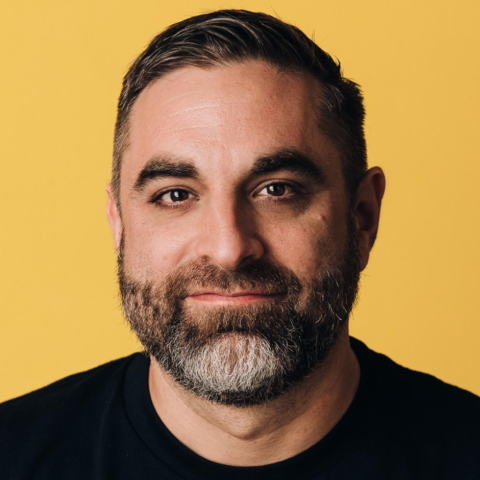
In this episode, host David Rice is joined by Madeline Miller—Career and Leadership Coach—to explore the unique challenges faced by young professionals as they transition into the workforce, emphasizing the importance of cultivating confidence and interpersonal skills to ease their journey.
Interview Highlights
- Meet Madeline Miller [00:50]
- Started her career in her late 20s as a lawyer, hoping for purpose and direction.
- Changed jobs multiple times within the first five years, trying different sectors and even moving countries.
- Eventually pursued entertainment law, earning a master's from UCLA and working as a production attorney in Hollywood.
- Despite professional success, including working on the James Bond franchise, she felt unfulfilled and not aligned with her true potential.
- During the pandemic, she reflected on her career and realized she was chasing external validation but didn’t feel successful.
- She began questioning her purpose and explored personal growth through coaching.
- Noticed that many others, especially early-career professionals, shared similar frustrations about their career paths.
- Created a coaching platform to support those navigating early career confusion and seeking alignment.
- Challenges Faced by Gen Z in the Workplace [04:21]
- Each generation entering the workforce faces criticism from the older generation.
- Criticism of Gen Z is not unique and happened with previous generations like millennials.
- It's important to consider the unique environment in which each generation enters the workforce.
- Gen Z is the first fully technological generation, which makes them very tech-savvy but also creates challenges.
- Many Gen Z workers finished college and entered the workforce during remote work conditions, unlike previous generations.
- Remote work and side gigs are now common, shaping Gen Z’s work experience differently.
- Older generations developed interpersonal skills in person, which Gen Z may not have had the same opportunity to learn.
- We should show empathy or at least recognize the differences in how Gen Z enters the workplace.
- Bridging Education and Workplace Skills [07:28]
- Madeline agrees there's a significant gap between college education and the corporate workplace.
- She describes her experience as daunting due to a lack of familiarity with the corporate environment.
- She emphasizes that interpersonal skills, particularly communication, are crucial for workplace readiness and effective leadership.
- She notes that apprenticeships may not teach these interpersonal skills as effectively as needed.
- Madeline highlights a gap in teaching essential skills like conflict resolution and assertive communication.
- Many people don't learn these skills until much later in life, leading to problems that could have been addressed earlier.
- She advocates for a greater emphasis on teaching interpersonal skills, ideally starting from elementary school, to reduce anxiety and improve confidence when entering the workforce.
Interpersonal skills are the biggest part of effective leadership. The gap lies in our failure to teach workplace readiness by focusing on interpersonal skills such as communication, conflict resolution, setting boundaries, and understanding the differences between assertive, aggressive, and passive-aggressive communication.
Madeline Miller
- Leadership as a Mindset: Empowering Junior Staff [11:34]
- Madeline agrees that leadership is a mindset rather than a position reserved for those at the top.
- She emphasizes self-sufficiency and responsibility, highlighting the impact of one’s actions on others.
- Many managers express frustration that junior staff lack initiative and motivation.
- Madeline questions how companies teach junior staff to take initiative and whether they truly understand what that means.
- She stresses the importance of empowering employees through effective communication and conflict resolution.
- Madeline asks if leaders are modeling the behaviors they expect from their teams or merely expecting them to figure it out on their own.
We position leadership as reserved for those at the top, but leadership is very much a mentality and it's self-sufficient. It's a self responsibility with the collective in mind.
Madeline Miller
- Evolving Leadership Training for Everyone [13:16]
- Madeline believes good leadership is rooted in high self-awareness, impacting how one acts and reacts.
- She emphasizes that leadership training should not be limited to those at the top but should be accessible to everyone.
- Madeline critiques traditional leadership training for starting too late in careers and focusing on unlearning bad behaviors.
- She advocates for preventative leadership training, which focuses on creating great leaders from the start.
- Her foundational formula for leadership includes alignment, influence, and resilience.
- Alignment involves understanding core values and ensuring actions and goals reflect those values.
- Influence focuses on building a reputation and addressing self-limiting beliefs to enhance interpersonal skills.
- Resilience is about maintaining alignment and purpose, especially in the face of setbacks or failures.
- Madeline asserts that anyone, not just top leaders, can develop these skills and mindsets to become effective leaders.
- Implementing Leadership Training in Organizations [16:33]
- Madeline addresses objections about universal leadership by emphasizing self-accountability and self-awareness.
- She argues that even if not everyone is a leader, organizations should encourage proactivity and motivation among all employees.
- Investing in employee development leads to better productivity and return on investment (ROI) for the business.
- Madeline suggests addressing specific complaints about junior staff through targeted investment in their development.
- She highlights that organizations often resist spending on junior staff due to short-sightedness.
- Cost-effective solutions include impactful leadership training and professional development programs.
- Online courses and group coaching are effective methods to engage junior employees, as they prefer digital learning.
- Group coaching fosters collegiality and helps combat feelings of isolation within Gen Z.
- Data shows that Gen Z and younger millennials crave more career guidance and support from managers.
- Madeline believes providing these opportunities shows value and leads to a more engaged and productive workforce.
Meet Our Guest
Madeline Miller is a Career and Leadership Coach and creator of the Dream Career Accelerator coaching program. She works with Gen Z and Millennials who feel stuck in their careers and want to take the next step forward in their career with more recognition, confidence and motivation using her unique A.I.R. formula (Alignment, Influence, and Resilience) for success.

Great leaders are very aligned and purpose-driven. They have excellent interpersonal skills and know how to build out influence and they have the healthy emotional resilience to continue. That is not something that only people in top leadership positions can and should do; anybody can do that.
Madeline Miller
Related Links:
- Join the People Managing People Community
- Subscribe to the newsletter to get our latest articles and podcasts
- Connect with Madeline on LinkedIn, TikTok, and Instagram
- Check out Madeline’s website
Related Articles And Podcasts:
- About the People Managing People podcast
- How To Create A Workplace Environment That Gen Z’s Will Love
- 7 Things To Work On To Be A Great Leader
- Ageism In The Workplace: Is It A Bigger Problem Than You Think?
- How To Build Emotional Intelligence And Be A Better Leader
- 11 Leadership Models To Help You Become A Better Leader
Read The Transcript:
We’re trying out transcribing our podcasts using a software program. Please forgive any typos as the bot isn’t correct 100% of the time.
Madeline Miller: Ideally, we’d be teaching it from elementary school. Like we should be teaching this stuff the whole time. And then when people come to work, they’ve got more confidence and I guess less anxiety so they can absorb some of the cultural cues they need to, right? Otherwise it’s just so much so quickly.
David Rice: Welcome to the People Managing People podcast. We’re on a mission to build a better world of work, and to help you create happy, healthy, and productive workplaces. I’m your host, David Rice.
My guest today is Madeline Miller, Career and Leadership Coach for Gen Z and Millennials. We’ll be talking about the challenges Gen Z faces as they enter the workplace and how getting them ready for leadership from the start might be the answer to those challenges.
Madeline, welcome.
Madeline Miller: Thank you very much for having me.
David Rice: Yeah, absolutely.
So first things first, I always like to have folks tell us a little bit about themselves, how you got to where you are, and what is it that keeps you up at night when you think about the the modern workplace?
Madeline Miller: I started my professional career later in my late 20s and I was, I became a lawyer.
And I like to think that was going to give me my kind of sense of purpose and direction. And that’s probably why I was doing it. But I discovered very early in my career as a lawyer that the same problems persisted and I moved jobs like five times within the first five years, like trying out all the different sectors I could move in countries.
I eventually did land in the area of entertainment law. I moved to the U.S. I did my master’s in entertainment law at UCLA. And so I was based in LA, end up working in Hollywood as a production attorney, which sounds great. Right? And it was great. I had some really good experiences. I worked on the James Bond franchise.
I was sort of like “successful”, but I also knew that I hadn’t really ever felt that I had done things with my career that truly reflected like the way I wanted to be seen, right? Like I didn’t feel that I was really showing up authentically. I was using the skills I wanted to demonstrate.
So I think that sort of a couple of years ago, I hit a wall and I mean, it did coincide with the pandemic and I’m not sure how much that sort of had to play with it because we all had an opportunity to go within a bit. But I thought, what do you actually want to do when you grow up?
You’ve got this like big career now, but you know, you were searching for like external validation and external metrics of success, but you don’t really feel successful because you don’t feel like you’ve really achieved your potential. You don’t really like telling people at parties, this is what you do.
So I knew that there was a disconnect and I was like, well, how can you bridge that gap? So I did a lot of this sort of like coaching work. Like I went within, I had the time to really question what I would find like to be my optimal alignment. And from then I started speaking with a lot of other people.
A lot of people would come to me for career advice, all of these kinds of things. And I realized that we all shared a lot of these similar frustrations and I was really drawn to people in their early careers who also feel that sense of, is this what it’s all about? Like I’ve worked so hard and I’m here now, but I’m not really sure what I’m doing and why I’m doing it.
I felt so much of that kind of confusion and frustration that I really wanted to create a coaching platform that could support people at that stage of their career.
David Rice: Oh, wow. I mean, I love hearing these stories all the time, but I love the way that you, you shifted and you had to change and follow your heart and that’s a great journey. It’s a very nonlinear journey, but it’s, it’s a good one.
Madeline Miller: Definitely nonlinear. I am like not linear at all. It looks, sometimes I was like trying to look linear, I was like forcing it on my resume. But the more I forced it, the more it didn’t feel, and I don’t want to overuse this word in the podcast, but the more it didn’t feel authentic, right? Like it didn’t really feel like me.
David Rice: I know exactly what you mean. That’s a, it’s one of those things, like as you, you move in the right direction, so you find the next thing. It’s so satisfying to do that.
Madeline Miller: So satisfying. And like, when you start your own company or you become an entrepreneur, there’s so much uncertainty.
And you don’t have regular income and you’re questioning yourself, you’re your own boss. No one’s there to guide you, all these things that can be really terrifying. But what drives you, I think if you stay in it and what’s driving me is that deep sense of satisfaction and purpose I have every day, which I didn’t really ever have.
David Rice: Kind of shifting into our conversation. I’m just going to start here by saying that I, I often find a lot of these narratives around Gen Z to be kind of nonsense. I mean, they often tend to be driven by stereotypes or overgeneralizations, right? But with that in mind, even saying that, there’s some significant data to show that they have had a hard time feeling settled or included when they enter the workplace.
And that’s where I want to start. What do you think is driving that sense that they can’t get comfortable? They can’t find their way at the gate? And is that unique to their generation necessarily?
Madeline Miller: Yeah. Yeah. I mean, it’s a good question because I think it hits on the things that I like to talk about when I do work with like intergenerational workforces.
I think every time a new generation enters the workforce, the previous generation’s have something negative to say about them, right? It’s just like almost like a rite of passage, like we criticize those that are coming behind us for all the things they want and the people entering the workforce criticize those above us, like I did it, like they’re not this, they’re not that.
So like 100% there is nothing unique about complaining about Gen Z, right? It happens, it happened with the millennials, it will continue to happen. But I think it’s very important every time a new generation enters the workforce that we think about the unique environment in which they’re doing so.
Now by environment, I mean like social, cultural, political, economic, financial. So with Gen Zs in particular, I always like to draw people’s attention to the fact that Gen Zs are the first generation to be fully technological, right? They’ve only ever known technology. So they’re super technologically savvy.
They’re comfortable with it. They’re familiar with it in ways that even most millennials are not. Like I’m an older millennial and I still remember like pre-internet days. Right? So like they’re the first full technology generation and that’s come with a lot of advantages. But it’s also come with certain disadvantages.
And then if you couple that with the fact that they finished, probably finished college and even entered the workforce, perhaps fully online, like they have entered the workforce unlike any other generation before. Remote work was not a huge thing before the pandemic. Now remote and hybrid situations are pretty much the norm.
As are side gigs, hustles, podcasting, entrepreneur, all these things that we do via technology remotely are new. And this is like Gen Z’s, this is its context, right? So a lot of the stuff that I learned in the workplace, like professionalism, communication, even being able to check in with my manager to make sure they weren’t like pissed at me like all of these things we could do was because we’re in person.
And so we developed a lot of those skills, or as we’ll talk about later, maybe to develop a lot of those skills the way we should have, but like we had the opportunity to develop a lot of those interpersonal skills that Gen Z have not. So I think we have to have a certain amount of perhaps, empathy, and if that’s too much for it to ask, at least recognition of their differences.
David Rice: Yeah, absolutely. And the context within which you operate, right, it always, people are shaped by their environments.
Madeline Miller: Correct.
David Rice: So it’s completely normal that some of their experience is going to play into that. Now, I don’t want to get into a state of the union, so to speak, on higher education. And that may not even be relevant, given a lot of Gen Z’s embraced trades, right, more than others.
But I am curious how much of this is an issue of academia not being able to keep pace with the developments of the professional world? And therefore, maybe not preparing these young professionals for what comes next. I guess, I often wonder, do we need a better go between, where young people do more things like apprenticeship and transition into full time professions in a different way?
Madeline Miller: It’s an interesting question. When you ask that, what are you suggesting the apprenticeship might be giving them, that workplaces or not?
David Rice: Well, because I think, I wonder if some of it is just the culture shock of difference between school and the world that you’re operating in there when you’re getting trained and learning the basics of the thing that you’re going to go into. And then the reality of being in, well, maybe it’s a virtual office or a regular office, whatever it is, being in the actual workplace where there’s the expectations are different. How they’re communicated is different.
Madeline Miller: Yeah.
David Rice: And then the management styles are obviously different from anything that you’ve ever expected. I mean, if you’re, most of the jobs that you do during college versus the corporate world would be, I think very much a culture shock for a lot of people.
And so, and I’ve seen it too, right? You’ve, I’ve had colleagues in the past where they come in and they’re very green and they start to see the way that corporate communications and workflows happen and they’re taken aback is this the reality of it?
Madeline Miller: Yeah.
David Rice: And so I’m wondering, is there maybe a way that we can bridge that gap so they can see more of it?
People have internships, but a lot of times those are very short. They may not actually give you much of a window into it, whereas apprenticeship, you’re getting paid. You are considered more like an employee. Is that something that we should be exploring?
Madeline Miller: Yeah. No one’s positioned it that way before.
And that’s why I was interested to know, like why you’re asking, like what you kind of was suggesting would be the value. And I think you’re right that juxtaposition between school, like college and a corporate workplace is huge. And if you haven’t, maybe if your parents were corporate people, mine weren’t like they’re all in the public system education.
So for me, it was a very foreign environment and I found that incredibly daunting on top of the fact that I was expected to know all this stuff as a first year lawyer that I felt like I didn’t know. So, you throw in all the general career anxiety and then the sort of environment, and it is, I think it is incredibly challenging. I would suggest though, to complexify that a little bit, that a lot of the stuff you’re talking about, like the readiness and a lot of the skills we’re wanting people to develop are interpersonal skills. It’s communication. Well, it’s communication.
I mean, interpersonal skills are the biggest, I guess part, I would say of effective leadership, like Gallup’s seven attributes of leaders. You look through them, everything revolves around effective communication and working with other people. So wouldn’t apprenticeship teach you that any more than a workplace?
Possibly not. So I think the gap is we’re not expecting people or we’re not teaching people workplace readiness by teaching people around interpersonal skills, communication, all of these things like conflict resolution, setting boundaries, what assertive communication looks like versus, aggressive, passive-aggressive.
Some people don’t even learn this stuff until they’re like getting an executive coach in their 50s, which is part of the problem. We’re like trying to undo problems that we could be fixing. So I agree that there needs to be more of an emphasis on this somewhere. Where that is, I’m not sure. Like I think, yes, we could teach that at school or you teach that at university.
Ideally, we’d be teaching it from elementary school. We should be teaching this stuff the whole time. And then when people come to work, they’ve got more confidence and I guess less anxiety so they can absorb some of the cultural cues they need to, right? Otherwise it’s just so much so quickly.
David Rice: And since you mentioned the Gallup sort of leadership thing there, and when we were speaking before this, you mentioned that leadership is a mindset, really. But if you’ve never been in the professional world, particularly like we’re saying the corporate space, you’re not naturally maybe going to have that leadership mindset, most likely. And a lot of what happens can be pretty jarring.
So when we hear that Gen Z lacks professionalism or they don’t have the interpersonal skills, do you think some of that can be talk to them through communication about how leaders think specifically and how they behave, what they expect, and how they respond to feedback, that kind of thing?
Madeline Miller: I do. I completely do. You’ve just summarized my whole ethos for me. Thank you.
I think that we position leadership as reserved for those at the top, but leadership is very much a mentality and it’s a self sufficiency. It’s a self responsibility, right? With the collective in mind, like I’m responsible for my actions and reactions and I’m also responsible for how that impacts others around me. Because a lot of the things I hear consistently from managers and leaders and companies is wow, my junior staff need to show more initiative and they need to be more motivated. I was like, well, how are you teaching them to do those things?
You can tell them, take more initiative. Maybe they really truly don’t know what that means. Are they being empowered? And by being empowered, I mean, are you teaching them effective communication? Are you modeling effective conflict resolution? Are you literally telling them how you want them to be showing up?
Or are you just expecting them to work it out? And are you doing it well yourself?
David Rice: Well, education around leadership, right? It tends to be very specialized. In some cases, personalized even.
We tie this sort of training to specific roles, or we identify specific people who are, we think are a good fit for it, but we don’t instill those types of behaviors in everyone, as you’re alluding to. Talk to me about getting away from that traditional sort of approach and evolving into a training approach that instills those behaviors, those mindsets on everyone on a broader scale.
Madeline Miller: My approach to leadership and why I think it’s scalable, like where everybody can be responsible for their own leadership presence is that good leadership is rooted in a high level of self awareness.
And like I said, understanding how and why you react and act, and then thinking about how that impacts others. Right? Now that is not, the way I’ve just described leadership there is not something that only people at the top need to be doing. And I think, touching on what I was saying before about the way, people in their 50s learning, unlearning bad behaviors, like we approach leadership training as something with, or even we approach executive coaching as something we start doing with people when they’re already several years, even a decade or more into their career.
And so we’re starting, the process seems to be on unlearning, like bad behaviors. I’m interested in preventative work to create great leaders. And that preventative work is around, I mean, I have a formula, which I think is a great foundation, which is about alignment, influence, and resilience. And I’m happy to unpack each of those if you think that’s a good time.
David Rice: Yeah, please.
Madeline Miller: So alignment really means, and anybody can do this at any stage of their career. Do you know what your core values are? Your professional values and your strength. Are you showing up in alignment with those values? And are you making choices and setting goals about your career that are in alignment with those values?
Once you have that kind of clarity of vision, your behavior can start to reinforce that vision. I do a lot of work with my clients around personal branding, and I look at brand archetypes from the advertising world and I say, if you’re a brand, if you want to be showing up and received a particular at work, what is that brand?
Do you want to be seen as the sage? Do you want to be seen as the creator? What comes naturally to you? And what do you think you’re not being recognized for? And then the next bit we look at is building influence. Okay, how do we bridge that gap? Like, how can you build the influence so that you can be seen as the real valuable person you want to be seen as?
And what are you doing to stop it? Like, how are you holding yourself back? So that’s when we’d look at more of the interpersonal work. We’d look at the communications work. We’d look at the sort of traditional stuff that coaching looks at, like self limiting beliefs, shifting your mindset, all of these things.
So that’s why alignment is key, building out influence in really powerful, effective ways is key. And then developing the resilience to continue to show up like that. So if you have a setback, if you get bad feedback, if you have a failure, okay, go back to your roots, go back to your alignment. Pick yourself up, try again.
So to me, that is what great leaders are made of. They are very aligned and purpose-driven. They have excellent interpersonal skills and know how to build out influence and they have the healthy emotional resilience to continue. That, in my opinion, is not something that only people in top leadership positions can and should do. Anybody can do that.
David Rice: Here’s my next question. If somebody wants to do this within their organization, how do they go about getting buy-in? Because I can, I just have this vision of somebody sitting around a boardroom going, well, we don’t need them all to be leaders, right?
Madeline Miller: Yeah.
David Rice: So how are you framing it and what are some of the common types of pushback that you might get as you look to do something like this and frame a case for it?
Madeline Miller: There’s two sort of parts to that, I guess, objection, if it were. And I think saying like the version of leadership I’ve just explained is about self accountability and self awareness. So if people are saying we don’t want them all to be leaders, it’s okay, but you want them all to be proactive and motivated, right?
So how are you encouraging that? And you want them to show up powerfully for themselves and powerfully for others. So you need to invest in them to get that out of them. And that’s a simple, that leads to better productivity, ROI. If you want to completely strip away the professional growth element and just look at the outcomes for the business, that’s better for business.
And so I would say, what are your complaints, right? And how do we go about investing in your junior staff in a way to address those complaints? And then I think one of the other things that you might get pushed back on is to your point well, they’re junior. We don’t want to spend money, time with these people.
They just got to come up through the ranks. And I think that’s a short sighted vision. And there are cost effective ways to do this. Like every single junior employee cannot be allocated an individual executive coach, right? That’s clear. That is where I come in because I’m like, you can develop impactful leadership training, you can call it professional development training, whatever you want to call it, and you can provide that to your junior employees in a way that lands for them.
So I said, they’re technology-driven. They love online courses. They love learning stuff online, right? So you can provide it in a fully digital format. You can also provide group coaching online, right? Super cost-effective, gets people together, gets them to share their concerns, share their anxieties, hear from other people how they’re managing them.
Creates collegiality, diminishes isolation, all of these things that we’re seeing are problems with Gen Z. The third part and the final part would be all of the data shows that Gen Z and younger millennials really are craving more career guidance, craving more investments into their careers and discussions about their careers with their managers and their bosses.
Show them you value them by giving them these opportunities. And engaged workforce is a productive workforce. So, find creative and cost-effective ways to reach them in methods that land for them, in formats that work for them. I guarantee you will see them thrive. I guarantee it. They just want more guidance.
David Rice: Before we go, there’s two things we always like to do on the podcast. The first is I want to give you a chance to tell people more about where they can connect with you and find out more about what you’re doing.
Madeline Miller: Great. I mean, I have my own website, so it’s coachingwithmadeline.com. I’m also pretty active on social media.
I do a lot of sort of short videos, like demonstrating how to manage sort of common workplace issues, like trying to convey really complex concepts in short, minute formats. That’s @MadelineMillerCoaching on Instagram and TikTok. So that’s how you can find me.
David Rice: Alright, excellent. And the last part is, we have a little tradition here on the podcast. You get to ask me a question. So I’m going to let you turn the tables, turn it over to you, ask me anything you want.
Madeline Miller: Well, I had a question I was thinking I wanted to ask you before, but then we were having this discussion and we were talking so much about leadership and I riffed for so long on like leadership and deconstructed the question.
I would love to hear from you, what do you think a great leader is? What is leadership to you?
David Rice: That’s complicated question. The biggest thing that you’ve talked about empathy a little bit. And this is something that I think every great leader I’ve had that ability to bring me into whatever they wanted to do through a position of empathizing with where I wanted to go.
And they could make me feel like my goals were tied to their goals, I just wasn’t maybe viewing it from the right angle. That I could achieve what I wanted to achieve, but do it in a way that still served the business or the organization that I was part of or working with, partnering with, whatever it was.
And I think that is something that we’re hearing a lot more about things like founder mode. And sometimes I think what gets lost there is some leaders have this it’s like this very alpha personality, right? Like their ideas, they’re the ones that know the way, they see the path more clearly than everybody else.
And I think the best ones are really good at empathizing and helping you see it on your own without having to boss you too much through it.
Madeline Miller: I show the head with it. That’s really interesting because one of the things, again, that Gen Z is saying, like they want more empathy out of their leaders. And it’s for so long, we never thought about that.
I never thought about that when I was young. I never thought about asking for empathy, but they also want to feel really purpose-driven and what you’ve just described is that, right? It’s like, here’s what you want to do. Here’s the goals of the company, let’s connect it together. And that gives them a real sense of purpose.
David Rice: Yeah. Creating that alignment also creates more trust and just that sense of buy-in of I’m doing something. Cause it was one thing that we know with that this last couple of generations is folks really want to, they want to feel like they’re doing something, not just like ticking a box to get a paycheck.
What I mean? Like, that’s not…
Madeline Miller: I want to feel like they’re doing something and that they’re recognized for what they do.
David Rice: Exactly. Those two things together. And a good leader, I think, can sell them on this vision of this is why we’re doing this.
Madeline Miller: Yeah.
David Rice: You’re doing it for the right reasons. Your talent plugs in this way.
Madeline Miller: Yeah. This is how you are of value. Yeah. Yeah. Totally.
David Rice: Yeah. And making that very clear. I think that helps a great deal. It leads people to trust that leader quite a bit because they feel seen by them.
Madeline Miller: Yeah. Oh yeah. No, I love it. Okay. Great answer.
David Rice: Thank you. Thank you. Well, thank you for coming on the podcast today. I really appreciate it. This was a really interesting chat.
Madeline Miller: It was. It went so quickly. Thank you so much.
David Rice: I know. I always tell people I’m like 20 or 30 minutes. It’s going to go super fast, so.
Alright. Well, listeners, thank you for joining us today. If you haven’t done so already, head on over to peoplemanagingpeople.com/subscribe, sign up for the newsletter. You’ll get all our latest updates, insights, software reviews, everything straight to your inbox. Until next time, fall’s here. Get that sweater, get that pumpkin spice latte out.