In a rapidly evolving workplace landscape, the need for effective employee engagement and compensation strategies has never been more crucial.
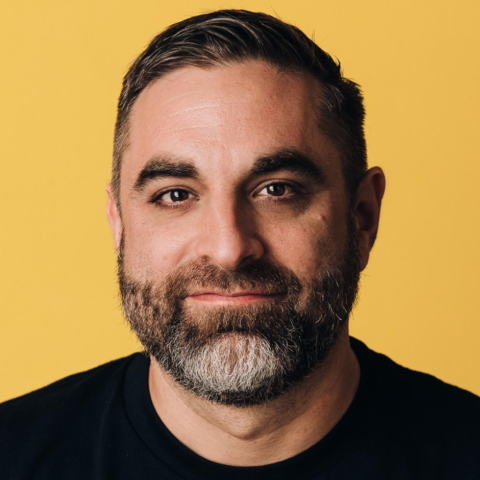
In this episode, host David Rice is joined by Lindsay Clayborne—Director of People and Culture at Cardata—to share her expertise on managing employee expectations amidst economic pressures and the essential role education plays in aligning compensation strategies.
Interview Highlights
- Lindsay's HR Journey and Current Challenges [01:00]
- Lindsay has 6 years of HR experience, primarily in technology companies, focusing on startup and scale-up operations.
- She specializes in building foundational HR processes and improving employee experiences at Cardata.
- Advocates for Agile HR, emphasizing iterative improvements to programs and processes.
- Current focus: balancing immediate workplace optimizations with planning for future evolution.
- Concerned about navigating rapid workplace changes and an uncertain economic environment.
- Challenges include maintaining high-quality programs with limited human and financial resources.
- Key priorities: efficiency, cost optimization, innovation, and employee and leadership support.
- Compensation and Cost of Living Mismatch [04:21]
- Businesses face challenges balancing compensation costs with sustainability amid inflation and cost optimization pressures.
- Employees expect pay to align with the cost of living, but compensation is driven more by market data and the cost of labor.
- Mismatch between business affordability and employee expectations creates tension and requires extensive education.
- HR must educate managers on compensation structures, market data, and cost of labor concepts.
- Managers need support to communicate difficult messages about compensation accurately and empathetically.
- Surplus labor in specific roles can lead to lower pay relative to cost of living, leaving employees feeling undervalued.
- HR invests significant resources to coach managers and manage employee expectations while maintaining morale.
- Career Path Expectations and Realities [07:58]
- Younger workers often have unrealistic compensation expectations, influenced by social media and success stories.
- Social media highlights "overnight success" while downplaying the hard work required, leading to skewed perceptions.
- Companies must set clear expectations about skill development, competency levels, and progression paths.
- Aligning compensation goals with realistic career paths requires proactive conversations.
- Employees should be guided to roles aligning with their compensation goals while leveraging their current skills.
- Organizations need to balance setting realistic expectations with supporting skill and career growth.
- Empowering Employees in Career Development [11:24]
- Employees have more influence over their career progression and compensation than they often realize.
- Career growth shouldn't solely rest on managers; employees need to take ownership and reflect on their goals.
- Organizations must foster psychological safety to enable open conversations about career paths, even if they diverge from the company's trajectory.
- Growth expectations may change, and companies should support employees' evolving goals, even if their next steps are outside the organization.
- Cardata introduced a "career vision" exercise with five questions to spark transparent career discussions, including asking employees what factors might make them leave.
- The exercise aims to identify areas where the company can improve retention or support employees' external growth goals.
- Initial skepticism arose about the intentions behind the exercise, but it focuses on creating open, honest conversations about career paths and company alignment.
- Employees are now exploring internal opportunities more due to fewer external options compared to past years.
- The current climate presents a chance to retain talent by addressing "stay factors" and mitigating "leave factors."
- Retention efforts are cost-effective compared to the high expense of employee turnover.
- Companies can invest in retention through competitive compensation benchmarks, education, conferences, mentorship, and coaching.
- Employees must take ownership of their career growth while organizations provide tools and resources to support their development.
- The goal is a mutually beneficial arrangement where employees feel valued, and the organization maximizes their contributions.
- HR must effectively communicate with finance to justify small compensation increases for retention.
- Offering slight raises, such as $5,000–$6,000 annually, can prevent costly turnover and maintain productivity.
- Retaining employees avoids expenses like recruitment, onboarding, and lost institutional knowledge.
- Current conditions allow for smaller, targeted investments in retention, unlike larger compensation demands in the past.
- This is a key moment for HR to demonstrate the value of incremental investments to finance teams.
It's actually unproductive to expect your managers to own their employees' career growth. That generates really unproductive behaviors within the organization because we don't need to empower people to take control of their careers—they should already know.
Lindsay Clayborne
- The Role of Analytics in HR [19:47]
- Analytics in HR is shifting toward integrating HR evaluation data with company performance data.
- Future focus: optimizing systems to identify inefficiencies and create upskilling or automation opportunities.
- Tools like Equitable simplify integrating and analyzing data for HR professionals with limited technical expertise.
- HR leaders must improve data literacy, including reading, communicating, and addressing data gaps.
- HR should adopt a proactive approach to fixing data gaps, similar to how sales handles data issues.
- The vast amount of daily employee actions generates data points that HR should actively track and utilize.
- Impact of Early-Stage Company Experience [22:37]
- Early HR experience in a large company felt restrictive due to rigid systems and "this is how it's always done" mindset.
- Found fulfillment in smaller, scale-up, and startup environments that allowed for building, creativity, and hands-on learning.
- Thrives in roles where strengths can be flexed, and impact is visible through tangible results.
- Larger organizations often have slower adaptability due to leadership resistance to change.
- Believes personal and professional growth comes from aligning one's strengths and personality with the right work environment.
- Open to exploring large organizations with open-minded leadership for future opportunities to iterate and evolve.
You really need to know what kind of environment will allow your strengths and personality to shine. And regardless of what specialty or role you're in, you need to make sure there's a match between them.
Lindsay Clayborne
Meet Our Guest
Lindsay Clayborne is the Director of People and Culture at Cardata, where she leads with a passion for fostering inclusive, innovative, and people-centered workplaces. With extensive experience in human resources and organizational development, Lindsay is dedicated to creating strategies that empower teams and drive company success. She specializes in employee engagement, talent development, and cultivating a strong company culture that aligns with Cardata's mission and values. Known for her approachable leadership style, Lindsay thrives on building meaningful connections and championing initiatives that inspire growth and collaboration.

Feedback is a gift. We take what we want, leave the rest, but I think it might be better to leave the rest and then consider how you can pay it forward. The more we do it, the more we exercise that muscle, the better we get at it.
Lindsay Clayborne
Related Links:
- Join the People Managing People Community
- Subscribe to the newsletter to get our latest articles and podcasts
- Connect with Lindsay on LinkedIn
- Check out Cardata
Related Articles And Podcasts:
- About the People Managing People podcast
- People Management Tips All Managers Can Learn From
- How To Create A Learning And Development Program To Grow Your Team
- 5 Methods To Help Put Employees In The Driver’s Seat Of Their Career Development
- Human Resources Career Path: Your Options Analyzed
- How To Build High Performing Teams By Embracing Emotions As A Leader
- Future-Proofing Your Career: The Power of Curiosity and Consistency
Read The Transcript:
We’re trying out transcribing our podcasts using a software program. Please forgive any typos as the bot isn’t correct 100% of the time.
Lindsay Clayborne: Compensation and total rewards is a huge part of the operating costs of any business. Our employees are coming to work feeling the pressure of cost of living, inflation. And there’s a bit of a mismatch between, you know, really what the business can, can afford and, and what the employees are ultimately experiencing. So it is a challenge to manage expectations on the whole, and it’s really creating a lot of demand for education.
David Rice: Welcome to the People Managing People podcast. We’re on a mission to build a better world of work and to help you create happy, healthy, and productive workplaces. I’m your host, David Rice.
My guest today is Lindsay Clayborne. She is a Director of People and Culture at Cardata. We’re going to be talking about some of the bigger challenges companies face in educating employees on key factors of employee experience.
Lindsay, welcome.
Lindsay Clayborne: Thank you. I’m so excited to be here, David.
David Rice: So first up, tell us a little bit about you, how you got to where you are and what it is that, you know, keeps you up at night these days when it comes to sort of the future of workplace and helping people navigate it.
Lindsay Clayborne: Awesome. I have been in HR for about six years now.
Most of that time has been helping technology companies kind of start up or scale up companies. Really being able to grow their teams coming in and helping to lay a lot of the foundational pieces of their operations and helping to, as you just mentioned, build out the employee experience from the ground up.
And so I kind of came in initially people coordinator and then have worked my way up and now get to lead the people team at Cardata and really get to focus on building out a great employee experience. We’re always evolving our processes. I am really a fan of kind of Agile HR. So being able to evolve things over time, getting out of V1 and then iterating on it.
So our team is always working to improve the employee experience by being able to evolve our programs, what we offer, the workplace that fits with what, you know, they’re working to get out of their time at Cardata. Really what’s keeping me up at night these days is when I think about the future of work is we’re kind of living in the future right now, just with the pace that everything is changing nowadays, it can feel almost a little bit intimidating or daunting to think too far out in the future.
But because there’s so much to handle today, both on like a micro and a macro scale, I mean, if you think about it, what questions were we asking, or what were people thinking, you know, even 5 years ago when we asked them, what do you think the future of work is going to be like? I’m sure some of what we’re experiencing is what they thought, but probably the majority is what, you know, nothing they could have anticipated.
Really nowadays it’s focusing on, you know, my mind is, is really occupied with how do we make sure that we strike that balance between focusing on what we can optimize for now, but also starting to think about how are we going to evolve things. Going forward and especially thinking about the resource constraint, we’re in a really interesting time right now where the economy is a little bit in flux, especially working in technology.
There’s been so much change, obviously, lots of layoffs over the last couple of years. We’re seeming to come out of that a little bit, but there’s still a hyper focus on efficiency, cost optimization, and so what’s keeping me up at night is how do we continue to do really great work and continue to support our leaders, support our employees, be innovative, and do all of that with very limited resources, both human and financial.
And so that is really what’s keeping me up at night is how do we continue to deliver the same quality of programs but do it in a more efficient way.
David Rice: Yeah, I think that’s a common challenge and it’s great that you said that because I think somebody it’s just a while back, but they asked, like, you know, where do you see things in five years? I don’t know where I see things in like six months, man. What are you talking about? You know?
We talked a little bit before this about the challenge facing businesses around compensation in particular, and we’ve been in this period where like inflation has been high. There’s some economists saying that we could be in for even more of that.
And when we talk about compensation in particular. There’s this expectation from employees that cost of living is a primary factor that drives how the company views what they get paid, but that’s not necessarily the reality, right? So what are some of the bigger challenges you’re having right now, or that you’re seeing people have, you know, in compensation discussions and trying to educate folks on this?
Lindsay Clayborne: Yeah, this is a big challenge, and it sort of goes hand in hand with kind of what is keeping me up at night when I think about the futures is we’re having to think about cost optimization across the whole business, not just within HR and obviously compensation and total rewards is a huge part of the operating costs of any business, and so, you know, When we’re trying to balance, you know, being a business and trying to keep the business sustainable, keeping it surviving so that we can continue to employ people, give them opportunity to grow their skills and careers.
But then our employees are coming to work, feeling the pressure of cost of living inflation. And there’s a bit of a mismatch between, you know, really what the business can, can afford and, and what the employees are ultimately experiencing. So it is a challenge to manage expectations on the whole. And it’s really creating a lot of demand for education.
And that is where, you know, when we’re trying to figure out where do we divide our time? How do we ensure that we’re doing the right things? We’re delivering quality programs. But we’re having to do it with minimal or dwindling resources. That is, you know, the challenge because especially for compensation, it’s about not just educating employees.
It’s also about educating managers. Like, managers don’t live in the world of compensation every day. You know, they’re looking at their budget and thinking, you know, how much headcount costs do I have? But they’re not living in the world of. Well, how do we determine how much somebody’s cost is and how much we should pay someone or the value of someone’s skill set?
And how do we use market data? And how are we building our comp structure? So it’s going to scale with our business. And like, they’re not in that mind space every day. So we have to educate them so that they can have conversations with their employees that are accurate and informative, but sometimes it’s really hard because the bottom line of that message sometimes that they’re delivering is like, Listen, based on the market data, which is.
A large part rooted in the cost of labor, not so much the cost of living. That’s a tough concept to help people understand. And so helping them be comfortable enough to be able to communicate that and then have to manage the effects of someone being like, well, the cost of labor, what do you mean? Like, isn’t that the same as cost of living?
It’s like, no. And sometimes the cost of labor is not as high as the cost of living, because maybe you have a surplus of labor available for that specific role or that specific skill set. And so it can almost leave employees feeling a little bit devalued and you don’t want that because obviously you want them to be motivated and show up and do their best.
But hard conversation, really hard conversations to have. And that takes a lot of resources from the HR team to be able to work with managers to coach them through it and help them understand that. In a way that hopefully is honest, but also, you know, not totally demotivating to employees, but gives them a realistic expectation, at the very least.
David Rice: There seems to me over the last few years to be a sort of a disconnect, particularly among younger people about the reality of what they should be paid. You know, I’ve talked to some young people who are maybe a year or two out of college. They have very little real experience, and they thought they’d be banking much more money than they are.
And then they sort of struggle to see the way forward through this career path that they’ve chosen. And we’re in this moment where we’ve been talking a lot about skills in HR, trying to rethink the way that we look at skills in our orgs. I’m wondering, do you think there needs to be more education for workers throughout the spectrum of age or experience to show them the sort of career lattice that exists and kind of encourage them to map out their goals relevant to, yes, skills and roles, but also to wrap it out based on the money that they’re looking for, and then kind of put the onus on them to pursue it rather than being pushed or nudged in a direction by their organization?
Lindsay Clayborne: Absolutely. I would a hundred percent agree that I see that disconnect. Part of me thinks that it has to do with the rise of social media, not just in the personal sense, but also professional sense. And we’re seeing what seems to be like overnight successes or, you know, we were constantly seeing like. 30 under 30 or 40 under 40, you know, like really these big success stories that seem, make it seem like, Oh, you know, in very short amounts of time, you can go from being fresh out of college, not knowing anything to, you know, making top of what you wanted or top of the market.
And. What I think we, everyone, but I would agree specifically younger generations forget is that there’s a lot of hard work that goes into that that we don’t see, but that’s also the hard work that companies are looking at and evaluating you on. So you have to put in that work first and foremost, but I do definitely believe there’s an onus on the company to set expectations of like, well, what does this company do?
That level of work need to look like, and what is that next skill need to look like? Because every company is so different. And as you were just saying, like skills are evolving so quickly. So what does being proficient in something actually look like? We need to outline what that is and give them a very clear understanding of like, what does it mean when you’ve achieved or reached that level of competency?
So we do need to have those conversations, but to your 2nd point of aligning with them. Okay, if this is what you want to make. Then this is what you need to do to get there. I think that also goes to. What we were just talking about with setting realistic compensation expectations. It’s like. If you want to make six figures, but, you know, you want to stay in, for example, a, you know, a support role and you want to just do customer support.
It’s not to say that customer support isn’t that valuable. It is, but there’s a bit of a disconnect there between compensation expectations and what you love to do. So how can we maybe help you find a different role or move towards a different role where you’re going to make that compensation you want.
Leveraging the skills you’ve learned here. But. putting you on a path that’s more realistic. So I think it’s about level setting a little bit as much as showing the path of, okay, these are the skills and competencies you’re going to need to Evolve and build within yourself in order to get to a point where you’re going to be ready to take on a role that earns you that compensation.
David Rice: You know, I think people have this perception, like we, when we talk, even when we talk about helping people see their career path, it’s always like on the onus of the org, right? But I think people have more power control over their progression and how the company shapes its workforce actually, then they think, you know, in turn, they have more power to influence what they make as well.
But it’s obviously sort of a culture conversation at the same time, because employees need to feel like they can bring their ideas to the table and not worry that if their ideas don’t align with how the organization envisions things, the organization isn’t going to see them as a sort of flight risk, right? How would you say we can all kind of navigate this a bit better? Because in the end, it’s in everybody’s interest at the end of the day to put all this on the table and find the best way forward.
Lindsay Clayborne: Yeah, I totally agree with that. It’s actually. I think unproductive to expect your managers to own their employees, career growth, and I think that actually generates really unproductive behaviors within the organization because we don’t need to empower people to take control of their careers.
They should just already know. When you walk into an organization, you know, you’ve chosen to be there. You’ve already taken a choice. So continue to carry that on as you’re working through that organization. But to your point, there does need to be that psychological safety that, Hey, if I’m learning things here and I’m getting exposure to things that I haven’t in the past, and it’s opening up these new doors for me, then we should be open to the fact that what people come in with in terms of an idea of where they want to grow.
May change over time and it may change in a way that doesn’t necessarily align with our growth longer term, but that doesn’t mean we should. Not continue to invest in them, but we should also put some expectation on them. That’s not up to us as a company or as your manager to figure out what you want to do.
Like, you have to do some. Self reflection and understand that, but when you’ve done that and you have a clearer idea, hey, we’re going to be here to talk that out openly, transparently. And I’ll give you an example, we just rolled out a new exercise that is kicking off all of our career conversations, which we can go into how I’m evolving even my own thinking on career conversations now, but going back to this exercise, it’s five questions and it’s called the career vision and one of the questions on there is, hey, what are the factors that would make you want to leave Cardata?
And why that’s valuable is because. We obviously need to know, hey, are there factors that we could actually mitigate? And ensure that you stay here longer term, and they’re not really unnecessary reasons why you should need to leave. But we should also have an idea that, hey, this might make you leave and ultimately we as a company can’t control that.
So for example, like if your next step, maybe there’s not going to be that opportunity here. We can’t stop that from happening. But to go back to, we want to have an honest conversation. We can have the moment to say, okay, maybe your next step isn’t going to be here, but we’ll do everything to make sure you’re prepared as much as possible to take that step from whether it’s a soft skills perspective, an exposure perspective.
So, but when we initially rolled it out, there were some questions about, well, why do you want to know why I would leave? Is it because you’re looking to cut people and you’re trying to figure out who is like closest to that or who doesn’t align? And it’s like, no, like, this is really just to. Have that open conversation and also for us to know, Hey, what can we do to make sure this is the environment that you want to stay in?
David Rice: It’s funny you mentioned the career conversation, and I think 1 of the things that maybe is hampered it a bit if you look at, like, the last 3 to 5 years. You see the way talent’s been moving around it, like a very frequent rate, right? Like, the average person was moving companies every 1 to 2 years, and that’s sort of.
Impacts the way that you think about that conversation. But we’re now seeing this change a bit, right? People are starting to look at longer stays, maybe thinking more in like five year blocks. That seems to me like a prime opportunity to really double down on these conversations and make them a key part of your retention efforts.
Lindsay Clayborne: Part of me wonders if that is due to maybe the fact that there aren’t as many opportunities available. So people are now, instead of looking externally, they’re now Looking more internally and saying, Hey, what opportunities exist here? Whereas. Go back five years from now three to five years from now.
And people had so many opportunities. They were probably getting LinkedIn messages, you know, every day, every other day. So the opportunities were flowing in for people, especially people with unique skill sets, skill sets that were in demand. And there isn’t just that abundant and volume of opportunity now.
So part of me wonders if that shift is because of the climate that we’re in and those. Opportunities are not as abundant, so we should absolutely capitalize on that that, hey, people are willing to stick around a little longer. So if we truly invest in efforts that are going to. Keep them here, maybe mitigate those leave factors, but also invest in their stay factors.
That’s another question on our career vision. Exercise, then we can actually get a higher return on our investment into those things. And this is a prime opportunity to actually save a lot of costs, too, because having somebody leave every two, three years is extremely costly for the business. It’s more costly than any amount we would put into a retention effort, whether that’s maybe having to re evaluate what level we’re benchmarking against the market.
Maybe do we want to increase where our benchmark is for our compensation. Is it specific programs? Like, do we want to give people funds to be able to invest in whether it’s education, whether it’s conferences, whether it’s mentorship and coaching, giving them resources, whether it’s financial or time with their managers, to be able to invest in their growth and continue to see that path and also encourage them to build that path internally.
I think that is the key is encouraging them. And giving them the resources, but again, going back and saying, it’s still your responsibility to own your career development here. Our retention efforts are going to go into giving you the tools, but ultimately, if this isn’t the place for you, that’s okay. But we’ll do everything we can to make sure that while you’re here, you feel valued.
We get value and it’s a win win.
David Rice: Yeah, I think you’re right about sort of the opportunities not being there. I think also I saw some data recently that suggests that for the first time in like several years now, the income increase for job changers is now closer to the same income increases for people who remain within an organization that it’s been in years.
And so people aren’t getting these huge pay jumps when they change organizations. And again, it’s just another opportunity to sort of take advantage of that and like keep people where they are right now.
Lindsay Clayborne: Yeah, definitely. And I think that’s where HR has to come really good at being able to talk to finance and help them see that, Hey, maybe we need to, you know, increase our comp for this role $5,000 or $6,000, that’s $500 a month.
Is it worth keeping someone here for that amount? Because they have institutional knowledge. They are already on boarded. We’re not going to have a vacancy. We don’t have to invest in recruitment resources. Is that worth it? Because they’re likely not going to leave for that much, but if we stay and we don’t give that to them, are they going to be as motivated?
Are they going to be as productive? We might as well make that investment. Whereas, just like you said, 3, 5 years ago, it wouldn’t be the same conversation because you can’t go to your finance team, you know, every time somebody’s going to leave and be like, hey, can we get an extra 20, 30, 000 to keep this person?
That’s a bit of a different conversation. So, I think it is a prime opportunity to invest those things, but it’s also a prime opportunity for HR to get really good at helping finance see the value of maybe increasing investment in some of these areas, even if it’s just on a minor, minor scale.
David Rice: I think part of determining all that, right, is the data, right? Analytics is now an ever present part of HR, whether you’re talking about performance management, recruiting, whatever it is, right? So I’m curious what you see as sort of the next big frontier for analytics in HR. We’re coming up into an interesting year where it sounds like there’s going to be more technology integration.
Who knows what happens with the economy? Where’s analytics going to help us streamline and kind of weather, whatever storm comes next.
Lindsay Clayborne: Yeah, and I was thinking about this. It seems like the hype of analytics kind of goes in waves, you know, a couple years ago. And up till recently, the main focus was on how do we evaluate DEI efforts or DEIB efforts.
That was largely the focus. And engagement is always a focus. You know, we want analytics around our engagement. How are people feeling? But I really think that. I see the next frontier from a technical perspective is getting really good at marrying our HR evaluation data with company performance data. So that’s where I see from a technical perspective, really prioritizing the integration of HR data systems with company data systems.
And because we need to be able to track performance and really be able to understand where is it that we’re maybe not optimized in the company from What our people are doing or how they’re doing it and then marrying that with, okay, if we’re going to optimize this part of the job, maybe we’re going to automate that.
What does that then create in terms of opportunity for them to level up, upscale, whatever that may be? So I think that from a technical perspective, that is definitely, I see the next frontier is bringing all of those systems together. There’s a great tool on the market called Equitable, and they’re definitely focusing in on this of how do we easily bring this in for professionals that don’t necessarily have a lot of technical skills.
I mean, HR people are getting more into technical analysis, but it makes it a super easy way to bring it all in. But from a skill perspective, definitely data literacy, it’s, it’s really going into the basics of. HR leaders needing to be super proficient in how to read the data. How to communicate the data and then most importantly, how to identify the data gaps so they can take action to fix them.
I think a lot of the times we accept that. Oh, we’re in HR. There’s a lot of gaps. We don’t, you know, have, have this data or that data is on the format. I don’t think we should accept that. You know, we wouldn’t accept that on the sales front. We would be taking action to fix it. So I think that does need to be the next frontier because there is so much data available.
Our people are taking actions literally every day and every one of those actions creates a data point. Why can’t we track it? So that’s where I think it’s heading.
David Rice: This next question, I kind of want to throw something different at you. I saw you recently posted on LinkedIn about joining a company in its early stages of growth and how that impacted your career.
And I’m curious, how do you think that experience shaped you professionally? Because. Like for me personally, I remember coming out of college and I knew a lot of people that sort of, they associated company size with stability and they wanted to join an org of significant size for that reason. But I’ve been able to work for both large and small companies and I’d say in some ways, you know, I learned as much about myself from the experience in the smaller orgs, but I learned probably more about how to function within my industry at bigger places.
I’m curious to hear, like, what you think about the two experiences and kind of how it’s shaped you professionally.
Lindsay Clayborne: That’s a really good question. That was a reflective moment for me. And when I posted that on LinkedIn and my first role in HR wasn’t in a bigger company and I think it was just a mismatch for my personality because, again, I’m a builder at heart and so I found it so restrictive and challenging to try to be able to Work in systems that nobody could tell you why they exist or why we’re continuing to do it this way.
It was just that mentality of this is the way it’s always been done. So this is how we’re going to do it. I found that so challenging. And so I was driven and drawn to a company that was first in sort of a scale up phase and then moving into a role that was more of kind of a startup vibe. And. just clicked and it gave me so much more energy and I learned by doing so being thrown into the deep end and just having to figure things out.
That’s how I learned the best. And so I think that when I reflect on how it shaped my experience, it really taught me that I need to be in environments where I can flex those, those strengths, because I’m going to learn the most in those. And therefore, I’m going to have the most impact because I’m able to actually see the, the output of my work.
And like I started at the beginning of the conversation, I’ve really pushed myself and our team to constantly be evolving. And I think, have just found in larger organizations, it’s a bit more challenging. Maybe not the size, but the leadership at the top, not really willing to embrace that same mindset. I can’t say I’ve ever worked in an organization that’s larger, that has maybe a really open minded leadership team.
Maybe that’s an experience I’ll get to at some point where I can maybe see, Hey, you know, even in a large organization, you can still iterate and change things at a fairly decent pace. But I have yet to experience that. So I think overall it’s just taught me you really need to know what kind of environment your, your strengths and your personality are gonna, are gonna shine.
And regardless of what specialty you’re in or, you know, role you’re in, you really got to make sure there’s a match between those.
David Rice: Yeah, what we at one of my old jobs like to call bureaucratic minutia of a large organization. You got to move a lot of things to do a little bit.
Lindsay Clayborne: Yeah. Yeah. Which is so, to me, that is just draining. So I, I, I needed the, I needed the lack of minutia.
David Rice: All right. So before we go, there’s two things we always like to do here on the podcast. The first is that I want to give you a chance to tell people more about where they can connect with you and find out about more about what you’re doing.
Lindsay Clayborne: Awesome. So you can connect with me on LinkedIn.
I am getting better at posting on there. I’ve been a little quiet recently, but that is one place. Also, I work a lot with our marketing team over at Cardata, so we can connect there and you can kind of see not only what I’m up to there, but also what we’re doing as a company. Also, for any HR leaders out there that are interested in finding community, There’s the, the people, people group, which I am just wrapped up a HR analytics course for that group.
So for anyone that’s interested in learning more about HR analytics or just connecting with other people, that is a great community and hoping to maybe offer that course again in the future.
David Rice: Excellent. And the second thing is we have a little tradition here on the podcast where we turn it over to you. You get to ask me a question. So. Go ahead. Shoot. Ask me anything you want.
Lindsay Clayborne: One of the things that I ask a lot of our managers and leaders that are coming into Cardata is what is something that you have learned in your personal life that has helped you in your professional life?
David Rice: I’m gonna have to see here. That’s a good question. My personal life. Now I gotta think about something I’ve learned in my personal life. No, I’m, I am a hard headed person.
Lindsay Clayborne: Or non professional, non professional life. I know.
David Rice: No, no, no, it’s fine. I think it’s, it’s to not get sucked into the temptation to assume negative intent from people.
Like, in my personal life, you learn that, like, you have more in common with most people than you don’t have in common. If you always sort of assume positive intent, or like, that they’re just trying to understand, then you’re gonna communicate better, you’re gonna find more friendships, you’re gonna create better relationships.
And it’s the same thing in your professional life, like feedback can be harsh, but if you assume positive intent from the beginning, it will help you absorb it better, apply it better, maybe do the same for somebody else, you know, pay it forward kind of thing. And it’s probably one of the most impactful things I think is to just stop assuming the worst in everybody.
I think we’re in a space in the world where I think we should all probably do that a little bit more. This is how. Yeah. That would be my answer to that question.
Lindsay Clayborne: That’s a great answer. I’ve never, I’ve never had that one. So you’re hired.
David Rice: I’ll take it.
Lindsay Clayborne: Yeah. That’s a, that’s a really good one. And I think I really liked how you said there, pay it forward because feedback is a gift. You know, we take what we, we want, leave the rest, but I think maybe it’s leave the rest and then consider how you can pay it forward because the more we do it, the more we exercise that muscle, the better we, we get at it. Though. I’m going to take that away from myself.
David Rice: Love it. Well, Lindsay, I want to thank you for coming on today. This was a great chat.
Lindsay Clayborne: Yes. Thank you so much for having me. It was great to chat and hope we can do it again in the future.
David Rice: Absolutely.
All right listeners, if you haven’t done so already, be sure you head on over to peoplemanagingpeople.com/subscribe, get signed up for the newsletter.
Until next time, enjoy winter, you know, make hay while the sun shines. I mean that literally and figuratively. If the sun happens to be out wherever you are, do something nice.