How To Successfully Scale Your Organization With Little Friction
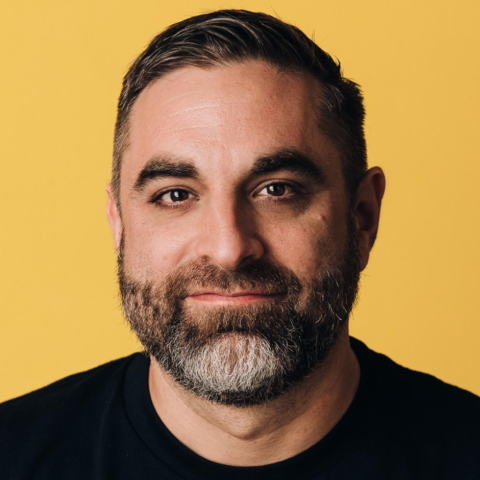
Scaling a business is often equated with rapid growth and increased productivity. While these are crucial elements, there’s a deeper, more nuanced aspect to consider: the human element.
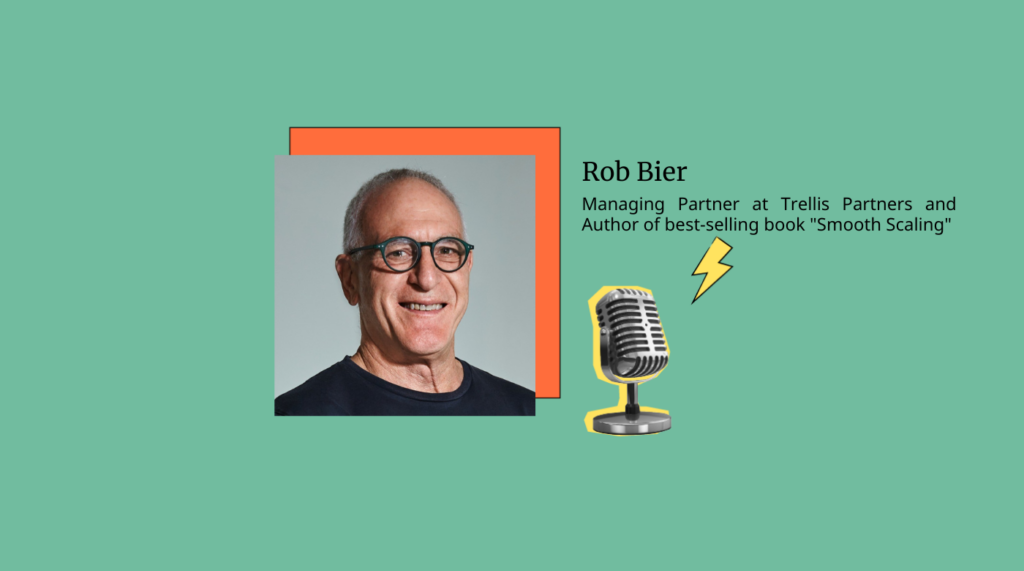
In this episode, host David Rice is joined by Rob Bier—Managing Partner at Trellis Partners and Author of best-selling book "Smooth Scaling"—to discuss the intricacies of creating a seamless, productive, and positive work environment.
Interview Highlights
- Meet Rob Bier [00:42]
- Rob has a diverse career background including engineering, consulting, venture capital, entrepreneurship, private equity, and operating partnerships.
- He has been advising and coaching founders and CEOs for the past 14 years.
- He wrote Smooth Scaling to help entrepreneurs avoid common mistakes he observed in his clients.
- Rob believes the challenges his clients faced were predictable and rooted in specific patterns.
- He aims to prevent entrepreneurs from repeating the same mistakes he made in his entrepreneurial journey.
- The Unified Framework for Organizational Culture [01:36]
- CEOs often prioritize "getting shit done" but also desire a thriving workplace.
- Existing models for productivity and employee happiness often conflict.
- Companies frequently oscillate between "getting shit done" and "feel good" initiatives.
- This inconsistency hinders company effectiveness.
- The key is to make employees happy to do the work, not just happy to come to work.
- Effective communication, teamwork, and conflict resolution boost both productivity and employee satisfaction.
- Focusing on these elements creates a unified culture that balances performance and employee well-being.
Don't make your employees happy to come to work. That's all the sweeteners. Make them happy to do the work.
Rob Bier
- The Challenge of Scaling Beyond 150 People [04:34]
- Humans can effectively maintain personal relationships with about 150 people (Dunbar's number).
- Communication and coordination are easier in smaller, co-located teams.
- Beyond 150 people, lack of personal relationships leads to misunderstandings and mistrust.
- This contributes to the formation of silos and tribalism within organizations.
- These issues often emerge earlier than expected, around 100-200 employees.
- The Power of Rituals in Organizations [07:06]
- Rituals are regular practices that become habitual.
- They can be applied to individual routines or organizational behaviors.
- Rituals help embed desired behaviors, making them accessible even under stress.
- Organizational rituals are similar to effectiveness training but focus on consistent application.
- They create a foundation for handling challenges and maintaining positive behaviors.
- The Evolving Role of the CEO [09:03]
- Early-stage founders focus on individual contribution and "getting shit done."
- As the company grows, founders transition to delegating and managing a team.
- This stage involves implementing structures like budgets, OKRs, and reviews.
- Eventually, the focus shifts from direct task involvement to building the organization.
- This requires a people-oriented mindset and indirect influence.
- The transition from task-oriented to organization-oriented leadership is challenging for many founders.
- Optimizing Meetings for Productivity and Positivity [11:58]
- Meetings can be valuable or wasteful depending on their purpose and execution.
- Focus on meetings that address important issues and drive progress.
- Effective meetings combine productivity and positivity.
- Productivity comes from addressing key challenges and making decisions.
- Positivity comes from respectful collaboration and building trust.
- Achieving both productivity and positivity creates a positive meeting culture.
You need to understand the purpose of meetings and the difference between a bad meeting and a great one. Once you have that clarity, then you can ensure meetings are used for high-value, high-impact topics.
Rob Bier
- Positivity, Productivity, and Effective Interactions [14:47]
- High-quality interactions are essential for achieving high productivity.
- Focus on understanding rather than debating when disagreements arise.
- Ask open-ended questions to understand the other person's perspective.
- Share your reasoning and be open to alternative viewpoints.
- Collaboratively develop a solution that incorporates the best of both ideas.
- This approach fosters learning, trust, and a sense of shared ownership.
- Avoid power-based decision-making, as it undermines collaboration and engagement.
- Effective meetings prioritize learning and shared problem-solving.
Meet Our Guest
Rob Bier is a seasoned expert in building high-performance organizations with over 25 years’ experience. He has supported over 40 scale-ups, including 8 that became unicorns or decacorns while he worked with them.
Rob is the author of the acclaimed 2024 best seller Smooth Scaling: 20 Rituals to Build a Friction-Free Organization. The book explains why many companies fail to scale, offering a clear diagnosis, along with twenty practical Rituals that boost performance and support frictionless growth.
Rob was a serial entrepreneur and venture capitalist prior to becoming an expert advisor on scaling. He has worked with over 40 companies, including 8 that became unicorns or decacorns during the time he worked with them. He is on the Board of Crypto.com and is a co-founder and Chairman of MoneySmart. Prior to becoming an entrepreneur he was an operating partner at TowerBrook Capital and a senior partner at Monitor Group, the strategy firm.
The best meetings are characterized by mutual learning: I learn from you, you learn from me, and together we develop better solutions.
Rob Bier
Related Links:
- Join the People Managing People Community
- Subscribe to the newsletter to get our latest articles and podcasts
- Connect with Rob on LinkedIn
- Check out Trellis Partners
- Smooth Scaling: 20 Rituals to Build a Friction-Free Organization
Related Articles And Podcasts:
- About the People Managing People podcast
- How To Lead Through Good Friction And Make Work Easier
- Workplace Trust, Why It’s Important And How To Build It
- People Management Tips All Managers Can Learn From
- How To Handle Awkward And Uncomfortable Conversations: What Every New Manager Should Know
- How To Lead A High-Growth Company
Read The Transcript:
We’re trying out transcribing our podcasts using a software program. Please forgive any typos as the bot isn’t correct 100% of the time.
Rob Bier: When you ritualize some of these very helpful and constructive behaviors, they become available even in the tough times, even in the stressful conversations. And that’s when you need them the most.
David Rice: Welcome to the People Managing People podcast. We’re on a mission to build a better world of work and to help you create happy, healthy and productive workplaces. I’m your host, David Rice.
My guest today is Rob Bier. He is the author of Smooth Scaling: 20 Rituals to Build a Friction-Free Organization. We’re going to be talking about the book and dive into some of the principles that drive smooth scaling.
So welcome, Rob!
Rob Bier: Thanks, David. Happy to be here.
David Rice: First off, tell us a little bit about you, you know, your career over the years, what led you to write Smooth Scaling?
Rob Bier: Yeah, so I’ve had a varied career, engineer, strategy consultant, venture capitalist, entrepreneur, private equity, operating partner, and for the last 14 years, advisor and coach to founders and CEOs.
What led me to write the book is very simple. I noticed that my clients were bumping into the same problem over and over again. And after a while I could see the pattern and it became fairly predictable, and I started to think about why that was. And I realized that it was in fact predictable and it had to do with certain things we can get into.
And so I wanted to help entrepreneurs avoid bumping into the same problem over and over again and making the same mistakes, by the way, all of which I made when I was an entrepreneur. So they were familiar to me.
David Rice: As we look at the book, you know, in the intro, you talk about how there’s this need for a unified framework and how there are essentially two types of orgs when it comes to philosophy on kind of how they see the org in its culture.
And we, one side is sort of sees the org as a machine and the other is seeing it kind of as a community. So why is it important to recognize this difference and take that into consideration when it comes to how organizations apply a framework like the one you’ve developed here?
Rob Bier: So I’d say there’s a few extreme CEOs who really are not very interested in what I would call the human side of their organization, but the majority are predominantly interested in getting shit done as they like to say, that’s kind of the mantra of many founders. And then at the same time, there’s another part of their brain that says like, yeah, but we need to build a thriving workplace and people should be happy and all that good stuff. And then they have an HR director coming and telling them what they should do to make people happy.
And the problem is that most models of how you get shit done and how you make people happy are fundamentally intention with each other. And that means that you can’t do both at the same time unless you are swimming in money and times are good. But as soon as times are bad and you miss your numbers or capital is tight, then you typically abandon the feel good factor and go back to getting shit done that leads to CEOs doing a lot of what I call flip flopping, right?
Times are good. We’ll have coaching and off sites and training and feel good factors and free lunches and times are bad and all that stuff goes away. That’s not a very effective way to run a company, but I completely understand because they’re fundamentally not convinced that the investment in those feel good factors is actually helping them to, to drive the business forward.
I think it’s all because of the wrong definition of what they should be doing when they make their employees feel good. And the way I summarize it is don’t make them happy to come to work. That’s all the sweeteners. Make them happy to do the work. And the question then becomes what is it that makes people happy to work?
And it turns out that it’s exactly the same thing as drives productivity, which is when you have a high performing team, when you’re cross functional processes and projects are well-aligned, when people communicate well, when there’s conflict resolution, when you have a good relationship with your boss, when all of those kind of basic communication protocols are really, really solid, that helps both to make sure that work gets done and the right work gets done and it makes people happy at work. And so then that tension is resolved and then you don’t have a flip flopping culture. You have a unified culture. So that’s my take.
David Rice: That’s interesting. I remember I read that book Sapiens a long time ago and then the author talks about how for humans, like once you get beyond 150 people within a group, you can no longer rely on personal communications or like gossip. You need something more to get people to actually work together.
And in chapter one of your book, you talk about why scaling is so hard, particularly after you pass a certain size. And I’m curious, is there sort of a number of personnel or a sort of size range where you feel like it?
Rob Bier: It’s exactly the same number. It’s 150 is the inflection point. And it’s also the famous Dunbar’s number. Robin Dunbar is an academic still practicing today. And Dunbar’s number is approximately the maximum number of personal relationships that one person can have at any one time. And so it’s partly that, it’s partly just the logistics of how many people you can bump into and communicate with regularly.
But yeah, when you have a 10 man organization, 10 person organization, I should say, especially if you’re all co-located, then it’s very easy to communicate, coordinate, align, debate, fall out with each other, go out for a beer and make up with each other, do all the things that organizations need to do. And that still works pretty well when you’re 60 or 100, especially, again, if you’re co-located.
Around 150, there are now large numbers of people that you don’t know, you don’t really have a personal relationship with. You may not really understand what their functions do or how their departments are supposed to operate or how they’re supposed to interact with you. And that introduces doubt into your mind.
And so now when somebody does something or says something that you find is not right or pisses you off, instead of giving them the benefit of the doubt because you know them and you have a relationship and you understand what their department does, you start jumping to other conclusions, not so healthy conclusions.
And this is the genesis of silos and tribalism. And all the things that it turns out organizations develop quite early, much earlier than you would expect. So I call this a early onset arthritis. You think that silos and all those problems are something that might afflict very large companies. But actually they typically start to hinder companies when they’re between 100 and 200 people.
David Rice: Rituals are a big topic in the book, obviously, you know, it’s part of the title. And how they have a great deal of power in helping people master and spread the behaviors that you want to see in the org, behaviors that sort of help prevent friction. So can you give us your definition of like rituals and talk a bit about the role these play in creating an environment where scaling is easier?
Rob Bier: Yeah, I mean, a ritual to me is very simple. It’s something that you practice maybe every day or every week regularly, not something that you do on an as needed basis. So going to the gym twice a week is a ritual. Or waking up and spending 15 minutes doing a yoga exercise is a ritual. And like most of those things, it takes a bit of discipline at the beginning.
And then as you get used to it, suddenly you find that it’s the most natural thing in the world and you don’t have to, doesn’t take any discipline. You get up and you want to do that 15-minute early morning yoga. So it’s the same in organizations. We’ve all been to training sessions where we’ve learned how to have the right kinds of behaviors and the problem is that those training sessions don’t stick. They work fine when the stakes are very low, but then as we forget or get stressed or there’s a high stakes debate, and all those good behaviors fall by the wayside and we revert back to the sort of, you know, gave people that we might be inside and we don’t want that.
And so when you ritualize some of these very helpful and constructive behaviors, they become available even in the tough times, even in the stressful conversations. And that’s when you need them the most. So these are not very complicated rituals. The basics are not dissimilar from what you might learn in other sort of organizational effectiveness type workshops.
But the difference is that, that we learn them in such a way that we can access them all the time.
David Rice: You talk about the role of the founder and can, how it evolves as the organization becomes bigger and bigger. And this is something that we see a lot with people that cover or talk to our sort of segment of the HR world. In your opinion, what is the biggest shift in terms of a CEO’s mindset that has to occur?
Rob Bier: So when you are a baby company and you have nothing, you don’t have resources or a running business, then whatever, whether you’re called CEO or not, your job is to get shit done. You’re essentially an individual contributor. So that is the mindset of the CEO. That is the culture of the organization. That is also the organizational model.
There may be 6 or 10 of us and we’re all just running around and getting shit done. And that works for a while. Maybe around 30, 40 people, we start to have a management team where you’re head of engineering and somebody else’s set of marketing and somebody else’s set of sales. And at that point, somebody comes along to the founder and says, Hey, you got to stop doing shit and delegate and empower these managers and run a more structured company.
And so I call that stage ‘making sure shit gets done’. And that’s typically when founders do take a step back and they start implementing budgets and OKRs and project reviews and business reviews. And that all works fine. That transition is relatively straightforward. Most founders make it successfully because it’s still very much a kind of left brain linear way of running a company. And they still feel very close to all the workflows and the projects. But at some point, that model breaks down. And the way I like to think about it is to run a simple thought experiment.
Imagine that you are Tim Cook running Apple. Is Tim Cook making sure shit gets done, running around, reviewing every project and product and business review? No, I mean, that would be ludicrous, right? So if he’s not doing that, what is he doing? And my answer is he’s building the organization that gets shit done.
And that is a big shift because it’s a shift from being task-oriented to people-oriented, from having a direct contact with all those projects and workstreams to having maybe something of an indirect contact. It’s a bit like flying by wire in the airplane world. And it takes a very different skillset as well.
So of course, these are not complete transformations. There’s always a bit of all three going on, but the fundamental shift is to step back from being task-oriented and to start becoming much more organizationally oriented and the best founders succeeded that but many need quite a lot of support.
David Rice: In the book you talk, there’s a little bit of a section about meeting, kind of cleaning them up or redesigning them. Meetings do tend to get out of hand, I think, for a lot of companies as they get more and more people on, right? How can you address meetings in your communications around culture and trying to keep things fairly streamlined, but as you grow?
Rob Bier: So I think before we get into the like mechanics of how you fix meeting, it’s important that people have the right mindset, because I think some people just say, Oh, meetings are bad. They’re a waste of time. And I think that’s wrong. And equally, we all know that meetings can be an enormous waste of time.
And so how do you reconcile those two? And I think the answer is you have to understand, first of all, what meetings are actually for and what is the difference between a bad meeting and a great meeting? And when you start to get that clear in your mind, which is part of what the book sets out, then you can start to make sure that those meetings are used for the high value, high power, high impact topics.
Like, how do we fix this problem? Or what should the product roadmap look like over the next 12 months? Or how do we deal with this competitive threat? And great meetings are very often the most productive part of our day. Bad meetings are the least productive. So the solution is neither to have more or less meetings, but to have better meetings.
So what is a good meeting? A good meeting is very simple. It’s a meeting in which we talk about our most important issues. That’s usually, by the way, not updates. Updates are important, but they’re not the most valuable use of meetings. The most useful, valuable use of meetings is to focus on our biggest issues, whatever that might be, and to make sure that we make good progress on those issues by having the right people, the right information, and the right quality of discussion and debate.
So that’s half of what a good meeting is. But the second half is essentially the people dynamic, cause if we have a great meeting and we get a lot done, but everybody interrupts you and every time you try to talk to people, say, David, don’t be stupid, that idea, you don’t understand how this company works.
You’re going to walk out feeling like, what the heck? I don’t want to work with this team anymore. And that’s not a very good outcome. So we also have to run the meetings in a way where people finish them and say, Oh, I like working with this team. I think we work well together. I’m starting to feel like we can really gel.
And when you hit both of those equations that I call productivity and positivity, we made good progress on our most important issues and we built trust and improved our teamwork as we went, then you get a very repeatable pattern and ultimately you get a flag wheel.
David Rice: I’m glad that you said the, the positivity and productivity thing. I thought it was great in the book. You said that these two things are inextricably intertwined. And I love that. And you go on to say, there’s a part where you said, I wrote it down. You can never achieve consistently high productivity for your company, unless your people have high quality interactions, which is where positivity is generated or destroyed.
What advice do you have for people to drive more high quality interactions and maintain positivity with them?
Rob Bier: Well, I mean, that’s a very big question because there are thousand situations and each might have a slightly different solution. But let’s take a very simple. If you say something that I strongly disagree on an important-ish, the natural temptation is for me to reload and fight back, David, that’s never going to work.
Let me give you 27 reasons why my idea is better. And my idea might be better, we don’t really know. But a much better response would be, David, I’m really struggling to understand why that idea makes sense to you. Help me to understand. Tell me how you arrived at that conclusion. What was the data you were looking at?
What analysis was compelling? And to really understand your point of view and then to ask you to really understand my point of view. And typically if you do that effectively, what you find is that there’s a best answer which sits somewhere in between, right? Which might have elements of your answers, not a compromise.
It’s a learning equation. It’s like, Oh, I didn’t agree with your conclusion, but I did learn some things about how you see the problem, maybe some constraints you were aware of that I wasn’t aware of. And maybe you saw something about my solution that makes sense to you. And then we piece together a solution that is better than yours and better than mine.
And because we do it together, we both feel good about it. Now that is a great model for me. A bad model for a meeting is one in which we get together to debate whether your idea is better or my idea is better. An even worse model is one in which we don’t have a debate, and I just decide because I’m the boss.
And then you might ask yourself, why are we having any meeting at all? And then you’re back at that, you know, meetings are a waste of time idea. But the best meetings are not. And the best meetings are characterized by learning, I learned from you, you learn from me and together we come up with better solutions.
David Rice: So before we go, there’s a couple of things first, I want to give you a chance to tell people more about, you know, where they can connect with you, find the book, you know, to learn what you’re doing.
Rob Bier: Sure. So you can find me on the web at robbier.com. You can find the book, Smooth Scaling, either on my website or at Amazon or any of the major booksellers. And if you’re interested in these ideas, I absolutely encourage you to drop me a note, love to chat.
David Rice: And the last thing, we have a little tradition here on the podcast, where you get to ask me a question. So turn it over to you, ask me anything you want.
Rob Bier: I love this. So David, what is the most interesting thing you’ve learned while doing this podcast that just like blew your mind?
David Rice: Yeah, I really just enjoyed the mindset shift for the leaders, because it’s something that I see all the time. Like actually I’ve belonged to multiple organizations where this is happening. And, you know, it’s the hardest thing when you’ve invested your whole life into something, and then you have to sort of let it go and start to delegate and give power to other people to make decisions.
That’s not the easiest thing for a lot of founders to do. So I just really enjoyed that part of the book. And then hearing you talk about it.
Rob Bier: By the way, thank you. And that’s very nice of you, but I actually meant the question differently. I didn’t mean in our podcast. I mean, all the interviews you’ve done. I wasn’t asking you whether I blew your mind, that would be very arrogant. Though, in all the podcast interviews you’ve done, what blew your mind the most, what just stuck with you as a really amazing insight?
David Rice: I’ve just had some really great conversations that are great conversation with a fellow about just AI and like where we are with it and where, you know, where it’s going to go. But like, nobody really knows. Everybody who says they know doesn’t know. That’s just a lie, you know. I mean, there’s just been a ton of great conversations.
I just did one with a woman about psychedelic therapy as a workplace benefit, like building it into your benefits package instead of, yeah, which is interesting because it’s like just such a different message for helping people in terms of mental health than anything that we would traditionally talk about.
Rob Bier: Well, David, that is literally mind blowing. That is going to work and have in your mind from HR passing out little tabs of LSD.
David Rice: Yeah. I mean, the way she was describing, you know, it is a very controlled thing. And as the person goes to a thing, it’s interesting. But it’s, it’s some, one of those things I was like, when I entered the workforce, I don’t think I ever thought that this would be a conversation.
Rob Bier: That’s hilarious. I love that.
David Rice: It’s a different time we’re living in, you know.
Rob Bier: Hello, this is Sheila from HR. We have your latest tap of LSD. Please come by and collect it.
David Rice: Well, Rob, I want to thank you for coming on. It was, this was good.
Rob Bier: It was a pleasure, David. Thank you so much.
David Rice: Alright listeners, if you want to keep up with all things HR, psychedelic therapies, whatever’s going on in the podcast, be sure to subscribe to our newsletter. You can go to peoplemanagingpeople.com/subscribe and get signed up.
And until next time, enjoy whatever life brings.