In a world where the dynamics of work environments are constantly evolving, the challenges of talent retention, remote work, and effective change management have become paramount for organizations.
In this episode, host David Rice is joined by Keri Ohlrich—CEO at Abbracci Group—to discuss these pressing issues and offer valuable insights into the current trends shaping the workplace.
Interview Highlights
- Insights from the Workplace Trends Report [00:47]
- Life decisions increasingly drive departures; individuals opt for career changes regardless of performance or stability.
- Challenges for managers arise from unpredictability, making retention harder to manage.
- Key reasons for departures include seeking more meaningful work and dissatisfaction with management.
- Return to office dynamics post-COVID emerged as a retention concern; some employees seek remote-friendly roles.
- Managers urged to prioritize listening to employees and offering meaningful work to enhance retention efforts.
- The Impact of Remote Work on Productivity and Management [03:46]
- Lack of adaptation to remote work by managers cited; emphasis on physical presence and micromanagement.
- Despite remote work not leading to productivity declines, some companies still push for a return to the office.
- CEO preference often drives return to office decisions; mandates for in-office days issued.
- Irony highlighted as employees return to office only to participate in virtual meetings.
- Leadership's insistence on office return is sometimes seen as out of touch or misinformed.
- Keri presents a provocative perspective on CEOs' preference for office work, emphasizing the perks of office life.
- CEOs, often male, enjoy a privileged and structured environment in the office, contrasting with the distractions and domestic responsibilities of home life.
- Navigating the Talent Market's Volatility and Skills Gap [07:17]
- Keri acknowledges the cyclic nature of talent market challenges, citing examples of previous periods of job shortages.
- She highlights two main issues contributing to the difficulty in filling job openings: a lack of specific skill sets and a deficit in soft skills such as collaboration and critical thinking.
- Automation is mentioned as a factor, with individuals needing to possess adaptable skills beyond those easily automated.
- Keri emphasizes the importance of soft skills in today's job market, suggesting that education systems may not adequately prepare individuals in these areas.
- She expresses sympathy for specialists like chemists while stressing the importance of broader skills like collaboration and problem-solving in the modern workplace.
With automation, you can automate payroll and benefits. However, if that's the extent of your skill set, you risk being replaced by automation. It's essential to develop the ability to tackle various projects, solve problems, and collaborate creatively.
Keri Ohlrich
- The Importance of Apprenticeships and Practical Skills [11:09]
- Keri reflects on her past research on apprenticeship programs, comparing systems in Germany, Singapore, Malaysia, and the United States.
- She notes the significant portion of the population not pursuing college degrees and the lack of support or alternatives for them.
- Keri mentions the disappearance of vocational programs in American high schools, leaving fewer options for students who opt out of traditional academic paths.
- Keri suggests that time and strategy are key issues, as companies may have intentions to hire based on skills but face constraints due to time and strategic pressures.
- She highlights how business needs can sometimes override the desire to hire based on skills, leading to compromises in hiring decisions.
- Keri shares an anecdote about a manager emphasizing the importance of hiring no talent over bad talent.
- She stresses the importance of having a clear hiring strategy focused on skills and sticking to it, despite market pressures and challenges.
Right now, having no talent is better than having bad talent. Sometimes we forget this and continue hiring based on the wrong criteria.
Keri Ohlrich
- Learning and Development: Manager Training and Employee Well-being [14:47]
- Keri emphasizes the importance of manager training in L&D, particularly in remote management and empathetic leadership skills.
- She highlights the need for human-centric leadership qualities like empathy, adaptability, and active listening, which are often lacking in traditional education.
- Keri suggests that L&D departments should focus on enhancing managers' skills to improve employee retention and organizational effectiveness.
- Additionally, she advocates for L&D initiatives addressing employee well-being and mental health, acknowledging the ongoing crisis in this area.
- Critical thinking, problem-solving, and collaboration are also mentioned as essential skills, but Keri emphasizes the foundational role of manager training in driving organizational improvement.
- She points out the challenges of checking in with remote employees and the need for managers to adapt by being more proactive and intrusive.
- Keri mentions the potential for employees to feel uncomfortable with increased interaction from managers in virtual settings.
- The Role of Data and Analytics in HR Practices [18:51]
- Keri suggests a divide between larger companies with robust analytics capabilities and smaller organizations struggling to implement and utilize HRIS platforms and analytics.
- She provides examples of larger companies like Google and Apple leveraging analytics effectively to predict retention risks.
- Keri highlights the challenges faced by smaller companies in acquiring and funding HRIS platforms and finding personnel skilled in data analytics.
- She refrains from giving a specific grade but implies that HR's data health may not be ideal, particularly for smaller organizations.
- Keri empathizes with HR professionals, acknowledging the overwhelming demands of managing day-to-day tasks alongside the pressure to excel in analytics.
- Change Management and the Future of HR [23:05]
- Keri emphasizes the importance of taking time to craft and communicate the message behind change initiatives, a challenge exacerbated by the fast-paced nature of modern business.
- She notes the difficulty in slowing down the implementation process to ensure alignment and buy-in from stakeholders.
- Despite recognizing the importance of giving time for change management, Keri acknowledges the pressure to meet deadlines and launch initiatives quickly.
- She emphasizes the need for HR to find ways to slow down the process, allowing for proper alignment and consideration, even though it's challenging given time constraints.
Meet Our Guest
With 20+ years on the front lines of the HR field, it’s safe to say that Dr. Keri Ohlrich is considered an expert. As co-founder of Abbracci Group and the co-author of The Way of the HR Warrior, she continues her mission to share insights from these experiences with others whose passion is to be the best in the HR arena.
Along with fellow Abbracci Group co-founder Kelly Guenther, Keri co-hosts The Breakout podcast to get advice and insights from change experts, and dive into the stories of people who have busted out of life’s stifling boxes and shifted their lives into bold new territory.
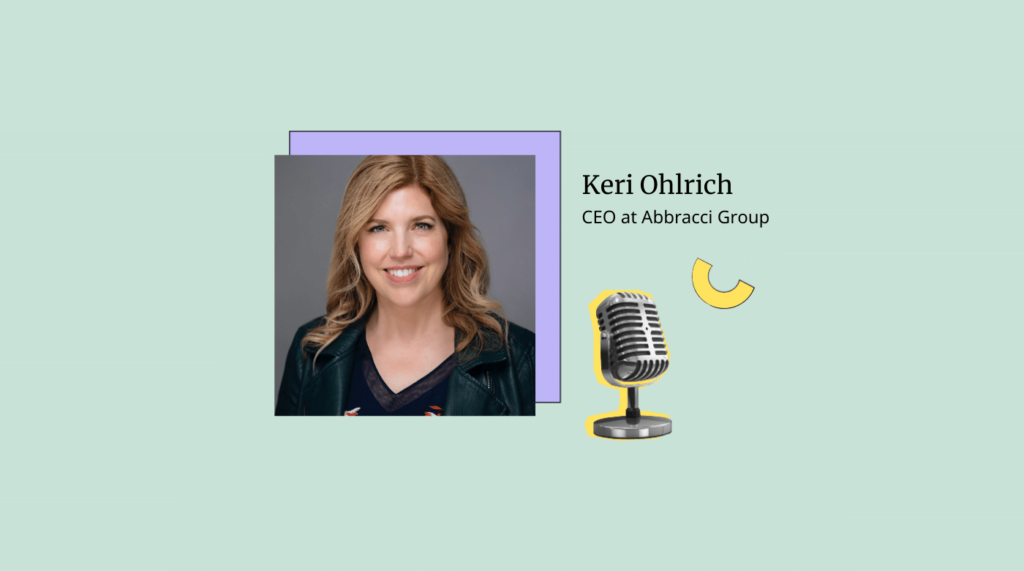
For effective change management, you need some time to figure out the message and the reasons behind it.
Keri Ohlrich
Related Links:
- Join the People Managing People Community
- Subscribe to the newsletter to get our latest articles and podcasts
- Connect with Keri on LinkedIn
- Check out Abbracci Group
Related articles and podcasts:
Read The Transcript:
We’re trying out transcribing our podcasts using a software program. Please forgive any typos as the bot isn’t correct 100% of the time.
Keri Ohlrich: What you need to then be able to do is jump into any project, figure out how to solve problems, be creative, be collaborative. And I think what’s happening is they can’t find that either.
David Rice: Welcome to the People Managing People podcast. We’re on a mission to build a better world of work and to help you create happy, healthy, and productive workplaces. I’m your host, David Rice.
My guest today is Keri Olrich. She is a CEO and co-founder of the Abbracci Group. Keri has been on the show before so I won’t take up a bunch of time introducing her. If you want to check that episode out, it came out last May. It’s titled “The True Role of HR Leaders and How to Make an Impact”. Be sure to go back and give that a listen and get to know more about Keri.
What we’re going to do on today’s show is share with you a conversation I have with Keri about our recent trends report. We’re not digging into the data from the report specifically, but the questions I’m going to ask Keri today come out of the insights gleaned from that report. If you want to read the full report, you can download it by heading on over to peoplemanagingpeople.com/workplacetrends2024.
So without further ado, we’ll just jump right into it.
All right. So I wanted to start by asking, you know, we hear leaders saying that talent retention isn’t as big of an issue this year. It doesn’t feel like a lot of people are staying put, but to a certain extent, I think retention is always a challenge, right, in industries where you’ve had a lot of instability recently, that can kind of cause people to want to move around. I think tech, for example. What are you seeing in the companies that you work with and what do you think the most important things driving retention are right now?
Keri Ohlrich: So you mentioned retention with clients and what am I seeing? And it’s interesting because I always think retention’s a big deal. It’s not like you can never not look at it, right? You can never not think about it. I think what I’ve seen, maybe people thought David, it was a little more predictable, but like, okay, it’s a recession or the economy or it’s bonus time and people will leave and there’s kind of a natural order to it.
What I’ve seen around retention is more of life decisions like, you can’t even predict it. It’s just someone saying, you know, I’m a high performer and I like it, but guess what, I don’t want to do this anymore. I’ve made a decision to leave. I have made a decision to do something else with my life. So I think it’s the nature of unpredictability.
And trying to stay on top of it is really hard for managers. It’s not a, just a nice cycle anymore. And people just make these decisions that I don’t want to do this career anymore. I don’t want to be in this race, the proverbial rat race anymore. That’s what I’m seeing and they just can’t predict it. And then why people are leaving when they do leave, what I hear that the organization can work on, cause there’s life decisions that I just make a life decision that I’m going to be a cupcake maker and I’m just gonna forego, like all of corporate.
But what people want is a manager who listens to them. I mean, it’s just like, I feel sometimes like a broken record, right? The manager wants to care about me. I’m like, the work is meaningful. It’s the same kind of stuff. I feel like we’ve been saying it for years, but I think people really, especially after COVID are really feeling it.
And we just heard feedback at a client where the manager doesn’t listen well. So they’re like, yeah, I don’t think you care about the work that I do. So I’ll go find somewhere else. And also one more, David, the return to work. And so I do think some people got really used to staying home and they might be going into the office because they have to, but they are waiting to find a job that they don’t have to do that.
They are not excited about it. So I think that is an underlying retention issue that managers need to think about.
David Rice: Yeah. That’s interesting cause like, I keep coming back to this idea of like, what is it that’s driving where this death of remote work thing in some companies, right? And I think I always come back to it.
It’s you didn’t learn how to like manage differently is really what it comes down to in a lot of cases that I’ve seen. Like they never really got used to the idea of not having butts and seats and being able to look over people’s shoulders and they never changed the way that they measured productivity.
Keri Ohlrich: No, and what’s so interesting too, is that the productivity in some cases got better. Like it wasn’t even, we didn’t see dips. We didn’t like wheels didn’t come off the bus. Like it wasn’t the horrible thing that people predicted and yet they still go back. And I remember someone said it’s really at the behest of the CEO.
So if the CEO wants people in because they think it’s important, then they go back in. There’s certain ones, of course, like you’re a bank and I’m customer facing and I get that, but there’s a lot where people said, no, it’s just better if we come in. And so they’re doing these mandates like three days a week.
And what’s so sad about some of it is people go in and they’re just on team meetings or they’re on Zoom calls in a cube. And they’re like, why am I here? Which unfortunately that hurts leadership because then leadership looks kind of foolish when they’re like, everyone come in so we can collaborate, which is good.
Like I don’t mind going to the office for something that’s really good reason, right? If you and I have to create, write a book together, that would be really cool if we were together in a room for a while. But if I’m just going into the office and leadership tells me to go into the office so we can collaborate, but everyone’s sitting in cubes on Zoom calls, then it makes leadership kind of look silly, like they don’t know what’s going on.
So it’s tough, but I feel like it’s more the personalities of the leadership that are like, yeah, we should, I miss people. I want to come in. And then I will say, so this is a hot take. This is what my business partner, Kelly, and I talk about it quite a bit is that, so let’s look at the, and I know people, man, two people did an article, Fin did the article on what does CEOs look like, right?
So we know that it tends to be male. I try to say they, but I know that it’s mainly men. And if you’re a man who’s been a CEO, think of when you go into the office, how lovely your life is. Now I’m not saying you have work, but you have a lot of people waiting on you. You have someone bringing you lunch, like your entire day is planned out.
You just kind of move from room to room. Here’s what you don’t deal with. You don’t deal with the dog barking. You don’t deal with a delivery person. You don’t deal with, Oh, you’re home, can you pick up the kid? Dude, deal with none of that? It’s like a beautiful world when you go into the office, if you’re a CEO.
So why wouldn’t you want that? Like, why do you want to unload the dishwasher between a meeting? Or do laundry or like answer the door? So joke that quite a bit could be, man, it’s I’m treated much better in the office. I’m just dad at home or husband at home, but in the office, I’m a CEO.
David Rice: This is a good point. I hadn’t really considered this before, but I think you’re on to something there.
Keri Ohlrich: I mean, think about it. At home, you’re just like, no one cares. No one, your kids don’t care. Your wife or husband doesn’t care. You’re a CEO, but at work, you got, so you might want to go back.
David Rice: That’s true. You’re very special at the office.
Keri Ohlrich: Exactly. You’re not special at home at all. Sorry, everyone. Yeah.
David Rice: So it seems like we’re in this weird place, like a lot of job seekers, they’re out there saying, you know, they’re having trouble finding something or the jobs aren’t plentiful, you know. And then we hear from execs and hiring teams that we talked to that they’re having trouble finding the right people and then having trouble retaining them despite a large volume of job seekers being out there.
So I guess my instinct is that kind of shows the beginning of a shift in what skills are needed. I don’t know if that’s true or not, but that’s kind of, I’m wondering is like, is that the main challenge and companies are just having trouble finding people who can do what they need done? I’m curious, what do you think about this and sort of like the general talent market volatility right now?
Keri Ohlrich: Yeah, it’s interesting because again, there’s so many cycles that kind of come back, right? So we’ve been in this before we had too many jobs and not enough people and for various reasons. And so, what I’ve seen though, because I’m at a client and they have like 70 job openings, they’re having such a hard time filling.
And part of it is we don’t have the necessary skill set, meaning like there’s just not enough, like, let’s say receptionists that are out there. Like, so there are some jobs that there isn’t enough skilled people, but there’s also a part where they just aren’t good culture fits and they don’t have the collaborative skills or the critical thinking skills.
Because there are, you can start to automate. And what you find with automation, we’ve talked about this in the human resources space of, okay, so I can automate your payroll. I can automate your benefits. And if that is all you know, it’s a very specific skill set. You will get replaced by automation. What you need to then be able to do is jump into any project, figure out how to solve problems, be creative, be collaborative.
And I think what’s happening is they can’t find that either, right? So there might be a dearth of that specific skillset, but then they also can’t someone who can think their way out of things if things get replaced or the process gets more streamlined. And I think they’re really struggling with that as well.
So it’s always been hard to find talent, but I think now you really need those soft skills. And I mean, think about it. We don’t really teach that. I have a high school or so sorry. I say this all the time. I’m so sorry to the chemistry people out there. It’s an important for chemist. But I don’t know how important it is for my son to know chemistry versus how to collaborate, how to critically think, how to problem solve, how to do really good research on the internet, how to like know different sites that are good and bad and like what is like real research versus fake.
That’s really important and to him, understand how to balance equation for chemistry. Sorry. So I think we’re not doing the best job of, I know I just feel bad for chemists cause I like them. And I loved chemistry class by the way, in college. But how are we preparing? And I think we see it then when we get to business that they might know how to, you know, do something on social media or whatever, but then to actually collaborate and figure out and problem solve, that’s really tough.
David Rice: How do you think about back in school and like all the things that we did that like I had to have no application now.
Keri Ohlrich: No, we could talk all about the educational system, but there is like, how are we preparing people? And then of course, in business, we see it, see that you’re not as prepared. And so, and I know you’ve talked about people managing people like skills based and degrees and things like that.
And if we don’t have many people getting degrees and they’re coming right out of high school, they’re missing this whole section of how to think and how to work and it’s really tough. And it’s not going to be helpful if you know the chemical formula for sodium, blah, blah. Look at that. That’s, that was some good chemistry back right there, David.
Sodium, blah, blah. But we see the tail end of it because people aren’t prepared.
David Rice: Yeah, one of the first shows I did when I took over the podcast was about apprenticeships. And I think it’s something like when you really need to get more serious about in this country, not necessarily up to the businesses themselves to do it, but it needs to be more common, whatever certifying body needs to do this. Because to bridge that gap, you know, and to get everybody where they need to be for their eventual career.
Keri Ohlrich: Yeah. I wrote my master’s thesis on way back in like late mid nineties, late nineties maybe. And it was about those apprenticeship programs in Germany versus like Singapore, Malaysia and America. Cause we don’t have, what is it like less than 30% get a college degree I think. And I don’t know the stats now.
It was like 25. It’s probably a little bit higher now, but that’s an entire part of the population that we’re not helping and we’re not figuring out what they do. And I don’t know about you, but like my high school, they had some programs that you could go do some more, like they had very typical hair and mechanics, but at least you had something if you didn’t want to go to school, right? You could go do something else. And for us now, I think most of those programs are gone in the States. So, like, what do you do?
David Rice: Yeah.
Keri Ohlrich: It’s tough.
David Rice: Yeah. I don’t even know if they have shop anymore, know, like, at school.
Keri Ohlrich: I don’t, I mean, I haven’t heard many parents talk about it and I know at our school they don’t. And like, you got to make that napkin holder out of wood. Do you know what I mean? Like, come on now. Every family had like a napkin holder that your kid made.
David Rice: When we talk about things like problem solving, having those experiences of like having to figure out how to put this together, that’s at a root level.
Keri Ohlrich: That’s problem solving.
David Rice: Yeah. That’s interesting. We know from our 2024 trends report that a lot of organizations are thinking about a move towards being skills-based, right? And I’m curious because this isn’t necessarily a new thing, but companies haven’t made a ton of progress on it, I wouldn’t say, based on what the job market looks like.
What is the biggest challenge to this? I’m curious, and what are some of the things that companies who are doing well on it get right?
Keri Ohlrich: You know, it’s funny. I was thinking about this and I think sometimes, time and strategy are issued, right? So you might have this strategy of like, you know what, I really do want to hire a problem solver and I do want to hire collaboration and maybe the skill set, like maybe they don’t have the exact degree or the skills, but I have time to nurture it and out, right?
So you think that, and then something happens in your business and you’re like, Oh my God, you know what? We have to get this person with this exact, and maybe they’re not a culture fit doesn’t matter, but we need this. And so I think sometimes what happens is we have these ideas to be skills and hire maybe differently and then time and strategy hit us and we can’t do it because we’re under time compression and so then we just kind of hire anyone.
And one of my buddies said, her manager said to her, no breath is better than bad breath. And I was like, okay, the only salespeople would talk like that. I love that. But it was like, no talent is better than bad talent right now. And so I think sometimes we forget that, and so we keep hiring based on the wrong things.
And so to really think you have to have a strategy of what skills do you need, and you really have to be thoughtful instead of a check the box, like, you know what? If they had like a bachelor’s, they’ll be fine. And I’m sure it’s great. And you don’t really think. So you have to have a strategy. You have to stick to the strategy and you can’t get like put off by weird things that happen in the market, which is really tough.
Like it’s perfect scenario stuff and it’s really hard. And then you just get desperate because you need someone and then you put them in there.
David Rice: A number of HR leaders tell us that they’re feeling really positive and about their learning and development efforts and where it’s going in the next year, which is interesting because oftentimes their perception of it doesn’t always match what employees think.
But, so I’ll be curious to see like what the data shows on that. But what are some of the areas where you think L&D is going to really have a big impact and where does it need to make its biggest improvements?
Keri Ohlrich: I think for manager training, I’ll keep harping on manager training. And you mentioned like, did we train managers how to be remote managers, how to empathically listen?
And there’s this great article a couple of years ago on being a human leader, like really leading with empathy and being adaptable and listening. Those skills are so important as we just joked, not really a joke, but they don’t really teach that in school either. So it could be, does even hearing the word active listening could be the first time you hear it at work.
You didn’t hear it at school, probably. And so I think L&D departments that help the manager, and then I also think helping the well-being of the employees, I think a lot more like, well-being mental health, there’s such a crisis still is. And so how can learning departments help with the employees navigating their lives as well, I think would be really important.
And any of those critical thinking, problem solving, collaboration, all that’s great too. But I think it starts with the managers because that gets back to your retention and how we hire. And if you get them stronger, then the rest of the organization helps can get better as well.
David Rice: Absolutely. And I even just like helping managers with like performance management in this, you know, virtual setting, right? Like it’s sounds like it should be easy enough. But there are like little quirks to it, and I think employee perception changes, and we don’t always account for that, you know.
Keri Ohlrich: Yeah, and it’s really hard because if I’m a manager who, like, doesn’t want to, like, get too involved with you, it’s easier if I see you. Because I’m like, David’s working, I can see him. First of all, you might not be working, you could be staring at your computer the whole time, but like, for some reason, if I see you, then I think you’re working. When it’s virtual, then, like I really don’t know.
And then I don’t know how to check in with you. Like, there’s just a lot of skills that I have to be a little more intrusive. I have to like, say hi and people get, there’s some weird stuff. People get all off put by why are you saying hi to me? So yeah, those are hard skills for managers.
David Rice: Yeah. You know, it’s funny. You bring up just stare at the computer. I think about when I worked in an office, all the creative ways we found to slack off.
Keri Ohlrich: And I feel like people have forgotten that. And they think like, Oh yeah, we’ll come into the office and work. I’m like, do you remember people would like find conference rooms or have meetings or like…
David Rice: Meetings about nothing.
Keri Ohlrich: Right. We found someone in conference room sleeping. Like they booked the conference room and we like opened the door and they were just taking a nap. I’m like, okay. And so kind of forgot about that. Right? And then you think like virtually and more people, I mean, I don’t know the stories you hear virtual, like they get up, they’re working.
I mean, I know there are some people, but who don’t work as much, but a lot of virtual people work harder because they don’t have a commute. They don’t have it and they just keep working. So no, we found a lot of ways to not work in an office.
David Rice: I remember I worked one place and we had a big campus and people would take like four and five walks a day. It was like, just take the whole route of the campus. You know, we’re like, I mean, there’s getting up from your desk and moving around, but like this is reaching a point now where we’re like…
Keri Ohlrich: We never got really three hours, yeah, that’s like…
David Rice: Yeah. You’ve been on walks for like three and a half hours today. It’s a big issue.
Keri Ohlrich: And then you could just say like, well, that’s my well-being. That was like, it’s like, well, I’m not sure 50% of your job should be well-being. That’s maybe a little too much, but yeah, we wasted a ton of time in offices. Like we, I mean, waste a lot of time. So anyway, but that was a good point. Thank you, David.
David Rice: Data and analytics, obviously, you know, they’re going to continue to play a big role in what comes next for HR. And it showed up in our trends report when we asked people, like, you know, what are you thinking about a lot?
And how do you feel about the sort of analytics practices that you’re seeing from companies that you work with? If you had to give HR sort of a grade on its data health, what would it be?
Keri Ohlrich: Oh, I don’t know if I want to give HR a grade. We already get, like, crapped out all the time, David. But I almost think it’s a tale of two different kinds of companies, right?
So you have a bigger company that has a huge HR department and has a lot of data and has a good HRIS platform or something, and they can really start. So these are the stories we hear from Google and Apple and they’re like, did you know when people start canceling meetings, you know, through our analytics, you start canceling means that means you’re going to be a term, you know, you’re a retention risk.
And I’m like, okay, that’s beautiful for Google to study that because they have the ability. So I feel like there’s the tale of the bigger companies and have analytics. Then there’s the tale of almost everyonelse, who they’re just struggling to get a system, like to get an ATS, applicant tracking system, to get a good HRIS system.
And then when you have that or HRIS platform, once you have that, then you have to find someone who wants to do the data analytics, which by the way, most people go into HR, not because they like stats. So you got to find that person, you got to fund that. And they’re like, no, we’re not going to fund that.
So I think we’re, I’m not going to give a grade, but it probably wouldn’t be a wonderful grade. Let’s put it that way, unless you’re a big company. And I think I feel for HR because people are like, Oh, what analytics are you using? And then you just start to feel like, Oh my God, like I can’t even figure out this part of the process right now.
And we’re stuck and managers won’t even enter, you know, X, Y, Z data or they won’t do their performance evaluations on time. We’re not even, and like, I have a ton of employee relations issues because even though we’re all virtual, we still have it. Like, we still have people having issues over the phone with each other.
Do you know what I mean? Like, so I’m bogged down in that and then I’m now supposed to be like an analytical wizard.
David Rice: Right.
Keri Ohlrich: So I didn’t…
David Rice: Oh, no. I was just saying like, it was funny. I was talking to one of our other editors and he runs a website for chief marketing officers and we were talking about, it was what we were talking about is like data.
Right? And I’m thinking about it. I was like, you know, HR has got kind of a similar issue in a lot of companies with a lot of media companies have in that, like you have a lot of data. But it’s running through, like, all these different systems. It doesn’t always jive. It oftentimes doesn’t make any sense. I can’t really know what I’m supposed to do with it.
So it’s very similar challenge to, like, what a lot of marketing teams face in a way.
Keri Ohlrich: Yeah. And then also there’s some privacy concerns. So I know at a client, they told me that they can get a feel of teams calls. And so like, if voices are going up or people are swearing or something like that, so they can get like a vibe report and, right? So…
David Rice: I’m cringing a little bit for those of you listening to this.
Keri Ohlrich: Yeah. Yeah. That’s the right that I said, like, right? That’s the current. And even like Google see when you cancel meetings and things like that, like there’s this privacy concern too. And I know we have no privacy at work and I know the business owns like all my emails.
Like I get that, but then kind of reading my vibe in a team meeting and what if we just want to blow off steam and just have fun and just be like, I can’t believe this is happening. And then it gets read as, well, I think we have retention issues now because people seem to be hostile on the teams meeting. Do you already like, Oh…
David Rice: Can I just be a human being, you know, and I have an experience and then like it’s maybe it’s not going to cause me to quit my job.
Keri Ohlrich: Right. It’s not, because you know what, I’m not going to quit my job because I had someone to talk to, to go, Oh my God, this is bananas cuckoo. I can’t believe we’re doing this.
And I had a friend at work, I could say that, and then I’m done. Versus I don’t have anyone. I have no outlet. That’s when I quit. But yeah. So there’s this whole privacy thing with HR too, that, that makes analytics, I think a little more complex for HR.
David Rice: I would definitely agree with that. Change management, obviously, as we go through the next few years, right, with all the different how much jobs are changing technology implementations. It’s going to be a big component in all this for HR. I’m curious what you feel is, you know, HR, people, operations, whatever people want to call it.
What’s the biggest challenge in driving change management right now? Like is it this sort of uncertainty about what comes next or is it tied to HR maybe not being a top priority for the business? There’s so many different things that kind of play into it.
Keri Ohlrich: There’s so many things, but I’ll go back to my like prime, do you know what I mean? Like for good change management, you need at least some time to figure out what’s the message and why we’re doing it. And we’re moving so fast that to slow down the executives or the team, whoever’s the leader of it to say, you know what, David, why are we doing this?
And what’s the, what is the driver? And like, let’s make sure we can get people on board before we implement it. That was always tough in the, even before, oh my God, before the internet, I sound like I’m a hundred years old, but like, that was always tough. Right? I mean, that was always tough to do that.
The fact that we move so quickly and the fact that we have different multitasking and we have people like diverting their attention to all these other things, to get people to hear that message, to keep saying the message and to get people on board before you actually implement it is incredibly difficult.
And I say this and then when I go to implement, I still know that I don’t have enough time. Like, do you know what I mean? I’m like, ah, let’s just hurry up and do it. Do you know what I mean? And so I even violate what I’m telling people right now. I get it because you’re under time pressure. Like it’s gotta be, you gotta launch it by April 5th.
And you’re like, okay, there goes change management. So I think we’re just seeing such a quickness and messaging and how to get people aligned. So I think HR, how can we get people to slow down and get aligned on things and give time to percolate. And again, super difficult. I’m not saying that I do it well, but we need to do it.
David Rice: All right. Well, that was all the questions I have for you today. I appreciate you coming on.