

Your Best Candidate Might Have The Worst Resume
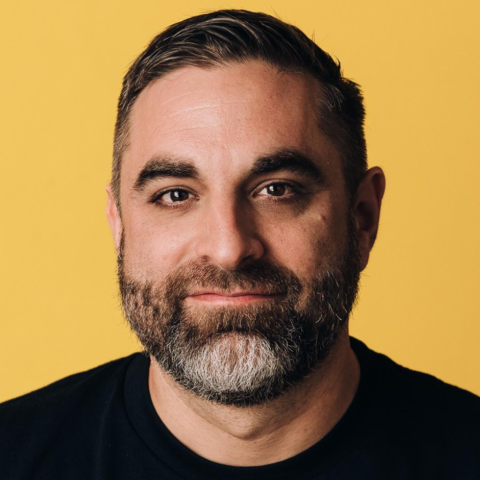

Resumes still matter—but not for the reasons we think. In a world where AI can polish anyone’s experience into a compelling narrative, the traditional hiring signals many organizations have relied on are losing their value. Heather Krueger, Chief People Officer at Engine, joins David Rice to explore what comes next when a polished resume becomes proof of tool usage rather than proof of talent.
Their conversation challenges hiring leaders to rethink where and how they evaluate candidates, shifting from credentials and company logos toward judgment, learning velocity, resilience, and real-world decision-making. They also unpack why pedigree is often an expensive shortcut, how experimentation should influence both hiring and leadership, and what actually predicts success in an AI-driven workplace.

What You’ll Learn
- Why AI is changing the value of resumes—and what should replace them.
- How to redesign hiring processes to surface proof of talent earlier.
- Better interview techniques that uncover judgment, curiosity, and adaptability.
- Why learning velocity matters more than credentials in rapidly changing roles.
- How to distinguish builders from candidates attracted primarily by brand or compensation.
- What leadership looks like in organizations built around experimentation rather than certainty.
Key Takeaways
- AI has made polished resumes the baseline—not the differentiator.
A resume now demonstrates that a candidate can effectively use widely available tools. The real challenge is uncovering evidence of how they think, solve problems, and create impact beyond what’s written on paper. - Move proof of talent to the beginning of the hiring process.
Instead of relying solely on interviews, introduce lightweight work samples, asynchronous prompts, portfolios, or practical exercises earlier to evaluate real capability before candidates reach later stages. - Ask “how” and “why” instead of “what.”
Questions about outcomes are increasingly easy to rehearse. The richer insights come from exploring how someone made decisions under uncertainty, why they chose a particular path, and what trade-offs shaped their thinking. Asking difficult questions multiple ways often reveals far more than accepting polished first responses. - Great interviews create productive discomfort.
Introducing respectful pushback or challenging assumptions during an interview reveals how candidates process feedback, navigate disagreement, and recover under pressure—signals that are difficult to fake and highly relevant in collaborative environments. - Hire for learning velocity, not static expertise.
With core job skills evolving rapidly, yesterday’s expertise depreciates faster than ever. Curiosity, adaptability, resilience, and the ability to continuously learn increasingly outweigh years of experience or certifications. - Company logos provide context—not proof.
Pedigree can offer useful background, but timing and circumstance matter far more. Someone who helped build through difficult periods often brings different capabilities than someone who joined after success was already established. Even then, experience alone doesn’t guarantee they’re ready—or eager—to do it again. - Experimentation starts with leadership.
Organizations can’t claim to value experimentation if leaders present certainty at all costs. The strongest leaders model learning publicly, acknowledge mistakes, and create psychological safety by demonstrating that uncertainty is part of building something meaningful.
Chapters
- 00:00 – Resumes vs. Reality
- 02:20 – Proof of Talent
- 06:10 – Better Interview Questions
- 10:33 – Smarter Assessments
- 13:00 – Hiring for Potential
- 18:12 – Testing Resilience
- 22:44 – Culture Fit
- 27:45 – Leading Through Uncertainty
- 33:38 – The Pedigree Trap
- 39:16 – The Person, Not the Logo
Meet Our Guest

Heather Krueger is the Chief People Officer at Engine, where she leads the company’s people strategy, talent development, and organizational growth during a period of rapid expansion. Previously, she served as Head of Talent Density at Coinbase, bringing extensive experience building high-performing teams and scaling people operations across fast-growing technology companies. Passionate about creating high-performance cultures, Heather specializes in leadership development, talent strategy, and leveraging AI to enhance employee impact while fostering an exceptional workplace experience.
Related Links:
- Join the People Managing People Community
- Subscribe to the newsletter to get our latest articles and podcasts
- Connect with Heather on LinkedIn
- Visit Engine
Related articles and podcasts:
David Rice: Heather Krueger doesn't look at resumes anymore. Everything looks polished now, thanks to AI. It can surface insights, add context, make anyone's experience sound compelling. The resume tells you someone can use the same tools available to everyone else. It's proof of presence, not proof of talent.
Heather is Head of People at Engine, and on today's show, she and I are unpacking what happens when the signals we've trusted for years become unreliable. Because if what's on paper is increasingly manufactured, you have to move proof of talent earlier in the process, not at the interview stage, but at the application stage. Most hiring processes are built to filter people out, answer the clear questions, check the boxes on paper. But when everyone can tell a great story now, those questions don't work anymore.
What did you do? What was the outcome? Those are backward-looking questions. And AI can help anyone prepare compelling answers. The harder questions are how you made a decision under pressure with incomplete information when the right answer wasn't obvious, why you pushed, what hill you chose to die on, and why you chose to not die on another.
Heather doesn't look for title history or company history on LinkedIn. She looks at who people follow, what they post, what they like, who they engage with, because that tells you how someone thinks, whether they're culturally aligned. Sort of the professional version of you are who your friends are. In the past, pedigree felt safe.
You could assume someone from a big logo company has seen what good looks like. But timing matters. When were they there? What were they actually doing? Because joining after a company's big break is not the same as suffering through the chaos. And even when someone was genuinely there during the hard times, having done it before doesn't mean they have the appetite to do it again.
The logo is context, the person is the hire. So today, we're going to cover why resumes are proof of presence, not proof of talent, how to redesign hiring to surface talent at the application stage, the power of asking hard questions three different ways, why pedigree is an expensive shortcut, and what LinkedIn behavior reveals that resumes can't.
I'm David Rice. This is People Managing People. And if you're still relying on polished resumes and big logos to make hiring decisions, this conversation shows you what signals matter right now. Let's get into it.
All right. Well, Heather, welcome to the show. It's good to have you.
Heather Krueger: Happy to be here.
David Rice: We were talking before this a little bit, you know, getting kind of prepared for where we would take this conversation, and you said something that stuck with me.
You don't even look at resumes anymore because everything looks so polished now. And I'm curious, you know, if that signal is effectively broken, what are we replacing it with in reality? I know what some people say they're replacing it with, but.
Heather Krueger: First, I want to acknowledge it's a bit of a privilege for me to say I don't look at resumes because the reality is they've been already reviewed, they've been screened and questioned before a candidate ever gets to me.
So I don't know if the resumes are completely irrelevant. What I am saying is they are the bare minimum, and they're, I think in this day and age, the price of admission. They're not the differentiator anymore. Now, AI, as you know, can and, and should honestly polish your resume, contact surface insights.
And so essentially the resume is telling me you can use the same tools available to you that everyone else can. It's not really giving me the insights that I think I can find in other ways. So the real question for me isn't what replaces the resume, it's how do you redesign the process from the very beginning to surface proof of talent, not just proof of presence, which I think is really what you get out of the resume.
Because that's the shit for me that really matters, and most hiring processes are built to filter people out, answering questions that are clear a bar on paper. But to me, if the paper is increasingly unreliable, you have to move the proof of talent, the proof of impact earlier in the process, not at the interview stage, but at the application stage.
That's really where I'm focused right now. We're experimenting with that at Engine currently, and for us, that could look like a short async prompt that asks candidates to respond to a real problem, something they'd actually encounter in the role. For example, earlier, I think a lot of people did that in the case study part at the end of the process.
Currently, we're experimenting with that earlier in the process now. It could also look like asking candidates to share something they've built, they've written, or maybe a proof of, of concept in, in our design community. That's a big piece of our process right now is, is getting their portfolio, for example.
So could we think about something like that earlier in the process for everyone that comes through the application process? I'm also looking for, in the conversation, things that can't be manufactured, so things like curiosity, optimism, critical thinking. You know, when a candidate gets to me, you and I talked about this, I don't look at the resume.
I really look at their LinkedIn, and I'm not really looking for their title history or even their company history. What I'm more curious about is who they follow, what they post, what they like, who they engage with. I think that tells you a lot about who someone is, what they care about, how they think, and I actually think it gives you a really great signal if they're culturally aligned with you and with the company that you're hiring for.
So for me, the resume gets you in the room, but if you're serious about talent density, and we are at Engine, the room needs to start a lot earlier in the process than we used to.
David Rice: Yeah, it's interesting. It's one of those things like I think because for people of our generation, right, we've had social media for so long, and you can kinda read a lot about a person from, again, like you said, what they, what do they post?
Who do they follow? You, you can get a sense of kinda where they're at. But it's interesting because, like, AI is sort of optimizing the way that people present themselves. Like, everybody can tell a great story now. But getting back to, like, can they do the work, that part is just getting harder and harder to assess beforehand.
It feels like we haven't quite fully caught up to where the signals are shifting, and I think that's an interesting approach of sort of looking at their behavior rather than, you know, how they present.
Heather Krueger: Yeah. It's sort of like you've heard the phrase socially you are who your friends are. I think in a lot of ways that shows up professionally, too, and you can definitely, yeah, use social media to find out a lot about that on, on LinkedIn and other places.
David Rice: Yeah. And you framed it as AI now sort of being able to tell us the what part of the equation, so what really matters now is more so the how and the why, I think it was, right? So -
Heather Krueger: Yeah. That's right.
David Rice: Yeah. I'm curious, how do we get to a place where we can evaluate that consistently and fairly?
Heather Krueger: It sounds simple, but I think starting with that language itself is the first step.
You know, how and why are genuinely different questions than what, and most interviewers, especially talent acquisition teams, I feel, never really get past the what because I think most people are comfortable with it. You're trained to ask these questions, right? What did you do? What was the outcome? What was the result?
And those are all backward-looking. And frankly, AI, to your point, can help anyone prepare a compelling answer to every single one of those questions. And so how you made a decision under pressure with incomplete information when the right answer wasn't obvious, those are harder to manufacture. And I think fundamentally different questions of different depth of the conversation that you can get to just by tweaking your language, asking someone why they care about the outcome.
What hill did you die on, and for what reason, and why would you choose not to die on this hill? Just gaining an idea, even their risk posture or their conflict style, I think is really important in some of these questions you can get to simply by asking the questions differently. And I would also say, don't underestimate the power of asking a really hard question more than one time.
Sometimes I'll ask the same question three different ways if I have to because sometimes you'll get a non-answer because someone's not prepared for that, right? They didn't maybe have a script ready to answer that question. I didn't think about that before the meeting. And I think sometimes that pivot, that deflection, that very polished non-response is often the most telling part you can get in an interview.
And you know, I interview every director-plus hire we make here at Engine, and two questions I love to ask that I think gets to some of this is, one, tell me about the biggest organizational constraint that you're up against right now and how that's impacted your progress and your approach. Again, getting more to the how and the why reasoning instead of what was the outcome and what did you do about it.
Another one is, how do you handle conflict? I love asking every single person I interview that question, mostly because I think conflict is healthy in a professional environment, and I think it's really important how people engage in that and what their approach is to that, too, where they push back, where they reel it in.
I'd love to hear about a time when maybe it went too far and how they approached it with the person directly, either in that moment or at a future time. I think you can feel immediately whether someone is reaching for a real answer or a rehearsed one when you ask more of those day-to-day type of scenarios, certainly leveraging behavioral-based techniques and situational things like that.
But beyond the interviews and the conversation, I do still believe work trials or case studies, as some people call them, are still the best evaluation mechanisms. I think giving a candidate a real business problem to solve, something they might actually do in this role. For example, we encourage those here to use AI in their prep, but the live conversation is really what takes up the majority of time.
So maybe fifty percent is the case study itself, get an idea of how they think, what are some of their philosophies on the subject, how they might attack the approach with the framework. But really what I can't wait to get to is the conversation part, where you pick it apart a little bit and you challenge them differently, keep them on their toes, maybe changing the prompt up a little bit on them live and seeing how they are on their feet, how they engage with pushback in real time.
I think that's the, the real stuff you can get to, to help get more to that how and why versus the what, which now with AI is just increasingly more easy to get to. I will say last thing on this is I have had the opportunity to experiment with, with assessments in my career as well, both cognitive assessments and behavioral assessments.
That is varying opinions, certainly in the HR space about those. At Coinbase, we experimented with cognitive assessments. At Engine, we use a values index as a first screen step for our sales hires. It's been a interesting data point. It's certainly not the full story. It's certainly not a decision point.
But there is something really powerful about leveraging tools like that, especially when you map them against some of your higher performers to map patterns about people's behavior, about their experiences, to see if it might actually work in this environment. So those are a couple of things that I think have been helpful for me to get past the general what in the interview processes that I think sometimes we, we settle too soon for.
David Rice: That's interesting. You mentioned hiring assessments there and sort of like the testing, right, you know- ... aspect of... I think that's something that we're gonna keep seeing more and more of as we sort of test people's ability to navigate process. And that is sort of, kind of a differentiator in and of itself, but it's harder to measure.
But I feel like there's a lot of issues right now around the design of that, because you've got a lot of people doing sometimes three and four days worth of work within one round of interviews. How do you feel about the way sort of-- 'cause there's a lot of candidate complaints around working for free, essentially.
How do you feel about how these are being designed and how to sort of optimize them so that you're not asking too much, you're asking a reasonable amount to be able to tell what you need to tell, but without demanding something so large and taxing for a candidate?
Heather Krueger: The case study example, at least here at Engine, we give the prompt about 72 hours in advance of the interview with explicit statements that we do not want this to be a large portion of the time that you spend over the next three days to accomplish this.
We also make it really clear that we're not looking for the right answers, so don't exert yourself in trying to figure out and do all the research of who we are and, and what maybe the exact answers are on the inside. That's impossible to know. So, we're just really communicative up front about the timeframe.
We don't give it to them with the large timeframe because we know people who care deeply, which we want to hire people who care deeply. They'll spend the time doing that, and that is unfair. And the truth is, and I did this myself when I interviewed most recently a year ago about to join Engine, I didn't get the prompt right at all because of the context of what's happening inside.
But they got an idea of how my brain worked, how my philosophy would be applied in some situational things, data I would look at and whatnot. And I think that's the most important thing about case studies is just to get a sense of how someone is thinking, their approach in the matter, and then get to the meat of the, the unprompted piece, which is the conversation, the most important part of the workshop.
David Rice: AI can help just about anybody really show up for an interview looking prepared, right? Articulate, in some cases even qualified. How do we adjust sort of for how we are gonna assess potential in particular? Because, like, obviously, the skills of a given job are likely to expand. They're gonna become less specialized, I think, but, I mean, I'm curious what you think.
When we're thinking about somebody's growth potential, what are we, what are we needing to change about how we look at it?
Heather Krueger: Yeah, this one's really interesting to me right now because I think most companies are still asking the wrong questions. I think they're focusing on past experience versus placement in that future reality.
And this matters even more now when you look at the data. To your point, there has been some really interesting research that's been published even last year. I think I saw that from the jobs report that roughly forty percent of core job skills are expected to change in the next few years. That's a fundamental shift in what competence even means, which means, to your point, a specialized degree, specialized skill set, a certification, or even years of experience doing something a certain way is essentially a depreciating asset.
So if you're hiring for what someone is today, you're already optimizing for yesterday, essentially. And so I sort of think about what doesn't depreciate. It's, for me, curiosity, adaptability, a growth mindset. The ability to pick up something new and make it your own. So now when I'm interviewing, one of my favorite things to do is ask a candidate to walk me through how they actually apply their learning, because the learning itself is gonna change, the skills are gonna change, the competencies are gonna change, but how they move through that as a person, whether it be their curiosity, their resilience, how they apply their own thinking I think is very important and increasingly more important.
And I think they can use AI to do that sometimes, for sure, sometimes not. And I've had candidates who have blown me away talking about a book or a framework they stumbled upon, or even a failure that rewired everything about how they thought about a certain topic, just being around different people and in different situations that challenge their thinking in ways that hadn't happened before.
So for me, it's, again, back to the storytelling, it's back to the examples, it's back to real world learning, again, the how and the why someone did something, because again, the what is becoming increasingly less important. And honestly, one of my biggest gut checks after any kind of interview on potential, generally something that I'm looking for is did I leave with more energy than I walked in with, and did I learn something?
So for me, the energy piece is important because work is hard. Company trajectories are up and down in some hard times. There's good times, but there's hard times. Do I wanna run to the fire with this person? Would I be happy to call this person over and over again about a hard problem and want to solve it with them, right?
So there's something about the energy piece that I do think is a really good gut check. And then of course, did I learn something? I think it's really important for me that whether it's an industry, whether it's an approach, whether it's a perspective for someone to bring something to the table I think that's important.
Generally, I think about that even from a performance management perspective on the inside. You know, my team will ask me, "Heather, what does it mean to exceed expectations in my role?" And I'm like, "Well, do something I didn't tell you to do. Bring something to the table that I haven't thought of before."
Because if I have all the answers or if the candidate already knows all the answers, then that's no fun. We're not learning. We're not growing together. And so I think the variety of experiences, the variety of perspectives is super important, too. So I'm always looking for someone who has uncovered something I haven't.
I think that's just a really good measure of someone who's gonna add to your team, not necessarily match or, or meet your team where they're at, but take them to a, a different level, and I gener- I genuinely believe that multiplies across a team. So learning velocity in general is something that I think now matters more than credentials.
I think that's gonna be the potential shift we see in evaluation of the future.
David Rice: I love the energy call-out because, you know, somebody who can match their energy to the context of the situation really well, they're like conduits for getting things done. You know, I feel like they become like super agents essentially for coordinating human work.
I think it's, like, massively undervalued by a lot of people because it gets washed out by technical skill. But a person with the right end-- energy, there's almost like no limit to what they can do. And I think the other one that comes to mind is instinct, and that's kinda what I'm looking for around potential.
Like, especially when we think about how we use AI, instinct and when to use it, how to use it, that's one of those things right now that can pay, like, huge dividends, especially as we're all sort of differentiating ourselves and fine-tuning our own uses of it. Instinct matters a great deal, I think. So I love the energy call-out, and I would just add that one to it, but I think it's a great point.
Heather Krueger: Yeah, I like the instinct too. It reminds me of judgment, which I think is similar, and that is very important in all aspects of, of work and life generally. And I think having good judgment allows you to sort of give freedom and accountability in a world and in a culture where we all wanna move fast. And I think the more you trust your people, the better instincts they have.
And the energy part, too, to your point, it is contagious across a team, and it, it does pull people. I think good energy pulls people forward. There's also bad energy that pulls people back, and I think that's something, yeah, we can't ignore.
David Rice: Well, and they feed off each other too, right? So, like, when you're working with somebody and they exercise really good judgment, it brings that energy into the situation that makes everything a little bit easier.
There's a higher level of trust between colleagues. There's a greater level of collaborative spirit because you know that, like, as a group, we're exercising the right instincts- It just breeds energy, essentially.
Heather Krueger: Yeah, I agree.
David Rice: Now, you mentioned that the real test isn't how someone performs when everything is going well, it's how they respond when things break, and I couldn't agree more.
What are some ways talent acquisition teams are getting a signal on that before someone's actually in the role?
Heather Krueger: Yeah. It's when a top-of-mind topic for me because I think most talent acquisition teams leave the most signal on the table. The resume tells you where someone was, it never tells you what it was actually like to be there, and I think that context matters enormously 'cause there's a massive difference between joining a company when the hype is at its peak, when the stock is up, the press is great, recruiting is easy, everyone wants to be there, versus being one of the people who stayed when it got really hard.
Or better yet, being one of the people who joined because it got hard and they wanted to build something real and create a change. I think about an example of a time at, at Coinbase we went through, the industry calls crypto summers, crypto winters, and crypto winters is the time where prices collapse, stock is down.
We went through significant layoffs. It was genuinely hard to be there. And what I noticed was it became the ultimate filter between what we would call missionaries and mercenaries. And the mercenaries, the ones who came for the hype, who came for the high comp, who came for the brand recognition, they all left And the missionary state, the people who were there because they believed in the mission, what was being built, not what the company looked like from the outside, because at, at, at many points it didn't look great from the outside.
Those were the builders and those were the people I want in the room when things break. Those are the people I wanna run through the fire with, as I mentioned earlier, and that distinction is one of the most important reads you can make on a candidate, and most interviewers never explicitly look for it.
And so one thing that I am constantly asking my talent acquisition team to do, something that I'm doing in my own interviews, is I'm looking at the time period, not just the company. So I love to know when you were there at a certain company, especially if it's a company of pedigree and h- with a, with a big logo, what was actually happening?
What did you own during that period, and what did you do when the environment got harder? To try to tease out a little bit of that, I think asking about that directly and specifically, "Tell me about the hardest period in your career," not the most successful one. I think sometimes we focus too positively in an interview.
We wanna know the best thing they've ever done. I wanna know what the worst thing you ever went through and what was the worst thing you suffered through at a company, 'cause it's not always gonna be sunshine and rainbows. I'm assuming the rest of the process is gonna take you through telling me all the great things that you do.
I'm really interested in what it's like when things get hard, and what are you like when things get hard is ultimately what I'm trying to figure out. Because pressure, I think, is the only real test. If you can find evidence of how someone performed under it before they join your team, you should. And I think talent acquisition teams can do a, a better job of surfacing that earlier in the process.
Back to that potential piece, back to that grit, resilience, adaptability piece that I think is so important no matter what environment you enter.
David Rice: Yeah, absolutely. Certainly right now, right? Pressure's everywhere and it's sort of like it can create diamonds, it can also just break. I liked your mercenary thing, okay, your analogy.
The thing that came to mind for me was, like, fair weather fans in sports, you know? It's like, I need you around when we're high in the draft and we've gotta make a big decision, you know?
Heather Krueger: Yeah.
David Rice: But I mean, it's where the real work happens, and it's some of the most important behavior that dictates organizational success, right, is your ability to make decisions in those moments.
And I think that's gonna become more important as this time goes on. It is kinda hard to simulate though, isn't it? Like, that's why you kinda have to pull it out of them about something that happened in the past, because I'm not sure, is there a way to recreate pressure in an interview other than the pressure that they're feeling just from being interviewed?
But some people can deal with that one pretty easily.
Heather Krueger: Yeah. I think there are certain situations you can try to put people, and I think that's why, for me, the non-standard questions, questions that maybe are more uncomfortable to ask people, again, maybe facing more towards the negative or constructive or opportunistic questions more so than the positive, successful ones.
I think everyone shows up to an interview excited to show you what they've got and what they've done. I think sometimes you can catch them off guard by taking the opposite side of the coin there. And I think people show you, in the process, a little bit of that. You'll never get the full thing. If I figured that out, of course, I'd be on 1,000 podcasts.
But I do feel like there's a different way, through the application process, through the recruiting team, through a different level of questioning, at different prompts, where you can get a little bit closer than I think the standard interview process gets us today.
David Rice: You're building a, a culture of experimentation, the ideas of creativity, failing fast, learning out loud.
How do you spot someone who actually thrives in that environment versus someone who just kinda knows the right things to say about it?
Heather Krueger: Yeah. I love a culture of experimentation. I don't think I could work in any other environment, but it is not for the light-hearted, so I do think it's an important thing to dive deep on, especially if that's what y- people are building, maybe the listeners here today.
I think one of the biggest mistakes companies make is assuming that because someone say, says they want to embrace change, and they love speed, and they love chaos, and they're a builder, they actually believe it, that they are. I think sometimes that's where the conversation stops, and I think that's the biggest mistake you can make.
Almost everyone says the right things. And so I stopped asking questions to listen to what they're saying, but rather have them show me. I think one of the most reliable signals I've found is giving a candidate feedback on the spot, so during the interview itself. I think this sort of gets to even your previous question about how maybe you can figure out some of this in a more non-traditional way 'cause it's hard to find.
I think giving feedback during the interview, not to be harsh, not to even be manufactured, it definitely has to come through naturally, but pushing back on something that they said Challenging an assumption that they're making, telling them that you don't agree with how they handled that situation if they're giving you a behavioral-based response to a question you might have already asked them.
And I think being silent and watching them react to that, 'cause I think most interviewers don't do that, and so I think it's surprising to them. But that's what's gonna happen in real life once they get here. They're gonna have a colleague, they're gonna have a manager, they're gonna have a subordinate that is going to interact with them in a way that conflicts their original thinking or challenges their assumption or their proposed solution.
And so why not introduce that in the interview process early and see how it works? Because the response I get when I do that is really everything, because it's not what they say, it's how they respond. You watch them physically, emotionally, verbally, in real time. How do they react? Do they get defensive?
Do they shut down? I've seen people do that. Do they immediately retreat and agree with everything you just said, and basically eat their words and take it all back? All of that is such great signal about how they will handle conflict, which again, is very important to me in a, in a environment of experimentation.
Because by nature, a culture of experimentation is meant to fail probably most of the time, right? And so to be comfortable with someone telling you it's not great or giving you feedback on the spot that might not feel good in the moment, how someone reacts to that and how quickly they can recover and move on to the next topic with that positive attitude, with that energy, or are they down the rest of the interview because you told them that you didn't like something that they said or didn't fully agree with it?
I think those things are very telling in an interview, and I think the people who thrive in a culture of experimentation have a very particular relationship with truth about themselves, about their work, and about what isn't working. I think they can hear hard things without it breaking their confidence, and they process really fast, they move forward and they learn out loud, which is what we're trying to emulate here.
Certainly at Engine, I think bringing that lesson into the room earlier is important, both in the interview process, but also for us just as employees in a culture of experimentation as well.
David Rice: It's interesting 'cause I think when you tell a lot of folks about culture of experimentation, they probably think it sounds great, right, in theory.
But in practice, it does require kind of a certain personality and maybe a tolerance for ambiguity, which a lot of people struggle with. Not everybody's wired for that. But I'm curious, like, with the-- as you challenge folks and in this time where there's a lot of people out there, they may have been unemployed for months, they're getting maybe a little bit more desperate, does that sort of change how you perceive some of those signals?
Because you can sense that, like, they really need this or that they feel they're putting a lot of pressure on themselves. Does that sort of weigh on you at all as you sort of think about their responses and how they react to when you throw those challenges at them?
Heather Krueger: Yeah. I try to separate all of that in my mind.
I think I love the energy, so I'm all about someone who is showing me the excitement and showing me not necessarily the desperation, but the positive side of that, right? Someone really wants something that's very attractive. Of course, I want them to really want to be a part of the team and really be a part of change, but I think that's the piece for me that has to come together.
I don't want them to just really want the job. I want them to really want to be part of this company and be a part of what I'm building and be a part of the mission, if you're a mission-driven organization, that we're moving towards, and that means it's not about you. It's about the collective. And so there's just values that I really need them to also be excited to be a part of.
And so for me, I'll take the excitement all the time. If that's out of desperation, that's fantastic, as long as it matches to what we're building, why we're building it, and who you need to be inside these walls from a cultural DNA perspective to thrive and ultimately raise the bar with everyone around you.
David Rice: We say we want people to take risks to learn from failure, right? But the, the higher the stakes- Sometimes the harder that becomes, right? So I'm curious, how do leaders sort of make that real, not just aspirational from their perspective? 'Cause by nature, I think experimentation means, I mean, obviously not knowing, right?
Like, you're experimenting 'cause you don't know, or you wanna try to find something new that's not the way you've always done it. And so leaders are a group of people who have traditionally made their living by knowing or at least presenting what they think they know convincingly, right? So how do they take on that mentality and that sort of approach in their role where sometimes it feels like everything's on the line?
Heather Krueger: Yeah, I think it's one of the biggest leadership blind spots we have right now. And I'm excited to see maybe that change with the shift to potential and skills of the future. But you're right. Leaders have historically made their living by knowing or at least convincing others that they know, and some of them are really good at it, and I think it worked for a really long time.
But in a world that's moving this fast with AI changing what's possible every week, every day, every hour, the leader who walks in with all the answers I think is actually now the most dangerous person in the room because, again, they're optimizing for the past, like some of these recruiting processes we talked about, not the future.
And honestly, I'm skeptical of someone who has all the answers. And frankly, I've noticed an interesting pattern with leaders like this of the past. The people who claim to have everything figured out tend to be the most complicated communicators. I don't know if that resonates with you, but excessively complex explanations of why they do what they do or elaborate frameworks for systems they built.
I think that complexity is often a defense mechanisms of a lot of leaders, at least that I've worked with in the past. And if I can make this hard enough to understand, no one can question it. I think that's not leadership. I think that's protection in a lot of ways. And the best leaders I've ever been around are the ones who are openly uncertain Because they don't, I don't know, it's figured out together without it threatening their authority, for example.
In my experience, founders do this really well, and that's why I love working for founders. I think in a lot of cases, they've never had a playbook to hide behind. They've probably only ever worked for themselves, typically figuring out things from a first principle's perspective. And when that trickles down from the top, when the CEO or the founder is visibly experimenting, visibly learning out loud, visibly saying, "We got that wrong, and here's what we learned," it creates something really powerful in the organization.
It gives people permission not just to experiment but to also fail in front of each other. And so I don't think that can be a bottoms-up approach. I do think it has to be tops-down to create safety and camaraderie in the experience. But I think it's an important shift to make for leaders not to have all of the answers because I don't think top performers want to follow someone else's path.
I think they want freedom and accountability, and they want to create their own. And leaders who can hold that tension of high standards, clear accountability, autonomy, I think those are the ones who are gonna attract and keep the best people moving forward. And so making experimentation real and not just aspirational, again, I think it starts at the top.
It starts with leaders who are secure enough not to know.
David Rice: I love that you highlight that balancing act of keeping those things balanced and centered in a leader's mind because, I mean, I've been a part of organizations that told me that they celebrate failure, and then when it happens in a meaningful way, it sort of didn't feel like a celebration.
It certainly becomes a lot less comfortable, right? And so the real test is when it costs something. But I think, like you said, there's a lot of founders, and there's a lot of smaller companies where I think this, this does happen. It might be a little bit harder at, like, enterprise level. I'm wondering, do you think, like, folks who are founding businesses right now are maybe...
I mean, that in itself is sort of a you gotta be willing to fail type thing, right? Yep. 'Cause it's-- everything is uncertainty and ambiguity right now. Do you think folks that are taking on becoming entrepreneurs or, or founders right now are maybe a little bit more well-equipped for that sort of mentality?
Heather Krueger: Yeah, I think you have to be. I mean, the grit and the resilience that I watch and see in founders that I've worked with but also that I watch from afar, I mean, you have to be so confident and persistent in what you think is right that this thing won't fail. But also know that there's a large likelihood it might, but have the grit to get through it anyway.
I think the risk tolerance is unusually high for founders like that, and the self-assuredness, honestly, is unusually high, and I think it has to be because they have to convince a thousand other people, for example, or maybe it's a 30-person group, but they're just getting started, to continue to wake up every single day and keep charging towards their mission and what they uniquely believe is correct.
I think it's such a unique skill set, such a unique personality from a founder. I find them fascinating, which is why I don't know if I'll ever not work for one 'cause I think they are so motivating in a lot of ways, honestly, to keep going because they do it every single day. Their whole livelihood depends on it.
I mean, their whole life is the product that they're building in a lot of cases around the clock, and I think there's something really motivating and exciting to be a part of that with someone who's running so hard and so fast in one direction.
David Rice: Like you'd mentioned there, this, that level of self-assuredness, and I think what comes with that is the ability to Know that you're not the only smart person in the room, and you can trust these folks that you've chosen to help get you there.
And that means that, yeah, you have to be willing to go with their failures and their, you know, their s- sort of approach. You know, it's not a-- maybe your approach isn't always best, and you-- or you don't know the answer, and this person does. And so there's a level of trust that has to exist there to maintain the balance that you mentioned before of autonomy and all these other things.
So i- it's an interesting time to be a founder, for sure.
Heather Krueger: Yeah, absolutely.
David Rice: Now, a lot of leaders and businesses say they believe in skills-first hiring, right? We hear this all the time. It actually being stood up isn't always the guarantee for sure, right? There's there's still a lot of defaulting to pedigree, especially when it matters, right?
Why is it hard to break that habit, and what do you think drives that shift most effectively?
Heather Krueger: I think it's hard because pedigree feels so safe. I mean, at a minimum, you believe these people, this candidate potentially, has seen what good looks like. You assume they align with those company values. So if you know the company culture, you assume that person is a perfect fit for that, and if that matches to your company, that makes sense that this would fit, right?
And you trust that they were successful in that environment because certainly that's what they're selling you in the interview process, right? And so often those assumptions are false or it's not exactly the match that you thought it would be. And sometimes that pedigree I think is such a dangerous shortcut for a lot of managers, and it's a really expensive one to get wrong.
My first question is always I think I mentioned this earlier, my first question is always when were you there, and what were you actually doing? Because, I mean, joining after a company's big break is not even close to being the same as being one of the people who suffered through, again, back to maybe that crypto winter or during an IPO or during a layoff or during seventy percent year-over-year growth that comes with the chaos of hypergrowth and a really successful product.
But I think one thing that people don't talk enough about, another angle to this is even when you get that answer right, even when someone was genuinely there during the hard times, when they were one of the builders, maybe they have the scars to prove it and all the examples that you get excited to listen to as an interviewer, it still doesn't mean that they're the right person for right now, especially in startup culture.
This is something I've been learning a lot about recently because some people have done the startup thing once, who've been through the grind and have come out the other side. They're not always ready to get back into the weeds. So they've earned a certain aptitude, maybe they've built a certain operating style, and asking them to jump back into the chaos of an early growth stage company, for example, when you're still figuring things out, where everyone does three jobs and maybe where ambiguity is constant, it can be setting someone up to fail.
And it's not a reflection of their talent if it's a mismatch of the stage and the moment. And I think that's something that can be so hard to have that conversation with yourself and that conversation with the candidate, because sometimes you're sitting across from someone who is genuinely impressive, genuinely talented, clearly has something to offer.
And the right answer is still no. And again, not because they're not great, but because they're not right for right now, the growth stage you're in, demanding something very specific. And I think growth stages of companies don't just demand capability, don't just demand the battle scars or the tried and true past experiences, but the appetite as well, an appetite for the mess, appetite for the ambiguity, rolling up the sleeves, all that good stuff.
And so I think the pedigree is one thing, making sure that you're getting what you want out of someone and making sure that even though their company and their tenure might showcase that they have seen all the, the right things, I think testing that is number one. But then making sure that the person is ready to do that again, especially if you're in an early stage startup like I am, making sure that people are ready to do that.
And if you're getting a sense from the interview process that they have done it, but maybe they don't have the appetite or the willpower anymore to do it again, if you're getting any sense of that, I would say move on because the attitude and the energy and the resilience someone needs in those stages often don't match the capability that they can prove through an interview process.
So I think the capability is one, and the timing at certain companies is one certainly to look at if you're interested in that. I mean, that's a prerequisite for where you are. But also matching the person to the moment and getting the right person at the right time is also something really critical in the recruiting process I think a lot of people get wrong.
David Rice: That's a significant one to me. Like, I've had this before where it's like somebody was ready for a jump, but their willingness, like, to almost settle for a role, that's a bad... Like, you don't want that person in that moment, right? Like, yes, they have all the qualifications, the education, everything that you would want on paper, but they feel like they were ready to do the next thing, and now they're interviewing for this role that was actually the same as the last thing.
That's a good example of a situation where it's like, don't, 'cause they're gonna wanna jump the first chance that they get, right? That's what I would do. So I, I think all the time, like, about that as I'm... Like, where does this fit in your career trajectory as part of the conversation? Like, how do you see this role in the, the grand scheme of your life and your career?
Because it's a factor that will drive folks out the door. But i- it's in... Pedigree feels like a, a shortcut to confidence, right? Like, if they've got that, oh, they'll be confident. They'll hit the ground running. I can be confident that they know what they're doing. But I think now that shortcut is probably pretty misleading 'cause all of our roles are changing so drastically that, yeah, nobody really knows from day to day, I think, how their own work is gonna change, nevermind sort of imagining as you're hiring, you know, the life of a marketer or whatever the position is in two years.
It will be very different again, and the skills will change again. And so it's It's a interesting moment to be thinking about pedigree 'cause I, I don't know if it's indicative of what you actually wanna find, and that means unlearning something that we've trusted for years.
Heather Krueger: Yeah. That's exactly right. And to be clear, I hire people from big logo companies all the time, and so I genuinely believe that they will and can help us elevate, but not because of where they came from.
So I think that's the part that people should pause and make sure that they're hiring for their, that person for the right reasons. Is it because of the logo? Because of the assumptions you're making relative to their experience that's tied to a company? Or is it because what you learned through the hiring process?
So I think one thing that you know, maybe I, I leave you with today is the logo is context, and I think that's really, really important, and you can learn a lot from someone on that, but the person is the hire, and I think we can't forget that. And I think we get that through a more rigorous interview process, maybe a more radical different interview process than what we've seen in the past because, up to your point, so much is changing in the future, and I think our interview processes and the way we assess talent, both coming into a company, but also inside a company once they're there, I think that has to evolve with it.
David Rice: Absolutely. Well, Heather, this was a great conversation. I really appreciate you coming on the show. I really enjoyed it.
Heather Krueger: Yeah. Thanks so much, David.
David Rice: Absolutely. Well, listeners, if you haven't done so already, make sure you head on over to peoplemanagingpeople.com/subscribe. Get signed up for the newsletter. You'll get all these podcasts and all our other content straight to your inbox.
And until next time, the logo is the context, but the person is the hire. Remember that one.

