Organizations spend enormous amounts of time designing reporting structures, workflows, and processes. But when it comes to the relationships that actually make work happen? We hire adults and assume they'll figure it out. That assumption is costing companies more than they realize.
In this episode of People Managing People, host David Rice sits down with Greg Roche, founder of The Introverted Networker, to explore why workplace relationships deserve the same intentionality as organizational design. They discuss how connections reduce friction, why forced team-building often misses the point, and how managers can develop employees by making themselves less essential. They also tackle a less comfortable question: When career opportunities depend on who you know, what happens to talented employees who aren't naturally good at networking?
What You’ll Learn
- Why workplace relationships are an operational necessity, not just a cultural benefit.
- How to balance meaningful connections with processes that keep work consistent and accountable.
- Why structured team-building activities don't necessarily create lasting relationships.
- How internal networks influence career development, employee retention, and organizational resilience.
- Why managers should be measured by the talent they develop and move across the organization.
- How unequal access to professional networks can reinforce inequities in career opportunities.
Key Takeaways
- Stop assuming relationships will develop organically. Proximity used to do much of the work. In hybrid and remote environments, leaders need to create opportunities for employees to connect beyond transactional communication.
- Build relationships before you need them. Encourage employees to spend 15 minutes getting to know a colleague outside their immediate team. Understanding someone's priorities and working style today can prevent unnecessary friction tomorrow.
- Don't confuse forced fun with connection. An off-site isn't proof that relationships have formed. Give employees flexibility to connect in ways that feel natural rather than prescribing the same networking experience for everyone.
- Develop employees beyond your own team. Strong managers aren't indispensable gatekeepers. They help employees build relationships, discover opportunities, and move into new roles. As Roche puts it, the goal is to become a net exporter of talent.
- Recognize when employees are "standing at the line." By the time someone resigns, they've often been considering leaving for months. Trusted internal relationships can give employees somewhere to discuss frustrations and explore alternatives before they start looking elsewhere.
- Replace assumptions with conversations. A blunt email isn't necessarily hostility. Before inventing an entire personality for someone based on their Slack messages, pick up the phone. Understanding intent beats projecting your own frustration onto someone else's words.
- Make networking an equitable development opportunity. The most visible employees aren't automatically the most capable. HR leaders should examine who consistently gets opportunities through internal relationships and actively support employees who remain on the periphery.
Chapters
- 00:00 – Relationships as an Operating Necessity
- 02:18 – Why Relationships Get Overlooked
- 05:46 – Relationships vs. Processes
- 09:42 – Mapping Informal Networks
- 14:52 – Bridging Team Microcultures
- 16:20 – The Problem With Forced Team-Building
- 21:48 – Connection and Career Growth
- 25:06 – Developing Talent Beyond Your Team
- 28:04 – The Warning Signs of Turnover
- 35:29 – Building Organizational Resilience
- 40:34 – Making Connection Part of Work
- 44:34 – Beyond Slack and Email
- 47:35 – Networking and Workplace Equity
- 51:43 – Closing Thoughts
Meet Our Guest
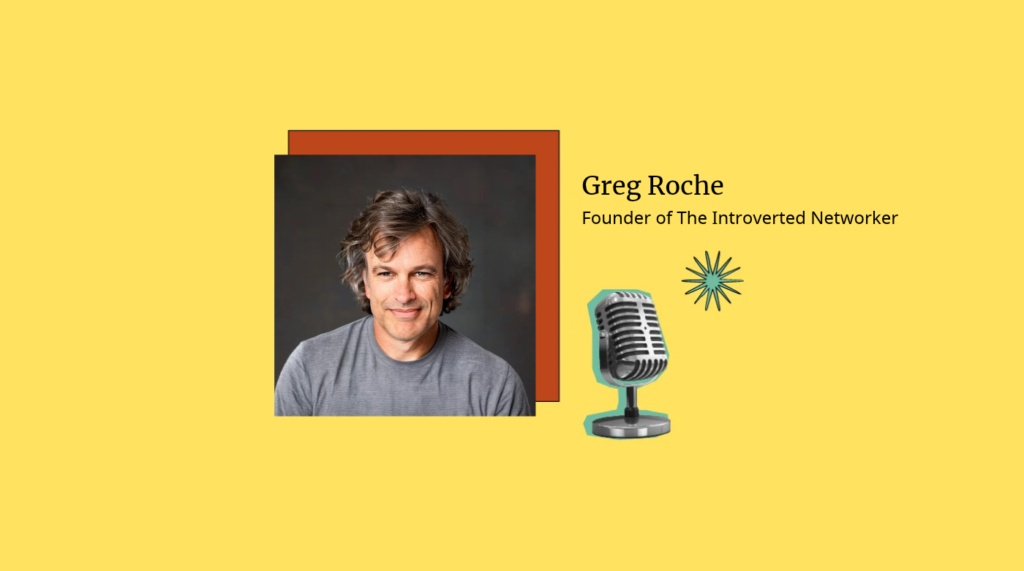
Greg Roche is the Founder of The Introverted Networker, a platform dedicated to helping introverts build meaningful professional relationships and grow their careers without relying on traditional networking tactics. With 27 years of corporate experience in human resources, compensation, benefits, and executive leadership, he brings a practical perspective to career development and relationship building. Greg is also the author of The Fast and Easy Guide to Networking for Introverts and hosts The Introverted Networker podcast and newsletter. Through his writing, coaching, and speaking, he helps professionals overcome networking anxiety, build authentic connections, and create long-term career opportunities.
Related Links:
- Join the People Managing People Community
- Subscribe to the newsletter to get our latest articles and podcasts
- Connect with Greg on LinkedIn
- Check out The Introverted Networker
- Check out this episode’s sponsor: Teamflect
Related articles and podcasts:
David Rice: Organizations design reporting structures, workflows, communication channels down to the smallest detail. Then when it comes to relationships, the thing that actually determines whether any of that functions, we just hire adults and assume they’ll figure it out. On today’s show, I’m talking with Greg Roche, founder of The Introverted Networker, about why that assumption is wrong.
Most of us have never actually been taught how relationships form. They happened by proximity, the neighborhood you grew up in, the school you attended, the job that you landed. Now people work from home, communicate over Slack, and never build a connection that explains why a colleague works the way they work or where their priorities come from.
That’s a real tension worth spending some time on. Relationships reduce the transaction cost of collaboration. You skip the committee, you call the person who can just solve it. But they can also become workarounds for broken process. Greg’s point is that most organizations default to more process as the fix, which actually erodes the relationships that would have solved the problems the process was never designed for.
There’s also an equity question in here underneath all of this. If relationships are a real source of organizational advantage, the people who are naturally good at building them get disproportionate access to opportunity, visibility, and internal mobility. Greg thinks HR needs to actively watch for who’s getting left in the periphery and treat internal networking as a skill worth developing, not just a personality trait some people happen to have.
So today we’re covering why we’ve never actually been taught how relationships form, the balance between building connection and enabling process workarounds, why inference is often more powerful and dangerous than observation, and how uneven access to relationships creates inequity in who gets ahead.
I’m David Rice. This is People Managing People. And if your organization has been treating relationships as a cultural nice-to-have instead of an operating necessity, this conversation makes the case for why that needs to change. So let’s get into it.
For seamless performance review processes and enterprise-grade security, try Teamflect for free, the number one rated performance management platform in Microsoft ecosystem, trusted by enterprises worldwide to align goals, run performance reviews, and develop talent at scale.
All right, Greg, welcome to the show. It’s good to have you.
Greg Roche: Yeah, great to be here, David.
David Rice: Where I wanted to start us off, you know, we, we chatted a little bit before this, but I wanted to start us off with organizations, you know, we put a lot of effort into designing reporting structures, workflows, communication channels, but when it comes to relationships, we basically just sort of like hire adults and assume that they’ll figure it out.
That’s what it feels like a lot of the times. Yep … why, why have we treated something that’s this important to how work gets done and to where we just leave it to the employee’s responsibility?
Greg Roche: I, I think you said it. We, we expect that adults are really good at developing relationships with each other, and I think we all probably ask ourself that and say, "I, yeah, I, I know how to develop relationships."
But I think if you really think about it, you’ve never really been taught how relationships form. You just kind of… They happened in your life, and so you go, "Yeah, I’m, I’m good at that." And we grow up in a neighborhood that our parents decided we were going to live there. We didn’t have anything to do that, with that, and neither did the other kids who lived in the neighborhood.
And so the– their parents just happened to live there, and these kids happened to be around us, and that became our relationships. We just were in the same proximity as other people. And then we go through life, we go through school, we go to college, or we get our first job, and we kind of form those relationships.
But they just kind of happen because we’re near people. We don’t really give a lot of thought to what went into that. And so then you get into a world like we’re in today, where a lot of people are working maybe not in the same location as the people they’re working with, or maybe they’re working from home part-time or hybrid or, or maybe they’re in an office, but everybody’s on Slack or Teams or sending emails and, and we’re just doing work.
We’re communicating about work, but we’re not focused on building relationships with those people around us anymore. And so people aren’t really connected. They don’t really know much about who they’re working with, and they’re sort of losing out on the the, the s- the ability to develop, you know, connection that really helps you understand, well, why does that person work the way they work?
Or why do they say the things they say? Or where are they coming from? Or what’s their background? What’s their sort of priorities and agendas? And without understanding those kind of things, we, we can’t really develop the relationships that make us really good at our jobs or really connected to our company.
So I would say, again, it’s, it’s most companies aren’t intentionally trying to create a r- an atmosphere where these don’t happen. It’s just we overestimate our own abilities to be able to create new relationships. And so my point of view is we have to get really intentional about that and say, "This is an important part of working in an organization.
It is important that we have relationships, and we need to help people understand, here’s the things you can do. They’re not hard, but you have to get really intentional about it. If you’re not intentional, they may or may not happen, and, and you end up with people who feel like, ‘I go to work, I see a lot of people, but I don’t really know anything about them.
I go home, I don’t feel really connected to what I’m– the people around me.’ And if that’s the case, I can probably do the same job anywhere. It doesn’t really matter that I’m at this company doing it." So it’s, it’s kind of lose that tie to the organization and the reason for being there.
David Rice: Yeah. I, I think a lot of companies sort of tend to put connection in the culture bucket, right? So-
Greg Roche: Yeah.
David Rice: … But it ends up sounding alm- kinda optional.
Greg Roche: Yeah.
David Rice: It’s like, hey, if I can’t get something done- Sure … you know, because I don’t know anybody in finance or legal or another business unit that’s an operating problem, right?
Greg Roche: Yeah.
David Rice: But you know, like relationships can reduce sort of, like a transaction cost of collaboration.
You spend less time figuring out who owns something or- … establishing credibility with another person or escalating things up through a hierarchy. But-
Greg Roche: Yep.
David Rice: On the flip side, they become sort of workarounds for bad process sometimes. And you don’t want an organization that’s like, work only gets done because, eh, I know a guy, right?
That’s, that’s the thing that comes to my mind. I used to actually work somewhere where it was… I felt like, "Well, s-" It’s like, "I know a guy in operations." It’s like, "Well, can you ask him, like, why are we doing it this way?" And I, I’m kinda curious, like, where’s that line between relationships making- Yeah
an organization more effective or them compensating for processes that should just work better probably.
Greg Roche: It’s an interesting point of view. I mean, I think y- what you say is, yeah, somebody’s not following what they’re supposed to do and ’cause they just go to the person they know and be like, "I don’t really wanna follow the process.
Can you just do that for me?" I could think of like IT would be a great example, right? So you know somebody on the help desk, and you’re like, "Ah, I don’t wanna fill out a ticket. Can you just come over and help me?" Right? And then that person’s not filling out the ticket, and you lose some of that stuff.
So, that… That’s a good point. That’s a s- good counterpoint ’cause I would always say that, you know, where we tend to lie is we rely on, "Let’s just fill out a ticket. Let’s just send an email. Let’s just fill out this form. Let’s just follow this process." And then you don’t have sort of those relationships.
And it does make it so that you just feel like, "Well, I did what I was supposed to do. Now I’m just sitting here waiting," right? "Now I’m just waiting for them to come help me out. I’m just waiting for the problem to solve itself." I think that’s what organizations try to do, right? Because they’re like, "I just want this process because then I don’t have to deal with the relationship part of it," which is actually kind of, takes more work, right?
Takes more time. But that, those kind of processes, I think, are what make us feel like we’re not really that connected. So it’s a good, it’s a good reminder that there’s probably a balance to this ’cause, ’cause my point of view would be like, well, focus more on the relationships, but you’re kind of posting this thing of but then you’re getting around the process.
So it’s kind of like I think you have to have both of those things. I do think most organizations default to, "Let’s put in more process, and that’ll take care of it." And then what you’re losing is what happens when there isn’t a process, right? What if there’s not a process for something, but there’s still a problem?
How are you gonna solve the problem? That’s when the relationships get people together to go, as you said, reduce that sort of transaction cost of instead of having to get a big committee together and spin up a work, you know, a work stream or get t- everybody together in a, in a, in a group or a stand-up meeting where we all talk and brainstorm.
You’ve just got the two people who can really solve the process going, "Oh, I know this person. We can get together. We’ll solve it. We’ll figure it out, and we don’t have to spend everybody else’s time sitting around debating how to, how to solve this."
David Rice: Yeah. No, I think you hit the nail on the head there.
It’s a balance because I have seen it the other way where- Yeah … we’re relying on this process and then, you know, a few people leave and a few new people come in, and before you know it, you get to a place where you’re like, "Well, does anybody actually know that the process exists?"
Yeah. You know? It wasn’t, maybe it wasn’t a part of their natural workflow, so- Yeah.
Sure … wasn’t in their onboarding package, that kind of thing. And then it just, things slip through the cracks and next thing you know, this process that you think is established is not that established. So yeah, I’ve seen it go both ways. But,
Greg Roche: Yeah. Yeah, yeah, yeah …
David Rice: if the, if the relationships that really make an organization work, you know, I think they’re not captured in an org chart is kind of what we’re getting at here.
Greg Roche: Yeah. Yeah.
David Rice: Where do they become visible, though? What, what should a CHRO or just somebody, you know, really studying the dynamics of how work gets done in their organization pay attention to if they want to understand how connected or disconnected the people within it really are?
Greg Roche: There was– And I’ve been seeing this a lot recently.
Several years ago, a lot of people really got into this idea of organizational network analysis, and there’s maybe people out there- … still doing this a lot. In a big org, you can use your email systems, and, and they’re probably much better now where you can see who’s asking who questions and who’s the go-to person, and you kind of figure out who’s my nodes in the network and things like that.
But that’s very much sort of the, the system captured record of, of who’s, who’s communicating with who, written in Slack, in Teams, and stuff like that. But I don’t think that really kind of shows it. I think it comes up more in who, who are the people that everybody’s keeps– whose name keeps coming up, right?
So if you’re having conversations with leaders, if you’re having conversations with different teams, and they keep coming back to the same person or same group of people, those are the people that people are talking to. Those are the people that are… people are going to saying "Hey, I, I need you to help me with this," or, "You’re the person who’s the expert."
And, and sometimes those could be, like, those long-tenured people who’ve just been there. They’re like the knowledge sources. But I think it’s, it’s, you know, do people interact with others? Do you see them talking to each other? Do you, do you see them talking to each other in meetings? Are they having cross-collaborative meetings?
But I think that’s a really good point is if you’re not trying to listen for this, if you’re not trying to look for this as a CHRO, you probably won’t just see it. Again, back to that kind of word I used at the beginning. If you’re not intentional about looking for these relationships, they probably just won’t show up on their own.
David Rice: Mm.
Greg Roche: And so what I always try to tell leaders or managers is ask your team who are the people that you get an email from on a probably regular basis. You get an email, you’ve seen their name in the from line, but you’ve never actually talked to them either in person or on the phone. Yes, okay, we have video meetings, and we sat in meetings together, but who have you had a conversation with outside of a meeting that you now know a little bit more about them.
And, and what I would say is as a leader, challenge your team to say, "I…" You know, pick one person, and this week I want you to pick up the phone or go to their office or whatever and just say, "Hey, do you got 15 minutes? I just wanted to talk to you a little bit. It’s not about a problem, it’s not about an issue, but, you know, we, we exchanged emails, but we don’t really know each other, right?
And I’m, I’m just curious, like, how did you get here? Like, how did you end up in this role? How did you get to this company? What did you do before?" Just kind of, how are you here? And then they’ll, you know, they’ll kind of… You’ll get a little bit more flavor for where their career’s been, what they’ve done, what they’re kind of focused on doing.
And it’s just to get past the, "I have a problem, solve it for me." It’s, it’s the let me get to know who you are as another human being working in this organization. They’ll probably ask you the same questions and, and then now you know a little bit more about that person. The ice is kind of broken, and now it’s time you can continue to build those relationships.
The point of doing that intentionally and doing that in advance is now when that problem comes up, that person’s gonna send me that email. They already know my face, they know my voice, they know how I operate. They probably are gonna communicate a little bit better with me. Or I know when they send me that email, they’re probably not angry about something.
I’m not reading into their text going, "Hey, there’s a problem. You know, you need to fix this." It’s like, "Hey Greg, how are you doing? We’ve got this issue. Can you just give me a call?" And you’re like, "Oh, okay, let’s call," and we jump on the phone, and now let’s solve that together. But I think if you don’t do that, and all you’ve, all you’ve experienced from this person is they just send you an email, and it’s got their name, and you’re like…
You’ve made up in your head what their voice sounds like and how they act and what their demeanor is. You, you, you’ve, you’ve created this whole persona of this person you’ve never met, and then your response is gonna be sort of, you know, in, in line with that. When in reality, once you get to know them, you’re like, "Oh, okay, now, now I know how this, this person acts and, and they’re probably a really good person who’s just trying to do their job well, and, you know, they’re not trying to impose on me.
And now I, now I, I, I can make a more constructive response." So you’re trying to develop the relationships before there’s the need for it and, and, and to make you, again, as you mentioned, reduce sort of the friction and the transaction costs and the load that goes into, "Well, is this person angry at me?
What do they want from me?" You, you take that out of it. You can just get to solving the problem and it helps your organization just function better.
David Rice: Yeah. No, that’s, that’s interesting. I mean, we’ve talked on the show previously about microcultures. And so, you know- … I think it’s, it’s a little easier when inside your team because you kinda know how we operate.
It’s intimidating when you gotta go to somebody from another team and you don’t really know what their microculture’s like or what their- Yeah … sort of, response to management typically is or how their work is viewed. There’s a lot of dynamics at play here. And yeah, I think that building the relationship is kind of vital bef- to ease that introduction of different microcultures- Yeah
And get your team working together, so. I mean- Just go ahead.
Greg Roche: Yeah. I love that term-
David Rice: Yeah …
Greg Roche: and the way you just framed that because that really is what you’re trying to do is to multiple cultures within the organization, sort of like multiple tribes, you gotta go visit the other tribe and kinda see what that tribe is like.
And then once you know that, it’s like, "Okay, now when I go over there, here’s how I approach that," as opposed to, you know, two tribes start fighting and, and what happens? Then you bring in the chief of each tribe and you get together and like now they gotta meet and they gotta sort it out, and then maybe you gotta bring in other people, and think of how much time and effort that takes.
Whereas if you’ve just gotten to know that other microculture, that tribe, it’s like, "Oh, okay. Here’s, here’s how that, they operate. Here’s what we bring there." But you only know that by going and having that conversation.
David Rice: But, you know, as companies we spend a lot of money, right, bringing people together, whether it’s like- off-sites, maybe it’s retreats or just d- normal sort of team-building events. But we kind of assume connection happened ’cause everybody was physically in the same place, so why wouldn’t it, right? Right. But I’m curious, you know, why doesn’t that work as well as leaders tend to think? What actually turns an interaction into a useful professional relationship?
Greg Roche: I think when you try to structure it so much-
…
Greg Roche: You kinda give people… Well, you take away their sort of natural way that they connect with people or talk to people and you force them into a situation that may not be really comfortable for them. And when people get uncomfortable, they’re less likely to be open and sharing and, and to, to get to know, know people.
So, I’m, I’m a pretty introverted person, I can talk to people, I can have a good one-on-one conversation. If you tell me I’ve got to go to the onsite full of everybody and we’re gonna be in a big room, okay, I can do that. But if you’re like, "Now we’re gonna get into breakout groups, and you’re gonna all talk about this," and I’m like, "Eh, I don’t know.
I don’t really… This is not sort of my thing. This is not my, my, my way, my, my way I function best." I generally function best talking to people sort of one-on-one where I’m interested in the other person and they’re interested in me and we, we have a good conversation. But, but when you force it, you’re, you’re immediately taking a big group of your employees and saying "This is how to do it," as opposed to, you know, saying, "Hey, I want you to decide who you’re gonna talk to.
I want you to kind of decide how you’re gonna approach them." And yes, people might need some guidance around that, but, but when you do that, you kind of free them up and you put them in a situation that’s a little more comfortable and that they’re more likely to, to be more engaged and, and try to, to, to grow those relationships.
So i- it’s totally understandable. As a company, you’re like, "I need this to be as efficient as possible. I need to create this environment where this happens, so let’s do it this way." And then I can say, "Hey, we had this onsite. People were growing connections. They were supposed to grow connections. Look, I hire…
Again, I hired adults. They should figure this out. It’s not my problem if they don’t connect." And, and then you’re just kind of saying, "We, we checked the box and now we can move on." And, and so it kind of goes back to does that one event create culture or does culture happen on a day-to-day basis by the way people are acting within the organization and, and sort of where they’re, they’re focusing and where their priorities are?
David Rice: And yeah, I co- couldn’t agree with you more about the over-structuring thing. It’s sort of the… HR has a bad reputation with it, right? With the whole forced fun thing. People love to talk about it on Reddit. But it’s, you know, it’s like you just gotta let them find their way, and also- Yeah … you’re gonna find your tribe in any kind of group-
Naturally. As soon as you get over, what, 15 people, s- people are gonna start to segment into- Yeah, sure … these sort of little groups that make sense to them, and yeah, I think you just have to let that happen. But yeah, it’s it’s creating the environment to hap- ooh, to let that happen without, you know, forcing karaoke on everybody or something.
Greg Roche: Yeah. Sure. Sure, and I, I, I think you can let it happen, and I also think you have to make sure that people understand it’s, it’s important that it does happen. It’s- Yeah … it’s an important part of our organization, part of our culture that you know the other people who are here. So you… And I don’t wanna say "So you’re, like, part of the team," or whatever, but I mean, you look at a lot of, of, of teams and, and y- you know, we always go to sports or things like that, and it’s like You don’t see stories about teams who are like overcame a lot because they had a bunch of great individual players that hated each other.
I mean, that’s usually not the narrative. It’s usually, we had a bunch of people who all really got to know each other, and they were in it for each other, and they were all going towards the same thing, and they kind of knew what each person did and how they functioned and, and again, what was important to them, and then they all came together, right?
And so it’s, it’s sort of that same thing of if you don’t feel that, you’re just like, "Eh, you know, I’m just here to do this. I want to clock in, clock out, and go home." Okay, some people are gonna say that, but at the same time, keeping people we know, and, you know, this, this question gets a lot of heat in engagement surveys, but we know that people who say, "I have a best friend at work," stay longer.
You know, they, they stay longer at work. And does it have to be a best friend? I don’t know. I don’t think it has to be your best friend, but really the idea is it is a strong relationship. It isn’t just like I say hi to the person in the morning. It’s like I got to know the person. I feel like we know a lot about each other.
We don’t have to know everything about ev- all personal details, but we know enough about who we are that that person is a friend. And, and people who… It, it doesn’t mean if you suddenly make friends they’re, they’re going to like all of a sudden never leave, but the correlation is that they stay longer.
So if you create an environment or culture where people are naturally encouraged to form relationships, there’s a good chance they’re probably gonna work there longer than they would if you didn’t do that.
David Rice: Yeah. I’ve always kind of thought the, the term friend for colleagues was funny because like I, I’ve known people who are like, "Oh, a lot of my friends are at work," and I’ve always kind of been like, "Well, I don’t know.
I don’t really think of it like that." Like I don’t need- Yeah … When I think of a friend, and this is just my like own little- … obsession over language. So I apologize for this rant, but when I think of a friend, it’s like I’m, I’m sort of looking for some type of, I mean, not necessarily a physical affection, but like-
Greg Roche: Yeah.
David Rice: A connection that’s has an affection to it. Whereas like with a colleague, I just need you to be reliable You know? Yeah. So that when I reach out to you, like I know I’m gonna get an answer. I need you to be amicable you know, we’re gonna get along and we’re just gonna find a way to get through whatever it is that we face together.
I- there’s a bond– It’s a different type of bond in my mind. So I, I always felt like that friend- Yeah … the label didn’t make sense to me, but I, I guess you know, it, it does- Yeah … for a lot of people.
Greg Roche: Well, I think, yeah, no, I mean, I think that, you know, level– there’s probably levels to friendship, right?
David Rice: Yeah, yeah. And so- Exactly …
Greg Roche: I think what you just described, you know, reliable, i- you know, some of those things you just said, to me, I’d be like, "Well, that’s what I want in my friends too."
David Rice: No, for sure.
Greg Roche: Right? And so it’s, so it’s maybe not as deep as- Yeah … as, hey, this is some of my best f- It’s not who I wanna stay, spend my weekends with.
David Rice: Right.
Greg Roche: And s- and some people do that with people they work with. I- it’s like getting closer to that, is this person reliable? Do I know that they’re reliable? Usually you know that through experience, right? Because you’ve, you’ve worked with them a little bit. But, Getting into those other other people around the organization, I think, is, is one of the things where we don’t, we don’t really encourage that as much as we could in an organization.
So that’s kind of always what I tell people is just think about… And, and not just for the, the corporate organization, right? This isn’t just about the companies keeping people, right? This is about you as an individual managing your career in the organization, which goes into the more people I know around the organization, the more people that know me, the more opportunities there are going to be for my career to progress.
And because they know who I am and they think of me when they think, "Oh, he, he’s reliable. He’s somebody who gets stuff done. He’s a, he’s… I’ve seen him perform. And so now I have this new project or this new opportunity, let’s see if Greg wants to come over here and, and, and do this on my team." So I think, you know, it’s, this is not just about, hey, the company or HR or somebody creating this culture that people wanna stay.
It is that, but again, it also works to the benefit of the employee for their, their career development. So- Yeah … again, flipping it back around, by empowering people to connect across the organization, that’s, that is career development. That’s professional development. That’s- Yeah … talent management. You’re basically opening up the talent pathways throughout your organization so you don’t have to sit there and go, "Oh, I think Greg will be good for this."
Greg self-selects into what he would be good for and he makes those con- those connections, and then those opportunities happen for him. You’re not managing his career, but again, you’re creating this culture, you’re creating the environment where he can manage it himself.
David Rice: Well, you… What you just said there, I like that because you know, I…
That makes me k- kind of think, is the sign of a good manager actually them being reliant on you for fewer and fewer things? ‘Cause I, I think managers are often rewarded for being this central figure. You know, they’re copied on everything. They’re solving- Yeah … all these problems, brokering resources.
They- … they basically represent the team cross-functionally. But I think- Yeah … that, you know, that sort of, it leaves employees with sort of like a borrowed social capital. So- … like they know other functions through the relationship that they have with their manager. And I- Yeah … think that’s when you think about a succession angle, that’s a problem if half the team’s relationships disappear with them. But I think… I, I guess my question would be should part of developing someone actually be helping them become less dependent on you?
Greg Roche: I, I would agree 100%. I think of it as, and I always thought of this when I was in large organizations managing teams, my quality as a manager was how much talent could I export to the rest of the organization?
Was I a net exporter of talent to the organization? Meaning did the people who worked on my team get developed and go on to do other things on other teams? Because that to me is a sign of a, of a good leader. If you are a person who just holds on to your team and is like, "You can’t go anywhere else because you know why?
I d- I can’t run this team without you." Right? That, th- that’s you showing, "I, I can’t operate without you. I’m, I’m as a manager more dependent on you, probably more so than you are on me." And that’s just a sign that you’re not a strong leader, in, in my opinion. And I think that’s something that an organization could look at, a big enough organization.
And, and you know, y- not everybody’s gonna leave all the time. You can’t have constant, I’ll say, turnover, internal turnover on your team ’cause they’re going everywhere else, but is your team getting out and doing more within the organization? Because number one, that shows you’ve developed them well.
Number two, think about that. You already have a relationship with your team members. Now they go work on somebody else’s team. Do you think when you call ’em up and say, "Hey, could you help me out with this on your new team?" ‘Cause this is… They’re gonna go, "Yeah, sure. You’re my man- you’re my old manager. We had a great relationship.
I got this opportunity ’cause you… I would love to help you out on this." It just makes you more effective across the organization ’cause you’re spreading talent that knows you and has worked with you into the rest of the organization. So I mean, I think from a management perspective, encouraging your team to go out, connect with other people, understand what is out there, find other opportunities, go into those other parts of the organization, is, is going to do nothing but improve your standing as a leader, which is gonna help you in your own career.
David Rice: Kind of pivoting a little bit here.
Greg Roche: Yeah.
David Rice: You know, talking about a different sort of phase of the employee experience, right? So I, I was thinking about turnover a- and by the time someone resigns, they’ve usually sort of crossed a line that they approached much earlier than that, for whatever- Yep reason it might be. But-
…
David Rice: I’m interested in that period before the desi- the decision gets made. What would you say sort of changes someone’s relationship with the organization when they start moving toward that line, and where where are the opportunities to interrupt it?
Greg Roche: I think it’s when if they have somebody besides their manager or maybe somebody on their team that they can go to and be like, "Man, it’s getting tough to stay here.
Work is getting tough. I keep getting… Work keeps getting added. Nothing comes off my plate. Nobody seems to appreciate what I’m doing, and, you know, I’m really just not sure if long-term I can stay here." Now, they could go home and say that to their family or whoever they have in their friend circle, but that group of people is going to just probably agree with them and reinforce that.
But if they have somebody in the organization who they’ve got a relationship with, and, and again, doesn’t have to be a leader, it could be s- a colleague, it could be somebody on another team, and they say that, it’s "Okay, well, tell me, you know, what’s going on with you there?" And, and, you know, that, just the act of being able to tell somebody who knows your situation and is in the same sort of environment or the same sort of place, they can go, "Okay, well, have you thought about maybe how you could talk about getting something off your plate?"
Or, "Have you t- have you thought about this or that?" And those kind of conversations happen with coworkers, colleagues who have that sort of trusted relationship. A lot of times just being able to say that out loud to somebody who knows what you’re going through helps you go, "Okay, I got it. Maybe things aren’t quite as bad, or they are bad, but now I’ve got something I can do.
Maybe I’m going to focus my energies in changing that or talking to my manager about that, or, or, you know, I’m not just so angry or upset about it in the moment. I’ve kind of, you know, been talked back away from that line. And, and now I can be more constructive about how I’m gonna deal with it." The alternative is, if you don’t have that, is what you do is that recruiter who’s been calling you every month about different jobs, you’re gonna be like, "You know what?
I’m just calling ’em back. I’m sick of this place." You pick up the phone, you call that recruiter. Or you’re like, "You know what? This weekend, I’m gonna be out there on LinkedIn and Indeed. I’m gonna be searching for jobs. I’m gonna go look what’s out there, right? And I’m gonna see, and maybe I’ll apply because, you know, I’ve just had it with this place."
That’s where your, your sort of frustration gets directed externally, and you kind of take that step over that line, and you say, "I’m just gonna see what’s out there." Now, sometimes that leads to something, sometimes it doesn’t. But it’s definitely that first step that gets you headed down the path of, "Oh, now I talked to a recruiter.
I sent them my resume. I applied for this job. Now I’m gonna have an interview with a hiring manager. Now I’m coming back in for second and third interviews. Now I’ve got this offer, and now I’m walking into my boss and I’m saying, ‘That feeling I had two or three months ago where I was really frustrated and I didn’t tell anybody that, I didn’t go find a constructive way to express that to anybody, I just took it and said I’m leaving.’"
And now the boss is "What do you mean you’re leaving? I had no idea." And, and maybe that’s the boss’s fault, right? I’m not, I’m not exempting the boss from this. But they’re like, "You’re telling me you’re leaving? Okay, well let me, let me put together a counteroffer for you so you don’t leave." And the fact is they already left.
Emotionally, they’re detached. They’ve looked at… They’ve seen something new. It may not be any better. They may be doing the same sort of work. It may be the same sort of demands. It may not be any better. But it’s just a change, it’s different, and they feel like they did something to, you know, affect that change, and now they’re, they’re moving on.
So I- I think that idea is when you want them to have that relationship, that connection, is that day they’re standing at that line when they need to go into somebody’s office and say "Man, life has been hard. What’s going on?" And I mean, I, I had this in my career, you know, several times when I started talking to people about this concept of the line, ’cause this was something I had, had written about, you know, back in like 2019.
And I started talking about it, started talking about this concept of people standing at the line, and, and what I found is when I gave people, and you mentioned language, when I gave them the language to come to my office and just say, "I’m standing at the line," I knew exactly what that meant. I knew exactly where they were.
I knew exactly what they were thinking, and I was like, "Okay, well, let’s talk about what’s got you there, and let’s talk about how we can talk about you stepping back and figuring out if there’s anything you can do." But, but h- but that feeling of being, like, so frustrated that you’re like, "I’m just ready to leave," kind of had to give it a name, and so that name, you know, s- or that term of standing at the line or that name gives people that, again, construct or framework to come in and have that conversation with somebody they know so they can start talking about, "What do we do to, to, to get you to step back?"
And so that’s the piece that I think also organizations can do, is be upfront about that. Tell people "Here’s this concept. We’ve all been there, whether you’re the CEO or you’re, like, the individual contributor that’s, that’s, you know, doing help desk support or customer support. We all felt that way.
So, so when you feel that way, here’s, here’s what we, you know, would, would be great is, is do you have somebody you could talk to about that? If you don’t, let’s start working on building those relationships." And again, that might be a little heavy-handed to kind of push down, but how do you kind of get people in your organization and your leaders talking about those things so that you’ve got that framework, you’ve got that language so that people understand it and they go, "I, I really, I, I really do wanna solve this and I really do wanna, you know, be here but I just don’t know how to, who to go talk to or deal with, how to deal with it."
David Rice: Now, I love the way you’ve laid all that out there. I mean, it’s– I couldn’t agree any more. Like it… And I, I think it kinda starts to me when the, the- … when staying stops feeling like the obvious option. You’re starting down- … that path of- Yeah … finding the exit door, right? But I think that’s there– It’s a lot more nuanced, the whole thing, what you just described, than unhappy employees quit, ’cause I, I think like you said, the company– they can like the company and still take a recruiter call or- like their manager and feel stuck or be highly engaged but not really see what their future is internally. All of this- … happens. So I think you’re right. The internal relationships could create sort of like a countervailing option. Someone-
You know, yeah. Yeah. Another– E-Even if it’s just another team to explore or just getting some context that you didn’t have before.
Different perspective on a bad situation. Yeah. Like that could eas- All of that has really high value, I think. So- … the retention value of a strong network, you know, gives people more options inside the organization rather than just immediately looking outside of it.
Greg Roche: Yeah, absolutely.
David Rice: Well, I mean, it’s this. If resilience comes from having relationships across the organization, you know, how much of that is an org design challenge? Like in the past, I think there’s been a lot of examples of orgs where they structured teams or roles or reporting lines in ways that made the people, you know, unnecessarily dependent on their manager.
I, I think in some ways those structures made sense for their time, but fundamentally right now with the way work is changing, we’re just at this moment where that can be challenged. So what advice or maybe a good starting point would you recommend for HR leaders out there looking to build something new?
Greg Roche: Yeah. I mean, I think like you said, now people are… It, it’s always been very sort of hierarchical, right? Who do you report to- … and how does that org chart? And I think it’s always been difficult to, you know, you… Then you have dotted lines to other people, and you’re working with all these other people because we feel like there just has to be this…
We feel like there has to be lines that we define, right? As opposed to who, who actually, you know, gets the work done. And, and so I think that would be more of the question from an HR perspective or from a leader perspective is who do you, who… Back to this, who do you work with outside of the team?
Who is, who is your key partners that you interact with? Who are people that say, "Hey, I need this from you," or who do you… Who are people that you say, "Hey, I need this information from to get my job done"? And I don’t know if it’s so much a, a org chart view of it, but it’s here’s my, I don’t know.
It’s almost like here’s– back to your, your idea of the microcultures and the tribes, like, who’s the ambassador from the other tribe that I interact with all the time in order to, to kinda get this work done? And, and then say, you know, make sure that you’re, you’re, you know, spending time talking to those people.
Get out of your inbox, get out of your Slack, get there and, and try to kind of build those relationships. So I think all this comes… You went, you were talking about resilience. I mean, I always think resilience comes from experience because you can’t, you know… You, you don’t seem to… You don’t grow from anything until you’ve experienced it.
Yeah. And so the experience piece of this is go get experience with what other people are doing. I say, you know, this happens a lot in organizations that have heavy field operations. We’ll always tell people "Hey, you’re in corporate. I need you to go out to the field for a day," right?
Day in the life, right? I need you to go out and see what’s their world like. What’s it like to be them? And, you know, you probably need to do it… That’s the forced corporate push down sort of approach to it. But I think anybody can do that with, with their team and say "Hey, go, go talk to this person.
Go see what they do on a day-to-day basis." Fi- you know, understand, I like to say, what their agenda is. I mean, agenda’s kind of maybe a negative term, but agenda is your priorities. What’s that person trying to accomplish? We all have different agendas and different priorities, so the, the key is how do you, how do you reconcile those two so that, you know, you’re like, "I can help you get your priorities done, and you can help me get my priorities done.
They may not be the same thing, but we can work together to do that." So I think it’s, you know, what can you do? It’s, it’s- Make it a priority for the organization that people start to understand what other people do and go experience it. And when they experience it, maybe they’re like, "Okay, I got a little bit better understanding of it."
Maybe, maybe when there’s stress here, I’m not gonna just say, "Oh, those guys over in accounting are always making my life hard." It’s like, "Oh, I know the struggle they’re going through on quarterly close over there because they– I’ve, I’ve talked to them. I understand what that looks like. Now I’m gonna be– have a little more grace for them, you know, if they’re asking for things right away quarter-end close, and I’m not so mad that they asked for it right away because I know this is what they’re trying to get done."
If I don’t know that stuff, I’m just like, "Why, why are these guys always up in my grill at the end of the quarter about getting this stuff so quickly?" I went and I understand what they’re going through and what they’re trying to do and their deadlines. So I think those are some of the things, again, that if you were trying to design your org, it’s put a priority on that kind of stuff so that people will understand where people are coming from.
David Rice: Yeah. And I– Well, I think even just structuring the work, it helps people with a lot of context. I mean, see if you’re working on, you know, you’ve got high-level projects that are a big priority for the whole business- … and you’ve got all these other projects. I mean, any business, this is how it is, right?
And sort of helping you understand well, I gotta hand this off to that team. I know that from talking to so-and-so, they’ve got a lot of this on their plate right now. Let’s change how this project is structured so that we can give this to them at a time where they got a little bit more space or whatever.
It’s, it’s just creates more natural efficiency just by understanding each other.
Greg Roche: Yeah. Yep.
David Rice: You know?
Greg Roche: Yep.
David Rice: You know, we can encourage people to build relationships, right? But again, like creating the conditions for that, especially in a large organization, is, you know, if you’ve got thousands of employees, this feels like something else entirely at times.
How do you design connection into the way work happens rather than treating it as, you know, some activity that people… We’ve gotta make time for. We’ve gotta get the karaoke, you know?
Greg Roche: I think part of it, I, I mean, one of the ways is, Look, it, it’s, it’s really efficient to just crank out a message in Teams or Slack to somebody.
And maybe that makes sense if you already kind of know the person and you talk to them every day or they’re on your team and you’re like, "I have this quick question, what is it?" Right? Which it’s never a quick question. I mean, that’s the worst thing ever is to get the, the ping on your messaging apps like, "Hey, got time for a quick question?"
You’re just like, "Oh, yeah. No, I don’t. But okay, now that you’ve interrupted me." But I think it’s, it’s really challenging people to kind of go, it’s almost like old school, is "Can you just pick up the phone?" Seriously. Like- … when was the last time that you dialed a phone number and picked up the phone and called somebody?
Or hit your, you know… And, and, and people are like, "Oh, that, that seems kind of old school." It’s like, it is, but it’s talking to a person and hearing their voice is so much different than just going back and forth in the Slack channel. You’re… It’s actually more efficient probably. You’re probably gonna get to the answer a lot quicker when you, when you do it voice to voice.
So I think that’s a… I, I would say, "Hey, let’s, let’s, let’s give it a shot. Next time instead of sending the Slack, let’s call the person," instead of, of sending the message. Or say, "Hey, do you have time for a quick call?" Right? And so then we call each other instead of just doing it in the chat. So let’s, let’s move away from the text space, let’s move into the voice space.
So that doesn’t really require you to do something outside of work, it’s just built into work. It sounds so simple, but I know from my own experience, and, and I think a lot of people have this experience, how many times have you just gone back and forth, chat, chat, chat, chat, chat, chat, chat, and you’re still just like not getting it.
It’s And, and I know some people are like, "Let’s just call." Some people will do that. But I think if you say "Let’s just do that," and, and that’s not new advice, that’s nothing revolutionary. But I think we default to let’s just- … text, let’s just send it in the chat, let’s just do all this stuff.
What I tend to think of is when somebody’s doing that, it’s because they’re talking to somebody else or they’re sitting in a meeting which they’re supposed to be paying attention to, and all they’re doing is just trying to do other work and sending chat ’cause they can’t actually talk to you. That’s how I take it when people start sending me chat- Yeah
is that, you know, they’re doing something else and they’re supposed to be listening. They’re trying to get work done. So that’s one way I think to build that in. I think other ways are just to say that there is a value, right, to you know, face-to-face, human-to-human interaction. It doesn’t always pay off in the moment.
It pays off down the road. And so while it feels like you’re maybe doing a little extra to get in front of the person or talk to the person, and I’m not advocating more meetings where we all sit together and one person talks and we all just sit there. I’m saying you go talk to the person, go to their desk, stand in their doorway, look them in the face.
That may seem like, "Ah, you know, I, I can’t, can’t do that. I don’t have time to do that. That’s not efficient." It’s like, but you’re investing in the relationship for later, and that’s an investment you’re making to have a more to, to have a healthier organization, to have a more connected workforce. And so don’t think of it as the minutes I’m spending today.
Think of the hours I’m gonna save down the road because I now know this person and we’re gonna work together a lot better.
David Rice: No, it’s, it’s funny ’cause like you said, default to chat and I’m like… The funny thing about Slack is like it has the little icon right there to just, like the headset icon.
It’s just hit it. If it’s a quick question, like- Yeah … holla at… Why don’t you, you know, just let me know. I’ll answer it. Like- Yeah … the only Slack I need is, "Hey, can I chat real quick?" Cool. Hit the button. Let’s do it. Like-
Greg Roche: And, and I would almost ask, like if you’re afraid to use that-
…
Greg Roche: Because you feel like the person on the other end is gonna be difficult-
David Rice: It’s a major sign of dysfunction.
Greg Roche: That’s a sign. Yeah. Like that’s, that’s who you need to go talk to. That’s the person you need to have the conversation with. And it takes a lot of guts to say it, and most people wouldn’t do this, but it’s like, "Hey, you know, I don’t really like to talk to you on the phone ’cause I’m always afraid you’re gonna yell at me or you’re gonna get mad at me or something."
And they’re probably like, "What are you talking about?" They’ll be like, "What? Why would you think that?" I mean, I- Almost always … I have had, I had partners, I had this one partner that I worked with, and she and I worked together for six years at this organization, and she was in one part of the country and I was in another part of the country, and every email she sent, I felt like she was yelling at me.
And, and then she would call me, and we would have the nicest conversation. She was a very nice person, very helpful. She was very driven and wanted to get her job done and do it well. And so when she was sending emails, she was being very direct, very to the point "I just need to get the information and move on."
But then I’d get on the phone with her and I was like, every time I hung up I was like, "She is so much nicer than I give her credit for in her emails." And, but I mean, over six years I still had to remind myself of that. And, and it’s like you, you… A lot of us have those people, and it’s like, just pick up the phone.
And, and again, we would solve things. We would be on the same page. Our relationship would be better. But I, I had to do that all the time and remind myself of that. And I think if you’re afraid to talk to the person because of their emails or their messages, that’s e- exactly the person you need to talk to and, and, and start to, you know, have those conversations.
David Rice: Well, it is funny ’cause what you just said i- is, you know, reminds me that our inferences are more powerful than our observations. So- … you know, I’ve got this idea in my head. What I find, though, is that what I’m interpreting it as is often a reflection of how I feel. I’m projecting it outward, right?
And so I’ve just… If, when I have those instances, I have to tell myself, "Step back for a sec." If you, if I, and kind of look at myself, ’cause a lot of times it’s like, well, actually you’re frustrated right now. You’re feeling a little overwhelmed, and someone asked you a question and it’s you’re just putting all this meaning on it that doesn’t exist.
So, you know? And so it’s, it’s a, it’s a powerful thing ’cause it comes from within. It’s not something you can say, "Well, I wish this would change in another person," ’cause they haven’t done anything wrong. And so yeah, it’s one of those things like I think no matter what level you get to, you always have to challenge yourself to do that.
Greg Roche: Yeah, 100%.
David Rice: Now before we go, I wanna ask you one more quick question, … and wrap up. But, you know, there’s sort of, you know, a little bit of a downside to say… Or I guess I wouldn’t call it a downside, but when we say, you know, relationships are how things get done, one thing we have to consider within that is that some people are just dramatically better positioned to build relationships than others.
And I think if networks matter for information, opportunities, visibility, problem-solving, internal ability, all these things, right? Uneven access to networks can create a, a real issue with this around access to opportunity.
Greg Roche: Sure.
David Rice: So, you know, as HR leaders shouldn’t simply encourage networking and call it done, right?
We’ve gotta think about whether organizational design repeatedly connects the same highly visible people while others remain peripheral. And I, I’m curious, you know, sort of what… If the relationships become an important source of organizational advantage, how do you stop access to those relationships from becoming its own form of inequity?
Greg Roche: Yeah. You– I think that, that statement right there is an important one for HR leaders to keep in mind and understand, because typically, you’re right. In an organization, the people who are the most vocal, the ones who raise their hand, the one who talk to everybody, the one who build those networks, they do tend to get those opportunities through, through networking.
And so I think it’s important, it’s an important backstop or check for HR leaders to go d- are– what are we doing for those people who don’t necessarily do that, right? And, and again, how do we either foster or encourage or highlight that, that these people are valuable, that they’ve got a lot to contribute?
So, I think that’s an awareness thing for HR to be, really be aware is, is part of that, that just the people who are, like, really well-connected, it doesn’t necessarily mean that they’re, like, always the best at, at doing stuff. So, again, I, I, I think it’s more of a… that’s more of the exception than the rule for most organizations.
But, but I think this kinda goes back to our, again, our original balance conversation, which was let’s encourage connection. Let’s encourage people to get to know each other. Let’s encourage the collaboration, and let’s understand that not everybody’s as good at that as some people, and think of how we can, we can help them, either get stronger at that, get more comfortable with that, or foster the opportunities for them to connect with people.
And so I, you know, again, I put all this into sort of professional development. It’s not something we typically think, "Hey, part of my professional development is to become a better networker internally." But for me, that’s, that’s a really important thing to encourage people to do. And, and, you know, I think some organizations might get uncomfortable.
They’re like, "I’m gonna show you how to become a g- great…" If I, if I go into an organization, I’m like, "I’m gonna show some of your early careers or some of your maybe developing talent how to become better networkers," they’re gonna be like, "Well, they’ll go network their way out of the organization." It’s not if they make the connections internally, not if they see that there’s a path, not if they see that this is gonna help them with their career.
They’ll, they’ll probably most likely stay longer. But the, the point being that I think you have to be really, really aware of this and this dynamic and, and going back to not just thinking, "Well, relationships happen." You think, how do relationships impact all this stuff we just talked about? And, and you really wanna just kind of, again, make this a priority of, of where are we seeing the really good networkers in the organization get the opportunities, and where are we seeing some of these other people not because of it?
Let’s figure out a way to kinda help them grow in their careers and get better at it.
David Rice: All right. Well, excellent. Greg, this has been great having you on. Yeah. I really appreciate you giving us some of your time today.
Greg Roche: Yeah. Yeah, definitely. It’s a great conversation, so a lot of good, a lot of good ground we covered.
David Rice: Listeners, head on over to peoplemanagingpeople.com/subscribe to get signed up for all our newsletters, whether that’s our regular newsletter or our AI Signal series.
And until next time, you know, pick up the phone, call, make that connection.
Tired of chasing employees for performance reviews? Meet Teamflect, the number one rated performance management and employee engagement platform built for Microsoft Teams. Easier adoption right where your team already works. Get started on Teamflect.com.