

The Team Habit That Separates High Performers From Everyone Else
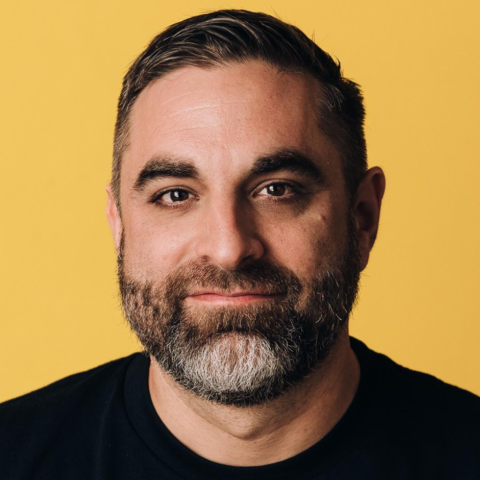

AI isn’t creating high-performing teams—it’s exposing the difference between teams that already know how to work well together and those that don’t. In this episode, David Rice sits down with social psychologist and Superteams author Ron Friedman to unpack new research on what separates the top 8% of teams from everyone else. The conversation challenges the assumption that AI is a universal productivity boost, revealing instead how it can amplify poor habits, deepen burnout, and create false confidence when used without judgment.
They also explore why the best teams protect focus over busyness, replace brainstorming with brainwriting, rethink meetings entirely, and create cultures where experimentation—not perfection—drives performance. If you’re leading people through the AI era, this episode offers a practical blueprint for building stronger teams instead of simply working faster.

What You’ll Learn
- Why AI is widening the gap between high-performing and average teams
- How the best teams use AI as a thinking partner instead of an answer machine
- The hidden workload created by low-quality AI outputs
- Why meetings—not AI—remain one of the biggest productivity problems at work
- The science behind brainwriting, collective intelligence, and equal participation
- How leaders create environments where learning, experimentation, and innovation thrive
- Why protecting focus time is becoming one of leadership’s most important responsibilities
Key Takeaways
- AI magnifies existing team habits. Healthy teams become more effective with AI, while dysfunctional teams simply become dysfunctional faster.
- Share prompts, not secrets. High-performing teams openly exchange prompts, workflows, and successful AI practices so everyone improves together.
- Treat AI like a colleague—not an expert. The strongest teams question its output, challenge assumptions, and refine responses instead of accepting them at face value.
- Meetings should be the last resort. Clear meeting guidelines, focus blocks, and meeting-free days create the uninterrupted time where meaningful work actually happens.
- Brainwriting beats brainstorming. Independent idea generation before group discussion produces more—and better—ideas while reducing groupthink.
- Equal participation predicts better thinking. Teams perform better when everyone contributes, not when a handful of voices dominate the conversation.
- Reward intelligent failure. Well-reasoned experiments that don’t work still move teams forward by building learning and adaptability.
- Leadership is about amplifying focus. Great leaders remove distractions, model effective AI use, and create the conditions for people to do their best work.
Chapters
- 00:00 – AI & Team Performance
- 02:30 – What Super Teams Do
- 04:47 – Burnout & Busywork
- 06:00 – Brainwriting Wins
- 07:42 – Sharing AI Prompts
- 10:14 – The AI Independence Trap
- 13:13 – Smarter Collaboration
- 15:27 – The Cost of Meetings
- 18:29 – Better Meeting Rules
- 22:13 – Learning Through Failure
- 28:35 – Leading Super Teams
- 31:10 – Making Each Other Better
- 33:04 – AI & Burnout
- 35:43 – Expertise Still Matters
- 36:28 – Final Thoughts
Meet Our Guest

Ron Friedman, Ph.D., is an award-winning social psychologist, bestselling author, and expert on human motivation, workplace performance, and organizational behavior. He is the author of Superteams and The Best Place to Work, books that explore the science behind high-performing teams and thriving workplaces. Drawing on decades of research and consulting experience, Ron advises organizations around the world on leadership, culture, innovation, and employee engagement, helping leaders apply behavioral science to build more productive, collaborative, and resilient teams.
Related Links:
- Join the People Managing People Community
- Subscribe to the newsletter to get our latest articles and podcasts
- Connect with Ron on LinkedIn
- Check out Ron’s website and book “Superteams”
- Free masterclass and discussion guide
Related articles and podcasts:
David Rice: The average worker loses 18 hours a week to meetings, another 11 hours digging out of messages. That leaves about one day for actual work. So when you need to cram a week's worth of work into a single day, you look for shortcuts. You come in early, you stay late, you work weekends, and that is how burnout happens.
On today's show, I'm talking with Ron Friedman, social psychologist and author of the book "Superteams", about why AI isn't solving this problem for most teams. It's actually making things worse. Ron's team polled thousands of workers to find out what the top eight percent of teams do differently, and what they found out about AI is fascinating.
Average teams hide their AI use from each other. They pass off low-quality outputs without checking them, lengthening the workday for everyone downstream. Meanwhile, super teams share prompts openly, use AI as a conversational partner to debate and push back on, and use it in ways that make the whole team better.
Completely different outcomes, same technology. The gap it's exposing isn't just between good teams and average teams. It's between people who know what good looks like and people who don't. If you don't have a sense of quality, anything AI gives you will be satisfactory, and that's where the false confidence comes in.
It's not just incorrect work, it's incorrect work that they're proud of. So today, we're covering why AI is widening the gap between high and average-performing teams, the hidden cost of low-quality AI outputs on team workload, why super teams treat AI as a debate partner, not an expert, brainwriting versus brainstorming and why the science favors one, and what equality of speaking time reveals about collective intelligence.
I'm David Rice. This is People Managing People. And if you've been assuming that AI is a rising tide that lifts all boats, this research might make you reconsider. Let's get into it.
All right. Well, Ron, welcome to the show. It's good to have you.
Ron Friedman: Great to be here. Thanks for having me.
David Rice: I wanna start with this question, and then you can kinda back us up a little bit, but it's like we talk about AI, you know, I hear it all the time at conferences and different things.
It's like this universal productivity enhancer, right? But when we were talking before this, AI is like widening the gap between high-performing teams and average teams, if you will. Why do you think the same technology is producing such different outcomes depending on the team, not just the individual?
Ron Friedman: Yeah, it's a great question. And before I get to why AI is widening the gap between high-performing teams and average teams, let me just tell you a little bit about how I conducted this research so your listeners understand where I'm coming from. So I'm a social psychologist, and I left to join the corporate world.
While being in the corporate world, I realized there was a massive gap between latest science and the modern workplace. So I started doing some research on what the best teams do differently, and here's how my team and I did that. We polled thousands of workers, and we asked them two key questions about their teams.
We asked On a scale of one to 10, how effective is your team at achieving its goals? And two, compared to other teams in your industry, how would you rate your team's performance? Then we took the teams with a perfect score, a very tiny group, about 8%, we call them super teams, and we look to see what are super teams doing differently.
And very recently now, we've done a study on how super teams use AI. And so you asked me about how, why is widening the gap? Well, what we find is that with super teams, they're using it in a way that enables the whole team to get better, whereas average teams are more likely to hide their AI use from one another and share low quality outputs that can actually lengthen the workday.
And so I have had conversations with so many professionals who talk about how a couple things are happening. One is people are using their ChatGPT or whatever to formulate responses that employees are then sending off to other employees without even checking them. And so it can be a very useful tool if you use it correctly, but that includes giving it the right context and vetting the responses, going in a back and forth of are the results accurate or are they not accurate?
But if you're just like taking the output and forwarding them along, you're just lengthening the workday for everyone else.
David Rice: This gets back to something that we talk about all the time, right? It's like when you layer it onto a dysfunctional team, it's going to amplify dysfunction. If you've got, you know, a really effective collaborative team, then it can really empower like some new innovative things for your team.
But I, I think you've mentioned their context and like I was reading this piece about context engineering, you know, and trying to help it understand your org, and it's just so important if you actually want-- if you're going to use it, especially for things that are like, you know, more process driven.
It's really got to understand the context of how your org is built in order to fully realize its potential.
Ron Friedman: Yeah, exactly right. And part of that is getting clear on what outcomes you're actually trying to achieve, right? And so what I think a lot of organizations are optimizing for is busyness, not output.
Just to take it a step back, what we see with average teams is that a lot of their week is consumed with stuff that doesn't move the ball forward. So the average worker loses eighteen hours a week to meetings. They then lose another eleven hours a week just digging themselves out of messages. So what does that leave for real work?
It's about a day. And what happens when you need to cram a week's worth of work into a single day? Well, you look for ways to create more time. You come in early, you stay late, you work weekends. And that approach just is guaranteed to lead to burnouts. You know, so much of our, the conversation is why are workers burning out?
Well, a better question is, how do they manage to get any work done in the first place? Because if they're losing three quarters of their week to meetings, and I think a lot of organizations, particularly the ones that are not the super teams, they've confused collaboration with constant togetherness And those are not the same things.
The best ideas emerge, particularly if you're looking for creative solutions, is you need to toggle between solo work and group work. And a great example of this is, you know, the classic collaborative activity, brainstorming. Let's get everybody in the conference room and come up with ideas. Well, what we find in the research is that if you actually want people to have more ideas and higher quality ideas, far better to do something else, and it's called brain writing.
And brain writing involves having every individual on your team conduct the brainstorm individually on their own in their office, and then they come and they bring six ideas to the conversation, and then you as a group discuss them. But if you're all working together in a brainstorming session, what ends up happening is the first person who speaks anchors everyone else around their idea.
Now they're wasting their mental energy evaluating the value of that first idea. So you end up having a lot of obstacles that prevent you from actually coming up with creative solutions.
David Rice: Yeah, I mean, as an editor, I love a brainstorm session, but I always say the key thing to a good one is everybody being prepared 'cause if we come in and we start winging it, certain personality types are gonna rise to the top, and they're gonna say they're gonna dominate the conversation.
And so, if we wanna get everybody's ideas on the table, everybody's gotta do some preparation on their own first.
Ron Friedman: And in fact, you know, that's another thing that we see in our research. So in Super Teams, that's my new book, where we go through all the research on what the best teams do differently, one of the key differentiators is that during meetings you have equality of speaking time, and that's one of the best predictors of something called collective intelligence.
You know, we all know about IQ. Well, collective intelligence is basically IQ for teams. How effectively does the team solve problems? And collective intelligence, one of the best predictors is equality of speaking time, and part of it is why does speaking time matter is because it tells you a lot about the team.
It suggests that people feel like their opinions matter. It tells you they're engaged, and it means that everyone is contributing, and that's what you're looking to do when you want a super team is you wanna make sure everyone feels empowered to contribute something new.
David Rice: Absolutely. And you found that average teams, and I find this, this finding really interesting, they often hide their AI usage or feel guilty about it, while top-performing teams, they're openly sharing prompts, workflows.
They're telling each other what's really going on w-with this tool. And I'm curious what's happening psychologically when people feel they need to conceal how they're working.
Ron Friedman: Well, I think what it tells you is that people feel like their career goals are separate from the team's goals, and that's a real problem because that means that the people who you work with are not real teams.
So one of the things I talk about in the introduction in Super Teams is what are the factors that turn a group of strangers into a team? And there are three of them. The first is, and this is key, is shared goals. You need to all be on the same page about what you're trying to achieve. In a lot of teams, you just have group of people who are basically working together, but not necessarily a team because they just have their own individual career goals.
One person is trying to get promoted. Another person is trying to get a raise. Another person has one foot out the door. Another person's optimizing for work-life balance. Everyone has their own goals. You need to have one set of goals that the group is shooting for. The second is role clarity. You need to be clear on what you're responsible for and what the other person on your team is responsible for, and how they overlap and how they contribute to one another.
Unless you have that, what ends up happening invariably is you have turf wars. And the third thing is you need to have interdependence. And interdependence just simply means that you need to feel like you need each other in order to succeed. Mm. And a lot of sales teams, they don't have that at all. In fact, their coworkers are their competitors.
And so the three essentials, those are the things that empower people to feel like they're part of a team. And when people are hiding their AI use, it either means that they feel like they're replaceable, right? Because they feel "Well, the AI is doing the work. If everyone knew about this, then they'd get rid of me."
Or that they feel like it's not something they're empowered to do or not something they're encouraged to do. And on the best teams, not only are they encouraged to use it, they share it at a rate of at least this is hot off the press, we just did it this week, 67% of people on super teams share their prompts with their colleagues.
On average teams, it's 20%. So that's a huge drop-off. And sharing the prompts is not about empowering people to be more effective in their role, but it's about it creates a learning mindset where if I'm sharing my prompts, you're sharing your prompts, all of a sudden we both feel like we're contributing to one another's career, and that puts us on a different plane in terms of what our collaboration is able to produce.
David Rice: Yeah, I think that's powerful. I've even gone as far as "Hey, I found that these project instructions Were really effective. And then the more as I structure the prompts this way around those project instructions, look at what the result was. And so, can you repurpose that or find use in that?
And encouraging each other to push the boundaries of what we're asking it to do. One of the things I want to go back to, you mentioned the interdependence piece, and one of the things I'm curious about with this is because AI allows us to do so many different things, right, it can lead you to believe that well, I don't actually need other people in this process.
I can just do it... 'Cause Matt's job is I can get AI to perform the core functions of it, and I'll fill in the gaps, is the logic that starts to happen, right? How do you prevent that from taking over and not having people feel like they're more specialized in something than they are?
Ron Friedman: It's a great point, and I also think that it's one of the traps that even a high-performing team can fall into, which is that because it's so much easier for you to just do it yourself, you're less likely to pass off something that years ago you would have given to a teammate, and that prevents that teammate from learning, and it makes your day, your workday longer because now you're doing stuff you wouldn't have done normally.
Not only that, we also find in our research that people are creating additional steps that they normally would have dismissed as unnecessary in the past. And so what happens when you create free time, because now you've done your task more quickly, is you look for other ways to fill that time with additional tasks.
That's the trap of being a top performer, is you-- If you do something in 15 minutes that should have taken you two hours, it's not like you're gonna take the day off and go and sit by the pool. You're gonna find other tasks to do And so you asked how do we prevent that from happening? I think part of it requires the leader saying, socializing this idea of this is actually something that we need to be aware of, and we need to avoid this if we're gonna be developing the people underneath us, because all it does ultimately is it atomizes us, where we feel like other people are in the way of our productivity, and that's actually unethical to developing a team mindset.
David Rice: And it's also you're just creating more of a recipe for... You're adding ingredients in the burnout recipe, right?
Ron Friedman: Exactly. Well put.
David Rice: Your own job was burning you out before. Now you're taking on two other jobs that you're figuring out as you go. This isn't gonna help you feel creative or rested or, or more engaged in the end.
It's just gonna create more problems, so... One thing that feels a little bit counterintuitive about some of the stuff that you're presenting is the idea that great teams aren't necessarily collaborating more, right? They're collaborating more intentionally, and we're in a time where everything is more, more, more, you know?
T- everybody 10x themselves. And I think sometimes part of that narrative that the tech will free us to collaborate more cross-functionally with people you wouldn't normally learn from. You know, what do most organizations kind of misunderstand about teamwork right now is the question that I'm getting at.
Ron Friedman: I mentioned before about how there's this confusion about collaboration and constant togetherness. And so what we find in our research on super teams is that what they do differently is that they are very intentional about how they spend their work hours. They don't make meetings the default. They make meetings the last resort.
So what we find is that they are fifty-four percent better at avoiding unnecessary meetings, and they're fifty percent less likely to schedule recurring meetings, which often become a time sink. You know, if you have a recurring meeting on your calendar, it can become an emotional issue to brea-- it's like breaking up with a colleague.
It's "I don't find our time valuable anymore And so people prefer to avoid those conversations, and they s- they stick with the recurring meetings for long, more than they should. The other thing that super teams do is they don't just play defense by eliminating unnecessary meetings. They also play offense by setting aside dedicating focus blocks during the day.
They'll do things like from 3:30 to 5 o'clock on Tuesdays, no one has to monitor their messages. Let's just all get our work done. And they do things like meeting free days, where for a full day or a full half day, people are disallowed from calling meetings unless they're absolute emergencies. And the result when you look at what the impact o- of meeting free days are, it's enormous.
It cuts stress in half and productivity shoots up 71%. But they don't call them meeting free days on super teams. They call them get things done days because they wanna reinforce the purpose behind the initiative. And so ultimately what we're seeing here is that they're creating that space for people to be able to do that solo work because unless people have the opportunity to do deep work during regular work hours, they're gonna burn out.
David Rice: The key thing here for me is I'm like, you're minimizing all that context switching. Whether you're a dispersed team or not, like you may just be sitting at your desk, yes, but you still stop what you're doing. Now you've got to look into the camera. You've got to do all the engage with the people in the meeting and think about what everybody's saying.
And then now I got to go back to writing that thing or working on that report that I'm supposed to turn in on Friday. And my whole train of thought is lost.
Ron Friedman: Oh, absolutely.
David Rice: So I think yeah, it, it is protecting that time to be able to do the level of analysis 'cause when you-- the more meetings you have, and we've all had those days where it's like I had five meetings, and it was actually like five and a half hours worth of my time.
I didn't get anything done.
Ron Friedman: Yeah. And to your point about the task switching, so one of the things that we also talk about in the book is something called pre-distraction. So we all know what distraction is that, you know, the task switching. But pre-distraction is just knowing that you have a meeting on your calendar lowers your performance in the hour leading up to it.
And it's for a couple of reasons. One is because part of your attention is split, thinking about what you're gonna need to say in the meeting. And the other part is because you know you have a hard stop, you're less likely to start on that difficult task. So you end up procrastinating the whole day. This is why people who have meetings throughout their day will go home at the end of the day wondering like, where did the hours go?
And it's because you were constantly procrastinating knowing that you had this meeting coming up. Then there's what happens after the meeting ends. So there's the attention residue where part of our brain is split thinking back to what we said or heard during the meeting. And so the more meetings you attend, unless you're able to perform at a high level, it's not just because of the hours wasted during the meeting, it's the before and the after.
And that's why meeting free days are so powerful. And I've talked to so many senior leaders. I think for a lot of them, initially it's very counterintuitive because if you're a senior leader, literally 80% of your week is meetings. So the idea of let's eliminate meetings is like why would we want to do that?
That's our job. And it's because nothing actually gets done if you're not at a senior level. For the people actually doing the work, the only way for them to do this is to scavenge for focus time, and they're doing it outside of work hours. I know in Superteams I have a story about this woman who would call in sick.
This is a true story. Woman who would call in sick, not because she was sick, not 'cause she wanted the day off, just so she could do work without meetings. These are the, the measures to which people are resorting because work makes work im- actual work impossible.
David Rice: It's like we always used to say, you know, like when I was younger.
You just mentioned this is a senior leader thing, and I think that that is true in more ways than one. Yes, the further you go up the chain, the more things you have to be involved in, so you get invited to more meetings. But there's also a factor of you've been in the work... I've been in the workforce 20 years, and I've worked at places where meetings were considered a way of getting things done.
But when you actually looked at it, we were just talking about the work. We weren't actually doing any of it. And for junior people, meetings can be very uncomfortable. A, 'cause you don't have the confidence. You feel like everybody in the room knows more than you And then you tend to overanalyze anything that you say in that setting, right?
So now you go away from it and you're like like you said, the before and after effect is very strong the further down the chain you are because you don't necessarily have all the context and all the confidence that somebody who's been there for a long time or has had a lot of this experience in their life.
So I, I think that's a really interesting finding. You mentioned that the average employee loses most of their, their week to meetings and messages before they're, they've done anything meaningful. AI, I guess it could maybe help us minimize some of that, but it doesn't in many cases. As we iron out processes for using it, I think we've not really mastered quite how to get rid of some of these things.
I'm curious though, do we risk accelerating that fragmentation if we don't fundamentally rethink how our teams are operating?
Ron Friedman: We absolutely do, and this is why understanding what the habits of high-performing teams are are so important. So I'll give you one of them that I think is powerful. Probably my favorite takeaway from the section on how they get more done is meeting guidelines.
So within most organizations, just about anyone can call a meeting for any purpose. There's no guidance on what deserves a meeting and what doesn't. And a lot of employees, and I'm sure you've experienced this, David, a lot of employees use meetings as a crutch. It makes people feel productive, it makes them look good in front of their colleagues 'cause it looks like they're on top of things, and then it gives them license to procrastinate because they're waiting for more input.
They're waiting for the meeting. On super teams, they're more intentional, and the way they-- part of wh- how they do that is meeting guidelines, and meeting guidelines just means having a discussion with your team, thinking about what do our good meetings look like, what do our bad meetings look like, and then setting some rules about what deserves a meeting and what doesn't.
Within my organization, we have a simple rule: No decision, no meeting. Unless there's a decision to be made, we're not gonna pull people away from their everyday work. If you have a question, pick up the phone. If you have an update, that's an email or a video capture. There's another example in super teams from a company called Percolate.
They're a content marketing company, and their meeting guideline is no spectators If you're not contributing to the meeting, you don't need to be there. It's not an insult, it's not criticism, it's like just respect for your time. At the Obama White House, Cass Sunstein used to work there, and he, his rule was 15-minute meetings.
And if you needed more time, no problem, you just have to get authorization from your leader. What all of these guidelines do is they empower people to put their regular work hours toward doing something productive so that they don't have to work evenings and weekends and get burnt out.
David Rice: Yeah, I think that having that level of the White House example was a good one.
I like the idea of you can do it. It's not that you can't have an hour-long meeting, but I need to see this justification of... 'Cause a lot of, we always say it, right? We talk about the fact that this meeting could've been an email. That's like a common saying that everybody in corporate America is very personally familiar with.
And so it's like having that layer to be like, "These elements don't need to be discussed in person."
Ron Friedman: I love your point about this meeting could have been an email. In, when I do keynotes, I have a photo of Jim Halpert from The Office giving that face to the camera. He says, "This meeting could have been an email."
And what I tell leaders is, the next time that happens, don't react like Jim Halpert and question your life choices. Use it as a signal. You need a meeting guideline. That's a perfect red flag. Okay, how do we prevent meetings like this from happening again? Instead of just suffering, do something about it, and there's a quick fix, and it's meeting guidelines.
And the thing I'd s- I'll say about meeting guidelines is it shouldn't come top-down. It shouldn't be the leader be like, "I just heard this great podcast. Here's what we're gonna do." Instead, have a conversation with your team and figure out what are the, some of the bad meetings that we can avoid, and then set a rule there and try it out for a week.
And then see if, if people have a positive reaction to it. And if they do, figure out what is the next meeting guideline that you could layer on top of that All of these things are intended to help people do their best work, and that's ultimately the job of a leader is to help people amplify their focus.
This is the key skill that I think is honestly, other than AI, the most important thing a leader can do right now, which is focus amplification. Because when you empower people to avoid these unnecessary meetings and unnecessary emails and allow them to do their best work during regular work hours, it frees the path for all of the other things that great teams do, like they make each other better by helping one another, and they're constantly building new skills and improving over time.
You can't do any of that when you're just fighting to get your stuff done, right? It's only when you have the bandwidth because you're able to do your most important work, that's when you can start paying attention to your colleagues and helping them out, and that's when you can start taking intelligent risk and build new skills.
David Rice: One of the things that we're seeing with building new skills and helping each other get better and do new things is that experimentation piece, right? We're talking about it a lot with AI. It's just a natural thing. As this tool, we all see what it's capable of, so, well, what can we do? And so you've got to have that time built in to experiment.
But it only works when people are-- feel safe making mistakes. It is something that we talked about beforehand. And AI creates this weird pressure where people feel like they need to appear competent, but they're also adapting constantly Which is not necessarily the same thing all the time.
How does that tension affect team behavior, in your opinion?
Ron Friedman: Yeah. Unless a leader makes it safe for people to make mistakes, there's not gonna be any learning happening. Because anytime you try to do something new, you're gonna make some mistakes, and unless people feel safe failing some of the time, they're just not going to be able to improve.
So what we find in our research is that the best leaders make learning feel safe by doing a few things. One is they open up about mistakes that they've made in their own career, and when a leader does that, when they open up about some flaws that they've had or some areas in which they've fallen short, it makes it safe for people to take their own risks.
And it, it's clear that mistakes are something you learn from, they're not something you hide. The other thing they do is when they don't know something, they open up about it. They say, "You know, I don't know the answer to that, but I know who to ask." And that makes it clear that no one in the room is supposed to have all the right answers.
It's more important to have that appetite for finding out, and if you have that learning mindset, that's going to evidence itself in terms of better growth over time. The other thing they do is they make it clear that if you're not making mistakes, you're not learning. And I've got some great stories in the book about Reid Hoffman, for example, LinkedIn.
He would tell his team, "I don't expect 100% perfection. I want you to aim for 85% perfection, because if you're getting 100% right all the time, what it means is you're not moving fast enough." And Reed Hastings at Netflix had a similar mindset. When too many of Netflix's early shows were a success, he didn't take that as a sign that they were doing something right.
He was concerned that they weren't taking enough risks. And what both of those examples indicate is, you know, when you want your team to grow, you actually want to encourage them to fail a little bit of the time, because if you're getting everything right, it means you're probably not moving fast enough or taking enough risks.
David Rice: Yeah, that's what I was saying. You're not doing enough stuff outside of the box of what you know, and that's, you know, that's ultimately how you stunt I've had some good leaders that have really been good at helping us see, like you mentioned there, like mistakes aren't something to run or hide from. The number one thing that I've always remembered is you can make a mistake and six months from now, nobody's-- we're all going to have moved on.
And so it's not something to be scared of or, or like nervous about. If you make a mistake, you make a mistake, but life goes on. The sun's going to come up again tomorrow. Remember that. We tend to get in our little-- our heads about this because we're in our bubble, and we think "I've got to be right."
Or you put a bunch of pressure on yourself. This is part of what happens too with imposter syndrome, right? With like new leaders. You know, you haven't really been in this position before. You put a ton of pressure on yourself. You think, "I got to get this right, I got to get this right." And it's well, you do, but it's not going to be the end of the world if you don't.
It's one of the things that we have to remind ourselves.
Ron Friedman: Yeah, absolutely. I mean, part of what we see in our research is that the leaders on high-performing teams are more likely to reward intelligent failure. So what's an intelligent failure? It means trying something that was well-reasoned but didn't work out.
And we also see a higher degree of experimentation. So on super teams, they're experimenting forty-eight percent more than on average teams. And you know, those experiments can be very small. It could just be like A/B testing a landing page or something much bigger where you try to sell an offering before you've even built it.
Just build a, a waiting page or a, you know, an opportunity for people to say, raise their hand and say they're interested by just having an application form on the website That enables a team to grow. But unless they're taking those risks, they're just basically standing still. And, you know, it's very tempting when you're succeeding to just get complacent.
You know, things are going well right now. Why should I change anything? I'm just gonna keep going until something happens. Well, what the best teams realize is if you're just doing the same thing over and over again, invariably someone's gonna catch you and they're gonna overtake you. You know, one of the great examples in the book is the company 3M.
I'm sure you're familiar. They, they've been around 120 years, best known for Post-its and Scotch tape. How do you build a team that is so successful they're around 120 years later? Well, one of their secrets is something called the 30% rule. And the 30% rule simply says if in order for a division at 3M to earn its annual bonus, at least 30% of its revenue must come from a product introduced in the last four years.
And that's so powerful because it ensures that even if things are going well right now, everyone's constantly thinking about what's next 'cause they wanna earn that bonus. And so you can really institute a lot of this thinking by creating the right incentives that enable people to feel like, "Okay, building the next thing is valuable and won't make it risky for me or to potentially hurt my career and benefit the organization."
David Rice: I love that you said incentives 'cause I was sitting here thinking to myself like, you've gotta be willing to reward a well-formed hypothesis and not punish execution, which can have many contextual layers, right? It's okay, the hypothesis was still good. What did we learn through the execution process that maybe we can try and do this differently next time and be more effective, but not throw the baby out with the bath...
It doesn't mean the hypothesis failed. It just means we've maybe gotta do some operational things differently in order to make it work. And so, having the sort of flexibility and the willingness to recognize that and make changes within how your team does something is a cool trait of a manager if they're willing to do it.
Well, I'm curious so, and this might be a little bit of a recap question, but, you know, when you look at leaders of super teams, and this is something that I've noticed in my discussions with leaders and consultants and all these different people that we have on the podcast, but it seems like leaders right now that are being really effective are less focused on controlling work.
They're a little bit more focused on creating an environment, right, where learning spreads organically. People feel safe to experiment and fail. I'm curious, in your summation what are leaders of these teams doing differently?
Ron Friedman: Well, we actually just published an article in the Harvard Business Review about how these leaders are building high-performing teams, and one of the things that I talked about there was they're actually more likely to be involved in the day-to-day work than average leaders.
So leaders are often taught, focus on the strategy, then delegate and get out of the way, and actually, that's not what we find in leaders of super teams. They're more likely to be involved in the day-to-day work, and that enables them to surface opportunities, but also challenges, and it creates that collaborative mindset where everyone feels like they're shouldering a piece of the work.
Now, they're not micromanaging. There's a big difference between contributing and micromanaging. So a m- a micromanager will step in and basically redo your deck for you, and that's demotivating. That feels like he doesn't trust me, and I'm just the assistant here. But a leader on a high-performing team, what they'll do is they'll come in, they'll evaluate the deck, they'll ask some questions, they'll make some recommendations, and then they'll let you handle it.
And so that feels empowering because now I feel like I'm learning. Now, when it comes to AI, what we have found in the latest study on how high-performing teams are using AI, the leaders are at the center of all of this. They are almost twice as likely to have leaders who are using AI in their own work.
They are three times more likely to share examples of good uses of AI with the team, and so they're modeling it for them. And then they recognize the people who are doing it effectively. So they find good examples, and maybe once a week, they're sharing it with the team so that it gets people thinking about, "Oh, oh, how do I apply this in my work?"
Right? Because if you're having the leader who's involved in using the AI, who's sharing the examples and who's rewarding people even if they don't get it exactly right, that's how you create that learning mindset.
David Rice: It's a powerful thing when you have a, a supervisor and you get to see their expertise and how they rose to where they are, and you see that come out in them.
I can remember 10 years ago, I had an editor who I had written this big, long, complicated story. You know, it was, it was great. We were submitting it for, like To be put into a medical book. And he came in and made all these suggestions and slight tweaks that made just the biggest difference, and I was in awe of what the piece became 'cause it was-- it made it so much better.
It made my work so much better because it had his perspective and his lens in it. It inspired me to go on and do other things, push myself to get to that point, right? Like you said, it's like it's not micromanaging. It's the right level of inserting yourself into a process to show "Hey, I think we're just thinking about this a little bit wrong.
Here's what it could be."
Ron Friedman: I wanna highlight something you just said there 'cause I thought it was so powerful. You talked about how your leader made your work better That is exactly what we find on super teams is their colleagues are making each other better. I have this story about Ginsburg and Scalia, you know, the famous friendship of, of the two Supreme Court justices.
They were diametrically opposed philosophically about everything, but yet they became very close friends. They traveled together. They have New Year's Eves together with their families for many, many years. They go shopping together. It's like the most ridiculous friendship of all time. And how do they establish it?
Well, it wasn't through icebreakers. It wasn't through doing trust falls. It was because they made each other's work better. So he was a grammatical fanatic. He would basically find different ways in which her wording could be better, and then she would help modulate the emotional tone of his arguments.
And so they both made each other better. After they made each other better, that's when they found all these close connections. They were like, "Oh, we're both from New York City. We're both minorities." They both felt like outsiders in DC because they were not, you know, they didn't come from wealthy families.
They were both very, very poor families, in fact immigrant families. And so that's when you start to build the relationship is the first thing you need to do is find a way to help others may- be better at their job, and then try to establish the relationship. Don't do it the way that most organizations do, which is like, "Hey, let's have everyone play a game show during our offsite, and then everybody'll be close."
That's not how you build trust.
David Rice: Yeah, give it the old two truths and a lie, right?
Ron Friedman: Yeah. Exactly right.
David Rice: That'll bring you close together. You made this great point when we were, when we were chatting. You said, you know, AI can either shorten the workday or lengthen it depending on how teams use it, and I think my, my natural instinct when I hear that is to assume that it's the orgs asking people to 10x their productivity.
They're probably driving the latter, right? But I'm curious, what sort of separates organizations that are actually reducing burnout from ones that are exacerbating it?
Ron Friedman: I can point to a few things that the average teams are doing that are clearly contributing to the lengthening of the workday. One is that they are exchanging low-value AI-generated work that needs a lot of fixing and rewriting.
And so I've had this happen on my team where I've asked someone to take a stab at creating a draft of something, and then I just ba- y-you can s-see the, after a while, you've used AI, you know the signs, right?
David Rice: You know what it sounds like.
Ron Friedman: The em dashes, the line, line breaks in the middle of a, of the conversation and-
David Rice: It's not X, it's Y.
Ron Friedman: Exactly. And so I almost prefer that person tell me, "I don't have time to help with this" than to send me that low-quality work because now I'm evaluating it and I'm like, "How could this person have even suggested this terrible idea? That sounds so weird." And so part of it is establishing the guidelines of, "Look, we want you to benefit from using AI.
But if you're gonna use AI, tell people these are AI-generated ideas, and here are the ones I like best." That's a completely different contribution. The other thing is, and this is-- We didn't talk about this. This is important. The way that high-performing teams or super teams are using AI is that they're using it as a conversational partner.
They're not using it as the expert. They're using it as a tool they can debate with. So they ask it more questions, they push back, they give it feedback on its performance, and all of those behaviors lead to better outputs. And so we talked about how it's lengthening the workday. Another finding in our research is that on average, teams are far more likely to say that AI-- "I've seen AI give my teammate false confidence in their work."
So not only is it incorrect, they're more confident in the poor output. And so all of these things can be addressed through the norms, and those norms are established by the leader.
David Rice: Yeah. There's, like, all these interesting things coming out. We're hearing about AI brain fry, where you've interacted with it for too long.
Now you're just believing everything that it says, right? And then there's sort of like... I've been to conferences in the last couple months where people are talking about, you know, "Oh, I, I didn't need them to write that email with AI. They could have just written me an email. It was just their sentiment, and that's all I actually needed."
You know? And I was, I was talking to somebody, and they said, "You know what I do is yes, I do use AI to do that analysis that you sent me, but I will put it into a Word doc and highlight sections where I'm like, 'I need to verify this. I don't really trust this.'" You know, and just go through and break it down step by step before they actually send it off.
And I'm like, as long as you're doing that work to actually challenge it and create a better output in the end, I think that it's fine. You can do whatever you want with it. But it's worth considering, I always say it's worth considering whether you could have just done that yourself and sa-- it wouldn't have actually saved you any time.
Ron Friedman: Absolutely. And I think this is where-- You're reminding me of something that I heard from one of the people I interviewed in the research, is that it's widening the gap not just between high-performing teams and average teams but between top performers and average performers. Because the top performers will know what to question.
The average performers will just pass it off with false confidence. And so a big part of where we're going is appreciating that there actually is a role for expertise and also I think the added importance of having good taste, having a direction of what you are looking for. Because if you don't have that radar of what good looks like, anything the AI gives you is going to be satisfactory, and it can take you in all kinds of directions.
David Rice: Absolutely. Well, Ron, this was a good discussion. I really enjoyed having you come on.
Ron Friedman: Thanks, David. I appreciate the opportunity.
David Rice: Well, you got this study out, so where can people find more out about it? Like, where do they go to, to read it and to understand the data a little bit better?
Ron Friedman: Well, you've just received a sneak peek of this AI study that we haven't published anywhere, but all of the great work that we've done on superteams is available in a new book that's coming out June 2nd.
It's called Superteams, and I have a website where you can actually receive way more tools that are completely free if you happen to get the book. It's called superteamsmasterclass.com. There, I have for you a masterclass on how to apply the book's best insights in less than 20 minutes, and a discussion guide you can use to share some of the insights with your team.
So superteamsmasterclass.com, and the book comes out June 2nd, Superteams.
David Rice: Excellent. Be sure to follow Ron on LinkedIn, of course. If you haven't done so, listeners, already, head on over to peoplemanagingpeople.com/subscribe. Get signed up for the newsletter. You'll get all this content straight to your inbox.
And until next time, walk the dog, breathe some fresh air. Don't burn yourselves out.

