Intuit Enterprise Suite vs. Sage Intacct: Comparison & Expert Reviews for 2026

Intuit Enterprise Suite and Sage Intacct are business management software options for growing organizations, each with strengths in financial visibility and automation. Learn how they support administrative operations, reporting, and business workflows in 2026.

COO with 20 years scaling people ops & culture at high-growth tech companies.

We review tools independently, and commissions help fund our testing. See our transparency policy, our methodology, or suggest a tool.

HR and operations teams often feel the impact when back-office systems don’t work well together. Payroll, approvals, reporting, and financial workflows can become harder to manage as the organization adds more teams, entities, or locations.

Intuit Enterprise Suite and Sage Intacct are both business management software that help growing organizations manage reporting, automation, multi-entity operations, and financial visibility. Intuit Enterprise Suite supports broader connected workflows across finance, payroll, payments, and administrative operations, while Sage Intacct is more finance-focused with strong accounting, reporting, and financial controls.

In this comparison, I’ll break down their features, pricing, pros and cons, security, and ideal use cases to help you decide which platform fits your organization best.

Intuit Enterprise Suite

Intuit Enterprise Suite unifies finance, HR, and operations to help growing businesses scale with confidence.
Customer rating

4.6/5

Pricing
  • Free demo available
  • Pricing upon request

Sage Intacct
Sage Intacct helps businesses gain real-time financial visibility with cloud-based business management.
Customer rating

4.3/5

Pricing
  • Free demo available
  • From £1,200/month

Why Trust Our Software Recommendations

6,700+

Reviews

20

Industry experts

16+

Evaluation factors

14

Years

Our team has been testing and reviewing software since 2012. As HR experts ourselves, we know how difficult—and important—it is to choose the right software.

For this guide, we evaluated tools using hands-on testing and independent research, scoring tools using our selection criteria. We also draw on insights from industry thought leaders and practicing HR experts.

Our reviews reflect our human editorial judgment, not a sales pitch.

Expert reviewers:

Intuit Enterprise SuiteSage Intacct
Free TrialFree demo availableFree demo available
PricingPricing upon requestFrom £1,200/month

Intuit Enterprise Suite vs. Sage Intacct Pricing & Hidden Costs

Intuit Enterprise Suite and Sage Intacct both use custom pricing, so you’ll need to contact each vendor for a quote. Pricing for both platforms typically depends on factors such as the number of users, selected modules, entities, add-ons, implementation needs, and overall business complexity. This means neither tool is easy to compare from public pricing pages alone, especially for teams managing finance, payroll, reporting, and administrative operations across multiple departments or entities.

To compare costs accurately, request detailed quotes from both vendors that include implementation, training, support, integrations, additional users, and any required add-ons. Looking beyond the base subscription will help you understand the full long-term cost and choose the platform that best matches your organization’s financial, administrative, and operational needs.

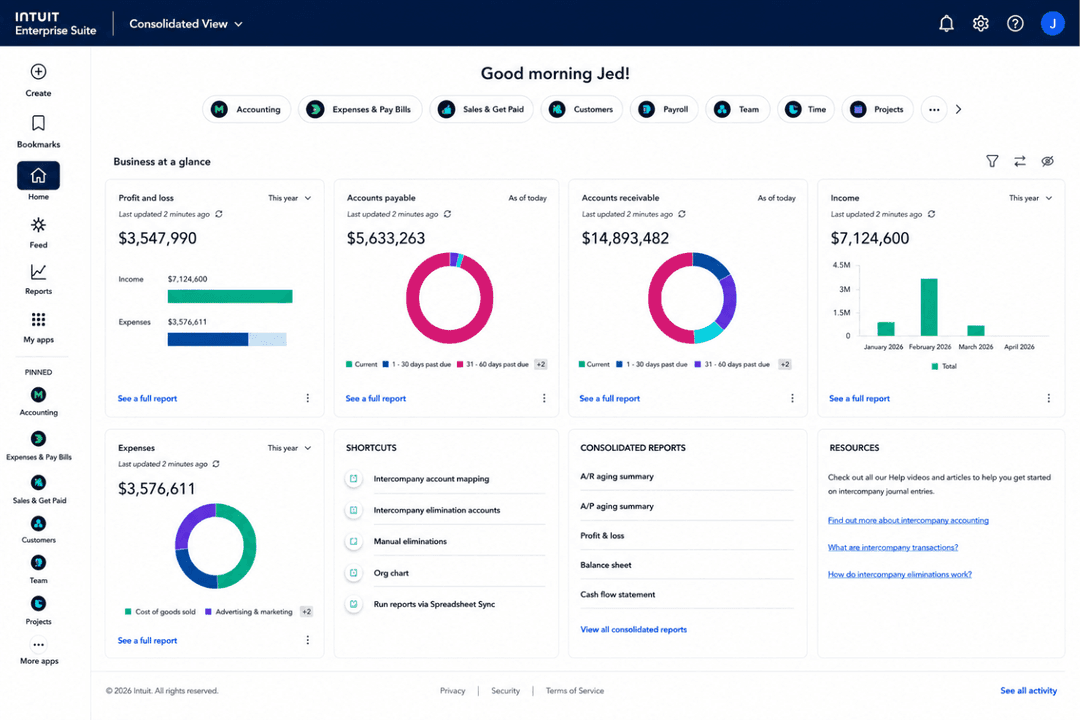
Intuit Enterprise Suite is business management software built to connect financial management with broader administrative operations, including payroll, payments, bill pay, workforce tools, workflow automation, and AI-powered insights. Its value comes from giving HR, finance, and operations teams a more connected way to manage approvals, reporting, cash flow, and multi-entity work through the broader Intuit ecosystem.
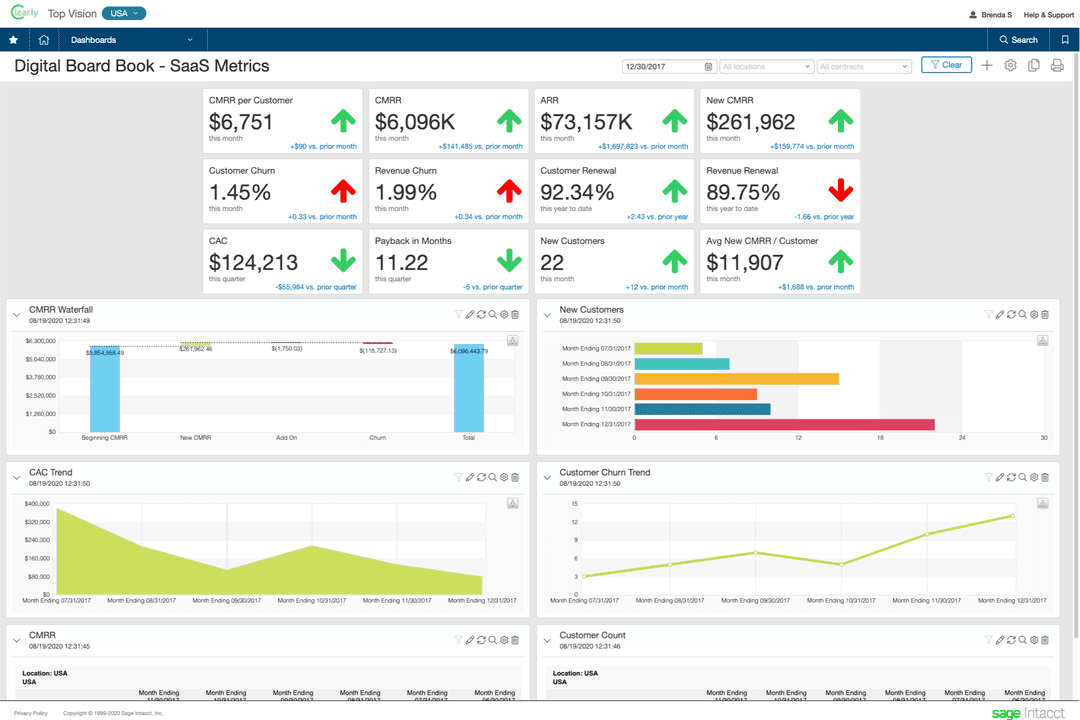
Sage Intacct, on the other hand, is an AI-powered accounting and financial management platform known for strong reporting, multi-entity and global consolidations, dimensional accounting, AP automation, AR management, budgeting, audit trails, and AI-powered outlier detection. In essence, Intuit Enterprise Suite differentiates through broader connected workflows across finance and admin operations, while Sage Intacct excels at deeper accounting controls and financial management visibility.
Intuit Enterprise SuiteSage Intacct
APIYesYes
Accounts PayableYesYes
Accounts ReceivableYesYes
BudgetingYesYes
Calendar ManagementNoNo
Customer ManagementNoYes
DashboardYesYes
Data ExportYesYes
Data ImportYesYes
Data VisualizationYesYes
Expense TrackingYesYes
External IntegrationsYesYes
ForecastingYesYes
General Account LedgerYesYes
Inventory TrackingYesYes
Multi-UserYesYes
NotificationsYesYes
PayrollYesYes
Supplier ManagementYesYes
Tax ManagementYesYes

IntegrationShopifyIntuit Enterprise Suite✅Sage Intacct✅
IntegrationSalesforceIntuit Enterprise Suite✅Sage Intacct✅
IntegrationPayPalIntuit Enterprise Suite✅Sage Intacct✅
IntegrationStripeIntuit Enterprise Suite✅Sage Intacct✅*
IntegrationDocuSignIntuit Enterprise Suite✅Sage Intacct✅*
IntegrationSquareIntuit Enterprise Suite✅Sage Intacct✅
IntegrationAmazon MarketplaceIntuit Enterprise Suite✅Sage Intacct✅*
IntegrationHubSpotIntuit Enterprise Suite✅Sage Intacct✅
IntegrationKnowifyIntuit Enterprise Suite✅Sage Intacct❌
IntegrationWixIntuit Enterprise Suite✅Sage Intacct✅*
IntegrationAPIIntuit Enterprise Suite✅Sage Intacct✅
IntegrationZapierIntuit Enterprise Suite❌Sage Intacct✅
*Available through a third-party connector, Sage Intacct Marketplace partner, API, or Zapier integration.

Both Intuit Enterprise Suite and Sage Intacct support integrations across ecommerce, payments, CRM, and financial operations. Intuit Enterprise Suite leans on direct app connections and the broader Intuit ecosystem, while Sage Intacct supports many tools through marketplace partners, third-party connectors, APIs, or Zapier. Overall, Intuit Enterprise Suite fits teams that want connected finance, payroll, payments, and admin workflows, while Sage Intacct gives finance-led teams flexible integration options.

FactorData EncryptionIntuit Enterprise SuiteEncrypts data in transit and at rest to help protect sensitive financial and operational information.Sage Intacct Uses at least 256-bit encryption for data in transit and encryption at rest through Triple-DES 128-bit or AES-256 storage encryption.
FactorRegulatory ComplianceIntuit Enterprise SuiteSupports SOC reports, ISO 27001-certified information security practices, PCI DSS compliance for applicable payment services, and VPAT documentation.Sage Intacct Supports SOC 1 Type II, SOC 2 Type II, ISAE 3402/3000, PCI Level 1, HIPAA, GDPR, and ISO 27001.
FactorUser Access ControlIntuit Enterprise SuiteIncludes role-based access controls to help limit access to sensitive financial, payroll, and operational data.Sage Intacct Uses access controls, user authentication, security logging, and MFA for critical business systems.
FactorUptime & AvailabilityIntuit Enterprise SuiteProvides enterprise security and compliance resources, though a specific Intuit Enterprise Suite uptime SLA is not publicly listed.Sage Intacct Offers subscription credits if availability falls below 99.8% for covered Sage Intacct services.

Intuit Enterprise Suite covers the key security controls growing organizations need, including encryption in transit and at rest, role-based access controls, SOC reports, ISO 27001-certified practices, and PCI DSS compliance for applicable payment services. Meanwhile, Sage Intacct publishes more detailed documentation around audits, compliance, and availability. Overall, Intuit Enterprise Suite fits growing and mid-market businesses that need secure financial, administrative, and operational data management, while Sage Intacct may suit organizations with stricter audit, compliance, or documented recovery requirements.

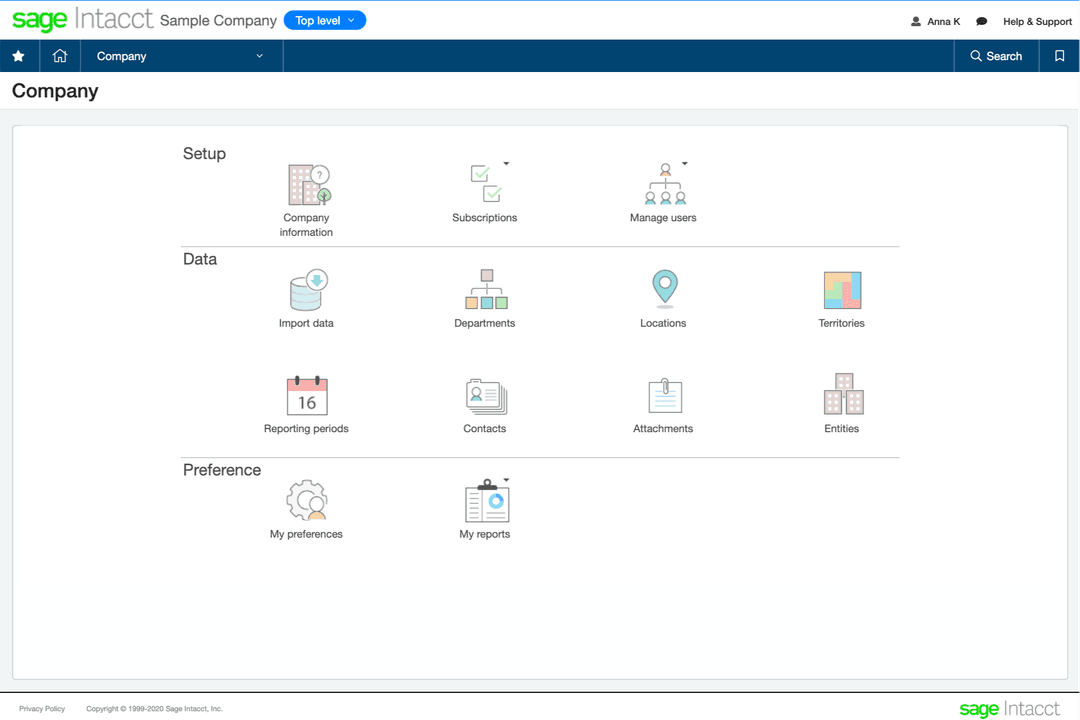
FactorUser InterfaceIntuit Enterprise SuiteUses a familiar Intuit-style interface designed for finance, payroll, reporting, and workflow tasks.Sage IntacctUses a finance-focused interface built around reporting, dashboards, dimensions, and controls.
FactorOnboardingIntuit Enterprise SuiteProvides guided setup with a dedicated customer success manager, migration assistance, and tailored training plans.Sage IntacctOffers implementation support through Sage Intacct Professional Services, with custom setup and training resources.
FactorDay-to-Day TasksIntuit Enterprise SuiteHelps teams manage payroll, payments, reporting, approvals, and administrative workflows through connected Intuit tools.Sage IntacctSupports finance-heavy workflows such as reporting, consolidations, AP, AR, budgeting, and audit tracking.
FactorSupport ResourcesIntuit Enterprise SuiteOffers product support, customer success guidance, training plans, and optional premium support tiers.Sage IntacctProvides technical support, Sage University training, documentation, product specialists, and community resources.

From an ease-of-use perspective, Intuit Enterprise Suite leans into guided adoption, familiar Intuit workflows, and connected tools for finance, payroll, payments, reporting, and administrative approvals. Sage Intacct, meanwhile, is more finance-focused, with deeper reporting, dimensions, consolidations, AP, AR, budgeting, and audit controls. In practice, Intuit Enterprise Suite may feel more practical for teams that want connected admin workflows, while Sage Intacct may appeal to teams that need deeper financial structure.

Intuit Enterprise Suite

Pros
  • Multi-entity management simplifies financial operations across growing organizations.
  • AI-powered automation helps reduce manual financial, administrative, and operational tasks.
  • Advanced reporting and real-time business insights improve decision-making.
Cons
  • May offer more functionality than smaller businesses with basic accounting needs.
  • Organizations migrating from simpler accounting software may face a learning curve.
  • Advanced customization and complex implementations require additional planning and configuration.

Sage Intacct

Pros
  • Real-time dashboards enable fast, accurate decision making
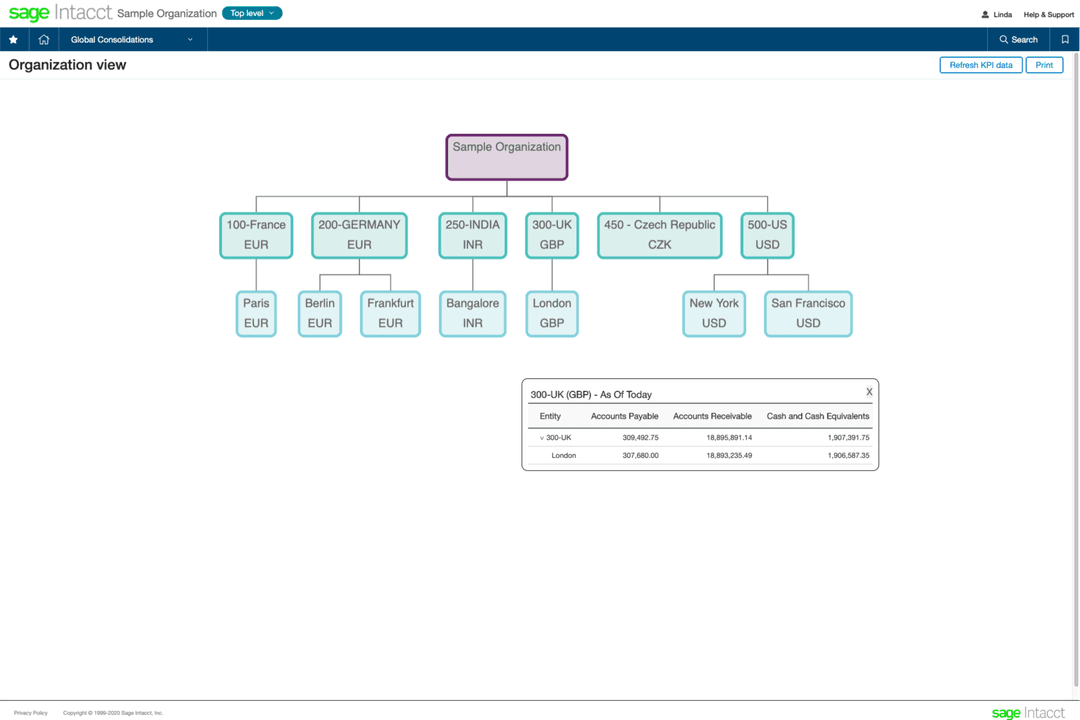
  • Multi-entity consolidations save time for global organizations
  • Audit trail automates compliance for financial processes
Cons
  • Report customization requires specialized knowledge and training
  • Approval workflows lack flexibility for unique business processes
  • User interface updates can disrupt familiar navigation paths

Intuit Enterprise Suite

Intuit Enterprise Suite unifies finance, HR, and operations to help growing businesses scale with confidence.
  1. Multi-Entity OrganizationsManage multiple legal entities, automate intercompany transactions, and consolidate financial reporting from a single system.
  2. Professional Services FirmsTrack projects, manage financial performance, and automate accounting workflows while improving visibility across teams.
  3. Technology & SaaS CompaniesSupport growing operations with AI-powered reporting, forecasting, and financial controls as the business scales.
  4. Construction & Project-Based BusinessesManage project accounting, budgeting, and financial reporting with workflows designed for project-driven organizations.
  5. Manufacturing, Wholesale & DistributionMonitor financial performance across products, locations, and business units while improving operational visibility.
  6. Growing Mid-Market BusinessesOrganizations expanding across multiple entities or locations can benefit from enterprise-level financial management without the complexity of a traditional ERP.

Sage Intacct

Sage Intacct helps businesses gain real-time financial visibility with cloud-based business management.
  1. Healthcare OrganizationsFast consolidations, strict compliance features, and detailed audit trails support industry regulations and patient billing complexity.
  2. SaaS CompaniesRevenue recognition automation and multidimensional reporting help SaaS CFOs track metrics and comply with accounting standards easily.
  3. Nonprofit Finance TeamsFund accounting, grant management, and donor reporting are built-in to meet nonprofit financial transparency and tracking needs.
  4. Multi-Entity CorporationsAutomated currency conversion, intercompany eliminations, and centralized reporting simplify accounting for businesses with numerous subsidiaries.
  5. Hospitality ChainsSage Intacct handles complex property-level accounting, period comparisons, and operational metrics across multiple locations.
  6. Professional Services FirmsProject accounting, time entry, and resource costing features support consulting, legal, and engineering firms needing transparency into billable hours and margins.

Who Should Use Intuit Enterprise Suite, And Who Should Use Sage Intacct?

If you’re looking for business management software that connects finance, payroll, payments, reporting, and administrative workflows, Intuit Enterprise Suite is likely the better fit. It’s ideal if your HR, finance, and operations teams need AI-powered automation, multi-entity visibility, and Intuit ecosystem tools to keep day-to-day admin work moving without taking on the full complexity of a traditional ERP.

If, instead, your team needs deeper accounting structure, complex reporting, audit-ready controls, and stronger financial management depth, Sage Intacct may be the better choice. It’s a strong fit for finance-driven organizations, including healthcare, nonprofit, SaaS, hospitality, and multi-entity teams that need dimensional accounting, budgeting, consolidations, and compliance-focused workflows.

AI FocusIntuit Enterprise Suite

Uses Intuit AI Agents to support business insights, workflow assistance, and automation across financial and administrative operations.

Sage Intacct

Uses AI for finance-focused tasks such as outlier detection, accounting insights, and anomaly review.

Implementation ApproachIntuit Enterprise Suite

Uses guided onboarding with customer success support, migration help, training, and a shorter implementation path than many traditional ERP deployments.

Sage Intacct

Typically has a longer implementation timeline, especially for complex reporting, dimensions, and finance controls.

Native Money ServicesIntuit Enterprise Suite

Includes payment processing, bill pay, and access to lending through the Intuit ecosystem.

Sage Intacct

Supports payment processing, while bill pay may rely on external partners and lending is not a core capability.

Platform FocusIntuit Enterprise Suite

Broader business management software that connects finance, payroll, payments, bill pay, workforce tools, reporting, and administrative workflows.

Sage Intacct

AI-powered accounting and financial management software focused on finance teams, reporting, controls, and consolidations.

Reporting & Planning PackagingIntuit Enterprise Suite

Includes enhanced reporting, dashboards, forecasting, budgeting, and AI-powered insights as part of its broader business management approach.

Sage Intacct

Offers strong reporting and planning tools, but advanced reporting and forecasting capabilities may depend on selected modules or add-ons.

Cloud Access

Both are cloud-based platforms that let teams access business and financial data online.

Core Financial Workflows

Both support AR, AP, financial reporting, project accounting, and day-to-day finance operations.

Custom Pricing

Both use quote-based pricing that depends on factors like users, modules, entities, add-ons, and implementation needs.

Multi-Entity Management

Both support multi-entity management for organizations with multiple business units, entities, or locations.

User Permissions

Both include role-based permissions to help control access to sensitive financial, administrative, and operational data.