


elia vs. Robin: Comparison and Expert Reviews for 2026



Shared offices can become difficult to coordinate when desk booking, meeting room booking, occupancy data, and workplace resources live in separate systems. For HR, facilities, and operations teams, the right workplace management software can help bring more structure to how people use the workplace.
elia and Robin both support booking, operations, and space planning, but they approach workplace management differently. elia brings together desk booking, meeting room booking, visitor management, service requests, occupancy insights, automation, and optional workplace hardware, while Robin focuses on booking, workplace operations, space planning, and office experience.
In this comparison, I’ll break down their features, pricing, usability, security, and best-fit use cases to help you decide which platform makes the most sense for your workplace.
elia vs. Robin: An Overview
elia

Robin



Why Trust Our Software Recommendations
Our team has been testing and reviewing software since 2012. As HR experts ourselves, we know how difficult—and important—it is to choose the right software.
For this guide, we evaluated tools using hands-on testing and independent research, scoring tools using our selection criteria. We also draw on insights from industry thought leaders and practicing HR experts.
Our reviews reflect our human editorial judgment, not a sales pitch.
Expert reviewers:
elia vs. Robin Pricing Comparison
| elia | Robin | |
|---|---|---|
| Free Trial | Free plan + free demo available | Free demo available |
| Pricing | From $500/month | Pricing upon request |
elia vs. Robin Pricing & Hidden Costs
elia uses public, plan-based pricing by places, with unlimited users included across its plans. This makes costs easier to estimate as headcount changes, but total cost can still rise if you need more places, advanced reporting, governance features, API access, custom integrations, SLAs, or higher automation and AI credit limits. The biggest hidden cost to watch is hardware, since occupancy sensors, room screens, kiosks, IoT gateways, and smart locks are priced separately from the software.
By contrast, Robin uses quote-based pricing, so buyers need to contact the vendor to understand the actual cost for their workplace size, feature needs, and rollout scope. This can make budgeting less transparent upfront, with possible added costs tied to implementation, advanced analytics, integrations, support level, room displays, or scaling across more offices and spaces. When comparing both tools, factor in your number of managed spaces, hardware needs, reporting requirements, integration plans, and whether you prefer public pricing or a custom quote.
elia vs. Robin Feature Comparison
| elia | Robin | |
|---|---|---|
| API | ||
| Appointment Scheduling | ||
| Batch Permissions & Access | ||
| Calendar Management | ||
| Chat | ||
| Click-to-Dial | ||
| Contact Management | ||
| Custom Data Forms | ||
| Customer Management | ||
| Dashboard | ||
| Data Export | ||
| Data Import | ||
| Data Visualization | ||
| Email Integration | ||
| External Integrations | ||
| Forecasting | ||
| Google Apps Integration | ||
| Lead Management | ||
| Marketing Automation | ||
| Mobile App | ||
| Multi-User | ||
| Notifications | ||
| Scheduling | ||
| Self-service Portal | ||
| Workflow Management |
elia vs. Robin Integrations
| Integration | elia | Robin |
|---|---|---|
| Google Calendar | ✅ | ✅ |
| Microsoft Outlook | ✅ | ✅ |
| Slack | ✅ | ✅ |
| Microsoft Teams | ✅ | ✅ |
| Zoom | ❌ | ✅ |
| Microsoft 365 | ✅ | ✅ |
| Okta | ❌ | ✅ |
| Rippling | ❌ | ✅ |
| API | ✅ | ✅ |
| Zapier | ❌ | ✅ |
elia covers the core integrations needed for workplace operations, including calendar syncing, collaboration tools, SSO, API access, and custom IoT or software connections on higher-tier plans. However, its prebuilt integration library is more limited than Robin’s, which may be easier to connect with a broader workplace tech stack. The main difference is that elia’s integrations support a more hardware-connected workplace setup, while Robin is stronger for teams that want more ready-made workplace and identity connections.
elia vs. Robin Security, Compliance & Reliability
| Factor | elia | Robin |
|---|---|---|
| Data Privacy | GDPR compliant, with data hosted in Canada on AWS Canada Central-1. | Lets customers choose U.S. or European data residency, with customer data hosted on AWS. |
| Certifications & Testing | ISO 27001:2022 certified and ISO 9001:2015 certified, with annual third-party penetration tests. | Hosted in AWS data centers with ISO 27001 and SOC 2 certifications, with annual third-party network and web application penetration tests. |
| Access Controls | SSO is available from Basic, while Business adds user provisioning and custom roles. Enterprise adds RBAC with user groups. | Supports SAML 2.0 SSO, Google SSO, ADFS, JIT provisioning, SCIM provisioning, access logs, and least-privilege employee access. |
| Auditability | Enterprise includes audit and activity logs, API access, and custom integration options for governance-heavy teams. | Provides access and security logs, downloadable activity logs, and calendar-system audit log support. |
| Reliability | Cloud-based and hosted on AWS Canada Central-1, with SLAs available on Enterprise. | Monitors service performance, provides status updates, and stores application and customer data redundantly across multiple AWS availability zones. |
Overall, elia emphasizes governance, Canadian data residency, ISO certifications, GDPR compliance, penetration testing, and enterprise access controls. Robin also has a strong cloud security foundation, with U.S. or EU data residency, encrypted data in transit and at rest, SSO options, access logs, monitoring, penetration testing, and AWS-backed redundancy. Both are credible for workplace management security, but elia is more specific for Canadian-hosted data and audit-heavy workplace governance, while Robin gives buyers more regional hosting flexibility and mature cloud reliability practices.
elia vs. Robin Ease of Use
| Factor | elia | Robin |
|---|---|---|
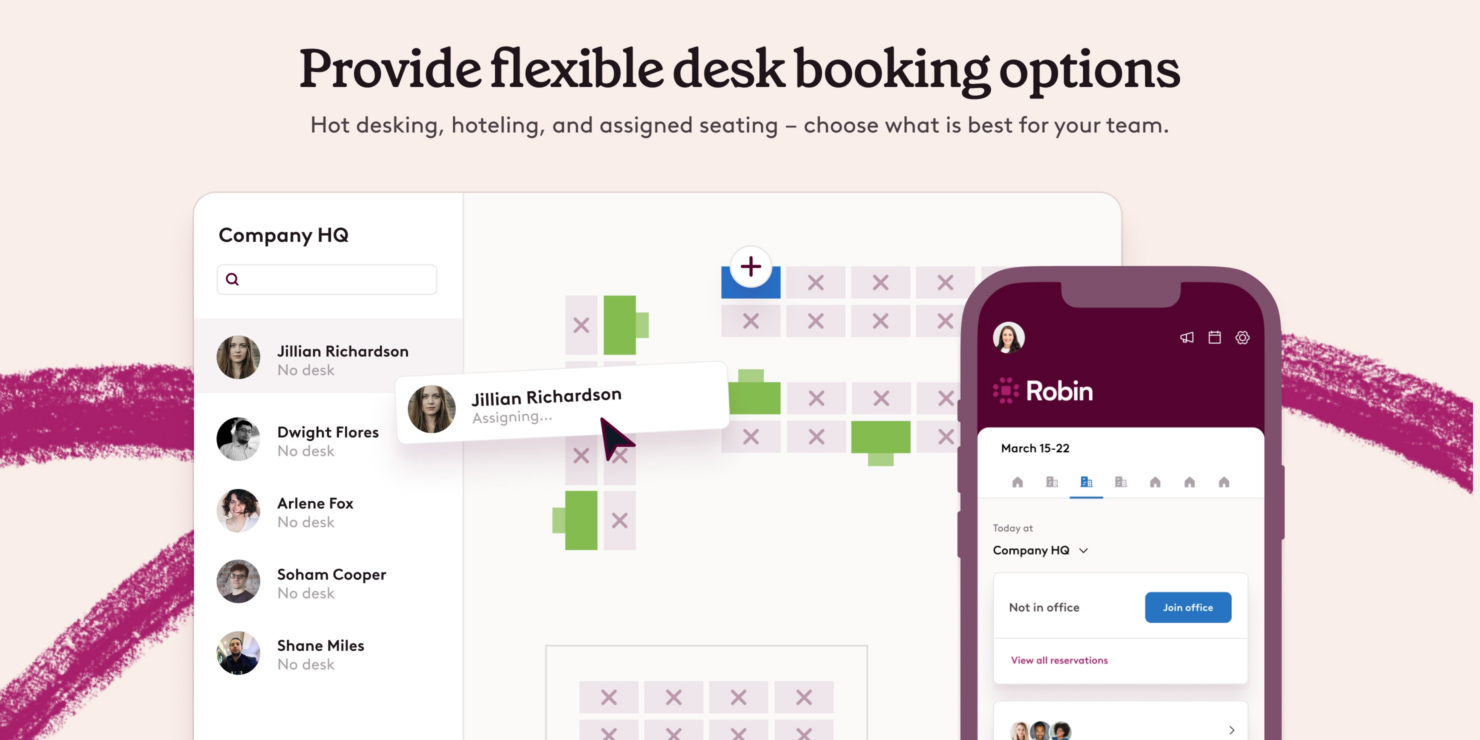
| User Interface | Visual floor plans, booking flows, dashboards, and workplace maps help teams manage desks, rooms, visitors, requests, and space usage. | Clean workplace experience interface focused on desk booking, room scheduling, office maps, and employee navigation. |
| Onboarding | Setup scales by plan, from self-serve onboarding to guided training and turn-key deployment. Most rollouts center on floor plans, booking rules, and workplace configuration. | Designed for workplace booking and space planning rollouts, with setup focused on desks, rooms, maps, employee access, and office policies. |
| Mobile Access | Employees can manage workplace actions through supported booking flows, with Teams access and wallet-based locker access where configured. | Offers a mobile-friendly experience for employees booking desks, finding rooms, and navigating the workplace. |
| Configuration | More configurable for teams managing automation, occupancy data, visitor flows, service requests, hardware, and governance needs. | Easier to configure for teams focused on desk booking, room scheduling, workplace maps, and space planning. |
| Customer Support | Free includes help center access, Basic adds email and chat support, Business adds onboarding and a dedicated account manager, and Enterprise includes turn-key deployment | Provides support resources for workplace setup, booking workflows, and larger office rollouts, with support needs depending on configuration complexity. |
Robin may feel easier for everyday employees because its experience is centered on booking desks, finding rooms, and navigating the office. elia may require more setup because it covers a broader workplace operations scope, but its visual floor plans, modular structure, onboarding tiers, and configuration options make it better suited for teams managing more complex offices with visitors, service requests, occupancy data, automation, and hardware.
elia vs Robin: Pros & Cons
elia
- Modular tools for managing desks, rooms, visitors, service requests, and workplace space
- Optional sensors, kiosks, screens, and smart lockers for stronger office usage data
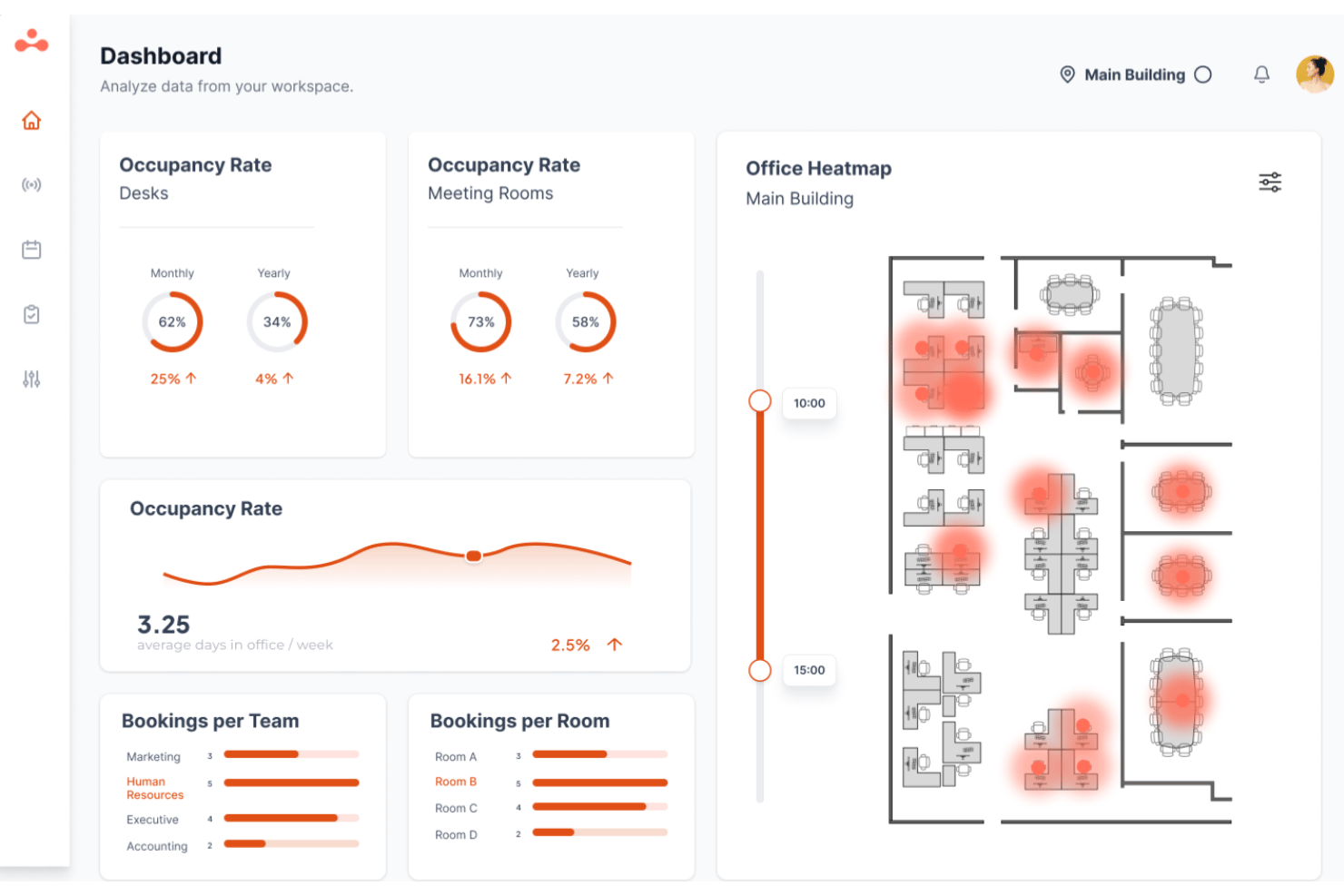
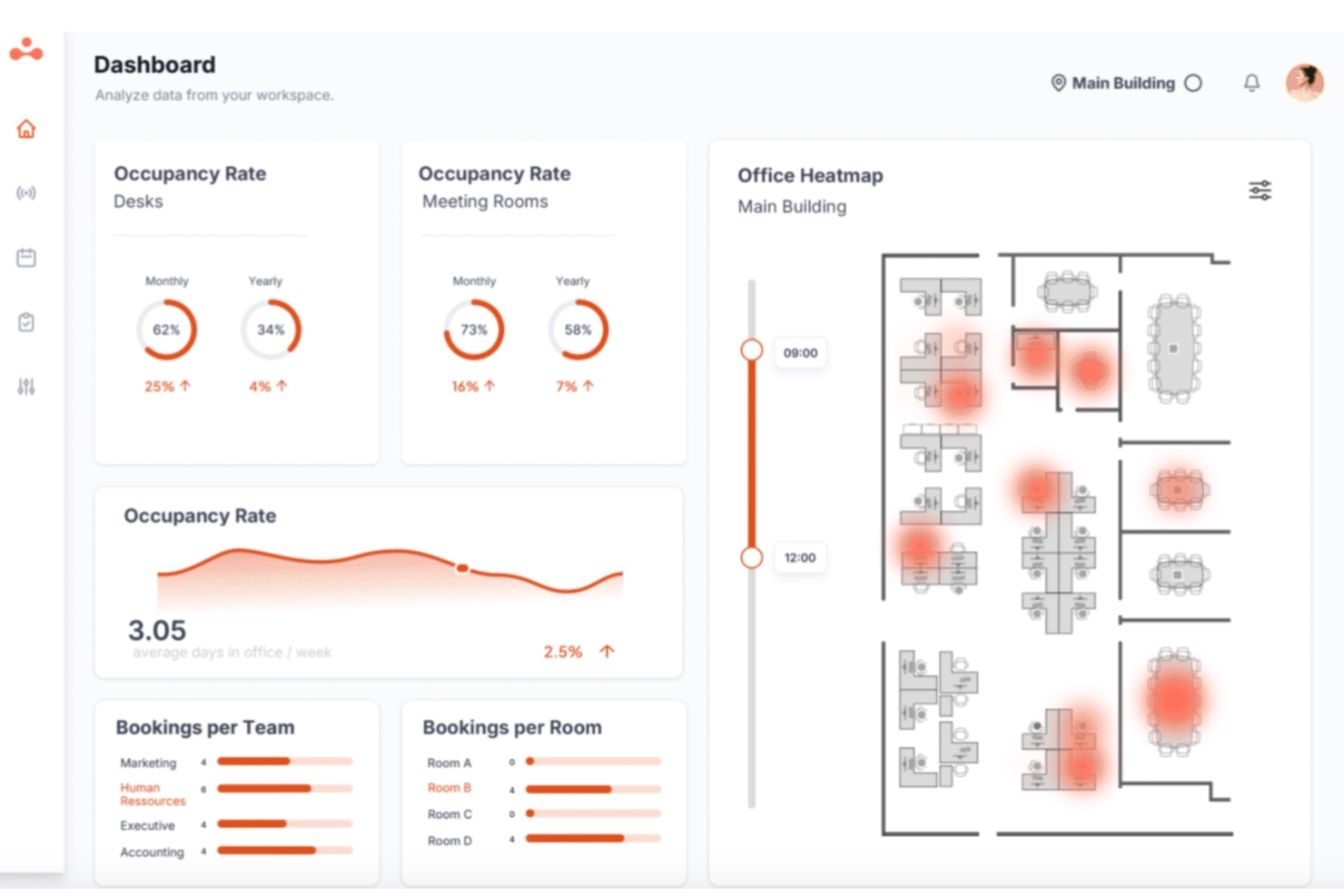
- Dashboards and heatmaps combine bookings and real usage for better space planning
- Hardware costs extra beyond the software plan
- Fewer prebuilt integrations than larger workplace management platforms
- Cloud only, with no self-hosted or on-premise option
Robin
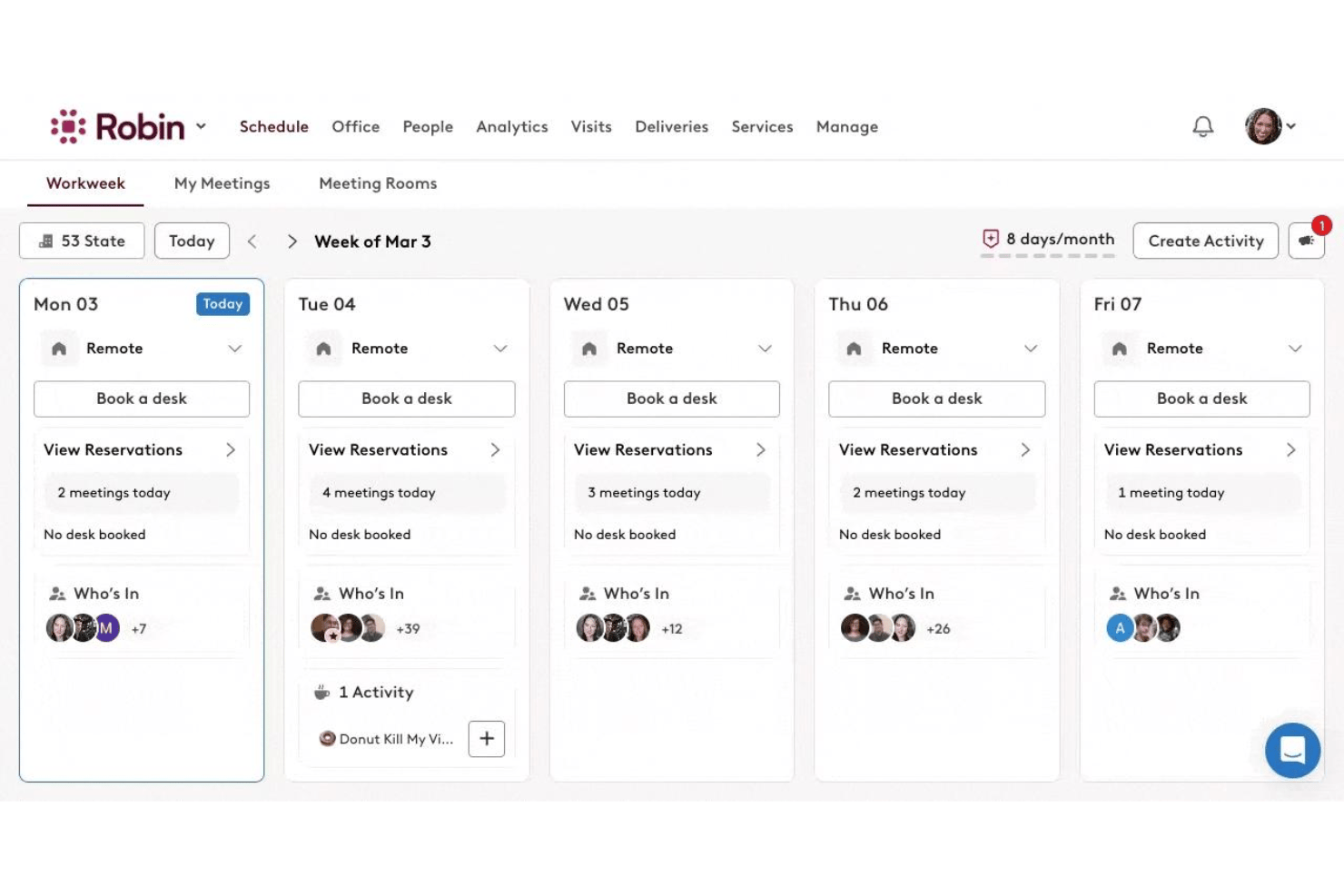
- Desk and room booking makes hybrid scheduling stress-free
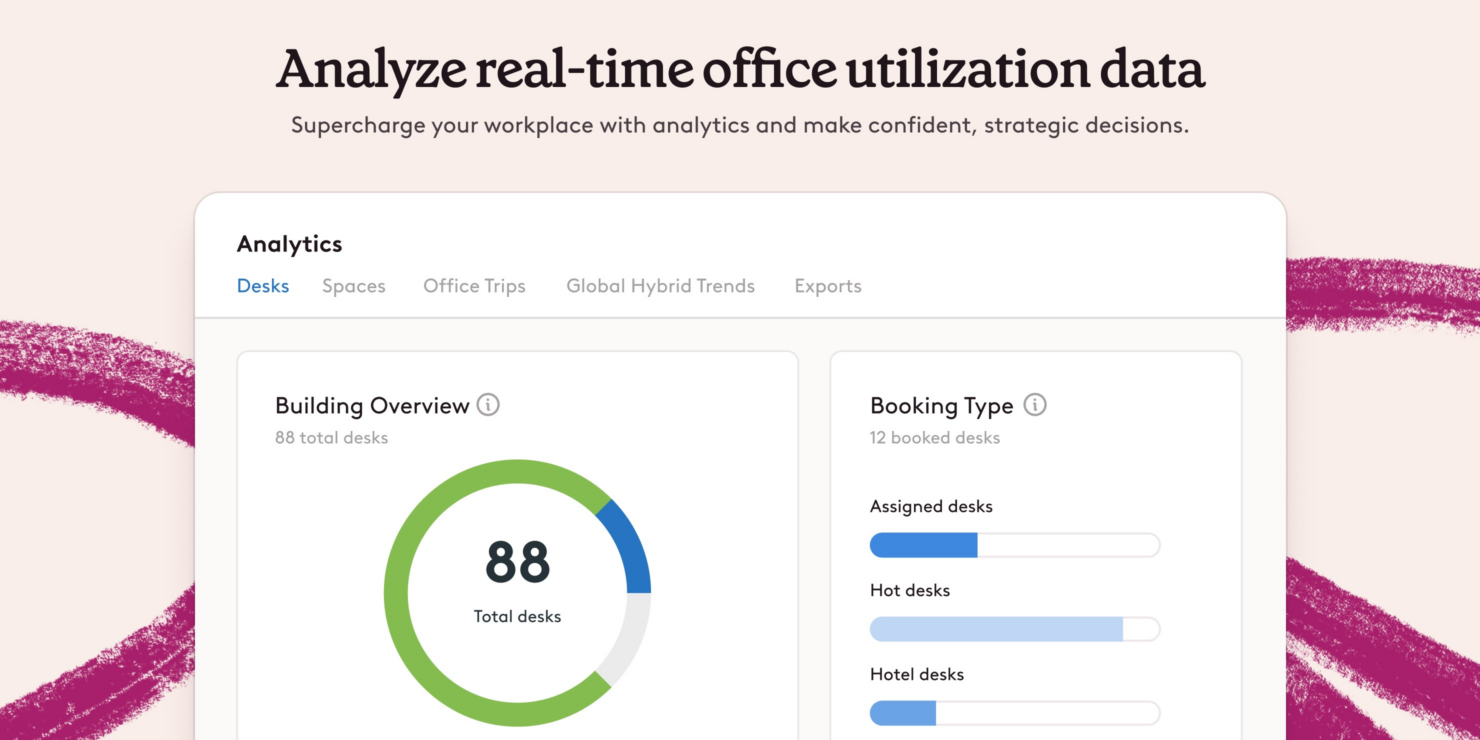
- Analytics dashboard highlights real office utilization patterns
- Visitor management feature improves workplace security
- No automated labor forecasting or shift management tools
- Mobile app features lag behind web version updates
- Some users report slow customer support response times
Best Use Cases for elia and Robin
elia
- Mid-Sized and Enterprise Organizations elia supports growing and large organizations that need more structure for shared desks, meeting rooms, visitors, workplace resources, and space usage across one or more offices.
- Professional Services and Legal Firms elia helps office-based firms manage hybrid schedules, client visits, meeting rooms, and shared workplace resources.
- Insurance and Financial Services elia supports teams that need structured workplace access, visitor logs, space visibility, and office coordination.
- Manufacturing and Engineering Offices Corporate and office-based teams can use elia to manage desks, rooms, requests, lockers, and occupancy data.
- Public Sector, Healthcare, Education, and Nonprofits elia fits organizations that need workplace management, audit-ready records, health and safety tools, and English/French support.
- Media and Telecommunications Companies elia works for organizations with shared offices, distributed teams, changing occupancy needs, and workplace resource planning.
Robin
- Mid-Size Tech Companies Hybrid teams in tech benefit from real-time booking, floorplan visualization, and analytics to plan office attendance.
- Coworking Spaces Operators gain control over desk utilization and easy management of shared areas with visitor management and booking automations.
- Corporate Real Estate Facilities leaders can analyze workspace demand, set capacity limits, and show executives clear ROI for each location.
- Higher Education Admins Universities use Robin to automate faculty and staff space planning, meeting room assignments, and guest check-ins.
- HR Departments HR leaders improve employee experience with easy desk reservations and self-service scheduling for in-person collaboration days.
- Global Consulting Firms Consulting teams can coordinate safe attendance and find workspace worldwide using Robin’s multiple location features.
Who Should Use elia, and Who Should Use Robin?
elia is best suited for mid-sized and enterprise organizations that need workplace management software for desk booking, meeting room booking, visitor management, service requests, occupancy insights, health and safety, automation, and optional hardware. On the other hand, Robin is better for organizations focused on hybrid schedules, desk and meeting room booking, office maps, space optimization, workplace analytics, and employee-friendly office experiences.
The main difference is depth: elia supports more connected workplace operations across HR, facilities, IT, and office teams, while Robin fits teams that want a polished, flexible workplace experience for shared offices and multiple locations.
Differences Between elia and Robin
| elia | Robin | |
|---|---|---|
| Data Residency Focus | Hosts data in Canada and supports English and French, which can matter for Canadian and Quebec buyers. | Offers broader regional hosting flexibility and workplace security controls for distributed organizations. |
| Hardware Ecosystem | Offers optional proprietary workplace hardware, including sensors, kiosks, room screens, IoT gateways, smart locks, and lockers. | Supports workplace tools like room displays, access control sync, and sensor integrations, but is less centered on a proprietary hardware ecosystem. |
| Modular Expansion | Lets teams start with one module, such as desk booking or visitor management, then add more workplace tools as needs grow. | Offers a broader workplace experience platform package focused on planning, managing, and using the office. |
| Platform Model | Modular workplace operations platform covering desks, rooms, visitors, requests, safety, occupancy, automation, and hardware. | Workplace experience platform focused on booking, operations, space planning, office maps, and employee workplace use. |
| Pricing Visibility | Public pricing based on managed places, with unlimited users included and hardware priced separately. | Uses quote-based pricing, so total cost depends on workplace size, rollout scope, and required features. |
| Visit eliaOpens new window | Read Robin ReviewOpens new window |
Similarities Between elia and Robin
| Desk Booking | Both help employees reserve desks and support shared seating in hybrid workplaces. |
|---|---|
| Interactive Maps | Both use visual workplace maps or floor plans to help employees find spaces, resources, and colleagues. |
| Meeting Room Booking | Both support meeting room booking, availability visibility, and booking workflows for office teams. |
| Visitor Management | Both include tools for managing guest check-ins and workplace access. |
| Workplace Analytics | Both provide data to help teams understand office usage, space demand, and workplace patterns. |
| Visit eliaOpens new window Read Robin ReviewOpens new window | |