


Microkeeper vs. Tanda: Comparison and Expert Reviews for 2026



Timesheet errors, roster gaps, and payroll issues can quickly pile up when workforce processes don’t stay connected. For HR and operations teams, that often means more manual checks and less visibility into what’s happening across the workforce.
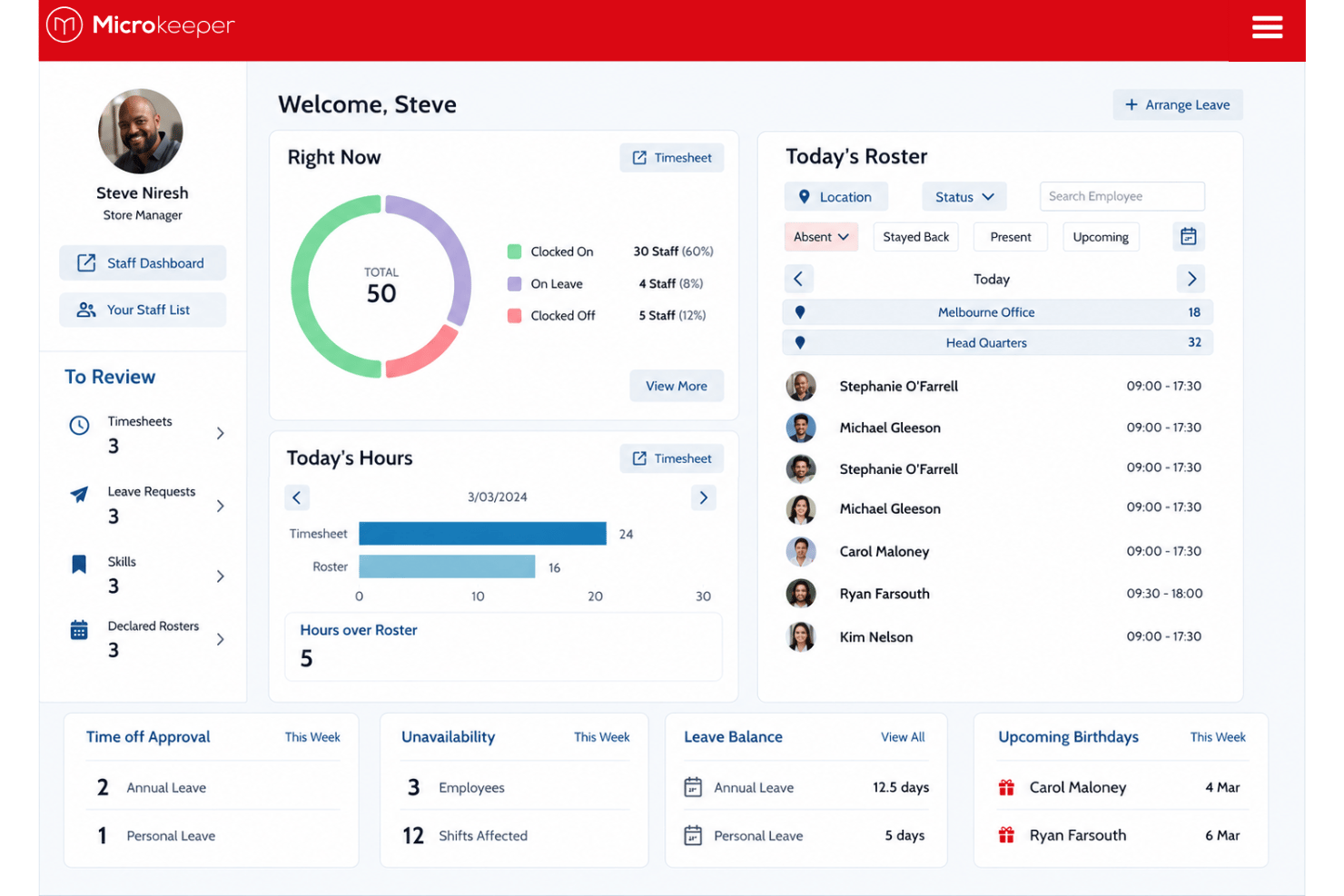
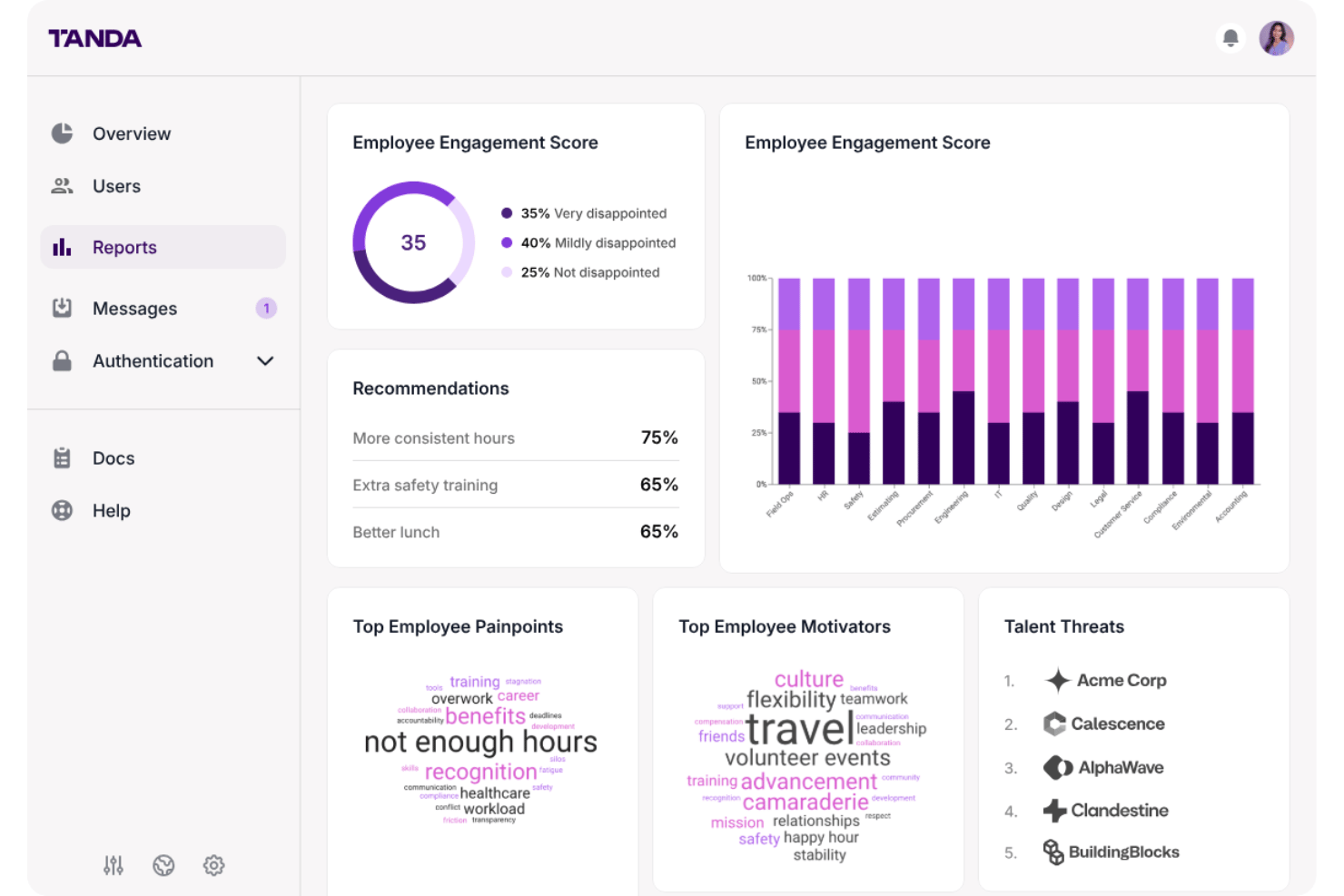
Microkeeper and Tanda take different approaches within the workforce management software category. Microkeeper combines HR, rostering, timesheets, and payroll through shared workforce data, while Tanda focuses on employee retention through financial wellness, personalized benefits, matched savings, and engagement.
In this article, I’ll compare Microkeeper and Tanda across features, pricing, security, ease of use, integrations, and best use cases to help you decide which platform best fits your workforce.
Microkeeper vs. Tanda: An Overview
Microkeeper
Tanda
Why Trust Our Software Recommendations
Our team has been testing and reviewing software since 2012. As HR experts ourselves, we know how difficult—and important—it is to choose the right software.
For this guide, we evaluated tools using hands-on testing and independent research, scoring tools using our selection criteria. We also draw on insights from industry thought leaders and practicing HR experts.
Our reviews reflect our human editorial judgment, not a sales pitch.
Expert reviewers:
Microkeeper vs. Tanda Pricing Comparison
| Microkeeper | Tanda | |
|---|---|---|
| Free Trial | 30-day free trial | Free demo available |
| Pricing | From $6/user/month | Pricing upon request |
Microkeeper vs. Tanda Pricing & Hidden Costs
Microkeeper offers three plans: Payroll STP & Super, Standard, and Enterprise, with each tier expanding from core payroll into broader workforce management. By contrast, Tanda offers a quote-based Enterprise plan centered on compensation insights, performance-aligned benefits, retention forecasting, and ROI reporting.
When comparing the two, I’d look at what you’re actually paying to solve. Microkeeper may offer stronger value for businesses that want payroll, HR, rostering, and timesheets within the same system, while Tanda’s investment is more specifically tied to employee retention, benefits, and financial wellness programs.
Microkeeper vs. Tanda Feature Comparison
| Microkeeper | Tanda | |
|---|---|---|
| 2-Factor Authentication | ||
| 360 Degree Feedback | ||
| API | ||
| Application Tracking | ||
| Attendance Tracking | ||
| Batch Permissions & Access | ||
| Budgeting | ||
| Calendar Management | ||
| Dashboard | ||
| Data Export | ||
| Data Import | ||
| Data Visualization | ||
| Employee Database | ||
| Employee Engagement | ||
| Employee Incentive Management | ||
| Employee Onboarding | ||
| Expense Tracking | ||
| External Integrations | ||
| Feedback Management | ||
| Forecasting | ||
| Multi-User | ||
| Notifications | ||
| Onboarding | ||
| Payroll | ||
| Project Management | ||
| Scheduling | ||
| Time Management | ||
| Timesheets | ||
| Travel Management | ||
| Vacation & Absence Calendar |
Microkeeper vs. Tanda Integrations
| Integration | Microkeeper | Tanda |
|---|---|---|
| Xero | ✅ | ❌¹ |
| MYOB | ✅ | ❌¹ |
| Beam | ✅ | ❌¹ |
| Manatal | ✅ | ❌¹ |
| One Click Life | ✅ | ❌¹ |
| Teamtailor | ✅ | ❌¹ |
| Plaid | ❌ | ✅ |
| Dwolla | ❌ | ✅ |
| Open API | ✅ | ❌¹ |
¹ Not publicly documented
Microkeeper’s integrations primarily support payroll, accounting, recruitment, and workforce administration, while Tanda’s documented connections are more closely tied to its financial wellness offering. I’d favor Microkeeper if connecting workforce and payroll systems is a priority, while Tanda’s integration needs are narrower, centered on employee savings and financial services.
Microkeeper vs. Tanda Security, Compliance & Reliability
| Factor | Microkeeper | Tanda |
|---|---|---|
| Data Privacy | ISO 27001:2022 compliant, with Australian hosting, encrypted data transmission, protected sensitive fields, and AES-256 encrypted backups. | Publishes privacy and service terms covering employee and financial information handled through its platform. |
| Financial Data & Compliance | Supports STP, super processing, and configurable Modern Award, EBA, allowance, and penalty rules that businesses maintain around their requirements. | Uses third-party financial-service providers to support savings and financial wellness features, with responsibilities outlined in its privacy and service terms. |
| User Access Control | Supports MFA, account lockouts, encrypted sessions, and audit logging, with tightly restricted and monitored production access. | Comparable technical access-control details are not extensively documented publicly. |
| Uptime & Reliability | Guarantees 99.9% availability for core services, backed by redundancy, real-time database replication, and documented disaster recovery processes. | Public uptime commitments are not clearly documented. |
| Data Backup & Recovery | Uses daily AES-256 encrypted backups, real-time database replication, and documented disaster recovery and business continuity procedures. | Detailed backup and disaster recovery practices are not publicly documented. |
I think Microkeeper provides considerably more public detail around infrastructure, access controls, disaster recovery, backups, and its 99.9% core-service availability guarantee. Tanda publishes information about how employee and financial data are handled through its retention platform and financial-service partners, but comparable technical security and reliability details are less publicly documented.
Microkeeper vs. Tanda Ease of Use
| Factor | Microkeeper | Tanda |
|---|---|---|
| User Interface | Practical, function-first workflows keep HR, rostering, timesheets, and payroll connected, though the interface can feel less visually polished. | Employee-facing experience centered on financial goals, personalized benefits, savings, and engagement. |
| Onboarding | Guided implementation covers discovery, configuration, testing, training, parallel payroll, and go-live, while self-setup requires more hands-on effort. | Account setup centers on joining employer-sponsored savings and financial wellness programs. |
| Support Access | Direct onshore Australian support by phone and ticket gives teams access to real people without chatbot triage or multiple escalation tiers. | Provides support for its retention and financial wellness offering, although details on public support channels are limited. |
| Mobile Experience | Employees can manage rosters, clocking, timesheets, payslips, leave, availability, and GPS-based attendance from the mobile app. | Gives employees access to savings goals, employer-sponsored benefits, and other financial wellness tools. |
| Configuration | Detailed setup supports Awards, EBAs, allowances, leave, rostering, and complex payroll rules, giving teams more control at the cost of added setup effort. | Lets employers shape personalized benefits, matched savings, and retention programs around workforce needs. |
From an ease-of-use perspective, Microkeeper favors depth and control, with connected workflows that become easier to manage once the initial configuration is complete. Tanda, by contrast, is designed around a simpler employee experience focused on savings goals, benefits, engagement, and financial wellness. I’d favor Microkeeper for teams willing to invest in setup for deeper payroll flexibility, while Tanda may feel more approachable for organizations prioritizing employee participation and retention-focused programs.
Microkeeper vs Tanda: Pros & Cons
Microkeeper
- Configurable payroll rules handle allowances, penalty rates, overtime, and EBAs for businesses with complex pay structures.
- Rosters and approved timesheets flow directly into payroll, reducing manual data transfer between scheduling, attendance, and pay runs.
- Competitive pricing covers a broad workforce management feature set, with direct support from an onshore Australian team.
- The HR and rostering interface can feel less polished than more modern workforce platforms.
- Native integrations are limited, so businesses with established tech stacks may need custom connections through Microkeeper’s open API.
- Self-setup takes meaningful time to configure pay rules, connect workflows, and test payroll before going live.
Tanda
- Personalized benefits and matched savings directly support employee financial wellness
- Retention insights help employers identify engagement and turnover risks
- Focused feature set is well suited to hourly and essential-worker retention programs
- No native payroll, scheduling, or time and attendance tools
- Limited public information about integrations and technical security controls
- Narrower functionality than full workforce management or HR platforms
Best Use Cases for Microkeeper and Tanda
Microkeeper
- Manufacturing Businesses Manufacturers can manage rotating shifts, employee skills and availability, attendance, allowances, and complex pay conditions across production teams.
- Mining and FIFO Operations Mining businesses can use multi-site rostering, workforce location tracking, credential management, and flexible clocking options to manage remote and FIFO teams.
- Labor Hire Agencies Labor hire businesses can onboard workers quickly, schedule staff across client sites, track availability and skills, and process varied payroll requirements from the same system.
- Construction Companies Construction teams can track hours across multiple worksites, manage project-based workers, apply custom pay conditions and allowances, and monitor labor costs by project.
- Hospitality Businesses Hospitality teams can manage changing availability, casual and shift-based staff, roster updates, timesheets, and pay conditions such as penalty rates and allowances.
- Multi-Site Retailers Retail businesses can onboard different employee types, manage rosters across stores and locations, track hours by site, and centralize payroll and workforce records.
Tanda
- Construction Companies Supports retention through financial wellness benefits and matched savings for essential workers.
- Manufacturing Businesses Helps employers improve workforce stability through savings, recognition, and retention insights.
- Restaurants Provides financial wellness and engagement programs for front- and back-of-house employees.
- Employers With High Turnover Offers retention insights and targeted benefits designed to address employee attrition.
- Employers Focused on Financial Wellness Lets businesses support employee savings goals through personalized benefits and employer contributions.
- HR and People Teams Provides retention, compensation, and engagement insights to help shape employee programs.
Who Should Use Microkeeper, and Who Should Use Tanda?
If you need deeper payroll configuration, support for EBAs and custom pay conditions, and tightly connected rostering, timesheets, and payroll, Microkeeper is likely the better fit. I’d favor it for mid-sized and enterprise Australian businesses in manufacturing, mining, construction, labor hire, hospitality, and retail where complex payroll and workforce rules are common.
If, instead, your priority is improving employee retention through financial wellness, personalized benefits, matched savings, and engagement tools, Tanda may suit you better. It’s a stronger fit for US employers with hourly or essential-worker populations who want to reduce turnover by addressing financial stress and providing more tailored retention benefits.
Differences Between Microkeeper and Tanda
| Microkeeper | Tanda | |
|---|---|---|
| Core Purpose | Combines HR, rostering, timesheets, and payroll in one workforce management system built on shared employee data. | Centers on employee retention through financial wellness, personalized benefits, savings goals, and engagement. |
| Payroll Capabilities | Supports configurable Awards, EBAs, allowances, overtime, penalties, STP reporting, and superannuation processing. | Does not process payroll directly; its product focuses instead on retention and employee financial well-being. |
| Pricing Model | Offers published payroll-only and per-user plans, with Enterprise options for more complex workforce requirements. | Uses custom Enterprise pricing based on the employer’s retention program and required capabilities. |
| Product Structure | HR, rostering, timesheets, and payroll were built into a single system using shared workforce data, reducing reliance on separate modules or syncs. | Focuses its platform around retention, financial wellness, personalized benefits, and employee engagement. |
| Support Model | Provides direct onshore Australian phone and ticket support without chatbot triage, offshore call centers, or multiple escalation tiers. | Support centers on its retention and financial wellness offering, with less public detail about its support structure. |
| Visit MicrokeeperOpens new window | Read Tanda ReviewOpens new window |
Similarities Between Microkeeper and Tanda
| Employee Experience | Both aim to improve how employees interact with employer-provided programs by giving workers more direct access to information and self-service tools. |
|---|---|
| Employee-Facing Access | Both provide employees with direct digital access to workforce-related services, though Microkeeper focuses on employment administration, while Tanda centers on benefits and financial goals. |
| Employer Configuration | Both allow organizations to shape the platform around workforce needs, whether through Microkeeper’s payroll and rostering rules or Tanda’s personalized benefits and retention programs. |
| Shift-Based Industries | Both can serve employers in sectors such as manufacturing, construction, and hospitality where retaining and managing hourly or shift-based workers is important. |
| Workforce Insights | Both provide employers with workforce data and reporting, with Microkeeper emphasizing operational and payroll activity and Tanda focusing more on retention, engagement, and compensation outcomes. |
| Visit MicrokeeperOpens new window Read Tanda ReviewOpens new window | |